Last week, author and blogger (4am Writer) Kate Johnston published a post about getting 1 million supporters to help save the monarch butterfly. Kate was very happy for me to republish that here on Learning from Dogs. Please read it and sign up.
World Wildlife Fund has set a goal – getting 1 million supporters to help save the monarch butterfly.
Threatened by illegal logging, global warming, herbicide use, and vanishing food source (milkweed) for caterpillars, monarchs are in serious danger.
“Now more than ever, Mexico, the United States, and Canada should increase their conservation efforts to protect and restore the habitat of this butterfly along its migratory route,” said Omar Vidal, Director General for WWF-Mexico.
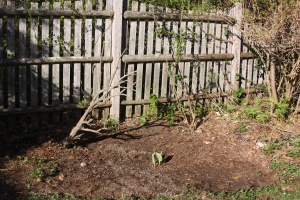
Last year, I began planting my own butterfly garden in an effort to help provide a habitat for monarch butterflies, and any other form of wildlife that might seek food and shelter there.
BEFORE
Ready for planting!
AFTER
Not very organized and probably have too much in there, but I didn’t expect everything to take off the way it did!
Turtles come through my backyard every summer to lay their eggs in the same place. Each generation of turtle somehow knows the exact route, like they have their own inner GPS.See the butterfly in the middle of the milkweed? This is not a monarch, as it has no white spots. I think it might be a fritillary, maybe the variegated species.This is a harmless garter snake, and they love my garden!Just a baby, though. Hubs still took off, so my son had to take the pics.Hubs nearly ran over this guy with the mower. I had to come and get it ‘cuz it’s a snapping turtle!
Spring is just around the corner in the US, and the monarch butterflies will be heading along their migratory route, back to their northern homes. They will be in search of food and shelter. They will need milkweed, the only plant on which they lay their eggs and the one food source for their babies.
If you have a backyard, won’t you consider providing a home for some beautiful monarchs? Even if you’re sans yard, you can still fight for their survival.
My article yesterday about Tony the Tiger and what looks like a very happy ending to his dismal existence led me on to more sites regarding the situations about tigers.
Again, pressure on time means that this post is more about sharing links than expressing my own feelings, although most readers will know where I am coming from – having a Blog called Learning from Dogs is a bit of a clue!
The first website is Free Tony The Tiger and clearly has been an essential part of the force needed to get the win in court for Toby. On that website, they set out their stance thus,
Free Tony The Tiger is dedicated to raising awareness to Tony’s situation as well as gaining support for Tony. The objective is to have Tony released to an accredited big cat sanctuary so he can receive the care, home, diet, enrichment, medical care and respect he deserves. It is also the mission of Free Tony The Tiger to bring attention to the severe problem of privately owned tigers in the United States.
Tony represents one of thousands of privately owned tigers in the United States whose numbers are greater than tigers in the wild. Captive U.S. tigers are used in roadside zoos and attractions, photo ops and exhibitions, entertainment shows, pseudo-sanctuaries, bred for profit or are owned as “pets.” Others end up in canned hunts or on the black market.
This is a serious situation that must be addressed and resolved and the more this issue is exposed , the better the chance to put an end to this abuse and exploitation. There is no conservational value in privately breeding tigers. The only sanctioned tiger breeding program in the United States is the Species Survival Plan in which AZA accredited zoos participate. Not all animal rescue centers and sanctuaries are what they claim to be. A true sanctuary would never buy, sell, trade, breed, or cart their animals to malls, fairs, etc. Such majestic and magnificent cats like tigers should be respected and protected. Visit End Tiger Farming In The U.S. and take action for tigers.
Please view this very important and informative video from Big Cat Rescue – Tampa Florida addressing this issue. Carole Baskin, Founder and CEO of Big Cat Rescue of Tampa FL , the world’s largest accredited sanctuary, that is devoted entirely to exotic cats speaks out about:
1. Where do big cats go when they are no longer profitable cubs?
2. If the good sanctuaries are full, where do the big cats go?
3. Should we be building bigger and more sanctuaries for the unwanted cats?
4. What is the best way to prevent the abuse of lions, tigers and other big cats?
5. Does banning private possession of exotics work?
6. Who tracks maulings, killings and escapes by tigers and other big cat species?
7. Do USDA and state inspections make sure breeders and dealers are being humane?
8. When did the big cat crisis in America start?
9. Are there laws to prevent exotic cats from being traded for their meat, skin and bones?
10. How is the public to blame for the worst acts toward tigers and their cubs?
11. What happens to breeders, dealers and other wild animal exploiters when they run out of money?
12. What are some of the most lax states when it comes to wildcat standards and enforcement?
13. Why doesn’t the government do something about all of the abuse of tigers, lions, leopards, jaguars & other big cats?
14. Are there illegal activities operating in the shadow of legal uses of tigers?
15. What kind of tracking is done and what needs to be done to end the abuse of exotic wild cats?
More important links from the above can be found here.
The Big Cat Rescue organisation, as referred to above, may be found here. Finally, on the Free Tony website is much information about the efforts to save wild tigers, thus,
Please support Tony’s “wild cousins” by visiting http://www.savetigersnow, a global campaign by World Wildlife Fund and Leonardo DiCaprio whose objective is to build political, financial and public support to double the number of wild tigers by 2022, the next Year of the Tiger.



 Learning from Dogs