Tag: University of Pittsburg

The beautiful moon, but …

… does it make us sleepless?

As has been mentioned previously, my dear wife and her Parkinson’s means that we go to bed early and get up early the following morning. Thus a recent item on The Conversation fascinated me and it is shared with you now.

ooOOoo

Does the full moon make us sleepless? A neurologist explains the science behind sleep, mood and lunar myths

How much does the moon cycle affect sleep? Probably less than your screen time at night. Muhammad Khazin Alhusni/iStock via Getty Images Plus

Joanna Fong-Isariyawongse, University of Pittsburgh

Have you ever tossed and turned under a full moon and wondered if its glow was keeping you awake? For generations, people have believed that the Moon has the power to stir up sleepless nights and strange behavior – even madness itself. The word “lunacy” comes directly from luna, Latin for Moon.

Police officers, hospital staff and emergency workers often swear that their nights get busier under a full moon. But does science back that up?

The answer is, of course, more nuanced than folklore suggests. Research shows a full moon can modestly affect sleep, but its influence on mental health is much less certain.

I’m a neurologist specializing in sleep medicine who studies how sleep affects brain health. I find it captivating that an ancient myth about moonlight and madness might trace back to something far more ordinary: our restless, moonlit sleep.

What the full moon really does to sleep

Several studies show that people really do sleep differently in the days leading up to the full moon, when moonlight shines brightest in the evening sky. During this period, people sleep about 20 minutes less, take longer to fall asleep and spend less time in deep, restorative sleep. Large population studies confirm the pattern, finding that people across different cultures tend to go to bed later and sleep for shorter periods in the nights before a full moon.

The most likely reason is light. A bright moon in the evening can delay the body’s internal clock, reduce melatonin – the hormone that signals bedtime – and keep the brain more alert.

The changes are modest. Most people lose only 15 to 30 minutes of sleep, but the effect is measurable. It is strongest in places without artificial light, such as rural areas or while camping. Some research also suggests that men and women may be affected differently. For instance, men seem to lose more sleep during the waxing phase, while women experience slightly less deep and restful sleep around the full moon.

Young adult woman lying in bed wide awake, staring out the window toward a bright light.
Sleep loss from a bright moon is modest but measurable. Yuliia Kaveshnikova/iStock via Getty Images Plus

The link with mental health

For centuries, people have blamed the full moon for stirring up madness. Folklore suggested that its glow could spark mania in bipolar disorder, provoke seizures in people with epilepsy or trigger psychosis in those with schizophrenia. The theory was simple: lose sleep under a bright moon and vulnerable minds might unravel.

Modern science adds an important twist. Research is clear that sleep loss itself is a powerful driver of mental health problems. Even one rough night can heighten anxiety and drag down mood. Ongoing sleep disruption raises the risk of depression, suicidal thoughts and flare-ups of conditions like bipolar disorder and schizophrenia.

That means even the modest sleep loss seen around a full moon could matter more for people who are already at risk. Someone with bipolar disorder, for example, may be far more sensitive to shortened or fragmented sleep than the average person.

But here’s the catch: When researchers step back and look at large groups of people, the evidence that lunar phases trigger psychiatric crises is weak. No reliable pattern has been found between the Moon and hospital admissions, discharges or lengths of stay.

But a few other studies suggest there may be small effects. In India, psychiatric hospitals recorded more use of restraints during full moons, based on data collected between 2016 and 2017. In China, researchers noted a slight rise in schizophrenia admissions around the full moon, using hospital records from 2012 to 2017. Still, these findings are not consistent worldwide and may reflect cultural factors or local hospital practices as much as biology.

In the end, the Moon may shave a little time off our sleep, and sleep loss can certainly influence mental health, especially for people who are more vulnerable. That includes those with conditions like depression, bipolar disorder, schizophrenia or epilepsy, and teenagers who are especially sensitive to sleep disruption. But the idea that the full moon directly drives waves of psychiatric illness remains more myth than reality.

The sleep/wake cycle is synchronized with lunar phases.

Other theories fall short

Over the years, scientists have explored other explanations for supposed lunar effects, from gravitational “tidal” pulls on the body to subtle geomagnetic changes and shifts in barometric pressure. Yet, none of these mechanisms hold up under scrutiny.

The gravitational forces that move oceans are far too weak to affect human physiology, and studies of geomagnetic and atmospheric changes during lunar phases have yielded inconsistent or negligible results. This makes sleep disruption from nighttime light exposure the most plausible link between the Moon and human behavior.

Why the myth lingers

If the science is so inconclusive, why do so many people believe in the “full moon effect”? Psychologists point to a concept called illusory correlation. We notice and remember the unusual nights that coincide with a full moon but forget the many nights when nothing happened.

The Moon is also highly visible. Unlike hidden sleep disruptors such as stress, caffeine or scrolling on a phone, the Moon is right there in the sky, easy to blame.

A woman staring at her cellphone while lying in the dark.
Screen-time habits are far more likely to have detrimental effects on sleep than a full moon. FanPro/Moment via Getty Images

Lessons from the Moon for modern sleep

Even if the Moon does not drive us “mad,” its small influence on sleep highlights something important: Light at night matters.

Our bodies are designed to follow the natural cycle of light and dark. Extra light in the evening, whether from moonlight, streetlights or phone screens, can delay circadian rhythms, reduce melatonin and lead to lighter, more fragmented sleep.

This same biology helps explain the health risks of daylight saving time. When clocks “spring forward,” evenings stay artificially brighter. That shift delays sleep and disrupts circadian timing on a much larger scale than the Moon, contributing to increased accidents and cardiovascular risks, as well as reduced workplace safety.

In our modern world, artificial light has a much bigger impact on sleep than the Moon ever will. That is why many sleep experts argue for permanent standard time, which better matches our biological rhythms.

So if you find yourself restless on a full moon night, you may not be imagining things – the Moon can tug at your sleep. But if sleeplessness happens often, look closer to home. It is likely a culprit of the light in your hand rather than the one in the sky.

Joanna Fong-Isariyawongse, Associate Professor of Neurology, University of Pittsburgh

This article is republished from The Conversation under a Creative Commons license. Read the original article.

ooOOoo

Ever since I have been an adult I have wondered what the purpose was of daylight time and standard time. The University of Colorado have the history of the time change and, as I suspect, it was brought about by the war; World War I.

Here’s part of that article:

It was first introduced in Germany in 1916 during World War I as an energy saving measure, according to CU Boulder sleep researcher Kenneth Wright. The U.S. followed suit, adopting DST in 1918. Initially implemented as a wartime measure, it was repealed a year later. 

Daylight saving time was reinstituted in 1942 during World War II. The next couple decades were a free-for-all, when states and localities switched between DST and standard time (ST) at will. To put an end to the clock chaos, Congress finally passed the Uniform Time Act in 1966, which standardized daylight saving time and its start and end dates across the country — with the exception of Hawaii and Arizona, which opted to keep standard time year-round. 

Our teeth

A recent post from The Conversation reveals all!

I have no excuse for not being better at looking after my teeth, for one of my elder sisters, Corinne, was a dental assistant and when I was in my mid-fifties I moved down to South-West England and bought a home just a few miles from Corinne’s home. Thereafter she looked after my teeth at the dental practice in Totnes.

But I was careless in following Corinne’s advice and it wasn’t until in my seventies, and living in Merlin, Oregon, that I saw the light; so to speak!

Read this!

ooOOoo

Healthy teeth are wondrous and priceless – a dentist explains why and how best to protect them

Healthy teeth are truly priceless. Moncherie/E+ via Getty Images

Samer Zaky, University of Pittsburgh

At an auction in England in 2011, one of John Lennon’s teeth sold for just over US$31,000.

How much are your teeth worth?

Teeth are amazing little miracles. They light up our smiles, we use them to speak and we chew with them more than 600 times at every meal.

Yet, in a society where 1 out of 5 Americans ages 75 and up live without their teeth, many people may not realize that teeth are designed to stay with us for a lifetime.

I’m a dentist and an assistant professor spanning clinical dentistry and craniofacial regeneration research. Researchers like me are still deepening our understanding of tooth development, with the ultimate goal of serving patients with on-demand regrown ones.

In the process, I have developed reverence for natural teeth and for the complex beauty of these biological and mechanical masterpieces.

Designed for lifelong function

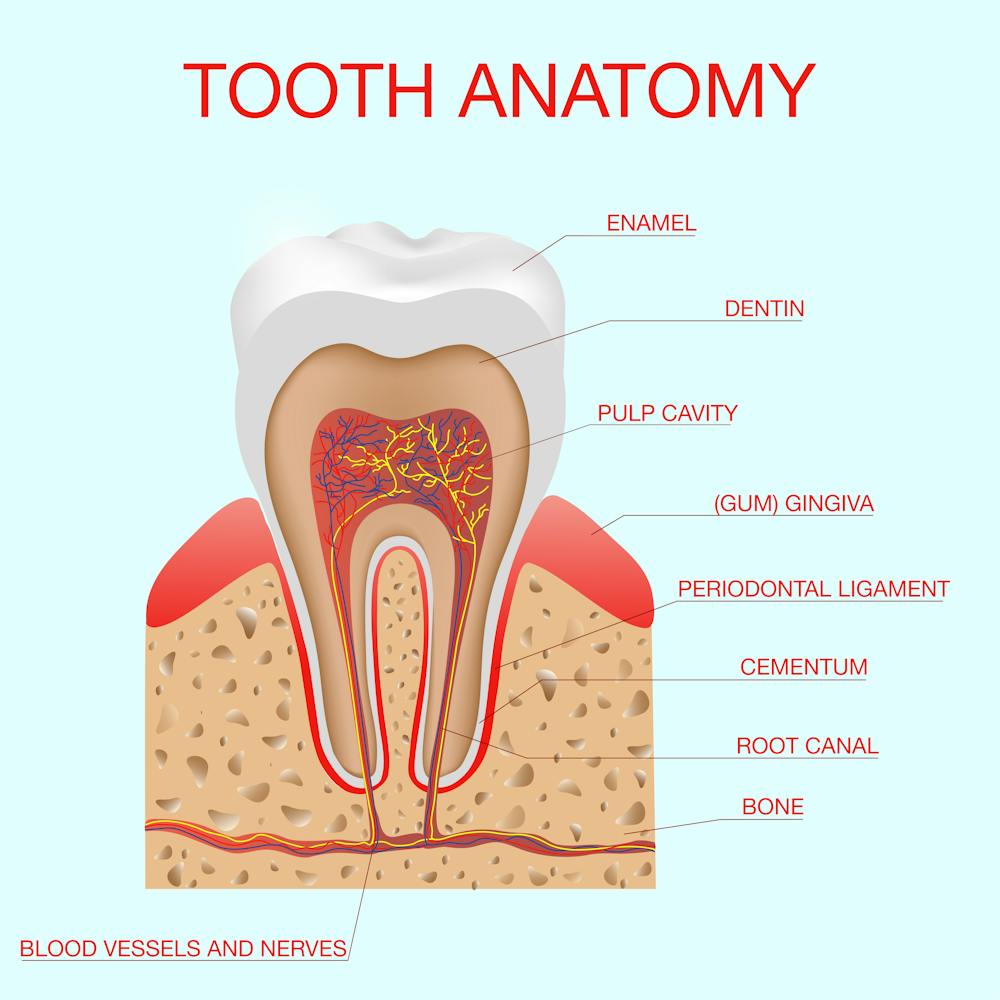
The secret of teeth longevity lies in their durability as well as in how they are anchored to the jaw – picture a hammer and its hand grip. For each tooth, durability and anchorage are functions of the complex interface between six different tissues; each alone is a biological marvel.

For anchorage, the cementum, ligament and bone grip the tooth at its root portion that is buried under the gum. The ligament, a soft tissue that is about 0.2 millimeters wide (about the diameter of four hairs), attaches the cementum of the root on one end to the bone of the jaw on the other end. It serves to anchor the tooth as well as to cushion its movement during chewing.

For durability, however, the secret lies in the enamel, dentin and pulp – our focus in this discussion.

An illustration of tooth anatomy
Dentin and pulp are the body and heart of the tooth. Anna Koroleva/iStock via Getty Images

Enamel – the shield

The enamel is the protective shell that covers the visible part of the tooth above the gum. Thanks to its high mineral content, enamel is the hardest tissue in the body. It needs to be, since it acts as a shield against the constant impact of chewing.

Enamel does not contain cells, blood vessels or nerves, so it is nonliving and nonsensitive. Enamel is also non-regenerating. Once destroyed by decay or broken by misuse such as ice chewing, nail biting or bottle opening – or touched by the dental drill – that part of our priceless enamel is gone for good.

Because it interfaces with a germ-laden world, the enamel is also where decay starts. When acid-generating bacteria accumulate on unbrushed or poorly brushed teeth, they readily dissolve the minerals in the enamel.

How bacteria invade the teeth and cause cavities.

Like hair or fingernails, the non-innervated enamel is not sensitive. The decay advances through the 2.5-millimeter thick (tenth of an inch) layer of enamel painlessly. When caught at that phase during a dental checkup visit, the dentist can treat the decay with a relatively conservative filling that hardly compromises the tooth’s structural integrity.

Because of its high mineral content, enamel is stiff. Its lifelong support is provided by the more resilient infrastructure – the dentin.

Dentin and pulp – body and heart

With less mineral content than enamel, dentin is the resilient body of the tooth. It is a living tissue formed of parallel tiny tubes housing fluid and cellular extensions. Both originate from the pulp.

The pulp is the tooth’s soft tissue core. Vastly rich in cells, blood vessels and nerves, it is the life source of the tooth – its heart – and the key to its longevity.

Like smoke detectors communicating with a remote fire station, the cellular extensions within the dentin sense decay as soon as it breaks through the nonsensitive layer of enamel into dentin. Once the extensions communicate the danger signal to the pulp, our tooth sensitivity alarm goes off: The tooth heart is in flames.

The inflamed pulp initiates two protective actions. The first is to secrete an additional layer of dentin to delay the approaching attack. The second is toothache, a call to visit the dentist.

The earlier the visit, the less the drilling and the smaller the filling. If caught in time, most of the tooth’s natural tissues will be preserved and the pulp will likely regain its healthy state. If caught too late, the pulp slowly dies out.

Without its heart, a nonliving tooth has no defense against further decay invasion. Without a hydration source, a dried-out dentin will sooner or later break under the forces of constant chewing. Besides, a tooth that has already lost a significant portion of its natural structure to decay, cavity preparation or root canal instrumentation becomes weak, with limited longevity.

In other words, the tooth is never the same without its heart. Pulpless, the tooth loses its womb-to-tomb endurance and mother nature’s lifelong warranty.

The tooth coming together

More complex – and more precious – than a pearl within an oyster, the formation of a tooth within our jawbone involves layered mineral deposition. As tooth development progresses in a process of ultimate cellular engineering, the cells of the six aforementioned tissues – enamel, dentin, pulp, cementum, ligament and bone – multiply, specialize and mineralize synchronously with each other to form uniquely interlocking interfaces: enamel to dentin, dentin to pulp, cementum to dentin and cementum to ligament to bone.

https://www.youtube.com/embed/xrebAYBnKw0?wmode=transparent&start=0 Tooth development – the ultimate process of cellular engineering.

In a progress akin to 3D printing, the tooth crown grows vertically to full formation. Simultaneously, the root continues its elongation to eventually launch off the crown from within the bone across the gum to appear in the mouth – the event known as teething. It is about that time, around 12 years of age, that our set of adult teeth is complete. These pearls are set to endure a lifetime and are undoubtedly worth preserving.

Save your teeth, visit the dentist

Tooth decay, the most prevalent disease in humans, is both predictable and preventable. The earlier it is caught, the more the tooth integrity can be preserved. Since the process starts painlessly, it is imperative to visit the dentist regularly to keep those insidious germs in check.

During your checkup visit, the dental professional will clean your teeth and check for early decay. If you are diligent with your daily preventive measures, the good news for you will be no news – enough to make anyone smile.

Samer Zaky, Research Assistant Professor in Oral and Craniofacial Sciences, University of Pittsburgh

This article is republished from The Conversation under a Creative Commons license. Read the original article.

ooOOoo

There’s that saying: “No news is good news.”

Getting older and older!

An interesting post for all of us, albeit, those on the right side of 70? will find this less important.

It is very difficult for me to add anything useful to this article so I will not try.

Except to say that the author, Aditi Gurkar, is Assistant Professor of Geriatric Medicine at the University of Pittsburgh so she should know what she is talking about!

ooOOoo

Are you a rapid ager? Biological age is a better health indicator than the number of years you’ve lived, but it’s tricky to measure

Healthspan measures incorporate quality of life in ways that lifespan does not. Ira T. Nicolai/The Image Bank via Getty Images

Aditi Gurkar, University of Pittsburgh

Do you ever wake up some days and think, “When I was younger, I could survive on just four hours of sleep, but now it seems like I need 10”? Or have you ever walked out of the gym and “felt” your knees?

Almost everyone experiences these kinds of signs of aging. But there are some people who seem to defy their age. The late U.S. Supreme Court Justice Ruth Bader Ginsberg stayed on the bench until her death at age 87. The “Great British Bake Off” judge Mary Berry, now in her 80s, continues to inspire people all over the world to bake and enjoy life. And actor Paul Rudd was named People magazine’s “Sexiest Man Alive” in 2021 at age 52 while still looking like he’s in his 30s. Is age just a number then?

Researchers have focused a lot of attention on understanding the causes and risk factors of age-related diseases like Alzheimer’s, dementia, osteoporosis and cancer. But many ignore the major risk factor for all of these diseases: aging itself. More than any individual risk factor such as smoking or lack of exercise, the number of years you’ve lived predicts onset of disease. Indeed, aging increases the risk of multiple chronic diseases by up to a thousandfold.

However, no two people age the same. Although age is the principal risk factor for several chronic diseases, it is an unreliable indicator of how quickly your body will decline or how susceptible you are to age-related disease. This is because there is a difference between your chronological age, or the number of years you’ve been alive, and your biological age – your physical and functional ability.

https://youtube.com/watch?v=9eOofp64IYI%3Fwmode%3Dtransparent%26start%3D0

As the author notes in her TED Talk, aging is not just a number.

I am a scientist interested in redefining “age.” Instead of benchmarking chronological age, my lab is invested in measuring biological age. Biological age is a more accurate measure of healthspan, or years lived in good health, than chronological age, and doesn’t directly correlate with wrinkles and gray hairs. Rapid agers experience a faster rate of functional deterioration relative to their chronological age.

My grandmother, who lived to be 83 but was bedridden and could not remember who I was for the last few years of her life, was a rapid ager. My grandfather, on the other hand, also lived until he was 83, but he was active, functional and even did my homework with me until he passed away – he was a healthy ager.

With the unprecedented growth of the world’s aging population, I believe that figuring out ways to measure biological age and how to maintain or delay its advance is critical not only for individual health, but also for the social, political and economic health of our society. Detecting rapid agers early on presents an opportunity to delay, change or even reverse the trajectory of biological aging.

Genetics and biological age

Biological aging is multifaceted. It arises from a complex mix of genetic traits and is influenced by factors like microbiome composition, environment, lifestyle, stress, diet and exercise.

Genetics were once thought to have no influence on aging or longevity. However, in the early 1990s, researchers reported the first studies identifying genes that were able to extend the lifespan of a small roundworm. Since then, multiple observations support the influence of genetics on aging.

For example, children of long-lived parents and even those with long-lived siblings tend to live longer. Researchers have also identified multiple genes that influence longevity and play a role in resilience and protection from stress. These include genes that repair DNA, protect cells from free radicals and regulate fat levels.

However, it is clear from studies in identical twins – who share the same genes but not the same exact lifespans – that genes are not the only factor that influences aging. In fact, genes probably account for only 20% to 30% of biological age. This suggests that other parameters can strongly influence biological aging.

Environmental and lifestyle effects

Researchers have found that environmental and lifestyle factors heavily influence biological age, including social connectedness, sleeping habits, water consumption, exercise and diet.

Social connectedness is essential for well-being throughout life. But social connections can be challenging to maintain over time due to loss of family and friends, depression, chronic illness or other factors. Several studies have reported a strong link between social isolation and increased stress, morbidity and mortality.

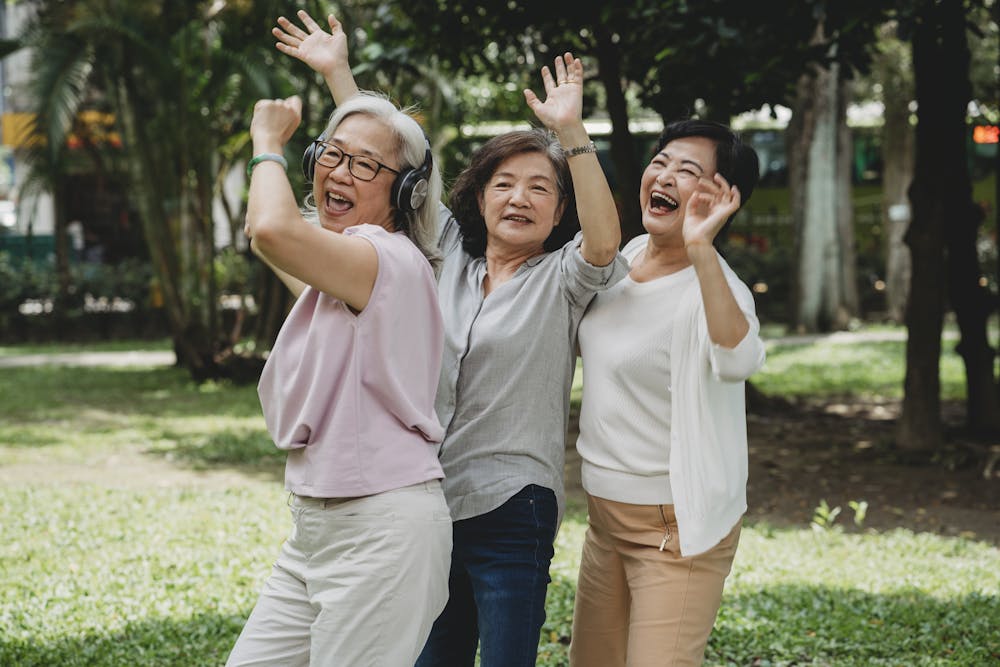
Three women dancing together in a park
Social connectedness and physical activity are linked to well-being throughout life. Filippo Bacci/E+ via Getty Images

Similarly, diet and exercise are strong influencers of biological age. Blue zones, which are areas around the world where people live long lives, attribute their successful aging to diet, exercise and social connectedness. Mostly plant-based meals and spurts of activity throughout the day are well-known “secrets” of healthspan and longevity. Although newer studies on the effects of diet interventions such as intermittent fasting and time-restricted feeding on longevity have not been rigorously tested, they do show multiple health benefits, including better glucose and insulin regulation

While genetics is difficult to control, diet and exercise can be modified to delay biological aging.

How to measure biological age

Currently, there is no effective test to predict an individual’s health trajectory early enough in life in order to intervene and improve quality of life with age. Scientists are interested in identifying a molecule that is sensitive and specific enough to serve as a unique fingerprint for biological age.

Considering the health and resilience of the individual instead of focusing solely on disease state is important in discussions on biological age. Resilience is the state of adapting and bouncing back from a health challenge and is often more predictive of functional health. A molecular aging fingerprint may provide a tool to help identify people who are less resilient and require more aggressive monitoring and early intervention to preserve their health and help reduce gender, racial and ethnic health disparities.

There are several promising molecular markers that may serve as biological age fingerprints.

One of these markers are epigenetic clocks. Epigenetics are chemical modifications of DNA that control gene function. Several scientists have found that DNA can get “marked” by methyl groups in a pattern that changes with age and could potentially act as a readout for aging.

It is important to note, however, that while epigenetic clocks have been valuable in predicting chronological age, they do not equate to biological age. In addition, it is unclear how these epigenetic marks work or how they contribute to aging.

Older adult holding gold balloons of the number 70 in a backyard
Age is so much more than a number. Klaus Vedfelt/DigitalVision via Getty Images

Another well-regarded marker of biological age is the build-up of dysfunctional cells called senescent or zombie cells. Cells become senescent when they experience multiple types of stress and become so damaged that they cannot divide anymore, releasing molecules that cause chronic low-grade inflammation and disease.

Animal studies have shown that getting rid of these cells can improve healthspan. However, what clearly defines senescent cells in humans is still unknown, making them challenging to track as a measure of biological age.

Lastly, the body releases unique metabolites, or chemical fingerprints, as byproducts of normal metabolism. These metabolites play a dynamic and direct role in physiological regulation and can inform functional health. My lab and others are figuring out the exact makeup of these chemicals in order to figure out which can best measure biological age. A lot of work still remains on not only identifying these metabolites, but also understanding how they affect biological age.

People have long sought a fountain of youth. Whether such an elixir exists is still unknown. But research is starting to show that delaying biological age may be one way to live healthier, fuller lives.

Aditi Gurkar

This article is republished from The Conversation under a Creative Commons license. Read the original article.

ooOOoo

There is no arguing the fact that more and more great articles are appearing online. Indeed, the whole world is changing radically in many areas.

Onwards and upwards! 😉

Footnote: This appeared online on the Inspiring Quotes website. The link is here, from which I reproduce the following:

Growing older is one of the most pervasive preoccupations of humankind. The passing of time is, after all, an inescapable part of the human condition. And aging, like love, is one of the most common themes in literature, be it the calm of poet Robert Brownings’ “Grow old along with me! The best is yet to be,” or poet Dylan Thomas’ raging against the dying of the light.