Tag: University of Colorado

Nutrition advice

An article on educating us on avoiding misinformation.

Many articles on nutrition are full of errors and for the lay person there’s no easy way to understand what is correct, or not.

That’s why a recent article appealed to me and I thought it worth sharing.

ooOOoo

Nutrition advice is rife with misinformation − a medical education specialist explains how to tell valid health information from pseudoscience

If a health claim about a dietary intervention sounds too good to be true, it probably is. Mizina/iStock via Getty Images Plus

Aimee Pugh Bernard, University of Colorado Anschutz Medical Campus

The COVID-19 pandemic illuminated a vast landscape of misinformation about many topics, science and health chief among them.

Since then, information overload continues unabated, and many people are rightfully confused by an onslaught of conflicting health information. Even expert advice is often contradictory.

On top of that, people sometimes deliberately distort research findings to promote a certain agenda. For example, trisodium phosphate is a common food additive in cakes and cookies that is used to improve texture and prevent spoilage, but wellness influencers exploit the fact that a similarly named substance is used in paint and cleaning products to suggest it’s dangerous to your health.

Such claims can proliferate quickly, creating widespread misconceptions and undermining trust in legitimate scientific research and medical advice. Social media’s rise as a news and information source further fuels the spread of pseudoscientific views.

Misinformation is rampant in the realm of health and nutrition. Findings from nutrition research is rarely clear-cut because diet is just one of many behaviors and lifestyle factors affecting health, but the simplicity of using food and supplements as a cure-all is especially seductive.

I am an assistant professor specializing in medical education and science communication. I also train scientists and future health care professionals how to communicate their science to the general public.

In my view, countering the voices of social media influencers and health activists promoting pseudoscientific health claims requires leaning into the science of disease prevention. Extensive research has produced a body of evidence-based practices and public health measures that have consistently been shown to improve the health of millions of people around the world. Evaluating popular health claims against the yardstick of this work can help distinguish which ones are based on sound science.

A white person's hands holding a smartphone with screen showing a health app, next to a cup of coffee.
To parse pseudoscientific claims from sound advice about health and nutrition, it’s crucial to evaluate the information’s source. tadamichi/Getty Images

Navigating the terrain of tangled information

Conflicting information can be found on just about everything we eat and drink.

That’s because a food or beverage is rarely just good or bad. Instead, its health effects can depend on everything from the quantity a person consumes to their genetic makeup. Hundreds of scientific studies describe coffee’s health benefits and, on the flip side, its health risks. A bird’s-eye view can point in one direction or another, but news articles and social media posts often make claims based on a single study.

Things can get even more confusing with dietary supplements because people who promote them often make big claims about their health benefits. Take apple cider vinegar, for example – or ACV, if you’re in the know.

Apple cider vinegar has been touted as an all-natural remedy for a variety of ailments, including digestive issues, urinary health and weight management. Indeed, some studies have shown that it might help lower cholesterol, in addition to having other health benefits, but overall those studies have small sample sizes and are inconclusive.

Advocates of this substance often claim that one particular component of it – the cloudy sediment at the bottom of the bottle termed “the mother” – is especially beneficial because of the bacteria and yeast it contains. But there is no research that backs the claim that it offers any health benefits.

One good rule of thumb is that health hacks that promise quick fixes are almost always too good to be true. And even when supplements do offer some health benefits under specific circumstances, it’s important to remember that they are largely exempt from Food and Drug Administration regulations. That means the ingredients on their labels might contain more or less of the ingredients promised or other ingredients not listed, which can potentially cause harms such as liver toxicity.

It’s also important to keep in mind that the global dietary supplements industry is worth more than US$150 billion per year, so companies – and wellness influencers – selling supplements have a financial stake in convincing the public of their value.

Misinformation about nutrition is nothing new, but that doesn’t make it any less confusing.

How nutrition science gets twisted

There’s no doubt that good nutrition is fundamental for your health. Studies consistently show that a balanced diet containing a variety of essential nutrients can help prevent chronic diseases and promote overall well-being.

For instance, minerals such as calcium and iron support bone health and oxygen circulation in the blood, respectively. Proteins are essential for muscle repair and growth, and healthy fats, like those found in avocados and nuts, are vital for brain health.

However, pseudoscientific claims often twist such basic facts to promote the idea that specific diets or supplements can prevent or treat illness. For example, vitamin C is known to play a role in supporting the immune system and can help reduce the duration and severity of colds.

But despite assertions to the contrary, consuming large quantities of vitamin C does not prevent colds. In fact, the body needs only a certain amount of vitamin C to function properly, and any excess is simply excreted.

Companies sometimes claim their supplement is “scientifically proven” to cure illness or boost brain function, with no credible research to back it up.

Some companies overstate the benefits while underplaying the hazards.

For example, wellness influencers have promoted raw milk over pasteurized milk as a more natural and nutritious choice, but consuming it is risky. Unpasteurized milk can contain harmful bacteria that leads to gastrointestinal illness and, in some cases, much more serious and potentially life-threatening diseases such as avian influenza, or bird flu.

Such dietary myths aren’t harmless. Reliance on nutrition alone can lead to neglecting other critical aspects of health, such as regular medical checkups and lifesaving vaccinations.

The lure of dietary myths has led people with cancer to replace proven science-backed treatments, such as chemotherapy or radiation, with unproven and misleading nutrition programs.

How to spot less-than-solid science

Pseudoscience exploits your insecurities and emotions, taking advantage of your desire to live the healthiest life possible.

While the world around you may be uncertain and out of your control, you want to believe that at the very least, you have control over your own health. This is where the wellness industry steps in.

What makes pseudoscientific claims so confusing is that they use just enough scientific jargon to sound believable. Supplements or powders that claim to “boost immunity” often list ingredients such as adaptogens and superfoods. While these words sound real and convincing, they actually don’t mean anything in science. They are terms created by the wellness industry to sell products.

I’ve researched and written about reliable ways to distinguish science facts from false health claims. To stay alert and find credible information, I’d suggest you follow a few key steps.

First, check your emotions – strong emotional reactions, such as fear and anger, can be a red flag.

Next, check that the author has experience or expertise in the field of the topic. If they’re not an expert, they might not know what they are talking about. It’s always a good idea to make sure the source is reputable – ask yourself, would this source be trusted by scientists?

Finally, search for references that back up the information. If very little or nothing else exists in the science world to back up the claims, you may want to put your trust in a different source.

Following these steps will separate the facts from fake news and empower you to make evidence-based decisions.

Aimee Pugh Bernard, Assistant Professor of Immunology and Microbiology, University of Colorado Anschutz Medical Campus

This article is republished from The Conversation under a Creative Commons license. Read the original article.

ooOOoo

Sound advice for the majority of us!

Having pets!

But primarily for companionship.

I chose this article from The Conversation simply because it is the truth about having a pet animal.

ooOOoo

Pets give companionship, cuddles and joy – and also unavoidable stresses

Pets can bring joy and companionship, as well as financial worries, loss and logistical challenges. Dann Tardif/Stone via Getty Images

Emily Hemendinger, University of Colorado Anschutz Medical Campus

Owning a pet can be a roller coaster. There are the highs, like when your dog greets you with a full-body wiggle when you return home, or when your cat purrs loudly as you cuddle next to one another. Then there are the lows, like stressful trips to urgent care, waking up to that unpleasant vomiting noise, or making the difficult choice to say goodbye because of medical problems or even intractable behavioral issues.

For those pet-owners who are struggling, it’s beneficial to their mental health to acknowledge that pets can create stress and that some animals are more work than others.

Research has shown that both cats and dogs can have equally positive impacts on mental health.

Pets may be helpful at reducing stress, anxiety and feelings of being overwhelmed, including in children. Pet ownership has also been shown to improve well-being by instilling people with a sense of purpose and responsibility.

As a licensed clinical social worker, animal lover and proud dog mom, I have both professionally and personally seen the mental health impacts of having animal companions.

Media stories commonly cover the positives of pet ownership. But the hardships and downsides of owning a pet are not discussed as often. For instance, while there are many positive aspects to pet ownership, some research is showing that pets may lead to exacerbated mental health concerns or even sleep issues.

Whether you’re adopting or shopping, pets can bring a full range of emotions into our lives. Research has even shown that pets may benefit non-pet owners around them as well.

How pets can enrich our lives

A pet owner may easily be able to tick off an infinite number of positive effects their fuzzy companion has had on their life. Research backs them up.

Pets can provide constant companionship for individuals and families. This is particularly true for older adults. There was an uptick in adoptions of pets during the early days of the COVID-19 pandemic. Many people benefited from pets during periods of stay-at-home mandates and quarantines.

Pet adoptions soared during the early days of the COVID-19 pandemic. But many owners then found themselves struggling with the rising costs of care.

Research shows that dogs can reduce loneliness in their owners. In fact, being accompanied by a dog may even make you seem more approachable.

Pets, especially dogs, may help improve one’s ability to socialize and feel connected with others, as well as increasing the prospects for social interactions. People may bond over the experience of having pets, socialize at the dog park, or even meet up at the local cat café.

Animals and pets have also been used to assist in detecting the onset symptoms of medical episodes, including seizures. Animal-assisted therapy and pet therapy have shown promise in improving symptom management and overall quality of life in a number of conditions, including trauma and stressor-related disorders, anxiety disorders, eating disorders, autism, traumatic brain injuries, neurological disorders and more.

There are ample benefits to pet ownership.

The inherent stressors

Despite the many positive impacts of pet ownership, it also can have negative impacts. For example, one survey found that 47% of Americans felt separation anxiety when leaving their dogs at home.

The survey also found that 41% of pet owners declined social invitations because they did not want to leave their dog at home, and that 70% of pet owners would prefer to work remotely so they could stay at home with their pet. Pet owners have also identified feeling anxious about their pet getting sick or running away, or the risk that they might harm the animal unintentionally.

Stress from pet ownership is common. There’s the stress of house-training and making sure the pet is getting enough enrichment – both physically and mentally. Then there are the challenges associated with vet appointments and navigating illness, as well as financial stressors and finding pet sitters.

Another element of pet ownership that people often don’t talk about is the stress, and often shame, that owners with reactive dogs experience from walking their dog, having people over to the house or having their dog around children.

Finally, there’s the reality that our pet companions live shorter lives than we do, leading to end-of-life planning, expensive treatments for older-age ailments, and, of course, the grief that will be felt from the loss of a pet. For some people, the loss of a pet may feel worse than human loss.

People may judge or criticize pet owners for an “overblown” grief reaction. The common experience of invalidation and lack of acknowledgment related to grief around pet loss – similar to the grief felt from divorce and miscarriage – is categorized as disenfranchised grief. This term refers to grief that is not acknowledged, validated or accepted socially.

Young man sits in front of his laptop and puts his nose up to the nose of his cat.
Society often fails to recognize the significance of pets in people’s lives. Thomas Northcut/DigitalVision via Getty Images

Strings attached

Pet owners, especially post-pandemic, have reported high levels of guilt related to leaving their pets at home while at work or social events. Some of this guilt may be related to concerns about providing insufficient attention to the pet or about the pet’s health. This guilt has even been shown to be similar to the feeling human parents have concerning their human children.

As someone who adores their dog, I can relate to the guilt of leaving him alone. To complicate things, my dog has joint issues, anxiety and discoid lupus, a type of lupus that affects the skin on his nose. He can also be reactive. All of these aspects require me to provide extra care. When friends invalidate my worries and guilt, it can feel isolating and shaming.

And I’m not alone in these feelings. Overall, when there is a lack of consideration for the complex feelings pet owners experience, the invalidation and disenfranchised feelings can lead to depression, anxiety, feelings of being isolated and worsened quality of life.

Woman sits on a dock with her arm around her dog, which looks backward over her shoulder into the camera.
Many pet owners report feeling unsupported and invalidated when it comes to the grief around illness, loss and other complicated issues that come with pet ownership. LWA/DigitalVision via Getty Images

Finding support

The human-animal bond is unique, with humans receiving unconditional love and full acceptance from their animal companion. When society can honor and respect this bond through validation, patience and compassion, it not only helps pet owners but also the clinicians who treat the animals.

Employers can be supportive by continuing to provide remote and hybrid work options, flexibility in scheduling and opportunities for employees to feel validated and receive support. If a loved one is experiencing guilt around leaving their dog at home or a friend is having anxiety about their cat’s health, instead of minimizing their experience, try talking to them and asking how best to support them through their distress.

Another support tool is encouraging pet owners to practice self-compassion and mindfulness, being present and focusing on the time they do have with their pet.

Pets can bring infinite joy and companionship to our lives, whether that’s through pet ownership, fostering, volunteering or engaging in animal-assisted therapy.

It remains important, however, to acknowledge the stressors and difficulties pet owners face. After all, the ups and downs of pet ownership, just like the ups and downs of the human experience, are what make life and relationships that much more meaningful.

Emily Hemendinger, Assistant Professor of Psychiatry, University of Colorado Anschutz Medical Campus

This article is republished from The Conversation under a Creative Commons license. Read the original article.

ooOOoo

This is such a good article both for the general readership and for Jeannie and me specifically. For when I met Jean in December, 2007 Jean had 23 dogs and 7 cats. Jean’s passionate interest was in rescuing the many street dogs that roamed San Carlos in Mexico.

My great love of dogs came from the loving companionship that the animals offered me, including my Pharaoh that I brought with me from England. Now we are down to just two dogs: Oliver and Cleopatra.

Dreams of hope

My wish for 2017, and for evermore.

One of the many things that we adore about living here in Merlin, Southern Oregon is the closeness of nature. Not just the nature of the slopes and mountains but the nature of the trees, creeks, grasses and wild plants.

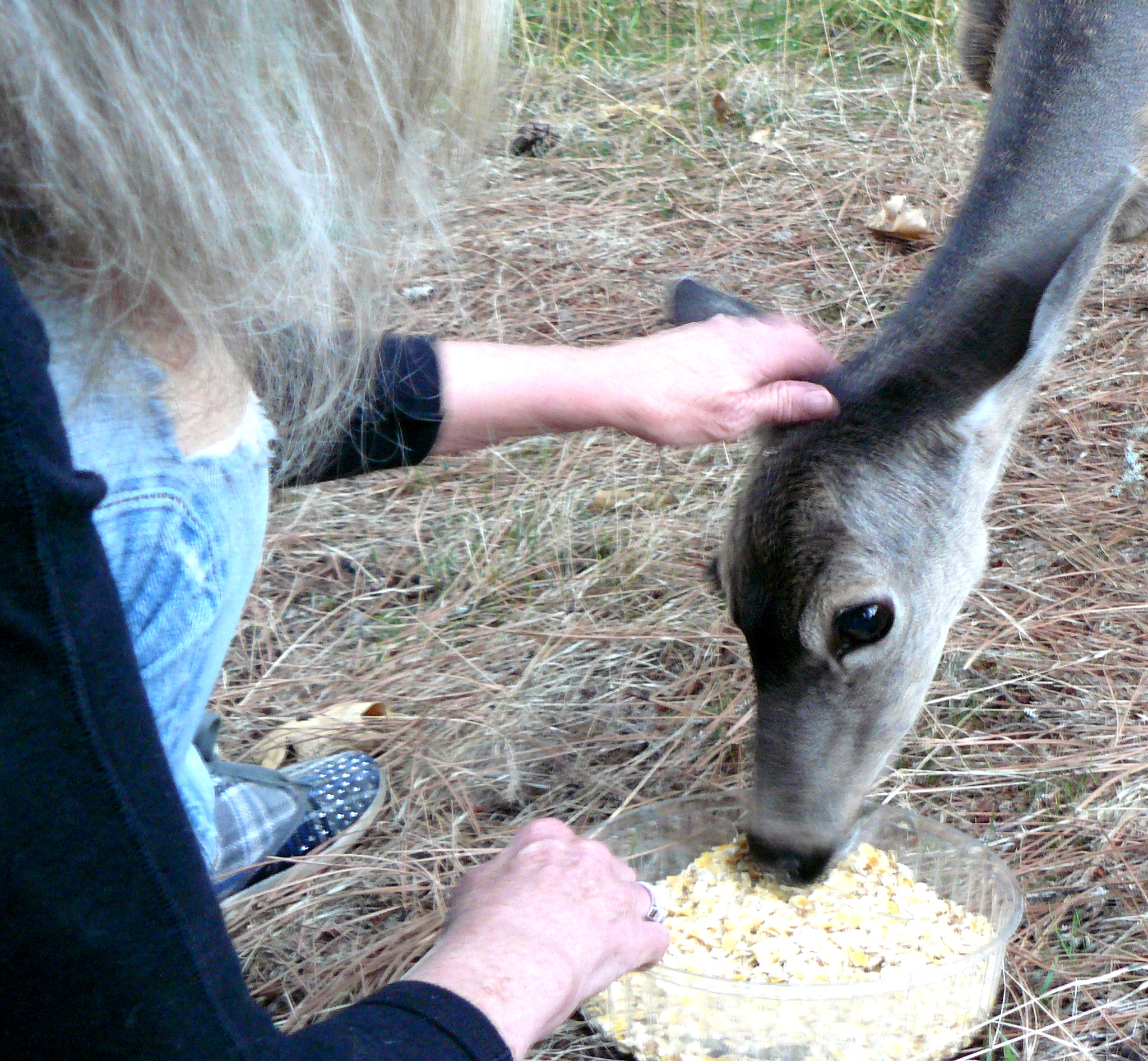
Plus the awareness over the 4+ years that we have been here of how easy it is to gain the trust of wild animals. I will go to my grave holding on to the sweet sensation of a wild deer trusting me and Jean to the point where we could stroke the deer’s neck when we were feeding her.

The trust between the deer and Jean then enabled the deer to feed from Jean's hand.
The trust between the deer and Jean then enabled the deer to feed from Jean’s hand.

Then, unbelievably, the wild deer continues feeding as Jean fondles the deer's ear.
Then, unbelievably, the wild deer continues feeding as Jean fondles the deer’s ear.

(Both photographs taken in October, 2014 in the area of grassland near to our stables.)

The measure of how we, as in humanity, really feel about the only home we have, as in Planet Earth, is how we regard our planet.

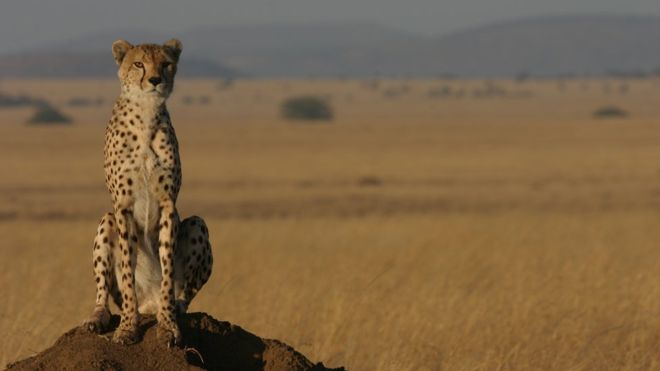
The pain that we feel when we read, as I did yesterday, about another animal species possibly heading towards extinction. In this case, an item on the BBC News website about Cheetahs.

Cheetahs heading towards extinction as population crashes

By Matt McGrath Environment correspondent

Protected parks and reserves for cheetahs are not sufficient as the animal ranges far beyond these areas.

 The sleek, speedy cheetah is rapidly heading towards extinction according to a new study into declining numbers.

The report estimates that there are just 7,100 of the world’s fastest mammals now left in the wild.

Cheetahs are in trouble because they range far beyond protected areas and are coming increasingly into conflict with humans.

The authors are calling for an urgent re-categorisation of the species from vulnerable to endangered.

(Read the full article here.)

It’s no good tut-tutting; something different has to be done. For otherwise nature will have the last word to say about the future of vast numbers of species especially homo sapiens!

All of which leads me to the main theme of today’s post: holding nature in higher esteem as in higher legal esteem.

Read the following that was published on The Conversation blogsite on October 10th, 2016 and is republished here within their terms. The author is , Lecturer on Anthropology, University of Colorado, Denver.

ooOOoo

What if nature, like corporations, had the rights and protections of a person?

October 10, 2016 8.16am EDT

image-20161005-20110-9ipkfz
The forest around Lake Waikaremoana in New Zealand has been given legal status of a person because of its cultural significance. Paul Nelhams/flickr, CC BY-SA

In recent years, the U.S. Supreme Court has solidified the concept of corporate personhood. Following rulings in such cases as Hobby Lobby and Citizens United, U.S. law has established that companies are, like people, entitled to certain rights and protections.

But that’s not the only instance of extending legal rights to nonhuman entities. New Zealand took a radically different approach in 2014 with the Te Urewera Act which granted an 821-square-mile forest the legal status of a person. The forest is sacred to the Tūhoe people, an indigenous group of the Maori. For them Te Urewera is an ancient and ancestral homeland that breathes life into their culture. The forest is also a living ancestor. The Te Urewera Act concludes that “Te Urewera has an identity in and of itself,” and thus must be its own entity with “all the rights, powers, duties, and liabilities of a legal person.” Te Urewera holds title to itself.

Although this legal approach is unique to New Zealand, the underlying reason for it is not. Over the last 15 years I have documented similar cultural expressions by Native Americans about their traditional, sacred places. As an anthropologist, this research has often pushed me to search for an answer to the profound question: What does it mean for nature to be a person?

The snow-capped mountain

A majestic mountain sits not far northwest of Albuquerque, New Mexico. Like a low triangle, with long gentle slopes, Mount Taylor is clothed in rich forests that appear a velvety charcoal-blue from the distance. Its bald summit, more than 11,000 feet high, is often blanketed in snow – a reminder of the blessing of water, when seen from the blazing desert below.

The Zuni tribe lives about 40 miles west of Mount Taylor. In 2012, I worked with a team to interview 24 tribal members about the values they hold for Dewankwin K’yaba:chu Yalanne (“In the East Snow-capped Mountain”), as Mount Taylor is called in the Zuni language. We were told that their most ancient ancestors began an epic migration in the Grand Canyon.

 Mount Taylor in New Mexico, a sacred site to the Zuni who believe it is a living being. Chip Colwell, Author provided.
Mount Taylor in New Mexico, a sacred site to the Zuni who believe it is a living being. Chip Colwell, Author provided.

Over millennia they migrated across the Southwest, with important medicine societies and clans living around Mount Taylor. After settling in their current pueblo homes, Zunis returned to this sacred mountain to hunt animals like deer and bear, harvest wild plants like acorns and cattails, and gather minerals used in sacrosanct rituals that keep the universe in order. Across the generations Dewankwin Kyaba:chu Yalanne has come to shape Zuni history, life, and identity no less than the Vatican has for Catholics.

But unlike holy places in the Western world, Zunis believe Mount Taylor is a living being. Zuni elders told me that the mountain was created within the Earth’s womb. As a mountain formed by volcanic activity, it has always grown and aged. The mountain can give life as people do. The mountain’s snow melts in spring and nourishes plants and wildlife for miles. Water is the mountain’s blood; buried minerals are the mountain’s meat. Because it lives, deep below is its beating heart. Zunis consider Mount Taylor to be their kin.

There is a stereotype that Native American peoples have a singular connection to nature. And yet in my experience, they do see the world in a fundamentally different way from most people I know. Whether it is mountains, rivers, rocks, animals, plants, stars or weather, they see the natural world as living and breathing, deeply relational, even at times all-knowing and transcendent.

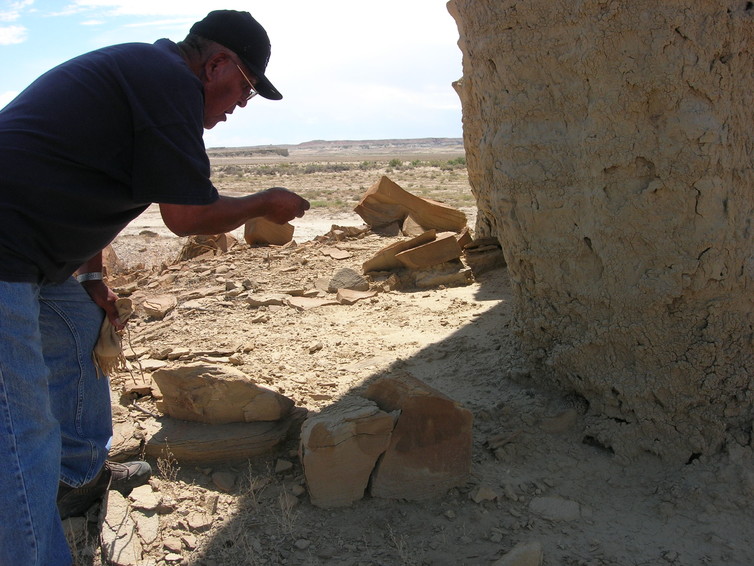
In my work with Arizona’s Hopi tribe, I have traveled with cultural leaders to study sacred places. They often stop to listen to the wind, or search the sky for an eagle, or smile when it begins to rain, which they believe is a blessing the ancestors bestow upon them.

During one project with the Hopi tribe, we came across a rattlesnake coiled near an ancient fallen pueblo. “Long ago, one of them ancestors lived here and turned into a rattlesnake,” the elder Raleigh H. Puhuyaoma Sr. shared with me, pointing to the nearby archaeological site. “It’s now protecting the place.” The elders left an offering of corn meal to the snake. An elder later told me that it soon rained on his cornfield, a result from this spiritual exchange.

Violent disputes

Understanding these cultural worldviews matters greatly in discussions over protecting places in nature. The American West has a long history of battles over the control of land. We’ve seen this recently from the Bundy family’s takeover of the federal wildlife refuge in Oregon to the current fight over turning Bears Ears – 1.9 million acres of wilderness – into a national monument in Utah.

Yet often these battles are less about the struggle between private and public interests, and more about basic questions of nature’s purpose. Do wild places have intrinsic worth? Or is the land a mere tool for human uses?

 A Hopi elder making an offering to a snake to protect a sacred space. Chip Colwell, Author provided.
A Hopi elder making an offering to a snake to protect a sacred space. Chip Colwell, Author provided.

Much of my research has involved documenting sacred places because they are being threatened by development projects on public land. The Zuni’s sacred Mount Taylor, much of it managed by the U.S. National Forest Service, has been extensively mined for uranium, and is the cause of violent disputes over whether it should be developed or protected.

Even though the U.S. does not legally recognize natural places as people, some legal protections exist for sacred places. Under the National Historic Preservation Act, for example, the U.S. government must take into consideration the potential impacts of certain development projects on “traditional cultural properties.”

This and other federal heritage laws, however, provide tribes a small voice in the process, little power, and rarely lead to preservation. More to the point, these laws reduce what tribes see as living places to “properties,” obscuring their inherent spiritual value.

In New Zealand, the Te Urewera Act offers a higher level of protection, empowering a board to be the land’s guardian. The Te Urewera Act, though, does not remove its connection to humans. With a permit, people can hunt, fish, farm and more. The public still has access to the forest. One section of the law even allows Te Urewera to be mined.

Te Urewera teaches us that acknowledging cultural views of places as living does not mean ending the relationship between humans and nature, but reordering it – recognizing nature’s intrinsic worth and respecting indigenous philosophies.

In the U.S. and elsewhere, I believe we can do better to align our legal system with the cultural expressions of the people it serves. For instance, the U.S. Congress could amend the NHPA or the American Indian Religious Freedom Act to acknowledge the deep cultural connection between tribes and natural places, and afford better protections for sacred landscapes like New Mexico’s Mount Taylor.

Until then, it says much about us when companies are considered people before nature is.

ooOOoo

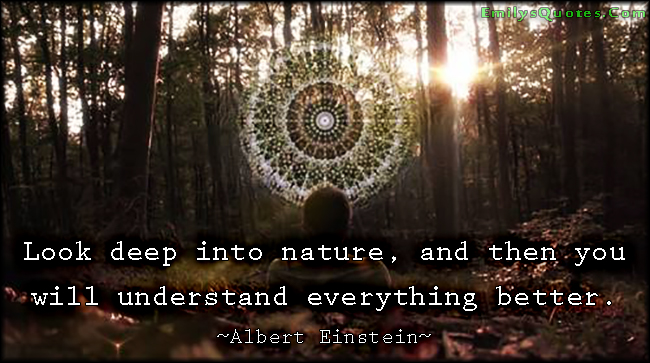
 emilysquotes-com-look-deep-nature-understand-wisdom-inspirational-life-albert-einsteinMy dreams of hope!

Playfulness in dogs!

A perfect follow-on to yesterday’s post.

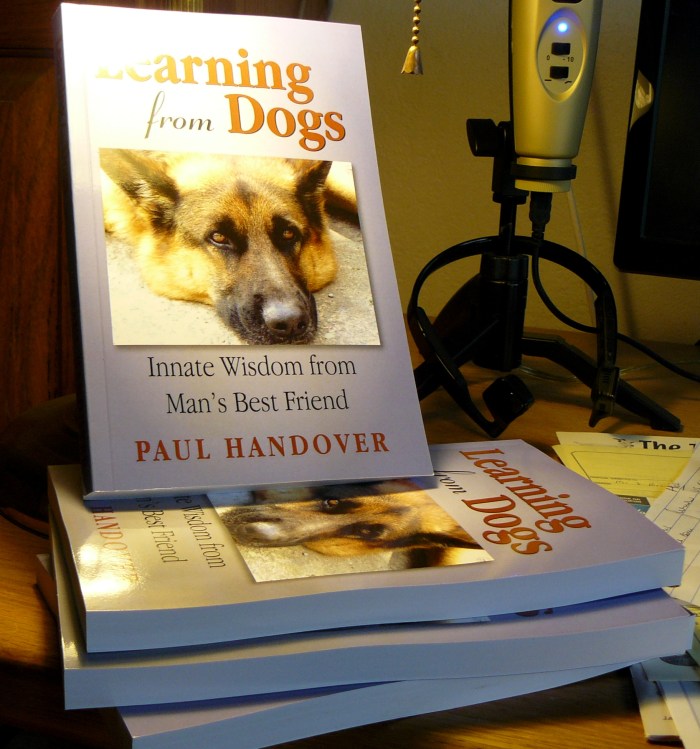
Those that read my post from yesterday will understand that it was both a busy and wonderful day. Topped off beautifully by arriving home to find four proof copies of The Book!

Four copies of The Book rather hastily assembled under my desk light.

So it was well after 5pm yesterday when I sat down to publish today’s post.

It seemed very appropriate to offer a recent item that appeared on Mother Nature Network and is republished here within MNN’s terms.

(Please note that I didn’t have the time to copy and insert the many interesting links in the original but have coloured the words or phrases to indicate that by going here you can access those links.)

ooOOoo

The science behind how dogs play

When dogs bow or let another dog ‘win’ the wrestling match, there’s a good reason.

By: Laura Moss, October 29, 2015.

If a dog plays too rough, other dogs may exclude him from play. (Photo: Brad Armentor/flickr)

Dogs play by chasing, tackling and nipping at each other, but there’s more to their lively antics than meets the eye. The way dogs interact with one another reveals that dogs have a language as well as a moral code, and they don’t engage in play simply to establish dominance.

Marc Bekoff, professor emeritus at the University of Colorado at Boulder, has been studying animal behavior for more than 40 years. After reviewing four years’ worth of footage of dogs, wolves and coyotes, he discovered that even dogs’ wild relatives play by chasing each other, rolling over and jumping on one another.

“Play is a major expenditure of energy, and it can be dangerous,” Bekoff told The Washington Post. “You can twist a shoulder or break a leg, and it can increase your chances of being preyed upon. So why do they do it? It has to feel good.”

Bekoff and other researchers have conducted numerous studies on how these animals play and what their actions mean. What they’ve found is that dogs’ behavior during play is a language all its own, and every shift of the eyes or wag of the tail is a form of communication.

Play even has a set of rules, and if a dog breaks them — by playing too rough, for example — that dog may be excluded from group play. Bekoff says this response suggests that dogs enforce moral conduct, which means they’re capable of experiencing a range of emotions and even of recognizing these emotions in other canines.

What exactly do their different play behaviors mean?

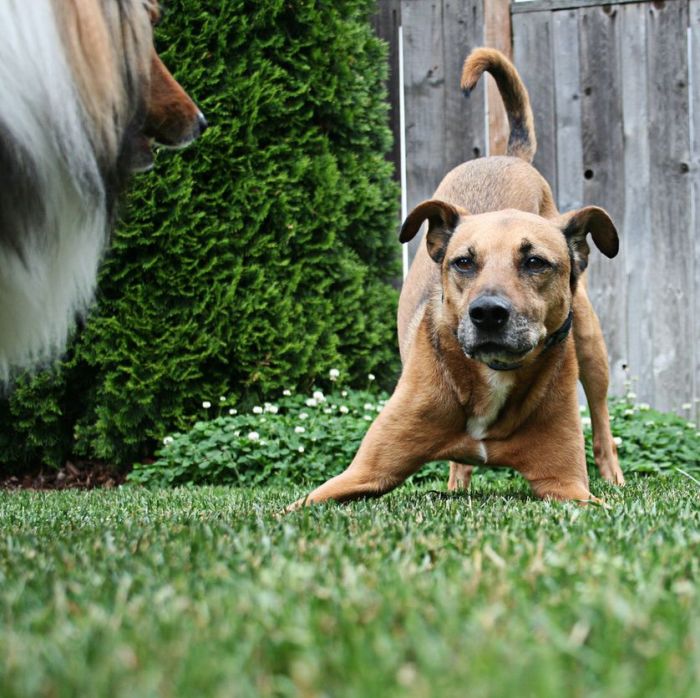
The bow is a signal for play to commence — but there's more to it than that. (Photo: Mike McCune/flickr)
The bow is a signal for play to commence — but there’s more to it than that. (Photo: Mike McCune/flickr)

Play bow

When a dog lowers the front of its body in a bow-like stance, this is an invitation to play. If your dog often bows to other canines you meet while out on a walk, it’s a good indication that your pup would like a playmate.

However, this stance doesn’t only invite play. It also communicates to other dogs that the jump, nip or roughhousing that follows the bow isn’t an act of aggression. It’s simply a dog’s way of saying, “I’m just playing around.”

See my belly? That has meaning too. (Photo: Eric Sonstroem/flickr)

Rolling over

When a dog rolls over onto its back during play, it’s often considered a submissive gesture; however, research suggests it could mean something else entirely.

Earlier this year, scientists at the University of Lethbridge and the University of South Africa observed 33 play sessions between two dogs, and they also studied 20 YouTube videos of dogs playing together.

While not all the dogs rolled over during play, those that did weren’t necessarily the smaller or weaker of the two dogs, nor were the dogs that rolled over exhibiting submissive behaviors such as decreasing play.

In fact, smaller dogs were no more likely to roll over than larger ones, and the pups that did roll over used the position to evade a nip or to get into position to playfully bite the other dog.

The researchers found that none of the 248 rollovers were submissive during play and concluded that rolling over is actually meant to facilitate play.

There's a lot of communication going on here — though to human watchers it may simply induce giggles. (Photo: WilleeCole Photography/Shutterstock)
There’s a lot of communication going on here — though to human watchers it may simply induce giggles. (Photo: WilleeCole Photography/Shutterstock)

Letting female puppies win

A 2008 study found that male puppies frequently let their female puppy playmates win during play, even when the males were bigger and stronger.

The male dogs would even put themselves in positions that left them vulnerable to attack. For example, the male puppies would occasionally lick their playmates’ muzzles, which provided the female puppies with an opportunity to easily bite in return.

Why? Researchers say the act of playing may be more important to the male dogs than winning.

“Perhaps males use self-handicapping with females in order to learn more about them and to form close relationships with them — relationships that might later help males to secure future mating opportunities,” Camille Ward, lead author of the study, told NBC News.

ooOOoo

How lucky we are in this modern world to read and share such interesting essays.

You all have a lovely weekend.