Tag: The Smithsonian

On European Dogs

In the sense of the effect that they had on canines already living in the Americas.

I am taking the liberty, hopefully without getting my wrist slapped, of republishing a recent article that appeared on The Smithsonian Magazine website.

Simply because it offers some very interesting insights into the history of canines in The Americas.

Enjoy!

ooOOoo

European Dogs Devastated Indigenous American Pup Populations

Disease, cultural change wiped out pre-contact populations, leaving no trace of ancient dogs’ DNA in modern counterparts

A dog buried in Western Illinois 10,000 years ago is one of the oldest dogs known in the Americas, and the oldest dog burial in the world. These native American dogs were almost entirely wiped out when European colonists arrived. (Del Baston, courtesy of the Center for American Archeology)

By Meilan Solly, SMITHSONIAN.COM

The first humans to populate the Americas arrived from Siberia via the Bering land bridge around 16,000 years ago. Man’s best friend, the domesticated dog, didn’t arrive for another 6,000 years or so, crossing over just in time to avoid the land bridge’s collapse, but archaeological evidence suggests that the two species lived in harmony for thousands of years—at least until 1492, the year Columbus sailed the ocean blue.

According to a study published in Science on Thursday, “pre-contact” American dogs possessed a unique genetic signature derived not from the North American wolf, as previously thought, but from domesticated Siberian ancestors. Today, that singular genome has all but disappeared, eradicated by the 15th-century arrival of European settlers and their canine companions.

National Geographic’s Maya Wei-Haas explains that European dogs, like their human owners, probably carried diseases that pre-contact dogs were unequipped to fend off. The colonists preferred European breeds and discouraged their pets from mating with the native dogs, which study co-author Angela Perri, a zooarchaeologist at Durham University, says were viewed as “wild” and “vicious.”

“This study demonstrates that the history of humans is mirrored in our domestic animals,” Greger Larson, director of the Palaeo-BARN at Oxford and senior author of the study, said in a statement. “People in Europe and the Americas were genetically distinct, and so were their dogs. And just as indigenous people in the Americas were displaced by European colonists, the same is true of their dogs.”

To trace the story of these pre-contact dogs, researchers studied DNA found in the mitochondria of 71 North American and Siberian dog bones. The remains, which date from roughly 10,000 to 1,000 years ago, included those of the Koster dogs, a group of four domesticated canines discovered at a burial site in western Illinois during the 1970s. (A second study, newly published in pre-print server Biorxiv, further discusses these early dogs.) As Science’s David Grimm notes, the Koster pups lived about 10,000 years ago, making them the oldest known dogs in the Americas. Perri, referencing the animals’ small, slender stature, tells Grimm that “it wouldn’t be surprising if they were all used as hunting dogs.”

DNA analysis allowed the scientists to identify pre-contact dogs’ closest relatives: a group of dogs native to Zhokhov Island, a frigid Arctic site situated about 300 miles north of the Russian mainland. The Atlantic’s Ed Yong writes that these dogs were the first to be bred for a specific purpose, namely pulling their humans’ sleds.

In addition to shedding light on the first American dogs’ origins, the study offers insights on pre-contact dogs’ connections—or rather, lack of connections—with modern dogs. Researchers compared the 71 ancient genomes with DNA from more than 5,000 modern dogs, including breeds like chihuahuas and Carolina dogs, which are commonly thought to be descended from indigenous populations. The highest level of pre-contact DNA conclusively found in any of the modern dogs was four percent, a negligible result, the New York Times’ James Gorman reports.

The team’s findings suggest that modern American dogs are descended solely from Eurasian breeds introduced by European settlers. Perri tells Wei-Haas that the scientists expected to find evidence of interbreeding between the pre-contact pups and the new arrivals. Instead, they realized that the native dogs had virtually vanished.

“It is fascinating that a population of dogs that inhabited many parts of the Americas for thousands of years, and that was an integral part of so many Native American cultures, could have disappeared so rapidly,” Laurent Frantz, study co-author and evolutionary geneticist at Queen Mary University of London, said in a statement.

Oddly enough, scientists found that the closest surviving trace of pre-contact dogs’ DNA is found in a sexually transmitted canine cancer. The Los Angeles Times’ Deborah Netburn writes that the disease, known as canine transmissible venereal tumor, stems from the genetic mutation of a single North American dog that lived up to 8,225 years ago. The tumor cells spread through mating and carry a copy of that original DNA, allowing researchers to paint a clear picture of the “founding dog,” or patient zero.

Elaine Ostrander, chief of the cancer genetics and comparative genomics branch at the National Human Genome Research Institute, tells Wei-Haas, “It’s the world’s oldest continuously propagated cell line, which is really, really remarkable.”

………

Read more: https://www.smithsonianmag.com/smart-news/how-european-dogs-devastated-indigenous-american-pup-populations-180969561/#8bYPIFJtvBrqzb3I.99
Give the gift of Smithsonian magazine for only $12! http://bit.ly/1cGUiGv
Follow us: @SmithsonianMag on Twitter

ooOOoo

“This study demonstrates that the history of humans is mirrored in our domestic animals,”

Best not to go too far into that observation from Dr. Greger Larson!

The continuing fallout from Chernobyl

Will you, please, consider taking one of these puppies!

I closed last Saturday’s post with this plea: “If only there wasn’t a single dog in need of adoption in the world!

That plea is being used to introduce today’s post. An article that was recently read on the Smart News section from The Smithsonian magazine website.

I have republished it, hopefully without infringing copyrights, because it’s a story that needs to be circulated as far and wide as possible.

ooOOoo

Chernobyl Puppies Going Up for Adoption in the U.S.

Now in quarantine, the pups are expected to come to the U.S. this summer in search of their forever homes.

Please for to adopt us, Comrade. (Chernobyl Exclusion Zone Authority)
By Jason Daley smithsonian.com , May 16, 2018

In 1986, the Chernobyl nuclear power plant melted down, sending nearby residents fleeing the disaster zone. And sadly, most pets got left behind. Over the last 32 years, the surviving pups have multiplied, creating a community of hundreds that live in the Chernobyl Exclusion Zone and another 250 that live on the grounds of the former power plant itself.

Now, a dozen of those homeless puppies will head to the United States for adoption, reports Matt Novak at Gizmodo.

According to the Russian website Meduza, Ukrainian authorities have captured 200 of the stray Chernobyl puppies. They are currently keeping them in a 45-day quarantine in the city of Slavutych, and then a dozen will be shipped to the United States.

“We have rescued the first puppies, they are now in our adoption shelter going through the quarantine and decontamination process,” Lucas Hixson, co-founder of the U.S.-based Clean Futures Fund, a non-profit created to take care of Chernobyl clean-up workers, their families and the dogs tells Novak. “The goal is 200 dogs but will likely be more in the long run. My hope is to get 200 dogs rescued and adopted in the next 18 months and then go from there.”

The pups have a heartbreaking story, as The Guardian’s Julie McDowell detailed earlier this year. During the evacuation, more than 120,000 people were herded onto buses to escape the meltdown of the Unit 4 reactor, leaving most of their valuables and their pets behind. Many dogs tried to follow their owners onto the buses but were kicked off. People left notes on their doors asking authorities not to kill their animals, but Soviet Army squads were dispatched to put down as many contaminated animals as they could find.

Some of the dogs survived the army and the radiation, rebuilding their community as a pack. The Clean Futures Fund reports that the 250 dogs living on the grounds of the former power plant were likely driven out of the surrounding forests by wolves and a lack of food. Another 225 dogs roam Chernobyl City and hundreds of others live and scrounge at security checkpoints and throughout the woods and abandoned communities in the Exclusion Zone. Most of the dogs around the plant are under the age of 4 or 5, and clean-up workers at the site sometimes feed and tend to sick animals.

But last year, after becoming aware of the animals, The Clean Futures Fund decided the pups needed a more permanent solution. That’s why they’ve implemented a three-year program in the Exclusion Zone to spay and neuter 1,000 animals and vaccinate them against rabies. At their first clinic last August, the Fund spayed and neutered 350 dogs and cats in the area. Each animal was tested for radiation, given antibiotics, vaccinated for rabies and microchipped. Each dog’s vital data was also recorded.

For the next clinic scheduled for June, the Fund has also partnered with researchers from the University of South Carolina. The team will study the dogs for signs of radiation poisoning as well as genetic damage and disruptions to the dogs’ microbiomes, reports Mary Katherine Wildeman at The Post and Courier. The team will sedate the dogs and look for tumors and cataracts, which can signal radiation poisoning.

Understanding the impacts of radiation exposure is becoming increasingly important, says Timothy Mousseau, a researcher who has studied radiation in the birds, insects and small animals of Chernobyl and will lead the project. Exposure rates in daily life from medical treatments and other sources are on the rise, with the average yearly dose Americans receive doubling in the last 20 years alone.

There is no word when or where the dozen Chernobyl pups will go up for adoption. But even if you’re not lucky enough to have one of the reminders of Soviet-era nuclear power at the foot of your bed, it’s still possible to see the place for yourself and hand out treats to some of the remaining pups. There’s a booming tourism industry in the area to visit the eerie ghost towns and surprisingly quiet and beautiful green space that has overtaken the Zone.

ooOOoo

I am going to contact The Clean Futures Fund to see how one can register a potential interest in taking one of these puppies.

In the meantime, is there any reader who would be interested in having a puppy? Send me an email if so.

The day of the eclipse!

The day has arrived! Listen carefully!

Listen??  Yes, and thanks to The Smithsonian, if you are blind or visually impaired!

ooOOoo

What Does an Eclipse Sound Like?

A new app will allow blind and visually impaired users to experience the upcoming solar eclipse on August 21.

By Nathan Hurst
smithsonian.com  August 14, 2017

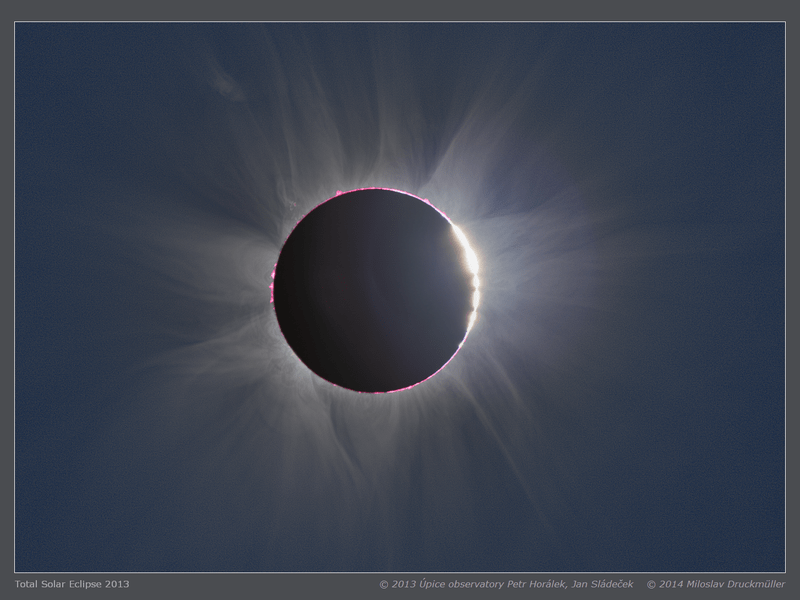
How would you describe an eclipse to a blind person? The moon moves in front of the sun, yes. But what does that look like? Someone trained in illustrative description of images might say, “The moon appears as a featureless black disk that nearly blocks out the sun. The sun’s light is still visible as a thin band around the moon’s black disk. To the upper right, at the moon’s leading edge, a small area of sunlight still shines brilliantly.”

That’s just an example of how such an event could be described. Bryan Gould, director of accessible learning and assessment technologies at the National Center for Accessible Media, a non-profit working to make media experiences accessible to people with disabilities, is hoping to offer oral descriptions of the eclipse in an app. Paired with other features, like a tactile diagram and audio from the changing natural environment as the eclipse darkens the sky, the app is designed to make the event more accessible to blind or visually impaired people who want to experience it.

Gould is working with Henry Winter, a solar astrophysicist at the Harvard-Smithsonian Center for Astrophysics, to develop the app, called Eclipse Soundscapes. As the August 21 solar eclipse darkens a path across the United States, Eclipse Soundscapes will release descriptions, timed—based on the user’s location—to match the progress of the eclipse.

Winter conceived Eclipse Soundscapes after a conversation with a friend who’s been blind since birth. She asked him to explain what an eclipse means.

Such an event might provide an interesting representation of the eclipse, thought Winter, so he partnered with the National Park Service’s Natural Sounds program, which preserves and catalogs sounds from the parks. Helpers stationed at national parks along the route will record audio during the eclipse, to hear the change in the “bioacoustical chorus” of the animals.

This can’t happen in real time, of course, so the National Center for Accessible Media is providing illustrative descriptions, based on a previous eclipse. The sounds of crickets, frogs and birds becoming active on the day of the eclipse will be added to the app later.

Last, with the help of an audio engineer named Miles Gordon, Winter is trying something completely new. Gordon developed a “rumble map” of the eclipse: The app places images of different stages of an eclipse on your smartphone’s screen, and as you trace your finger across the eclipse’s image, the vibration increases or decreases based on the brightness of the image.

“It does give you the impression that you’re actually feeling the sun, as you move your finger around,” says Winter.

“I realized I didn’t have the vocabulary to answer that question for her,” says Winter. “Every way I thought about it was visual in nature, and I didn’t know how to explain it to somebody … light, dark, bright, dim, flash. All these different words have no meaning to somebody that’s never seen.”

But the project goes well beyond audio descriptions. It includes two further elements: audio of the changing soundscape caused by the eclipse, and a tactile exploration of the eclipse’s image (which means that people who are blind or visually impaired can “feel” the eclipse using vibrations on their smartphones).

Many creatures become active as the sun sets, and many of them use darkness as an indicator of time of day. During an eclipse, crickets will chirp and frogs will chorus, thinking night has fallen. These habits were noted as far back as 1932, in a Proceedings of the American Academy of Arts and Sciences article titled “Observations on the Behavior of Animals During the Total Solar Eclipse of August 31, 1932.”

Scientists around the world will be using the eclipse as an opportunity to study solar astronomy in a way they usually can’t, measuring the ultraviolet light emitted from the sun’s corona, which Earth-based observers can’t normally see, as it is overpowered by the normal sunlight. It’s also rare for an eclipse to cover this much land — it traverses from Oregon to South Carolina — and Winter points out that it is a particularly good opportunity for education and outreach.

Though education is important, for Wanda Diaz Merced, a visiting scientist at the Harvard-Smithsonian Center for Astrophysics who is completely blind, there’s a lot more to the eclipse than that. Merced, who has consulted on the Eclipse Soundscapes project, studies human-computer interaction and astrophysics, and to do her research, she needs assistance translating data into a format she can interact with. She’s been building tools to help with that translation, and sees elements of Winter’s project that could contribute.

“It’s still not a prototype that I may use, for example, to study elements of the photosphere. It is not on that stage,” says Merced. “But hopefully one day we will be able to not only hear, but to touch.”

The eclipse will occur on August 21, starting around 10 a.m. in Oregon and finishing by 3 p.m .in South Carolina. The Eclipse Soundscapes app is available for iOS now, and the team is working on an Android app as well.

ooOOoo

I can’t imagine there’s anyone still pondering on whether or not to view the eclipse.

But that still doesn’t stop me offering you this recently presented TED Talk.

On August 21, 2017, the moon’s shadow will race from Oregon to South Carolina in what some consider to be the most awe-inspiring spectacle in all of nature: a total solar eclipse. Umbraphile David Baron chases these rare events across the globe, and in this ode to the bliss of seeing the solar corona, he explains why you owe it to yourself to witness one, too.

This talk was presented to a local audience at TEDxMileHigh, an independent event. TED editors featured it among our selections on the home page.

About the speaker: David Baron David Baron writes about science in books, magazines, newspapers and for public radio. He formerly served as science correspondent for NPR and science editor for PRI’s The World.

Enjoy it, good people. And protect your eyes!!!

Or better still allow NASA Television to show the eclipse to you.

NASA Television will air a four-hour show – Eclipse Across America – which will include live video of the event, along with coverage of activities in parks, libraries, stadiums, festivals and museums across the nation, and on social media. NASA’s show begins at 15:00 UTC (11 a.m. EDT; translate to your time zone), or later (we’ve seen this time waffle around a bit). Check the website for changes or further details.

Scouring the Horse.

Fascinating almost beyond words.

In the days when I lived in South Devon in England and had cause to travel, as in drive, to London one of the route options was to take the M5 motorway (Freeway in American speak) up to Bristol and then follow the M4 motorway that ran from Bristol all the way into the outskirts of London.

One of the benefits of this was that half-way, give or take, was at the Swindon exit and a further ten-minute drive took one to the delightful car-park at the White Horse at Uffington. No, it wasn’t a pub despite numerous pubs in England being called The White Horse; it was something much more special.

Yes, this is the very ancient White Horse that is introduced in Wikipedia, thus:

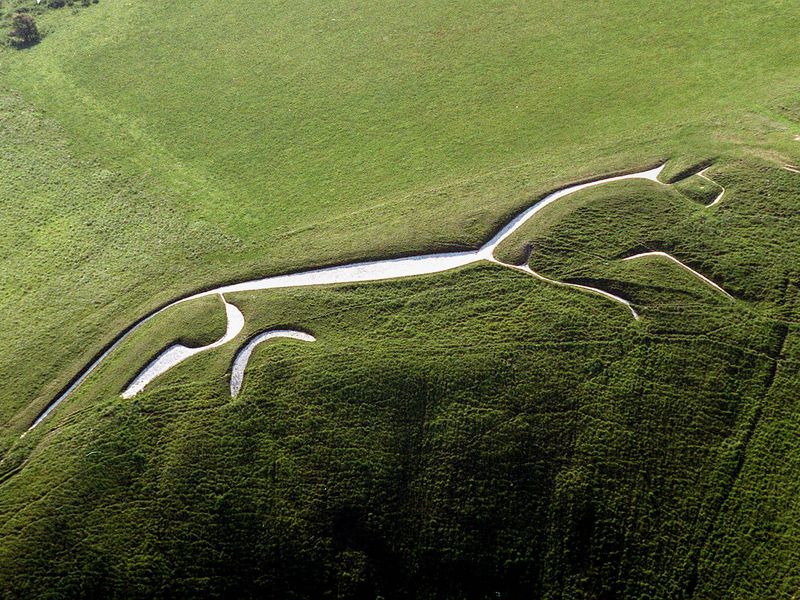
The Uffington White Horse is a highly stylised prehistoric hill figure, 110 m (360 ft) long, formed from deep trenches filled with crushed white chalk. The figure is situated on the upper slopes of White Horse Hill in the English civil parish of Uffington (in the county of Oxfordshire, historically Berkshire), some 8 km (5 mi) south of the town of Faringdon and a similar distance west of the town of Wantage; or 2.5 km (1.6 mi) south of Uffington. The hill forms a part of the scarp of the Berkshire Downs and overlooks the Vale of White Horse to the north. The best views of the figure are obtained from the air, or from directly across the Vale, particularly around the villages of Great Coxwell, Longcot and Fernham. The site is owned and managed by the National Trust and is a Scheduled Ancient Monument. The Guardian stated in 2003 that “for more than 3,000 years, the Uffington White Horse has been jealously guarded as a masterpiece of minimalist art.” It has also inspired the creation of other white horse hill figures.

So what prompted today’s post?

A recent article published online by The Smithsonian. Read and be amazed!

ooOOoo

Against All Odds, England’s Massive Chalk Horse Has Survived 3,000 Years

Cleaning up the Uffington Horse is the neigh-borly thing to do

The White Horse at Uffington, Oxfordshire (AP Photo)

If you stand in the valley near the village of Uffington in Oxfordshire, England, and look up at the high curve of chalk grassland above you, one thing dominates the view. Across the flank of the hill runs an enormous white, abstract stick figure horse cut from the chalk itself. It has a thin, sweeping body, stubby legs, a curiously long tail and a round eye set in a square head.

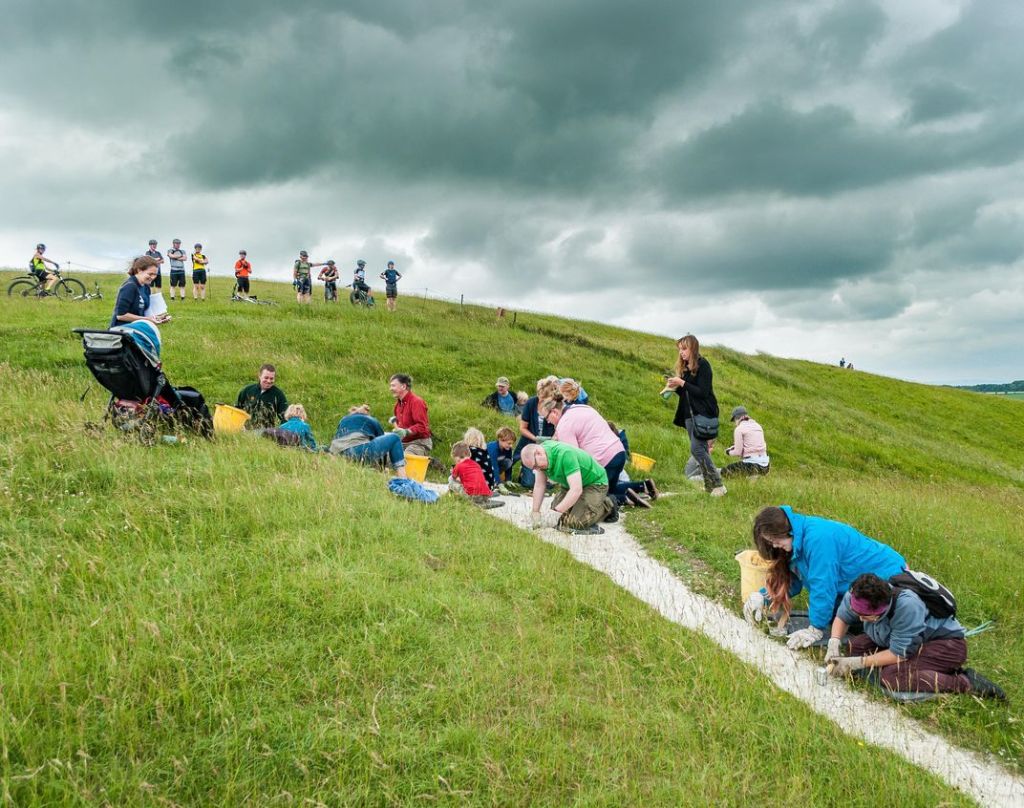
 This is the Uffington White Horse, the oldest of the English hill figures. It’s a 3,000-year-old pictogram the size of a football field and visible from 20 miles away. On this July morning black specks dot the lower slopes as small groups of people trudge slowly upwards. They’re coming to clean the horse.

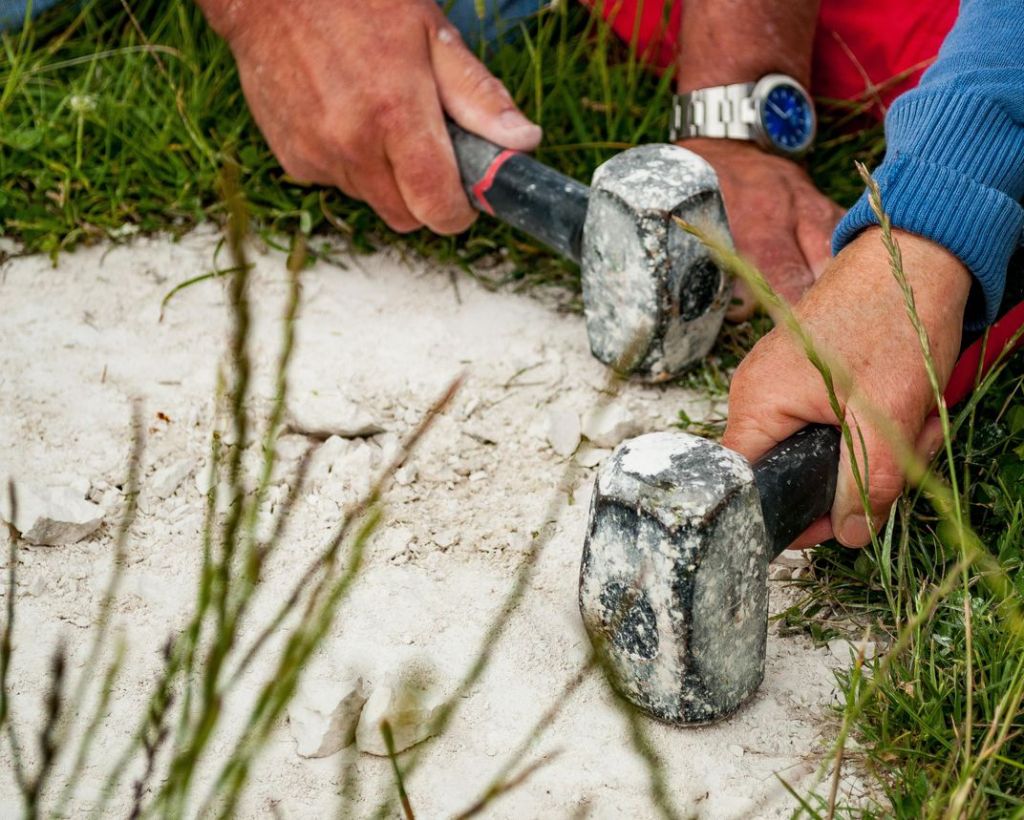
It’s chalking day, a cleaning ritual that has happened here regularly for three millennia. Hammers, buckets of chalk and kneepads are handed out and everyone is allocated an area. The chalkers kneel and smash the chalk to a paste, whitening the stony pathways in the grass inch by inch. “It’s the world’s largest coloring between the lines,” says George Buce, one of the participants.

Chalking or “scouring” the horse was already an ancient custom when antiquarian Francis Wise wrote about it in 1736. “The ceremony of scouring the Horse, from time immemorial, has been solemnized by a numerous concourse of people from all the villages roundabout,” he wrote.

In the past, thousands of people would come for the scouring, holding a fair in the circle of a prehistoric fort nearby. These days it’s a quieter event. The only sounds are the wind, distant birdsong and the thumping of hammers on the chalk that can be felt through the feet.

Conservation organization the National Trust oversees the chalking, making sure the original shape of the horse is maintained. But the work is done by anyone who wants to come along. Lynda Miller is working on the eye, a circle the size of a car wheel. “The horse has always been part of our lives,” she says. “We’re really excited that we’re cleaning the eye today. When I was a little girl and I came here with my mother and father, the eye was a special spot. We used to make a wish on it.”

National Trust ranger Andy Foley hands out hammers. “It must have happened in this way since it was put on the hillside,” he says. “If people didn’t look after it the horse would be gone within 20 to 30 years; overgrown and eroded. We’re following in the footsteps of the ancients, doing exactly what they did 3,000 years ago.”

“There is something very special about this landscape that attracts people,” says archaeologist David Miles. In the 1990s, he led an excavation of the site that established the prehistoric date for the horse. Before the excavation, it was thought that the design was only scratched into the chalk surface, and therefore un-datable, but Miles’ team discovered the figure was actually cut into the hill up to a meter deep. That meant it was possible to use a technique called optical stimulated luminescence to date layers of quartz in the trench.

Emily Cleaver
Emily Cleaver

Up on the hill it’s not possible to view the whole horse at once; the curve of the slope gets in the way, the sheer scale of it confuses the eye. It is only from the valley below that the whole picture can be taken in. From this long distance, the horse is a tiny white figure prancing timelessly across the brow of the hill. But to the people who live near and tend the horse, it’s a monumental reminder of Britain’s ancient past.

“It was older than I’d been expecting,” Miles remembers. “We already knew it must be ancient, because it’s mentioned in the 12th-century manuscript The Wonders of Britain, so it was obviously old then. And the abstract shape of the horse is very similar to horses on ancient British coins just over 2,000 years old. But our dating showed it was even older than that. It came out as the beginning of the Iron Age, perhaps even the end of the Bronze Age, nearly 3,000 years ago.”

The trenches would have been dug out using antler picks and wooden spades: tough, labor-intensive work. How the builders planned and executed such a large figure when the full effect can only be taken in from several miles away is still a mystery.

Nobody knows for certain why the horse was made. “It’s a beautiful shape, very elegant,” says Miles. “It looks like it’s bounding across the hillside. If you look at it from below, the sun rises from behind it and crosses over it. In Celtic art, horses are often shown pulling the chariot of the sun, so that may be what they were thinking of here.”

From the start the horse would have required regular upkeep to stay visible. It might seem strange that the horse’s creators chose such an unstable form for their monument, but archaeologists believe this could have been intentional. A chalk hill figure requires a social group to maintain it, and it could be that today’s cleaning is an echo of an early ritual gathering that was part of the horse’s original function.

The Berkshire Downs where the horse lies are scattered with prehistoric remains. The Ridgeway, Britain’s oldest road, runs nearby. This is the heart of rural England and the horse is one of the country’s most recognizable landmarks, an identity badge stamped into the landscape. During World War II, it was covered over with turf and hedge trimmings so Luftwaffe bombers couldn’t use it for navigation. (Oxford is about a 30-minute drive and London about an hour-and-a-half.)

For locals, it’s part of the backdrop of daily life. Residents in the village reportedly arrange their rooms so that they sit facing the horse. Offerings, flowers, coins and candles are left on the site.

The people who come to the chalking have a variety of motivations. Martha Buckley is chalking the horse’s neck. ” I’m a neo-Pagan and I feel it connects me to the land. It’s of great spiritual significance,” she says. Lucy Bartholomew has brought her children. “It’s good to be able to explain to them why it’s here.” For Geoff Weaver, it’s the imperative to preserve history. “If we don’t do it, it would disappear, and the world would be a sorrier place,” he says.

ooOOoo

There are more fascinating photographs to view in that Smithsonian article.

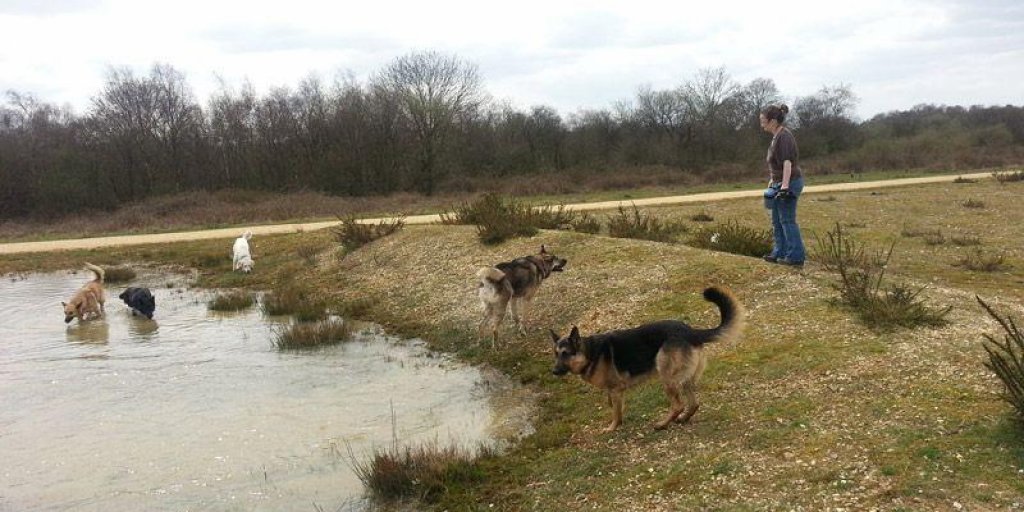
Speaking of Berkshire, as in the Berkshire Downs, the only way to close today’s post is with a link to a dog walk on Greenham Common in Berkshire. That includes the following photograph.

Have a great weekend all of you!


Still in the month of May!

Figurative and literal cracks!

My rather cryptic sub-heading will make sense very soon.

Just ten days ago I published a post The Month of May. It explained why May had always been a special month in my life and then went on to introduce an article published by The Smithsonian Using a New Roadmap to Democratize Climate Change.

That article featured the former president of Iceland, Olafur Grimsson, and how he was encouraging new solutions to climate change. Primarily via a new organisation called RoadMap. (Did you sign up??)

There is change in the air. People are starting to make a better future. Cities across the USA (and elsewhere undoubtedly) are pledging to go 100 percent renewable. Here’s what Grist published on May 4th.

ooOOoo

Cities all over the U.S. are pledging to go 100 percent renewable.

Atlanta, Georgia (Shutterstock)

On Monday, Atlanta lawmakers voted unanimously to power the city entirely with clean energy sources by 2035.

Atlanta is the 27th city to make the pledge, according to the Sierra Club. These kinds of municipal promises have been popping up nationwide over the past few months. Here’s a recap:

“We know that moving to clean energy will create good jobs, clean up our air and water, and lower our residents’ utility bills,” said Kwanza Hall, an Atlanta City Council member and mayoral candidate, in a statement. “We have to set an ambitious goal or we’re never going to get there.”

A round of applause for local climate progress!

ooOOoo

Lovely to see the city of Portland on that list.

Keep it coming. For we need to see cracks of change; cracks of hope.

Cracks to counter literal cracks.

ooOOoo

The crack that’s redrawing the world’s map.

(From the BBC Culture Newsletter 5th May.)

The shape of the world is hanging by a thread – or rather, according to experts, by a 110 mile-long (177km) rift. That’s the extent of a rapidly expanding crack in an enormous ice shelf in Antarctica. When the Larsen C shelf finally splits, the largest iceberg ever recorded (bigger than the US state of Rhode Island and a third the size of Wales) will snap off into the ocean. Widening each day by 3 ft (1 m), the groaning cleft is on the verge of dramatically redrawing the southern-most cartography of our planet and is likely to lead, climatologists predict, to an acceleration in the rise of sea levels globally.

 An aerial photo of the frigid fissure, taken late last year when it was discovered that the pace of the icy tear was quickening, was suddenly back in the news this week with the announcement that a second rift in the shelf had been detected. The fracture leads our eye along a zig-zagging path – from the backward gaze of the plane’s right engines to the pristine polar blue of the horizon in the distance. The jaggedness of the cleft, which takes our vision on a journey whose ultimate destination is unfathomable, seems at once monumental and terrifyingly fragile. The photo intensifies our helplessness in the face of cataclysmic change. It freezes the potential destruction in the blink of a camera’s shutter, while at the same time hinting at a catastrophe that we can witness unfolding but are utterly powerless to stop.

A second rift was recently discovered in the Larsen C ice shelf on the Antarctic peninsula (Credit: NASA/John Sonntag)

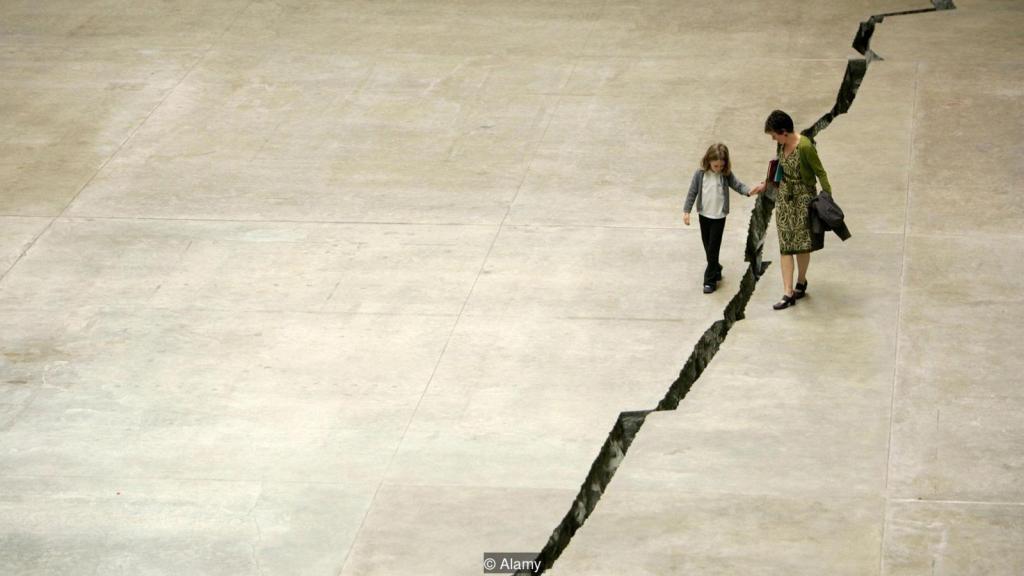
As a visual statement, the aerial photo of the Larsen C crack is, by definition, incomparable; never before has the world marked the glacial advance of such a sublime and fearsome fracture in its very fabric. Yet the reemergence of the image in the news anticipates the ten-year anniversary of one of the most intriguing and innovative large-scale works in contemporary art – a work whose power relies for its thought-provoking effect on the peculiar poetry of ruinous rifts. In October 2007, the Colombian-born artist Doris Salcedo unveiled in London an ambitious installation in the cavernous space of Tate Modern’s Turbine Hall – a piece that split reaction down the middle.

Inviting gallery-goers into the otherwise empty and austere interior of the former Bankside Power Station, Salcedo subverted expectations. Rather than offering visitors a hall of temporarily installed sculptures, she orchestrated the contemplation instead of a ragged subterranean breach that appeared to rip open the concrete floor of the structure – a crevice that extended from one end of the yawning space to the other.

For the Colombian artist Doris Salcedo’s 2007 work, Shibboleth, a giant crack was made in the concrete floor of Tate Modern’s Turbine Hall (Credit: Alamy)

Salcedo deepened the mystery of her bold and experimental conceptual work by giving to it the curious title Shibboleth – a biblical word which, when mispronounced, was said to have exposed the outsider status of individuals. Complicating matters still further, the artist insisted that her work was a comment not on the folly of material ambitions, but on racism – that deep cultural scar that tears at the foundations of humanity. Placed side-by-side, this week’s photo from Antarctica and the image captured a decade ago of Doris Salcedo’s challenging Shibboleth share both a brutal beauty and a common theme: the brittleness of being.

If you would like to comment on this story or anything else you have seen on BBC Culture, head over to our Facebook page or message us on Twitter.

And if you liked this story, sign up for the weekly bbc.com features newsletter, called “If You Only Read 6 Things This Week”. A handpicked selection of stories from BBC Future, Earth, Culture, Capital and Travel, delivered to your inbox every Friday.

ooOOoo

“the brittleness of being.”

Please, all of us, let’s make a positive difference so that we can soften the edges of that brittleness.

The Month of May!

For all my life this has felt like a very special month.

And, dear friends, at the risk of repeating myself to many of you, this is why the month of May is special for me.

Simply that I was born in London during the closing months of the Second World War. Inevitably, I was unaware of the number of German bombs that were falling on London during those last few months. But there were thousands.

On May 8th. 1945, the day that WWII ended and six months to the day from when I was born, my mother looked down at me and said aloud to me: “You are going to live”. Despite the fact that I don’t recall my mother saying that, it was verified many times later when I was growing up.

Now here we are approaching May 8th. 2017 and in a very real sense it seems that we are in another war.

A war of consequence.

A war that we have been engaged in for many, many years.

A war where we are inadvertently fighting on a global battlefield.

A war where 99.99% of us don’t consciously identify the weapons we are using. Weapons that are incredibly effective. So much so that we are in sight of winning the last battle; winning the war.

Yet a war where winning is no win at all. Indeed, where winning this war, this global war, spells the end. The end of life for 99.99% of us humans (and much else besides).

Now what on earth has got me so fired up?

Two things have:

The first is that I am living in my 73rd year of life. I have no idea of when my life comes to an end. But that death is a guarantee. Indeed, if one takes note of the average life expectancy of a male today in the USA (75.6 years) , it may not be that far away.

The second thing is that before my death I truly want to know that humankind has laid down its weapons of war against our planet and that there really is an unstoppable mission, a united wave of passion, to live in peace on this planet. Perhaps better put to live in peace with this planet.

Or in the words of an organization that I now want to introduce:

A mission which will require the hard work and dedication of each and every one of us as we do everything in our power as individuals, but also as we galvanize businesses, entrepreneurs, innovators, city planners, communities, people and politicians—all those who share our purpose.

OK! Thank you if you are still reading this! (Someone give Fred in that soft arm-chair over there a nudge; I can hear his snores from here!)

In the last Smithsonian electronic newsletter that I was reading yesterday morning there was a reference to an organization that I hadn’t previously come across. Here is the link to that item on The Smithsonian website. I am republishing it in full in this place. As you read it you will understand why I am republishing it.

ooOOoo

Using a New Roadmap to Democratize Climate Change

A new tool aims to bypass governments and put the power of climate action in the people’s hands

By Anne Glusker    Smithsonian.com     April 28, 2017

Olafur Grimsson, who was president of Iceland from 1996 to 2016 and saw his country through the worst economic crisis in its history, making headlines all over the world as banks collapsed and the country fell into a depression, is the very picture of an urbane statesman. Collected and poised, with a striking full head of white hair, as comfortable in English as in his native Icelandic, he seems an unlikely revolutionary, not the sort of person you’d look at and immediately find yourself thinking: “Power to the People.”

 But Grimsson is one of the primary architects of a quietly radical new idea whose aim is to facilitate action on climate change without any of the usual suspects—governments, countries, international bodies, negotiating parties.

He and several other veterans of the historic 2015 Paris Agreement on climate change were in Washington, D.C., last year, just before COP22, the climate meeting held in Marrakesh in 2016. They were pondering next steps when the conversation took a new and interesting turn, Grimsson says, addressing the question: “Was it possible to have the success of Paris without governments necessarily being in the leading role?”

The group included movers and shakers such as Peter Seligmann, the chairman of Conservation International; Laurene Powell Jobs, president of the philanthropic organization the Emerson Collective; and Andy Karsner, an assistant energy secretary during the administration of George W. Bush. Galvanized by their own query, they decided to try to answer it—to set about creating a new tool to aid in achieving the goals of the Paris accord.

At the Smithsonian’s Earth Optimism Summit, a gathering this past weekend of conservation-minded citizens, scientists and activists, Grimsson explained: “You get governments that are opposed or even hostile to climate action. We decided to bring together in Marrakesh a gathering of thinkers and scientists and innovators and policymakers from different countries in order to discuss a new model of securing the success of the future of the climate movement.”

At the Smithsonian’s Earth Optimism Summit, the former president of Iceland Olafur Grimsson encouraged new solutions to climate change, awarding cash prizes to the winners of the “Make for the Planet” challenge. (The Roadmap)

Grimsson’s group felt that due to changes in information technology and social transformations, the large organizations and structures that used to be necessary to effect change were now not needed. And thus was born Roadmap, a new crowdsourcing tool for anyone and everyone interested in climate action. Still in its very early stages, Roadmap’s founders envision it as a platform for those working on climate issues—from scientist and policymaker to farmer and fisherman—to facilitate the sharing of knowledge and ideas, methods and techniques.

“A new political model is possible—where everyone can be a doer, where you no longer need big government or big enterprises to bring about success,” Grimsson says.

This new model for social change that skips the usual cumbersome channels and processes has been seen everywhere from public health, where the Bill & Melinda Gates Foundation has redefined the sector, to the hospitality industry, which is working to combat the human trafficking that plagues its businesses, to perhaps most famously the Arab Spring, where the role of social media in bringing about political change is still being debated today.

And this new model is complemented by technological changes. “The innovation in energy technology is such that we no longer have to wait for the big energy breakthrough,” Grimsson says. “We already have the available technologies. Every individual, home, village, community, town and region can execute change. The good news from the climate point of view is that, in addition to the information technology revolution, there has now also taken place an energy revolution. A house can be a power station: If the people who live in that house have extra energy, they can sell their energy through the smart grid. The notion that every house can be a power station is as revolutionary as saying that every mobile phone can be a media company.”

Grimsson admits that it may seem odd for someone in his position to be advocating that ordinary citizens take action apart from the conventional corridors of governmental power.

“For me to say that these traditional political organizations and positions are somewhat outdated is perhaps a strange statement: I was a professor of political science, I’ve been a member of parliament, I’ve been a minister of finance, I was president for 20 years,” he says.

It was during Iceland’s financial meltdown that he first experienced this new kind of social change: “I saw this very strongly through the financial crisis in my own country, which led to a big social economic uprising. All those activities were engineered by unknown people, people who were not part of a big organization, who used Facebook and the information media to bring thousands of people together in one day.”

Right now, Roadmap consists of a website and a lofty manifesto that speaks of raising the value of “moral currency” and creating a “best practices warehouse.” Visitors to the site can fill out a form if they want to become part of its community of “doers.” The practical part of the manifesto speaks of identifying the best methodologies and models; implementing a “real-time system of measurement” and a way to “gauge and understand what is working, what is not, and exactly what is being achieved.” As the platform develops, it will be interesting to see exactly what form these gauges, measurement systems, and warehouses take.

After the Paris Agreement, Grimsson says of himself and his Roadmap co-founders, “We were all optimistic, but we are all also realists.” It is his belief that if you “give people the tools, they can execute the transformation and the change—without governmental leadership.” Perhaps Roadmap will be one of those tools.

 ooOOoo

Here’s a video that spells it out in ways that I find impossible to ignore. (And, yes, I signed up, as in joining, yesterday afternoon.)

Because in hundreds of years time I want others to look at the following picture of Troutbeck Valley in England and know how precious is this one and only planet we live on.

Or in the words of Sue Dreamwalker that I read yesterday evening:

We are witnessing more storms, more unseasonal weather patterns, and I just hope that we wake up soon to the damage we are doing to our beloved Mother that has held us in her eternal arms for so long..

Photo credit: Getty Images

Enjoy the month of May wherever you are in the world!

Closing by repeating a key pronouncement in that RoadMap video above:

Why We? Who Else!

Out of this world!

Forgive my indulgence!

I wish I understood where my fascination with the night sky came from. Not that I am anything other than an amateur gazer (of the night sky, I should hasten to add!). I have never taken the trouble to gain any real knowledge.

Yet, some of the most serene moments of my life have been when I have been alone at sea under a night sky.

OK, that’s enough wallowing for anyone!

The last week has been an important one for those that take an interest in the planets in our solar system, or to be specific, take an interest in Jupiter.

For as EarthSky reported on the 8th April:

Today – April 8, 2017 – the planet Jupiter is closest to Earth for this year.

Yet yesterday was Jupiter’s opposition, when Earth flew between Jupiter and the sun, placing Jupiter opposite the sun in our sky. You’d think Jupiter was closest to Earth for 2017 yesterday as well … and yet it wasn’t. It’s closest to Earth for 2017 today, April 8, coming to within 414 million miles (666 million km).

EarthSky also included this image:

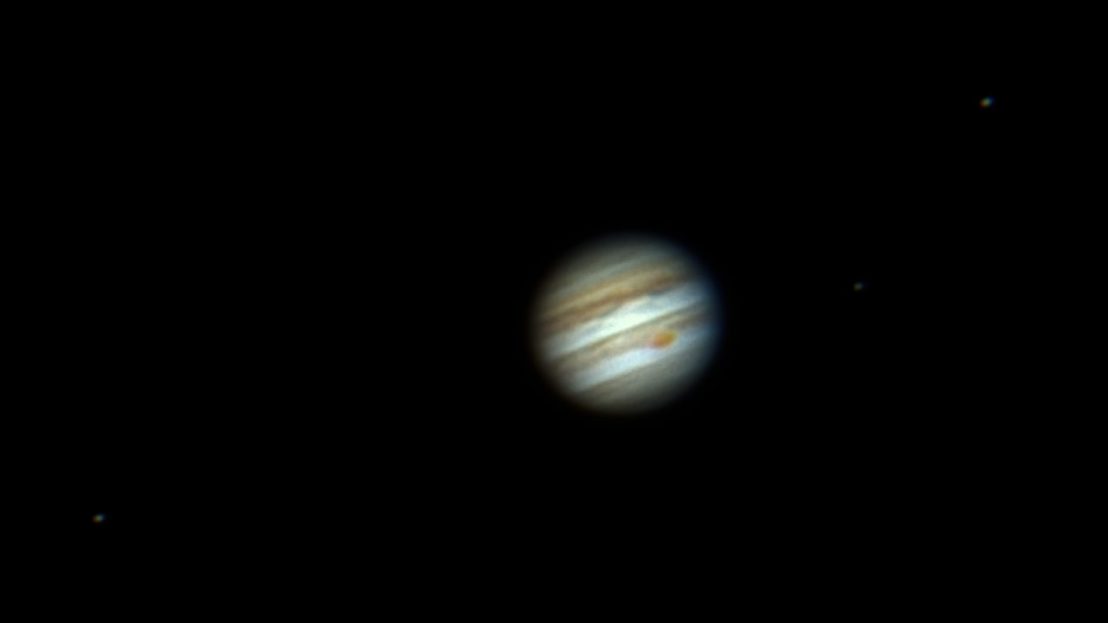
Jupiter at its April 7, 2017 opposition with the Great Red Spot and moons Io, Europa, and Ganymede (L to R). Photo by Rob Pettengill in Austin, Texas.

Then, Mother Nature Network yesterday presented more information:

Jupiter strikes a pose for Hubble portrait

April 12, 2017

During the month of April, Jupiter will be in opposition, meaning the planet is at its closest point to Earth. Thanks to the sun, it’s during this window that astronomers can enjoy a particularly close-up photo session that can help reveal how the planet’s atmosphere has changed over time by comparing it with previous such photos of the gas giant.

This photo of Jupiter was taken on April 3 by the Hubble Space Telescope when the enormous planet was 670 million kilometers (or about 416 million miles) from Earth. The photo shows the Great Red Spot, but it also shows something new: a weather feature called the Great Cold Spot, which is almost as large as its more well-known cousin.

“The Great Cold Spot is much more volatile than the slowly changing Great Red Spot, changing dramatically in shape and size over only a few days and weeks, but it has reappeared for as long as we have data to search for it, for over 15 years,” Tom Stallard, a planetary astronomer at the University of Leicester in the U.K. and lead author of the study, said in a statement.

The cold spot is nearly 15,000 miles by about 7,500 miles in size, and it’s dubbed the “cold” spot because it’s 200 degrees Kelvin (about 400 degrees Fahrenheit) cooler than the surrounding atmosphere.

The article included this stunning image of Jupiter.

Photo: A. Simon (GSFC)/NASA, ESA

Jaymi went on to write:

Here’s what some of the other details in the image mean:
The NASA/ESA Hubble Space Telescope reveals the intricate, detailed beauty of Jupiter’s clouds as arranged into bands of different latitudes. These bands are produced by air flowing in different directions at various latitudes. Lighter coloured areas, called zones, are high-pressure where the atmosphere rises. Darker low-pressure regions where air falls are called belts. Constantly stormy weather occurs where these opposing east-to-west and west-to-east flows interact. The planet’s trademark, the Great Red Spot, is a long-lived storm roughly the diameter of Earth. Much smaller storms appear as white or brown-coloured ovals. Such storms can last as little as a few hours or stretch on for centuries.

The Great Red Spot is an anticyclonic storm that is so large that Earth would fit inside it. That stormy spot — which is actually shrinking, though astronomers don’t know why — gives us a great perspective for understanding just how huge Jupiter is compared to our own blue dot in the solar system.

Finally, I’m taking the liberty of republishing in full an item that appeared on The Smithsonian site on April 7th.

ooOOoo

Hubble Snags Splendid Snapshot of Jupiter

The perfect photographic conditions make for a grand view of the gas giant

This snapshot shows Jupiter’s swirling, banded atmosphere and signature vortices. (NASA, ESA, and A. Simon (GSFC))
smithsonian.com
April 7, 2017

It’s been 27 years since the Hubble Space Telescope went into orbit, and the geriatric observatory is still going strong. When the telescope recently trained its sights on the solar system’s largest planet, the results were spectacular—proof that for the stellar spectator, age is but a number.

The image above is the latest picture of Jupiter. The snapshot was taken by Hubble on April 3 with the help of the telescope’s Wide Field Camera 3, a high-res instrument that lets the telescope observe using different wavelengths. It combines light on the visible, ultraviolet, and infrared spectrum to create an image of a massive planet in constant atmospheric flux.

In a press release, the European Space Agency, which co-runs Hubble with NASA, said that Hubble was able to take advantage of the planet’s current opposition with Earth to take the close-up. At the moment, Jupiter is lined up perfectly with the sun, and Earth is lined up with both the sun and Jupiter. Think of it as a truly heavenly photographic opportunity—a chance to look at the planet head-on. Better yet, Jupiter’s position relative to the sun means that it’s brighter than at any other time of year, which lets telescopes trained on the gigantic planet see even more detail than usual.

As The Washington Post’s Amy B. Wang notes, there were no new discoveries in the picture per se, but that doesn’t mean there’s nothing to look at. As ESA explains, scientists will compare the photo to previous views of the planet to hopefully learn more about the atmosphere. And for the rest of us, there’s a strangely soothing view of Jupiter’s layered cloud bands and impressive vortices.

The gas giant is thought to have sucked up most of the space debris left over after the sun formed, grabbing dust and gas with gravity. Scientists think it has two times as much debris as all of the other bodies in the solar system combined—and all of that material swirls through cloud layers in its quickly-rotating atmosphere.

Since Jupiter doesn’t exactly have a surface, it has nothing to slow the spots and vortices that appear in its atmosphere. The most famous, the Great Red Spot, is thought to have been swirling around for more than 150 years, and even though it’s unclear which gases give it that red hue, it’s the planet’s most recognizable feature. As NASA writes, the cloudiness of Jupiter’s atmosphere makes it hard to understand what might be contributing to it. But that doesn’t decrease its allure.

Want to delve even further into the mesmerizing bands of a huge planet’s atmosphere? A high-res version of the snapshot is available online. And if you prefer seeing things live, it’s a great time to check out Jupiter through in the night sky. You can find Jupiter in the east right after the sun goes down—a massive mystery that’s brighter than any star.

Read more: http://www.smithsonianmag.com/smart-news/hubble-snags-splendid-snapshot-jupiter-180962832/#2QLP7buDDb5PJaGK.99
Give the gift of Smithsonian magazine for only $12! http://bit.ly/1cGUiGv
Follow us: @SmithsonianMag on Twitter

ooOOoo

Let me finish up with another incredible fact.

Namely, that the universe came into existence some 13.82 billion years ago. The power of natural evolution that came with that event eventually brought along homo sapiens some 200,000 years ago. 200,000 is 0.0000145 of 13.82 billion.

Or to put it another way, we humans have only been a part of this universe for 1/10th of 1% of the life of said universe! (Oh, and dogs came along 100,000 years ago!)

Dogs: Aren’t They Incredible!

The love and admiration for this beautiful animal goes on and on!

It seems as though it is almost on a weekly basis that new and incredible facts about our dear, dear dogs come to the surface.

So what prompted this from me today!

Only a wonderful article that was originally published in New Scientist but then was carried by The Smithsonian. I am hoping that by fully linking this post to both the New Scientist article and the essay in The Smithsonian I am at liberty to republish it for all you good people.

ooOOoo

Dogs Use Deception to Get Treats, Study Shows

When a human partner withheld tasty snacks, the dogs got sneaky

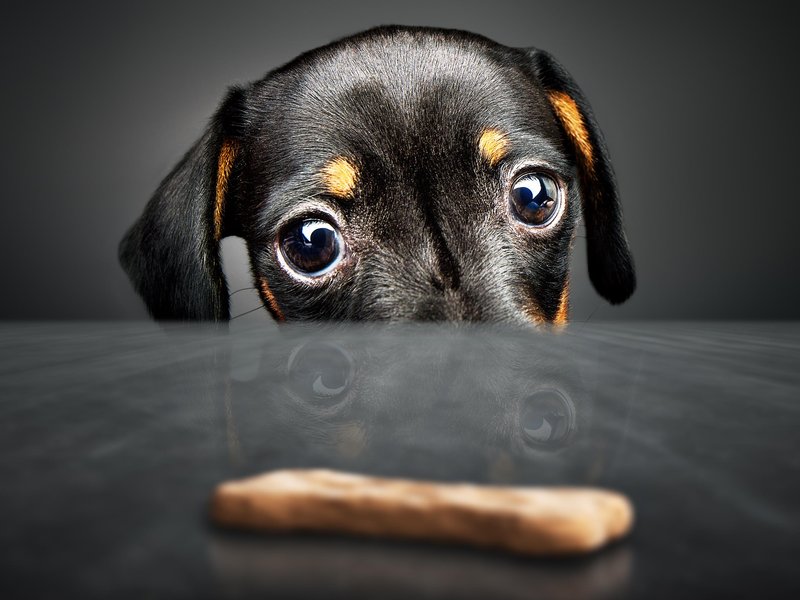
Would these eyes deceive you? New study says yes. (johan63/iStock)

By Brigit Katz     smithsonian.com
March 10, 2017
There is plenty of evidence to suggest that dogs, in addition to looking adorable in sweaters, possess fairly sophisticated cognitive abilities. They recognize emotion, for example, and respond negatively to antisocial behavior between humans. Man’s best friend can also get pretty tricksy when it comes to scoring snacks. As Brian Owens reports for New Scientist, a recent study found that dogs are capable of using deceptive tactics to get their favorite treats.

The study, published in the journal Animal Cognition, was led by Marianne Heberlein of the Department of Evolutionary Biology and Experimental Studies at the University of Zürich. Heberlein told Owens that the idea for the study was born when she observed her pet pooches engaging in deceptive behavior; one sometimes pretends to see something interesting outside, prompting the other to give up his sleeping spot.

To find out if dogs engage in similar shenanigans with humans, Heberlein and a team of researchers paired 27 dogs with two different partners, Stanley Coren explains in Psychology Today. One of these partners would repeatedly go to the bowl of a given dog, fish out a treat, and give it to the pup. The other would show the treat to the dog, and then put it in her pocket. Perhaps unsurprisingly, the dogs began to show a preference for the more generous partners, and would approach them spontaneously.

Once one partner had been established as co-operative, the other as competitive, the dogs were taught to lead their partners to one of two boxes, both containing food, with the command “Show me the food.” And the same pattern was repeated: when the dogs led the co-operative partner to a treat, they got to eat it. The competitive partner withheld the treat.

Researchers then showed the dogs three covered boxes. One contained a sausage, the second contained a less-yummy dry biscuit, and the third was empty. Once again, the process of treat giving and withholding was repeated, but this time with a twist: when the dog was reunited with its owner, the owner asked it to choose one of the boxes. If there was a treat inside the box, the dog was allowed to eat it. But “if the dog chose the box which had been opened before,” Coren explains, “the owner just showed the empty box to the dog.”

Over the course of a two-day testing period, the dogs were repeatedly presented with this conundrum. They had been trained to lead both partners to boxes containing food, but they knew that the competitive partner would not let them eat the snacks. They also knew that if any snacks remained inside the boxes once they were reunited with their owners, they would get a chance to eat them. So the dogs got a little devious.

Researchers observed the pooches leading the co-operative partner to the box containing the sausage more often than expected by chance. They led the competitive partner to the sausage less often than expected by chance. And here’s where things get really interesting: the dogs took the competitive partner to the empty box more frequently than the co-operative partner, suggesting that they were working through their options and engaging in deliberate deception to maximize their chances of getting both treats.

“It is as though the dog is thinking, ‘Why should I tell that selfish person where the best treat [is] if it means that I will never get it?’,” writes Coren.

“These results show that dogs distinguished between the co-operative and the competitive partner,” the authors of the study write, “and indicate the flexibility of dogs to adjust their behaviour and that they are able to use tactical deception.”

Rest assured, dog lovers: your pooches may be sneaky, but they still love you more than cats.

Read more: http://www.smithsonianmag.com/smart-news/dogs-use-deception-get-treats-study-shows-180962492/#5r1vc6gkyLQoIQaL.99
Give the gift of Smithsonian magazine for only $12! http://bit.ly/1cGUiGv
Follow us: @SmithsonianMag on Twitter

ooOOoo

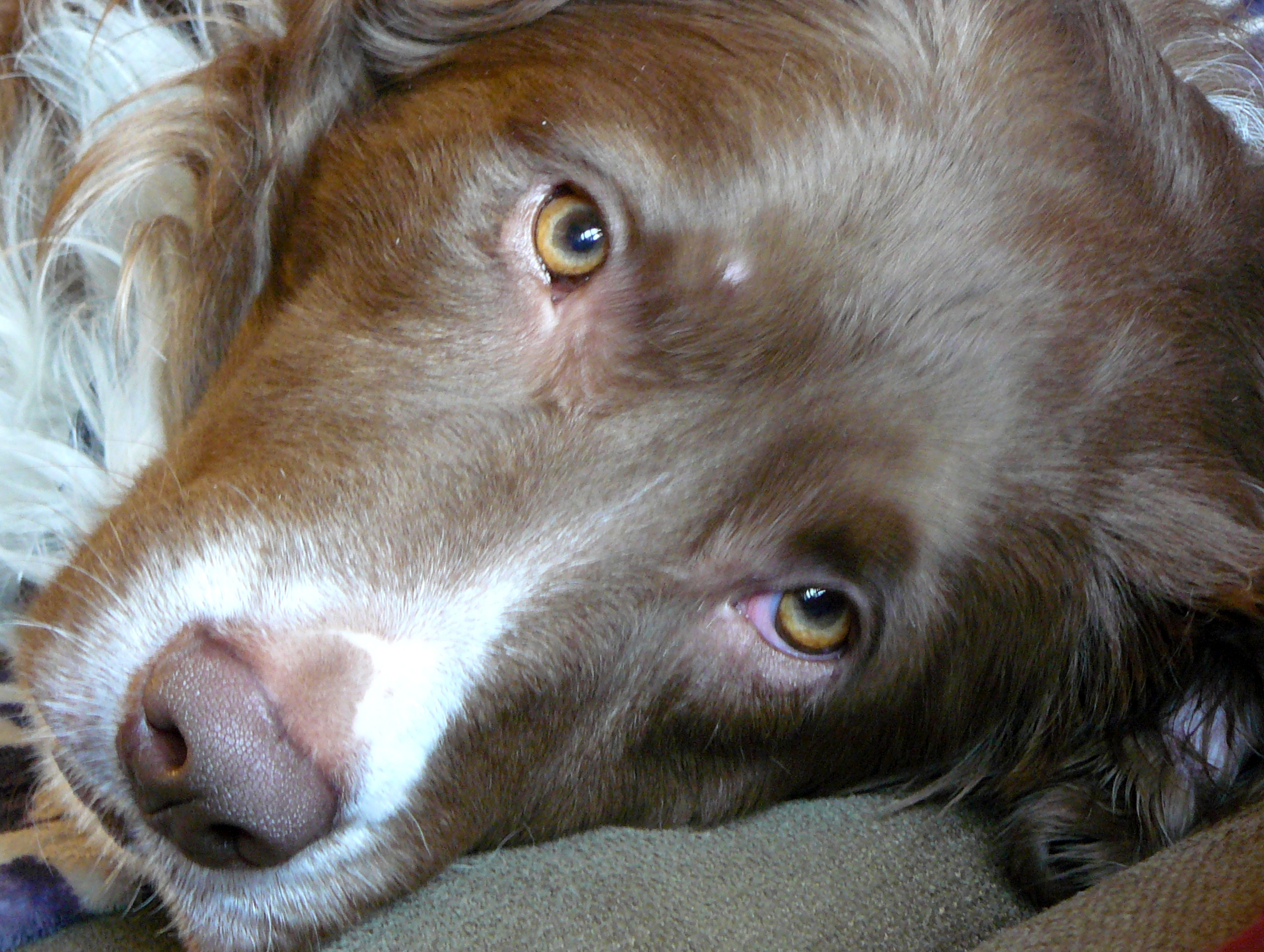
 The article from Brigit opened up with a picture of a pair of eyes; a pair of dog’s eyes.

I don’t know about you but some dogs have eyes that reach out and seem to illuminate one’s soul.

Our Oliver has just that set of eyes. I will close today’s post with a photograph of Oliver’s eyes that was taken yesterday afternoon.

Talk about the power of non-verbal communication!


Back to puppies!

Actually, some recent very interesting research on how puppies relate to the sounds of people around them.

A recent mailing under the SmartNews banner used by The Smithsonian Magazine seemed too good not to share with all you dog lovers.

Plus, our internet connection is not good at the moment so not going to dilly dally but go straight to the article that may be seen on the Smithsonian website here.

ooOOoo

Why Puppies Love Baby Talk

New research shows puppies respond strongly to high-pitched chatter, but most adult dogs could care less.

istock-511313058-jpg__800x600_q85_crop_subject_location-1501569By Jason Daley
smithsonian.com
January 11, 2017

Anyone who has lived with a dog will find themselves occasionally cooing to their pup in slow-paced, high-pitched baby talk (OK, maybe most of the time). And a new study suggests that our canines respond to such dulcet tones—well, puppies do at least.

The study, published this week in the Proceedings of Royal Society Bshows that the baby-talk, also known as dog-directed speech, gets a big response from puppies. Older dogs, however, aren’t super impressed, reports Virginia Morell at Science.

The study’s researchers had 30 female volunteers look at photographs of dogs while reading standard dog-directed phrases, like “Who’s a good boy?” and “Hello cutie!” (they didn’t use real dogs to minimize the speakers going off script). The volunteers also read the doggie praise to a human. The researchers found that women used the higher-pitched, sing-song baby-talk tone when reading the passages to the photos, making their voices 21 percent higher when reading to the puppy images. With the human, they spoke in their normal voice.

That was more or less expected. But when the researchers played recordings of the women’s voices to ten puppies and ten adult dogs at a New York animal shelter, there was a stark difference. The puppies went wild when they heard the dog-directed voices. Morell reports they barked and ran toward the loudspeaker, crouching down in a pose used to start a round of horseplay. When researchers played the same phrases using the women’s normal tone of voice, the puppies weren’t nearly as enthused.

The adult dogs, however, were a different story. “They didn’t care at all,” Nicolas Mathevon, a bioacoustician at the University of Lyon in Saint-Étienne, France, and co-author of the study tells Morell. “They had a quick look at the speaker, and then ignored it.”

There’s no clear reason why the puppies reacted so strongly to the baby talk and the mature animals didn’t. It’s possible the higher-pitched tones stimulate a special response in the puppies. Mathevon tells Helen Briggs at the BBC that it may be related to a theory called the baby schema. In that hypothesis, humans evolved to find big eyes, big heads and round cheeks irresistibly cute. That helps parents bond with children, convincing them to spend the endless hours required to feed and tend to infants. Many of those cues are also found in baby animals.

But there may be more to the response.  “One of the hypotheses was that we humans use this dog-directed speech because we are sensitive to the baby cues that come from the face of a small baby [animal] as we are sensitive to the faces of our babies,” he tells Briggs. “But actually our study demonstrates that we use pet-directed speech or infant-directed speech not only because of that but maybe we use this kind of speech pattern when we want to engage and interact with a non-speaking listener. Maybe this speaking strategy is used in any context when we feel that the listener may not fully master the language or has difficulty to understand us.”

Over time humans have bred dogs to be more baby-like, which only makes humans bond with them more, Evan Maclean, an evolutionary anthropologist at the University of Arizona not involved in the study tells Nicola Davis at The Guardian. “As a result of selection for juvenile traits, dogs emit a lot of signals that scream ‘baby’ to humans, which can facilitate special kinds of interactions with dogs that are normally reserved for children,” he says. “The question we don’t have a great answer to is whether there are long term functional consequences of interacting with dogs in this way (e.g. effects on word learning), or if this is just a byproduct of the baby-like cues that dogs inundate us with.”

So why did the older dogs just keep chewing their bones when they heard the strangers’ voices coming from the speaker? “[M]aybe older dogs do not react that way because they are just more choosy and they want only to react with a familiar person,” Mathevon tells Briggs.

ooOOoo

I think there’s more to this than the slightly light-hearted tone that came across in the article (well to my ears anyway!).

If you want to study the published proceedings from The Royal Society, referred to by Jason Daley in the second paragraph, then the paper is here:

Dog-directed speech: why do we use it and do dogs pay attention to it?

Tobey Ben-Aderet, Mario Gallego-Abenza, David Reby, Nicolas Mathevon
Only one way to finish today’s post!

P.S. Don’t run the video in front of a roomful of dogs! (As we did last night!)

Two sides of the pilot’s life!

The life of the commercial pilot; that is.

I have a good understanding of the commercial pilot’s world, both inside and outside of my family. For many years as an active private pilot I held a British Instrument Rating (IR) that allowed me to fly in the commercial airways. Studying for the IR required a good appreciation of the safety culture that was at the root of commercial flying especially surrounding one’s departure and arrival airports.

So when I read a recent item from the Smithsonian Magazine proposing that airline pilots were more depressed than the average American my first reaction was one of disbelief. I forwarded the link to Bob D., an experienced British airline Captain and a good friend for years. Here is that article:

ooOOoo

Think Your Job Is Depressing? Try Being an Airline Pilot

New study suggests pilots are more depressed than the average American

4322816521_2e87d62705_o-jpeg__800x600_q85_cropBy Erin Blakemore
smithsonian.com  December 16, 2016

Being a pilot for a commercial airline has its perks—travel to exotic places, a cool uniform and those breathtaking views of the sky. But that job can come with a side of something much more sobering: depression. As Melissa Healy reports for The Los Angeles Times, the mental health of airline pilots is coming into sharp focus with the revelation that nearly 13 percent of them could be depressed.

A new study of the mental health of commercial airline pilots, recently published in the Journal of Environmental Health, suggests that depression is a major problem for pilots. The first to document mental health for this particular field, the study relied on a 2015 web survey of international pilots that contained a range of questions about their condition over the prior two weeks. Questions included whether they felt like failures, had trouble falling or staying asleep, or felt they were better off dead. (Those questions are part of a depression screening tool called the PHQ-9.) Other questions involved pilots’ flight habits, their use of sleep aids and alcohol, and whether they have been sexually or verbally harassed on the job.

Of the 1,848 pilots who responded to the depression screening portions of the questionnaire, 12.6 percent met the threshold for depression. In addition, 4.1 percent of those respondents reported having suicidal thoughts at some point during the two weeks before taking the survey. The researchers found that pilots who were depressed were also more likely to take sleep aids and report verbal or sexual harassment.

Airline pilot organizations and occupational safety experts assure Healy that airline travel is still safe. But the study continues a conversation about pilot psychology that has been in full swing since a German pilot committed suicide by crashing his plane in 2015—an incident that inspired the current study.

Since then, calls for better statistics on pilot suicide have grown louder. As Carl Bialik notes for FiveThirtyEight, those statistics do exist—and do suggest that the number of actual suicides among pilots are very small. However, limitations in data, the possibility of underreporting, and infrequent data collection all challenge a complete understanding of that facet of pilots’ mental health.

This latest mental health study has its own limitations, including the fact that it relies on self-reporting and a relatively small sample size compared to total pilot numbers worldwide (in the U.S. alone, there are over 70,000 commercial airline pilots). The cause of the reported depression also remains unclear.

But if the depression rate for commercial airline pilots really is nearly 13 percent, it’s almost double the national rate of about seven percent. Though future work is necessary to confirm these results, this study provides an initial glimpse into the health of the people who make the nation’s airlines tick and emphasizes the importance of figuring out ways to improve their mental health and quality of life.

Read more: http://www.smithsonianmag.com/smart-news/airline-pilots-are-really-depressed-180961475/#QojUDlEzhHEsxww4.99
Give the gift of Smithsonian magazine for only $12! http://bit.ly/1cGUiGv
Follow us: @SmithsonianMag on Twitter

ooOOoo

As the article points out the study contains a number of flaws that really reduce it from an erudite analysis to an eye-catching news item. (Better than reading about politics; that’s for sure!)

I know these are busy times for Captain Bob even without it being Christmas. But if Bob finds time to comment on this study then I will publish it later on.

However, Bob did find a moment to forward me copies of some of the many placards that are a necessary part of the flight deck.

pilot1oooo

pilot2oooo

pilot3Fly safely all you good pilots out there!