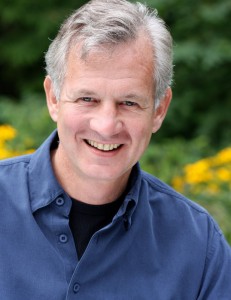
Tag: Terry Hershey

Who am I, Part Two!

Trying to make sense of our place in the world – and probably failing!

Yesterday’s post, Making sense of who we are?, was built upon a recent essay from George Monbiot: A Small and Shuffling Life. It is a terrific essay, in the very best tradition of George Monbiot. I really hope you read it in yesterday’s post because today’s introspective jaunt is built on that essay. Two particular paragraphs of his essay really ‘spoke’ to me.

The opening paragraph:

Live free or die: this is the maxim of our age. But the freedoms we celebrate are particular and limited. We fetishise the freedom of business from state control; the freedom not to pay taxes; the freedom to carry guns and speak our minds and worship whom we will. But despite – in some cases because of – this respect for particular freedoms, every day the scope of our lives appears to contract.

Later:

We carry with us the psychological equipment, rich in instinct and emotion, required to navigate that world. But our survival in the modern economy requires the use of few of the mental and physical capacities we possess. Sometimes it feels like a small and shuffling life. Our humdrum, humiliating lives leave us, I believe, ecologically bored.

In that second paragraph I sense something from Mr. Monbiot that is felt by me and Jean and appears to be shared very widely. A sense that something about today’s society is broken. That the last, say fifty years, of increasing living standards, health and prosperity, albeit not universally embraced, have brought us no closer to a golden future. That, as so clearly voiced in the preceding paragraph, “… our survival in the modern economy requires the use of few of the mental and physical capacities we possess.

My guess is that George Monbiot and Terry Hershey have never met. One might suggest that their backgrounds are as different as two people might be. Take their respective ‘About’ pages on their blogsites. Here are their closing paragraphs.

First, George:

George Monbiot Guardian Staff Byline

My work is more sedentary than it used to be, so I temper it with plenty of physical activity: sea kayaking, ultimate frisbee, running and some heavy duty gardening: growing my own vegetables and much of my own fruit.

Here are some of the things I love: my family and friends, salt marshes, arguments, chalk streams, Russian literature, kayaking among dolphins, diversity of all kinds, rockpools, heritage apples, woods, fishing, swimming in the sea, gazpacho, ponds and ditches, growing vegetables, insects, pruning, forgotten corners, fossils, goldfinches, etymology, Bill Hicks, ruins, Shakespeare, landscape history, palaeoecology, Gavin and Stacey and Father Ted.

Here are some of the things I try to fight: undemocratic power, corruption, deception of the public, environmental destruction, injustice, inequality and the misallocation of resources, waste, denial, the libertarianism which grants freedom to the powerful at the expense of the powerless, undisclosed interests, complacency.

Here is what I fear: other people’s cowardice.

I still see my life as a slightly unhinged adventure whose perpetuation is something of a mystery. I have no idea where it will take me, and no ambitions other than to keep doing what I do. So far it’s been gripping.

Now, Terry:

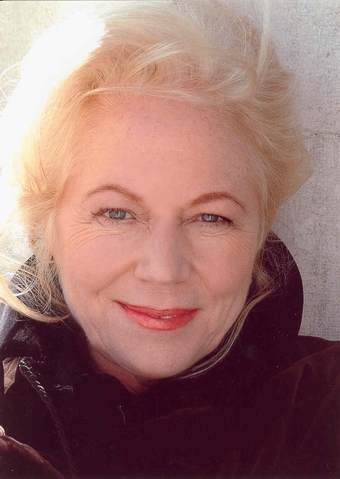
terry-hershey

I used to ask of myself and others: what have you accomplished? Where are your credentials? What does your job and your bank account say about who you are?

Now, my questions are different:
Are there butterflies in your garden?
What are the color of loved ones’ eyes, when they are looking at you with hope?
And when was the last time your house smelled of paper-white narcissus?
Do sunsets make you smile?
When was the last time you stood in stocking feet just to stare at the rising moon?
Have you ever seen a sunflower bloom?
Does the laughter of children do your heart good?
At what angle does the sun enter your house?

Do I understand that life is full of complications, obligations and distractions? Yes. I do. My wife and I raise a teenage son. We run two businesses. So, yes, I know a bit about down-to-earth realities.

But this, too, is reality:

I love to watch the hummingbirds dance.
I love that my son likes to put on his dancing shoes.
I love to join him when we play
old-time rock and roll.
I love to stretch out on a garden bench on a
warm summer day.
I love a hot shower and drying with an expensive,
oversized cotton towel.
I love books, delight in poetry,
and find sustenance in writing.
I treasure the certainty that grace
gives us all many second chances.
I value the times I can simplify life by letting go of my need to validate my humanity through productivity.
And I love to lose track of time in a garden.

I also know that sharing this with you – offering my practices for pausing, resources for doing less and living more, reflections in my blog —feeds me.

So I invite you, too, to join us — and together we’ll share, remind, and support each other, to “do less, live more.

Yet, despite the differences in backgrounds, cultures and much more, to me there is a common openness, an honesty shared, and a passion for the truth.

All of which is a very long introduction to this week’s Sabbath Moment from Terry; republished in full.

ooOOoo

Finding sanctuary and grace

January 19, 2015

Today I am sitting in a café (and bar) in Vaison-la-Romaine, in the Provence region of France, nursing my espresso. The old men of the village (actually all of them are about my age) gather. They unload, swap stories, sip pastis, and watch petanque on TV. Some read the newspaper–with stories about Charlie Hebdo and photos of “Somme Nous Charlie“–carrying reminders of hope in our fragile and broken world.

I am glad to be here. Today. In this place. There is an air of familiarity among the men, and comfort in their ritual. I am grateful for reminders and invitations to live well into a place. Not just a physical space, but a tonic and sanctuary to the spirit. The invitation is a permission to settle down. (In the words of Jesus, “to come away and rest awhile.”) A sanctuary is a place that restores us, replenishes us, nourishes us. In this renewal, we are reminded, once again, of what really is important.

I agree that it is easy to sentimentalize. But living into the moment doesn’t smooth the edges of our life. It allows us to pay attention. I like to think that we can name the edges, to welcome and invite them into the sanctuary.

Outside a bicycle club gathers in the village center parking lot, ready for their weekend excursion. Their spirit is eager, their uniform bearing homage to their journey to the top of Mont Ventoux.

Sitting in the café, my thoughts meander, with no agenda or responsibilities to tether them. So I let them wander, a gift to embrace. But my reverie is interrupted with worry … I need a Sabbath Moment. And I don’t have a clue (I tell myself). It’s not easy on vacation. Especially without wi-fi.

I am on my annual trip to Europe with my good friend Bill McNabb to taste wine. He’s a wine writer (and pastor) in the San Francisco area. But mostly, he’s a friend. I’m his aide-de-camp and connoisseur.
We travel to wine regions and are blessed to taste beverages that we cannot afford, but offer us a glimpse of heaven.
Yes I’m biased. But then wine is not a beverage here; it is an experience. Your choice is to savor and take delight.

We visited wineries harvesting grapes from vines 100 years old. These are businesses passed down through the generations, grandfather to father to son (and now thankfully, often to daughter). A world where terroir is king, the personality of the soil. Meaning that this wine is born of a place, a very specific place. Here in the Rhone Valley, I’m honored to be in the company of crafts people. Like being with a great gardener. The men and women I met coddle their vines–they call them trees–lovingly.
Unlike Peter Mayle, I don’t have “A Year in Provence.” I only have a few days. But that’ll do… It is my first visit and I’m sure won’t be my last.

We’re in our gite–a rural rental property in France–we relish the evening light, a layer of bruised purple (pourple) above the slopes in Provence (Cotes du Rhone). Below the hills, vineyards roll through the landscape, the vines–still in winter and pruned–pose as menorah renderings in the dusk light.

Yes, this scene is a tonic. There is something about these moments that carry significance, because they are reminders, and they are sacraments. Partial, yes, but containing the full sustenance of grace.
And I think of the question a friend asks me, “What holds you?”
In other words… What sustains you, and carries you gently through your days?

Ryoken, a Zen master, lived the simplest kind of life in a little hut at the foot of a mountain. One evening a thief visited the hut, only to discover there was nothing in it to steal. Ryoken returned and caught him in the act.
“You may have come a long way to visit me,” he told the disillusioned prowler, “and you should not return empty-handed. Please take my clothes as a gift.”
The thief was bewildered. But he took the clothes and slunk away.
Ryoken sat naked, watching the moon, “Poor fellow,” he mused. “I wish I could have given him this beautiful moon.”

Sometimes I feel like that thief. Standing–in my own home, or in front of an audience, or in a crowd, or all alone–I am looking for something, for whatever ails me or creates a hole or emptiness; but, like that thief, not finding it. “What am I missing?” I ask myself. What am I wanting, yearning for, that I find myself in such a pell-mell-hurry or weighted down… hoping to fix it, or find it, or mend it. So I run and race and call on God, or the sky, or roll the dice with some prayer from my childhood. This will solve it, I tell myself. But the more I push, the more I ask, the more I beseech, the further I move from the center.

Here’s the deal: In my state of distraction, I cannot see that the core of my identity, the place where I stand in this moment (even at times without clarity, or stability, or faith, or answers)… I stand smack dab in the center of an awesome and illogical grace. Smack dab in the center of the sacred present.

If I do have the permission to see that place, I know that I am grounded.
I am now able to breathe in
and out,
and rest in this acceptance.

Last night, above the slopes to the south, a slivered crescent moon rests, the sky a cobalt blue canvas. It is visceral, arresting, piercing. And for whatever reason, reassuring. This snapshot is imprinted, and I know in my heart that it is in some way essential, indispensable. I accept this gift of the moon, even though I don’t yet know why.

I don’t know what to tell you to do, exactly. Only that I too, wish I could give you the gift of that crescent moon.
I know this for certain: when we do not pay tribute, we are like the thief in the Zen story–without even knowing it–and we settle for less. So much less. So it is not just a question of what hold us, but of what holds us back… from being wholehearted, true to our self, fully alive, unafraid of uncertainty, and grateful for the gift of this moment.

Lord knows we look for ways to bottle it and sell it, when I reckon we should just get out of the way.

Our gite sits squarely in a vineyard and a working farm. A perfect setting to replenish. For years I’ve been writing about sanctuary and the need for restoration. And I’m my own worst enemy. There’s not a week that goes by that a Sabbath Moment friend doesn’t remind me to follow my own advice to pause… and let my soul catch up with my body. Gladly, this week I did.

ooOOoo

My penultimate reflection to today’s post is with a short, six-minute video from Professor Dan Gilbert. The video is entitled: The psychology of your future self. I hope you see it as offering a calming perspective to two days of inner psychological ramblings!

Published on Jun 3, 2014
“Human beings are works in progress that mistakenly think they’re finished.” Dan Gilbert shares recent research on a phenomenon he calls the “end of history illusion,” where we somehow imagine that the person we are right now is the person we’ll be for the rest of time. Hint: that’s not the case.

My final reflection is the lesson that dogs teach us; that one about living in the present.

Cleo living, and sleeping, in the present moment.

The habit of doing nothing!

Last word for a while on the power of meditation.

This is not a single topic blog. But the last few days have brought such a wealth of marvellous stuff that I couldn’t resist this final, for the time being, post on the benefits of slowing down, of taking a break – meditation, in other words.

First, and I wish I could remember from whence it came, I found this essay by Bertrand Russell In Praise of Idleness It’s a wonderful piece of writing from one of the great masters of the art.  Take this extract from just the first paragraph, (and the photo insertion is from me!):

Bertrand Russell (18 May 1872 – 2 February 1970)

I think that there is far too much work done in the world, that immense harm is caused by the belief that work is virtuous, and that what needs to be preached in modern industrial countries is quite different from what always has been preached. Everyone knows the story of the traveler in Naples who saw twelve beggars lying in the sun (it was before the days of Mussolini), and offered a lira to the laziest of them. Eleven of them jumped up to claim it, so he gave it to the twelfth. This traveler was on the right lines. But in countries which do not enjoy Mediterranean sunshine idleness is more difficult, and a great public propaganda will be required to inaugurate it. I hope that, after reading the following pages, the leaders of the YMCA will start a campaign to induce good young men to do nothing. If so, I shall not have lived in vain.

Then from out of the Transition Network stables came this interview by Rob Hopkins with Sophy Banks on the Power of Not Doing Stuff.  Just going to pick out a couple of exchanges that really struck me.

Sophy, I’m sure you get asked the question lots of times, but how would you describe Inner Transition ? What’s Inner Transition for you?

I gave a talk about Inner Transition in Canada just recently, and someone said “what I want from the talk is, what’s the most succinct story? What’s the E=mc² of Inner Transition?” The way that I’m talking about that at the moment is to say the absolute core of Inner Transition is that in our groups, within ourselves, in our relationships, in what we’re doing in our communities, how can we be creating a culture that supports us to be in a state of feeling resourced, feeling empowered, feeling seen and appreciated? With the understanding that when we have those kind of external conditions, we find ourselves in a state where we’re the most open to new ideas, the most open to connection, the most able to build relationships with people who are different from us.

That’s the core of it, to understand that internally we can be in different inner states, we can be in a state where we feel stressed and closed and driven or whatever, or we can be in a state where we’re open and creative and learning and available. That’s one way of framing Inner Transition, how do we keep recreating that?

Part of it, I think, is when we’re all in that state of being open and creative and connected with each other and with ourselves, we make the best decisions. We’re able to take the longest and the widest view, we’re able to see the consequences of what we do, so there’s also something which has really been resonating for me. That’s not only the process we need for Transition, that’s the end-state we want to get to. Part of what’s not working in our culture is that lots of the people with a lot of power who are making really key decisions are in a state of constant stress and pressure and having to make very narrow decisions, decisions based on very narrow viewpoints.

oooo

One of the expressions you’ve been using increasingly over the last couple of years is “healthy human culture” and this idea that that’s ultimately the aim of Transition, to enable that and to create that. What does that mean? Can you define “healthy human culture”?

This is where my enquiry took me. I got really interested in seeing polarities and dualities – people have been doing that for centuries – about our culture and calling it dualistic. I came across Riane Eisler’s work. She talks about basically two kinds of human culture. One is based on partnership and one is based on domination. I got really interested in that and the question what if that’s true? It’s a big proposition.

If that’s true, what’s underneath that and what is it about what goes on inside us that we’re constructed, the way we’ve evolved, that causes that to be so, that there are these two stable states? I feel like I’ve been looking at lots of different territories, I’m really interested in trauma and how that affects us in the creation of the unconscious that comes through trauma.

This whole thing about how we create unintended consequences. The idea that anybody could have sat down and designed the consequences that we’re living with is inconceivable. However dysfunctional people were and however much they’re interested in wealth or power or anything, I just don’t believe that anybody intended it to be like this. How do we get this as a by-product of something that’s natural and…just who we are, who we’ve evolved to be.

So for me, the question around “healthy human culture” is one of the inner. What’s the inner state of a culture that creates partnership, learns to live within its resources, that’s oriented towards joyful, pleasurable existence, that has a belief about ourselves as humans that we’re trustworthy and generous and want good things for the future, good things for our children. What I see very very strongly: in a lot of the depth work that I’ve done, what I see is when you peel away a lot of the damage, what you find is a profound and I could say universal. In my experience (I haven’t worked with the psychopaths and the most damaged people) but that sense that if we’re healed and whole what we want is to love each other and do good in the world.

Then there’s another state we could be in, which comes back to your first question, where we feel under-resourced, disempowered, under attack. There’s not enough and I’m taught that other people are selfish, violent and greedy so I need to fight for what I can get. In order to have status I’ve got to have stuff, I’ve got to prove myself. With that goes a whole lot of very difficult feelings.

I’m very interested in that idea, that in unhealthy culture we have a whole lot of unmanageable feelings centred around shame and not being good enough that we then disown – I can’t deal with that in myself, I’ll put it on to you, I’ll find somebody else to have that experience and then I’ll watch it in them and feel OK about myself. It’s really interesting to look at cultures of domination and colonialism and capitalism and power-over as being driven by the need to not feel stuff myself, but grab enough power so that I can do it to somebody else.

The whole driver for those things is a psychological state of splitting and projection. When I bring that back to me and what culture I create in my relationships and my groups, you see it out in those big systems in the world but it’s also a very precise way of understanding and discerning what culture do I make in this room with these people, around splitting and projection or unity.

That’s quite a big answer! The short answer is “healthy human culture” is that one where we reel resourced, empowered, connected, appreciated and safe. Those seem to be the 5 things. If we have those, we are in that state of openness and availability and connection and learning and receptivity and then taking good action instead of action that creates a problem somewhere else in the system.

It really is a fascinating and thought-provoking interview.  Go and read it in full, or better still, find somewhere to sit and relax, close your eyes and listen to it.

Moving on.

There was an article in Nature about the BrainNeuroscience: Idle minds – Neuroscientists are trying to work out why the brain does so much when it seems to be doing nothing at all.

For volunteers, a brain-scanning experiment can be pretty demanding. Researchers generally ask participants to do something — solve mathematics problems, search a scene for faces or think about their favoured political leaders — while their brains are being imaged.

But over the past few years, some researchers have been adding a bit of down time to their study protocols. While subjects are still lying in the functional magnetic resonance imaging (fMRI) scanners, the researchers ask them to try to empty their minds. The aim is to find out what happens when the brain simply idles. And the answer is: quite a lot.

Again, a very important read so do go across and read it in full.  Because, you will come to this:

Zen and the art of network maintenance

Raichle favours the idea that activity in the resting state helps the brain to stay organized. The connections between neurons are continually shifting as people age and learn, but humans maintain a sense of self throughout the upheaval. Spontaneous activity might play a part in maintaining that continuity. “Connections between neurons turn over in minutes, hours, days and weeks,” says Raichle. “The structure of the brain will be different tomorrow but we will still remember who we are.”

Or perhaps the activity is part of the reshaping process, tweaking connections while we idle. Several teams have reported changes in resting connectivity after language and memory tasks and motor learning. Chris Miall, a behavioural brain scientist at the University of Birmingham, UK, and his colleagues have shown that spontaneous activity at rest can be perturbed by what has just happened. The team scanned volunteers at rest, and then asked them to learn a task involving using a joystick to track a moving target. When the participants were scanned at rest again, the team could see the effects of motor learning in the resting networks. That study, and subsequent work along the same lines, suggests that “the brain is not only thinking about supper coming up, but it’s also processing the recent past and converting some of that into long-term memories”, says Miall. The network changes are specific to the tasks performed.

So, hopefully, anyone who has read this post and who would like to slow down, to practise the art of doing nothing, will be eager to learn how. Well, keep reading!

Yesterday, I referred to Leo Babauta’s website.  Thanks to Leo’s wonderful ‘uncopyright‘ offer, I am free to republish his ‘How To Meditate‘ guide.

How to Do It Daily

There are lots and lots of ways to meditate. But our concern is not to find a perfect form of meditation — it’s to form the daily habit of meditation. And so our method will be as simple as possible.

1. Commit to just 2 minutes a day. Start simply if you want the habit to stick. You can do it for 5 minutes if you feel good about it, but all you’re committing to is 2 minutes each day.

2. Pick a time and trigger. Not an exact time of day, but a general time, like morning when you wake up, or during your lunch hour. The trigger should be something you already do regularly, like drink your first cup of coffee, brush your teeth, have lunch, or arrive home from work.

3. Find a quiet spot. Sometimes early morning is best, before others in your house might be awake and making lots of noise. Others might find a spot in a park or on the beach or some other soothing setting. It really doesn’t matter where — as long as you can sit without being bothered for a few minutes. A few people walking by your park bench is fine.

4. Sit comfortably. Don’t fuss too much about how you sit, what you wear, what you sit on, etc. I personally like to sit on a pillow on the floor, with my back leaning against a wall, because I’m very inflexible. Others who can sit cross-legged comfortably might do that instead. Still others can sit on a chair or couch if sitting on the floor is uncomfortable. Zen practitioners often use a zafu, a round cushion filled with kapok or buckwheat. Don’t go out and buy one if you don’t already have one. Any cushion or pillow will do, and some people can sit on a bare floor comfortably.

5. Start with just 2 minutes. This is really important. Most people will think they can meditate for 15-30 minutes, and they can. But this is not a test of how strong you are at staying in meditation — we are trying to form a longer-lasting habit. And to do that, we want to start with just a two minutes. You’ll find it much easier to start this way, and forming a habit with a small start like this is a method much more likely to succeed. You can expand to 5-7 minutes if you can do it for 7 straight days, then 10 minutes if you can do it for 14 straight days, then 15 minutes if you can stick to it for 21 straight days, and 20 if you can do a full month.

6. Focus on your breath. As you breathe in, follow your breath in through your nostrils, then into your throat, then into your lungs and belly. Sit straight, keep your eyes open but looking at the ground and with a soft focus. If you want to close your eyes, that’s fine. As you breathe out, follow your breath out back into the world. If it helps, count … one breath in, two breath out, three breath in, four breath out … when you get to 10, start over. If you lose track, start over. If you find your mind wandering (and you will), just pay attention to your mind wandering, then bring it gently back to your breath. Repeat this process for the few minutes you meditate. You won’t be very good at it at first, most likely, but you’ll get better with practice.

And that’s it. It’s a very simple practice, but you want to do it for 2 minutes, every day, after the same trigger each day. Do this for a month and you’ll have a daily meditation habit.

Now to the close.

Beautifully rendered thanks to Terry Hershey.  For on his website there is this:

When I pause, I put myself in a new or different environment.
When I pause, I create spaces–or sanctuaries–in which renewal can be born.
When I pause, I allow my soul to savor, relish, value, honor, welcome, see, celebrate, wonder, and to experience grace.

Enough said!

The power of touch

Some of life’s lessons are easy to learn – once we have been taught!

Readers be warned!  This is one of my more subjective posts written in the hope that many will ‘connect’ with the emotions expressed.

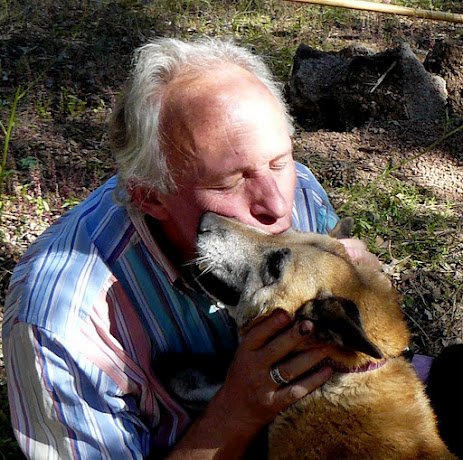
Learning touch from Casey

I want to explore the power of touch.

Not just in a direct manner such as a hug or an arm around the shoulder but also the way that love can reach out and ‘touch’ us from afar.  I’m going to do that by recounting something that Jean and I have experienced over the last couple of weeks.  Here we go!

A while after we had moved to Payson in February, 2010 both Jean and I noticed that I was getting forgetful. Initially we thought it was just a characteristic of the vestibular migraine that I was diagnosed with in 2009 but eventually it seemed a good idea to have a local doctor here in Payson check me out.  That examination took place last April 24th., a little over two weeks ago.  The doctor dropped a huge bombshell in our laps by saying that she thought that I was exhibiting signs of early-onset Alzheimer’s Disease!

To say that I was shocked was an understatement.  Jean was beside herself with worry as her late American husband, who had died in 2005, had suffered badly from Alzheimer’s Disease for his last two years.  We had 48-hours of wall-to-wall worry!

A few days later, I was getting very angry at the lack of gentleness in the way that the doctor had spoken to me.  Jean had the brilliant idea of contacting a retired doctor friend.  His response was loud and clear; he advised me to get a second opinion and continued by recommending a neurologist that he knew well.  That appointment was held this last Tuesday, May 8th, down in Phoenix.

The neurologist asked me many questions, including such verbal tests as how many animals can you name in a minute, spell the word ‘world’ backwards, deduct 7 from 95 (and then keep deducting 7 from the resultant answer!!), and then undertook a physical examination including co-ordination skills, blood flow in the neck and other relevant aspects.

All of which lead him to the conclusion that I was not showing any signs of dementia.  My forgetfulness was normal for someone of my age (67 last birthday) especially taking into account all the life changes of the past few years.

Then the neurologist went on to warn me about anxiety.  He said it was a ‘killer’ of healthy bodies and healthy minds, especially as we got older.  So my anxiety over my sister’s dementia, my half-sister living in Devon, England, whom I am very close to, is now badly affected by vascular dementia and got me thinking I might be following in her path, and my anxiety over thinking my life now was ‘too good to be true’, was getting in the way of me being a relaxed, ‘go with the flow’ individual.

Thus a couple of extremely stressful and worrying weeks came to a most wonderful conclusion; an outcome that couldn’t have been better.  The degree of emotional and psychological disruption that Jean and I have been through was not however without some major lessons being learnt.

Being scared – I’ve always taken for granted that I would have good health throughout my life, aided and abetted by the fact that I have never been admitted to hospital and have avoided serious illnesses.  The first doctor’s so-called diagnosis was one giant slap-in-the-face especially realising that the future in store could be a steady decline in my cognitive skills.

For the first time in my life I was truly scared and last Monday, the day before the visit to the neurologist, I broke down in Jean’s arms saying how scared I was.  Revealing such vulnerability was not easy for me but being held by Jean under those circumstances was deep and pure bliss.  As the saying goes, ‘If one doesn’t run the risk of being lost, then one can never be found.’

Love and friendship – The number of people that came up to Jean and me, gave us big hugs and said that they would be thinking of us during our trip down to Phoenix last Tuesday was indescribably beautiful.  So many showed such a depth of feeling for what Jean and I were going through.  Many others from distant places sent encouraging emails or telephoned.  It all amounted to preventing us from feeling alone and reinforced our determination that whatever the medical outcome, we would find a way of handling it.

The power of the mind – my brother-in-law, in a recent telephone call, said that once the mind latches on to an idea, it does everything it can to reinforce that idea, however illogical it may be.  Thus over the last couple of weeks, every time I dropped something, or forgot where I had put my glasses, or wasn’t clear which day of the week it was, and on and on, I used that as ‘proof’ that I was rapidly losing my mind.  It should serve as a strong warning that we can literally think ourselves into a crisis!

The love between a dog and a human – hugging a dog when one is feeling emotionally vulnerable is beyond measure.  Dogs always sense when we humans are feeling fragile and they offer their uncomplicated hearts to us without any condition or need for return.  That selfless love is an inspiring example of what we all need to learn to give one another.

Touch and social intimacy – we have so much to learn from dogs when it comes to touch and social intimacy.   We are all needy for touch.

Which leads me providentially to a recent item from Terry Hershey.  Terry came to Payson in March, 2011 and he was a most inspirational speaker.  I have followed him ever since.

Last Monday’s Sabbath Moment included the following story, republished with Terry’s kind permission – the story is all about touch!

Caroline was very sad. Caroline was only six years old and her father had just died. In fact, her father had been assassinated.

Sitting in the back of big black limousine, Caroline Kennedy didn’t quite know what to do with her sadness. On the seat next to her sat her nanny, Maud Shaw, and next to Maud, Caroline’s younger brother John.

Through the windshield Caroline could see her mother, Jackie, and her uncles, Robert and Ted, walking in front of the limousine as it slowly made it’s way down the Boulevard to St. Matthew’s Cathedral.  Looking out of her side of the car, Caroline recognized the friendly face of Secret Service agent, Robert Foster. She liked and trusted Robert Foster.

Not knowing what to do with her sadness, and on impulse, she rolled down the window and stuck out her six-year old hand. Agent Foster had a choice to make. Secret Service agents are not allowed to have their hands occupied, needing to be ready for any emergency. But Robert Foster didn’t even think twice. He held Caroline’s hand tightly the entire way to the cathedral.

Later, Agent Foster said it was all he could do to “fight back his own tears of sadness, for little Caroline Kennedy.” When asked about his kindness, he seemed surprised, “All I did was hold a hand,” he answered.

Terry then goes on to say,

We all know sadness. Life breaks for each one of us in different ways and in different places. And sometimes the sadness seems too much to carry.

It requires courage to roll down the window, to connect or ask or invite. For whatever reason, there is a knee-jerk need to deny any sadness, or dismiss it, or apologize for it. “I’m sorry,” people will say, wiping away their tears, as if their sadness is a violation of some tenet of propriety. Heaven forbid if any humanity is exposed.

So sometimes I am afraid to ask. Not sometimes; most times. I don’t want to appear weak. Asking for help is a hard pill to swallow.

I spent Saturday in Clearwater, Florida, with a group talking about intimacy and communication. (Yes, it is easier to talk about than to practice.)  Here’s what I told the group.

If we don’t bring it with us, we’re not going to find it there.  Which means intimacy–trust, vulnerability, authenticity, honesty–begins here.

With me. With this me.

I was raised in a religious environment that taught me to eradicate my messiness (to quash my sadness or grief or untidiness).

I now believe differently. I now know that we find and express acceptance, love and grace (the place where we can be fully human), in our messy, imperfect, and fully thorny selves. In other words: We can embrace this life–without any need to photoshop it.

To be human is to be vulnerable.  I am capable of being wounded and cut and sad… which also means that I am capable of being kind and generous and present.

In such moments of heartache, I can have the courage to ask for a hand to hold.

In such moments of heartache, I can have the courage to hold a hand the needs to be held.

Robert Foster didn’t think twice about holding a hand that needed to be held. And he wasn’t posturing or amassing heavenly brownie points. He was doing what needed to be done.

Here’s the deal: we don’t need more remedies or advice. We need more touch. We become more human when we touch. Why? Because when we touch, we are seen.  And when we are seen, we recognize that our value is not tied solely to our sorrow.

And we, you and I, will find no better lesson to learn from our beautiful canine friends, than this lesson of touch.

The loving touch of a dog.

Disconnected.

Travelling the 5,200 miles, give or take, between Payson (AZ) and London (UK)

Apologies for a slightly reduced service over the next 10 days but Monday 6th June finds me travelling from Phoenix to Dallas, and then Dallas to London Heathrow.  This as a result of the U.S. Citizenship and Immigration Service (USCIS) granting me permanent residence (the Green Card) in April and thus me being able to travel back to England to see my new grandson for the first time.

So just a few thoughts, courtesy of Terry Hershey.  I subscribe to his weekly Sabbath Moment and they always contain some beautiful sayings and other gems.  Take these for example, from his Sabbath Moment of the 30th May.

Anything I’ve ever done that ultimately was worthwhile. . .initially scared me to death.  Betty Bender

Betty Bender

Or what about this?

To dare is to lose one’s footing momentarily. To not dare is to lose oneself. Soren Kierkegaard

A quick search reveals from the Stanford Encyclopaedia of Philosophy that,

Soren Kierkegaard

Søren Aabye Kierkegaard (b. 1813, d. 1855) was a profound and prolific writer in the Danish “golden age” of intellectual and artistic activity. His work crosses the boundaries of philosophy, theology, psychology, literary criticism, devotional literature and fiction. Kierkegaard brought this potent mixture of discourses to bear as social critique and for the purpose of renewing Christian faith within Christendom. At the same time he made many original conceptual contributions to each of the disciplines he employed. He is known as the “father of existentialism”, but at least as important are his critiques of Hegel and of the German romantics, his contributions to the development of modernism, his literary experimentation, his vivid re-presentation of biblical figures to bring out their modern relevance, his invention of key concepts which have been explored and redeployed by thinkers ever since, his interventions in contemporary Danish church politics, and his fervent attempts to analyse and revitalise Christian faith.

OK, dear readers, from somewhere over who knows where!

The power of shine!

A delightful presentation by Terry Hershey.

Regular followers of Learning from Dogs will recall that in March we had the pleasure of a visit to St Paul’s Episcopal Church, here in Payson, of the well-known Terry Hershey.  He is a great inspirational speaker, based on deep and sound personal values.  Terry’s website is here.

Well it seemed like a nice idea to offer some more of TH.  Here is his presentation on World Communion Day, October 4th 2009, at the First Community Church, Columbus, Ohio.  Letting the light that is in each one of us shine out.

Part One

Part Two

Travel well.

It is better to travel well than to arrive.” Buddhist quote.

Those of you who are regular readers of Learning from Dogs, and I am flattered at how many there are now, will recall that on March 8th I posted an announcement of the Rev. Terry Hershey coming to Payson to give a couple of seminars based around his best-selling book, Soul Gardening.  Jean and I had the honour of having Terry stay with us for a couple of nights.

Anyway, on Monday morning, the day Terry was to give his talks, four of us took a couple of hours off in the morning to take a walk around the majestic granite boulders, a couple of miles on from our house.  These great boulders give rise to the name of the road that we live on; Granite Dells Rd.  Most afternoons, Jean and I take Pharaoh and his little pack of dogs for this three-mile walk so today was no different other than the walk being in the morning.

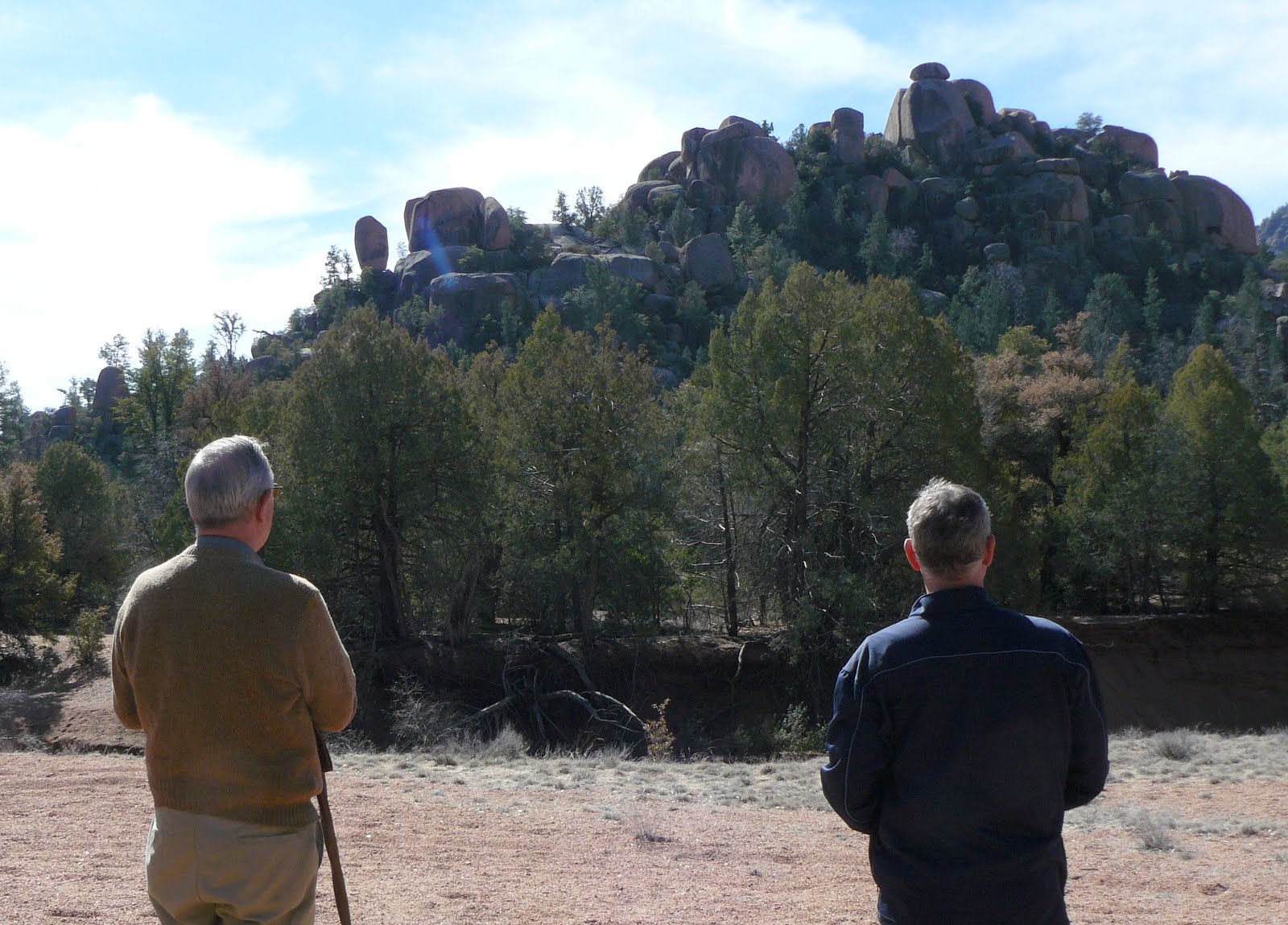
John H and Terry admiring the granite dells.

However, one of the benefits of having Terry with us on the walk was that he pointed out something really obvious that, so far, Jean and I had just taken for granted, i.e. missed!

It’s this. That dogs, when out for a walk off-leash, never travel the same journey, however many times they go on the same walk.  All dog-owners will be aware of this.

Dogs are all over the place, scurrying here and there, following sweet scents, totally absorbed in the intimacy of their relationship with their immediate experience.  There’s no ‘purpose’ to their behaviour, there’s no ‘clock’ running in their head as to what time it is and when they have to be somewhere else.  It is the epitome of travelling well, as from the quote at the start of this article.

The metaphor of how dogs journey as a comparison to how so many of us humans travel with eyes closed, never stopping to smell the roses, was mentioned by Terry when we stopped for group photo towards the end of the walk.  Terry also touched on the importance of living in the present, as dogs do so very, very well, many times during his later talks.

As soon as we make our happiness conditional on ‘getting’ somewhere in the future, our journey rather becomes pointless.


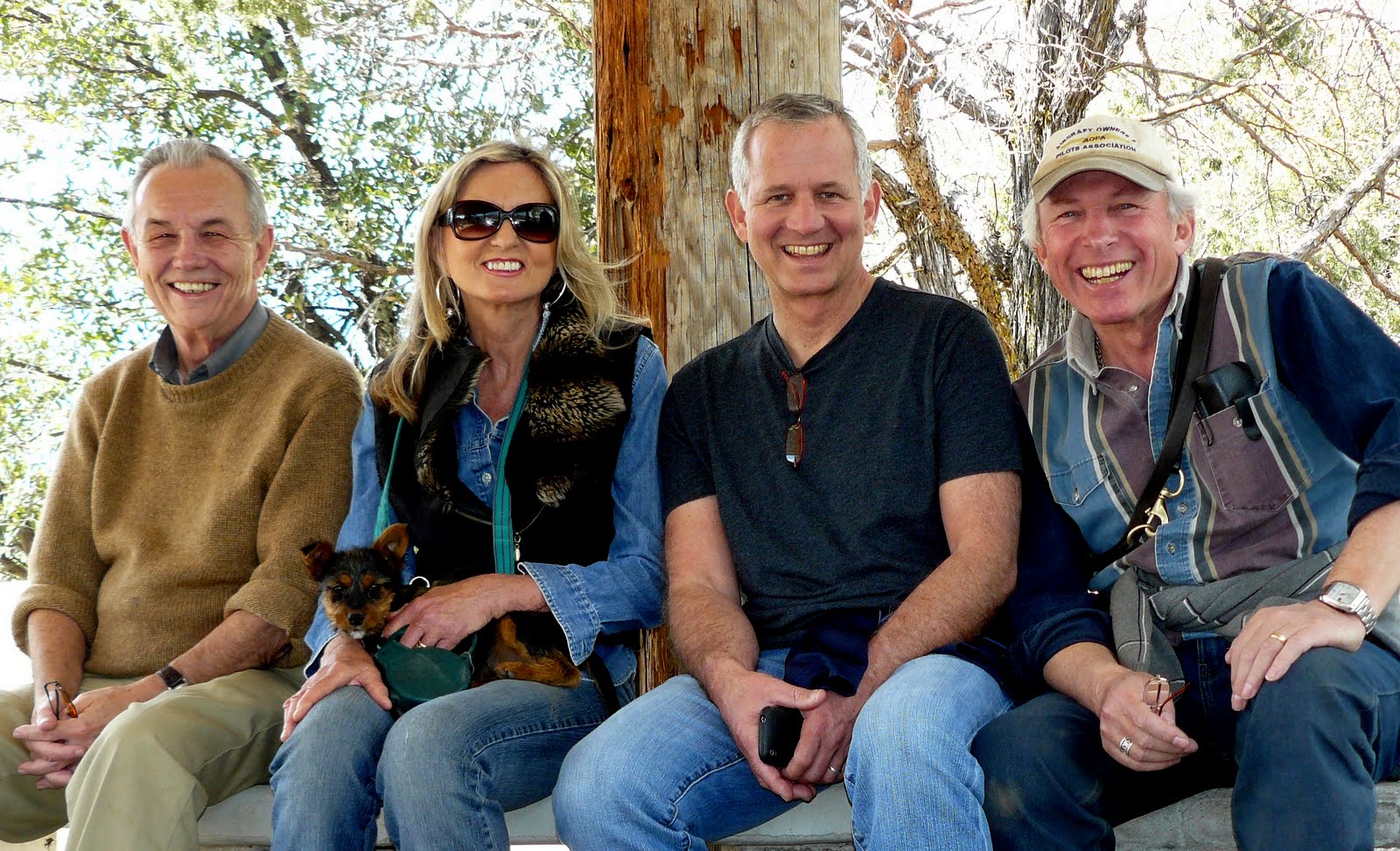
John, Jean, Terry, Paul - being happy in the moment.

What a wonderful day this Monday was.


Terry Hershey, Payson Visit Announcement

Obviously only relevant to all those that are within reach of Payson, AZ. Apologies to my other readers.

Terry Hershey

Nationally Known Speaker and Writer will offer Free Seminars on March 14

Terry Hershey will visit Payson on Monday, March 14, to speak at Saint Paul’s Episcopal Church beginning at 2:00 p.m. and at the First Church of the Nazarene beginning at 7:00 p.m.

Mr. Hershey is an inspirational speaker, humorist and author who has been featured on The Hallmark Channel, CNN, and PBS.  He holds a mirror up to our fast-forward, disconnected lives, and invites us to share the wisdom of taking an intentional moment to help regain our personal and spiritual balance.

Terry lives, writes and teaches with passion, purpose, heart and grace. He captivates his audience with the motto: “Do less, live more”.  He creates an environment where we are given permission to become involved in the world around us, to want what we already have, to be embraced by moments of grace, to allow the child in us to play under a wide sky, to understand that laughter is a type of prayer and to take delight in our friends.

Terry Hershey is the author of ten books. The one that will be the focus of his inspirational presentation in Payson is “Soul Gardening”; winner of a “Book of the Year” award in 2010. Terry’s stories will nurture your soul and renew your sense of what it means to live fully alive.  To hear Terry speak is a life-affirming experience. Everywhere he appears, the feedback has been unanimously positive. For example:

Terry Hershey was truly humorous, enlightening and inspiring to one and all. He gave us permission to be embraced by grace.

He was truly the highlight of our year!

Terry’s lectures and books inspire one to see that happiness is already inside.

Terry Hershey will be speaking as follows:

Monday afternoon, March 14:

From 2 p.m. to 4 p.m. at Saint Paul’s Episcopal Church parish hall, located at 1000 N. Easy Street, in Payson at the corner of Sherwood Drive.  Note that seating and parking at St Paul’s is limited to about 50 people. If you plan to attend the afternoon session, please call 474-3834 to leave a message reserving a space.

Monday evening, March 14:

From 7 p.m. to 9 p.m. at the First Church of the Nazarene, 200 East Tyler Parkway, located at the northeast corner of Beeline Highway in northern Payson across from the Home Depot.  The parish hall will comfortably accommodate up to 200 people.  Please call 474-5890 to leave a message reserving a space.

These events are open to everyone at no charge.  Refreshments will be available at both sessions. Please plan to bring a friend with you.

Further information may be obtained from:

Paul Handover,  (928) 478 8612

John Hurlburt,   (928) 468 6572