Tag: TED

Hope via Openness

Don Tapscott presents what might just be humanity’s salvation.

Millions of us, of all ages, are linked together in this new ‘wired’ world.  For old crusties such as myself, it’s all too easy to recall the days when the mention of the word ‘chip’ immediately brought to mind fried fish!  But we struggled into this new world and now can’t imagine how it was in those earlier days – anyone want to buy my old quill pen? 😉

There are huge benefits to this wonderful networked world and most days I read something on a website here or a blog there that opens my mind in unfathomable ways.  Not only that, but the number of friends, new and old, who co-operate with my attempts to show how integrity is the only way forward is humbling.

Thus it was that an old friend of many years, Lee C., sent me a link to a recent TED talk that revealed in just 17 minutes a message of hope for all of us.  It reminded me that our younger generation have their own knowledge, their own aspirations, their own fears and dreams.

Without more ado, watch it now!

The recent generations have been bathed in connecting technology from birth, says futurist Don Tapscott, and as a result the world is transforming into one that is far more open and transparent. In this inspiring talk, he lists the four core principles that show how this open world can be a far better place.

And weren’t those flocks of starlings just breathtaking?

Lee also sent me this:

Don Tapscott’s recent TED talk ends with footage of starlings in vast numbers which is referred to as a ‘murmuration’. I watched it just two nights or so ago. Tonight I went outside for a breath of fresh air (ok a call of nature) and this is part of what I saw. So pleased to have had my mobile phone in my shirt pocket.

Finally, I hadn’t come across Don Tapscott before but thanks again to this amazing world of shared information, a quick Google search finds Don’s own website here.
Inequality, a rich man speaks!

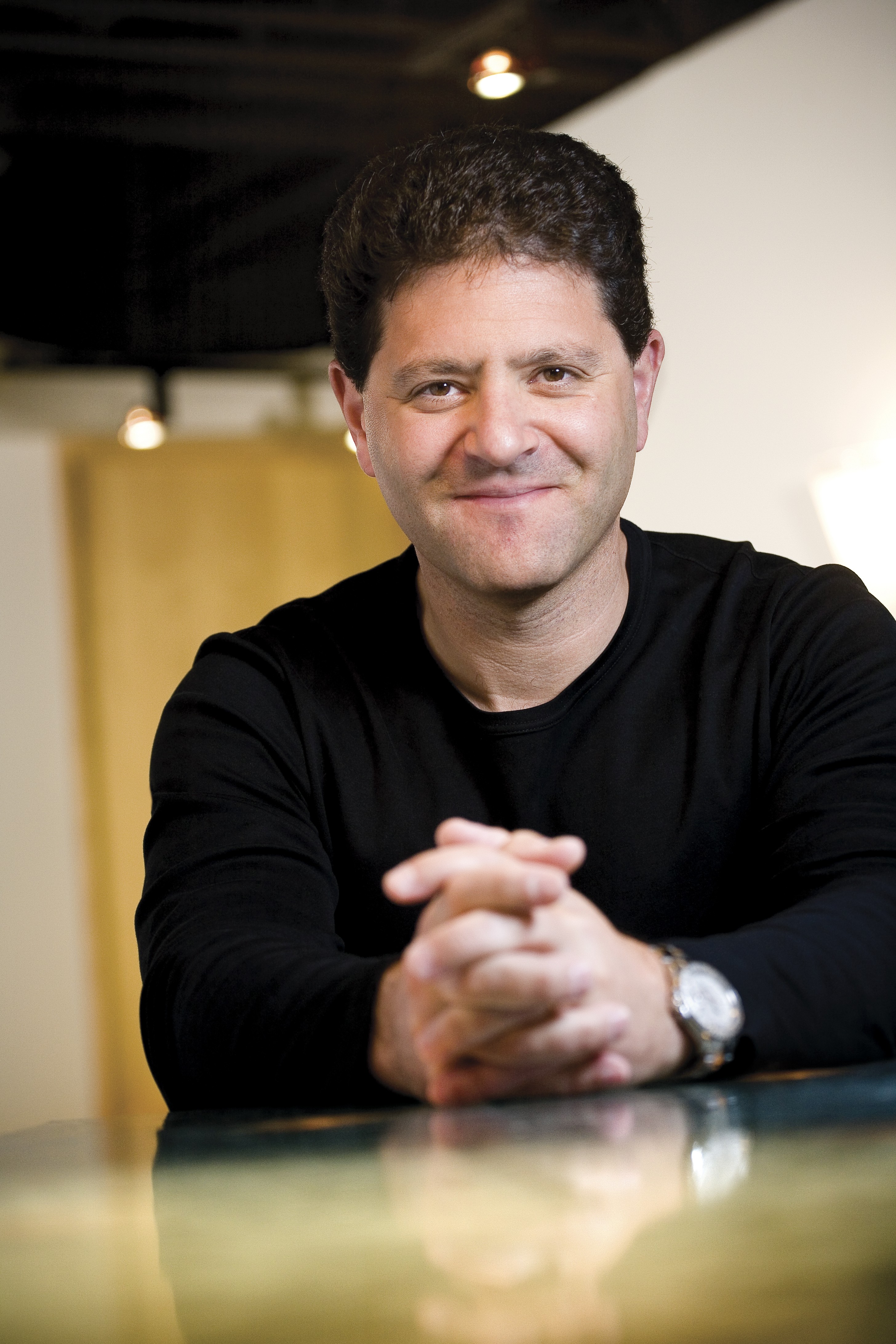
A personal reflection offered by Nick Hanauer.

Mr. Nick Hanauer

I hadn’t come across Mr. Hanauer before but thanks to some Facebook comments by Patrice Ayme found this YouTube video that is well-worth watching.  That’s an understatement!

The fundamental message that is contained in this short video seems critical, well to me it does, to society (that’s all of us, by the way) understanding why so many things seem to be going so very wrong for so many people.  But let me stop there before it becomes another of my rants!

Who is Nick Hanauer?  Here is a small extract from Nick Hanauer’s website,

Nicolas J Hanauer is a partner with Second Avenue Partners, a Seattle venture capital partnership specializing in early state startups and emerging technology. He has had a hand in such companies as Amazon.com and aQuantive among others.

Hanauer’s career began with a position as executive VP of Sales and Marketing at Pacific Coast Feather Company, a family owned manufacturer of basic bedding. In his time in that role, he helped grow Pacific Coast from several million dollars to more than $300 million in sales. Hanauer subsequently served as the company’s Co-Chairman and Chief Strategy Officer and remains Chief Executive Officer.

In 1988, Hanauer co-founded Museum Quality Framing Company, a company that has emerged the largest of its kind on the west coast with 60 locations. Hanauer was also one of the first investors in Amazon.com in 1995, where he served as a Board Advisor until January of 2000.

In 1996, he founded and served as CEO of internet media company Avenue A Media (later re-named aQuantive, Inc.) and became Chairman of the Board upon the first public offering in 2000. aQuantive was purchased by Microsoft in August of 2007 for 6.4 billion dollars; the largest acquisition in Microsoft history.

Now the video; less than 6 minutes long – do watch it!

As  a one-time entrepreneur back in the 80’s I can vouch for much of what Mr. Hanauer proclaims in his video.  The essence of successful marketing for any business, large and small, is understanding your market. Seeing the customer’s world through the customer’s eyes would be another way of putting that.

In plain language that means carefully and closely understanding what your customers, both actual and prospective, require, objectively and subjectively, and providing it to them profitably.  As the middle-classes (don’t like the term but it will have to do) are often the largest market opportunity, then it does follow that a healthy and vibrant middle-class is going to be best overall for the health and vibrancy of a country.  Indeed, in this very inter-connected world, that really equates to the health and vibrancy of our planet.

Which so easily leads on to a core truth. This one.  If all the Governments democratically elected on this planet truly acknowledged the democratic foundation, as Lincoln so ably put it, “government of the people, by the people, for the people” then those governments would be united in the one most important task facing the people – creating a sustainable way for us to live on the only planet we have!

Apologies, it did turn into a rant!

You may also want to read this TED and inequality: The real story.

Final message in a bottle

The concluding part of what we might care to leave for the next generation

Mankind over the next few years is facing the start of an interval of economic chaos and social stress between the end of the fossil fuel age and whatever follows.  That interval could well last a lifetime or more.  Some might argue that the economic challenges that have been the mark of 2011 are, indeed, the first signs of this economic chaos.

How well we cope, adapt and survive is not going to be down to those of my age (born 1944) but to the bright youngsters who have been born in the 21st century.

That was the motivation behind publishing, on December 1st, the speech given by Steve Jobs, the 2005 Stanford Commencement Speech, and on December 6th, the famous and fabulous speech given by Sir Ken Robinson at the 2005 TED Talks conference.

The third and concluding message is a subsequent speech given by Sir Ken, this time in May 2010.  It isn’t as stirring as his speech in 2005 but still a wonderful focus on what is our, as in homo sapiens, only chance of surviving – the innovation and creativity of the next  generations.

In this poignant, funny follow-up to his fabled 2006 talk, Sir Ken Robinson makes the case for a radical shift from standardized schools to personalized learning — creating conditions where kids’ natural talents can flourish.

Guys, beware of rickshaw drivers!

Watch the video to the end to make sense of the title!

The digitally connected world that is now so much a part of our lives brings lots of new issues, dangers and irritations.  But it also brings us a great number of tremendous opportunities.  TED is one of them.

For those that haven’t come across the TED website it offers a wonderful range of “Riveting talks by remarkable people, free to the world” as summarised here.

Dr Fisher

Thus it was via the TED website that I came across a fascinating talk by Dr Helen Fisher who is a Biological Anthropologist who has specialised on romantic love and connected areas.

Anyway, without any more waffle from me, if you want to be surprised by a number of Dr Fisher’s findings then do watch the TED video that may be found here.

And the reference to the rickshaw driver?  Watch the video to the end (23 minutes) to find out.

P.S. since writing the above, I found a YouTube copy of the TED video, which is below.  I haven’t watched it to the end to see if the reference to the rickshaw is in it, but I suspect it is.

By Paul Handover

Elliot’s schooling – Sir Ken’s view

Sir Ken Robinson’s view

I plan to have my final post on education finished very soon.  However, with my last week of finals and papers at the undergraduate level (which is finally over!) constantly hoarding my time, I have not yet quite been able to truly decide on which side I plan to end up.

My instinct tells me that the costs of the US schooling system far outweigh its benefits, but I feel I must be sure that this is truly a case that can be supported with logic and not simply my own biases coming through.

However, while I continue to ponder, I thought that readers might find this video interesting.  It’s a different take on the nature of institutionalized schooling than is often seen.  It’s on the longer side — approximately 20 minutes long — but I definitely think it is worth a watch for anyone pursuing a clear and well thought-out perspective on education, and it’s actually quite humorous and entertaining.

The video is of a presentation by Sir Ken Robinson, an internationally recognized leader in the development of innovation and human resources.  His thesis statement is as follows:

My contention is that creativity is as important in education as literacy, and we should treat it with the same status.

I hope the Learning From Dogs community enjoys this video.  Upon my return from celebrating my college graduation in Charleston, I plan to present my final finding on whether the costs or the benefits of schooling in the United States outweighs the other.

By Elliot Engstrom

Even more Tim Berners-Lee

The powerful spread of open data.

Sir 'Tim' Berners-Lee

Tim Berners-Lee was, or is, the father of the Internet, that remarkable network that has done to connect millions together.  Indeed, my personal view is that the Internet may be the only real tool that people have to protect and defend democracy.

I’m sure thousands know the background of Sir Timothy John “Tim” Berners-Lee, to give him his full name, an Englishman living in the USA.

There was an introduction to the the way that Sir Tim wants to see the web move in yesterday’s Post.

But Tim recently (February 2010) gave a talk in Long Beach, California, entitled The year open data went worldwide. This takes the concept much further.

It’s a fascinating presentation.

By Paul Handover