Tag: Southern Oregon Veterinary Specialty Center

Latest on Casey

The ebb and flow of events.

As many of you have gathered from my post on the 22nd. Casey was in a relatively stable situation. From that post:

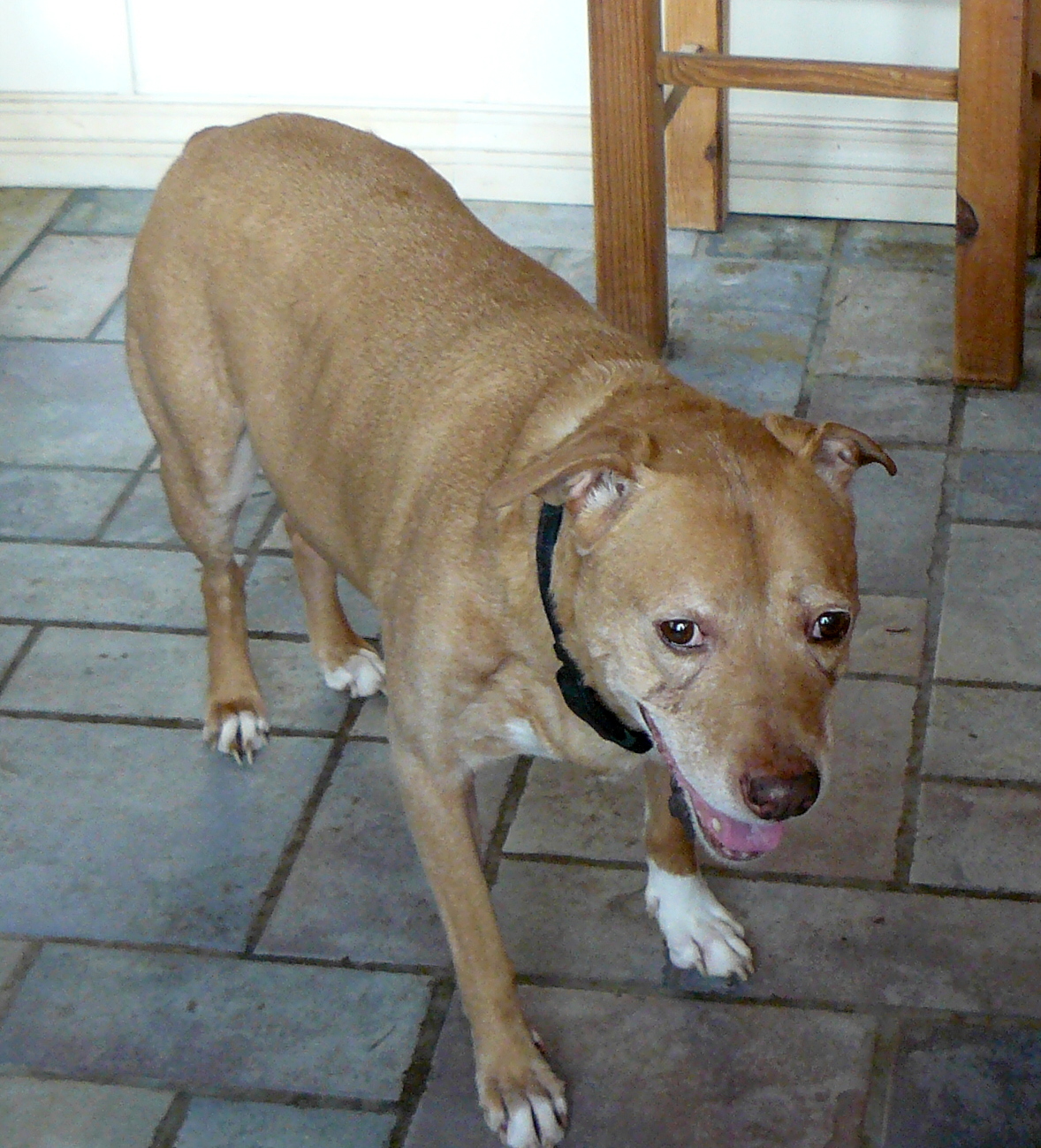
For dear, sweet Casey he is facing a very long haul. Dr. Jim, our vet neighbour and close friend, recommended that Casey start taking a steroid and he is now on Prednisone.
p1160892

Indeed, Dr. Jim came by last Friday evening and said that even though there was little sign of a positive change in Casey’s condition it was still very early days.

Then on Saturday morning, when Jean went into the kitchen where Casey is with Ruby and Paloma, there had been an unexpected and sudden turn for the worse. For Casey could not adequately stand because his neck pain was too great and his front legs were giving way.

We rang immediately Southern Oregon Vet Specialty Center (SOVC) and they recommended that we take Casey straight there. SOVC operate 24-hours a day. Or in their words:

At Southern Oregon Veterinary Specialty Center, we understand the special bond between a pet and their human family. Our team of highly trained doctors, certified technicians and support staff partner with your family veterinarian to provide specialized diagnostics, surgery and emergency care for your pet upon a referral or emergency basis. Our clinic is staffed 24 hours-a-day, 7 days a week, to receive emergency cases and to monitor our critical care patients. The clinic’s board-certified veterinary specialists and staff are committed to providing exceptional compassionate care utilizing state-of-the-art technology and treatments.

The relationships we have with partner veterinarians are vital to the success of treating your pet. We will keep them apprised of the patient’s status to provide a smooth and cohesive experience.

SOVC had no doubt that we had done the right thing and that the pain meds we  were giving Casey Tramadol and two muscle-relaxers, just were not strong enough. Their prognosis was that Casey be admitted to SOVC so he could be given more appropriate pain control, via an IV, and that as soon as possible he be scanned using an MRI.
Luckily, not too far away from where SOVC are located, near Medford, there is a specialist animal imaging unit: Sage Veterinary Imaging:

About SVI

Sage Veterinary Imaging was founded in 2007 to provide the highest quality diagnostic imaging services to animals in the Southern Oregon area.  When I moved to the Rogue Valley, I was saddened to hear that animals needing advanced diagnostic imaging had to be driven hundreds of miles to get the care they needed.  Now we provide the only ACVR board-certified veterinary imaging services right here in Southern Oregon, serving patients from Redding, to Eugene.  Our administrative offices are located in Jacksonville and diagnostic services, including MRI, are provided in partnership with imaging centers in communities throughout Southern Oregon.

Even better, Dr. Jim knows Jamie Sage and speaks highly of her.
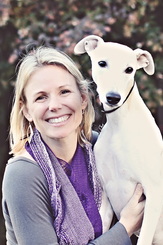
1505482Jaime Sage, is a veterinarian who is board-certified by the American College of Veterinary Radiology.  She holds a DVM from Texas A&M, an MS from The Ohio State University, and is licensed to practice in Oregon and California. Dr. Sage has issued reports for over 1,000 MRI studies in her career, and has personally performed nearly 100 onsite MRI procedures in Southern Oregon in just the past three years. Dr. Sage also works as a radiologist for MR Vets, founded by WSU Professor Emeritus Patrick R. Gavin, DVM, PhD, DACVR/RO, author of Practical Small Animal MRI, and one of the early pioneers in veterinary MRI.

Thus this morning, as in Monday morning Oregon time, SOVC will have the analysis from Jaime Sage followed by the surgical analysis by Dr. Steve Ferreira, the SOVC surgeon, who would conduct the surgery.

So more news just as soon as we have it.

Thank you all for your care and concern.

ooOOoo

UPDATE as at 12:40 PST

The surgeon, Steve Ferreira, called us to pass on the findings:

  • The MRI showed there to be several lesions that are not disc related,
  • There is an area of large compression, 50%-70% in some spots, in the lower cervical chord,
  • Separately, changes were noted in the C2 vertebra that suggested localised bone inflammation,
  • Lastly, there was an increased density pattern in the muscles associated with the cervix.

Dr. Steve said that the next step was to use a spinal tap to withdraw some spinal fluid. If it was cloudy that might indicate infection that could be treated with antibiotics. If the fluid was clear then it would be sent to an external lab for analysis. Possibilities include infection or cancer or an auto-immune issue, even possibly meningitis.

Apparently, surgery in that lower part of the spine would be very difficult to undertake. Likewise, removing a tumour that would simply regrow.

The cost of the anesthesia for the spinal tap, the insertion of the tap and the analysis would be in the order of several hundred dollars.

(Please accept that my understanding of what Dr. Steve said might not be 100% accurate. So use caution if any of this is relevant for your animal.)

ooOOoo

 UPDATE as at 17:20 PST

Steve Ferreira rang following the drawing of a sample of Casey’s spinal fluid.

  • The fluid “didn’t look too bad”, as in it was clear,
  • In other words, it was not immediately indicating an infectious disease, that would cause the fluid to appear cloudy,
  • Dr. F. will await further results from an external laboratory later this evening,
  • If both the white-cell count and proteins are more-or-less normal, then,
  • It will suggest that the problem is not an infection,
  • And, therefore, most probably related to a tumour on or around C6 where the MRI recorded the excessive compression,
  • Casey is comfortable owing to the strong pain medication being given to him via an IV.

Jean and I will be speaking with Dr. F. in the morning but it is more likely than not that Casey is terminally ill.

This post will, therefore, be updated in the morning.

UPDATE as at 08:40 Tuesday, 28th

Dr. Steve rang us at 08:30 this morning.

  • He started Casey on antibiotics yesterday evening in case the lab came back with evidence of infection in the spinal fluid, but,
  • The lab reported that the fluid was normal in terms of blood-cell counts and protein levels, therefore,
  • the probability is that Casey has a tumour,
  • or possibly an infection  inside the spinal column but outside the spinal fluid.
  • If such an infection, called an “empyema” then the degree of compression to the spine suggests it could be 3 to 4 weeks before Casey would be walking again.
  • More probable is that it is a tumour.
  • Casey is most definitely suffering and very miserable.

Jean and I then quickly, and very sadly, were of the opinion that Casey’s quality of life was too low for it to be fair to Casey for his life to be prolonged. We rang Dr. Steve back and asked that Casey be euthanised, cremated and that the ashes be returned to us.

In that return call, Dr. Steve quietly confirmed his support for our decision.

Casey will be very badly missed. I will be publishing an obituary tomorrow.

Thank you all for your friendship, love and caring!
Life’s Lottery!

A traumatic accident to Casey is very professionally dealt with.

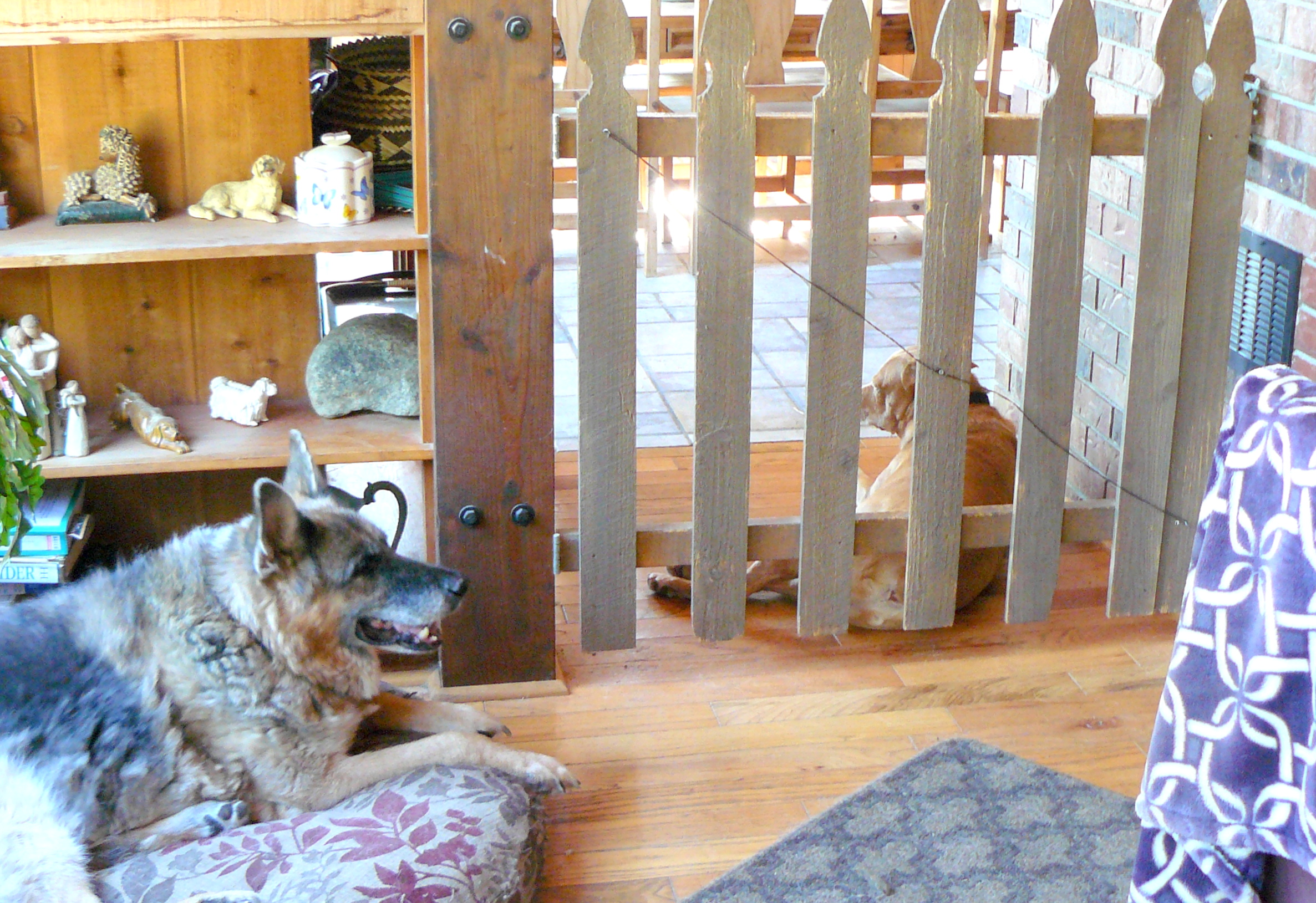
Our nine dogs are divided into two groups. One group lives in the kitchen/dining-room area (Casey, Paloma and Ruby) and the other dogs in the living-room/bedroom area (Pharaoh, Sweeny, Pedy, Oliver, Cleo and Brandy).

These two groups are separated by a gate, as seen here with Pharaoh resting on his bed and Casey at ease just on the other ‘kitchen’ side.

P1160402Both Jean and I go between the two areas via the gate many times daily.

Last Sunday evening, as Jean was going to the kitchen, Casey stuck his head through one of the vertical spaces in the gate and must have become stuck albeit what then happened was upon us in a flash. For Brandy grabbed the left-hand side of Casey’s face with his own jaw and the two dogs were locked together. It was a bit of a struggle to separate Brandy from Casey and when we took a look at Casey’s face it was clear that there was a laceration along his lower, left-hand lip. However, he did not appear to be in pain and we all proceeded to bed.

On the Monday morning after I had returned from my bike ride with a local group of neighbours I queried with Jean whether or not we should just check that Casey wasn’t too badly injured despite the fact that Casey was showing no signs of discomfort. Nevertheless, his wound was not a pretty sight and a quick call to our neighbour Jim Goodbrod, who is also a Doctor of Veterinary Medicine (DVM), resulted in Jim saying to bring Casey round to his place then and there.

We are glad that we did for Jim quickly discovered that the laceration was not only to Casey’s lower lip but that much of his gum below the gum line along Casey’s teeth had been torn away exposing the jaw bone. Jim said that this required specialist attention and had no hesitation in recommending Southern Oregon Veterinary Speciality Center (SOVSC) in Medford, about 40 miles to the South. Jim went inside his house and made an appointment for us to take Casey to SOVSC for 2pm that afternoon.

P1160385We had previously been to SOVSC with Hazel and were impressed with their level of expertise and experience and the fact that they were open twenty-four hours every day of the week!

By the time we arrived Casey had been allocated to be seen by Dr. Adam Reiss, DVM, and very soon after arrival we were shown into a side room awaiting Dr. Reiss’s medical assistant.

P1160382Dr. Reiss then arrived and explained that Casey’s lip and gum would require suturing under a general anesthetic but that they could fit it in that afternoon albeit Casey would not be ‘back on his feet’ until 6pm at the earliest. Of course, we agreed and shortly thereafter Casey quietly and calmly was led away by Dr. Reiss’s assistant.

Jean and I then went the short distance to the centre of Medford, did a bit of shopping, had an early dinner and returned to SOVSC shortly before 6pm.

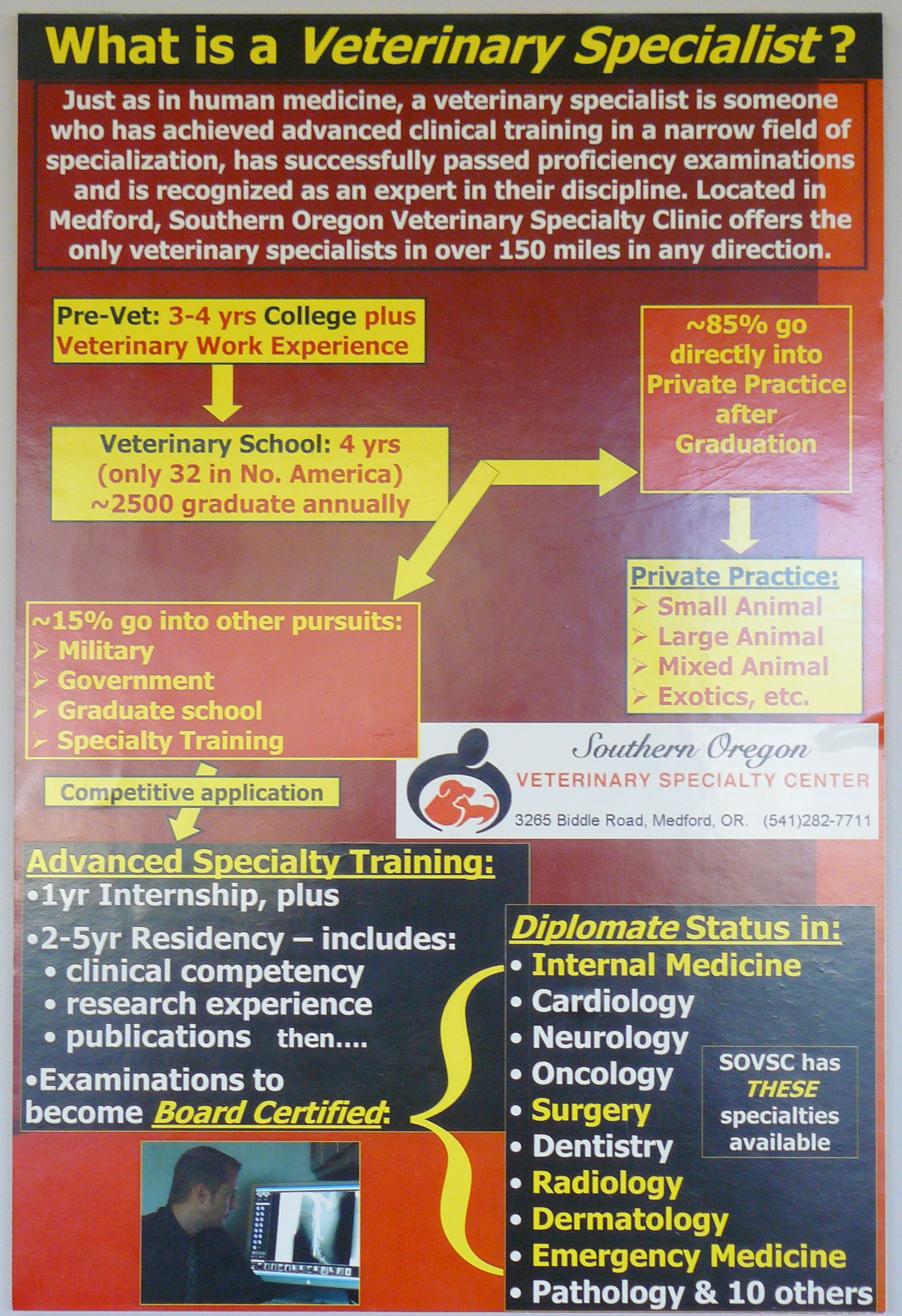
While we were waiting for news I was interested to read a prominently displayed sign setting out what constituted a veterinary specialist. (I’ve included the image at a larger size to make it easier for you to read it.)

P1160388Clearly there is more to caring for one’s pet than meets the eye.

Indeed, SOVSC’s web site introduces readers in this fashion:

At Southern Oregon Veterinary Specialty Center, we understand the special bond between a pet and their human family. Our team of highly trained doctors, certified technicians and support staff partner with your family veterinarian to provide specialized diagnostics, surgery and emergency care for your pet upon a referral or emergency basis. Our clinic is staffed 24 hours-a-day, 7 days a week, to receive emergency cases and to monitor our critical care patients. The clinic’s board-certified veterinary specialists and staff are committed to providing exceptional compassionate care utilizing state-of-the-art technology and treatments.

The relationships we have with partner veterinarians are vital to the success of treating your pet. We will keep them apprised of the patient’s status to provide a smooth and cohesive experience.

Jim Goodbrod speaks highly of the Center.

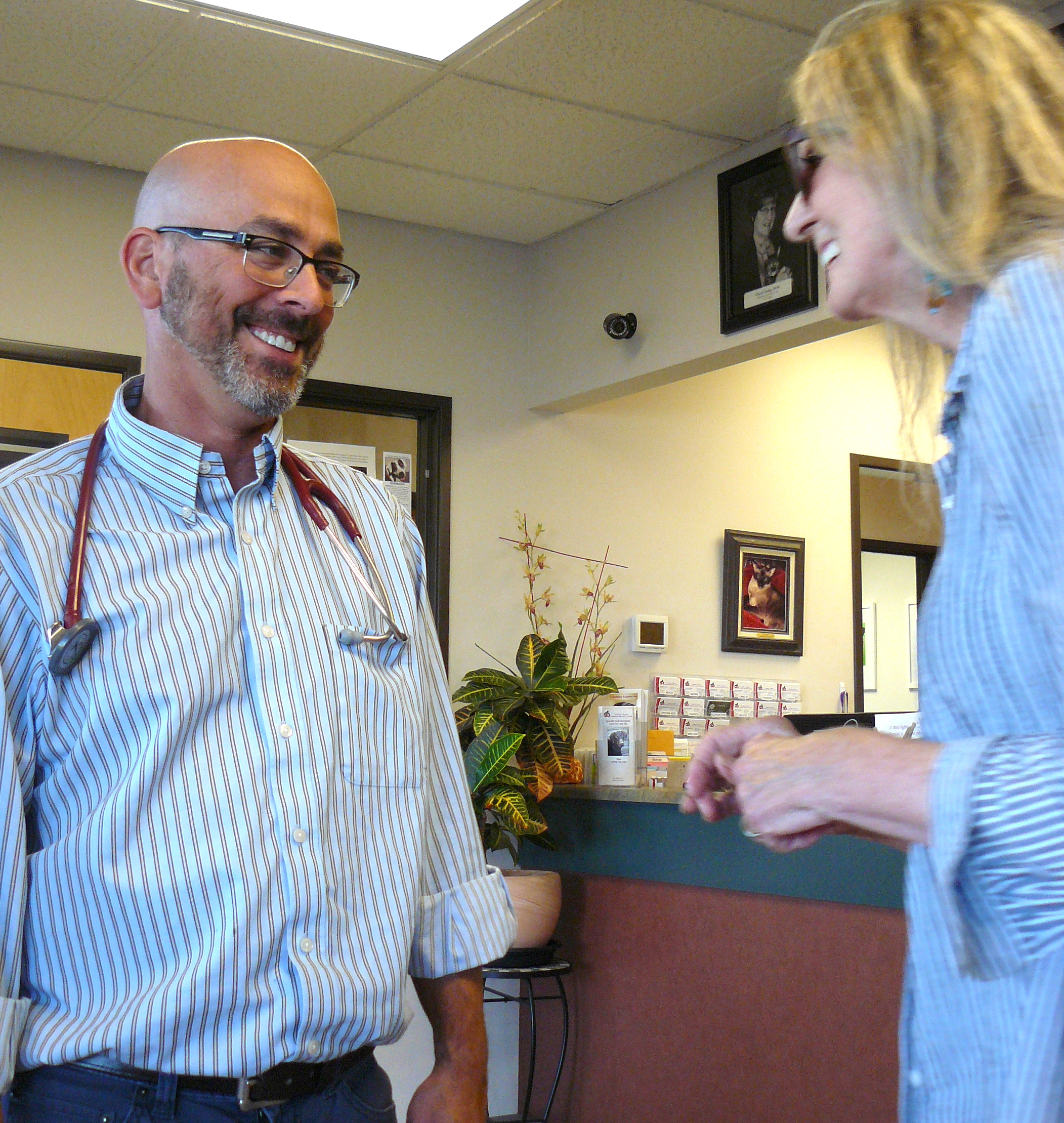
P1160387Dr. Reiss duly came out to speak with us and explained that all had gone well although Casey was still groggy but back on his feet. Despite the smiling face Dr. Reiss looked pretty tired. Not surprising when one reflects that the time was well past 6pm.

In an earlier conversation with some of the staff it was reported that, on average, some thirty animals were seen every day!

That’s commitment to the cause in any language!

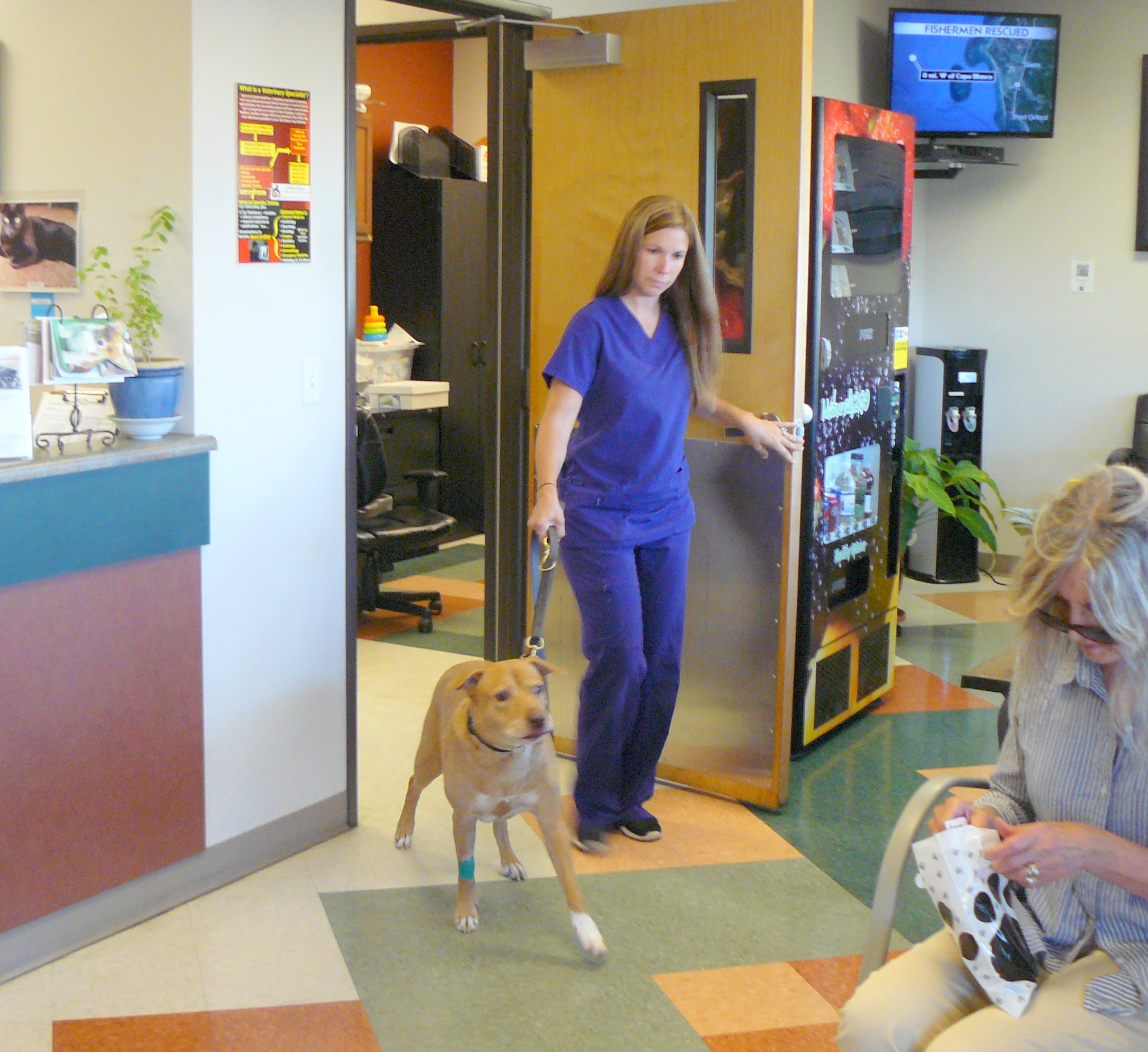
Then it wasn’t long before our dear Casey was being led back into the front waiting area.

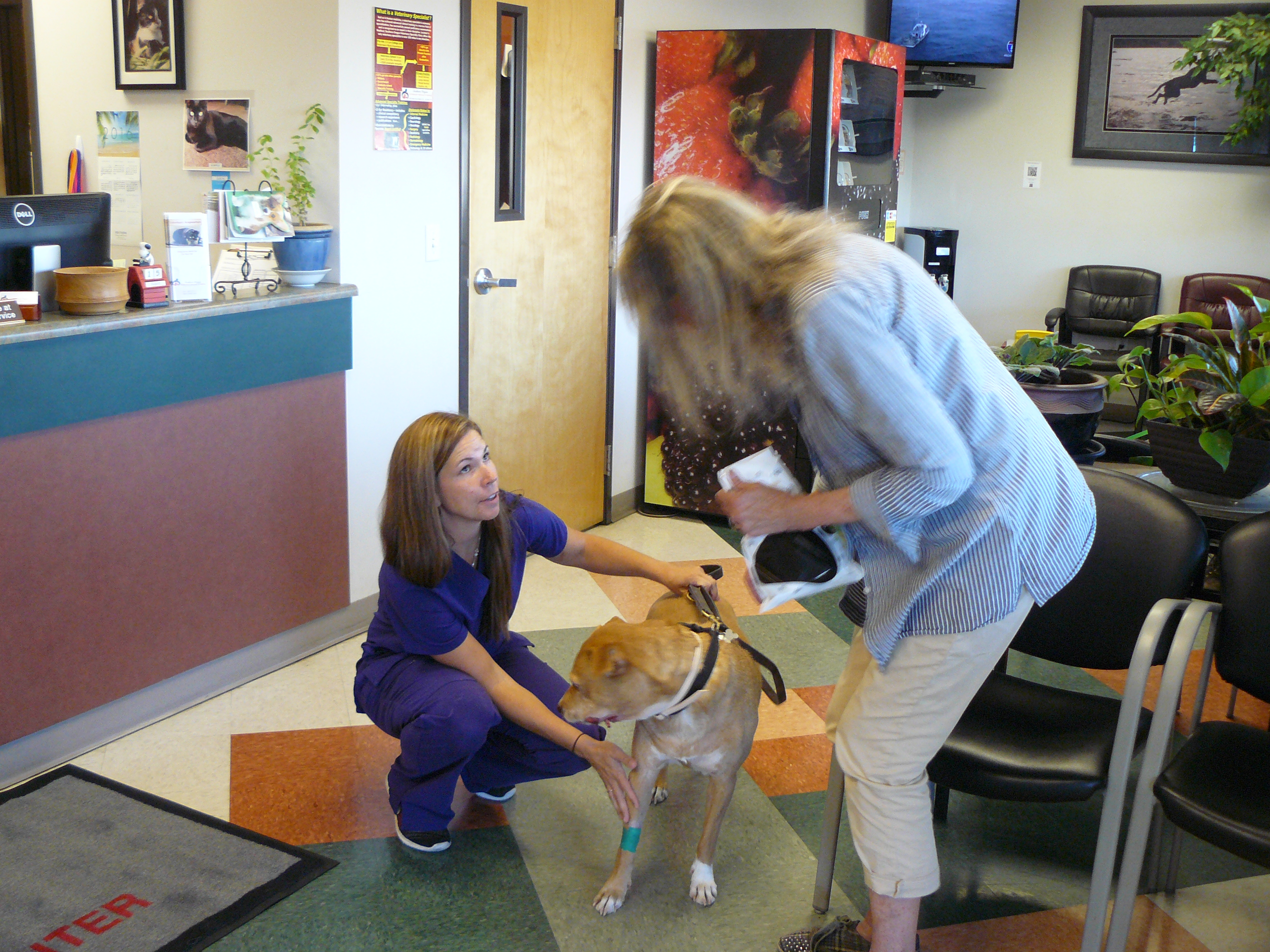
P1160389To be followed moments later by the assistant (apologies for not making a note of her name) setting out the details of how Casey had to be cared for over the coming hours and days.

P1160391The verbal guidance was supported by extensive notes.

Then it was a case of yours truly paying for all the services that had been provided for Casey and time to go home.

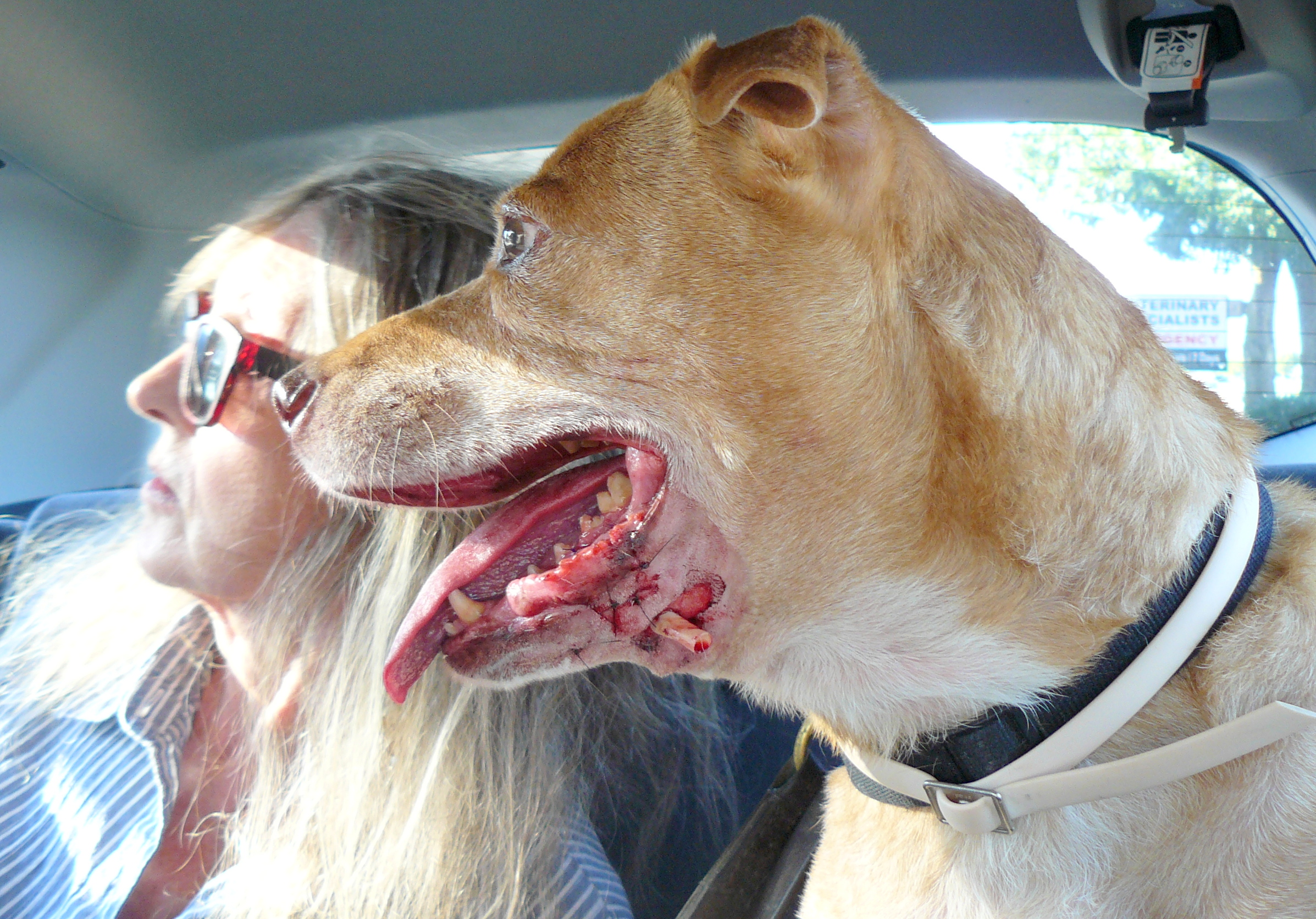
The car was rearranged to give room for Casey to sit on the rear seats with Jean next to him. I took the opportunity to take a photograph of the two of them that showed clearly the extent of the suture and the drain that had been inserted into Casey’s mouth.

P1160394It was beyond me to comprehend how Casey was so nonchalent to what in any human’s experience would have been hurting big time.

An hour later we were all home and getting dogs, cats and horses fed a lot later than normal.

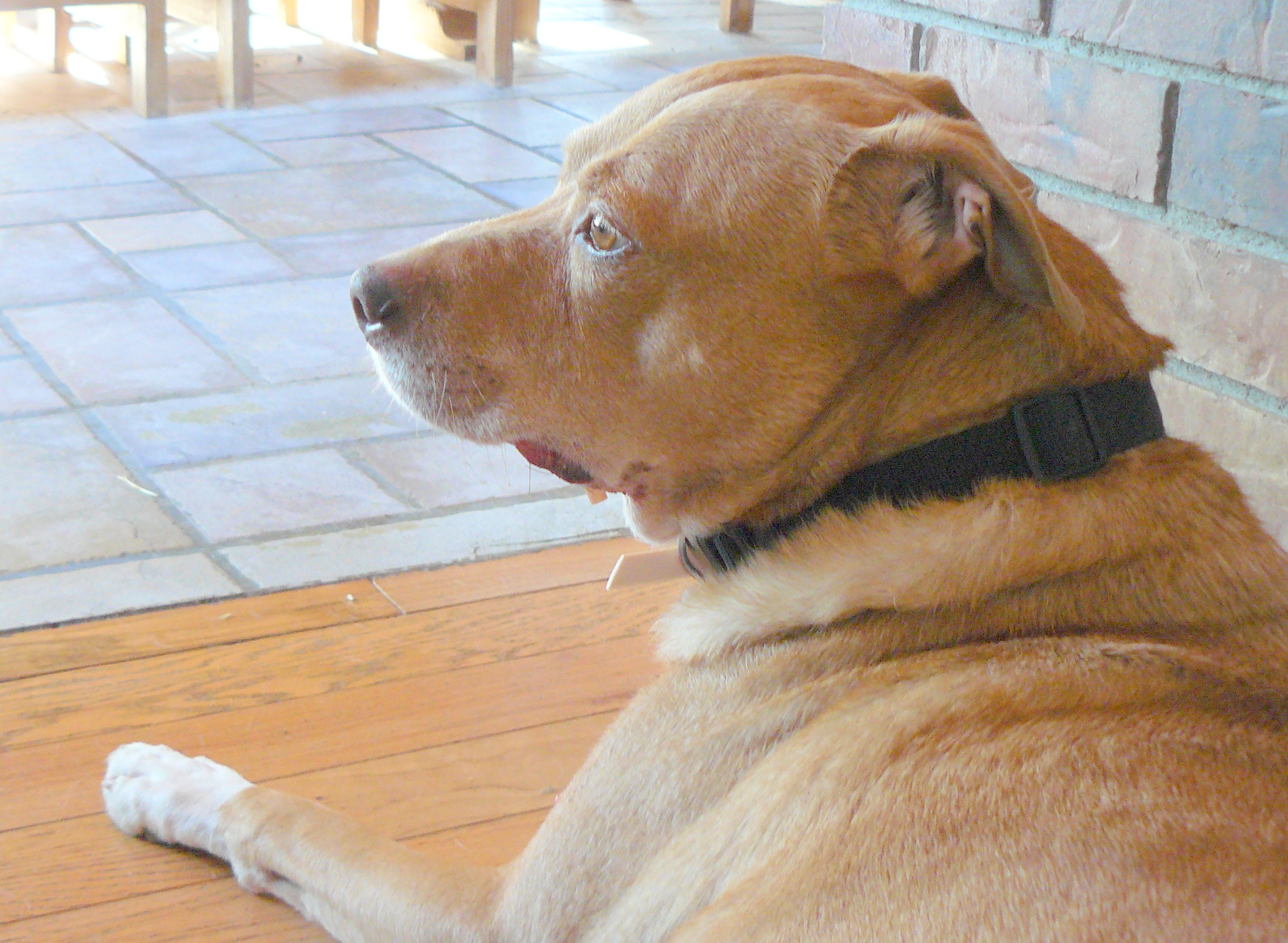
Miracle of miracles Casey made it comfortably through the night and the following photograph was taken a little after 9:30 am yesterday morning.P1160400Well done all involved!

Thank you to Jim and all the doctors and staff at SOVSC but the biggest thank you of them all must go to Casey!!

Life’s Lottery: For humans and animals alike!

Hazel’s probable disease.

And the last thing we wanted to hear.

Dear people, again I must say this:
CAUTION: The following is offered by way of information reaching out to other loving dog owners. Please do not assume I have any specialist veterinarian knowledge and please do not take the following as a replacement for seeing your own vet.

Back on the 4th May I posted the results of Hazel being scanned ultrasonically in a post Hazel’s Sonogram. Here’s a tiny extract:

Dr. Parker, who is a board-certified veterinarian doctor, came to the conclusion that the most likely cause of Hazel’s illness was the fungal lung infection, as Dr. Codd and the radiologist supposed.

But still Hazel showed too many signs that there was no improvement. Her eating was pitiful and the application of the Fluconazole (anti-fungal) medicine was not helping, bearing in mind that she was first seen by Dr. Codd over a month ago.

Dr. Codd’s advice was that we seek specialist help and yesterday morning Hazel was seen by Dr. Kimberly Winters, DVM, of Southern Oregon Veterinary Specialty Center (SOVSC) who, in addition, has a further qualification (Diplomate AVCIM) in Internal Medicine.

Based in Medford, about a 40-minute drive South from home.

oooo

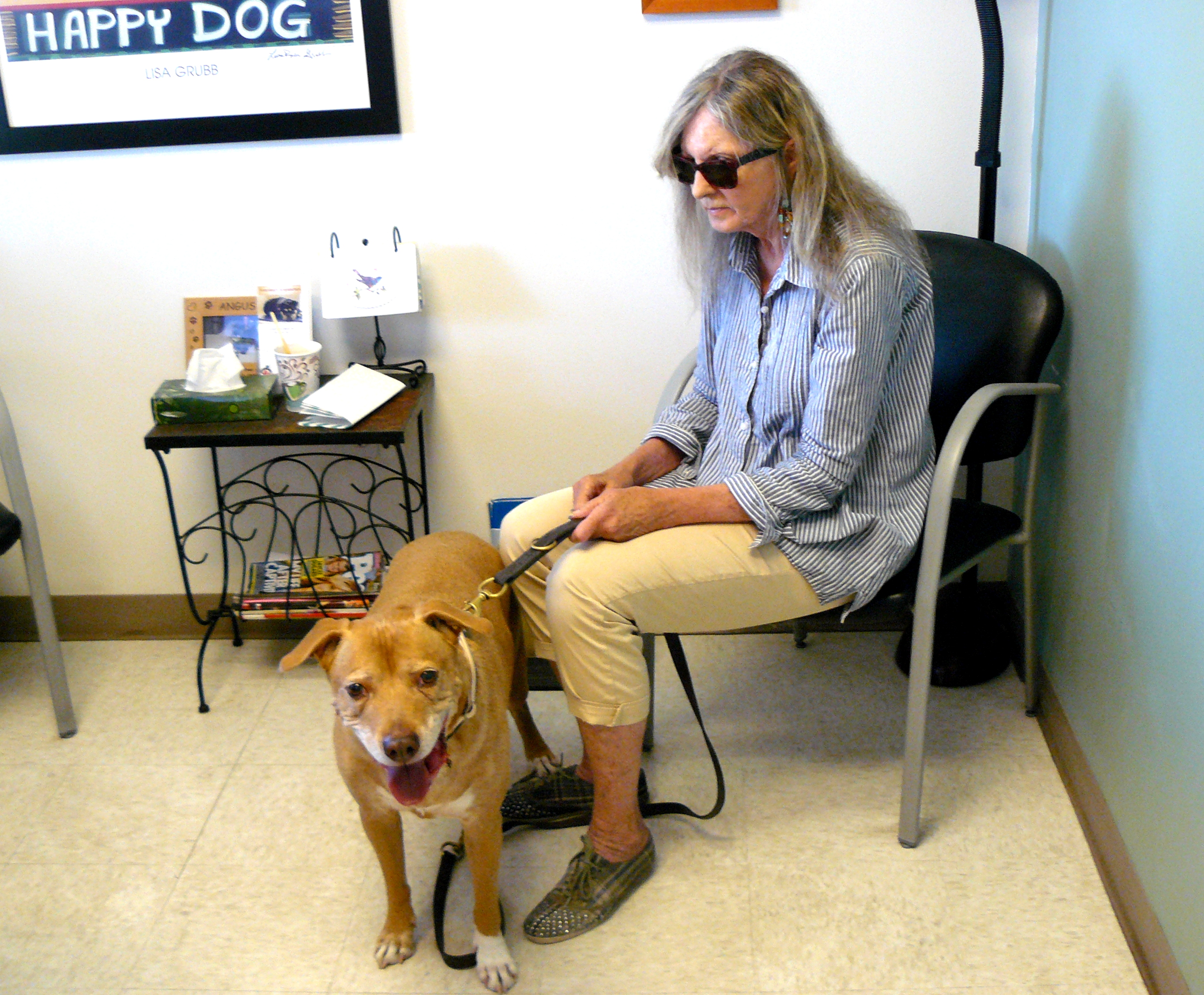
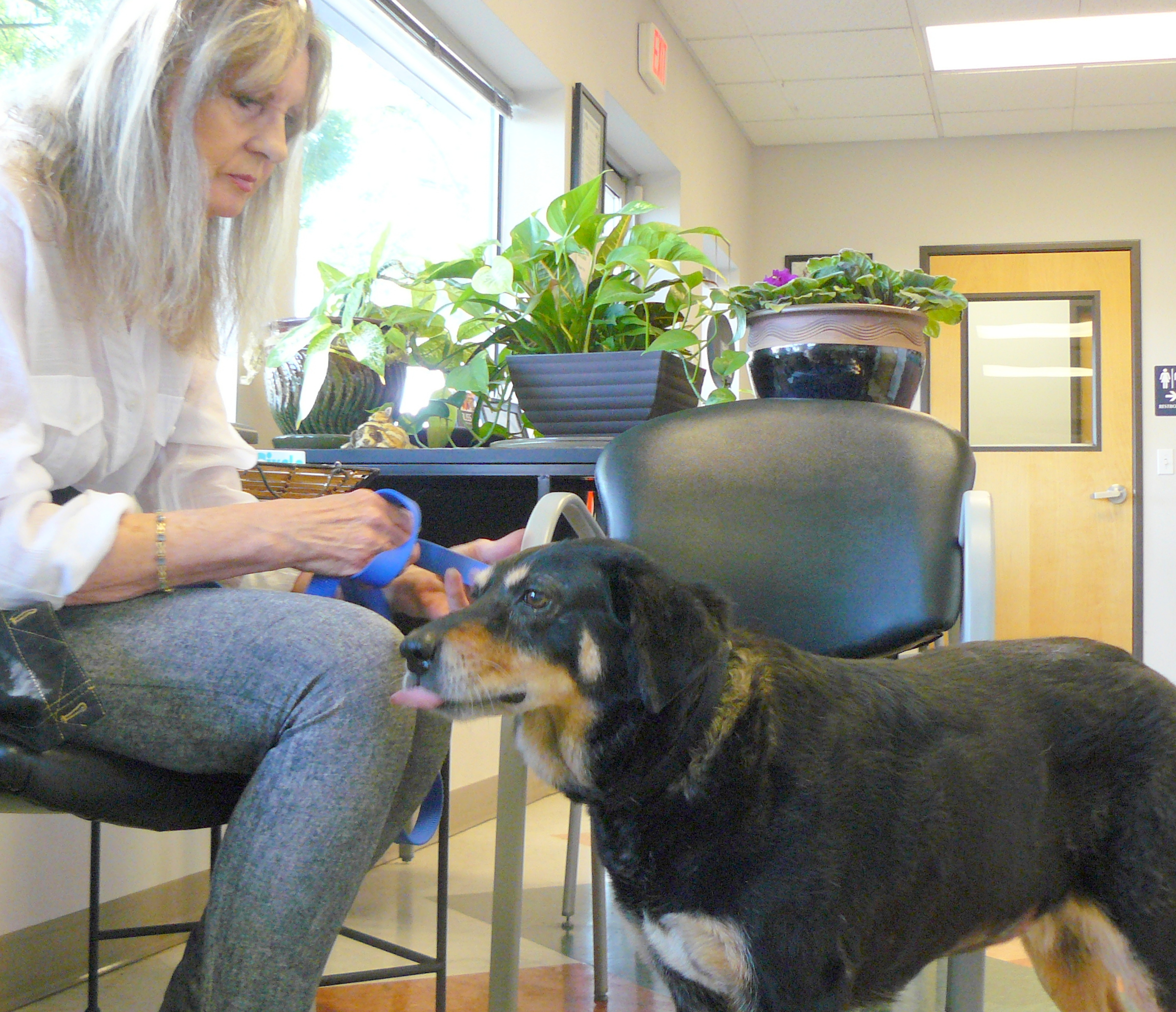
Waiting to be seen by Dr. Winters.

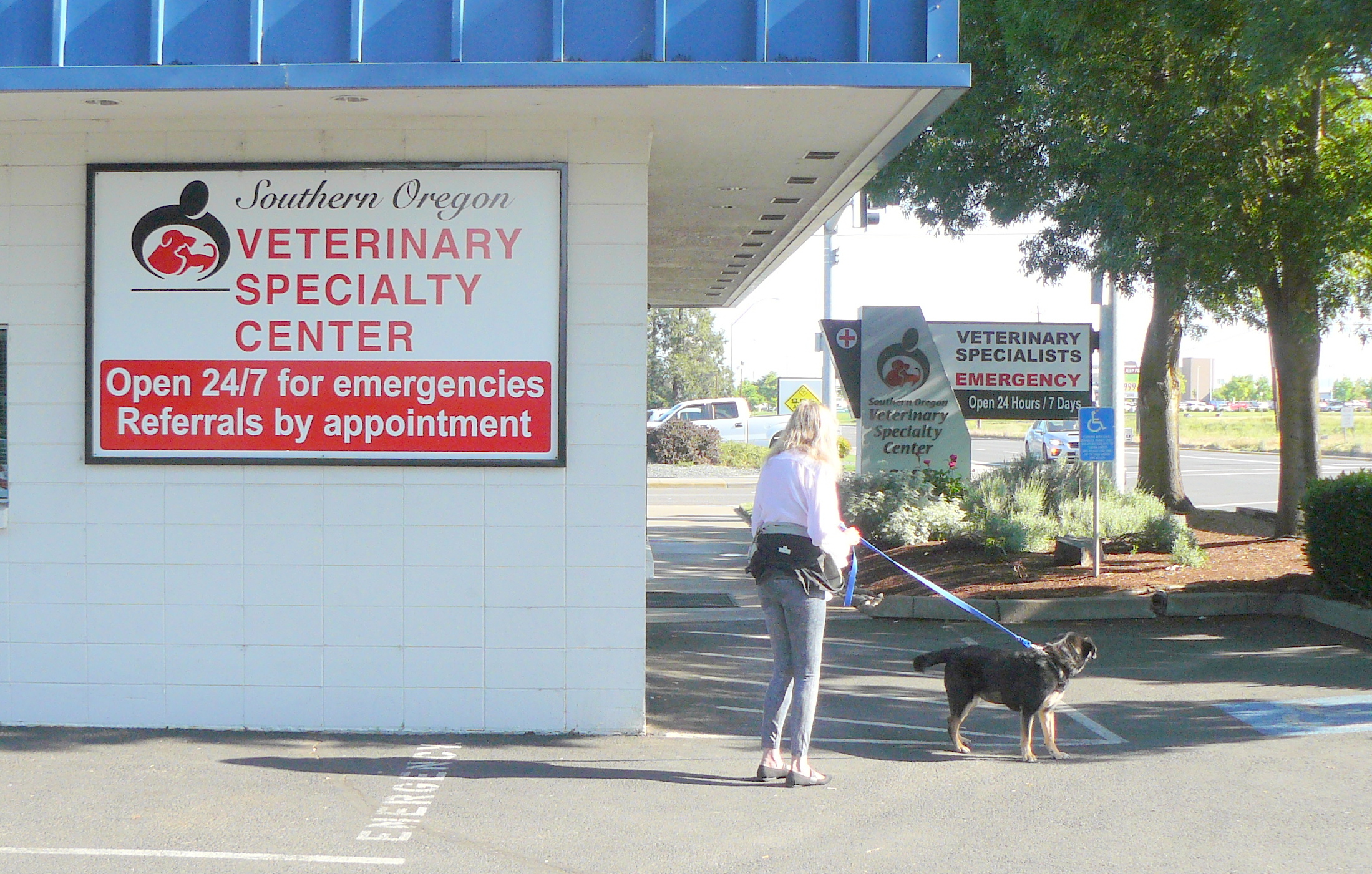
Jean and I were impressed by the way we were received and noted that the clinic, Southern Oregon Veterinary Specialty Center, offered a 24-hour emergency service. Here’s a piece from their home page:

At Southern Oregon Veterinary Specialty Center, we understand the special bond between a pet and their human family. Our team of highly trained doctors, certified technicians and support staff partner with your family veterinarian to provide specialized diagnostics, surgery and emergency care for your pet upon a referral or emergency basis. Our clinic is staffed 24 hours-a-day, 7 days a week, to receive emergency cases and to monitor our critical care patients. The clinic’s board-certified veterinary specialists and staff are committed to providing exceptional compassionate care utilizing state-of-the-art technology and treatments.

Then we were called in and first seen by one of the technicians to record all the details.

Pulse and body temperature normal.

Then a short while later in came Dr. Winters.

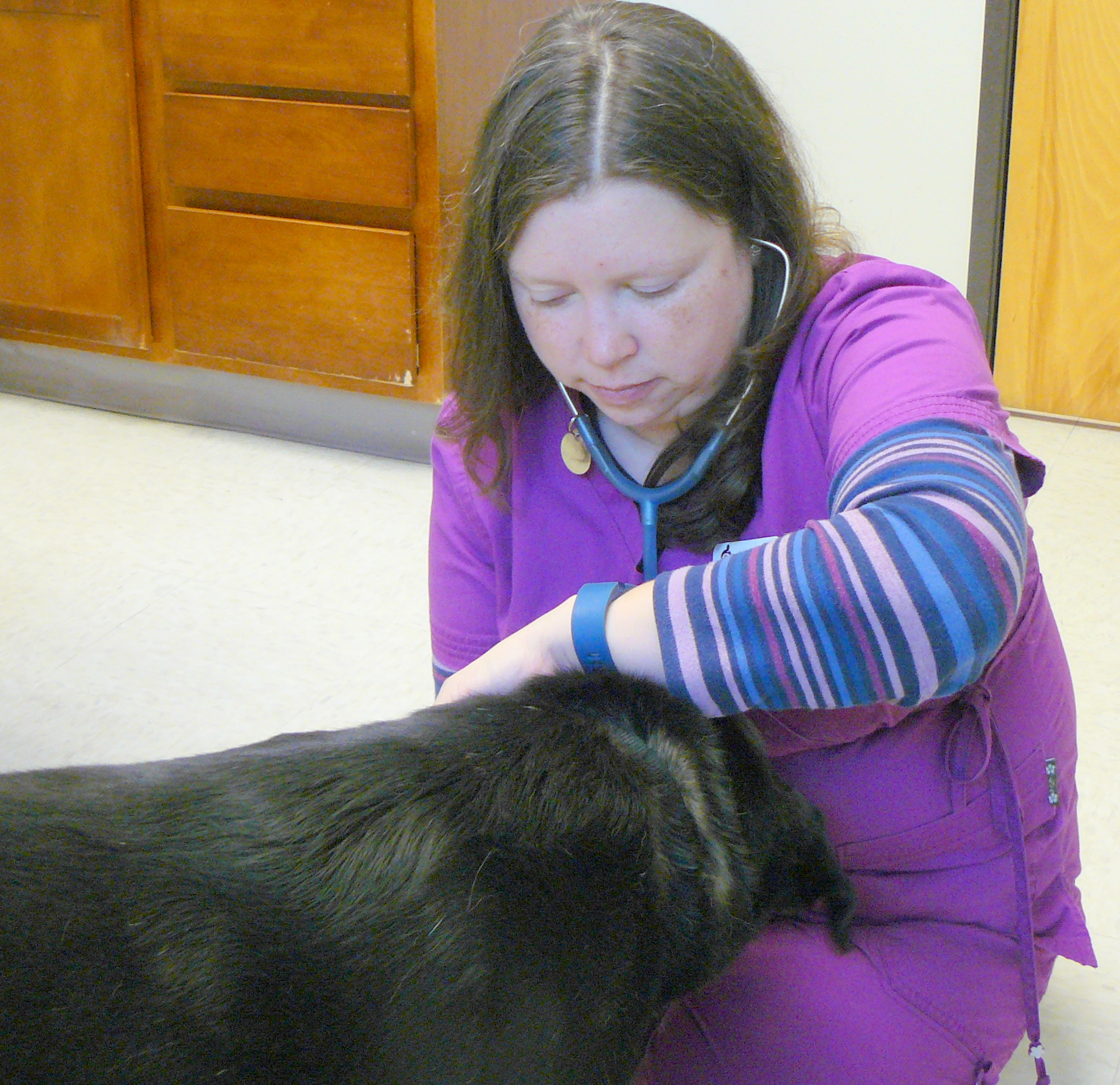
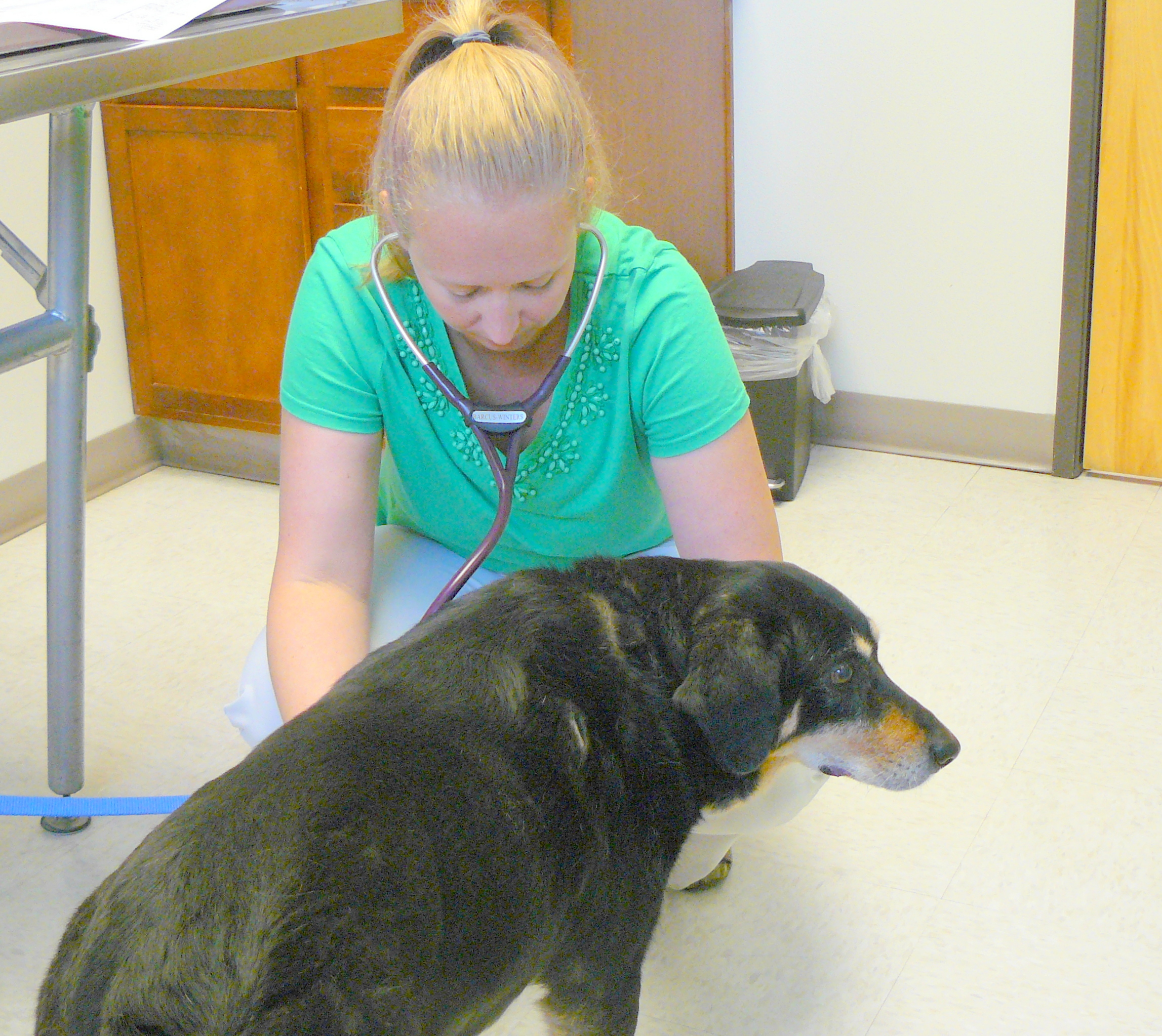
Dr. Winters listening to Hazel's rather laboured breathing.
Dr. Winters listening to Hazel’s rather laboured breathing.

Dr. Winters recommended a further xray of Hazel’s lungs and some blood work.

An hour later we had her analysis.

Dr. Winters said that while the condition of Hazel’s lungs could be an indication of a fungal infection she had her doubts. Or, in the words of her subsequent report:

There are several things that are not consistent with fungal infection – no high globulin level, no elevation in white blood cell count, no fever, negative titers, progression despite fluconazole treatment.

But the most important indicator of it being something other than a fungal infection was that the xray showed Hazel’s lungs to be worse.

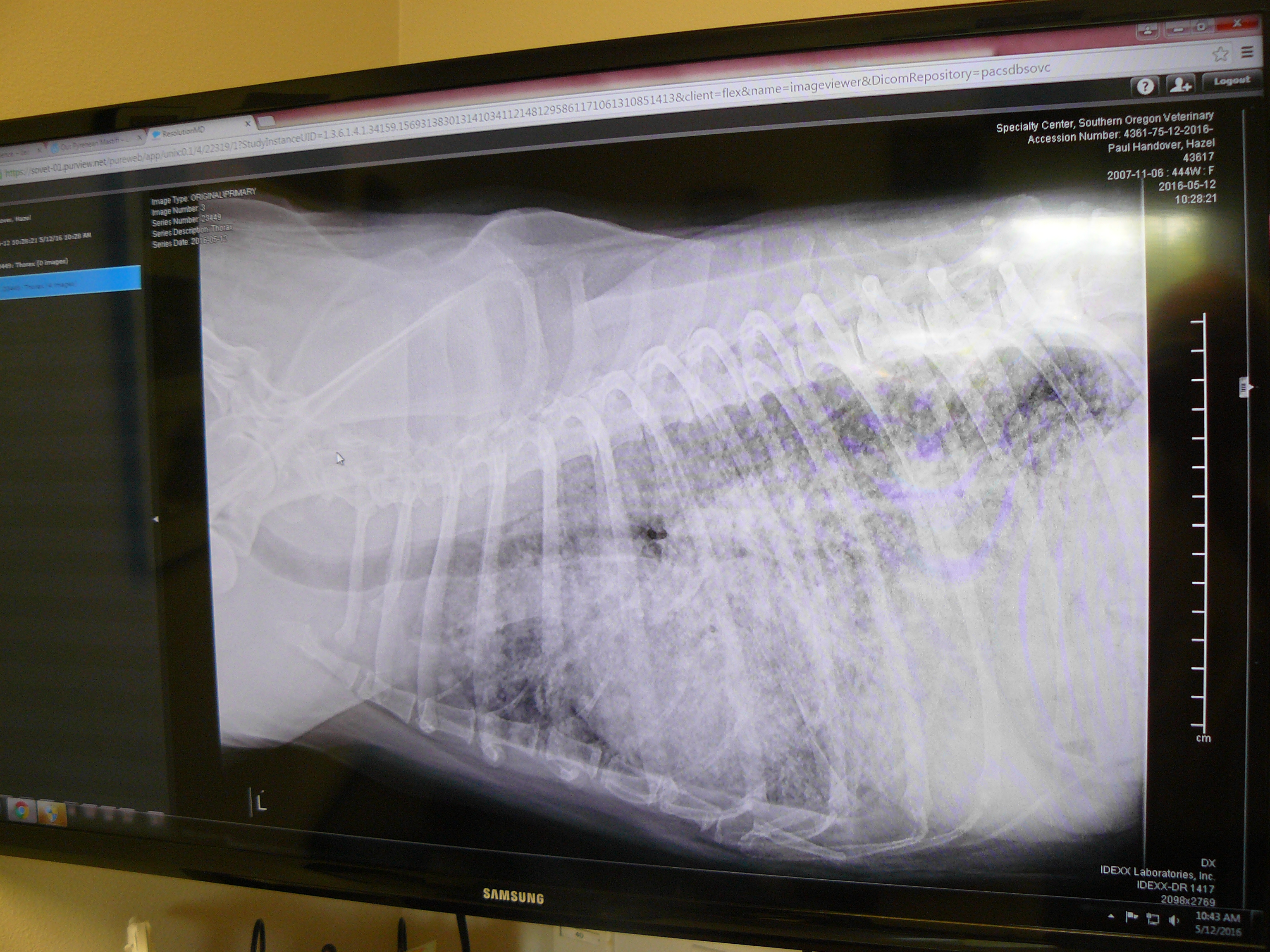
My photograph of the clinic's screen display.
My photograph of the clinic’s screen display.

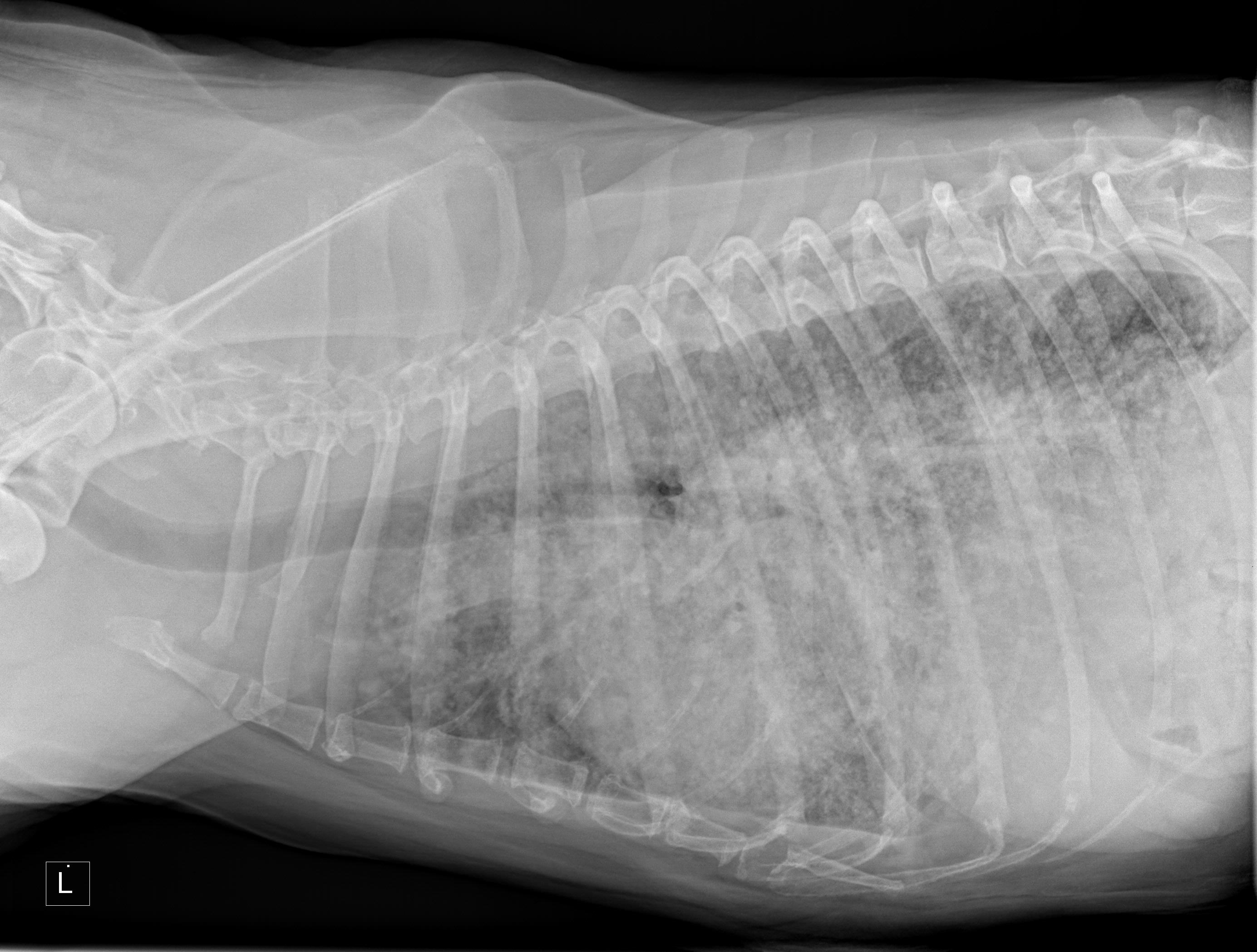
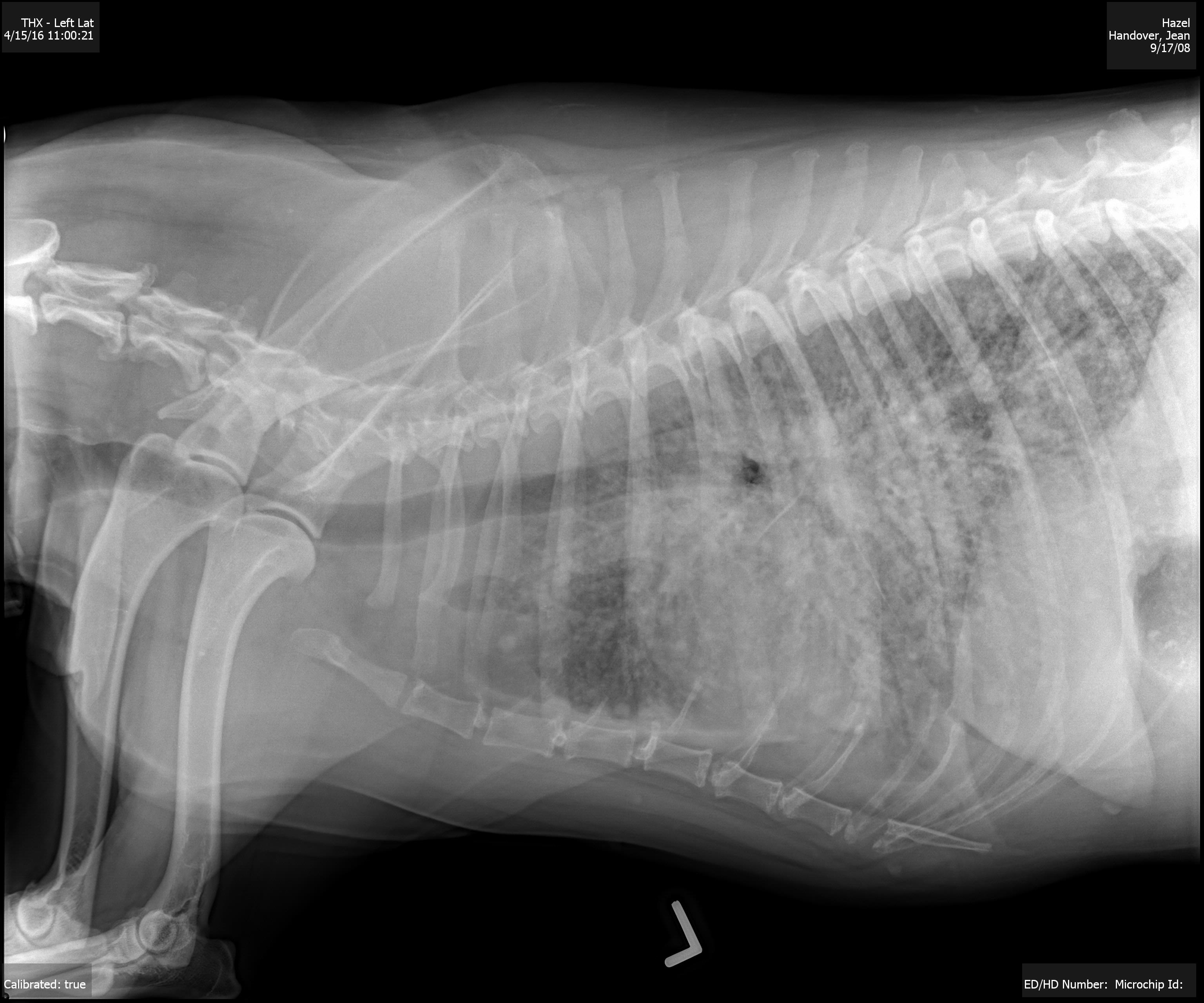
This can be more readily seen if I publish the xray image of yesterday and the image taken on the 15th April; see below.

Xray image as of the morning of May 12th, 2016.
One of the radiographs taken of Hazel.
One of the radiographs taken of Hazel 15th April, 2016.

Despite not truly understanding these images both Jean and I quickly thought the top one, taken yesterday, showed a decline in Hazel’s lungs compared to the lower one, taken on the 15th April.

It was then time to seek Dr. Winters’ opinion.

Essentially, she said that she doubted the diagnosis of it being a fungal infection especially as lung fungal infections were very rare in Oregon. When I queried the fact that it might have been dormant for some time Dr. Winters thought that doubtful because the lungs, even a month ago, were displaying advanced disease.

Dr. Winters couldn’t be sure without a physical examination of the lung tissue but on the balance of probability she believed Hazel was at an advanced stage of cancer with the tumor somewhere in the body and that her lungs were showing that the cancer had metastasized!

A later discussion with Dr. Russ Codd and Jim Goodbrod confirmed this analysis with Russ thinking that the primary tumor might be in Hazel’s arteries. To a very great extent, it has become academic as Russ believes that Hazel will not have that much longer to go and that our main focus should be on keeping her quality of life as high as we can, for as long as we can.

Jean and I are devastated as you can imagine and later on when writing this post my thoughts were on some of the words added to the post Embracing Those Senior Years just last Wednesday. These words:

First from Barb of the blog Passionate about Pets:

Hariod, your comments to Paul about your GSD really touched me because I myself am in that same space now with my almost 17 year old shih-tzu. We have always had a special connection but in the last year, as her age has progressed with it’s usual complications, our relationship has moved to another level – becoming even deeper than anything I have ever experienced; so powerfully in tune with each other, it’s incredible.
As I write this, every day she is with us is a precious bonus.

Then followed by these words from Petspeopleandlife:

Our aging pets can be very troubling. I ‘ve been there and done that many times in about 60 years and even in my years before I left the farm to attend school. It doesn’t get easy and I always hate watching my pets age. It is devastating to lose them.

Then my words:

There are no favorites in our ten dogs but there are some that are more open in expressing and returning affection. It seems those dogs in particular tear us apart when they die.

For Hazel is one of those dogs.