Tag: Power of touch

The Power of a Gentle Touch

An interesting film.

On Sunday evening Jean and I watched a documentary on touch. It was most interesting and included the obvious thought (that I needed reminding of) that babies when they are born cannot see more than 30 centimetres and cannot hear at first. So touch is vital for the health and early bonding of the babe and its parents with the mother being the dominant parent and the provider of breast milk.

Then yesterday I poked around online and found that the benefits of touch not only were for the very young but also for all ages and also were more broadly available across many animals, especially dogs.

But here’s the first film:

Touch shapes us as humans. Indeed, touch is fundamental to what makes us social beings. Touch influences how we perceive stress and pain, who we trust and who we fear. How does this work? And what happens to us in the absence of touch? Gentle touch is vital for us humans. It creates the first contact with the world for newborns, giving us a sense of security and belonging. Touch influences our immune system, and on our feelings for our fellow human beings. Especially strong feelings, such as love or compassion, can be better conveyed through touch than through words, facial expressions or gestures. Given how important touch is, it’s no surprise that humans have a highly specialized system devoted exclusively to perceiving gentle touch stimuli. Why does the touch of a stranger feel so different to that of someone we are emotionally close to? What is happening in our brain – and what role does the brain play in all this? In an era of social distancing, touch research is becoming increasingly relevant. How does it affect us, and our relationships, when we are required to keep our distance? Researchers explore what role touch plays in our physical and emotional well-being, and what the consequences are when touch is missing.

Then moving on I found an article on the Johns Hopkins Medicine website called The Friend Who Keeps You Young.

It opens:

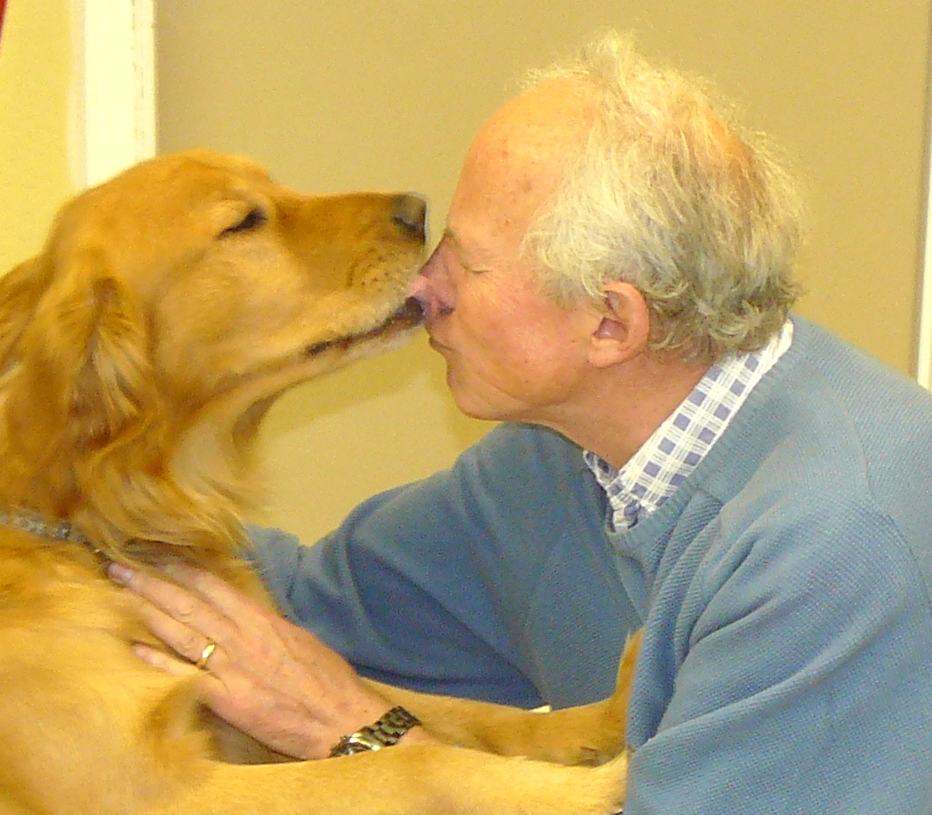
Adopting a pet may seem like a selfless act, but there are plenty of selfish reasons to embrace pet ownership. Research has shown that owning a pet provides an amazing array of health benefits, says Jeremy Barron, M.D., medical director of the Beacham Center for Geriatric Medicine at Johns Hopkins.

Not ready for a full-time furry friend in your home? Offer to walk a neighbor’s dog, cat-sit for a friend, or donate time at a local animal shelter—even short interactions provide enough pet exposure to reap some of these rewards.

And that wasn’t the end, far from it!

HelpGuide.org had a powerful article The Health and Mood-Boosting Benefits of Pets. Here’s how it starts:

The benefits of pets

Most pet owners are clear about the immediate joys that come with sharing their lives with companion animals. However, many of us remain unaware of the physical and mental health benefits that can also accompany the pleasure of snuggling up to a furry friend. It’s only recently that studies have begun to scientifically explore the benefits of the human-animal bond.

Pets have evolved to become acutely attuned to humans and our behavior and emotions. Dogs, for example, are able to understand many of the words we use, but they’re even better at interpreting our tone of voice, body language, and gestures. And like any good human friend, a loyal dog will look into your eyes to gauge your emotional state and try to understand what you’re thinking and feeling (and to work out when the next walk or treat might be coming, of course).

Pets, especially dogs and cats, can reduce stress, anxiety, and depression, ease loneliness, encourage exercise and playfulness, and even improve your cardiovascular health. Caring for an animal can help children grow up more secure and active. Pets also provide valuable companionship for older adults. Perhaps most importantly, though, a pet can add real joy and unconditional love to your life.

Dogs are the perfect companions to us!

The magic of touch!

At all levels and in so many ways it is life-giving.

dt14Animals must see touch as a natural way of living. We humans are less natural about touch especially with people that we don’t know so well. Not everyone, of course, but as a general statement it is probably not wrong.

The topic of touch has come to me today as a result of a recent item read over on The Conversation blogsite; specifically about the importance of touch between a doctor and his or her patient. Here it is republished within the terms of The Conversation:

ooOOoo

Touch creates a healing bond in health care

May 23, 2016 8.23pm EDT

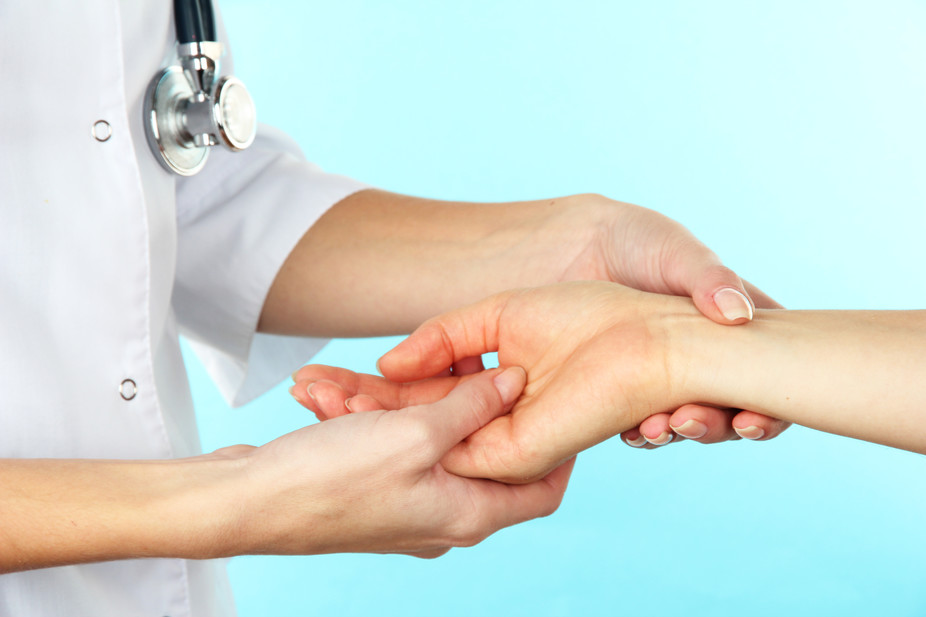
Touch is a powerful tool in medicine. Hands via www.shutterstock.com
Touch is a powerful tool in medicine. Hands via http://www.shutterstock.com

In contemporary health care, touch – contact between a doctor’s hand and a patient – appears to be on its way out. The expanding role of CT and MRI imaging is decreasing reliance on touch as a way of making diagnoses. Pressures to move patients through the system more quickly leave health professionals with fewer opportunities to make contact. Our experience suggests that when doctors spend fewer minutes with patients, less time is available for touch.

Yet despite the rise of scanners, robots and other new medical technologies, the physician’s hand remains one of medicine’s most valuable diagnostic tools. Touch creates a human bond that is particularly needed in this increasingly hands-off, impersonal age. Medical practice is replete with situations where touch does more than any words to comfort and reassure.

The USC psychologist Leo Buscaglia, whose habit of hugging those he met soon earned him the sobriquet “Doctor Love,” bemoaned our neglect of touch in his book, “Love,” in these terms:

Too often we underestimate the power of a touch, a smile, a kind word, a listening ear, an honest compliment, or the smallest act of caring, all of which have the potential to turn a life around.

For thousands of years, touch has been recognized as an essential part of the healing arts. Native American healers relied on touch to draw out sickness, and kings and queens were long believed to possess the “Royal Touch,” through which the mere laying on of hands could heal. The Bible contains numerous stories of the healing power of touch.

Touch is an essential part of our well-being

An indication of our need for touch can be found among our primate relatives. Psychologists have observed that many such species spend upwards of five hours of each day touching one another, partly through grooming. For many human beings, however, the daily dose of touching would be measured not in hours but minutes, perhaps even seconds.

Lack of touch can be hazardous to health. In experiments with primates some 60 years ago,

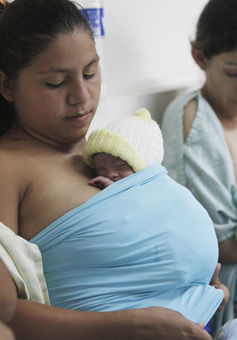
 A young mother participates in a ‘Kangaroo Mother’ program at the National Maternity Hospital in El Salvador. Luis Galdamez/Reuters
A young mother participates in a ‘Kangaroo Mother’ program at the National Maternity Hospital in El Salvador. Luis Galdamez/Reuters

researcher Harry Harlow demonstrated that young monkeys deprived of touch did not grow and develop normally. Mere food, water and shelter are not sufficient – to thrive, such creatures need to touch and be touched.

The same can be said for human beings. During the 20th century, wars landed many babies in orphanages, where their caretakers observed that no matter how well the infants were fed, they would fail to thrive unless they were held and cuddled on a frequent basis. Touch offers no vitamins or calories, yet it plays a vital role in sustaining life.

More recent studies have corroborated these findings. “Kangaroo care,” using papoose-like garments to keep babies close to their mothers, decreases the rate at which they develop blood infections. Touching also improves weight gain and decreases the amount of time that newborns need to remain in the hospital.

Touch creates a bond between doctor and patient

Novelist and physician Abraham Verghese has argued that touching is one of the most important features of the patient-physician interaction. When he examines a patient, he is not merely collecting information with which to formulate a diagnosis, but also establishing a bond that provides comfort and reassurance.

The notion that touch can reassure and comfort has a scientific basis. Ten years ago researchers used MRI scans to look at the brains of women undergoing painful stimuli. When subjects experience pain, certain areas of the brain tend to “light up.” The researchers studied subjects when they were alone, when they were holding a stranger’s hand, and when they were holding their husband’s hand.

They found the highest levels of pain activation when the women were alone. When they were holding a stranger’s hand, the pain response was decreased. And levels of activation were lowest of all when they were holding their husband’s hand. Interesting, the higher the quality of subjects’ marriages, the more pain responses were blunted.

Touch from parents helps kids in intensive care

We have been studying this phenomenon in our own institution, looking at the effect of touch not only on patients but on the parents of patients admitted to the pediatric intensive care unit.

The project, called ROSE (Reach Out, Soothe, and Embrace), sought to determine whether increasing opportunities to touch patients could promote parent well-being without compromising patient safety.

Instead of merely determining whether patients could be taken off the ventilator or fed, we also identified patients who could be safely touched and even held in their parents’ arms. When a patient was deemed safe to hold, a magnet bearing the image of a red rose embraced by two hands was placed on the door to the patient’s room.

While we are still analyzing the results and further study is needed to fully delineate the health benefits of touch, several findings are already clear.

First, increasing opportunities for touch does not compromise patient safety. Second, the subjective well-being of family members is enhanced when touching is encouraged. Third, promoting touch empowers family members to become more involved in their child’s care.

To be sure, inappropriate and unsafe touching can be harmful. But when touch is encouraged in the right ways and for the right reasons, it is good for patients, family, friends and health professionals alike. Touch is one of the most fundamental and effective ways to create a sense of connection and community among human beings.

In the words of the 20th-century theologian Henri Nouwen, who wrote in his book, “Out of Solitude”:

When we honestly ask ourselves which person in our lives means the most to us, we often find that it is those who, instead of giving advice, solutions, or cures, have chosen rather to share our pain and touch our wounds with a warm and tender hand.

So next time you find yourself confronted by a person in distress, remember the power of touch. Medicines and words both have healing power, but so does touch, and it is perhaps the most widely available, financially responsible and safest tool in the healing arts. When we touch, we connect, and when we connect, we create a healing bond for which there is simply no substitute.

ooOOoo

“When we touch, we connect, and when we connect, we create a healing bond for which there is simply no substitute.”

P1140965
Jean with my mother back in July, 2014.

P1150928The healing touch!

Or to repeat the elegant words of Leo Buscaglia:

Too often we underestimate the power of a touch, a smile, a kind word, a listening ear, an honest compliment, or the smallest act of caring, all of which have the potential to turn a life around.

3175758.largeWho have you given a hug today?

The power of touch

Nature, once again, shows the value of loving contact during those crucial early years.

I’m writing this at 7.45am on the 30th.  Coincidentally, Jean and I were chatting in bed about an hour ago about this ‘touchy – feely’ stuff.  This was a bed having four dogs on it!  One of those, Hazel, was laying alongside my left leg just sucking up me stroking her head and tummy.  Jean and I were musing that for animals and humans, how we are touched by our parents, especially our mother, during those first few years of growing up has profound implications for how we as adults respond to being touched and hugged.

So then I opened up my mail box and there was this sent by Cynthia Gomez serving as a wonderful reminder of the power of touch.  Thanks Cynthia, great timing!

oooOOOooo

Some pictures just don’t need captions.
There is nothing like Mom’s lap no matter who you are. This is precious !!!!
This is a newborn offspring of Taskin, a Gypsy Stallion owned by
Villa Vanners of Oregon ..
These pictures were taken immediately after his birth on April 6.
The mare laid down, and then he trotted around and
crawled right up into her lap.
—————–
——–
——–
——–
——–
So give someone a hug today!