Tag: Planet Earth

The Natural order – life and death.

Nature imposes herself on us humans in absolute terms.

I do not believe in any form of life after death.  Jean is uncertain.  Many good people do believe in some form of spiritual afterlife.

However, one thing is sure. Our living mind and body will die.

These few words are an introduction to the first essay under the broad title of The Natural order. On the 23rd April I introduced the idea of writing a regular essay “about the past, present and future of man’s relationship with Nature.

Thus it did seem entirely appropriate to ‘kick off’ the essays with reflections about life and death.

Alex Jones of The Liberated Way blog recently wrote a post under the title of ‘The circle of life and death‘.  I am republishing it in full with Alex’s kind permission.

ooOOoo

The circle of life and death

Posted on April 27, 2014 |
Nature reminds me life and death is a circle.

The circle of life and death.

I visit a house, the noise of hungry little birds emanating from a nest hidden in the roof, busy parents flying in and out feeding their brood. Less than a week before summer (1st May) I encounter life all about me, like a vast fountain of creativity, as plant and animal erupt into growth and creation. I feel a sense of joy at the life all about me, like dipping my feet in crystal clear spring waters.

Amongst this carnival of life a reminder that with life there is also death. Helix our cat is an effective hunter, a blue tit is found dead upon the ground. I feel no sadness for the death, it is a natural part of the cycle of nature, my animistic viewpoint is of a small spirit returning to the source, and from then renewing. No anger for Helix, since this is the nature of cats, despite being fed, a cat must follow the primal instinct of its nature to hunt. I carry the dead blue tit to an overgrown spot of trees and grass, here I place the blue tit to decay and thus become part of the life of plant and animal of that place, such is the circle of life and death.

ooOOoo

There can’t be a single person on this planet who does not understand that our human life is finite.

Life span of early man: Until fairly recently, little information existed about how long prehistoric people lived. Too few fossilized human remains made it tough for historians to estimate the demographics of any population. Anthropology professors Rachel Caspari and Sang-Hee Lee chose instead to analyze the relative ages of skeletons found in archeological digs in eastern and southern Africa, Europe, and elsewhere. Comparing the proportion of those who died young, with those who died at an older age, the team concluded that longevity only began to significantly increase (that is, past the age of 30 or so) about 30,000 years ago – quite late in the span of human evolution.

In an article published in 2011 in Scientific American, Caspari calls the shift the “evolution of grandparents”, as it marks the first time in human history that three generations might have co-existed. ( Source: Longevity Throughout History.)

Thus given that living much past the age of thirty years is a relatively recent experience, it baffles me beyond comprehension that we, as in mankind, have become so short-sighted about reinvesting in the one and only natural planet that sustains us.

Beautifully expressed in another wonderful essay from John Hurlburt.

ooOOoo

 Notes on the Human Dilemma

The metanexus of Faith, Nature and Science form an integral vision of the reality in which we exist. We are components of Creation living in an emerging universe. As consciously aware life forms we are each and all responsible to the Nature of God in a steadily emerging universe. Change is both constant and inevitable. Species that don’t adapt, do not survive.

Our human problems are obvious.

The essential growth of human conscious awareness remains questionable.

There is a blatant disregard for Nature. The rate of Natural disasters is increasing everywhere on Earth

Civil unrest is bordering on a second Civil War and is already in that state in many other nations of the world.

Imminent economic collapse remains probable as long our world economy is based on a foundation that has been leveraged at least twenty-five times above any realistic material foundation on Earth.

Are we a moral species?

A steady increase in natural disasters worldwide is inevitable until we change in response to Nature’s warnings or become extinct. The collapse of morality threatens the existence of global civilization.

The virtual extinction of the human race in its present state is all but assured within the next century unless we adapt to the Reality we presently blithely ignore or chose to vilify.

We still have a choice.

Our alternative to what has been euphemistically referred to as “new reality” is the process of education, reformation and transformation on a personal level. The objectives are an obvious need to adapt to constant natural change and create a species renaissance in harmony with the reality of God, Nature and Science.

There is clearly a need for a global economy that is based on our primal need for clean air, clean water, clean food and clean energy. We need to maintain our balance through gratitude for the blessings of the life we share and equal justice for all. We need to remember that we are not in charge of anything except our responsibilities to God, Nature and each other.

Under these simple guidelines, a healthy, growing future remains possible as we prepare to migrate from our home planet and relieve the consumptive consequences of an exponentially growing and ravenous demographic ruled by the artificial symbol of Money.

Sound impossible? Au contraire…

The world is being forced to re-evaluate its economic premises. Here are a few proven solutions to help create a naturally invigorated economy.

We can cut air pollution dramatically overnight by converting commercial diesel engines to far more cost-effective bio-fuels without a single change to the diesel mechanisms.

Bio-diesel distillation plants can filter and recycle the clean water we need to live.

We are capable of growing our own food with recycled organic fertilizers.

We have begun the process of harnessing the limitless clean renewable energy provided by the sun, the wind and hydraulic power.

Electric cars that may be fueled by solar energy are winning world class races.

The list of what we are capable of doing is only limited by our imaginations.

The questions to ask ourselves are:


Are we at the beginning of a new world or at the end of an old world?


Are we a part of the problem or part of a realistic solution?”


What will be the harvest of our lives?”


an old lamplighter


ooOOoo

Picture parade forty-one.

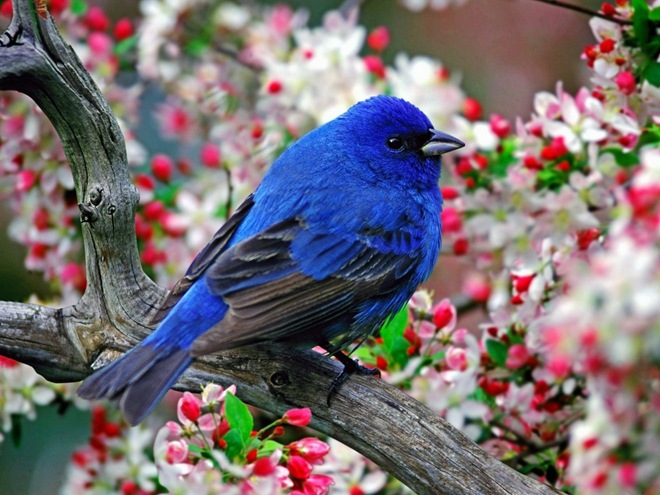
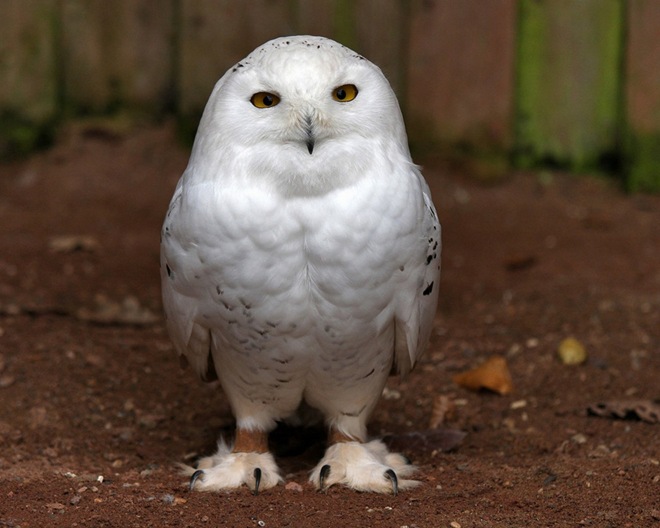
Beautiful bird photographs sent to me by Bob Derham.

Row, row, my bod, gently down the stream.....
Row, row, my bod, gently down the stream…..

oooo

Quick, I need some floss, I think I've got a seed stuck in my beak.
Quick, I need some floss, I think I’ve got a seed stuck in my beak.

oooo

Hey guys, what do you think I am, a houseboat?

oooo

Where is my Prozac, I'm feeling so blue.
Where is my Prozac, I’m feeling so blue.

oooo

So? I'm just not into socks, I like the wind on my ankles.
So? I’m just not into socks, I like the wind on my ankles.

oooo

Landing check list; gear down, check; full flaps, check; runway clear, check; alignment correct, check.

oooo

Man, I wish I could build nests like that!!

oooo

Just keeping an eye on those noisy magpies next door.


More of these fabulous photographs next Sunday.

(Thanks Bob!)

A bedtime story for mankind.

The latest IPCC report is more than dry science; it’s our future!

Regular readers of Learning from Dogs will be aware that yesterday I published a post called A bedtime story for Jimmy.  It was prompted by learning of an eight-year-old who was offered the opportunity of shooting a wild turkey early last Saturday morning.  The penultimate paragraph read as follows:

If we care for nature then we care for the health of our lands, for our forests and for our seas. We are careful with how we live our lives. If we care for nature then as we live our lives we do our best to leave things better for those that come after us.

Little did I know when writing my post that on the same day of publication would be a chilling post from Patrice Ayme; a post that Patrice has generously given me permission to republish in full.

Indeed, little did I know that when I composed my preface to Jimmy’s story and included these words:

However, this eight-year-old lad is facing a future that demands that he and all his generation accept that embracing nature, totally and whole-heartedly, is their only hope of not being the last generation of humans on this beautiful planet.

That less than twenty-four hours later Patrice’s perspective on the latest IPCC report made that sentence of mine far from hyperbole!  Here is that essay from Patrice.

ooOOoo

Terminal Greenhouse Crisis.

A CRASH TECH PROGRAM IS NEEDED, & HAS TO INVOLVE HYDROGEN.

At the present rate of greenhouse gases emissions, within nine years, massively lethal climate and oceanic changes are guaranteed.

Such is the conclusion one can draw from the Inter Governmental Panel On Climate Change of the UN (the IPCC, with its top 300 climate scientists from all over the world). About 78% of the emissions have to do with heating, cooking, and basic, necessary industrial activities, such as making cement.

They are not elective.

As Bad As An Asteroid?

Notes: CO2 FOLU = CO2 emissions from Forestry and Other Land Use. F-gases = Fluorinated gases covered under the Kyoto Protocol. At the right side of the figure: Emissions of each greenhouse gas with associated error bars (90% confidence interval).

Only a crash program of construction of several hundreds of new technology nuclear fission plants, an all-out renewable energy program, with massive solar plants all over the American South and the (similar latitude) Sahara desert, plus a massive hydrogen economy to store the wind and solar energy could allow us to mitigate the massive lethal change incoming.

In other words, it is already too late to avoid the massive lethal change.

What’s the problem? Simple mathematics. It’s evaluated that human activities in the last century or so released 515 billion tons of greenhouse gases. The IPCC and the best experts believe that 800 to 1,000 billion tons of such gases would bring a rise of global temperatures of two degrees Celsius.

At the present rate, that’s nine years to reach the upper reaches: one trillion tons of GHG.

Most of the temperature rise will be in the polar regions, melting those, and inducing worldwide climate catastrophe, especially if emissions of polar methane turn apocalyptic. The polar regions are the Achilles heel of the Earth’s present biosphere. By striking there mostly, enormous changes can be brought to bear, as they would destroy the Earth’s air conditioning and oceanic circulation.

In 2014, trade winds in the Pacific had four times the energy they usually have, creating abnormally intense ocean upwelling off the west coast of North America, thus a high pressure ridge (thus a drought there), causing a world wide oscillation of the jet stream that dragged cold polar air down the east coast of the USA, before rebounding as continual storms and rain on the west coast of Europe, and so forth.

Nobody can say the weather was normal: precipitation in England beat all records, dating 250 years, whereas most of California experienced extreme drought.

At this point, warm water is piling down to 500 meters depth in the western Pacific in what looks like a preparation for a massive El Nino, similar to the one in 1997-98. If this happens, global temperature records will be smashed next year.

Massively lethal means death to the world as we know it, by a thousand cuts. It means cuts to democracy, privacy, life span, food intake. Some of these are already in plain sight: the Ukraine war is already a war about gas, no less an authority as dictator Putin says so.

Tom Friedman in “Go Ahead, Vladimir, Make My Day.” takes the situation lightly. “SO the latest news is that President Vladimir Putin of Russia has threatened to turn off gas supplies to Ukraine if Kiev doesn’t pay its overdue bill, and, by the way, Ukraine’s pipelines are the transit route for 15 percent of gas consumption for Europe. If I’m actually rooting for Putin to go ahead and shut off the gas, does that make me a bad guy?

Because that is what I’m rooting for, and I’d be happy to subsidize Ukraine through the pain. Because such an oil shock, though disruptive in the short run, could have the same long-term impact as the 1973 Arab oil embargo — only more so. That 1973 embargo led to the first auto mileage standards in America and propelled the solar, wind and energy efficiency industries. A Putin embargo today would be even more valuable because it would happen at a time when the solar, wind, natural gas and energy efficiency industries are all poised to take off and scale. So Vladimir, do us all a favor, get crazy, shut off the oil and gas to Ukraine and, even better, to all of Europe. Embargo! You’ll have a great day, and the rest of the planet will have a great century.”

It’s not so simple. The investments needed are massive, and all the massive investments so far have to do with fracking… Which is, ecologically speaking, a disaster. 3% methane leakage makes fracking worse than burning coal. And this leakage is apparently happening.

Unbelievably, some of the countries with coal beds got the bright idea to burn the coal underground. Australia, about the worst emitter of CO2 per capita, experimented with that. It had to be stopped, because some particularly toxic gases (such as toluene) were coming out, not just the CH4 and CO the apprentice sorcerers were looking for.

Carbon Capture and Storage does not exist (but for very special cases in half a dozen special locations, worldwide, not the thousands of locales needed). And CSS will not exist (profitably).

What technology exist that could be developed (but is not yet)? Not just Thorium reactors. The hydrogen economy is a low key, and indispensable economy. Water can be broken by electricity from wind and sun, and then energy can be stored, under the form of hydrogen. Nothing else can do it: batteries are unable to store energy efficiently (and there is not enough Lithium to make trillions of Lithium batteries).

The hydrogen technology pretty much exist, including for efficient storage under safe form (one thick plate of a material that cannot be set aflame can store 600 liters of hydrogen).

Another advantage of storing hydrogen is that oxygen would be released. Although it may seem absurd to worry about this, too much acidity in the ocean (from absorption of CO2) could lead to phytoplankton die-off, and the removal of half of oxygen production.

In this increasingly weird world, that’s where we are at.

Oh, by the way, how to stop Putin? Europe should tell the dictator he can keep his gaz. Now. As good an occasion to start defending the planet, and not just against fascism.

Patrice Aymé

ooOOoo

I can’t add anything at a scientific level to what Patrice has written.  But I can offer this.  Each and every one of us needs to make sure the message is spread as far and wide as possible (you are free to share and republish this post) and then do something, however small it may seem, to make a difference. And do it now!

For the sake of all the Jimmys in the world – and all the turkeys!

A bedtime story for Jimmy.

Inspired by hearing a young boy shoot a wild turkey early on Saturday morning.

Preface

Because we have horses, friends living close to us called to warn that early on Saturday morning, a young lad, accompanied by his father, would be experiencing what it was like to shoot a wild turkey at close range.  The turkeys are easy targets; almost pets.

So it was that around 6:30am last Saturday morning that a single shot rang out and we knew that a turkey had been killed. Now in fairness to American history it’s not that long ago that the early settlers relied on hunting to survive.  The first permanent European settlement in Oregon wasn’t until 1811. Thus hunting may be something close to the American’s heart; so to speak.  However, this eight-year-old lad is facing a future that demands that he and all his generation accept that embracing nature, totally and whole-heartedly, is their only hope of not being the last generation of humans on this beautiful planet.

Jean and I thought the following was an appropriate way of expressing our feelings.

ooOOoo

Dear Jimmy,

What was it like to point your gun at that turkey and pull the trigger?  What did you feel as you saw the bullet hit and the turkey fall to the ground?

Now I wasn’t there with you, of course, but I could imagine the thrill and excitement that you would have felt. Not many young lads of your age get to handle a gun and shoot a turkey.

But Jimmy, what we feel as an eight-year-old is a very poor indicator for what we feel when we are much older.  Possibly the only exception is love, which is a golden feeling at any age.

So, if you will forgive this sixty-nine-year old from reading an eight-year-old a very short bedtime story, I will get started.

The world, this enormous world, must seem infinitely huge to you.  Even if you stand on the shoulders of your Dad, your eyes ten feet above the ground, the horizon is just four miles away.  You could run to that horizon in less than an hour.  However, to run all the way around the world at that same speed would take you, dear Jimmy, nearly two hundred and sixty days of running; running twenty-four hours a day!  It’s a very big planet!

Look at this wonderful picture of our planet.  Have you ever seen anything more beautiful!

Planet Earth 1


It must seem to you that there is nothing an eight-year-old could do to harm this planet we all live on.

That’s true! There is nothing you could do to harm the planet.

However, when you get older and reach the point where you have a job, drive a car, fly to places on an aeroplane, heat your house and a million other things that we grown-ups do, then all of us together, all the millions of people living on this green planet can hurt it.

Indeed, Jimmy, you may have already heard of things like climate change and global warming being spoken about on the television.  All of the people living on this planet are hurting it.  And the people who are really going to see how we humans are hurting the planet, and how the planet is changing, are all the people who, like you Jimmy, are not yet even finished school.

So what does shooting a wild turkey have to do with caring for your planet throughout the many years ahead for you?

If we care for nature then we care for the health of our lands, for our forests and for our seas. We are careful with how we live our lives.  If we care for nature then as we live our lives we do our best to leave things better for those that come after us.

Jimmy, sleep well my young man. Wake knowing the death of that turkey was not in vain.  Wake with love in your heart. Love for every living creature.

Only love for all creatures will offer all creatures a future.

ooOOoo
Written and offered with peace.


Duh! Is it me!

Sometimes, one does have to wonder!

Years ago I recall hearing the retort, “What part of the word no are you having trouble with!

It made me laugh out loud.

It comes to mind again, and this is why.

The accumulation of evidence mounts almost on a daily basis that mankind is critically affecting the viability of Planet Earth. Not only threatening a sustainable home for tens of thousands of species but, most importantly, for homo sapiens.

Yesterday, I included a report that suggested we may be on the verge of one of the largest El Ninos in history.  The presumption being that the extra heat energy in the atmosphere is transferring to the Pacific waters.

Today, I want to stay with the theme that it is nature, not mankind, that is dictating our future; that our leaders, are way ‘behind the drag curve’ to use an aviation expression.

But let me offer yet another lesson from dogs.  Learnt from understanding the role of the ‘alpha’ dog; the leader.

When dogs lived in the wild the size of their pack, or community, was around fifty animals.  The most senior in status was the alpha dog.  The alpha dog was a female who had two important roles on behalf of the pack.  First, the alpha dog had the pick of the male dogs to ensure the optimum genetic health of the entire group.

Second, it was alpha dog that, in the rare circumstances of their pack’s territory becoming unsustainable, made the decision for her pack to find a new territory.

Humans are on the verge of understanding that our ‘territory’ is rapidly becoming unsustainable.  Just a great shame we don’t have any ‘alpha leaders’ to find ‘a new territory’.  Clearly in a metaphorical sense.  Because the last time I looked a ‘backup’ to Planet Earth wasn’t anywhere close!

No better illustrated than by a recent essay from George Monbiot that I am republishing in full within his blanket permission to so do.  The essay is called Loss Adjustment and was published in the Guardian newspaper on the 1st April 2014.

ooOOoo

Loss Adjustment

When people say we should adapt to climate change, do they have any idea what that means?
By George Monbiot

To understand what is happening to the living planet, the great conservationist Aldo Leopold remarked, is to live “in a world of wounds … An ecologist must either harden his shell and make believe that the consequences of science are none of his business, or he must be the doctor who sees the marks of death in a community that believes itself well and does not want to be told otherwise.” (1)

The metaphor suggests that he might have seen Henrik Ibsen’s play An Enemy of the People (2). Thomas Stockmann is a doctor in a small Norwegian town, and medical officer at the public baths whose construction has been overseen by his brother, the mayor. The baths, the mayor boasts, “will become the focus of our municipal life! … Houses and landed property are rising in value every day.”

But Dr Stockmann discovers that the pipes were built in the wrong place, and the water feeding the baths is contaminated. “The source is poisoned …We are making our living by retailing filth and corruption! The whole of our flourishing municipal life derives its sustenance from a lie!” People bathing in the water to improve their health are instead falling ill.

Dr Stockmann expects to be treated as a hero for exposing this deadly threat. After the mayor discovers that re-laying the pipes would cost a fortune and probably sink the whole project, he decides that his brother’s report “has not convinced me that the condition of the water at the baths is as bad as you represent it to be.” He proposes to ignore the problem, make some cosmetic adjustments and carry on as before. After all, “the matter in hand is not simply a scientific one. It is a complicated matter, and has its economic as well as its technical side.” The local paper, the baths committee and the business people side with the mayor against the doctor’s “unreliable and exaggerated accounts”.

Astonished and enraged, Dr Stockmann lashes out madly at everyone. He attacks the town as a nest of imbeciles, and finds himself, in turn, denounced as an enemy of the people. His windows are broken, his clothes are torn, he’s evicted and ruined.

Yesterday’s editorial in the Daily Telegraph, which was by no means the worst of the recent commentary on this issue, follows the first three acts of the play (3). Marking the new assessment by the Intergovernmental Panel on Climate Change, the paper sides with the mayor. First it suggests that the panel cannot be trusted, partly because its accounts are unreliable and exaggerated and partly because it uses “model-driven assumptions” to forecast future trends. (What would the Telegraph prefer? Tea leaves? Entrails?). Then it suggests that trying to stop manmade climate change would be too expensive. Then it proposes making some cosmetic adjustments and carrying on as before. (“Perhaps instead of continued doom-mongering, however, greater thought needs to be given to how mankind might adapt to the climatic realities.”)

But at least the Telegraph accepted that the issue deserved some prominence. On the Daily Mail’s website, climate breakdown was scarcely a footnote to the real issues of the day: “Kim Kardashian looks more confident than ever as she shows off her toned curves” and “Little George is the spitting image of Kate”.

Beneath these indispensable reports was a story celebrating the discovery of “vast deposits of coal lying under the North Sea, which could provide enough energy to power Britain for centuries.” (4) No connection with the release of the new climate report was made. Like royal babies, Kim’s curves and Ibsen’s municipal baths, coal is good for business. Global warming, like Dr Stockmann’s contaminants, is the spectre at the feast.

Everywhere we’re told that it’s easier to adapt to global warming than to stop causing it. This suggests that it’s not only the Stern review on the economics of climate change (showing that it’s much cheaper to avert climate breakdown than to try to live with it (5)) that has been forgotten, but also the floods which have so recently abated. If a small, rich, well-organised nation cannot protect its people from a winter of exceptional rainfall – which might have been caused by less than one degree of global warming – what hope do other nations have, when faced with four degrees or more?

When our environment secretary, Owen Paterson, assures us that climate change “is something we can adapt to over time” (6) or Simon Jenkins, in the Guardian yesterday, says that we should move towards “thinking intelligently about how the world should adapt to what is already happening” (7), what do they envisage? Cities relocated to higher ground? Roads and railways shifted inland? Rivers diverted? Arable land abandoned? Regions depopulated? Have they any clue about what this would cost? Of what the impacts would be for the people breezily being told to live with it?

My guess is that they don’t envisage anything: they have no idea what they mean when they say adaptation. If they’ve thought about it at all, they probably picture a steady rise in temperatures, followed by a steady rise in impacts, to which we steadily adjust. But that, as we should know from our own recent experience, is not how it happens. Climate breakdown proceeds in fits and starts, sudden changes of state against which, as we discovered on a small scale in January, preparations cannot easily be made.

Insurers working out their liability when a disaster has occurred use a process they call loss adjustment. It could describe what all of us who love this world are going through, as we begin to recognise that governments, the media and most businesses have no intention of seeking to avert the coming tragedies. We are being told to accept the world of wounds; to live with the disappearance, envisaged in the new climate report, of coral reefs and summer sea ice, of most glaciers and perhaps some rainforests, of rivers and wetlands and the species which, like many people, will be unable to adapt (8).

As the scale of the loss to which we must adjust becomes clearer, grief and anger are sometimes overwhelming. You find yourself, as I have done in this column, lashing out at the entire town.

http://www.monbiot.com

References:

1. Aldo Leopold, 1949. A Sand County Almanac. Oxford University Press.

2. Read at http://www.gutenberg.org/files/2446/2446-h/2446-h.htm

3. http://www.telegraph.co.uk/comment/telegraph-view/10733381/The-climate-debate-needs-more-than-alarmism.html

4. http://www.dailymail.co.uk/news/article-2593032/Coal-fuel-UK-centuries-Vast-deposits-totalling-23trillion-tonnes-North-Sea.html

5. http://webarchive.nationalarchives.gov.uk/+/http:/www.hm-treasury.gov.uk/sternreview_index.htm

6. http://www.theguardian.com/environment/2013/sep/30/owen-paterson-minister-climate-change-advantages

7. http://www.theguardian.com/commentisfree/2014/mar/31/ipcc-report-adaptation-climate-change

8. http://ipcc-wg2.gov/AR5/images/uploads/IPCC_WG2AR5_SPM_Approved.pdf

ooOOoo

Now watch this film!

Published on Apr 6, 2014
Hollywood celebrities and respected journalists span the globe to explore the issues of climate change and cover intimate stories of human triumph and tragedy. Watch new episodes Sundays at 10PM ET/PT, only on SHOWTIME.

It’s the biggest story of our time. Hollywood’s brightest stars and today’s most respected journalists explore the issues of climate change and bring you intimate accounts of triumph and tragedy. YEARS OF LIVING DANGEROUSLY takes you directly to the heart of the matter in this awe-inspiring and cinematic documentary series event from Executive Producers James Cameron, Jerry Weintraub and Arnold Schwarzenegger.

Picture parade thirty-nine.

The third and final set of photographs by Elena Shumilova.

ooOOoo

A MOTHER FROM RUSSIA TOOK THESE PICTURES AT HER FARM

ALONG WITH HER TWO SMALL BOYS, A CAT AND A DOG.

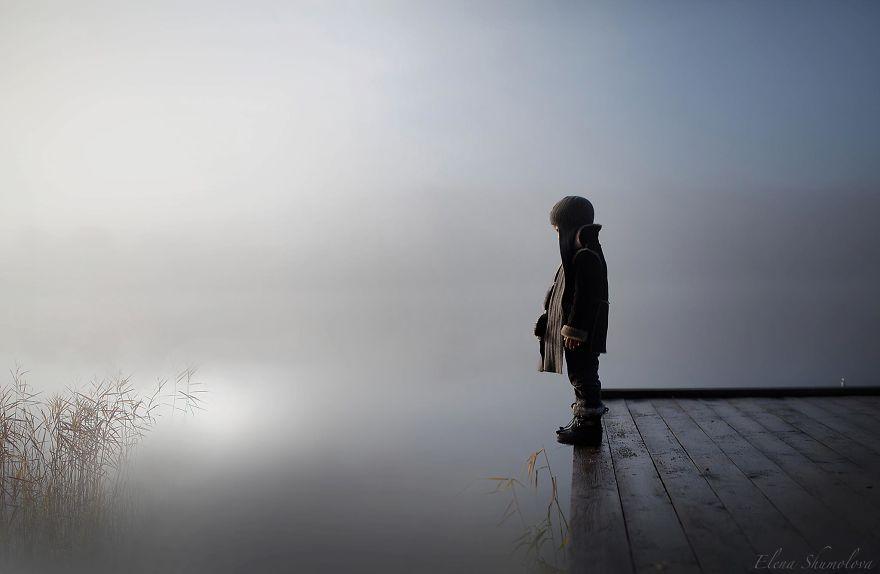
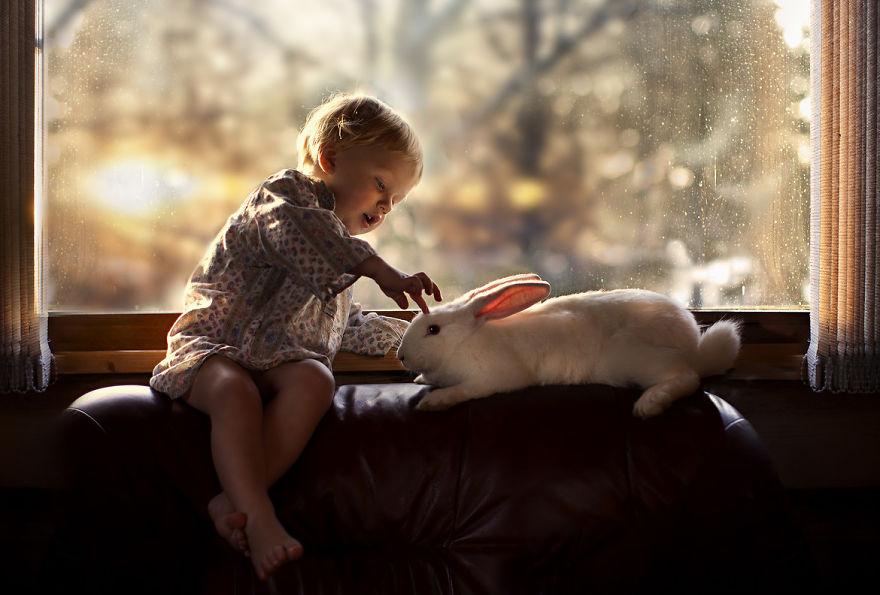
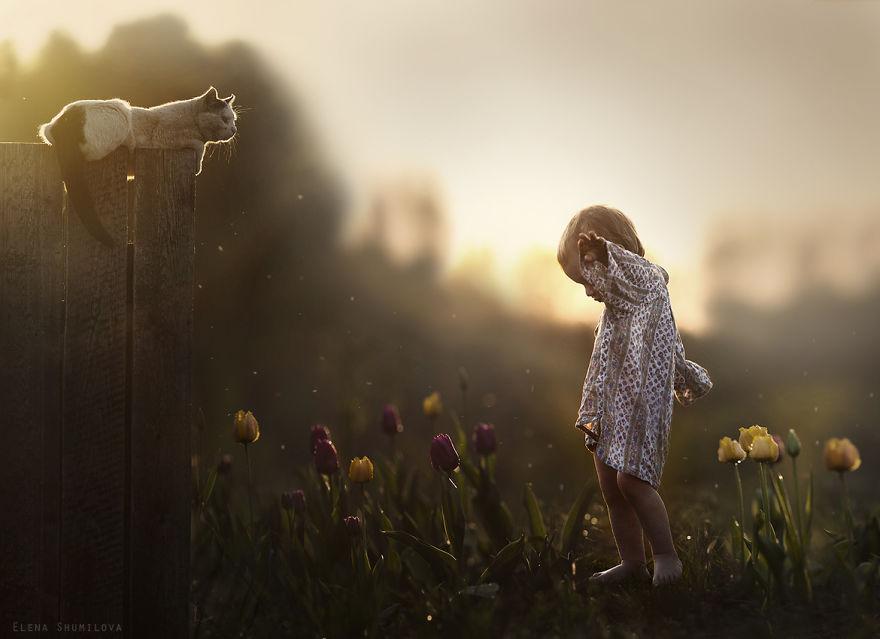
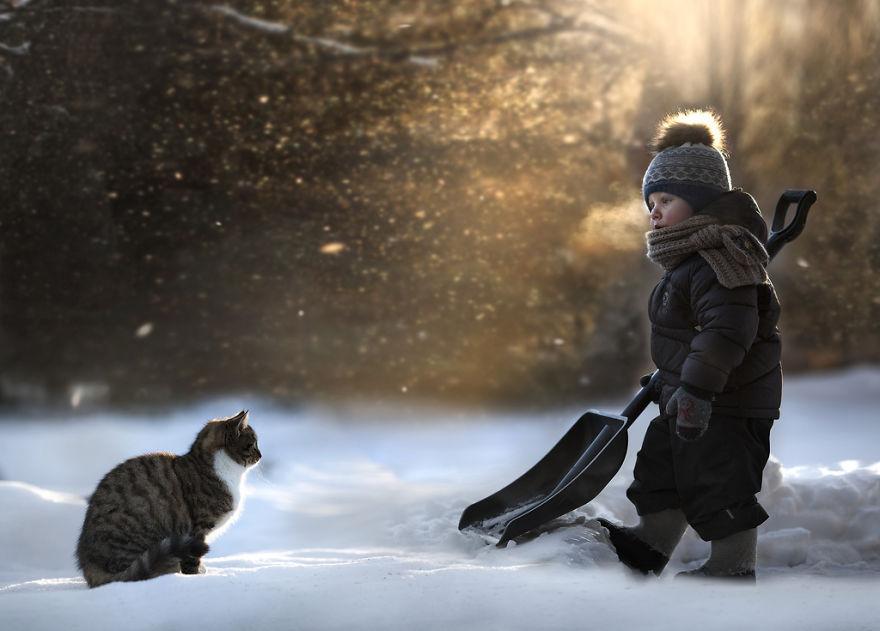
These wonderful photographs by Elena Shumilova plunge the viewer into a beautiful world that revolves around her two boys and their adorable dog, cat, duckling and rabbit friends.

Taking advantage of natural colors, weather conditions and her enchanting surroundings, the gifted Russian artist creates cozy and heartwarming photography that leaves you amazed. Elena said, “Children and animals – it’s my life. I’m a mom with two sons and we spend a lot of time on the farm.”

meta16

oooo

meta17

oooo

meta18

oooo

meta19

oooo

meta20

oooo

meta21

oooo

meta22

oooo

meta23

ooOOoo

Aren’t they stunningly beautiful!

If you missed the other sets of pictures, the first set is here and the second set is here.

Picture parade thirty-eight.

The second set of photographs from Elena Shumilova.

A week ago I introduced Elena Shumilova and am delighted to stay with her fabulous pictures.  I’m repeating the introduction from last week.

ooOOoo

A MOTHER FROM RUSSIA TOOK THESE PICTURES AT HER FARM

ALONG WITH HER TWO SMALL BOYS, A CAT AND A DOG.

These wonderful photographs by Elena Shumilova plunge the viewer into a beautiful world that revolves around her two boys and their adorable dog, cat, duckling and rabbit friends.

Taking advantage of natural colors, weather conditions and her enchanting surroundings, the gifted Russian artist creates cozy and heartwarming photography that leaves you amazed. Elena said, “Children and animals – it’s my life. I’m a mom with two sons and we spend a lot of time on the farm.”

meta9

oooo

meta10

oooo

meta11

oooo

meta12

oooo

meta13

oooo

meta14

oooo

meta15

ooOOoo

Final set for you in a week’s time.  You all take care of yourselves.

Immediate concern? Try this!

Talk about extreme ends of the spectrum!

Yesterday, I posted about the prediction that in four billion years the Milky Way galaxy would collide with the Andromeda galaxy.  I called the post Not of immediate concern.

Today, I am writing about something that is of immediate concern. That is if you regard the next couple of decades as ‘immediate’.

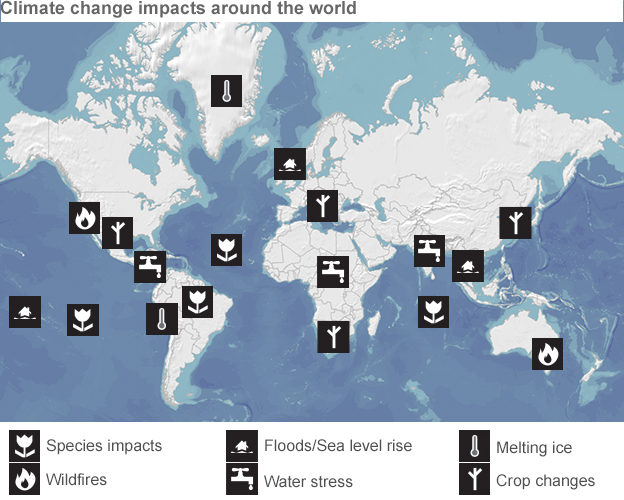
The post is prompted by an item that was published on the BBC News website two days ago.  It carried the title Climate inaction catastrophic – US

Climate inaction catastrophic – US

By Matt McGrath
Environment correspondent, BBC News, Yokohama, Japan

The costs of inaction on climate change will be “catastrophic”, according to US Secretary of State John Kerry.

Mr Kerry was responding to a major report by the UN which described the impacts of global warming as “severe, pervasive and irreversible”.

He said dramatic and swift action was required to tackle the threats posed by a rapidly changing climate.

Our health, homes, food and safety are all likely to be threatened by rising temperatures, the report says.

Scientists and officials meeting in Japan say the document is the most comprehensive assessment to date of the impacts of climate change on the world.

In a statement, Mr Kerry said: “Unless we act dramatically and quickly, science tells us our climate and our way of life are literally in jeopardy. Denial of the science is malpractice. There are those who say we can’t afford to act. But waiting is truly unaffordable. The costs of inaction are catastrophic.”

Putting to one side the mild irony of a representative of the US Government wringing his hands about what mankind is doing to our climate, the report is valuable and potentially significant.

The report was from the Intergovernmental Panel on Climate Change (IPCC) which is, as their website explains:

The Intergovernmental Panel on Climate Change (IPCC) was established by the United Nations Environmental Programme (UNEP) and the World Meteorological Organization (WMO) in 1988 to assess the scientific, technical and socio-economic information relevant for the understanding of human induced climate change, its potential impacts and options for mitigation and adaptation.

Watch this 5-minute video of Stanford professor Dr. Chris Field, co-chair of that IPCC working group, addressing some of the key questions raised by this latest report.  In particular, focus on Dr. Field discussing the potential of the loss of the Greenland ice cap around 3 min 30 seconds.

Back to the BBC report (which you should read in full!).  Back to Dr. Chris Field being quoted as saying:

I think the really big breakthrough in this report is the new idea of thinking about managing climate change as a problem in managing risks. Climate change is really important but we have a lot of the tools for dealing effectively with it – we just need to be smart about it.

BBC climate-change-impacts_v2

It would be easy to get into the mindset that humanity is not going to change its ways in time.

But, then again, the pace of growing awareness about what the changes are that we all need to make, and make relatively soon, is dramatic.

Maybe, just maybe, this will turn out alright!

Fingers-crossed1

For all the young people in the world, I do so hope!


Not of immediate concern!

Milky Way galaxy heading for a collision – in about 4,000,000,000 years!

As with huge numbers of others who come to this blog, the night sky has always been of incredible fascination to me.  To reinforce that fact, one of the favourite posts on Learning from Dogs for the last three years has been The night sky above published back on the 27th March, 2011.  If you haven’t read it, do pop across and do so as the title is misleading in terms of the post.

Thus it was unavoidable not to pick up on an item recently referred to by Naked Capitalism that had been published by the EarthSky blog.  This particular item was called Night sky as Milky Way and Andromeda galaxies merge.  It began thus:

As seen on Cosmos … the collision and merger between our Milky Way galaxy and the nearby Andromeda galaxy 4 billion years from now.

The video below illustrates what NASA scientists announced in 2012 – and what the Cosmos TV series featured in 2014 – that the nearby Andromeda galaxy will collide and merge with our Milky Way galaxy 4 billion years from now. The video (from the Hubble Space Telescope news center) is from a series of photo illustrations, showing the predicted merger between our two titan spiral galaxies, as seen in Earth’s sky. Will Earth as a planet survive long enough to see this? A word about that at the end of this post.

The video lost a lot for me by not carrying a commentary.  But no problem as one was found that did have a ‘voice-over’.  However, the article photographs were stunning.  For example:

merger-milky-way-andromeda-NASA-e1395662599173
This series of photo illustrations shows the predicted merger between our Milky Way galaxy and the neighboring Andromeda galaxy. Via NASA; ESA; Z. Levay and R. van der Marel, STScI; T. Hallas, and A. Mellinger

A description of what’s happening in the images above:

First Row, Left: Present day.
First Row, Right: In 2 billion years the disk of the approaching Andromeda galaxy is noticeably larger.
Second Row, Left: In 3.75 billion years Andromeda fills the field of view.
Second Row, Right: In 3.85 billion years the sky is ablaze with new star formation.
Third Row, Left: In 3.9 billion years, star formation continues.
Third Row, Right: In 4 billion years Andromeda is tidally stretched and the Milky Way becomes warped.
Fourth Row, Left: In 5.1 billion years the cores of the Milky Way and Andromeda appear as a pair of bright lobes.
Fourth Row, Right: In 7 billion years the merged galaxies form a huge elliptical galaxy, its bright core dominating the nighttime sky.

The sequence is inspired by dynamical computer modeling of the inevitable future collision between the two galaxies.

Further on in the article one reads:

This illustration shows the collision paths of our Milky Way galaxy and the Andromeda galaxy. The galaxies are moving toward each other under the inexorable pull of gravity between them. Also shown is a smaller galaxy, Triangulum, which may be part of the smashup. Via NASA; ESA; A. Feild and R. van der Marel, STScI.

Will Earth survive long enough to see this merger of galaxies, as depicted in the video above? Earth as a planet might, but life on Earth – probably not. Astronomers say that the luminosity, or intrinsic brightness, of our sun will steadily increase over the next 4 billion years. As the sun’s luminosity increases, the amount of solar radiation reaching the Earth will also increase. It’s possible that – around 4 billion years from now – the increase in the Earth’s surface temperature will cause a runaway greenhouse effect, perhaps similar to that going on now on the planet next door, Venus, whose surface is hot enough to melt lead. No one expects to find life on Venus. Likewise, life on Earth will probably not exist 4 billion years from now. What’s more, our sun is expected to become a red giant star eventually. A probable fate of the Earth is absorption by the sun in about 7.5 billion years, after our sun has entered the red giant phase and expanded to cross Earth’s current orbit.

Anyhow, I mentioned that I found a better video on YouTube than the one included in the original article, and that is now presented.

Rather puts the grunt and grind of daily life into perspective! 😉

Picture parade thirty-seven.

From The Meta Picture website, link sent to me by Suzann.

All pictures by Elena Shumilova. See her gallery on Flickr and 500px.  They are breathtakingly beautiful.

ooOOoo

A MOTHER FROM RUSSIA TOOK THESE PICTURES AT HER FARM

ALONG WITH HER TWO SMALL BOYS, A CAT AND A DOG. 

These wonderful photographs by Elena Shumilova plunge the viewer into a beautiful world that revolves around her two boys and their adorable dog, cat, duckling and rabbit friends.

Taking advantage of natural colors, weather conditions and her enchanting surroundings, the gifted Russian artist creates cozy and heartwarming photography that leaves you amazed. Elena said, “Children and animals – it’s my life. I’m a mom with two sons and we spend a lot of time on the farm.”


meta1

oooo

meta2

oooo

meta3

oooo

meta4

oooo

meta5

oooo

meta6

oooo

meta7

oooo

meta8

ooOOoo

Another eight next week; be sure to come back, they are unmissable pictures.