Tag: National Academy of Sciences

The geological history of Planet Earth

We live on a profoundly ancient and beautiful planet.

I follow the photographic website Ugly Hedgehog and have been doing for some time. There has been a post recently from the section Photo Gallery and ‘greymule’ from Colorado called his entry ‘A Couple of Desert Scenes’ and I will display just one of his images from that post.
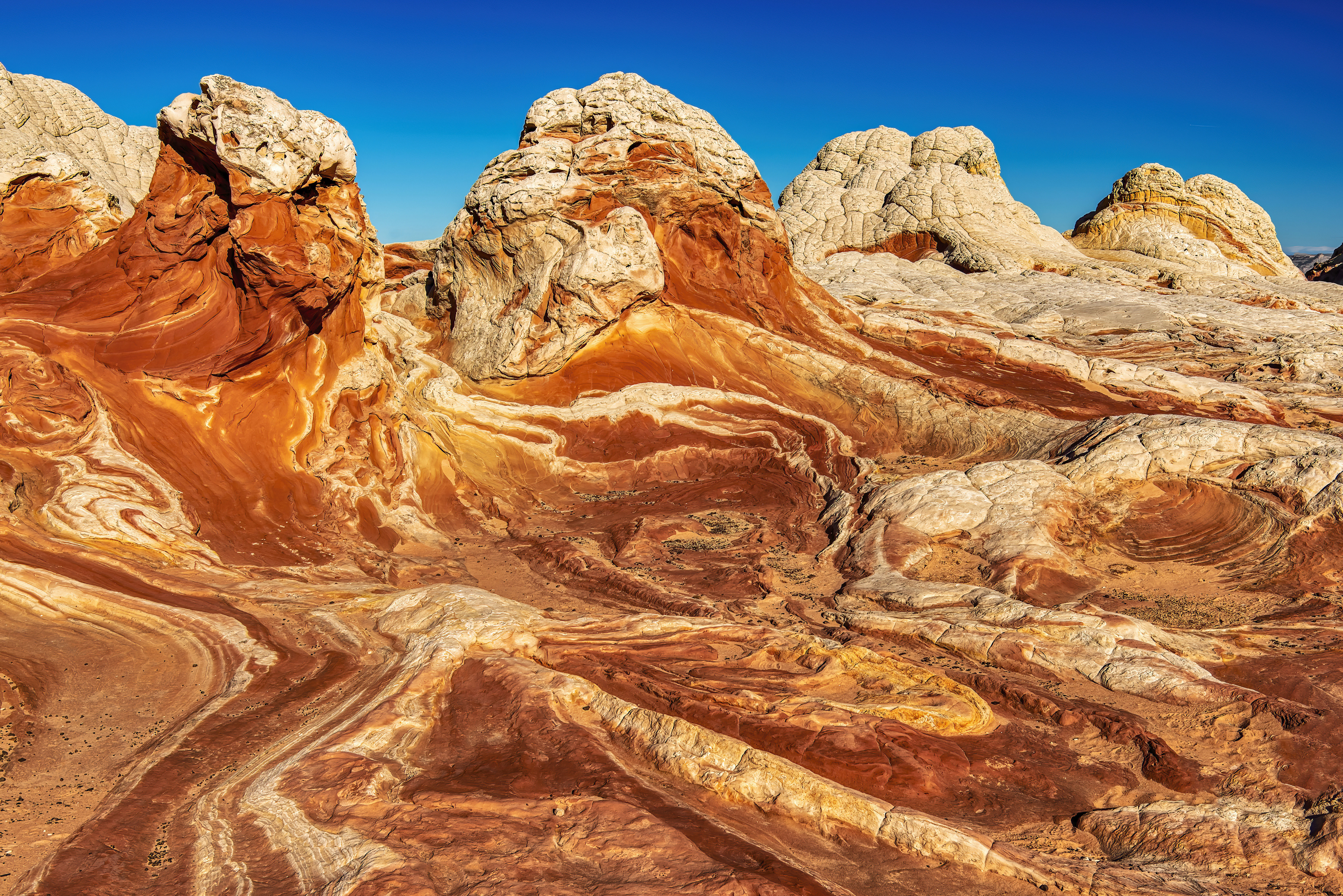
It makes a wonderful connection to today’s post which is from The Conversation.

ooOOoo

Evidence from Snowball Earth found in ancient rocks on Colorado’s Pikes Peak – it’s a missing link
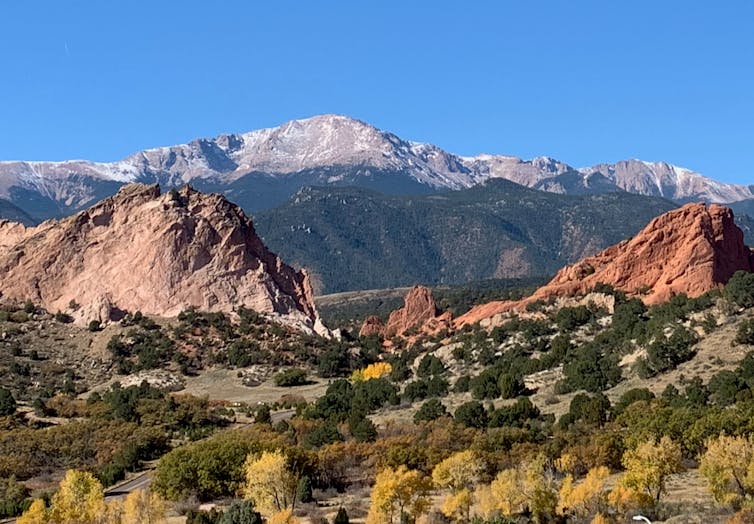
Rocks can hold clues to history dating back hundreds of millions of years. Christine S. Siddoway

Liam Courtney-Davies, University of Colorado Boulder; Christine Siddoway, Colorado College, and Rebecca Flowers, University of Colorado Boulder

Around 700 million years ago, the Earth cooled so much that scientists believe massive ice sheets encased the entire planet like a giant snowball. This global deep freeze, known as Snowball Earth, endured for tens of millions of years.

Yet, miraculously, early life not only held on, but thrived. When the ice melted and the ground thawed, complex multicellular life emerged, eventually leading to life-forms we recognize today.

The Snowball Earth hypothesis has been largely based on evidence from sedimentary rocks exposed in areas that once were along coastlines and shallow seas, as well as climate modeling. Physical evidence that ice sheets covered the interior of continents in warm equatorial regions had eluded scientists – until now.

In new research published in the Proceedings of the National Academy of Sciences, our team of geologists describes the missing link, found in an unusual pebbly sandstone encapsulated within the granite that forms Colorado’s Pikes Peak.
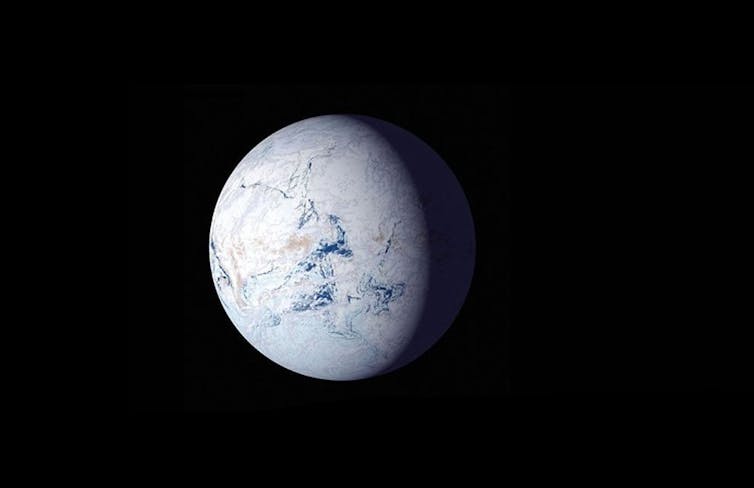
An illustration of an icy earth viewed from space
Earth iced over during the Cryogenian Period, but life on the planet survived. NASA illustration

Solving a Snowball Earth mystery on a mountain

Pikes Peak, originally named Tavá Kaa-vi by the Ute people, lends its ancestral name, Tava, to these notable rocks. They are composed of solidified sand injectites, which formed in a similar manner to a medical injection when sand-rich fluid was forced into underlying rock.

A possible explanation for what created these enigmatic sandstones is the immense pressure of an overlying Snowball Earth ice sheet forcing sediment mixed with meltwater into weakened rock below.

A hand holds a rock with dark seams through it and other colors.
Dark red to purple bands of Tava sandstone dissect pink and white granite. The Tava is also cross-cut by silvery-gray veins of iron oxide. Liam Courtney-Davies

An obstacle for testing this idea, however, has been the lack of an age for the rocks to reveal when the right geological circumstances existed for sand injection.

We found a way to solve that mystery, using veins of iron found alongside the Tava injectites, near Pikes Peak and elsewhere in Colorado.

A cliff side showing a long strip of lighter color Tava cutting through Pikes Peak Granite. The injectite here is 5 meters tall
A 5-meter-tall, almost vertical Tava dike is evident in this section of Pikes Peak granite. Liam Courtney-Davies

Iron minerals contain very low amounts of naturally occurring radioactive elements, including uranium, which slowly decays to the element lead at a known rate. Recent advancements in laser-based radiometric dating allowed us to measure the ratio of uranium to lead isotopes in the iron oxide mineral hematite to reveal how long ago the individual crystals formed.

The iron veins appear to have formed both before and after the sand was injected into the Colorado bedrock: We found veins of hematite and quartz that both cut through Tava dikes and were crosscut by Tava dikes. That allowed us to figure out an age bracket for the sand injectites, which must have formed between 690 million and 660 million years ago.

So, what happened?

The time frame means these sandstones formed during the Cryogenian Period, from 720 million to 635 million years ago. The name is derived from “cold birth” in ancient Greek and is synonymous with climate upheaval and disruption of life on our planet – including Snowball Earth.

While the triggers for the extreme cold at that time are debated, prevailing theories involve changes in tectonic plate activity, including the release of particles into the atmosphere that reflected sunlight away from Earth. Eventually, a buildup of carbon dioxide from volcanic outgassing may have warmed the planet again.

University of Exeter professor Timothy Lenton explains why the Earth was able to freeze over.

The Tava found on Pikes Peak would have formed close to the equator within the heart of an ancient continent named Laurentia, which gradually over time and long tectonic cycles moved into its current northerly position in North America today.

The origin of Tava rocks has been debated for over 125 years, but the new technology allowed us to conclusively link them to the Cryogenian Snowball Earth period for the first time.

The scenario we envision for how the sand injection happened looks something like this:

A giant ice sheet with areas of geothermal heating at its base produced meltwater, which mixed with quartz-rich sediment below. The weight of the ice sheet created immense pressures that forced this sandy fluid into bedrock that had already been weakened over millions of years. Similar to fracking for natural gas or oil today, the pressure cracked the rocks and pushed the sandy meltwater in, eventually creating the injectites we see today.

Clues to another geologic puzzle

Not only do the new findings further cement the global Snowball Earth hypothesis, but the presence of Tava injectites within weak, fractured rocks once overridden by ice sheets provides clues about other geologic phenomena.

Time gaps in the rock record created through erosion and referred to as unconformities can be seen today across the United States, most famously at the Grand Canyon, where in places, over a billion years of time is missing. Unconformities occur when a sustained period of erosion removes and prevents newer layers of rock from forming, leaving an unconformable contact.
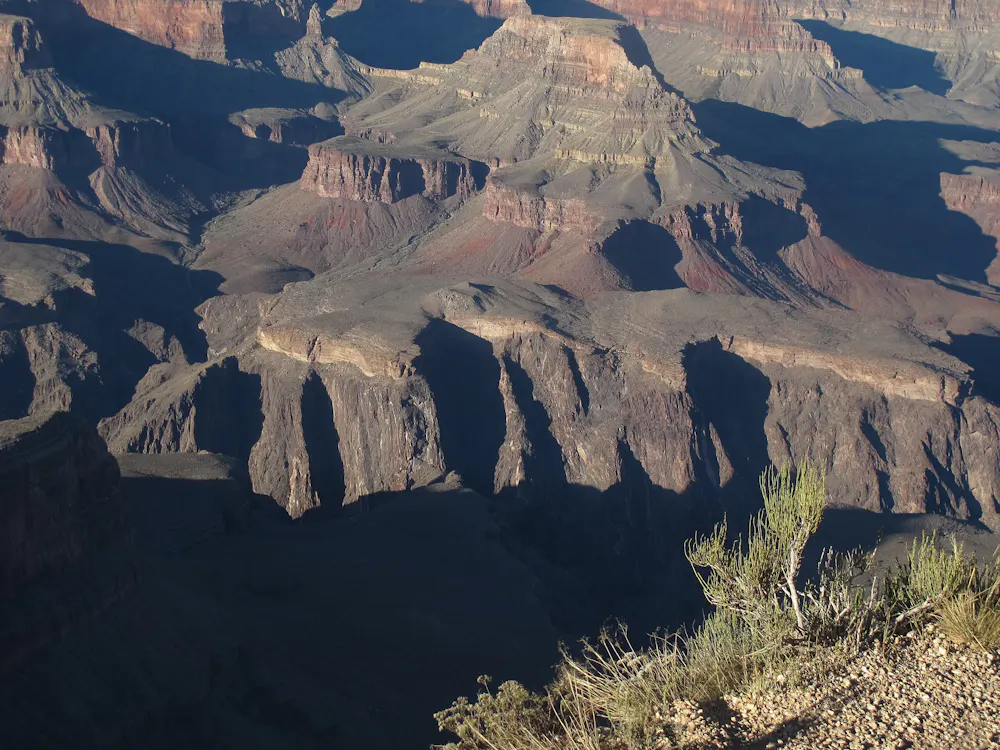
Unconformity in the Grand Canyon is evident here where horizontal layers of 500-million-year-old rock sit on top of a mass of 1,800-million-year-old rocks. The unconformity, or ‘time gap,’ demonstrates that years of history are missing. Mike Norton via Wikimedia, CC BY-SA

Our results support that a Great Unconformity near Pikes Peak must have been formed prior to Cryogenian Snowball Earth. That’s at odds with hypotheses that attribute the formation of the Great Unconformity to large-scale erosion by Snowball Earth ice sheets themselves.

We hope the secrets of these elusive Cryogenian rocks in Colorado will lead to the discovery of further terrestrial records of Snowball Earth. Such findings can help develop a clearer picture of our planet during climate extremes and the processes that led to the habitable planet we live on today.

Liam Courtney-Davies, Postdoctoral Research Associate in Geological Sciences, University of Colorado Boulder; Christine Siddoway, Professor of Geology, Colorado College, and Rebecca Flowers, Professor of Geological Sciences, University of Colorado Boulder

This article is republished from The Conversation under a Creative Commons license. Read the original article.

ooOOoo

All I can add is fascinating.
The wonders of soil!

Jane Zelikova gives a very powerful TED Talk.

The promotion for this TED Talk appeared in my ‘in box’ last week and I was curious as to its contents. So I watched the talk on Sunday afternoon and was amazed. This is so much more significant to all of us than the title suggests.

First watch the talk.

Then some background to Jane, who is a ecosystem scientist:

Dr. Tamara Jane Zelikova works at the intersection of climate science and policy. Her work focuses on advancing the science of carbon removal and she has published in scientific journals like Nature and Proceedings of the National Academy of Sciences, written and contributed to climate policy reports and published articles in popular media outlets like Scientific American. She is currently the executive director of the Soil Carbon Solutions Center at Colorado State University, where she works with leading scientists to build the tools and approaches needed to accelerate the deployment of credible soil-based climate solutions, measure their impacts and bring them to scale.

That then led me to the Soil Carbon Solutions Center website and this is a site you should visit. A little piece from their About section:

Unlocking the potential of soil for a more sustainable planet

Soil is one of the largest natural carbon reservoirs and an important climate mitigation tool that is ready to deploy today. Accelerating the adoption of regenerative agricultural practices that build soil carbon on working lands offers the potential to substantially draw down atmospheric carbon while improving the environmental, economic and social sustainability of food, fiber and bioenergy production.

Please, please watch the TED Talk!

Lessons

Nothing to do with dogs but everything to do with the future!

An item in The Conversation recently was not only interesting from a scientific point-of-view but also it had real lessons for the way that we humans are interfering with the planet.

As The Conversation introduced the article:

A mile below the surface of the Greenland ice sheet, an ancient Arctic ecosystem is preserved in the frozen soil. How scientists discovered its leaves, twigs and mosses is a story in itself. It starts with a secret military base built into the northern Greenland ice.

Scientists Andrew Christ and Paul Bierman describe the discovery as something of a Rosetta stone for understanding how well the ice sheet stood up to global warming in the past – and how it might respond in the future.

So, for a change, read something that has nothing to do with our furry friends.

ooOOoo

Ancient leaves preserved under a mile of Greenland’s ice – and lost in a freezer for years – hold lessons about climate change

Remnants of ancient Greenland tundra were preserved in soil beneath the ice sheet. Andrew Christ and Dorothy Peteet, CC BY-ND

Andrew Christ, University of Vermont and Paul Bierman, University of Vermont

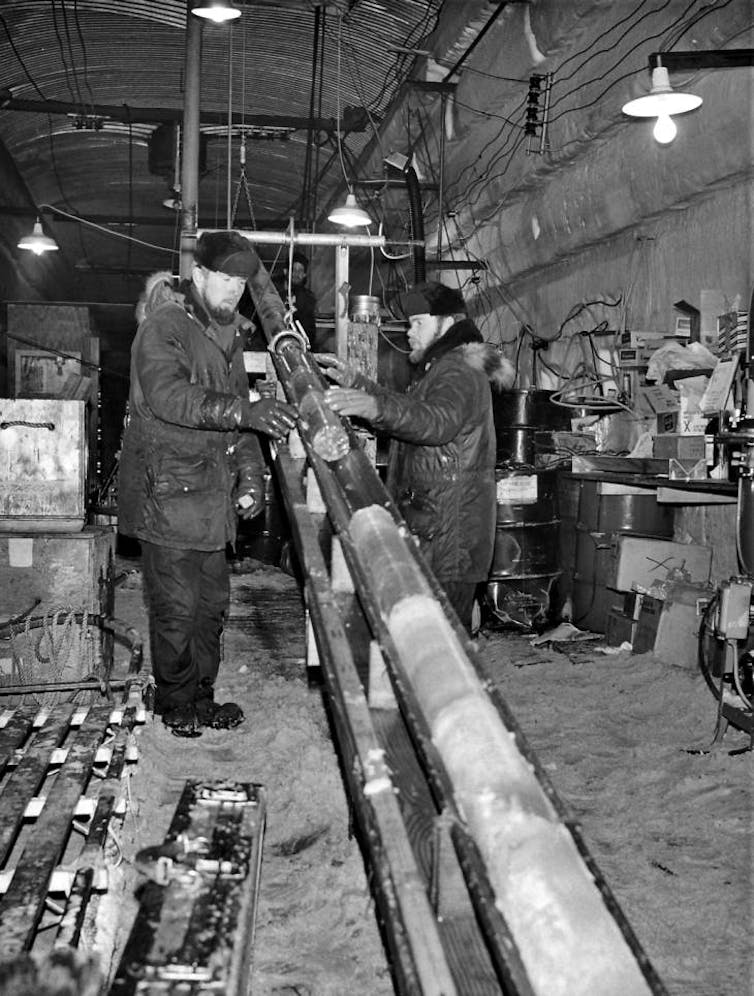
In 1963, inside a covert U.S. military base in northern Greenland, a team of scientists began drilling down through the Greenland ice sheet. Piece by piece, they extracted an ice core 4 inches across and nearly a mile long. At the very end, they pulled up something else – 12 feet of frozen soil.

The ice told a story of Earth’s climate history. The frozen soil was examined, set aside and then forgotten.

Half a century later, scientists rediscovered that soil in a Danish freezer. It is now revealing its secrets.

Using lab techniques unimaginable in the 1960s when the core was drilled, we and an international team of fellow scientists were able to show that Greenland’s massive ice sheet had melted to the ground there within the past million years. Radiocarbon dating shows that it would have happened more than 50,000 years ago. It most likely happened during times when the climate was warm and sea level was high, possibly 400,000 years ago.

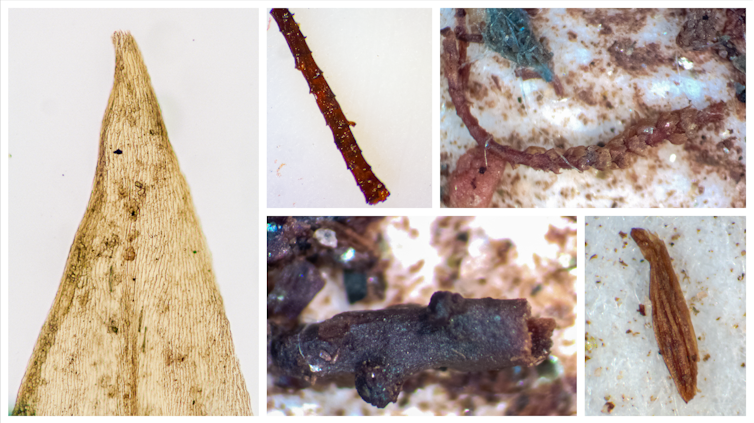
And there was more. As we explored the soil under a microscope, we were stunned to discover the remnants of a tundra ecosystem – twigs, leaves and moss. We were looking at northern Greenland as it existed the last time the region was ice-free. Our peer-reviewed study was published on March 15 in Proceedings of the National Academy of Sciences.

Two men with the ice core
Engineers pull up a section of the 4,560-foot-long ice core at Camp Century in the 1960s. U.S. Army Corps of Engineers

Paul Bierman, a geomorphologist and geochemist, describes what he and his colleagues found in the soil.

With no ice sheet, sunlight would have warmed the soil enough for tundra vegetation to cover the landscape. The oceans around the globe would have been more than 10 feet higher, and maybe even 20 feet. The land on which Boston, London and Shanghai sit today would have been under the ocean waves.

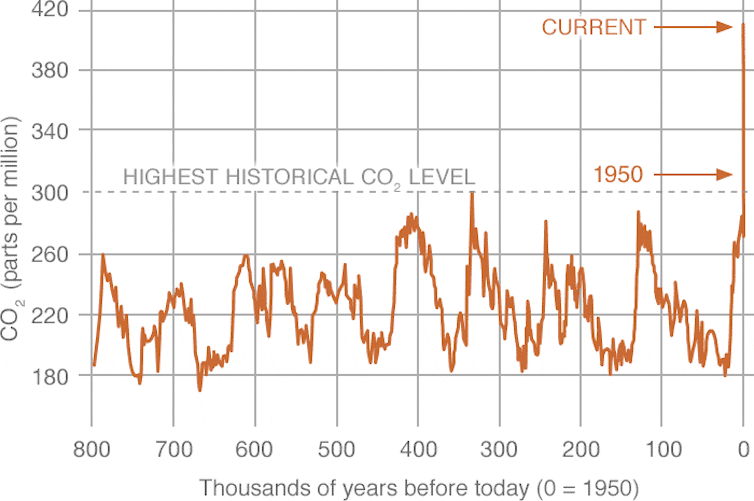
All of this happened before humans began warming the Earth’s climate. The atmosphere at that time contained far less carbon dioxide than it does today, and it wasn’t rising as quickly. The ice core and the soil below are something of a Rosetta Stone for understanding how durable the Greenland ice sheet has been during past warm periods – and how quickly it might melt again as the climate heats up.

Secret military bases and Danish freezers

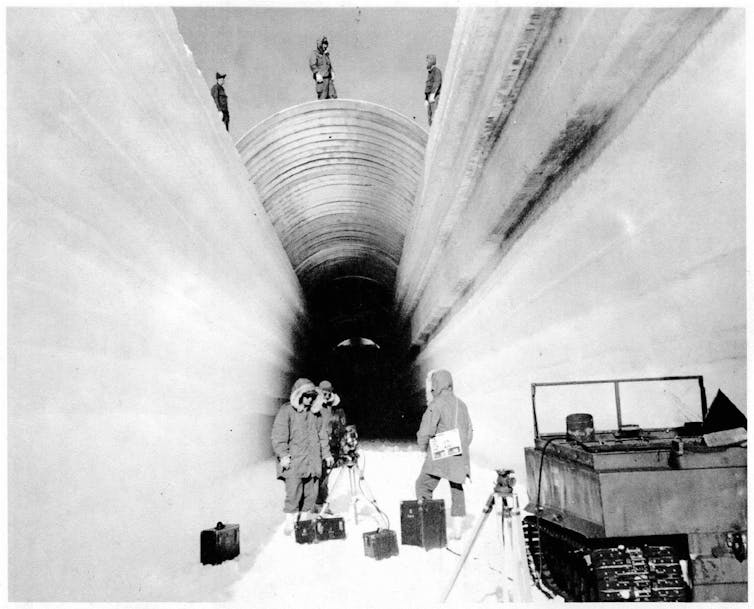
The story of the ice core begins during the Cold War with a military mission dubbed Project Iceworm. Starting around 1959, the U.S. Army hauled hundreds of soldiers, heavy equipment and even a nuclear reactor across the ice sheet in northwest Greenland and dug a base of tunnels inside the ice. They called it Camp Century.

It was part of a secret plan to hide nuclear weapons from the Soviets. The public knew it as an Arctic research laboratory. Walter Cronkite even paid a visit and filed a report.

Workers cover a trench to build the under-ice military base
Workers build the snow tunnels at the Camp Century research base in 1960. U.S. Army Corps of Engineers

Camp Century didn’t last long. The snow and ice began slowly crushing the buildings inside the tunnels below, forcing the military to abandon it in 1966. During its short life, however, scientists were able to extract the ice core and begin analyzing Greenland’s climate history. As ice builds up year by year, it captures layers of volcanic ash and changes in precipitation over time, and it traps air bubbles that reveal the past composition of the atmosphere.

One of the original scientists, glaciologist Chester Langway, kept the core and soil samples frozen at the University at Buffalo for years, then he shipped them to a Danish archive in the 1990s, where the soil was soon forgotten.

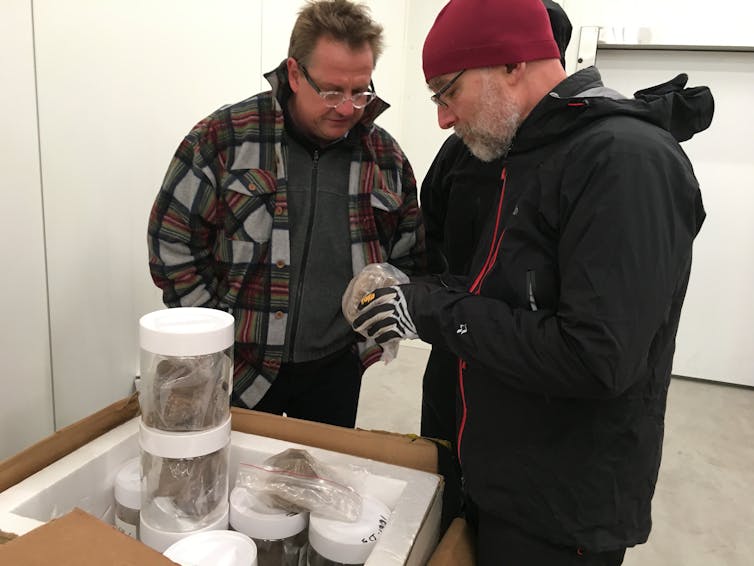
A few years ago, our Danish colleagues found the soil samples in a box of glass cookie jars with faded labels: “Camp Century Sub-Ice.”

Scientists look at the sediment in jars
Geomorphologist Paul Bierman (right) and geochemist Joerg Schaefer of Columbia University examine the jars holding Camp Century sediment for the first time. They were in a Danish freezer set at -17 F. Paul Bierman, CC BY-ND

A surprise under the microscope

On a hot July day in 2019, two samples of soil arrived at our lab at the University of Vermont frozen solid. We began the painstaking process of splitting the precious few ounces of frozen mud and sand for different analyses.

First, we photographed the layering in the soil before it was lost forever. Then we chiseled off small bits to examine under the microscope. We melted the rest and saved the ancient water.

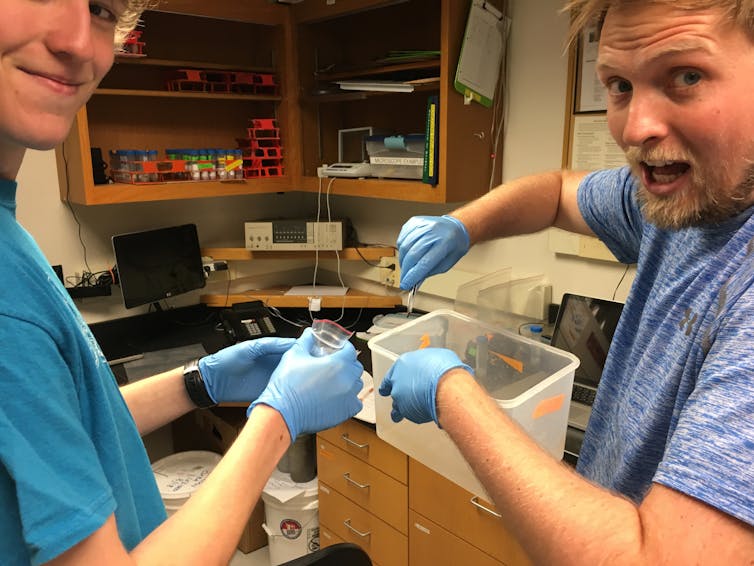
Then came the biggest surprise. While we were washing the soil, we spotted something floating in the rinse water. Paul grabbed a pipette and some filter paper, Drew grabbed tweezers and turned on the microscope. We were absolutely stunned as we looked down the eyepiece.

Staring back at us were leaves, twigs and mosses. This wasn’t just soil. This was an ancient ecosystem perfectly preserved in Greenland’s natural deep freeze.

One of the authors looking excited
Glacial geomorphologist Andrew Christ (right), with geology student Landon Williamson, holds up the first twig spotted as they washed a sediment sample from Camp Century. Paul Bierman, CC BY-ND

Dating million-year-old moss

How old were these plants?

Over the last million years, Earth’s climate was punctuated by relatively short warm periods, typically lasting about 10,000 years, called interglacials, when there was less ice at the poles and sea level was higher. The Greenland ice sheet survived through all of human history during the Holocene, the present interglacial period of the last 12,000 years, and most of the interglacials in the last million years.

But our research shows that at least one of these interglacial periods was warm enough for a long enough period of time to melt large portions of the Greenland ice sheet, allowing a tundra ecosystem to emerge in northwestern Greenland.

We used two techniques to determine the age of the soil and the plants. First, we used clean room chemistry and a particle accelerator to count atoms that form in rocks and sediment when exposed to natural radiation that bombards Earth. Then, a colleague used an ultra-sensitive method for measuring light emitted from grains of sand to determine the last time they were exposed to sunlight.

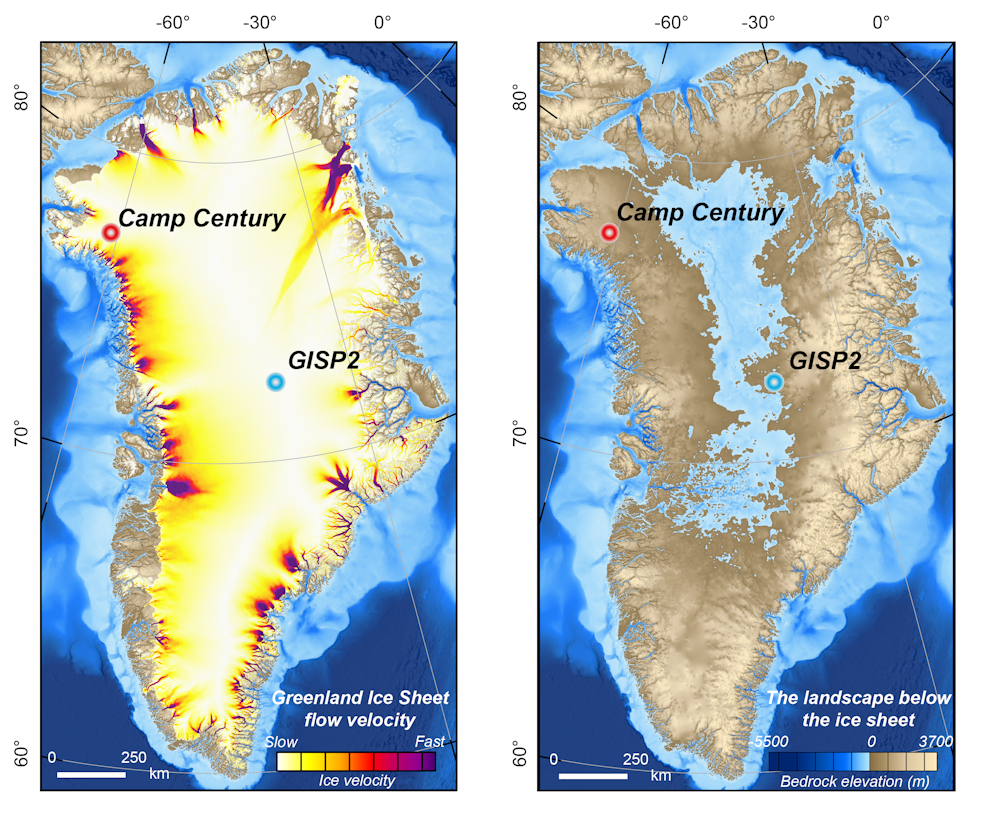
Maps of Greenland Ice Sheet speed and bedrock elevation
Maps of Greenland show the speed of the ice sheet as it flows (left) and the landscape hidden beneath it (right). BedMachine v3; Copernicus Climate Change Service (C3S), CC BY-ND

Chart of CO2 concentrations over time
The concentration of carbon dioxide in the atmosphere today is well beyond past levels determined from ice cores. On March 14, 2021, the CO2 level was about 417 ppm. NASA Jet Propulsion Laboratory, CC BY-ND

The million-year time frame is important. Previous work on another ice core, GISP2, extracted from central Greenland in the 1990s, showed that the ice had also been absent there within the last million years, perhaps about 400,000 years ago.

Lessons for a world facing rapid climate change

Losing the Greenland ice sheet would be catastrophic to humanity today. The melted ice would raise sea level by more than 20 feet. That would redraw coastlines worldwide.

About 40% of the global population lives within 60 miles of a coast, and 600 million people live within 30 feet of sea level. If warming continues, ice melt from Greenland and Antarctica will pour more water into the oceans. Communities will be forced to relocate, climate refugees will become more common, and costly infrastructure will be abandoned. Already, sea level rise has amplified flooding from coastal storms, causing hundreds of billions of dollars of damage every year.

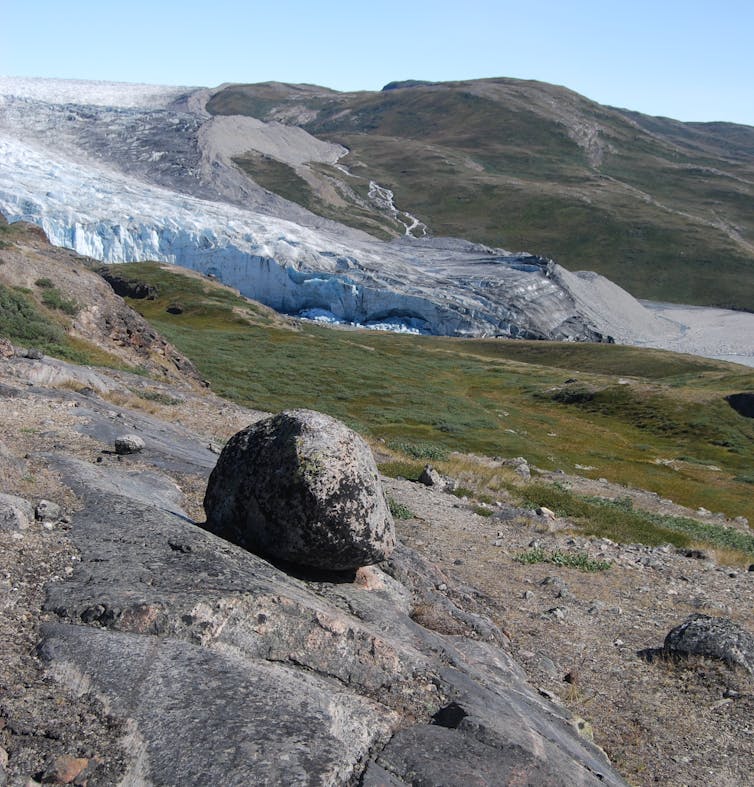
A rock and tundra with a glacier in the background
Tundra near the Greenland ice sheet today. Is this what Camp Century looked like before the ice came back sometime in the last million years? Paul Bierman, CC BY-ND

The story of Camp Century spans two critical moments in modern history. An Arctic military base built in response to the existential threat of nuclear war inadvertently led us to discover another threat from ice cores – the threat of sea level rise from human-caused climate change. Now, its legacy is helping scientists understand how the Earth responds to a changing climate.

Andrew Christ, Postdoctoral Fellow and Lecturer in Geology, University of Vermont and Paul Bierman, Fellow of the Gund Institute for Environment, Professor of Geology and Natural Resources, University of Vermont

This article is republished from The Conversation under a Creative Commons license. Read the original article.

ooOOoo

The article is republished with the full permission of The Conversation.

I hope you read it because the way the climate is changing is affecting all of us now and sooner rather than later we have all got to amend our ways. Indeed, when I look at anyone who has potentially thirty or more years of life in them I ponder what their future is going to be like. And, of course, it won’t be a drastic change in thirty years it is already happening now albeit at times difficult to see.

But there is not one scintilla of doubt that we humans are the cause and we humans have to be the solution!

Almost the Ice Age again!

Just joking!

I was thinking yesterday morning that it was about time for me to publish a post.

Tuesday was a busy day with us in the morning going to collect the tractor from Runaway Tractors where it had been in for a service. Then in the afternoon I decided to go for a bike ride, something I try and do every other day. It was grand and I clocked up 18 miles.

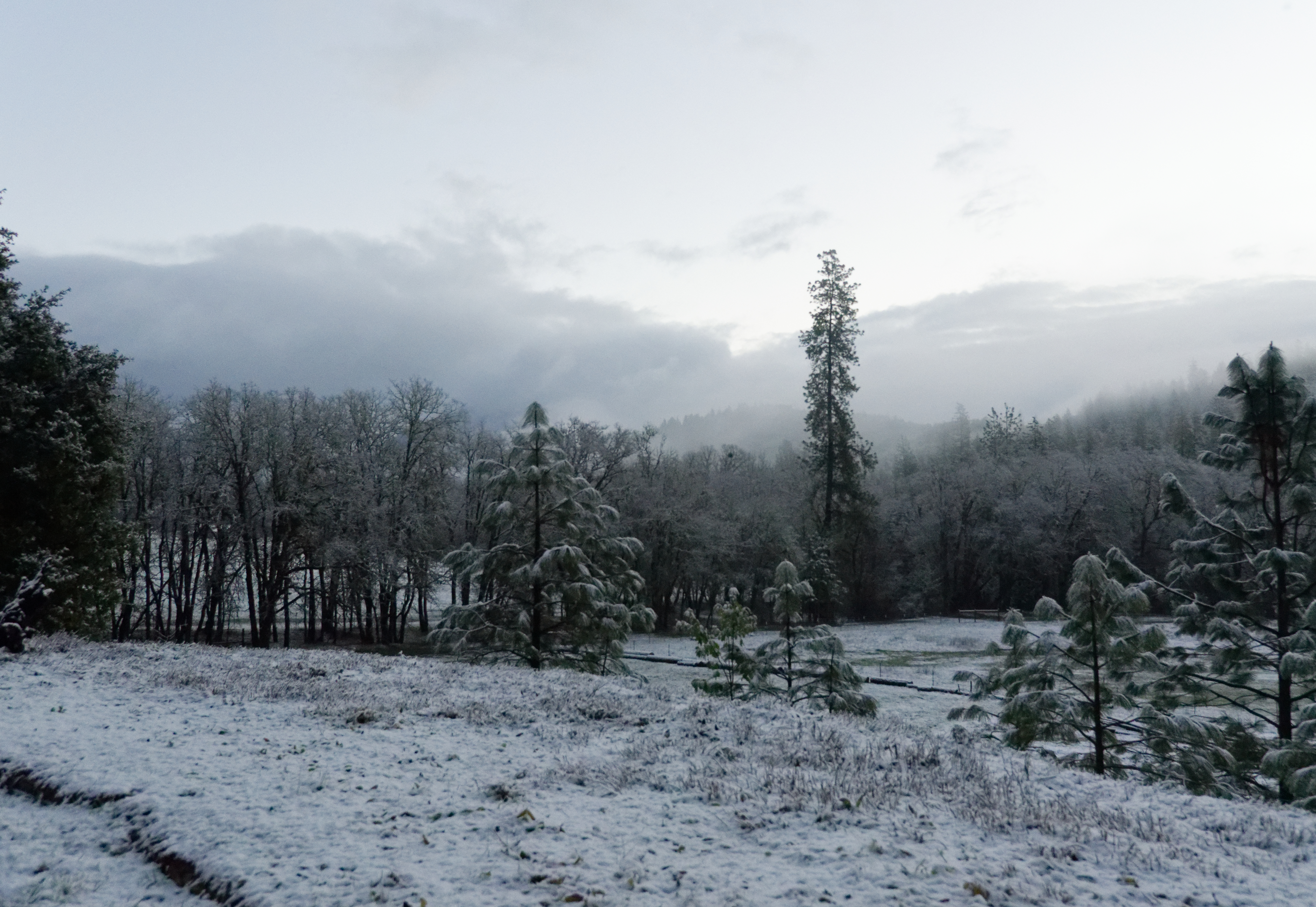
The forecast for Wednesday was grim. And we awoke to a morning with much land covered in snow.

Looking to the North-East.

So my item that I wanted to republish from The Smithsonian Magazine seemed apt. It is about the history of dogs.

ooOOoo

How Dogs Migrated to America From Ice Age Siberia 15,000 Years Ago

Northern Siberians and ancestral native Americans may have traded pups at the time

By Elizabeth Gamillo
SMITHSONIANMAG.COM
FEBRUARY 1, 2021

All dogs with the genetic signature A2b descended from the same Siberian canines roughly 23,000 years ago (Jim Peaco; Photo has been cropped for article purposes by ZeWrestler, Public domain, via Wikimedia Commons)

Dogs have been companions to humans for many millennia, but exactly when this relationship started is highly debated among scientists.

A study published this week in the Proceedings of the National Academy of Sciences reveals that canine domestication may have first occurred in Siberia 23,000 years ago when humans and wolves were isolated together during the Last Glacial Maximum. After this initial domestication event, dogs most likely followed humans when they migrated across the Bering Land Bridge from East Asia to the Americas 15,000 years ago, reports Megan Marples for CNN.

“Wolves likely learned that scavenging from humans regularly was an easy free meal, while humans allowed this to happen so long as wolves were not aggressive or threatening,” Angela Perri, an archaeologist at Durham University and lead author of the study tells CNN.

The study was brought to fruition after Perri and her co-authors—David Meltzer, an archeologist at Southern Methodist University, and Gregor Larson, a scientist from Oxford University—were brainstorming how DNA evidence tells the story of migrating humans and dogs, reports James Gorman for the New York Times. After the authors scribbled down ideas on a whiteboard, they saw that both humans and canines had similar migration patterns and divergence that could explain how dogs and humans began their bond, reports the New York Times.

To see if the similarities between the timelines linked up with archeological evidence, Perri and her team analyzed the genome of 200 ancient dogs from around the world. They found that the canines had one genetic signature, A2b, in common. Once they reached the New World 15,000 years ago, they dispersed into four groups, reports David Grimm for Science.

The researchers found this dispersal matched a similar migration pattern of ancestral Native Americans that descended from Northern Siberia about 21,000 years ago. Connecting these timeline events between humans and dogs, the researchers concluded that humans must have brought dogs into the Americas somewhere around 15,000 years ago.

“Dogs are not going to go to the new world without people,” Meltzer tells the New York Times.

Further exploring the dogs’ genetic evidence, the team found all dogs with the genetic signature A2b descended from the same Siberian canines roughly 23,000 years ago, Science reports.

Looking back at human’s ancestral timeline and genetic evidence, the researchers found that ancient Northern Siberians intermingled with ancestral Native Americans before crossing the land bridge into the Americas. These meetings could have resulted in the two groups of people trading pups.

“People are exchanging information, they’re exchanging mates, they’re maybe exchanging their wolf pups,” Meltzer tells the New York Times.

While there is strong evidence that the initial domestication event occurred 23,000 years ago, the study relied only on mitochondrial DNA and could be missing the complete picture of domestication events, explains Pontus Skoglund, an ancient canine DNA expert from Crick Institute in London who was not involved in the study, to the New York Times. Likewise, Peter Savolainen, a geneticist at the Royal Institute of Technology, tells Science that the A2b signature has been found in other places in the world and is not unique to dogs in the Americas as the researchers suggested.

Still, the study reveals how the relationship between humans and dogs may have begun and how it may have dispersed across the globe. Perri and her team plan on looking at older dog fossils to gather more evidence.

“We have long known that the first Americans must have possessed well-honed hunting skills, the geological know-how to find stone and other necessary materials and been ready for new challenges,” Meltzer tells Peter Dockrill for Science Alert. “The dogs that accompanied them as they entered this completely new world may have been as much a part of their cultural repertoire as the stone tools they carried.”

ooOOoo

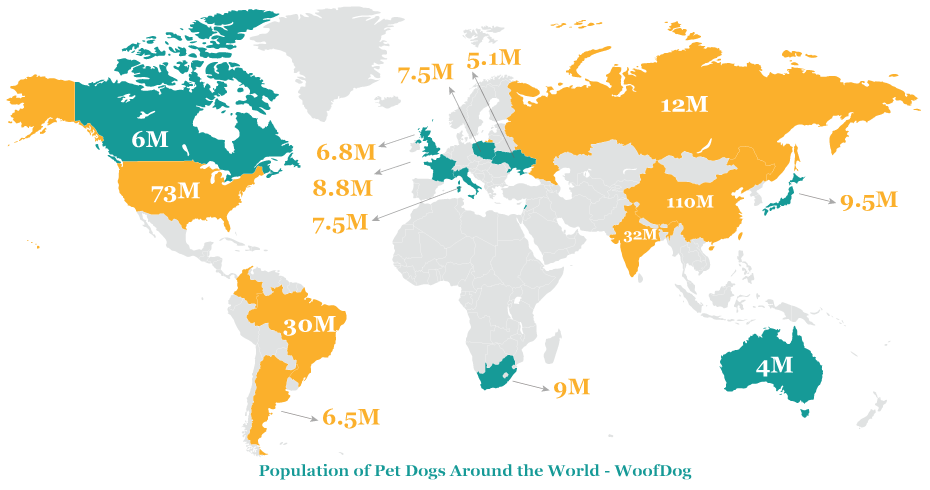
There is a huge number of dogs throughout the world. The exact figure is impossible to determine. Here’s an extract from WoofDog’s piece on the global population:

Determining the exact number of pups that inhabit our planet is a bit of a challenge. The fact that many of them live on their own, rather than side by side with people, presents the main obstacle to providing accurate figures.

According to 2012 data, there were around 525 million canines in the world. This figure has grown considerably until the present day, so today, it is estimated to be about 900 million pooches.

And from the same website, here is an estimate of the global population of owned dogs:

Statistics related to canine ownership vary across different countries. Nevertheless, the task of calculating the number of canines owned by people around the globe is far less complicated than it is the case with free-range ones.

The reason for this lies in the fact that many countries have introduced legal regulations on mandatory registration of household animals.

My analysis is that the USA is second in the league of owned dogs.

But wherever there are dogs they are a rich and bountiful addition to the ambitions of humans.