Tag: Mother Nature Network

Our incredible world!

What to see in the night sky in August

You all understand that this blog, while predominantly about our special doggie friends, never hesitates to wander away from matters canine if I think it will be enjoyed by all you good people.

You will also all appreciate that August is the month where in the USA, on August 21st, there will be a total eclipse of the sun.

The reasons why I didn’t hesitate to republish a recent post that was presented on Mother Nature Network.

ooOOoo

What to see in the night sky in August

While the total solar eclipse is the highlight, there are other celestial fireworks to look forward to this month.

Michael d’Estries   August 1, 2017.

Michael d’Estries ( @michaeldestries ) covers science, technology, art, and the beautiful, unusual corners of our incredible world.

Celestial events for August 2017 include a total solar eclipse, Perseid meteor shower and the rise of the Sturgeon Moon. (Photo: Michael Seeley/Flickr)

Welcome to August, a month defined by loud cicadas, pool parties, humidity and children fretting about an impending return to school. When it comes to celestial happenings, however, there is no larger star this month that our own moon. From a partial lunar eclipse to the first coast-to-coast solar eclipse in almost a century, the moon will be the cause of most eyeballs drifting towards the heavens over the next several weeks.

Below is a small sampling of some of the night and day celestial events to look forward to this month. Wishing you all clear skies!

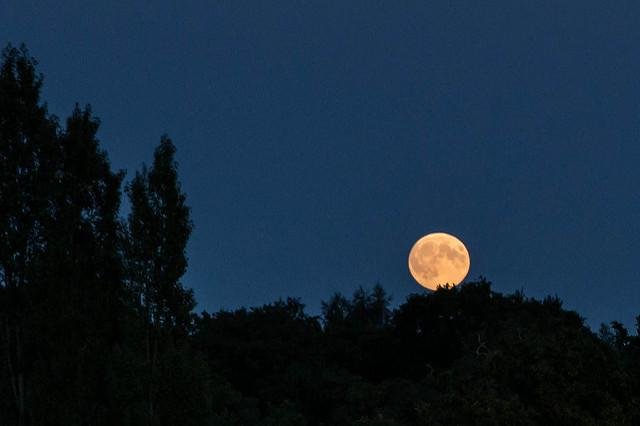
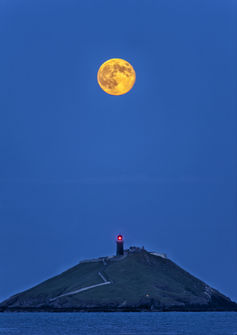
The rise of the full Sturgeon Moon (Aug. 7)
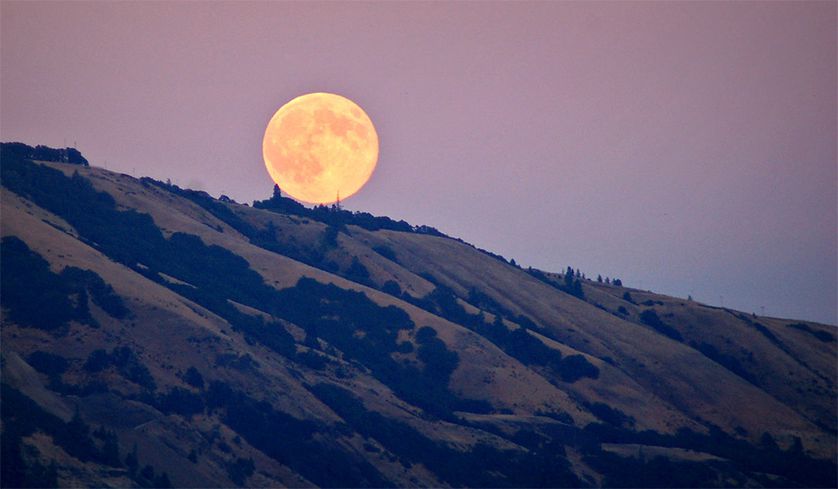
The full Sturgeon Moon is so-named for the fish that are easily caught in August and early September. (Photo: Paul Kline/flickr)

August’s full moon, nicknamed the Sturgeon Moon, will rise for the U.S. Eastern Seaboard on the evening of Aug. 7 at 8:05 p.m.

The Sturgeon Moon gets its name from the species of fish native to both Europe and the Americas that is easily caught this time of year. Other nicknames include the Corn Moon, Fruit Moon and Grain Moon. In countries experiencing winter, such as New Zealand, native Māori called this full moon “Here-turi-kōkā” or “the scorching effect of fire is seen on the knees of man.” This reference is to warm fires that glow during the Southern Hemisphere’s coldest month.

Partial lunar eclipse (Aug. 7 & 8)

Observers in Africa, Asia and Australia will see August’s partial lunar eclipse in its entirety. (Photo: Forrest Tanaka/flickr)

As a kind of consolation prize for missing out on this month’s total solar eclipse over North America, those living on the continents of Africa, Asia and Australia will bear witness to a partial lunar eclipse. Spectators in Europe will catch the tail end of the eclipse as the moon rises around 7:10 p.m. on Aug. 7.

This phenomenon occurs between two to four times a year when the moon passes through a portion of the Earth’s shadow. Because the shadow cast is more than 5,700 miles wide, lunar eclipses last much longer than solar eclipses. In some instances, totality can occur for as long as 1 hour and 40 minutes. As a reference, maximum totality for the Aug. 21 solar eclipse will top out a mere 2 minutes and 42 seconds. The longest, at over 7 minutes, won’t take place until the year 2186.

This month’s partial lunar eclipse is the last of the year. Next year, total lunar eclipses will take place in January and July.

Perseid meteor shower (Aug. 12)

A composite shot of last year’s Perseid meteor shower over Turkey. Notice how the path of the meteors appears to race from the constellation Perseus. (Photo: NASA)

Regarded as one of the best celestial light shows of the year, the Perseid meteor shower occurs from July 17 to Aug. 24 and peaks on the evening of Aug. 12.

The shower, sometimes creating as many as 60 to 200 shooting stars per hour, is produced as Earth passes through debris left over from the orbit of Comet Swift-Tuttle. This 16-mile-wide periodic comet, which completes an orbit around the sun every 133 years, has been described as “the single most dangerous object known to humanity.” This is because every instance of its return to the inner solar system brings it ever closer to the Earth-moon system. Though astronomers believe the comet bears no threat for at least the next 2,000 years, future impacts cannot be ruled out.

If the comet were to hit Earth, scientists believe Swift-Tuttle would be at least 27 times more powerful than the asteroid or comet that wiped out the dinosaurs. For now, you can take in the beauty of the debris from this harbinger of doom by looking north towards the constellation Perseus. Because the moon will be three-quarters full, you’ll need to search out a nice dark sky to escape any light pollution from urban environments.

Total solar eclipse (Aug. 21)

A total solar eclipse as captured over the Southern Hemisphere in November 2012. (Photo: NASA Goddard Space Flight Center)

By far the biggest celestial event in ages, Aug. 21 marks the first time since June 1918 that a total solar eclipse will race from coast to coast across the United States. Cities and towns along the 72-mile-wide path of totality are preparing for an influx of visitors, with millions of Americans expected to drive to view the rare phenomenon. Those outside totality will still experience a show, with partial solar eclipses happening over much of North America. Regardless, everyone will want to invest in a pair of special solar eclipse glasses to avoid ruining your eyesight.

Total solar eclipses occur when the new moon moves between the Earth and the sun and casts its shadow on the planet. This shadow is comprised of two concentric cones –– the larger penumbra, which from Earth only shows the sun partially blocked, and the much smaller umbra, which blocks the sun completely. It is within this latter cone that totality will occur, giving spectators on the ground what’s considered by many to be a “once-in-a-lifetime” experience.

The Great American Eclipse will actually first start out in the Pacific (at this point, it will actually, unbelievably rise while completely eclipsed!), making landfall on the Oregon community of Lincoln Beach at 10:16:01 a.m. (PDT). From there, the moon’s shadow will continue to race across the U.S. The point of greatest eclipse, where the axis of the moon’s shadow passes nearest to the center of Earth, will take place in Hopkinsville, Kentucky and last 2 minutes and 40.1 seconds. In celebration of the event, the town has temporarily renamed itself “Eclipseville,” and expects anywhere from 55,000 to 150,000 tourists to visit in advance of Aug. 21.

The next total solar eclipse over the U.S. will take place on April 8, 2024.

New moon (Aug. 21)

August’s new moon will not only create a show during the day, but also leave the heavens to glow unimpeded by night. (Photo: Coconino National Forest/flickr)

Fresh after wowing the U.S. during the day with its solar theatrics, August’s new moon will give way to dark skies for the next several nights. This is the perfect opportunity to grab a blanket and head outside into the still-warm summer evenings to enjoy the heavens in all their glory. With some remnants of the Perseids still visible, it will also offer a chance to catch some of the faintest shooting stars.

Look for Earth’s shadow (All year)

The Earth’s shadow and ‘Belt of Venus’ as captured above Mauna Kea, Hawaii. (Photo: Jay El Eskay/flickr)

Ever wonder what causes the beautiful bands of color in the eastern sky at sunset or the western sky at sunrise? The dark blue band stretching 180 degrees along the horizon is actually the Earth’s shadow emanating some 870,000 miles into space. The golden-red portion, nicknamed the “Belt of Venus,” is Earth’s upper-atmosphere illuminated by the setting or rising sun.

Now that you know about this phenomenon, choose a night or morning sometime to try and pick it out. You’ll need a western or eastern horizon that’s fairly unobstructed to get a clear view of our planet’s huge curved shadow.

Looking ahead to September

On Sept. 15, the Cassini spacecraft will end its 20-year mission to Saturn with a dramatic death dive into the ringed planet. (Photo: NASA)

As fall beckons, the biggest event next month will be the dramatic death dive of the Cassini spacecraft into Saturn. Taking place on Sept. 15, Cassini will make discoveries about Saturn right up until its fiery conclusion, with unprecedented photos and data captured and transmitted during its final moments.

ooOOoo

It is going to be quite a month!

Oh, and for those of you that want to know the timings of the eclipse over North America there is a useful reference site here, from which I republish the following table.

Eclipse Start & End: Local Time for US States

The eclipse will begin over the Pacific Ocean at 15:46 UTC, which corresponds to 8:46 am Pacific Time. It will reach the coast of Oregon at Lincoln City, just west of Salem, at 9:04 am local time. The eclipse will reach its maximum point here at 10:17 am.

From here, the Moon’s central shadow will move inland. The following table shows when the Moon will begin to move in front of the Sun and the moment it completely covers the Sun, as seen from some locations along the central path of the eclipse. All times are local.

Location Partial Eclipse Begins Sun Completely Obscured
Salem, OR 09:05 am PDT 10:18 am PDT
Idaho Falls, ID 10:15 am MDT 11:33 am MDT
Casper, WY 10:22 am MDT 11:43 am MDT
Lincoln, NE 11:37 am CDT 1:03 pm CDT
Sabetha, KS 11:38 am CDT 1:05 pm CDT
Jefferson City, MO 11:46 am CDT 1:14 pm CDT
Carbondale, IL 11:52 am CDT 1:21 pm CDT
Hopkinsville, KY 11:56 am CDT 1:25 pm CDT
Nashville, TN 11:58 am CDT 1:28 pm CDT
Talulah Falls, GA 1:07 pm EDT 2:37 pm EDT
Columbia, SC 1:13 pm EDT 2:43 pm EDT
Charleston, SC 1:16 pm EDT 2:47 pm EDT

Please note that this list includes only a small selection of locations where the total eclipse will be visible. You can look up more locations in our Eclipse Database or via the Eclipse Map.

Enjoy your nights out there! And let your dogs howl their hearts out!

What a nose!

Two items that recently caught my eye.

The power of a dog’s nose is incredible and it is something that has been written about in this place on more than one occasion.

But two recent news items reminded me once again of the way we humans can be helped by our wonderful canine partners.

The first was a report that appeared on the Care2 website about how dogs are being used to search for victims in the burnt out ruins following that terrible Grenfell Tower fire. That report opened, thus:

By: Laura Goldman June 24, 2017
About Laura Follow Laura at @lauragoldman

Wearing heat-proof booties to protect their feet, specially trained dogs have been dispatched in London’s Grenfell Tower to help locate victims and determine the cause of last week’s devastating fire that killed at least 79 people.

Because they’re smaller and weigh less than humans, urban search-and-rescue dogs with the London Fire Brigade (LFB) are able to access the more challenging areas of the charred 24-story building, especially the upper floors that sustained the most damage.

It then went on to include a photograph from the London Fire Brigade.

We’ve used specialist search dogs at #GrenfellTower. They’re lighter than humans and can cover a large area quickly.
The next item, apart from also being about the dog’s nose, couldn’t have been more different. It appeared on the Mother Nature Network site and is republished in full.

ooOOoo

Border collies join the search for Amelia Earhart

4 dogs skilled in finding long-buried bones are headed to the uninhabited island of Nikumaroro.

Michael d’Estries    June 21, 2017.

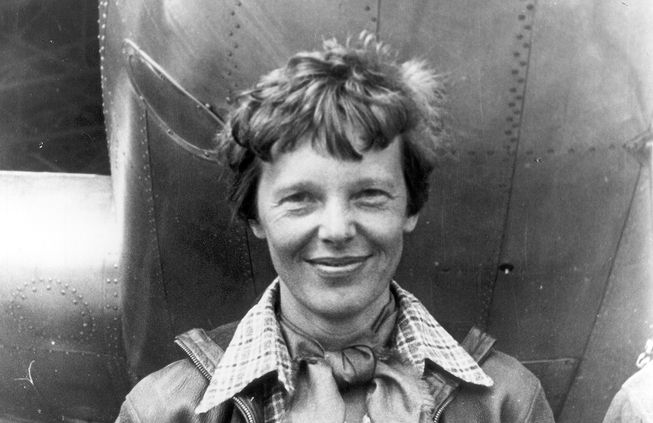
Amelia Earhart standing under nose of her Lockheed Model 10-E Electra. (Photo: Wikimedia Commons)

The high-tech search to find the remains of pilot Amelia Earhart and close the book on one of the aviation world’s greatest mysteries is going to the dogs.

According to National Geographic, four border collies — Berkeley, Piper, Marcy and Kayle — will embark on a voyage later this month to the uninhabited island of Nikumaroro (previously called Gardner Island) in the western Pacific Ocean. The remote triangular coral atoll, less than five miles long and two miles wide, is widely speculated as the location where Earhart and her co-pilot, Fred Noonan, performed an emergency landing during their ill-fated 1937 world flight.

While concrete evidence of the pair surviving as castaways on Nikumaroro has never been found, there have been some intriguing clues. These include a piece of scrap metal that likely came from Earhart’s Lockheed Electra 10E, a sextant box, and fragmented remains of U.S. beauty and skin care products that may date back to the 1930s.

The most intriguing find, however, happened in 1940 with the discovery of 13 bones under a tree on the island’s southeast corner. The remains were shipped to Fiji and subsequently misplaced, but measurements recorded before their loss and examined later by forensic anthropologists indicate that they may have belonged to “a tall white female of northern European ancestry.” With these findings were recently thrown into doubt, the only true way to know if the remains belong to Earhart or Noonan is to find the remaining bones.

The right nose for the job

The four dogs headed to Nikumaroro, officially known as Human Remains Detection Dogs, are part of the latest expedition organized by TIGHAR (The International Group for Historic Aircraft Recovery). Trained at the Institute for Canine Forensics (ICF), these specialized dogs are capable of sniffing out bones centuries old and buried as much as 9 feet deep.

“No other technology is more sophisticated than the dogs,” Fred Hiebert, archaeologist in residence at the National Geographic Society, which is sponsoring the canines, said in a statement. “They have a higher rate of success identifying things than ground-penetrating radar.”

According to the ICF, detection dogs are never trained to smell out live humans, focusing instead on old cases, small scent sources and residual scent. They also excel at locating remains without disturbing the burial site.

You can view one of the ICF dogs in action, seeking out the remains of ancient Native American burial sites, in the video below.

“This kind of searching requires the dog to be slow and methodical and keep its nose just above the surface of the ground, any fast moves and the dog can miss the grave,” the group explains. “It takes many years of slow and patient training to develop the skills needed to do this work.”

Once remains are detected, the dogs generally do little more than lie down on top of the potential burial site. Should Berkeley, Piper, Marcy and Kayle detect anything, TIGHAR’s archeologists will perform a careful excavation to uncover the source.

In addition to using canines, the team from TIGHAR will also take time over the eight-day expedition to survey sites on Nikumaroro using metal detectors and even an advanced underwater drone. Their greatest hope, however, lies with the highly advanced noses of the very good boys and girls sniffing out an 80-year-old mystery.

“If the dogs don’t find anything, we’ll have to think about what that means,” Hiebert added. “But if the dogs are successful, it will be the discovery of a lifetime.”

ooOOoo

What a sense of smell!

Thank goodness.

The roll of the dice

Or observing Lady Luck in great form!

We all know that so many things in life have two sides to them. As in a positive and negative side. Which ‘side’ we look at has more to do with ourselves, again as you all know.

So when I republished an essay from Patrice Ayme a little over a year ago about the loss of the ice in Antarctica I was in harmony with Patrice’s gloomy stance:

I have written for years that a runaway Antarctica was certain, with half the icy continent melting rather spectacularly on an horizon of two centuries at most, and probably much less than that. This rested on the fact that half of Antarctica rests on nothing but bedrock at the bottom of the sea. At the bottom of what should naturally be the sea, in the present circumstances of significant greenhouse gas concentrations.

But Lady Luck comes into view and we have this: (Courtesy of Mother Nature Network.)

ooOOoo

Global warming is making Antarctica green again, and it’s stunning

At current rates, it’s not crazy to think that the Antarctic peninsula could eventually become forested again.

Bryan Nelson May 19, 2017

From white to green: plant life is booming in Antarctica as the climate warms. (Photo: Matt Amesbury, University of Exeter/Flickr)

When you think of Antarctica, you probably imagine a frigid, windswept, icy, inhospitable domain; the whitest, most barren canvas on Earth. That’s pretty much the way the Southern continent has been for at least the last 3 million years, since the last time atmospheric carbon dioxide levels approached their current levels. But times, they are a-changing.

The effects of global warming are beginning to radically alter the Antarctic landscape in some surprising ways. Scientists say it’s like looking back in time, to an epoch when this bleached terrain was actually green. Mossy mats are rapidly spreading across the thawed, exposed soils at unprecedented rates, transforming the land from a place of desolation, to a place of viridescence.

At the very least, we’re getting a peek at Antarctica’s future, which like its past was green and filled with plant-life, reports the Washington Post.

“This is another indicator that Antarctica is moving backward in geologic time — which makes sense, considering atmospheric CO2 levels have already risen to levels that the planet hasn’t seen since the Pliocene, 3 million years ago, when the Antarctic ice sheet was smaller, and sea-levels were higher,” said Rob DeConto, a glaciologist at the University of Massachusetts, Amherst.

“If greenhouse gas emissions continue unchecked, Antarctica will head even further back in geologic time… perhaps the peninsula will even become forested again someday, like it was during the greenhouse climates of the Cretaceous and Eocene, when the continent was ice free.”

So far, the greening of Antarctica is mostly limited to the peninsula, where two different species of mosses are fanning out at a startling clip, at four to five times the rate seen just a few decades ago. They gain a footing in the summers, when the frozen ground thaws, then freeze back over in the winter. But these layers-upon-layers are thickening, generating an increasingly detailed record of Antarctica’s warming climate.

It’s perhaps only a matter of time before grasses, bushes, perhaps even trees begin to sprout. As beautiful as a forested Antarctica might be to imagine, it’s important to remember that this isn’t necessarily a good thing. Climate change is an ambiguous beast; Antarctica might be getting greener, but deserts elsewhere in the world are expanding, sea levels are rising, and weather is becoming more severe.

“These changes, combined with increased ice-free land areas from glacier retreat, will drive large-scale alteration to the biological functioning, appearance, and landscape of the [Antarctic peninsula] over the rest of the 21st century and beyond,” wrote the authors of the study, which was published in the journal Current Biology.

Lead author Matthew Amesbury added: “Even these relatively remote ecosystems, that people might think are relatively untouched by human kind, are showing the effects of human induced climate change.”

ooOOoo

 Sorry to drag out this old saw of mine, but it is so perfect: “I can predict anything except those things that involve the future”!

Because I am still staying with the Lady Luck theme but this time going from the vastness of the Southern polar regions to something a little closer to home. (Again, seen on Mother Nature Network.)

ooOOoo

Pit bull on ‘death row’ at shelter gets new life as police dog

Leonard recently became Ohio’s first ever pit bull K-9.
Jenn Savedge    May 19, 2017

Leonard found his forever home with Ohio’s Clay Township police force. (Photo: Union County Humane Society/Facebook)

When Leonard, a stout young pit bull, arrived on the doorstep of the Union County Humane Society in Ohio a few months ago, the staff had little hope for his prospects of being adopted. Leonard was deemed “aggressive,” and that meant he was more likely to be euthanized than sent home with a new family. But Jim Alloway, the center director, saw something different in the dog. And thanks to his observation, Leonard has a future that includes work, play and lots of belly rubs.

As luck would have it, Alloway has an extensive background of working with police dogs. He realized Leonard’s aggression was really a very strong desire to play. Whenever someone was holding something, Leonard wanted it and would try to grab it. As a pet in the average family, this may not be a desirable trait. But this strong “prey drive” made him a great candidate for training as a police dog.

So Alloway called Storm Dog K-9 training. After an initial round of testing, Mike Pennington, the owner of the training facility, agreed to take Leonard on and train him to sniff out narcotics. (Leonard wasn’t a good candidate for tracking and catching suspects because he loves people way too much.)

Before his training with Pennington, Leonard didn’t even know basic commands. But after a few weeks of hard work — which his trainers said he absolutely loved — Leonard was fully certified as a police dog, becoming Ohio’s first pit bull K-9 officer.

Leonard was paired with Terry Mitchell, Clay Township’s Chief of Police. Mitchell told the local ABC affiliate that he was unsure at first about the idea of using a pit bull as a K-9. But the pair bonded immediately.

“I scheduled a time to come down and see him, and after about 10 minutes, I knew this was the dog for us,” Mitchell said.

Leonard officially started work with the force this week. When he has his police vest on, Mitchell says the pup is all business and ready to tackle his narcotics-sniffing job. Off-duty though, Leonard is just a sweet, playful pup, hopping on Mitchell’s lap for evening naps. Oh, and according to Mitchell, he snores horribly.

Leonard — and Mitchell — couldn’t be happier.

ooOOoo

Wonder how long it will be before we have happy ex-rescue dogs frolicking through the forests of Antarctica!!

Magical skies!

Of clouds and the Grand Canyon.

Saw this item on the Mother Nature Network site a week ago and thought it beautiful.

Whatever you are doing, rest up for a couple of minutes and revel in the beauty of our natural world.

ooOOoo

Mesmerizing time-lapse captures rare cloud phenomenon in Grand Canyon

Angela Nelson May 16, 2017,

The creators of “SKYGLOW,” a crowd-funded project showing the impact of urban light pollution through time-lapse videos, photos and a book, have another stunning video to share. In “Kaibab Elegy,” filmmakers Gavin Heffernan and Harun Mehmedinović visit Grand Canyon National Park and capture a rare weather event.

In the mesmerizing video, clouds build inside the canyon almost like bubbling water filling a jacuzzi as the sun rises and sets in the background, creating the pinkest sky you’ve ever seen. Those clouds roll like waves in the ocean and crash against the cliffs. This phenomenon is called full cloud inversion, and it happens when cold air is trapped in the canyon and topped by a layer of warm air, which combines with moisture and condensation.

“We were extremely lucky to be there to capture it, and it’s a collection of unique footage not found anywhere else,” Mehmedinović says.

He and Heffernan, who journeyed 150,000 miles around the globe for their new book and video series, work with the International Dark-Sky Association, a nonprofit fighting to preserve the dark skies around the world.

ooOOoo

I bet that’s left you feeling wonderful!

A nose for doing good work!

A dog’s nose, of course!

We all know how good are the noses of our dogs. Yet, I suspect, many do not know how truly good is that nose. The Science ABC site has a detailed account of Why Do Dogs Have Such A Great Sense of Smell?
Here’s part of that article:

Dog Nose vs. Human Nose

When we try to smell something, we inhale air with our nose and we use the same passage in our nose to exhale that air. Therefore, all the smell that we get when we are inhaling is lost when we exhale that air. However, a dog has two different air passages, one for breathing and another for smelling. This means that dogs are able to store the smell in their nose even while breathing out the air!

When dogs exhale, they send air out through the slits of their nose, but the manner in which this air is exhaled through their nose helps the dogs to draw in new odor molecules. This also helps dogs capture more smells when sniffing.

You must have noticed that dogs’ noses are always wet, but have you ever wondered why? The mucus on the dog’s nose helps it smell by capturing scent particles. A dog also has the ability to smell independently from each nostril, this helps the dog to understand from which direction the smell is coming.

The passage through which dogs smell the air contains highly specialized olfactory receptor cells, which are responsible for receiving smells. A dog contains about 225-300 million smell receptors, as compared to just 5 million of these receptors being present in a human nose.

Dog Brain vs. Human Brain

By now, we clearly know that dogs have a nose that can smell about 1,000-10,000 times better than a human, but how are dogs able to remember all the different smells that they have sensed throughout their life?

The answer lies in the difference between the brains of dogs and humans. A human brain has a larger visual cortex than dogs, whereas a dog’s brain has a much larger olfactory cortex than humans. The visual cortex is responsible for processing visual information, whereas the olfactory cortex is responsible for processing the sense of smell. A dog’s olfactory cortex is about 40 times larger than that of a human.

Read the full science article here.

All of which makes a slightly longer introduction than normal to a fascinating article over on Mother Nature Network published two days ago.

ooOOoo

5 ways dogs are used for species conservation

May 16, 2017 Jaymi Heimbuch

Photo: Jaymi Heimbuch

Working dogs are an amazing asset not only for people, but for wildlife, endangered species and even threatened habitats. Expanding on the skills dogs have for tracking down scents and guarding something important, we humans have enlisted their help in many ways for conservation.

Here are five ways dogs are contributing to environmental protection efforts.

Smell for scat

It’s amazing the amount of information that can be sussed out of an animal’s poop. We can determine diet, health, genetics — even whether or not an animal is pregnant. Scat is really important to biologists studying elusive, sensitive or endangered species. Putting dogs on the track is an ideal solution.

Take cheetahs, for example. Scientists in Africa are using dogs and their unparalleled sniffing power to find cheetah poop, all in an effort to get an accurate count on the endangered big cats. (Only 7,000 cheetahs are left in the African wild, according to estimates.) And it’s working. Two trained dogs found 27 scats in an area of 2,400 square kilometers in western Zambia, according to a study published in the Journal of Zoology. Humans, looking for cheetah tracks over the same area, found none.

Groups like Conservation Canines (a handler and dog from the program pictured above), Working Dogs for Conservation and Green Dogs Conservation specialize in this area. Conservation Canines rescues highly energetic, “last chance” dogs from shelters and trains them to track down the scat of dozens of species, from wolves to moose to owl. Even things that are nearly impossible for humans to find — the minuscule scat of endangered pocket mice or orca scat floating on the ocean surface — dogs can track down. They are able to make huge contributions to scientific studies, all without ever bothering the wildlife being studied.

Sniff out problems for wildlife

Whether it’s sniffing out invasive species like giant snails in the Galapagos or detecting disease in beehives, dogs’ noses can be put to work in searching out what shouldn’t be there so that humans can act.

Dogs are able to sniff out particular plant species, pointing ecologists to tiny patches of invasive mustard so that the plants can be removed before they take over an area.

Conversely, dogs can sniff out rare or endangered native plants so that the species can be protected. Rogue is one such dog. The Nature Conservancy writes, “The 4-year-old Belgian sheepdog is part of a Nature Conservancy collaborative project to test the efficacy of using dogs to sniff out the threatened Kincaid’s lupine. The plant is host to the endangered Fender’s blue butterfly, found only in Oregon’s Willamette Valley.”

Surveying for the plant species is difficult work for people. It can only be done when the plant is in bloom so people can visually identify it. However, dogs like Rogue can sniff out the plant even when not in bloom, which can potentially double the length of the field season.

“More refined regional mapping of Kincaid’s lupine could promote the butterfly’s recovery and delisting — and contribute to larger habitat goals and wildlife impacts.”

Track down poachers

The trade in rare or endangered wildlife is a lot tougher for traffickers thanks to wildlife detector dogs. Trained to smell anything from tiger parts to ivory to South American rosewood, dogs are used in shipping ports, airports, border crossings and other locations to sniff out smuggled products.

It doesn’t stop there. Trained dogs can lead rangers to armed poachers in the wild, tracking down the culprits over long hours through heat and rain. They can catch poachers in the act, rather than just the products.

“Canine sleuths aren’t limited to the plains of East Africa, either,” reports National Geographic. “In the Democratic Republic of the Congo, bloodhounds are assisting in the fight against poaching in forested Virunga National Park, where the world’s last remaining mountain gorillas live. In South Africa, Weimaraner and Malinois dogs are helping to find wounded animals and track poachers on foot through the reserves around Kruger National Park.”

Guard endangered species

Dogs are also useful in putting their protective nature to use for endangered species.

Livestock protection dogs are trained to keep predators like cheetahs, lions and leopards safe, which then reduces conflict between ranchers and big cats and minimizes the instances of snaring or retaliatory killing of big cats. Cheetah Conservation Fund has a successful livestock protection dog program, which places Anatolian shepherd and Kangal dogs with ranchers. That not only has significantly reduced the number of livestock killed by predators but is also improving the attitude of local people toward cheetahs.

Sometimes the dogs are put to work guarding the endangered species themselves. One such successful program uses Maremma shepherd dogs to protect colonies of little penguins from foxes.

Keep bears wild

Karelian bear dogs are trained to keep bears from becoming too comfortable around people. A program by Wind River Bear Institute named Partners-in-Life uses a technique called bear shepherding. This specialized breed of hunting dog is used to scare bears away, and are an important part of the “adverse conditioning” work that keeps bears from becoming habituated. The ultimate goal is to protect bears from becoming habituated, a problem that leads to their being relocated or euthanized.

“Our Wind River Bear Institute mission, with the effective training and use of Karelian Bear Dogs, is to reduce human-caused bear mortality and conflicts worldwide to ensure the continued survival of all species of bears for future generations,” states the program.

This list is only a handful of ways that dogs help us with environmental conservation every day. More and more, we are figuring out new ways to put their skills to work, and more and more the dogs are proving they’re ready for the task!

Editor’s note: This story was originally published in July 2016 and has been updated with more recent information.

ooOOoo

Closing words from that Science ABC piece:

A dog does not care how you look or dress, but if he gets good vibes from your smell, then a dog will love you. The world is truly a better place because of these wonderful creatures that we are lucky enough to welcome into our lives.

Why not make the world smell a bit more beautiful for them?

Belay that!

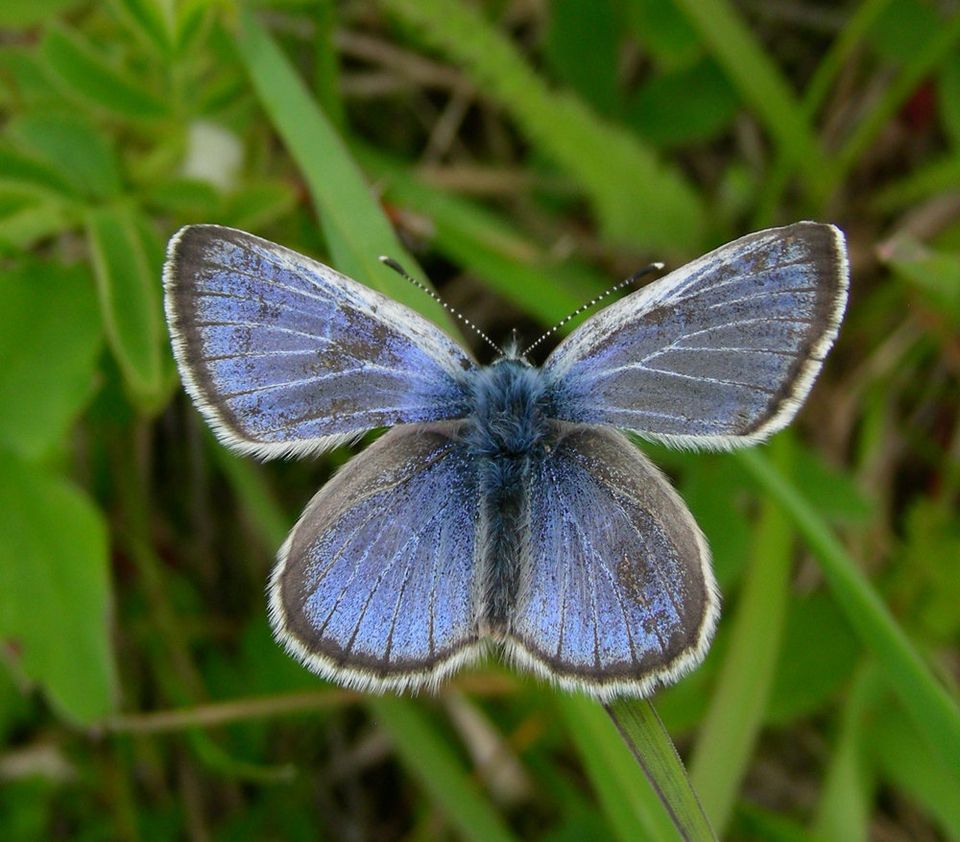
Closing picture taken from the OregonLive website. A stunning picture of the “Fender’s blue butterfly, found only in Oregon’s Willamette Valley.”

Out of this world!

Forgive my indulgence!

I wish I understood where my fascination with the night sky came from. Not that I am anything other than an amateur gazer (of the night sky, I should hasten to add!). I have never taken the trouble to gain any real knowledge.

Yet, some of the most serene moments of my life have been when I have been alone at sea under a night sky.

OK, that’s enough wallowing for anyone!

The last week has been an important one for those that take an interest in the planets in our solar system, or to be specific, take an interest in Jupiter.

For as EarthSky reported on the 8th April:

Today – April 8, 2017 – the planet Jupiter is closest to Earth for this year.

Yet yesterday was Jupiter’s opposition, when Earth flew between Jupiter and the sun, placing Jupiter opposite the sun in our sky. You’d think Jupiter was closest to Earth for 2017 yesterday as well … and yet it wasn’t. It’s closest to Earth for 2017 today, April 8, coming to within 414 million miles (666 million km).

EarthSky also included this image:

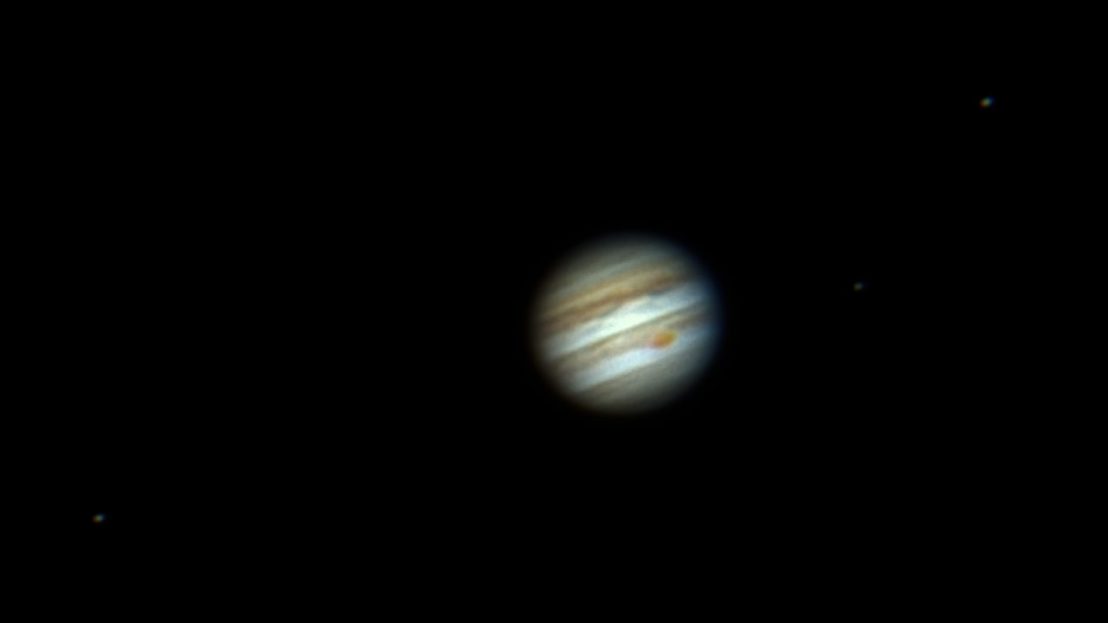
Jupiter at its April 7, 2017 opposition with the Great Red Spot and moons Io, Europa, and Ganymede (L to R). Photo by Rob Pettengill in Austin, Texas.

Then, Mother Nature Network yesterday presented more information:

Jupiter strikes a pose for Hubble portrait

April 12, 2017

During the month of April, Jupiter will be in opposition, meaning the planet is at its closest point to Earth. Thanks to the sun, it’s during this window that astronomers can enjoy a particularly close-up photo session that can help reveal how the planet’s atmosphere has changed over time by comparing it with previous such photos of the gas giant.

This photo of Jupiter was taken on April 3 by the Hubble Space Telescope when the enormous planet was 670 million kilometers (or about 416 million miles) from Earth. The photo shows the Great Red Spot, but it also shows something new: a weather feature called the Great Cold Spot, which is almost as large as its more well-known cousin.

“The Great Cold Spot is much more volatile than the slowly changing Great Red Spot, changing dramatically in shape and size over only a few days and weeks, but it has reappeared for as long as we have data to search for it, for over 15 years,” Tom Stallard, a planetary astronomer at the University of Leicester in the U.K. and lead author of the study, said in a statement.

The cold spot is nearly 15,000 miles by about 7,500 miles in size, and it’s dubbed the “cold” spot because it’s 200 degrees Kelvin (about 400 degrees Fahrenheit) cooler than the surrounding atmosphere.

The article included this stunning image of Jupiter.

Photo: A. Simon (GSFC)/NASA, ESA

Jaymi went on to write:

Here’s what some of the other details in the image mean:
The NASA/ESA Hubble Space Telescope reveals the intricate, detailed beauty of Jupiter’s clouds as arranged into bands of different latitudes. These bands are produced by air flowing in different directions at various latitudes. Lighter coloured areas, called zones, are high-pressure where the atmosphere rises. Darker low-pressure regions where air falls are called belts. Constantly stormy weather occurs where these opposing east-to-west and west-to-east flows interact. The planet’s trademark, the Great Red Spot, is a long-lived storm roughly the diameter of Earth. Much smaller storms appear as white or brown-coloured ovals. Such storms can last as little as a few hours or stretch on for centuries.

The Great Red Spot is an anticyclonic storm that is so large that Earth would fit inside it. That stormy spot — which is actually shrinking, though astronomers don’t know why — gives us a great perspective for understanding just how huge Jupiter is compared to our own blue dot in the solar system.

Finally, I’m taking the liberty of republishing in full an item that appeared on The Smithsonian site on April 7th.

ooOOoo

Hubble Snags Splendid Snapshot of Jupiter

The perfect photographic conditions make for a grand view of the gas giant

This snapshot shows Jupiter’s swirling, banded atmosphere and signature vortices. (NASA, ESA, and A. Simon (GSFC))
smithsonian.com
April 7, 2017

It’s been 27 years since the Hubble Space Telescope went into orbit, and the geriatric observatory is still going strong. When the telescope recently trained its sights on the solar system’s largest planet, the results were spectacular—proof that for the stellar spectator, age is but a number.

The image above is the latest picture of Jupiter. The snapshot was taken by Hubble on April 3 with the help of the telescope’s Wide Field Camera 3, a high-res instrument that lets the telescope observe using different wavelengths. It combines light on the visible, ultraviolet, and infrared spectrum to create an image of a massive planet in constant atmospheric flux.

In a press release, the European Space Agency, which co-runs Hubble with NASA, said that Hubble was able to take advantage of the planet’s current opposition with Earth to take the close-up. At the moment, Jupiter is lined up perfectly with the sun, and Earth is lined up with both the sun and Jupiter. Think of it as a truly heavenly photographic opportunity—a chance to look at the planet head-on. Better yet, Jupiter’s position relative to the sun means that it’s brighter than at any other time of year, which lets telescopes trained on the gigantic planet see even more detail than usual.

As The Washington Post’s Amy B. Wang notes, there were no new discoveries in the picture per se, but that doesn’t mean there’s nothing to look at. As ESA explains, scientists will compare the photo to previous views of the planet to hopefully learn more about the atmosphere. And for the rest of us, there’s a strangely soothing view of Jupiter’s layered cloud bands and impressive vortices.

The gas giant is thought to have sucked up most of the space debris left over after the sun formed, grabbing dust and gas with gravity. Scientists think it has two times as much debris as all of the other bodies in the solar system combined—and all of that material swirls through cloud layers in its quickly-rotating atmosphere.

Since Jupiter doesn’t exactly have a surface, it has nothing to slow the spots and vortices that appear in its atmosphere. The most famous, the Great Red Spot, is thought to have been swirling around for more than 150 years, and even though it’s unclear which gases give it that red hue, it’s the planet’s most recognizable feature. As NASA writes, the cloudiness of Jupiter’s atmosphere makes it hard to understand what might be contributing to it. But that doesn’t decrease its allure.

Want to delve even further into the mesmerizing bands of a huge planet’s atmosphere? A high-res version of the snapshot is available online. And if you prefer seeing things live, it’s a great time to check out Jupiter through in the night sky. You can find Jupiter in the east right after the sun goes down—a massive mystery that’s brighter than any star.

Read more: http://www.smithsonianmag.com/smart-news/hubble-snags-splendid-snapshot-jupiter-180962832/#2QLP7buDDb5PJaGK.99
Give the gift of Smithsonian magazine for only $12! http://bit.ly/1cGUiGv
Follow us: @SmithsonianMag on Twitter

ooOOoo

Let me finish up with another incredible fact.

Namely, that the universe came into existence some 13.82 billion years ago. The power of natural evolution that came with that event eventually brought along homo sapiens some 200,000 years ago. 200,000 is 0.0000145 of 13.82 billion.

Or to put it another way, we humans have only been a part of this universe for 1/10th of 1% of the life of said universe! (Oh, and dogs came along 100,000 years ago!)

Keep saving those dogs!

Yet another wonderful saving of a dog from a frozen lake!

One of the ‘generalist’ blogs that I follow is Mother Nature Network (MNN) and yesterday MNN published the account of a dog in Canada being rescued from icy cold water.

So another wonderful story to share with you all!

ooOOoo

Man jumps into icy lake to save beloved pup

Noel Kirkpatrick April 10, 2017.

http://www.youtube.com/watch?v=yqVnRXETpis

Winter hasn’t let go of some parts of North America just yet, including St. Albert, Alberta, in Canada. Cold temperatures keep the lakes frigid and icy, as a local man and his dog discovered recently.

A French bulldog named Cosmo plunged into a lake in a park in St. Albert — it was a leash-free area of the park — and was struggling to pull himself out of the thin ice that covered the lake. Cosmo’s owner, Duncan McIver, jumped in to save his pup.

McIver was able to push Cosmo onto the ice and then, while carrying Cosmo, slowly walked across the ice, but not without plunging into the freezing cold water once more.

In a bit of serendipity, a CTV news crew was already at the park, filming a report on ice safety, and caught the whole episode on camera.

“As soon as the ice broke, I just went right in,” McIver told CTV Edmonton, “I think most people would do the same for their dog.”

The saying goes that a dog is man’s best friend, but we think moments like this prove the feeling is mutual.

ooOOoo

Yes, picking up on that remark by Duncan McIver, most people really would do what Duncan did!

Thank goodness for that!

Bath time!

Not just for dogs!!

At 11am this morning I am checking in to the local hospital in nearby Grants Pass for a colonoscopy. I am very hopeful that this routine examination will not find anything to worry about.

However, yesterday evening I had to take the first of two doses of Bowel Preparation ‘Kit’. That was after a full day staying off solids!! The second dose is being taken at 7am PDT this morning. One could take a tongue-in-cheek view that the results will not be a pretty site.  Once back home a decent shower and a lovely meal will be the order of the day.

So with bathing in my mind, let me share this recent delightful item that was published by Mother Nature News.

ooOOoo

Rub a dub dub, 2 dogs have very different experiences in the tub

Noel Kirkpatrick   April 4, 2017.

Getting pets into the bath can be a tricky endeavor, but these two dogs seem content to be in the tub. Now if they only had the same idea of how to behave there …

The husky on the right is just there for a relaxing soak and maybe a good shampooing. Its pal, on the other hand, wants to dig through the water the entire time as if there’s a bone somewhere buried just below the water.

To the husky’s credit, it allows its puppy companion to live in its own bath tub truth, but we all know that deep down it’s thinking, “I just wanted some quiet time and some cucumbers on my eyes. Is that too much to ask?”

Apparently, yes, it is.

ooOOoo

See you tomorrow!

Putting a smile on your dog’s face!

Dogs do suffer from depression.

OK, in many cases I’m sure it is because dogs are watching too much television; especially the news!

OK: Only kidding!

Some may be surprised that dogs can express sadness and suffer from depression but it is true.

Only a few days ago there was a bit of a ‘punch up’ between Brandy and Ruby. Ruby was feeding and Brandy approached her food bowl. Ruby gave a short, throaty “stay away from my food” growl and the next instant Brandy had Ruby’s face in his mouth and it was quickly turning into a Grade A dog fight.

Luckily Jean and I were on hand and had the two of them separated within seconds. But it was still sufficient time for Brandy to have drawn blood from a small bite to the side of Ruby’s face.

However, the point I was coming to was that since that incident Ruby has clearly been very depressed and withdrawn.

So on to today’s topic. Recently published on Mother Nature Network.

ooOOoo

Is my dog depressed? The warning signs and solutions

Find out what causes doggy depression and how to fix it.

Jaymi Heimbuch March 30, 2017.

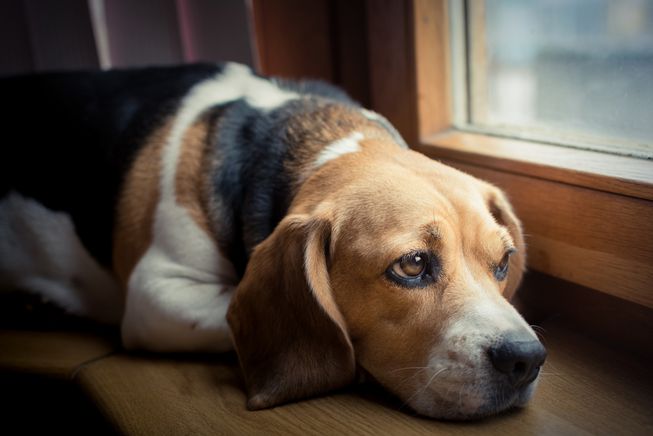
Dogs can get the doldrums. But there are ways to help them come out of it with a wagging tail. (Photo: Iuliubo/Shutterstock)

Yes, dogs can get depressed. Whether or not it’s the same as what humans experience, we may never know since we can’t ask a dog. But there are signs and symptoms from a dog’s behavior that reveal when a dog is in the doldrums. If you’ve noticed a sudden change in your four-legged friend’s behavior and are worried, you may need to see if the change is a clue that your dog needs some psychological TLC.

Common triggers for dog depression

Dogs are creatures of habit, activity and loyalty. A sudden change that affects their world can cause a dog to have a spat of depression. Triggers include:

  • The addition of a new person or pet to the family
  • A sudden drop in attention from an owner or family members
  • A sudden change in the household schedule
  • The loss of an owner or companion
  • Moving to a new home
  • A traumatic injury

Dogs may also suffer from Seasonal Affective Disorder, or SAD, during the winter months. Stanley Coren reports in Psychology Today: “Do dogs suffer from SAD? Some data comes from a survey conducted by a leading veterinary charity in the UK. PDSA (The People’s Dispensary for Sick Animals) found that approximately 40 percent of dog owners saw a considerable downturn in their pet’s moods during the winter months. In addition, half of the dog owners felt that their dogs slept longer, with around two in five reporting their pets to be less active overall.”

Some dogs may suffer depression simply for not having a job to do. The Guardian notes:

“In the not too distant past, dogs mostly had to work for a living and were probably very often physically and mentally fatigued at the end of the day – which is why we have the expression ‘dog-tired’. Could the stress of being made redundant be the source of this apparent unhappiness? Dog behaviourist Penel Malby told me: ‘Dogs live very differently to the way they used to. Lots more dogs, lots more people, lots more stress for everyone, I think. If you think back even just 50 years, dogs were allowed to roam free every day, socialise with their neighbourhood friends. Now they either go out with a dog walker or go out for an hour if they’re lucky, and the rest of the time is spent at home.'”

The upside is that canine depression usually isn’t permanent, or even necessarily long-lived, and there are ways to combat it to help your dog get back to normal in due time.

What are the warning signs?

Watch for warning signs of depression so you can catch the trouble early and help your dog recover. (Photo: DREIDREIEINS Foto/Shutterstock)

The most common symptoms dogs display when they’re depressed mirror those that humans experience during a depression. They include:

  • Sleeping much more than usual
  • A change in eating habits, including a loss or gain in appetite and in weight
  • A refusal to drink water
  • A lack of interest in usual energetic activities like going for walks or playing
  • Excessive licking of their paws
  • Excessive shedding
  • Become withdrawn or hiding in the house
  • Suddenly showing signs of aggression or anxiety

Unfortunately, these symptoms also occur with a range of other medical issues. A dog might have a change in appetite because of a thyroid or kidney issue, or the dog might not want to go on a walk because of joint pain or arthritis flaring up. So if you notice any changes in your dog’s behavior, the first thing to do is visit the vet to rule out any serious health-related issues before assuming it comes down to depression.

How to help your dog out of a depression

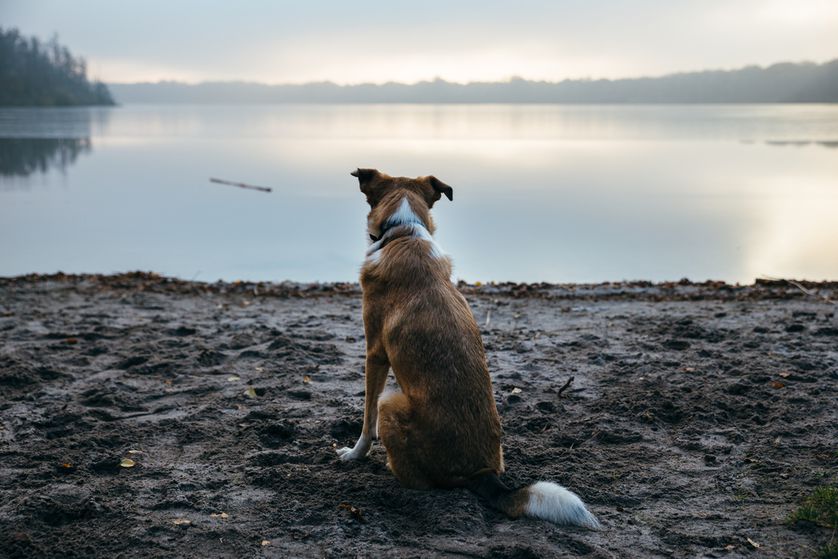
Sometimes time, extra love and a steady routine is all that’s needed. (Photo: Soloviova Liudmyla/Shutterstock)

If you have determined your dog is feeling depressed, there are many things you can do to help them pull out of it.

– Take your dog on more frequent walks during the day to favorite places, allowing them to sniff around and enjoy the scenery. It’s also helpful to do this first thing in the morning to start the day out with a bit of fresh air and energy.

– Try to keep a schedule as much as possible. Dogs are creatures of habit and having a predictable routine can be an enormous source of comfort for a stressed or depressed dog, especially if the trigger for the depression was a sudden change in routine.

– Reward your dog when he shows signs of improved mood or energy. Rather than babying the dog during the down times — which reinforces that behavior — reward him with extra special treats or a favorite toy when he shows a bit of enthusiasm about life to amplify the mood even more.

– Bring home a new toy, such as a squeaker or puzzle toy that stimulates the senses and encourages play.

– If the cause of depression is the loss of a companion, like another household pet, consider adopting another dog that can be a companion. However, only do this if you’ve seriously considered the needs of your household and your depressed dog. It isn’t an option to be taken lightly.

As a last resort, medication could be an option. There are antidepressants for dogs that you can discuss with your veterinarian. However, catching depression early on and trying for behavioral changes first is the best solution. Bonnie Beaver, DVM, notes in a WebMD article, “[I]t can take up to two months for drugs to become effective. But unlike people, who often remain on antidepressants for years, most dogs can get better in six to 12 months and then be taken off the drugs.”

And finally, give it time. As Wag Walking notes, “Be Patient: Sometimes — especially if the issue was a loss of a companion or master — the only thing that will heal a dog’s heart is time. It may be as few as a couple days or as much as a few months, but most dogs will be able to pull themselves out of depression with a little time and understanding.”

ooOOoo

May you, your family and all your wonderful animals have a wall-to-wall happy weekend!

What a Moon!

This is a night to be outside! (And that includes you, Susan L.)

It has been receiving quite a lot of publicity in recent days. I’m speaking of the “Supermoon”.

Or in the opening words of a recent Smithsonian Magazine article:

The Biggest Supermoon in 68 Years Will Leave You “Moonstruck”

It hasn’t been this close since 1948 and won’t be again for the next 18 years

(Adrian Scottow via Flickr)

In terms of when this is happening then I will draw on Mother Nature Network:

According to NASA, the full moon that rises on Nov. 13 will be the closest one to Earth since 1948. If viewing conditions are clear, the moon will not only appear 30 percent brighter, but also 14 percent larger. While the nighttime viewing is supposed to be spectacular, the true closest approach of the supermoon will take place on the morning of Nov. 14 at 8:52 a.m. EST.

Just how special is this super supermoon? Humanity won’t get another show like this one until Nov. 25, 2034.

Or as the EarthSky blogsite puts it:

The moon turns precisely full on November 14, 2016 at 1352 UTC. This full moon instant will happen in the morning hours before sunrise November 14 in western North America and on many Pacific islands, east of the International Date Line.

For those of us on Pacific time that equates to 0852 PST.

So the balance of today’s post will comprise the republication, with permission, of a recent essay on The Conversation blogsite.

ooOOoo

Supermoons are big and bright, but not as rare as the hype would suggest.

November 8, 2016

By

Senior Lecturer and Associate Department Head for Undergraduate Programs in Astronomy & Astrophysics, Pennsylvania State University.

As an observational astronomer who teaches students about the behavior of the moon, I’m thankful for anything that inspires people to go out and look at the sky. For me it’s second nature to pay attention to the moon; when my son was born, I would take him out at night to observe with me, and one of his very first words was “moon.”

But I have mixed feelings about what’s being billed as the upcoming “super-supermoon.” Many astronomers do not like using the term because reports overhype the factors that make certain full moons unusual. Most of what you’ve likely read has probably misled you about what you can expect to see on Nov. 14 and just how rare this event is. Beautiful, yes. Worth looking up for, definitely. Once in a lifetime… that’s a bit overblown.

he moon’s phases as it revolves around the Earth. Orion 8, CC BY-SA
The moon’s phases as it revolves around the Earth. Orion 8, CC BY-SA

The moon’s cyclical phases

Just about everyone is familiar with the moon’s changing appearance as it goes through its phases from crescent, to half-illuminated (first quarter), to gibbous, to full, and then back through gibbous, to half-illuminated (third quarter), to crescent, to new.

This pattern occurs because the moon orbits the Earth. When the moon is between the Earth and sun, it’s a new moon, and you don’t see it that day. When the moon is on the opposite side of the Earth from the sun we get a full moon as the sun’s light illuminates almost its entire face. The complete sequence of phases takes about the same amount of time as it does for the moon to orbit the Earth once – just about a month.

As the moon makes its monthly trip around our planet, it travels on an elliptical, not circular, path. Every object in the solar system orbits like this, including the Earth around the sun; over the course of the year, the Earth is sometimes closer to the sun and sometimes more distant. Same for the moon – sometimes it’s closer to us and sometimes farther away.

The changes are proportionally not large; at “perigee” (the closest it gets to the Earth) the moon’s approximately 10 percent closer to the Earth than at “apogee” (most distant point on its orbit). Over the year, the moon’s distance from Earth varies from around 222,000 to 253,000 miles.

 The moon’s orbit is elliptical and changes over time. Rfassbind
The moon’s orbit is elliptical and changes over time. Rfassbind

The time it takes the moon to go from perigee to perigee (about 27.3 days) is shorter than the time it takes to go through a complete set of phases (about 29.5 days). Because these timescales are different, the phase at which perigee occurs varies. Sometimes perigee occurs when the moon is full, but it is just as likely for perigee to occur when the moon is in the first quarter phase, or any other. Whichever phase the moon is in when it’s at perigee will be the one that looks largest to us here on Earth for that month.

At perigee, the moon can appear 14 percent larger and 30 percent brighter than an apogee full moon. But this is complicated by the fact that our eyes play tricks on us and convince us the moon looks larger when it is near the horizon than when it is higher in the sky. Every full moon will look big and bright whether it happens at perigee or apogee.

So what’s a supermoon?

The first time I heard the phrase “supermoon” was in 2011, and someone had to explain the suddenly in vogue term to me. People were using it to describe the full moon that happened to occur within an hour of perigee in March of that year. The moon’s perigee distance also varies a bit, and March 2011 was the moon’s closest perigee of that year.

 A 2013 supermoon as seen from Ireland. John Finn, CC BY-NC-ND
A 2013 supermoon as seen from Ireland. John Finn, CC BY-NC-ND

This was a somewhat rare event – a full moon occurring not just at perigee, but at the closest perigee of the year. But many people got the impression that this was an exceedingly unusual event, and rushed to see and capture images of this supposedly ultra-rare moon. Depending on how closely you require the full moon to occur to perigee in order to call it a supermoon, though, these events happen at least roughly once a year, and often more frequently.

Which brings us to this month’s much ballyhooed “super-supermoon.” News stories are hyping the upcoming full moon as a once-in-a-lifetime viewing opportunity. It’s true that the Nov. 14 full moon is the closest since 1948, and the next time the full moon will be closer is in 2034.

But this month’s full moon is only 0.02 percent closer – a mere 41 miles! – than the March 2011 supermoon. These tiny distances make no noticeable difference in the moon’s appearance.

 Get out there and enjoy this supermoon! AP Photo/Charlie Riedel
Get out there and enjoy this supermoon! AP Photo/Charlie Riedel

Please do go out and observe the November full moon. If you are good with photography, try to document that the moon does appear larger than the other months this year. Just be aware you’ll have other virtually equivalent opportunities to do so pretty much every year for the rest of your life. So don’t worry if you miss it. You can catch the supermoon next time around.

ooOOoo

Fingers crossed our local weather will enable Jean and me to view this moon and I will try and photograph it.

If any readers also get to see this moon do let us know your thoughts and feelings.