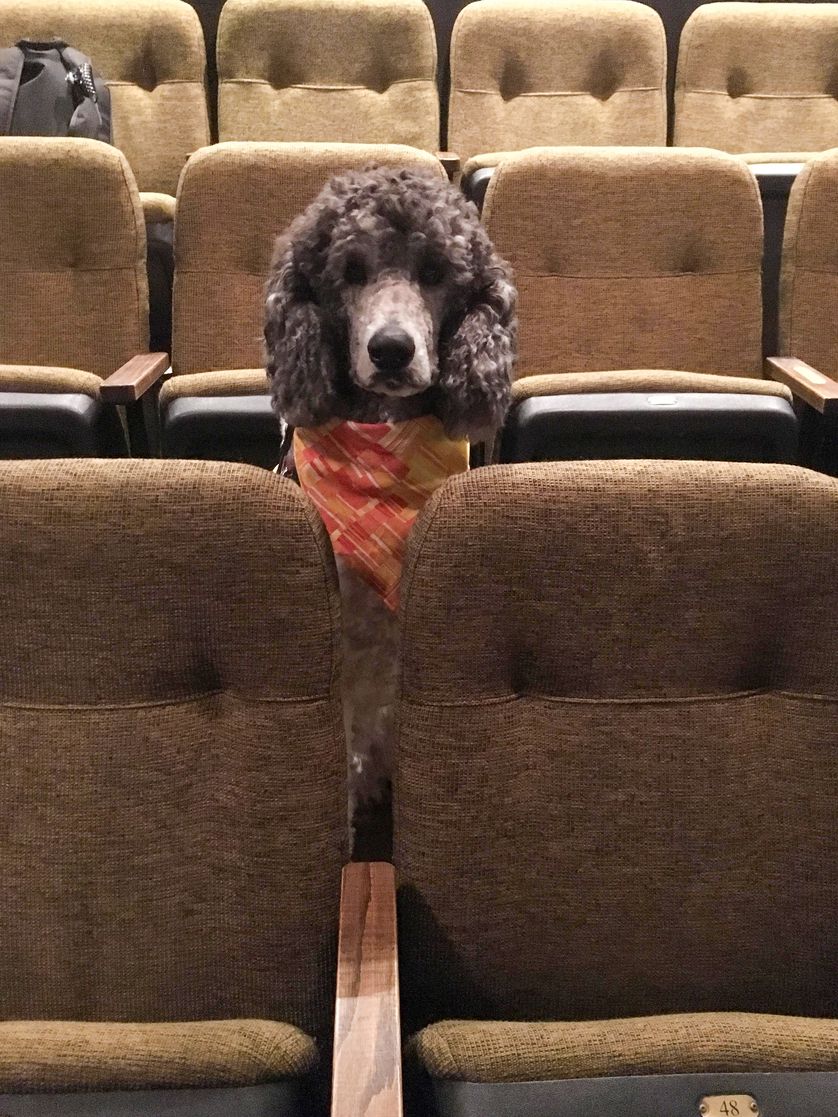
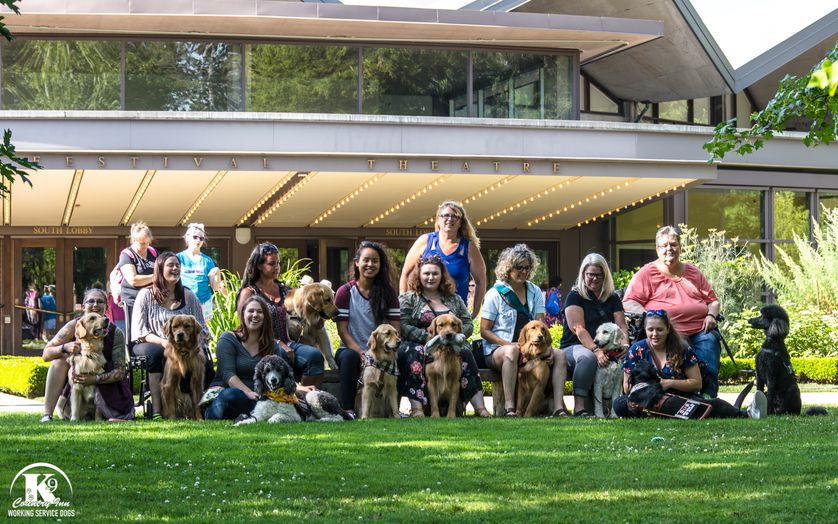
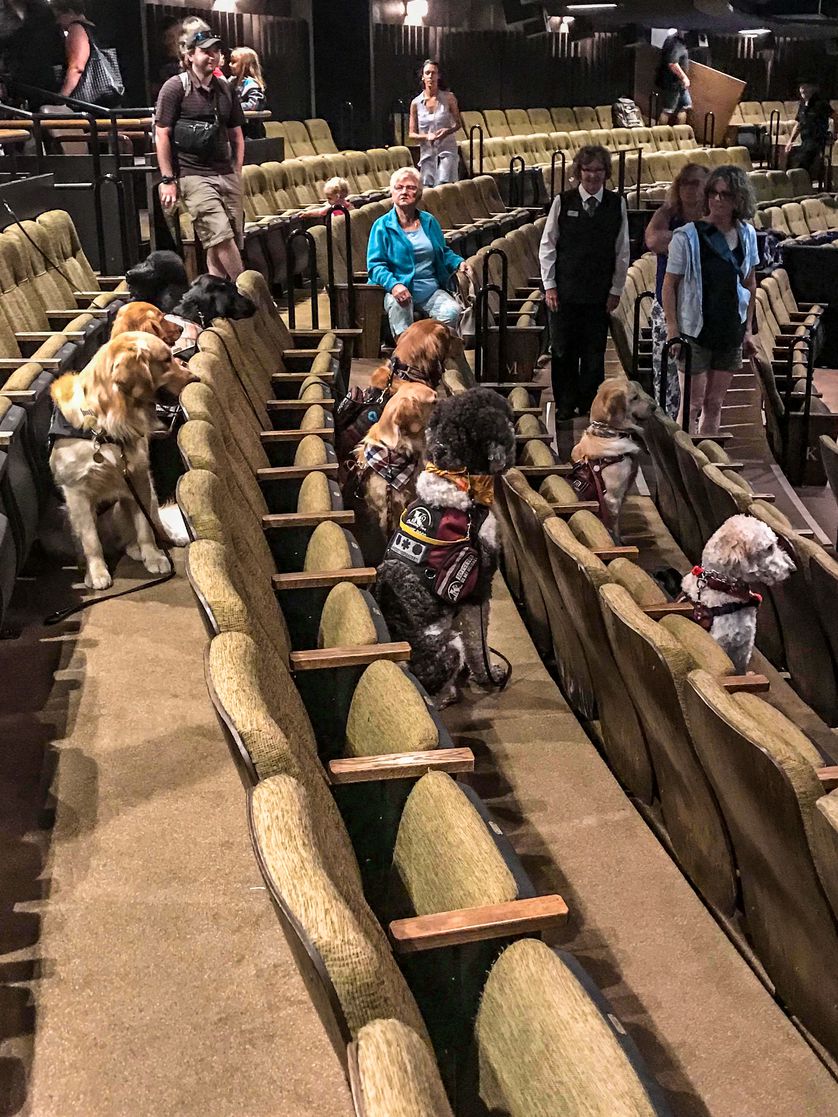
Photos of theatre-loving dogs.
All taken from this post.

oooo
oooo
oooo

oooo
oooo

oooo
It just goes to show that there’s no end to the pleasure a dog gets!
Dogs are animals of integrity. We have much to learn from them.
Tag: Mother Nature Network
Photos of theatre-loving dogs.
All taken from this post.
oooo
oooo
oooo
oooo
oooo
oooo
It just goes to show that there’s no end to the pleasure a dog gets!
Thank you Mother Nature Network
Our dogs are tremendous!
And a particular credit must go to the dog’s nose. It is many more times more sensitive than our nose, as the following article taken from Mother Nature Network shows. (And I really must stop republishing articles from MNN!)
ooOOoo
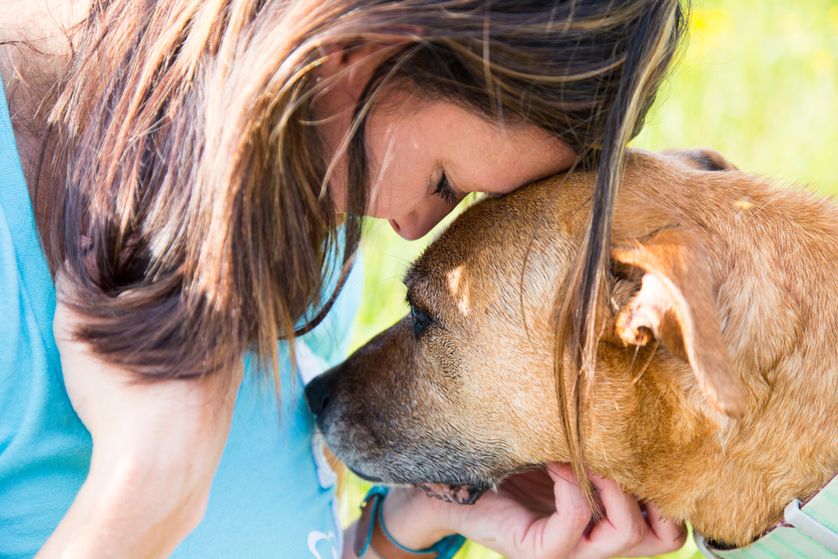
From cancer to migraines and even seizures, dogs can give us a heads up about a range of human diseases.
 JAYMI HEIMBUCH April 10, 2019.

Dogs are famous for their sense of smell. With about 220 million scent receptors (compared to our 5 million), dogs can smell things that seem unfathomable to us. They can detect some odors in parts per trillion, and they can detect countless subtleties in scents.
As PBS points out, “Experts have reported incredible true stories about the acuteness of dogs’ sense of smell. There’s the drug-sniffing dog that ‘found’ a plastic container packed with 35 pounds of marijuana submerged in gasoline within a gas tank. There’s the black lab stray from the streets of Seattle that can detect floating orca scat from up to a mile away across the choppy waters of Puget Sound.”
Cancer
Perhaps the condition dogs are currently most famous for detecting is cancer. Dogs have been able to sniff out a variety of types including skin cancer, breast cancer and bladder cancer.
There are quite a few stories of a pet dog obsessing about an owner’s mole or some part of their body, only to discover in a doctor’s appointment that the dog was actually sensing cancer. For example, Canada Free Press writes of a 1989 instance when a woman’s “dog kept sniffing at a mole on her thigh, but ignored other moles. In fact, the dog had actually tried to bite off the mole when she was wearing shorts. The woman consulted her doctor, the mole was excised and the diagnosis confirmed a malignant melanoma.”
In the last couple decades, researchers have looked seriously into dogs’ sniffing abilities when it comes to cancers. In studies, dogs have successfully been trained to detect the disease using samples from known cancer patients and people without cancer.
The newest study offers the most startling statistics: Dogs can correctly pick out blood samples from people who have cancer with 97% accuracy, a 2019 study published in Experimental Biology found. Heather Junqueira, the lead researcher at BioScentDx who performed the study, used clicker training with four beagles. The dogs focused their efforts on blood samples from patients with lung cancer, and with one exception, they were highly successful. The sample was small, so BioScentDx plans to continue its work, according to Science Daily.
In a 2006 study, five dogs were trained to detect cancer based on breath samples. Once trained, the dogs were able to detect breast cancer with 88 percent accuracy, and lung cancer with 99 percent accuracy. They could do this across all four stages of the diseases.
Sometimes the dogs can do an even better job than the humans in these studies. According to Penn State News, Nancy Dreschel, a veterinarian in Dairy and Animal Science at Penn State University, tells of an illuminating example: “A scientist was training dogs to detect bladder cancer in humans by smelling their urine. She said a dog alerted them to a sample from a supposedly healthy person who was being used as a control. On reexamination that person was found to have bladder cancer, so the dog caught it before anyone else did.”
Study after study has shown that dogs can detect cancer in people, but it may a while before your doctor employs a hound for your annual checkup. Researchers still don’t know exactly what chemical compounds for different types of cancers the dogs are sensing in these samples to alert to the presence of the disease, and this remains a hurdle both for better training of cancer-sniffing dogs and for creating machines that can more accurately detect cancer in the early stages.
Narcolepsy
Narcolepsy is a brain disorder that affects the ability to control sleep-wake cycles. This can mean a person suddenly falls asleep, even in the middle of a task. It’s a dangerous condition, as someone who has an attack could be injured falling to the ground or could have a car accident if it happens while driving.
Mary McNeight, Service Dog Academy director of training and behavior, has been working with narcolepsy service dogs since 2010, and she notes that there’s a scent the dogs pick up on when an attack is coming on. “It’s a biochemical change in the body. We do not know what the particular odor smells like due to the difference between human scent perception and dog scent perception,” she tells Sleep Review.
In a study published in 2013, Luis Dominguez-Ortega, M.D., Ph.D., found that two trained dogs detected 11 of 12 narcolepsy patients using sweat samples, demonstrating that dogs can detect a distinct scent for the disorder.
Service dogs help people with narcolepsy by performing several different types of tasks. They can stand over the person’s lap when an attack comes on, which prevents them from sliding out of a chair onto the floor; they can also stand over the person to protect them if they are out in public, or they can go get help. And most importantly, they can provide a warning up to 5 minutes before an attack comes on, giving their handler a chance to get to a safe place or a safe position.
While large dogs can be helpful in giving a narcoleptic sufferer extra support in balance and mobility after an attack, these dogs don’t have to be big. According to Petful, even medium-sized dogs can do the job. “Theo, a 2-year-old cocker spaniel, has virtually put an end to [Kelly] Sears’ suffering. He can sense when she is about to have a narcoleptic episode and warn her so that she can sit or lie down, waking her after a few seconds with a kiss on her chin. Since arriving two months ago from Medical Detection Dogs, the only organization in Europe that trains narcolepsy service dogs, Theo has proven himself indispensable.”

Migraines
For those who suffer migraines, having a warning before one comes on can mean the difference between managing the problem or succumbing to hours or days of intense pain. Fortunately, some dogs have a talent for sniffing out the signs that a migraine is on the way.
Psychology Today reports on a recent study that asked migraine sufferers with dogs if they noticed a change in their dogs’ behavior before or during a migraine. The results show that “54 percent of the 1027 participants indicated they had noticed changes in the behavior of their pets during or preceding migraines. Nearly 60 percent of these subjects indicated that their dog had alerted them to the onset of a headache — usually an hour or two in advance.” The results are fascinating, though it’s important to point out that the study was conducted with self-reports rather than observation by researchers. Even so, the study shows evidence that many dogs seem to detect and point out a change in their human companion’s health.
According to Kendall Winship, a migraine sufferer with a service dog, “These [migraine alert service] dogs are highly valued because the ability to tell when a migraine is approaching is an innate talent; it can’t be taught. Similar to diabetic alert dogs that can smell when their handler has low blood sugar, migraine alert dogs can hone in on the scent of serotonin, a chemical that skyrockets when the body is about to have a migraine. By alerting to the danger long before their handlers might feel any symptoms, these dogs can warn them to take preventative medication. When Rally looks up at me and whines, I know I have about two hours before the migraine will strike, and if I can take my medication early enough, I might be able to avoid the stroke-like symptoms and incapacitating pain.”
Low blood sugar
Increasingly, dogs are helping diabetics know when their blood sugar level is dropping or spiking. Dogs4Diabetics is one organization that trains and places service dogs with insulin-dependent diabetics. These dogs undergo extensive training to be able to detect and alert their handlers to changes in blood sugar levels.
A 2016 study published in the journal Diabetes Care found that the dogs detect isoprene, a common natural chemical found in human breath that rises significantly during episode of low blood sugar. People can’t detect the chemical, but the researchers believe that the dogs are particularly sensitive to it and can tell when their owner’s breath has high levels of it.
Medical News Today reports that dogs are trained to discriminate between the scent from a previous episode and the scent of a current episode. They detect when their handler is having an issue and alert the person, giving them time to test their blood sugar and take the insulin they need.
A 2013 study published in PLOS One showed that having a diabetic alert dog seems to provide significant improvements in both the safety and quality of life of insulin-dependent diabetics. “Since obtaining their dog, all 17 clients studied reported positive effects including reduced paramedic call outs, decreased unconscious episodes and improved independence.”
There’s still some skepticism about whether or not dogs can accurately alert handlers to a blood sugar change at a level beyond chance, something that can be determined with more studies. Even so, for those diabetics living with alert dogs, the sniffing ability of their companions seems to be a big help.
Seizure
One of the more controversial areas where dogs are used to alert to a medical condition is with seizures. There is growing evidence that dogs can and do detect the onset of a seizure; however, the level of accuracy and, most importantly, our ability to train dogs to alert a handler to an oncoming seizure remains a bit questionable.
As is the case with some other conditions, dogs cannot be trained to predict seizures. We don’t have a way to provide them with a scent or information that can be used for training. We can, however, train dogs how to respond to and assist a handler when a seizure occurs. Some service dogs that are placed with seizure patients do develop the ability to detect when a seizure is coming and can provide an alert if the handler pays close attention to the signals the dog provides. WebMD reports, “Jennifer Arnold, founder of Canine Assistants in Georgia, … says about nine out of 10 of the service dogs her organization has placed develop the ability on their own within a year of placement.”
A small 2019 study found that dogs were able to clearly discriminate a general epileptic “seizure odor.” However the study only involved a handful of dogs and involved odor samples that were collected during a seizure. Researchers pointed out that much more extensive testing would need to be done to see if other dogs would respond similarly and if dogs could predict seizures before they happened.
However, there is some question about how dogs are responding. How Stuff Workspoints out that in 2007, “two small studies in the journal Neurology reported that four out of seven seizure alert dogs studied turned out to be warning their masters of psychological, rather than epileptic seizures. This may not seem like a big deal, but the two disorders are different. A 2006 study revealed that up to 30 percent of patients who suffer from psychogenic nonepileptic seizures (PNES) are misdiagnosed with epilepsy. PNES, which results from emotional difficulties and can often be successfully treated with counseling, rather than unnecessary and harsh epilepsy drugs. The 2007 study also revealed one instance of seizures being triggered by the patient’s dog’s warning behaviors, indicating another flaw in the reliability of canine seizure prediction.”
A 2003 study concluded that “findings suggest some dogs have innate ability to alert and/or respond to seizures” however, it notes that further research is needed to uncover which seizure patients would benefit from the help of a dog. We also need more research to learn how to train dogs to be as effective as possible. We have to first learn how dogs know when a seizure is coming — are they smelling a change in body chemistry, or are they picking up on behavior changes? — before we can reliably train them to alert handlers before a seizure happens.
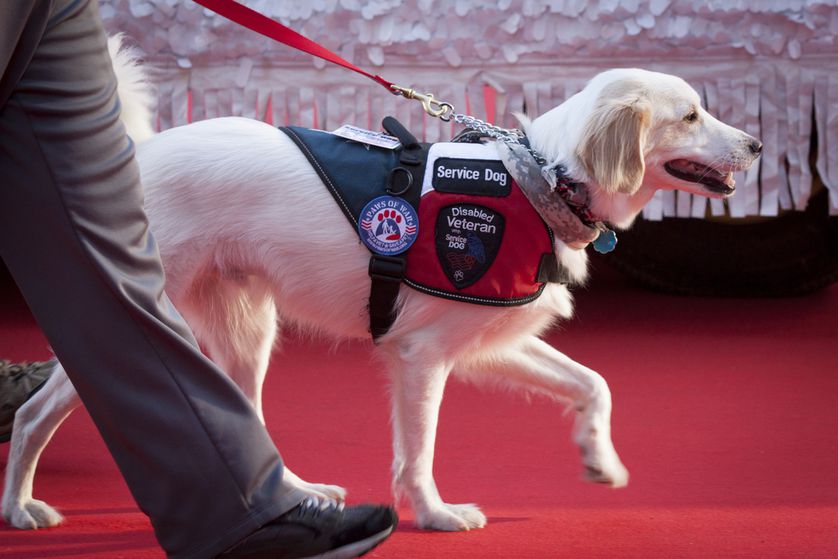
Fear and stress
The age-old notion that dogs can smell fear is an accurate one. Dogs can smell when we are feeling fear or are experiencing an increased level of stress, even if we aren’t showing outward signs. What dogs are smelling is the surge of hormones our bodies release to respond to stressful situations, including adrenalin and cortisol.
Thankfully, this can be used to humans’ benefit, as dogs can signal a handler that they (or someone else) needs to take a few deep breaths. Dogs that alert handlers of the change in their emotional state — a change that often people aren’t even aware they’re experiencing — can help prevent panic attacks and other possible episodes associated with post-traumatic stress disorder or other issues.
Cali is one such dog. DogTime writes:
“This 18-month Rhodesian ridgeback is the first cortisol-sniffing dog on staff at a school. Cortisol is known as the ‘stress hormone,’ and people on the autism spectrum tend to have higher levels of cortisol in their blood. Cali is employed to detect rising cortisol levels in the students. She waits outside of school each morning as the students file by. If she notices anyone with a high level of cortisol in their blood, she will signal to her handler, Casey Butler, a health teacher on staff at The Calais School who is a certified specialist in natural canine behavior rehabilitation and in animal adaptive therapy. When Cali stares at a child, Butler knows that is the signal. She then takes that child aside and works with him or her before a meltdown occurs.”
We still have a long way to go to discover exactly what dogs are smelling about us, let alone how we can train them to be as accurate as possible about a change in our bodies. Even though many details are not yet known, it’s clear that dogs have an uncanny ability to sniff out certain medical issues, and that’s a skill that could be a real lifesaver.
Editor’s note: This story was originally published in 2016 and has been updated with new information.
Jaymi Heimbuch ( @jaymiheimbuch ) focuses on wildlife conservation and animal news from her home base in San Francisco.
ooOOoo
Where on earth would we be without these wonderful, clever dogs! Seriously, whether you love dogs or not you cannot deny that they are incredible creatures!
……. but also intelligent.
There is something about a Huskie that takes one’s breath away. Not only because of the grace and wit with which they conduct their lives but also because the majority of them are working dogs.
So it was with interest that I read recently about the Huskies and wanted to share it with you all.
Here it is.
ooOOoo
New genetic study finally solves the mystery.
BRYAN NELSON, October 4, 2018.

A dog DNA startup company called Embark, based out of Boston, Massachusetts, and Ithaca, New York, appears to have finally solved the mystery as to why huskies sport their beautiful blue eyes. The study is the first consumer genomics study ever conducted in a non-human model, as well as the largest canine genome-wide association study to date, reports Phys.org.
The key, it turns out, lies in the dogs’ 18th chromosome. A duplication on chromosome 18, near the ALX4 gene, was found to be strongly associated with blue eye color. The ALX4 gene plays an important role in mammalian eye development, so this association is not entirely out of left field. And interestingly, the study also found this same genetic quirk in non-merle Australian shepherds, which also tend to have blue eyes.
This flies in the face of how eye color is usually thought to be determined in dogs. For instance, two genetic variants are known to underlie blue eye color in many dogs, but scientists have long known that these variants do not explain the blue eyes of huskies, thus the mystery.
In fact, even though we’re seemingly in a genomic scientific age, the genetic underpinnings of many traits in non-human animals are still largely unknown, even for humans’ best friends. Embark aims to change that.
For the study, which was performed in partnership with Cornell University College of Veterinary Medicine, researchers used a diverse panel of 6,070 genetically tested dogs, with owners who contributed phenotype data — physical traits of the dogs — via web-based surveys and photo uploads. A comprehensive, consumer-driven survey of this size is largely unprecedented.
“Using genetic data from the pets of our customers, combined with eye colors reported by customers for those same animals, we have discovered a genetic duplication that is strongly associated with blue eye color. This study demonstrates the power of the approach that Embark is taking towards improving canine health,” explained Aaron J. Sams of Embark. “In a single year, we collected enough data to conduct the largest canine study of its kind. Embark is currently pursuing similar research projects in a range of morphological and health-related traits and we hope to continue to use our platform to move canine genetics and health forward in a very real way.”
It’s all in the name of improved health care options for our canine companions, as well as helping curious human owners better understand the origins of their pets. Answering why huskies have blue eyes is just the first such mystery they hope to solve.
ooOOoo
What can one say! They are such beautiful dogs!
Learning about the way they pee!
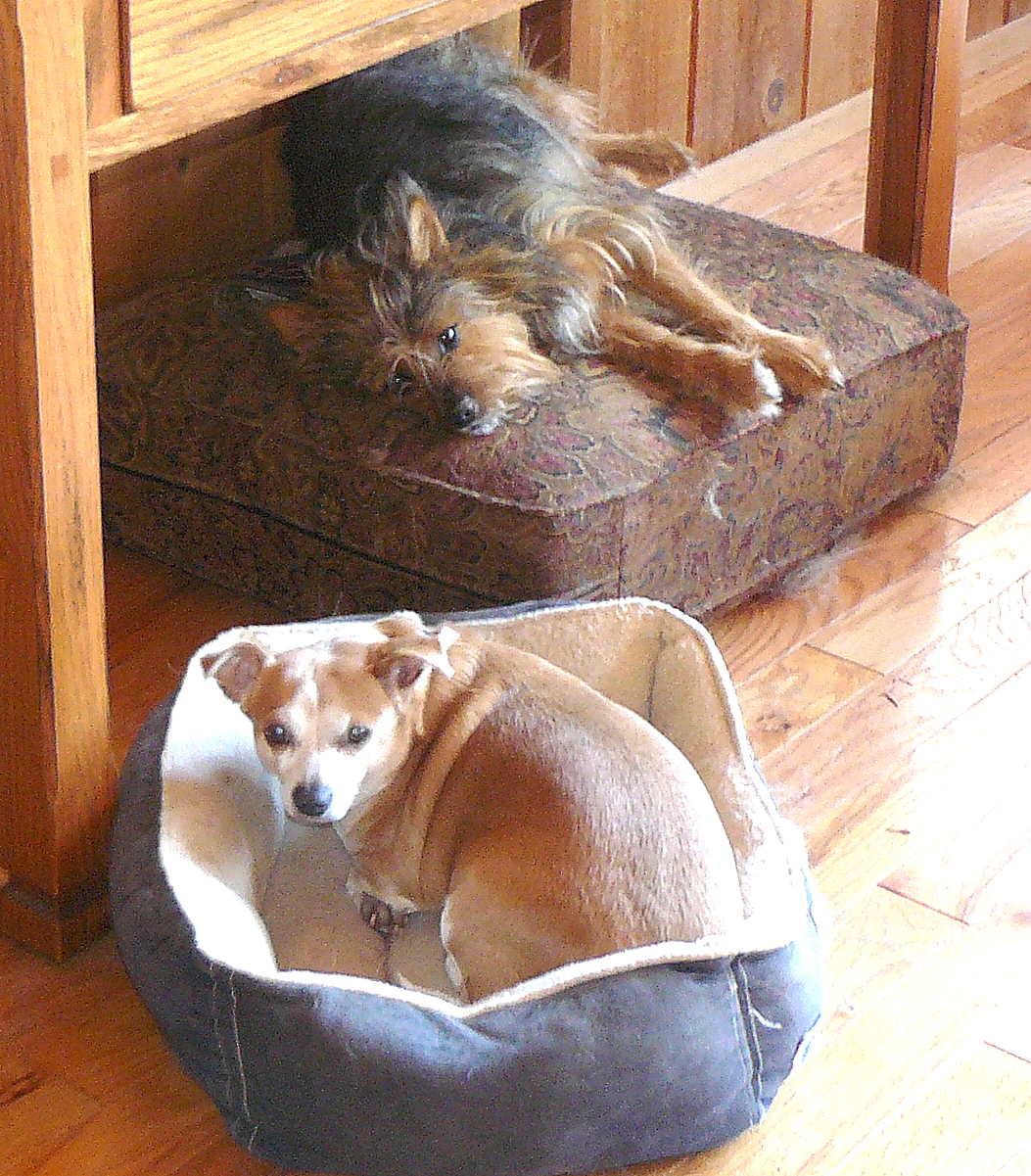
We have two smaller dogs in our family, Sweeny and Pedy.

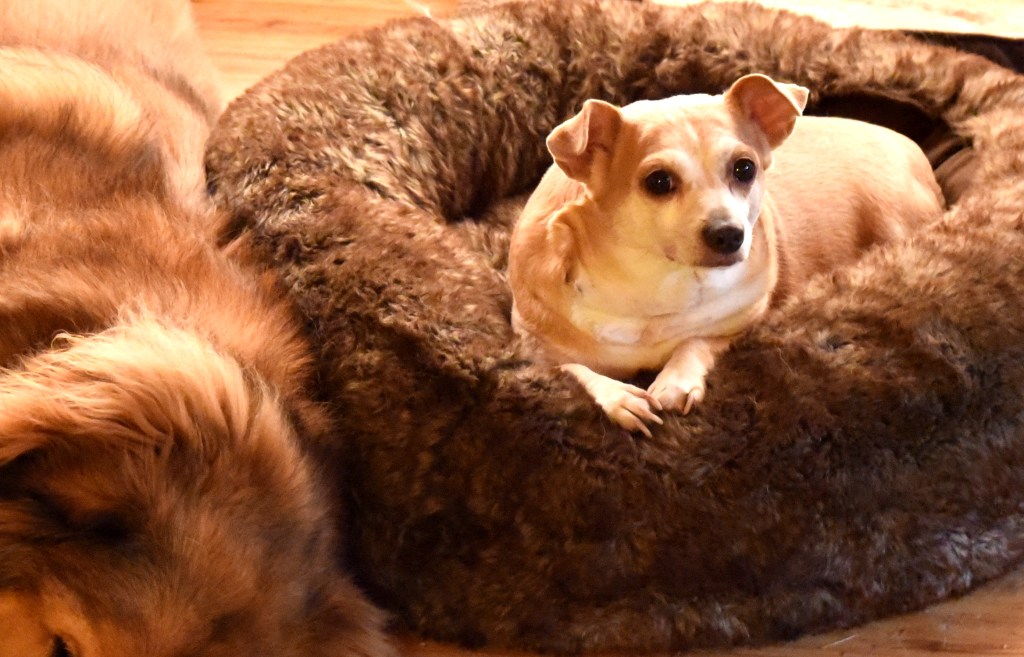
I am sure many of you have dogs that are smaller then the average dog; whatever that means!
So the article that was published, once again on Mother Nature Network, will strike a chord!
ooOOoo
Removed because of copyright infringement.
ooOOoo
“So they aim high to look big.”
I’m sure there must be a joke somewhere there but can’t find it!!
So closing with another two pics of our little ones.
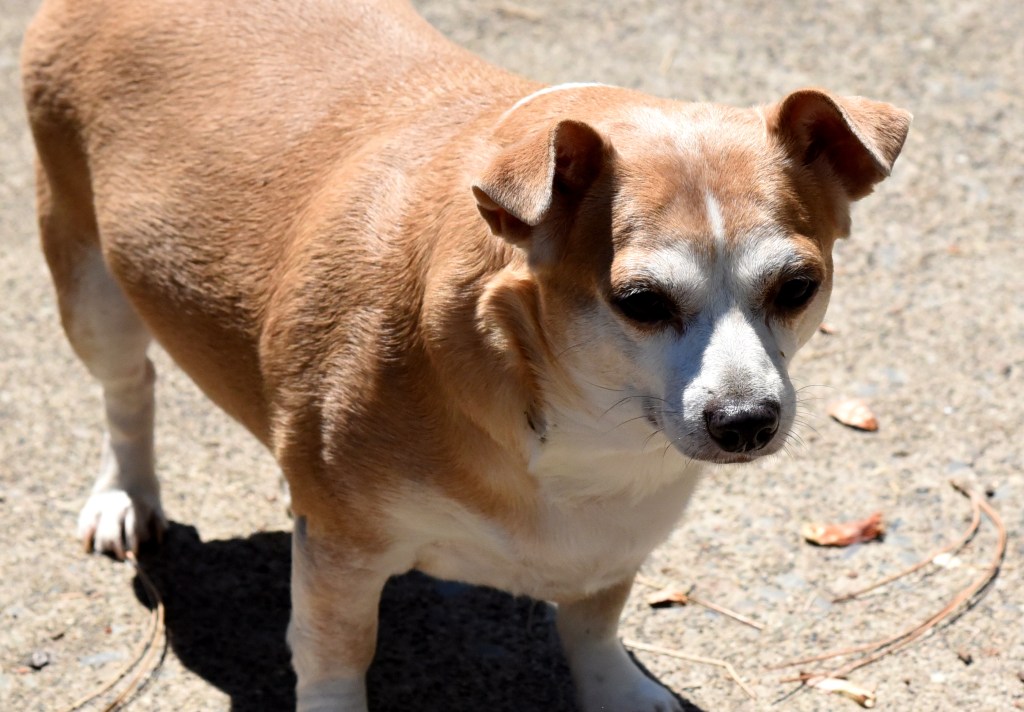
oooo
The penultimate set of those wonderful Kennel Club photographs.
(As with the previous weeks, words and pictures republished from here.)
Winning Kennel Club images celebrate dogs from all walks of life
 JACQUELINE GULLEDGE July 17, 2018.
The fourth selection of these wonderful photographs and the story behind each one.
ooOOoo
Second Place, Portrait

“This photo was taken during session around Old Market Square in Poznań. I’m still amazed how Thalia was calm and focus despite the city noise,” said Katarzyna Siminiak.
Second Place, Puppies

“Since early last year, my partner Raymond Janis and I have had the honour of supporting the Vanderpump Dogs Foundation in Los Angeles by photographing their adoptable dogs. In July 2017, we met these adorable beagle mix puppies,” said Charlie Nunn. “As Raymond tried to wrangle them, something magical happened and I was able to capture a perfect moment of a puppy family sticking together.”
Second Place, Rescue Dogs and Dog Charities
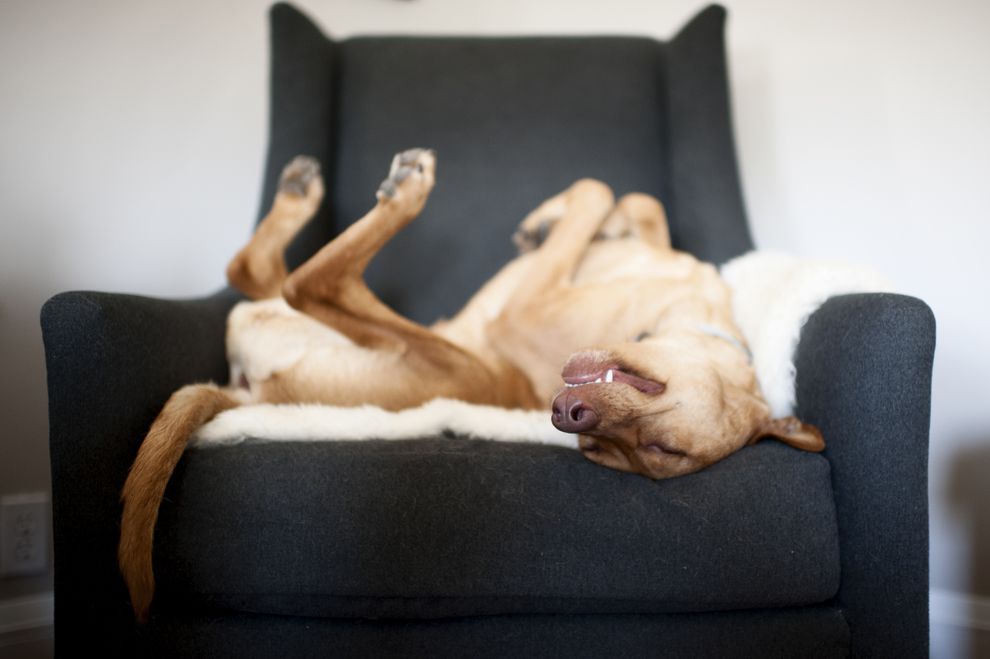
“This particular image is of my own rescue dog, Magda. She was a bit hesitant and shy when my husband and I came home with our baby, but when the baby went off to nursery school, she would curl up on his rocking chair and roll her fur all over, settling in for a nice nap,” said Leslie Plesser.
Second Place, Young Pup Photographer

“My name is Sienna Wemyss, I’m 10 years old and I’m from England, UK. When I grow up, I want to be a fashion photographer and designer. I have loved dogs since I first encountered one! There are so many different kinds of dogs and they are all so unique,” said Wemyss. “My dream came true in January this year when I became the proud owner of Dallas, a pedigree Whippet puppy. I was overjoyed!”
“I was relaxing on the sofa one day when Dallas crawled beside me. I put my arms out, expecting him to come and cuddle me. Instead, he gazed at the kitchen dreamily! If he could speak then, I bet he would have said, ‘Dinner?’ He looked very curious, so I grabbed my mum’s phone and captured the moment.”
Third Place, Assistance Dogs and Dog Charities

“I am an ambassador for the Kotuku Foundation for Assistance Animals Aotearoa, who source, train and place dogs with people who have any diagnosed condition that dogs are known to be capable of assisting with. This includes diabetes, head injuries, depression and PTSI and many more,” said Craig Turner-Bullock. “Dion is a veteran who fought, and was injured, at the battle of Baghak in 2012. He experienced PTSI and says that ever since Delta came into his life she has made a huge difference. Dogs assisting veterans are now common around the world, but Delta is the first of her kind here in New Zealand.”
Third Place, Dogs at Play

“We had just moved from one of the snowiest cities (Erie, PA) to the middle of nowhere USA (yes, I love you dear Indiana). I didn’t expect much snow, but come on! It was nearly mid-February and not a flake! My boys were used to lots of snow having lived in Erie but Daffy hadn’t a clue,” said Sarah Beeson. “And then, it happened: Old man winter arrived. Shame on him, while I was at work, no less! By the time 5 pm rolled around, I was in our backyard – Frisbee soaring and camera in hand. Meet Daffy, Taz, and Wile E. We LOVE frisbee!”
Third Place, Dogs at Work

“For me, the title sums up the image perfectly from both sides. This is a young trainee Police Dog undergoing some initial training. Taken on a miserable, damp day, it shows elements of the bond, trust and relationship that is vital for the partnership between Police Dog and handler,” said Ian Squire.
ooOOoo
Just one more Sunday’s worth to come. Don’t know about you but I shall miss these. They are going to be a hard act to follow!
Natural fractals!
Back in April, Mother Nature Network carried a wonderful item about the amazing fractals that can be found in nature.
Nothing to do with dogs but all to do with loving and caring for our planet!
I am not going to republish the full article with all the wonderful photographs so if the following piques your curiosity then go here to read the full piece.
ooOOoo
Take a tour through the magical world of natural fractals and discover the joy of simple complexity.
SHEA GUNTHER April 24, 2013
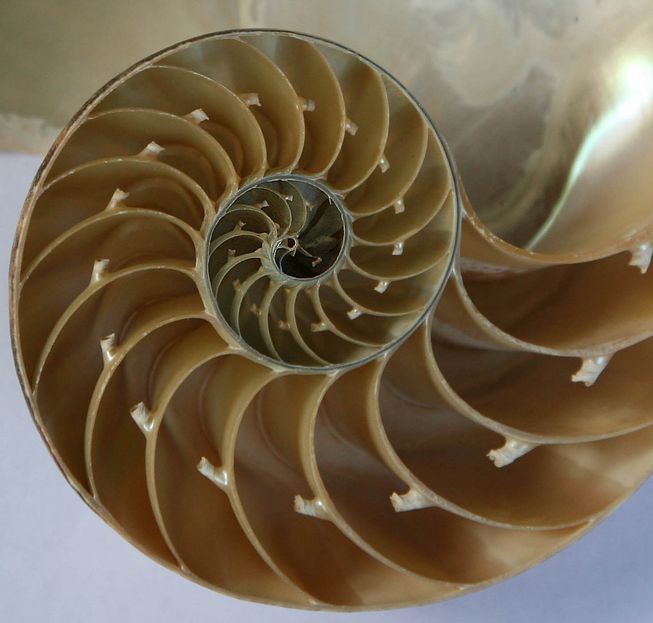
When you think of fractals, you might think of Grateful Dead posters and T-shirts, all pulsating with rainbow colors and swirling similarity. Fractals, first named by mathematician Benoit Mandelbrot in 1975, are special mathematical sets of numbers that display similarity through the full range of scale — i.e., they look the same no matter how big or how small they are. Another characteristic of fractals is that they exhibit great complexity driven by simplicity — some of the most complicated and beautiful fractals can be created with an equation populated with just a handful of terms. (More on that later.)
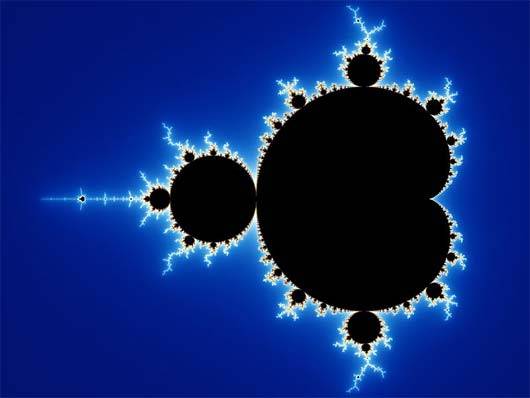
One of the things that attracted me to fractals is their ubiquity in nature. The laws that govern the creation of fractals seem to be found throughout the natural world. Pineapples grow according to fractal laws and ice crystals form in fractal shapes, the same ones that show up in river deltas and the veins of your body. It’s often been said that Mother Nature is a hell of a good designer, and fractals can be thought of as the design principles she follows when putting things together. Fractals are hyper-efficient and allow plants to maximize their exposure to sunlight and cardiovascular systems to most efficiently transport oxygen to all parts of the body. Fractals are beautiful wherever they pop up, so there’s plenty of examples to share.
Here are 14 amazing fractals found in nature:

ooOOoo
To view the other 13 fractals then go across to here.
Aren’t they beautiful! Or, to pick up on a sentence in the article: “It’s often been said that Mother Nature is a hell of a good designer,”
Not only a good designer but the provider of life as we know it!
As seen through the eyes of an Australian shepherd dog.
Slowly perking up each day, so thought it would be good to share this short, delightful video with you all. As presented on the Mother Nature Network site.
ooOOoo

NOEL KIRKPATRICK January 3, 2018
When you think about dog sleds, you may think about a team of huskies pulling a sled across a snowy and icy landscape.
Perhaps you should change that image to an Australian shepherd confidently riding a sled down a hill.
Secret, a 3-year-old Aussie shepherd and the canine companion to 17-year-old human Mary, took advantage of there finally being enough snow to get some sledding in. And by “some” we mean around 50 shots down the hill, according to Mary’s Instagram caption. Secret drags her sled all the way to the top of the hill, hops on and gets her own snowy version of zoomies on as she slides down the hill. Once at the bottom, it’s right back up again, sled in mouth.
If only every day were a snow day for Secret.
ooOOoo
Well done, Secret. Gorgeous!
It’s stories like this that put a smile on one’s face (and heart!).
Most evenings, after we have finished supper we go into the den, as we call it, and watch a few hours of television. This room has doors to the other rooms in the house and, therefore, during the day may be closed off. Reason why that is useful is that the den is home to our three cats.
Thus, after supper the dogs and the cats get to mingle together, as this photograph of Pedi and Mitts so well illustrates.

All of which is a great introduction to a post that was recently seen over on Mother Nature Network and is republished here for all you good people.
ooOOoo
Removed because of copyright infringement.
ooOOoo
That photograph of Henry and Baloo is so wonderful that I will close today’s post by sharing it with you again but cropped to really focus on them both.

Have a wonderful weekend!
A wonderful sequel to yesterday’s post.
Needs no introduction from me except to say that this wonderful account of Izzy’s loyalty was first seen on the Mother Nature Network site.
ooOOoo
Christian Cotroneo
October 13, 2017.
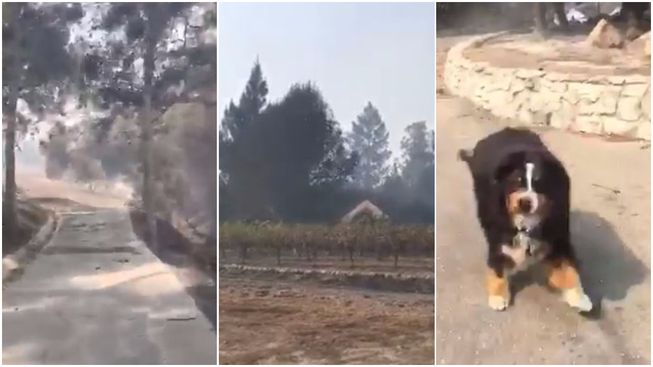
When the Weaver family woke up to flames outside their Santa Rosa home — a region ravaged this week by deadly wildfires — there wasn’t much time.
They had to get out.
But sometime during that panicked retreat from the house on Wikiup Bridge Way, the family dog, Izzy, bolted away.
Trying to find her amid the chaos of fire proved too dangerous.
And so this family, like countless others in California’s wine country, left more than just their home behind. When they drove through sheer walls of flame and across an uncertain wooden bridge to get to safety — they left their hearts back on Wikiup Bridge Way.
It turned out, it was the one thing they couldn’t leave behind.
A day and a half later, while the area was still smoldering and roads were still closed, Jack Weaver and Patrick Widen made the nearly-three-mile trek back to the house.
“It was incredibly important,” Weaver, who grew up in that house, tells MNN. “My mother was a wreck for having gone through that. Nobody wanted us to go back because they were worried we would get injured.”
In a video of their return, posted on Facebook and shared below, you can hear the men laboring to catch their breath amid blackened trees and still-crackling ruins.
“Izzy!” Weaver is heard calling into the smoky veil. Over and over again.
They push farther and farther ahead. “Izzy!”
“Almost to the house,” Weaver says in the video. “I can see … the gate. The gate’s still standing.”

A moment later, he adds, “I don’t see the house at all. F$#k.”
It had burned to the ground.
But someone was still standing.
“Izzy’s here!” Weaver calls, his voice choked with emotion. “Izzy!”
“Oh my God! Come here, baby!”
The giant dog bounces into view, her tail whirring like a helicopter.

“When she same running around — you can probably hear it in my voice — we were shocked and ecstatic,” Weaver says later. “I wish I could have filmed longer, the happy reunion, but I was so happy I dropped my phone.”
Since the family posted the video, it’s been shared more than 4,000 times. Maybe it’s a testament to the need for all of us to find a happy ending amid heartache.
In any case, Izzy is where she belongs now — in the arms of her family — a testament to faith under fire.
“She didn’t have a burn on her,” Weaver says. “It definitely lifted my family’s spirits.”
ooOOoo
YouTube also carried a video:
Well done, Izzy, and Jean and I send you fondest hugs!
“It is a time for kindness, love, community and human spirit to connect with nature.”
This sentence was written by Colette who blogs over at Stargazing Futures. Colette offered that thought in a response to a post last week in this place.
The reason I used it as the sub-heading for today’s share is that it is perfect.
Read this from Mother Nature News and you will understand.
ooOOoo
Russell McLendon September 5, 2017
When two young black-tailed deer wandered onto a construction site in 2016, they probably didn’t realize how dangerously muddy the ground had become. They both got stuck in the mud, a predicament that could have easily been fatal — if an observant worker at the site hadn’t noticed them and swung into action.
“I wouldn’t have seen them if they hadn’t moved and caught my eye!” wrote Bill Davis, a native of Tacoma, Washington, who was checking on the property for his employer.
When he realized the two yearling deer were stuck, he “orchestrated a rescue operation with his cellphone,” his son-in-law told GrindTV, by contacting a skilled excavator operator who might be able to pluck the helpless deer out of the mud.
Using an uncannily light touch for such a powerful piece of machinery, the operator managed to rescue both deer from the mud. Davis posted one of the rescues in the video above; the actual scooping up of the deer starts at about the 2:30 point.
Of course, it might have been even better for these deer if the property was still forest, not a muddy construction site, and it’s worth noting that habitat loss is one of the main problems facing wildlife around the world. But that was a moot point by the time these deer got stuck, and since Davis couldn’t return their lost patch of habitat, he did the next best thing by making sure they survived this ordeal.
Plus, as Earth Touch News points out, these deer were thought to be yearlings at the time, so they may have already been old enough to rebound afterward.
Davis wasn’t taking any chances, though. “Didn’t sleep much last night [after the rescue],” he wrote on Facebook. “[A]ll I could think about was those little guys getting stuck again, and not finding mama! I’m out there looking to make sure the babies didn’t come back to the mud! No sign of them.”
ooOOoo
“It is a time for kindness, love, community and human spirit to connect with nature.”
Exactly!
 Learning from Dogs