How libertarian ideology is holding back our liberty to change.
Martin Lack, he of the popular blog Lack of Environment is taking a small break from his writings. In his own words,
I am afraid this may be the last post on this blog for a while because – what with the all the willful blindness and ideological prejudice that seems to stop people from recognising what an Eff-ing mess humanity is in – and my as yet unresolved employment situation – I am feeling somewhat emotionally drained. However, please don’t cancel your subscription (as who knows how quickly I may recover).
So what a pleasant surprise when less than a day after those words in came an email that read, “Since I have told readers of my blog that I am taking a rest, I offer you the text appended below to post on your blog instead (or not – as you see fit).”
On reading the text I most certainly ‘saw fit‘ to publish it!
It is a very interesting approach to climate science denialism resulting from an analysis of conspiracy theories.
So over to Martin.
oooOOOooo
Libertarian ideology is the real road block
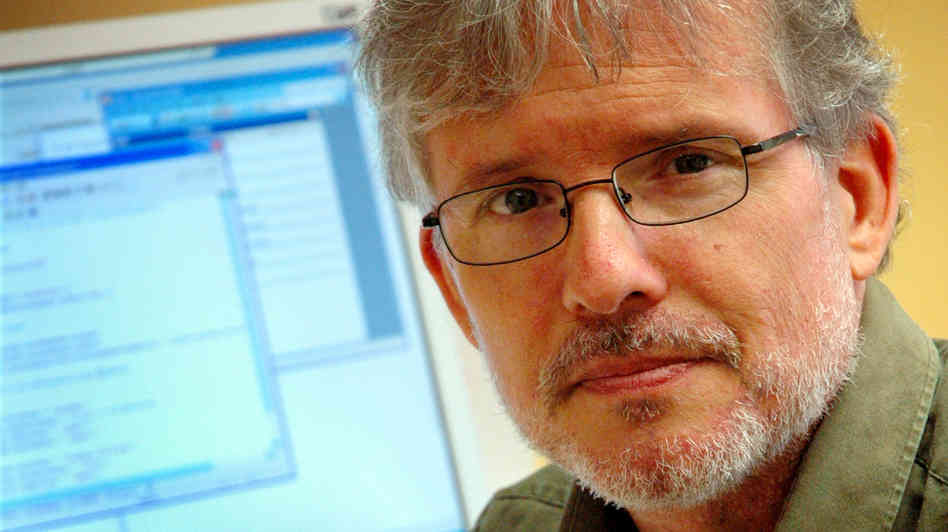
I have recently been catching up on a bit of reading – focusing on the recent work of Professor Stephan Lewandowsky (and others). Following in the wake of James Hansen, Ben Santer and Michael Mann, Lewandowsky has recently been the target of hate-mail campaigns by climate change sceptics. Unlike all the others, however, Lewandowsky (formerly at the University of Western Australia but now at Bristol University in the UK) is not a climate scientist. This is how Bristol University announced his recent appointment.
Steve is an internationally renowned cognitive scientist who has joined us from the University of Western Australia. His research has already revolutionised our understanding of human memory and cognition, and he now stands poised to build upon his impressive body of work with a project as ambitious as it is timely. In particular, Steve’s intention to improve our understanding of how people choose to acquire information, and to use this understanding to help create a more informed populace, is a unique and much needed undertaking. Thus, this research offers enormous benefits in the fields of experimental psychology, climate research and the wider public engagement with and understanding of scientific research.
I must admit that, until recently, I had not sat down to read either of the papers by Lewandowsky et al ( ‘Motivated Rejection of Science’ [PDF] or ‘Recursive Fury: Conspiracy Ideation in the Blogosphere’ [PDF] ) – I had only read about them.
However, now that I have read them, the thing that strikes me most forcefully is not the stupidity of conspiracy “ideation”, the invocation of conspiracy theories, it is the fact that, as Lewandowsky et al acknowledge, their work confirms the findings of many previous studies; that climate change scepticism is associated with prejudicial adherence to libertarian ideology. Also key is that climate change scepticism can be predicted by that prejudicial adherence to libertarian ideology.
Amongst many other things, this explains why EU sceptics are climate sceptics and why the United Kingdom Independence Party (UKIP) do not like Wind Farms. I had understood this for some time. However, I had not fully realised its importance; it was just one theme among others. Anyone who has read my blog recently will probably have noticed my post about New World Order (NWO) conspiracy theory, in which I acknowledged that I had not realised just how significant such thinking is, and how subliminal and subconscious it may be.
Although adherence to free-market economics and libertarian ideology were themes I highlighted in my MA dissertation and in my subsequent book, and mentioned on my blog numerous times, everything I have read in the last few days points to one conclusion: We will not succeed in communicating the urgency of the need for radical changes in energy policy until we can convince people that climate scientists are not trying to perpetuate their research funding or halt human progress.
Professor Lewandowsky’s research shows that little can be achieved by simply telling people they are wrong. Far better is pointing out to people that Limits to Growth and Peak Oil have already halted the progress of globalised Capitalism, as recent times prove dramatically. In other words conveying facts to people rather than ideology.
I must admit that this has been a tough pill to swallow. I am not naturally progressive and certainly not naturally “liberal”. On the contrary, I am socially and politically conservative. However, the reality of anthropogenic climate disruption is a game-changer. Therefore, unlike members of the Flat Earth Society or Young Earth Creationists (YECs), I do not refuse to accept what scientists tell me simply because I don’t like the message.
We cannot defeat such obscurantism by telling people they are irrational; we can only defeat it by focusing on the evidence that suggests strongly that they are mistaken. To this end, I think the words of St Augustine of Hippo are an important consideration; words going back over 1,400 years before anyone started to question the Age of the Earth or the Origin of Species! Words echoed by Thomas Aquinas, (often quoted to those YECs):
“… since Holy Scripture can be explained in a multiplicity of senses, one should adhere to a particular explanation only in such measure as to be ready to abandon it if it be proved with certainty to be false, lest Holy Scripture be exposed to the ridicule of unbelievers, and obstacles be placed to their believing.”
– Thomas Aquinas, Summa Theologica (1273).
In the last 150 years or so, most Christians have now come to reject conspiracy theory explanations for fossils, for example, and have realised that it is inappropriate to treat the Bible as a scientific text book. Regretably, the main source of ideological blindness today is not conventional religion; it is adherence to free-market economics.
Therefore, it is important that we acknowledge the ideological nature of the communication problem we face. That is that the research by Prof Lewandowsky and others has discovered a tendency for libertarians to prefer conspiracy theories to reality. Perhaps, therefore, not surprising that he has been attacked; no-one likes to be told they are deluded.
Roadblocks to policy change will not be cleared by social and political scientists telling libertarians that they are deluded. All that will do is confirm their suspicions and reinforce their prejudices! No, what is needed is for climate scientists to be bolder in stating the facts.
The majority of climate scientists seem content to continue to soft-soap the issue; afraid of “telling it to people straight” because it may induce despair.
No, it is not too late to prevent an ecological catastrophe but I am certain that we are now very short of time and, as everyone from the International Energy Agency, the Pentagon and the IMF agree, further delay will not be cost-effective.
At the same time, I think social and political scientists need to focus on debunking the ‘New World Order’ conspiracy myth and pointing out the logical fallacy in the idea that all Greens are Communists in disguise (the so-called ‘Watermelons’).
The environment has become a political football when it is nothing of the kind. It is our life support system and we have pushed it near to the point of collapse, as E.F. Schumacher once said, by mistaking Nature’s capital for a form of income. Therefore, if we do not change course, bankruptcy would seem inevitable.
oooOOOooo
Having read and reflected on Martin’s essay, a couple of recollections surface. The first is Guy McPherson’s book Walking Away from Empire that I reviewed earlier this year then referred to in a recent republication of a George Monbiot essay:
So very difficult to pick out the sentence that carried the most power, for the essay is powerful from start to end. But this one did hit me in the face, “The impossibility of sustaining this system of endless, pointless consumption without the continued erosion of the living planet and the future prospects of humankind, is the conversation we will not have.“
Finally, I can’t resist reminding you, dear reader, of the point made by Prof. Guy McPherson in his book Walking Away from Empire, which I reviewed on March 6th. particularly in the first paragraph of the first chapter; Reason:
At this late juncture in the era of industry, it seems safe to assume we face one of two futures. If we continue to burn fossil fuels, we face imminent environmental collapse. If we cease burning fossil fuels, the industrial economy will collapse. Industrial humans express these futures as a choice between your money or your life, and tell you that, without money, life isn’t worth living. As should be clear by now, industrial humans — or at least our “leaders” — have chosen not door number one (environmental collapse) and not door number two (economic collapse), but both of the above.
The second recollection comes most recently; from yesterday’s The story of carbon. A story that showed the power of academic, peer-reviewed, properly conducted, rational science!
I will close with a repeat of the closing words from yesterday:
“By my calculation, we have a 5–10 year window to avoid the catastrophe. It won’t be easy — we’re past the point where any transition will be smooth — but we can make the transition and survive as a civilized species, humans in a recognizable world.”
Nothing counter-intuitive about that!

 Learning from Dogs