It is 30 minutes long but it is incredibly important!
Heather Richardson writes the blog Letters from an American.
On August 14th Heather recorded a live interview with California Governor Gavin Newsom.
Watch it!
Dogs are animals of integrity. We have much to learn from them.
Tag: Letter from America
It is 30 minutes long but it is incredibly important!
Heather Richardson writes the blog Letters from an American.
On August 14th Heather recorded a live interview with California Governor Gavin Newsom.
Watch it!
The power of unanticipated outcomes.
I am referring to the result of the British election that was held last Thursday.
Now I am well aware that many readers will not have the same relationship with the outcomes of British elections as your faithful scribe. But I am also aware that we live in a very connected world. I am also acutely aware that for many, many years I was a devoted listener to the 15-minute weekly radio broadcast on the BBC by Alistair Cooke Letter from America.
So for me, and many others I don’t doubt, the views of America as to what goes on across the pond are just as fascinating today as they have always been.
But in the absence of dear Mr. Cooke (20 November 1908 – 30 March 2004) passing on his experienced assessment on what the outcomes of British elections mean for America then I turn to a recent item on The Conversation site and republished here within the terms of that site.
ooOOoo
June 9, 2017 6.04am EDT
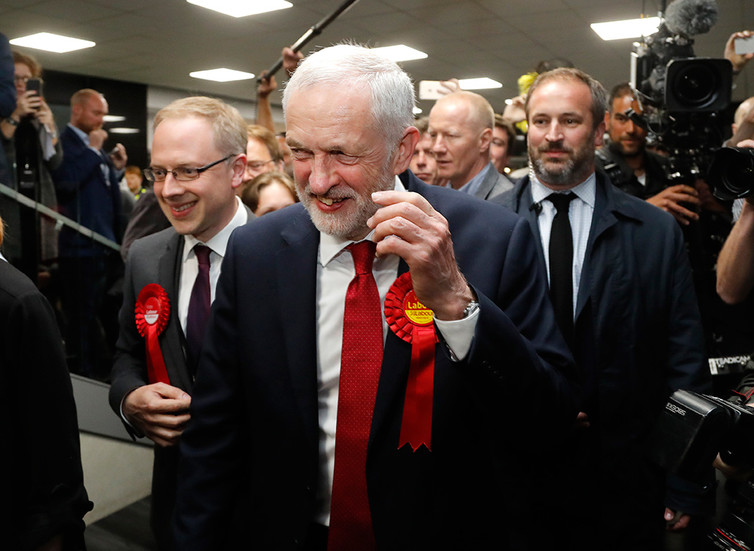
Editor’s note: U.K. Prime Minister Theresa May’s election gamble failed badly as her Conservatives lost 12 seats, leaving them with 318, shy of a majority. It was a stunning loss for a party earlier projected to gain dozens of seats. Without a majority, the Conservatives will have to rely on another party to govern – known as a hung Parliament. If they’re unable to forge a coalition, rival Labour leader Jeremy Corbyn – whose party gained 31 seats – would be able to give it a go. We asked two experts to offer their insights on what Americans should make of the election and its results.

Charles Hankla, George State University
The results of this election show how similar, and yet how different, British politics are from what is happening in America.
As in the United States, there has been an explosion of populism in Britain, most recently evidenced by the Brexit referendum. This new political force is translating into less liberal policies from the major parties.
In continental Europe, the new populism is mostly embodied by the resurgent far right. But in Britain, as in America, it is being filtered through the existing two-party system – though the U.K.‘s smaller parties do complicate the electoral map.
To accommodate the political winds, May and her Conservatives decided to shift their electoral strategy away from Margaret Thatcher’s pro-market economic approach toward a greater focus on immigration, security and economic nationalism.
Labour leader Jeremy Corbyn, for his part, deserted the more centrist “New Labour” ideas of Tony Blair in favor of a more robust form of social democracy.
The American left, like its British counterpart, has also become increasingly skeptical of unbridled markets. But among Republicans, a traditional hostility to “big government” makes pro-worker redistributive policies, some of which the Tories have adopted to win votes, hard to stomach. For this reason, populism on the American right has mostly taken the form of protectionist and anti-immigrant policies, as embodied by Donald Trump.
Yesterday’s results were devastating for May and indicate that the Conservatives were ultimately unable to balance their new populist message with their traditional support for neo-liberal policies.
Corbyn, for his part, will use this unexpected victory (of sorts) to solidify his hold over the Labour Party and to move it further to the left.
It remains to be seen whether the election will result in a minority or a coalition government, or whether the parties will be well and truly deadlocked. Whatever happens, the British electorate, like its cousin across the pond, has shown itself to be highly polarized.
Still, at a minimum, Britain’s parliamentary structure, along with the ability of the Labour leadership to co-opt disillusioned voters, seems to have spared Britain the fate of America – the takeover of government by a populist insurgent.
Terrence Guay, Pennsylvania State University
So now that we know the results, what are the implications for U.S. business interests in the U.K., America’s seventh-biggest trading partner?
May took a calculated political risk and lost. While the market reaction has been severe, with the pound plunging, it’s nothing new to companies, which take calculated risks like that every day – some pay off and some do not.
So first of all, U.S. corporate executives will need to take a deep breath. Assuming a combination of other parties do not cobble together at least 322 seats – despite winning seven seats, Northern Ireland’s Sinn Fein will not send MPs to London – the Conservatives will dominate a coalition government and have considerable sway over policy.
This means a “hard Brexit,” as outlined by May in January, and as seen in the European Union’s tough negotiating guidelines, is unlikely to change. But this is what most U.S. companies have been planning for anyway since last June’s Brexit vote. Many companies, particularly banks and financial institutions, are already planning to move some of their U.K. operations to other EU countries to take advantage of the single market rules.
This process will continue no matter who’s in power, since only the low-polling Liberal Democrat and Green parties promised a Brexit revote.
Second, a weakened Conservative Party will need more foreign friends, and that includes U.S. companies. Since Brexit, some foreign businesses have threatened to downsize or close their U.K. operations as leverage for obtaining government subsidies. Expect more companies to use this strategy with a weaker U.K. government.
As I argue in my recent book, the business environment of Europe is much more than the U.K. market, and U.S. companies have become increasingly aware of this since Brexit.
In other words, it’s business as usual, and that means the continued segmenting of companies’ U.K. and EU strategies, regardless of who is governing in London.
ooOOoo
Expect things to continue to be interesting for some time. Or as more eloquently put by Tariq Ramadan “Times have changed; so must the lenses through which we see the political future.”
Back to Alistair Cooke. There are many of his broadcasts available on the BBC Radio website and on YouTube.
I’m closing with just a small part of Charlie Rose interviewing Alistair Cooke in May, 1996.
Uploaded on Sep 25, 2011Tuesday, May 7, 1996
Charlie Rose: An interview with Alistair Cooke
Alistair Cooke celebrates the 50 year anniversary of his BBC broadcast, “Letter from America”, a 15-minute talk about life in America for British listeners.
Recorded some twenty-one years ago. Somethings don’t seem to change!
None better than Alistair Cooke.
In 1968 I went out to live in Sydney, Australia.
By chance a work colleague in my workplace in Sydney introduced me to an organization called Rostrum. They still exist today and as their ‘About’ page on their website explains:
The History of Rostrum
Rostrum Australia is an association of public speaking clubs, founded on 21 July 1930. The original Rostrum club (“The Rostrum”) was founded in Manchester, England, on 21 July 1923 and its first meeting was held under a yew tree at Greendale Farm near Manchester. The first meeting in Australia was held under an Angophora tree in 1930.
This makes Rostrum the longest-running public speaking organisation in the world.
General Information
Rostrum clubs aim to help their members improve their speaking and meeting skills. They do this primarily through regular club meetings and less frequent competitions. The main national competition for members is the Sidney Wicks Speaking Competition, held about every 6 years. State and territory competitions are held throughout the year.
It was a marvelous connection for me for later on in life I was required to give many public speeches.
Anyway, back to those days in Sydney. I still recall how one meeting was devoted to listening to and understanding one of the most eloquent and masterful speakers ever: Alistair Cooke. Listening to Alistair Cooke’s Letter from America on BBC radio was a passion for me until the day he died.
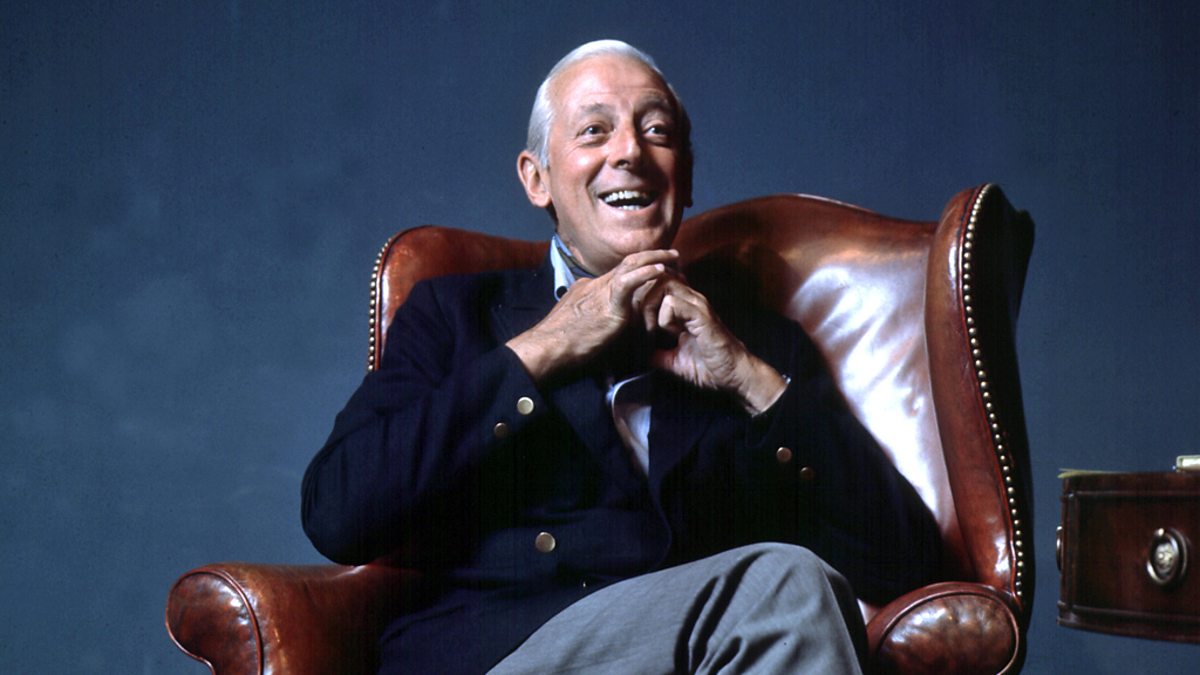
Here’s how Wikipedia describes this wonderful man.
Alistair Cooke, KBE (20 November 1908 – 30 March 2004) was a British journalist, television personality and broadcaster.[1] Outside his journalistic output, which included Letter from America and Alistair Cooke’s America, he was well known in the United States as the host of PBS Masterpiece Theatre from 1971 to 1992. After holding the job for 22 years, and having worked in television for 42 years, Cooke retired in 1992, although he continued to present Letter from America until shortly before his death. He was the father of author and folk singer John Byrne Cooke.
It was a great pleasure to discover that the BBC still holds archives of many of the broadcasts of Letter from America but, in addition, some of Alistair Cooke’s broadcasts are on YouTube.
Please settle down for 15 minutes and listen to one of best writers and speakers to have graced this world.
Broadcast on Fri 12 Dec 1980, BBC Radio
The shooting of John Lennon on the 8th December 1980 sparks a debate over the need for national gun control law in America.
Some issues never go out of date!
A fascinating insight and a reminder, courtesy of Alistair Cooke
Jeannie recently gave me the book Alistair Cooke’s America. The book was published in 1973 and was born out of the scripts that Cooke wrote for the television series America: A Personal History of the United States shown in both countries in 1972. I can’t recall when I first started listening to the BBC Radio programme Letter from America, broadcast by Cooke, but it was a long time ago considering that the 15-minute programme started to be broadcast on the BBC in March 1946, just 18 months after I was born!

Anyway, the motivation to start into the book was born out of a desire to know a lot more about this new country of mine. But quickly there was a fascinating detour.
Early in Chapter One, The New-found Land, Cooke writes of the consequences of the Turks capturing Constantinople:
In 1453, there was a decisive turn in the centuries of warfare between the Christians of Europe and the Moslems of Asia. Their common market, bridge, and gateway was Constantinople, our Istanbul. In 1453, the Turks conquered it, and in so doing shut off the commerce between East and West, the exchange of cloth, leather wines and sword blades of Europe for the silks, jewels, chessmen, and spices of Asia. All things considered, the stoppage was much harder on the court treasuries of Europe that those of Asia and, in one vital item, harder on all Europeans. That item was spice.
Cooke then writes about historic change often being caused by the denial of a simple human need. Shortage of water, total absence of timber for the Egyptians since the time of Solomon, for example.
What I hadn’t realised that for Europeans, spices were regarded as “fundamental to human survival”. That was simply because in the 15th century spices made food edible. Cooke writes,
Even in rich houses, the meals came putrid to the table. (Dysentery, by the way, seems to have been considered through most of the last five centuries a hazard as normal as wind and rain.)
Think about that the next time you reach for the pepper!
That led me to think about the enormous benefit that electricity and therefore domestic refrigeration has had on the health and life expectancies of mankind. It is almost inconceivable to imagine the consequences of a widespread loss of electricity for, say a week, let alone a few months.
Patrice Ayme wrote a guest post for Learning from Dogs that was published on the 26th. In it he wrote,
But then, after an auspicious start, Mars lost most of most of its atmosphere (probably within a billion years or so). Why? Mars is a bit small, its gravitational attraction is weaker than Earth (it’s only 40%). But, mostly, Mars has not enough a magnetic field. During Coronal Mass Ejections, CMEs, the Sun can throw out billions of tons of material at speeds up to and above 3200 kilometers per seconds. It’s mostly electrons and protons, but helium, oxygen and even iron can be in the mix.
The worst CME known happened during the Nineteenth Century, before the rise of the electromagnetic civilization we presently enjoy. Should one such ejection reoccur now, the electromagnetic aspect of our civilization would be wiped out.It goes without saying that we are totally unprepared, and would be very surprised. Among other things, all transformers would blow up, and they take months to rebuild. we would be left with old books in paper, the old fashion way. A CME can rush to Earth in just one day. (Fortunately the Sun seems to be quieting down presently, a bit as it did during the Little Ice Age.)
So let’s just hope and pray that our continued interest in spices remains a flavouring desire and doesn’t return as a critical need for human survival.
By Paul Handover
A tribute to Alistair Cooke of Letter from America
Many, many people of a certain age will remember with very fond affection the weekly BBC Radio broadcasts of Alistair Cooke under the title of Letter from America.
Alistair’s broadcast title, Letter from America, came to mind because I have been thinking for a couple of weeks about what to call my impressions about moving to Payson in Arizona.
Payson Perceptions? Pictures of Payson? Payson Profile? No! They all seemed naff!
But would it be too presumptuous to echo Cooke’s hugely famous programme title? Hopefully not.
(And regular readers will know that yesterday, the first Letter from Payson was published.)
I did a Google search on Alistair Cooke and immediately found the BBC web page devoted to him. For those that don’t know Cooke here are a few details from WikiPedia.
Born in 1908 in Salford, Lancashire, England, Cooke first started broadcasting for the BBC in 1946 and continued until the 20th February, 2004, a total of 58 years and making Letter from America the longest-running speech radio show in the world.
I hope the BBC will forgive me in reproducing here on Learning from Dogs the obituary that is on the Alistair Cooke website. He was a wonderfully interesting man and his weekly Letter from America seems to have been part of my complete life (in a sense it was).
——————-
|
He read his Letter from America for 58 years
|
Esteemed writer and BBC broadcaster Alistair Cooke, famed for his programme Letter From America, has died aged 95. BBC News Online looks back at his long and respected career.
For more than half a century, Alistair Cooke’s weekly broadcasts of Letter from America for BBC radio monitored the pulse of life in the United States and relayed its strengths and weaknesses to 50 countries.
His retirement from the show earlier this month after 58 years, due to ill health, brought a flood of tributes for his huge contributing to broadcasting.
Born in Salford, near Manchester, northern England, Alistair Cooke’s father was an iron-fitter and Methodist lay-preacher.
|
Alistair Cooke: Consummate broadcaster
|
Winning a scholarship to Jesus College, Cambridge he read English, edited the undergraduate magazine, Granta, and founded the Cambridge University Mummers.
Alistair Cooke made his first visit to the United States in 1932, on a Commonwealth Fund Fellowship which took him to both Yale and Harvard universities.
Following his return to Britain, he became the BBC’s film critic and, in 1935, London correspondent for America’s National Broadcasting Corporation.
He returned to the United States in 1937 to work as a commentator on American affairs for the BBC. He made his home there and, in 1941, became an American citizen.
|
A passion for jazz
|
March 1946 saw the first edition of American Letter, which became Letter from America in 1949.
The series was the longest-running series in history to be presented by a single person.
Alistair Cooke never decided what he was going to talk about until he wrote the script, made no notes during the preceding week and preferred to rely on his memory.
In an interview given at the time of the 3,000th edition of Letter from America, he appeared to have mixed feelings about the future of the United States.
“In America,” he said, “the race is on between its decadence and its vitality, and it has lots of both.”
|
He addressed Congress in 1973
|
Cooke led his listeners through the American vicissitudes of Korea, Kennedy, Vietnam, Watergate, Nixon’s resignation and Clinton’s scandals.
In all of this, Cooke pulled no punches. The lyricism of his broadcasting and the urbanity of his voice did not disguise his fears for America which he saw becoming a more violent society.
A liberal by nature, he reserved particular dislike for what he saw as the shallow flag-waving of the Reagan presidency.
Alongside working for the BBC and The Guardian, for which he wrote from 1945 to 1972, he developed a passion for jazz and golf and, as a film critic, he mixed with Hollywood stars.
As a commentator on history, Cooke was sometimes an eyewitness too. He was just yards away from Senator Bobby Kennedy when the latter was assassinated in 1968.
He was never as comfortable on television as radio but, by the 1970s, his hugely successful television series America recounted his personal history of his adopted homeland and won international acclaim, two Emmy Awards and spawned a million-selling book.
British or American?
The Queen awarded him an honorary knighthood in 1973 and the following year, for a journalist, he received the ultimate recognition – he was asked to address the United States Congress on its 200th anniversary.
He told his audience he felt as if he was in a dream, standing naked before them and there was only one thing he could find to say.
Teasing, he exclaimed to the assembled legislators, “I gratefully accept your nomination for President of the United States!”
Naturally, he brought the house down.
Many Britons thought he was American, but to the Americans he was the quintessential Brit, the man who brought them the best of British television as presenter of Masterpiece Theatre. For his part, he explained, “I feel totally at home in both countries.”
He impressed both audiences with his high quality work. With his unquenchable curiosity, Alistair Cooke remained for decades the consummate broadcaster, an elegant writer and a man of enormous wit and charm who made sense of the American Century.
By Paul Handover (still missing Letter from America on the radio.)


 Learning from Dogs