Tag: Learning

Collecting bridges!

Maybe not the strangest thing to collect, but close!

I doubt if very many people have heard of an American by the name of Eric Sakowski and, to be honest, neither had I until I opened a copy of The Arizona Republic newspaper on a recent visit to Payson, Az.  There on the front page was an article about Eric and his passion for bridges!  Yes, bridges.  As the article starts:

Eric Sakowski’s fixation with bridges began as it has for many.

As a kid, he bought the “Guinness Book of World Records” every year and read it cover to cover. He began to ponder: What is the world’s second-highest bridge? Or the 100th.

In 2004, Sakowski took his interest to the next level. He embarked on a five-year quest that would take him halfway around the world three times and cost him thousands of dollars. He became an amateur sleuth, digging out what he says are the real heights of mammoth bridges and snapping pictures.

Sakowski’s endeavor culminated last month in a tidy room of his parents’ home in Sun City West, where at age 44, he completed his project by launching a Web site, highestbridges.com, that catalogs the 500-highest bridges in the world. His findings challenge some long-held claims.

In fact, the website is really quite interesting and some of the photos are stunning.  Here’s one of the Hegigio Gorge Pipeline Bridge in Papua New Guinea.

Hegigio Gorge Pipeline Bridge

It’s 1,289 feet high (393 m) and until 2009 was the world’s highest bridge.

Sakowski has also found some interesting errors in the statistics concerning some bridges.

Using a laser range-finder, he has measured about 100 bridges in the U.S. and about a dozen in China. He found some interesting discrepancies. For example, he determined that the highest bridge in the United States, the Royal Gorge Bridge in Colorado, is 98 feet lower than officially reported. In western China, he said, he first identified the latest bridge to become the world’s highest. He is trying to get “Guinness World Records” to publish the claim next year.

Eric is a professional film-maker but I sense that the day may not be too far off when someone is going to make a film about Eric the Bridge Man!

By Paul Handover

Free speech!

Hats off to some intrepid commentators

We are going through unprecedented troubled times and the way ahead looks very uncertain.  The whole world could be participating in the ‘lost decade’ that Japan experienced previously.

But this article is not about doom and gloom!  It is about recognising the commitment to open and honest reporting being undertaken by (at least) these three  individuals.  Three commentators that this author follows in admiration and awe.

Learning from Dogs has nothing like the following of James Kwak, Yves Smith and Karl Denninger but the LfD authors do have an inkling of the work involved in writing not one but often several articles each day.  It is a huge commitment.

James Kwak

First James Kwak of Baseline Scenario.  Simon Johnson is, perhaps, the more well-known of this duo that comprise Baseline Scenario but it is James that puts in the leg-work.  Here’s a taste of a recent article from James:

Radio Stories

I spend a lot of time in the car driving to and from school, so I end up listening to a lot of podcasts (mainly This American Life, Radio Lab, Fresh Air, and Planet Money). I was catching up recently and wanted to point out a few highlights.
Last week on Fresh Air, Terry Gross interviewed Scott Patterson, author of The Quants, and Ed Thorp, mathematician,  inventor of blackjack card counting (or, at least, the first person to publish his methods), and, according to the book, also the inventor of the market-neutral hedge fund.

Large chunk snipped ……

I finally got around to listening to Planet Money’s interview with Russ Roberts from December. Russ Roberts and I are pretty sure to disagree on almost any actual policy question. But what I liked about his interview was that he basically admitted that policy questions cannot be settled by looking at the empirical studies. On whether the minimum wage increases or decreases employment for example, he says that he can poke holes in the studies whose conclusions he doesn’t agree with, but other people can poke holes in the studies he agrees with. In Roberts’s view, people’s policy positions are determined by their prior normative commitments.

I don’t completely agree. I don’t think that these questions, like the one about the minimum wage, are inherently unanswerable in the sense that the answer does not exist. But I agree that empirical studies are unlikely to get to the truth, particularly on a politically charged question, because there are so many ways to fudge an empirical study. As one of my professors said, there are a million ways you can screw up a study, and only one way to do it right. But I agree with the general sentiment. We are living in an age of numbers, where people think that statistics can answer any question. Statistics can answer any question, but they can answer it in multiple ways depending on who is sitting at the keyboard.

By James Kwak

Read about Yves Smith & Karl Denninger

Time for a Review

What’s more common in business could/ought to apply to us.

I was very pleased to call by and have a chat with a very good friend and his wife recently because they are facing financial difficulties.

Slightly unusual in that he is a qualified Doctor and has a share in the practice and his wife is a music teacher. Why should they have problems?

They bought their house three years ago and, like so many others, took out a large mortgage.  Probably not the best deal available at the time but it allowed them to secure the house they wanted. Since they purchased the property, house prices have fallen so they have fallen straight into negative equity!

The house needed some work and they also carried out a loft conversion. To make this possible they arranged another loan, not at a very good rate, but at least they are working on the property, and the bits they have done look great.

Working hours and the need to keep up to date with patient notes and write appraisals means that there is almost no time for relaxation; to fall into bed at night is a welcome relief! But what of the financial situation?

To keep the show on the road there has been no time to review the arrangement of ‘bricks’ on which the financial blocks are built.  Now they facing a large tax bill, so another large loan is being proposed, just to keep the tax man quiet and keep the show on the road.

How many of us find ourselves in a similar situation? Yet industry has a business practice that can help us. Analyse, diagnose, correct – sort of based on the mantra that ‘You can’t manage what you can’t measure‘.

  • Review our situation and diagnose the problems.
  • Look at our options.
  • Decide what to do.
  • Action our decision
  • And lastly REVIEW progress.

How often are we likely to review our situation like this at home or even make basic changes.  Well perhaps we need to review more often than we think. Make it a regular weekly practice.

Look at being tax efficient, and in the case I am describing this was the major problem, so the cycle of worry is now being broken, and a new firm financial arrangement of blocks being put in place rather than the little boxes, which were piled high, and about to fall down.

Yes it takes time. No we don’t want to face it, but hey its like banging your head against a wall.

It is great when it stops.

Try it!

Bob Derham

“He Hamster”

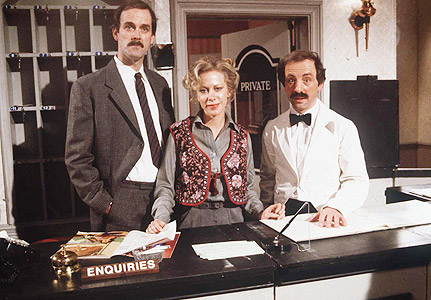
For anyone lucky enough to be around in the 1970s, the British comedy program Fawlty Towers was a must to watch, and still today has a cult following.

In the last episode Manuel the waiter has a Siberian Hamster called Basil, which just happens to be the name of the hotel owner, who is convinced that the creature is a rat, and all this when the health inspector is due to arrive.

Fawlty Towers - Manuel on the right!

With this idea and memory firmly in my mind I would never have looked at getting a Hamster, but for some reason our middle daughter Stephanie wanted one, and kept up constant daily pressure to get one.

I knew something was happening, because there were phone and internet messages about cages, and finally Poppy arrived.

We now have the cage which because it is made of clear plastic means you can see the little creature all the time, and watch her activities. The children have learnt the meaning of being responsible; fresh water, buying food, and making sure the bowl is topped up have become part of the daily routine. Keeping the cage clean and making a warm comfortable nest are big things in a young persons life !

This is a very up-market cage, even the toilet area is a Harrods tea caddy laid on it’s side.

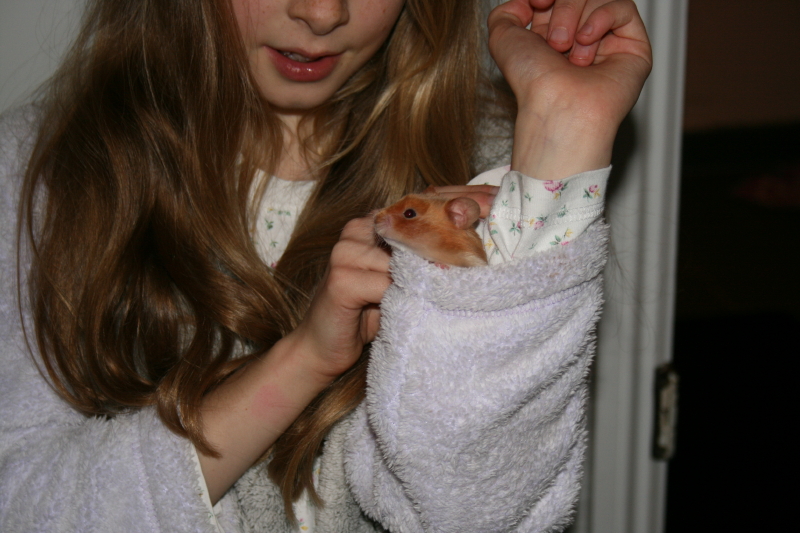
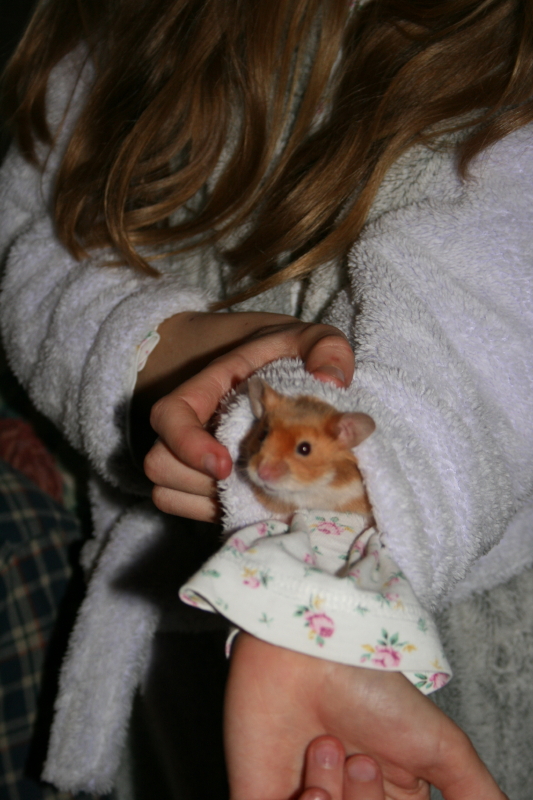
Poppy has become part of our lives, a lovely little animal, who we take with us in a special box sometimes when we go out. Stephanie picks her up first thing in the morning, and keeps her in the pocket of her dressing gown. We have a special exercise wheel which is set up in the lounge of an evening. The dogs lay and watch this spectacle but don’t touch!

We have had bits of fun, especially when Stephanie put Poppy in her dolls house while she was cleaning the cage, and Poppy got stuck up the chimney. Paul, her brother, has left the lid off the cage a couple of times, and learnt from Stephanie about the need to pay more attention to his role in all this. Poor chap !

The love and care for a little creature is very special, and the having Poppy is proving a great learning tool for the children, and even I have weakened and enjoy her being with us.

Funny what can happen in family life!

By Bob Derham

The secret life of the dog, Concluding Part

Concluding this fascinating insight into the extraordinary relationship between dogs and man.

If this is your first sight of this multi-part article about dogs then you will need to start at the beginning:

Part One is here.

Part Two is here.

Part Three is here.

Part Four is here.

Part Five is here.

By Paul Handover

The secret life of the dog, Part Five

Continuing this fascinating insight into the extraordinary relationship between dogs and man.

If this is your first sight of this multi-part article about dogs then you will need to start at the beginning:

Part One is here.

Part Two is here.

Part Three is here.

Part Four is here.

By Paul Handover

The secret life of the dog, Part Three

Continuing this fascinating insight into the extraordinary relationship between dogs and man.

If this is your first sight of this multi-part article about dogs then you will need to start at the beginning:

Part One is here.

Part Two is here.

By Paul Handover

The secret life of the dog, Part Two

Continuing this fascinating insight into the extraordinary relationship between dogs and man.

If this is your first sight of this multi-part article about dogs then you will need to start at the beginning:

Part One is here.

By Paul Handover

The secret life of the dog, Part One

This may be of no surprise to dog owners!

The BBC recently screened one of the most fascinating programmes in ages (OK, subjective comment!).  It was about the relationship between dogs and humans.  The hour-long programme demonstrated just how important that relationship between dog and man really is.

Indeed, within the first few minutes of the programme, one of the contributors says that without that early domestication of dogs, civilisation of man might not have taken place!

Luckily someone has uploaded this programme onto YouTube.  This Post contains the link to the first of 6 parts with the following 5 parts being presented on this Blog each day.

Please, please take time to watch these videos – they will amaze you, and very possibly bring tears to your eyes.

So if you are a dog owner, prepare to see your dog friend in a totally new way.

By Paul Handover

Learning from Horses

This guest post is contributed by someone very different to the profile of the rest of the LfD authors.  AJ is a young American girl.  It’s a pleasure to publish her Post.  I am told that almost every little girl goes through the ‘horse phase,’ but very few actually take it to the next level. The few who do generally end up competing, but for many different reasons. Most kids are doing it for the title. But then there is a small group of them who compete for the love of the sport and the relationship you form with your horse.

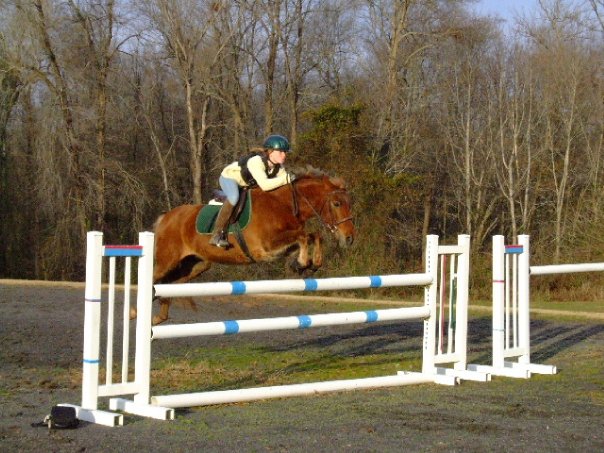
AJ (age 13) jumping Penny 3 ft 6

My name is AJ Easton and I have been riding since I was five, in other words for eight years now. I have been around some pretty incredible horses, one of whom became my best friend. Her name is Heads Up Penny (more fondly known as Penny) and she is my life. She is a 14.2 hand (a hand is four inches, so she is 4’10” tall), red dun Grade Pony. My father purchased her for me in 2005, just before I turned nine. She cost only $2,650, but to us, her disposition alone is worth millions.

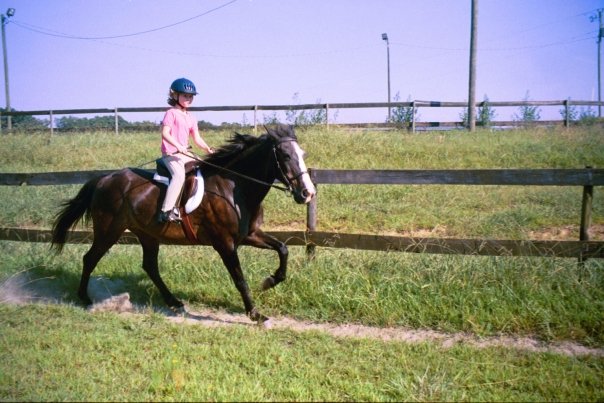
AJ (age 6 ) riding Chip

My first horse, Chocolate Chip, died a year before we bought Penny. Chip and Penny taught me almost everything I know about horses, but that isn’t all I have learned from them.  Chip taught me about letting go, and how important it is to show the special people and pets in your life how much you love them.  Penny has taught me how to be responsible, patient, understanding, and so much more. She has also given me endless amounts of love; she always has a look on her face that can melt your heart. Penny always tries her hardest to please and has gone way beyond our highest expectations.

We bought her to help me perfect the basics of riding to see where I might want to go with my riding career, but she has turned out to be one of the most incredible pony jumpers I have ever seen. I still remember being excited about jumping 2’6” in my first year of showing, but now we are sailing over 4′ fences together.   Remember, she is only 4’ 10” tall!  We have so many new goals for her this year, now that she is going consistently over 3’3”, which is what she needs to be able to do to compete successfully in the top Pony Jumper shows.

This year we are trying to qualify for the 2011 USEF [United States Equestrian Foundation. Ed.] National Pony Jumper Finals, the show where all of the top jumpers come together and compete to be the best. We don’t expect to win, or even place, but being able to show in it would be one of the greatest honors ever, especially if I was able to do it with my best friend, Heads Up Penny!

By AJ Easton