The Hubble Space Telescope (HST) has been in space for 20 years!
This week, twenty years ago, the HST was launched into orbit. There’s much online if you want to read about it both on WikiPedia and on the Hubble web site so this post is going to offer just two items.
A beautiful picture
Nucleus of Galaxy Centaurus A
And an interesting audio slideshow tribute from the BBC – click here, introduced thus:
Take a look at some of the sights it has seen in that time with Professor Alec Boksenberg from the Institute of Astronomy in Cambridge – who was on the European team that helped build Hubble.
By Paul Handover (in awe of what is beyond our skies)
Author Update – the Learning from Dogs author team are delighted to welcome Elliot to their ranks.
On April 1st I set the scene for the essays that I wanted to write for Learning from Dogs as follows:
I often ask myself just how effective the modern US schooling system is as a tool of education, and whether or not its costs outweigh its benefits. I hope to have at least a rough answer to this question in the final post of this series.
I intend to examine three topics:
– In what ways does the modern schooling system function as a positive tool for education?
– What costs involved in modern schooling hinder its ability as an educative tool, and even make it a negative influence on students?
– Considering the analyses put forth in the first two posts, do the costs or benefits or this system outweigh the other? On the whole, are school and education complements or antagonists?
The author
On April 15th, I looked at the positive aspects of the American educational system. Now I look at the other side of the coin, so to speak.
Intellectual failure
While in my last post I attempted to put a positive spin on the United States education system, I must here admit that I personally tend to view it in a much more negative light. There are several reasons for this, three of which I will try to elaborate on here.
My first major concern about education in the United States is its lack of critical thinking skills, which produces students who do not know how to question the “system” for what is truly is, but rather constantly take the context of things presented as fact (the two-party political system is a perfect example of this.)
I am not necessarily arguing that the specific curriculum is being chosen to suit this purpose, though I think this argument could be made (it would, however, require quite a bit of research.)
Rather, consider the required courses – very rarely do you see courses on economics or logic. While some schools offer these as electives, they are almost never required. This is quite sad, as a sound ability to question the established authorities and the nature of the world as a whole requires a strong background in these two fields in particular.
The history of economics is a history of government policies that have failed because of their disregard for this very topic.
The economist Ludwig von Mises wrote that “the unpopularity of economics is the result of its analysis of the effects of privileges. It is impossible to invalidate the economists’ demonstration that all privileges hurt the interests of the rest of the nation or at least a great part of it.”
A second negative aspect of the American education system is what it does to the human mind. It essentially takes the mind and makes it into a factory that is able to take in information and then spit it back out. I think there is a direct relationship between the formerly mentioned lack of classes on logic and economics and this production of human beings who are essentially taught to be cogs in a machine.
Economically, the schooling system can, in this light, be seen as a massive subsidy to corporations, who are handed people already trained in how to listen then do and repeat.
Finally, I must admit that I am skeptical as to the true purpose of compulsory education. I have rarely in history seen it as a tool for true learning, as it seems to tend to rather be a system of control. I see no reason why our school system would be any different.
J T Gatto's book
John Taylor Gatto, a former school teacher and avid critic of mandatory schooling, has written that the purpose of modern schooling is a combination of six different functions:
The adaptive function – Establish a fixed reaction to authority.
The integrating function – People taught to conform are predictable, and are easier to use in a large labor force.
The directive function – School determines each student’s social role.The differentiating function – Children are trained as far as they need to go according to their prescribed social role
The selective function – Tag the unfit with poor grades and disciplinary actions clearly enough that their peers will see them as unsuitable for reproduction, helping along natural selection.
The propaedeutic function – A small fraction is quietly taught how to manage the rest.
I am not sure if I completely agree with Gatto, but he makes some interesting points. In my final article, I’ll attempt to weight the costs against the benefits, and see which comes out on top.
On April 1st I set the scene for the essays that I wanted to write for Learning from Dogs as follows:
I often ask myself just how effective the modern US schooling system is as a tool of education, and whether or not its costs outweigh its benefits. I hope to have at least a rough answer to this question in the
Elliot Engstrom
final post of this series.
In the following posts, I will examine three topics:
– In what ways does the modern schooling system function as a positive tool for education?
– What costs involved in modern schooling hinder its ability as an educative tool, and even make it a negative influence on students?
– Considering the analyses put forth in the first two posts, do the costs or benefits or this system outweigh the other? On the whole, are school and education complements or antagonists?
Here is the first one looking at the positive aspects of the American educational system.
Intellectual exploration
My kindergarten teacher told me to always start with something positive, so I’ll be beginning my analysis of American schooling by looking at how it is a positive tool for education.
One facet of the American education system that I once disapproved of but now find extremely useful and educative is the long period of time that students have before they must commit to a career choice.
I used to view this lag as a waste of resources. However, living in France and being a student at a French university changed my mind. The French system begins to lock children into a career path as early as the closing years of middle school. If a student in France wants to be a doctor, for example, they enter into medical school immediately upon leaving high school. The same is true for professions like pharmacology and law. There is very little opportunity for intellectual exploration in the country’s schools. Rather, one simply must make the best of wherever one ends up.
While the American system is more long-winded, it is a better tool for education in that it allows for a more dynamic range of studies. A liberal arts education forces students to delve into a wide range of subjects, giving students the chance to explore their interests and abilities.
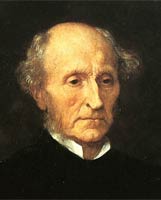
Socrates (or Plato, depending on your interpretation of Plato’s dialogues), believed that a liberal arts education also encouraged the development of critical thinking skills. However, it should be noted that many of the greatest critical
John Stewart Mill, (1806–1873)
thinkers in history did not go through formal schooling. (Socrates himself and John Stewart Mill come to mind.)
This system also allows students to change their mind, pursuing those fields of study that truly interest them the most. It is amazing how many students in the American university system change majors during their tenure as students. This often is because they find that the career path they thought was for them is in fact not their liking – the number of students who abandon the premed track during college is a perfect example of this.
Education also entails socializing with other human beings. The American education system also facilitates this form of education quite well, as a liberal arts form of study at both the high school and university levels mixes together students of different interests.
Whereas in the French model a student studying medicine is constantly surrounded by other students of the same mindset, a premed student in the United States will have classes with students in other fields of study, expanding their social horizons and forcing them to relate to people with whom they may have little in common.
In my next post, I will examine the American schooling system as an antagonist to education, and will then close this series by attempting to weigh the system’s costs and benefits against each other.
Elliot was ‘exposed’ to the Learning from Dogs readership on the 22nd March as our first Guest author. He wrote about the US Government and Poverty.
Elliot has one important distinction with respect to the other authors of this Blog; he is the right side of 30 years old!
He is going to use this perspective to reflect on schooling, something that most of us ‘aged’ peeps take for granted, assuming we can remember our school days! 😉
It promises to be a fascinating reflection.
———————————–
Setting the scene
I’ve had a plethora of experiences over the past 17 years of my life. I’ve made and lost friends, had romantic
Elliot Engstrom
relationships, read, traveled all around the world, lived in France, and done countless other things that I consider myself immeasurably blessed to have experienced.
Despite the fluidity of where these different experiences have taken me, my entire life since the age of four has had one characteristic in common – I have been a school student.
In the spirit of “Learning from Dogs,” I thought it might be interesting to reflect a bit upon the core dynamic between education (not learning, which is a far broader topic) and schooling.
I often ask myself just how effective the modern US schooling system is as a tool of education, and whether or not its costs outweigh its benefits. I hope to have at least a rough answer to this question in the final post of this series.
In the following three posts, I will examine three topics:
– In what ways does the modern schooling system function as a positive tool for education?
– What costs involved in modern schooling hinder its ability as an educative tool, and even make it a negative influence on students?
– Considering the analyses put forth in the first two posts, do the costs or benefits or this system outweigh the other? On the whole, are school and education complements or antagonists?
This series is going to be exciting for me because, to be quite frank, I have no idea what my final answer is going to be. I guess I’ll just have to stay tuned to see where my brain takes me – and so for you!
On the 22nd March, Learning from Dogs had the pleasure of a Post from our first Guest Author, Elliot Engstrom. We are doubly delighted to have Per Kurowski join us as our second Guest Author.
Per Kurowski
Per is a prolific blogger. He has had a full career including serving as an Executive Director of the World Bank from 2002 until 2004 for Costa Rica, El Salvador, Guatemala, Honduras, Mexico, Nicaragua, Spain and Venezuela. More about Per’s life experiences can be found here.
Here is Per’s first Guest Post for Learning from Dogs.
——————-
The GPS and the AAAs
Not so long ago I asked my daughter to key in an address in the GPS and then even while I continuously heard a little voice inside me telling me I was heading in the wrong direction I ended up where I did not want to go.
Whither we are led?
Something similar caused the current financial crisis.
First the financial regulators in Basel decided that the only thing they would care about was the risk of individual financial defaults and not one iota about any other risks.
Second then, though they must have known these were humanly fallible they still empowered some few credit rating agencies to be their GPS on default risks.
Finally, by means of the minimum capital requirements for banks, they set up all the incentives possible to force them to heed what the GPS said and to ignore any internal warning voices.
Of course, almost like if planned on purpose, it all ended up in a crisis. In just a couple of years, over two trillion dollars followed some AAA signs over the precipice of badly awarded mortgages to the subprime sector. Today, we are still using the same financial risk GPS with the same keyed in instructions… and not a word about it in all recent Financial Regulatory Reform proposals
I hate the GPS type guidance of any system since I am convinced that any kid brought up with it will have no clue of what north, south, east or west means; just as the banker not knowing his client’s business or how to look into his client’s eyes or how to feel the firmness of his client’s handshake, can only end up stupidly following someone else’s opinion about his client on a stupid monitor.
I hate the GPS type guidance system because, on the margin, it is making our society more stupid as exemplified by how society, day by day, seems to be giving more importance to some opaque credit scores than to the school grades of their children. I wait in horror for some DNA health rating scores to appear and cause a total breakdown of civilization as we know it.
Yes, we are buried under massive loads of information and these systems are a tempting way of trying to make some sense out of it all, but, if we used them, at least we owe it to ourselves to concentrate all our efforts in developing our capacity to question and to respond adequately when our instincts tell us we’re heading in the wrong way.
Not all is lost though. I often order the GPS in my car to instruct me in different tongues so as to learn new languages, it gives a totally new meaning to “lost in translation”, and I eagerly await a GPS system that can describe the surroundings in more extensive terms than right or left, AAA or BBB-, since that way not only would I get more out of it but, more importantly, I would also be more inclined to talk-back.
Very early on in the life of this Blog, indeed on the second day, I wrote a short article about the NASA mission to the moon, some 40 years after the event. You see, for me that has been the historic event of my lifetime.
I believe that this nation should commit itself to achieving the goal, before this decade is out, of landing a man on the Moon and returning him safely to the Earth. No single space project in this period will be more impressive to mankind, or more important in the long-range exploration of space; and none will be so difficult or expensive to accomplish.
Apollo 11 badge
That speech before Congress by President Kennedy was on the 25th May, 1961. I was 16 and was enthralled by the idea of being alive when man first set foot on another planetary body. That came about on July 20th, 1969 at which time I was living and working in Sydney, Australia. I took three days off work, rented a TV and watched every minute of the event.
Exploration is a core need of man. By pushing out the boundaries of our knowledge we continue to offer hope to mankind.
So it is with great disappointment that it has been announced by President Obama that the manned mission programs to the moon are to be severely curtailed – that sounds terribly like political speak for cancelled!
As Eugene Cernan (last astronaut to set foot on the moon) said:
I’m quite disappointed that I’m still the last man on the Moon. I thought we’d have gone back long before now.
I think America has a responsibility to maintain its leadership in technology and its moral leadership… to seek knowledge. Curiosity’s the essence of human existence.
Curiosity is indeed the essence of human existence.
That curiosity and the investment in space exploration by NASA on behalf of the whole world has shown us some remarkable findings about Saturn and it’s majestic rings. Just watch the video segments in this piece from the BBC.
The one-time cost of Cassini-Huygens mission was $3.26 billion. Just 0.3% of the cost of one year’s expenditure on U.S. defense spending.
Science missions like Cassini enhance cooperation between nations, and greatly contribute to scientific progress which benefits everyone.
Perhaps the big Banks would like to pick up the cost of further manned missions to the Moon?
When I was a very young boy at Grammar School (aka High School) in Wembley, North West London, one of the subjects taught was wood-working. I loved the feel of wood, still do, and the smell of a wood shaving fresh off the wood plane is still remembered. But, for whatever reason, wood and I never got on.
Later on, my first yacht was a pretty little East Coast gaff cutter, built in 1898, with a hull of pitch pine laid on grown oak frames. Her original name was Mimms but this had been changed to Esterel by the time she was purchased by me. Despite needing a lot of remedial work, the over-riding memory was how the hull ‘spoke’ when she was being sailed.
It’s almost as though wood doesn’t die when the tree is felled, it just passes into another phase depending on the use made of it.
So where’s this all leading?
Alan Peters who died October 11th, 2009
In the issue of The Economist dated November 7th, 2009, there was an obituary about Alan Peters, furniture maker, who died on October 11th, 2009, aged 76. Like all obits. that appear in The Economist this was well published but something about this particular obituary really stuck in my mind. I tore out the page so it could be re-read over the coming weeks.
It’s still on my desk even 6 months later and it prompted me to write about Alan Peters on Learning from Dogs.
In contrast to many of today’s school-leavers, who look for instant success and celebrity, the furniture designer Alan Peters served seven years’ apprenticeship in the workshop of Edward Barnsley, which then operated without power tools. When interviewed last year Peters was still proud that he swept the workshop floor quicker and better than anyone else. His eagerness to share his passion and knowledge of furniture design and furniture making was a theme of his life.
And here’s another reflection from David Savage who studied under Alan Peters:
Damn, Damn, Damn, I am getting fed up writing obituries on dead furniture makers. Why can’t they just go on for ever.
I knew Alan quite well. He was a role model and a mentor when I really needed one. This would be way back in the late 1970s when there were very few people making modern furniture in a barn in Devon which is what I wanted to do. Even fewer making a living doing it. I had all the questions and Alan as far as I could see had all the answers. I spent a short time working with him. I was first in the workshop in the morning and last out in the evening. I’m sure he got fed up with my questions but he patiently answered. He gave and gave and gave. When I was set up he helped me get into the Devon Guild of Craftsmen and much later he would come to my workshop in Bideford to give Saturday seminars showing slides of his work and trips to Japan and Korea. He was an inspiration I know not just to me but to a generation of makers. I miss him.
Question: How many furniture makers does it take to change a light bulb?
Answer: Ten, one to change the bulb and nine to discuss at length how Alan would do it.
The greatest danger in scuba diving? You may be surprised!
I learned to scuba dive about 20 years ago. I was certified by NAUI (the National Association of Underwater Instructors) in Chicago, Illinois, and did my check-out dive in a quarry in Wisconsin. It was dreary and raining. The water was cold and the scenery sorely lacking: we dove down to the top of an abandoned school bus! I did just fine as long as I had air; strap a tank on me and I can dive for hours.
But take away the air, and make me go underwater, and I want to surface immediately. It was a huge accomplishment for me to complete my surface dive (where you go fairly deep with no air, just a snorkel, then surface and clear out your snorkel to continue breathing on the surface) although I bit through at least one snorkel before I was through! I blamed it on the cold but the truth is that I was very tense.
Scuba Diving can be fun!
I did a fair amount of diving before I had children and hung up my fins. I dove the Blue Hole, going down 120 feet and getting “narced” (nitrogen narcosis, where you feel “drunk” underwater). I did open water diving with hammerhead sharks off CoCos Island.
My buddy and I were swept away in a current in the middle of the ocean, but so was the dive master and the rest of the dive team, so the boat followed us and we were just fine. I dove with sea turtles, manta rays, eels, and sea horses. I’ve done night diving, which was surprisingly noisy as the fish nipped the coral as they fed. I loved scuba diving. It was a magical, liberating, beautiful experience. But I never forgot how dangerous it was and that it could kill you if you weren’t careful and aware.
I tend to be fairly risk averse so I did a lot of nerdy research as I prepared for my first real diving trip. I wanted to know all I could about how to avoid a scuba diving accident. I learned something that I thought others might find very interesting: that diving as a threesome is the single most dangerous thing you can do when scuba diving! More dangerous than cave diving, ice diving, open water diving, or diving alone! (If my memory serves me right, this result is based on Canadian data on scuba diving accidents, injuries, and deaths. )
It seems hard to believe at first but I think I’ve got it figured out. For one, it happens fairly often. I’ve seen it on many diving trips: someone comes alone or their buddy can’t dive, so they join up with a buddy team. Dive instructors suggest that people join up in threes rather than dive alone. Or the dive instructor joins a pair.
Two, I think people feel safer in a bigger group. Three, I think that when you are diving alone, or cave or ice diving, you are very aware of the risks and take extra precautions to avoid the dangers. But diving in threes doesn’t “seem” risky, so everyone relaxes. And people tend not to clearly lay out ahead of time who is watching whom at the bottom of the ocean where seconds can make the difference between life and death. And that is likely where the danger lives: with a buddy system, there is no question about who is responsible for whom. I am watching out for my buddy, and he is watching out for me. Period. But when diving in threes, the pairing gets muddled. Are you watching out for two people? Are they watching out for you, or for each other? And inevitably someone gets overlooked. And accidents happen.
So, if you ever take up scuba diving, have a blast! But don’t ever dive in threes!
As a follow-up to my last Post on Learning from Dogs “Managing in a mad world“, I got to thinking about the so called “Law of Attraction“.
I say that because I beginning to believe that this ‘Law’ is more about what we think about and focus our attention on than anything that has a tangible force of attraction. But it is well known that the brain (to protect our sanity!) filters out on a huge scale so this ‘attraction’ may be our minds remaining receptive or, as it were, allowing us to ‘resonate’ with others sharing our ideas and emotions.
Again, I notice this common ground between my psychotherapy clients and my business clients. Successful people tend to focus on the positive and usually have a strong belief in themselves and their abilities, and unsuccessful people who have suffered any sort of difficulty for an extended time, tend to be preoccupied with focussing on the negative and tend to have a negative self-view.
Naturally, we become orientated around our belief systems. This, I believe is where good, consistent parenting comes in because many of our beliefs are taken on from our parents. Even if the parenting style has been ‘tough’ as long as there’s consistency, balance is maintained and there is a solid reference point for the youngster to come away from.
Management styles resemble parenting styles, and why shouldn’t they, as the higher qualities of facilitating structured learning in a safe environment is exactly what good management is all about. Delegating is about empowering and confidence building. Parenting styles that are loose or have little or no structure or that are overbearing and dictatorial tend to be damaging.
Of course, there are no hard and fast rules here, just tendencies but it’s interesting how these are played out everywhere, in every situation where we are in relationship with others. Even more interesting in a recession where companies are really struggling!
How fascinating to clock the number of companies struggling badly who have an autocratic management style, where staff are told what to do and there is little empowerment, and then compare them to ones where the opposite is true and people are free to interact, communicate, feel they’re reasonably empowered and work together in an environment of mutual trust.
The correlation in this part of the South West UK where I mainly work is significant. It’s as if when we feel empowered and we’re working together with a group of like-minded people, all problems and challenges are solvable, because our self-belief is high and we visualise success. Also, adversity is seen as a challenge and one that can be mastered.
In flying, mistakes have the power to inflict harm way beyond the immediate significance of the mistake. Thus the flying community have created a whole load of sayings that serve constantly to remind all those charged with the safe transport of aircraft. For example we have ‘If there’s any doubt, there’s no doubt‘. Or ‘There are old pilots and bold pilots, but no old, bold pilots‘. However the saying that underlines this story is ‘Never assume, always ask!’
Who is that in the LH seat?
His request approved, the CNN News photographer quickly used a cell phone to call the local airport to charter a flight. He was told a twin-engine plane would be waiting for him at the airport.
Arriving at the airfield, he spotted a plane warming up outside a hanger. He jumped in with his bag, slammed the door shut, and shouted, ‘Let’s go‘.
The pilot taxied out, swung the plane into the wind and took off.
Once in the air, the photographer instructed the pilot, ‘Fly over the valley and make low passes so I can take pictures of the fires on the hillsides.‘
‘Why?‘ asked the pilot.
‘Because I’m a photographer for CNN‘ , he responded, ‘and I need to get some close up shots.’
The pilot was strangely silent for a moment, finally he stammered, ‘So, what you’re telling me, is . . . You’re NOT my flight instructor?‘









 Learning from Dogs