The following was read over on Mother Nature News on June 30th. The item, and especially the photographs, just had to be shared with you.
However, to ensure the integrity of republication and the identity of the photographers, I’m going to include the photographs and the words of the original MNN piece, and split it across today and next Sunday.
Trust me you will adore these photographs.
ooOOoo
These prize-winning images of dogs will steal your heart.
10th annual Dog Photographer of the Year competition drew entries from photographers in 90 countries.
Winner of the Man’s Best Friend category (Photo: Fiona Sami/Dog Photographer of the Year Competition)
The love of a dog is a universal joy, as the latest photography competition from The Kennel Club illustrates. The 10th annual competition drew over 13,000 entries from photographers in 90 countries. The photographs show the beauty, loyalty, companionship, dignity and, of course, the adorableness of dogs around the world.
The competition features eight categories, including Puppies, Oldies, Dogs at Work, Dogs at Play, Man’s Best Friend (winner pictured above), Assistance Dogs and Dog Charities, Dog Portraits and I Love Dogs Because.
Winner of the Dogs At Work category as well as overall winner of the competition (Photo: Anastasia Vetkovskaya/Dog Photographer of the Year Competition)
This image of Sheldon the English springer spaniel enjoying a mist-shrouded pond early one morning is the work of Anastasia Vetkovskaya from Russia. Not only did it win for the Dogs At Work category, but it also placed as the overall winner of the competition.
Vetkovskaya states, “I have loved animals from an early age, which is why I went to Moscow Veterinary Academy and became a veterinary surgeon in 2007. Around this period of time, my husband gave me my first SLR camera, and since then I have devoted all of my free time to photography. My specialty is pets, and I am inspired most by horses and dogs.”
Winner of the Dogs at Play category (Photo: Tom Lowe/Dog Photographer of the Year Competition)
Baxter the Westie inspired his photography-loving human, Tom Lowe, to snap this image of Baxter playing in the water of Loch Lomond in Scotland.
Winner of the Assistance Dogs and Dog Charities category (Photo: Michael Higginson/Dog Photographer of the Year Competition)
This poignant image was taken by Michael Higginson, and features his brother Dale with Esta the dog. The win not only benefits the photographer but also a charity of his choice. The Kennel Club is making a donation to Higginson’s favorite charity, Dogs for Good.
Higginson states, “Winning the Assistance Dog category has made it even more special. It’s an honor to be able to show the world what a difference a dog can make to someone else’s life.”
ooOOoo
Aren’t they breath-takingly beautiful!
The rest of these fabulous photographs in a week’s time.
Your dog can cue to you open the door by ringing a bell, but how about taking it to the next level and teaching your dog to open the door by himself? In fact, there’s a handy trick built into this that we will introduce later on! This video walks you through all the steps to opening doors and drawers:
Hold an object
If your dog likes to play fetch or tug, it may be a great idea to teach him how to hold and carry an object. It’s a new way for a dog to think about holding a toy, since once the dog has a grip on it, he needs to wait for you to give the cue to release it. This trick is also included in a more complicated trick, which is next on our list. But first, here’s a video that shows you how to master this trick:
Fetch something from the fridge or cupboard
When you have the training down for touch, opening the door, knowing the names of objects, and holding an object, it’s just a matter of putting the steps together to teach your dog to fetch an item from somewhere in the house. A popular version of this trick is of course to fetch a beer from the fridge! But maybe start out with a less fizzy drink option, just in case.
An interesting trick to teach your senior dog is how to walk backwards. It’s a great one to help with getting him to think about using his body a little differently. Most dogs aren’t really aware of where their hind end is — it’s just the part that follows their front end. By teaching your dog to walk backward, you’re teaching him to be aware of where his back legs are going. It’s great for both mental and physical agility.
Find it
Keep life interesting for your dog by creating a game around using his nose to find a reward. This is a great trick especially for dogs whose hearing or sight has diminished with age. The trick teaches them to use their noses even more purposefully, using scent work to find the hidden treat or toy. Once you teach your dog how to find it, you can have the “it” be something different every time you play to keep your dog at the top of his game. This video shows an older Labrador learning the steps to the “find it” game and having fun playing:
Tuck himself in bed
It’s surprising how much fun you can have with a trick that only requires your dog to grab a blanket and roll over. This adorable trick is great for dogs of any age, and is an easy (and cozy) trick for your senior dog to learn. You simply teach your dog to lie down on a blanket, grab and hold the corner of it, and roll over so he tucks himself into bed. For senior dogs who like to snooze in extra warm blankets, this is a dream trick. Here’s how it works:
ooOOoo
So there you are. Plenty to keep you and your senior dogs engaged for a long time. Once again, if you missed part one then that was published yesterday.
The household here in Oregon has a number of seniors, both dogs and humans. And while I’m pretty sure that this senior human is practically past the point of learning new tricks, apparently it doesn’t apply to our old dogs.
So enjoy this recent article that appeared on Mother Nature News.
oooooh
Teaching an old dog new tricks is not only possible, but a lot of fun!
By: Jaymi Heimbuch, November 30, 2015
Old dogs can learn new tricks with ease! (Photo: Annette Shaff/Shutterstock)
The old saying goes that you can’t teach an old dog new tricks, but we know a lot of old sayings are wrong — this one included. Of course we can teach old dogs new tricks! In fact, it’s a great way to keep your dog mentally stimulated and having fun throughout his life.
One important thing to keep in mind about teaching senior dogs new tricks and behaviors is the dog’s level of physical ability. Many senior dogs are perfectly able, but if your dog is getting achy in the joints or has other limitations that come with age, keep these in mind. Older dogs may have joint pain or arthritis and have a harder time jumping or even sitting for long periods. They may also have dental issues which may limit the tricks they can do using their mouths. And they may also have hearing or vision problems which alter not only what kinds of tricks you want to teach them but also the way in which you teach them. So it’s important to know what your dog’s physical limitations are when you’re thinking up new tricks, and not push him to the point of possible injury.
While your dog may be past the days of learning to jump through hoops or leap over walls, there is a huge range of tricks that keep mobility issues in mind, and which senior dogs will have a lot of fun learning. Some of the tricks listed here build on each other and gain complexity, so you can keep things interesting for your dog for weeks at a time while training.
Touch
This is such a great trick to use as a foundation for other tricks, from flipping light switches on or off to coming back to your side. And it’s incredibly easy for your dog to learn and do. This is great for older dogs because you can make it really simple at first and build complexity into it after your dog has it down. To start out, you train your dog to do hand targeting. Here’s a video that shows not only how to train your dog to touch your hand, but many of the uses of the behavior:
Teaching your dog to yawn is all about “capturing behavior” with clicker training. It’s much like training your dog “touch” but this time, you have to wait for your dog to offer the behavior and capture it when it happens. Click — or say a key word like “Yes” — whenever you catch your dog yawning, and then reward him with treats or a game with a toy. After awhile, your dog begins to associate the yawn as being a trick that earns a reward. Here’s a video that demonstrates capturing different behaviors that you can turn into cute tricks, including yawning on command:
Even when you’re a grown-up, you have to pick up your toys when you’re done playing. Teaching your dog this tidy behavior will keep him or her a little more active in a low-key way, and thus help loosen up those stiff joints and muscles without putting a strain on their body. Plus, it’s a fun game that you can play over and over, not just on clean-up duty.
Stretch your dog’s mental abilities by teaching him the name of different objects or toys. This is a great way to teach your dog to fetch certain items from the toy box or even various objects from around house. You can start off with a few items from the toy box or simply get rolling with items you may want him to fetch for you, including hats, keys, shoes, blankets and so on.
Though it may take a while for your dog to truly grasp the name for each item at first, soon he will catch on to what the name game is all about and will likely grasp names faster when introduced to new objects.
Here’s a video that shows how to begin teaching a dog the name of an item, and how to add more items into the mix:
Your senior dog may be house-trained, but is he also trained to tell you precisely when he wants or needs to go out? You can give your older dog a great tool to tell you what he needs by teaching him to ring a bell as a cue to go outside. This video shows the progression of teaching a dog to touch the bell, and then eventually transition to learning that ringing the bell means their human opens the door for them.
Another day that almost disappeared as a result of my impending book launch soaking up so much time.
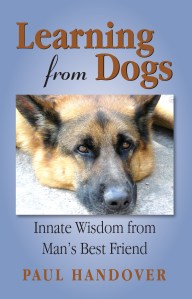
The book should be available for sale by the end of the month, with the launch and book signing taking place locally in Grants Pass on Saturday, December 12th. Followers of this blog will be offered a special discount on the ebook versions once they are released shortly. So if that “rocks your boat” then sign up to follow this blog. Here’s a description of the book:
About the book
There’s a tiny amount of domesticated wolf in all of us. The relationship between canids and humans goes back nearly 40,000 years, when dogs split away from wolves. With our dogs, we have traveled the ancient track from hunter-gatherers to modern humans. However, this track now seems to offer an uncertain future for humankind and society.
Learning from Dogs shows how and why now, more than ever, we humans need to learn from our dogs. At times the book relates personal stories through autobiography, diary, and blog entries. Other times it reinforces a point with speculative and imaginative fictional narrative. Throughout the book, there is a foundation about the history of wolves, dogs, and humans, as the author injects factual research to assist us to more fully understand the importance of this unique relationship.
With just the right blend of humor, story-telling, perception, compassion, and insight, the author shares his unusual perspective and how he came to share what he’s learned through a lifetime of observation and interaction with dogs.
Readers who love dogs, or any animals, will connect with this book and become more fully aware of why our animal friends are valuable to learn from to help us heal the challenges of the 21st century. Occasionally launching into intellectual tangents that will provide intrigue and inspiration for the heart and soul, the book ultimately returns to the central thesis: “What we can (and should) learn from dogs.”
Pat Shipman, retired adjunct professor of anthropology at The Pennsylvania State University, and the author of The Animal Connection and The invaders; How Humans and Their Dogs Drove Neanderthals to Extinction, described the book as, “both wise and thoughtful. It also includes some of the best writing about the intimate and special relationship between dogs and humans I have ever read.”
The Foreword to the book is by well-known local vet, James R. Goodbrod, Master’s Degree, Doctor of Veterinary Medicine.
So with no further ado, here is an informative article that was recently published by Mother Nature News and is republished here with their kind permission.
ooOOoo
Is your dog a playground bully?
What starts out as rambunctious play can quickly turn into a toothy problem.
By: Jaymi Heimbuch, November 12, 2015.
I’m the boss and you’ll do as I say! (Photo: Rita Kochmarjova/Shutterstock)
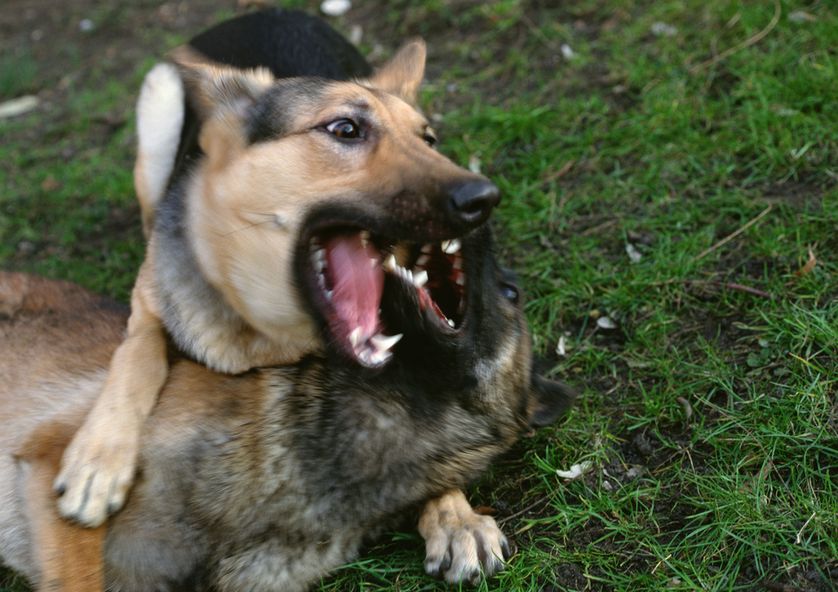
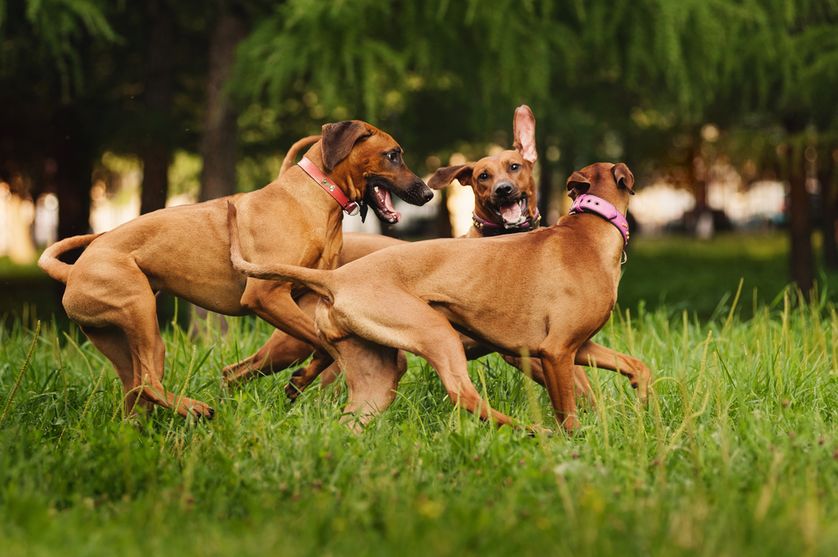
You’re at the park with your dog as he finds another four-legged buddy to play with. The two dogs seem to be having fun, but something feels amiss. Your dog is extra rambunctious and is really pushing the other dog around. Maybe the other dog is handling your dog’s overly rough-and-tumble attitude with patience. Or perhaps the other dog begins to hide behind or between his owner’s legs, looking for a break from your bossy dog.
Been in this situation? You just might have a bully on your hands.
Bullying behavior is a bigger problem than simply having a rude dog. In the immediate situation, it can lead to an attack or a fight, and in the long run it can cause the dog’s unappreciative play partner to become fear-aggressive, thinking all dogs are bullies. That’s why it’s important to stop bullying behavior the second you see it and train your dog to play appropriately.
Signs of bullying behavior include:
Being overly demanding about getting a toy, attention from people, or other resources
Continually standing over or pinning another dog to the ground
Ignoring signals from a play partner that the play is too rough or unwanted
An escalating intensity when the other dog pushes back or tries to leave
If you have a dog that behaves like a bully on the playground, there are steps you can take to fix the situation, which will benefit both your dog and all the other dogs he wants to play with.
Play can quickly escalate into bullying behavior. Here’s how to keep an eye out for it. (Photo: Photick/Shutterstock)
What causes bullying behavior?
“Over-stimulation often leads to bossy behavior,” says Erin Kramer, an expert dog trainer who specializes in rehabilitating fearful, anxious and aggressive dogs. “This means that as the energy level rises, such as during chasing games, tug of war, or even just enthusiastic wrestling, dogs often become too stimulated and start to ignore signals from other dogs that they are playing too rough or that their interaction is not welcome. Dogs also feed off of each others’ energy, so a group of playing dogs can escalate into over stimulation and bullying behavior faster than a dog would with just one play partner.”
Kramer adds that simply watching how another dog is responding to your dog can tell you if your dog is being a bully. “If the other dogs are attempting to move and stay away, overly submitting by rolling on their backs, or are showing signs of stress or avoidance, that is a good indication your dog may be getting too rough.”
If you aren’t certain if your dog is bullying or if that’s just the play style of the two dogs, Kramer suggests getting a hold of your dog and seeing what happens when you make him take a break from play. If the other dog runs to your dog for more, then the two are getting along fine. But if the other dog maintains space, then the other dog is likely not really enjoying your dog’s rough play behavior and your dog needs to tone it down.
What to do if your dog is the bully
The old advice of letting dogs “work it out themselves” is the source of many problematic behaviors that can take years of training to overcome. Bullies will simply get better at bullying, and the dogs being picked on will likely develop increasingly intense fears about your dog and other dogs. Humans need to step in immediately to break up play that isn’t fun for both dogs, and prevent a bad situation — and bad behavior — from getting worse.
Once you’ve identified that your dog is being unappreciatively assertive with other dogs, it’s important to interrupt the behavior in the moment, then begin training to end the behavior in the long run.
In the moment, call your dog away and have him sit or lie down until he calms down. This can take a long time for a dog easily aroused in a dog park. Your dog is not calm until he can look away from other dogs playing, focus on you and exhibit relaxed body language. If after several minutes, your dog can’t seem to take his eyes off the other dogs and just wants to dive back in, then it’s time to leave the play area as it’s likely your dog won’t be able to tone down his play style.
The next thing is to begin setting your dog up for successful play sessions in such a way that you can easily step in to interrupt bullying behavior the moment it happens.
“If your dog does not have the advanced obedience it takes to perform an off leash ‘come’ out of play — and let’s face it, that’s a really challenging time to respond — then you need to set up your dog to deal with their bullying issues,” advises Kramer. “Have the dog wear a long leash, select a small play area where it’s easy to get control, and practice your obedience training so you are prepared to handle your dog correctly.”
Watch for things that might set your dog into bully mode, including the energy level, the play partner’s personality, and other factors. (Photo: Ksenia Raykova/Shutterstock)
During play, look for the timing of your dog’s bullying behavior and see if there are patterns. Kramer notes to watch if it’s a certain type of play partner, such as a high-energy or confident dog, that brings out the bully in your dog, or perhaps it’s simply that your dog bullies more when he hasn’t had as much exercise or training practice.
“If you can find a pattern to what creates or worsens their bullying behavior, then you can take steps to reduce it from happening and set them up for success by choosing more appropriate play partners or getting them increased exercise before play,” says Kramer.
Taking steps to train your dog to end bullying behavior is important, and Atlanta Humane Society has a great article outlining one way to interrupt and retrain your dog to end bullying over the course of many weeks. In addition to solid training addressing bullying during play, it’s important to have other tools to help your dog take the lessons beyond the dog park.
One lesson that Kramer notes is essential for pushy dogs is concept “Nothing In Life Is Free.” Teach your dog that he only gets the rewards he wants most in life when he thinks about what his human wants. Your dog will then continually check in with you, so he can earn what he wants.
“Demanding dogs are often dogs who need to know, ‘what’s in it for me?'” says Kramer. “Start making an asset list of all the things your dog sees as valuable. Remember that there are things that should go on the list outside of just treats and toys such as going through the front door, playing with friends, greeting strangers, even tummy rubs and snuggle time. Instead of giving away all those valuable rewards, ask your dog to earn them by performing commands like sit, down, stay, come, or doing a trick. Your dog will still get access to all of the things he likes, but he’ll have to earn those things from humans and in doing so, he’ll learn that pushy behavior doesn’t get rewarded. Once they learn this skill, they will be less bully-ish in general, and much more willing to listen to people when you need to get their attention.”
You can also implement a “no reward marker” or NRM, which works in the same way as clicker training, but rather than the marker indicating that a reward is coming, the marker indicates a loss of something is coming. Pat Miller writes in Whole Dog Journal, “My preferred NRM, the one I teach and use if/when necessary, is the word ‘Oops!’ [which] simply means, ‘Make another behavior choice or there will be an immediate loss of good stuff.’ An NRM is to be delivered in a non-punitive tone of voice … Timing is just as important with your NRM as it is with your reward marker. You’ll use it the instant your dog’s bully behavior appears, and if the bullying continues for more than a second or two more, grasp his leash … and remove him from play. Don’t repeat the NRM. Give him at least 20 seconds to calm down, more if he needs it, then release him to go play again.”
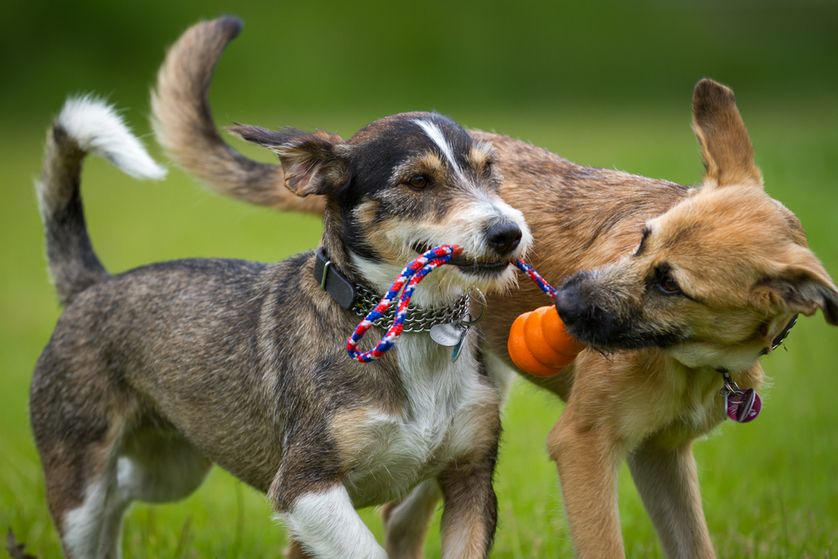
Sharing is caring! (Photo: Bildagentur Zoonar GmbH/Shutterstock)
What to do if your dog is being bullied
You may have an issue with a bullying dog, but it isn’t your dog causing the strife. It’s just as important to step in to interrupt your dog getting picked on. Again, letting dogs “work it out themselves” leads to significant behavioral problems, including a bullied dog becoming excessively fearful or reactive to other dogs because of the bad experience of being bullied.
“This mindset is just much too risky!” says Kramer. “We the humans very often do not know the social skill level of the other dogs involved nor can we successfully know exactly how stressed or scared our own dog is in that situation. I would much rather a dog learn that his humans step in when he is showing signs of discomfort rather than him learning he is forced to defend himself, and that being fear-aggressive is a good strategy to keep himself safe.”
If you see that your dog is getting picked on or is uncomfortable in a play situation, calmly but confidently step in. You can leash your dog and leave, or step between your dog and the other dog to break up play. Staying calm but assertive is key, since your reaction sends a message to your dog. Screaming and yelling at the dogs to break it up tells your dog that this is a scary situation, where as firmly stepping in lets your dog knows that what happened was uncomfortable but nothing to be scared about.
“By demonstrating to your dog that you are responsible and actively engaged in keeping them safe, they will gain confidence in handling tricky social situations and will be less fearful and reactive when negative experiences arise,” says Kramer.
“As a trainer who does a lot of aggression rehabilitation work with dogs who have been bullied or attacked by other dogs, there is a particular joy I get in watching fearful dogs learn that they are no longer responsible for protecting themselves, and that I as their human handler will observe the body language messages they send me and will then take the steps needed to alleviate their discomfort. There is a bond that comes with such a system of partnership that makes a dog a more confident, social, and happy being. Allowing your dog to bully or be bullied means that you are undermining that system, and teaching your dog that they are on their own in learning how to make successful social decisions. With just a bit of observation, intervention and repetition you can help your dog learn the boundaries of positive social interaction and you will not only have a dog who is a better playmate, you will also have a stronger relationship altogether.”
ooOOoo
To my mind, this is a very helpful article and all the links offer a wealth of supporting information.
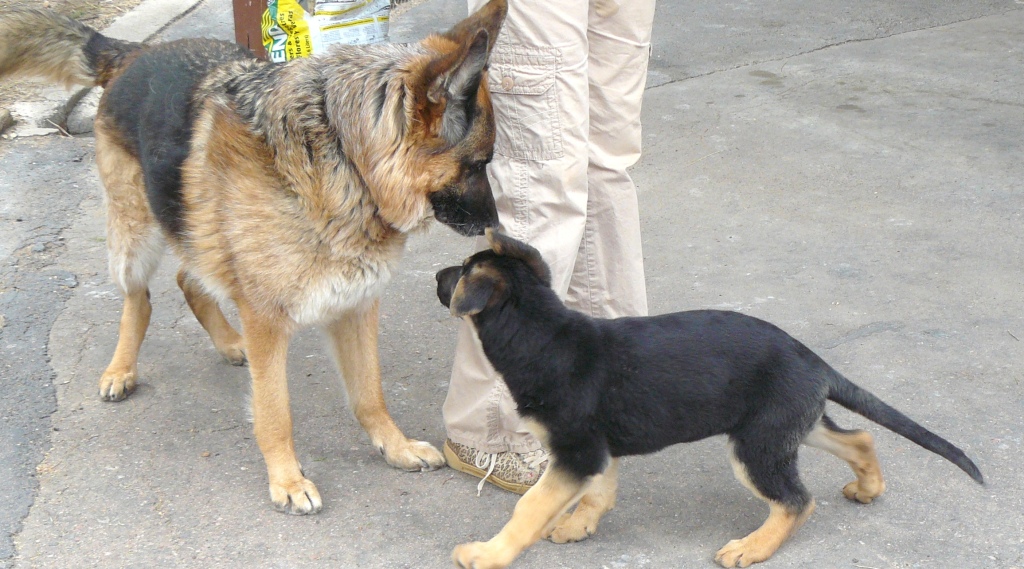
Pharaoh demonstrating his benevolent status with puppy Cleo. April 2012.
Exploring the range of emotions felt and displayed by our dogs.
Like so many bloggers, I subscribe to the writings of many others. Indeed, it’s a rare day when I don’t read something that touches me, stirring up emotions across the whole range of feelings that we funny humans are capable of.
Such was the case with a recent essay published on Mother Nature Network. It was about dogs and whether they are capable of complex emotions. Better than that, MNN allow their essays to be republished elsewhere so long as they are fully and properly credited.
Exactly what emotions do dogs feel, and are they capable of all the same emotions as humans? (Photo: Pressmaster/Shutterstock)
Joy, fear, surprise, disgust, sadness. These are the basic emotions dogs feel that are also easy enough for humans to identify. But what about more complex emotions?
Many dog owners are convinced their dogs feel guilty when they’re caught misbehaving. In the same way, many owners are sure their dogs feel pride at having a new toy or bone. But it gets tricky when you assign these sorts of emotions to a dog. These are definitely emotions felt by humans, but are they also felt by dogs?
(see footnote)
Why we question the presence of complex emotions is wrapped up in the way we get to those emotions. The American Psychological Association explains, “Embarrassment is what’s known as a self-conscious emotion. While basic emotions such as anger, surprise or fear tend to happen automatically, without much cognitive processing, the self-conscious emotions, including shame, guilt and pride, are more complex. They require self-reflection and self-evaluation.”
Essentially we’re comparing our behavior or situation to a social expectation. For instance, guilt comes when we reflect on the fact that we’ve violated a social rule. We need to be aware of the rule and what it means to break it. So, can dogs feel guilt? Well, exactly how self-reflective and self-evaluative are dogs?
Among humans, children begin to experience empathy and what are called secondary emotions when they are around 2 years old. Researchers estimate that the mental ability of a dog is roughly equal to that of an 18-month-old human. “This conclusion holds for most mental abilities as well as emotions,” says Stanley Coren in an article in Modern Dog Magazine. “Thus, we can look to the human research to see what we might expect of our dogs. Just like a two-year-old child, our dogs clearly have emotions, but many fewer kinds of emotions than found in adult humans.”
In other words, if 18-month-old children can’t yet experience these emotions, and dogs are roughly equal to them in cognitive and emotional ability, then dogs can’t feel these self-reflective emotions either. At least, that’s what researchers have concluded so far.
Is that guilt or fear?
This little puppy might feel guilty for chewing on clothes, or he could just be worried about getting in trouble. The two aren’t the same emotion. (Photo: InBetweentheBlinks/Shutterstock)
The evidence for primary emotions like love and happiness in dogs abounds, but empirical evidence for secondary emotions like jealousy and guilt is sparse. And this is partially because it’s difficult to create tests that provide clear-cut answers. When it comes to guilt, does a dog act guilty because she knows she did something wrong, or because she’s expecting a scolding? The same expression can come across as guilt or fear. How do we know which it is?
“In wolves, it is thought that guilt-related behaviors serve to reinforce social bonds, as in primates, by reducing conflict and eliciting tolerance from other members of the social group. The same could be true of dogs, though their social groups would primarily include humans. The problem is that the display of the associated behaviors of guilt are not, themselves, evidence of the capacity to emotionally experience guilt… It may still be some time before we can know for certain whether dogs can experience guilt, or whether people can determine if a dog has violated a rule prior to finding concrete evidence of it.”
Guilt, and other secondary emotions, are complicated. That’s exactly why cognitive awareness and emotional capacity in dogs is still a topic under study. In fact, it’s an area that has grown significantly in recent years. We may discover that dogs have a more complex range of emotions than we’re aware of today.
Dogs are highly social animals, and social animals are required to navigate a range of emotions in themselves and those around them to maintain social bonds. It wasn’t so long ago that scientists thought that dogs (and other non-human animals) didn’t have any feelings at all. Perhaps our understanding of dog emotions is simply limited by the types of tests we’ve devised to understand their emotions. After all, we’re trying to detect a sophisticated emotional state in a species that doesn’t speak the same language.
There’s a lot we don’t know
Dogs experience a range of emotions, but researchers are still trying to figure out exactly what those emotions are. (Photo: Hysteria/Shutterstock)
Marc Bekoff makes the argument for leaving the possibility open. In an article in Psychology Today he writes, “[B]ecause it’s been claimed that other mammals with whom dogs share the same neural bases for emotions do experience guilt, pride, and shame and other complex emotions, there’s no reason why dogs cannot.”
Keeping the possibility open is more than just an emotional animal rights issue. There is a scientific basis for continuing the research. A recent study showed that the brains of dogs and humans function in a more similar way than we previously thought.
Scientific American reports that “dog brains have voice-sensitive regions and that these neurological areas resemble those of humans. Sharing similar locations in both species, they process voices and emotions of other individuals similarly. Both groups respond with greater neural activity when they listen to voices reflecting positive emotions such as laughing than to negative sounds that include crying or whining. Dogs and people, however, respond more strongly to the sounds made by their own species.”
Until recently, we had no idea of the similar ways human and dog brains process social information.
So do dogs feel shame, guilt and pride? Maybe. Possibly. It’s still controversial, but for now, there seems to be no harm in assuming they do unless proven otherwise.
ooOOoo
Footnote: At this point in the MNN article there was a link to a series of gorgeous photographs of dogs. If you dear readers can wait, then I will publish them this coming Sunday. If you can’t wait, then go here!
A smart partnership introduces hard-to-home dogs to high-energy humans.
Note to Readers
Last week I completed the final edit of my book of the same name as this blog, Learning from Dogs. I am learning the truth of what one experienced author said to this new author and that was that writing the book is the easy part! For the next stage is the professional editing of the manuscript. I was previously referred to Joni Wilson and I am so pleased that she is undertaking the task. Well, I think I am pleased! 😉 That last sentence comes from me utterly misjudging just how much work is being created for me as I start to go through hundreds, literally, of ‘recommendations’ from Joni. Dear readers, we are talking hours of revisions that I need, and want, to make.
All of which is my way of saying that if my posts over the next couple of weeks more strongly lean on the republishing of other material then you will understand why. In all cases I will endeavour to republish articles that are likely to interest you, of course!
So with those words in mind, here is another article from Mother Nature Network that stays with yesterday’s theme of adopting those dogs that are not necessarily the easiest to so do.
ooOOoo
Outdoorsy dogs find their perfect matches
A smart partnership introduces hard-to-home dogs to high-energy humans.
By: Jaymi Heimbuch, September 11, 2015
Anniston is on her way to her new home, thanks to a brilliant campaign to match high-energy dogs with high-energy humans. (Photo: Ruffwear)
A couple weeks ago, Outdoor Retailer held an adoption event for shelter dogs. But it wasn’t just any event — this was specifically for high-energy, adventure-loving dogs seeking high-energy, adventure-loving humans. This matchup can be tough to find at a rescue or shelter, but what if the adoption event takes place where outdoorsy folks shop? Wouldn’t the potential for love at first wag be higher? It turns out that’s exactly what happens.
Ruffwear and Best Friends Animal Society created the Ruff Adventure Dog Adoption Program to place usually hard-to-home dogs — dogs that need a lot of exercise and outdoor activity and require a home with someone who wants a companion for trail runs, hiking, camping and other fun activities. They put the program to the test at Outdoor Retailer.
Among those who found a home are:
Jennifer finds Krone
Jennifer and Krone bond after meeting at an Outdoor Retailer event. (Photo: Ruffwear)
Huck finds Gerald
It’s a match made in outdoor-loving heaven for Huck the dog and Gerald, his new owner. (Photo: Ruffwear)
Niko finds his future parents
A future of happy tail-wagging adventure awaits for Niko, the black and white dog pictured at left. (Photo: Ruffwear)
“Over the course of two days, Best Friends’ Salt Lake City partner, Rescue Rovers, brought in eight fresh air-seeking, adventure-ready dogs to the Salt Palace. [I]t wasn’t long before people stopped by the Ruffwear booth to hand in their adoption requests. Of the eight dogs who attended, six were adopted,” says the press release from Ruffwear.
“People expect us to have dogs at the booth, and they’re always a draw. But we had no idea how receptive show attendees would be to actually adopting these dogs. Rescue Rovers did a great job bringing dogs that would pair well with our active, outdoorsy crowd. I think the first application came in just hours after the dogs arrived and by the end of the first day, nearly all dogs present had applications pending; it was amazing,” said Greg Freyberg, Ruffwear’s Brand Manager.
The happy tale doesn’t end with this event. Ruffwear and Best Friends continue to match these trail-loving dogs with their perfect humans. Since the program launched in May, 13 dogs have been matched, with Ruffwear covering the cost of adoption fees as well as airfare to get the dogs to their new homes.
Check out this super feel-good video explaining the adoption partnership and the wonderful service it provides to high-energy dogs:
“they” is plural, but in the previous sentence you have “dog” which is singular, so I changed this to be singular.
—
The word “over” usually has to do with physical properties—the cow jumped over the Moon, or standing over something.
—
Fast forward without a hyphen is a noun, while the hyphen makes it a verb
Ernest Hemingway apparently stated, “There is nothing to writing. All you do is sit down at a typewriter and bleed.” Well, Mr. Hemingway is correct in that while the apparatus of typing has changed out of all recognition since his days, the bleeding has not!
(I’m conscious that many recent posts have been more of me republishing stuff than being creative on my own account. Blame it on ‘the book’: my first edit is now complete and the next stage is sending the manuscript out to those who have volunteered to proof-read the book.)
I saw this article on Mother Nature Network and it struck me immediately as being full of common-sense and well worth sharing with you.
ooOOoo
How to build the perfect backyard for dogs
Learn which plants are hardy, which are poisonous, and how to create a beautiful but functional layout.
Designing your garden with your dog in mind will prevent an infinite number of headaches down the road. (Photo: upixa/Shutterstock)
A dog and a healthy, beautiful backyard don’t often go hand in hand. The amount of wear and tear a dog throws at a garden can leave it in tatters. But it doesn’t have to be this way! With a bit of planning and a careful selection of plants able to hold up to whatever dogs spray at them, your backyard can be both a haven for humans and a paradise for your pups.
Here are helpful strategies for planning out a yard and a list of plants to use or to avoid.
7 tips for dog-friendly garden design
Build raised beds for the more sensitive plants or for any fruits and vegetables you may want to grow. Add in some fencing or netting around the boxes to protect them if your dog is still tempted to hop up and snoop around in them.
Build a dog-friendly path around the yard. This will guide your dog through the garden and minimize the detours into the flowerbeds. You may want to start by watching where your dog goes on his own, and creating the path along that route. That way you aren’t trying to train your dog to go somewhere he doesn’t normally want to go, and you aren’t frustrated when your dog goes where he wants to anyway.
Providing pathways for your dogs will show them where they’re allowed to run and will help keep them out of more sensitive areas of the garden. (Photo: Julius Elias/Shutterstock)
Discourage digging through design. If your dog sometimes digs holes, you can help keep your garden beds safe by making them raised beds. However, if your dog is a relentless digger and no part of the yard is safe, then consider building an area where your dog can do anything he’d like within that space, including dig. This could be a fenced area that has a sand box, where the outlet of digging is welcomed.
Create a designated area for bathroom breaks. This will of course require training your dog to use it, but the time and effort spent in training will counter any time and money spent in replacing dead plants.
Provide places to sun. Many dogs love to sunbathe and might pick the sunniest spot in the middle of your favorite bed of flowers. Avoid a dog selecting his own area by providing one for him instead. A small deck, or a few paving stones in a pretty design, or even an area with bark chips will be a welcoming place for your dog to lie down, out of the way of the plants.
Create shaded areas to keep your pet comfortable. Yards are the perfect place to hang out in the sun, but on hot days it can feel pretty miserable without relief with a little shade. Plant trees or tall shrubs where your dog can enjoy a cool break from playing in the sun.
If you have a water feature, make sure the water is drinkable and free of chemicals.
Safe and hardy plants for dogs
After figuring out a few design elements to make your yard a place where both dogs and humans can feel comfortable, it’s time to review your plant selection. There are a fair number of plants that are resistant to dog urine. By placing these plants in the areas your dog frequents, you can reduce how much replanting you need to do as well as keep your yard looking fresh and healthy.
Many herbs are not only safe but also healthy for dogs. But you’ll still want to protect them from your dog by growing them in a raised bed or pots. (Photo: Jamie Hooper/Shutterstock)
Luckily, the herbs you likely want to have in your kitchen garden are also healthy for dogs. If you like cooking with these savory staples, you’ll be happy to know they’re more than welcome in your dog-friendly garden! The five best options include:
Basil — antioxidant, antiviral and antimicrobial properties
Oregano — helps digestive problems including diarrhea and gas
Parsley — a source of flavonoids, antioxidants and vitamins
Peppermint — soothes upset stomachs, reduces gas and nausea, and helps with travel sickness
Rosemary — high in iron, calcium and Vitamin B6
Groundcovers are a great alternative to a grassy lawn. Many varieties can withstand abuse from dogs better than any grasses. Great options include:
Carpet bugle
Elfin thyme
Kinnikinick
Miniature stonecrop
Silver carpet
Snow in summer
Winter creeper
Another staple for a dog-friendly yard are urine-resistant plants. Here are a few suggestions:
Bears breech
Burkwood osmanthus
Doublefile viburnum
Feather reed grass
Holly fern
Japanese spindle tree
Mexican sage
New Zealand flax
Redtwig dogwood
Snowball viburnum
Spider plants
Sword fern
Plants poisonous to dogs
Even if they look pretty, there are quite a few plants you should avoid having in your yard because ingesting them can mean illness or death for your pet. It doesn’t mean you can’t have these plants around; it just means you’ll want to plant them in areas your dog can’t access, such as fenced-off portions of the yard or in hanging baskets out of reach. University of California, Davis put together a list of the 12 plants that cause the most visits to their vet hospital. They include:
Aloe vera
All species of amaryllis
Anemone
Asparagus fern
Chrysanthemums
Cycads (including Sago palm and cardboard palm)
Cyclamen
Daffodil
Jade plants
Lilies
Lily of the valley
Philodendrons
The ASPCA provides a full list of plants toxic to dogs. Reviewing this list before planting will help prevent trips to the vet in the future.
Be sure to double check if the plants you’re adding to your garden are toxic to dogs. While some dogs stay out of the plants, others may munch on anything they feel like, which could lead to a trip to the vet’s office. (Photo: Dora Zett/Shutterstock)
Other things your dog could, but shouldn’t eat
Which mulch you select could be important to your dog’s health. Cocoa mulch, made of cocoa bean shells, is a by-product of chocolate production and can be toxic. Most dogs aren’t going to eat mulch and if they do, they probably wouldn’t eat enough to cause a problem. However, if you have a dog that seems to dine on anything and everything, you may want to consider using something like shredded pine instead.
Much like eating mulch, ingesting large amounts of fertilizer can be unhealthy or even life-threatening for your pet. Be sure to use all-natural fertilizers, follow the directions and make sure that your pet isn’t allowed into the fertilized area within the suggested waiting period after application.
Compost piles are a great addition to any garden but depending on what you’re tossing in them, they can also pose problems for pets. Coffee grinds, moldy food and certain types of fruit and vegetables are toxic to dogs. In addition, fungal toxins can grow within the compost piles that can cause problems for your pet’s health and overall immunity if consumed. It’s a good idea to keep your compost in a bin that is off limits to your dog.
It is also a smart idea to ditch the chemical herbicides and pesticides. Not only are they terrible for the environment but they can also have disastrous effects on pets, including causing cancer.
ooOOoo
This is so brimful of good advice that it deserves to be shared as widely as possible.






 Learning from Dogs