What does the much delayed maiden flight of the Boeing 787 tell us about integrity?
But how difficult can it be for Boeing to make yet another new aircraft? The answer depends on how different the 787 aircraft is from anything the company has built in the past. Some initial indication that is significantly different can be taken from its being named Dreamliner.
As I visit some of my clients, I am becoming aware of an unusual phenomenon – I think some people are actually becoming less selfish. We are used to hearing stories of institutions reaching heights of greed and selfishness during this recession but not many that are about the other way round.
I don’t go to supermarkets very often because I’m usually out working when my wife goes but by a fluke, I kept her company recently. We have been trying to support the local farmer’s markets in the area but this is proving difficult as it’s much quicker to do a one-stop visit to a supermarket than lots of small visits since we both run our own businesses.
It is of course cheaper at the supermarket as they have systematically forced food prices down to a level that prohibits most small food producers from supplying them.
Anyway, I digress. In our local supermarket works an ex colleague and friend of mine. He was made redundant just over a year ago for the second time and decided that he would go for the stress-free, safe option. He used to organise procurement for a large, global communications company so he has his head screwed on around organising things. I guess the supermarket job means that he can just switch off away from work, something he could never do before.
I saw him with a large trolley, checking shelves and we stopped for a chat. He was fine and generally enjoying his work. He asked about mine and I mentioned that things were a bit tight at the moment. We got talking about how training is carried out at his work and how they work with developing employee’s interpersonal and communications skills. He mentioned that there was a new HR manager at the branch, or is it “in branch?”, and would I like an introduction as they were always recruiting new people and they needed training?
I was flabbergasted as we weren’t necessarily that good friends and he didn’t need to say or do anything but went out of his way to be helpful.
I have also noticed this phenomena in other companies from time to time, in the form of clients arranging meetings and spending time, something previously they really didn’t have time for. Maybe we get more of what we notice and by focusing on the positive, we attract more of the positive into our lives?
Is it because when the going gets really tough, for example, in times of national crisis or great hardship, that we remember that we are all interconnected?
For a long time, it has seemed to me that we confuse crimes and accidents.
This is such a substantial issue that more posts might flow from this, depending on the level of interest. Also, I should point out that I am no lawyer, so this is a personal, not a professional, view.
In both directions
When crimes are treated as accidents, criminal behaviour is appeased and no deterrent effect generated. Attempts to learn lessons are likely to be fruitless. So behaviour does not change and the crimes continue.
When accidents are treated as crimes, blame is allocated inappropriately and lessons are not learned. Innocent participants are punished for no purpose. So behaviour does not change and the accidents continue.
Issues
There are issues of causation, intent, blame and so on.
There are so many examples of this, that I am not sure where to begin. So, I won’t … yet!
Communicating effectively means being totally mentally connected.
I have been working with a client recently through a very tough performance improvement plan.
As part of the plan, my client had to be videoed working with people in his workplace. I had to observe the video and then give feedback on it.
He seemed very efficient and made notes whilst he worked with each person. Occasionally though, something didn’t seem to be quite right. When I watched more closely I realised what was wrong. He wasn’t present. He wasn’t really connecting with the people he was working with.
It made me reflect on how much more effective he would have been if he had been able to connect with these people? I wondered if he was even able to understood about being present and what that meant?
We were invited to our friend’s 25th Wedding Anniversary on Saturday, 21st November.
English pub
It was in a local pub and they had invited many friends, some of whom we had not seen for many years.
One friend had started his own architect business, built it up over the last 10 years and, although he had lost a large amount of work because of the recession, things seemed to be picking up.
I mentioned that my work had dropped off dramatically since the summer. He said:
Well, Jon. You can make your own mind up what you do. You can either decide you’re going to go bankrupt or you can decide that you’re going to succeed – in spite of everything.
For some reason, that short conversation had a huge impact on me and I realised that it really is mind over matter and once we make our mind up about something, good or bad, it tends to happen.
To lead the project which took an old clay pit in a remote corner of the UK and converted it into a world class environmental visitor attraction is a tremendous achievement.
Homo sapiens? A game show!
Tim Smit had some fun with the business community at the 2009 Annual Convention of the UK Institute of Directors. Everyone, including he, was in their best business attire, but very few people could get away with crumpled shirt and jeans!
However, he has a serious message about the environment (1:55) and he knows a thing or two about people as well!
On this blog about integrity, and in these difficult economic times, it is particularly poignant to note that Bill Gates cites Warren Buffett’s integrity. This was during a recent event at Columbia Business School in New York City, see below.
While many of the questions from MBA students and the answers from Gates and Buffett are not new, Buffett’s brief witty and topical comments provide considerable insight into his thinking.
It is particularly interesting to get a sense of how the world is viewed by people with their perspective. When asked about the outlook for America, both Gates and Buffett answered that it is very good. Warren Buffett even offered any of the MBA students $100,000 in return for 10% of their future earnings. Later, he increased the offer to $150,000, if they received training in personal communication skills!
Maybe you are interested in further information about Warren Buffett, if so you are not alone. The BBC, among others, have taken a strong interest in him recently.
You might like to read and view some recent stories on the “Oracle of Omaha” including:
Following yesterday’s Post on this Blog about Goldman Sachs, here’s Britain in action.
Ministers yesterday (17th November) launched a £50 billion ($84 billion) bailout of Britain’s crippled banks – and warned there could be worse to come. State-controlled lenders Royal Bank of Scotland and Lloyds Banking Group will receive fresh injections of taxpayers’ money totalling £39 billion ($65.5 billion).
RBS – which has now received the biggest state rescue anywhere in the world – was also handed £11 billion ($18.5 billion) in tax breaks to help keep it afloat.
Thanks for the Greed. Are the directors responsible still in place? Are the Great and Good who removed controls and oversaw the decade of binge-spending and easy credit still in place?
Britain's Global Giant!
Oh, I remember now. The very same person in Britain who was Chancellor throughout the 90s and is now Prime Minister is – according to John Prescott (former Labour Deputy-Leader and the person whose office sign was changed at a cost of £700 ($1,200) when his job name was rebadged weeks before he left it anyway) – a “Global Giant” who saved the world.
Oh, and let’s not forget, this is the same person who said that: “Britain is better placed than other countries in Europe to weather the crisis …..etc blah, blah, blah …”
The reality (which is in fairly short supply among Global Giants) is different:
Within hours of the Chancellor’s announcement, the European Commission issued a stark warning about the frayed state of Britain’s national finances, warning of an ‘extraordinary deterioration’ because of the cost of City rescues.
It estimates public debt will double as a share of the economy between 2007 and 2011, reaching 88 per cent of gross domestic product – the biggest rise of any leading EU economy.
The latest £50billion bank bailout is roughly equivalent to the annual schools budget and far exceeds the annual defence budget of £35billion. The new moves bring the total of public money lavished on Britain’s financial rescue to £1.2trillion – almost £20,000 for every man, woman and child living in the country.
… and the £ has sunk drastically against the euro ….
Still, let’s have a bit of positive spin …. the National Debt isn’t quite (yet) what is was just after WWII. A great achievement. Well done Gordon Brown …. but you can do it …. just one more little push.
We could do with fewer spin-ridden “Global Giants” and more people with vision, courage and competence.
And rather than “saving the world” it might be nicer if Gordon Brown started with saving Britain.
Creativity, Integrity and commercialism – are there conflicts?
This is guest post from Magnus Dennison. Magnus is a Cinematographer who, together with his wife, Katja Roberts, runs a film production company in Newcastle-upon-Tyne in the North-East of England. Their company is called Meerkat Films. Magnus writes about integrity in film making.
I am going to write about film producers who have made creative choices to ensure their films are commercial successes. My question is whether these films lose their integrity when the motivation for making them becomes financial.
A little about my background. I am an independent film producer working in the UK and don’t profess to be an expert on these matters; the views expressed here are simply my opinion.
I will start by presenting one of my favourite films: ‘The Lives of Others’ (2006) directed by Florian Henckel von Donnersmarck. The team has, in my opinion, made one of the most powerful films of the decade. But more interestingly, they have made many choices that have preserved the integrity of the story at the risk of reducing commercial viability.
It is obvious why they have done this; they are passionate about the artistry and the integrity of the film, more than the financial gain. The film is very slow paced and the tension builds so gradually you’re almost unaware of it until you are completely engrossed.
Do the last US 3rd Quarter GDP figures stand up to inspection?
The press recently celebrated the 3.5% annualized rise in the third quarter in reported U.S. Gross Domestic Product (GDP). The figures were widely reported with, for example, CNNMoney, carrying the following headline and opening remarks:
Economy finally back in gear
Government says GDP grew 3.5% in third quarter, ending a year-long string of declines and coming in better than forecasts.
I urge caution in interpreting these figures at face value. After all, the current GDP of the U.S. economy is simply the intersection of aggregate demand with aggregate supply.
As the figure below shows, GDP increases with increases in either the demand or supply curve, although increases in demand are accompanied by rising price levels while increases in supply push prices down and real incomes up.
The quarterly figures make clear that the increase in demand was driven almost entirely by the expansion of government spending; the other three components of demand – consumption, business spending, and net exports, were either flat or falling.
Government spending is inherently short-term; it does not create wealth or enable sustainable growth. In fact, neither consumption nor net exports create sustainable economic growth either. Only business investment in new productive equipment (which includes business fixed investment, new residential housing and additions to inventory) has the potential to create sustainable growth in U.S. GDP, and then only when the investment leads to a permanent increase in the productivity of the business, namely a rightward (increased output per input) or downward (decreased cost) shift in the Aggregate Supply curve.
And there was little chance that the reported increase in GDP resulted from a long-term increase in the productive capacity or efficiency of the U.S. economy, as Business Investment was soundly negative in the 3rd quarter of 2009.
By Sherry Jarrell
[P.S. Karl Denninger at Market Ticker also raised big question marks about these figures. Ed.]




 Donnersmarck. The team has, in my opinion, made one of the most powerful films of the decade. But more interestingly, they have made many choices that have preserved the integrity of the story at the risk of reducing commercial viability.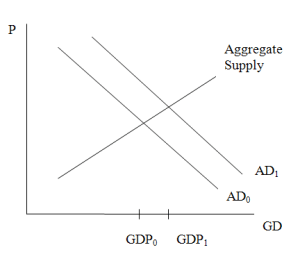
 Learning from Dogs