Tag: George Monbiot

Picking a fight ….

…. with a mathematical function!

This is another republication of a George Monbiot post. The title of his post is Total Futility Rate.

It is another great article!

ooOOoo

Total Futility Rate

Posted on15th December 2025

Let’s focus our campaigning on things we can actually change.

By George Monbiot, published as a BlueSky thread, 15th December 2025

Because the issue of population change is so widely misunderstood, I’ll seek to lay it out simply. This note explains why there is almost nothing anyone can do to change the global population trajectory, both as numbers rise, then as they fall.

The residual rise is due to:

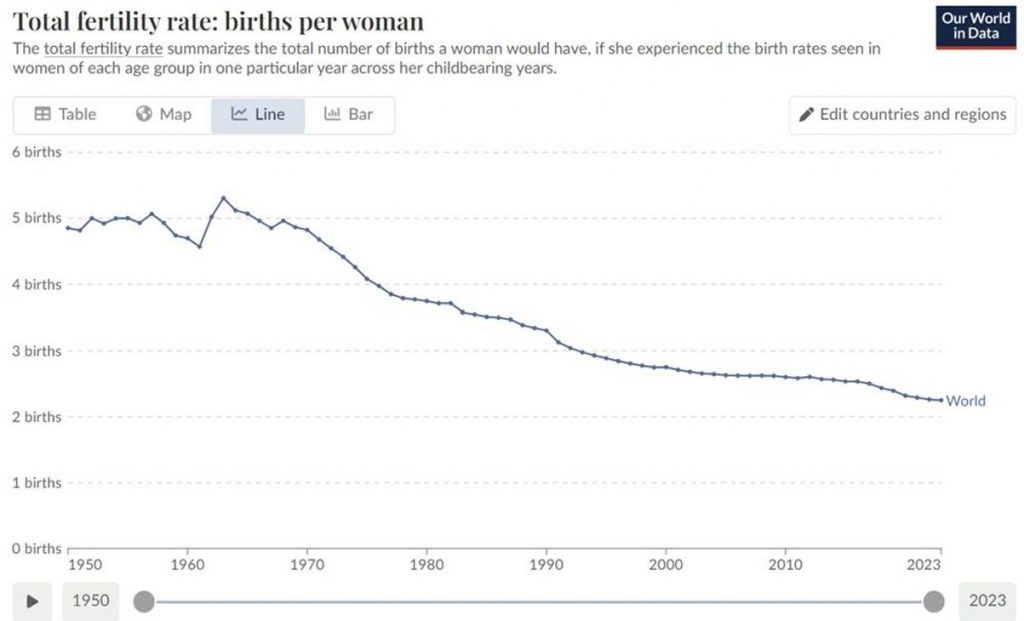
A. The birth rate 60-100 years ago, which created a larger current base population. This means more children being born even as birth rates are in radical decline. The global total fertility rate, by the way, is now 2.2, just above the replacement rate of 2.1.

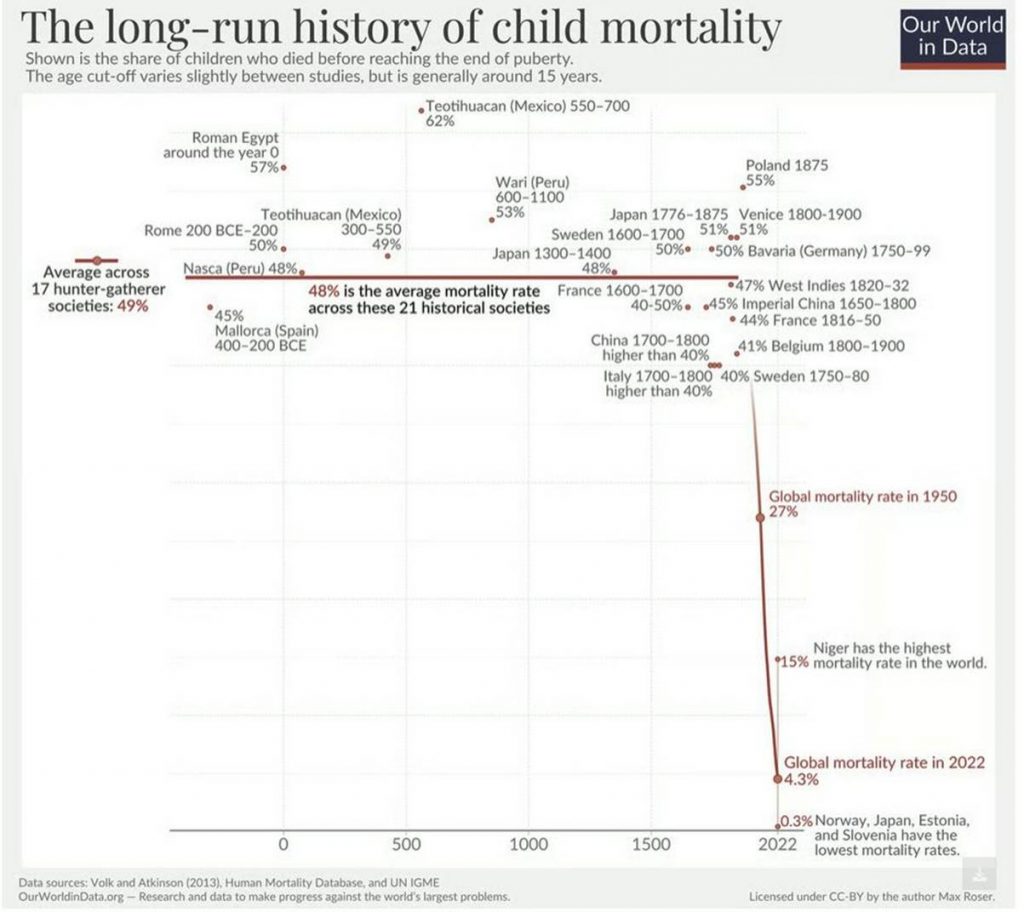
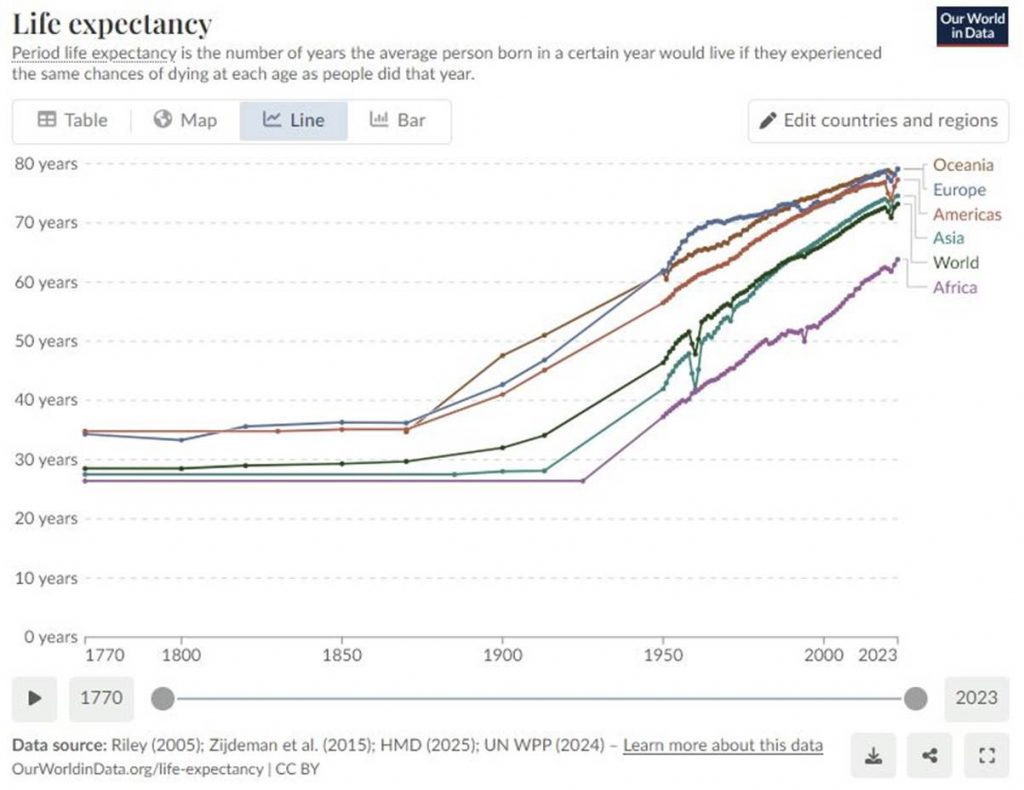
B. Infant mortality has declined very fast and longevity has risen very fast. Again, there’s nothing you can do about either of those things and, I hope, nothing you would want to.

All women should have total reproductive freedom and full access to modern birth control. Because it’s a fundamental rightNot because old men on other continents want them to have fewer children. Even if total reproductive freedom became universal now, it would scarcely nudge the curve, due to the factors mentioned above.

Before long, people will be fretting instead about the downwave, a very rapid decline in populations as the impact of 60+ years of falling birth rates overtakes the effects mentioned above. There’s almost nothing we can do about that either. It’s about as locked in as any human behaviour can be. As the opportunity costs of childcare rise (i.e. as prosperity increases), the birth rate declines.

Of course, if economic and social life collapsed, the process might go into reverse, and birth rates could be expected to rise again. But is that really what you want? For my part, I’m heartily sick of people who think collapse is the answer to anything.

In the short run, we can survive the decline in wealthy countries by reopening the door to immigrants, which would also offer sanctuary to people fleeing from the climate breakdown and conflict we’ve caused overseas. Two wins, in other words. In the long run, we’ll steadily shuffle away.

Whether you think that’s good or bad will not affect the outcome. I see demographic change as an underlying factor, like gravity, we simply have to adapt to as well as we can. If you want to pick a fight with a mathematical function, be my guest. But it seems to me as if you’re wasting your time.

But surely there’s no harm in it? Surely we can seek, however hopelessly, to change the population trajectory while also campaigning against environmental breakdown, inequality, injustice? Some people who worry about population do. But in my experience, most fixate on population to the exclusion of other issues.

Something must be done about them breeding too fast, rather than us consuming too fast. All too often, residual population growth is used as a scapegoat to shift blame from rich-world impacts, which means that the people in places where growth is still occurring are themselves scapegoated. The result, broadly speaking, is wealthy white people pointing the finger at much poorer Black and Brown people and saying, “You’re the problem.” It’s more than a distraction, it’s a grim and sometimes racist alternative to effective action. It’s an excuse for inaction.

So yes, do both if you want to, while being aware that one activity is useful and the other is futile. But be aware that for most population obsessives, it’s either/or, and is used to avoid moral responsibility and effective citizenship.

http://www.monbiot.com

ooOOoo

If you read this you will understand why Mr Monbiot explains clearly the changes in the global demographics: That the global population is falling. My own guess is that in the lifespans of those who today are in their teens, the global population will be remarkably lower. I can’t forecast the changes that will bring about but I’m certain they will be significant.

George’s last point is key “(It) is used to avoid moral responsibility and effective citizenship.

‘Tolly’ finds something really special

I’m indebted to George Monbiot for this article, and ‘Tolly’ as a nickname for Iain Tolhurst.

Many articles from people that I follow online pass through my ‘inbox’.

But there was something special about a recent article by George Monbiot that was published in the Guardian on December 5th and I have great pleasure in republishing it here, with George’s permission.

ooOOoo

Shaking It Up

Posted on 7th December 2025

A eureka moment in the pub could help transform our understanding of the ground beneath our feet.

By George Monbiot, published in the Guardian 5th December 2025

It felt like walking up a mountain during a temperature inversion. You struggle through fog so dense you can scarcely see where you’re going. Suddenly, you break through the top of the cloud, and the world is laid out before you. It was that rare and remarkable thing: a eureka moment.
For the past three years, I’d been struggling with a big and frustrating problem. In researching my book Regenesis, I’d been working closely with Iain Tolhurst (Tolly), a pioneering farmer who had pulled off something extraordinary. Almost everywhere, high-yield farming means major environmental harm, due to the amount of fertiliser, pesticides and (sometimes) irrigation water and deep ploughing required. Most farms with apparently small environmental impacts produce low yields. This, in reality, means high impacts, as more land is needed to produce a given amount of food. But Tolly has found the holy grail of agriculture: high and rising yields with minimal environmental harm.

He uses no fertiliser, no animal manure and no pesticides. His techniques, the result of decades of experiment and observation, appear to enrich the crucial relationships between crops and microbes in the soil, through which soil nutrients must pass. It seems that Tolly has, in effect, “trained” his soil bacteria to release nutrients when his crops require them (a process called mineralisation), and lock them up when his crops aren’t growing (immobilisation), ensuring they don’t leach from the soil.

So why the frustration? Well, Tolly has inspired many other growers to attempt the same techniques. Some have succeeded, with excellent results. Others have not. And no one can work out why. It’s likely to have something to do with soil properties. But what?

Not for the first time, I had stumbled into a knowledge gap so wide that humanity could fall through it. Soil is a fantastically complex biological structure, like a coral reef, built and sustained by the creatures that inhabit it. It supplies 99% of our calories. Yet we know less about it than any other identified ecosystem. It’s almost a black box.

Many brilliant scientists have devoted their lives to its study. But there are major barriers. Most soil properties cannot be seen without digging, and if you dig a hole, you damage the structures you’re trying to investigate. As a result, studying even basic properties is cumbersome, time-consuming and either very expensive or simply impossible at scale. To measure the volume of soil in a field, for example, you need to take hundreds of core samples. But as soil depths can vary greatly from one metre to the next, your figure relies on extrapolation. This makes it very hard to tell whether you’re losing soil or gaining it. Measuring bulk density (the amount of soil in a given volume, which shows how compacted it might be), or connected porosity (the tiny catacombs created by lifeforms, a crucial measure of soil health), or soil carbon – at scale – is even harder.

So farmers must guess. Partly because they cannot see exactly what the soil needs, many of their inputs – fertilisers, irrigation, deep ploughing – are wasted. Roughly two-thirds of the nitrogen fertiliser they apply, and between 50% and 80% of their phosphorus, is lost. These lost minerals cause algal blooms in rivers, dead zones at sea, costs for water users and global heating. Huge amounts of irrigation water are also wasted. Farmers sometimes “subsoil” their fields – ploughing that is deep and damaging – because they suspect compaction. The suspicion is often wrong.

Our lack of knowledge also inhibits the development of a new agriculture, which may, as Tolly has done, allow farmers to replace chemical augmentation with biological enhancement.

So when I came to write the book, I made a statement so vague that it reads like an admission of defeat: we needed to spend heavily on “an advanced science of the soil”, and use it to deliver a “greener revolution”. While we know almost nothing about the surface of our own planet, billions are spent on the Mars Rover programme, exploring the barren regolith there. What we needed, I argued, is an Earth Rover programme, mapping the world’s agricultural soils at much finer resolution.

I might as well have written “something must be done!” The necessary technologies simply did not exist. I sank into a stygian gloom.

At the same time, Tarje Nissen-Meyer, then a professor of geophysics at the University of Oxford, was grappling with a different challenge. Seismology is the study of waves passing through a solid medium. Thanks to billions from the oil and gas industry, it has become highly sophisticated. Tarje wanted to use this powerful tool for the opposite purpose – ecological improvement. Already, with colleagues, he had deployed seismology to study elephant behaviour in Kenya. Not only was it highly effective, but his team also discovered it could identify animal species walking through the savannah by their signature footfall.

By luck we were both attached, in different ways, to Wolfson College, Oxford, where we met in February 2022. I saw immediately that he was a thoughtful man – a visionary. I suggested a pint in The Magdalen Arms.

I explained my problem, and we talked about the limits of existing technologies. Was seismology being used to study soil, I asked. He’d never heard of it. “I guess it’s not a suitable technology then?” No, he told me, “soil should be a good medium for seismology. In fact, we need to filter out the soil noise when we look at the rocks.” “So if it’s noise, it could be signal?” “Definitely.”

We stared at each other. Time seemed to stall. Could this really be true?

Over the next three days, Tarje conducted a literature search. Nothing came up. I wrote to Prof Simon Jeffery, an eminent soil scientist at Harper Adams University, whose advice I’d found invaluable when researching the book. I set up a Zoom call. He would surely explain that we were barking up the wrong tree.

Simon is usually a reserved man. But when he had finished questioning Tarje, he became quite animated. “All my life I’ve wanted to ‘see’ into the soil,” he said. “Maybe now we can.” I was introduced to a brilliant operations specialist, Katie Bradford, who helped us build an organisation. We set up a non-profit called the Earth Rover Program, to develop what we call “soilsmology”; to build open-source hardware and software cheap enough to be of use to farmers everywhere; and to create, with farmers, a global, self-improving database. This, we hope, might one day incorporate every soil ecosystem: a kind of Human Genome Project for the soil.

We later found that some scientists had in fact sought to apply seismology to soil, but it had not been developed into a programme, partly because the approaches used were not easily scalable.

My role was mostly fixer, finding money and other help. We received $4m (£3m) in start-up money from the Bezos Earth Fund. This may cause some discomfort, but our experience has been entirely positive: the fund has helped us do exactly what we want. We also got a lot of pro-bono help from the law firm Hogan Lovells.

Tarje, now at the University of Exeter, and Simon began assembling their teams. They would need to develop an ultra-high-frequency variant of seismology. A big obstacle was cost. In 2022, suitable sensors cost $10,000 (£7,500) apiece. They managed to repurpose other kit: Tarje found that a geophone developed by a Slovakian experimental music outfitworked just as well, and cost only $100. Now one of our scientists, Jiayao Meng, is developing a sensor for about $10. In time, we should be able to use the accelerometers in mobile phones, reducing the cost to zero. As for generating seismic waves, we get all the signal we need by hitting a small metal plate with a welder’s hammer.

On its first deployment, our team measured the volume of a peat bog that had been studied by scientists for 50 years. After 45 minutes in the field, they produced a preliminary estimate suggesting that previous measurements were out by 20%. Instead of extrapolating the peat depth from point samples, they could see the wavy line where the peat met the subsoil. The implications for estimating carbon stocks are enormous.

We’ve also been able to measure bulk density at a very fine scale; to track soil moisture (as part of a wider team); to start building the AI and machine learning tools we need; and to see the varying impacts of different agricultural crops and treatments. Next we’ll work on measuring connected porosity, soil texture and soil carbon; scaling up to the hectare level and beyond; and on testing the use of phones as seismometers. We now have further funding, from the UBS Optimus Foundation, hubs on three continents and a big international team.

Eventually, we hope, any farmer anywhere, rich or poor, will be able to get an almost instant readout from their soil. As more people use the tools, building the global database, we hope these readouts will translate into immediate useful advice. The tools should also revolutionise soil protection: the EU has issued a soil-monitoring law, but how can it be implemented? Farmers are paid for their contributions “to improve soil health and soil resilience”, but what this means in practice is ticking a box on a subsidy form: there’s no sensible way of checking.

We’re not replacing the great work of other soil scientists but, developing our methods alongside theirs, we believe we can fill part of the massive knowledge gap. As one of the farmers we’re working with, Roddy Hall, remarks, the Earth Rover Program could “take the guesswork out of farming”. One day it might help everyone arrive at that happy point: high yields with low impacts. Seismology promises to shake things up.

http://www.monbiot.com

ooOOoo

George Monbiot puts his finger precisely on the point of his article: “While we know almost nothing about the surface of our own planet, billions are spent on the Mars Rover programme.

Breaches of trust.

A riveting article from George Monbiot.

George Monbiot published an article in The Guardian recently that was as hard-hitting as I have ever read from him.

I found it very powerful even though I have not been living in England since 2008. Mr Monbiot has previously given me permission to republish his articles and here it is.

ooOOoo

Four-Year Plan

Posted on 3rd June 2025

Keir Starmer has accidentally given us four years in which to build a new political system. We should seize the chance.

By George Monbiot, published in the Guardian 27th May 2025

This feels terminal. The breaches of trust have been so frequent, so vast and so decisive that the voters Labour has already lost are unlikely to return. In one forum after another, I hear the same sentiments: “I voted for change, not the same or worse.” “I’ve voted Labour all my life, but that’s it for me.” “I feel I’ve been had.”

It’s not dissatisfaction. It’s not disillusionment. It’s revulsion: visceral fury, anger on a level I’ve seldom seen before, even towards Tory cruelties. Why? Because these are Tory cruelties, delivered by a party that claimed to be the only alternative, in our first-past-the-post electoral system.

Everyone can name at least some of the betrayals:

 cutting disability benefitssupplying weapons and, allegedly, intelligence to the Israeli government as it pursues genocide in Gaza; channelling Reform UK and Enoch Powell in maligning immigrants; slashing international aidtrashing wildlife and habitats while insulting and abusing people who want to protect them; announcing yet another draconian anti-protest law; leaving trans people in legal limbo; rigidly adhering to outdated and socially destructive fiscal rules; imposing further austerity on government departments and public services. Once the great hope of the oppressed, Labour has become the oppressor.

Like many people, I was wary of Keir Starmer. I had limited expectations, but I willed Labour to succeed. So I’ve watched aghast as he and his inner circle have squandered one of the greatest opportunities the party has ever been granted. They seem to despise people who voted for them, while courting and flattering those who didn’t and won’t.

The results? Last week, the polling company Thinks Insight & Strategy found that 52% of those who voted Labour in the 2024 general election are considering switching to the Liberal Democrats or the Greens. That’s more than twice as many as might migrate to Reform UK. The research group Persuasion UK estimates that Labour could lose 250 seatsas a result of this flight to more progressive parties (again, more than twice as many as it could lose through voters shifting to Reform). Figures compiled by the progressive thinktank Compass show that Labour would lose its majority on just a 6% swing. Already, while it won a massive majority on a measly 34% vote at the election, it now polls at just 22%.

Labour’s strategy is incomprehensible. Experience from the rest of Europe shows that when centrist parties adopt far-right rhetoric and policies, they empower the far right while shedding their own supporters.

What explains this idiocy? Labour has succumbed, quickly and hard, to the defining sickness of our undemocratic political system: the sofa cabinet system of close advisers. Opaque and unaccountable government favours opaque and unaccountable power. Ever receptive to the demands of rentiersoligarchsnon-doms and corporations, Labour’s oh-so-clever strategists are moronically giftwrapping the country for Nigel Farage.

Governments don’t start conservative and turn radical. The cruelty will set like concrete. The likely result is annihilation in 2029. On this trajectory, it might not be surprising if Labour were left with seats in only double figures.

Perhaps it’s a blessing that Starmer has shown his hand so soon, as we now have four years in which to prepare. I’m not a party person: for me, it’s a question of what works. And now we can clearly see the shape of it.

The Compass analysis, published in December, reveals extreme electoral volatility. This is caused by a combination of public fury towards austerity, exclusion, rip-off rents and startlingly low rates of wellbeing, and the “democratic mayhem” resulting from a first-past-the-post system in which five parties are now polling at 10% or more. Small vote shifts in this situation can cause wild fluctuations in the allocation of seats.

The report points out that the UK is an overwhelmingly progressive nation: in all but one election since 1979 most voters have supported left or centre-left parties. Of 15 nations surveyed, the UK has the extraordinary distinction of being both the furthest to the left and the most consistent elector of rightwing governments. Why? Because of our first-past-the-post system, which is grossly unfair not by accident but by design. Labour refuses to change it, as it wants to rule alone. The result is that most of the time it doesn’t rule at all.

The thinktank was hoping to mobilise the progressive majority around a revitalised Labour party, but that moment has passed. What the figures show, however, is massive potential for more radical change. A YouGov survey reveals that almost twice as many people want proportional representation in this country as those who wish to preserve the current system. So let’s build a government of parties that will introduce it.

Here’s the strategy. Join the Lib Dems, Greens, SNP or Plaid Cymru. As their numbers rise, other voters will see the tide turning. Encourage troubled Labour MPs to defect. Most importantly, begin the process in each constituency of bringing alienated voters together around a single candidate. This is what we did before the last election in South Devon, where polls had shown the anti-Tory vote evenly split between Labour and the Lib Dems. Through the People’s Primary designed by locals, the constituency decided to back the Lib Dems. The proof of the method can be seen less in the spectacular routing of the Conservatives (as similar upsets occurred elsewhere) than in the collapse in Labour’s numbers, which fell from 17% in 2019, and 26% in a poll before the primary began, to 6% in the 2024 election. The voters took back control, with startling results.

Whether you fully support any of these parties is beside the point. This coalition would break for ever the lesser-of-two-evils choice that Starmer has so cruelly abused, and which has for so long poisoned politics in this country. Game the system once and we’ll never have to game it again.

No longer will we be held hostage, no longer represented by people who hate us. It will be a tragedy if, as seems likely, Keir Starmer has destroyed the Labour party as a major political force. But it will be a blessing if he has also destroyed the two-party system.

http://www.monbiot.com

ooOOoo

Proportional representation is explained in detail here. There is also an explanation on WikiPedia here. From which I quote a small section:

Proportional representation (PR) refers to any electoral system under which subgroups of an electorate are reflected proportionately in the elected body. The concept applies mainly to political divisions (political parties) among voters. The aim of such systems is that all votes cast contribute to the result so that each representative in an assembly is mandated by a roughly equal number of voters, and therefore all votes have equal weight. Under other election systems, a bare plurality or a scant majority in a district are all that are used to elect a member or group of members. PR systems provide balanced representation to different factions, usually defined by parties, reflecting how votes were cast. Where only a choice of parties is allowed, the seats are allocated to parties in proportion to the vote tally or vote share each party receives.

That is a timely and powerful article from George Monbiot.

Improving equality

An extremely powerful new essay from George Monbiot.

While this post from G. Monbiot is about politics, I think it goes far beyond that. Hence my reason for republishing this essay, with George Monbiot’s permission. When I will die is not known but surely I will in the next ten years or so. I really want to leave this world seeing everything improving, from the lessening of the change in our climate, to a reduction in world fighting, to a greater equality for all.

Please, please be wrong, Mr. Monbiot.

ooOOoo

The Urge to Destroy

Posted on14th April 2025

It’s a cast-iron relationship: the more unequal a society becomes, the better the far right does. Here’s why. 

By George Monbiot, published in the Guardian  13th April 2025

“He’s really gone and done it this time. Now everyone can see what a disaster he is.” How many times have we heard this about Donald Trump? And how many times has it been proved wrong? Well, maybe this time he really has overstepped. After all, his clowning around with tariffs, sparking trade wars, then suddenly reversing his position, could provoke a global recession, perhaps even a depression. Surely his supporters will disown him? But I’m not banking on it, and this is why.

Already, Trump has waged war on everything that builds prosperity and wellbeing: democracy, healthy ecosystems, education, healthcare, science, the arts. Yet, amid the wreckage, and despite some slippage, his approval ratings still hold between 43 and 48%: far higher than those of many other leaders. Why? I believe part of the answer lies in a fundamental aspect of our humanity: the urge to destroy that from which you feel excluded.

This urge, I think, is crucial to understanding politics. Yet hardly anyone seems to recognise it. Hardly anyone, that is, except the far right, who see it all too well.

In many parts of the world, and the US in particular, inequality has risen sharply since the late 1970s. (The UK tracks this trend.) The world’s billionaires became $2tn richer last year, while the number of people living below the global poverty line is more or less unchanged since 1990.

There is strong evidence of a causal association between growing inequality and the rise of populist authoritarian movements. A paper in the Journal of European Public Policy found that a one-unit rise in the Gini coefficient (a standard measure of inequality) increases support for demagogues by 1%.

Why might this be? There are various, related explanations: feelings of marginalisationstatus anxiety and social threat, insecurity triggering an authoritarian reflex and a loss of trust in other social groups. At the root of some of these explanations, I feel, is something deeply embedded in the human psyche: if you can’t get even, get mean.

In the US, a high proportion of the population is excluded from many of the benefits I’ve listed. Science might lead to medical breakthroughs, but not, perhaps, for people who can’t afford health insurance. A university education might open doors, but only if you’re prepared to carry tens or hundreds of thousands of dollars of debt. Art and theatre and music improve our lives: good for those who can buy the tickets. So do national parks, but only if you can afford to visit them.

Democracy, we are told, allows people a voice in politics. But only, it seems, if they have a few million to give to a political party. As the political scientist Prof Martin Gilens notes in his book Affluence and Influence: “Under most circumstances, the preferences of the vast majority of Americans appear to have essentially no impact on which policies the government does or doesn’t adopt.” GDP growth was strong under Joe Biden, but as the economics professor Jason Furman points out: “From 2019 to 2023, inflation-adjusted household income fell, and the poverty rate rose.” GDP and social improvement are no longer connected.

All those good things? Sorry, they’re not for you. If you feel an urge to tear it all down, to burn the whole stinking, hypocritical, exclusive system to the ground, Trump is your man. Or so he claims. In reality his entire performance is both a distraction from and an accelerant of spiralling inequality. He can hardly lose: the more he exacerbates inequality, the more he triggers an urge for revenge against his scapegoats: immigrants, trans people, scientists, teachers, China.

But such killer clowns can’t pull this off by themselves. Their most effective recruiters are centrist parties paralysed in the face of economic power. In hock to rich funders, terrified of the billionaire media, for decades they have been unable even to name the problem, let alone address it. Hence the spectacular uselessness of the Democrats’ response to Trump. As the US journalist Hamilton Nolan remarks: “One party is out to kill, and the other is waiting for its leaders to die.”

In the UK, Labour, like the Democrats, has long assured itself that it doesn’t matter how wide economic disparities are, as long as the poorest are raised up. Now it has abandoned even that caveat: we can cut benefits, so long as GDP grows. But it does matter. It matters very much. A vast array of evidence, brought together in 2009 in The Spirit Level by Richard Wilkinson and Kate Pickett and updated in 2024, shows that inequality exerts a massive influence on social, economic, environmental and political outcomes, regardless of people’s absolute positions.

If there is a such a thing as Starmerism, it collapses in the face of a paper published by the political scientists Leonardo Baccini and Thomas Sattler last year, which finds that austerity increases support for the radical right in economically vulnerable regions. (My emboldening. PH) Austerity, they found, is the key variable: without it, less-educated people are no more likely to vote for rightwing demagogues than highly educated people are. In other words, Keir Starmer and Rachel Reeves are busily handing their core constituencies to Nigel Farage.

Of course, they deny they’re imposing austerity, using a technical definition that means nothing to those on the sharp end. Austerity is what the poor experience, while they must watch the rich and upper middle classes, under a Labour government, enjoy ever greater abundance.

Starmer and his minions suggest there’s nothing they can do: wealthy people are already taxed to the max. As private jets and helicopters cross the skies, anyone can see this is nonsense. Of all the remarkable things I stumbled across while researching this column, the following is perhaps the most jaw-dropping. On the most recent (2022) figures, once benefits have been paid, the Gini coefficient for gross income in the UK scarcely differs from the Gini coefficient for post-tax income. In other words, the gap between the rich and the poor is rougly the same after taxes are levied, suggesting that taxation has no further significant effect on income distribution. How could this possibly be true, when the rich pay higher rates of income tax? It’s because the poor surrender a much higher proportion of their income in sales taxes, such as VAT. So much for no further options. So much for Labour “realism”.

The one thing that can stop the rise of the far right is the one thing mainstream parties are currently not prepared to deliver: greater equality. The rich should be taxed more, and the revenue used to improve the lives of the poor. However frantically centrist parties avoid the issue, there is no other way.

www.monbiot.com

ooOOoo

George writes about Britain but my judgement is that this issue is not limited to that country; I suspect it is a far wider problem. Did you know that Finland is the world’s happiest country?

An extract of that article: “Finland has been ranked as the world’s happiest country for the eighth successive year, with experts citing access to nature and a strong welfare system as factors.

It came ahead of three other Nordic countries in this year’s UN-sponsored World Happiness Report, while Latin America’s Costa Rica and Mexico entered the top 10 for the first time.

Both the UK and the US slipped down the list to 23rd and 24th respectively – the lowest-ever position for the latter.”

Introspection.

A recent article by George Monbiot gets me thinking.

George Monbiot is 61; his birthday is on January 27th. Thus he is 14 years younger than me. He is an experienced writer for The Guardian newspaper. Plus he has authored quite a few books and founded a charity, and given TED Talks, and I am sure more than this.

I read all of the articles that are published by him. His website is widely read. Please read his biography. Some of his many articles really get me thinking.

Some time ago I asked Mr. Monbiot for permission to republish his articles and that was granted. A small number of them have been republished on Learning from Dogs.

Today I want to republish an article that was presented on July 3rd.

ooOOoo

The Fight Against Oligarchy

Oligarchy is the default state of politics, and it is surging back. How do we stop it?

By George Monbiot, published in the Guardian  27th June 2024

We are about to return to normal politics. After 14 years of Tory corruption and misrule, a Labour government will put this country back on track. Justice and decency will resume, public services will be rebuilt, our global standing will be restored, we will revert to a familiar state. Or so the story goes.

What is the “normal” envisaged by pundits and politicians of the left and centre? It is the most anomalous politics in the history of the world. Consciously or otherwise, they hark back to a remarkable period, roughly 1945 to 1975, in which, in certain rich nations, wealth and power were distributed, almost everyone could aspire to decent housing, wages and conditions, public services were ambitious and well-funded and a robust economic safety net prevented destitution. There had never been a period like it in the prior history of the world, and there has not been one since. Even during that period, general prosperity in the rich nations was supported by extreme exploitation, coups and violence imposed on the poor nations. We lived in a bubble, limited in time and space, in which extraordinary things happened. Yet somehow we think of it as normal.

Those “normal” politics were the result of something known to economic historians as the “great compression”: a drastic reduction in inequality caused by two world wars. In many powerful countries, a combination of the physical destruction of assets, the loss of colonial and overseas possessions, inflation, very high taxes, wage and price controls, requisitioning and nationalisation required by the wartime economy, as well as the effects of rising democracy and labour organisation, greatly reduced the income and assets of the rich. It also greatly improved, once the wars had ended, the position of the poor. For several decades, we benefited from the aftermath of these great shocks. Now the effect has faded. We are returning to true “normality”.

The history of many centuries, including our own, shows that the default state of politics is not redistribution and general welfare, but a spiral of accumulation by the very rich, the extreme exploitation of labour, the seizure of common resources and exaction of rent for their use, extortion, coercion and violence. Normal is a society in which might is right. Normal is oligarchy.

In his magisterial book The Great Leveler, published in 2017, the historian Walter Scheidel explains that only four forces have ever significantly reversed inequality: mass-mobilisation warfare (such as the two world wars), total and violent revolution, state collapse and devastating plagues. Decisions, decisions.

He shows how warfare economies were turned into welfare economies, sometimes by force. For example, following the defeat of Japan, the US occupation government, led by General Douglas MacArthur, sought what it called “the democratization of Japanese economic institutions” to ensure “a wide distribution of income and ownership of the means of production and trade”. To this end, it imposed high property taxes, with a top marginal rate of 90%; broke up business conglomerates; demanded a labour union law enabling the right to organise and strike, and higher wages for workers; organised comprehensive land reform, which dissolved large holdings and distributed them to peasants; and introduced fiscal reform that led eventually to taxes on the highest incomes of 75% and an inheritance tax on the largest estates of 70%. These programmes resulted in the near-total destruction of income from capital and the creation in Japan of a political and economic democracy, almost from scratch.

All the major combatants were similarly transformed. In the US, the top rate of estate (inheritance) tax rose to 71% in 1941, and income tax to 94% in 1944. The National War Labor Board raised workers’ pay while holding down executive pay. Union membership soared. In the UK, the top rate of income tax was held at 98% from 1941 to 1952. It took decades to decline to current levels. A purchase tax on luxury goods was introduced in 1940, with rates that later rose to 100%. The share of incomes captured by the richest 0.1% fell from 7% in 1937 to just over 1% in 1975.

In the absence of one of the four great catastrophes, income and capital inexorably accumulate in the hands of the few, and oligarchy returns. Oligarchs are people who translate their inordinate economic power into inordinate political power. They build a politics that suits them. Scheidel shows that as inequality rises, so does polarisation and political dysfunction, both of which favour the very rich, as a competent, proactive state is a threat to their interests. Dysfunction is what the Tories delivered and Donald Trump promises.

Oligarchs seek the destruction of oversight, which is why UK bodies such as the Environment Agency and the Health and Safety Executive have been comprehensively gutted. The same desire was the driving force behind Brexit. They want the cessation of protest. They want a failing NHS, to justify privatisation. They want malleable politiciansand a tame BBC. They get what they want, distorting every aspect of national life. They pour money into neoliberal and far-right political movements, which help capital to solve its perennial problem: democracy. The arc of history bends towards injustice. But every so often it is broken over the knee of catastrophe.

If you want a return to the rich nations’ “normality” of 1945 to 1975 – in other words, to redistribution, a shared sense of national purpose, robust public services and a strong economic safety net, high employment and good wages – and I think most people would, you need a politics that is not just abnormal, but unprecedented. Snapping the arc of injustice would mean going way beyond Jeremy Corbyn’s 2019 manifesto, let alone Keir Starmer’s limp offering, which treads so carefully around the interests of the rich. We would need to do what the world wars did, without the violence and physical destruction: a peacetime MacArthur programme for overthrowing the oligarchs.

Political parties would need to overcome their fear of economic power: of the newspaper barons, the property developers, the fossil fuel companies, hedge funds, private equity bosses and assorted oligarchs who now fund and influence our politics. The longer we leave this confrontation, the more extreme and entrenched oligarchic power becomes. If we want even a modicum of democracy, equality, fairness and a functioning state, we need not the accommodation with economic power that Starmer seeks, but the mother of all battles with it.

ooOOoo

Let me repeat a sentence from the article: “Oligarchs are people who translate their inordinate economic power into inordinate political power.”

I am towards the end of my life. Whether or not things will change politically, as Monbiot suggests above, I do not know. But if asked to guess I would say probably not.

I would love to see a different, as in a better way, of us humans running things. I can’t put it better than how George Monbiot expressed it in that last sentence: “If we want even a modicum of democracy, equality, fairness and a functioning state, we need not the accommodation with economic power that Starmer seeks, but the mother of all battles with it.”

Finally, George Monbiot has a saying on his website: “I love not man the less, but Nature more.” I wish that were not the case, I wish oligarchy was a dead word, but Nature is so beautiful.

Photo by Daniel Beilinson on Unsplash

Water, water, everywhere, but …

A dramatic article from George Monbiot about water!

I read the latest from George Monbiot yesterday morning and was startled. Startled because I hadn’t thought of it before. Startled because here in Merlin, Southern Oregon we have had so much rain since the beginning of November, 2023 that our acres are swimming in the wet. Startled since that time also our Bummer Creek, which flows across our land, has been at record depths.

But this report is incredibly important and I wanted to share it with you, as I have Geo. Monbiot’s permission for so doing.

ooOOoo

Dry Run

Posted on11th March 2024

The mega-droughts in Spain and the US are a portent of a gathering global water crisis.

By George Monbiot, published in the Guardian 4th March 2024

There’s a flaw in the plan. It’s not a small one: it is an Earth-sized hole in our calculations. To keep pace with the global demand for food, crop production needs to grow by at least 50% by 2050. In principle, if nothing else changes, this is feasible, thanks mostly to improvements in crop breeding and farming techniques. But everything else is going to change.

Even if we set aside all other issues – heat impacts, soil degradation, epidemic plant diseases accelerated by the loss of genetic diversity – there is one which, without help from any other cause, could prevent the world’s people from being fed. Water.

A paper published in 2017 estimated that to match crop production to expected demand, water use for irrigation would have to increase by 146% by the middle of this century. One minor problem. Water is already maxed out.

In general, the dry parts of the world are becoming drier, partly through reduced rainfall; partly through declining river flow as mountain ice and snow retreats; and partly through rising temperatures causing increased evaporation and increased transpiration by plants. Many of the world’s major growing regions are now threatened by “flash droughts”, in which hot and dry weather sucks moisture from the soil at frightening speed. Some places, such as the southwest of the US, now in its 24th year of drought, may have switched permanently to a drier state. Rivers fail to reach the sea, lakes and aquifers are shrinking, species living in freshwater are becoming extinct at roughly five times the rate of species that live on land and major cities are threatened by extreme water stress.

Already, agriculture accounts for 90% of the world’s freshwater use. We have pumped so much out of the ground that we’ve changed the Earth’s spin. The water required to meet growing food demand simply does not exist.

That 2017 paper should have sent everyone scrambling. But as usual, it was ignored by policymakers and the media. Only when the problem arrives in Europe do we acknowledge that there’s a crisis. But while there is understandable panic about the drought in Catalonia and Andalusia, there’s an almost total failure among powerful interests to acknowledge that this is just one instance of a global problem, a problem that should feature at the top of the political agenda.

Though drought measures have triggered protests in Spain, this is far from the most dangerous flashpoint. The catchment of the Indus river is shared by three nuclear powers – India, Pakistan and China – and several highly unstable and divided regions already afflicted by hunger and extreme poverty. Today, 95% of the river’s dry season flow is extracted, mostly for irrigation. But water demand in both Pakistan and India is growing rapidly. Supply – temporarily boosted by the melting of glaciers in the Himalayas and the Hindu Kush – will, before long, peak and then go into decline.

Even under the most optimistic climate scenario, runoff from Asian glaciers is expected to peak before mid-century, and glacier mass will shrink by about 46% by 2100. Some analysts see water competition between India and Pakistan as a major cause of the repeated conflicts in Kashmir. But unless a new Indus waters treaty is struck, taking falling supplies into account, this fighting could be a mere prelude for something much worse.

There’s a widespread belief that these problems can be solved simply by enhancing the efficiency of irrigation: huge amounts of water are wasted in agriculture. So let me introduce you to the irrigation efficiency paradox. As better techniques ensure that less water is required to grow a given volume of crops, irrigation becomes cheaper. As a result, it attracts more investment, encourages farmers to grow thirstier, more profitable plants, and expands across a wider area. This is what happened, for instance, in the Guadiana river basin in Spain, where a €600m investment to reduce water use by improving the efficiency of irrigation has instead increased it.

You can overcome the paradox through regulation: laws to limit both total and individual water consumption. But governments prefer to rely on technology alone. Without political and economic measures, it doesn’t work.

Nor are other technofixes likely to solve the problem. Governments are planning massive engineering schemes to pipe water from one place to another. But climate breakdown and rising demand ensure that many of the donor regions are also likely to run dry. Water from desalination plants typically costs five or 10 times as much as water from the ground or the sky, while the process requires masses of energy and generates great volumes of toxic brine.

Above all, we need to change our diets. Those of us with dietary choice (in other words, the richer half of the world’s population) should seek to minimise the water footprint of our food. With apologies for harping on about it, this is yet another reason to switch to an animal-free diet, which reduces both total crop demand and, in most cases, water use. The water demand of certain plant products, especially almonds and pistachios in California, has become a major theme in the culture wars, as rightwing influencers attack plant-based diets. But, excessive as the watering of these crops is, more than twice as much irrigation water is used in California to grow forage plants to feed livestock, especially dairy cows. Dairy milk has much higher water demand even than the worst alternative (almond milk), and is astronomically higher than the best alternatives, such as oat or soya milk.

This is not to give all plant products a free pass: horticulture can make massive demands on water supplies. Even within a plant-based diet, we should be switching from some grains, vegetables and fruit to others. Governments and retailers should help us through a combination of stronger rules and informative labelling.

Instead, they do the opposite. Last month, at the behest of the EU’s agricultural commissioner, Janusz Wojciechowski, the European Commission deleted from its new climate plan the call to incentivise “diversified” (animal-free) protein sources. Regulatory capture is never stronger than in the food and farming sector.

I hate to pile yet more on to you, but some of us have to try to counter the endless bias against relevance in politics and most of the media. This is yet another of those massive neglected issues, any one of which could be fatal to peace and prosperity on a habitable planet. Somehow, we need to recover our focus.

http://www.monbiot.com

ooOOoo

Oh dear, oh dear!

One hates to be alarmist and yet Monbiot is a very smart reporter and this is truly important.

Oh dear, oh dear!

The Earth became very quiet!

An essay from The Conversation aimed at our youngsters but highly relevant to us all!

I sense we are living in very strange times. As an extract from recent essay from George Monbiot said:

Above all, our ability to adapt to massive change depends on what practitioners call “metacognition” and “meta-skills”. Metacognition means thinking about thinking. In a brilliant essay for the Journal of Academic Perspectives, Natasha Robson argues that while metacognition is implicit in current teaching – “show your working”, “justify your arguments” – it should be explicit and sustained. Schoolchildren should be taught to understand how thinking works, from neuroscience to cultural conditioning; how to observe and interrogate their thought processes; and how and why they might become vulnerable to disinformation and exploitation. Self-awareness could turn out to be the most important topic of all.

Thinking about Thinking

That is why I want to share a recent post from The Conversation with you.

ooOOoo

If humans went extinct, what would the Earth look like one year later?

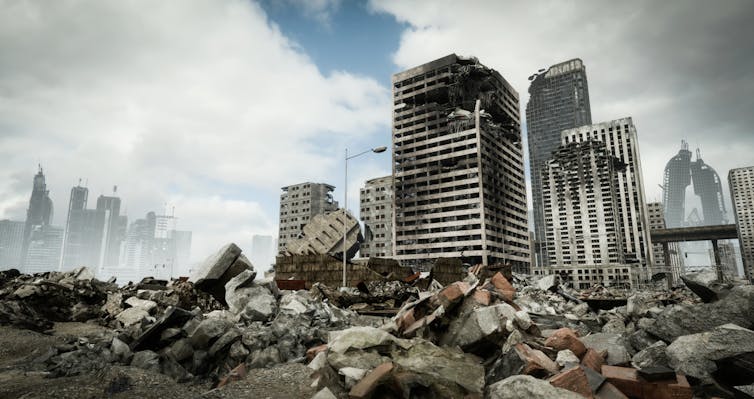
A glimpse of a post-apocalyptic world. Bulgar/E+ via Getty Images

Carlton Basmajian, Iowa State University


If humans went extinct, what would the Earth look like one year later? – Essie, age 11, Michigan


Have you ever wondered what the world would be like if everyone suddenly disappeared?

What would happen to all our stuff? What would happen to our houses, our schools, our neighborhoods, our cities? Who would feed the dog? Who would cut the grass? Although it’s a common theme in movies, TV shows and books, the end of humanity is still a strange thing to think about.

But as an associate professor of urban design – that is, someone who helps towns and cities plan what their communities will look like – it’s sometimes my job to think about prospects like this.

So much silence

If humans just disappeared from the world, and you could come back to Earth to see what had happened one year later, the first thing you’d notice wouldn’t be with your eyes.

It would be with your ears.

The world would be quiet. And you would realize how much noise people make. Our buildings are noisy. Our cars are noisy. Our sky is noisy. All of that noise would stop.

You’d notice the weather. After a year without people, the sky would be bluer, the air clearer. The wind and the rain would scrub clean the surface of the Earth; all the smog and dust that humans make would be gone.

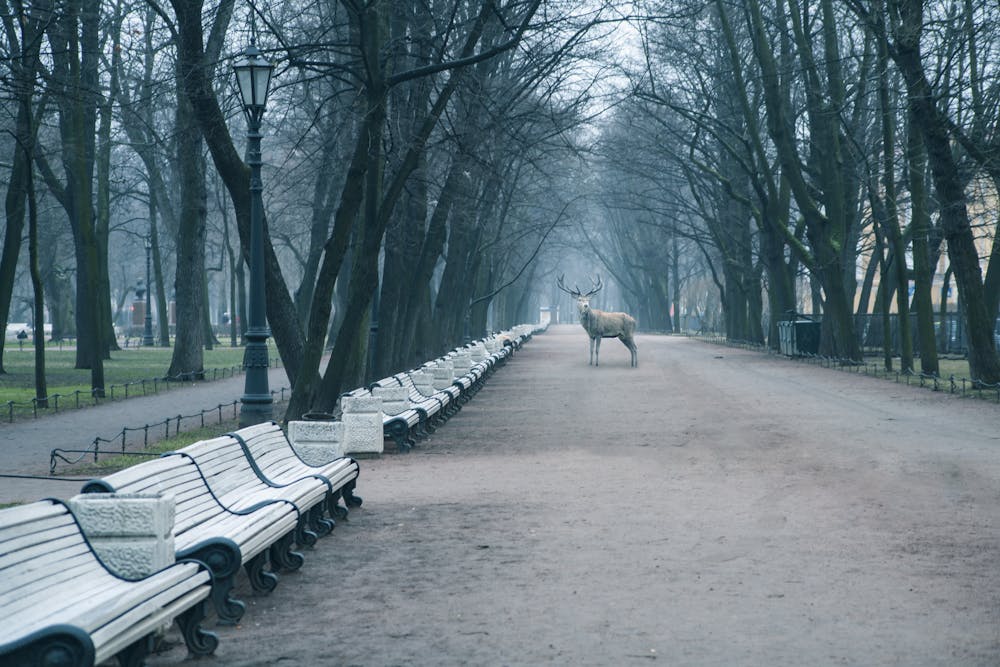
An illustration of a large city park with a deer standing in the middle of a tree-lined path.
It wouldn’t be long before wild animals visited our once well-trodden cities. Boris SV/Moment via Getty Images

Home sweet home

Imagine that first year, when your house would sit unbothered by anyone.

Go inside your house – and hope you’re not thirsty, because no water would be in your faucets. Water systems require constant pumping. If no one’s at the public water supply to manage the machines that pump water, then there’s no water.

But the water that was in the pipes when everyone disappeared would still be there when the first winter came – so on the first cold snap, the frigid air would freeze the water in the pipes and burst them.

There would be no electricity. Power plants would stop working because no one would monitor them and maintain a supply of fuel. So your house would be dark, with no lights, TV, phones or computers.

Your house would be dusty. Actually, there’s dust in the air all the time, but we don’t notice it because our air conditioning systems and heaters blow air around. And as you move through the rooms in your house, you keep dust on the move too. But once all that stops, the air inside your house would be still and the dust would settle all over.

The grass in your yard would grow – and grow and grow until it got so long and floppy it would stop growing. New weeds would appear, and they would be everywhere.

Lots of plants that you’ve never seen before would take root in your yard. Every time a tree drops a seed, a little sapling might grow. No one would be there to pull it out or cut it down.

You’d notice a lot more bugs buzzing around. Remember, people tend to do everything they can to get rid of bugs. They spray the air and the ground with bug spray. They remove bug habitat. They put screens on the windows. And if that doesn’t work, they swat them.

Without people doing all these things, the bugs would come back. They would have free rein of the world again.

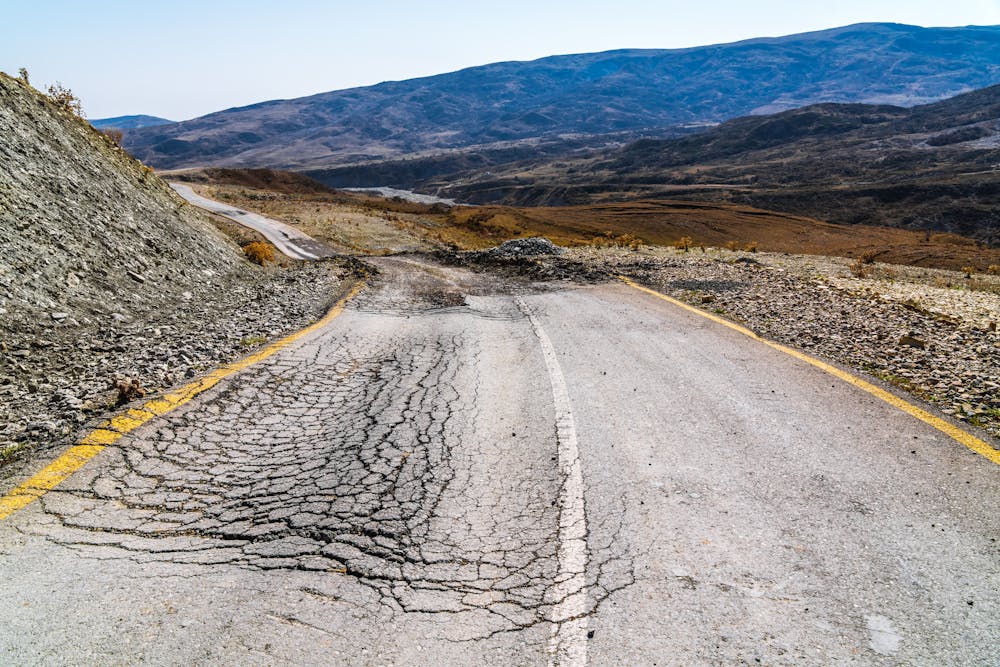
Surrounded by hills and mountains is an isolated two-lane road, cracked and crumbling.
Given enough time, roads would start to crumble. Armastas/iStock via Getty Images Plus

On the street where you live

In your neighborhood, critters would wander around, looking and wondering.

First the little ones: mice, groundhogs, raccoons, skunks, foxes and beavers. That last one might surprise you, but North America was once rich with beavers.

Bigger animals would come later – deer, coyotes and the occasional bear. Not in the first year, maybe, but eventually.

With no electric lights, the rhythm of the natural world would return. The only light would be from the Sun, the Moon and the stars. The night critters would feel good they got their dark sky back.

Fires would happen frequently. Lightning might strike a tree or a field and set brush on fire, or hit the houses and buildings. Without people to put them out, those fires would keeping going until they burned themselves out.

Around your city

After just one year, the concrete stuff – roads, highways, bridges and buildings – would look about the same.

Come back, say, a decade later, and cracks in them would have appeared, with little plants wiggling up through them. This happens because the Earth is constantly moving. With this motion comes pressure, and with this pressure come cracks. Eventually, the roads would crack so much they would look like broken glass, and even trees would grow through them.

Bridges with metal legs would slowly rust. The beams and bolts that hold the bridges up would rust too. But the big concrete bridges, and the interstate highways, also concrete, would last for centuries.

The dams and levees that people have built on the rivers and streams of the world would erode. Farms would fall back to nature. The plants we eat would begin to disappear. Not much corn or potatoes or tomatoes anymore.

Farm animals would be easy prey for bears, coyotes, wolves and panthers. And pets? The cats would go feral – that is, they would become wild, though many would be preyed upon by larger animals. Most dogs wouldn’t survive, either.

An asteroid hit and a solar flare are two of the ways the world could end.

Like ancient Rome

In a thousand years, the world you remember would still be vaguely recognizable. Some things would remain; it would depend on the materials they were made of, the climate they’re in, and just plain luck. An apartment building here, a movie theater there, or a crumbling shopping mall would stand as monuments to a lost civilization. The Roman Empire collapsed more than 1,500 years ago, yet you can see some remnants even today.

If nothing else, humans’ suddenly vanishing from the world would reveal something about the way we treated the Earth. It would also show us that the world we have today can’t survive without us and that we can’t survive if we don’t care for it. To keep it working, civilization – like anything else – requires constant upkeep.


Hello, curious kids! Do you have a question you’d like an expert to answer? Ask an adult to send your question to CuriousKidsUS@theconversation.com. Please tell us your name, age and the city where you live.

And since curiosity has no age limit – adults, let us know what you’re wondering, too. We won’t be able to answer every question, but we will do our best.

Carlton Basmajian, Associate Professor of Community and Regional Planning, Urban Design, Iowa State University

This article is republished from The Conversation under a Creative Commons license. Read the original article.

ooOOoo

Returning to that George Monbiot essay and his closing paragraphs:

Meta-skills are the overarching aptitudes – such as self-development, social intelligence, openness, resilience and creativity – that help us acquire the new competencies that sudden change demands. Like metacognition, meta-skills can be taught. Unfortunately, some public bodies are trapped in the bleak and narrow instrumentalism we need to transcend. For example, after identifying empathy as a crucial meta-skill, a manual by Skills Development Scotland reports that: “Empathy has been identified as a key differentiator for business success, with companies such as Facebook, Google and Unilever being recognised as excelling in this area.” I’ve seldom read a more depressing sentence.

Schooling alone will not be enough to lead us out of the many crises and disasters we now face. Those who are adult today must take responsibility for confronting them. But it should at least lend us a torch.

Thinking about Thinking

We live in a very strange world now. One truly wonders how those who are younger will respond to the demands.

The end maybe in sight!

A rather gloomy analysis about the next few years!

One makes decisions all one’s life. But too few of us are making decisions that will prevent our planet from over-heating.

Patrice Ayme wrote a comment in a recent post that said (in part): “However we are tracking to a much higher temperature: + 7 (seven) Celsius in some now temperate parts… imminently. That is going to be catastrophic.”

There is a terrible change going on right now. From the deforestation in the Amazon rainforest to the unseasonable heat in Europe, as reported in the Guardian newspaper: “The result of this advection has been anomalously warm temperatures across large parts of Europe – in particular across France and Spain, where temperatures soared to over 10C above normal. Maximum temperatures widely exceeded 30C in parts of Spain on Thursday, with 35.2C measured at Morón de la Frontera, south-east of Seville.

One would think that our governments would be pulling together in order to have a co-ordinated global plan. But there’s no sight of that yet. What we do have is a sort of craziness of Governments that causes me to lament over our, as in a global ‘our’, distractions. We are running out of time!

To this end I am republishing in full the latest George Monbiot essay. I hasten to add with Mr Monbiot’s permission.

ooOOoo

The Oligarch’s Oligarch

Published 30th October 2022.

Just as we need to get the money out of politics, we have been gifted a Prime Minister who represents the ultra-rich.

By George Monbiot, published in the Guardian 26th October 2022

Before we decide what needs to change, let’s take stock of what we have lost. I want to begin with what happened last week. I don’t mean the resignation of the prime minister. This is more important.

Almost all the media reported a scripted comment by the newly reinstated home secretary, Suella Braverman, about the “Guardian-reading, tofu-eating wokerati”. Astonishingly, scarcely any of them reported what she was doing at the time. She was pushing through the House of Commons the most repressive legislation of the modern era.

Under the public order bill, anyone who has protested in the previous five years, or has encouraged other people to protest, can be forced to “submit to … being fitted with, or the installation of, any necessary apparatus” to monitor their movements. In other words, if you attend or support any protest in which “serious disruption to two or more individuals or to an organisation” occurs, you can be forced to wear an electronic tag. “Serious disruption” was redefined by the 2022 Police Act to include noise.

This is just one of a series of astounding measures in the bill, which has been hardly remarked upon in public life as it passes through Britain’s legislature. What we see here is two losses in one moment: the final erasure of the right to protest, and political journalism’s mutation from reporting substance to reporting spectacle. These are just the latest of our losses.

So extreme has inequality become, and so dangerous is the combination of frozen wages, lagging benefits, rising rents and mortgage repayments, soaring bills and food inflation, that millions of people are being pushed towards destitution. Unless something changes, many will soon lose their homes. In the midst of this crisis, we have been gifted a prime minister who owns four luxury “homes”. One of them is an empty flat in Kensington that he reserves for visiting relatives.

While Rishi Sunak was chancellor, the government repeatedly delayed its manifesto promise to ban no-fault evictions. Landlords are ruthlessly exploiting this power to throw their tenants on to the street or use the threat to force them to accept outrageous rent rises and dismal conditions. Had Sunak’s “help to buy” mortgage scheme succeeded (it was a dismal flop), it would have raised house prices, increasing rents and making ownership less accessible: the opposite of its stated aim. But this, as with all such schemes, was surely its true purpose: to inflate the assets of existing owners, the Conservative party’s base.

Public services are collapsing at breathtaking speed. Headteachers warn that 90% of schools in England could run out of money next year. NHS dentistry is on the verge of extinction. Untold numbers are now living in constant pain and, in some cases, extracting their own teeth. The suspicion that the NHS is being deliberately dismembered, its core services allowed to fail so that we cease to defend it against privatisation, rises ever higher in the mind.

But Sunak appears determined only to hack ever further. Sitting on a family fortune of £730m, he seems unmoved by the plight of people so far removed from him in wealth that they must seem to exist on another planet. He is the oligarch’s oligarch, ever responsive to the demands of big capitaland the three offshore plutocrats who own the country’s biggest newspapers, oblivious of the needs of the 67 million people who live here.

After 12 years of Conservative austerity and chaos, the very rich have taken almost everything. They have even captured virtue. They now appropriate the outward signs of an ethical life while continuing – despite or because of their organic cotton jackets and second homes, their electric cars and pasture-fed meat, their carbon offsets and ayahuasca retreats, philanthropy and holidays in quiet resorts whose palm-thatched cabins mimic the vernacular of the people evicted to make way for them – to grasp the lion’s share of everything.

Corruption is embedded in public life. Fraud is scarcely prosecuted. Organised crime has been so widely facilitated, through the destruction of the state’s capacity to regulate everything from money laundering to waste dumping, that you could almost believe it was deliberate. Our rivers have been reduced to sewers, our soil is washing off the land, the planning system is being dismantled, and hundreds of environmental laws are now under threat. We hurtle towards Earth systems oblivion, while frenetically talking about anything but.

In other words, it’s not just a general election we need, it’s a complete rethink of who we are and where we stand. It’s not just proportional representation we need, but radical devolution to the lowest possible levels at which decisions can be made, accompanied by deliberative, participatory democracy. It’s not just new lobbying laws we require, but a comprehensive programme to get the money out of politics, ending all private political donations, breaking up the billionaire press and demanding full financial transparency for everyone in public life. We should seek not only the repeal of repressive legislation, but – as civil disobedience is the bedrock of democracy – positive rights to protest.

All this now feels far away. Jeremy Corbyn offered some (though by no means all) of these reforms. Keir Starmer offers none. Though Labour MPs voted against the public order bill, his only public comment so far has been to endorse its headline policy: longer sentences for people who glue themselves to roads. But if the Labour party or its future coalition partners can persuade him to agree to just one aspect of this programme, proportional representation, we can start work on the rest, building the political alliances that could transform the life of this nation. Without PR, we’re stuck with a dysfunctional duopoly, in hock to the billionaire press and the millionaires it appoints to govern us. We cannot carry on like this.

http://www.monbiot.com

ooOOoo

So much is really telling but I just want to draw your attention to this sentence: In other words, it’s not just a general election we need, it’s a complete rethink of who we are and where we stand.

It is not just in England and Wales but also in the USA. Indeed, most of the countries in the world.

Here is an excerpt from the latest email from The Economist. It presages the COP27 to be held in Egypt next week.

By burning fossil fuels, humans have altered Earth’s atmosphere, which has consequences for almost everything on the planet. It is reshaping weather systems and coastlines, transforming where crops can be grown, which diseases thrive, and how armies fight . Rising temperatures affect geopolitics, migration, ecosystems and the economy. Over the next century and beyond, climate change—and the responses to it—will remake societies and the world.

And a paragraph later:

This week I wrote about the seven texts I recommend as an introduction to the climate crisis—and explained why each is worth turning to—as a part of our “Economist reads” series. They range from Bill Gates’s assessment of technological solutions to a discussion of international justice by the former UN High Commissioner on Human Rights. One book I find myself recommending over and over again is “What We Know About Climate Change” by Kerry Emanuel, an atmospheric scientist at MIT. At 88 pages, it is a blessedly short, readable primer on the science, history and economics of climate change. The climate crisis touches everything. Understanding it, even a little, is essential for anyone who is engaged with the world and its future. This is a good place to start

Please follow this advice because it is an excellent place to start.

I wish with all my heart that I am wrong and maybe, just maybe, I am having a ‘down in the dumps’ day. Whatever, my judgement is that we have a few more years at most to find out.

Musings from a 77 year old!

Where did it all go? That is: Life! Or more accurately my life.

I was born in Acton, London before the end of WWII. I am in my 77th year. Life these days seems to be more or less a paradox.

There are so many challenges at the moment. Not just in the USA nor in the UK but globally. We love where we live here in rural Merlin but we are already in the third year of below normal rainfall.

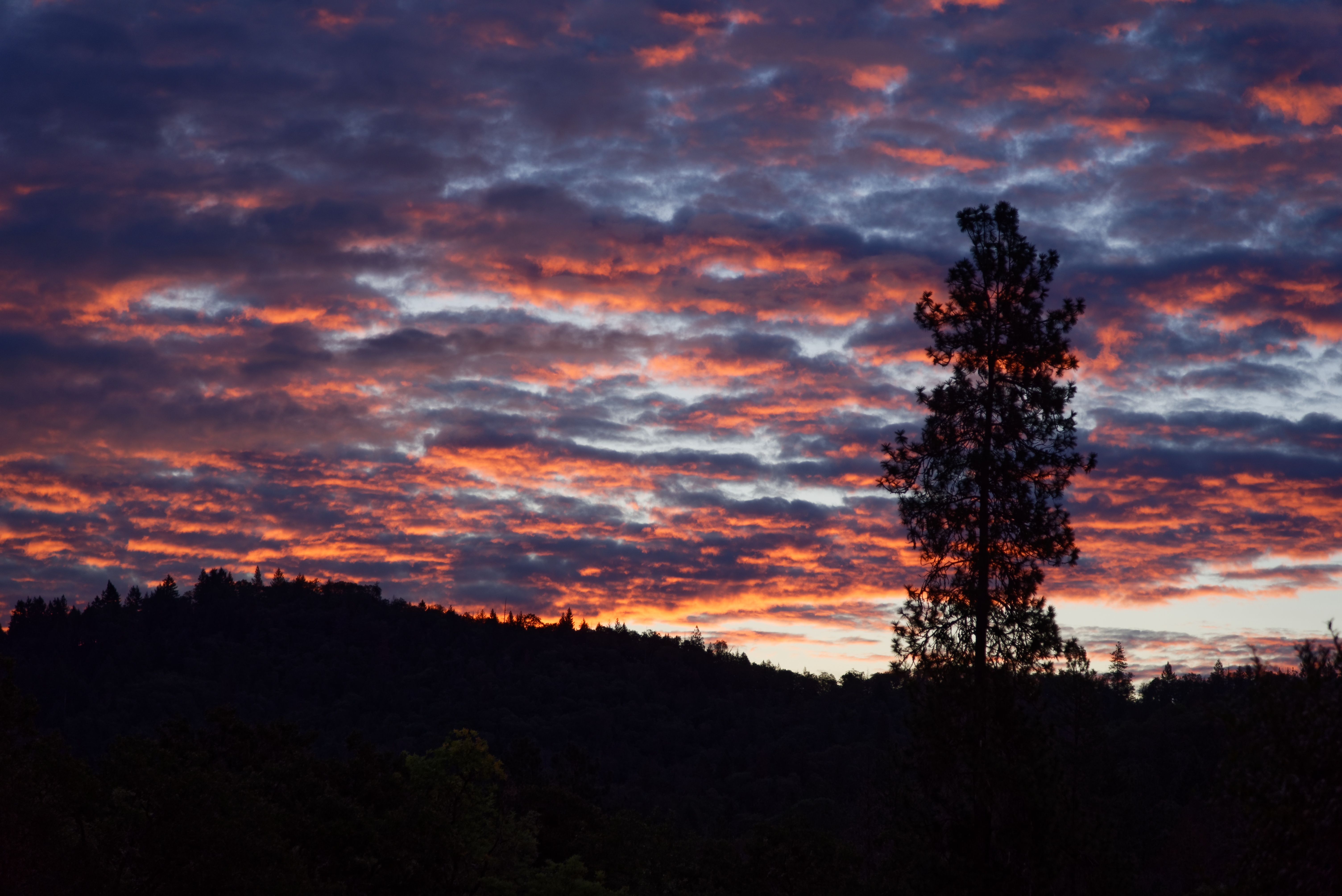
A view of the sunrise from taken from our property.

The contradictions in terms of our life locally and the global scene are huge. This is all leading to me quoting extracts from a recent George Monbiot article. The article starts by saying: “On both sides of the Atlantic, powerful interests seem determined to trigger the collapse of life on Earth. Why?

Sexton Mountain last winter. Again photo taken from our property.

A little later on in Geo. Monbiot’s article, he writes: “When I began work as an environmental journalist in 1985, I knew I would struggle against people with a financial interest in destructive practices. But I never imagined that we would one day confront what appears to be an ideological commitment to destroying life on Earth. The UK government and the US supreme court look as if they are willing the destruction of our life support systems.

Because it does seem as though the political leaders are not taking the future of the planet seriously. As Patrice Ayme concluded recently in a remark to that post: “Biden ought to declare a climate emergency.” But it won’t happen!

(Well I may stand corrected. Yesterday it was widely reported, and I chose Renewable Energy: “The clean energy industry celebrated a moment on August 7 that would have seemed impossible just a few weeks earlier: The Senate passed a budget measure that includes the largest investments in clean energy and climate change in U.S. history.“)

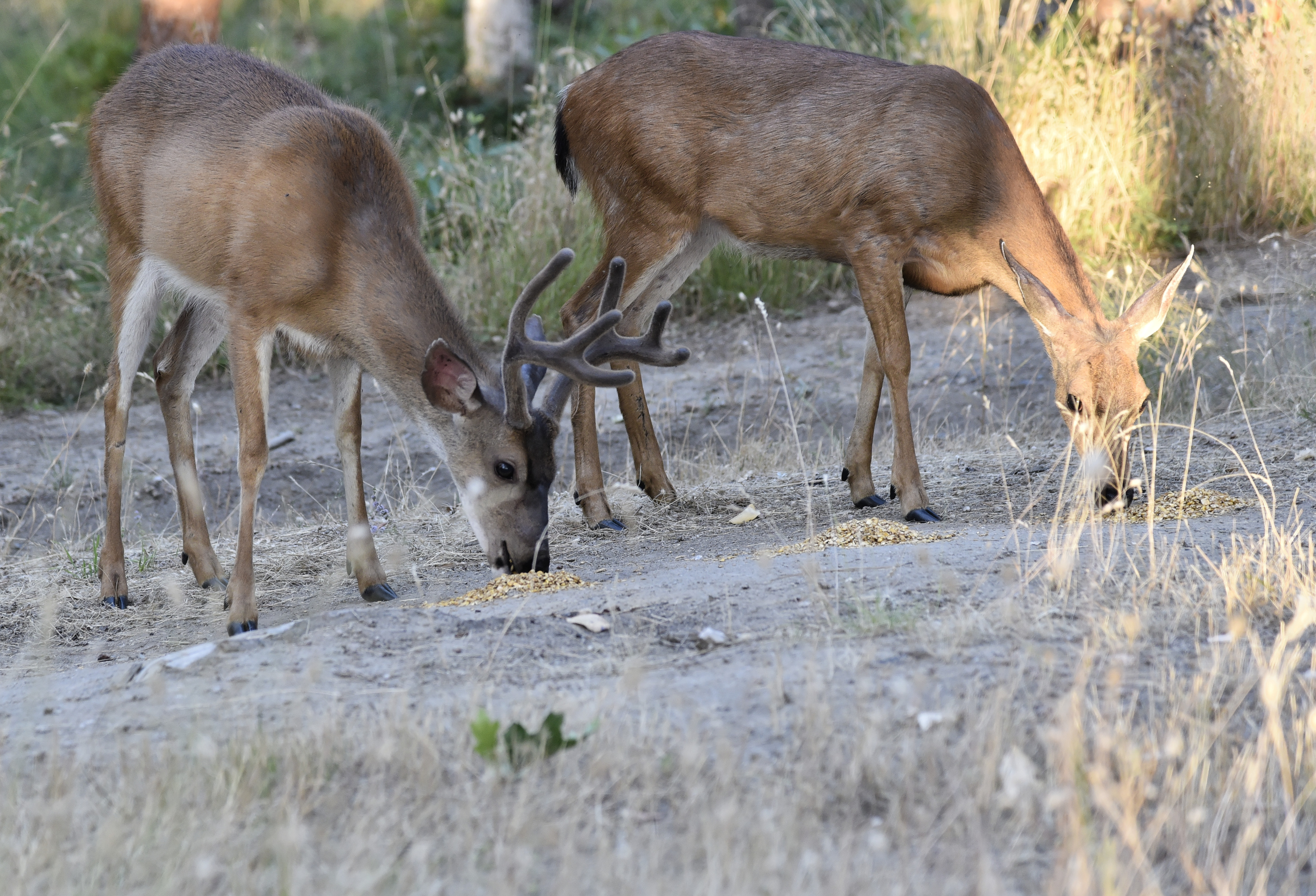
Every morning when I go down to feed our two ex-rescue horses I also feed the wild deer. I have been doing it for many years. Long enough that a young buck has turned into an adult and comes within a few feet of me.

It never ceases to delight.

The contradiction between me going every morning down to the stable area and feeding the horses and the wild deer, and the outcome for the planet is beyond words. In a very real way it is incomprehensible.

Again, Geo. Monbiot writes: “All this might seem incomprehensible. Why would anyone want to trash the living world? Surely even billionaires want a habitable and beautiful planet? Don’t they like snorkelling on coral reefs, salmon fishing in pristine rivers, skiing on snowy mountains? We suffer from a deep incomprehension of why such people act as they do. We fail to distinguish preferences from interests, and interests from power. It is hard for those of us who have no desire for power over others to understand people who do. So we are baffled by the decisions they make, and attribute them to other, improbable causes. Because we do not understand them, we are the more easily manipulated.”

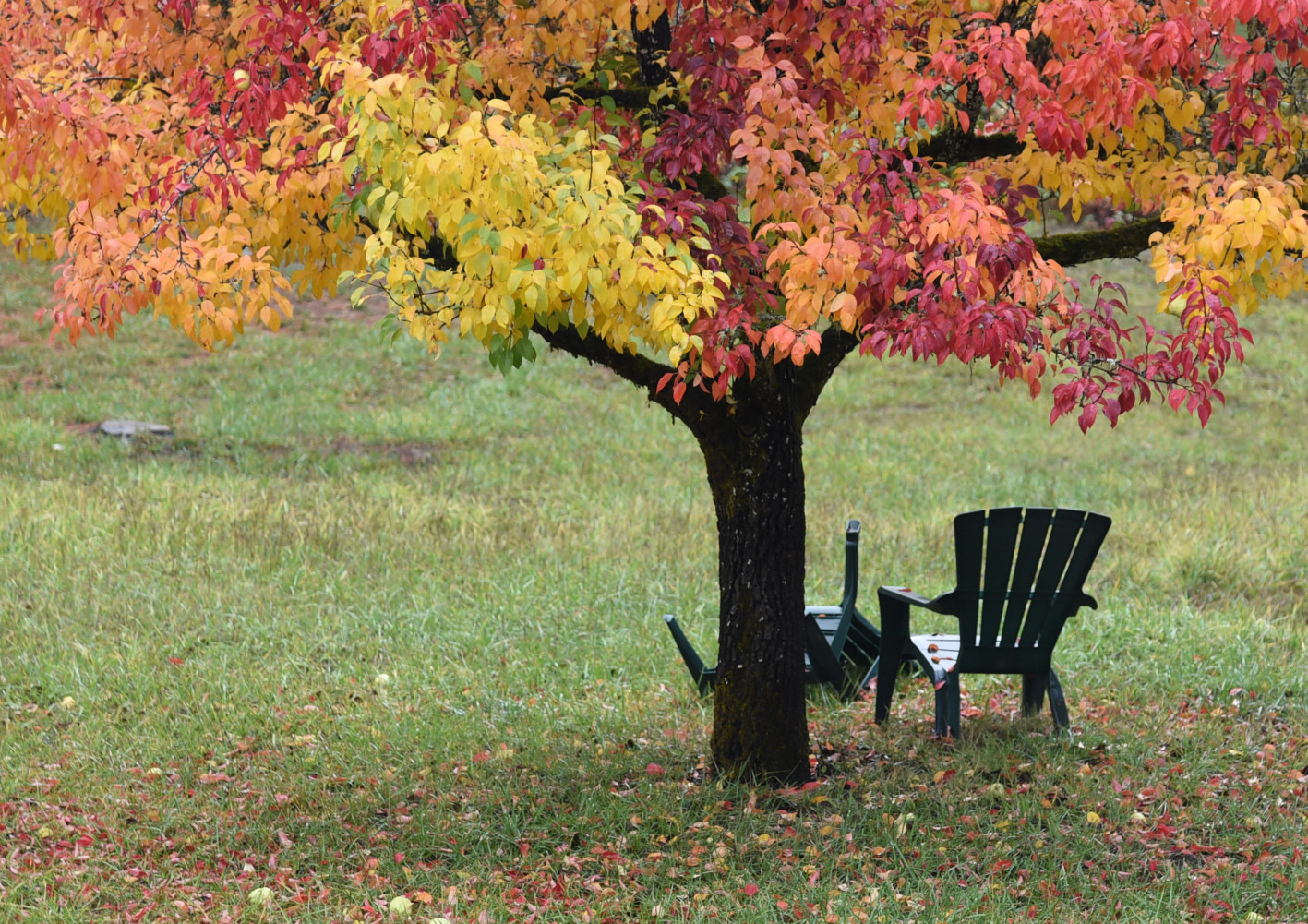
Under our apple tree!

It really is a paradox! And who knows the outcome. All I can say is that, despite me being the age I am, I would not want to be any younger and aware that soon one would be facing the global changes full on.

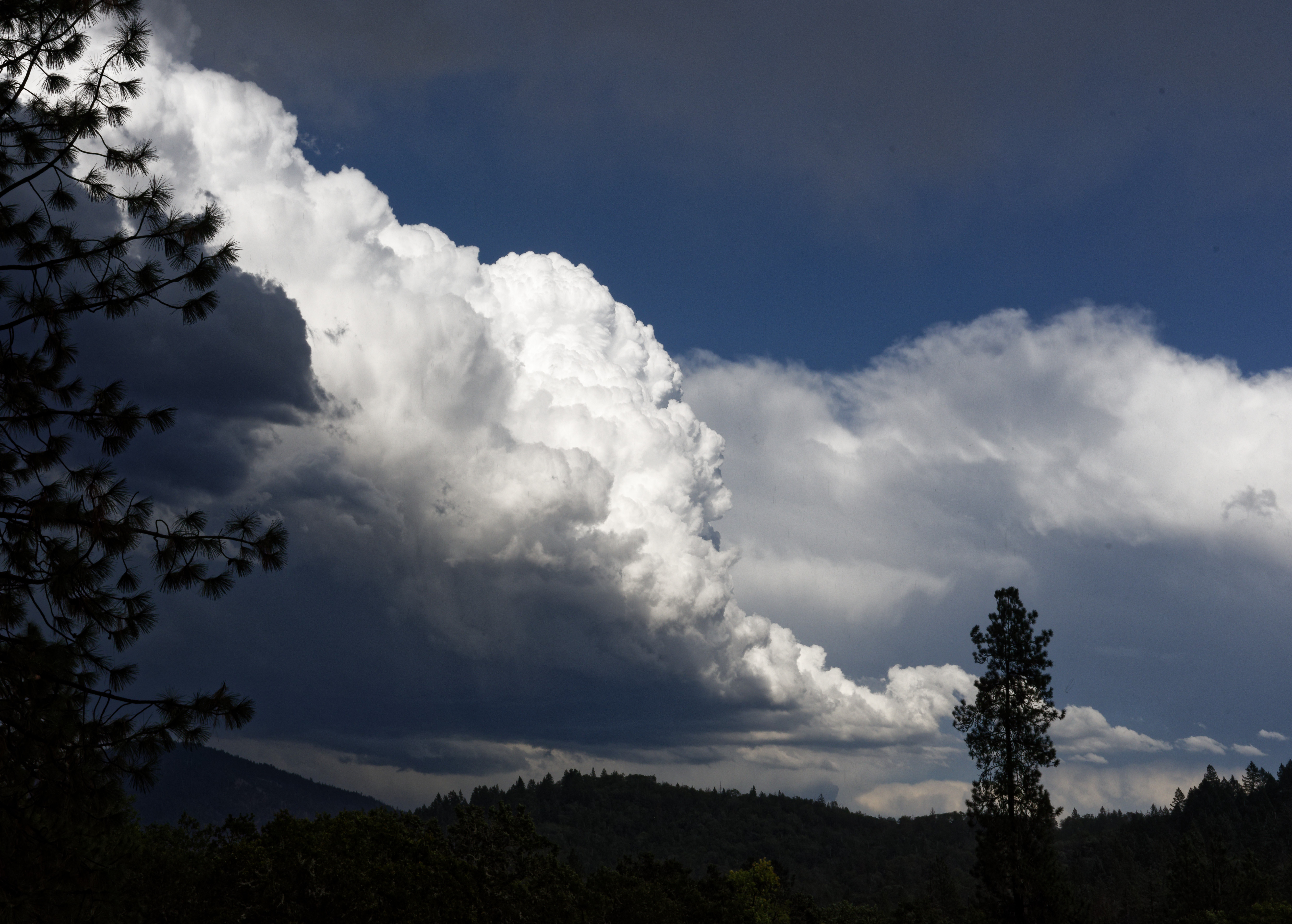
Stacked cumulus clouds to the North-East.

More words from Geo. Monbiot: “Since 1985, I’ve been told we don’t have time to change the system: we should concentrate only on single issues. But we’ve never had time not to change the system. In fact, because of the way in which social attitudes can suddenly tip, system change can happen much faster than incrementalism. Until we change our political systems, making it impossible for the rich to buy the decisions they want, we will lose not only individual cases. We will lose everything.”

I have no idea of the global changes that are afoot and how they will affect us in Merlin. Indeed, I have no idea how long I have to live.

Jean and I met in December, 2007. We met in Mexico but Jean was also born in London, just a few years after me. How’s that for chance!

Jean’s American husband had died in 2005. She was rescuing dogs off the streets, sorting them out, and finding homes for them, mainly in Arizona.

Jean and me in San Carlos, Mexico.

I went out to Mexico with Pharaoh in 2008. With a one-way ticket!

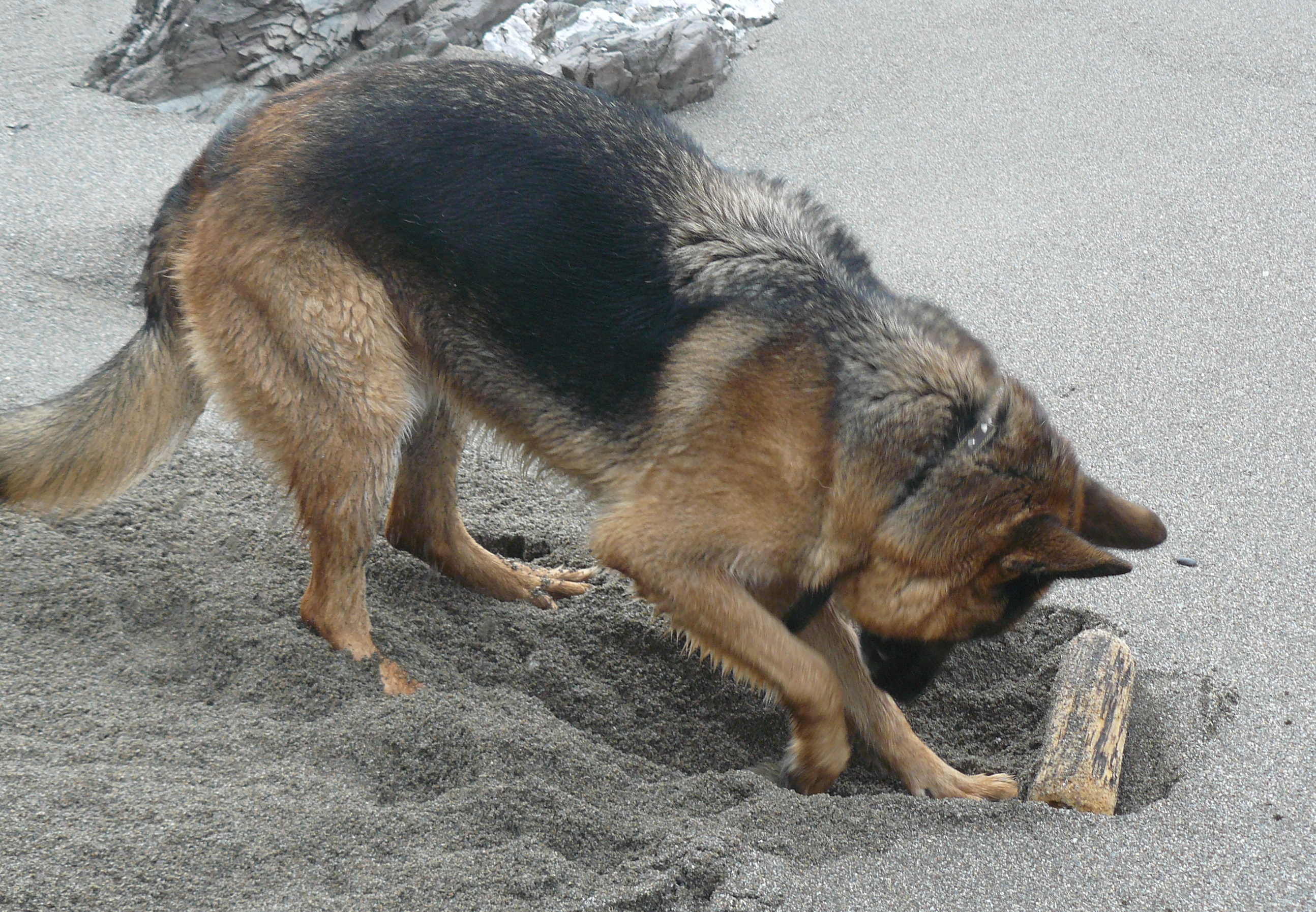
Pharaoh digging in the sand in Mexico.

However of one thing I am sure. Since that meeting in December, 2007 life has been as good as it comes. I have never been happier.

What a contradiction!

A heart-rending plea from George Monbiot

It is about global warming.

The article from George Monbiot came into my mailbox quite recently. Now of course Mr. Monbiot has a living to make and him publishing articles in the Guardian newspaper is normal. But I sensed that in this particular post he was worried. Worried about the situation regarding the planet and, by implication, all those who live on it.

I read yesterday on the UK Met Office blog about HILL events.

HILL events go beyond traditional weather extremes, potentially taking the climate system into uncharted territories. For example, much of the UK’s climate is predicated on two large elements of the climate system: the North Atlantic jet stream, a core of strong winds five to seven miles above the Earth’s surface, and the Atlantic Meridional Overturning Circulation (AMOC), a system of ocean currents which transports warm water northwards in the Atlantic.

Later on in that Met Office article it was said:

Prof Richard Betts MBE is the Head of Climate Impacts Research in the Met Office Hadley Centre and a Professor at the University of Exeter. Prof Betts, who led the team which prepared the Technical Report for the UK’s 3rd Climate Change Risk Assessment (CCRA3), is calling for a monitoring, attribution and prediction system that can provide early warning of HILLs. Professor Betts said: “With rising global temperatures, we are edging closer to the thresholds for more and more HILL events. Greater research into these events will help scientists advise policy makers on their thresholds and impacts.”

A week ago I wrote with real pride about the achievements of the James Webb Space Telescope (JWST). Later on I felt some shame that the focus on the real issue, that of climate change, was too low a priority for the US, let alone the world! Then I looked up the US expenditure on the military. Here’s a small quote from WikiPedia: “In May 2021, the President’s defense budget request for fiscal year 2022 (FY2022) is $715 billion, up $10 billion, from FY2021’s $705 billion.”[1] That puts the JWST into perspective. JWST cost ten billion dollars.

Expand one’s mind and just think of the global cost of war!

Here’s George Monbiot. Republished with his permission.

ooOOoo

Losing It

10th January, 2022

Faced with the gathering collapse of the biosphere, and governments’ refusal to take the necessary action, how do we stop ourselves from falling apart?

By George Monbiot, published in the Guardian 4th January 2022

No wonder journalists have slated it. They’ve produced a hundred excuses not to watch the climate breakdown satire Don’t Look Up: it’s “blunt”, it’s “shrill”, it’s “smug”. But they will not name the real problem: it’s about them. The movie is, in my view, a powerful demolition of the grotesque failures of public life. And the sector whose failures are most brutally exposed is the media.

While the film is fast and funny, for me, as for many environmental activists and climate scientists, it seemed all too real. I felt as if I were watching my adult life flash past me. As the scientists in the film, trying to draw attention to the approach of a planet-killing comet, bashed their heads against the Great Wall of Denial erected by the media and sought to reach politicians with 10-second attention spans, all the anger and frustration and desperation I’ve felt over the years boiled over.

Above all, when the scientist who had discovered the comet was pushed to the bottom of the schedule by fatuous celebrity gossip on a morning TV show and erupted in fury, I was reminded of my own mortifying loss of control on Good Morning Britain in November. It was soon after the Cop26 climate conference in Glasgow, where we had seen the least serious of all governments (the UK was hosting the talks) failing to rise to the most serious of all issues. I tried, for the thousandth time, to explain what we are facing, and suddenly couldn’t hold it in any longer. I burst into tears on live TV.

I still feel deeply embarrassed about it. The response on social media, like the response to the scientist in the film, was vituperative and vicious. I was faking. I was hysterical. I was mentally ill. But, knowing where we are and what we face, seeing the indifference of those who wield power, seeing how our existential crisis has been marginalised in favour of trivia and frivolity, I now realise that there would be something wrong with me if I hadn’t lost it.

In fighting any great harm, in any age, we find ourselves confronting the same forces: distraction, denial and delusion. Those seeking to sound the alarm about the gathering collapse of our life-support systems soon hit the barrier that stands between us and the people we are trying to reach, a barrier called the media. With a few notable exceptions, the sector that should facilitate communication thwarts it.

It’s not just its individual stupidities that have become inexcusable, such as the platforms repeatedly given to climate deniers. It is the structural stupidity to which the media are committed. It’s the anti-intellectualism, the hostility to new ideas and aversion to complexity. It’s the absence of moral seriousness. It’s the vacuous gossip about celebrities and consumables that takes precedence over the survival of life on Earth. It’s the obsession with generating noise, regardless of signal. It’s the reflexive alignment with the status quo, whatever it may be. It’s the endless promotion of the views of the most selfish, odious and antisocial people, and the exclusion of those who are trying to defend us from catastrophe, on the grounds that they are “worthy”, “extreme” or “mad” (I hear from friends in the BBC that these terms are still used there to describe environmental activists).

Even when these merchants of distraction do address the issue, they tend to shut out the experts and interview actors, singers and other celebs instead. The media’s obsession with actors vindicates Guy Debord’s predictions in his book The Society of the Spectacle, published in 1967. Substance is replaced by semblance, as even the most serious issues must now be articulated by people whose work involves adopting someone else’s persona and speaking someone else’s words. Then the same media, having turned them into spokespeople, attack these actors as hypocrites for leading a profligate lifestyle.

Similarly, it’s not just the individual failures by governments at Glasgow and elsewhere that have become inexcusable, but the entire framework of negotiations. As crucial Earth systems might be approaching their tipping point, governments still propose to address the issue with tiny increments of action, across decades. It’s as if, in 2008, when Lehman Brothers collapsed and the global financial system began to sway, governments had announced that they would bail out the banks at the rate of a few million pounds a day between then and 2050. The system would have collapsed 40 years before their programme was complete. Our central, civilisational question, I believe, is this: why do nations scramble to rescue the banks but not the planet?

So, as we race towards Earth system collapse, trying to raise the alarm feels like being trapped behind a thick plate of glass. People can see our mouths opening and closing, but they struggle to hear what we are saying. As we frantically bang the glass, we look ever crazier. And feel it. The situation is genuinely maddening. I’ve been working on these issues since I was 22, and full of confidence and hope. I’m about to turn 59, and the confidence is turning to cold fear, the hope to horror. As manufactured indifference ensures that we remain unheard, it becomes ever harder to know how to hold it together. I cry most days now.

http://www.monbiot.com

ooOOoo

Now there is very little that we folk can do. We can do our best but it all comes to nought. The real change is for governments, especially the governments of the US, China, Russia, the UK, and Europe, to make a difference soon.

Don’t hold your breath!