Tag: Care2

Positive circles!

Or, what goes around, comes around!

Both with animals and with us humans we reap what we sow. Or as I am oft to put it: “Always play with a straight bat for bent bats are practically useless”.

So what has prompted this introspective start to today’s post?

Something that was published on the Care2 blogsite earlier in the month. It was a story about how ex-rescue dogs went on to become dogs that rescued others.  It certainly spoke to me and I feel sure that many of you will be inspired by the story.

ooOOoo

Puppy Rescued Day After Italy’s Latest Quake to Become a Rescue Dog

3193677-largeBy: Laura Goldman November 10, 2016

Among the survivors pulled from the rubble of Italy’s latest major earthquake (Oct. 29) was a border collie puppy who was trapped in the town of Norcia for two days.

The puppy was reunited with his owners, who were so grateful for his rescuers’ work that they decided to let the local fire service adopt him.

Now named Terremoto, which is Italian for – you guessed it – “earthquake,” the pup will be trained to pay it forward by becoming a search-and-rescue dog.

Volunteers from the nonprofit ENPA have been helping nearly 1,000 animals rescued after the earthquakes this year in Italy’s central region. ENPA, an acronym for Ente Nazionale Protezione Animali (National Animal Protection Agency), has been around since 1871. It is Italy’s oldest and largest animal rights organization.

 After the 6.6-magnitude Oct. 29 earthquake, at least 900 animals have received assistance from the organization, according to the ENPA website. Almost 160 of them required veterinary care, including 59 dogs, 63 cats, 13 chickens, 10 tortoises, four parrots, five canaries, two geese, one hedgehog and a hamster. Amazingly, only one animal died: a dog rescued from the rubble alive but in serious condition in the town of Nottoria.

So far, at least 78 animals have been reunited with their owners. Police in Perugia adopted two rescued puppies, The Local reports.

A video captured rescuers using their hands to dig out another dog, Ulysses, after they saw his legs sticking out of the rubble. Like Terremoto, Ulysses had been buried alive when the 6.5 earthquake struck. And, like Terremoto, despite his terrible ordeal, Ulysses was checked out by a veterinarian and found to be in good condition.

About 50 trained search-and-rescue dogs worked with more than 5,000 rescuers after a 6.2 earthquake struck the same region of Italy in August. Among the survivors the dogs sniffed out were two children who’d been stuck in the rubble at separate locations for about 15 hours.

Like these dogs, Terremoto will be trained to bark if he detects a survivor less than 7 feet below the rubble. The rescuers will then dig out the survivor by hand. If Terremoto or other search-and-rescue dogs do not bark, it indicates there are no survivors below. In these cases, heavy machinery is brought in to clear the debris, with care being taken in case there are bodies buried in it.

Search-and-rescue dogs usually stop barking about three days after a disaster like a major earthquake. The rescue efforts then become recovery efforts, since victims would not be able to survive that long without water.

Here in the United States, the National Disaster Search Dog Foundation trains rescued dogs to become search-and-rescue dogs. The dogs are saved from shelters and rescue groups across the country.

While I’d like to wish Terremoto a successful career as a search-and-rescue dog, I’m really hoping he never needs to put those skills to use.

Photo credit: ENPA

ooOOoo

I am going to close today’s post by republishing what you will read if you go across to the home page of the National Disaster Search Dog Foundation website:

From Rescued…to Rescuer

Founded in 1996, the National Disaster Search Dog Foundation (SDF) is a 501(c)(3) non-profit, non-governmental organization based in Santa Paula, California. Our mission is to strengthen disaster response in America by recruiting rescued dogs and partnering them with firefighters and other first responders to find people buried alive in the wreckage of disasters.
 

Selective hearing!

Dogs very quickly learn the system!

We have two dogs that are delightfully obedient, but with an over-rider; they choose whether to be responsive to the ‘requests’ from Jean and me.

Those two dogs are Oliver and Brandy.

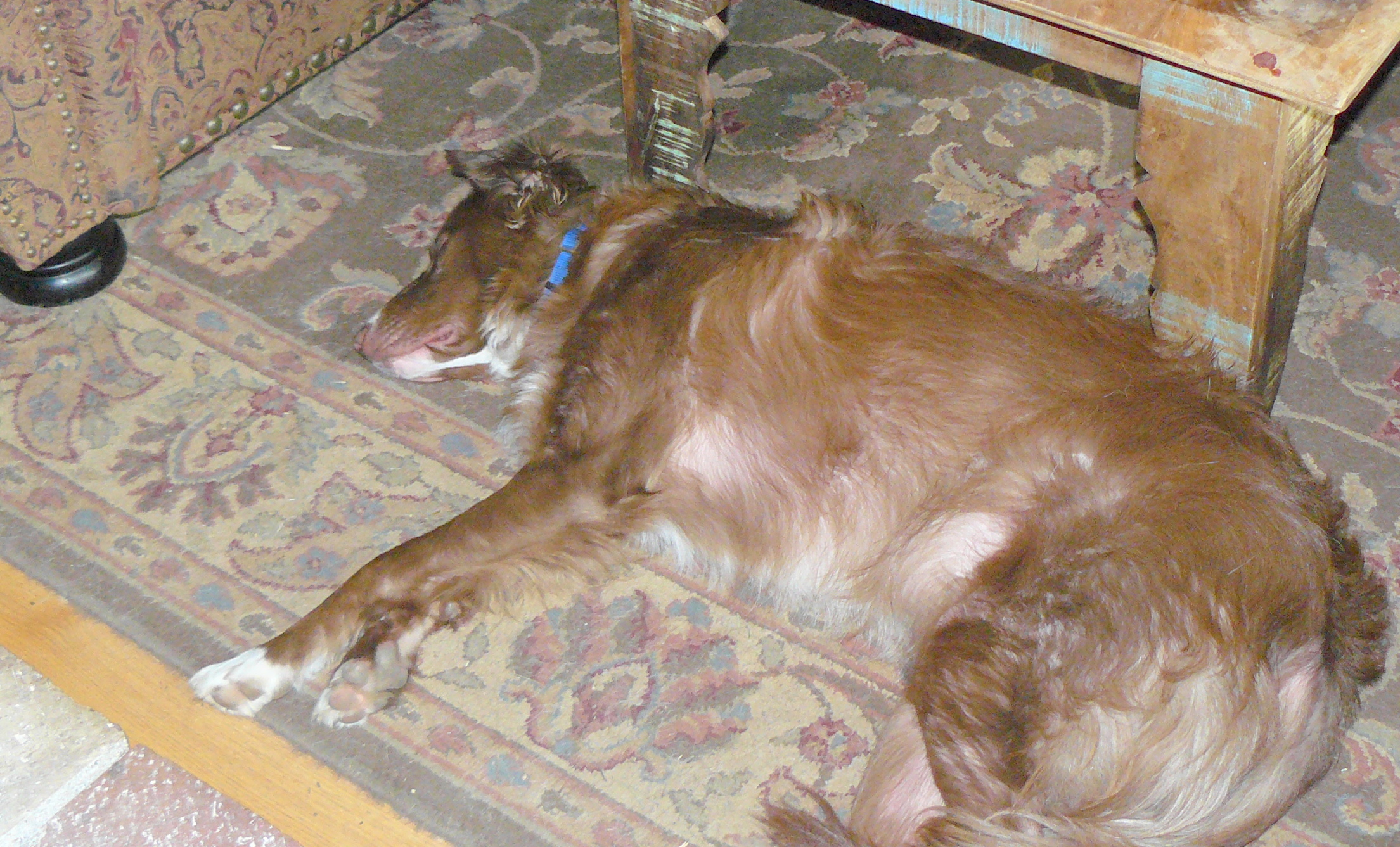
Oliver sleeping in front of the wood-stove yesterday morning. (February 18th, 2015.)
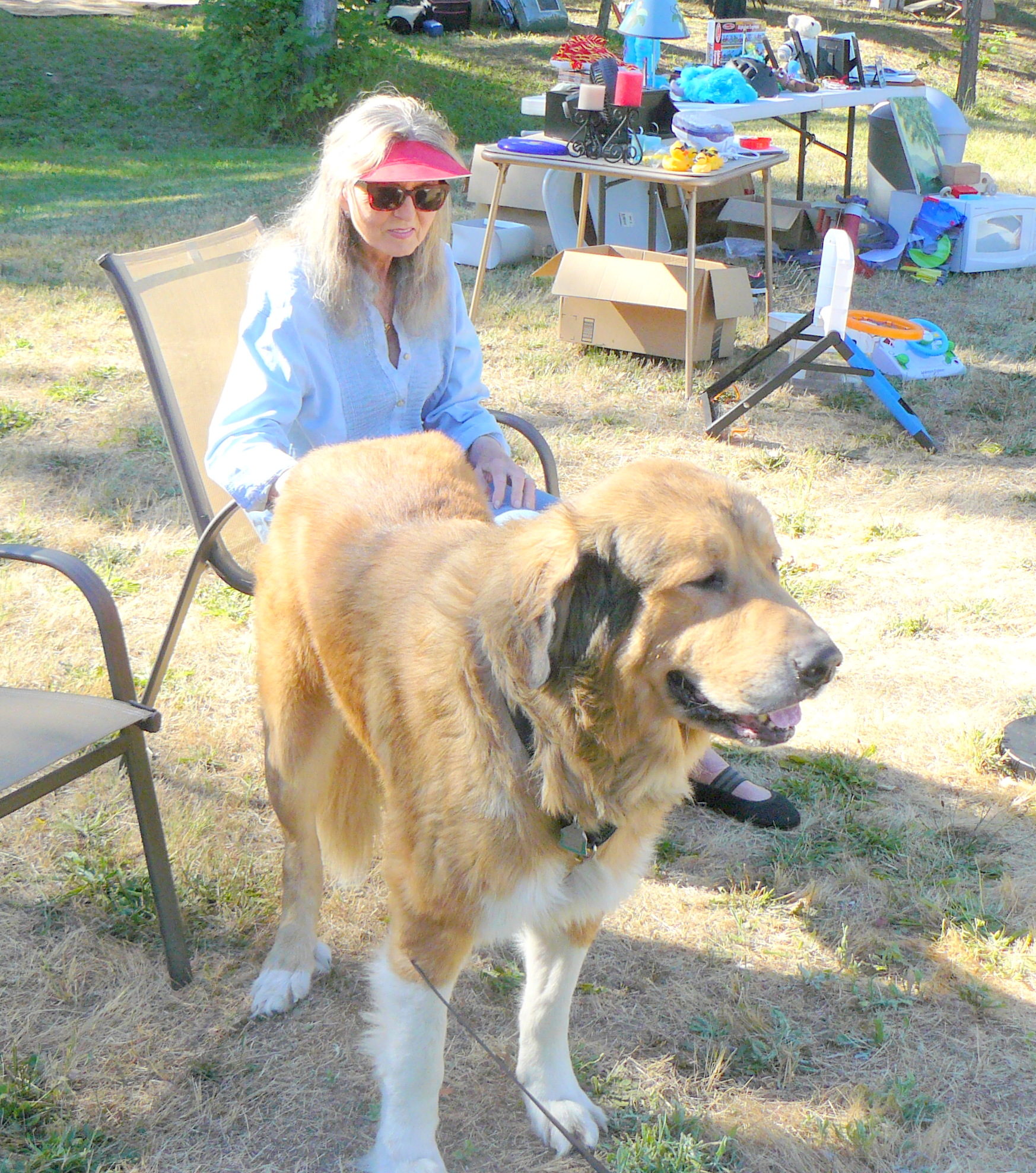
Jean and Brandy at our local yard sale last weekend. (June 29th, 2016)

It’s so easy to see each of them listening to a request from us and deciding whether or not to oblige us at that moment.

So when I came across a recent article over on the Care2 website about dogs deciding what are or are not valuable instructions from their human carers it really struck a chord with me. Read it below and I bet many of you will know exactly what I mean.

ooOOoo

Dogs Are Smart Enough to Know When to Ignore Useless Directions

1392529-largeBy: Elise Morea October 29, 2016

About Elise Follow Elise at @elisem0reau

Dogs are pretty smart, but they’re still pretty clueless enough that we’re able have a good laugh at their reactions to certain things every so often. Whether it’s confusion over a ball that was never thrown or fear of a strange looking photograph sitting on the fireplace mantel, dog brains definitely see and understand the world in a way that can be pretty amusing to us.

According to recent research from Yale University’s Canine Cognition Center, it turns out that dogs can learn to pick up on the uselessness of their owners’ orders or directions so that they can disregard them altogether. In fact, they’re even less likely to follow them than children.

Researchers gathered 40 dogs of different breeds and examined their behavior in some problem solving experiments to see whether they could differentiate between helpful and useless directions. A treat was placed inside of a clear puzzle box with a red lid that the dogs had to open to get their reward.

The dogs were shown how to solve the puzzle box, which had a lever attached to it that could be pushed. Although the lever step was shown in the demonstration, it was actually completely unnecessary and didn’t serve any purpose at all to help open the box. The dogs really only needed to lift the lid to get to their treat.

 The researchers left the room while the dogs worked on the puzzle to make sure they would actually try to solve it on their own rather than just follow orders from people. All of the dogs spent several rounds trying to figure out the puzzle to get to their treat, eventually figuring out that they didn’t need to do anything with the lever after all and that all they needed to do was lift the lid. By the end, the dogs were completely ignoring the lever.

The results suggest that dogs learn on an individual level as opposed to humans who imitate each other when trying to learn. The study was inspired by a previous study that involved observing children as they solved puzzles.

Unlike the dogs, the children didn’t stop to think about how the puzzle might be solved differently and more effectively from what was demonstrated, instead repeating what they were shown to do again and again. Even when the children raced to finish solving the puzzle, they still repeated all the unnecessary steps.

Researchers described the children’s problem solving as ”overimitation,” which may be a unique aspect of how humans learn. Dogs and humans are both very social, but dogs are clearly independent problem solvers while children are natural copycats. Children seem to find it instinctive to limit problem solving because they have so much to learn.

Regardless of whether you have a dog, children, or both, these findings give us the opportunity to notice and appreciate their unique learning styles. From a very young age, children will often start mimicking their parents behaviors whether it serves them as an independent human being or not, offering parents all the more reason to be extra conscious of their own behaviors.

Your dog, of course, might just figure out your trickery after falling for a few fake throws of his favorite toy or ball. Now you know that he’s his own kind of canine problem-solving genius!

ooOOoo

I think I need to be a bit more careful what I discuss in front of our dogs!

Falling for the Fall!

Thirty seconds of pure joy!

As seen recently on the Care2 site.

Published on Oct 12, 2016
If this dog doesn’t get you excited for fall, nothing will.
Video by: Maggie McCarthy
Video footage provided by: Jukin Media

Apologies for the brevity of the post; just wasn’t sure how long internet connectivity was going to last!

As the saying goes:

An apple a day keeps the doctor away!

Picture credit Don Kinzler's blog on Growing Together
Picture credit Don Kinzler’s blog on Growing Together

Read this very interesting item that was published on the Care2 site:

ooOOoo

10 Surprising Ways Apples Are Good for Your Health

A Care2 favorite by Michelle Schoffro Cook

About Michelle Follow Michelle at @mschoffrocook

Martin Luther once said, “even if I knew that tomorrow the world would go to pieces, I would still plant my apple tree.”  New research gives more reasons than ever to plant apple trees and enjoy their delicious and nutritious fruit.  Here are ten surprising reasons to sink your teeth into an apple today:

1. Research found that when healthy adults consumed an apple fifteen minutes before eating a meal, they ate 15 percent less at the meal.  This simple habit can result in weight loss for anyone looking for an easy and healthy way to lose weight.

2. In other studies, apples have been shown to significantly alter the amounts of the bacteria Clostridiales and Bacteroides in the large intestine, conferring gastrointestinal health benefits.

3. Thanks to their phytonutrient content, apples have been show to lower the risk of asthma and lung cancer in numerous studies.

4. In a study funded by the USDA, postmenopausal women who ate dried apples daily experienced a 23 percent reduction in LDL cholesterol (the one known as “bad cholesterol”) and a 4% increase in HDL cholesterol (“the good cholesterol”) within six months.

5. In a British study published in BMJ, researchers found that eating an apple a day was as effective as statin drugs to lower cholesterol levels, without the harmful side-effects.  They also found that if 70% of the British population simply ate an apple on a daily basis, 8500 lives would be spared every year from heart attacks or strokes.

6. Researchers at Tufts University found that catechin polyphenols found in apples speed abdominal fat loss by 77 percent and double weight loss in overweight individuals.  Catechins also improve the body’s ability to use insulin, thereby preventing wild blood sugar fluctuations that effect energy, mood, and cravings.

7. Apples contain flavonoids (including catechin polyphenols and quercetin), which have been shown to interfere with the development of cancer cells and preventing their ability to multiply.

8. Research in the journal Nutrition Reviews found that a diet that’s too low in magnesium increases the risk of cancer.  Apples are a good source of magnesium.

9. According to research in the International Journal of Biological Macromolecules scientists found that apple oligosaccharides showed an ability to inhibit human colon cancer cells.  Oligosaccharides are complex carbohydrates.  The apple compound induced a process known as apoptosis, which is the body’s mechanism to kill damaged or cancerous cells. They also found that the apple oligosaccharide stopped the growth of new cancer cells. They concluded: “Apple oligosaccharide is a potential chemoprevention agent or anti-tumor agent and is worthy of further study.”

10. Apples contain a natural compound known as malic acid, which helps improve energy production in the body. It has been found to aid fibromyalgia and chronic fatigue syndrome.

ooOOoo

 Amazing what one reads and learns on ‘the internet’ these days. If it wasn’t such crap weather just now I would go outside and take a photograph of our three delicious apple trees! Trust me, Jean and I and the deer love to eat them!

Our smaller ones!

Are smaller dogs more difficult to care for?

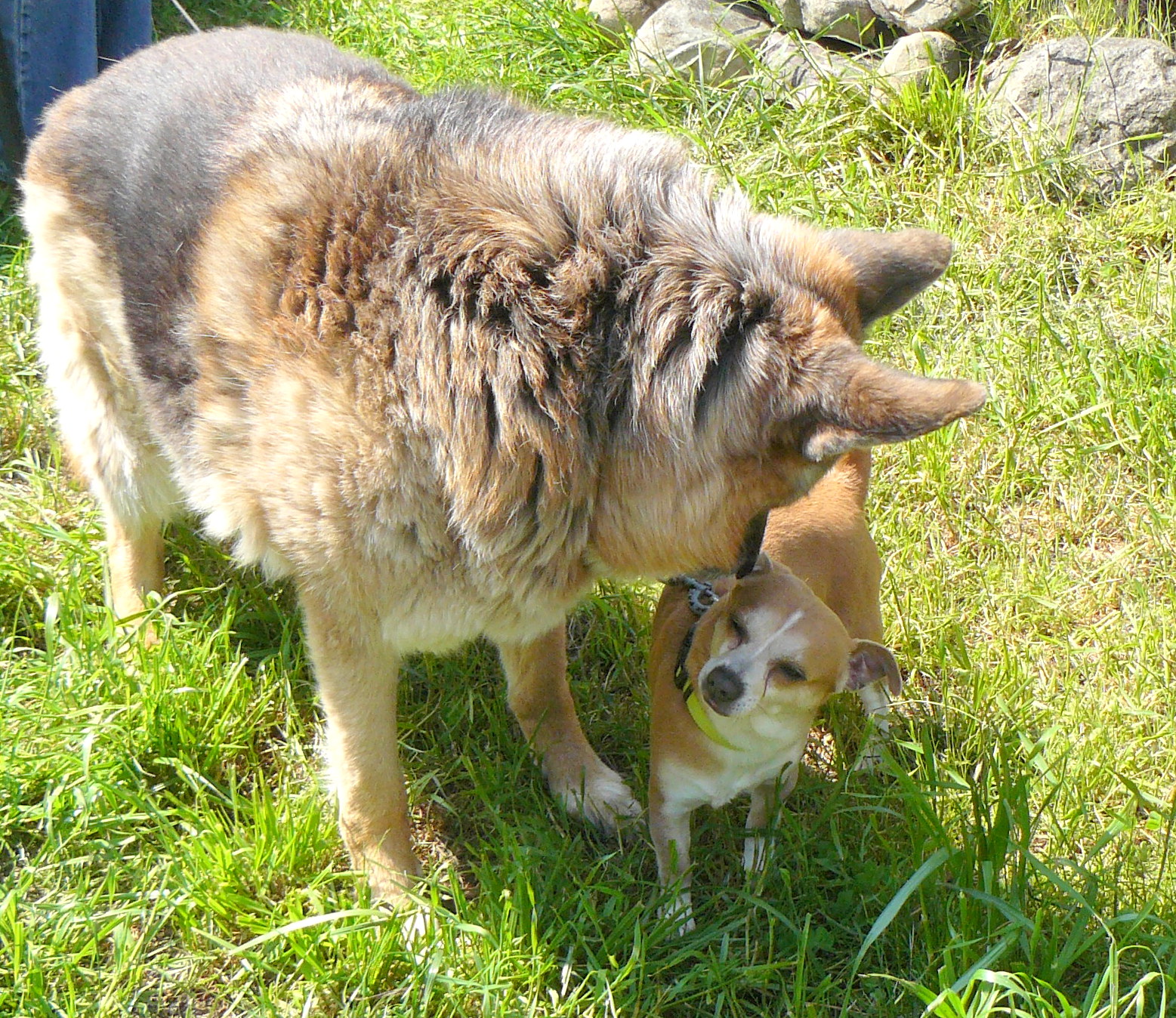
Of the nine dogs that we have here at home two would be classified as small dogs: Sweeny and Pedy.

To my mind they are no more different from the other dogs than are our two German Shepherds; Pharaoh and Cleo.

But that still didn’t stop me from noting a recent article over on the Care2 site under the heading of Everyday Issues for People With Small Dog Breeds. Here it is for you good people.

ooOOoo

Everyday Issues for People With Small Dog Breeds

1391153-largeBy: Vetstreet.com October 10, 2016

About Vetstreet.com

I never thought of myself as a small-dog person. When I was growing up, I much preferred my dad’s German Shepherds to my stepmom’s Toy Poodles. The first dog I acquired as an adult was a retired racing Greyhound. But although Greyhounds are wonderful apartment and condo dogs, we have stairs, and it became difficult to get Savanna up and down them after she lost a leg to bone cancer.

The next dog, we decided, would be smaller. That’s how we ended up with Cavalier King Charles Spaniels (and one Chihuahua mix). But although they are more portable, small dogs come with their own set of issues. If you are considering acquiring a small-breed dog because you think one will be easier to live with, here’s what you should know.

It Ain’t Easy Being Small

Small dogs are, well, small. It’s easy to step on them, no matter how careful you try to be. It’s not so bad with the larger Toy breeds such as Pugs and Cavaliers — at least, not once they reach adult size — but smaller dogs such as Chihuahuas, Papillons and Yorkies run the risk of getting stepped on or kicked not just by the humans in the home but also by other pets. We frequently joke about attaching a balloon on a long string to the collar of our Chihuahua mix so we’ll be more likely to notice where she is.

Other pets may bully them. Lots of small dogs rule the roost, but when they have a gentle personality, their size can work against them. Esmeralda, a Papillon, was stalked by her owner’s much larger cat, who seemed to view the small, fluffy dog as a toy at best, potential dinner at worst. It was a painful dilemma for the owner, who finally ended up placing her cat in a new home to save her dog’s life.

Little dogs can hurt themselves jumping on and off furniture. It’s an especially common problem with breeds such as Italian Greyhounds, who have long, thin legs, or Japanese Chin, who often enjoy being on high places such as the back of the sofa. This is more common in young dogs, who are not only still growing but also tend to be fearless, but any small dog can suffer a broken bone if he lands the wrong way jumping off the furniture, is stepped on by an errant guest or is dropped to the floor by a child.

For this reason, it is often necessary to buy steps so small dogs can get off furniture safely and easily (getting up on their own can be an issue, too). It’s better to teach them this habit at an early age than to risk a broken bone.

Tiny dogs often think they’re bigger than they actually are. In their head, they’re just as big and badass as that Rottweiler down the street. It’s not uncommon to see a Yorkshire Terrier, Chihuahua or Miniature Pinscher take his life in his hands by challenging a bigger dog. Owners must always be prepared to keep their small dogs out of harm’s way — especially when their dogs try to bring it on themselves.

Too Cute To Train?

Little dogs can be just as smart as big ones — sometimes more so. But people often don’t make the effort to train them. That’s a shame, because small dogs are just as much in need of manners as large ones.

There are a couple of issues with training small dogs. One is that they’re so low to the ground it can be difficult to get their attention or to reach down and reward them with treats.

Another is that some can be slow to learn house training. But it doesn’t have to be that way. As with any other dog, perseverance and consistency win the day.

By Kim Campbell Thornton | Vetstreet.com

ooOOoo

I’m not completely sure whether I totally agree with everything that Kim writes about: what do you think?

So far as me and Jean are concerned our Sweeny and Pedy are adorable and at this time of the year are most welcome as all-night sleepers on our bed!

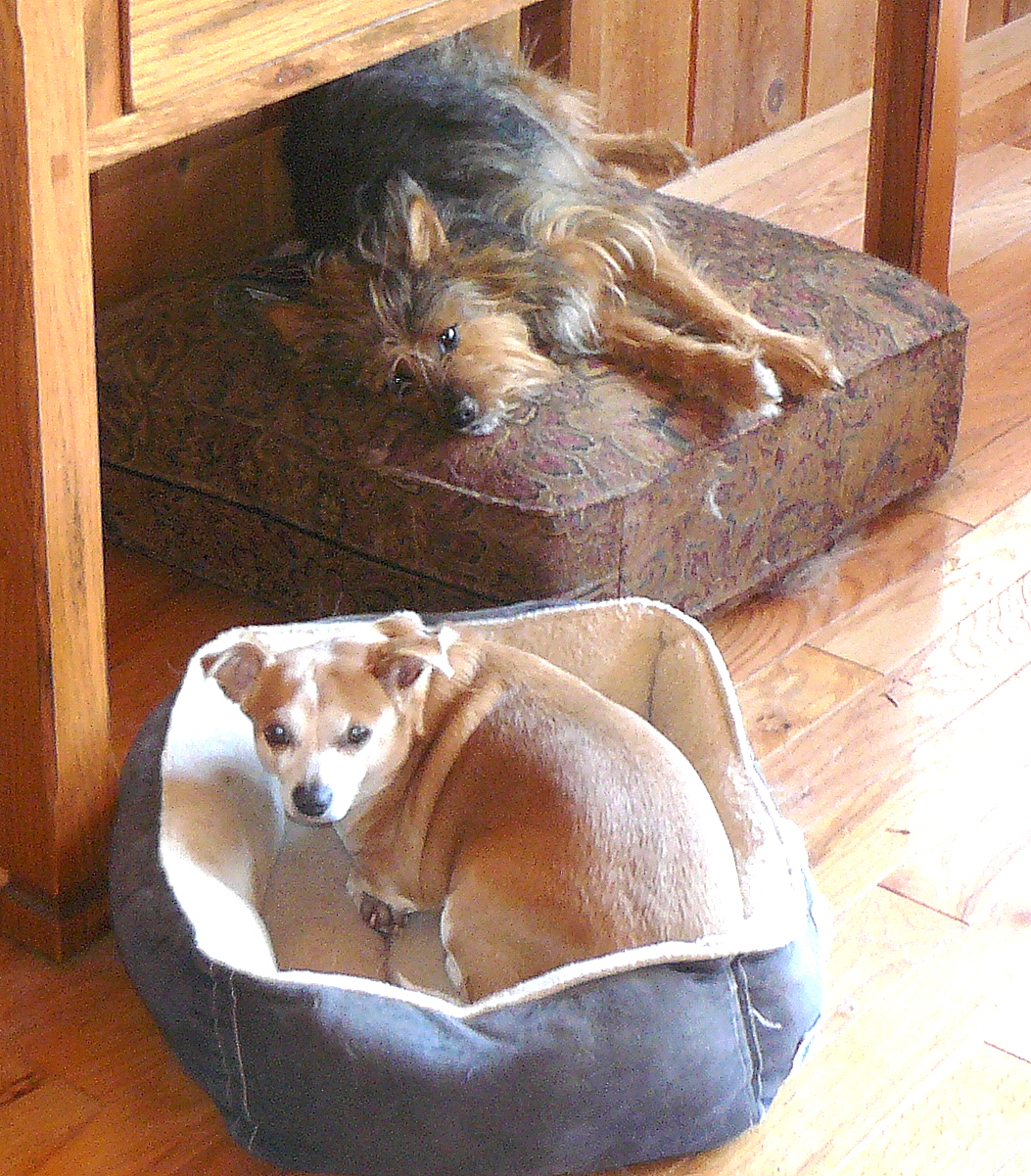
Pedy in front of Sweeny. Picture taken yesterday afternoon.

Mouthing it canine fashion.

Another fascinating insight into the behaviours of dogs.

Every dog owner knows how dogs appear to have their mouths directly linked to their emotions. From licking to growling, from dribbling to holding stuff, we humans don’t really have a clue as to the role of the canine mouth over and above eating food.

Which is why this recent item over on the Care2 site caught my eye (not my mouth!) and I wanted to share it with you.

ooOOoo

Why Does My Dog Grab Something in His Mouth When He’s Excited?

1390782-largeBy Vetstreet.com September 26, 2016

About Vetstreet.com Follow Vetstreet.com at @vetstreet

Some dogs seem to love to entertain. When guests come to the door, these dogs become delighted hosts, racing to greet their visitors with something — anything — they find to put in their mouths.

What’s behind this amusing behavior?

Vetstreet checked in with Dr. Wailani Sung, a veterinary animal behaviorist, to find out.

There are several different reasons your dog might be doing this, she says. Among them: They’re offering a gift, they’re looking for attention or they want to show us they’re happy.

“I think some dogs are so excited to see a visitor because it may represent a new person who will play with him/her, so the dog grabs a toy to try to entice the person to play, whether it is tug or throwing the object,” Dr. Sung explains.

A Welcome Distraction?

For other dogs, it may be a behavior that the owners taught them or encouraged to give them something more appropriate to do in place of jumping on people or barking.

“Other owners have recognized that their dogs may appear anxious or worried, but if they get the dog engaged with their toys, they appear less concerned about new visitors in the house,” she says. “Some dogs may naturally grab a toy on their own, whether to solicit play or to have something to do.”

The dog may also be reacting to your own excitement and responding in kind.

Dr. Sung has seen the behavior mainly in Retrievers but said it’s something any breed might exhibit.

Avoiding an Embarrassing Moment

In some cases, owners report some rather embarrassing situations — like when the first thing their pooch spotted to grab was dirty laundry or other “unmentionables.”

Dr. Sung says it’s best to be sure those things are out of the dog’s reach. But if the arrival is a surprise and the dog does get something he shouldn’t have, the owner should try to keep calm and get the dog to exchange the contraband for another toy or treat.

“They should distract the dog, redirect to a more appropriate behavior, such as come and sit, and then ask the dog to drop it,” Dr. Sung said. “Sometimes people forget and raise their voices or go chasing after their dog and it becomes a game to the dog. Then the next time visitors arrive, the dog remembers how much fun he had last time people arrived and grabbed an item.”

It can be flattering to be the source of a canine host’s excitement — unless he’s so thrilled, he’s jumping or running into people. In those cases, Dr. Sung recommends putting him in another room or in his kennel or bed while guests arrive to try to avoid the excitement.

By Amy Sinatra Ayres | Vetstreet.com

ooOOoo

Anyone got any wonderful stories about what their dog has put in their mouth? (That you would like to share!!)

Kindness in our animals.

A wonderful follow-on to yesterday’s post.

A number of domestic circumstances are taking priority at the moment so you will forgive me for the brevity of my words today. But that won’t stop you enjoying this recent item over on the Care2 site.

ooOOoo

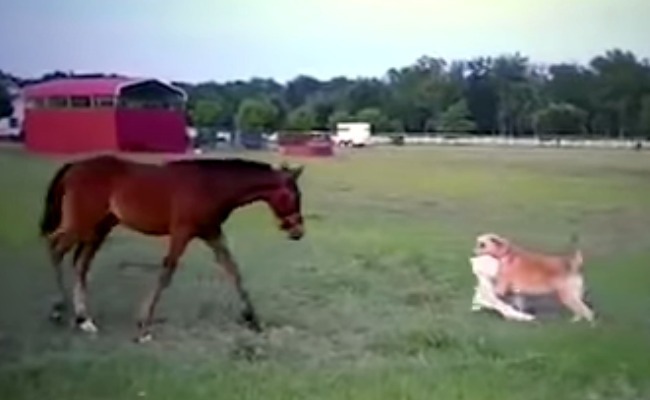
Rescued Horse Befriends Dog

1389721-largeThis rescued horse made an instant friend in his new family’s dog!

ooOOoo

Short but just wonderful!

More rescue tales.

Or should that be rescue tails!

I have another guest post for you tomorrow that, as with Maria’s story yesterday, will be appreciated greatly by you.

But for today I’m going to republish an item that appeared on the Care2 site that isn’t a million miles away from Maria’s theme about her Ellie finding lost persons.

ooOOoo

3 Rescued Dogs Who Saved Their Family Members’ Lives This Year

3187860.largeBy: Laura Goldman

August 25, 2016

Celebrated on August 26 every year, National Dog Day encourages pet adoptions and honors dogs who save lives, keep us safe and bring us comfort. Created in 2004 by pet lifestyle expert Colleen Paige, the holiday falls on the date her family adopted their first rescue dog. Among the ways you can celebrate are by adopting a dog of your own or donating $5 to your local animal shelter.

In honor of National Dog Day, meet three rescued dogs who really “pawed” it forward this year by saving the lives of their forever family members.

Leon Alerts Family to Home Intruders

As Theresa Lero was feeding her horses outside her Gulfport, Miss., home early one April morning, two armed and masked men entered her house.

When she went inside, her rescue dog, Leon, was growling at the door to the sunroom. Peeking through a window, Lero saw a man with a gun.

She ran to wake up her husband. Grabbing a gun, she ran back to the sunroom with her dog by her side. “Get ‘em, Leon,” she told him.

The men began shooting. They missed Lero, but shot Leon in the head. “You shot my dog. I’ll kill you myself,” Lero yelled at them. A neighbor heard her and called 911.

The intruders ran off and were later caught by police. In the meantime, the Leros rushed Leon to the veterinarian. Amazingly, the bullet skimmed his skull and exited out his ear. He was able to walk in and out of the animal hospital.

For saving his family, Leon was given a framed certificate of bravery from the county sheriff.

When the Leros adopted their dog from a shelter two years ago, they thought he was a redbone coonhound, so they named him after the singer Leon Redbone. As it turns out, Leon may actually be a red nose pit bull. One thing is certain: Leon is definitely a hero.

Haus Saves Girl from Rattlesnake

In May, 7-year-old Molly Deluca was playing in her Tampa backyard with Haus, the German Shepherd her family adopted in March from a rescue organization, when her grandmother noticed Haus jump in front of the girl and then rear up.

He was protecting her from a venomous Eastern diamondback rattlesnake that had slithered in from a habitat at a nearby state park. Haus “had every opportunity to run but he didn’t,” Molly’s mother, Donya Deluca, told the Associated Press.

Molly was unharmed, but Haus was bitten three times in the leg. He was successfully treated at an animal hospital for kidney damage, and was given a blood transfusion and anti-venom. A week later, Haus was well enough to return home. His expensive veterinary bills were covered by generous donations from an online fundraising campaign. Haus received a Heroic Dog Award from PETA.

“He just exceeded our expectations all the way around,” Molly’s dad, Adam DeLuca, told the Associated Press. “He’s the type of dog that when you want to go buy a dog, you pay thousands of dollars and that’s the dog you get. But we adopted him and got him for free.”

Earl Wakes Up New Owner as House Burns

Barely a week after he was adopted from Petco’s Stray Animal Adoption Program in July, a pug named Earl rescued his new dog mom by alerting her to a house fire in their Erlanger, Ky., home.

“He just fell asleep with me on the couch along with (another dog named) Tucker, and the next thing I know, he’s waking me up, licking my face. It’s the first time he’s done that,” Kristina Brate told WLWT.

The fire, believed to have been caused by faulty wiring, started in the basement and quickly spread through the rest of the house.

Brate lost almost everything in the fire, but she’s alive thanks to Earl. Petco awarded the hero dog with a $500 shopping spree to help replace the lost pet items and also stock up on some well-deserved treats.

“I believe that he came to me for a reason,” Brate told WLWT. “I think that, for some reason, the first family had passed him up and that there’s a reason why I got him.”

Photo credit: YouTube

ooOOoo

Physically, psychologically and emotionally the number of ways that dogs save us is almost limitless!

Senior Smiles

Adopting dogs who are no longer young animals.

A trip to your local animal shelter reveals that dogs of all types, backgrounds, and ages may usually be seen. Inevitably, those dogs that are no longer in ‘the first flush of youth’ are frequently seen as less adoptable than younger animals. While that is understandable from a prospective owner’s point of view there’s no reason at all to disfavor the older dog.

Both Casey and Pedy were dogs that Jean and I adopted when they were well into their middle years, or six-years-old to put a number to it.

Casey, shown above, had been in the animal shelter for over a year and on top of being six had the added burden of being a Pit Bull breed.

Hi Pedy, I'm the bossman around here. Name's Pharaoh and you'll be OK.
Hi Pedy, I’m the bossman around here. Name’s Pharaoh and you’ll be OK.

So when the Care2 blogsite published a post about adopting senior dogs I thought that this was most certainly something to be shared with you.

Here it is.

ooOOoo

What Advice Would You Offer Someone Adopting a Senior Dog?

1388615.large

By: Vetstreet.com August 18, 2016

About Vetstreet.com
Those of us who have been fortunate enough to share our hearts and homes with a senior dog know just how special those gray-muzzled darlings can be. Earning the love of an aging pup who truly needs you creates a special bond that’s hard to put into words.

True, they may have some age-related health issues (like arthritis, dental disease or failing vision or hearing) that require attention or treatment. But older dogs have lots of pros, too, like the fact that they’re likely to be better trained than a puppy and they’re probably game to lounge around with you and take it easy. And when it comes to adopting a senior dog, you have the benefit of knowing what you’re getting in terms of size and in most cases, personality.

Our readers recently shared some great tips for people getting their first dog or cat — and in fact, we know that many of you have opened your homes to adult dogs. So when we wanted to offer tips to people looking to welcome an older canine into the family, we turned to our Vetstreet Facebook followers and asked: What’s the one piece of advice you’d give someone adopting a senior dog? And, as we suspected, our readers came through with some excellent — and touching — words of wisdom.

Advice for Someone Adopting a Senior Dog

Many readers expressed the importance of showering your senior dog with love. “Love them unconditionally, as you don’t know how long you will have them,” said Peggy Lowe-Brooks. “Enjoy each day they are in your life.”

Rich Dunn agreed, saying, “Love them, love them. Treat them like family, be there to the end and hope someday to see them on the other side!” Dee Davis added, “Make sure you’re committed to love, care and cater to them for them the rest of their lives.”

Mike Carroll suggested remembering that, for some dogs, age might be just a number: “Have fun with them; they still have a lot of energy and the desire to do most anything they ever did before. Baby them big time and be ready to be on the receiving end of some serious love and affection from them. Just let them enjoy the rest of their life like never before.”

William West Patience’s experience backs up Carroll’s suggestion. “I have had dogs that lived until 15, then I adopted one that was 16 because no one else would,” he said. “It has been a rewarding experience and has taught me so much. Except for some mobility issues he doesn’t know he’s an old dog.”

Of course, it’s important to remember that taking on a dog during his golden years can be a big responsibility, and potential owners should be ready for that. “…Remember they may have expensive medical bills; be prepared to give them the medical care they will need,” said Priscilla Leuliette.

Susan Holt Stanley was of a similar mind, saying, “Love them with your heart, care for them medically and tell them a million times how special they are!”

And Sarah Vaughn reminded us of the golden rule: “Be patient! One day you’re going to be elderly and you don’t want someone yelling at or getting frustrated with you because you move so slowly and have accidents because you can’t make it outside (or to the facilities) in time.”

If you’re considering bringing a senior dog into your home, there are numerous things you can do to help him enjoy his senior years. You might take steps to pet-proof your home in a way that makes it easier for him to get around. And believe it or not, teaching your old dog new tricks isn’t only possible, it’s a great way to help your new-old pup stay mentally and physically sharp! Getting him to the vet for regular exams and keeping an eye out for any physical or behavioral changes is important for dogs of all ages, but becomes perhaps even more important as he ages.

Care2 readers, what advice do you have for people adopting senior dogs? Tell us below in the comments. [Ed: as comments left on this post.]

By Kristen Seymour | Vetstreet.com

ooOOoo

Keeping an eye out for any physical or behavioral changes doesn’t just apply to aging dogs! 😉

Dusk to Dawn Commitment!

The love that exists between so many humans and so many dogs!

Yesterday, after I had returned from my morning bike ride with our local group of friends, Brandy was incredibly pleased to see me. To the extent that he crouched down, his head and front legs on the hardwood floor, his rear hips still up in the air, so to speak (Jean said that this posture is called a play bow), and everything about him signaling that he wanted to play with me.

I could not resist adopting a similar physical position and then we both rolled onto our backs with our heads locked together ‘cheek to cheek’ in the most exquisite and intimate bond between dog and human.

Such gorgeous events produce a loyalty and affection from me (and, I suspect, from Brandy too) that would mean that there would be no limit within me if I had to protect and save Brandy from harm.

Countless numbers of you dear readers will know precisely what I feel and how I expressed it.

Thus the example of others showing not the slightest hesitation in rescuing a dog trapped underground both makes sense and makes us feel so proud. Here it is reproduced from a recent Care2 posting.

ooOOoo

Firefighters Dig Until Dawn to Rescue Underground Dog

3186301.large

By: Laura S. August 14, 2016 About Laura
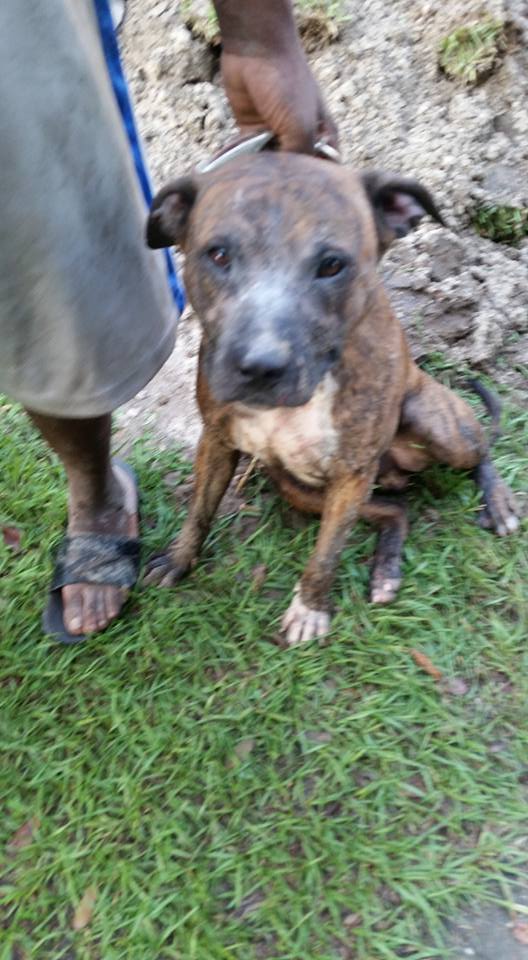
Could it be that when you name a dog “Tiger” you can expect him to be especially territorial? Well, perhaps that’s why this dog in Gulfport, Miss., decided to race down the street in pursuit of a neighborhood cat. Only problem is, there’s something just as dangerous as quicksand in the concrete “jungle” and it swallowed poor Tiger just as quickly.

13537611_10210668737501632_1622830518241307423_n-e1470705597405

Tiger fell deep into a concrete culvert pipe near the intersection of Mississippi Avenue and Tyler Street around 9 p.m. one evening, and it wasn’t until residents exhausted their own resources that they decided to call for help at around 3 a.m. the next morning.

13537803_10210668754782064_2234247258038085561_n-e1470705642332

Gulfport Fire Department Battalion Chief Chris Henderson, along with seven other firefighters and a pair of workers from the public works department, began working together to extricate the dog.

13532987_10210668750381954_366151199408553747_n

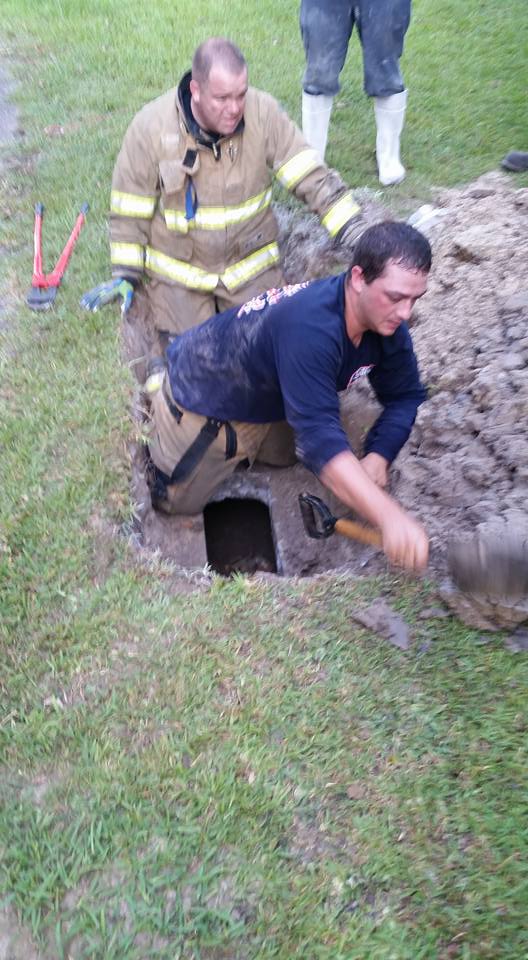
It was a tedious rescue because the pipe was far too narrow for any rescue worker to fit through, so the team had to cut their way through the pipe.

13516745_10210668782462756_5451559875121588209_n-e1470705711228

“We counted the joints in the pipe to estimate the distance, then walked off the distance on the top above the ground,” Henderson told the local ABC News affiliate.

13557934_10210668767582384_3853048143151108954_n

The firefighters dug down and then drilled holes to locate Tiger before bringing in a concrete saw to cut through the pipe and reach him.

13532769_10210668777382629_7833975136202473459_n-e1470705760700

By 7 a.m. Tiger was pulled to safety and reunited with his guardian who planned to take him to the veterinarian as a precautionary measure although the dog appeared unharmed.

13439019_10210668786662861_6228593877549457302_n

(All the photographs are Credit: Chris Henderson of Gulfport Fire Department / Facebook)

ooOOoo

Nothing further to add from me!