Tag: Capitalism

Government Spending and jobs! Uh? What jobs?

Government spending isn’t what it is made out to be.

The headlines are full of claims about the number of jobs created or saved by the stimulus package, the impact of the Cash for Clunkers program on U.S. output and, the latest, the reduction in the deficit from the proposed U.S. health care reform legislation.

What total rubbish!

Government spending is just that — SPENDING.  It does not, can not, never has, and never will CREATE any output, economic wealth, or job.  The only way — and I mean the ONLY way — that profits or wealth or a new job is created is through a business.  Businesses are the only entity that can hire labor and capital and combine them in such a way as to create a product or a service that society may decide is worth more than it costs.

And that spread between the cost of production and what society is willing to pay is economic value; it is the generation of profits that then enables the taxes that the government collects to spend on the goods and services it thinks America ought to consume.

Private industry is the job creator.  Not the government.   And this is not wishful thinking, or a political point of view, or a theoretical model.  It is an unmitigated, irrefutable fact.

By Sherry Jarrell

The rights of the child

A reminder of the United Nations (UNICEF) Convention and a second view from yours truly.

On November 12th I was the author of a Post called Our next generation featuring the young Jessica Watson from Australia who is on course to try and win the record for the youngest person to sail, solo, unassisted, non-stop around the World.  Here’s a part of what was said:

Jessica Watson2
Jessica Watson

Jessica Watson is a teenager.  She is hoping to break the record for the youngest person to sail solo, non-stop and unassisted around the World.  Whatever modern materials and technology can do to make sailing easier, sailing solo for weeks on end is grindingly tough at any age.  She’s a wonderful example of the next generation!

Jessica left Sydney Harbour on October 18, 2009 sailing her sloop Ella’s Pink Lady. Her course is an estimated 23,000 nautical miles requiring her to be roughly 230 days at sea.

You can see that the tone of the Post was supportive.

However the comments that the Post attracted were critical of the pressures and influences that may have been brought to bear on this child.  For at 16 ‘child’ is what Jessica is.  One of our regular contributors pointed out that under the terms of the UNICEF Convention:

The Convention on the Rights of the Child is the first legally binding international instrument to incorporate the full range of human rights—civil, cultural, economic, political and social rights. In 1989, world leaders decided that children needed a special convention just for them because people under 18 years old often need special care and protection that adults do not.

(My underlining)

Read the rest of this Post

Goldman Sachs – doing God’s work!

A fascinating and revealing interview in the Sunday Times.

This article in the British Sunday Times was published on November 8th and I’m sure many will have read it.  But for those that didn’t it really is worth settling down to a reasonably long read.  For you will learn that Goldman Sachs:

It’s the site of the best cash-making machine that global capitalism has ever produced, and, some say, a political force more powerful than governments. The people who work behind the brass-trim glass doors make more money than some countries do. They are the rainmakers’ rainmakers, the biggest swinging dicks in the financial jungle. Their assets total $1 trillion, their annual revenues run into the tens of billions, and their profits are in the billions, which they distribute liberally among themselves. Average pay this recessionary year for the 30,000 staff is expected to be a record $700,000. Top earners will get tens of millions, several hundred thousand times more than a cleaner at the firm. When they have finished getting “filthy rich by 40”, as the company saying goes, these alpha dogs don’t put their feet up. They parachute into some of the most senior political posts in the US and beyond, prompting accusations that they “rule the world”. Number 85 Broad Street is the home of Goldman Sachs.

The world’s most successful investment bank likes to hide behind the tidal wave of money that it generates and sends crashing over Manhattan, the City of London and most of the world’s other financial capitals. But now the dark knights of banking are being forced, blinking, into the cold light of day. The public, politicians and the press blame bankers’ reckless trading for the credit crunch and, as the most successful bank still standing, Goldman is their prime target. Here, politicians and commentators compete to denounce Goldman in ever more robust terms — “robber barons”, “economic vandals”, “vulture capitalists”. Vince Cable, the Lib Dem Treasury spokesman, contrasts the bank’s recent record results — profits of $3.2 billion in the last quarter alone — and its planned bumper bonus payments with what has happened to ordinary people’s jobs and incomes in 2009.

and later on in conversation with the Chairman and CEO, Lloyd Blankfein:

“Is it possible to have too much ambition? Is it possible to be too successful?” Blankfein shoots back. “I don’t want people in this firm to think that they have accomplished as much for themselves as they can and go on vacation. As the guardian of the interests of the shareholders and, by the way, for the purposes of society, I’d like them to continue to do what they are doing. I don’t want to put a cap on their ambition. It’s hard for me to argue for a cap on their compensation.”

So, it’s business as usual, then, regardless of whether it makes most people howl at the moon with rage? Goldman Sachs, this pillar of the free market, breeder of super-citizens, object of envy and awe will go on raking it in, getting richer than God? An impish grin spreads across Blankfein’s face. Call him a fat cat who mocks the public. Call him wicked. Call him what you will. He is, he says, just a banker “doing God’s work”

Indeed!

By Paul Handover

Reflecting on insider trading

Time to Reassess Insider Trading Rules?

On the face of it, prohibiting insider trading seems to be fair and reasonable.

US insider trading laws, refined over time in court on a case-by-case basis, define “trading on the basis of inside InsiderTradinginformation” as any time a person trades while aware of material nonpublic information (US Securities and Exchange Commissions Rule 10b5-1, which also creates an affirmative defense for pre-planned trades.) SEC regulation FD (“Fair Disclosure”) also requires that if a company intentionally discloses material non-public information to one person, it must simultaneously disclose that information to the public at large; in an unintentional disclosure, the company must make a public disclosure “promptly.” Lastly, the Williams Act gives the SEC regulatory authority over insider trading in takeovers and tender offers.
Read more about Insider Trading

How far can you push people?

Debt stress in Middle Class America – how may this play out?

On Saturday, October 24th Yves Smith of Naked Capitalism ran a Post on her Blog about an anonymous couple who were over their heads in debt.  (Yves has given me written permission to reproduce the Post.) The story of this couple then generated a huge response of comments. Read the comments, each and every one of them.

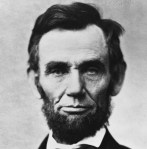
Then ask yourself abraham-lincoln-picturewhere this is all heading?  These comments may, almost certainly are, just be the tip of the iceberg.  Seems a long way from Lincoln’s Gettysburg address in which he was reputed  to have used the words: “… government of the people, by the people, for the people, shall not perish from the earth.”

Some days I worry; worry a lot!

The extract from Yves Post about this couple is reproduced below but far better is to go and read the whole Post and all the comments.

UPDATE: Since writing this Post Yves has published a further Post on the topic again generating a huge volume of comments.  That was Sunday, November 1st.  Then bright and early on November 2nd James Kwak of Baseline Scenario weighs in with his version, Do smart, hard-working people deserve to make more money? 150 comments (at the time of writing) for that one.  Interestingly, as the days have gone on the mood of the commentators has become more reflective and thoughtful thus partly negating the theme behind this Post.

Read the Post from Naked Capitalism

U.S. Cash for Clunkers Program a Failure?

Is there evidence that this US programme has been a failure?

I was asked by a reader recently about my claim that the Cash for Clunkers program was a failure.  He said, and I quote, “And your proof is…?”  Here is my response:

My conclusion that the Cash for Clunkers program was a failure is based on three factors.

One, it did not have the intended consequences on the environment; for those folks who purchased a marginally more fuel efficient car now, rather than later, the added fuel efficiency was likely more than offset by the pollution generated by destroying the old car, and by the loss in additional fuel efficiency they would have enjoyed had they waited a year or two to replace their current vehicle with an even later, even more fuel efficient model year.

Two, the costs of the program, which are much greater than the $4,500 rebate, far exceed any benefits generated. Abrams and Parsons in the Economists’ Voice estimate that the costs of the program exceeded the benefits by about $2000 per car.  A recent study by Edmunds.com put the cost of the program at $24,000 per car  once the cars purchases that would have occurred during that period anyway are deducted (http://content.usatoday.com/communities/driveon/post/2009/10/620000657/1). I think the real cost is somewhere in-between, but closer to $24,000 than $2,000. 

The true costs of the program include but are not limited to the additional paperwork and private and public workers needed to administer the program, the interest costs to dealerships of financing the rebate program while awaiting the government checks (some less capitalized dealerships actually went out of business because of the program), the costs of destroying the old vehicles, and the cost of lives lost and injuries sustained in accidents in smaller, less safe but more fuel efficient cars, just to mention a few.

Last, this “injection” into the economy — which, in reality, is the blatant substitution of private consumption choices with public policy, and an affront to our economic freedom — costs the economy untold sums by putting off the inevitable failure of automotive companies that fail to produce cars the population values sufficiently to keep the auto companies in business without being propped up by the government.

Case in point: GM’s plunge of 45% and Chrysler’s fall of 43% in the months following the rebate program; Honda and Toyota also reported double-digit slides, while Kia and Hyundai had double-digit increases.

New car sales fell in September as the predicted post-“cash for clunkers” slump dragged the U.S. market down to its lowest levels in seven months.

I wish it weren’t so, but I’m afraid that good business is not the strong suit of our policymakers.

By Sherry Jarrell

Sherry responds to John

A Post published today by John Lewis raises the question of why not consumer protection for financial ‘products.

Sherry’s reply.

A great question, John: why do we not have a threshold level of safety for financial products, as we do with cars and toys?

Well, for one, if a financial product “fails,” the consequence is purely financial – it is not injury or death.  A financial product simply represents a financial investment today in exchange for financial payoffs tomorrow.

The less certain those payoffs, the higher the minimum required return on that investment. If the returns were certified or regulated in some way, risk would be reduced, and the required return would also fall.  Limiting risk exposure throws out the baby with the bath water:  less risk means lower returns on the investment.  Look at the real returns to U.S. Treasury Bills – they are almost zero!

There is a role for regulation in financial products and that is for disclosure of relevant information.  When we invest in a financial product, we are putting our money at risk in exchange for future expected cash flows.  We forecast those cash flows on the basis of material information about the firm, its products or services, and its management and strategy.

Even here there is a fine line between the right to know and proprietary information that enables a firm to invest its own funds in the hope of generating a large return in exchange for taking risks.

The Securities and Exchange Commission’s requirement for a 20-day window between the time a bidder makes a tender offer for a target and the time the target shareholders must decide whether to accept the offer or not is an example of a regulation that crosses the line, in my view.

In a misguided attempt to protect shareholders from fly-by-night tender offers, the SEC has created an environment where multiple competing bids can arise, driving down the return to the original bidder and limiting the incentives for firms to productively redeploy assets through tender offers.

By Sherry Jarrell

Consumer ‘safety’ for financial products

Are we missing a lesson that has been applied for years?

I have resisted any temptation to comment on the economic situation on Learning from Dogs. The contributions from others are based on far more knowledge and understanding of the subject then I will ever have.

However, I feel obliged to ask humbly for some clarification about something that bothers me. Are we putting the cart before the horse? Are we ignoring the relationship between provider and consumer in finance?

The regulatory regime applied to the vast majority of products which are allowed to be sold to the public is such that toasterthere are probably more stringent safety standards for an electric toaster than for most, if not all, financial products!

Much of the talk of regulation and restraint, in the current climate, seems to relate to remuneration of people working for financial organisations. But, why does it matter what they receive? In other fields, success is rewarded and the shareholders, admittedly fairly indirectly, have some say on the policy in that area. Why should they not pay what they wish?

On the other hand (to coin an economic phrase!),  the minimum standards of the products are set by regulators.

In other fields, if a supplier cannot demonstrate, to the satisfaction of the regulators, that its product meets specified safety standards, then that product is not allowed to be offered.

It is very simple! I am not referring to contracts, customer service, compensation and so on; I am referring to a threshold level of safety below which the product is not allowed to be sold or operated. Think: “cars”, “aeroplanes”, “electrical appliances”, “children’s toys”, and … well anything else!

To be even clearer, this is not about “perfect safety” which is, of course, not available at any price. This is not about blame. This is not about guarantees. It IS about inspection, testing, certification, regulation … oh and policing!

Can anyone explain why this approach cannot be applied to financial products? (Sherry attempts to here.)

By John Lewis

p.s. as chance would have it the image of the toaster at the head of this Post was taken from an article talking about a recall of the Viking Toaster – point made rather well, don’t you think?

More truth about this crisis

“Never in the field of financial endeavour has so much money been owed by so few to so many. And, one might add, so far with little real reform.”

Thus spoke Mervyn King, governor of the Bank of England, on Tuesday night, 20th October, to a group of Scottish

Mervyn King
Mervyn King

business people.  Echoing one of Churchill’s many famous sayings, Governor King is probably one of the highest ranking people around to state, at last, what everyone on the Clapham Omnibus (a London bus route) knows to be obvious.  Whether the forces can build to a point where common sense is applied by Governments before we enter another Great Depression is another matter.

Mention of the Great Depression (the last one) triggers a step back in time.

On June 16th 1933 Franklin Roosevelt signed into law the Glass-Steagall Act.  In fact that was the second Act signed

Senator Carter Glass
Carter Glass

into law, the first Act was passed by Congress in February 1932 and was largely designed to stop deflation.  The second Act was, in a sense, much more important because it set out to prevent bank holding companies from owning other financial institutions.  It was repealed on November 12th, 1999 by the Gramm-Leach-Bliley Act. Just a little under 10 years ago.  10 years which have seen the biggest boom-bust probably ever in modern history.  And has much of the Western world slipping into another great depression.

US Senator Carter Glass and US Congressman Henry B. Steagall must be turning in their graves

Steagall
Henry Steagall

But thank goodness for investigative journalism and the role of the Internet in creating a truly open ‘meeting place’.

Read more about this Post

Janet Tavakoli on Warren Buffet

The following is reproduced in full from the TSF website and is reprinted with the permission of Tavakoli Structured Finance, Inc.

It’s a fascinating tale about Warren Buffet in the midst of all the financial turmoil.  And in case you think that Tavakoli Finance is run by the grey suit brigade …

Janet Tavakoli
Janet Tavakoli

Read Tavakoli’s article about Buffet