Tag: BBC Radio 4

A calmer mind – Wood

Concluding the series from BBC Radio 4

If you have not registered with the BBC then you will need to do so before the link at the bottom works.

This last time it is wood. Here it is:

In this episode – Wood – we visit the Woodwork for Wellbeing Workshop in Bethnal Green, London where every Tuesday people with mental health issues spend time making things with wood. They find it to be very therapeutic and fun. And Professor Miles Richardson of the University of Derby shares research from Japan which shows that simply touching wood is calming.

Produced and Presented by Helen Needham

Research by Anna Miles and Maud Start

Original Music by Anthony Cowie

Mixed by Ron McCaskill

BBC Radio 4

https://www.bbc.co.uk/sounds/play/m001np8k

This is the last one of this series from the Beeb and if any of you have noticed I chose to present these programmes in a different order to that presented by the BBC.

chose‘ is only slightly accurate – the true reason is that I screwed up!

A calmer mind – Earth

Another broadcast from BBC Radio 4 in this series!

As I said before, so far this has been a fascinating series of programmes and, hopefully, some of you have listened to the episodes.

In Episode 5 – Earth – we visit the Horticultural Therapy Trust allotment in Plymouth and discover how gardening can be soothing for people with severe mental illnesses. We also hear about how putting our hands in the earth can be good for our gut microbiome and potentially our mental health.

Produced and Presented by Helen Needham
Research by Anna Miles and Maud Start
Original Music by Anthony Cowie
Mixed by Ron McCaskill and Malcolm Torrie

A BBC Scotland Production made in Aberdeen for BBC Radio 4

BBC Radio 4

https://www.bbc.co.uk/programmes/m001p6vt

Tomorrow we publish another programme in this series.

A calmer mind – Air

The choice is now air.

This is about breathing and is something I know about. Because Bruce at our local ClubNorthwest has a session with me when I spend five minutes or so taking in through the nose the deepest breath that I can.

If you have not registered with the BBC then you will need to do so before the link at the bottom works.

In Episode 4 – Air – we visit an infant school in Nottingham where young children regularly learn breathing techniques to reduce stress and anxiety. We also hear about research from Italy showing how slowing our breathing impacts positively on brain activity. Plus breath coach and founder of School Breathe, Aimee Hartley, shares her experience of learning to breathe well.

Produced and Presented by Helen Needham
Research by Anna Miles and Maud Start
Original Music by Anthony Cowie
Mixed by Ron McCaskill and Malcolm Torrie

A BBC Scotland Production made in Aberdeen for BBC Radio 4

BBC Radio 4

https://www.bbc.co.uk/programmes/m001p1pg

Another programme tomorrow!

A calmer mind – Water

Continuing this fascinating series from BBC Radio 4.

Last week the BBC chose to present a programme called An Almanac for Anxiety. There were five episodes: Fire; Wood: Water: Air; Earth.

If you have not registered with the BBC then you will need to do so before the link below works.

The details of each episode were presented on the BBC website:

In Episode 3 – Water – we join a group of socially prescribed outdoor swimmers on Teignmouth Beach in Devon who find joy in immersing themselves in cold water. We also hear why spending time around blue spaces is so effective at promoting a sense of calm from Dr Catherine Kelly of the University of Brighton.

Produced and Presented by Helen Needham
Research by Anna Miles and Maud Start
Original Music by Anthony Cowie
Mixed by Ron McCaskill and Malcolm Torrie

A BBC Scotland Production made in Aberdeen for BBC Radio 4

BBC Radio 4

https://www.bbc.co.uk/programmes/m001nvp1

Tomorrow we present the episode on Air.

Trust you are enjoying these!

A calmer mind – Fire

A fascinating series from BBC Radio 4

Last week the BBC chose to present a programme called An Almanac for Anxiety. There were five episodes: Fire; Wood: Water: Air; Earth.

If you have not registered with the BBC then you will need to do so before the link below works.

The details of each episode were presented on the BBC website:

Anxiety is the most common form of mental illness in the UK, with nearly a fifth of people experiencing it over the course of a year. Although it is often treated through medication, there are many alternative ways which are proving to be very effective in reducing anxiety amongst some people. In this series, we explore how connecting with the elemental forces of nature helps people with a range of mental illnesses to feel better. We also learn about the current academic research behind these methods.

In Episode 1 – Fire – we visit an overnight camp on the banks of the River Spey near Aviemore in the Scottish Highlands run by the charity Fire and Peace. According to the participants, – who have a range of mental ill health and addiction issues – the experience of spending time around the fire in nature is transformative when it comes to promoting feelings of connection and wellbeing. We also hear new research which shows how being around a campfire can be calming.

BBC Radio 4

I am going to share the link to the BBC each day this week with a new episode each day. The programmes are 15 minutes long and in my opinion well worth listening to.

So here’s the first one:

https://www.bbc.co.uk/sounds/play/m001ng75

Tomorrow, it is the turn of wood!

Now above we were told: ‘Anxiety is the most common form of mental illness in the UK’ but of course we all know that anxiety affects many millions across the world. That is why I intend to share with you all five programmes.

Journalism.

A start to a fascinating programme on BBC Radio 4.

Yesterday morning (Oregon time) had me listening to a new series on BBC Sounds. It was Frontlines of Journalism. Here is what the Beeb had to say about it:

Released On: 27 Feb 2023

Available for over a year

In the spring of 2023, twenty years after the Americans, the British and their allies invaded to overthrow Saddam Hussein, BBC International Editor Jeremy Bowen was reporting from Iraq for the BBC. He described the invasion as ‘a catastrophe’. Taking you to some of the most difficult stories Jeremy and other journalists have covered; in this episode – why impartiality is not about trying to get perfect balance, the truth lying somewhere in the middle.  Often it does not.   Jeremy speaks with: journalist Rana Rahimpour who was born in Iran but left when she was 25 to work for the BBC; former BBC bureau chief Milton Nkosi, who grew up under apartheid in Soweto, South Africa; journalist and environmentalist George Monbiot, and CNN’s Chief International Anchor Christiane Amanpour.

Presenter: Jeremy Bowen Producer: Georgia Catt Assistant Producer: Sam Peach Additional research: Rob Byrne Series mixing: Jackie Margerum Series Editor: Philip Sellars.

But in wanting to present a little more to you readers, I did some research on the topic and came across this article published by the Reuters Institute at the University of Oxford. I cannot see a warning about not sharing this with you.

ooOOoo

Impartiality is still key for news audiences. Here’s how to rethink it for the digital age

Our research shows people still value the ideal of impartial news. A new report offer suggestions to adapt it to a challenging environment.

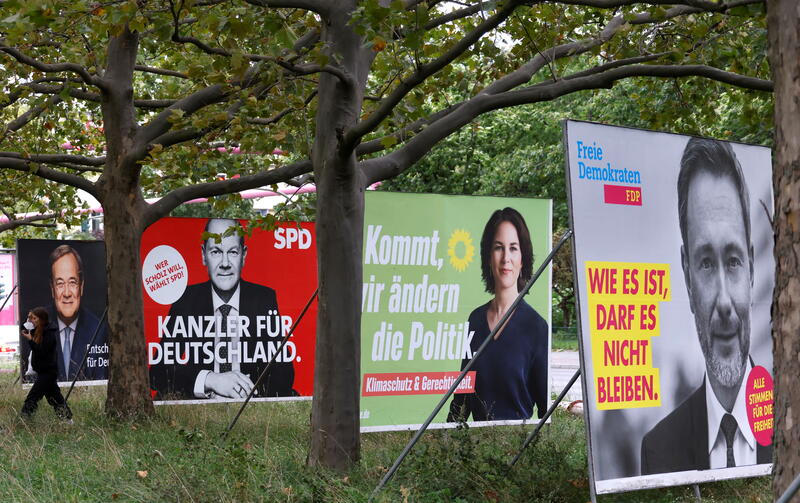
Election posters of Germany’s top candidates for chancellor.
September 16, 2021. REUTERS/Fabrizio Bensch

Nic Newman

Tuesday 19 October 2021

Most people agree that news organisations and journalists should reflect all sides of an issue and not push a particular agenda – at least when asked about it in surveys. Our 2021 Digital News Report finds this to be true across countries and age groups

However, many people feel that the media often fail to live up to this ideal. Our surveys consistently show that committed partisans believe that traditional media coverage is unfair, especially in countries where debates about politics or social justice have become deeply polarised. In recent years we’ve also seen an increase in opinion-led television formats such as Fox News/MSNBC in the United States, GB News in the UK and CNews in France, while many traditional print publications have focussed on distinctive and robust opinion as a way of standing out online.

Together with the growth of partisan websites, YouTubers and podcasters, audiences now have access to a wider range of views than ever before. Against this background, some have questioned traditional approaches to impartiality that try to represent all points of view within a single broadcast or publication. Other critics go further – arguing that impartiality has given extreme or unrepresentative views undue prominence, through its focus on balance, helping to legitimise climate change deniers and anti-vaxxers amongst others.

This all raises the question: how relevant is impartial and objective journalism to audiences today? The Reuters Institute commissioned market research company JV Consulting to carry out qualitative research in four countries – Brazil, Germany, the UK, and the US – with different news markets, traditions of public broadcasting, and systems of media regulation. They conducted a series of focus groups and in-depth interviews on our behalf in February and March 2021 with politically and ethnically diverse groups of older and younger people interested in and engaged with news (52 people in total).

These are some of the key findings of the report:

  • Engaged audiences in the four countries researched still care about impartiality and say it helps define news, even if some consider it an impossible ideal. They want journalists to focus on facts, objectivity and fairness, and to steer clear of opinions and bias in reporting, leaving them to decide for themselves how they feel about the news. Alongside accuracy, impartiality is a foundational value of news that underpins audiences’ trust.
  • People recognise the risk of giving exposure to extreme views or one side in the name of balance. However, evidence from this group of engaged users is that they are even more concerned about the suppression and silencing of viewpoints. There are particular misgivings about this in Brazil and Germany, where twentieth century history frames some people’s views.
  • Most participants recognise that there were some topics (e.g., science stories, natural disasters, and questions of social justice) where there were not always two or more sides to represent. Here, many felt there should be more latitude for journalists to present just one perspective or an established point of view. There are also expectations that journalists will show greater empathy and connection in their reporting than perhaps traditional interpretations of impartiality have allowed in the past.
  • Across countries, newer digital formats such as social media are perceived as carrying more risk of bias along with the growth of more informal and entertaining broadcast formats such as chat shows and podcasts. Impartiality is more vulnerable in these contexts, as well as when the news is emotive or controversial, because journalists’ personal views risk slipping out in the impulse to engage, although the subject and intention have a bearing on how audiences feel about this.
  • Younger people, who have grown up using more informal and digital sources, tend to have different expectations of impartiality, often looking for journalism that aligns with their values. But overall, their underlying attitudes and desires are remarkably similar to older people’s.
  • Different countries’ news traditions shape people’s experiences and expectations. Audiences in the US cannot envisage a world without partisan news outlets, but in the UK and Germany, with their public service traditions, most audiences still laud the upholding of impartiality.
  • Respondents also delineate between news reporting (where impartiality is expected) and opinion/commentary (where people expect that views are argued for). Importantly, many told us that they often find it difficult to distinguish between the two, especially online. Interviewees like news and they like opinion, but want them very clearly separated. 

It is important to recognise that not all news organisations are committed to impartiality: indeed, some make a virtue of creating news and opinion with a clear point of view. But most will want to take note of audience desires for a range of views to be represented and to see clearer labelling of news and opinion. For news organisations that are committed to impartiality, the report highlights the increased dangers in areas where journalism is more informal or accessed in distributed environments. Public media like the BBC have already embarked on updated training and issued new guidelines on these issues. Audiences have also sent a clear signal in this report that they would like much greater transparency over why certain perspectives are included or excluded, however difficult this may be in practice.

Finally, the report notes that given the importance of social media, search and other access points, technology platforms such as Facebook, Google and Apple, will also need to develop clearer guidelines on impartiality – as their own trust levels will depend on fair implementation of policies around inclusion and exclusion, whether by algorithm or human intervention.

Download the full report

ooOOoo

Now this isn’t everyone’s cup of tea but when one thinks of the enormous amount of news and information one gathers from the television, the radio, the press and a wide variety of online sources then thinking a little more about the truth of what we are being told is crucial to us making wise decisions. including voting where appropriate.

People still value the ideal of impartial news; there is no question about that!

Where is your dog coming from?

Bringing a dog into the USA.

Jean and I had the radio on, BBC Radio 4, yesterday morning and were listening to You and Yours. They had an item on puppies and the fact that at this time of the year, and especially this year, the number of puppies being brought in was very high.

Here is the background to the piece:

Instagram puppies; Gambling Act; Student Stress

You and Yours

There’s been a surge in puppies coming into the UK from oversees and animal welfare charities are worried about it. The Eurotunnel has put limits on the amount of dogs that can come through in one vehicle. We look at how puppies are advertised on social media and bred in countries like Russia and the Ukraine.

The former boss of Skybet, Richard Flint, reacts to the government announcement of a review of gambling laws. What can online betting companies do to make gambling fairer and safer?

We’ve been hearing how students have been struggling with their courses and accomodation in the pandemic – we hear from a father worried about his daughter in her first year, and she joins us too.

And, the number of house sales falling through because mortgage companies have downgraded valuations is rising. Are buyers just offering too much in the housing market boom?

Presenter: Peter White
Producer: Lydia Thomas

So turning to the USA here are the rules and regulations for importing dogs.  From the Centers for Disease Control & Prevention.

ooOOoo

Where is Your Dog Coming From?

The rules for bringing your dog into the United States depend on where you are coming from. Written or oral statements and any documents must be in English or have an English translation.

Different types of rabies exist in many mammals, but CDC focuses on importing dog rabies into the United States from certain high-risk countries. CDC experts collect and analyze rabies information around the world to determine a country’s risk for rabies.

Dog rabies was eliminated in the United States in 2007 and is under control in some other countries. However, many others do not have it controlled, and dogs coming from these countries can import this disease into the United States.

Dogs coming from a high-risk country will need a rabies vaccine certificate. High-risk countries have the greatest chance of importing dog rabies into the United States.

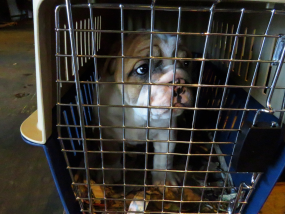
Photo credit: Audilis Sánchez, CDC

  • Example: Your adult dog lived in the United States (no-known–risk country) and visited Ghana (high-risk country) for any period of time. Before returning to the United States, your dog must have a valid rabies vaccine certificate. Be sure to get your dog vaccinated before you travel and take the papers with you.
  • Example: You are purchasing a puppy from Russia (high-risk country) on the Internet. Before entering the United States, your puppy must have a valid rabies vaccine certificate.

Dogs coming from a low-risk or no-known rabies risk (free of dog rabies) are NOT required to have a rabies vaccination certificate to enter the United States. However, when you enter the United States, you must provide written or oral statements that the dogs lived in a country with low or no risk for at least 6 months or since birth.

Photo credit: Michelle Decenteceo, CDC

  • Example: Your adult dog lived in the United States (no-known–risk country) and visited Mexico (low-risk country). This dog does NOT require a rabies certificate, because Mexico is low risk for dog rabies.
  • Example: Your puppy has lived in Germany since birth and is coming to the United States. This dog does NOT require a rabies certificate, because Germany has no-known risk for dog rabies.

In addition to CDC regulations, you must comply with US Department of Agriculture (USDA) and your destination state’s regulation, which are often more strict than federal regulations. Please be aware that dogs imported for commercial (resale or adoption) purposes have additional requirements from USDA.

ooOOoo

Going back to that item on BBC Radio there was reference to a YouTube video of an illegal import from Russia.

Here it is:

Last week Love Island’s Molly Mae and Tommy Fury posted photos of their new pomeranian puppy from Russia, Mr Chai. But just a few days later they announced the devastating news that Mr Chai had died following health complications and it’s an all too common problem, when dogs from puppy farms are sold to unsuspecting families. Vet Dr Scott Miller joins us to make sure you know how to spot the signs of a reputable breeder if you’re thinking of getting a pet, alongside Sadee Slater – the victim of an irresponsible breeder.

Staying safe is more than luck; it requires research and care, and a whole lot more!

The power of touch!

I am speaking of a recent BBC Radio 4 program, but …

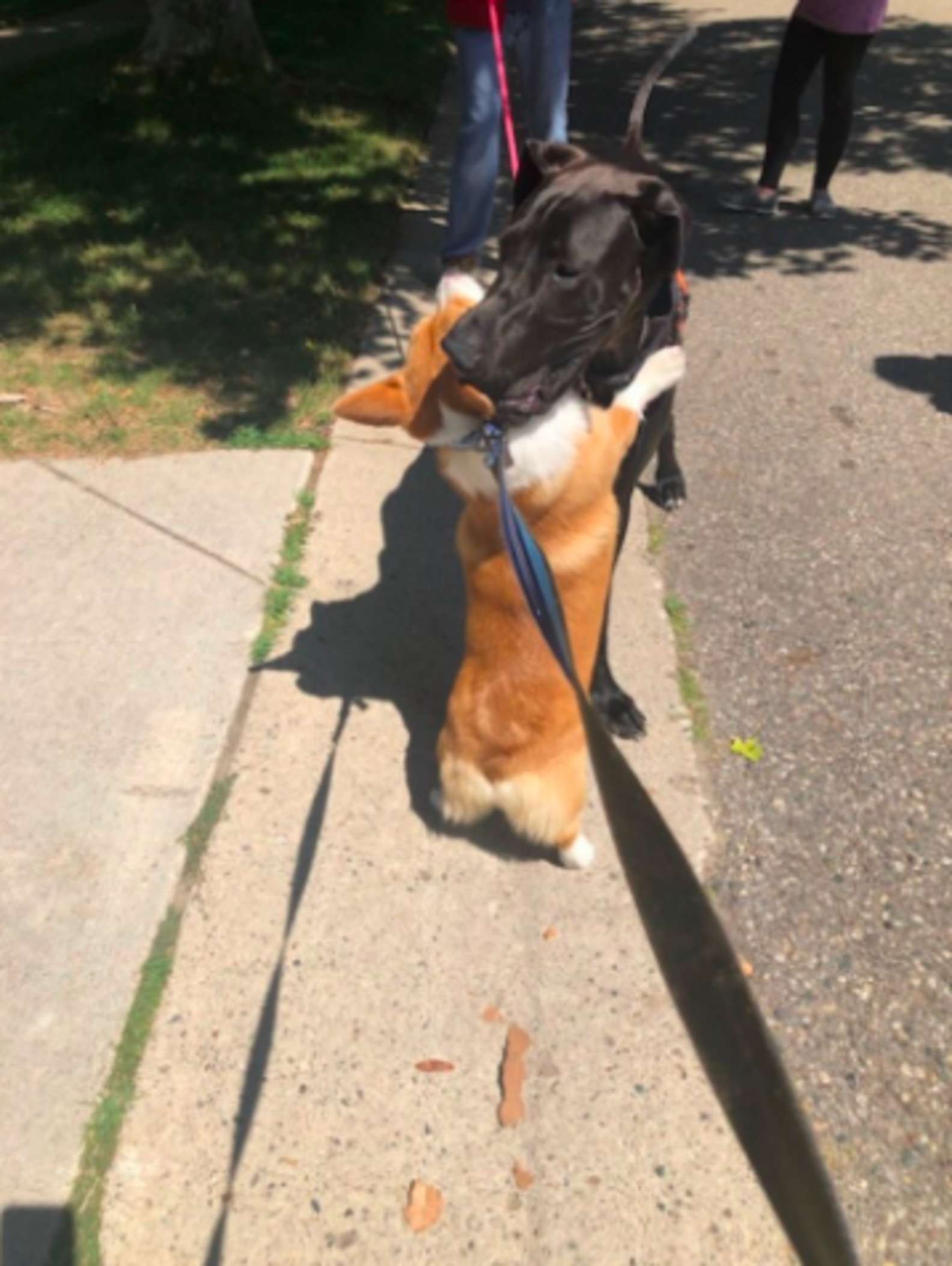
… this loving Corgi seems to have got the message.

There has been a series on BBC Radio 4 about the Anatomy of Touch. This is a small extract from the website that accompanied the program.

Touch is a crucial part of our lives. The right kind of touch can reduce pain, soothe our stress and convey emotion faster than words. It’s a sense that you can’t turn off and we should not underestimate its power.
It’s also a sense that has taken on a new resonance during the pandemic, now that we have to keep our distance and haven’t hugged friends or family we don’t live with for more than half a year.

But this is a post about a Corgi that hugs every dog he meets!

ooOOoo

Loving Corgi Hugs Every Dog He Meets On His Walks

“He’s the biggest sweetheart” ❤️️
By Lily Feinn
Published on 10/1/2020
Wallace understands that times are tough, and the loving corgi knows how to make things better — with a big hug. Well, as big as his little arms can go.

When Noah Raminick is walking Wallace, he can expect to stop every time Wallace spots another pup. The year-old corgi loves to play and won’t let another dog walk by without giving him an embrace.

INSTAGRAM/IAMWALLACETHECORGI

“He’s the biggest sweetheart,” Raminick, Wallace’s brother, told The Dodo. “He’s always very happy to be around people and other dogs. He loves to give face kisses to people and when he sees another dog, he’s always the one to initiate a play session.”

INSTAGRAM/IAMWALLACETHECORGI

When it comes to large dogs, the low-bodied pup shows no fear and will stand on his hind legs to get the best possible angle for his hug. Wallace’s best friend Daisy is a Great Dane, but the corgi knows that size doesn’t matter.

“They always hug when they see each other,” Raminick said. “And one of her paws weighs as much as Wallace’s entire body.”

INSTAGRAM/IAMWALLACETHECORGI

With smaller dogs, Wallace makes sure to play gently, so he doesn’t spook his new friend. Wallace won’t go in for the hug until he sniffs out whether the other dog is OK with it first.

“The thing I find interesting with his hugging is that he wasn’t trained to do that at all,” Raminick said. “I think it comes down to him being really excited about playing with another dog.”

INSTAGRAM/IAMWALLACETHECORGI

Wallace makes sure to spread the love when he’s with his human family, too. “His favorite things are morning and evening cuddles, playing fetch and me chasing him around the house,” Raminick said. “I don’t think Wallace has any dislikes.”

Wallace’s family is happy for their pup to continue spreading the love to the dogs and people in his neighborhood, adding a little more joy to everyone’s day.

ooOOoo

 Back to that Touch website to close:

The three most common words used to describe touch are: “comforting”, “warm” and “love”

People from 112 different countries took part in the Touch Test and it’s striking that “comforting” and “warm” were among the three most common words that people used in every region of the world.

Wallace has the message!

Time; beyond imagination!

I don’t know what is was that engaged me; to the point that I have written this blog post.

We rise around 4:30 am, thanks to the dogs, and after they have been out we retire to the bedroom and lay on the top of the bed and have a couple of cups of tea. Come 5am, week days, we listen to BBC Radio 4 and the World at One. Then immediately after the World at One, at the moment, is a fascinating series on A History Of The World in 100 objects.

A few days ago, after the end of the programme, I drifted off into some form of introspective gaze about the past. I mean the past big time!

The Universe

When and how did it all start? That seems to be the Big Bang. The Big Bang was an incredibly long time ago, some 14 billion years ago (rounding it up!).

Here’s an extract from Wikipedia:

The current measurement of the age of the universe is around 13.8 billion years (as of 2015[1]) – 13.799±0.021 billion years within the Lambda-CDM concordance model.[2] The uncertainty has been narrowed down to 20 million years, based on a number of studies which all gave extremely similar figures for the age.

That’s 13.8 times 10 to the power of 9!

Our solar system

Again, pretty old by human standards; 4.6 billions years ago.

Again, an extract from Wikipedia:

The Solar System formed 4.6 billion years ago from the gravitational collapse of a giant interstellar molecular cloud. The vast majority of the system’s mass is in the Sun, with the majority of the remaining mass contained in Jupiter. The four smaller inner planets, Mercury, Venus, Earth and Mars, are terrestrial planets, being primarily composed of rock and metal. The four outer planets are giant planets, being substantially more massive than the terrestrials. The two largest, Jupiter and Saturn, are gas giants, being composed mainly of hydrogen and helium; the two outermost planets, Uranus and Neptune, are ice giants, being composed mostly of substances with relatively high melting points compared with hydrogen and helium, called volatiles, such as water, ammonia and methane. All eight planets have almost circular orbits that lie within a nearly flat disc called the ecliptic.

So our solar system came along 9 billion years after the formation of the Universe.

Planet Earth

Our planet formed not long after our solar system. That’s pretty obvious if you ask me.

Thus Planet Earth formed 4.5 billion years ago. Again, thanks to Wikipedia.

Life on Planet Earth

Southampton University have published an extremely interesting chart of the timeline of the human condition. In it is revealed that the earliest atmospheric oxygen was 3.5 billion years ago, a necessary prerequisite to air-breathing life. But it took an extremely long time before monkeys appeared; some 36 million years ago. That’s 36 times 10 to the power of 6, or 383 times shorter than the start of the universe.

The earliest hominins (Australopithecus spp) among the hominids in Africa, bipedal, larger brain came along some 4.2 million years ago.

Among them were humans using stone tools, some 2.5 million years ago. Then 2 million years ago came the earliest direct ancestor of modern humans, Homo erectus (South Africa), co-habiting with Australopithecus and Paranthropus.

Then 40,000 years ago Neanderthals make flutes from bone, then 14,000 years ago the domestication of dogs in China, 7,000 years ago the world population passed 5 million souls, and 3,500 years ago the earliest alphabet (North Semitic, Palestine and Syria).

3,000 years ago the world population passed 50 million.

Come forward to just 195 years ago and the first public railway for steam locomotives (George Stephenson, UK, 1825) came into existence. In 1945, Alan Turing created the world’s first programmable calculator which lead directly to the first computer.

Then just 34 years ago the total population passed 5 billion souls (1986).

This and much more in the timeline which really is a fascinating read. Put together by C. Patrick Doncaster,  7 April 2020, one of the then 7,641,557,720 (rising by 148 per minute, 77 million per year).

But …

The discovery of quarks in 1968 caused us humans to think again about matter.

Wikipedia:

A quark (/kwɔːrk, kwɑːrk/) is a type of elementary particle and a fundamental constituent of matter. Quarks combine to form composite particles called hadrons, the most stable of which are protons and neutrons, the components of atomic nuclei.[1] Due to a phenomenon known as color confinement, quarks are never directly observed or found in isolation; they can be found only within hadrons, which include baryons (such as protons and neutrons) and mesons.[2][3] For this reason, much of what is known about quarks has been drawn from observations of hadrons.

Then there’s antimatter, now that’s really weird.

Again, an extract from Wikipedia:

There is strong evidence that the observable universe is composed almost entirely of ordinary matter, as opposed to an equal mixture of matter and antimatter.[4] This asymmetry of matter and antimatter in the visible universe is one of the great unsolved problems in physics.[5] The process by which this inequality between matter and antimatter particles developed is called baryogenesis.

So, to put it in layman’s terms, the fact that I am sitting here at a computer trying to make sense of it all and failing is just down to luck. The observable universe and my perception of it comes down to matter as opposed to antimatter!

I’ve got a headache!

N.B. It’s a little after 12:30 am (PDT) on the Saturday and I am going to leave this post up as the latest for tomorrow as well. There have been so many wonderful comments.

The Age of Denial

A fascinating programme on BBC Radio 4

All of this week BBC Radio 4 have been transmitting a very interesting programme. It is about denial and it is fascinating.

As the website for the first episode states:

From credit cards to climate change, we bury our heads in the sand. Isabel Hardman investigates our capacity to deny what’s in front of us.

It is counter-intuitive. But you be the judge!

The Age of Denial

And if you want all five episodes then they are here.