Puppies are born ready to communicate with humans!
This was an article that I saw in The Smithsonian and, as such, I am not allowed to reproduce it in full.
But I will give you a small extract:
ooOOoo
By Alex Fox
SMITHSONIANMAG.COM
JUNE 3, 2021
Dog owners might not be too impressed when they’re able to point out a fallen piece of chicken or a thrown stick to their pooch, but dogs’ ability to follow that seemingly simple gesture places them in rare air in the animal kingdom. Some research suggests that even chimpanzees, our closest evolutionary relatives, don’t understand pointing as well as dogs.
For decades, researchers have debated whether dogs obtain their ability to understand pointing by spending time with humans and learning it or if our furry companions are born with a capacity to comprehend this deceptively complex feat of communication.
ooOOoo
And if one follows that link above then one comes to Current Biology and, again, an extract:
ooOOoo
Summary
Human cognition is believed to be unique in part because of early-emerging social skills for cooperative communication.1Comparative studies show that at 2.5 years old, children reason about the physical world similarly to other great apes, yet already possess cognitive skills for cooperative communication far exceeding those in our closest primate relatives.2,3 A growing body of research indicates that domestic dogs exhibit functional similarities to human children in their sensitivity to cooperative-communicative acts. From early in development, dogs flexibly respond to diverse forms of cooperative gestures.4,5 Like human children, dogs are sensitive to ostensive signals marking gestures as communicative, as well as contextual factors needed for inferences about these communicative acts.6, 7, 8 However, key questions about potential biological bases for these abilities remain untested. To investigate their developmental and genetic origins, we tested 375 8-week-old dog puppies on a battery of social-cognitive measures. We hypothesized that if dogs’ skills for cooperating with humans are biologically prepared, then they should emerge robustly in early development, not require extensive socialization or learning, and exhibit heritable variation. Puppies were highly skillful at using diverse human gestures, and we found no evidence that their performance required learning. Critically, over 40% of the variation in dogs’ point-following abilities and attention to human faces was attributable to genetic factors. Our results suggest that these social skills in dogs emerge early in development and are under strong genetic control.
ooOOoo
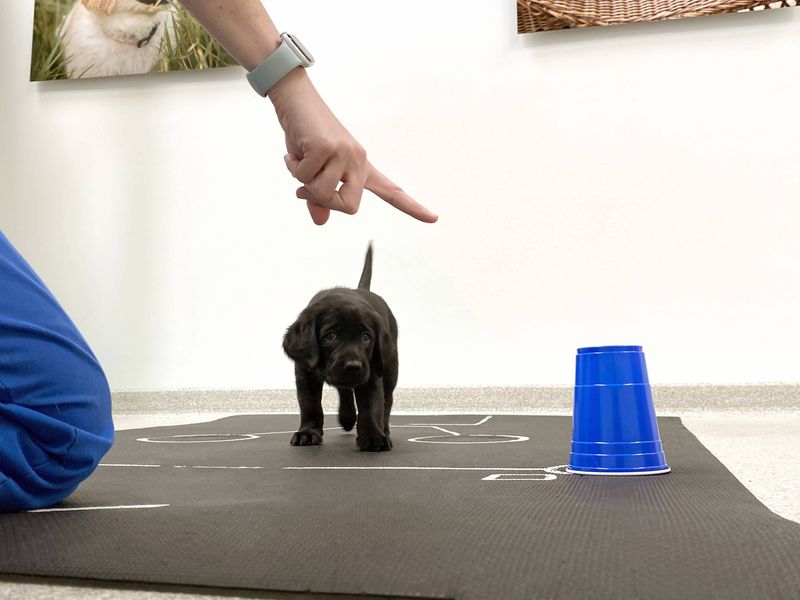
And I am going to sneak one of the photographs in the original article!
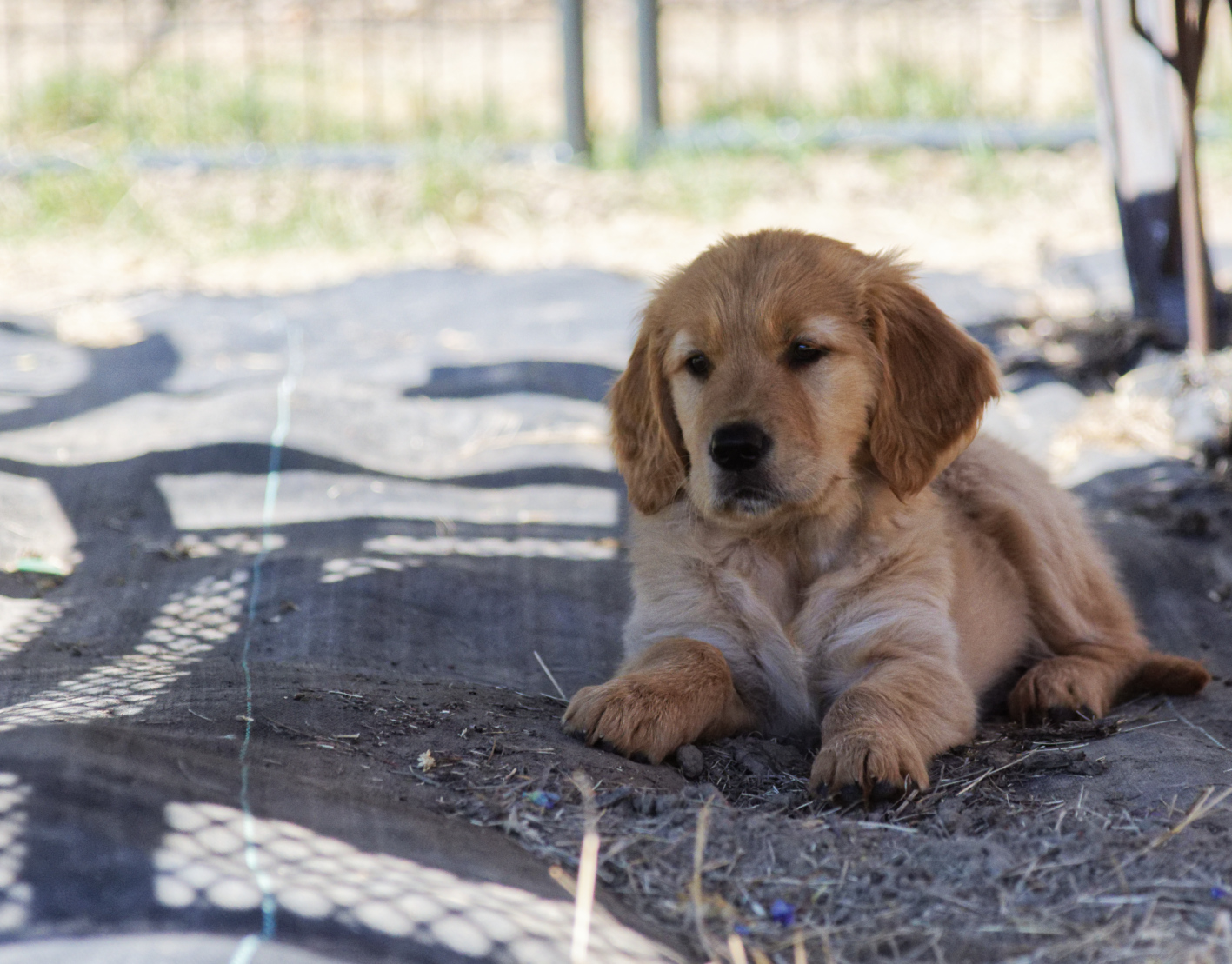
And what better to close the post that one of the photos I showed yesterday of dear Joy.

 Learning from Dogs