The Christmas Storm.

A guest story for this special day.

(The background to today’s story comes later on.)

ooOOoo

THE CHRISTMAS STORM

by Madeleine Johnston

We had just finished baking the hazelnut pie when the storm hit, a monster blizzard with enough wind that it tore down three telephone poles. The Christmas tree lights sparked and went out, as did all the other lights. I noticed snow had begun to fall in heavy clumps. The house shook violently from the fierce wind, and my mother ordered me to retrieve my brother and father. I got them out of the TV room as fast as I could, snatching Posy, my cat, as we rushed to the kitchen.

“I’m scared!” my brother wailed.

“Everything’s fine,” my father said. But I knew he was lying.

My mother handed us our winter jackets. “Go outside! Hurry!”

Just then, there was a tremendous BOOM! Bark and branches scratched my skin, and I smelled sap. A tree had smashed through our house. I screamed and fell on my behind. Posy raced off.

“POSY!” I jumped up.

“Leave her!” my mother said.

“NO!” I followed her through the scabby branches and into the dining room. She was cowering under the table. I coaxed her to me, picked her up, and hurried back to the kitchen.

“OUTSIDE! NOW!” my mother bellowed.

We were ushered into the freezing garage, and outside, which was even colder than the snow I was playing in yesterday. Dark storm clouds had rolled in and were dropping hail on our heads. A huge pine tree destroyed the house on the left, and I heard screaming. I wanted desperately to help our neighbors, but I knew we couldn’t.

I hugged Posy close to my chest. Our hearts pounded together.

“To the rock!” my mother hollered above the wind. We ran through the snow to the enormous boulder in the backyard. The world was black as coal.

We crawled under the rock, my father shielding us with his broad body. Posy hissed. My brother was crying, and my mother kissed my head.

We soon fell asleep, as trees crashed down around us. I worried for our Christmas tree farm.

When I awoke, the wind had ceased. I peered around my dad. The sky was cloudy, we were weighed down by snow, and our house was reduced to a mound of debris. Somewhere, a bird chirped.

I looked up to see a cardinal sitting in one of our Christmas trees. Only part of the Christmas tree farm had survived. The others were uprooted.

The cardinal nibbled on the string of cranberries we hung around the trees every Christmas season.

I heard my father mumble, “Everything, gone.”

“Not everything,” my mother whispered. “For one, we still have part of our farm. And…” From beside her, she pulled the hazelnut pie. It was a bit squished, but not badly. I hadn’t noticed she’d brought it. She smiled meekly. “We’ll be okay.”

And I believed her.

So we sat beneath the rock, enjoying the only thing we had left.

Except for being together.

ooOOoo

4am Writer is Kate Johnston’s blog; we follow each other’s blog. Thus it was on Tuesday that I came to read the following:

Foster’s Daily Democrat, our local newspaper, runs an annual holiday art and writing contest. It was open to all students from first grade through high school in the seacoast area of New Hampshire and Maine. Over 2,000 students submitted entries. 34 winners were chosen for the art portion, and 36 winners were chosen for the writing portion.

My daughter was one of the winners for writing. Some of you may have seen my Facebook post about it, and a few people had requested to read her story. While her short story was published in the paper, it was in a special pull-out section that is not accessible on-line. So, I’m posting it here.

Merry Christmas!

Now that you have read Madeleine Johnston’s short story you can see why I asked her permission to republish it here on Learning from Dogs.

May you all have a trouble-free Christmas Day!

Christmas Eve.

What does one post for the day before Christmas?

Yes, I know many will be away with their families, or a myriad of other activities, and being online visiting blogs will be far from top of the list.

But if you do manage to drop in here, then take just three minutes off to enjoy the following; so kindly sent in to me by Neil K., a long-term friend from my Devon days.

Trust me, you will love this!

(When trying the YouTube link out yesterday evening, the video could not be watched other than by clicking on the YouTube link. Sorry! But still worth watching!!)

Happy Christmas everyone.

The book! Embracing death

Not forgetting:

And shows us the way to embrace death

I’m sure that the human psyche lives in a bubble of delusion. Not always and not extremely so; of course. Clearly, if the level of delusion were abnormal then we couldn’t function properly as social animals. However, just take a quiet moment of self-reflection to muse over the ways that you ‘shelter’ from reality. In directing that last point to you, dear reader, trust me I don’t exclude myself!

There are times when going beyond the self, going out of oneself, is the only way to see the reality of who we are and the world around us; to be able to brush away our delusions. Perfectly expressed by the author, Aldous Huxley: “Experience is not what happens to you; it’s what you do with what happens to you.” Wise words, indeed!

But these fine expressions representing the peak of common sense have one grinding, searing fault. They do not assume the end of a person’s life. I am speaking of death, of the inevitability of our death! That largely unspoken truth no better expressed than through the words[1] of Sharon Salzberg in her book Faith.

What does it mean to be born in a human body, vulnerable and helpless, then to grow old, get sick and die, whether we like it or not?

Anyone who has lost a loved one knows that it is tough; incredibly tough. It is full of pain and anguish amidst a great churning of emotions, all in a very deep-seated and personal manner. That’s the perspective from the loved ones left behind with more life ahead of them. But if one thinks of it in reverse, turns it on its head, what are our fundamental wishes with respect to those we love; what we would want to leave behind when we die?

Fond memories, naturally, but they wouldn’t be our fundamental wishes. This is what those fundamental wishes would be. That our death does not leave pain and anguish in the hearts and souls of those left behind. That it doesn’t leave a pain that cannot be dealt with in a healthy way. Our wishes would be that those whom we loved and who loved us may embrace their loss and move on.

Anyone who has loved a dog has most likely been intimately involved in the end of that dog’s life. It is, to my mind, the ultimate lesson that dogs offer us: how to be at peace when we die and how to leave that peace blowing through the hearts of all the people who loved us.

Our beloved dogs have much shorter life spans than we do, thus almost everyone who has loved a dog will have had to say goodbye to that gorgeous friend at some point in their lives. Very sadly, perhaps, saying goodbye to more than one loved dog.

I see the most precious of parallels in the tragic death of a loved dog and our own death. The parallel between coping with our grief for the loss of a loved dog and reaching out to our loved ones so that they may cope with their grief at losing us.
In other words, knowing what to expect in emotional terms at the loss of our loved dog is helpful, very much so, to us helping our loved ones when comes our time to die.

There are five stages of mourning[2], of dealing with our grief, when we lose our beloved dog: Denial; Anger; Guilt; Depression and Acceptance.

Compare those stages to the five stages of mourning[3], perhaps of dealing with the knowledge that oneself is dying, or a person is dying who is very emotionally close to us. Those five stages are: Denial and Isolation; Anger; Bargaining; Depression and Acceptance.

The parallels are almost perfect.

Whether it is the impending or actual death of a loved dog, a loved person, or ourselves, the similarities between embracing the loss of the loved dog, or the loved person, are powerfully obvious. So, too, are the many different ways each of us embraces the death of a loved dog or a loved person. Let me expand on this last point.

Namely, that each of us will experience each stage of mourning at varying levels of intensity, for varying lengths of time, and sometimes in a different order. Some of the stages may converge and overlap each other. But however you experience the mourning, it is incredibly important to remember that your feelings are completely normal.

As the website of the American Animal Hospital Association points out, on their webpage entitled Life after Dog[4], “… we almost always outlive our beloved companions. Learning to live with loss is an essential part of life.”

That webpage imploring us to honour our emotions, to honour the memory of our dog, and critically, when a child is involved, to help that child cope with the loss of their loved dog. For all, young and old, helping to ease the pain through learning to cope with the loss. Easing the pain through changing one’s schedule, moving furnishings around to help distance the memory of your dog’s favourite sleeping spots, or creating a memorial in one form or another, even writing a letter (or blog post!) to your dog in which one describes all the feelings you have for your recently departed, loved dog.

I was born in 1944. I am therefore the ‘wrong’ side of seventy years old. I was born an Englishman and, according to life expectancy tables from 2012, a male Englishman’s life expectancy is 79.5 years. I am living happily in the USA and, according to those same tables, a male American’s life expectancy is 77.4 years. My mother is alive and an amazingly fit and healthy ninety-five-year-old, at the time of writing this book. My father died at the age of 56 just 5 days before Christmas in 1956. I do not believe in any form of spiritual life after death.

So take your pick!

All that I do know is that loving our dogs, welcoming all the wonderful qualities that our dogs possess, striving always to live peacefully ‘in the present’, just as our dogs do, and, ultimately, as with our faithful companions, taking that last breath in the knowledge that ours was a beautiful life, is what learning from dogs is all about.

Thank you.

1,059 words. Copyright © 2014 Paul Handover

[1] page 34.
[2] http://dogtime.com/dealing-with-grief-of-loss-aaha.html#
[3] http://psychcentral.com/lib/the-5-stages-of-loss-and-grief/000617
[4] http://www.aahanet.org/blog/petsmatter/post/2014/05/20/929363/Life-after-dog-Support-and-resources-on-pet-loss.aspx

Life is never a rehearsal.

I’ve learned that people will forget what you said, people will forget what you did, but people will never forget how you made them feel.” Maya Angelou

maya-angelou1

In a poignant way, it seems appropriate to feature that quote from Maya Angelou in opening today’s post simply because this wonderful, spiritual woman died earlier on this year; on the 28th May, 2014.

Born in 1928 in St Louis, MO, Maya was, “… an American author, poet, dancer, actress and singer. She published seven autobiographies, three books of essays, and several books of poetry, and was credited with a list of plays, movies, and television shows spanning over 50 years.” (Wikipedia)

In case you are wondering why this post is reflective on life, and the inevitability of death, it is simply because in thirty-minutes time, the last (draft) chapter of ‘the book’ is being published in this place, and I was looking for something to ‘set the tone’, as it were. That last chapter is entitled: And show us the way to embrace death, and the companion to: How the dog offers us a way into our own soul, that was published yesterday.

To be precise, I had in mind two elements in setting the tone. The first being that powerful quotation that is today’s sub-heading and the second being the reposting of a recent item from Val Boyco.

As is the way in this interconnected world of blogging, I hadn’t previously heard of Val Boyco until she signed up to follow my humble scribblings in this place. Naturally, I went across to her blogsite, Find Your Middle Ground, and very quickly signed up to follow her, in return.  That’s how I came to see ‘All Things Change‘; reposted here with Val’s very kind permission.

ooOOoo

All Things Change

ValB

All things arise

Suffer change

And pass away.

This is their nature.

When you know this …

…you become still.

It is easy.

The Ashtavakra Gita

—-

We spend so much time and energy avoiding the way life actually unfolds, and most of the time we are unaware that we are doing this.

We have created these habits over time to avoid facing the uncomfortable feelings that are a part of life.

When we pause and create spaciousness, the resistance begins to dissipate and our inner consciousness grows.

Each time we make space, trust grows.

The more we trust, the more we grow beyond our conditioning and habits and create more space.

With space, life flows freely.

Taking time to connect inwards will not save your life, but may save you from a life of struggle and discontent.

Namaste

ooOOoo

I’m going to close today’s post with a wonderful quote from Sharon Salzberg, taken from her book: Real Happiness: The Power of Meditation. It seems as relevant and as powerful as that opening quote from Maya Angelou.

It is never too late to turn on the light. Your ability to break an unhealthy habit or turn off an old tape doesn’t depend on how long it has been running; a shift in perspective doesn’t depend on how long you’ve held on to the old view.

May we all turn on the lights in ourselves so that we may better leave a light burning in the hearts and minds of others.

For our lives are for real!

The Book! A way into our own soul

To my dear readers.

The final two parts of the book, How the dog offers us a way into our own soul, and, And show us the way to embrace death, are offered today and tomorrow.

I can’t tell you what it has meant to me to have the many ‘Likes’ and comments along the way; just take it from me that it has been enormously inspiring and motivational and part of me can’t believe that the project that started in November 2013 under the NaNoWriMo-2013 umbrella was completed this November just gone, for a draft word count of a little over 104,000 words!

Come the New Year and the real work starts, that of the Big Edit.

So let me close by just saying, once again, thank you!

oooo

Not forgetting:

How the dog offers us a way into our own soul

Happiness resides not in possessions, and not in gold, happiness dwells in the soul.

So wrote the philosopher Democritus. Democritus, born in 460 BCE, although according to some in 490 BCE. He acquired fame with his knowledge of natural phenomena, and preferred a contemplative to an active life, spending much of his life in solitude. The fact that he lived to beyond 100 suggests he lived out what he philosophised about!

Now the last thing I am going to attempt is any rational, or even semi-rational, explanation of the soul; of what it is; of whatever it is. Despite the familiarity of the word, especially within religious circles, the notion of the soul remains an enigma. Indeed, it reminds me of that very clever quotation attributed to the German philosopher, Martin Heidegger: “Making itself intelligible is suicide for philosophy”, that with a little poetic licence might be rewritten: “In making itself intelligible does the soul become soulless.”

Thus having ‘bared my chest’ in terms of failing the test of knowing what a soul is, in any rational manner, I shall, nonetheless, continue to use the word. Simply because there will be sufficient bonding between me writing the word ‘soul’ and those reading the word ‘soul’, for those same readers to sense where I am coming from.

I’m going to stay with this wonderful concept of soul for just a little longer before adding our beautiful dogs into the dream. Staying with it courtesy of the writer; John O’Donohue. John’s name is not one known to the masses. Yet his writings are, without fail, beautifully moving. John’s first book was called Anam Cara: A Book of Celtic Wisdom., Anam Cara means ‘soul friend’ in Gaelic. The following passage, taken from Anam Cara, represents to my mind the most exquisite understanding of the human soul.

The secret heart of time is change and growth. Each new experience which awakens in you adds to your soul and deepens your memory. The person is always a nomad, journeying from threshold to threshold, into ever different experiences. In each new experience, another dimension of the soul unfolds. It is no wonder that from ancient times the human person has been understood as a wanderer. Traditionally, these wanderers traversed foreign territories and unknown places. Yet, Stanislavsky, the Russian dramatist and thinker, wrote: “The longest and most exciting journey is the journey inwards.”

There is a beautiful complexity of growth within the human soul. In order to glimpse this, it is helpful to visualise the mind as a tower of windows. Sadly, many people remain trapped at one window, looking out every day at the same scene in the same way. Real growth is experienced when you draw back from one window, turn and walk around the inner tower of the soul and see all the different windows that await your gaze. Through these different windows, you can see new vistas of possibility, presence and creativity. Complacency, habit and blindness often prevent you from feeling your life. So much depends on the frame of vision – the window through which we look.

Those are so wonderful words from John and a brilliant example of his exquisite creativity of thought. They also offer the most perfect ‘window’ to seeing how the dog offers us a way into our own human soul.
What do I mean by this?
When we have dogs in our lives there are many occasions when there is a link between us and our dog; a link that defies logical explanation. Let me offer some examples.

Let’s start with this one. As a human, that is you and me, out of the blue, with no rhyme or reason, you will surely experience finding your day a bit tough from time to time. The odds are that it doesn’t show to your loved ones and, you are pretty sure, that it is entirely an experience that is well hidden inside one. But you and I know you can’t hide it from your dog. You slump down in a chair and your dog comes over and lays its warm snout across your legs or offers a head for you to scratch. In any one of many familiar ways you have a caressing and loving contact with your dog. And you know, you know beyond doubt, that your dog is attracting the angst away from you.

Or how about the time when you might be standing somewhere in or around the house, trying to think how best to approach a task, and your dog comes up next to you and softly leans against you.

Or that most special of links between us and our dog. I have in mind the times when our dog links ‘eye-to-eye’ with us, when those beautiful, deep unblinking eyes of our dog look so deeply inside of us. Those are the times when you and your dog know, you both sense in a clear, unwritten language, the thousands of years of relationship, the very special relationship, that man and dog have had with each other. That at that moment of held eye contact there is a real, tangible connection between your two souls.
We know beyond doubt that dogs have emotions, that they are full of natural goodness and feelings, and that there is some part of a dog’s inner being that links to us and, in turn, that there is an inner being within us that links us back to our dog.

Let me return to the power of that eye-to-eye bond between us and a dog.

In humans, that part of the brain in which self-awareness is thought to arise is called the ventromedial prefrontal cortex. That just happens to be located behind the eyes. Ergo, we learn[1] to associate the identity of others with our eyes. Then as we mature, our eyes take on more importance because we develop awareness and a better understanding of the social cues that other people convey with their eyes.

Therefore, is it any surprise that dogs, such intuitive creatures that they are, young and old, soon learn to read us humans and the feelings and emotions that we give out via our eyes. There’s a knowing in my mind, albeit an unscientific ‘knowing’, that dogs, too, give out emotions and feelings from their own eyes.

That loving a dog and, in return, being loved by that dog truly does offer us a way into our own souls.

Until one has loved an animal, a part of one’s soul remains un-awakened.
~ Anatole France

1.089 words Copyright © 2014 Paul Handover

[1] Refer Christina Starmans and Paul Bloom of the Mind and Development Lab at Yale University.

Ancient rhythms.

The Winter Solstice.

I’m breaking the pattern of publishing a new post at midnight, Pacific Time, (08:00 UTC) because it seemed like fun to publish Monday’s post at the moment of the Winter Solstice; namely Sunday, December 21 at 23:03 UTC (15:03 PST).

There is no doubt in my mind that everyone is familiar with the Winter Solstice being the moment when the planet has perfect opposites, in terms of light and darkness, as the following image shows so clearly.

Day and night sides of Earth at the instant of the December 2014 solstice (2014 December 21 at 23:03 Universal Time). Note that the north polar region of Earth must endure 24 hours of night, while the south polar region gets to bask in 24 hours of daylight. Image credit: Earth and Moon Viewer

What may not be so well-known is that it occurs within about two-and-a-half hours of the new moon.

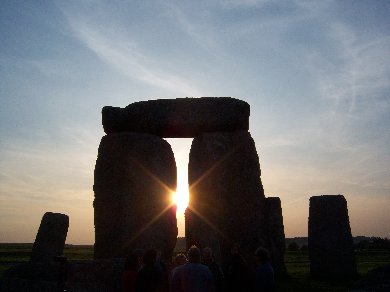
From times immemorial, early peoples on Earth knew much about the sun and the seasons, the length of daylight, and how the direction of the sunrise and sunset all shifted in a regular way throughout the year. As an Englishman, who in past times frequently drove the A303 road between London and Exeter, going past the ancient site of Stonehenge was always wonderful. Many are familiar with the sun rising during the Summer Solstice over the Heel Stone but far fewer realise that Stonehenge also marks the sun’s dawning the morning after the Winter Solstice.

winter-solstice-stonehenge
The shortest day is behind us.


The English Heritage website Discover Stonehenge is brim full of facts and information so won’t ‘copy and paste’ from one to the other! Suffice to say that what we see today was completed about 3500 years ago.

However, it seems as though the ancient site is still delivering new surprises.  I write this simply because just a few days ago, on the 19th December, 2014, the BBC reported:

Stonehenge dig finds 6,000-year-old encampment

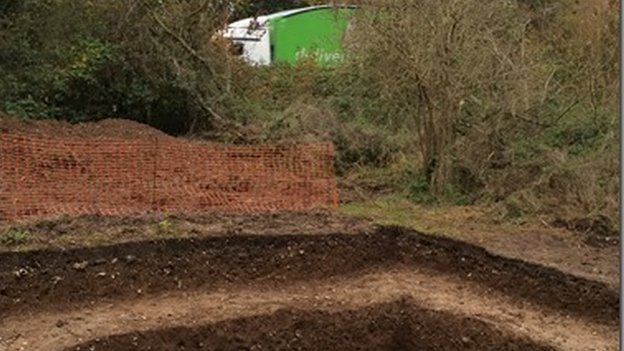
Archaeologists found the encampment during a dig at Blick Mead near Stonehenge

Archaeologists working on a site near Stonehenge say they have found an untouched 6,000-year-old encampment which “could rewrite British history”.

David Jacques, from the University of Buckingham, made the discovery at Blick Mead in October, and said the carbon dating results had just been confirmed.

But he also raised concerns about possible damage to the site over plans to build a road tunnel past Stonehenge.

The Department of Transport said it would “consult before any building”.

The Blick Mead site is about 1.5 miles (2.4km) from Stonehenge and archaeologists said “scientifically tested charcoal” dug up from the site had “revealed that it dated from around 4000 BC”.

The archaeologists found burnt flints, remains of animals and tools

David Jacques said the dig had also found “evidence of feasting” including burnt flints, tools and remains of giant cattle, known as aurochs, which were eaten by early hunter gatherers.

Mr Jacques said: “British pre-history may have to be rewritten. This is the latest dated Mesolithic encampment ever found in the UK.

“Blick Mead site connects the early hunter gatherer groups returning to Britain after the Ice Age to the Stonehenge area, all the way through to the Neolithic in the late 5th Millennium BC.

“But our only chance to find out about the earliest chapter of Britain’s history could be wrecked if the tunnel goes ahead.”

Archaeologists said the latest carbon date suggested it was continuously occupied between 7500-4000 BC

Andy Rhind-Tutt, a former mayor and current chairman of Amesbury Museum, which part-funded the dig, said the discovery could “provide what archaeologists have been searching for centuries – the answer to the story of the pre-history of Stonehenge.”

Earlier this month, the government announced funding for a 1.8-mile (2.9km) tunnel to remove congestion from the main road past Stonehenge.

A Department for Transport spokesman said: “As with any road scheme, we will consult with interested parties before any building begins on the A303.

“English Heritage and National Trust are supportive of our plans, and we will ensure sites of cultural or historical significance are safeguarded as we progress with the upgrade.”

The A303 past Stonehenge is a highly congested route.

So as the planet and the sun continue their dance to a rhythm, ancient beyond comprehension, let us reflect on the scale of the universe and our fortune to be alive this Winter Solstice, 2014.

Picture parade seventy-five

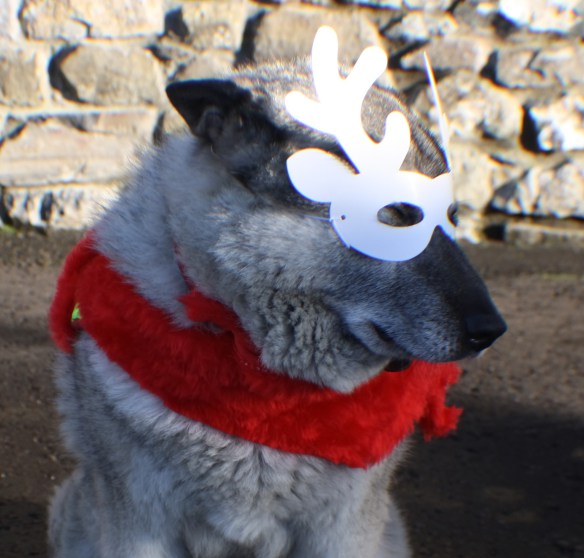
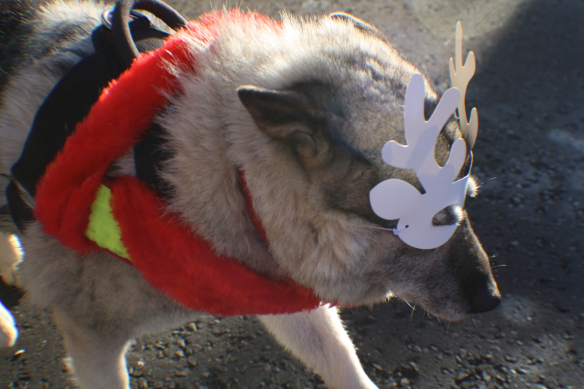
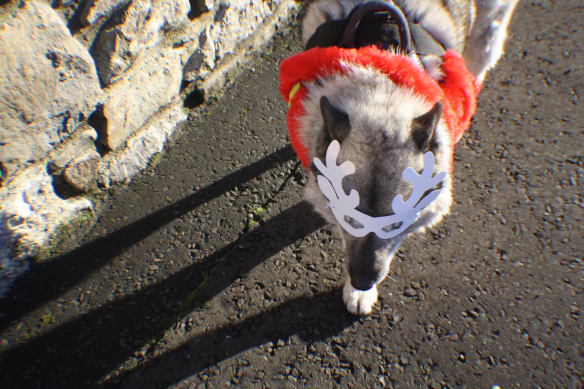
I saw the following images published over on the blogsite Decidingly Bob, that has the sub-heading of Life as I see it!  What was so perfect was that the ‘I’ is a dog! The post from which these images are taken, with Bob’s permission, was published on December 12th under the post title of “Bob’s Diary. ..I am not a Reindeer!

They seemed perfect for the last Picture parade before Christmas Day!

ooOOoo

Bob’s Diary. ..I am not a Reindeer!

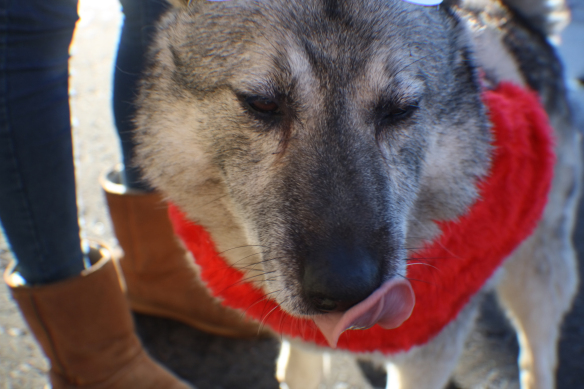
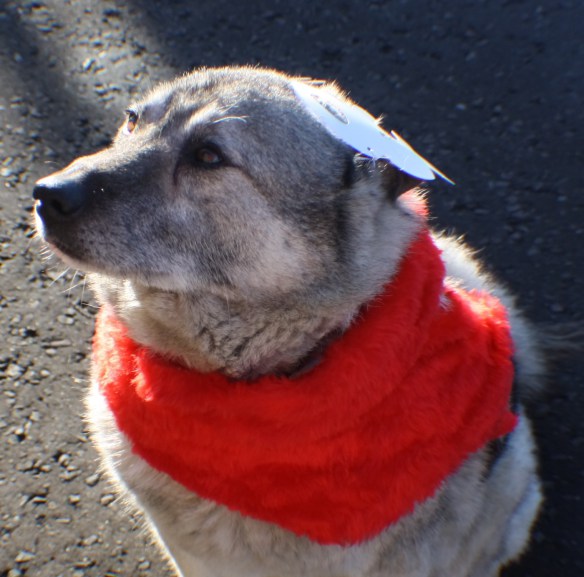
“After the Christmas Reindeer story, I thought I was safe for a few weeks. Life can be cruel can’t it?

I knew there was trouble brewing when Maria and Sara offered me jelly babies.”

bob-1

oooo

But I didn’t expect this …

oooo

No sir, I got to talk to Sir Bob about this…

oooo

I am not a reindeer….

oooo

I have the answer..
I have the answer..

oooo

Bob-6

I am a Superhero.

ooOOoo

Listen everyone, have a wonderful week and please be safe out there.

The book! Part Five: Stillness

The last quality that I want to write about, as in the last quality that I see in our dogs that we humans should learn, is about stillness. There was a very deliberate reason to make it the last one. But, if you will forgive me, I’m not going to explain why until near the end.

Stillness! The dog is the master of being still. Being still, either from just laying quietly watching the world go by, so to speak, or being still from being fast asleep. The ease at which they can find a space on a settee, a carpeted corner of a room, the covers of a made-up bed, and stretch out and be still, simply beggars belief. Dogs offer us humans the most wonderful quality of stillness that we should all practice. Dogs reveal their wonderful relationship with stillness.

In the August of 2014, TED Talks published a talk by Pico Iyer. Despite the uncommon name, Pico Iyer was not a person I had heard of before. A quick search revealed that he was a British-born essayist and novelist of Indian origin. Apparently, Pico is the author of a number of books on crossing cultures and has been an essayist for Time Magazine since 1986. Pico Iyer’s TED Talk was called: The art of stillness.

It was utterly riveting. In a little over fifteen minutes, Pico’s talk touched on something that so many of us feel, probably even yearn for: the need for space and stillness in our minds. Stillness to offset the increasingly excessive movement and distractions of our modern world. Or to use Pico’s words:”Almost everybody I know has this sense of overdosing on information and getting dizzy living at post-human speeds.

Now Pico has clearly been a great traveller and the list of countries and places he has visited was impressive. From Kyoto to Tibet, from Cuba to North Korea, from Bhutan to Easter Island; a man having grown up both being a part of, and yet apart from, the English, American and Indian cultures. Yet of all the places this man has been to he tops them all with what he discovers in stillness: “… that going nowhere was at least as exciting as going to Tibet or to Cuba.

Here are Pico Iyer’s own words from that TED Talk. Firstly:

And by going nowhere, I mean nothing more intimidating than taking a few minutes out of every day or a few days out of every season, or even, as some people do, a few years out of a life in order to sit still long enough to find out what moves you most, to recall where your truest happiness lies and to remember that sometimes making a living and making a life point in opposite directions.

Then a few moments later, him saying:

And of course, this is what wise beings through the centuries from every tradition have been telling us. It’s an old idea. More than 2,000 years ago, the Stoics were reminding us it’s not our experience that makes our lives, it’s what we do with it.
….
And this has certainly been my experience as a traveler. Twenty-four years ago I took the most mind-bending trip across North Korea. But the trip lasted a few days. What I’ve done with it sitting still, going back to it in my head, trying to understand it, finding a place for it in my thinking, that’s lasted 24 years already and will probably last a lifetime. The trip, in other words, gave me some amazing sights, but it’s only sitting still that allows me to turn those into lasting insights. And I sometimes think that so much of our life takes place inside our heads, in memory or imagination or interpretation or speculation, that if I really want to change my life I might best begin by changing my mind.

Emails, ‘smartphones’, telephone handsets all around the house, television, junk mail on an almost daily basis, advertising in all its many forms, always lists of things to do; and on and on. It’s as if in this modern life, with the so many wonderful ways of doing stuff, connecting, being entertained, and more, that we have forgotten how to do the most basic and fundamental of things: Nothing! It’s as if so many of us have lost sight of the greatest luxury of all: immersing ourselves in that empty space of doing nothing.

Thus it wouldn’t be surprising to learn that more and more people are taking conscious and deliberate measures to open up a space inside their lives. Whether it is something as simple as listening to some music just before they go to sleep, because those that do notice that they sleep much better and wake up much refreshed, or taking technology ‘holidays’ during the week, or attending Yoga classes or enrolling on a course to learn Transcendental Meditation, there is a growing awareness that something in us is crying out for the sense of intimacy and depth that we get from people who take the time and trouble to sit still, to go nowhere.

Even science supports the benefits of slowing down the brain. In an article[1] posted on the Big Think blogsite, author Steven Kottler explains what are called ‘flow states’: “a person in flow obtains the ability to keenly hone their focus on the task at hand so that everything else disappears.

Elaborating in the next paragraph, as follows:

“So our sense of self, our sense of self-consciousness, they vanish. Time dilates which means sometimes it slows down. You get that freeze frame effect familiar to any of you who have seen The Matrix or been in a car crash. Sometimes it speeds up and five hours will pass by in like five minutes. And throughout all aspects of performance, mental and physical, go through the roof.”

The part of our brain known as the prefrontal cortex houses our higher cognitive functions such as our sense of morality, our sense of will, and our sense of self. It is also that part of our brain that calculates time. When we experience flow states or what is technically known as ‘transient hypofrontality’, we lose track of time, lose our grip on assessing the past, present, and future. As Kotler explains it, “we’re plunged into what researchers call the deep now.

Steven Kotler then goes on to say:

“So what causes transient hypofrontality? It was once assumed that flow states are an affliction reserved only for schizophrenics and drug addicts, but in the early 2000s a researcher named Aaron Dietrich realized that transient hypofrontality underpins every altered state — from dreaming to mindfulness to psychedelic trips and everything in between. Sometimes these altered states involve other parts of the brain shutting down. For example, when the dorsolateral prefrontal cortex disconnects, your sense of self-doubt and the brain’s inner critic get silenced. This results in boosted states of confidence and creativity.”

Don’t worry about the technical terms, just go back and re-read those last two sentences, “For example, when the dorsolateral prefrontal cortex disconnects, your sense of self-doubt and the brain’s inner critic get silenced. This results in boosted states of confidence and creativity.”

All from stillness!

Back to Pico Iyer’s talk and his concluding words:

So, in an age of acceleration, nothing can be more exhilarating than going slow. And in an age of distraction, nothing is so luxurious as paying attention. And in an age of constant movement, nothing is so urgent as sitting still. So you can go on your next vacation to Paris or Hawaii, or New Orleans; I bet you’ll have a wonderful time. But, if you want to come back home alive and full of fresh hope, in love with the world, I think you might want to try considering going nowhere. Thank you.

At the start of this chapter, I mentioned that I would leave it until the end to explain why I deliberately made this one on stillness the last one in the series of dog qualities we humans have to learn.

Here’s why. For the fundamental reason that it is only through the stillness of mind, the stillness of mind that we so beautifully experience when we hug our dog, or close our eyes and bury our face in our dog’s warm fur; it is that stillness of mind, that like any profound spiritual experience, that has the power to transform our mind from negative to positive, from disturbed to peaceful, from unhappy to happy.

The power of overcoming negative minds and cultivating constructive thoughts, of experiencing transforming meditations is right next to us in the souls of our dogs.

Sanctuary is where you go to cherish your life. It’s where you practice being present. And it may not be that many steps from where you are, right now.” The Rev. Terry Hershey.

1,523 words. Copyright © 2014 Paul Handover

[1] http://bigthink.com/think-tank/steven-kotler-flow-states

A hug never goes amiss!

The many joys of a connected world. As I wrote that sub-heading above, it struck me that the virtual world of blogging partially mimics the real world of life, as in that in nature everything is connected.  To say that everything is connected in the world of blogging is rather far-fetched, but (and you knew there was a ‘but’ coming, didn’t you) there is no question that bloggers tend to gravitate towards other bloggers where there is some sense of resonance. All of which could have been said in far fewer than the eighty-one words above! Try like-minded tend to be drawn to each other! So whether it’s in ten words or eighty-one words, it’s a preamble to the wonderful words of another blogger. I’m referring to the blog Wibble that is authored by Pendantry. Mr. P (and I’m assuming it is a ‘he’) wrote a post for the recent Earth Hug Day on December 12th. I thought it would make a nice republication this last Friday before the Winter solstice in the Northern Hemisphere this coming Sunday.

ooOOoo

Who needs a hug? earth-hug-12dec2014-350x247

Earth hug day‘: 12 December 2014.

who has supported you all your life without asking for anything in return? fresh air, clear water, food, stability and unconditional love… the earth provides. the earth cares. the earth loves!

it’s about time we love her back again… every day – every moment… and with a huge collective earth hug right around the planet!

throw yourself on the ground and hug the earth! run to a tree and hug the earth! put your arms around each other and hug the earth!

hug the earth ♥ share the love

http://www.youtube.com/watch?v=P2vjdE0EgIQ You don’t have to understand what they’re saying — the meaning is clear.

ooOOoo

Our dear, wonderful Planet Earth.