Why is the sky blue? – Mariana A-E., age 11, Tucson, Arizona
You might think that explaining why the sky is blue would be kind of simple. But even a brief explanation of it requires a lot of science. The colors of everything you see are produced in different ways. Some of those colors are explained with physics, others by my own field of chemistry.
The nitrogen and oxygen that you are breathing right now are made up of very small particles called molecules. A molecule of nitrogen or oxygen is really, really small. Each molecule is only about 0.4 nanometers, or 16 billionths of an inch. It would take 250,000 nitrogen molecules to equal the width of one strand of your hair. You can think of the molecules as behaving like very tiny balls that constantly bounce around.
When sunlight travels through the atmosphere, it passes between lots of those teensy nitrogen and oxygen molecules. Sometimes the light runs right into one of them.
In short, the sky looks blue because the blue portion of sunlight is much more likely to bounce off the molecules in the atmosphere than the other colors of light.
Tennis balls and marbles
Now, picture the nitrogen and oxygen molecules as tennis balls and the light as heaps of marbles.
When one of those light marbles hits a nitrogen or oxygen tennis ball, the tennis ball “eats” the marble and then very quickly spits it back out again, but in a random direction. That process is what physicists call scattering.
It was around 1870 when the British physicist John William Strutt, better known as Lord Rayleigh, first found an explanation for why the sky is blue: Blue light from the Sun is scattered the most when it passes through the atmosphere. His discovery is why the scientific term for this effect is called Rayleigh scattering.
The other gases in the atmosphere can be really important too, such as the effects of carbon dioxide or methane on the global climate. But they have only a very small effect on the color of the sky.
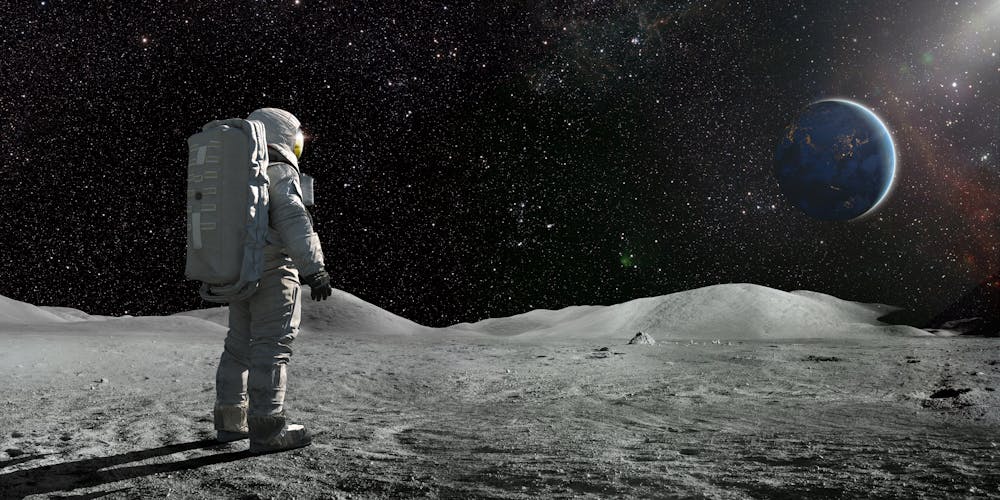
If there were no scattering, the sky would be dark like it is on the Moon, which does not have an atmosphere.
Light at the blue end of the rainbow is scattered more efficiently than the other colors. It is as if the tennis balls are very selective in terms of which marbles they eat, and they prefer the blue ones over the other colors.
The result is that the blue light is scattered across the sky so you see blue everywhere on sunny days. The rest of the colors mainly travel straight through the atmosphere.
Redder when the Sun sets and rises
Of course, the sky is not always blue.
And Rayleigh scattering also explains why the sky tends to be reddish when the Sun is close to the horizon – at sunrise and sunset.
When the Sun is near the horizon, its light passes through a lot more of the atmosphere to reach the Earth’s surface than when it is directly overhead. The blue and green light is scattered so well that you can hardly see it. The sky is colored, instead, with red and orange light.
Colors mean a lot to us in so many different ways. Understanding the science behind colors and expressing ourselves through art with colors have been important for humans for our entire recorded history. That’s something to keep in mind as you decide what color shirt to wear tomorrow morning. https://www.youtube.com/embed/ehUIlhKhzDA?wmode=transparent&start=0 NASA’s Space Place explains why the sky is blue.
Hello, curious kids! Do you have a question you’d like an expert to answer? Ask an adult to send your question to CuriousKidsUS@theconversation.com. Please tell us your name, age and the city where you live.
And since curiosity has no age limit – adults, let us know what you’re wondering, too. We won’t be able to answer every question, but we will do our best.
Animal rights campaigners in France are celebrating after a wild boar facing the threat of death was allowed to stay with its owner.
The boar, named Rillette, was found in 2023 as a piglet by Elodie Cappé on her horse-breeding smallholding in Chaource, central France, after apparently being abandoned by its mother.
One of the caregivers that recently came to the house wrote a guest post for the blog.
Here it is:
ooOOoo
A tale about three dog bites.
The first was many years ago, when I was just seven years old. A close neighbour lived just around the corner and practically every day I would go and play with the daughter who was just about my age.
The family included an Australian Shepard named Tipsy. It was my habit to give Tipsy a big hug around her neck each day when I arrived. Then I gave Tipsy another hug before I left to go home. This went on for many months and I was very fond of Tipsy.
Then one day, just as I was getting ready to leave, something strange, and upsetting, happened.
My friend had gone inside the home and I was heading to the gate and, as usual, I went to give Tipsy her hug around her neck.
I turned for the gate.
Tipsy without any warning hit me from behind and immediately knocked me down. Then Tipsy used her paws to roll me over.
With a face contorted in anger she attacked me. Tipsy then vigorously mauled my face and head. Then just as suddenly she stopped.
I remember then most clearly Tipsy’s entire face changing to a look of shame and remorse. She proceeded to lick all my wounds clean, and then laid down and put her head on my chest. Tipsy then stayed with me until the door of her home opened at which point she ran to hide in the corner of the yard.
Even at that young age I understood that Tipsy had not wanted to hurt me. I was convinced then, and still am, that somehow me hugging Tipsy had caused her pain resulting in the attack.
It took two plastic surgeons three hours and 136 stitches to rebuild my face.
But I was convinced that the incident was my fault and not Tipsy’s. I felt no fear or anger, only sadness and compassion for what I had done.
The second bite.
This happened thirty-five years later when I was forty-two.
My great love for dogs led me into a career in dog grooming.
I was running a grooming business from my home in Guadalajara in Mexico.
On this particular day I had only one appointment. It was a new client who came with a big Old English Sheepdog. He was very sweet and well behaved but he was badly matted so I shaved him before giving him a bath. Afterwards I brought him over to the grooming table. He was soaking wet and to my discredit I forgot to down a towel for him and me to stand on. As I said, he was very well behaved and let me lift his front feet onto the table. Unfortunately, when I started to life his hind quarters my feet slipped on the wet floor and I fell with my full weight across his extended spine.
In the dog’s surprise, and pain, he turned towards me and took one single snap at me.
It was not my lucky day because that snap broke two of my teeth and perforated my lower lip in two places.
When the dog saw that I was bleeding he let out a mournful whine and lent his forehead against my hip as an apology.
I could not stop the bleeding, and could barely speak enough to call a cab. A friend helped me explain to the cabbie that I needed to go to the hospital. The friend also called the owner of the dog to have him picked up, still very wet and with the grooming unfinished.
Again, at the hospital, it took twenty-five stitches to close up the two wounds, and all I could think of was how bad I felt for that sweet Old English Sheepdog.
The Third Bite.
I am now fifty-five years old.
I had taken on a 130-pound Cane Corso Mastiff who, as a puppy, had been attacked and traumatised by an aggressive adult dog.
I put him through a boarding and training program, costing $4,000, in an attempt to socialise him. He did very well at the training facility and it appeared that his fear issues were starting to come under control.
My son has a very sweet and submissive nine-year-old American bulldog. It was decided to try a weekend visit to see how my Mastiff would behave in a real-world setting. We allowed the dogs to socialise but they were supervised at various times over the next two days. Then on the last night of my visit my Mastiff attacked my son’s bulldog.
I grabbed the Mastiff and forced him to let go of my son’s dog. I then began pushing him out of the back door. He was fighting to get at my son’s bulldog and I was in between them.
Then I felt pressure on my calf. One moment of extreme pressure and then a release. I am not sure which dog bit me but I am certain that neither one was attacking me. My instinct was that each dog was trying to protect me from the other one.
Either way it was another twenty-five more stitches and six weeks rehabilitation for my leg.
Conclusion.
In thirty-five years as a groomer and these three dog bites, it is my opinion what when a dog bites a human it is almost never the dog’s fault!
ooOOoo
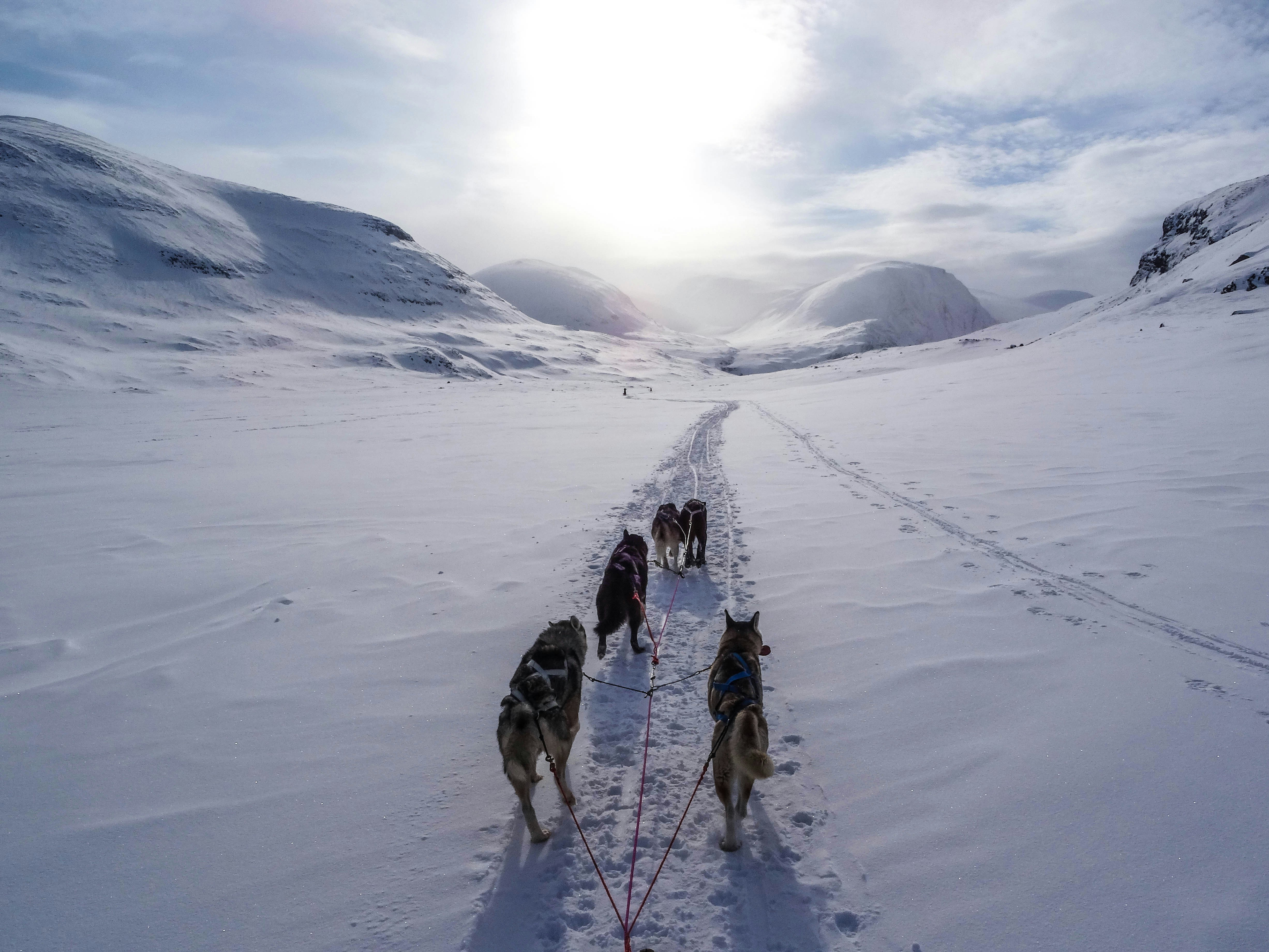
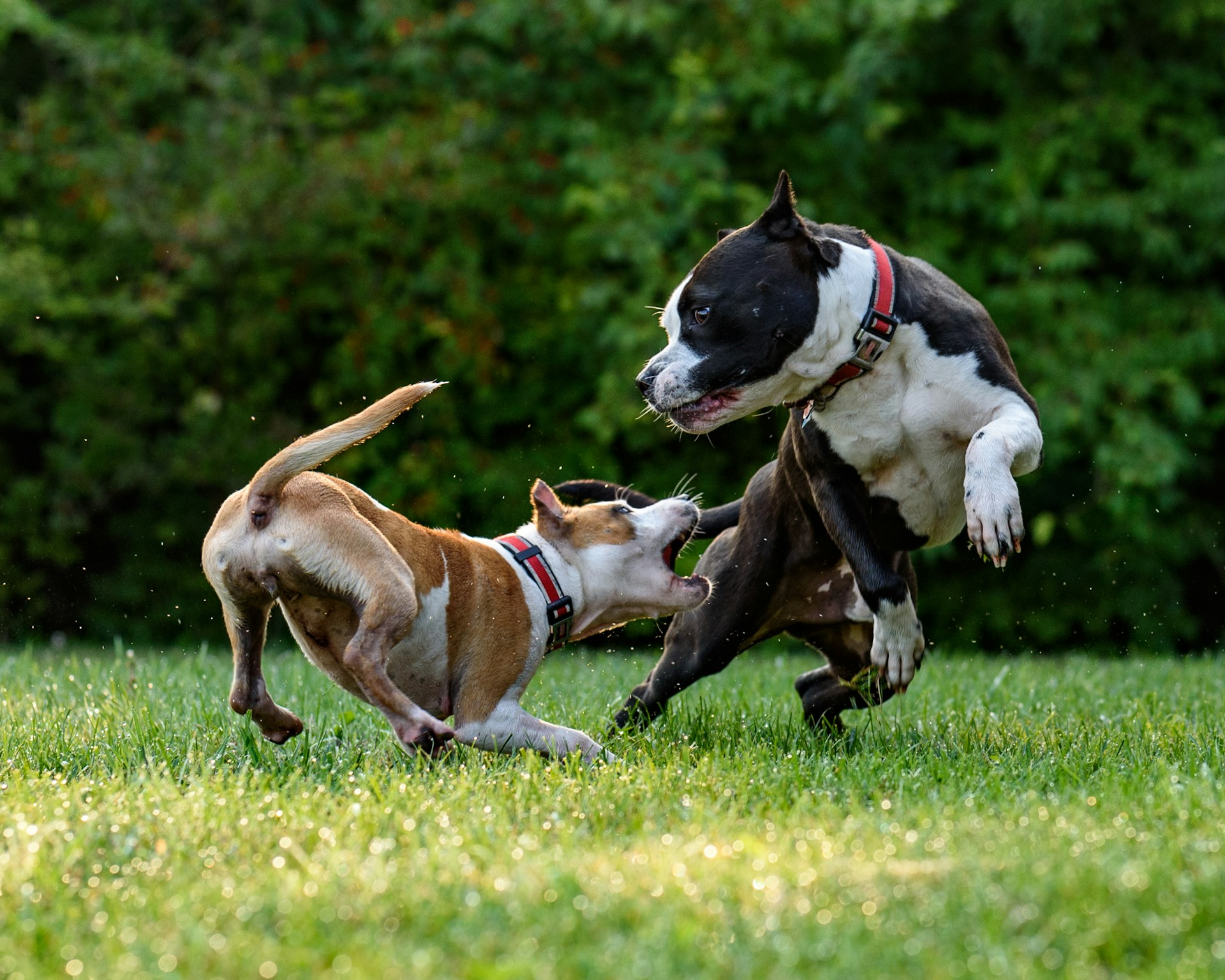
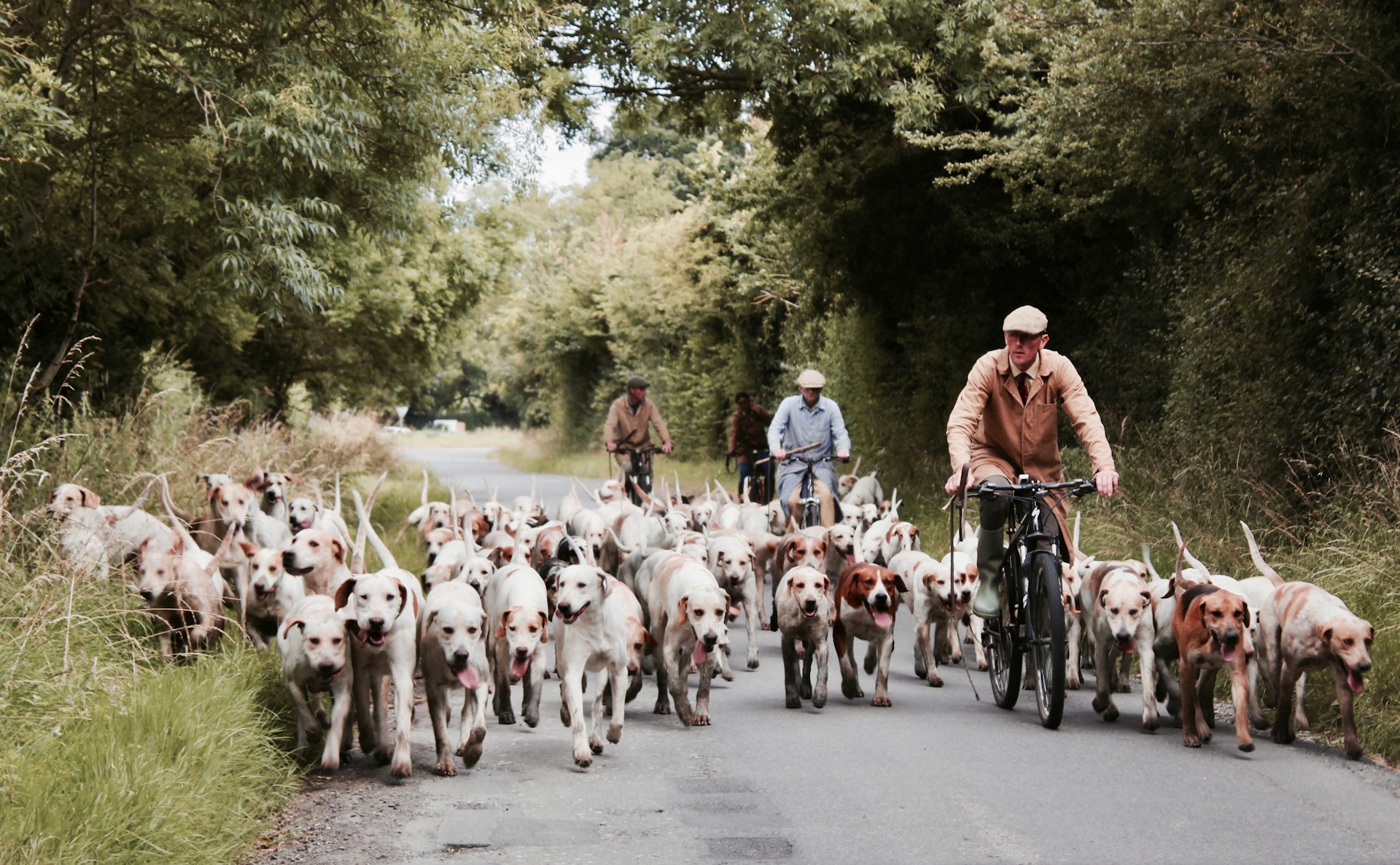
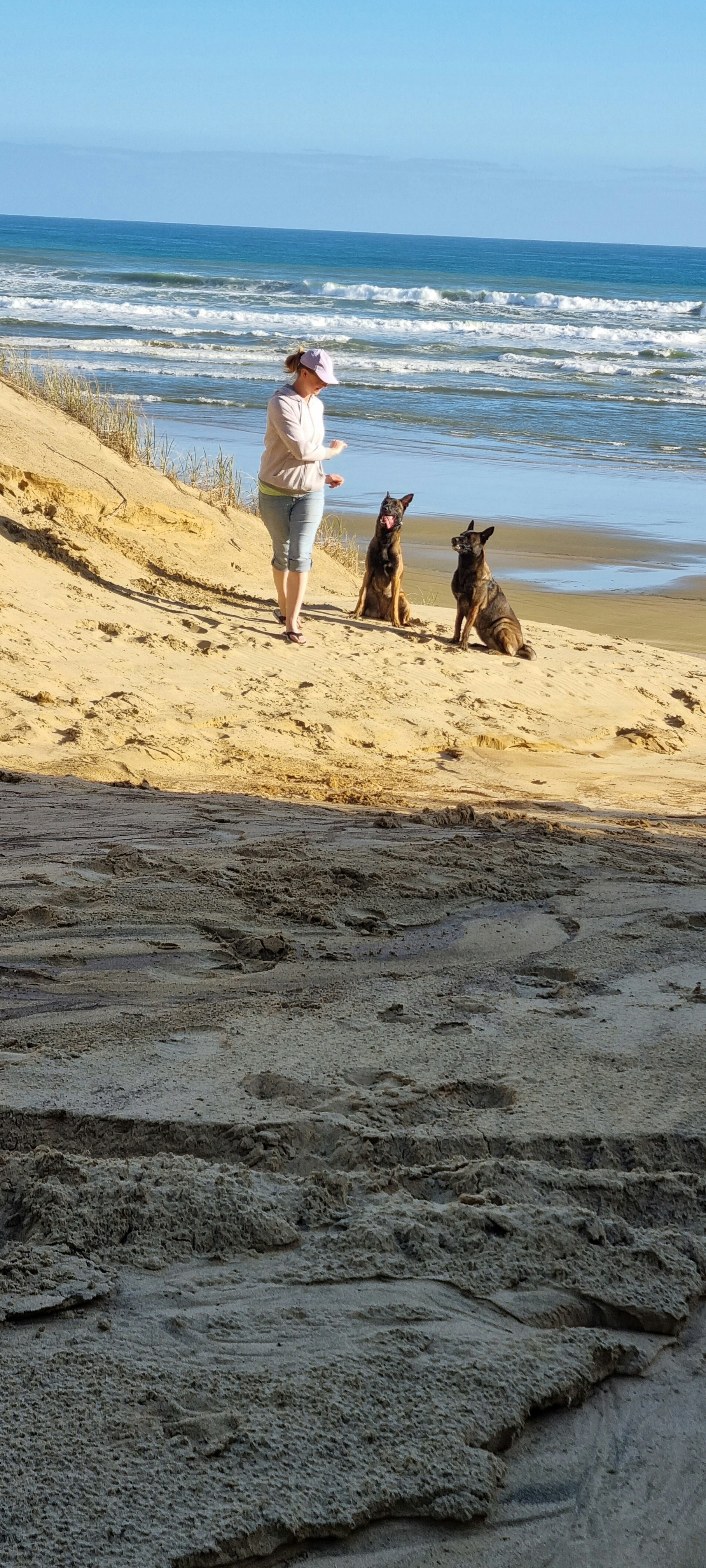
Only way to finish this post from Lisa is with a photo, of a dog!
My last post was about an accident that I had on the 17th November, last.
Jean is now back home; she came home on Friday, 13th December. However, every day we have a caregiver at home for part of the time. Jean is getting slowly better. I would estimate that at about one percent a day.
I am unsure as to the pattern of my posts. Whether I should go back to scheduling posts three times a week or publish posts on an ad-hoc basis. That will become clearer over the next few weeks.
I am going to start with publishing posts on an ad-hoc basis.
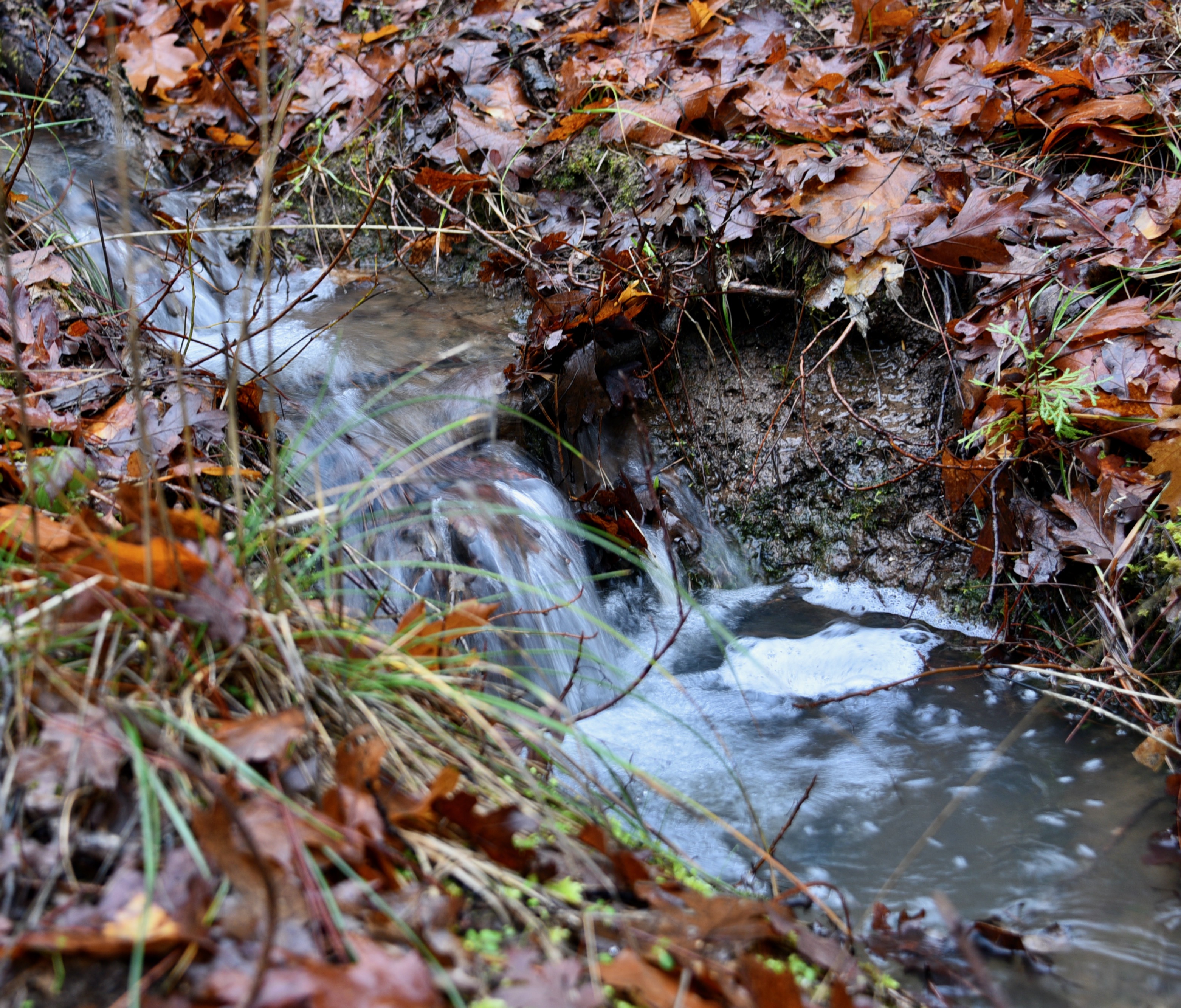
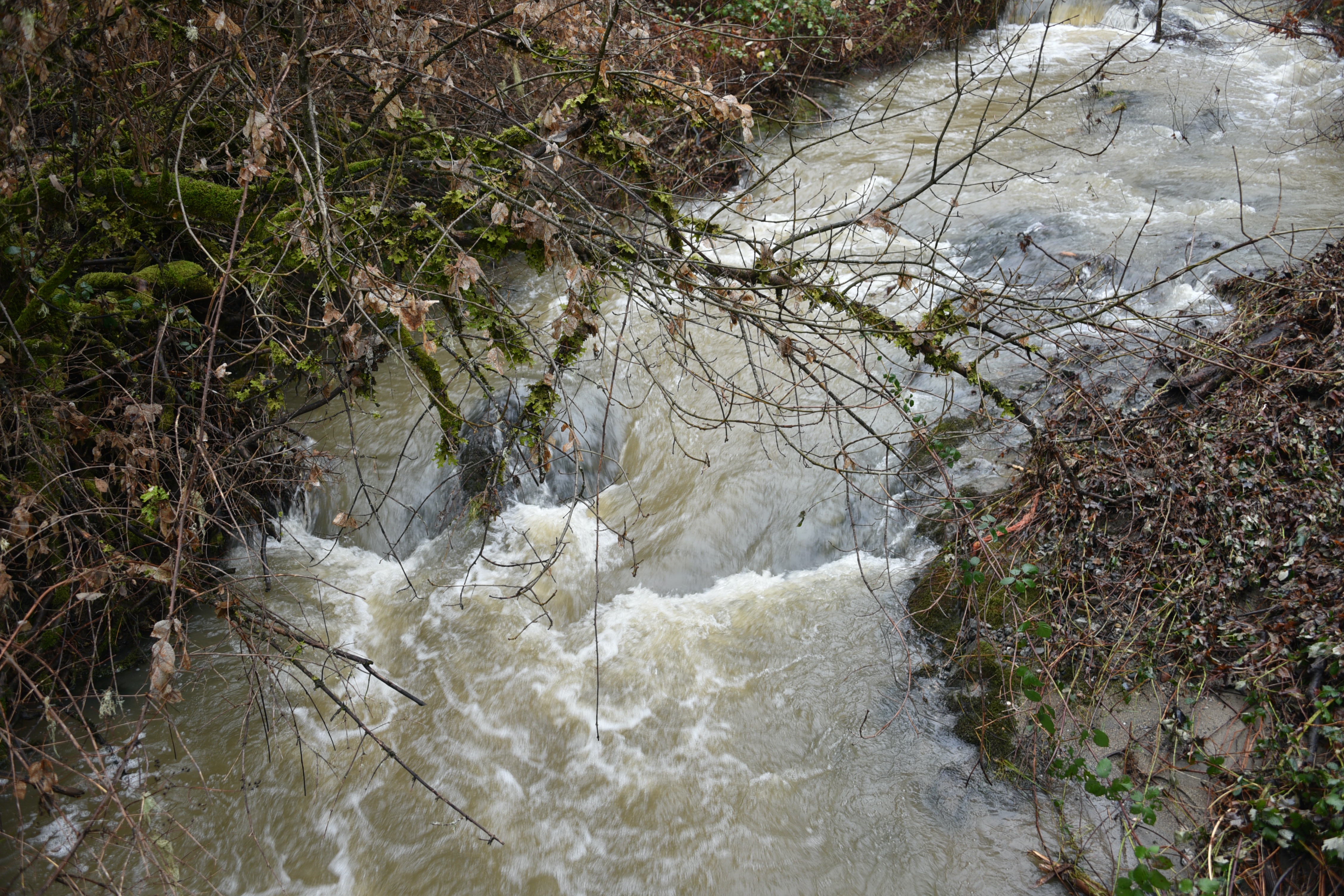
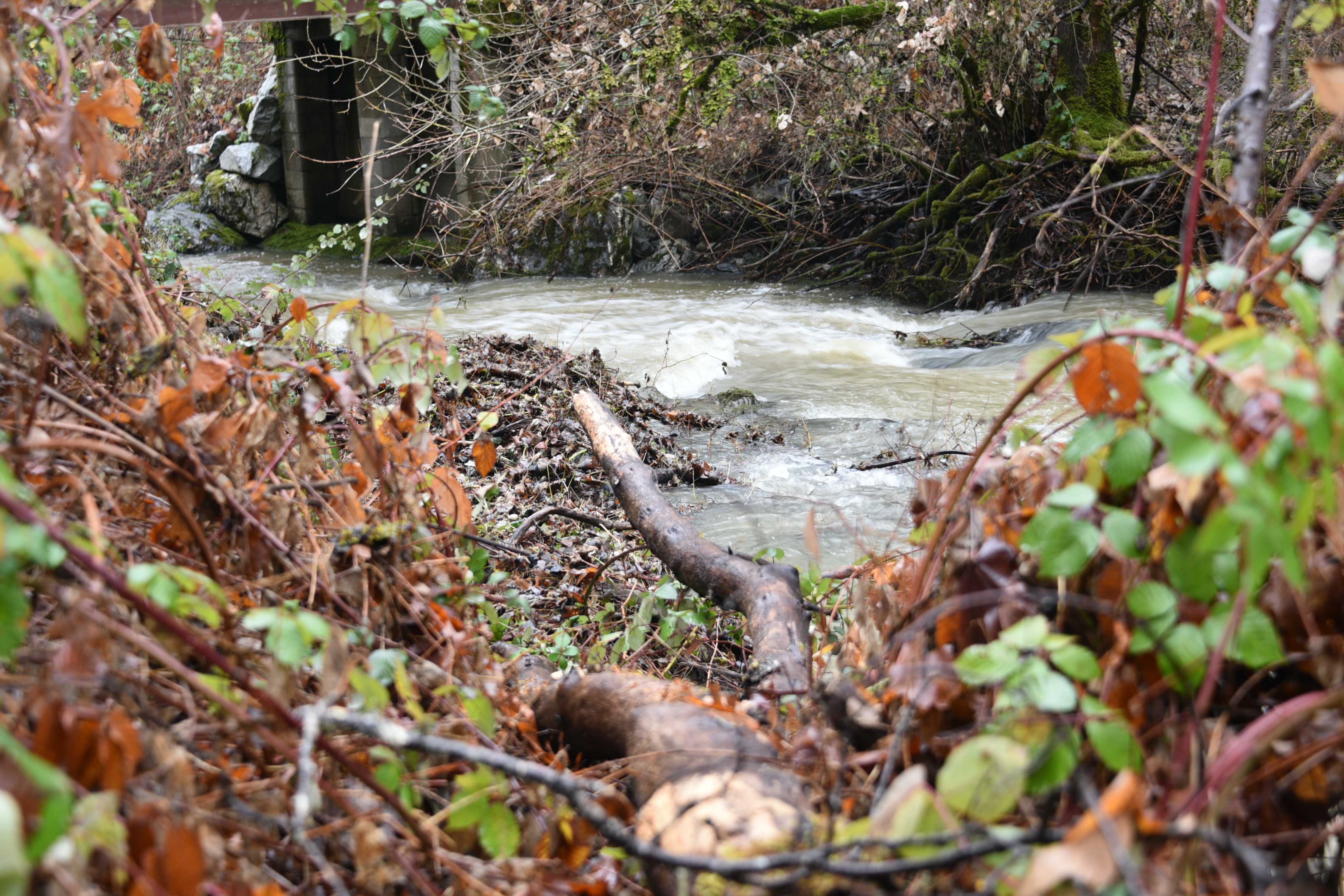
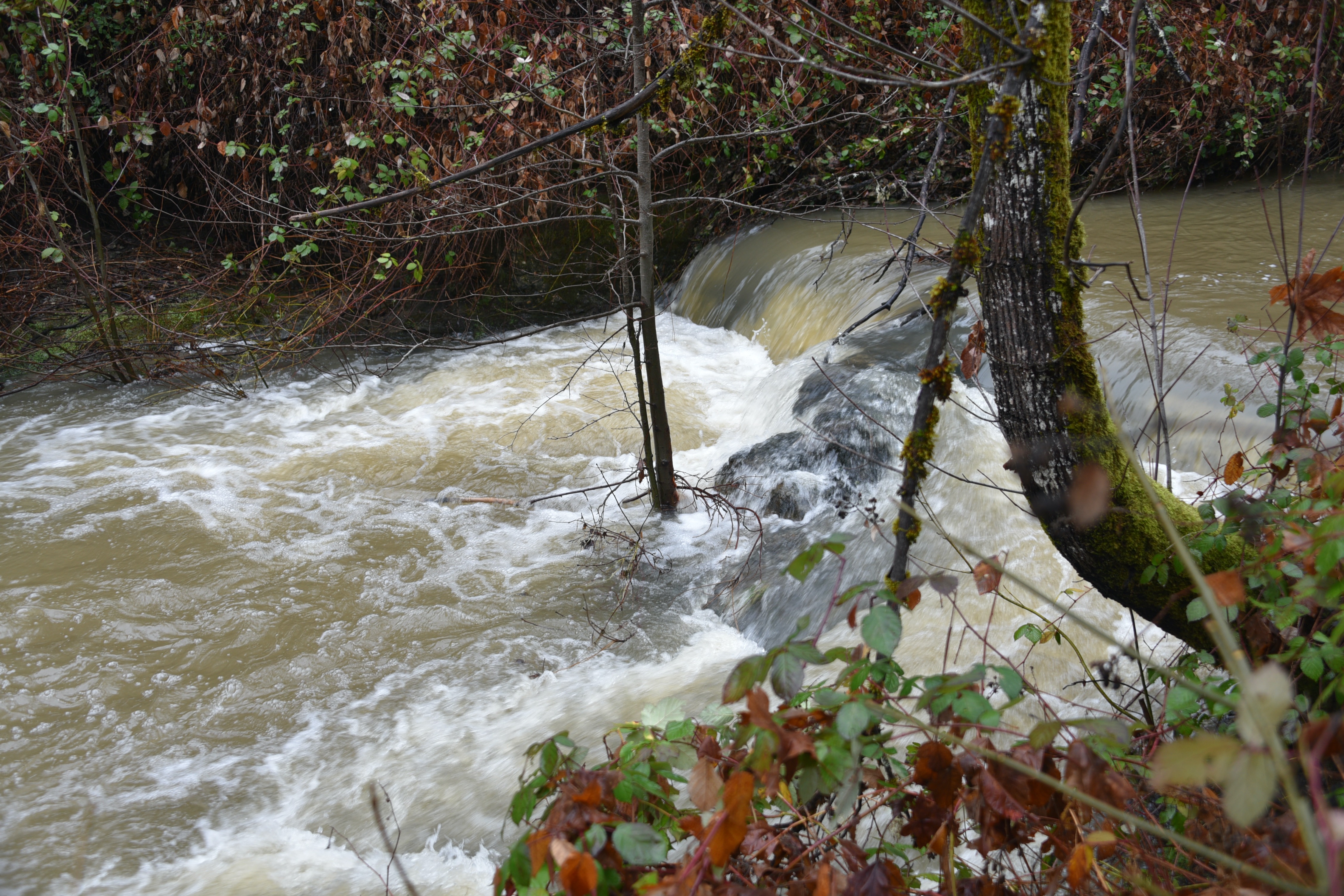
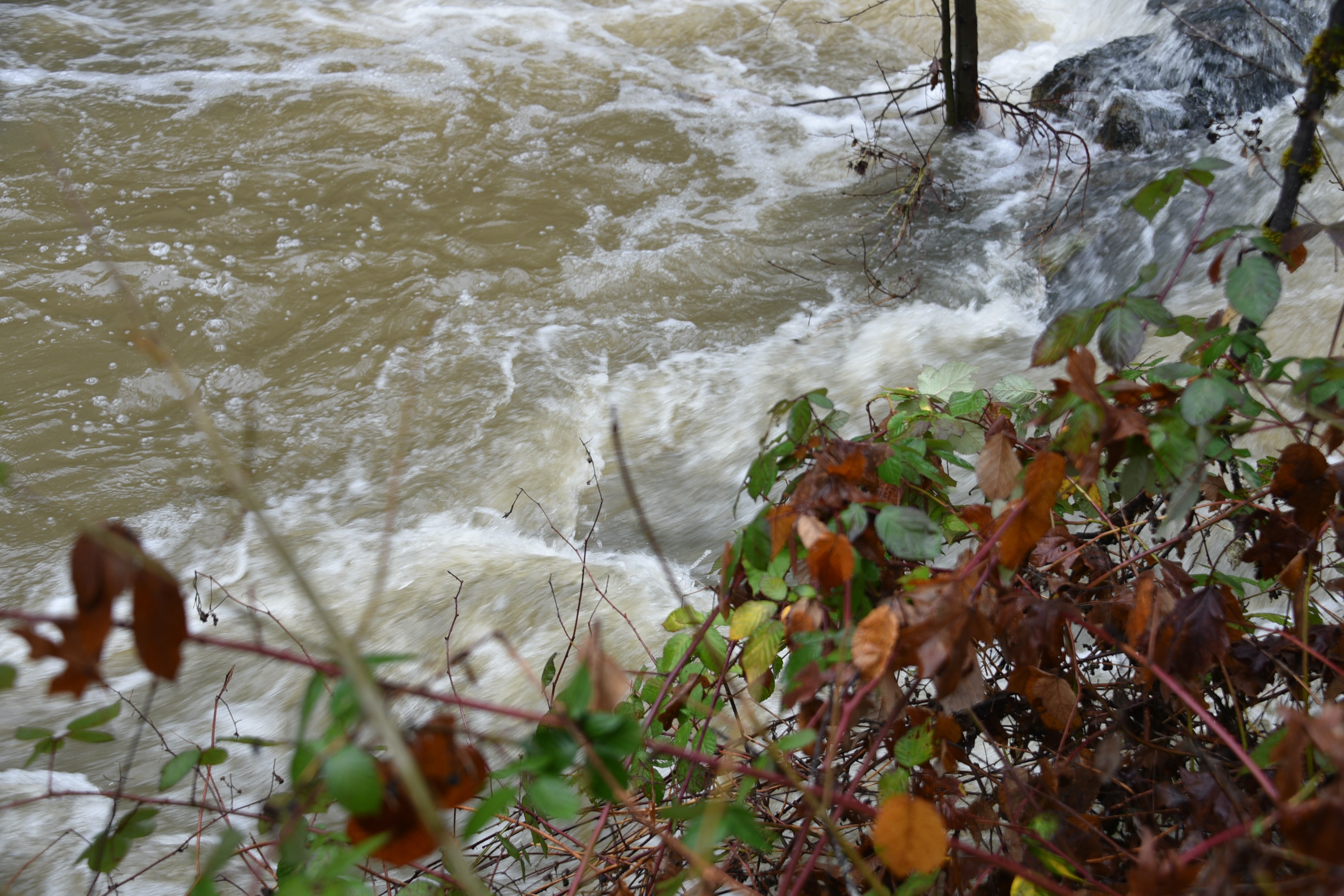
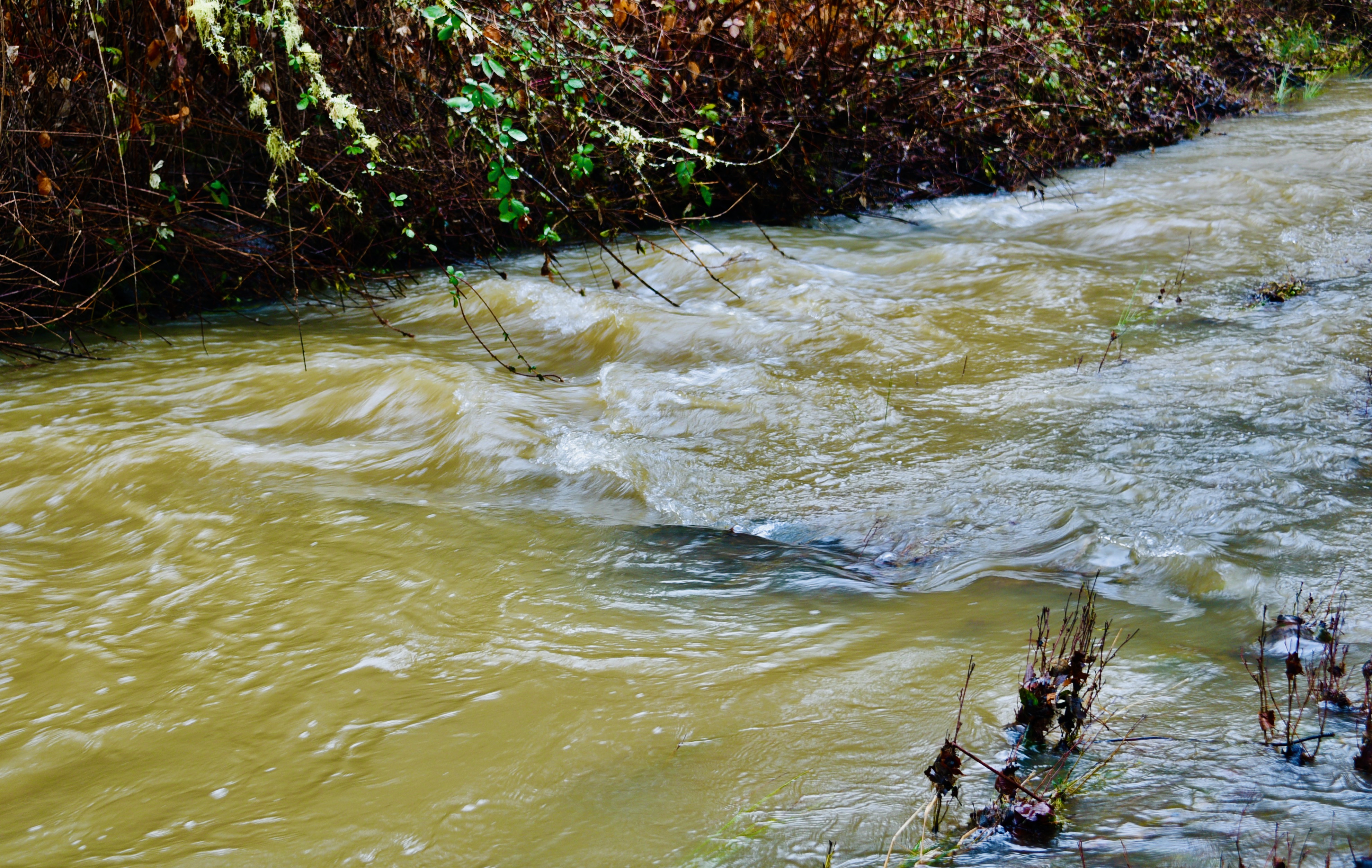
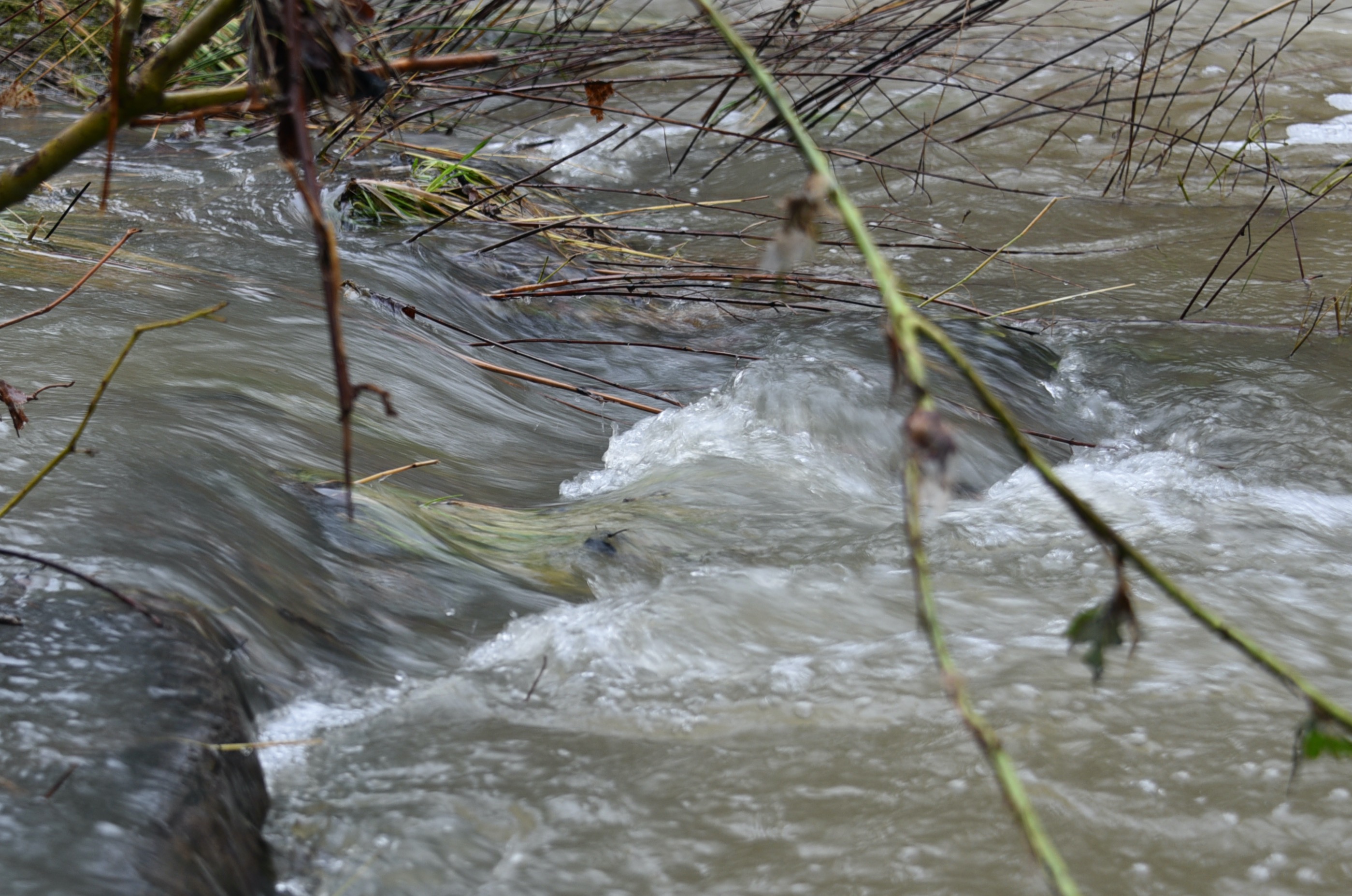
Meanwhile here in Merlin we have had loads of rain.
Bummer Creek
This is the creek that flows across the lower part of the property.
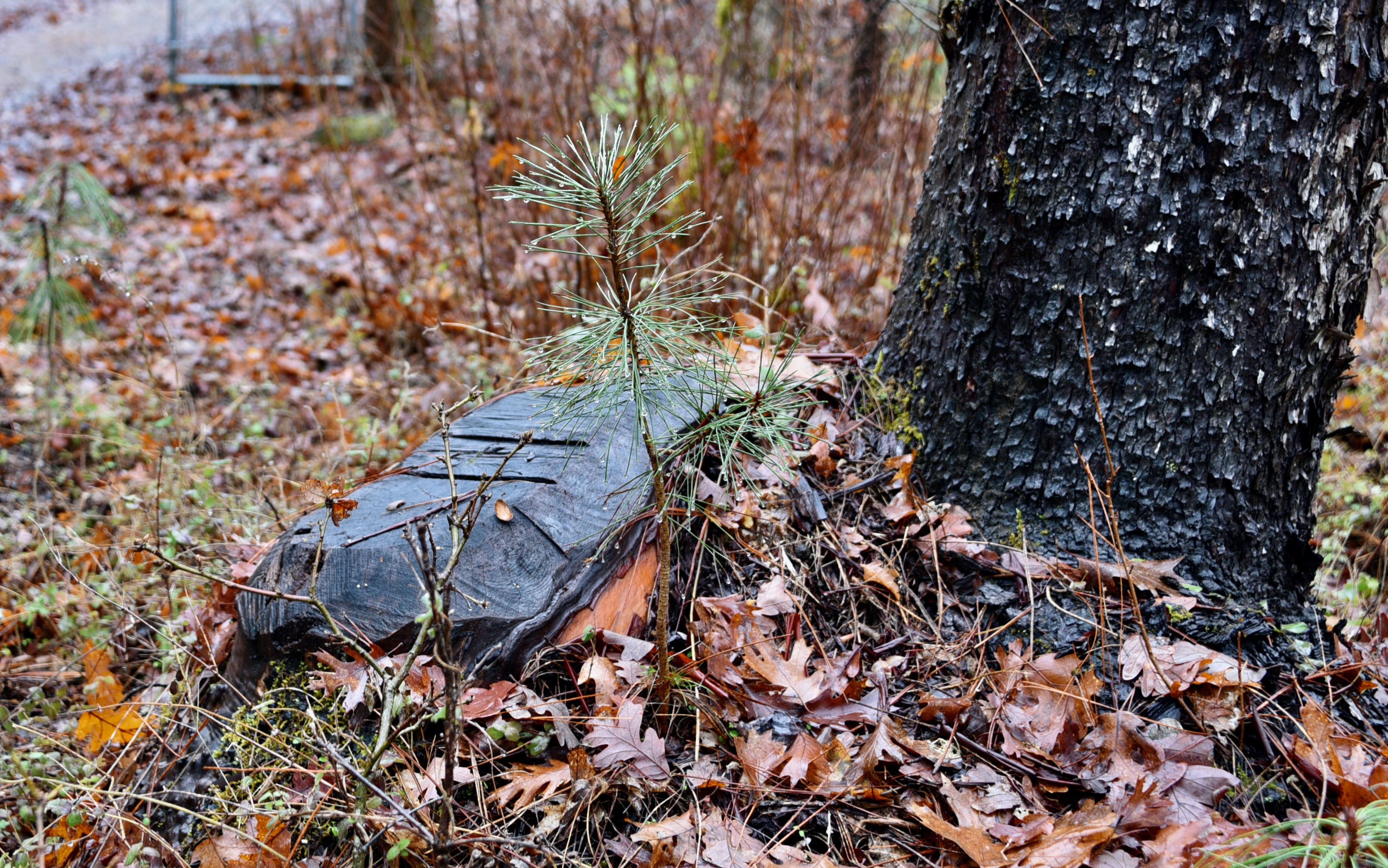
I had a blackout while driving back from the shops last Saturday week, the 17th, swerved and hit an oak tree. Jean and I were both taken to hospital but I was discharged at the end of the day; Jean is still in hospital, the Asante Regional at Medford. Plus the DMV cancelled my driver’s license and the car was declared written off.
Jean is getting better all the time but until she is back home and we can put our heads together about a variety of things I shall not be blogging.
I’m very sorry but that is the way it is at the moment.
Thinking it through thanks to a recent issue of Skeptical Inquirer.
Melanie Trecer-King is the creator of Thinking is Power and the associate professor of biology at the Massasoit Community College, where she teaches a science course designed to equip her students with essential critical thinking, information literacy, and science literacy skills.
The article was published in the November/December, 2024 issue of the magazine. I believe it is free to share.
ooOOoo
Most people agree that critical thinking is an important skill that should be taught in schools. And most educators think they teach critical thinking. I know I did. After all, I was a science educator, and science is critical thinking. Isn’t it?
For years, I taught general-education biology, a course commonly taken by undergraduates who aren’t science majors. And while I love biology, I grew more and more frustrated with the content. I asked myself: If I had one semester to teach the average student what they need to know about the process of science and critical thinking, what would it look like?
Thankfully, my college allowed me to replace my traditional introductory biology course with a course titled Science for Life, designed to teach critical thinking, information literacy, and science literacy skills (Trecek-King 2022). Since my conversion, I’ve been sharing my new path with anyone who will listen about the value of teaching critical thinking.
Yet conversations with Bertha Vazquez, director of education for the Center for Inquiry, gave me pause. In a recent podcast conversation with the two of us and Daniel Reed (of the West Virginia Skeptics Society), Vazquez was adamant. Educators do teach critical thinking: the Next Generation Science Standards (NGSS) require students to ask questions, plan and carry out investigations, analyze and interpret data, construct explanations, and engage in arguments from evidence.
As a science communicator, I constantly fight misconceptions around certain terms. Theory and skepticism are prime examples. So imagine my surprise (and embarrassment) when I realized that, as a critical thinking educator, I had overlooked an important first step in critical thinking: defining terms. The irony.
What Is Critical Thinking?
While we can all agree that it’s important to teach critical thinking, there’s not always agreement on what we mean by the term.
In his book Critical Thinking, Jonathan Haber (2020) explains how the concept emerged and some of the ways it’s currently defined. John Dewey, in his 1910 work How We Think, proposed one of the first modern definitions of reflective thinking, describing it as an “active, persistent, and careful consideration of any belief” (Dewey 1910, 6).
In his 1941 dissertation, Edward Glaser identified three components of critical thinking: “(1) an attitude of being disposed to consider in a thoughtful way the problems and subjects that come within the range of one’s experiences, (2) knowledge of the methods of logical inquiry and reasoning, and (3) some skill in applying those methods” (Glaser 1941, 5–6). That same year, Glaser and Goodwin Watson published the Watson-Glaser Tests of Critical Thinking (now the Watson-Glaser Critical Thinking Appraisal), a widely used standardized test for assessing critical thinking skills.
Critical thinking’s “big bang” moment, according to Haber, came in the early 1980s when the state of California (Harmon 1980, 3) mandated that all students in its university system complete a course that teaches “an understanding of the relationship of language to logic, leading to the ability to analyze, criticize and advocate ideas, reason inductively and deductively, and reach factual or judgmental conclusions based on sound inferences drawn from unambiguous statements of knowledge or belief.”
And the Delphi Report (Facione 1990, 2), in which Peter Facione worked with critical thinking experts to create a consensus definition, concludes that critical thinking is a “purposeful, self-regulatory judgment which results in interpretation, analysis, evaluation, and inference, as well as explanation of the evidential, conceptual, methodological, criteriological, or contextual considerations upon which that judgment is based.”
From these (and many other) definitions, Haber identifies three interconnected parts of critical thinking: knowledge of critical thinking components, such as logic and argumentation; the skills to put the knowledge to use in real-world situations; and the dispositions needed to prioritize critical thinking honestly and ethically.
This problem-solving view of critical thinking forms the basis of many of the current educational standards, including the NGSS and Common Core, which ask students to think deeply within a specific domain. And it is one scientists themselves use when trying to understand issues.
These are worthy educational goals to be sure. However, in my experience teaching general-education biology, I’ve come to realize that this approach is incomplete.
If critical thinking requires deep knowledge, then our ability to analyze topics is limited to areas in which we possess sufficient expertise. Pedagogy that encourages “independent” thinking outside these areas can have the unintended consequence of teaching students to overestimate their abilities. The best minds know they can’t know everything. Even experts rely on other experts and sources.
Additionally, in the classroom, students are provided with reliable content from which to critically analyze. In the “real world,” these guardrails are nonexistent. Not only is misinformation ubiquitous, disinformation purveyors exploit our biases and emotions to manipulate our reasoning.
And finally, we can’t address science misinformation, from evolution to vaccines to climate change, by giving students more content knowledge. We don’t fall for science denial and pseudoscience because we don’t have the facts but because of our emotions, desires, identities, and biases.
I now have a better understanding of what my colleague and friend Andy Norman means when he says that critical thinking suffers from a branding problem.
Yes, And …?
Using the above definition(s), I was teaching my biology students how to think critically. For example, I didn’t just ask them to memorize the stages of mitosis but to explore the mutations that could disrupt the cell cycle and lead to cancer. But to what end? If (or when) my former students are touched by cancer, will they remember how proto-oncogenes and tumor suppressor genes can lead to unregulated cell growth? Is that even what they need to know? I argue that, especially for students who aren’t going to be scientists, it’s far more important to teach students how and why the process of science results in reliable knowledge … and how to find it.
My Science for Life course and my Thinking Is Power resource are both based on the same premise. Knowledge may be power, but there’s too much to know. Even more, knowledge is a process; it’s not just what we know but how we know. It’s not just a noun but a verb. When we need reliable knowledge, can we find it and use it to make wiser decisions? And how do we know what information to ignore?
As a science educator, I want my students to understand how the process of science produces knowledge and why it’s reliable. Why aren’t comments such as “it worked for me” or “I know what I saw” sufficient evidence? I’ve come to realize that an essential—and often overlooked—ingredient is why we need science in the first place.
Richard Feynman famously said, “The first principle is that you must not fool yourself, and you are the easiest person to fool.” Science is how we correct for this tendency toward self-deception. That’s why I spend the first third of the semester exploring how we come to our beliefs, the limits of our perception and memory, the importance of skepticism, the cognitive biases that can lead our thinking astray, and the logical fallacies we use to convince ourselves (and others) that our conclusions are justified.
Influential voices in the skeptical community played a crucial role in shaping the ingredients of critical thinking I use in Science for Life and Thinking Is Power, which include the following:
Being aware of our limitations: Understanding that our perception and memory are flawed, and the biases and heuristics our brains rely on to make fast and easy decisions can lead us astray.
Arguing with evidence and logic: Using arguments that are well-structured and supported by evidence. This includes understanding how the different types of arguments work (i.e., deductive, inductive, and abductive) and avoiding logical fallacies.
Thinking about our thinking (metacognition): Actively examining and questioning our own thought processes—including the source of our knowledge, assumptions, intuitions, motivations, emotions, and biases—and how they might influence our judgments.
Embracing nuance and uncertainty: Avoiding the black-or-white thinking that can lead to oversimplified conclusions and accepting that our knowledge is never perfect or complete.
Seeking objectivity: Actively working to counter the limitations that prevent us from accurately understanding the world. This includes seeking diverse perspectives, separating our identity from our beliefs, and prioritizing accuracy over ego.
Having curiosity and open-mindedness: Possessing a desire to learn and understand by asking questions and seeking out information, even if it contradicts what we want to believe.
Maintaining healthy skepticism: Balancing gullibility and doubt and proportioning our beliefs to the available evidence. And remembering that claims made without evidence can be dismissed without evidence and extraordinary claims require extraordinary evidence.
Exhibiting intellectual humility: Recognizing the limitations of our knowledge, being open to the expertise of others, and being willing to change our minds with evidence.
In my experience, giving students this foundation is essential for helping them become better consumers of information and science. Without an awareness that our emotions and existing beliefs can drive our reasoning, search engines and low-quality sources become tools to confirm our biases. And without an understanding of how our identities and worldviews can alter our standards of evidence, pseudoscience and science denial provide cover for what we want or don’t want to believe.
The logic of science’s practices, from carefully controlling experimental variables to making the findings available to other experts for scrutiny and replication, falls into place once students understand the problems it’s addressing. Simply put, science is our shield against self-deception.
Now instead of asking students to think critically about the biology of cancer, I teach them how to evaluate sources to find reliable information, how to recognize pseudoscientific “treatments,” and how their need for hope and answers makes them vulnerable to misinformation.
The Take-Home Message
I have no doubt that most educators teach critical thinking. But for pedagogical and communication purposes, it would be beneficial to clarify what we mean—and just as importantly to ask ourselves what we want our students to learn.
The dominant view of critical thinking in education is problem-solving in specific domains, which is absolutely a valuable skill. However, many skeptics view critical thinking as good thinking in a broader sense. My own teaching shifted toward this latter framework after I realized that problem-solving skills are insufficient without a foundation in better thinking. We may be born with the ability to think, but we must be taught to think well, and our primate brains aren’t adapted to today’s tidal wave of misinformation.
I’m grateful to the skeptical community for challenging my assumptions about critical thinking and my friend Bertha Vazquez for encouraging me to think more deeply about the good work science educators do in their classrooms every day. This article is the result of my attempt to reconcile what critical thinking means to educators and what it means to skeptics, and my hope is that it opens a conversation about how we can better serve our students. Maybe it will even start a critical thinking revolution, especially in science education.
Let the critical thinking revolution begin!
Acknowledgments
My thanks go to those on this brief list of skeptical thinkers/authors who’ve influenced my understanding of critical thinking: James Alcock, Timothy Caulfield, John Cook, Brian Dunning, Julia Galef, Adam Grant, David Robert Grimes, Jon Guy, Harriet Hall, Guy Harrison, Daniel Kahneman, David McRaney, Steven Novella, Carl Sagan, Michael Shermer, and Carol Tavris.
Special thanks to Bertha Vazquez, Daniel Pimentel, Andy Norman, Daniel Reed, and Jon Guy for their helpful feedback on this article.
References
Dewey, John. 1910. How We Think. Lexington, MA: D.C. Heath and Company.
Facione, Peter A. 1990. Critical Thinking: A Statement of Expert Consensus for Purposes of Educational Assessment and Instruction—The Delphi Report. Millbrae, CA: California Academic Press.
Glaser, Edward M. 1941. An Experiment in the Development of Critical Thinking. New York, NY: Teachers College, Columbia University.
Haber, Jonathan. 2020. Critical Thinking. Cambridge, MA: The MIT Press.
Harmon, Harry. 1980. Executive Order No. 338: General Education-Breadth Requirements. The California State University and Colleges.
I hope others have read this fascinating article and repeat the statement: ‘While we can all agree that it’s important to teach critical thinking, there’s not always agreement on what we mean by the term.’













 Learning from Dogs