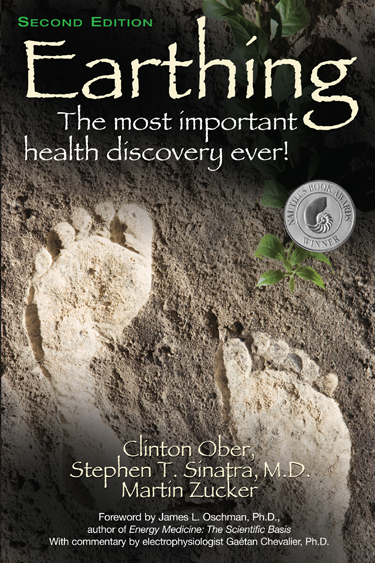
On Saturday, the 14th June, I published a post Are you grounded? That post was a reaction to this book that Jean and I had recently read.
I also explained that we had ordered an earthing sheet for the bed and that I would report further upon our findings.
Today’s post is that further report.
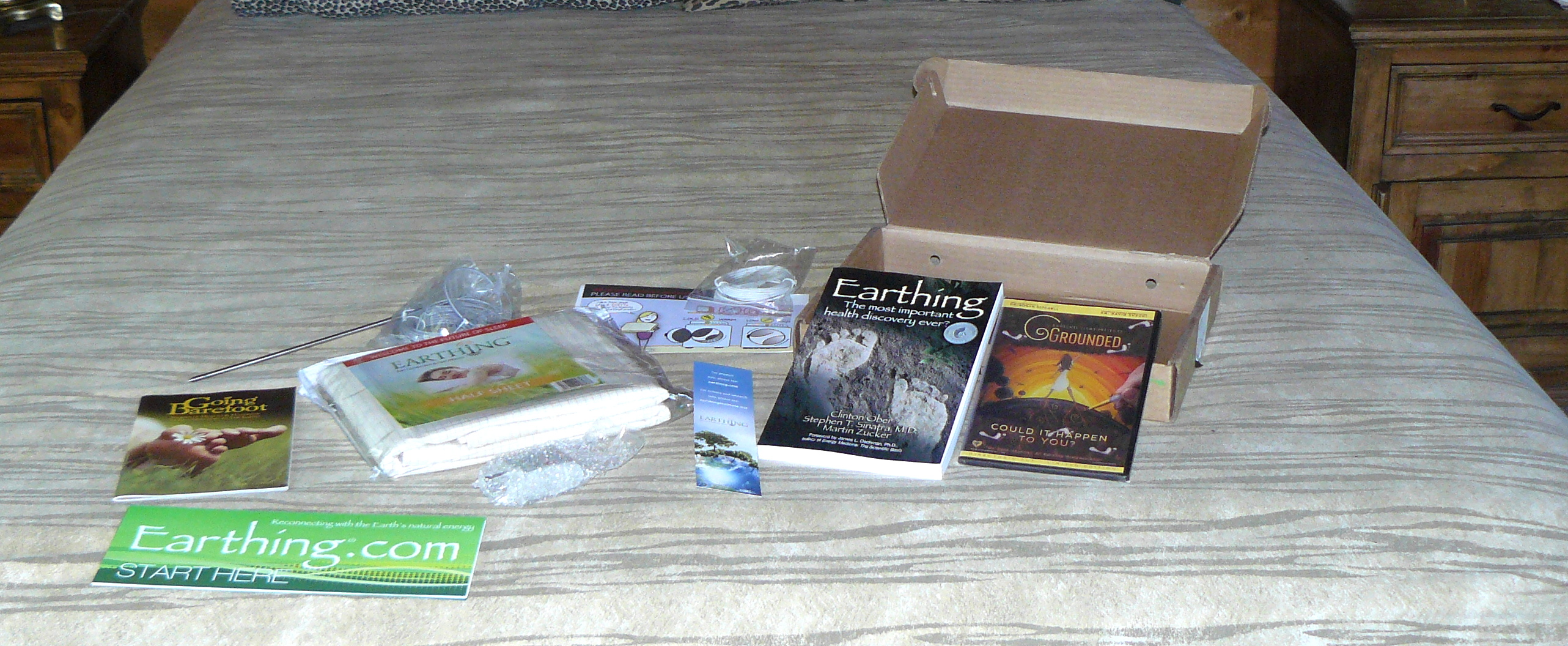
The slim box containing the half-sheet kit was delivered on the 18th June, five days ago at the time of writing this.
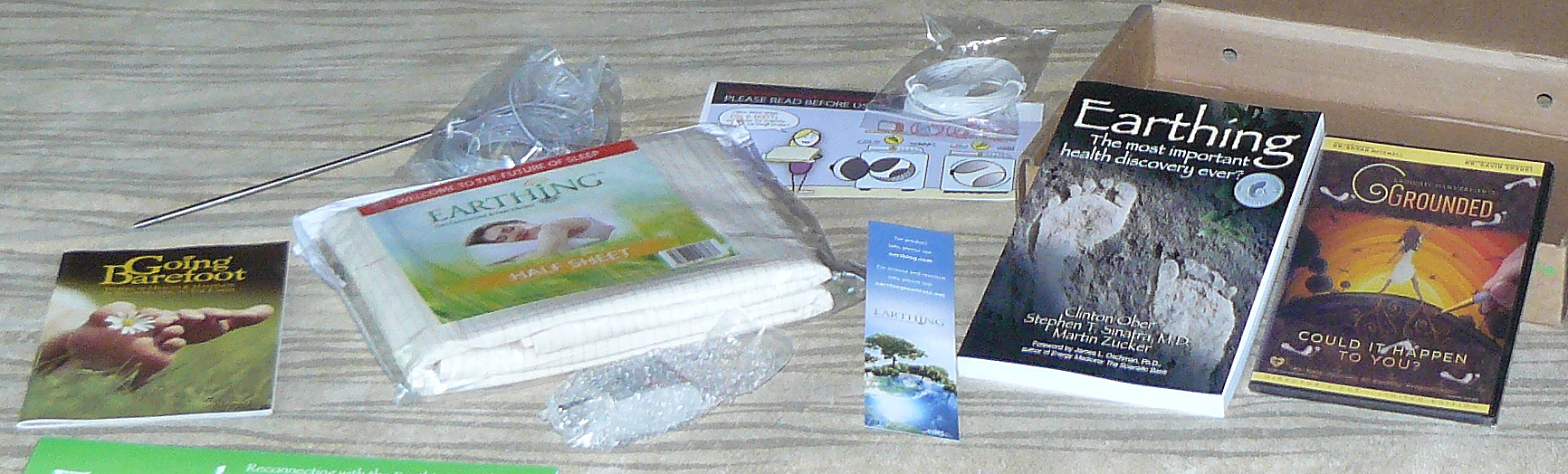
The next photograph shows more clearly what was included in the kit.
From left to right: Case histories from users, an earthing rod above, the earthing half-sheet, and below the sheet, an outlet ground checker, the earthing connection cord, the book, and a full-length DVD of a film on the subject of grounding.
It was then a case of laying the sheet on the bed as recommended in the instruction guide.
Then upon testing that we had a safe earthing connection via the ground pin on our nearby outlet, it was a case of connecting the earthing sheet to ground, as may be observed in the next photograph.
I’m writing this yesterday. We have both slept on the earthing sheet for four nights now.
So what are the results so far?
Jean
Jean has had leg muscle cramps each night for months and months. Often just enough to waken her but frequently sufficiently severe to require her getting out of bed and walking around the room. I can vouch for the latter!
Jean has had those four nights totally free from cramps!
Plus Jean has reported sleeping more soundly.
Me – Prostate
In recent months my bladder has been showing ‘old man’s bladder control’! Certainly, over the last year I have been getting up for a pee two times, frequently three times, during the night.
During the day, I could hardly take a hot drink without the need to pee within minutes. It had got to the stage where I would avoid having a drink before Jean and I went out unless I was certain that there would be public restrooms available. I was taking a natural prostate medicine, morning and evening, but still starting to think that it wouldn’t be long before I would need to see a medical specialist.
Since sleeping on the earthing sheet, I have gone down to getting up just once during the night. But it’s better than that!
I have stopped the prostate tablets. During the day, my bladder control is hugely improved. I hold my breath that this is going to continue.
Me – Memory
Like many of my age (I’m 70 in November), my short-term memory is not what it used to be. I have not noticed any improvements in this area.
But I am sleeping much more soundly, which is never a bad thing.
But get this!
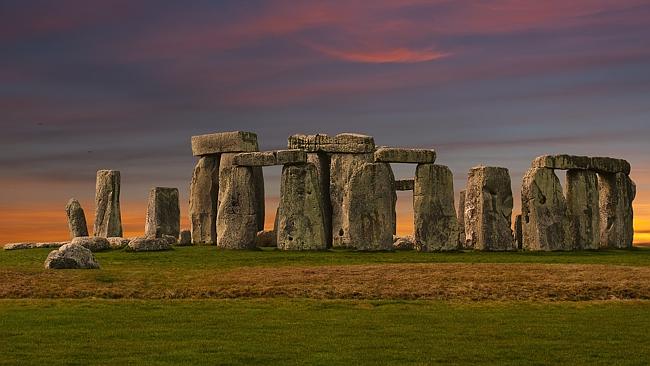
Being an old Englishman with a sense of connection to the ancient customs of Stonehenge, especially observing the sun’s dawn on the morning of Mid-Summer’s Day, I had looked up the exact local time equivalent of the moment of the Solstice here in Oregon.
Stonehenge at Dawn. On the morning of Mid-Summer’s Day the sun rises exactly over the heel stone.
Early in the hours of the morning of June 21st, ergo Mid-Summer’s Day, I woke unexpectedly. I lay there wondering what had awoken me. It wasn’t to jump out of bed and have a pee. How strange!
I lay there for what felt like ten minutes and then curious as to the hour reached across and pressed the illuminate button on my bedside clock. It read 3:48 am.
3:48 am!! How could that be! I could hardly believe it!
Let me explain.
The previous afternoon, I had been curious as to the exact time of the 2014 Summer Solstice. Had looked it up online. In the United Kingdom that precise moment was 10:41 am. The equivalent time of the Summer Solstice in Oregon’s local Pacific Daylight Time (PDT) was 3:41 am.
I knew that was when I had woken up.
Now that’s what I call being grounded to the Planet!
OK, that’s enough for today but there is much more information about the whole business of being grounded to the planet. I shall return to the subject in Wednesday’s post.
Two days ago I published a rather introspective post called The temptation to turn ever inwards. It was the result of reading three disturbing essays about the ‘affairs of man’; essays by Tom Engelhardt, Jim Wright and George Monbiot. Frankly, I wasn’t expecting a great response either in the form of ‘Likes’ or written replies. However, the first reply, a long reply, came in from Patrice Ayme. I made the decision to reply to Patrice via a new post; ergo today’s post. Since making that decision a further comment came in from Sue Dreamwalker, also republished today.
What I am going to do is to reproduce Patrice’s comment but interspersed with my replies.
oooo
The biosphere evolved over billions of years. Now it is taken over by critters who live for just a few years. Solution? Make it so that said critters live longer, thus attaching a greater value upon survival.
I presume that the ‘said critters’ refer to humans? The average lifespan of humans has increased hugely. From a life expectancy of 30 years [1] at birth in Medieval Britain, back in the 13th Century, to an average of 67.2 years for humans worldwide in 2010. [2]
That’s an increase of 124% in a little over 700 years. Yet despite that incredible increase in lifespan, humans have shown no interest in attaching a greater value to their survival: far from it! One might even muse that humans have attached a greater value to those things that actively harm our survival.
For all the (over-) elaborate set-up of dear Monbiot, it’s simpler than that. Instead of going back to Baby Thatcher, Baroness god save the queen knows what, let’s grab a clear and present example.
I’m unclear as to what is meant by “the over-elaborate set-up” but as a long-time reader of Mr. Monbiot‘s essays I applaud both his commitment to the highest standards of journalism and to the UK’s Guardian newspaper for publishing so many of them over the years. I would invite Patrice to give an example of over-elaboration coming from the pen of George Monbiot.
Britain, and many of the Brits, say our dear friend Chris Snuggs, a participant to your, and my, site, have said that they hated Europe, because Europe was not democratic enough. However, one of the latest improvement of the European Constitution is now effective: the head of the EC, the European Commission, is now to be elected by the just elected European PARLIAMENT. Guess what?
Chris Snuggs is more than a participant to Learning from Dogs, he is a close friend of many years. Yes, he has strong views about Europe but those views are expressed in a declared, personal manner.
Chameleon Cameron, came out of the woodworks to bark, in the clearest way, that it was out of the question to do things differently from before, and now dare to have the European Parliament to elect (what is basically) the European Prime Minister.
Never mind that Britain voted for that European Constitutional change.
Never mind that in representative democracies, the leaders of the executive are elected by Parliament.
So what do we see here?
Contradiction within moods and thoughts systems (Britain agreed to the democratic change, and now does not). We also see erroneous ideas imposed (leaders of the executive says Cameron should be nominated undemocratically, that’s erroneous).
The same sort of things is also perking up in Iraq: the USA caused the mess there, committing several major war crimes in the process. Precisely because those war crimes were not prosecuted, a strong push has been exerted on Obama to duplicate Bush, and go back to attack Iraq some more.
Thus, it is simple: there bad ideas out there, and they need to be destroyed. And bad moods too (an example of bad moods is the enormity that the American population was made, by Bush, Cheney, Rumsfeld, etc., into an accomplice of the most major war crime there is, war of aggression. Now that this war is in the process of being lost, some clamor to have the war pursued with renewed vigor.
We are now the stewards of the biosphere, whether we like it, or not. We can’t just sit on our rumps, strokes dogs, and whine we will attend to our garden (Voltaire style). By doing nothing, we leave criminals such as Bush, or their spirit, or their mood, in power. And thus we become accomplices.
There is total agreement for the idea that humans are the stewards of the biosphere. But if the “sit on our rumps, strokes dogs and whine we will attend to our garden” is aimed at me, as it appears to be, then I strongly disagree. Living as simple a life as we can is a long way from “doing nothing”.
So go out there, and engage in combat, bad moods, and bad ideas. That’s what even very old alpha monkeys, covered with age spots, do. We don’t want to let very old monkeys be examples of moral rectitude we cannot emulate.
A last point: Monbiot does not realize the contradiction he engages in. In the guise of criticising the opposition, he puts it on a pedestal, and engages in its very propaganda. Monbiot, and many like him, bemoan a “shift towards conservatism”. Nothing could be more false. People who destroy the biosphere are NOT conservatives. They play conservatives on TV. In truth, they are just the opposite. They are destructionists.
I am of the opinion, totally so, that George Monbiot is not playing at conservatism.
oooo
So, dear reader, there is little in the comment from Patrice that has me nodding my head. Don’t get me wrong! Patrice Ayme is an individual of extreme intellect as even a dip into his blog will confirm. I am a regular reader of the writings over at that place.
However, there is one major stumbling block for me, one that I have communicated privately to the said Patrice, and that is the issue of anonymity. Because Patrice Ayme is a nom-de-plume. Despite following ‘his’ writings for some time and sharing the occasional private email, I have almost no idea about who the person is. Yes, ‘his’ writings are often very strong and highly critical of many aspects of modern life, especially the American political system. But that is not unique. There is a long line-up of writers doing the same, and doing the same over their signatures: Tom Engelhardt, Jim Wright and George Monbiot and many, many others
For me, hiding one’s identity so securely behind a ‘virtual’ mask yet writing so passionately about many of the issues critically affecting the future of mankind, doesn’t work. If one can’t or won’t be honest about who they are, then better, perhaps, that they keep their thoughts and ideas close to them. There is no shortage of people openly being critical about the American Government and much else across the world, and being critical openly.
Later, Sue of Sue Dreamwalker added a comment. That resonated perfectly with me and it, too, is reproduced in full.
Paul sometimes I despair at how Mankind plays out his life in the world Paul… We bemoan lots as we sit in our homes as the virus of hate, greed, and disaster pours into our living rooms via the BLACK BOX of FEAR tricks… Which helps depress, make us anxious, fearful,…. It insights anger, aggression and the spiral of thought escalates out via the Web… Internet at our fingertips- instant reactions…
Some times I wonder as I ponder… at the soup being remixed… as only this week we hear of ISIS another branch of the terrorists we are now supposed to fear… As the UK now makes friends with its long time enemy Iran.. reinstating diplomatic relationships again.. The Saga runs on an on… With Oil as the major players .
That’s why turning inward is sometimes Paul the only thing we can do… As we can only live our lives… While I so want to save the world.. The world has also got to want to save itself…
I can only live my own life and stop the petty squabbles, the judgements, the criticisms as I mend my own world to live at peace within it…
Once we all realise its our thoughts which in fact we send out, in fear, in anger, as we judge and condemn that are reflected back …
WE create the world.. We consume its products, We want to live in the lifestyles that demand this World to exploit others for riches.. And yet condemn the conditions of the haves and have nots…
We have lost sight of our basic values in life Paul…
So yes I often retreat inwards… I have too.. Because I worry too much about the kind of Earth we are leaving our Grandchildren to grow up in…
~Sue
In final reply to Patrice, I shall reproduce this well-known quotation [3]:
“I disapprove of what you say, but I will defend to the death your right to say it.“
3.This saying is widely attributed to Voltaire, but cannot be found in his writings. With good reason. The phrase was invented by a later author as an epitome of his attitude. It appeared in The Friends of Voltaire (1906), written by Evelyn Beatrice Hall under the pseudonym Stephen G. Tallentyre.
A run of essays that, collectively, deeply disturb me.
My seventieth birthday is fewer than six months away. Indeed, it will be just a little over two weeks after we celebrate the second anniversary of our arrival to this beautiful homestead back on October 25th, 2012. Two years: Seventy years! Time seems to run through one’s fingers like the proverbial sand. It’s difficult to avoid the irony that comes with recognising the two journeys. The one journey bringing me to living here on our rural Oregonian acres, with stunning scenery, wonderful animals and so much love in the air. The other journey bringing me to the realisation that this is the Autumn of my life and the sense, the keen sense, of my own mortality.
What, may you ask, has brought this feeling, these words, to the surface?
Well, I’ll tell you.
It’s been the coincidence of essays from three authors across the ‘blogosphere’ that I have recently read. Taken together, they paint a picture that disturbs me. Very much so. They sing out to me that mankind is spiralling ever downwards to oblivion and that the dark forces of greed, power and control will never be stopped; well not by man that is!
Here are the links to those essays.
The first was from Tom Englehardt. It was an essay entitled: A Record of Unparalleled Failurepublished on June 10th. That opened:
The United States has been at war — major boots-on-the-ground conflicts and minor interventions, firefights, air strikes, drone assassination campaigns, occupations, special ops raids, proxy conflicts, and covert actions — nearly nonstop since the Vietnam War began. That’s more than half a century of experience with war, American-style, and yet few in our world bother to draw the obvious conclusions.
Given the historical record, those conclusions should be staring us in the face. They are, however, the words that can’t be said in a country committed to a military-first approach to the world, a continual build-up of its forces, an emphasis on pioneering work in the development and deployment of the latest destructive technology, and a repetitious cycling through styles of war from full-scale invasions and occupations to counterinsurgency, proxy wars, and back again.
The second was from another American, Jim Wright, who is the author of the blog Stonekettle Station. Jim describes himself as:
I’m a retired US Navy Chief Warrant Officer. Nowadays I live in Alaska where I spend most of my time working in my woodshop or fishing. I occasionally consult for the Military. I have delusions of becoming a full time writer – or conquering the universe, whichever is easier…
Thanks to Yves Smith’s Naked Capitalism, I followed a link to a recent essay from Jim under the title of Absolutely Nothing, published on the 14th June.
I’m not going to quote from it, not because I don’t approve of his essay, far from it, but because there are many tough, profane words and I do not wish inadvertently to upset my readers. But it is very strongly recommended.
The third essay is from fellow Englishman, George Monbiot, whose work has been regularly republished on Learning from Dogs.
While his essay is not specifically about war, unlike the other two, it does, nonetheless, contribute to my feelings of not wanting to engage with anything that is outside being a better husband, landowner and animal lover. It is called The Values Ratchet and is republished here with the generous permission of George Monbiot.
ooOOoo
The Values Ratchet
June 10th, 2014
How to ensure that nations slide ever further into selfishness, and ever further to the right.
By George Monbiot, published in the Guardian 11th June 2014
Any political movement that fails to understand two basic psychological traits will, before long, fizzle out. The first is Shifting Baseline Syndrome. Coined by the biologist Daniel Pauly, it originally described our relationship to ecosystems(1), but it’s just as relevant to politics. We perceive the circumstances of our youth as normal and unexceptional – however sparse or cruel they may be. By this means, over the generations, we adjust to almost any degree of deprivation or oppression, imagining it to be natural and immutable.
The second is the Values Ratchet (also known as policy feedback). If, for example, your country has a public health system which ensures that everyone who needs treatment receives it without payment, it helps instil the belief that it is normal to care for strangers, and abnormal and wrong to neglect them(2,3). If you live in a country where people are left to die, this embeds the idea that you have no responsibility towards the poor and weak. The existence of these traits is supported by a vast body of experimental and observational research, of which Labour and the US Democrats appear determined to know nothing.
We are not born with our core values: they are strongly shaped by our social environment. These values can be placed on a spectrum between extrinsic and intrinsic. People towards the intrinsic end have high levels of self-acceptance, strong bonds of intimacy and a powerful desire to help other people. People at the other end are drawn to external signifiers, such as fame, financial success, image and attractiveness(4). They seek praise and rewards from others.
Research across 70 countries suggests that intrinsic values are strongly associated with an understanding of others, tolerance, appreciation, cooperation and empathy(5,6,7). Those with strong extrinsic values tend to have lower empathy, a stronger attraction towards power, hierarchy and inequality, greater prejudice towards outsiders and less concern for global justice and the natural world(8,9). These clusters exist in opposition to each other: as one set of values strengthens, the other weakens(10,11).
People at the extrinsic end tend to report higher levels of stress, anxiety, anger, envy, dissatisfaction and depression than those at the intrinsic end of the spectrum(12,13,14). Societies in which extrinsic goals are widely adopted are more unequal and uncooperative than those with deep intrinsic values. In one experiment, people with strong extrinsic values who were given a resource to share soon exhausted it (unlike a group with strong intrinsic values), as they all sought to take more than their due(15).
As extrinsic values are strongly associated with conservative politics, it’s in the interests of conservative parties and conservative media to cultivate these values. There are three basic methods. The first is to generate a sense of threat. Experiments reported in the journal Motivation and Emotion suggest that when people feel threatened or insecure they gravitate towards extrinsic goals(16). Perceived dangers – such as the threat of crime, terrorism, deficits, inflation or immigration – trigger a short-term survival response, in which you protect your own interests and forget other people’s.
The second method is the creation of new frames, structures of thought through which we perceive the world. For example, if tax is repeatedly cast as a burden, and less tax is described as relief, people come to see taxation as a bad thing that must be remedied(17). The third method is to invoke the Values Ratchet: when you change the way society works, our values shift in response. Privatisation, marketisation, austerity for the poor, inequality: they all shift baselines, alter the social cues we receive and generate insecurity and a sense of threat.
Margaret Thatcher’s political genius arose from her instinctive understanding of these traits, long before they were described by psychologists and cognitive linguists: “Economics are the method; the object is to change the heart and soul.”(18) But Labour and the Democrats no longer have objects, only methods. Their political philosophy is simply stated: if at first you don’t succeed, flinch, flinch and flinch again. They seem to believe that if they simply fall into line with prevailing values, people will vote for them by default. But those values and baselines keep shifting, and what seemed intolerable before becomes unremarkable today. Instead of challenging the new values, these parties keep adjusting. This is why they always look like their opponents, with a five-year lag.
There is no better political passion killer than Labour’s Zero-Based Review(19). Its cover is Tory blue. So are the contents. It promises to sustain the coalition’s programme of cuts and even threatens to apply them to the health service(20). But, though it treats the deficit as a threat that must be countered at any cost, it says not a word about plugging the gap with innovative measures such as a Robin Hood tax on financial transactions, a land value tax, a progressively-banded council tax or a windfall tax on extreme wealth. Nor does it mention tax avoidance and evasion. The poor must bear the pain through spending cuts, sustaining a cruel and wildly unequal social settlement.
At the end of last month, Chris Leslie, Labour’s Shadow Chief Secretary to the Treasury, promised, like George Osborne, that the cuts would be sustained for “decades ahead”(21). He asserted that Labour’s purpose in government would be to “finish that task on which [the Chancellor] has failed”: namely “to eradicate the deficit”. The following day the shadow business secretary, Chuka Umunna, sought to explain why Labour had joined the political arms race on immigration. In doing so, he revealed that his party will be “radical in reforming our economy” in support of “a determinedly pro-business agenda”(22). They appear to believe that success depends on becoming indistinguishable from their opponents.
It’s not quite as mad as the old tactic among some Marxist groups of promoting inequality and injustice in the hope that popular fury would lead to revolution, but it’s not far off. Quite aside from the obvious flaw (what’s the sodding point of voting for a party that offers no substantial change in policy?), it evinces a near-perfect psychological illiteracy. When a party reinforces conservative values and conservative ideas, when it fails clearly to expound any countervailing values, when it refuses to reverse the direction of the Values Ratchet, what outcome does it expect, other than a shift towards conservatism?
1. Daniel Pauly, 1995. Anecdotes and the Shifting Baseline Syndrome of Fisheries. Trends in Ecology and Evolution 10. 10:430.
2. Stefan Svallfors, 2010 Policy feedback, generational replacement, and attitudes to state intervention: Eastern and Western Germany, 1990-2006, European Political Science Review, 2, 119-135.
5. Shalom H. Schwartz, 2006. Basic Human Values: Theory, Measurement, and Applications. Revue Française de Sociologie, 47/4. http://bit.ly/1hL1JFJ
6. Frederick Grouzet et al, 2005. The structure of goal contents across fifteen cultures. Journal of Personality and Social Psychology, 89, 800-816. http://psycnet.apa.org/journals/psp/89/5/800/
9. Kennon M. Sheldon and Charles P. Nichols, 2009. Comparing Democrats and Republicans on
Intrinsic and Extrinsic Values. Journal of Applied Social Psychology, 2009, 39, 3, pp. 589–623.
12. Tim Kasser, 2014. Changes in materialism, changes in psychological well-being: Evidence from three longitudinal studies and an intervention experiment. Motivation and Emotion, 38:1–22. doi: 10.1007/s11031-013-9371-4
20. “We will be cutting departmental spending in 2015-16 and not raising it, with no more borrowing to cover day-to-day spending”
“The fundamental principle of the Zero-Based Review is that all spending is in scope and all budgets will be challenged. The review will cover all areas of public spending, including those that have been protected in the current Spending Review such as health”.
Having our good friends, Andy and Trish, with us for a few days means, quite rightly, that time with them is top of our list; so to speak.
Thus I want to republish a recent post from Paul Gilding that seems to me to be right on the mark.
But first an apology. About 10 minutes ago (07:40 US PDT yesterday) I pressed the ‘reblog’ key over on Paul Gilding’s posting in error. Subscribers to Learning from Dogs will have been sent an email to that reblog and then discovered that I had deleted it, in favour of this approach!
Mr Paul Gilding.
ooOOoo
THE GLOBAL ENERGY MARKET’S MOMENT OF TRUTH
If you want to know what addressing climate change will really be like for business and investors, then take a look at today’s electricity and energy markets. Driven by climate policy, technology development, business innovation, NGO campaigns and investment risk analysis, creative destruction is inflicting itself upon the sector with a vengeance – and the process has just begun.
Value is being destroyed at an incredible scale with just one example being European utilities losing $750 billion in market cap in recent years. Another is the huge losses in value for coal companies and the cancellation of a large number of new coal mining projects around the world as the forecast growth in China and India evaporates. As I argued in my last Chronicle, Carbon Crash Solar Dawn, this is not a temporary market blip but a fundamental shift. Company strategies and business models that have been working for generations are collapsing. In parallel we see the creative side of the process, with new industries being built, entrepreneurs flourishing and massive wealth being created. Now the market is working, as it should, allocating capital to the places where risk and return are best aligned. It is at once a beautiful and brutal process to observe.
This is an important inflection point to acknowledge, with significant implications that should reframe our thinking about these issues.
For a start it means, climate policy and its economic consequences have now shifted from future forecasts to present reality. This reality, with all its brutality for existing businesses, give us important insights into what to expect as the world wakes up to climate change. Business is already waking up to what that means in a market economy – creative destruction unleashed to destroy slow responders.
This suggests that traditional corporate responsibility, which argued sustainability was good for all businesses, is outmoded and not helpful. We have moved into an era of win/lose rather than win/win, and with that, sustainability is shifting from ‘environmentalists vs business’ to ‘business vs business’ as I covered in this earlier Chronicle.
Taken together this means we need to change the way we talk and think about climate change and business. Sustainability is not good for many businesses – in fact it means they’ll have to go out of business. This is what sustainability at its core is all about – things that are unsustainable will stop.
While on the one hand this is blindingly obvious, it is a conversation many in business and politics don’t want to acknowledge. So when the previous Australian government brought in its carbon pricing scheme, it went to great lengths to argue that Australia would still have a healthy coal industry. And President Obama’s new regulations on CO2 emissions in the US power industry are likewise being positioned as being as much about health and air pollution as climate policy.
But as Michael Grunwald argues in this Time Magazine piece on “Obama’s War on Coal” – a phrase used by the coal industry to suggest this is unfair and unreasonable – it’s time to face up to the reality of climate action. It is a war on coal, pure and simple. Grunwald calls it the “just but undeclared war ”. But rather than “just” with its moral overtones, we could simply argue it is “necessary” based on any objective analysis of what’s good for the economy and for society. What is necessary is to move a range of companies out of the economy and replace them.
Coal is first in the firing line. As a major cause of CO2 emissions and with the lack of market support for Carbon Capture and Storage suggesting “clean coal” is either a delusion or at best an expensive PR campaign, coal simply has to go. That means coal companies will go out of business, and then oil companies and gas companies will follow them.
This is not a problem at all for the economy, as they will be replaced with new companies and new industries, which will create new jobs, new wealth and new innovations. But it is a major problem for the incumbents who will cease to exist and for their owners who will lose their money. Unless we have that conversation honestly and openly, we are setting ourselves up for pain and suffering we can easily avoid or at least minimise by thinking through the consequences and being better prepared for their departure.
Of course the best way to minimise the pain would be for fossil fuel companies to transition to new areas of business, to use the great wealth they have created to diversify into sustainable sources of profit. But most of them won’t. It’s not that they couldn’t – it’s just that they won’t. And it’s not just coal but also oil and gas who are, for the most part, in strong denial about what’s coming and so won’t be prepared, as well explained in this article by Giles Parkinson at RenewEconomy.
We shouldn’t be surprised. History shows how rare it is for companies to transform and survive major market and technology shifts. That’s why the average life expectancy of a successful multinational is only 40-50 years. And that’s why the financial markets – who act without ideology based on looking at the data – are rapidly responding. They are stripping value from fossil fuel exposed utilities and the resource companies that provide their fuel. They are also downgrading credit risk, with Barclays recently issuing a warning the investors should no longer see utilities as a “sturdy and defensive subset of the investment grade universe”. The report concluded: “We see near-term risks to credit from regulators and utilities falling behind the solar plus storage adoption curve.” No doubt Deutche Bank considered these risks when they recently announced they wouldn’t consider funding a major new coal port next to Australia’s Great Barrier Reef.
So while the idea of “war on coal” is in some ways an accurate summary of the momentous threats the industry faces from a range of forces that are consciously and deliberately coming after them, we could also just see this as how markets work.
Fossil fuels provide us with energy, but they also destroy value across the economy – by driving climate change, damaging health and increasing costs for taxpayers while imposing unmanageable risks on other companies who rely on a stable climate for their business success. So the market is simply doing its job, pricing in some of these costs using the proxies of regulatory, credit and technology risk.
The market is working …. and fossil fuels are losing.
ooOOoo
Hope you agree with me that it’s a great essay and, also, I hope you followed the links – they are all very interesting.
Those of you who are not familiar with Paul Gilding can find out more about him here. Plus the following TED Talk by Paul is highly recommended viewing.
Today is the eleventh anniversary of the day Pharaoh was born.
Yes, Pharaoh was born on the 3rd June, 2003.
Last year, I celebrated Pharaoh’s tenth birthday with posts over two days. Being ten seemed such a significant milestone for him.
So rather than repeat those two posts, as much as I am tempted to so do 😉 , I will just offer you the links and repost one photograph. Thus here is that first post, Meet the dogs – Pharaoh (pt 1) and the second part is here.
Here’s the photograph of Sandra Tucker, owner of Jutone Kennels in Devon, England, holding puppy Pharaoh the day I first met him: 12th August, 2003.
It would be so easy for me to gush over having Pharaoh in my life these last eleven years. But I shall resist, dear reader! Will just repeat a few words that were said a year ago.
The biggest, single reward of having Pharaoh as my friend goes back a few years. Back to my Devon days and the time when Jon Lavin and I used to spend hours talking together. Pharaoh always contentedly asleep in the same room as the two of us. It was Jon who introduced me to Dr. David Hawkins and his Map of Consciousness. It was Jon one day who looking down at the sleeping Pharaoh pointed out that Dr. Hawkins offered evidence that dogs are integrous creatures with a ‘score’ on that Map of between 205 and 210. (Background story is here.)
So this blog, Learning from Dogs, and my attempt to write a book of the same name flow from that awareness of what dogs mean to human consciousness and what Pharaoh means to me. No, more than that! From that mix of Jon, Dr. David Hawkins, and experiencing the power of unconditional love from an animal living with me day-in, day-out, came a journey into my self. Came the self-awareness that allowed me to like who I was, be openly loved by this dog of mine, and be able to love in return. As is said: “You cannot love another until you love yourself.“
Which, serendipitously, brings me to tomorrow’s post: Celebrating Who I Am.
Obviously, I wanted to include some current photographs of the birthday boy but, try as I did, the perfect image wasn’t captured.
Thus will leave you with these two, both taken yesterday afternoon.
Some days, one just wonders about a world that appears to be stark, raving mad!
One of the fundamental things that mankind is not learning from dogs, or from other animals for that fact, is having a sensitivity to danger.
Even happy, domesticated dogs, as with cats, are incredibly quick to pick up on something that just doesn’t ‘feel right’!
For example, take what was written here last Wednesday. About the extreme madness of our dependency on oil for our food!
Why is there no outcry?
Just recently, NOAA reported that “April 2014 was tied with April of 2010 as being the warmest April on record globally for land and ocean surface combined. NOAA also said that – globally – the January 2014 to April 2014 period was the 6th warmest Jan-Apr period on record.”
Why is there no outcry?
Just ten days ago, I wrote a post under the title of The nature of delusions. Included in that post was an essay from George Monbiot he called Are We Bothered? His proposition being, “The more we consume, the less we care about the living planet.”
Part of me hates the way that this blog often touches on pain and negativity but my motivation is simply that doing nothing, ignoring what is so wrong in the world, would be the height of irresponsibility.
All of which is a preamble to another George Monbiot essay. Mr. Monbiot is a powerful writer as his many essays demonstrate. But this latest one from him is one of the most powerful essays in a very long time.
It’s not a comfortable read. But sure as hell, it’s a must read!
Why collapse and salvation are hard to distinguish from each other.
By George Monbiot, published in the Guardian 28th May 2014
Let us imagine that in 3030BC the total possessions of the people of Egypt filled one cubic metre. Let us propose that these possessions grew by 4.5% a year. How big would that stash have been by the Battle of Actium in 30BC? This is the calculation performed by the investment banker Jeremy Grantham (1).
Go on, take a guess. Ten times the size of the pyramids? All the sand in the Sahara? The Atlantic ocean? The volume of the planet? A little more? It’s 2.5 billion billion solar systems (2). It does not take you long, pondering this outcome, to reach the paradoxical position that salvation lies in collapse.
To succeed is to destroy ourselves. To fail is to destroy ourselves. That is the bind we have created. Ignore if you must climate change, biodiversity collapse, the depletion of water, soil, minerals, oil; even if all these issues were miraculously to vanish, the mathematics of compound growth make continuity impossible.
Economic growth is an artefact of the use of fossil fuels. Before large amounts of coal were extracted, every upswing in industrial production would be met with a downswing in agricultural production, as the charcoal or horse power required by industry reduced the land available for growing food. Every prior industrial revolution collapsed, as growth could not be sustained (3). But coal broke this cycle and enabled – for a few hundred years – the phenomenon we now call sustained growth.
It was neither capitalism nor communism that made possible the progress and the pathologies (total war, the unprecedented concentration of global wealth, planetary destruction) of the modern age. It was coal, followed by oil and gas. The meta-trend, the mother narrative, is carbon-fuelled expansion. Our ideologies are mere subplots. Now, as the most accessible reserves have been exhausted, we must ransack the hidden corners of the planet to sustain our impossible proposition.
On Friday, a few days after scientists announced that the collapse of the West Antarctic ice sheet is now inevitable (4), the Ecuadorean government decided that oil drilling would go ahead in the heart of the Yasuni national park (5). It had made an offer to other governments: if they gave it half the value of the oil in that part of the park, it would leave the stuff in the ground. You could see this as blackmail or you could see it as fair trade. Ecuador is poor, its oil deposits are rich: why, the government argued, should it leave them untouched without compensation when everyone else is drilling down to the inner circle of hell? It asked for $3.6bn and received $13m. The result is that Petroamazonas, a company with a colourful record of destruction and spills (6), will now enter one of the most biodiverse places on the planet, in which a hectare of rainforest is said to contain more species than exist in the entire continent of North America (7).
The UK oil company Soco is now hoping to penetrate Africa’s oldest national park, Virunga, in the Democratic Republic of Congo (8); one of the last strongholds of the mountain gorilla and the okapi, of chimpanzees and forest elephants. In Britain, where a possible 4.4 billion barrels of shale oil has just been identified in the south-east (9), the government fantasises about turning the leafy suburbs into a new Niger delta. To this end it’s changing the trespass laws to enable drilling without consent and offering lavish bribes to local people (10,11). These new reserves solve nothing. They do not end our hunger for resources; they exacerbate it.
The trajectory of compound growth shows that the scouring of the planet has only just begun. As the volume of the global economy expands, everywhere that contains something concentrated, unusual, precious will be sought out and exploited, its resources extracted and dispersed, the world’s diverse and differentiated marvels reduced to the same grey stubble.
Some people try to solve the impossible equation with the myth of dematerialisation: the claim that as processes become more efficient and gadgets are miniaturised, we use, in aggregate, fewer materials. There is no sign that this is happening. Iron ore production has risen 180% in ten years (12). The trade body Forest Industries tell us that “global paper consumption is at a record high level and it will continue to grow.” (13) If, in the digital age, we won’t reduce even our consumption of paper, what hope is there for other commodities?
Look at the lives of the super-rich, who set the pace for global consumption. Are their yachts getting smaller? Their houses? Their artworks? Their purchase of rare woods, rare fish, rare stone? Those with the means buy ever bigger houses to store the growing stash of stuff they will not live long enough to use. By unremarked accretions, ever more of the surface of the planet is used to extract, manufacture and store things we don’t need. Perhaps it’s unsurprising that fantasies about the colonisation of space – which tell us we can export our problems instead of solving them – have resurfaced (14).
As the philosopher Michael Rowan points out, the inevitabilities of compound growth mean that if last year’s predicted global growth rate for 2014 (3.1%) is sustained, even if we were miraculously to reduce the consumption of raw materials by 90% we delay the inevitable by just 75 years(15). Efficiency solves nothing while growth continues.
The inescapable failure of a society built upon growth and its destruction of the Earth’s living systems are the overwhelming facts of our existence. As a result they are mentioned almost nowhere. They are the 21st Century’s great taboo, the subjects guaranteed to alienate your friends and neighbours. We live as if trapped inside a Sunday supplement: obsessed with fame, fashion and the three dreary staples of middle class conversation: recipes, renovations and resorts. Anything but the topic that demands our attention.
Statements of the bleeding obvious, the outcomes of basic arithmetic, are treated as exotic and unpardonable distractions, while the impossible proposition by which we live is regarded as so sane and normal and unremarkable that it isn’t worthy of mention. That’s how you measure the depth of this problem: by our inability even to discuss it.
2. Grantham expressed this volume as 1057 cubic metres. In his paper We Need To Talk About Growth, Michael Rowan translated this as 2.5 billion billion solar systems. (http://persuademe.com.au/need-talk-growth-need-sums-well/). This source gives the volume of the solar system (if it is treated as a sphere) at 39,629,013,196,241.7 cubic kilometres, which is roughly 40 x 1021 cubic metres. Multiplied by 2.5 billion billion, this gives 1041 cubic metres.
Since posting this, I’ve received the following clarifications:
From Jacob Bayless:
“… about the volume of the solar system — there is no agreed-upon definition of its diameter, which is why the figures vary wildly. (There are also two definitions of ‘a billion’, which adds to the confusion). Using the radius of Neptune’s orbit, as the farthest ‘planet’ from the sun, gives the 2.5 billion billion figure:
The orbit of Neptune is 4.5 x 10^12 m radius, which yields a 4 x 10^38 cubic m sphere. Multiplying this by 2.5 x 10^18, or “2.5 billion billion”, gives 10^57 cubic m. So that calculation checks out.
The heliopause radius would be another possible way to measure the solar system radius; it’s 4 times as far and thus 64 times the volume.”
From Geoff Briggs:
“Michael Rowan has taken the size of the solar system to be the orbit of Neptune, which is kind of understandable, but the sun’s influence extends a LOT further than that, so his estimate is correspondingly significantly overstated (ie the extra billion).
The 39,629,… cubic km figure from yahoo answers is based on a correct calculation in light years, but then a massive cock-up in the conversion to cubic km. The author seems to have assumed that a light year is about 21,000,000m, which is off by about eight orders of magnitude. 4.2 cubic light years is about 3.6 x 10^39 cubic km (and hence about 3.6 x 10^48 cubic metres).”
From Andrew Bryce:
“Starting volume of Egyptian possessions = 1 m3
after 3000 years volume = 1 x (1.045)^3000
= 2.23 x 10^57 m3
Assume the radius of the solar system is 50 AU (the distance to the Kuiper belt)
1 AU = 1.496 x 10^11 m
radius of the solar system = 50 AU = 7.48 x 10^12 m
volume of solar system = 4/3 x pi x r^3
= 1.75 x 10^39 m3
so the Egyptian possessions would require 2.23 x 10^57 / 1.75 x 10^39 solar systems
= 1.27 x 10^18
= about 1.27 billion billion solar systems
If you consider the radius of the solar system to be 40 AU (about the mid point of the orbit of Pluto), then you would get a figure of about 2.5 billion solar systems.”
But: “if you round off the volume of possessions to exactly 10^57 m3, and you assume the radius of the solar system to be 30 AU (the orbit of Neptune), then you would also get a figure of around 2.5 billion billion solar systems (well, 2.64 billion billion), which might be where the calculation came from. That would be a better definition for the size of the solar system, because it has a neatly defined edge.”
3. EA Wrigley, 2010. Energy and the English Industrial Revolution. Cambridge University Press.
12. Philippe Sibaud, 2012. Opening Pandora’s Box: The New Wave of Land Grabbing by the Extractive Industries and the Devastating Impact on Earth. The Gaia Foundation. http://www.gaiafoundation.org/opening-pandoras-box
This week is taking on a life of it’s own, so far as Learning from Dogs is concerned!
For when I penned Monday’s post, Running on Empty, I had not yet read George Monbiot’s essay Are We Bothered?. When I did so, it struck me as the perfect sequel to Monday’s post and formed the crux of yesterday’s post The nature of delusions. That second post also included a personal account of my delusion with regard to ocean sailing and seemed sufficiently wordy not to be extended by my further reflections.
Thus the decision to run over to a third day!
Let me offer, first of all, my own reflections to George Monbiot’s concerns. That I distill, using his words, to: “The more we consume, the less we care about the living planet.” Expanded in his concluding paragraph:
So the perennially low level of concern, which flickers upwards momentarily when disaster strikes, then slumps back into the customary stupor, is an almost inevitable result of a society that has become restructured around shopping, fashion, celebrity and an obsession with money. How we break the circle and wake people out of this dreamworld is the question that all those who love the living planet should address. There will be no easy answers.
When I first read Mr. Monbiot’s essay, I found myself nodding in agreement. Yet, upon further reflection, I became less sure that “a society that has become restructured around shopping, fashion, celebrity and an obsession with money.” was the core of the issue. I think it is a symptom.
Stay with me awhile I take a small deviation. To dogs, and other animals.
Many creatures have a powerful and instinctive means of assessing danger. One only needs to observe the wild black-tailed deer that frequent our property to know that the slightest hint of danger or the unknown has them dashing away to safety.
A young black-tailed deer seen at home last September.
Dogs are the same in that they will run early on from a danger.
Humans also have the propensity to be cautious about a clear and present danger. However, it’s my proposition that when the danger is unclear and when that danger threatens the very essence of who we are and the world that we have constructed around us, we can be blind to the point of madness. I can think of many examples in support of that thesis and I’m sure you can too.
Yes, we have “a society that has become restructured around shopping, fashion, celebrity and an obsession with money.” But I contend only because of the power of capitalism, of the power of modern marketing and advertising and the allure of being ‘one of the crowd’.
So back to my proposition. It is this.
That when our lives are threatened by something unclear, complex and, ultimately, of devastating impact, we are very reluctant to embrace it and even more reluctant to both embrace it and escape to safety; whatever the latter implies.
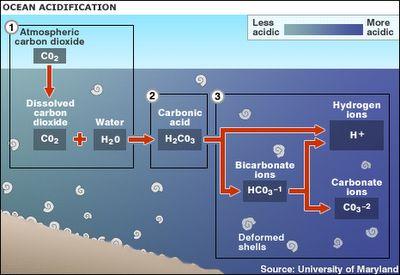
Mankind’s effect on the environment, the rising CO2 levels in the atmosphere, the increasing acidification of the oceans, the growing concerns about global weather, and on and on, are the most unclear, the most complex and the most devastating of futures to embrace.
(Thanks to Patrice for referring to this recently.)
So it really is no surprise to see mankind in general behaving as though this is a bit of a hangover, and an aspirin and a good night’s sleep will sort it! Especially when there is so much money and control invested in selling the same message; the message that there really is nothing to worry about.
There will be a so-called ‘tipping point’. A point in our awareness where the urgency to prevent the destruction of the biosphere will be paramount. And it will be a miracle if when that point arrives it isn’t far too late to save us.
I truly hope that I am wrong.
oooo
Remember what I wrote in yesterday’s post? About experiencing an Atlantic gale?
Fewer than 48-hours before my estimate of coming into Horta Marina on the Azores island of Faial, Songbird of Kent was struck by an early, fierce Winter gale. I seem to recall it was touching Force 10 Beaufort Scale (54 – 63 mph or 48 – 55 knots).
Anyway, it just about finished me off: literally as well as psychologically! I was so frightened, so utterly scared that I could think of nothing else other than getting to Horta and never going sailing again.
It revealed my delusion!
That was my ‘tipping point’ when it came to ocean sailing.
The gale subsided and I motor-sailed the 150-odd miles to Horta without any break for sleep or rest. Came into the harbour early in the morning after the second night since the gale. As soon as I was securely berthed, I closed the boat up and found a local hotel where a hot shower and a clean bed could restore a part of me.
Within a week, I had engaged a crew to sail the boat to Plymouth in South-West England and I flew back to England on a commercial airline.
Once Songbird of Kent arrived at Plymouth, she was put up for sale at a price that wouldn’t delay matters and that was that!
Oh, and I have never read any more books about single-handed ocean sailing. (But see my P.S.!)
oooo
P.S.
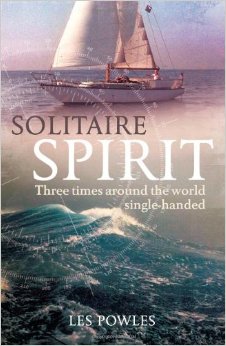
In yesterday’s post, I referred to Les Powells. Remember when I was in Larnaca, Cyprus? This is what I wrote:
Living on a boat close to me was Les Powles. Many will not have heard of Les but this quiet, softly-spoken man knows a thing or two about solo ocean sailing. As an article in The Guardian newspaper explained (in part):
In the 1980s and 90s a British man called Les Powles sailed three times round the world – always single-handedly, once non-stop. He couldn’t afford a radio transmitter, and on his greatest adventure he didn’t speak to anyone for 329 days. At 84, his circumnavigating days are now behind him, but he still lives on his boat, the Solitaire. What’s the appeal of sailing, I asked him. “It’s the solitude. When you’re out at sea on your own, there’s no government or bankers to worry about. You’re not responsible to anyone but yourself.”
Three times around the world – solo!
Thus getting to know Les was a great inspiration in getting me over the hurdle of can I really do this! (Les once said to me “the first three days are the worst!”)
Anyway, I have discovered that Les is living happily on his boat in Lymington, England and has written a book about his sailing life.
It has been ordered and arrives today. This one will be read – from the comfort and safety of our rural home in Oregon!
On May 11th, Patrice Ayme published an essay entitled Science: Progressing Wisdom. I found it deeply engaging. At the same time, I was frustrated because there was a part of me that wanted to know more about “Patrice”.
For some time, I had known that Patrice Ayme was a nom-de-plume and that his, or her, identity was carefully protected. Still that part of me that wanted to relate to the real person, for want of a better description, still wouldn’t quieten down. I offered the following comment:
Patrice, you have demonstrated an amazing breadth of knowledge across your many essays. However, I did wonder if you would be happy to declare your educational experience? As in your specialisation at a degree or Doctorate level (I suspect you do hold a PhD!)? Best wishes, Paul
Patrice’s reply, which you are encouraged to read in full, opened, thus:
You are so funny, Paul! You have an Obsession-Compulsion about “qualifications”.
One of my main ideas, idea #956, is that the authority principle is severely abused. People with Philosophiae Doctor have nothing sacred about them. Goebbels had one (in humanities).
Do you think Goebbels’ authority in humanities is to be “declared”? There were even not just PhDs, but Nobel Laureates, who became Nazis, BEFORE Hitler (who had been sent to spy on them).
No doubt Hitler, a simple caporal, and gifted painter (he lived off it), was super-impressed when he met some of the most educated people in the world, and they were Nazis… Full of PhDs.
One should not confuse the message’s content and her bearer.
This site is about learning to think better. That’s why I go back to the basics.
The idea that, say, those with PhDs is Idionomics, are the only ones qualified to speak about idiocy, is, well, idiotic.
Another reader of Patrice’s essay, gmax, said this, in part:
You have to learn to judge knowledge, not just follow oligarchs like a bleating sheep to learn what’s true and what is not.
That really made me sit up and think! For the first time in my life (I’m 70 later this year), I realised that my own ragged educational experience, as offered yesterday, had left in its wake a personal insecurity over my education, and a consequential weakness in evaluating knowledge with me somehow needing to know the identity of anonymous authors. When Patrice wrote, “Please do not hesitate to make it a post, Paul! I was thinking of it myself, but, as it is, right now, I don’t seem to have the time.“, I couldn’t resist.
Here is my essay.
ooOOoo
Wisdom, knowledge and authority.
Abstract: Wisdom requires clarity of knowledge; no more and no less.
On Tuesday evening, Jean and I rented a movie. We watched the film American Hustle.
The film tells the story of brilliant con man Irving Rosenfeld, who along with his equally cunning and seductive British partner Sydney Prosser is forced to work for a wild FBI agent Richie DiMaso. DiMaso pushes them into a world of Jersey powerbrokers and mafia that’s as dangerous as it is enchanting. Jeremy Renner is Carmine Polito, the passionate, volatile, New Jersey political operator caught between the con-artists and Feds. Irving’s unpredictable wife Rosalyn could be the one to pull the thread that brings the entire world crashing down.
The film has received rave reviews (here’s a typical one in the Guardian newspaper) and was fun to watch; albeit somewhat confusing for much of the first half. At one point towards the end, the hero of the film, Irving Rosenfeld, reflects that, “People see and hear what they want to believe!“.
Bingo!
That is the challenge about accruing wisdom. How to be analytical and wise in learning new thinking and new ideas. In other words, in acquiring knowledge!
If the subject is simple (well on the surface!) as, for example, the effect of the Earth’s gravitational field then that’s fine and dandy. It’s easy to become wise to the fact that falling off a tall building is likely to kill you.
But take an extremely complex, and highly current matter, that of Planet Earth’s changing climate, and it is extremely difficult for the average person without a scientific background to determine the truth. Really, when I use the phrase “to determine the truth” in the context of this essay I should have written ‘to gain knowledge‘.
To illustrate that, my good Californian friend of more than 35 years, Dan Gomez, is highly sceptical about climate change as a product of man’s activities. Recently, I sent him an email with a link to the NBC News report: American Doomsday: White House Warns of Climate Catastrophes. This was Dan’s email reply:
Think about it, Paul.
1. Consider the source and the timing of these new headlines i.e. the left-thinking Obama regime and current unfavorable political challenges.
2. A deflection from mainline issues confronting us today i.e., jobs, economy, healthcare, upcoming elections, Benghazi and IRS political issues.
3. Major opportunity to raise taxes unilaterally without Congress involved.
4. Major opportunity to redistribute corporate wealth from private sector to public sector.
5. Refocus of competitive, free-market energy sector to controlled renewables managed by a few very wealthy political contributors. A lot of money at stake.
6. Man, is empowered via a political party to “save the world” by changing the Weather. The only problem is, there is no solution, no global will and no participants to make anything significant happen i.e., China, Southeast Asia and another billion people scattered about.
7. Euro Zone and USA have already cut CO2 emissions by over 30% each to no avail. In fact, they say it is getting worse after hundreds of billions of dollars already diverted from private sector to public sector with no results. They are now asking for trillions.
8. Average person is not willing to give up his car, nor spend more for battery power (peel back the onion on the battery manufacturing and recycling industry vis a vis CO2 contributions). Much fewer cars, trains, tractors, jets, etc. to make anything work. Sacrifice begins at home.
9. Cows vent 20 times the CO2 emissions in the form of methane than man-made artifacts. Just saying….
10. Check out the bacteria challenge facing Man. This will help put priorities in order for you.
As always, follow the money and you’ll get your answers…..
I am unable to respond to Dan in an analytical and precise manner. I am not sufficiently knowledgeable to so do. Having an emotional response is fine – but it does not advance my personal wisdom.
On the 6th May, I posted an item that featured a TED Talk by scientist Gavin Schmidt, a climate scientist no less. His view is that, “You can’t understand climate change in pieces. It’s the whole, or it’s nothing.” The TED Talk explains how the big picture of climate change illustrates the endlessly complex interactions of small-scale environmental events.
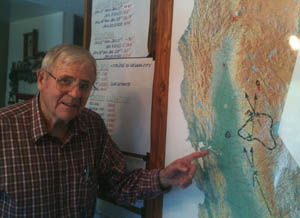
Just a few days ago, Jean and I had the pleasure of a couple of hours at the home of Leon Hunsaker, renowned meteorologist who has claimed that the 1862 Californian flood could happen again.
Leon Hunsaker has done the math, and he thinks Sacramento isn’t prepared for another series of storms like the ones that hit the state in January 1862.
Leon lives less than 5 minutes from us here in Southern Oregon. I asked him what he thought of climate change and he said that the planet’s atmosphere was like a large chocolate cake and man’s activities were no more than the icing on the cake.
So there you are: a range of opinions about this particular, potentially very important, subject. Although in my own (emotional) mind the weight of evidence is in favour of the argument that man is having a deepening and worsening effect on our planet.
Take, for example, the report issued yesterday about significant melting of Antarctica’s glaciers now unstoppable. (Patrice has just released an informative post on the subject!)
“People see and hear what they want to believe!” comes immediately back to mind. Dan wants to believe that the planet is going through normal cycles of change. I want to believe that mankind can make a difference; for the sake of my children and grandson.
Let me turn to the subject of anonymous authors, my Obsession-Compulsion about qualifications!
I have admitted the flaw in my thinking. Here’s the rationale for my change of opinion.
On December 1, 2012, I received my first communication from Edward Snowden, although I had no idea at the time that it was from him.
The contact came in the form of an email from someone calling himself Cincinnatus, a reference to Lucius Quinctius Cincinnatus, the Roman farmer who, in the fifth century BC, was appointed dictator of Rome to defend the city against attack. He is most remembered for what he did after vanquishing Rome’s enemies: he immediately and voluntarily gave up political power and returned to farming life. Hailed as a “model of civic virtue,” Cincinnatus has become a symbol of the use of political power in the public interest and the worth of limiting or even relinquishing individual power for the greater good.
The world now knows what Glenn Greenwald (and Laura Poitras, the documentary filmmaker) knew long before. That Snowden’s anonymity was critically important in the run-up to his knowledge being made widely known.
I was convinced. What is important is not the name and identity of the author of knowledge. What is important is the knowledge itself. No one would deny Snowden’s right to privacy. Indeed, millions of us would opt for email privacy if we fully realised the ease and extent with which our emails, indeed our communications in general, can be intercepted.
Many know that Patrice is a frequent, outspoken voice about the dangers of plutocracy and the slip-sliding away of democracy in the United States. His, or her, personal safety is the highest need of all. Patrice has a perfect right to privacy.
Which leads on to the final, obvious question. If we do not know the identity of the author of knowledge then how can we be certain that the knowledge is valid?
Answer: Through testing!
Of course!
In the best traditions of research, especially scientific research, testing the validity of a claim is the only certain way of determining the validity of knowledge; of being able to derive wisdom from that knowledge.
Let me give you a clear example.
Commercial aviation is incredibly safe. Many countries operate an equivalent to the UK’s Air Accidents Investigation Branch. That UK AAIB website proclaims:
The purpose of the AAIB is:
To improve aviation safety by determining the causes of air accidents and serious incidents and making safety recommendations intended to prevent recurrence …It is not to apportion blame or liability.
Keith Conradi, Chief Inspector
Critical to that purpose of improving safety (aka improving knowledge) is looking for trends. Any trends or patterns would be impossible to discover without testing and debate.
Thus what makes aviation safer is no different to what makes all of knowledge reliable: the testing of ideas and of the hypotheses behind those ideas. The identity of the author of those ideas, per se, is irrelevant.
Thus it is clear to me, clear now beyond doubt, that wisdom is the application of knowledge disconnected from the person who is the author of that knowledge. One might see it as a marriage of knowledge and intellect. Nothing more and nothing less!
All aspects of wisdom depend on trust, on the confidence that the knowledge is ‘reliable‘. Reliability gained from debate and testing.
Never forgetting that in the final analysis, as Patrice wrote it:
“Nature is the only authority worth respecting always.”
ooOOoo
In every which way that one can imagine, we have to return to the principles of fairness and balance so beautifully demonstrated to man by the breadth of Nature. We have to embrace Nature’s wisdom.
A reflection on intelligence, learning and knowledge.
Today’s essay has been prompted by a fascinating exchange of views and comments on a post recently published by Patrice Ayme. More of that tomorrow.
Before getting to the heart of things, I feel compelled to offer a little background on my own educational journey. It is presented today as a preamble to tomorrow’s main essay.
By rights, I should have enjoyed a stunning academic journey as a young man. My mother holds a double degree in French and German from Cambridge University. My father was both a Chartered Architect and Chartered Surveyor and worked for Barclay Perkins & Co at their Anchor Brewery in Southwark, London all his working life. My uncle, Christian Schiller, took up a mathematics scholarship at Sidney Sussex college at Cambridge University and ended up HM Inspector of Schools in the United Kingdom. Notably, he was a promoter of progressive ideas in primary education.
But it was not to be so.
My father died suddenly and with very little warning five days before Christmas in 1956. I had turned 12-years-old some six weeks previously and just completed my first term at Preston Manor County Grammar School. My secure, comfortable young life was thrown into emotional turmoil with one of the consequences being that instead of passing a clutch of GCE ‘O-Level’ exams, I barely managed to pass two subjects and was unable to continue on with a higher level of studying and the consequent sitting of GCE ‘A-Level’ exams, a pre-requisit for university.
Somehow, I then managed to win a place as a student at the Faraday House of Electrical Engineering, in those days based at Southampton Row, London. It was to study for a Diploma in Electrical Engineering. The requirement was that by the end of my first year at Faraday House I should pass two A-level examinations.
I was very happy as a college student. That first year was spent entirely learning about engineering with much time ‘hands-on’ in the engineering workshop. Then came time for me to sit those two A-level exams. I failed both of them! There was no choice but for me to leave the college.
So that’s enough to demonstrate that academic prowess was not my speciality.
However, being unable to jump through the hoops needed for a degree or equivalent didn’t mean that I was a poor learner; far from it.
After my father’s death, my mother remarried and my ‘new’ Dad was very supportive. He had a background in communications and quickly encouraged me to become a radio amateur. I joined the nearby Radio Society of Harrow (still in existence!) and their encouragement enabled me to pass the full set of exams necessary to become a licensed radio amateur and a full member of the Radio Society of Great Britain. My amateur call sign was (and still is) G3PUK. I was 17.
I can still whistle the alphabet in morse code, from A to Z, and the numbers 0 to 9!
Later on, when I was an apprentice at the British Aircraft Corporation’s site in Stevenage, Hertfordshire, one of the commercial staff, Jim Jenner, spent many hours preparing me for the Institute of Advanced Motorists examination. I passed that exam and became a full member of the IAM in May, 1966.
So there’s my background that, hopefully, will set the scene to a wonderful exchange of views and ideas that flowed from Patrice’s blog. Ideas that will be explored tomorrow.
For the reason, the powerful reason, that the intelligence and wisdom of humanity has always been important. But now, in this time of the affairs of man, our collective intelligence and wisdom has never been more important.
Over the week-end Learning from Dogs registered a 1,000 followers. Now I may be tempting fate by writing this but whatever the figure, on a day-to-day basis, the trend is one of a steadily increasing number of subscribers.
Yes, in the grand scheme of things, this is a tiny achievement compared to many of the great blogs out there. But, nonetheless, I feel compelled to write this.
That it is impossible for me to convey the degree of gratitude to all of you followers and the many additional readers who pass this way. Please just know the depth of my feelings in this regard.
Just also know that the community feeling that has grown up around this writing adventure is fabulous. Something of which I had no expectation when I published my first post on July 15th, 2009. Just for fun, here is that first post.
ooOOoo
Parenting lessons from Dogs!
Much too late to make me realise the inadequacies of my own parenting skills, I learnt an important lesson when training my GSD (who is called Pharaoh, by the way). That is that putting more emphasis into praise and reward for getting it right ‘trains’ the dog much quicker than telling it off. The classic example is scolding a dog for running off when it should be lots of hugs and praise for returning home. The scolding simply teaches the dog that returning home isn’t pleasant whereas praise reinforces that home is the place to be. Like so many things in life, very obvious once understood!
Absolutely certain that it works with youngsters just the same way.
Despite being a very dominant dog, Pharaoh showed his teaching ability when working with other dogs. In the UK there is an amazing woman, Angela Stockdale, who has proved that dogs (and horses) learn most effectively when being taught by other dogs (and horses). Pharaoh was revealed to be a Beta Dog, (i.e. second in status below the Alpha Dog) and, therefore, was able to use his natural pack instinct to teach puppy dogs their social skills and to break up squabbles within a pack.
When you think about it, don’t kids learn much more (often to our chagrin!) from other kids than they do from their parents. Still focusing on giving more praise than punishment seems like a much more effective strategy.
As was read somewhere, Catch them in the act of doing Right!
By Paul Handover.
ooOOoo
So here we are! Within a couple of months of me writing Learning from Dogs for five years!
For those who love numbers and statistics, try these: 2,062 published posts with 8,815 comments approved.
But those numbers mean nothing compared to the joy of having you follow Learning from Dogs.
Thank you!
Pharaoh appreciates the milestone, as well! Thanks all you wonderful supporters of this place!
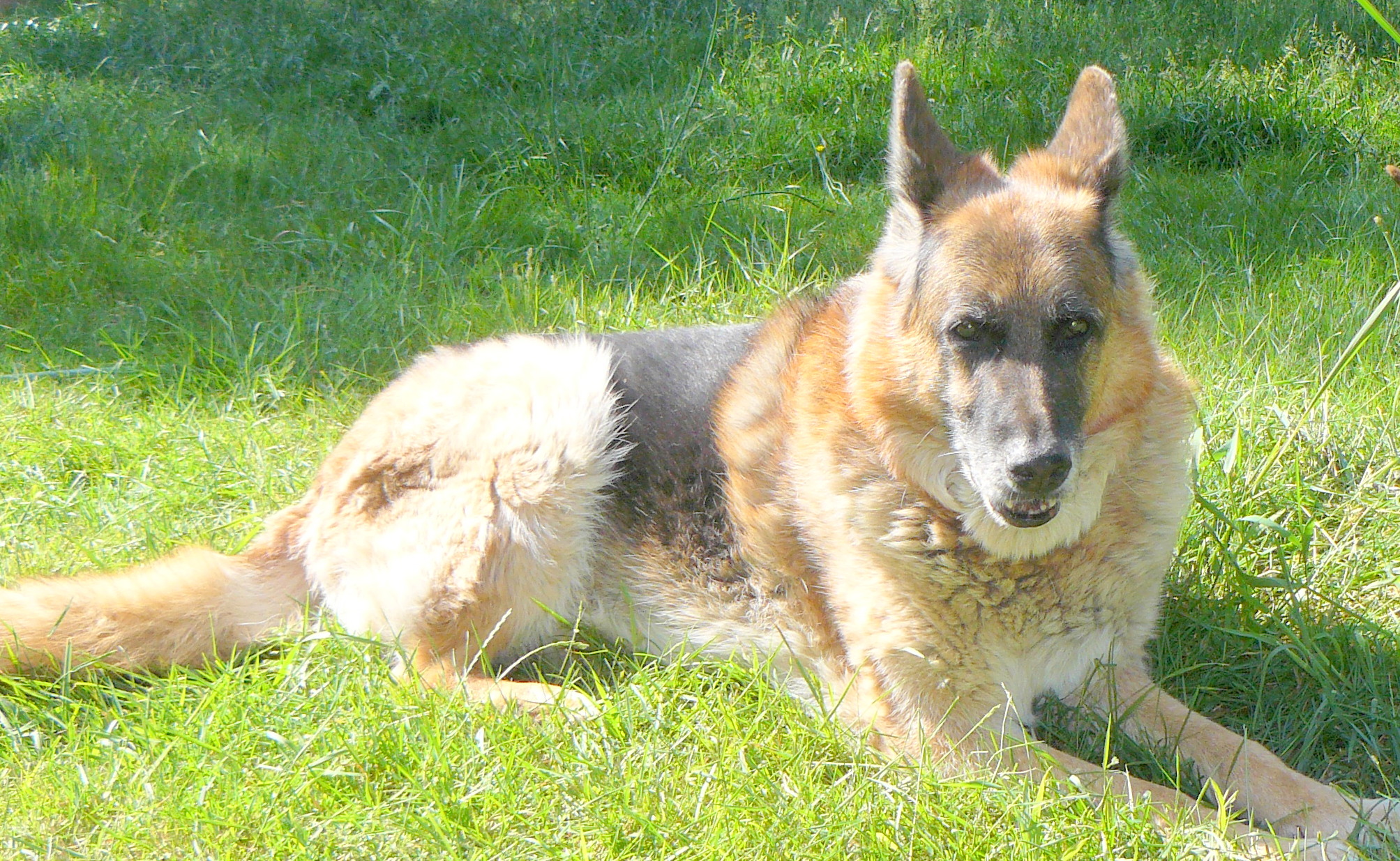
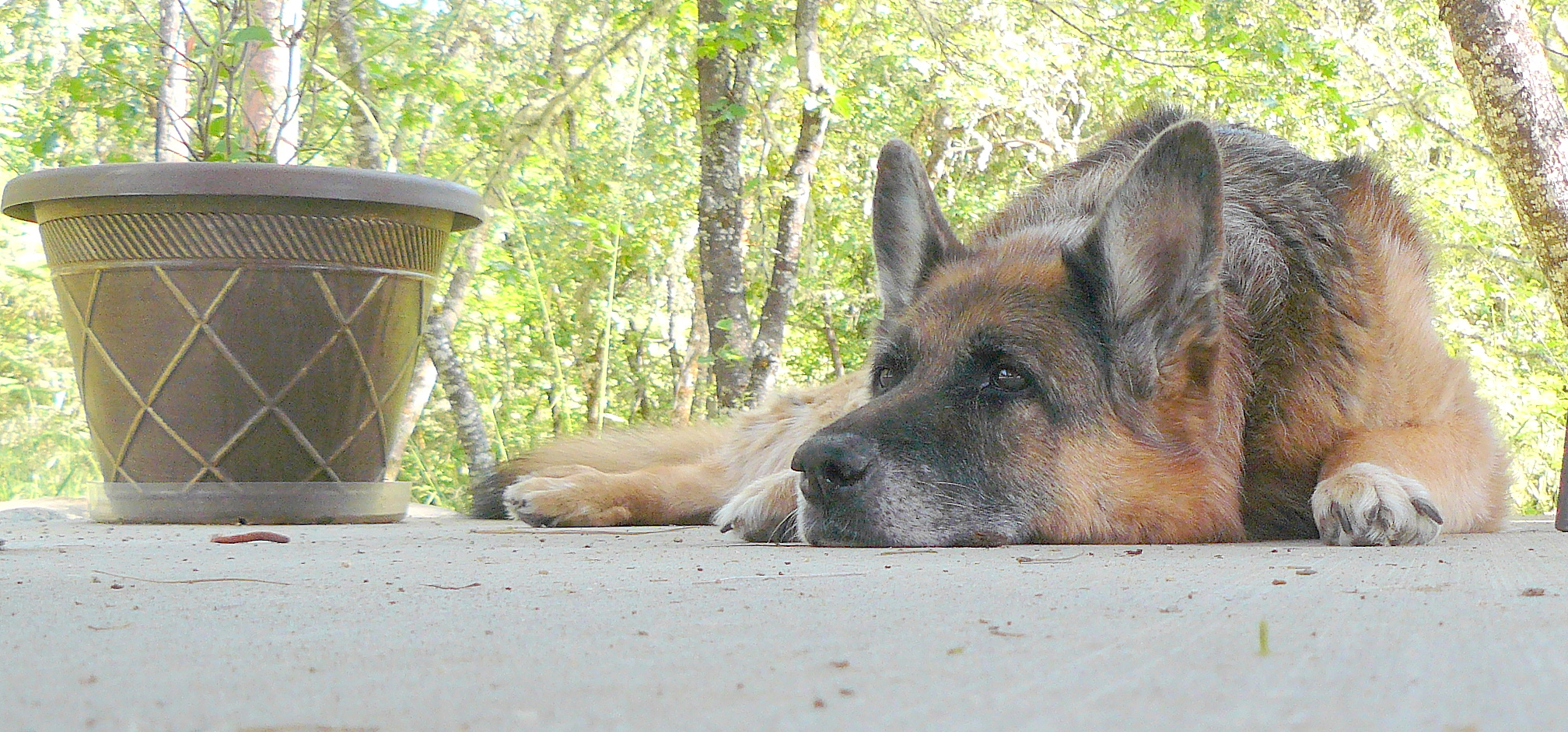
This photograph of Pharaoh was taken yesterday morning. Like his ‘owner’ starting to show his age! (Pharaoh is eleven on June 3rd.)
Here’s another photograph taken same time yesterday morning.










 Learning from Dogs