Category: Writing

Synecdoche : Little World

The concluding part of Hariod Brawn’s wonderful essay.

Haroid’s opening part was republished by me in this place yesterday, under the blog title of Alone in a sea of many. For the concluding part, I have named this blog post in accordance with Hariod’s chosen name. Thank you to all who read Part One and I hope you find Part Two equally stimulating.

ooOOoo

Synecdoche (Part Two): Little Person

Fool’s Cap Map of the World. Unknown origin c.1580-1590

In the first part of this article, we discussed how each person, in coming to understand how they construct themselves as the self-entity they take themselves to be, must in the process come to understand how all others do too. In other words, self-knowledge is not particular to the individual, because the self – in essence an embedded, accumulating and by graduation morphing narrative and body schema – comes into being by identical means in our species. Each of us remains unique in many ways, such as in our formative experience, our psychological make-up, conditioned traits, genetic inheritance, and in our individuated physicalities. Yet that which we regard as our quintessence, the enduring internalised construct we each unquestioningly hold as the self and the aspect of ourselves which we most intimately cling to, is little more than a formulaic pretence determined and governed solely by means of evolved, unbidden and unconscious processes.

Each character has a given name, societal position, cultural identity and perhaps a hierarchical status; yet all such markers are in part a figure of speech, or synecdoche, denoting an undeniable correlation with countless others. The markers delineate superficial distinctions alone, and the greater the number of them, the more we remove from our understanding the underlying truth of the other’s commonality with us. In much the same way, in our coming to understand how the worlds we ourselves inhabit are constructed, we see also that same world as a synecdoche for all others. How I relate to my home and environment, my relatives and loved ones, those I engage with out of chance or necessity, and those whom I depend upon or those who depend upon me, human or non-human, all make up my little world. It is a relational world, an interactive adventure forged from myriad connections, surprisingly few of which do I have great control over.

The argument against this is to assert that such correlations are facile, that how can I, a materially secure Westerner living in a largely strife-free state, possibly share any commonality with the oppressed and malnourished other on, say, the Indian sub-continent? Are these conditions not worlds apart, if only qualitatively? Well, in examining human suffering, we find it has a common genesis, proceeding as it does from the mind. For example, we commonly mistake unpleasant bodily sensations for suffering, failing to distinguish between physical pain and the attendant overlay of mental anguish. Is the suffering of the wealthy financier who contemplates suicide at her portfolio’s decimation greater than that of the homesteader in sub-Saharan Africa facing a crop failure of a few sacksful of grain? Objectively, then yes, these are worlds apart, yet the subjective suffering of each may be qualitatively indistinct, even in their wildly differing experiential settings.

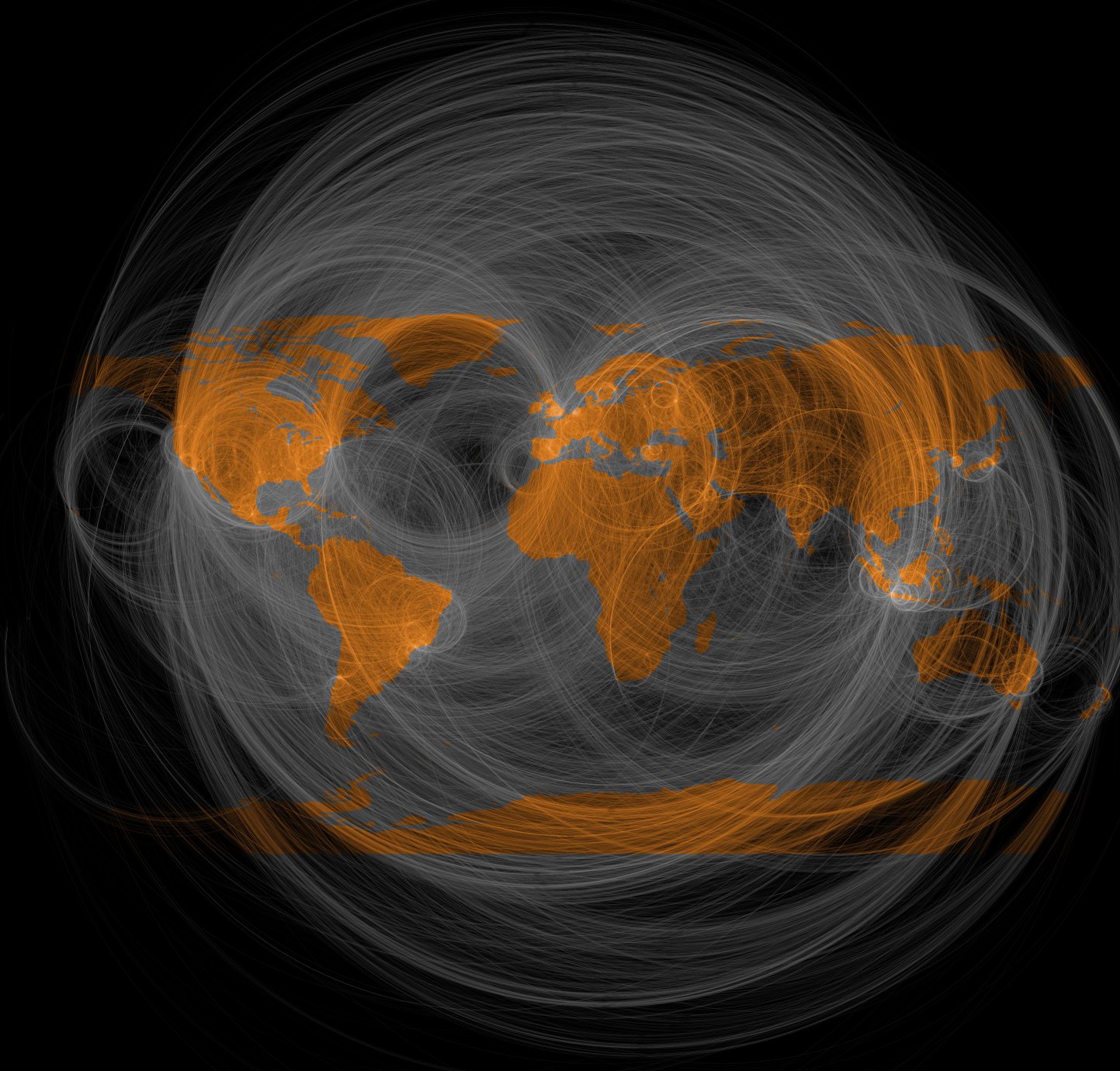
Geography of Twitter. By Eric Fischer, Washington, DC

And what of care and affection; are we to suppose that our world as comprising love is any the lesser or greater than others? Ought we to suppose the human instinct to loving solicitude is greater than that of our fellow creatures? Who amongst us knows what human love is as distinct from other forms of animal love, and whether it is qualitatively superior? Am I so arrogant as to suggest my altruistic benevolence is any the greater than that of my pet Border Collie, for it seems far from being so? If I am unable to define precisely what constitutes this world aspect, how am I to know that those of other animals are not simulacra of my own, there being no original and authentic love-world other than the one as represented by the many – is this not a truth hard to refute? I may describe a personal world of felt affection, yet in doing so prescribe but a figure of speech alone, a synecdoche for all worlds inhabited perhaps by most beings of sentience.

My little world is forged at the interface between psyche and otherness, between ideas and the world as impressed upon my senses. Those impressions and the precise nature of that otherness differ in every detail from the next person’s, yet the means of forging are identical. This shared action results in distinct narratives of course, and it is these that are held to in our bids to assert the pre-eminence of individuality over commonality. I want to believe I am, if not special, then unique; yet that is only true in the differing stories of what I am and what my little world is. To those without privilege to my narratives of self and world, my assumed mantle of uniqueness is meaningless, and the same is true of theirs to me. We may here be at a cold and sterile juncture, yet it also is a starting point from which we may begin to introduce the binding agents of humankind – our innate qualities of kindness and compassion, of empathic understanding.

So what, why should I care about such ideas when I have altogether more pressing concerns? What is the point in abstracting notions such as these from the warp and weft of daily living, the place where I earn my crust, feed my children, and work on my betterment as a means of personal fulfilment? Perhaps the answer lies somewhat starkly in the evidence, and which seems to me to be in a state of constant deterioration. We live in a polarised world, where theists fight theists and atheists argue against both, where the wealthy seldom flinch in their impoverishment of others, and where power-hungry and psychopathic leaders crush the potential of all they have dominion over. Is it not time to find our common humanity, or even our common animality? We humans are destroying our sole environment; we are chasing down the darkening corridors of economic systems at the point of failure. Can we not rest awhile so as to perceive our little worlds as one?

ooOOoo

My sense is that for quite a few readers who read yesterday’s and today’s postings, they were not the easiest read that has been seen on Learning from Dogs. But in a world where the dumbing down of the English vocabulary seems ever more present, to read Hariod’s essay slowly and carefully, and let the deeper meanings of her arguments settle within the mind, is a profound and compelling reminder of the beauty and elegance of the English language.

This introspective mood continues tomorrow: you have been warned!

Alone in a sea of many

A few days of inner contemplation.

I suspect that many, if not most, originally came to this place expecting the blog to be directly about dogs. And, in many instances, the posts are directly about canis lupus familiaris. But the original idea behind choosing the blog name Learning from Dogs was the sense that we, as in mankind, have to change our ways if we are to offer our grandchildren a viable planet upon which they may live. More succinctly expressed in The Vision for this blog:

Our children require a world that understands the importance of faith, integrity and honesty,

Learning from Dogs will serve as a reminder of the values of life and the power of unconditional love – as so many, many dogs prove each and every day,

Constantly trying to get to the truth …

The power of greater self-awareness and faith; faith that the only way forward for us is through the truth …

If you have read this far you may be wondering if the old guy has lost yet another marble!

So what has prompted this introspection? I’ll tell you.

I subscribe to Hariod Brawn’s blogsite Contentedness.net For those that do not know Hariod’s writings then her About page offers (in part):

We’re here to discuss aspects of human well-being as they relate to our sense of self, our personal identity and whatever other notions we may hold for our own uniquely human sense of being. This means the discussion centres upon the pragmatic or real-life dimensions of experience – things like our sense of contentedness, of personal meaningfulness, and other tangibly perceived aspects of well-being. The discussion is positive, respectful, non-judgemental, considerate.

That, as you can see, resonates very much with me thinking of Learning from Dogs as a means, metaphorically so, of finding greater self-awareness.

On June 10th, Hariod published the first part of an essay called Synecdoche: Little Person. I found the essay extraordinarily interesting and wanted to share it with you in this place. Hariod generously gave me permission, so here is Part One.

ooOOoo

Synecdoche (Part One): Little Person

Hariod1

I am just a little person, one person in a sea of many little people who are not aware of me, yet each potentially a simultaneous understanding of the other; each, in a sense, a simulacrum or synecdoche for all others: if I understand myself sufficiently deeply, then in that moment I understand the other, however remote my presence to them. This is not to say I can appreciate their specific complexities, of course, and the detail, the true intricacy of any given life, remains forever removed from that quota of awareness I am privileged to. Each little person, tagged with their own unique package of characteristics, is still a synecdoche though, potentially at least, for all the little people out in the sea of otherness. The word means literally ‘take with something else’, so conveying the idea that even a partial representation alone is sufficient to apprehend the whole, or vice versa.

This sounds rather fanciful to the contemporary mind, conditioned as it is in a belief as to the total, inarguable individuality of each little person. What an appealing belief this is too, for this same little person here finds a seemingly plausible counter to a reluctantly intuited sense of homogeneity, which word itself derives from the Greek ‘homogene’, meaning ‘of the same kind’: Homo Sapiens. Even though each of the little person’s internal organs are replaceable with those fished from the sea of many little people, even though their blood, hair, bones, limbs, eyes and hands can be substituted with biological or manufactured alternatives, still the little person resists the evidence, demanding their status as a uniquely enduring entity. It is of course the mind itself that insists upon countering the intuited and actual homogeneity, and the mind, so the little person believes, belongs to them.

Hariod2

This raises a problem, for if the little person’s physicality is all but totally interchangeable, then at what point during this theoretical process does the supposed possessor of the mind cease to exist? When does the point arrive at which we can no longer claim the mind belongs to any little person? If we hold to Physicalism, or Hard Materialism, we assert the mind belongs, if not to the little person, then to the organ of the brain. Should we be an Eliminative Materialist, we say there is no mind, and so no such question arises. I resist these philosophical perspectives, for to me there is a non-locality of awareness, meaning it arises both within as well as about what we think of as the little person, and whilst we call this aware experience ‘mind’, I do not adhere to any Cranialism; it’s not exclusively headstuff. In accepting this, we logically must ask whether the mind is under ownership.

Ownership implies agency, or self-determination, and it is belief in this that makes the little person feel unique and autonomous, directing their life just as all others would theirs. Yet this owning agent is never verifiable other than as consciousness, for it is only ever a belief that resides within and as that consciousness. Now, all conscious displays are themselves non-local simulacra, representations of otherness that are neither the little person nor any owning agent, and which clearly may never be evidenced outside of consciousness. This means the little person is always a thought-construct, a put-up job forged by mind and subsisting in otherness but never in essence itself. Should this hypothesis obtain, then the little person is a synecdoche for the entirety of others in kind; this is because every little person, being a fabrication of mind, comes into apparent existence in an identical manner.

Hariod3

Where are we? We heard that the mind persists in countering a reluctantly intuited homogeneity of all the little persons. Further, we said the mind forges each little person as a thought-construct, and that the little person does not exist as an enduringly instantiated entity – just like a house, a car, or a computer, its parts are interchangeable. Beyond this, we learned the mind produces only conscious effects as verification of its own fabrications, and that these subsist universally for all the apparent little persons, being as they are culled from the same sea of otherness. And lastly, we found that the hypothesis as a whole demonstrates that each apparent little person is a synecdoche for the sea of many little people. So, in understanding myself sufficiently deeply, then in that moment I understand the other, which was the assertion of the opening paragraph and a challenge to the curious mind.

In the ‘Ship of Theseus’ paradox, a parallel question is raised: in replacing a wooden ship plank by plank, are the ongoing resultants still the original ship? In point of fact, only the conception itself endures across the constant transitioning. The ship, as known, is not a wooden construct; it is a thought-construct, a fixed conception presenting to any observing little person, all of whom create each the other in identical fashion. Each parallel the ship in that their structure constantly mutates whilst a sense of enduring selfhood smears out across the whole, forged in mind in homogeneous ways. Now, if the little person turns the mind in on itself reflectively, they in time realise that they must be more than a thought-construct, a belief. They see that the little person whom they believed they existed as was a synecdoche: a motif in play which in its perfectly clear seeing brings knowledge of all of its kind.

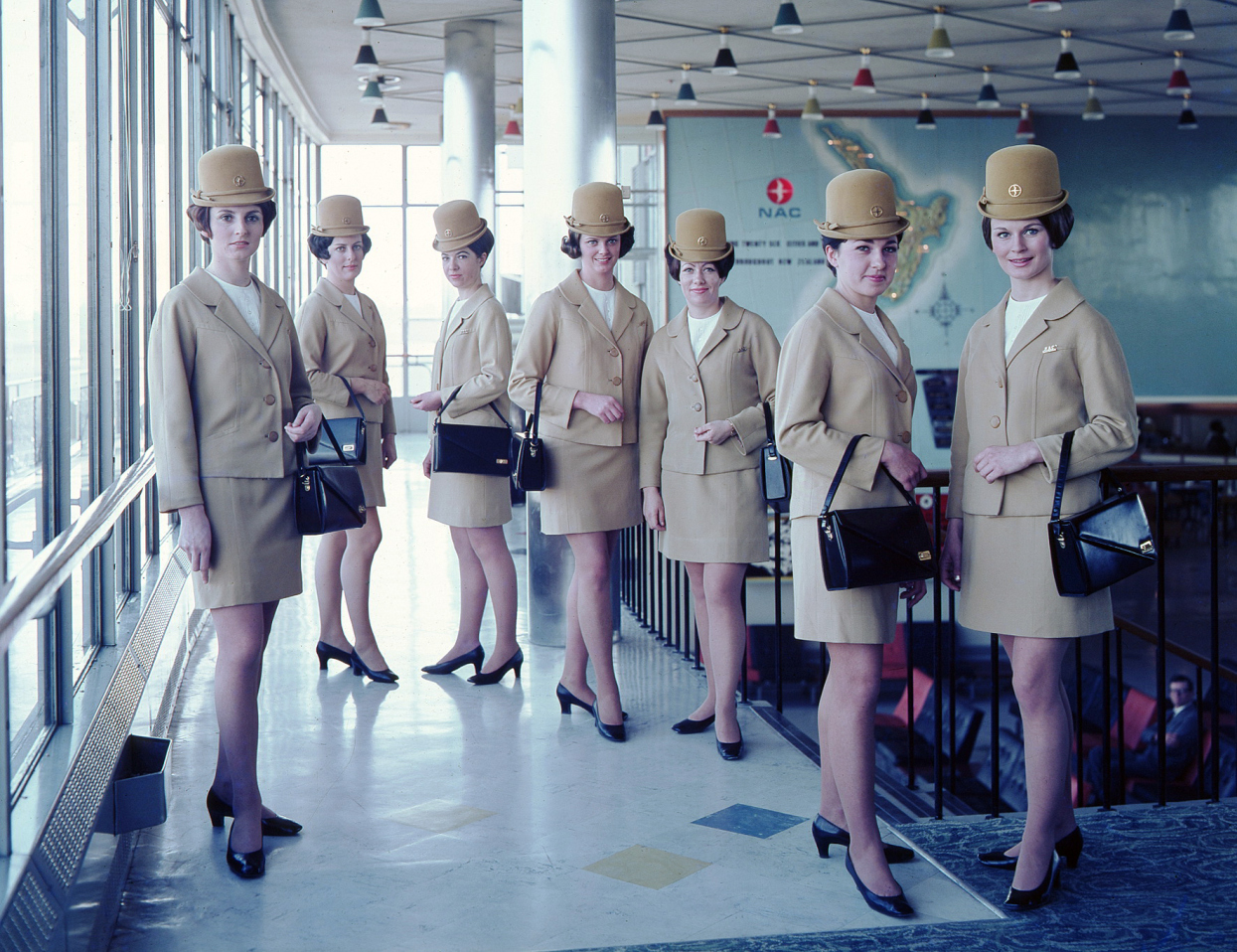
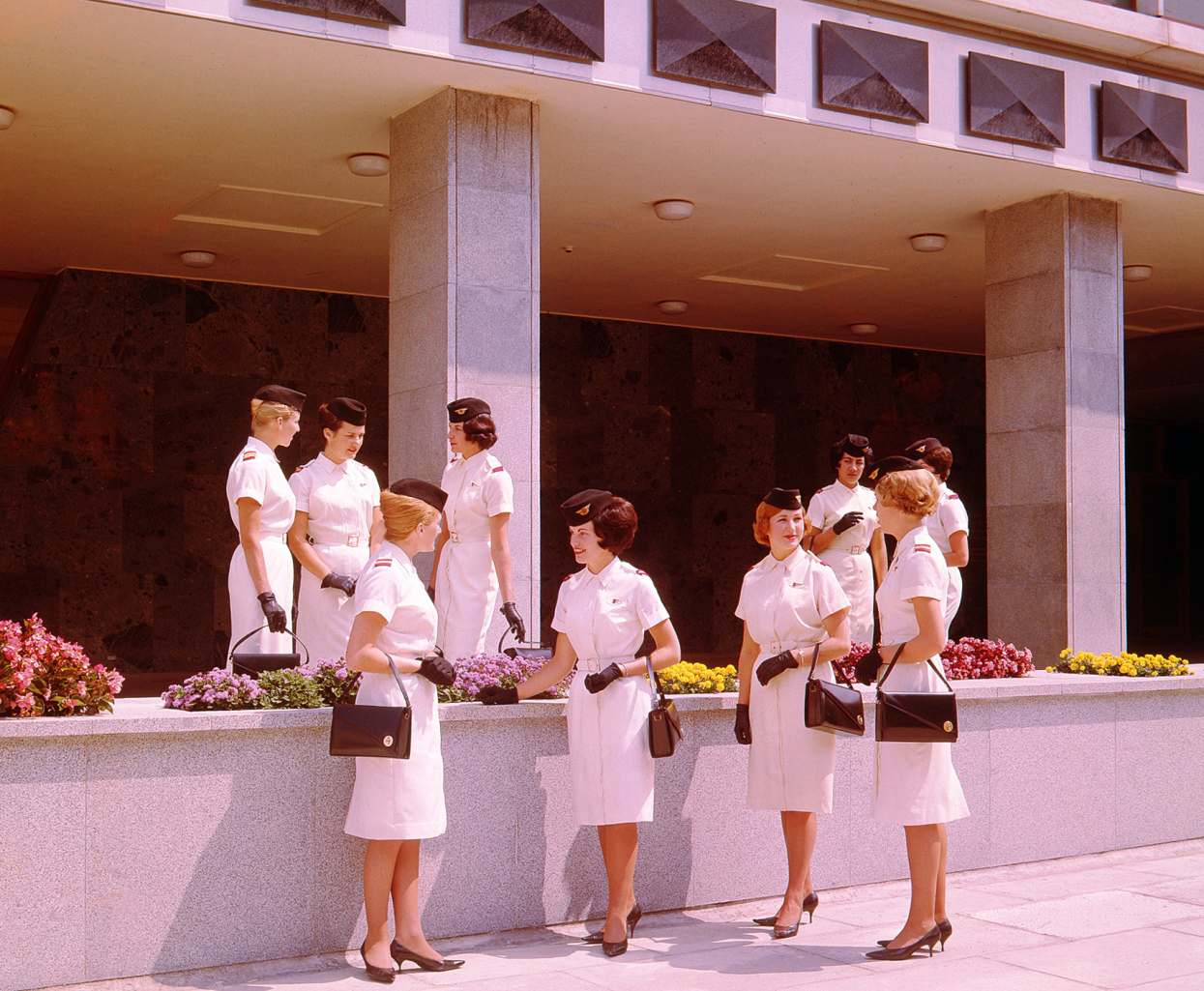
Images courtesy of New Zealand Government Archives.

ooOOoo

The concluding part of Hariod’s essay is published tomorrow.

Beware of the Dog – circa AD79

That very ancient relationship between man and dog.

The website Eye Witness to History has a lovely item on Mount Vesuvius:

On August 24, 79 Mount Vesuvius literally blew its top, spewing tons of molten ash, pumice and sulfuric gas miles into the atmosphere. A “firestorm” of poisonous vapors and molten debris engulfed the surrounding area suffocating the inhabitants of the neighboring Roman resort cities of Pompeii, Herculaneum and Stabiae. Tons of falling debris filled the streets until nothing remained to be seen of the once thriving communities. The cities remained buried and undiscovered for almost 1,700 years until excavation began in 1748. These excavations continue today and provide insight into life during the Roman Empire.

An ancient voice reaches out from the past to tell us of the disaster. This voice belongs to Pliny the Younger whose letters describe his experience during the eruption while he was staying in the home of his Uncle, Pliny the Elder. The elder Pliny was an official in the Roman Court, in charge of the fleet in the area of the Bay of Naples and a naturalist. Pliny the Younger’s letters were discovered in the 16th century.

If you are keen to read the full article then it may be found here.

My reason for quoting those opening paragraphs is because they offer a good historical introduction to another item from the BBC News website. That item is about a dog mosaic that is back on show after its restoration at Pompeii.

ooOOoo

Pompeii guard dog mosaic back on show

One of Pompeii's finest mosaics - a guard dog at the entrance to a villa.
One of Pompeii’s finest mosaics – a guard dog at the entrance to a villa.

A vivid Roman dog mosaic is back on show after restoration at Pompeii, despite Italy’s problems funding the historical site’s conservation.

A glass shield now protects the House of the Tragic Poet, where tourists can see the dog with the inscription “Cave Canem” – Latin for “Beware of the dog“.

Frescoes at the house’s entrance were also restored. Ash from a volcanic eruption buried Pompeii in AD79.

A staffing dispute caused long queues at Pompeii on Friday, in searing heat. Pompeii gives visitors an extraordinary insight into everyday life in ancient Rome because many buildings were protected from the elements under the thick blanket of ash from Mount Vesuvius.

_84512369_pompeiidogviewepa
The restored mosaic now has better protection.

The site, near the southern city of Naples, has suffered from funding problems for years. Staff unions at Pompeii have criticised a management reorganisation there.

The House of the Tragic Poet has some of Pompeii’s finest examples of interior decoration, including scenes from Greek mythology.

But the house’s owners remain unknown – they may have died in the eruption along with many other Pompeii citizens.

ooOOoo

Now we all know that the relationship between dogs and man goes way, way back before Pompeii but, nonetheless, it’s rather nice to see dogs commemorated in this way from 1,936 years ago.

Fly like a bird.

The power and freedom of the air.

Yesterday was heading to be a very hot day in Merlin, Oregon with top temperatures forecasted to be around the mid-90’s, or 34-36 deg. C in ‘new money’. The light westerly wind must have been generating some up currents, aided and abetted by the rising hot air, for there were a number of black ravens soaring in a thermal. Watching the birds circle and climb in the thermal current without needing to flap their wings took me back too many years.

It took me back to a June day in 1981 where I experienced my first glider flight (sailplane in American speak) at the Rattlesden Gliding Club in Suffolk, East Anglia. I’m delighted to see that the Club is still an active one, as their website confirms. Although I subsequently went on to gain my private pilot’s licence (PPL) there are still times when I miss the magic, the pure magic, of gaining altitude in a glider in a beautiful thermal.

Modern fibreglass glider coming into land at Rattlesden G.C.

So what prompted this flood of flying nostalgia!! An item that was published on the BBC website earlier in the year.

ooOOoo

Fly like a bird: The V formation finally explained

By Victoria Gill, Science reporter, BBC News

The mystery of why so many birds fly in a V formation may have been solved.

Scientists from the Royal Veterinary College fitted data loggers to a flock of rare birds that were being trained to migrate by following a microlight. This revealed that the birds flew in the optimal position – gaining lift from the bird in front by remaining close to its wingtip.

The study, published in the journal Nature, also showed that the birds timed their wing beats.

A previous experiment in pelicans was the first real clue to the energy-saving purpose of V formations. It revealed that birds’ heart rates went down when they were flying together in V.

But this latest study tracked and monitored the flight of every bird in the flock – recording its position, speed and heading as well as every wing flap.

This was possible thanks to a unique conservation project by the Waldarappteam in Austria, which has raised flocks of northern bald ibises and trained them to migrate behind a microlight.

The aim of this unusual project is to bring the northern bald ibis back to Europe; the birds were wiped out by hunting, so the team is retraining the birds to navigate a migration route that has now been lost.

Fitting tiny data loggers to these critically endangered ibises showed that the birds often changed position and altered the timing of their wing beats to give them an aerodynamic advantage.

Lead researcher Dr Steven Portugal explained: “They’re seemingly very aware of where the other birds are in the flock and they put themselves in the best possible position.”

This makes the most of upward-moving air generated by the bird in front. This so-called “upwash” is created as a bird flies forward; whether it is gliding or flapping, it pushes air downward beneath its wings.

“Downwash is bad,” explained Dr Portugal. “Birds don’t want to be in another bird’s downwash as it’s pushing them down.” But as the air squeezes around the outside of the wings, it creates upwash at the wingtips.

“This can give a bit of a free ride for the bird that’s following,” said Dr Portugal. “So the other bird wants to put its own wingtip in the upwash from the bird in front.”

 The other really surprising result, the researchers said, was that the birds also “timed their wing beats perfectly to match the good air off the bird in front”.

“Each bird [kept] its wingtip in the upwash throughout the flap cycle,” Dr Portugal explained.

oooo

In a sidebar to that BBC article there is this explanation about Flapping and Flying:

As a bird’s wings move through the air, they are held at a slight angle, which deflects the air downward. This deflection means the air flows faster over the wing than underneath, causing air pressure to build up beneath the wings, while the pressure above the wings is reduced. It is this difference in pressure that produces lift.

Flapping creates an additional forward and upward force known as thrust, which counteracts the weight and the “drag” of air resistance. The downstroke of the flap is also called the “power stroke”, as it provides the majority of the thrust. During this, the wing is angled downwards even more steeply.

You can imagine this stroke as a very brief downward dive through the air – it momentarily uses the animal’s own weight in order to move forward. But because the wings continue to generate lift, the creature remains airborne. In each upstroke, the wing is slightly folded inwards to reduce resistance.

ooOOoo

The BBC piece also included this wonderful short video:

http://www.youtube.com/watch?v=Svg_VN1N8xk

This piece has nothing to do with dogs unless one extends the mindset to the magic of the complete natural world.

UPDATE

This is a photograph of George Ball hang-gliding – see his reply below.

hanggliding

Introducing the Shih Tzu

A guest post from Dr. Coleman.

From time to time I receive unsolicited emails asking if I would be interested in publishing posts from this or that particular person. They always strike me as suspicious and receive, in turn, a polite ‘no thank you’.

However, a few weeks ago, the following came in:

My name is Intan and I am a community team member at ShihTzu Web, a website dedicated to providing breed-specific information just for shih tzu owners. We share articles regularly about shih tzu grooming, training, and health.

We would love to help provide some free high-quality content for the shih tzu owners in your audience with a guest blog post. We have two specialist writers for our blog: veterinarian Jill Coleman, who writes about shih tzu health topics, and Sally Gutteridge, who writes about shih tzu grooming and training.

That website ShihTzu Web clearly sets out a part commercial proposition but after thinking about the offer, I decided to accept the guest post.

So here is that guest post, authored by Dr. Jill Coleman*:

Jill Coleman
Jill Coleman

ooOOoo

What to Do If Your Dog Is Pregnant

First things first: were you planning on your dog getting pregnant? There are many convincing arguments that until the pet overpopulation problem is under control, there should be no planned canine pregnancies. This article is not going get into that debate (although the last sentence pretty much wraps up my opinion).

Let’s first assume you did NOT mean for your dog to get pregnant. Oops! You will hear about “morning after” shots and pills. None of these are recommended because they all seem to have side effects that are far worse than having a litter of puppies. We’re talking life threatening uterine infections and bone marrow suppression– nasty stuff, so this definitely does not keep your dog healthy. An option if you are planning on spaying your dog anyway, is to have her spayed. Waiting until she is out of heat is a good idea because the surgery is considered safer when they aren’t in heat because they lose less blood.

Now we’ll assume that you either did plan on your dog getting pregnant and/or you just need advice for a pregnant dog: what should you do? Not a lot, really. Dogs have been successfully reproducing with no human intervention for many years. A good quality diet is important. For the first half of their pregnancy a normal adult, high quality diet is fine. Switch to puppy food (sometimes referred to as “growth”) for the second half of the pregnancy and the entire time she is nursing the puppies. Do NOT supplement with any vitamins. Studies have shown that not only is this unnecessary, it is detrimental. Supplementing with calcium for example can make the bitch produce less of her own and thus interfere with her normal milk production.

Dogs are pregnant for approximately 63 days. At about day 55, it’s a good idea to start taking their temperature twice a day. Rectal thermometers are more accurate, but I have never met a dog that enjoys this process. There are many non-rectal thermometers available now that work perfectly for this because even if they read a little low, what you look for is a drop from their normal temperature. So go ahead and get one and establish what “normal” is for your dog well before she is due to whelp. Dog’s temperatures drop about 2 full degrees approximately 24 hours before they give birth. This is a fantastic way to tell when they are about to give birth. A dog’s normal resting rectal temperature is 101.5*F +/- about 1*.

Go ahead and prepare a whelping box that is comfortable and tucked away in a safe, preferably familiar area to the bitch. It is important for it to be quiet to allow her to relax. The less people running around and stressing out the better. You can actually cause your bitch to go out of labor by freaking her out.

As far as exercise, she doesn’t have to be a couch potato but avoid strenuous exercise especially late in her pregnancy. Walks are fine, but be sure she doesn’t overheat. Be careful approaching other dogs, even if she has been fine with them in the past. Most dog’s personalities don’t really change significantly but some will become more aggressive during their pregnancy. (Almost all will become protective of the puppies once they are born.)

Check your flea and tick medications to be sure they are safe. You will probably have to check with your veterinarian because most flea and tick medications are not labeled for use on pregnant or lactating females because they simply didn’t conduct studies on pregnant bitches. Your veterinarian should know which ones are safe if you are having flea and tick issues.

Last but not least and possibly most important is to go ahead and put emergency numbers where you can easily find them. You don’t want to be trying to find the emergency clinics number in the middle of the night if your furry child is having problems.

ooOOoo


*Dr. Jill Coleman, DVM, is a small animal veterinarian with 20 years of clinical experience. She graduated from Furman University with a BA in English in 1991. She graduated with honors from The University of Georgia College of Veterinary Medicine in 1995. She loves small dogs like Shih Tzu and loves writing about them. She shares her experience about Shih Tzu at ShihTzu Web.

I will leave you with this delightful photograph …

ShihTzu-3

… and the following few words from me.

Namely, that I have had no dealings with Shih Tzu Web or the organisation and people behind the website. Please don’t assume that the posting of this guest post offers any endorsement, or otherwise, of Shih Tzu Web. Any relevant feedback would be most welcome.

Saturday smile.

Wonderful volunteers keep a stranded Orca whale alive.

I saw this shared on Facebook by George Ball, a friend from my English days. It’s a lovely example of the compassionate side of man.

ooOOoo

From CBS News:

Stranded orca saved by volunteers who kept it cool for hours until high tide

A pump and sheets were used to keep whale alive near Hartley Bay on B.C.’s North Coast

By Maryse Zeidler, CBC News Posted: Jul 23, 2015 7:20 AM PT – Last Updated: Jul 24, 2015 5:35 AM PT

An orca that was stranded on some rocks was kept alive for eight hours by a dedicated team of whale researchers and volunteers on the North Coast of B.C.

“She cried often, which tore at our hearts, but as the tide came up there were many cheers as this whale was finally free,” said in a Facebook post from the group The Cetacean Lab.

Early Wednesday morning, the group received a call from a colleague about the beached orca, which was stuck on some rocks at low tide.

“We decided the best thing to do would be to keep her cool, that meant to put water on her body and we used blankets and sheets,” said Hermann Meuter, a co-founder of Cetacean Lab.

“It was the only thing we could do.”

Meuter said they could see the orca’s behaviour change as they began to help her.

“At first she was stressed, you could see that her breathing was getting a little faster,” said Meuter.

But after about 15 to 20 minutes, she began to calm down.

“I think she knew that we were there to help her,” said Meuter.

Around 4 p.m. PT, the tide began to rise and the orca was able to start freeing herself.

“It took her about 45 minutes to negotiate how best to get off the rocks,” said Meuter. “We all just kept our distance at that point.”

When she swam away, the orca was quickly reunited with her pod, which was nearby.

Metuer said members of the World Wildlife Fund and the Git G’at Guardians from Hartley Bay were also on the scene helping to free the animal.

“We all cared about this whale and we were just very lucky to give that whale another chance,” said Meuter.

ooOOoo

There are photographs to view on that CBS News item plus this video (wish it could have been longer) was also included in Maryse Zeidler’s report.

Well done to everyone who helped save this magnificent animal.

Giving dogs the run of their lives.

How to build the perfect backyard for your dogs.

(I’m conscious that many recent posts have been more of me republishing stuff than being creative on my own account. Blame it on ‘the book’: my first edit is now complete and the next stage is sending the manuscript out to those who have volunteered to proof-read the book.)

I saw this article on Mother Nature Network and it struck me immediately as being full of common-sense and well worth sharing with you.

ooOOoo

How to build the perfect backyard for dogs

Learn which plants are hardy, which are poisonous, and how to create a beautiful but functional layout.

By: Jaymi Heimbuch
July 14, 2015

Designing your garden with your dog in mind will prevent an infinite number of headaches down the road. (Photo: upixa/Shutterstock)

A dog and a healthy, beautiful backyard don’t often go hand in hand. The amount of wear and tear a dog throws at a garden can leave it in tatters. But it doesn’t have to be this way! With a bit of planning and a careful selection of plants able to hold up to whatever dogs spray at them, your backyard can be both a haven for humans and a paradise for your pups.

Here are helpful strategies for planning out a yard and a list of plants to use or to avoid.

7 tips for dog-friendly garden design

Build raised beds for the more sensitive plants or for any fruits and vegetables you may want to grow. Add in some fencing or netting around the boxes to protect them if your dog is still tempted to hop up and snoop around in them.

Build a dog-friendly path around the yard. This will guide your dog through the garden and minimize the detours into the flowerbeds. You may want to start by watching where your dog goes on his own, and creating the path along that route. That way you aren’t trying to train your dog to go somewhere he doesn’t normally want to go, and you aren’t frustrated when your dog goes where he wants to anyway.

Providing pathways for your dogs will show them where they're allowed to run and will help keep them out of more sensitive areas of the garden. (Photo: Julius Elias/Shutterstock)
Providing pathways for your dogs will show them where they’re allowed to run and will help keep them out of more sensitive areas of the garden. (Photo: Julius Elias/Shutterstock)

Discourage digging through design. If your dog sometimes digs holes, you can help keep your garden beds safe by making them raised beds. However, if your dog is a relentless digger and no part of the yard is safe, then consider building an area where your dog can do anything he’d like within that space, including dig. This could be a fenced area that has a sand box, where the outlet of digging is welcomed.

Create a designated area for bathroom breaks. This will of course require training your dog to use it, but the time and effort spent in training will counter any time and money spent in replacing dead plants.

Provide places to sun. Many dogs love to sunbathe and might pick the sunniest spot in the middle of your favorite bed of flowers. Avoid a dog selecting his own area by providing one for him instead. A small deck, or a few paving stones in a pretty design, or even an area with bark chips will be a welcoming place for your dog to lie down, out of the way of the plants.

Create shaded areas to keep your pet comfortable. Yards are the perfect place to hang out in the sun, but on hot days it can feel pretty miserable without relief with a little shade. Plant trees or tall shrubs where your dog can enjoy a cool break from playing in the sun.

If you have a water feature, make sure the water is drinkable and free of chemicals.

Safe and hardy plants for dogs

After figuring out a few design elements to make your yard a place where both dogs and humans can feel comfortable, it’s time to review your plant selection. There are a fair number of plants that are resistant to dog urine. By placing these plants in the areas your dog frequents, you can reduce how much replanting you need to do as well as keep your yard looking fresh and healthy.

Many herbs are not only safe but also healthy for dogs. But you'll still want to protect them from your dog by growing them in a raised bed or pots. (Photo: Jamie Hooper/Shutterstock)
Many herbs are not only safe but also healthy for dogs. But you’ll still want to protect them from your dog by growing them in a raised bed or pots. (Photo: Jamie Hooper/Shutterstock)

Luckily, the herbs you likely want to have in your kitchen garden are also healthy for dogs. If you like cooking with these savory staples, you’ll be happy to know they’re more than welcome in your dog-friendly garden! The five best options include:

  • Basil — antioxidant, antiviral and antimicrobial properties
  • Oregano — helps digestive problems including diarrhea and gas
  • Parsley — a source of flavonoids, antioxidants and vitamins
  • Peppermint — soothes upset stomachs, reduces gas and nausea, and helps with travel sickness
  • Rosemary — high in iron, calcium and Vitamin B6

Groundcovers are a great alternative to a grassy lawn. Many varieties can withstand abuse from dogs better than any grasses. Great options include:

  • 
Carpet bugle
  • Elfin thyme
  • Kinnikinick
  • 
Miniature stonecrop
  • Silver carpet
  • Snow in summer
  • Winter creeper

Another staple for a dog-friendly yard are urine-resistant plants. Here are a few suggestions:

  • Bears breech
  • Burkwood osmanthus
  • Doublefile viburnum
  • Feather reed grass
  • Holly fern
  • Japanese spindle tree
  • Mexican sage
  • New Zealand flax
  • Redtwig dogwood
  • Snowball viburnum
  • Spider plants
  • Sword fern

Plants poisonous to dogs

Even if they look pretty, there are quite a few plants you should avoid having in your yard because ingesting them can mean illness or death for your pet. It doesn’t mean you can’t have these plants around; it just means you’ll want to plant them in areas your dog can’t access, such as fenced-off portions of the yard or in hanging baskets out of reach. University of California, Davis put together a list of the 12 plants that cause the most visits to their vet hospital. They include:

  • Aloe vera
  • All species of amaryllis
  • Anemone
  • Asparagus fern
  • Chrysanthemums
  • Cycads (including Sago palm and cardboard palm)
  • Cyclamen
  • Daffodil
  • Jade plants
  • Lilies
  • Lily of the valley
  • Philodendrons

The ASPCA provides a full list of plants toxic to dogs. Reviewing this list before planting will help prevent trips to the vet in the future.


Be sure to double check if the plants you're adding to your garden are toxic to dogs. While some dogs stay out of the plants, others may munch on anything they feel like, which could lead to a trip to the vet's office. (Photo: Dora Zett/Shutterstock)
Be sure to double check if the plants you’re adding to your garden are toxic to dogs. While some dogs stay out of the plants, others may munch on anything they feel like, which could lead to a trip to the vet’s office. (Photo: Dora Zett/Shutterstock)

Other things your dog could, but shouldn’t eat

Which mulch you select could be important to your dog’s health. Cocoa mulch, made of cocoa bean shells, is a by-product of chocolate production and can be toxic. Most dogs aren’t going to eat mulch and if they do, they probably wouldn’t eat enough to cause a problem. However, if you have a dog that seems to dine on anything and everything, you may want to consider using something like shredded pine instead.

Much like eating mulch, ingesting large amounts of fertilizer can be unhealthy or even life-threatening for your pet. Be sure to use all-natural fertilizers, follow the directions and make sure that your pet isn’t allowed into the fertilized area within the suggested waiting period after application.

Compost piles are a great addition to any garden but depending on what you’re tossing in them, they can also pose problems for pets. Coffee grinds, moldy food and certain types of fruit and vegetables are toxic to dogs. In addition, fungal toxins can grow within the compost piles that can cause problems for your pet’s health and overall immunity if consumed. It’s a good idea to keep your compost in a bin that is off limits to your dog.

It is also a smart idea to ditch the chemical herbicides and pesticides. Not only are they terrible for the environment but they can also have disastrous effects on pets, including causing cancer.

ooOOoo

This is so brimful of good advice that it deserves to be shared as widely as possible.

Another love story.

This is what happens when an animal trainer finds a bear cub.

(Today’s post has a number of very beautiful photographs. However, it is much better presented to you, dear reader, as a standalone post rather than under the umbrella of a Picture Parade.)

Thanks to Suzann for sending this on to me.

ooOOoo

A Man Found Two Bear Cubs Beside Their Dead Mother.

A naturalist named Casey Anderson stumbled across two grizzly bear cubs nestled beside their dead mother in the wild mountains of Alaska . Casey couldn’t just leave these little guys to die in the wilderness, so he made the brave decision to take them with him. He trains animals for a living, so he knew he would be able to give these cubs a real shot. That simple decision, borne out of grief, turned into one of the most unique and adorable rehabilitation stories we have ever laid eyes on.

bears1

This is Casey and the little cubs. Unfortunately, only one survived and Casey decided to adopt him.

He named him Brutus.

bears2

Brutus grew up as part of the family, albeit a very fuzzy part.

bears3

It was Casey’s job to train animals, so raising and training Brutus was normal for him.

bears4oooo

bears5

Over the years, they became close friends and brothers.

bears6

And Brutus got the run of the pool.

bears7

oooo

bears8

oooo

bears9

oooo

bears10

Brutus grew to be so close to Casey, he was even his best man (bear) at the wedding.

bears11

It may have made the bride a little nervous.

bears12

But she was probably glad Brutus wasn’t capable of taking him out to dinner (no thumbs).

bears13

Brutus also gets a place of honor at the Thanksgiving table.

bears14

Life is good for this not-so-average bear.

bears15

oooo

bears16

oooo

bears17

oooo

bears18

oooo

bears19

oooo

bears20

You’ll be hard pressed to find a situation cooler than being best friends with a killer grizzly bear. If Casey and Brutus made you smile, then you should probably spread the joy and share this.

This is a lovely story. Shame all humans aren’t this kind and understanding. Though many are and this is a lovely example of such a person.

A return to the topic of rewilding.

Lessons from the wild

At the end of 2013, I published a post under the title of We must rewild. The core of that post was an essay from Patrice Aymes called Rewilding Us. Here’s a small extract from that essay:

In Africa, there are about 500,000 elephants. 25,000 to 30,000 are killed, a year, to send the ivory to east Asia (China, Vietnam). So African elephants may disappear. This is beyond tragic, it’s irreplaceable. Elephants understand people’s gestures, without any learning (they apparently learn to use trunk gestures among themselves). One is talking about extremely intelligent animals here. (In contrast, chimpanzees have great difficulties understanding human gestures.)

My post also included this photograph of young Cleo, just five months old, showing that her innate skills of being in the wild were alive and well, despite thousands of years of dogs being domesticated animals. Ergo, humans could manage just as well.

Photograph taken 25th April, 2012.

Last Friday, George Monbiot published an essay in The Guardian newspaper that stays with the theme of loving the wild.  It is republished here with Mr. Monbiot’s very kind permission.

ooOOoo

Falling in Love Again

17th July 2015

Rebuilding our relationship with the natural world can re-animate our own lives, as well as the ecosystem.

When the robin was voted the UK’s national bird last month, we chose to celebrate half of a broken relationship. The robin is to the wild boar what the oxpecker is to the Cape buffalo: it has evolved to catch the worms and insects exposed by their grubbing. But boar are mostly absent from the UK, so its survival often depends on finding the next best thing: human gardeners. This is why the robin is so tame in this country. As far as the bird is concerned, you and I are just fake pigs.

We are surrounded by such broken relationships, truncated natural processes, cauterised ecologies. In Britain we lack almost all large keystone species: ecological engineers that drive the fascinating dynamics which allow other lifeforms to flourish. Boar, beavers, lynx, wolves, whales, large sharks, pelicans, sturgeon: all used to be abundant here, all, but for a few small populations or rare visitors, are missing.

The living systems that conservationists seek to protect in some parts of this country are a parody of the natural world, kept, through intensive management, in suspended animation, like a collection in a museum. An ecosystem is not just a place. It is also a process.

I believe their diminished state also restricts the scope of human life. We head for the hills to escape the order and control that sometimes seem to crush the breath out of us. When we get there, we discover that the same forces prevail. Even our national parks are little better than wet deserts.

Our seas were once among the richest on earth. A few centuries ago, you could have watched fin whales and sperm whales hammering the herring within sight of the shore. Shoals of bluefin tuna thundered up the North Sea. Reefs of oysters and other sessile animals covered the seabed, over which giant cod, skate and halibut cruised. But today, industrial fishing rips up the living fabric of all but 0.01% of our territorial waters. To walk or dive in rich environments we must go abroad.

Though not, I hope, for long. On Wednesday, a new organisation, Rewilding Britain, was launched. (It was inspired by my book Feral and I helped to found it, but I don’t have a position there). Its aim is to try to catalyse the mass restoration of the living world, bring trees back to bare hills, allow reefs to form once more on the seabed and to return to these shores the magnificent, entrancing animals of which we have so long been deprived. Above all it seeks to enhance and enrich the lives of the people of this nation. I hope that it might help to change the face of Britain.

Already, local projects hint at what could be achieved. In the southern uplands of Scotland, the Borders Forest Trust has bought 3000 hectares of bare mountainside and planted hundreds of thousands of native trees. The community of Arran seabed trust in the Firth of Clyde managed, after 13 years of campaigning, to persuade the government to exclude trawlers and scallop dredgers from one square mile of seabed. The result, in this tiny reserve, is an explosion of lobsters, crabs, scallops and fish. It’s now trying to extend the project to a larger area.

In Sussex, the Knepp Castle estate gave up its unprofitable wheat farming, released a few cattle and pigs and let natural processes take over. Now it hosts some of Britain’s highest populations of nightingales, purple emperor butterflies and turtle doves. Partly through ecotourism and accommodation and selling high-grade meat, it has become profitable. In south London, the Wandle Trust has turned a mangled and polluted urban river back into a beautiful chalkstream, supporting kingfishers and wild trout. Wonderful as these projects are, until now they have lacked a national voice. Britain remains in a state of extreme depletion.

Some people argue that we should not seek to re-establish missing species until we’ve protected existing wildlife. But nothing better protects our ecosystems than keystone species. Beaver dams provide habitats for fish, invertebrates, amphibians and waterbirds. In Ireland, resurgent pine martens appear to have pushed back the grey squirrel, allowing red squirrels to recolonise. One study suggests that our woodland ecology cannot recover unless half the country’s deer are culled every year. Lynx could do it for nothing. Functional ecosystems, in which dynamic living processes prevail once more, are likely to be more resistant to climate change than stagnant collections in virtual glass cases.

Over the past two years, there has been a surge of enthusiasm for change. A poll in Scotland found that 60% support the reintroduction of beavers, with only 5% opposed. 91% of respondents to a survey by the Lynx UK Trust supported a trial reintroduction. Researchers at the University of Cumbria digitally altered photographs of Borrowdale in the Lake District, adding or subtracting trees. 69% of the people who saw them favoured the images with extra trees. A video extracted from my TED talk, about the relationship between wolves and other wildlife, has been watched 18 million times.

But the interests of local people must never be overruled. Rewilding must take place only with active consent. Already, landowners are coming forward, proposing to rewild their own property. Community groups, such as Cambrian Wildwood in mid-Wales, are seeking to buy and restore surrounding land. What rewilding offers is a new set of options in places where traditional industries can no longer keep communities alive, where schools and shops and chapels and pubs are closing and young people are leaving the land to find work elsewhere.

In the hills of southern Norway, the return of trees has been accompanied by a diversification and enrichment of the local economy. There, the small income from farming is supplemented with eco-tourism, forest products, rough hunting, fishing, outdoor education, skiing and hiking. The governments of Britain now claim to be willing to pay for the protection of soils and watersheds. These are likely to be more resilient sources of income than the current farm subsidy system upon which all hill farming in this country depends, whose gross injustice – transferring vast sums from the poor to the rich simply for owning land – is as unsustainable politically as it is ecologically.

Perhaps most importantly, rewilding offers hope. It offers the hope of recovery, of the enhancement of wonder and enchantment and delight in a world that often seems crushingly bleak. My involvement with rewilding, to my own amazement, has made me much happier and more optimistic than I was before. I feel an almost evangelical sense of excitement about the prospects for change. I want other people to be able to experience it too.

In 2009, the rewilding pioneers Trees for Life released some wild boar into an enclosure at Dundreggan, in the Scottish Highlands. Within twenty minutes, robins came down from the trees and started following them. Their ecological memory was intact. When I’ve accompanied children from deprived London boroughs to the woods and rockpools for the first time in their lives, I have seen something similar: an immediate, instinctive re-engagement, the restoration of a broken ecological relationship. Once we have richer wild places to explore, we won’t need much prompting to discover their enchantments.

www.monbiot.com

ooOOoo

In the copy of George Monbiot’s essay that was published on his blogsite there were 25 links to other materials. I feel very bad that I just didn’t have the time to copy across all those links so my strong recommendation is that if you enjoyed reading this here then you go across to the essay on his blogsite and check out all the additional material available to you. My only exception was to insert the link to the organisation Rewilding Britain that was referred to in the sixth paragraph.

Understanding animals and pain.

Do animals feel pain in the way that we humans do?

Last week, shortly after Paloma had been let out for a ‘call of nature’, she emitted the most terrible of screams. No other dog had gone near her and there was no immediate explanation for the heart-rending cry.

While this was not the first time that Paloma had suddenly cried out for no apparent reason this was by far the worst cry that Paloma had made so Jean and I thought that an immediate visit to our local vet practice was sensible, that being Lincoln Road Veterinary Clinic. We were seen by Dr. Goodbrod and he came to the conclusion that she had a spinal disc problem: Paloma is thirteen years old.

Paloma, December 29th 2011

All of which serves as a relevant introduction to a recent essay over on The Conversation blogsite. The essay was written by Professor Andrea Nolan, who became Principal and Vice-Chancellor of Edinburgh Napier University in July 2013. (Andrea graduated as a veterinary surgeon from Trinity College Dublin, Ireland.)  Her essay is called Do animals feel pain like we do? and is republished here within the terms of The Conversation blogsite.

ooOOoo

Do animals feel pain like we do?

July 7, 2015 6.35am EDT

Not hard to read. Eddy Van 3000, CC BY-SA

Pain is a complex experience involving sensory and emotional components: it is not just about how it feels, but also how it makes you feel. And it is these unpleasant feelings that cause the suffering we humans associate with pain.

The science of suffering is well documented in the book of the same name by Patrick Wall. We know that animals certainly feel physical pain, but what is less clear is whether this emotional suffering that we feel can be said to be true of animals. And if it is, how we go about measuring it.

As a subjective emotion, pain can be experienced even in the absence of physical tissue damage, and the level of feeling can be modified by other emotions including fear, memory and stress. Pain also has different dimensions – it is often described in terms of intensity but it also has “character”, for example the pain of a pin-prick is very different from that of a toothache, a slipped disc or labour pain. Nearly all of us have experienced pain in our lives, but for each person, the experience is uniquely individual.

To understand or appreciate others’ pain we mostly rely on what they report. But there are many who either cannot communicate their pain verbally, babies for example, or effectively, like those with dementia or learning disabilities. In these situations, others must use a range of factors to judge the presence of pain and its impact on the individual.

Pain is not all bad – it serves a protective function, to keep us away from further danger, to help us heal, for example by stopping us from putting weight on a sprained ankle. But if it isn’t managed effectively it can have a major negative impact on our lives inducing fear, anger, anxiety or depression – all emotions which may in turn exacerbate it. And chronic pain is a major concern to millions of individuals and to our societies around the world.

Pain in animals

The nature of pain is perhaps even more complex in animals. How pain is sensed and the physical processes behind this are remarkably similar and well conserved across mammals and humans. There are also many similarities in pain behaviours across the species, for example they may stop socialising with people and/or other animals, they may eat less, they may vocalise more and their heart rate may rise. The capacity of animals to suffer as sentient creatures is well established and enshrined in law in many countries, however we don’t understand well how they actually experience pain.

Some aspects of the experience and expression of pain are not likely to be the same as in humans. First, animals cannot verbally communicate their pain. Dogs may yelp and you may notice behaviour change but what about your pet rabbit, cat, tortoise or horse? Animals rely on human observers to recognise pain and to evaluate its severity and impact. Without the ability to understand soothing words that explain that following surgery to repair a bone fracture, their pain will be managed (hopefully) and will subside, animals may also suffer more when in pain than we do.

Loud and clear.  William Heron, CC BY-SA
Loud and clear. William Heron, CC BY-SA

The debate around animals’ capacity to experience pain and suffer raged in the 20th century, but as we developed a greater understanding of pain, and studied its impact on the aspects of animal life that we could measure, we veterinary surgeons, along with many behavioural and animal scientists, recognised the significant impact of untreated pain, and we now believe this experience causes them to suffer.

For example, we know that animals and indeed birds with clinical signs of pain (limping) will choose to eat food containing pain-killing drugs (analgesics) over untreated food, and by measures of behaviour, they will improve.

Similarly many studies in a range of domestic animals have indicated that animals who have had surgery but not had adequate pain relief demonstrate behaviours reflective of pain which are alleviated when they are treated with analgesics such as morphine.

We also know that it is not just our dogs and cats that can suffer pain – there is an equally strong evidence base for the presence and negative impact of pain in sheep, cattle, pigs and horses among other species. But recognising pain in these different species is part of the complexity associated with animal pain. Managing it in animals that we rear for food and those that we keep as companions is equally challenging.

Behavioural disturbances have long been recognised as potential indicators of the presence of pain in animals. However it is important to recognise that each species manifests its own sometimes unique pain-related behaviours or behavioural disturbances in different ways, often rooted in the evolutionary process, so prey species, for example, are less likely to “advertise” an increased vulnerability to predators. Dogs may become aggressive, or quiet, or may stop socialising with “their” humans and other dogs. Sheep, on the other hand, may appear largely the same when casually observed.

Some expressions of pain however may be conserved. A recent paper suggested commonality in some features of facial expression during acute pain experiences in several animal species and humans.

These findings and much other work are being incorporated into tools to evaluate animal pain, because in the words of Lord Kelvin, the great Glaswegian scientist behind the Kelvin temperature scale, said: “When you cannot measure it, when you cannot express it in number … you have scarcely, in your thoughts, advanced to the stage of science, whatever the matter may be”.

So in order to treat and manage pain effectively we must measure it.

And there is a huge demand for these tools. The Glasgow Composite Pain Scale, a simple tool to measure acute pain in dogs and first published in 2007, has been translated into six languages. It is used in veterinary practices to measure pain to treat it effectively. It has also been used to evaluate the effectiveness of new analgesic drugs that are being developed by animal health companies. Tools to measure the impact of chronic pain, such as osteoarthritis, on the quality of life of dogs are now available and are a significant advance in managing chronic conditions.

There is now a global effort to raise awareness of pain in animals. Recently the World Small Animal Veterinary Association launched the Global Pain Council and published a treatise for vets and animal keepers worldwide to promote pain recognition, measurement and treatment. Dogs may be man’s best friend, but for all those who work with, care for and enjoy the company of animals, understanding how their pain feels is essential to improving the quality of their lives.

ooOOoo

Back to Paloma. Dr. Goodbrod prescribed muscle relaxers and a mild pain killer.

Dear, sweet Paloma. Found by Jean on a Mexican street in Guaymas in 2005 with her eight puppies. Jean found homes for all the eight puppies in the USA and adopted Paloma because she was very wild.

Paloma, Oregon, January 26th, 2014.