Category: Writing

Earth Day 2016

A fabulous example of how we reach out to others across the internet!

A week-and-a-half ago in came an email to me:

Hi Paul,

Just came across a post of yours for Earth Day 2014.

Absolutely love the fact that you’ve written about a “Green” topic!
In fact, I wanted to reach out and let you know that in honor of this year’s Earth Day (April 22), I just finished designing an infographic about 14 easy ways dog owners can become more environmentally friendly people.
Would it be okay with you if I passed it along? I’d love to hear your thoughts on it!
Best,
Mike

Mike was Mike Shannon, about which more at the bottom of this guest post. Of course, I was delighted to receive his lovely guest post and infographic. Over to Mike.

ooOOoo

In its 46th anniversary to date, Earth Day is bound to continue to do what it has always succeeded in doing, help raise awareness among† individuals from all across the globe about environmentally-friendly topics so they work together to make this† world a better place to live in for the future generations to come.

In honor of this year’s Earth Day, which happens to be on Friday, April the 22nd, Ultimate Home Life have designed an info-graphic† that explains the most important 14 steps you can take as of today to go green with your dog.

This topic is certainly nothing to be taken lightly, and most certainly nothing of the impossible. Just look at the statistic provided at the beginning of the info-graphic – nearly 50% of families in the United States alone have a dog at home, which makes for more than 70 million dogs!

Let’s kick off our “going green” mission this year by making our dogs greener, one dog at a time.

If you have any tips for going green with your dog, make yourself heard in the comments!

Infographic Courtesy Of Ultimate Home Life

Bio: Michael is the creator, editor, webmaster – alright, let’s just say he runs the show over at UltimateHomeLife.Com! He regularly blogs about anything and everything dog related, with an emphasis on trying to cover all questions that dog owners tend to worry about. So, hop over and give him a bark!

ooOOoo

What a fabulous and highly pertinent post for these times.

Happy Earth Day to all of us and our wonderful dogs right across this magnificent planet.

Reflections on the internet.

An interesting item that recently crossed my ‘screen’.

I make no apologies for cutting corners for today’s post. Because the last few days of looking after, and worrying about, Hazel have soaked up so much of our time and energy that I just couldn’t find the creative impulse to do much more than ‘copy and paste’.

That’s not to downplay the great interest of this article that appeared over on The Conversation blogsite a few days ago.

ooOOoo

Why the Internet isn’t making us smarter – and how to fight back

April 15, 2016 5.58am EDT

Professor of Psychology, University of Michigan

Disclosure statement: David Dunning has received funding from the National Science Foundation, the National Institutes of Health, and the Templeton Foundation in the past.

In the hours since I first sat down to write this piece, my laptop tells me the National Basketball Association has had to deny that it threatened to cancel its 2017 All-Star Game over a new anti-LGBT law in North Carolina – a story repeated by many news sources including the Associated Press. The authenticity of that viral video of a bear chasing a female snowboarder in Japan has been called into question. And, no, Ted Cruz is not married to his third cousin. It’s just one among an onslaught of half-truths and even pants-on-fire lies coming as we rev up for the 2016 American election season.

The longer I study human psychology, the more impressed I am with the rich tapestry of knowledge each of us owns. We each have a brainy weave of facts, figures, rules and stories that allows us to address an astonishing range of everyday challenges. Contemporary research celebrates just how vast, organized, interconnected and durable that knowledge base is.

That’s the good news. The bad news is that our brains overdo it. Not only do they store helpful and essential information, they are also receptive to false belief and misinformation.

Just in biology alone, many people believe that spinach is a good source of iron (sorry, Popeye), that we use less than 10 percent of our brains (no, it’s too energy-guzzling to allow that), and that some people suffer hypersensitivity to electromagnetic radiation (for which there is no scientific evidence).

But here’s the more concerning news. Our access to information, both good and bad, has only increased as our fingertips have gotten into the act. With computer keyboards and smartphones, we now have access to an Internet containing a vast store of information much bigger than any individual brain can carry – and that’s not always a good thing.

Better access doesn’t mean better information

This access to the Internet’s far reaches should permit us to be smarter and better informed. People certainly assume it. A recent Yale study showed that Internet access causes people to hold inflated, illusory impressions of just how smart and well-informed they are.

But there’s a twofold problem with the Internet that compromises its limitless promise.

First, just like our brains, it is receptive to misinformation. In fact, the World Economic Forum lists “massive digital misinformation” as a main threat to society. A survey of 50 “weight loss” websites found that only three provided sound diet advice. Another of roughly 150 YouTube videos about vaccination found that only half explicitly supported the procedure.

Rumor-mongers, politicians, vested interests, a sensationalizing media and people with intellectual axes to grind all inject false information into the Internet.

So do a lot of well-intentioned but misinformed people. In fact, a study published in the January 2016 Proceedings of National Academy of Science documented just how quickly dubious conspiracy theories spread across the Internet. Specifically, the researchers compared how quickly these rumors spread across Facebook relative to stories on scientific discoveries. Both conspiracy theories and scientific news spread quickly, with the majority of diffusion via Facebook for both types of stories happening within a day.

Making matters worse, misinformation is hard to distinguish from accurate fact. It often has the exact look and feel as the truth. In a series of studies Elanor Williams, Justin Kruger and I published in the Journal of Personality and Social Psychology in 2013, we asked students to solve problems in intuitive physics, logic and finance. Those who consistently relied on false facts or principles – and thus gave the exact same wrong answer to every problem – expressed just as much confidence in their conclusions as those who answered every single problem right.

For example, those who always thought a ball would continue to follow a curved path after rolling out of a bent tube (not true) were virtually as certain as people who knew the right answer (the ball follows a straight path).

Defend yourself

So, how so we separate Internet truth from the false?

First, don’t assume misinformation is obviously distinguishable from true information. Be careful. If the matter is important, perhaps you can start your search with the Internet; just don’t end there. Consult and consider other sources of authority. There is a reason why your doctor suffered medical school, why your financial advisor studied to gain that license.

Second, don’t do what conspiracy theorists did in the Facebook study. They readily spread stories that already fit their worldview. As such, they practiced confirmation bias, giving credence to evidence supporting what they already believed. As a consequence, the conspiracy theories they endorsed burrowed themselves into like-minded Facebook communities who rarely questioned their authenticity.

Instead, be a skeptic. Psychological research shows that groups designating one or two of its members to play devil’s advocates – questioning whatever conclusion the group is leaning toward – make for better-reasoned decisions of greater quality.

If no one else is around, it pays to be your own devil’s advocate. Don’t just believe what the Internet has to say; question it. Practice a disconfirmation bias. If you’re looking up medical information about a health problem, don’t stop at the first diagnosis that looks right. Search for alternative possibilities.

Seeking evidence to the contrary

In addition, look for ways in which that diagnosis might be wrong. Research shows that “considering the opposite” – actively asking how a conclusion might be wrong – is a valuable exercise for reducing unwarranted faith in a conclusion.

After all, you should listen to Mark Twain, who, according to a dozen different websites, warned us, “Be careful about reading health books. You may die of a misprint.”

Wise words, except a little more investigation reveals more detailed and researched sources with evidence that it wasn’t Mark Twain, but German physician Markus Herz who said them. I’m not surprised; in my Internet experience, I’ve learned to be wary of Twain quotes (Will Rogers, too). He was a brilliant wit, but he gets much too much credit for quotable quips.

Misinformation and true information often look awfully alike. The key to an informed life may not require gathering information as much as it does challenging the ideas you already have or have recently encountered. This may be an unpleasant task, and an unending one, but it is the best way to ensure that your brainy intellectual tapestry sports only true colors.

ooOOoo

The way the world now communicates, for good and bad, using the internet is staggering. As the website Internet Live Stats reveals: (as of this moment today)

3,352,197,085 Internet Users in the world

1,016,623,500 Total number of Websites

2,060,120 Blog posts written today

So with that last figure in mind, I’ll send this for posting without delay! 😉

In praise of the ‘mutt’.

Welcome to Territorio de Zaguates, or “Land of the Strays”.

When it comes to loving stray dogs I thought that the friends of John Zande and his wife were showing the rest of the world how to do it. For it is my understanding that Sandra and her partner down in Brazil are providing a home for around 300 ex-rescue dogs.

Then I came across this recent item over on Mother Nature News about 700 rescued ‘mutts’ living in a doggie paradise.

Here’s the full article:

ooOOoo

700 rescued mutts live the life at Costa Rica’s ‘Land of the Strays’

Catie Leary

April 13, 2016.
Dogs frolic in a lush green field at the Territorio de Zaguates dog sanctuary in Costa Rica. (Photo: Territorio de Zaguates)

Welcome to Territorio de Zaguates, or “Land of the Strays,” an amazing, privately funded, volunteer-run animal sanctuary in Costa Rica where no mutt is turned away.

Located less than an hour outside the bustling capital city of San José, this doggie safe haven is home to hundreds of abandoned canines that have been given a second chance at life.

This is no ordinary animal sanctuary, though. After all, when you live in a place as beautiful as Costa Rica, you take advantage of what the landscape provides. That’s why volunteers lead the ragtag pack of rescued mutts on scenic hikes through the gorgeous mountains nearly every day. It’s a sight to behold.

 A volunteer at Territorio de Zaguates leads a pack of dogs up a hill. (Photo: Territorio de Zaguates)
A volunteer at Territorio de Zaguates leads a pack of dogs up a hill. (Photo: Territorio de Zaguates)

Aside from the free-range mountain hikes with breathtaking scenery, Territorio de Zaguates functions just like any other animal rescue or sanctuary.

“First thing we do when a new dog gets here is spay/neuter, vaccinate and get rid of parasites,” the organization explains on its Facebook page. “Then we assess if the dog requires any other type of special treatment [and] put them in quarantine if necessary.”

Once this initial processing is completed, the new dog is released into the general population, where it can either be adopted by a loving human or spend the rest of its days frolicking in what is essentially a doggy paradise.

There are all kinds of mutts living at Territorio de Zaguates. (Photo: Territorio de Zaguates)

What makes Territorio de Zaguates even more special is the creative approach to finding the dogs forever homes.

To encourage adoption, every doggie resident at the sanctuary is not only given a name, but also a customized “breed” name based on the dog’s phenotypic traits. These one-of-a-kind breed monikers include memorable titles like “Alaskan collie fluffy terrier” and the “chubby-tailed German doberschnauzer.”

The resounding message behind this strategy is that when you adopt a mutt, you’re adopting a unique breed. Learn more about this clever campaign in the video below:


Caso: Territorio de Zaguates from GARNIER BBDO on Vimeo.

As any animal rescuer will know, maintaining such an massive sanctuary requires an enormous amount of time, money and labor. But thanks to a host of charitable donors and an eager base of volunteers, the sanctuary is a great success.

“We have a very small staff but still we manage to do everything from daily picking up the poo and disposing of it properly, to feeding and medicating the dogs, and everything in between,” a spokesperson for the organization writes.

Continue below for just a glimpse of what life is like for these adorable pups at Territorio de Zaguates:

Mattresses are provided for the dogs to lounge on throughout the day. (Photo: Territorio de Zaguates)

Mattresses provide natural lounge spots for the dogs throughout the day.

A pack of rescued dogs take a leisurely walk in the woods with a few of the sanctuary's hard-working volunteers. (Photo: Territorio de Zaguates)
A pack of rescued dogs take a leisurely walk in the woods with a few of the sanctuary’s hard-working volunteers. (Photo: Territorio de Zaguates)

The pack takes a leisurely hike in the woods with a few of the sanctuary’s hard-working volunteers and some prospective dog adopters

Photo: Territorio de Zaguates)

Lunch time at Territorio de Zaguates means serious business, which is why kibble donations are so important!

Cushy bed donations are also very important for the sanctuary. (Photo: Territorio de Zaguates)

In addition to food, comfy dog beds are also a much welcomed donation item for the sanctuary!

A volunteer leads the pack downhill. (Photo: Territorio de Zaguates)

A sanctuary volunteer leads the pack downhill during a scenic hike through the mountains.

(Photo: Territorio de Zaguates)

In case you were wondering where all those yummy kibble donations went … behold the trough

(Photo: Territorio de Zaguates)

A few of the sanctuary’s senior residents rest on the steps of the facility. Even if the pups aren’t adopted out, they’ll always be guaranteed a luxurious forever home at the sanctuary.

(Photo: Territorio de Zaguates)

Concrete drainage pipes makes excellent (and sturdy!) makeshift dog houses

(Photo: Territorio de Zaguates)

Rescued dogs hang out in the shade of the sanctuary’s many trees

(Photo: Territorio de Zaguates)

A nice refreshing dip … in some drinking water

(Photo: Territorio de Zaguates)

After a long, fun-filled day of being a dog, there’s nothing like cuddling up with a friend and snoozing before dinner time

ooOOoo

Well it certainly puts our ten dogs in the shade!

In doing a trawl through YouTube I came across this video that I will use to close off today’s post. Chances are that, as with me, you won’t understand the voice-over but it won’t diminish your pleasure at looking at these dogs.

Published on Jul 3, 2014

“Territorio de Zaguates” ubicado en las hermosas montañas de Costa Rica, es un albergue de animales donde se le da casa, comida, atención veterinaria, ejercicio, esparcimiento y cariño a 700 perros callejeros víctimas del maltrato, el abuso, el abandono y la negligencia humana.
–ENGLISH– “Territorio de Zaguates” is a No-kill-shelter in the beautiful mountains of Costa Rica that provides home, food, vet care, exercise, recreation and affection to over 700 stray dogs, victims of neglect, abandonment and abuse.

Actually, let me close off today’s post with these two sets of words from the story above:

Once this initial processing is completed, the new dog is released into the general population, where it can either be adopted by a loving human or spend the rest of its days frolicking in what is essentially a doggy paradise.

“essentially a doggy paradise.”

The resounding message behind this strategy is that when you adopt a mutt, you’re adopting a unique breed.

That is so true! Each and every dog, especially an ex-rescue dog, is a unique breed.

The essence of our relationship with dogs.

Woman Rescues Burned Puppy and He Grows Up to Save Her Life

This wonderful story was recently published on the Care2 site and is republished here to share with you all and to underline the importance of always trying to find your next pet from a rescue shelter.

ooOOoo

Woman Rescues Burned Puppy and He Grows Up to Save Her Life

2997475.largeBy: Laura S. April 6, 2016

About Laura

Editor’s note: This post was originally published on January 7, 2013. We are republishing it for your reading pleasure. Enjoy!

Anyone who has ever saved an animal will tell you that its the kind of experience that shakes up your DNA. You won’t regrow hair on a balding head or suddenly run a four-minute-mile, but there is a pulse of positive energy that churns through the human body much like a twister. In some cases, fragments of that emotional explosion are powerful enough to be credited with modern medical miracles. And for one Texas woman, the experience was profound enough to help wake her from a coma.

My Name is Danielle…

“My name is Danielle and it’s been over a year since something terrible happened to me. I am ready now to share my story,” explained the letter we received recently from veterinary technician Danielle Torgerson of Killeen, Texas. ”Four years ago somebody brought a puppy to the clinic. I was not assigned to that room but I was in the second room when I felt something pull me into the hallway. It was strange, but I glanced into the other exam room and saw a puppy on the table. He looked at me with so much pain and despair. A man had brought him in for a ‘sting’ but I knew instantly that was not the case. The puppy was horribly burned on the head like somebody had poured gasoline over him and set him on fire. He was there to be euthanized.”

But Danielle’s conscience began to wrestle down the injustice of extinguishing this young life before it had known the simple joys that every dog should know. She wondered if he might be able to have a bed of his own. Could there be walks through the park in the cool evening air? Was it possible that this puppy might wake up each morning beside a person whose first words were his name?

“I asked the vet if something could be done,” Danielle recalls. “He said that treatment could be carried out, but only with lots of money.”

The Rescue Begins

And that was all Danielle needed to hear. She wasn’t wealthy, but she was determined and if there was a chance at recovery, she’d already made up her mind to take it. So Danielle had the man who brought in the puppy sign over custody to her. She then contacted Dr. Elaine Caplin in Austin and the puppy was brought in for a surgical consulation to see what could be done.

“He was not able to eat or drink because part of his mouth was melted,” Danielle recalls.

Skingraft surgery was undertaken to reconstruct the mouth and soon the puppy’s condition improved dramatically and he began to function on his own.

Danielle named the puppy D’Artagnan (who served Louis XIV as captain of the Musketeers of the Guard) or Mister D for short and introduced him to other dogs and cats who welcomed him.

Mister D began to grow into a large dog and earned a reputation for his generous nature. “He allows all the cats to sleep with him and we have actually seen him share food with other dogs. He picks out pieces of food and gives it to them.”

All grown up.
All grown up.
But in the street, Mister D is sometimes regarded as a beast.“He looks like a werewolf with his skin grafts and people are kind of scared,” Danielle explains. “But he truly is my loving angel and I know that saving him is what helped save me.”You see, last year, Danielle was in a terrible motorcycle accident when she tried to avoid a collision with a car. Within seconds, she was on the ground bleeding with a broken skull and awaiting a lifelight helicopter to a trauma center where doctors would find no brain function.Photo00811For 12 days, Danielle lay motionless in her pale blue hospital gown while her mother, who flew in from Germany, went back and forth between the hospital and Danielle’s home to take care of not only her dying daughter, but of the animals who meant the world to her.

At night, Danielle’s ex-husband would help look after the pets so that her mother could spend more time with Danielle, and try to get some rest, but everyone feared the worst.

But in the silence of the mind, a louder voice came from Danielle’s soul.

“I had to get back to Mister D and my other ‘kids’ because they needed me and I needed them,” Danielle says of her sense that she carried that desperate need to be reunited with her pets, despite the lack of medical evidence that she was processing those emotions during her coma.

I Had to Wake Up for My Animals

“After 12 days, a miracle happened,” Danielle says tearfully. “I woke up. The doctors and nurses have told me that the first words that I uttered were ‘Mister D.’”

For several weeks, Danielle remained in rehabilitation while she learned to walk and to fully speak again. It seemed so painfully long for her to be away from the ones she loved and that motivated her to work harder each day.

“When I finally got home, Mister D was so happy,” Danielle said. “He checked on me all the time. When he felt that I was hurting, he would put his paw very carefully on my head and sigh. I truly know that if it was not for Mister D, I would not be here. He has become my musketeer, my protector and has given me the security and protection that I never had from people.”

together-todayNow fully recovered, Danielle’s greatest hope is that her story will inspire others to rescue animals. She asks people to consider rescuing, rather than buying pets and explains that “the bond between you is one that can never be broken.”

ooOOoo

Please help share this message of the bond and love that is possible between us and our pets and to always consider taking on rescues.

Keep shouting it out!

The force of public opinion has never been more important; critically so!

As you all know this world of blogging: authors; followers; readers, is a great number of wonderful communities right across the planet. It is nothing like the traditional media, now owned and controlled by just a handful of large corporations, because the vast majority of blogging participants are free to say what they want, when they want.

Here’s an example.

Martin Lack is an Englishman who is the author of the blog Lack of Environment. As his home page quietly states:

Although scientificly trained (with degrees in Geology and Hydrogeology – see my About page), this blog arises from my having also got an MA in Environmental Politics and, as such, as the tagline indicates, is a blog on “the politics and psychology underlying the denial of all our environmental problems”… I hope you will take this on board; and enjoy the discussion.

“There is something fundamentally wrong in treating the Earth as if it were a business in liquidation” – Herman E. Daly (former World Bank economist).

The science about the chemistry of climate change especially the new danger of methane is clear. The commitment of our political leaders is less clear. But that doesn’t mean that we shouldn’t keep shouting out loud.

As Martin Lack did recently.

ooOOoo

Open Letter to David Cameron

29 March 2016

The Rt. Hon. David Cameron MP

The Prime Minister
10 Downing Street
London, SW1A 2AA

Dear Prime Minister,

Whatever happened to the greenest government ever?

Given my experience of working in environmental consultancy or regulation, I understand the importance of making pragmatic, risk-based decisions (as opposed to dogmatic, opinion-based ones).  I therefore believe that government policy should be formulated this way.  Unfortunately, however, this does not always seem to be the case.

As a pragmatic scientist, I am not ideologically opposed to nuclear power.  However, I do question the logic of pursuing ‘Hinkley Point C’ when equivalent investment in distributed renewable technologies – from domestic solar PV to submarine tidal stream – could probably generate more electricity faster.  Indeed, as Greenpeace has recently pointed out, the UK could meet nearly all its electricity generation needs from renewable energy sources by 2030.[1]

With regard to risk, the scientific consensus is that, in order to minimise anthropogenic climate disruption (ACD), the World must now embark upon the fastest-possible transition to a zero carbon economy.  Therefore, I also question the logic of simultaneously promoting investment in shale gas; discouraging investment in renewables; and cancelling investment in Carbon Capture and Storage research.

It is now over 50 years since scientists started warning of the climatic implications of continuing to burn fossil fuels;[2] and 50 years since fossil fuel company executives started spending huge sums of money on being “Merchants of Doubt”.[3]  As such, along with their counterparts in the tobacco industry, they have clearly not acted in the long-term interest of humanity as a whole.

However, as with the individual health benefit of ceasing to smoke tobacco, the sooner we stop burning fossil fuels the greater the collective environmental benefit will be. Therefore, I am pragmatically opposed to shale gas exploration because burning it is not consistent with the need to transition away from fossil fuels as fast as possible.

I am certain that you would like to secure an enduring political legacy; and would therefore like to ask just one question:

What could be better than being remembered as the Prime Minister that committed the UK to meeting nearly all its electricity generation needs from renewable energy sources by 2030?

Yours sincerely,

Martin C. Lack

————
[1] See: http://www.greenpeace.org.uk/blog/climate/uk-can-be-almost-entirely-powered-renewable-energy-2030-new-study-shows-20150921.

[2] Nuccitelli, D. (2015), ‘Scientists warned the US president about global warming 50 years ago today’, Guardian newspaper, 5 November 2015: London.

[3] Oreskes, N. & Conway E. (2010), Merchants of Doubt,  New York: Bloomsbury. See: http://www.merchantsofdoubt.org/

ooOOoo

Let me finish today’s post by republishing an exchange between Patrice Ayme and Martin over on a recent PA essay, that I republished in full in this place: Runaway Antarctica.

Martin:

I know I am wasting my time writing letters to David Cameron; and I know my opinions are irrelevant. However, the facts of history are not; nor will they be in the future.

Patrice:

I know you are doing the right thing. Writing to Cameron is entirely correct. But of course, he is a guy with just a salary and a few “savings”, a few tens of millions dollars of savings, maybe, or maybe not, and knew nothing about his recently deceased father having a fund of around 50 million dollars sheltered by shell companies, out there, somewhere related to Panama, or the British Virgin Islands, or the Bahamas, or Bermuda, whatever…

OK, David’s wife, officially, has a fund of more than twenty million pounds….

Martin:

For the record: I am socially-conservative (i.e. as opposed to liberal) but under no illusion as to the folly of what has been called ‘money fetishism’ (Karl Marx); and ‘growthmania’ (Herman E. Daly).

Patrice:

Hi Martin, thanks for the comment. I spent a whole hour reading the hard cover version of the paper the electronic version of which I criticized above. It’s quite a bit different. They use RCPs (Reasonable Carbon Projections, or the like in meaning). Yet, they don’t explain what they consist of exactly. All I know is that we are around 500 ppmv, and they work with 400 ppmv, in the 130 K-115 K years BP, when orbital conditions were cooler than now.

Plus we are going to be at 550 ppmv within ten years, at the present rate. The earliest date they have for the failure of Larsen C in their worst RCP 8.5 is 2055 CE. I would be surprised if it did not fail within ten years.

However, the paper version is more insistent on the danger of AIR warming, not just subsurface.

Also the Hansen paper has a scenario, which is suitably apocalyptic, but not apocalyptic enough in my book. Temperatures over the Arctic were strikingly high this winter, of the order of 4 to 5 degrees Centigrade higher than normal, and sometimes more. Nobody expected this sort of jumps. Except for yours truly!😉

Martin:

Thanks for the explanation, Patrice. This is all very reminiscent of the position of (Arizona) Professor Guy McPherson, who believes most scientists are in denial about the consequences of multiple positive feedback mechanisms we can already see operating:
http://lackofenvironment.wordpress.com/2013/02/19/what-on-earth-are-we-doing/

You all have a wonderful weekend and keep hugging those dogs of yours!

Lifting spirits

The power of caring for our animals.

I thought after yesterday’s rather gloomy post, the republication of an essay from Patrice Ayme under the heading of Runaway Antarctica, we should be reminded of the goodness that is very much alive within humanity.

It was prompted by a comment left by Marg to that post. Here is a part of her comment:

It’s easy to get very despondent. However, I must say that probably the main thing in my life which lifts my spirits and gives me joy on a daily basis, even more than my family, are my pets, especially my No. 1 buddy, my Jack Russell cross.

That reminder came in the form of an item on yesterday’s Care2 selection, and is republished in full, as follows:

ooOOoo

Dog Gets Trapped in a Giant Tree Trunk, Firefighters Rescue Her.

3172807.largeBy: Laura S. April 3, 2016 About Laura

We’ll never know exactly what species of animal “Jane Dog” was chasing through the woods when she got her head wedged inside the trunk of a tree, but for the sake of her pride, let’s just pretend it was a panther.

Credit: Port Orange Police Department/ Facebook

Last week a Port Orange, Fla., family was walking their own dog when they heard Jane Dog’s whimpers. They tracked the sound and were surprised to see a full-grown dog stuck in an opening at the base of a very large tree trunk.

Port Orange police and firefighters were called to the scene and were joined by Dr. Malensek from Ravenwood Veterinary Clinic.
An on-site health check immediately following the rescue does not reveal any serious health concerns.

Fortunately, Jane Dog is doing just fine and has been reunited with her family who, while amused by her temporary name, have gone back to calling her Sailor.

Police officers carry Jane Dog who’s true identity was later revealed to be Sailor.

Photos courtesy of Port Orange Police Department Facebook page.

 ooOOoo
Well done all involved – well done, indeed!

The difference that makes the difference!

A nice reminder of past scribblings!

Yesterday, a visitor to this place left a comment to a post published in September, 2012. Simply, he wrote, “Some food for thought midst all the drivel and crap.” The post was under the heading of The Charles Schulz Philosophy. I had forgotten about it. I thought it would be nice to republish it today (or rather the essence of that post).

 ooOOoo

Charles Schulz

The following is the philosophy of Charles Schulz, the creator of the ‘Peanuts’ comic strip.

You don’t have to actually answer the questions. Just ponder on them. It will make very good sense!

Here’s A Little Quiz

You don’t have to actually answer the questions. Just read them straight through, ponder a tad, and you’ll get the point.

  • Name the five wealthiest people in the world.
  • Name the last five Heisman trophy winners.
  • Name the last five winners of the Miss America pageant.
  • Name ten people who have won the Nobel or Pulitzer Prize.
  • Name the last half dozen Academy Award winners for best actor and actress.
  • Name the last decade’s worth of World Series Winners.

How did you do?

The point is, none of us remember the headliners of yesterday. These are no second-rate achievers. They were the best in their fields.

But the applause dies. Awards tarnish over time. Achievements are forgotten and accolades and certificates are buried with their owners.

Here’s another quiz. See how you do on this one:

  • List a few teachers who aided your journey through school.
  • Name three friends who have helped you through a difficult time.
  • Name five people who have taught you something worthwhile.
  • Think of a few people who have made you feel appreciated and special!
  • Think of five people you enjoy spending time with.

Did you find that Easier? Of course you did!

So here’s the lesson!

The people who make a difference in your life are not the ones with the most credentials, or the most money…or the most awards…they simply are the ones who care the most.

ooOOoo

You all have a very wonderful weekend.

Where to for democracy?

Good people must resist what is going on!

My sub-heading was prompted by that very well-known saying, “All that evil requires to succeed is for good people to do nothing.”

That saying came to me when I was reading a recent essay published by Professor Richard Murphy over in the UK. I am referring to his article entitled: Nature reckons science is watching as democracy rides over a cliff.

Here’s the extent of Richard’s short post:

This comes from Colin Macilwain in the latest edition of the massively influential journal ‘Nature’, and I quote in the public interest and as it reinforces the arguments I have made today:

But at the top [of science] there is paralysis: leading scientific organizations do little except chase money and reinforce the ruling nexus of politics and finance — even since the financial crisis of 2008, which discredited the free-market philosophy that underpins that nexus. I argued years ago (see Nature479, 447; 2011) that scientific leaders had failed to respond in any meaningful way to that collapse, and I’m still waiting.

The political structure of the West is in deep trouble, and should it fall apart, there will be plenty of blame to go around. Most will go to political and financial elites, or to rowdy mobs. But some will belong to people in the middle who have taken public funds, defended elites and then stood back and watched as democracy got ridden over a cliff.

I think that fair comment and recommend the rest.

If one now goes across to that post from Colin here’s what one would read in the opening paragraphs:

The elephant in the room we can’t ignore

16 March 2016

The annual meeting of the American Association for the Advancement of Science (AAAS) in Washington DC last month was one of the best I’ve witnessed in more than 20 years of regular attendance. The policy sessions were packed and genuinely stimulating. I met tons of smart, influential people I hadn’t seen for ages, and we all enjoyed a good chinwag about how better to engage with the public — the meeting’s theme for 2016.

The only trouble was what was going on outside the hotel — in the United States and the world at large.

Colin then makes the point that is neatly articulated in the extract that was published by Professor Murphy and is republished above.

I don’t have any answers other than wanting to share this with you, dear reader. For decent, ordinary folk must be aware of the multiple threats to our Western democracy that are taking place.

Just as I want to share with you an example of what a good honest person and his adorable Labrador get up to. An example from my old country (and Richard Murphy’s home country).

ooOOoo

Dog Refuses to Leave the Side of Near-Death Man Trapped in Mud

3171690.large

When one false step left Martin Kay literally drowning in ice-cold mud in the English countryside, he quickly found out who his two best friends are. Turns out one of them is a dog.

Holly Blue is a typical Labrador who has never met a tree trunk or a blade of grass that doesn’t smell good. So when Martin took out her leash one recent afternoon, his dog was over-the-moon with expectation of the crisp afternoon air and a landscape of wintery fields. Neither of them had any inkling that this simple walk would soon turn catastrophic.

This day, the two set out along a different route through England’s historic Thornham Parva village. Though it was a very cold day, the skies were clear and there was no reason for concern, or so it seemed.

“I hadn’t walked that route for about two years,” Martin said. “When I came across the mud, I tested the ground at the side and it felt firm, but as I walked into the middle the ground began to sink. I called for help but nobody heard me.”

Minutes turned into hours and Martin simply couldn’t extricate himself from the mud. Holly Blue circled anxiously, but there was nothing the dog could do except to stand guard beside her friend. She never left his side.

“I eventually drifted off,” Martin said. “I wasn’t optimistic about being found, but I wasn’t panicking – it was too cold for that!”

Fortunately, Martin’s good friend was scheduled to pick him up that day and when Martin didn’t return home, his friend grew concerned enough to call the police. Martin was reported missing to the police at 7:30 in the evening. Other friends and neighbors had already begun searching for Martin themselves, but they were all focused on his usual route, not realizing that he’d gone in a different direction.

Police used a thermal imaging camera during helicopter sweeps from above. After some time they came across a heat signature that appeared to be the warm body of dog curled up at the edge of the bog. According to police, indeed Holly Blue was found first, and sighting her led them to Martin. Watch a portion of the rescue below.

Police Constables Luke Allard and Clare Wayman were the first on the ground.

“The field was in the middle of nowhere and we were relying on the light from the helicopter and torch light,” Allard said. “When I got to Mr Kay I took hold of his hand and he wouldn’t let go – I told him he would have to let go or I wouldn’t be able to help him.”

Unfortunately Allard and Wayman began getting stuck themselves while trying to extricate Martin, so they covered him with their own jackets to keep him warm while waiting for reinforcements.

Martin was in and out of consciousness as he was taken to West Suffolk Hospital. When he awoke, he was told how Holly Blue had helped save his life.

“It was the first and the last time she had been called into action,” Martin said in an interview with Global News. “She’s a very loyal dog.”

ooOOoo

Now compare the behaviourial values of Martin Kay, Holly Blue and everyone else who ensured this had a happy ending with those being demonstrated in the first part of this post!

It’s no sinecure to say, once again, how urgent it is for humankind to learn from our fabulous dogs!

The power of a hug!

Happy Birthday to grandson Morten who is five today!

Indirectly there is a connection between my sub-title, above, and today’s post about squeezing cute creatures. For Morten will already have enjoyed many hugs and, hopefully, will grow up feeling very comfortable at giving and receiving hugs.

Thankfully, Jean is a great hugger and has opened my eyes to the power of giving in to a hug. Not suprising when one thinks of Jean’s years of hugging dogs way before she and I met back in 2007.

Dear old Pharaoh, as he has aged, (he will be 13 this coming June) clearly enjoys more hugs than when he was a more active, fitter German Shepherd and always on the go.

When The Daily Courier, our local newspaper, came to the house last December Timothy Bullard, the paper’s photographer, took the following photograph of Pharaoh and me having a ‘love in’.

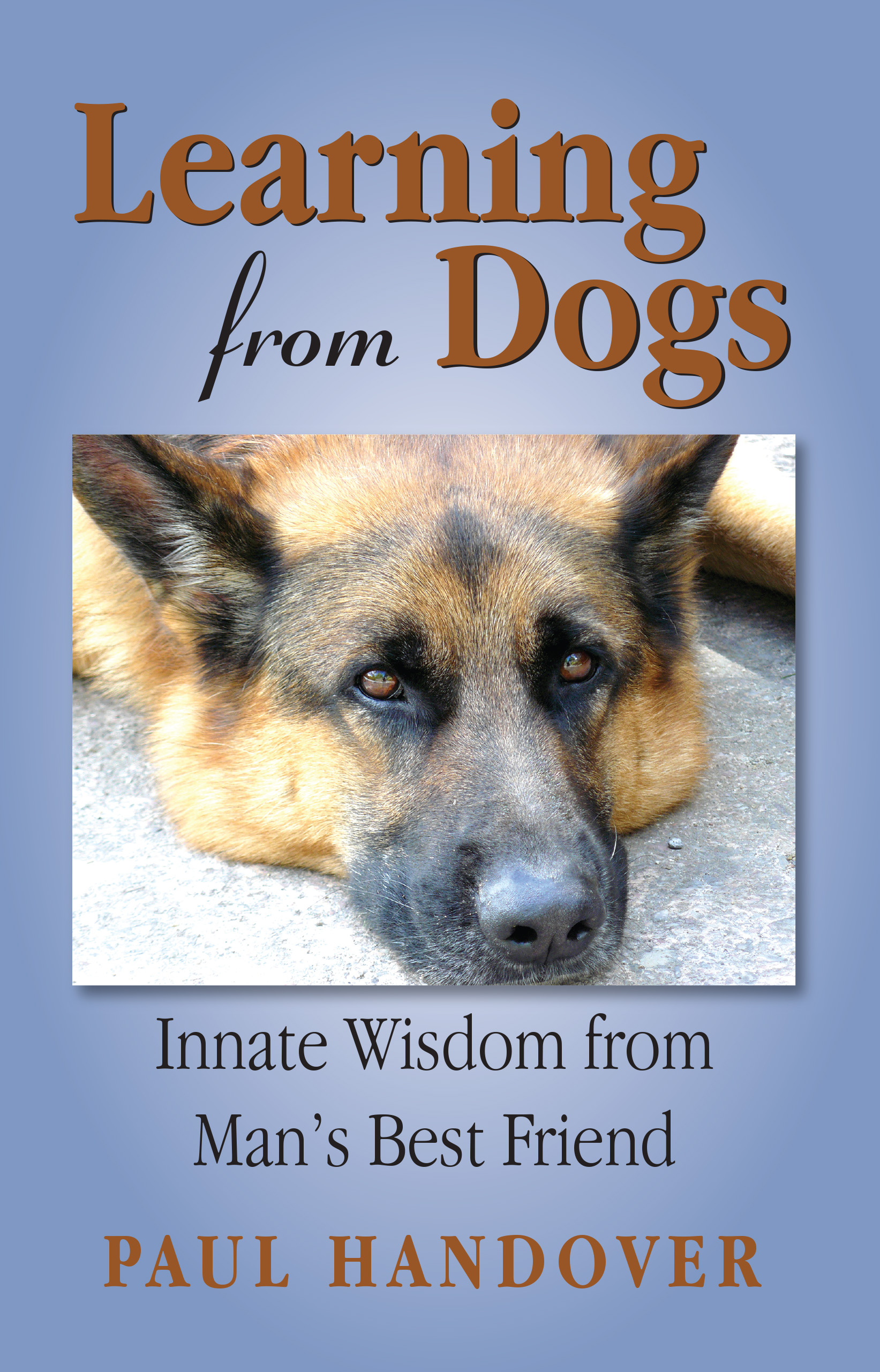
TIMOTHY BULLARD/Daily CourierPaul Handover with Pharaoh, a 12year-old German Shepard that he uses on the cover of his new book about man's best friend.
TIMOTHY BULLARD/Daily Courier – Paul Handover with Pharaoh, a 12year-old German Shepard that he uses on the cover of his new book about man’s best friend.

So this recent article from the Care2 website seems an appropriate follow-on to my introductory remarks.

ooOOoo

Why Do We Feel the Need to Squeeze Cute Things?

1376993.largeBy: Rebecca Bauman March 8, 2016 –About Rebecca

If any of the collected photographs you see here cause you to emit high-pitched noises or ache to cradle the pictured animal tight in your arms, you might be experiencing a bout of “cute aggression.”

The phrase refers to a phenomenon during which we catch sight of a living thing deemed “cute,” usually a baby or an animal or — double-whammy — a baby animal, and feel an overwhelming desire to play with the subject’s features; a compulsion to tickle its feet; the need to tease its rumples or bulges of fat; the want to bury our faces into its belly.

fluffy mouse ball
fluffy mouse ball

Granted, not all voiceless lifeforms enjoy being tugged at or played with in an intrusive manner, which is why this behavior is referred to, in part, as “aggressive.” While we might mean absolutely no harm to the creature we long to hold and hug, our near-hyperactive responses to its presence often seem beyond our control, what some have called the “squee” effect.

Yale researchers studied this “dimorphous expression” — the need to manhandle living creatures for which we feel only positive emotions — in 2014. Part of the experimental regimen involved asking some participants to pop bubble wrap while viewing images of “cute baby animals;” others did the same while looking at images of adult species. The results: Those who viewed the infants popped more bubbles by far.

baby maine coon cat feeling

One of the researchers, psychologist Oriana Aragón, said that participants would have likely squeezed whatever they had in their hands or arms while viewing images of the “cute” animals, be it a purse or a pillow. Had something alive, however, actually been in those arms, the strength with which the participants freed their fuzzy feelings might have been worrisome to the researchers.

But Aragón says that strong human emotions are often balanced by “an expression of what one would think is an opposing feeling.” This is similar to what happens when we cry while angry or laugh while nervous. Our actual expressions “scramble and temper” whatever feeling got us into such a tizzy in the first place, helping to restore our emotional equilibrium, “tamping down or venting” feelings that cause us to become too excited.

Funny portrait of curious baby owl

While wanting to squish what could be one’s own offspring might seem an evolutionary misfire, a 2012 study in the journal PLOS ONE indicates that cuteness creates a powerful “approach motivation,” the very thing that drives us to scoop up puppies and kittens in adoption kennels and squeeze them close to our chests and nuzzle them against our faces. It seems the need to be touchy-feely toward cuteness provokes precisely the kind of nurturing that keeps helpless creatures alive.

As for animals, those worthy of this treatment, appealing to us as “cute,” mimic physical characteristics of human babies — “a large head; rounded, soft, and elastic features; big eyes relative to the face; protruding cheeks and forehead; and fuzziness.” The same, in fact, seems to be true for Great Apes, as has been documented with Koko the gorilla and an Internet celebrity orangutan shown interacting with tiger cubs, though the scene remains controversial.

cutepic4And so it seems the power of cuteness is made all the more apparent when humans (or elevated primates) respond to a rabbit or a duckling the way they might respond to their own kin. Our desire to squeeze is so powerful, in fact, that it “spills over” into interactions with other species. Thus, we have Web sites like Cute Overload that exist only for the compelling pull to exercise that need to feed our “cute aggression,” be the temptation a pleasure or a pain.

ooOOoo
Demonstrating that cuteness can come in all sizes, let me close today’s post with this photograph.
P1150764
Ben and Jeannie having a quiet one-to-one moment.

Don’t go too long without giving or receiving a hug!

Living on.

They will always live on in our hearts and minds.

I follow the blog belas bright ideas.

Recently, she posted a beautiful poem to commemorate the nine years of having Susami in their lives. It is republished here with Bela’s kind permission.

ooOOoo

dscn0130

There is a presence, here
and now; the bellows of breath,
warmth of blood, the feeling,
even if imagined,
that we are connected, one
to the other.

We each have our memories,
after all.

Your passing removes that utterly,
and somehow the same hand
lying on the same fur and flesh
will sense void, not even spirit,
not even that.

One can forgive the athiest,
or even theist their doubts,
props, religions. For this
at least is real:
This. Here. Now.
Tomorrow it will be gone.

And no matter in visions I linger
in the numinous; despite
in the garden I witness the alchemy
of decay transforming
into green and vibrant,
the loss of a loving companion
is egregious, indeed.

ooOOoo

Bela explained how Susami came to them:

This sweet being has been with us only nine years, since she was about 10-12 weeks old. Her previous steward, a multiply-pierced and -tattooed young woman, had to find a home for her. We were on our way to the east coast to deal with some business, and I had taken our good friend Kevin with me to the local feed store to get the horse stocked up on alfalfa pellets (it was during a long drought). I saw the pup with a bandage on her leg before, and asked the gal what was wrong with her. I later learned from the store owner (who thanked me many, many times for giving Susami a good home) that the dog had been severely abused. (She never did tell me specifics, so I was left to wonder.) The young woman tried her best, but there were forces beyond her control in her environment. When I saw Susami again, we had to take her, but how? I asked Kev if he would watch yet one more animal for us while we were gone, and he happily agreed! So she joined our chocolate Lab who we brought with us to Hawaii from northern Maine (a Non-rescue). He was Thrilled to have that little creature’s companionship.

Going to close with the exquisite words from Suzanne Clothier that Dr. Jim Goodbrod used in the foreword to my book:

There is a cycle of love and death that shapes the lives of those who choose to travel in the company of animals. It is a cycle unlike any other. To those who have never lived through its turnings or walked its rocky path, our willingness to give our hearts with full knowledge that they will be broken seems incomprehensible. Only we know how small a price we pay for what we receive. Our grief, no matter how powerful it may be, is an insufficient measure of the joy we have been given.

(Suzanne Clothier: Bones Would Rain from the Sky: Deepening Our Relationships with Dogs.)

Suzanne’s words cannot be bettered when it comes to the death of a beloved dog.

Susami, you will not be forgotten.