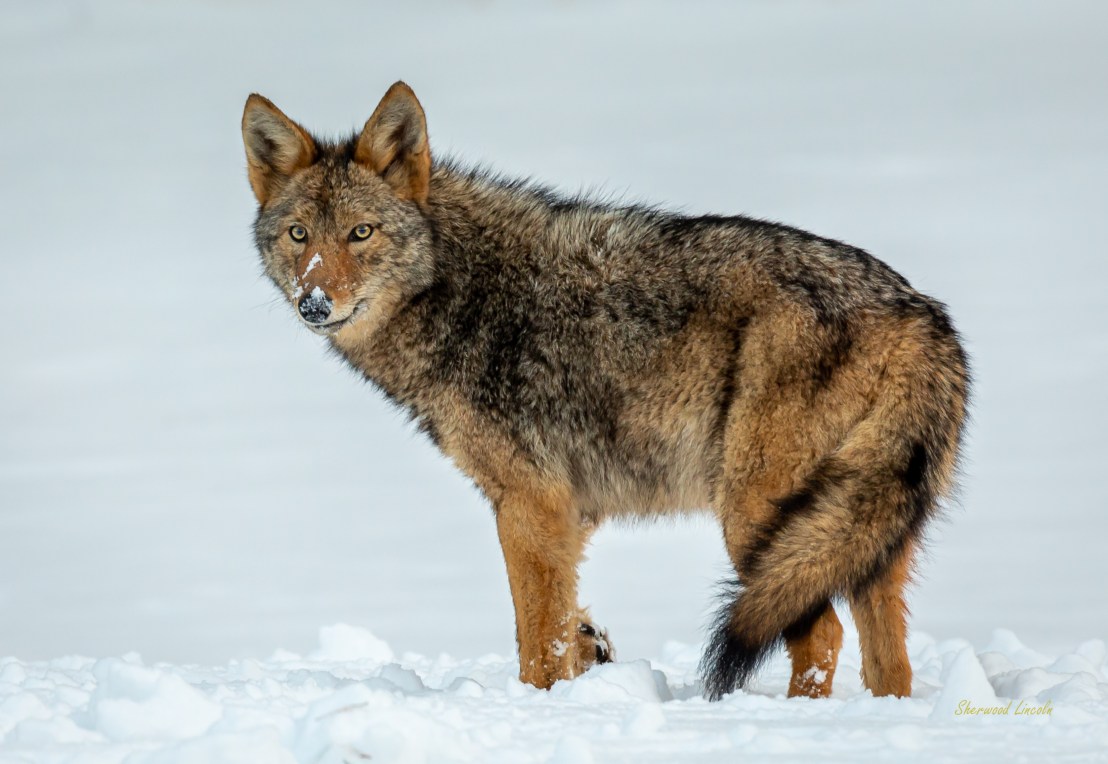
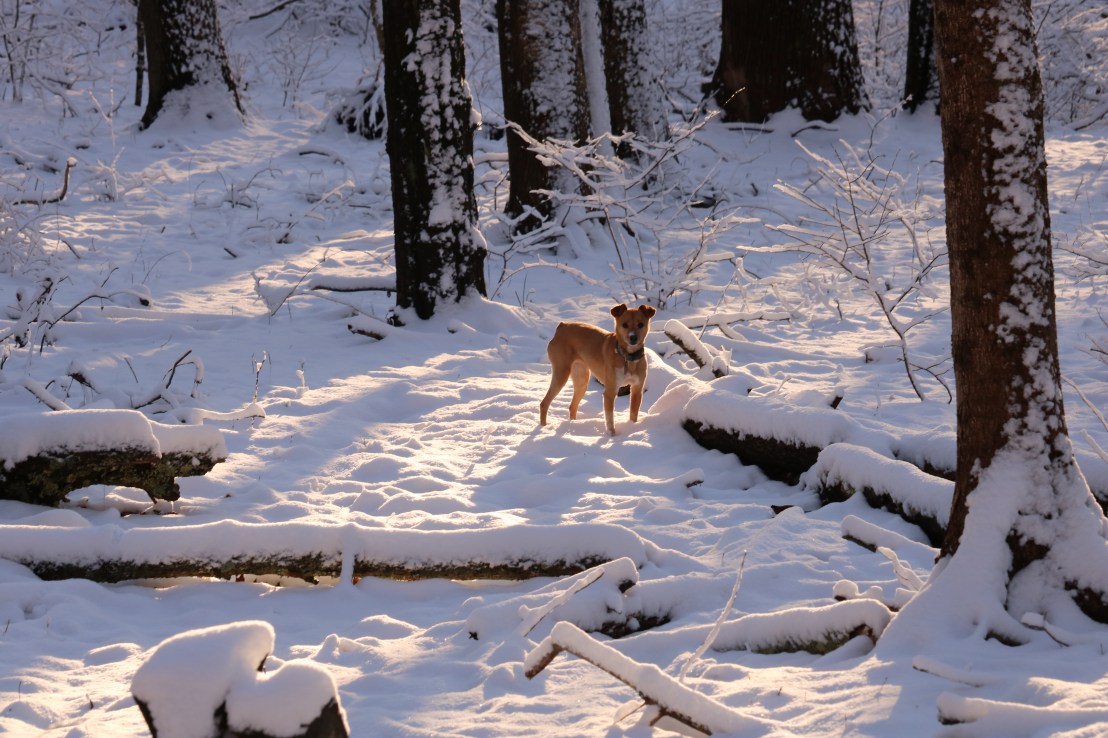
Good boy! Call it what you will; Coydog, Eastern Coyote, or Coymolf. Up close and personal, Taken in East Lyme Ct.
Ecologist and evolutionary biologist Javier Monzón analyzed the DNA of eastern coyotes and found the genes contain all three canids — dog, wolf, and coyote.
According to Monzón’s research, about 64% of the eastern coyote’s genome is coyote (Canis latrans), 13% gray wolf (Canis lupus), 13% Eastern wolf (Canis lycaon), and 10% dog (Canis familiaris).
Later on he added:
All my bird and nature photos are taken in South Eastern Ct. most with a Canon 7D Mark II or 5D Mark IV and Canon 100 to 400II THANK YOU. About 20 yards.
Then followed in response to my request for permission to republish:
Feel free, no problem!
Whatever happens to me in the next year, I truly hope I can continue to share such incredibly photographs with you.
Nature in all her glory!
Tomorrow is Christmas Day and I will be taking a short break, probably back on December 27th.
This was seen on the photographic forum Ugly Hedgehog and I just loved it.
It is fully republished with permission.
ooOOoo
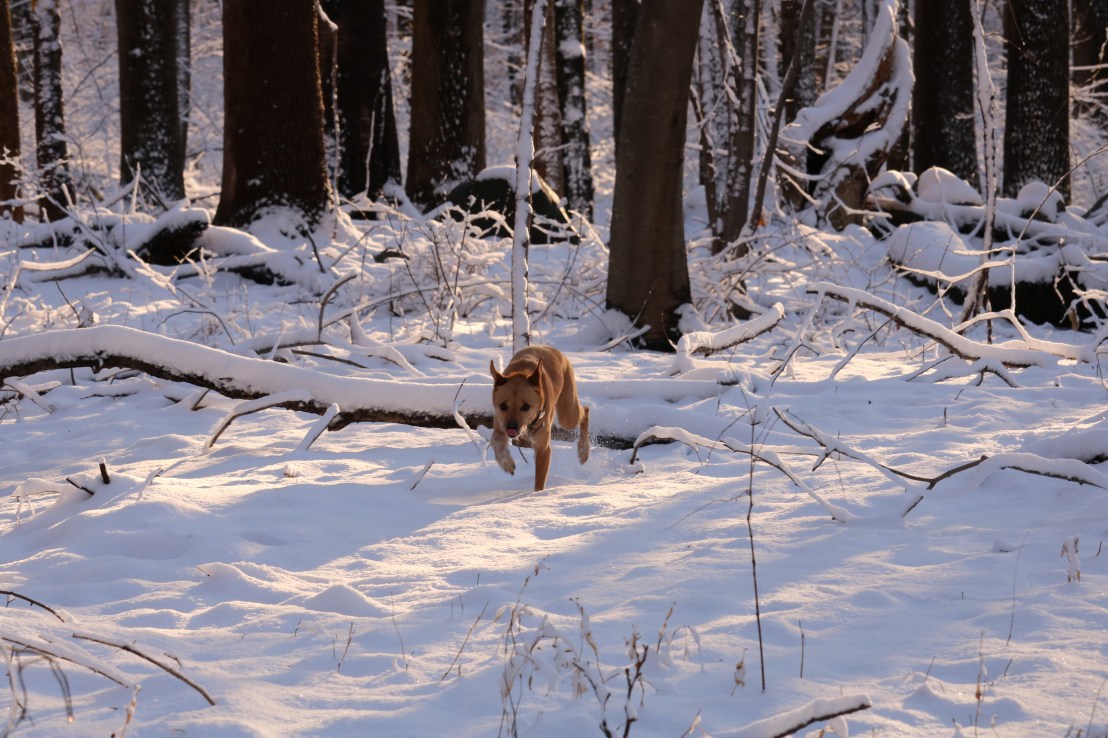
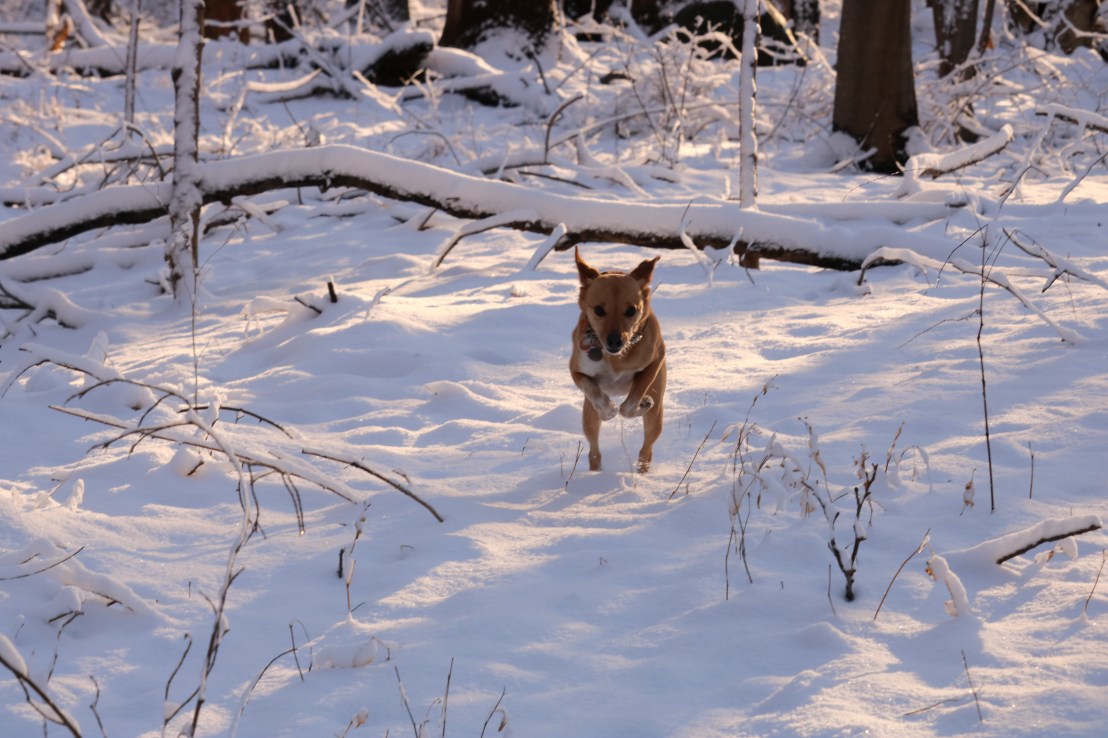
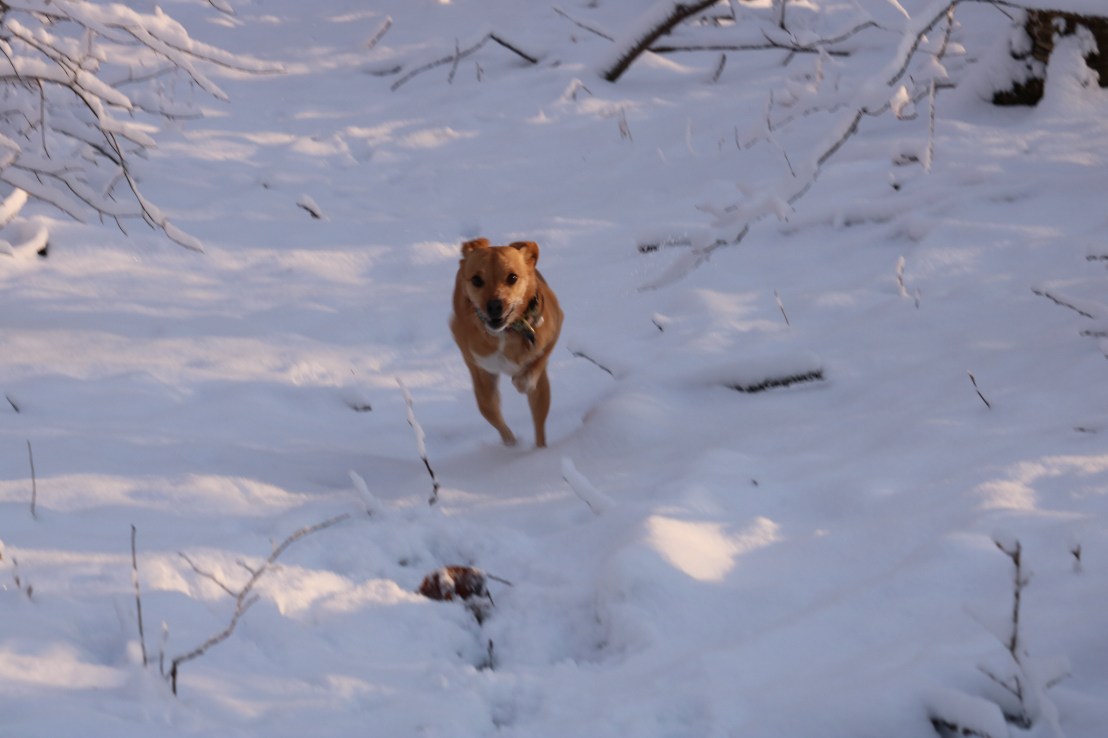
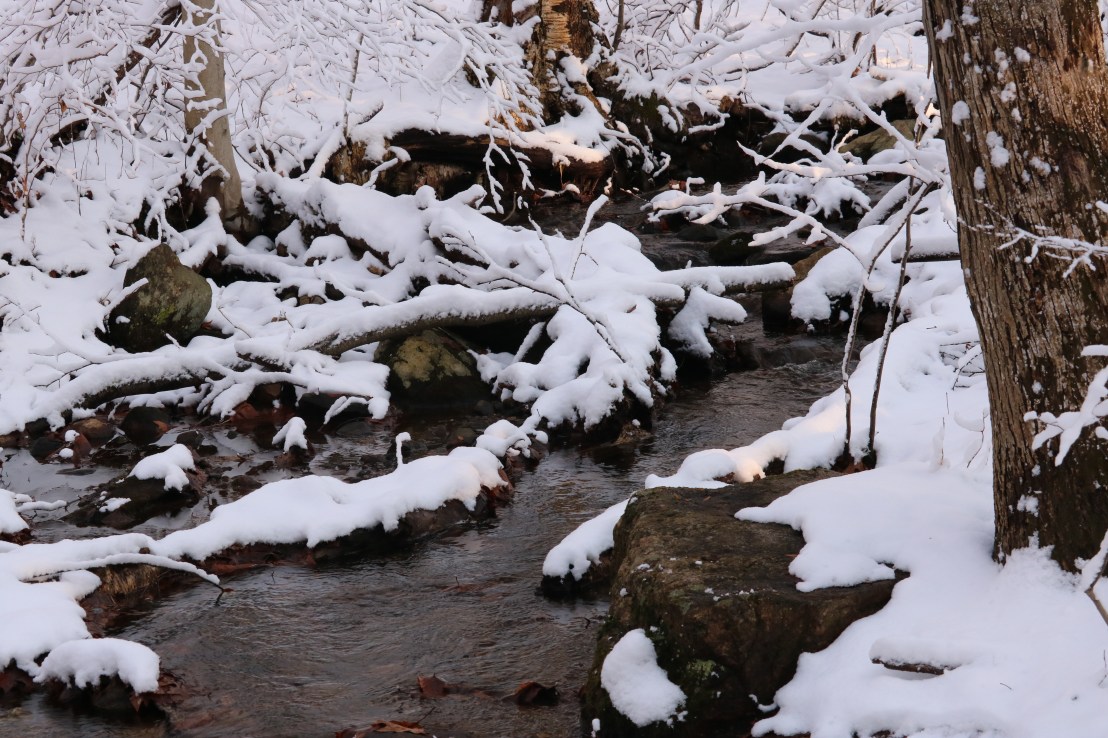
I took our little dog for a woods walk after the snow.
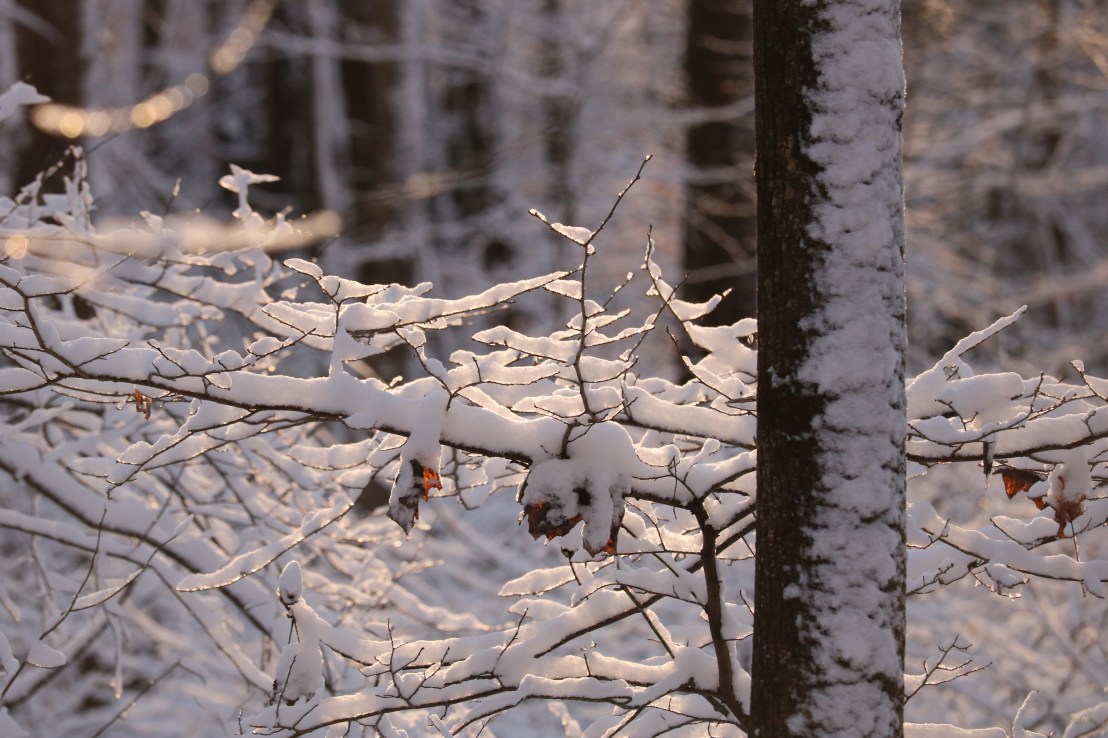
We went for a walk in the woods behind our house this afternoon. We got about 3 inches of snow that stuck to the trees. Norah loves to run in the new snow!
oooo
oooo
oooo
oooo
oooo
oooo
oooo
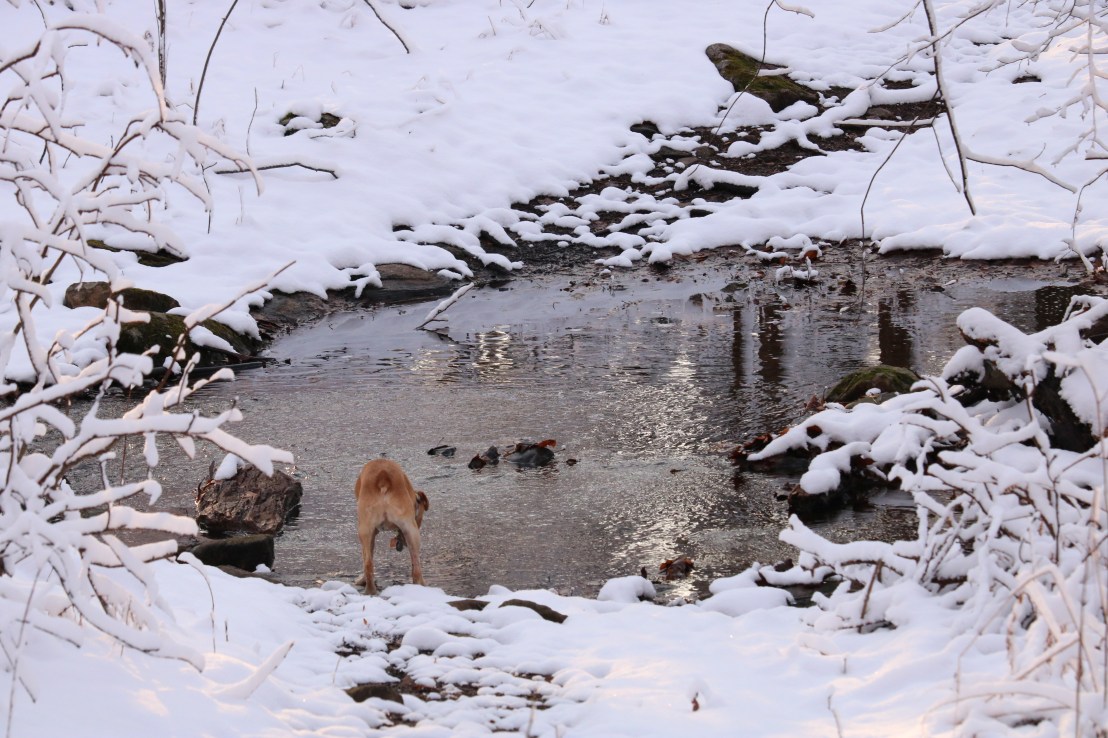
By the stream. She doesn’t like to get her dainty paws wet.
oooo
ooOOoo
I think these are wonderful.
The dog’s name is Norah as you may have gathered and she is a tailless dog. As was said on the forum: ” Her name is Norah. She’s the best (only) tailless dog we’ve every had! Our best guess is that she may be part Jack Russell but we don’t know. She’s a rescue dog.”
For next Sunday I’m going to repeat a few of these but using my Luminar photo-editing software. I have a feeling that a few of these wonderful photographs can produce some great edits.
Alex and Lisa have put together a remarkable video
Yesterday, in came an email from my son, Alex, about an amazing starling murmuration at the Royal Society for the Protection of Birds (RSPB).
Lisa took the video and together they uploaded it to YouTube.
Enjoy!
Having watched the amazing video I then did a little bit of research. I came quickly across the science of murmuration and have included it below.
Murmuration refers to the phenomenon that results when hundreds, sometimes thousands, of starlings fly in swooping, intricately coordinated patterns through the sky.
Maybe you’ve seen a murmuration video before. But this one is especially beautiful. It was shot earlier this month in Wales, at Cosmeston Lakes in the Vale of Glamorgan, and posted on Facebook by the BBC Cymru Wales. (It’s not included, Ed.)
It’s all about science. Just how do the starlings manage to fly in such an amazingly coordinated way?
A few years ago, George F. Young and his colleagues investigated starlings’ “remarkable ability to maintain cohesion as a group in highly uncertain environments and with limited, noisy information” — a nice description of what goes on in a murmuration.
Going in, Young et al. already knew that starlings pay attention to a fixed number of their neighbors in the flock, regardless of flock density — seven, to be exact. Their new contribution was to figure out that “when uncertainty in sensing is present, interacting with six or seven neighbors optimizes the balance between group cohesiveness and individual effort.”
Young et al. analyzed still shots from videos of starlings in flight (flock size ranging from 440 to 2,600), then used a highly mathematical approach and systems theory to reach their conclusion. Focusing on the birds’ ability to manage uncertainty while also maintaining consensus, they discovered that birds accomplish this (with the least effort) when each bird attends to seven neighbors.
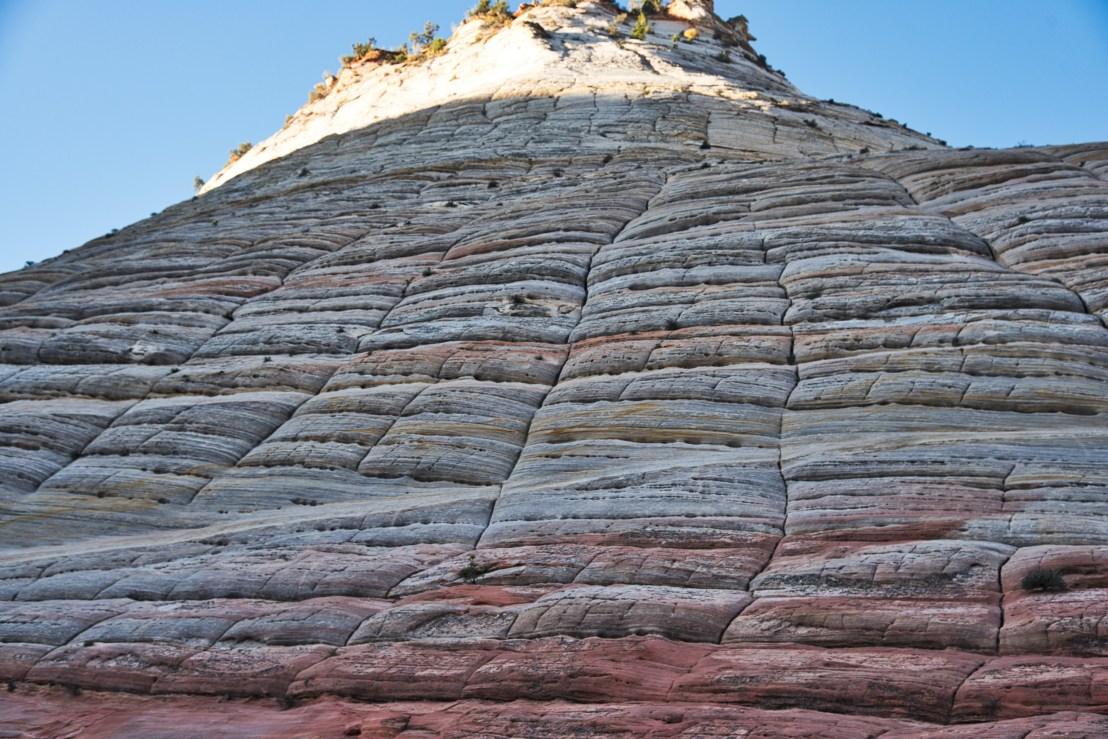
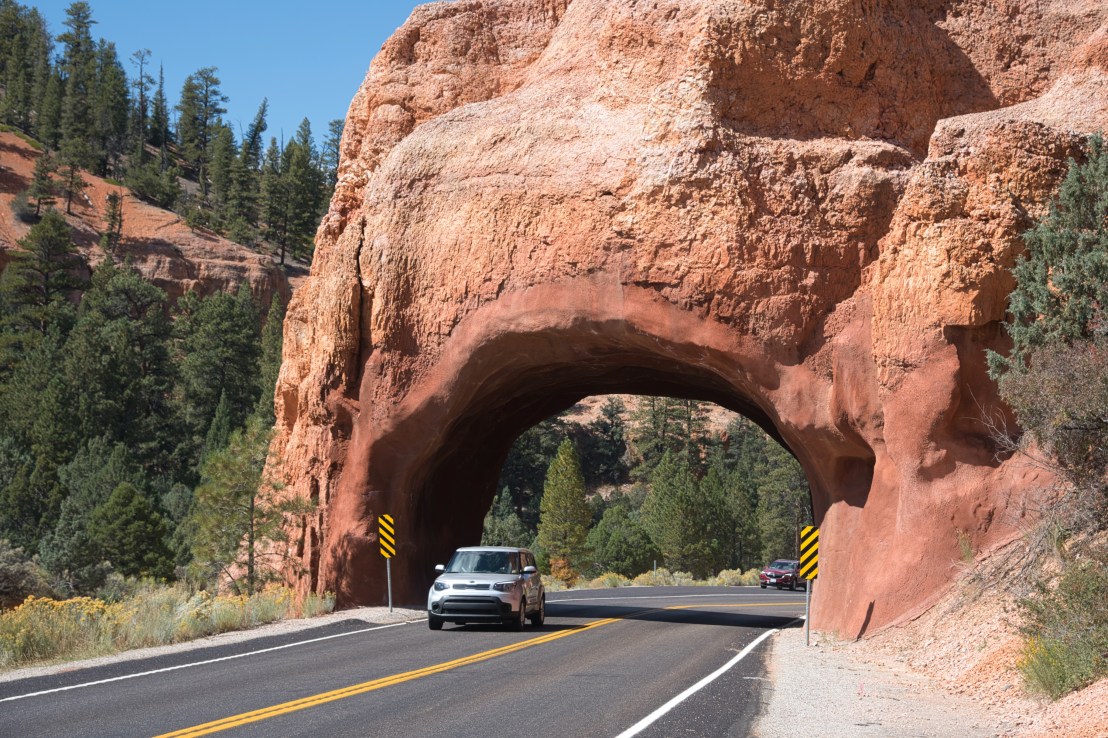
The picture below is primarily of the different rock type that is laid crossways on the top of the ridge. It was the closest that we could get without a major climb.
oooo
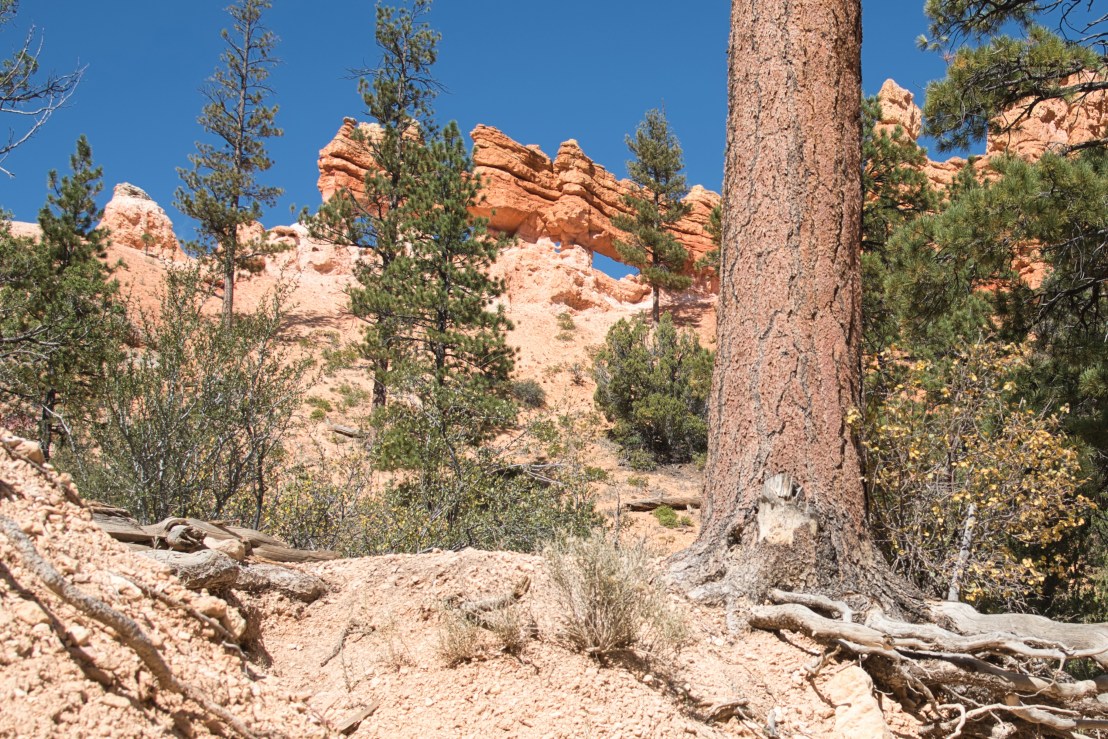
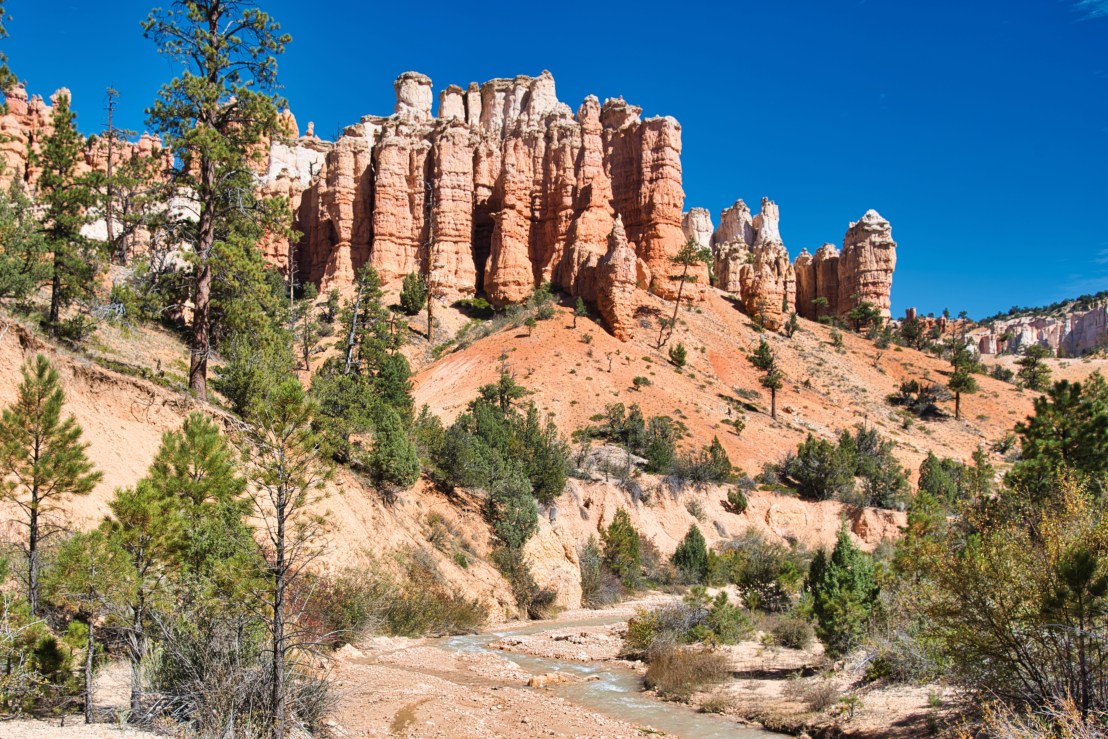
I think this is Zion National Park. The pillars above and the stream below.
As soon as we were on our way, first thing was to find a bed for the night in the area of the Capitol Reef NP. This was a popular time of the year and so many places were full. Our ‘fall-back’ position was to sleep in the truck but I really hoped it wouldn’t come to that.
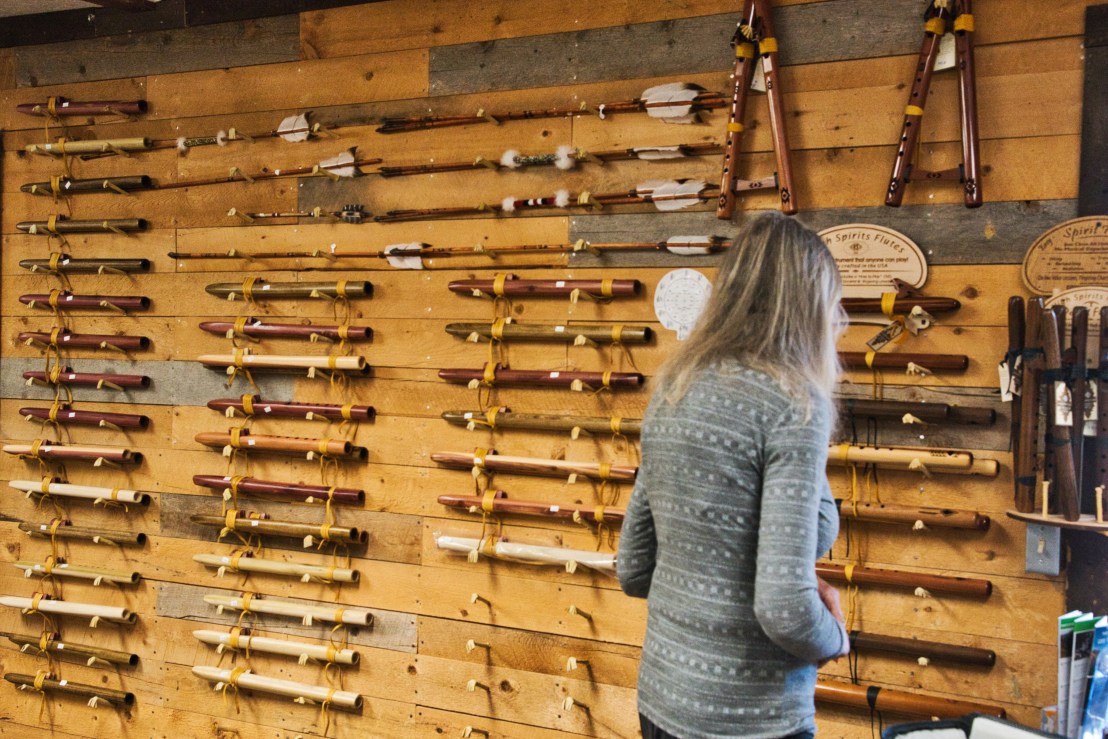
Eventually we found a room for just tonight in The Flute Shop and Motel in Torrey, just 10 miles from the National Park. Run by Vance and Elaine Morrill it was more than just a motel, it was a scene of much fascination. For Vance made flutes the American Indian way.
But more of that later.
Oh, and there’s a dog story as well. Again, I’m writing that up as a separate post.
On to the Capitol Reef Park.
Or rather a pause before we descended off the heights that surrounded this part of Utah down to the park.
The pause was to take a photograph of an intense rain storm that had a spot quite close where the remnants of a rainbow could just be made out. It’s hardly visible in the above picture.
It was simply stunning.
Beyond words.
I promised you a little more about Vance Morrill and his flutes. But apart from the photograph I will delay that for a while (until the draft of the post has been approved by Vance).
Here is Jean looking at them.
Finally, Vance promised to draw some routes in the morning to some of the lesser known spots in Capitol Reef.
Written by Rob Moir, Ph.DI recently returned from a research sail through the Denmark Straits and I couldn’t be more in awe of mother nature.
We sailed aboard the gaft-rigged ketch Tecla out of Isafjordur, Iceland, bound for Greenland. We were thirteen women and men on a hundred-foot steel-hulled sailing vessel.
As we cleared the steep-sided fjord and sailed out into the bay past towering headlands, we saw a humpback whale breach. It rose straight out of the water, extended enormous knobby flippers, rotated and fell on its side with a large splash.
We sailed on, and another wheeled before us.
Further out, white-beaked dolphins streaked, exhaled, and splashed in the bow waves at the front of our boat.
Gray and white fulmars with outstretched wings carved the sky and nearly scratched the sea. And then there were icebergs.
The natural beauty of Mother Earth never ceases to take my breath away, no matter how many times I see it.
We traversed the threshold between the Atlantic and the Arctic Oceans. The south-bound East Greenland current squeezed between the craggy coasts of Iceland and Greenland to become a “superhighway” for turbulent water. Here, the denser Arctic water mass crashes into the bulwark front of warmer Atlantic Water. Arctic water plunges downwards into the Denmark Strait Cataract. This is the world’s largest waterfall. Yet, skimming the surface of immense water all we see are waves that crest white tumble and stream like the tossed manes of charging horses.
Unfortunately, we also saw the threats to nature.
First, a quick science lesson: When seawater freezes at the ocean surface, the ice is actually made of freshwater; the salt gets rejected back into the surrounding water. That surrounding water then becomes denser and sinks. This happens on a massive scale, which results in ocean currents around the world. Think of it like an organic engine that circulates the oceans’ water.
Now, because global warming exposes more of the surface every summer than it used to (about twice as much, in fact) that means more surface ice each winter. That means that our ocean circulation engine is twice as big, which radically alters the seascape, threatens not only the ocean ecosystem – from tiny algae to those humpback whales – but life worldwide.
We caused global warming. Now we must come together to decrease carbon emissions and increase carbon capture. For the Denmark Strait, for the humpback whales, and for our own places of habitation.
ooOOoo
I will do no better than to repeat that last paragraph.
We caused global warming. Now we must come together to decrease carbon emissions and increase carbon capture. For the Denmark Strait, for the humpback whales, and for our own places of habitation.
A Vancouver, Washington dog survives a month in the wilderness.
Niko is a Vancouver family’s dog. He is also adventure partner to 16-year-old Caden Alt.
On July 26th, Niko went camping with Caden’s father, David Alt, in the Gifford Pinchot National Forest. Located in South-West Washington it encompasses well over a million acres.
Dog Survives 31 Days In Woods After Being Hit By Car
By LINDSAY NADRICH, KGW-TV
VANCOUVER, Wash. (AP) — Niko, a Vancouver family’s dog, survived 31 days in the wilderness after getting hit by a car.
Niko is 16-year-old Caden Alt’s adventure partner.
“He’s always fun to have around,” Caden told KGW-TV. “He’s right there at your side walking around and yeah, he’s just awesome.”
On July 26, Niko went camping with Caden’s father, David Alt, in the Gifford Pinchot National Forest. Later that night, Niko wandered over to the road and got hit by a car. David ran from the campsite just in time to see Niko sprint off into the woods.
“A lady jumped out of the car immediately and said, ‘I don’t know how he could’ve survived that,'” he said.
He searched all night, but could not find Niko. He said it was devastating.
For the next 31 days, he and Caden spent as much time as they could going back to look.
“Every weekend we went up there, we searched, that was pretty hard, coming back every day not finding anything,” Caden recalled.
Then last weekend, they got a call from two men who had seen a post about Niko on Facebook and spotted him about 100 yards from where he disappeared.
“That was, just like, my heart dropped for a second, like, is this happening?” Caden asked.
The Good Samaritans canceled their own trip and drove Niko straight to Vancouver.
“So, yeah, my son and I were just crying, it was, it was unbelievable, yeah, and then of course when we’re in the driveway and they bring him up, Caden and I are crying, those two grown men are crying, four guys crying, it was great,” David said.
Niko lost about 15 pounds but is otherwise doing well.
“Skin and bones and one eye shut, he had lost 30% of his body weight, but he immediately was eating and drinking,” David said.
Niko seemed pretty happy to be back by Caden’s side.
“It’s been amazing,” Caden said. “I’m so glad to have him back. He’s not like perfect, energetic back up to himself, but he’s getting there, better every day. He’s just as cute as ever, the house is filled again.”
So what did Niko do for 31 days alone in the woods?
“As far as trying to recap, only Niko knows the story right, too bad he couldn’t tell it,” David said.
During the month Niko was missing, David and Caden said they got a lot of support from people on social media, as well as a lot of tips that helped with the search. They said they are so thankful for everyone who kept them going.
A quick scan of the horizon every twenty or thirty minutes and then back down to my bunk.
But what was that!
For the first time in ages there was a strange light off the starboard bow.
Impossible to gauge the distance.
Then I had it!
It was no ship’s light,
It was the edge of the rising moon.
My bunk below was forgotten in an instant.
The sight of the rising full moon was everything.
It rose seemingly rapidly and now cast its light over the ocean.
My ketch sailed in its golden light.
We seemed to sail on forever.
Now that’s coming on for thirty years ago,
But it is still clear in my mind.
Clear as if it was yesterday,
Reminded of it each full moon.
My ketch still sailing in its golden light.
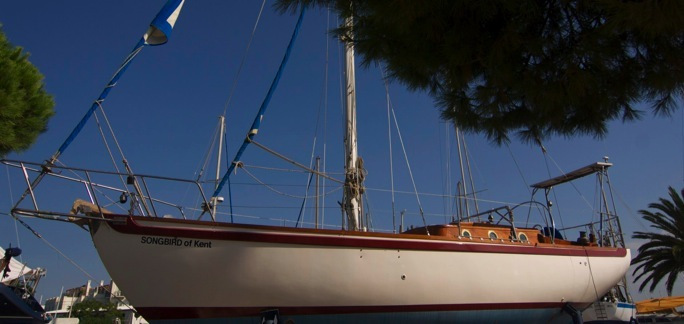
The following is not Songbird but a much more appropriate photograph.
And the poem came to me just the other day. The memory of that full moon out in the Atlantic en-route to Plymouth from Gibraltar in 1991 will be with me for ever.
“Organic” is more than just a passing fad. Organic food sales totaled a record US$45.2 billion in 2017, making it one of the fastest-growing segments of American agriculture. While a small number of studies have shown associations between organic food consumption and decreased incidence of disease, no studies to date have been designed to answer the question of whether organic food consumption causes an improvement in health.
I’m an environmental health scientist who has spent over 20 years studying pesticide exposures in human populations. Last month, my research group published a small study that I believe suggests a path forward to answering the question of whether eating organic food actually improves health.
What we don’t know
According to the USDA, the organic label does not imply anything about health. In 2015, Miles McEvoy, then chief of the National Organic Program for USDA, refused to speculate about any health benefits of organic food, saying the question wasn’t “relevant” to the National Organic Program. Instead, the USDA’s definition of organic is intended to indicate production methods that “foster cycling of resources, promote ecological balance, and conserve biodiversity.”
While some organic consumers may base their purchasing decisions on factors like resource cycling and biodiversity, most report choosing organic because they think it’s healthier.
Sixteen years ago, I was part of the first study to look at the potential for an organic diet to reduce pesticide exposure. This study focused on a group of pesticides called organophosphates, which have consistently been associated with negative effects on children’s brain development. We found that children who ate conventional diets had nine times higher exposure to these pesticides than children who ate organic diets.
Our study got a lot of attention. But while our results were novel, they didn’t answer the big question. As I told The New York Times in 2003, “People want to know, what does this really mean in terms of the safety of my kid? But we don’t know. Nobody does.” Maybe not my most elegant quote, but it was true then, and it’s still true now.
Studies only hint at potential health benefits
Health-conscious people want to buy organic for its health benefits, but it’s not yet clear whether such benefits exist. Goran Bogicevic/Shutterstock.com
Since 2003, several researchers have looked at whether a short-term switch from a conventional to an organic diet affects pesticide exposure. These studies have lasted one to two weeks and have repeatedly shown that “going organic” can quickly lead to dramatic reductions in exposure to several different classes of pesticides.
Still, scientists can’t directly translate these lower exposures to meaningful conclusions about health. The dose makes the poison, and organic diet intervention studies to date have not looked at health outcomes. The same is true for the other purported benefits of organic food. Organic milk has higher levels of healthy omega fatty acids and organic crops have higher antioxidant activity than conventional crops. But are these differences substantial enough to meaningfully impact health? We don’t know. Nobody does.
Some epidemiologic research has been directed at this question. Epidemiology is the study of the causes of health and disease in human populations, as opposed to in specific people. Most epidemiologic studies are observational, meaning that researchers look at a group of people with a certain characteristic or behavior, and compare their health to that of a group without that characteristic or behavior. In the case of organic food, that means comparing the health of people who choose to eat organic to those who do not.
Several observational studies have shown that people who eat organic food are healthier than those who eat conventional diets. A recent French study followed 70,000 adults for five years and found that those who frequently ate organic developed 25% fewer cancers than those who never ate organic. Other observational studies have shown organic food consumption to be associated with lower risk of diabetes, metabolic syndrome, pre-eclampsia and genital birth defects.
The problem with drawing firm conclusions from these studies is something epidemiologists call “uncontrolled confounding.” This is the idea that there may be differences between groups that researchers cannot account for. In this case, people who eat organic food are more highly educated, less likely to be overweight or obese, and eat overall healthier diets than conventional consumers. While good observational studies take into account things like education and diet quality, there remains the possibility that some other uncaptured difference between the two groups – beyond the decision to consume organic food – may be responsible for any health differences observed.
What next?
Often, new medical and health knowledge comes from carefully designed clinical trials, but no such trial has been conducted for organic food. Anyaivanova/Shutterstock.com
When clinical researchers want to figure out whether a drug works, they don’t do observational studies. They conduct randomized trials, where they randomly assign some people to take the drug and others to receive placebos or standard care. By randomly assigning people to groups, there’s less potential for uncontrolled confounding.
My research group’s recently published study shows how we could feasibly use randomized trial methods to investigate the potential for organic food consumption to affect health.
We recruited a small group of pregnant women during their first trimesters. We randomly assigned them to receive weekly deliveries of either organic or conventional produce throughout their second and third trimesters. We then collected a series of urine samples to assess pesticide exposure. We found that those women who received organic produce had significantly lower exposure to certain pesticides (specifically, pyrethroid insecticides) than those who received conventional produce.
On the surface, this seems like old news but this study was different in three important ways. First, to our knowledge, it was the longest organic diet intervention to date – by far. It was also the first to occur in pregnant women. Fetal development is potentially the most sensitive period for exposures to neurotoxic agents like pesticides. Finally, in previous organic diet intervention studies, researchers typically changed participants’ entire diets – swapping a fully conventional diet for a fully organic one. In our study, we asked participants to supplement their existing diets with either organic or conventional produce. This is more consistent with the actual dietary habits of most people who eat organic food – occasionally, but not always.
Even with just a partial dietary change, we observed a significant difference in pesticide exposure between the two groups. We believe that this study shows that a long-term organic diet intervention can be executed in a way that is effective, realistic and feasible.
The next step is to do this same study but in a larger population. We would then want to assess whether there were any resulting differences in the health of the children as they grew older, by measuring neurological outcomes like IQ, memory and incidence of attention-deficit disorders. By randomly assigning women to the organic and conventional groups, we could be sure any differences observed in their children’s health really were due to diet, rather than other factors common among people who consume organic food.
The public is sufficiently interested in this question, the organic market is large enough, and the observational studies suggestive enough to justify such a study. Right now, we don’t know if an organic diet improves health, but based on our recent research, I believe we can find out.






 Gray and white fulmars with outstretched wings carved the sky and nearly scratched the sea. And then there were icebergs.






 Learning from Dogs