The post Floor Diversion Day Three has been postponed for twenty-four hours.
Simply because yesterday morning the installers contracted by Home Depot (HD) to rip up our existing carpet and start laying the laminate wooden boarding found underneath the old carpet underlay another carpet that some time in the distant past had been glued down. Why this wasn’t spotted by the HD measuring unit when they came here to look at the project and offer an estimate for the cost of installing the new flooring is a question that has yet to be answered.
However, while the majority of HD work the full weekend the ‘Chargeback’ department do not. This department had to hear what had been discovered in order for us to know what extra costs we might be looking at!
A long-winded way of explaining why it is a pleasure to offer you a regular Picture Parade for today.
Well the reason I am using that connection is because I want to share with you an email that was received yesterday.
Paul
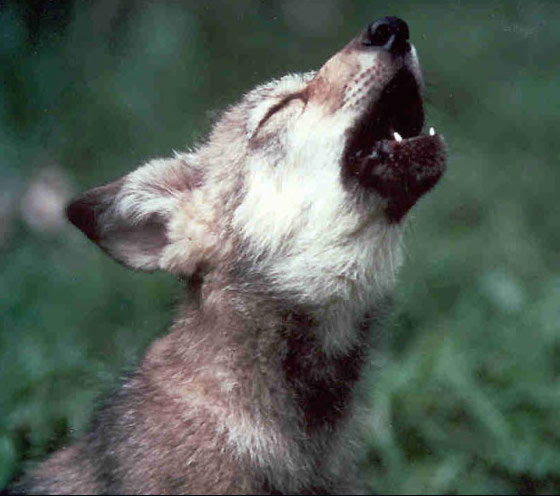
The Mexican gray wolf (also called lobo) is the rarest subspecies of gray wolf in the world. With just 113 individuals in the wild, this federally endangered species needs your voice now.
Despite recommendations by the US Fish and Wildlife Service’s own scientists, they have released a highly politicized Draft Mexican Wolf Recovery Plan, which we fear will lead these severally endangered wolves to extinction.
The draft recovery plan ignores science, gives special interests controlling power over recovery, and outlines criteria which will prematurely remove Endangered Species Act protections from the wolf.
Of course I wrote in support of the Lobo! And was delighted to notice that Action Network had set a goal of 3,200 letters and, as of yesterday morning, only a further 275 letters were needed to make that goal.
Brookings is a city in Curry County, Oregon, United States. It was named after John E. Brookings, president of the Brookings Lumber and Box Company, which founded the city in 1908. As of the 2010 census the population was 6,336.
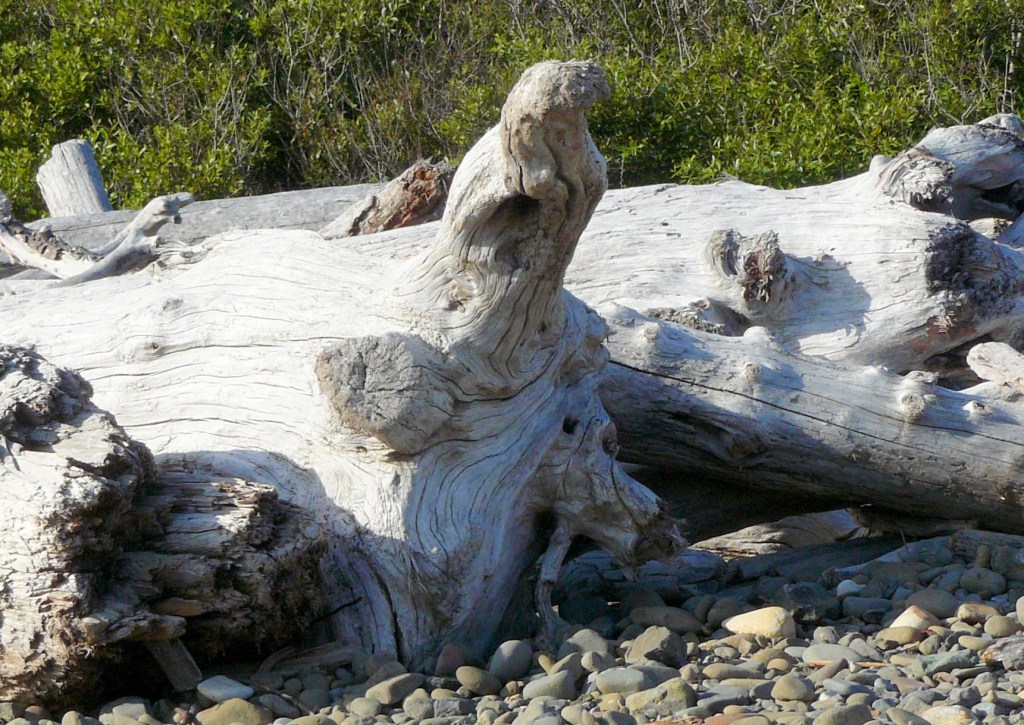
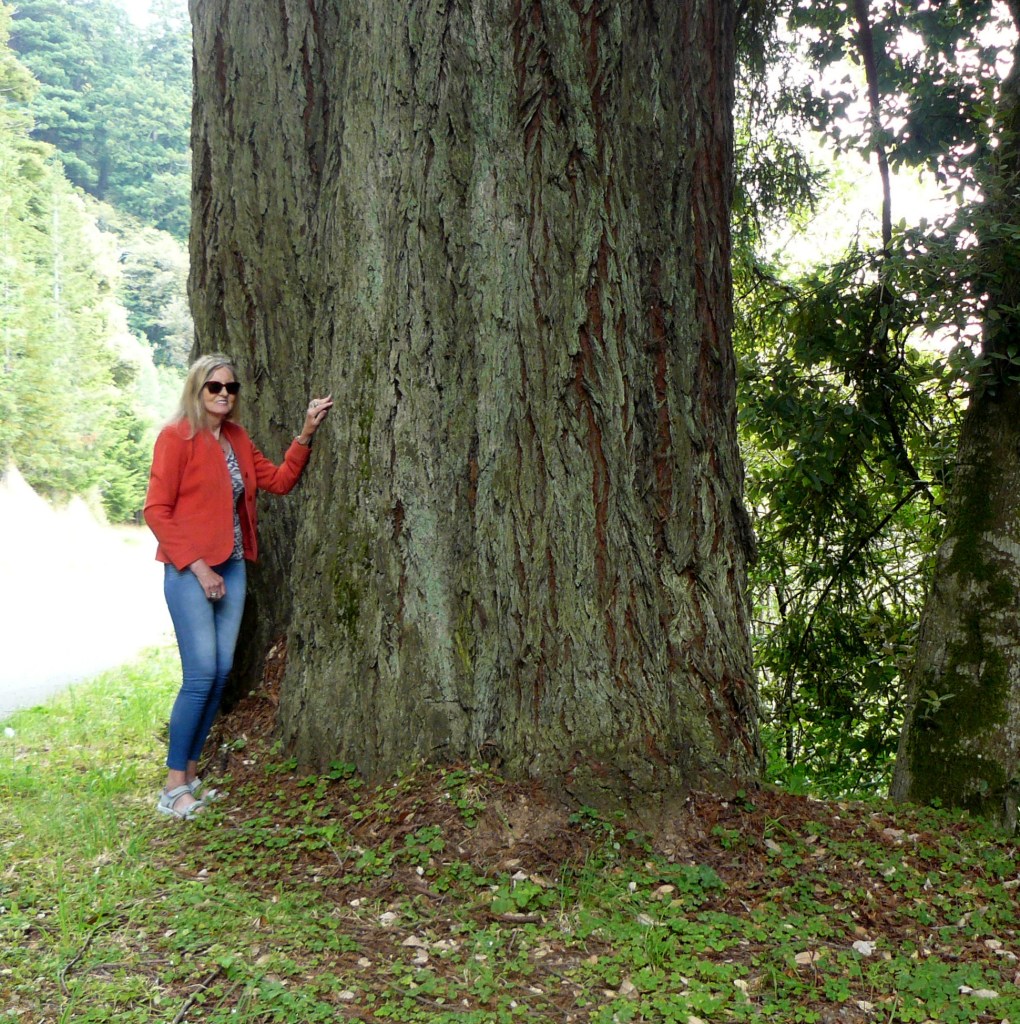
Anyway, a few pictures taken at Meyers Creek Beach that evening and a couple of shots of the Redwood trees seen on the way home on the Wednesday.
In the days when I lived in South Devon in England and had cause to travel, as in drive, to London one of the route options was to take the M5 motorway (Freeway in American speak) up to Bristol and then follow the M4 motorway that ran from Bristol all the way into the outskirts of London.
One of the benefits of this was that half-way, give or take, was at the Swindon exit and a further ten-minute drive took one to the delightful car-park at the White Horse at Uffington. No, it wasn’t a pub despite numerous pubs in England being called The White Horse; it was something much more special.
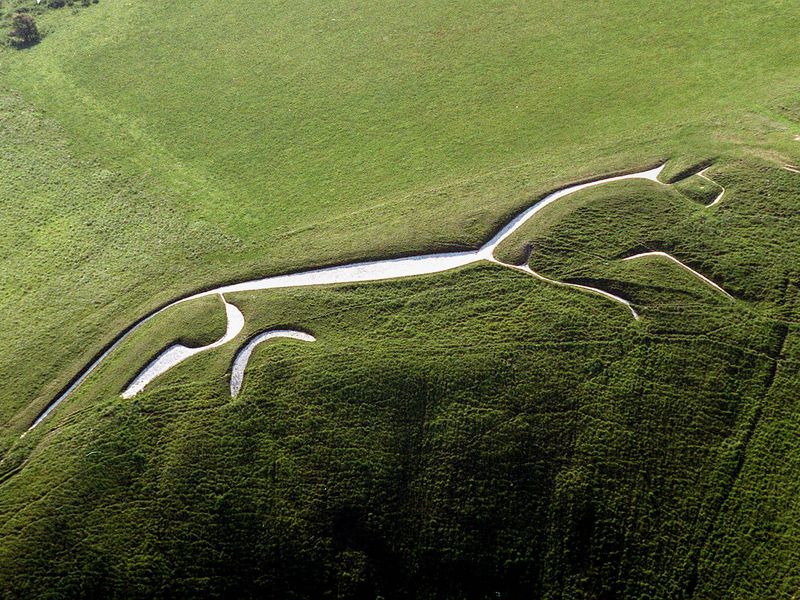
The Uffington White Horse is a highly stylisedprehistorichill figure, 110 m (360 ft) long, formed from deep trenches filled with crushed white chalk. The figure is situated on the upper slopes of White Horse Hill in the Englishcivil parish of Uffington (in the county of Oxfordshire, historically Berkshire), some 8 km (5 mi) south of the town of Faringdon and a similar distance west of the town of Wantage; or 2.5 km (1.6 mi) south of Uffington. The hill forms a part of the scarp of the Berkshire Downs and overlooks the Vale of White Horse to the north. The best views of the figure are obtained from the air, or from directly across the Vale, particularly around the villages of Great Coxwell, Longcot and Fernham. The site is owned and managed by the National Trust and is a Scheduled Ancient Monument. The Guardian stated in 2003 that “for more than 3,000 years, the Uffington White Horse has been jealously guarded as a masterpiece of minimalist art.” It has also inspired the creation of other white horse hill figures.
Against All Odds, England’s Massive Chalk Horse Has Survived 3,000 Years
Cleaning up the Uffington Horse is the neigh-borly thing to do
The White Horse at Uffington, Oxfordshire (AP Photo)
Emily Cleaver smithsonian.com July 6, 2017
If you stand in the valley near the village of Uffington in Oxfordshire, England, and look up at the high curve of chalk grassland above you, one thing dominates the view. Across the flank of the hill runs an enormous white, abstract stick figure horse cut from the chalk itself. It has a thin, sweeping body, stubby legs, a curiously long tail and a round eye set in a square head.
This is the Uffington White Horse, the oldest of the English hill figures. It’s a 3,000-year-old pictogram the size of a football field and visible from 20 miles away. On this July morning black specks dot the lower slopes as small groups of people trudge slowly upwards. They’re coming to clean the horse.
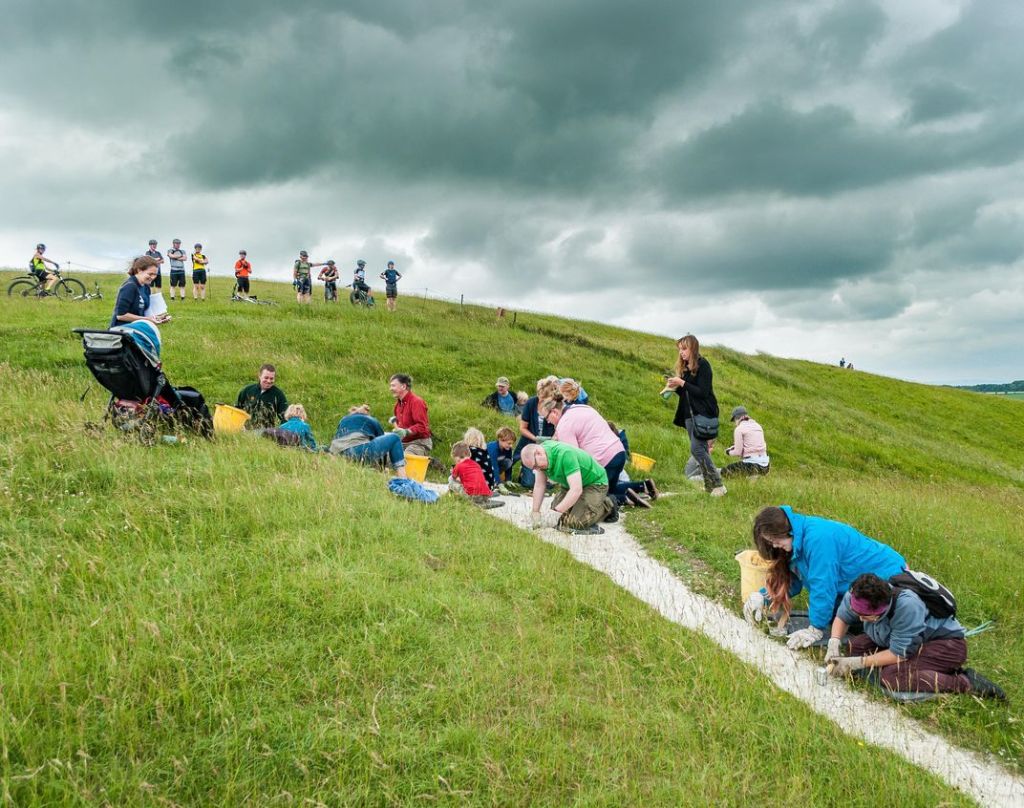
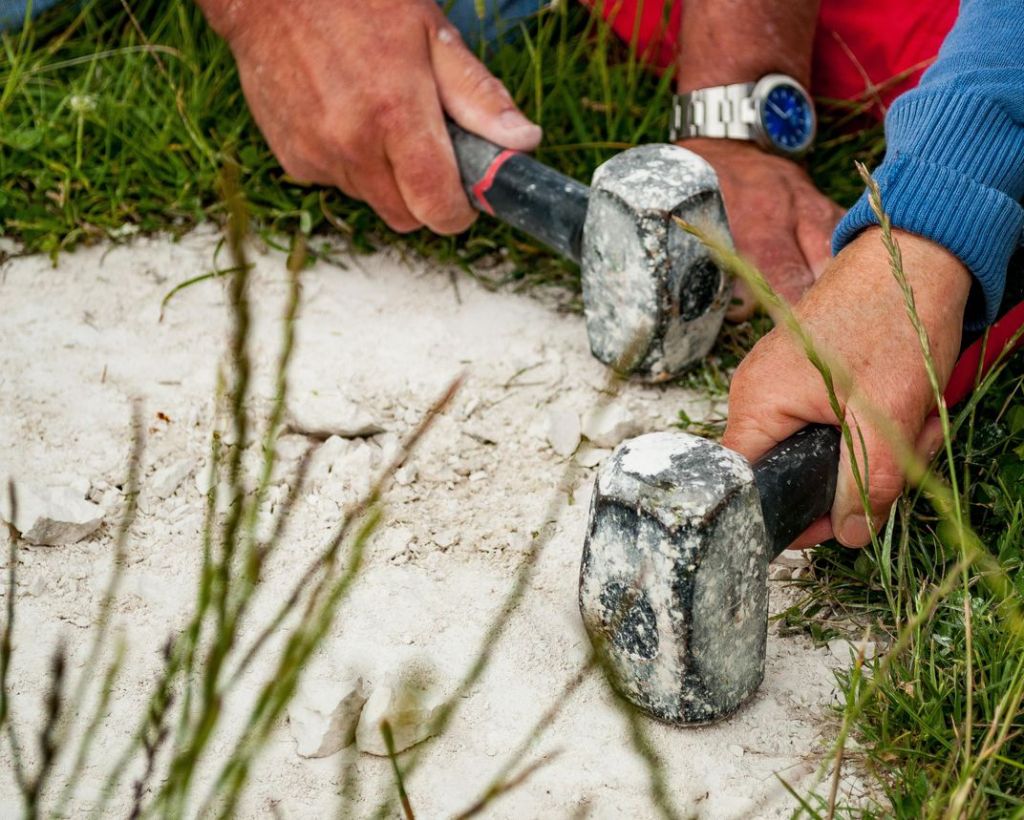
It’s chalking day, a cleaning ritual that has happened here regularly for three millennia. Hammers, buckets of chalk and kneepads are handed out and everyone is allocated an area. The chalkers kneel and smash the chalk to a paste, whitening the stony pathways in the grass inch by inch. “It’s the world’s largest coloring between the lines,” says George Buce, one of the participants.
Chalking or “scouring” the horse was already an ancient custom when antiquarian Francis Wise wrote about it in 1736. “The ceremony of scouring the Horse, from time immemorial, has been solemnized by a numerous concourse of people from all the villages roundabout,” he wrote.
In the past, thousands of people would come for the scouring, holding a fair in the circle of a prehistoric fort nearby. These days it’s a quieter event. The only sounds are the wind, distant birdsong and the thumping of hammers on the chalk that can be felt through the feet.
Conservation organization the National Trust oversees the chalking, making sure the original shape of the horse is maintained. But the work is done by anyone who wants to come along. Lynda Miller is working on the eye, a circle the size of a car wheel. “The horse has always been part of our lives,” she says. “We’re really excited that we’re cleaning the eye today. When I was a little girl and I came here with my mother and father, the eye was a special spot. We used to make a wish on it.”
National Trust ranger Andy Foley hands out hammers. “It must have happened in this way since it was put on the hillside,” he says. “If people didn’t look after it the horse would be gone within 20 to 30 years; overgrown and eroded. We’re following in the footsteps of the ancients, doing exactly what they did 3,000 years ago.”
“There is something very special about this landscape that attracts people,” says archaeologist David Miles. In the 1990s, he led an excavation of the site that established the prehistoric date for the horse. Before the excavation, it was thought that the design was only scratched into the chalk surface, and therefore un-datable, but Miles’ team discovered the figure was actually cut into the hill up to a meter deep. That meant it was possible to use a technique called optical stimulated luminescence to date layers of quartz in the trench.
Emily CleaverEmily Cleaver
Up on the hill it’s not possible to view the whole horse at once; the curve of the slope gets in the way, the sheer scale of it confuses the eye. It is only from the valley below that the whole picture can be taken in. From this long distance, the horse is a tiny white figure prancing timelessly across the brow of the hill. But to the people who live near and tend the horse, it’s a monumental reminder of Britain’s ancient past.
“It was older than I’d been expecting,” Miles remembers. “We already knew it must be ancient, because it’s mentioned in the 12th-century manuscript The Wonders of Britain, so it was obviously old then. And the abstract shape of the horse is very similar to horses on ancient British coins just over 2,000 years old. But our dating showed it was even older than that. It came out as the beginning of the Iron Age, perhaps even the end of the Bronze Age, nearly 3,000 years ago.”
The trenches would have been dug out using antler picks and wooden spades: tough, labor-intensive work. How the builders planned and executed such a large figure when the full effect can only be taken in from several miles away is still a mystery.
Nobody knows for certain why the horse was made. “It’s a beautiful shape, very elegant,” says Miles. “It looks like it’s bounding across the hillside. If you look at it from below, the sun rises from behind it and crosses over it. In Celtic art, horses are often shown pulling the chariot of the sun, so that may be what they were thinking of here.”
From the start the horse would have required regular upkeep to stay visible. It might seem strange that the horse’s creators chose such an unstable form for their monument, but archaeologists believe this could have been intentional. A chalk hill figure requires a social group to maintain it, and it could be that today’s cleaning is an echo of an early ritual gathering that was part of the horse’s original function.
The Berkshire Downs where the horse lies are scattered with prehistoric remains. The Ridgeway, Britain’s oldest road, runs nearby. This is the heart of rural England and the horse is one of the country’s most recognizable landmarks, an identity badge stamped into the landscape. During World War II, it was covered over with turf and hedge trimmings so Luftwaffe bombers couldn’t use it for navigation. (Oxford is about a 30-minute drive and London about an hour-and-a-half.)
For locals, it’s part of the backdrop of daily life. Residents in the village reportedly arrange their rooms so that they sit facing the horse. Offerings, flowers, coins and candles are left on the site.
The people who come to the chalking have a variety of motivations. Martha Buckley is chalking the horse’s neck. ” I’m a neo-Pagan and I feel it connects me to the land. It’s of great spiritual significance,” she says. Lucy Bartholomew has brought her children. “It’s good to be able to explain to them why it’s here.” For Geoff Weaver, it’s the imperative to preserve history. “If we don’t do it, it would disappear, and the world would be a sorrier place,” he says.
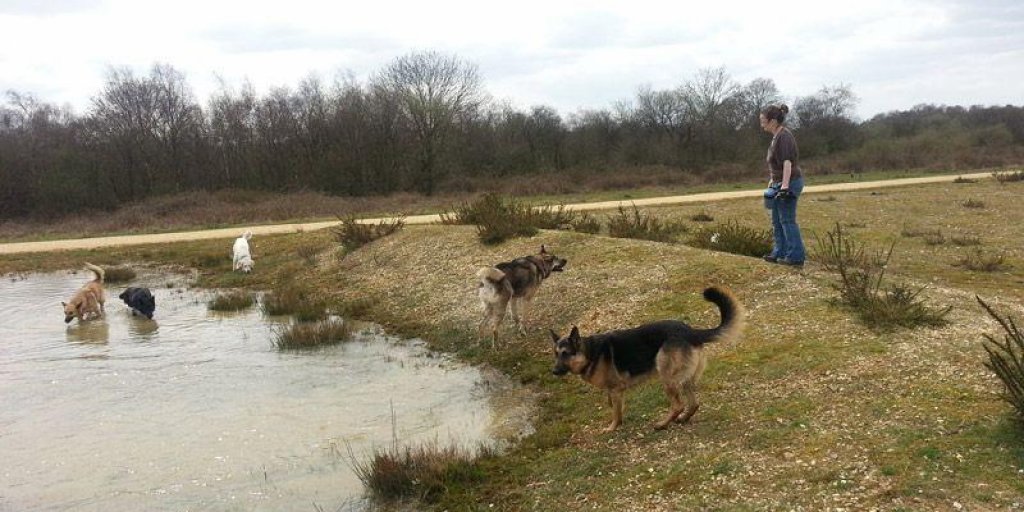
Speaking of Berkshire, as in the Berkshire Downs, the only way to close today’s post is with a link to a dog walk on Greenham Common in Berkshire. That includes the following photograph.
First Interview With the Climber Who Scaled El Capitan Without a Rope
Honnold approaching the top of El Capitan on Saturday, June 3rd. The historic event was documented for an upcoming National Geographic feature film and magazine story. Photograph by Jimmy Chin
By Mark M. Synnott
PUBLISHED June 4, 2017
Writer and climber Mark Synnott took Alex Honnold on his first international climbing expedition to Low’s Gully in Borneo back in 2009, and subsequent trips to Chad, Oman, and Newfoundland. Over the years they’ve kept up a running dialogue about the finer points of climbing and debated the dangers of free soloing—climbing alone, without ropes or other safety gear.
It seems fitting that in the first moments after Honnold had become the first person to free solo Yosemite’s El Capitan, the greatest pure feat of rock climbing in history, that he’d sit down with his old friend at the Manure Pile, a popular climbing spot at the foot of El Capitan. He ate an apple, listened to the birds, and described the experience of a lifetime. Their conversation has been edited for length and clarity.
ooOOoo
The rest of this story including the interview with Alex may be read here.
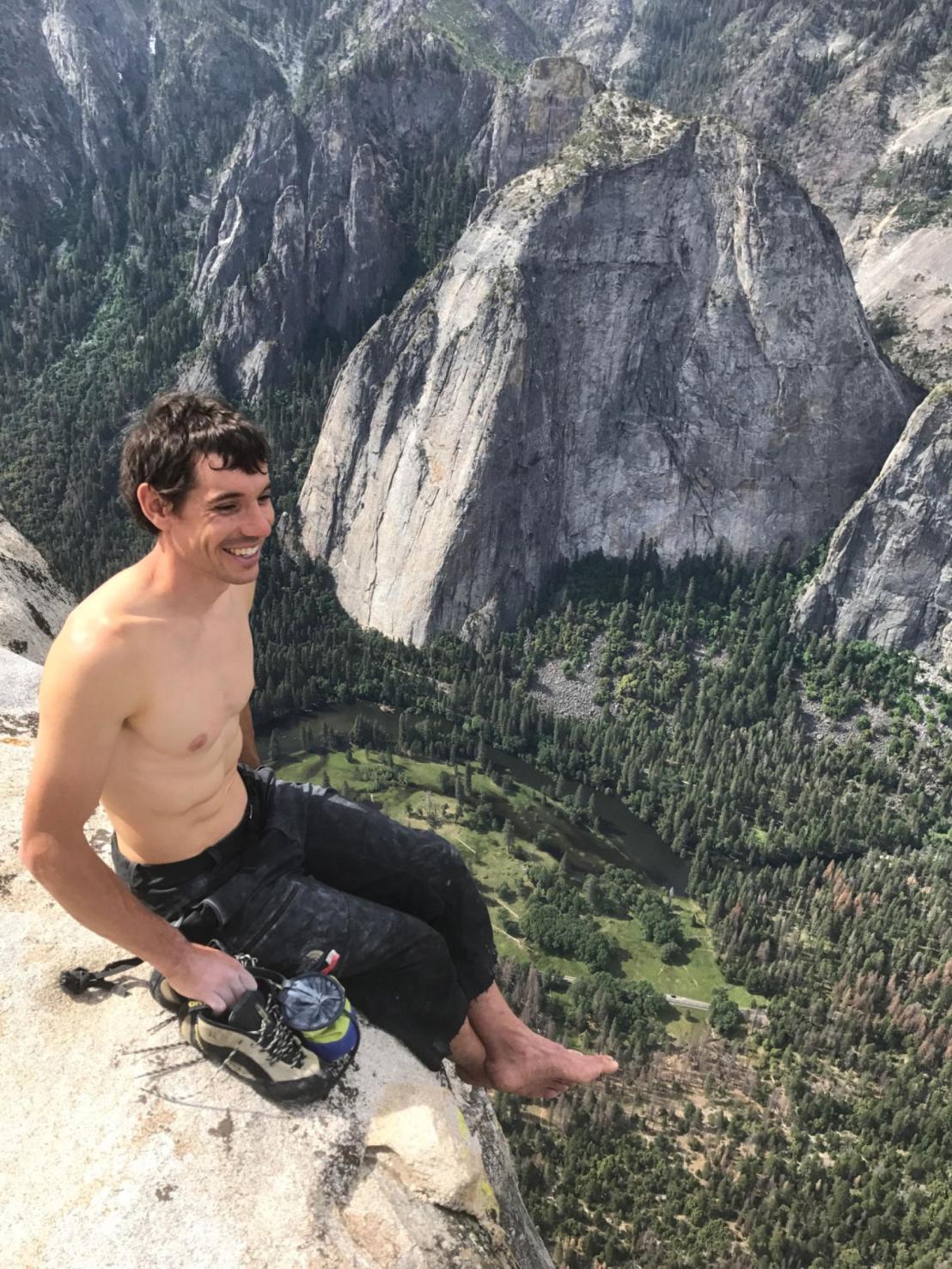
I’ll close with another photograph from that NatGeo piece.
Rock climber Alex Honnold sits atop Yosemite’s iconic El Capitan after nearly four hours of climbing alone, without ropes or any other equipment or safety gear.
El Capitan is only 500 miles drive from our home. Maybe next year’s Father’s Day outing? ( I jest, of course!)
Subsequently, I have come across a longer documentary that some may enjoy (??) watching.
The creators of “SKYGLOW,” a crowd-funded project showing the impact of urban light pollution through time-lapse videos, photos and a book, have another stunning video to share. In “Kaibab Elegy,” filmmakers Gavin Heffernan and Harun Mehmedinović visit Grand Canyon National Park and capture a rare weather event.
In the mesmerizing video, clouds build inside the canyon almost like bubbling water filling a jacuzzi as the sun rises and sets in the background, creating the pinkest sky you’ve ever seen. Those clouds roll like waves in the ocean and crash against the cliffs. This phenomenon is called full cloud inversion, and it happens when cold air is trapped in the canyon and topped by a layer of warm air, which combines with moisture and condensation.
“We were extremely lucky to be there to capture it, and it’s a collection of unique footage not found anywhere else,” Mehmedinović says.
He and Heffernan, who journeyed 150,000 miles around the globe for their new book and video series, work with the International Dark-Sky Association, a nonprofit fighting to preserve the dark skies around the world.
Why can’t we leave nature to do what’s best for our world!
Now, I would be the first to ‘tut-tut’ a little over my sub-heading. For here I am sitting in front of a computer in a room in a reasonably-sized home that undoubtedly has denuded the natural world formerly underneath the present foundations.
Thirteen acres orientated West-East.
Plus, as the property boundary shown on the above picture confirms, about 50% of our acreage is no longer wilderness.
Ergo, it is impossible for humans to live on this planet without there being consequences that conflict with the natural order of the wild.
But homes to live in are one thing. A planned madness for the Lake District in Northern England is another thing altogether.
The attempt to turn the Lake District into a World Heritage site would be a disaster
By George Monbiot, published in the Guardian 9th May 2017
If this bid for power succeeds, the consequences for Britain will be irreversible. It will privilege special interests over the public good, shut out the voices of opposition and damage the fabric of the nation, perhaps indefinitely. No, I’m not writing about the election.
In the next few weeks Unesco, the UN’s cultural organisation, will decide whether or not to grant World Heritage status to the Lake District. Once the decision is made, it is effectively irreversible.
Shouldn’t we be proud that this grand scenery, that plays such a prominent role in our perceptions of nationhood, will achieve official global recognition? On the contrary, we should raise our voices against it. World Heritage status would lock the Lake District into its current, shocking state, ensuring that recovery becomes almost impossible.
Stand back from the fells and valleys and try to judge this vista as you would a landscape in any other part of the world. What you will see is the great damage farming has inflicted: wet deserts grazed down to turf and rock; erosion gullies from which piles of stones spill; woods in which no new trees have grown for 80 years, as every seedling has been nibbled out by sheep; dredged and canalised rivers, empty of wildlife and dangerous to the people living downstream; tracts of bare mountainside on which every spring is a silent one. Anyone with ecological knowledge should recoil from this scene.
This photo was used as the frontispiece of the “State of Conservation” section of the bid documents. It is meant to show how beautiful the fells are. If we saw it anywhere else, we would recognise it as an environmental disaster.
The documents supporting the bid for world heritage status are lavishly illustrated with photos, that inadvertently reveal what has happened to the national park. But this slow-burning disaster goes almost unmentioned in the text. On the contrary, the bid repeatedly claims that the park is in “good physical condition”, and that the relationship between grazing and wildlife is “harmonious”. Only on page 535, buried in a table, is the reality acknowledged: 75% of the sites that are meant to be protected for nature are in “unfavourable condition”.
This is another photo from the bid document, showing St John’s Beck in Thirlmere. The beck is notorious for its flashy response to rainfall – rising dangerously fast. It’s not hard to see why. As the photo shows, it has been dredged and canalised on behalf of the farmers in the valley, and now contains almost no natural features that can slow the flow.
This great national property has degenerated into a sheepwrecked wasteland. And the national park partnership, that submitted the bid, wants to keep it this way: this is the explicit purpose of its attempt to achieve world heritage status. It wants to preserve the Lake District as a “cultural landscape”. But whose culture? Whose landscape? There are only 1080 remaining farms in the district. Should the entire national park be managed for their benefit? If so, why? The question isn’t raised, let alone answered.
I can see the value and beauty of the traditional shepherding culture in the Lake District. I can also see that the farming there, reliant on subsidies, quad bikes and steel barns, now bears little relationship to traditional practice. As the size of landholdings has increased, it looks ever more like ranching and ever less like the old system the bid describes. The bid’s claim that farming there is “wholly authentic in terms of … its traditions, techniques and management systems” is neither intelligible nor true. Remnants of the old shepherding culture tend to be represented ceremonially, as its customs are mostly disconnected from the farm economy.
Shepherding is not the only cultural legacy in play. The other is that the Lake District is the birthplace of the modern conservation movement. Inspired by the Picturesque and Romantic movements, much of our environmental ethic and the groups representing it, such as the National Trust, originated here. Attempts to preserve natural beauty in the district began in the mid-18th century, with complaints against the felling of trees around Derwent Water. Today, the national park cares so little for this legacy that, as the bid admits, “there are no data available” on the condition of the Lake District’s woodlands.
The small group favoured by this bid sees environmental protection as anathema. Farmers’ organisations in the Lake District have fought tooth and nail against conservation measures. They revile the National Trust and the RSPB, whose mild efforts to protect the land from overgrazing are, with the help of a lazy and compliant media, treated like bubonic plague. As one of these farming groups exults, world heritage status “gives us a powerful weapon” that they can wield against those who seek to limit their impacts. If the plan is approved, this world heritage site would be a 230,000-hectare monument to overgrazing and ecological destruction.
30 years ago, this was a bare sheep pasture (with a couple of seeding birch trees). This is a photo I took (with my failing phone) on a hill elsewhere in Britain. It gives an idea of what parts of the Lake District fells could look like if they were allowed to recover.
This is not the only sense in which the bid is unsustainable. Nowhere in its 700 pages is Brexit mentioned. It was obviously written before the referendum, and has not been updated. Yet the entire vision relies, as the bid admits, on the economic viability of the farming system, which depends in turn on subsidies from the European Union.
Without these payments, there would be no sheep farming in the Lake District: it operates at a major loss. European subsidies counteract this loss, delivering an average net farm income of £9,600. Unsurprisingly, people are leaving the industry in droves: the number of farms in the national park is declining by 2% a year. And this is before the payments cease.
What is the national park partnership, that prepared this bid, going to do – march people onto the fells at gunpoint and demand they continue farming? Or does it hope that the government, amid the massacre of public investment that will follow Brexit, will not only match but exceed the £3bn of public money currently being passed to UK farmers by the European Union? Your guess is as good as mine. This omission alone should disqualify the bid.
The failure to mention this fatal issue looks to me like one of many attempts to pull the Herdwick wool over Unesco’s eyes. The entire bid is based on a fairy tale, a pretence that the rural economy of the Lake District hasn’t changed for 200 years. If Unesco grants world heritage status on these grounds, it will inflict irreparable harm on both our natural heritage and its own good standing.
The hills, whose clothes so many profess to admire, are naked. The narrative we are being asked to support is false. The attempt to ensure that the ecological disaster zone we call the Lake District National Park can never recover from its sheepwrecking is one long exercise in woolly thinking.
When one reads this one is left with a feeling of great sadness. A sadness that our ‘movers and shakers’ can’t resist the urge to meddle. Can’t understand the beauty that is found in nature in the raw.
Earlier on I illustrated how our own property has ‘interfered’ with the wilderness of this most beautiful Oregonian countryside. But as I hope to show you with the following photographs taken on our property back in 2014 that wild beauty can be hung on to in some measure.
Looking upstream along Bummer Creek from the driveway bridge.
I have sent a message to Unesco asking if the views of the public are being taken into account and, if so, how those views are to be communicated to Unesco. If you wish to contact them then the details are on this page: http://whc.unesco.org/en/world-heritage-centre/
Any replies from Unesco will be posted here.
UPDATE 0815 PDT May 22nd.
My email yesterday to Unesco was ‘bounced back’ as an invalid email address (despite me using the email address on the Unesco website!!).
But following George Monbiot’s reply to me, giving me the name of James Bridge (jbridge@unesco.org.uk) at Unesco, I have now sent Mr. Bridge the following email:
Dear Mr. Bridge,
I write as a British citizen, born a Londoner in 1944, to protest in the strongest possible terms to the proposal to turn the English Lake District into a World Heritage Site. This is your Tentative List reference http://whc.unesco.org/en/tentativelists/5673/.
Would you please provide me with the details of where or whom within Unesco I can write setting out in detail my objections to this proposal?
Your soonest reply would be very much appreciated.
Sincerely,
Paul Handover
I won’t hold my breath over getting a quick reply.
It takes so little good news to uplift one’s heart!
For reasons I can’t readily put my finger on it’s been feeling like a bit of a struggle recently. But that’s enough of that! For our gorgeous dogs have yet another lesson for me: How little it takes for a dog to wag it’s tail!
I so frequently share stuff that I read over on the Care 2 site and why not because as the home page declares:
40,107,687 members: the world’s largest community for good
Just three days ago there was a wonderful article shared on the Care 2 site about some dogs being rescued from a so-called backyard breeder. Better than that, it highlighted the wonderful consequence of a donation from George and Amal Clooney.
Here’s the story.
ooOOoo
9 Dogs Successfully Rescued From Backyard Breeder Thanks to George and Amal Clooney
Nine lucky dogs have just had their world turned upside down in the best way possible.
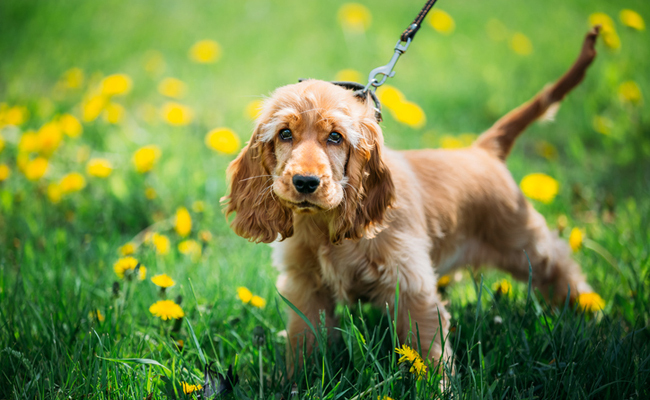
Camp Cocker Rescue, based in California, just took in the “Mojave 9″ who were being kept by a backyard breeder. They’ll be getting all the love and veterinary care they desperately need thanks to a generous donation made by George and Amal Clooney.
The nine dogs have had little human contact, and are all in need of extensive veterinary treatment for health issues ranging from mammary tumors and dental disease to skin and ear infections to ingrown toenails. The organization relies on donations, and expenses for this rescue operation were quickly rising.
“We literally didn’t know how we were even going to begin to start paying for all of these new dogs that we took in on the same day,” Camp Cocker’s founder Cathy Stanley told PEOPLE.
Now, the organization is celebrating a generous and unexpected donation of $10,000 made by George and Amal Clooney, who are parents to two adopted cocker spaniels from Camp Cocker — Einstein and Louie.
Their donation is going to help cover the cost of care for these dogs, who have never been to a vet. The Clooney’s will also be matching donations up to $10,000 for the rest of May.
“After we all did happy dances and cried with happiness for this unbelievable matching donation offer – we then asked the donors if (and only if they gave us their permission) . . . if we could reveal their names to our supporters in order to help us reach our big goal this month. They were so very gracious to give us permission to reveal their names,” Camp Cocker wrote in an update.
While this was a huge boost for them, Camp Cocker is quick to point out that no donation is too small to help.
“We have a philosophy where we want to be very inclusive of all of our supporters and it’s important to us that no matter how small of a donation, every person feels like their donation is meaningful and that we appreciate them,” Stanley added.
Hopefully news about the Mojave 9 and the attention it’s getting will help raise awareness about rescue and inspire more people to get involved … and will help find each of these precious dogs their perfect forever home.
For more on how to help, and info on how to adopt one of these dogs, check out Camp Cocker Rescue and follow updates on Facebook.
Natalie returns with her second travel installment.
Almost a month ago, the 18th March to be exact, I introduced Natalie Derham-Weston:
Those who take a close interest in this place (you poor, lost souls!) will have noticed from time to time me posting items that have been sent to me by Bob Derham. He and I first met when we were both based in Larnaca, Cyprus in the late 80’s/early 90’s and we have remained good and close friends ever since.
Natalie is Bob’s beautiful daughter and recently contacted me to ask if she might offer a guest post on her traveling experiences. Natalie has ambitions to be a travel writer and, as you are about to see, would make an excellent one.
On that day Natalie presented the first installment of her travel blog. It was very well received by you good people. Many of you left great comments.
Thus it is with great pleasure that I present Natalie’s next travel installment.
ooOOoo
Travel Blog: Installment 2: Laos
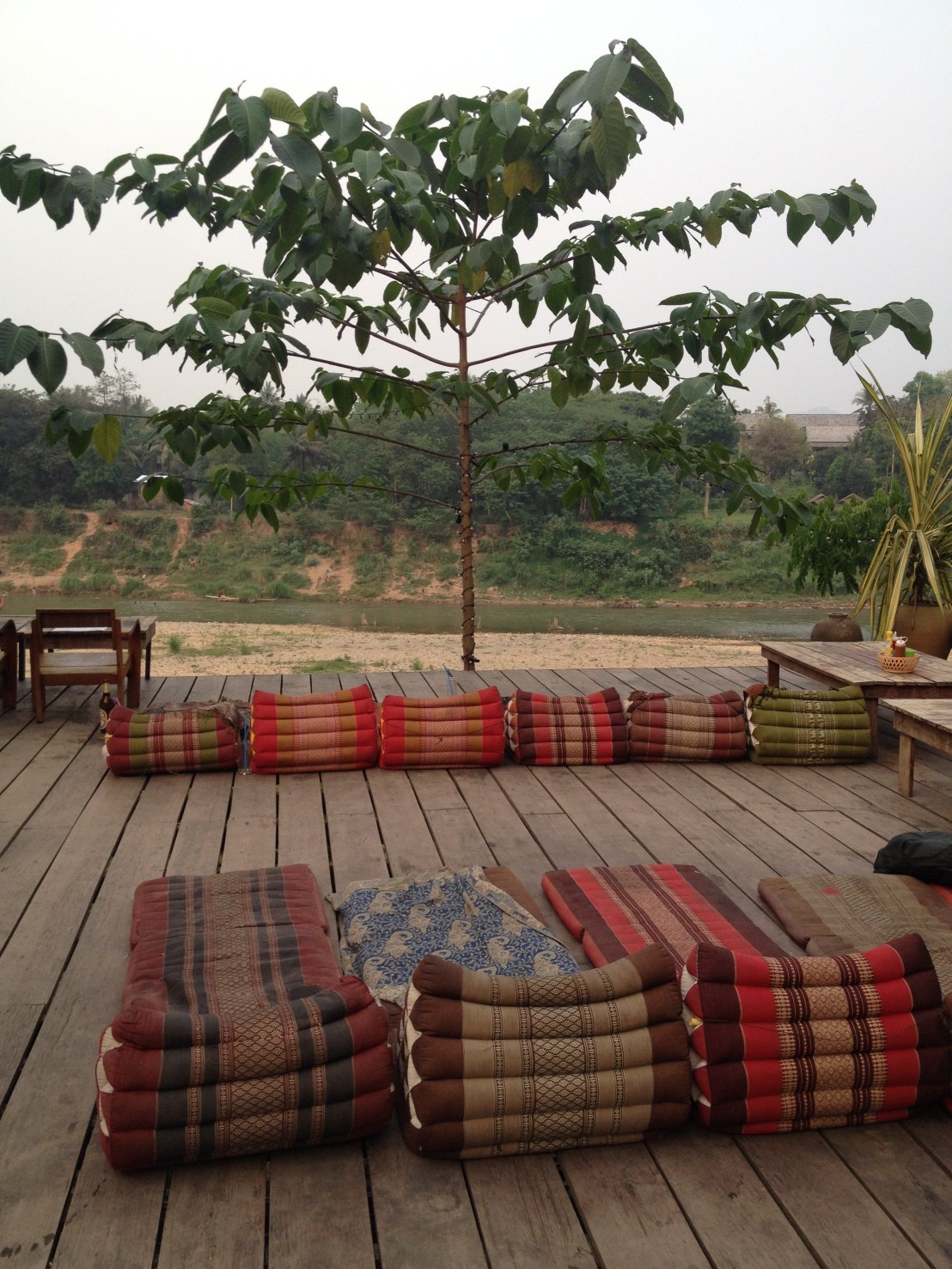
After having set the standard so high in Thailand, there was a lot riding on our following section of the journey. However before moving on to Laos, the logical next step and easiest route to take, we had a few metaphorical “bridges” to cross. Looking back, the process seems an enormous chore but at the time we didn’t question the operation. Although tiredness did sometimes set in heavily, Hannah and I had to mentally overcome this and remind ourselves how this beat office day jobs hands down.
Our last evening in Thailand was spent in Chang Mai. After some deliberation and consulting of maps and Google facilities, we booked a slow boat trip down to Mekong to take us into Laos. The evening was then free to be spent at our leisure. Pre-travelling I was naïve, and perhaps still am. Though even I had heard tell of the Thai “lady boys” and we had the greatest pleasure of spending an afternoon in their company after having looked lost and forlorn at a cross roads and took up their offer of a pool side beer. They spoke openly about their choice to change gender and what they had to undergo. This meeting was purely circumstantial but very memorable all the same. After this curious incident we caught up in town with a friend I had been to school with in South Africa. Carmen was in Thailand teaching English and had an evening to spare, which was such a lovely chance to assemble and to chew the fat as some may say.
On our wander back to our hostel we happened to bump into Nadine, a girl we had met previously on an overnight train. This is one of my most favourite parts of travelling, crossing paths with friends, having had no plans and no inkling of the others location.
The following morning consisted of some organising, dollars had to be sourced for the Laos border and check out was an early evacuation, drying our towels on the outside of our bags and heaving them downstairs to be left for the later pickup. In the meantime, we bought up some supplies to support us through the epic bus journey that we had to embark upon that afternoon. Fortunately, these snacks barely amounted to anything, and certainly made a welcome change to our expensive sandwiches and bottles of water back in the UK!
Our bus was a 7 hour journey, taking us through minute villages and stopping at temples along the way. One in particular stood out, which was pure white. The only colour was a singular red nail on a hand protruding from a statue of swarming limbs surrounding the building.
That night was our first sighting of the vast Mekong, a fast flowing murky, brown mass of water with grassy banks and elephants grazing alongside. Children were running down to the shore to bathe and play and generally splash around as much as was possible.
Our accommodation had been part of the ticket and so was basic to say the least. Dinner went untouched due to the extensive family of flies feasting on it. In the morning, the pre stated time of 8:30 got blown out the window and there was a quick panic to depart at 8. After yet more busses, there was a process in place at the border for visa stamps and signing of papers. The long queues were hot and felt much longer than they probably were.
At another stop we convened with a load of other tourists. At this point it dawned on us that neither Hannah nor I had any local currency, which was apparently an issue. So the solution to this was for me to jump on the back of a bike belonging to a tour guide within the group and find the nearest ATM and hope for the best. I sauntered back with 500,000 kip, the equivalent of about £50, and felt very wealthy! 12 of us were stuffed into an open tuktuk, with our bags precariously perched on top and sent down a steep slope to a load of boats tied up, surrounded by pigs in baskets, goats running lose and a huge swarm of blue butterflies milling around the general vicinity.
Nobody seemed able to direct us to the correct boat so after half an hour of debating and questioning, we finally got some sense out of someone and all started to engross ourselves into a comfortable fashion on a long boat. The seats had previously been in a minibus by the looks of them but made for a relatively pleasant crossing. We exhausted every possible game we could think of, including eye spy and cards and took to gazing out the open windows at the scenery, with our legs dangled over the side, dozing in the sun.
Late afternoon time saw us arriving at our overnight spot, a very small village, running solely on the likes of us, temporary tourists. Our newly made friends were mainly from Europe and we stuck together choosing a hostel on the hillside and later all enjoyed a joint dinner out. I remember this being 79,000 kip = £6.50 and what I thought was fantastic value! The shower back at the hostel was nonexistent so I made do with crouching underneath an outside tap arrangement. As it was Easter Sunday, I took some time to have a phone call back home and caught up on the news of England.
The next day entailed an 8 hour boat journey further down the Mekong into the town of Luang Prabang. Still in our group, we found a local bus into the main high street and found our hostel. We ended up in a mixed dorm with a Japanese man we had shared a bus with a few days prior, who made us endless origami frogs, two Dutch girls we had met in Pai and some others from the boat.
We had a quick nap and were out again that evening to try out the local foods and to witness the night market. I added to my collection of foreign art work with a bright Buddha head painting and some more elephant trousers. These really are the way forward, they are light, don’t crease, are breezy and make long journeys far more pleasurable. The food stalls were a sight to behold, full of black eggs, chicken intestines, heads and feet so I opted for some fresh looking fruit. Later we sat as a huge group at a popular bar called Utopia and as happens when travelling, skipped the polite introductions and befriended each other quickly. This is another part of the whole “travel” life that I appreciate. Nobody judges on mundane things that don’t matter, people just seem to mould more easily and quicker.
In the next couple of days we visited waterfalls and woke up at 5 am to witness the “Giving of Alms”. This is a procession of monks who come to receive gifts of food. We found bookshops and read on recliners overlooking the Mekong. It felt like a world away from parents and friends back home.
Collectively, our group made the decision to bus to Vang Vieng shortly after. The main attraction of this town is “tubing”, an activity for the brave and resilient. An all day drinking marathon down the river in rubber rings. I can’t deny, it was fun. The weather was glorious, and everybody was in good spirits. At each stop down the river, we were pulled in by event staff and were given bracelets (this became an obsession with some of us over our travelling time. Some sort of victorious achievement was to have as many travel bracelets as possible.)
The quick interlude in this popular backpacker location included much watching of ‘Friends’, a tradition even cited in the Lonely Planet books. Although after a couple of days, we craved some more brain stirring activities and more cultural action. So again, we took a bus to Vientiane, the capital of Laos, holding up the piles of bags in the back of the bus and awaited our next mode of transport into our next country…
ooOOoo
Please, all of you, wherever you are, have a wonderful weekend.
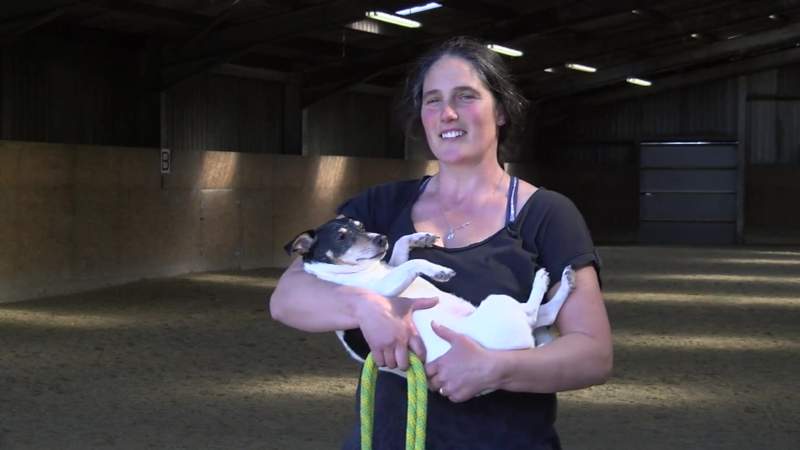
A skipping Jack Russell and her owner have set a new world record.
Eight-year-old Jessica and her owner Rachael Grylls, from Lewdown in Devon, clocked up 59 skips in one minute.
The owner of a skipping Jack Russell dog says she is “really, really, really pleased” she and her pet have set a new world record.
Rachael said: “It’s quite hard to keep jumping, talking and rewarding her at the same time. I think I’m more unfit than Jessica!”
Lovely to see this news item from my old County of Devon.
You see, I used to live just a few miles out of Totnes in Devon; in the village of Harberton. Lewdown is also in Devon, as the news item reported, but it is the other side of Dartmoor. In other words, North-West of Dartmoor as opposed to Totnes being to the South-East of Dartmoor.
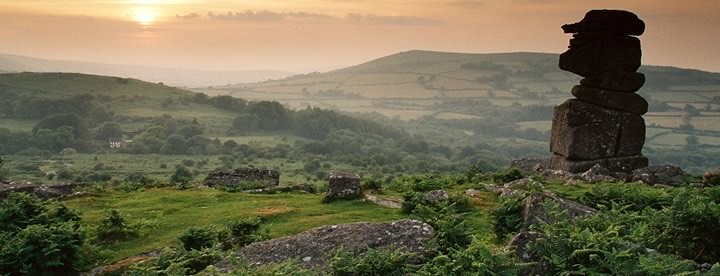
But if any of you dear readers fancy a vacation in the UK you should make a point of going to see Dartmoor. It’s a very beautiful place. (Sue, you have probably been to Dartmoor? Yes?)















 Collectively, our group made the decision to bus to Vang Vieng shortly after. The main attraction of this town is “tubing”, an activity for the brave and resilient. An all day drinking marathon down the river in rubber rings. I can’t deny, it was fun. The weather was glorious, and everybody was in good spirits. At each stop down the river, we were pulled in by event staff and were given bracelets (this became an obsession with some of us over our travelling time. Some sort of victorious achievement was to have as many travel bracelets as possible.)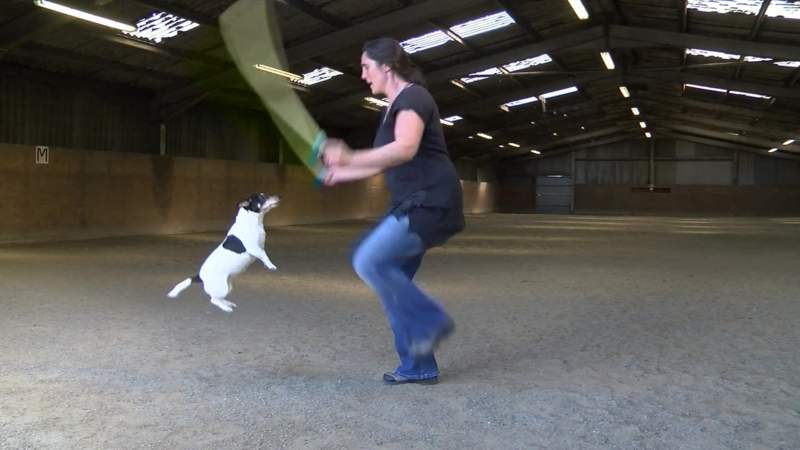
 Learning from Dogs