Citizens being let down by the standards of their governments.
Every so often – but sadly with a certain inevitability and one senses greater frequency – there descends from above the nasty stench of hypocrisy, cover-up and fraud.
No, I am not referring to the conviction recently of a British Minister for using a mobile telephone while driving, even though she was Minster of Justice when the law banning this was passed.
 No, the case in question is that of the RAF Chinook Mark 2 helicopter that crashed on 2 June 1994 en route from Northern Ireland to Inverness, killing the special forces crew and 25 senior members of Northern Ireland’s intelligence community in “the worst RAF helicopter accident in peacetime.”
Now accidents happen, but from what has been said very clearly in a variety of sources (SEE HERE IN PARTICULAR), there seems no doubt that the pilots were made the scapegoats in the ensuing enquiry.
This is the key question. Of course, NOBODY may have been “to blame” OR it may be impossible to determine who was to blame, but on the other hand, someone MAY have been to blame, and if that person or persons is in the Ministry of Defence or the Government then it is clear that there may have been the temptation to fix it so that someone ELSE took the blame, in this case the dead and therefore defenceless pilots.
A synopsis of the official report passed to me by a fellow old-boy (alumnus!) with a scientific background in avionics summarizes the main points in this tragedy:
a) There is certainly no evidence to suggest that the pilots were at fault.
b) There is a lot of evidence to suggest that the Government hindered the enquiry.
Some key points:
- The pilots were worried about the MKII aircraft and asked for a MKI version for this mission. The MoD declined this request.
- The aircraft was flying low, in a straight line towards the Mull. 18 seconds before impact the pilot requested a left hand turn to miss the Mull. The aircraft never turned.
- The FADECs (Full Authority Digital Engine Control) were programmed to record ‘failures in flight’. Looking at the FADEC’s memory after the crash showed no failures. This was the main evidence against the pilots. However, there had been several instances where other MKII pilots had lost control of the aircraft and the FADEC showed no ‘failures’. In their assessment of the code after the crash, EDS said that the error reporting software had been coded incorrectly.
- The problem with the FADEC that had been seen by several pilots was the fact that the rotors started to rotate to 120%. (Faster than they should).
- Two key personnel who should have given evidence at the enquiry (an engineer FADEC expert and a pilot who had experienced problems whilst flying the aircraft) were not allowed to give evidence.
- Prior to the accident the Government were actually in the process of suing the FADEC manufacturer because of its failings.
Two points in particular strike me personally:
A) Point SIX above; the government was AT THE TIME of the accident SUING the FADEC manufacturer because the electronics were defective in some way. Now, as a layman, it seems to me bleedin’ obvious that modern aircraft are extremely dependent on their electronics. If there were such severe faults with the fundamental instruments on this plane as there seem to have been with the FADEC (the top pilot refused to fly the craft and the govt were suing the software providers; does it get more serious than that??!!) then WHY WAS IT ALLOWED TO FLY IN THE FIRST PLACE?
B) So, KNOWING all the above, WHO authorised this aircraft to fly in poor weather conditions (it was foggy) with 25 KEY intelligence personnel on board? Apart from the personal tragedy for so many families, the loss of these key people was a devastating blow to the then government in its campaign against terrorism in Northern Ireland.
Well, despite all the above it was the two dead pilots who got the blame for what seems to have been appalling management over a long period. The Chinook’s electronics were clearly known to be dodgy yet the machine had not been grounded. You cannot imagine this happening in the civil aviation business (I HOPE!), but this is not the first time that the British government has sought to exempt itself from the strict standards it imposes on the private sector.
But the bottom line is, it is pretty clear that JUSTICE has not been done and those whose poor management and decisions almost certainly led to the accident have never been brought to account. The British Conservative party has pledged to re-examine the case. One has to ask why the CURRENT party has refused to do this. Could they themselves have something to hide?
IS this – as it seems to be – a genuine Government cover-up? and if so, do they do this sort of thing because they think that:
A) the public are idiots or B) they can get away with it? Or of course both.
We are not talking about a faceless, fascist bureaucracy here, but about BRITAIN, where standards of decency, honesty, openness and Justice are supposed to apply – or at least once applied. As for the MOD (Ministry of Defence) not only has it NOT accepted any responsibility for this accident but they are now paid BONUSES! Yes, just like City Bankers ….. And this at a time when I am unaware of bonuses being paid to soldiers fighting and often dying in Iraq and Afghanistan.
The families of those killed deserve the truth. Without the truth being primordial in our society, we descend into the realms of a banana republic or Central Asian dictatorship.
By Chris Snuggs
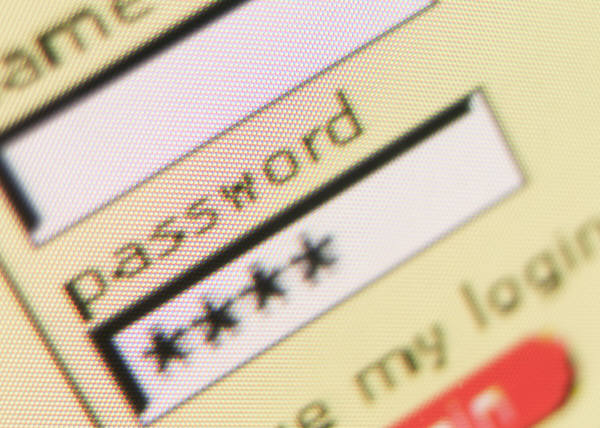 During a recent PASSWORD AUDIT at the Bank of Ireland it was found that Paddy O’Toole was using the following password: