Category: Technology

The USA as leader of a new society.

Not quite as strange as one might think.

In Paul Gilding’s book, The Great Disruption, there is a chapter called When the Dam of Denial Breaks. On page 121 Paul Gilding writes this,

To argue we are naturally greedy and competitive and can’t change is like arguing that we engage naturally in murder and infanticide as our forebears the chimps do and therefore as we did.  We have certain tendencies in our genes, but unlike other creatures we have the proven capacity to make conscious decisions to overcome them and also the proven ability to build a society with laws and values to enshrine and, critically, to enforce such changes when these tendencies come to the surface.

So don’t underestimate how profoundly we can change.  We are still capable of evolution, including conscious evolution.  This coming crisis is perhaps the greatest opportunity in millennia for a step change in human society.

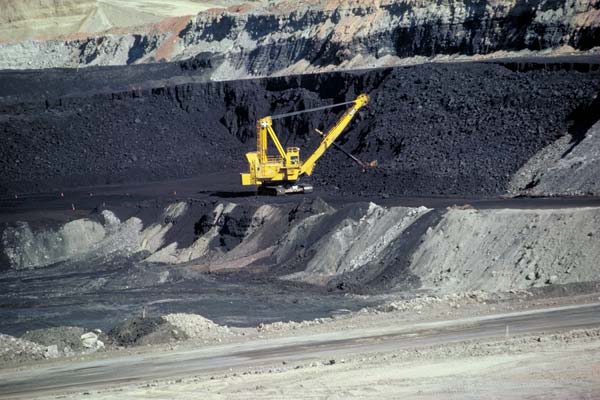
The United States of America gets a lot of stick, rightly so, for it’s greedy consumption of energy, especially the use of coal.  According to the World Coal Association, the USA in 2010 produced 932 million tons of hard coal, second in the world to China that produced 3,162 million tons.

Coal mine in Wyoming

But the one thing that the USA has shown time and time again is that it has the capacity to change very quickly, especially when the country, from its leaders to its entrepreneurs, senses a global leadership opportunity.  With that in mind, read the latest release from the Earth Policy Institute, reproduced below,

AUGUST 10, 2011
A Fifty Million Dollar Tipping Point?
Lester R. Brown

At a press conference on July 21, New York City Mayor Michael Bloomberg announced that he was contributing $50 million to the Sierra Club’s Beyond Coal Campaign. Michael Brune, head of the Sierra Club, called it a “game changer”. It is that, but it also could push the United States, and indeed the world, to a tipping point on the climate issue.

It is one thing for Michael Brune to say coal has to go, but quite another when Michael Bloomberg says so. Few outside the environmental community know who Michael Brune is, but every business person knows Michael Bloomberg as one of the most successful business entrepreneurs of his generation.

The Sierra Club’s Beyond Coal Campaign has two main goals. The first is to prevent the permitting and construction of new coal-fired power plants. So far 153 proposed power plants have been taken off the board. The second goal is to close the 492 existing plants. The Sierra Club lists 71 plants already scheduled for total or partial closure, most of them by 2016.

The efforts to stabilize climate will be won or lost with coal, the world’s largest source of carbon emissions. The effort to phase out coal is now well under way in the United States, the world’s second ranking coal user after China.

There are likely to be many ripple effects from the Bloomberg grant. To begin with, it may encourage other philanthropists to invest in climate stabilization.

The prospect for investment in coal, already deteriorating, will weaken even faster. In August 2010, the Rainforest Action Network (RAN) announced that several leading U.S. investment banks, including Bank of America and J.P. Morgan, had ceased lending to companies involved in mountaintop removal coal mining. Now with Bloomberg’s opposition, investors will be even more wary of coal.

The Bloomberg-Sierra initiative again focuses attention on the 13,200 lives lost each year in the United States due to air pollution from burning coal. If deaths from black lung disease among coal miners are included the number climbs even higher. The number of coal-related deaths in one year dwarfs total U.S. fatalities in the Iraq and Afghanistan wars. We invest heavily in protecting the lives of our troops in the Middle East, and rightly so. Bloomberg is saying let’s do the same for our people at home.

In addition, this initiative brings attention to the health care costs to society of burning coal. These are currently estimated at more than $100 billion per year, roughly $300 for every person in the United States or $1,200 for a family of four. These costs are real, but it is the American people, not the coal companies, who shoulder the burden.

Further reinforcing the urgency of phasing out coal are the more extreme weather events that climate scientists have been warning about for decades. During the first half of 2011 we watched TV news channels become weather channels. First it was a record number of tornadoes in one month, including the one that demolished Tuscaloosa, Alabama. Then, a few weeks later, an even more powerful tornado demolished Joplin, Missouri. As drought and heat sparked record or near-record wildfires in Arizona, New Mexico, and Texas, the lower Mississippi Basin was flooding. Searing heat waves scorched the southern Great Plains, the Midwest, and the East Coast. Intense heat has continued to break records across the country as Texas suffers its most severe one-year drought on record.

For coal, the handwriting is on the wall. Between 2007 and 2010, coal use in the United States dropped 8 percent. (See data.) Meanwhile, more than 300 new wind farms came online, totaling over 23,000 megawatts of generating capacity—the electricity output equivalent of 23 coal-fired power plants.

When people were asked in a national poll where they would like to get their electricity from, only 3 percent opted for coal. Despite the coal industry’s heavy expenditures to promote “clean coal,” it is still a loser in the public mind.

In addition to the Sierra Club, RAN, and a talented team of Earthjustice lawyers, the anti-coal movement also has allies in Friends of the Earth and Greenpeace, the latter with its highly developed capacity to focus public attention on environmental issues. This was evident in May when a Greenpeace team of eight daring activists scaled the 450-foot Fisk coal plant smokestack located in Chicago and painted “Quit Coal” on it. They were drawing public attention to the deadly air pollution in the city coming from the plant.

As the United States closes its coal-fired power plants, it sends a message to the world. With Michael Bloomberg’s grant bolstering the Sierra Club’s well-organized program to phase out coal, we can now imagine a coal-free United States on the horizon. The United States could again become a world leader, this time in stabilizing climate.

Copyright © 2011 Earth Policy Institute

The United States could again become a world leader, this time in stabilizing climate.”  That would be a dream come true, a dream of unimaginable consequences.

TomDispatch – The Great American Carbon Bomb.

A powerful and insightful essay from Bill McKibben about our love affair with carbon-based energy.

Introduction

I subscribe to a number of Blogs and one of them is TomDispatch.  Here’s how Tom describes what the writings are all about.

Tom Engelhardt launched Tomdispatch in November 2001 as an e-mail publication offering commentary and collected articles from the world press. In December 2002, it gained its name, became a project of The Nation Institute, and went online as “a regular antidote to the mainstream media.” The site now features Tom Engelhardt’s regular commentaries and the original work of authors ranging from Rebecca Solnit, Bill McKibben, and Mike Davis to Chalmers Johnson, Michael Klare, Adam Hochschild, Robert Lipsyte, and Elizabeth de la Vega. Nick Turse, who also writes for the site, is associate editor and research director.

Tomdispatch is intended to introduce readers to voices and perspectives from elsewhere (even when the elsewhere is here). Its mission is to connect some of the global dots regularly left unconnected by the mainstream media and to offer a clearer sense of how this imperial globe of ours actually works.

I read the TomDispatch essay from Bill McKibben on the 14th.  It caught my eye, not only because of the power of Bill’s conclusions, but also because I was deeply impressed with Bill’s book ‘eaarth’, which I reviewed on Learning from Dogs here and here.

Tom Engelhardt has given written permission for that TomDispatch to be re-published in full on Learning from Dogs.  It now follows.

First the introduction by Tom Engelhardt,

The Great American Carbon Bomb

These days, even ostriches suffer from heat waves.  More than 1,000 of them reportedly died from overheating on South African farms during a 2010 drought.  As for American ostriches, the human variety anyway, at the moment it should be increasingly hard for them to avoid extreme-weather news. After all, whether you’re in sweltering heat, staggering drought, a record fire season, or a massive flood zone, most of us are living through weird weather this year.  And if you’re one of the lucky few not in an extreme-weather district of the USA, you still won’t have a problem running across hair-raising weather stories, ranging from the possible loss of one out of every ten species on this planet by century’s end to the increasing inability of the oceans to soak up more atmospheric carbon dioxide.

Then, of course, there are those other headlines.  Here’s a typical one: “As Water Rises, Florida Officials Sit on Their Hands” (a former member of the just abolished Florida Energy and Climate Commission points out that, thanks to Republican governor Rick Scott and the legislature in the part of the country most vulnerable to rising sea levels, “there is no state entity addressing climate change and its impact”).  And here’s another: “Economy Keeps Global Warming on the Back Burner for 2012” (American climate-change “skeptics” are celebrating because “the tide of the debate — at least politically — has turned in their favor” and “political experts say that… concerns over global warming won’t carry much weight in the 2012 election”).   And then there are the polls indicating Americans are confused about the unanimity of the scientific consensus on climate change, surprisingly dismissive of global-warming dangers, worry less about it than they did a decade ago, and of major environmental issues, worry least about it.

It’s true, of course, that no weird-weather incident you experience can definitively be tied to climate change and other factors are involved.  Still, are we a nation of overheating ostriches?  It’s a reasonable enough conclusion, and in a sense, not so surprising.  After all, how does anyone react upon discovering that his or her way of life is the crucial problem, that fossil fuels, which keep our civilization powered up and to which our existence is tethered, are playing havoc with the planet?

TomDispatch regular Bill McKibben, author most recently of Eaarth: Making a Life on a Tough New Planet, is a man deeply committed to transforming us from climate-change ostriches to climate-change eagles.  Perhaps it’s time, he suggests, for the environmental movement to get one heck of a lot blunter. Tom

Here’s the essay from Bill,

Will North America Be the New Middle East?
It’s Yes or No For a Climate-Killing Oil Pipeline — and Obama Gets to Make the Call 

By Bill McKibben

The climate problem has moved from the abstract to the very real in the last 18 months.  Instead of charts and graphs about what will happen someday, we’ve got real-time video: first Russia burning, then Texas and Arizona on fire.  First Pakistansuffered a deluge, then Queensland, Australia, went underwater, and this spring and summer, it’s the Midwest that’s flooding at historic levels.

The year 2010 saw the lowest volume of Arctic ice since scientists started to measure, more rainfall on land than any year in recorded history, and the lowest barometric pressure ever registered in the continental United States.  Measured on a planetary scale, 2010 tied 2005 as the warmest year in history.  Jeff Masters, probably the world’s most widely read meteorologist, calculated that the year featured the most extreme weather since at least 1816, when a giant volcano blew its top.

Since we’re the volcano now, and likely to keep blowing, here’s his prognosis: “The ever-increasing amounts of heat-trapping gases humans are emitting into the air put tremendous pressure on the climate system to shift to a new, radically different, warmer state, and the extreme weather of 2010-2011 suggests that the transition is already well underway.”

There’s another shift, too, and that’s in the response from climate-change activists. For the first two decades of the global-warming era, the suggested solutions to the problem had been as abstract as the science that went with it: complicated schemes like the Kyoto Protocol, or the cap-and-trade agreement that died in Congress in 2010.  These were attempts to solve the problem of climate change via complicated backstage maneuvers and manipulations of prices or regulations.  They failed in large part because the fossil-fuel industry managed, at every turn, to dilute or defang them.

Clearly the current Congress is in no mood for real regulation, so — for the moment anyway — the complicated planning is being replaced by a simpler rallying cry. When it comes to coal, oil, and natural gas, the new mantra of activists is simple, straightforward, and hard to defang: Keep it in the ground!

Two weeks ago, for instance, a few veteran environmentalists, myself included, issued a call for protest against Canada’s plans to massively expand oil imports from the tar sands regions of Alberta.  We set up a new website, tarsandsaction.org, and judging from the early response, it could result in the largest civil disobedience actions in the climate-change movement’s history on this continent, as hundreds, possibly thousands, of concerned activists converge on the White House in August. They’ll risk arrest to demand something simple and concrete from President Obama: that he refuse to grant a license for Keystone XL, a new pipeline from Alberta to the Gulf of Mexico that would vastly increase the flow of tar sands oil through the U.S., ensuring that the exploitation of Alberta’s tar sands will only increase.

Forget the abstract and consider the down-and-dirty instead. You can undoubtedly guess some of the reasons for opposition to such a pipeline.  It’s wrecking native lands in Canada, and potential spills from that pipeline could pollute some of the most important ranchlands and aquifers in America. (Last week’s Yellowstone River spill was seen by many as a sign of what to expect.)

There’s an even bigger reason to oppose the pipeline, one that should be on the minds of even those of us who live thousands of miles away: Alberta’s tar sands are the continent’s biggest carbon bomb.  Indeed, they’re the second largest pool of carbon on planet Earth, following only Saudi Arabia’s slowly dwindling oilfields.

If you could burn all the oil in those tar sands, you’d run the atmosphere’s concentration of carbon dioxide from its current 390 parts per million (enough to cause the climate havoc we’re currently seeing) to nearly 600 parts per million, which would mean if not hell, then at least a world with a similar temperature. It won’t happen overnight, thank God, but according to the planet’s most important climatologist, James Hansen, burning even a substantial portion of that oil would mean it was “essentially game over” for the climate of this planet.

Halting that pipeline wouldn’t solve all tar sands problems.  The Canadians will keep trying to get it out to market, but it would definitely ensure that more of that oil will stay in the ground longer and that, at least, would be a start.  Even better, the politics of it are simple. For once, the Republican majority in the House of Representatives can’t get in the way.  The president alone decides if the pipeline is “in the national interest.” There are, however, already worrisome signs within the Obama administration.  Just this week, based on a State Department cable released by WikiLeaks, Neela Banerjee of the Los Angeles Timesreported that, in 2009, the State Department’s “energy envoy” was already instructing Alberta’s fossil-fuel barons in how to improve their “oil sands messaging,” including “increasing visibility and accessibility of more positive news stories.” This is the government version of Murdochian-style enviro-hacking, and it leads many to think that the new pipeline is already a done deal.

Still, the president can say no.  If he does, then no pipeline — and in the words of Alberta’s oil minister, his province will be “landlocked in bitumen” (the basic substance from which tar-sands oil is extracted). Even energy-hungry China, eager as it is for new sources of fossil fuels, may not be able to save him, since native tribes are doing a remarkable job of blocking another proposed pipeline to the Canadian Pacific.  Oil, oil everywhere, and nary a drop to sell. (Unfortunately that’s not quite true, but at least there won’t be a big new straw in this milkshake.)

An Obama thumbs-down on the pipeline could change the economics of the tar sands in striking ways. “Unless we get increased [market] access, like with Keystone XL, we’re going to be stuck,” said Ralph Glass, an economist and vice-president at AJM Petroleum Consultants in Calgary.

Faced with that prospect, Canada’s oilmen are growing desperate. Earlier this month, in a classic sleight of hand, they announced plans for a giant “carbon capture and sequestration” scheme at the tar sands. That’s because when it comes to global warming, tar sands oil is even worse than, say, Saudi oil because it’s a tarry muck, not a liquid, and so you have to burn a lot of natural gas to make it flow in the first place.

Now, the oil industry is proposing to capture some of the extra carbon from that cooking process and store it underground.  This is an untested method, and the accounting scheme Alberta has adopted for it may actually increase the province’s emmissions.  Even if it turns out to work perfectly and captures the carbon from that natural gas that would have escaped into the atmosphere, the oil they’re proposing to ship south for use in our gas tanks would still be exactly as bad for the atmosphere as Saudi crude. In other words, in the long run it would still be “essentially game over” for the climate.

The Saudis, of course, built their oil empire long before we knew that there was anything wrong with burning oil. The Canadians — with American help, if Obama obliges the oil lobby — are building theirs in the teeth of the greatest threat the world has ever faced. We can’t unbuild those Saudi Arabian fields, though happily their supplies are starting to slowly dwindle. What we can still do, though, is prevent North America from becoming the next Middle East.

So there will be a battle, and there will be nothing complicated or abstract about it.  It will be based on one question: Does that carbon stay in the earth, or does it pour into the atmosphere?  Given the trillions of dollars at stake it will be a hard fight, and there’s no guarantee of victory. But at least there’s no fog here, no maze of technicalities.

The last climate bill, the one the Senate punted on, was thousands of pages long. This time there’s a single sheet of paper, which Obama signs… or not.

Bill McKibben is Schumann Distinguished Scholar at Middlebury College, founder of 350.org, and a TomDispatch regular. His most recent book, just out in paperback, is Eaarth: Making a Life on a Tough New Planet.

Copyright 2011 Bill McKibben

Final note from yours truly.

Guess what I read about on the BBC News website on the 15th, the day that I put this article together?  I read about a fabulous new ship about to start construction at the Samsung Heavy Industries shipyard in South Korea.  When launched and loaded, at 600,000 tonnes, it will be the world’s largest ship.  Wow that’s impressive!

Now read here as to what is the purpose of this ‘ship’.  Here’s a flavour of that BBC news item,

Shell has unveiled plans to build the world’s first floating liquefied natural gas (FLNG) platform. The 600,000-tonne behemoth – the world’s biggest “ship” – will be sited off the coast of Australia. But how will it work?

FLNG project in figures

Deep beneath the world’s oceans are huge reservoirs of natural gas. Some are hundreds or thousands of miles from land, or from the nearest pipeline.

Tapping into these “stranded gas” resources has been impossible – until now.

At Samsung Heavy Industries’ shipyard on Geoje Island in South Korea, work is about to start on a “ship” that, when finished and fully loaded, will weigh 600,000 tonnes.

That is six times as much as the biggest US aircraft carrier.

By 2017 the vessel should be anchored off the north coast of Australia, where it will be used to harvest natural gas from Shell’s Prelude field.

Yes, it’s more technology to enable us to use more carbon!  As the article (just) touches on,

But there has been opposition from environmentalists. Martin Pritchard from Environs Kimberley says he is concerned about the potential for “oil leaks and spills”.

WWF Western Australia, [my inserted link, Ed.] meanwhile, argues that the underwater wellheads and pipelines will harm the tropical marine environment, and estimates the project will emit more than two million tonnes of greenhouse gases per year.

Sort of reminds me of that old Devonshire saying (and you need to imagine hearing it in that wonderful dialect that just still exists in this far part of SW England)

“All the world’s a little queer except thee and me …. and I have me doubts about thee!”

We are all very ‘queer’ indeed!

Space, where to now?

A rather poignant moment as the last NASA Space Shuttle is programmed to launch today.

Many of my age will have been fascinated by man’s progress in exploring space, from the Russian Sputnik 1 launched into earth orbit in October, 1957 (I was 12!) through to man first putting a foot on the surface of the moon on 20th July, 1969 on the US Apollo 11 Mission.

Still frame from the video transmission of Neil Armstrong stepping onto the surface of the Moon at 02:56 UTC on 21 July 1969.

Today, the end of an era is being played out.  Today, the last Space Shuttle, Atlantis, is due to be launched.  From the NASA website,

Date: July 8 
Mission: STS-135
Launch Vehicle: Space Shuttle Atlantis
Launch Site: Kennedy Space Center – Launch Pad 39A
Launch Time: 11:26 a.m. EDT
Description: Space shuttle Atlantis will carry the Raffaello multipurpose logistics module to deliver supplies, logistics and spare parts to the International Space Station. Atlantis also will fly a system to investigate the potential for robotically refueling existing spacecraft and return a failed ammonia pump module.

The BBC recently had an interesting news item where all six crew members of Shuttle Discovery were interviewed after that last flight, more details including a video of the interview here.

Astronauts of shuttle Discovery describe ‘amazing’ craft

At almost 27 years old, and with more than 143 million miles on the clock, the space shuttle Discovery returned from her final mission in March.

The crew of Discovery’s final mission, Commander Steve Lindsey, astronauts Eric Boe, Stephen Bowen, Alvin Drew, Michael Barratt and Nicole Stott, spoke to Breakfast News about what it was like to fly the shuttle for the last time.

So where does it go from here?

The current edition of The Economist has a quite a lot to say about that.  A leader starts with raising the question of how big the Earth is?

HOW big is the Earth? Any encyclopedia will give you an answer: its equatorial diameter is 12,756km, or, for those who prefer to think that way, 7,926 miles. Ah, but then there is the atmosphere. Should that count? Perhaps the planet’s true diameter is actually nearer 13,000km, including all its air. But even that may no longer be an adequate measure. For the Earth now reaches farther still. The vacuum surrounding it buzzes with artificial satellites, forming a sort of technosphere beyond the atmosphere. Most of these satellites circle only a few hundred kilometres above the planet’s solid surface. Many, though, form a ring like Saturn’s at a distance of 36,000km, the place at which an object takes 24 hours to orbit the Earth and thus hovers continuously over the same point of the planet.

Later, this leader speculates,

The reason for that second objective is also the reason for thinking 2011 might, in the history books of the future, be seen as the year when the space cadets’ dream finally died. It marks the end of America’s space-shuttle programme, whose last mission is planned to launch on July 8th (see articlearticle). The shuttle was supposed to be a reusable truck that would make the business of putting people into orbit quotidian. Instead, it has been nothing but trouble. Twice, it has killed its crew. If it had been seen as the experimental vehicle it actually is, that would not have been a particular cause for concern; test pilots are killed all the time. But the pretence was maintained that the shuttle was a workaday craft. The technical term used by NASA, “Space Transportation System”, says it all.

But the shuttle is now over. The ISS is due to be de-orbited, in the inelegant jargon of the field, in 2020. Once that happens, the game will be up. There is no appetite to return to the moon, let alone push on to Mars, El Dorado of space exploration. The technology could be there, but the passion has gone—at least in the traditional spacefaring powers, America and Russia.

From STS-1  launched on 12 April 1981 through to today’s planned launch of STS-135, it indeed has been an era for science, for exploration and for adventure.

Iconic view of man's urge to explore

UPDATE 10:30 am Mountain Time

Up and safely away!

Still awe-inspiring after all these years.  Live BBC feed is here. Travel safely guys!

More from Lester Brown

The president of Earth Policy Institute presents his thesis on how best to save mankind.

Before turning to the theme of this Post, just a personal message.  I arrived back home in Payson, Arizona yesterday and, as much as I love the huge number of readers that now regularly visit Learning from Dogs, I love my dear wife rather more 😉  So for the next few days, please understand why this Blog will be tending to ‘republish’ the fine works of others, to lessen the creative load on yours truly.

Here’s the Lester Brown article that was recently published on the Earth Policy Institute website.

JUNE 09, 2011
Turning Toward the Sun for Energy

Lester R. Brown

One key component of the Plan B climate stabilization strategy is solar energy. Solar is even more ubiquitous than wind energy and can be harnessed with both solar photovoltaics (PV) and solar thermal collectors.

Solar PV—both silicon-based and thin film—converts sunlight directly into electricity. The growth in solar cell production climbed from an annual expansion of 38 percent in 2006 to an off-the-chart 89 percent in 2008, before settling back to 51 percent in 2009. At the end of 2009, there were 23,000 megawatts of PV installations worldwide, which when operating at peak power could match the output of 23 nuclear power plants. Germany, with an installed PV power generating capacity of almost 10,000 megawatts, is far and away the world leader in installations.

On the manufacturing front, the early leaders—the United States, Japan, and Germany—have been overtaken by China, which produces more than twice as many solar cells annually as Japan. World PV production has roughly doubled every two years since 2001 and exceeded 20,000 megawatts in 2010.

Historically, photovoltaic installations were small-scale—mostly residential rooftop installations. Now that is changing as utility-scale PV projects are being launched in several countries. The United States, for example, has under construction and development some 77 utility-scale projects, adding up to 13,200 megawatts of generating capacity. Morocco is now planning five large solar-generating projects, either photovoltaic or solar thermal or both, each ranging from 100 to 500 megawatts.

More and more countries, states, and provinces are setting solar installation goals. Italy’s solar industry group is projecting 15,000 megawatts of installed capacity by 2020. Japan is planning 28,000 megawatts by 2020. The state of California has set a goal of 3,000 megawatts by 2017. Solar-rich Saudi Arabia recently announced that it plans to shift from oil to solar energy to power new desalination plants that supply the country’s residential water. It currently uses 1.5 million barrels of oil per day to operate some 30 desalting plants.

With installations of solar PV climbing, with costs continuing to fall, and with concerns about climate change escalating, cumulative PV installations could reach 1.5 million megawatts (1,500 gigawatts) in 2020. Although this estimate may seem overly ambitious, it could in fact be conservative, because if most of the 1.5 billion people who lack electricity today get it by 2020, it will likely be because they have installed home solar systems. In many cases, it is cheaper to install solar cells for individual homes than it is to build a grid and a central power plant.

The second, very promising way to harness solar energy on a massive scale is a large-scale solar thermal technology, often referred to as concentrating solar power (CSP), that uses reflectors to concentrate sunlight on a liquid, producing steam to drive a turbine and generate electricity. One of the attractions of utility-scale CSP plants is that heat during the day can be stored in molten salt at temperatures above 1,000 degrees Fahrenheit. The heat can then be used to keep the turbines running for eight or more hours after sunset.

CSP first came on the scene with the construction of a 350-megawatt solar thermal power plant complex in California. Completed in 1991, it was the world’s only utility-scale solar thermal generating facility until the completion of a 64-megawatt power plant in Nevada in 2007.

Although solar thermal power has been slow to get under way, utility-scale plants are being built rapidly now, led by the United States and Spain. The United States has more than 40 solar thermal power plants operating, under construction, and under development that range from 10 to 1,200 megawatts each. Spain has 60 power plants in these same stages of development, most of which are 50 megawatts each. The American Solar Energy Societynotes that solar thermal resources in the U.S. Southwest can satisfy current U.S. electricity needs nearly four times over.

In July 2009, a group of 11 leading European firms and one Algerian firm, led by Munich Re and including Deutsche Bank, Siemens, and ABB, announced that they were going to craft a strategy and funding proposal to develop solar thermal generating capacity in North Africa and the Middle East. Their proposal would meet the needs of the producer countries and supply part of Europe’s electricity via undersea cable.

This initiative, known as the Desertec Industrial Initiative, could develop 300,000 megawatts of solar thermal generating capacity—huge by any standard. Caio Koch-Weser, vice chair of Deutsche Bank, noted that “the Initiative shows in what dimensions and on what scale we must think if we are to master the challenges from climate change.”

Even before this proposal, Algeria—for decades an oil exporter—was planning to build 6,000 megawatts of solar thermal generating capacity for export to Europe via undersea cable. The Algerians note that they have enough harnessable solar energy in their vast desert to power the entire world economy. This is not a mathematical error. The German government was quick to respond to the Algerian initiative. The plan is to build a 1,900-mile high-voltage transmission line from Adrar deep in the Algerian desert to Aachen, a town on Germany’s border with the Netherlands.

At the global level, Greenpeace, the European Solar Thermal Electricity Association, and the International Energy Agency’s SolarPACES program have outlined a plan to develop 1.5 million megawatts of solar thermal power plant capacity by 2050. For Earth Policy Institute’sPlan B to save civilization, we suggest a more immediate world goal of 200,000 megawatts by 2020, a goal that may well be exceeded as the economic potential becomes clearer.

The pace of solar energy development is accelerating as the installation of rooftop solar water heaters—solar thermal collectors on a smaller scale—takes off. This technology is sweeping China like wildfire, with an estimated 1.9 billion square feet of rooftop solar thermal collectors installed, enough to supply 120 million Chinese households with hot water. Other developing countries such as India and Brazil may also soon see millions of households turning to this inexpensive water heating technology. Once the initial installment cost of rooftop solar water heaters is paid back, the hot water is essentially free.

In Europe, where energy costs are relatively high, rooftop solar water heaters are also spreading fast. Systems typically pay for themselves in electricity savings within 10 years. In Austria, 15 percent of all households now rely on them for hot water. As in China, in some Austrian villages nearly all homes have rooftop collectors. And some 2 million Germans are now living in homes where water and space are both heated by rooftop solar systems.

The U.S. rooftop solar water heating industry has historically concentrated on a niche market—selling and marketing 100 million square feet of solar water heaters for swimming pools between 1995 and 2005. The industry was poised to mass-market residential solar water and space heating systems when federal tax credits were introduced in 2006. Led by Hawaii, California, and Florida, annual U.S. installation of these systems has more than tripled since 2005. The state of Hawaii requires that all new single-family homes have rooftop solar water heaters. California aims to install 200,000 solar water heaters by 2017, and New York State aims to have 170,000 residential solar water systems in operation by 2020.

With the cost of rooftop heating systems declining, many other countries will likely join Israel, Spain, and Portugal in mandating that all new buildings incorporate rooftop solar water heaters. Worldwide, Plan B calls for a total of 1,100 thermal gigawatts of rooftop solar water and space heating capacity by 2020.

Moving fast to harness the world’s enormous solar potential would bring a clear win for local economies and for the climate.

Adapted from World on the Edge by Lester R. Brown. Full book available online atwww.earth-policy.org/books/wote

There are a couple of videos well worth watching on YouTube, one that’s just under 10 minutes,

and a full-length one of 1 hr 7 minutes,

Stunning NASA Shuttle picture

The incredible achievements of man.

The International Space Station and the Docked Space Shuttle Endeavour

From the BBC website,

By Jonathan Amos
Science correspondent, BBC News

It is a stunning image and one that is bound to be reproduced over and over again whenever they recall the history of the US space shuttle.

The picture was taken by Italian astronaut Paolo Nespoli as he left the International Space Station in May in a Soyuz capsule to return to Earth.

Safety procedures mean the Russian vehicle would never normally be in transit when a shuttle is present.

It makes this the first-ever image of an American orbiter docked to the ISS.

Endeavour sits firmly on the bow of the station, which is moving across the surface of the Earth at a speed of 27,000km/h (17,000mph) and at an altitude of approximately 355km (220 miles).

Nespoli’s camera is looking along the ISS’s truss, or backbone, which carries the four sets of giant solar wings. The stern is occupied by Europe’s robotic freighter – the Johannes Kepler ship.

The pictures were acquired on 23 May but were only released by the US space agency (Nasa) on Tuesday [7th June, PH]. They had been eagerly awaited by space fans.

Nespoli had spent a lot of time during his 159-day stay at the station taking pictures of Earth and life aboard the international outpost. Many of these images were posted on his mission Flickr account. It was widely expected therefore that the European Space Agency astronaut would get some excellent shots during the unique departure.

Enthusiasts on the ground with telescopes routinely try to snap a shuttle attached to the ISS, and some of the results have been very impressive. But none of these pictures compares to the majestic portrait acquired by Nespoli so close to the orbiting complex.

The timing and subject are also perfect. Endeavour is seen here making her final sortie into orbit, making the last big US assembly item delivery – a $2bn particle physics experiment known as the Alpha Magnetic Spectrometer. The seven-tonne machine now sits on top of the platform.

Endeavour was also the orbiter chosen to take up the first American segment of the platform when the project had just got started in the late 1990s.

The youngest of Nasa’s shuttles returned to Earth on 1 June and will now be prepared for public display at a science museum in California. Sister ship Atlantis stands ready on the launch pad in Florida for a swansong of her own in July. Once her mission is done, no orbiter will ever fly again.

Nespoli’s crewmates in the Soyuz were Russian cosmonaut and Expedition 27 commander Dmitry Kondratyev; and Nasa astronaut Cady Coleman. Apart from the photo opportunity, their departure was a standard ISS crew rotation flight.

Their replacements blasted off from Kazakhstan on Tuesday in another Soyuz vehicle. Nasa astronaut Mike Fossum, Russian cosmonaut Sergei Volkov and Japanese astronaut Satoshi Furukawa are scheduled to arrive at the ISS on Thursday, raising its complement once again to six individuals.

The venerable Soyuz will be the only way for astronauts and cosmonauts to reach the platform in the years following the retirement of the shuttle fleet.

Nasa hopes some US commercial carriers will become available in the middle of the decade.

The NASA weblink attributed above is here, from which can be read,

This image of the International Space Station and the docked space shuttle Endeavour, flying at an altitude of approximately 220 miles, was taken by Expedition 27 crew member Paolo Nespoli from the Soyuz TMA-20 following its undocking on May 23, 2011 (USA time). The pictures taken by Nespoli are the first taken of a shuttle docked to the International Space Station from the perspective of a Russian Soyuz spacecraft.  Onboard the Soyuz were Russian cosmonaut and Expedition 27 commander Dmitry Kondratyev; Nespoli, a European Space Agency astronaut; and NASA astronaut Cady Coleman. Coleman and Nespoli were both flight engineers. The three landed in Kazakhstan later that day, completing 159 days in space.

Do go to the NASA website here as there are a total of 40 stunning images.

Solar Impulse

Just enjoy this.

Solar Impulse

From Wired Magazine,

“In a world dependent on fossil energies, Solar Impulse is a paradox, almost a provocation.”

Press release gobbledygook? Absolutely. But you’ve got to give it up for any company with the guts to try designing and building a true solar airplane.

We’ve written about Solar Impulse — it’s a consortium of European financial and technology parters led by the Federal Institute of Technology in Lausanne, Switzerland. The group is working on a solar-powered plane that can take off under its own power without generating any emissions at all. The general idea is that sunlight would not only power the plane during the day but would also charge its lithium batteries, allowing it to fly around the clock pollution free.

That was written May 12th, 2008.  This is now!  Landing at Brussels International Airport, May 2011.

And here’s the Solar Impulse website.

50 years; just like that!

A memorable event fifty years ago, this day!

President John F. Kennedy's May 25, 1961 Speech before a Joint Session of Congress

On the 25th May, 1961, President John Kennedy summoned a joint session of Congress and asked America to commit itself to a goal – that of landing a man on the moon and returning him safely to Earth before the decade was out.

There’s a good link on the NASA site to the speech.

Plus a very good analysis of these 50 years in the Lexington column in last week’s The Economist.  As Lexington’s Notebook blog puts it,

That Kennedy speech plus 50

May 19th 2011, 15:47 by Lexington

MY print column this week notes that it is half a century next week since John Kennedy called for sending a man to the moon and returning him safely to Earth. The bottom line, I think:

If we can send a man to the moon, people ask, why can’t we [fill in the blank]? Lyndon Johnson tried to build a “great society”, but America is better at aeronautical engineering than social engineering. Mr Obama, pointing to competition from China, invokes a new “Sputnik moment” to justify bigger public investment in technology and infrastructure. It should not be a surprise that his appeals have gone unheeded. Putting a man on the moon was a brilliant achievement. But in some ways it was peculiarly un-American—almost, you might say, an aberration born out of the unique circumstances of the cold war. It is a reason to look back with pride, but not a pointer to the future.

A fascinating period!

Chernobly, Fukushima and change.

From out of darkness has to come the dawn

One side effect of the earthquake and tsunami that hit Northern Japan on the 11th March causing an explosion at the Fukushima nuclear power station is that the anniversary of the Chernobyl disaster is much more a news item than I suspect it might have been.

The nuclear accident at Chernobyl in Russia occurred on the 26th April, 1986, twenty-five years ago today.  One major difference between the two disasters was, of course, how they were reported.

Here’s a small extract from a fuller article in The Financial Times published on the 19th April written by Tony Barber who was in Russia those 25 years ago.

Twenty-five years after the explosion at the Ukrainian facility, I vividly recall every detail of those terrible days of April 1986. I was a 26-year-old foreign correspondent working in Moscow for Reuters news agency. On Friday, April 25, I flew to Kiev to spend a couple of days with Rhona, an ebullient Scottish friend who was teaching at the city’s university under a British Council programme. I was the only western journalist in Kiev that weekend.

While we caroused the night away, extraordinary events were unfolding 130km to the north. Technicians were conducting experiments that involved the disabling of automatic shutdown mechanisms at the plant’s fourth reactor. After a tremendous power surge, the reactor blew up at 1.23am on Saturday, April 26.

Except for high-ranking Communist party officials, the KGB and a number of scientists, doctors and fire-fighters, no one in the Soviet Union, let alone the wider world, knew anything about this. Soviet habits of secrecy and deception kept millions of people in the dark even as radiation spread across Ukraine, Belarus, Russia and beyond.

Certainly the disaster in Japan was widely broadcast across the world without any delays or restraints.  But the thrust of this Post today is to point out what, in the end, will have to be understood by the majority of the world’s peoples and their representatives in power.  That is that our dependence, our love affair, with cheap carbon-based energy has to come to an end, and soon.

On the 26th March, The Economist published a briefing on nuclear power entitled, When the steam clears.  As with so many of this newspaper’s essays, it was very well written [I am a subscriber to The Economist; have been for years.]  Here’s a taste of the article,

When last year a volcano closed the skies over Europe and a blown-out oil-rig turned the Gulf of Mexico black, there was no widespread enthusiasm for giving up oil or air travel. But nuclear power is much less fundamental to the workings of the world than petrol or aeroplanes. Nuclear reactors generate only 14% of the world’s electricity, and with a median age of about 27 years (see chart) and a typical design life of 40 a lot are nearing retirement. Although the world is eager to fly and thirsts for oil, it has had little appetite for new nuclear power for the past quarter of a century.

And towards the end of the article, this,

Distressing though it is, the crisis at Fukushima Dai-ichi is not in itself a reason for the world to change energy policy. The public-health effects seem likely, in the long run, to be small. Coal, with its emissions of sulphur, mercury and soot, will continue to kill far more people per kilowatt hour than nuclear does. But as an opportunity to reflect it may be welcome.  [my italics]

Power of hope

We need a continued growing awareness of the craziness of using coal and oil as primary sources of energy, and from that awareness a growing political pressure for change.  Change that recognises that mankind’s present energy strategies of continuing to pump carbon-based gases into the atmosphere are insane; pure and simple.

We need more of these examples:

Science Daily

University of Minnesota researchers are a key step closer to making renewable petroleum fuels using bacteria, sunlight and carbon dioxide.

Scientific American magazine

As the world continues to grapple with energy-related pollution and poverty, can innovation help?

The clock is ticking, as I wrote here a few days ago.

Apollo 13 – who remembers?

55:55:20 – Swigert: “Okay, Houston, we’ve had a problem here.”

Apollo 13

Probably one of the most famous phrases from the whole Apollo program, these immortal words were uttered shortly before 10.10 PM EST on April 13th, 1970.

There is so much material around that it would be pointless covering too much ground in this Post.  So why the Post today?

Because today, too, is the 13th April.  So on this day, 41 years ago, the world came together held its collective breath and prayed for a successful outcome to this scary disaster.

There are some wonderful archives around from NASA.  Here’s one that covers the chronology of events of that famous accident.

The following includes events from 2.5 minutes before the accident to about 5 minutes after. Times given are in Ground Elapsed Time (G.E.T.), that is, the time elapsed since liftoff of Apollo 13 on April 11, 1970, at 2:13 PM Eastern Standard Time (EST). 55:52:00 G.E.T. is equal to 10:05 PM EST on April 13, 1970.

Also, those who want more information, may wish to go here, here and here

And 41 years ago, this coming Sunday, i.e. April 17th 1970, with the whole world praying for their safe return, Apollo 13 splashed down near Samoa.

Four hours before landing, the crew shed the service module; Mission Control had insisted on retaining it until then because everyone feared what the cold of space might do to the unsheltered CM heat shield. Photos of the Service Module showed one whole panel missing, and wreckage hanging out, it was a sorry mess as it drifted away. Three hours later the crew left the Lunar Module Aquarius and then splashed down gently in the Pacific Ocean near Samoa. From here.

In a very real sense, Apollo 13, like a number of the other historic Apollo flights, is a wonderful reminder of something that this Planet needs right now.  A coming together of all the peoples of this beautiful planet, a unity of mankind, to remind us in these fragile and difficult times of the saying, ‘United we stand, divided we fall.’

Finally, this Post is published, not only on the 41st anniversary of that memorable Apollo Flight but the day after the 50th anniversary of Yuri Gagarin’s first flight of a human into space, the 12th April, 1961.

Plan B for Planet Earth

Going for a sustainable future is not ‘pie in the sky’.

I have been attempting to write on Learning from Dogs about my experience reading the Lester Brown book, World on the Edge. In

Lester Brown's book

fact, there have been four articles written all with the title Total, Utter Madness (Pts 1 to 4.)  If you read the early chapters of Lester’s book you will have no issue with the notion of summarising the propositions that he presents as ‘total, utter madness’.

There was another article published on the 3rd March that I called, ‘Where are we off to?‘ that presented more information about the fragility of mankind on this Planet if we don’t change our ways, and soon. (There are links to all my articles from this 3rd March piece.)

But much of the second half of Lester Brown’s book is about the relative ease with which we can change the way we all live and offer the generations ahead of us a real alternative to the selfish, greedy way in which we treat Planet Earth at present.  That alternative is called Plan B.

Plan B offers the real hope of developing a sustainable relationship with our planet.  So this post is to reproduce in full a recent release by the Earth Policy Institute about wind power.

Wind: The Center of the Plan B Economy

Lester R. Brown

For many years, a small handful of countries dominated growth in wind power, but this is changing as the industry goes global, with more than 70 countries now developing wind resources. Between 2000 and 2010, world wind electric generating capacity increased at a frenetic pace from 17,000 megawatts to nearly 200,000 megawatts.

Measured by share of electricity supplied by wind, Denmark is the leading nation at 21 percent. Three north German states now get 40 percent or more of their electricity from wind. For Germany as a whole, the figure is 8 percent—and climbing. And in the state of Iowa, enough wind turbines came online in the last few years to produce up to 20 percent of that state’s electricity.

In terms of sheer volume, the United States leads the world with 35,000 megawatts of wind generating capacity, followed by China and Germany with 26,000 megawatts each. Texas, long the leading U.S. oil-producing state, is now also the nation’s leading generator of electricity from wind. It has 9,700 megawatts of wind generating capacity online, 370 megawatts more under construction, and a huge amount under development. If all of the wind farms projected for 2025 are completed, Texas will have 38,000 megawatts of wind generating capacity—the equivalent of 38 coal-fired power plants. This would satisfy roughly 90 percent of the current residential electricity needs of the state’s 25 million people.

In July 2010, ground was broken for the Alta Wind Energy Center (AWEC) in the Tehachapi Pass, some 75 miles north of Los Angeles, California. At 1,550 megawatts, it will be the largest U.S. wind farm. The AWEC is part of what will eventually be 4,500 megawatts of renewable power generation, enough to supply electricity to some 3 million homes.

Since wind turbines occupy only 1 percent of the land covered by a wind farm, farmers and ranchers can continue to grow grain and graze cattle on land devoted to wind farms. In effect, they double-crop their land, simultaneously harvesting electricity and wheat, corn, or cattle. With no investment on their part, farmers and ranchers typically receive $3,000–10,000 a year in royalties for each wind turbine on their land. For thousands of ranchers in the U.S. Great Plains, wind royalties will dwarf their net earnings from cattle sales.

In considering the energy productivity of land, wind turbines are in a class by themselves. For example, an acre of land in northern Iowa planted in corn can yield $1,000 worth of ethanol per year. That same acre used to site a wind turbine can produce $300,000 worth of electricity per year. This helps explain why investors find wind farms so attractive.

Impressive though U.S. wind energy growth is, the expansion now under way in China is even more so. China has enough onshore harnessable wind energy to raise its current electricity consumption 16-fold. Today, most of China’s 26,000 megawatts of wind generating capacity come from 50- to 100-megawatt wind farms. Beyond the many other wind farms of that size that are on the way, China’s new Wind Base program is creating seven wind mega-complexes of 10 to 38 gigawatts each in six provinces (1 gigawatt equals 1,000 megawatts). When completed, these complexes will have a generating capacity of more than 130 gigawatts. This is equivalent to building one new coal plant per week for two and a half years.

Of these 130 gigawatts, 7 gigawatts will be in the coastal waters of Jiangsu Province, one of China’s most highly industrialized provinces. China is planning a total of 23 gigawatts of offshore wind generating capacity. The country’s first major offshore project, the 102-megawatt Donghai Bridge Wind Farm near Shanghai, is already in operation.

In Europe, which now has 2,400 megawatts of offshore wind online, wind developers are planning 140 gigawatts of offshore wind generating capacity, mostly in the North Sea. There is enough harnessable wind energy in offshore Europe to satisfy the continent’s needs seven times over.

In September 2010, the Scottish government announced that it was replacing its goal of 50 percent renewable electricity by 2020 with a new goal of 80 percent. By 2025, Scotland expects renewables to meet all of its electricity needs. Much of the new capacity will be provided by offshore wind.

Denmark is looking to push the wind share of its electricity to 50 percent by 2025, with most of the additional power coming from offshore. In contemplating this prospect, Danish planners have turned conventional energy policy upside down. They plan to use wind as the mainstay of their electrical generating system and to use fossil-fuel-generated power to fill in when the wind dies down.

Spain, which has 19,000 megawatts of wind-generating capacity for its 45 million people, got 14 percent of its electricity from wind in 2009. On November 8th of that year, strong winds across Spain enabled wind turbines to supply 53 percent of the country’s electricity over a five-hour stretch. London Times reporter Graham Keeley wrote from Barcelona that “the towering white wind turbines which loom over Castilla-La Mancha—home of Cervantes’s hero, Don Quixote—and which dominate other parts of Spain, set a new record in wind energy production.”

In 2007, when Turkey issued a request for proposals to build wind farms, it received bids to build a staggering 78,000 megawatts of wind generating capacity, far beyond its 41,000 megawatts of total electrical generating capacity. Having selected 7,000 megawatts of the most promising proposals, the government is issuing construction permits.

In wind-rich Canada, Ontario, Quebec, and Alberta are the leaders in installed capacity. Ontario, Canada’s most populous province, has received applications for offshore wind development rights on its side of the Great Lakes that could result in some 21,000 megawatts of generating capacity. The provincial goal is to back out all coal-fired power by 2014.

On the U.S. side of Lake Ontario, New York State is also requesting proposals. Several of the seven other states that border the Great Lakes are planning to harness lake winds.

Earth Policy Institute’s Plan B to save civilization has four components: stabilizing climate, restoring earth’s natural support systems, stabilizing population, and eradicating poverty. At the heart of the plan is a crash program to develop 4,000 gigawatts (4 million megawatts) of wind generating capacity by 2020, enough to cover over half of world electricity consumptionin the Plan B economy. This will require a near doubling of capacity every two years, up from a doubling every three years over the last decade.

This climate-stabilizing initiative would mean the installation of 2 million wind turbines of 2 megawatts each. Manufacturing 2 million wind turbines over the next 10 years sounds intimidating—until it is compared with the 70 million automobiles the world produces each year.

At $3 million per installed turbine, the 2 million turbines would mean spending $600 billion per year worldwide between now and 2020. This compares with world oil and gas capital expenditures that are projected to double from $800 billion in 2010 to $1.6 trillion in 2015.

Adapted from Chapter 9, “Harnessing Wind, Solar, and Geothermal Energy” in Lester R. Brown, World on the Edge: How to Prevent Environmental and Economic Collapse (New York: W.W. Norton & Company, 2011), available online at www.earth-policy.org/books/wote.