Category: Spirituality

Synecdoche : Little World

The concluding part of Hariod Brawn’s wonderful essay.

Haroid’s opening part was republished by me in this place yesterday, under the blog title of Alone in a sea of many. For the concluding part, I have named this blog post in accordance with Hariod’s chosen name. Thank you to all who read Part One and I hope you find Part Two equally stimulating.

ooOOoo

Synecdoche (Part Two): Little Person

Fool’s Cap Map of the World. Unknown origin c.1580-1590

In the first part of this article, we discussed how each person, in coming to understand how they construct themselves as the self-entity they take themselves to be, must in the process come to understand how all others do too. In other words, self-knowledge is not particular to the individual, because the self – in essence an embedded, accumulating and by graduation morphing narrative and body schema – comes into being by identical means in our species. Each of us remains unique in many ways, such as in our formative experience, our psychological make-up, conditioned traits, genetic inheritance, and in our individuated physicalities. Yet that which we regard as our quintessence, the enduring internalised construct we each unquestioningly hold as the self and the aspect of ourselves which we most intimately cling to, is little more than a formulaic pretence determined and governed solely by means of evolved, unbidden and unconscious processes.

Each character has a given name, societal position, cultural identity and perhaps a hierarchical status; yet all such markers are in part a figure of speech, or synecdoche, denoting an undeniable correlation with countless others. The markers delineate superficial distinctions alone, and the greater the number of them, the more we remove from our understanding the underlying truth of the other’s commonality with us. In much the same way, in our coming to understand how the worlds we ourselves inhabit are constructed, we see also that same world as a synecdoche for all others. How I relate to my home and environment, my relatives and loved ones, those I engage with out of chance or necessity, and those whom I depend upon or those who depend upon me, human or non-human, all make up my little world. It is a relational world, an interactive adventure forged from myriad connections, surprisingly few of which do I have great control over.

The argument against this is to assert that such correlations are facile, that how can I, a materially secure Westerner living in a largely strife-free state, possibly share any commonality with the oppressed and malnourished other on, say, the Indian sub-continent? Are these conditions not worlds apart, if only qualitatively? Well, in examining human suffering, we find it has a common genesis, proceeding as it does from the mind. For example, we commonly mistake unpleasant bodily sensations for suffering, failing to distinguish between physical pain and the attendant overlay of mental anguish. Is the suffering of the wealthy financier who contemplates suicide at her portfolio’s decimation greater than that of the homesteader in sub-Saharan Africa facing a crop failure of a few sacksful of grain? Objectively, then yes, these are worlds apart, yet the subjective suffering of each may be qualitatively indistinct, even in their wildly differing experiential settings.

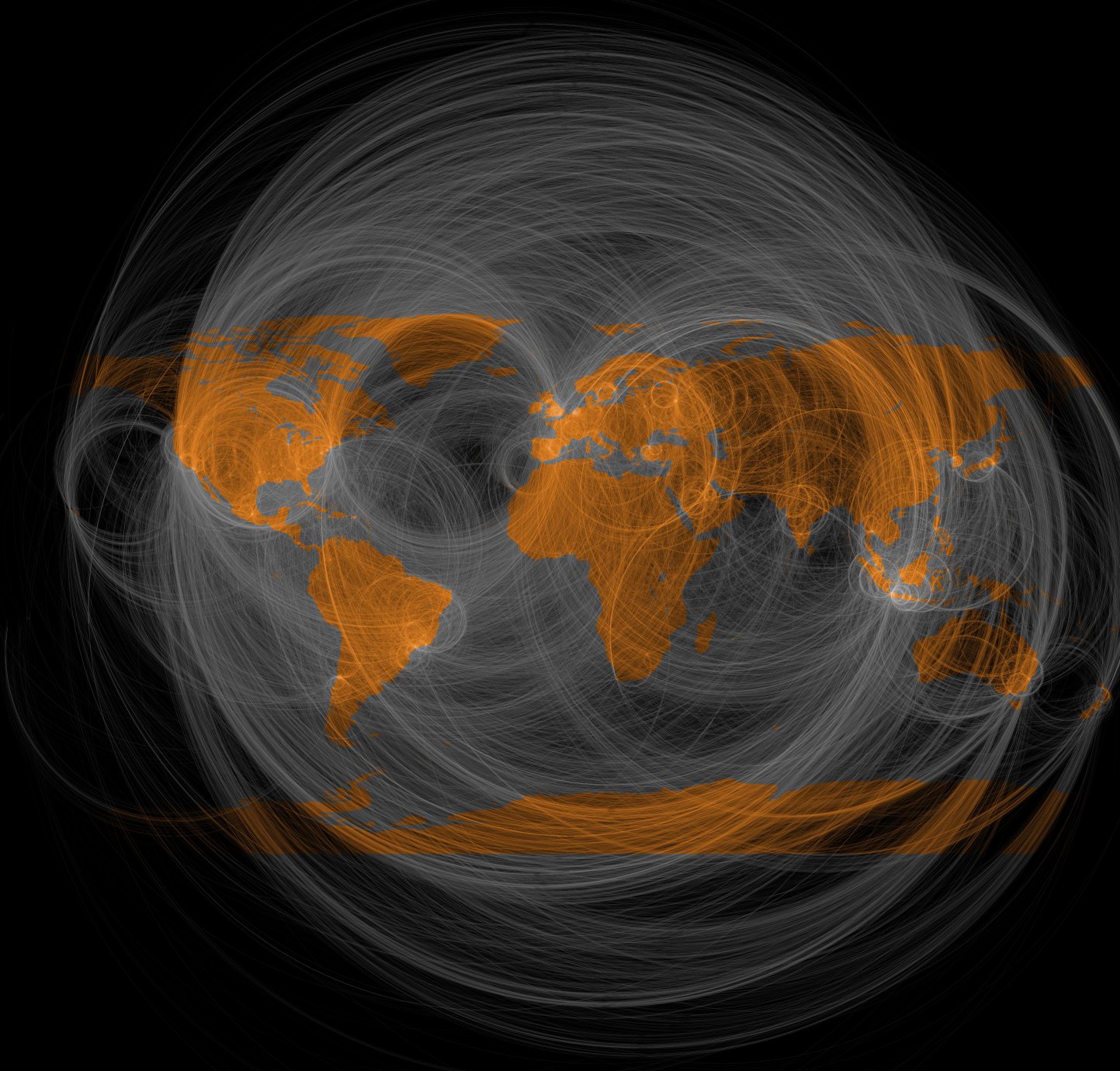
Geography of Twitter. By Eric Fischer, Washington, DC

And what of care and affection; are we to suppose that our world as comprising love is any the lesser or greater than others? Ought we to suppose the human instinct to loving solicitude is greater than that of our fellow creatures? Who amongst us knows what human love is as distinct from other forms of animal love, and whether it is qualitatively superior? Am I so arrogant as to suggest my altruistic benevolence is any the greater than that of my pet Border Collie, for it seems far from being so? If I am unable to define precisely what constitutes this world aspect, how am I to know that those of other animals are not simulacra of my own, there being no original and authentic love-world other than the one as represented by the many – is this not a truth hard to refute? I may describe a personal world of felt affection, yet in doing so prescribe but a figure of speech alone, a synecdoche for all worlds inhabited perhaps by most beings of sentience.

My little world is forged at the interface between psyche and otherness, between ideas and the world as impressed upon my senses. Those impressions and the precise nature of that otherness differ in every detail from the next person’s, yet the means of forging are identical. This shared action results in distinct narratives of course, and it is these that are held to in our bids to assert the pre-eminence of individuality over commonality. I want to believe I am, if not special, then unique; yet that is only true in the differing stories of what I am and what my little world is. To those without privilege to my narratives of self and world, my assumed mantle of uniqueness is meaningless, and the same is true of theirs to me. We may here be at a cold and sterile juncture, yet it also is a starting point from which we may begin to introduce the binding agents of humankind – our innate qualities of kindness and compassion, of empathic understanding.

So what, why should I care about such ideas when I have altogether more pressing concerns? What is the point in abstracting notions such as these from the warp and weft of daily living, the place where I earn my crust, feed my children, and work on my betterment as a means of personal fulfilment? Perhaps the answer lies somewhat starkly in the evidence, and which seems to me to be in a state of constant deterioration. We live in a polarised world, where theists fight theists and atheists argue against both, where the wealthy seldom flinch in their impoverishment of others, and where power-hungry and psychopathic leaders crush the potential of all they have dominion over. Is it not time to find our common humanity, or even our common animality? We humans are destroying our sole environment; we are chasing down the darkening corridors of economic systems at the point of failure. Can we not rest awhile so as to perceive our little worlds as one?

ooOOoo

My sense is that for quite a few readers who read yesterday’s and today’s postings, they were not the easiest read that has been seen on Learning from Dogs. But in a world where the dumbing down of the English vocabulary seems ever more present, to read Hariod’s essay slowly and carefully, and let the deeper meanings of her arguments settle within the mind, is a profound and compelling reminder of the beauty and elegance of the English language.

This introspective mood continues tomorrow: you have been warned!

Alone in a sea of many

A few days of inner contemplation.

I suspect that many, if not most, originally came to this place expecting the blog to be directly about dogs. And, in many instances, the posts are directly about canis lupus familiaris. But the original idea behind choosing the blog name Learning from Dogs was the sense that we, as in mankind, have to change our ways if we are to offer our grandchildren a viable planet upon which they may live. More succinctly expressed in The Vision for this blog:

Our children require a world that understands the importance of faith, integrity and honesty,

Learning from Dogs will serve as a reminder of the values of life and the power of unconditional love – as so many, many dogs prove each and every day,

Constantly trying to get to the truth …

The power of greater self-awareness and faith; faith that the only way forward for us is through the truth …

If you have read this far you may be wondering if the old guy has lost yet another marble!

So what has prompted this introspection? I’ll tell you.

I subscribe to Hariod Brawn’s blogsite Contentedness.net For those that do not know Hariod’s writings then her About page offers (in part):

We’re here to discuss aspects of human well-being as they relate to our sense of self, our personal identity and whatever other notions we may hold for our own uniquely human sense of being. This means the discussion centres upon the pragmatic or real-life dimensions of experience – things like our sense of contentedness, of personal meaningfulness, and other tangibly perceived aspects of well-being. The discussion is positive, respectful, non-judgemental, considerate.

That, as you can see, resonates very much with me thinking of Learning from Dogs as a means, metaphorically so, of finding greater self-awareness.

On June 10th, Hariod published the first part of an essay called Synecdoche: Little Person. I found the essay extraordinarily interesting and wanted to share it with you in this place. Hariod generously gave me permission, so here is Part One.

ooOOoo

Synecdoche (Part One): Little Person

Hariod1

I am just a little person, one person in a sea of many little people who are not aware of me, yet each potentially a simultaneous understanding of the other; each, in a sense, a simulacrum or synecdoche for all others: if I understand myself sufficiently deeply, then in that moment I understand the other, however remote my presence to them. This is not to say I can appreciate their specific complexities, of course, and the detail, the true intricacy of any given life, remains forever removed from that quota of awareness I am privileged to. Each little person, tagged with their own unique package of characteristics, is still a synecdoche though, potentially at least, for all the little people out in the sea of otherness. The word means literally ‘take with something else’, so conveying the idea that even a partial representation alone is sufficient to apprehend the whole, or vice versa.

This sounds rather fanciful to the contemporary mind, conditioned as it is in a belief as to the total, inarguable individuality of each little person. What an appealing belief this is too, for this same little person here finds a seemingly plausible counter to a reluctantly intuited sense of homogeneity, which word itself derives from the Greek ‘homogene’, meaning ‘of the same kind’: Homo Sapiens. Even though each of the little person’s internal organs are replaceable with those fished from the sea of many little people, even though their blood, hair, bones, limbs, eyes and hands can be substituted with biological or manufactured alternatives, still the little person resists the evidence, demanding their status as a uniquely enduring entity. It is of course the mind itself that insists upon countering the intuited and actual homogeneity, and the mind, so the little person believes, belongs to them.

Hariod2

This raises a problem, for if the little person’s physicality is all but totally interchangeable, then at what point during this theoretical process does the supposed possessor of the mind cease to exist? When does the point arrive at which we can no longer claim the mind belongs to any little person? If we hold to Physicalism, or Hard Materialism, we assert the mind belongs, if not to the little person, then to the organ of the brain. Should we be an Eliminative Materialist, we say there is no mind, and so no such question arises. I resist these philosophical perspectives, for to me there is a non-locality of awareness, meaning it arises both within as well as about what we think of as the little person, and whilst we call this aware experience ‘mind’, I do not adhere to any Cranialism; it’s not exclusively headstuff. In accepting this, we logically must ask whether the mind is under ownership.

Ownership implies agency, or self-determination, and it is belief in this that makes the little person feel unique and autonomous, directing their life just as all others would theirs. Yet this owning agent is never verifiable other than as consciousness, for it is only ever a belief that resides within and as that consciousness. Now, all conscious displays are themselves non-local simulacra, representations of otherness that are neither the little person nor any owning agent, and which clearly may never be evidenced outside of consciousness. This means the little person is always a thought-construct, a put-up job forged by mind and subsisting in otherness but never in essence itself. Should this hypothesis obtain, then the little person is a synecdoche for the entirety of others in kind; this is because every little person, being a fabrication of mind, comes into apparent existence in an identical manner.

Hariod3

Where are we? We heard that the mind persists in countering a reluctantly intuited homogeneity of all the little persons. Further, we said the mind forges each little person as a thought-construct, and that the little person does not exist as an enduringly instantiated entity – just like a house, a car, or a computer, its parts are interchangeable. Beyond this, we learned the mind produces only conscious effects as verification of its own fabrications, and that these subsist universally for all the apparent little persons, being as they are culled from the same sea of otherness. And lastly, we found that the hypothesis as a whole demonstrates that each apparent little person is a synecdoche for the sea of many little people. So, in understanding myself sufficiently deeply, then in that moment I understand the other, which was the assertion of the opening paragraph and a challenge to the curious mind.

In the ‘Ship of Theseus’ paradox, a parallel question is raised: in replacing a wooden ship plank by plank, are the ongoing resultants still the original ship? In point of fact, only the conception itself endures across the constant transitioning. The ship, as known, is not a wooden construct; it is a thought-construct, a fixed conception presenting to any observing little person, all of whom create each the other in identical fashion. Each parallel the ship in that their structure constantly mutates whilst a sense of enduring selfhood smears out across the whole, forged in mind in homogeneous ways. Now, if the little person turns the mind in on itself reflectively, they in time realise that they must be more than a thought-construct, a belief. They see that the little person whom they believed they existed as was a synecdoche: a motif in play which in its perfectly clear seeing brings knowledge of all of its kind.

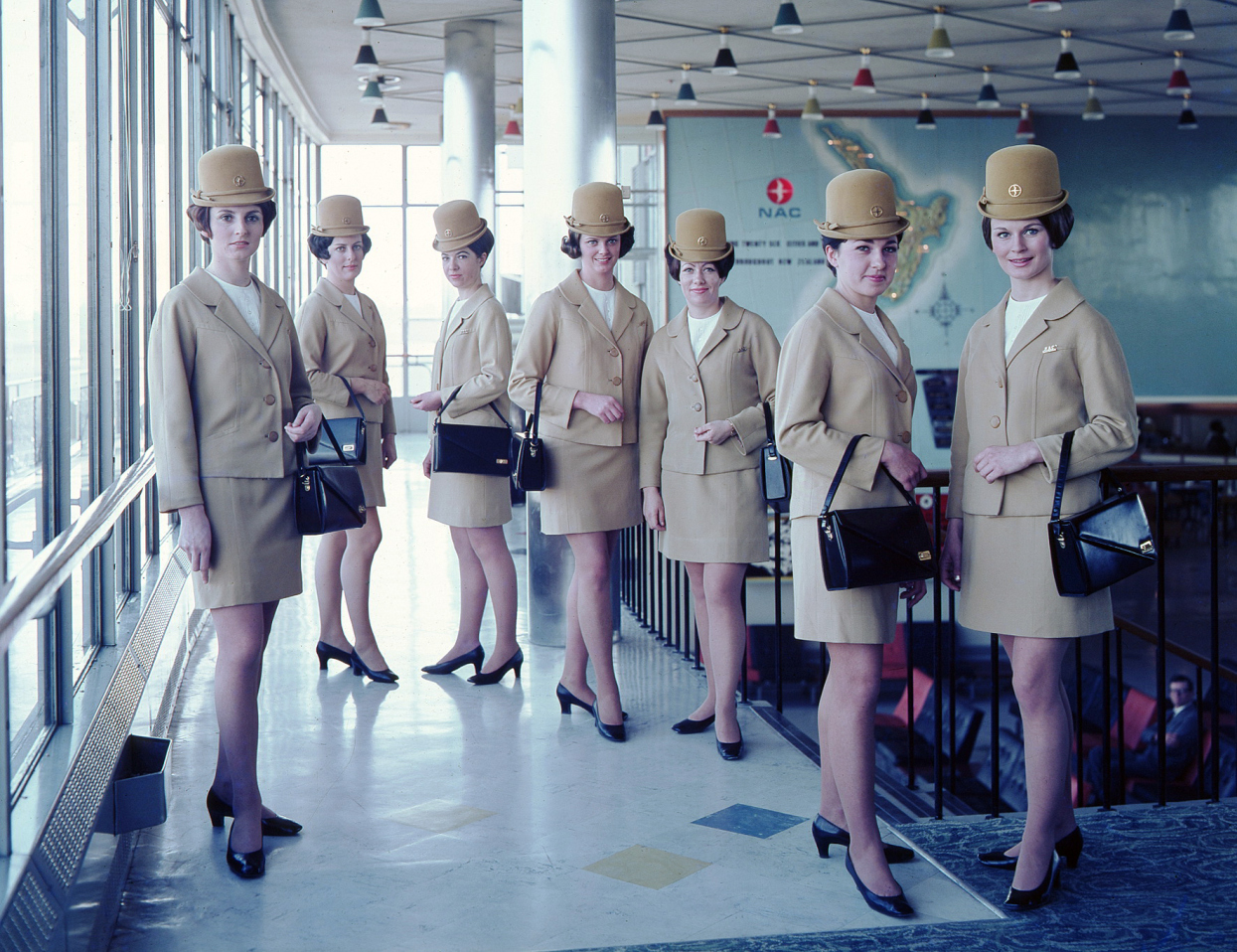
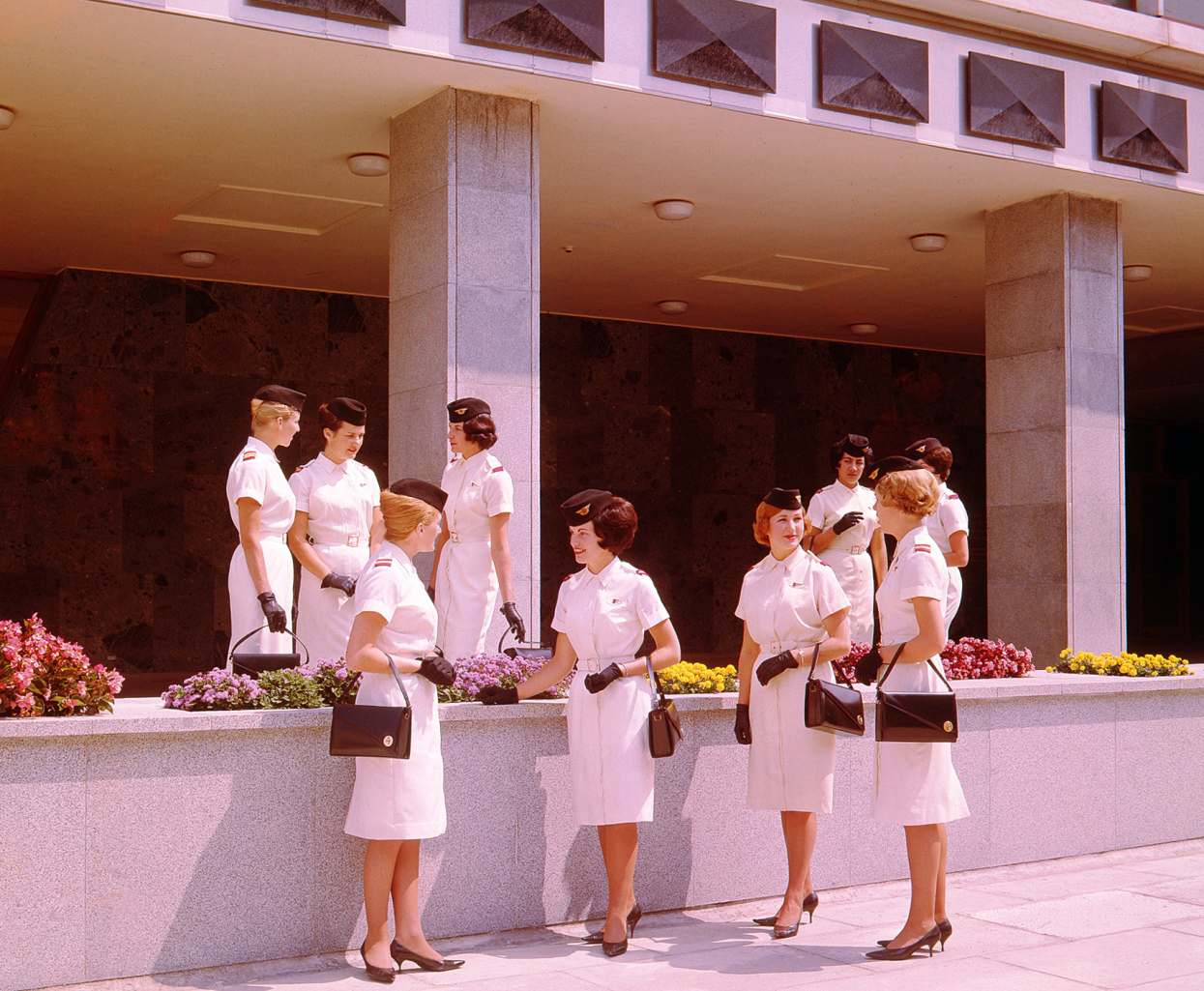
Images courtesy of New Zealand Government Archives.

ooOOoo

The concluding part of Hariod’s essay is published tomorrow.

A chance in love.

Our neighbourhood watch garage sale has Jean and me fully occupied for these next two days.

Plus much of yesterday afternoon was spent getting our ‘site’ all set up ready for today.

I have taken the opportunity of showing you two videos, one today and one tomorrow.

This was sent to me by Suzann and will melt your heart in a very big way.

►If watching the flowering of love could inspire love, then “The Story Of The Weeping Camel” would forever alter the world…

►The Story of the Weeping Camel.
Mongolian: Ингэн нулимс, Ingen nulims, “Tears of the Camel” is a 2003 German docudrama released internationally in 2004.

►During Spring, a family of nomadic shepherds in the Gobi Desert, South Mongolia, assists the births of their camel herd. The last camel to calve this season has a protracted labor that persists for two days. With the assistance and intervention of the family, a rare white bactrian camel (Camelus bactrianus) calf is born.
This is the mother camel’s first calving. Despite the efforts of the shepherds, the mother rejects the newborn, refusing it her milk and failing to establish a care-bond with it. The family resolve to secure the services of an indigenous ‘violinist’ to play the music for a Mongolian ‘Hoos’ ritual.

When repeatedly intoned the calming sounds and beautiful melody of the violin, the mother camel starts to weep, tears visibly streaming from her eyes. Immediately after the rite the mother and calf are reconciled and the calf draws milk from her teat.

►Added music: Sad Romance – Thao Nguyen Xanh

Learning about last breaths from our dog.

The wisdom of a six-year-old.

Very grateful to Chris Snuggs for sending this on to me. As seen on the BoredBug website:

ooOOoo

They Told This Little Boy His Dog Was Going To Be Put Down. His Response STUNNED Them.

On Belker’s last day, Shane seemed calm, petting the old dog as if he understood that he was saying a last “goodbye”. Within minutes, Belker slipped peacefully away. Shane seemed to accept Belker’s transition without any difficulty or confusion.

Saying-Good-Bye

They all sat together after Belker’s death, wondering aloud how sad it is that animals lives are shorter than humans. Shane, who had been listening quietly, spoke ”I know why! People are born so that they can learn how to live a good life, like loving everybody all the time and being nice, right?” The six-year-old continued, ”Well, dogs already know how to do that, so they don’t have to stay as long.”

Shanes-Wise-Explanation

ooOOoo

You all have a good, loving weekend.

Has the human ‘pack’ moved on!

Believers and non-believers alike owe Pope Francis a giant ‘thank you’.

As regular followers of this place will have heard before, one of the roles of the ‘alpha’ dog, or more accurately referred to these days as the Mentor dog, in other words the female dog that in the days before domestication was the leader of her pack, was to move her pack if she intuited that the pack’s home range was not sustaining them. (Her other role was pick of the male dogs!)

Thus the title of today’s post came to me as just possibly the metaphorical equivalent. That the global human ‘pack’ has been sharply reminded by one of the world’s key religious leaders that ‘more of the same’ isn’t going to work for much longer.

Quite rightly, there has been a huge amount of reporting and analysis of last week’s Papal Encyclical. But one of the most beautiful and profoundly eloquent came from the writer Jennifer Browdy. If you haven’t come across her before then do drop across to her website; you will love what she presents!  I have been a subscriber to her blog posts for some time and that was how I came across her post called: And the Walls Came Tumbling Down: Pope Francis Shows Us the Way. Jennifer very kindly gave me permission to republish her post today.

ooOOoo

And the Walls Came Tumbling Down: Pope Francis Shows Us the Way

By Jennifer Browdy

The Encyclical on climate change and the environment released by Pope Francis this week has all the magic of the fall of the Berlin Wall in 1991. Back then, the antagonism between the U.S. and the U.S.S.R. seemed implacable and unresolvable, a fight to the death. And then suddenly the wall came down and the world walked through, marveling, into a new era.

Now we have another abrupt shift, this time of a religious order. The leaders of the Catholic Church can hardly be accused of being “radical tree-huggers.” And yet here is Pope Francis, solemnly exhorting his flock of a billion Catholics worldwide to be respectful to Mother Earth and all the living beings she supports. In the blink of an eye, the language of Native American spirituality has been taken up by the same Catholic Church that once tortured and executed indigenous peoples precisely because of their different religious beliefs.

I urge you to read the entire Encyclical for yourself. It is a truly remarkable document, worth serious study. Of many passages I’d like to underline, here are two:

228 Care for nature is part of a lifestyle which includes the capacity for living together and communion. Jesus reminded us that we have God as our common Father and that this makes us brothers and sisters. Fraternal love can only be gratuitous; it can never be a means of repaying others for what they have done or will do for us. That is why it is possible to love our enemies. This same gratuitousness inspires us to love and accept the wind, the sun and the clouds, even though we cannot control them. In this sense, we can speak of a “universal fraternity”.

229 We must regain the conviction that we need one another, that we have a shared responsibility for others and the world, and that being good and decent are worth it. We have had enough of immorality and the mockery of ethics, goodness, faith and honesty. It is time to acknowledge that light-hearted superficiality has done us no good. When the foundations of social life are corroded, what ensues are battles over conflicting interests, new forms of violence and brutality, and obstacles to the growth of a genuine culture of care for the environment.

Here we find spiritual ecology enshrined as Catholic doctrine. And one thing about the Catholic Church—it is big on obedience. For believers, to ignore the Pope is to risk hellfire and damnation. In this case, though, the hellfire and damnation will be earthly, if we do not listen to the wise advice of Pope Francis and curb the insanity of industrial growth that goes beyond the limits of the planet to support.

Scientists appeal to our sense of reason, presenting compelling evidence that if we continue on our present path of wasteful consumption of the Earth’s resources, we will destroy our own future as a flourishing species. Religious leaders appeal to human beings’ moral conscience in invoking the responsibility of current parents and grandparents to leave a livable world to our descendants. It is up to the politicians, though, to translate vision into practice.

For too long, Christian conservatives in the U.S. have played the role of the ideological wing of Big Business, using money, manipulation and scare tactics to buy politicians and votes. In the face of the new Papal Encyclical, can American Christians really continue in good conscience to support the worst of the planet’s polluters and plunderers? Can they continue to elect mercenary politicians who hold our country hostage to the highest bidder?

If all good people who love our Earth and its creatures were to translate our love into action, as Pope Francis has just done so forcefully, I have no doubt the seemingly invincible wall of the industrial growth society we’ve been living with these past 200 years would melt away, revealing the path into a green, prosperous future.

“Where there’s a will, there’s a way,” the saying goes. Pope Francis has just shown us the will, and the way. It is now the task of us ordinary citizens to break the stranglehold of Big Business on politics and insist that our politicians follow his lead.

I close with an excerpt from the Pope’s “Christian Prayer in Union with Creation,” a vision of ecological interdependence if ever there was one:

“Triune Lord, wondrous community of infinite love,

teach us to contemplate you

in the beauty of the universe,

for all things speak of you.

“Awaken our praise and thankfulness

for every being that you have made.

Give us the grace to feel profoundly joined to everything that is.

God of love, show us our place in this world

as channels of your love

for all the creatures of this earth,

for not one of them is forgotten in your sight.

Enlighten those who possess power and money

that they may avoid the sin of indifference,

that they may love the common good, advance the weak,

and care for this world in which we live.”

Amen.

Browdy
And the meek shall inherit the Earth…. Photo by J. Browdy, 2015

ooOOoo

I am sure that, whatever your religious or spiritual persuasion, you will agree with me with regard to the beauty of Jennifer’s essay. I know there are millions and millions of people who will want to look back in a few years time and see how Pope Francis’ legacy literally saved our lives.

Picture parade one hundred and one.

Welcome to the Summer Solstice!

(And grateful for the technology giving me a window in which to write and post this.)

Only one way to open this week’s picture parade!

Rising sun over the Heel Stone at Stonehenge on the dawn  of the Summer Solstice.
Rising sun over the Heel Stone at Stonehenge on the dawn of the Summer Solstice.

Now to the second set of pictures under the theme of

Hiding in Plain Sight

oooo

Danny9

oooo

Danny10

oooo

Danny11

oooo

Danny12

oooo

Danny13

oooo

Danny14

oooo

Danny15

oooo

Danny16
oooo

Yet another set of these incredible pictures in a week’s time; technology notwithstanding!

Saturday serendipity

Facing up to our challenges often inspires new beginnings.

I subscribe to Val Boyco’s blog Find Your Middle Ground (and love it!).

Last Thursday, Val published a beautiful poem that she, in turn, had seen over on Mindfulbalance, a blog that I hadn’t come across but suspect that I am going to like.

ooOOoo

Originally posted on Mindfulbalance:

Trittsteine_am_oberen_Teich_Japanischer_Garten_Kaiserslautern

It may be that

when we no longer know

what to do,

we have come

to our real work,

and when we

no longer know

which way to go,

we have begun

our real journey

Wendell Berry, The Real Work

ooOOoo

Going to close today’s post by repeating something that is in a little book that I have had for years: Extracts from Peace In Every Step by Thich Nhat Hanh originally published by Bantam Books.

Aimlessness

There is a word in Buddhism that means “witlessness” or “aimlessness”. The idea is that you do not put something in front of you and run after it, because everything is already here, in yourself.

While we practice walking meditation, we do not try to arrive anywhere. We only make peaceful, happy steps.

By taking good care of the present moment, we take good care of the future.

You all have a wonderful present moment!

Easter weekend reflection

As read over on Find Your Middle Ground.

For Christians the world over the Easter weekend is the religious moment of the year.

For all of humanity, believers and non-believers alike, the following simple but powerful words ought to be a reminder of eternal values for every day of the year.

ooOOoo

Today’s Quote from Theresa

Beautiful words and image from Theresa at Soul Gatherings. Let it settle in.💛

Originally posted on Soul Gatherings:

purple-trees

In the end, only three things matter:
how much you loved,
how gently you lived,
and how gracefully you let go of things
not meant for you.

~ The Buddha ~

ooOOoo

Thanks Val for allowing me to republish this. (Val Boyco of Find Your Middle Ground.)

Misery Is Optional

Another guest essay from the old lamplighter.

It seems to me that it is so incredibly easy to be influenced, even engulfed, by bad news.

Back on the 20th I posted an item that had been sent to me by John Hurlburt, who is the old lamplighter, called Interstellar News.

Here’s another essay from John that is a great reminder of that old adage: We are what we think.

ooOOoo

Lost

Misery Is Optional

There’s always been a delicate balance in the struggle between growth and stagnation. The emerging universe invariably prevails. The good news is that absolutely insisting upon the denial of reality naturally backfires in the long run. Common sense has repeatedly saved our collective bacon from the fire as our species has faced former crises. The stakes have never been higher.

There’s a natural balance that runs through our relatively brief species history. Extreme cultural alternatives include plutocracy and anarchy. There’s no question that if we’re not an active supporter of an inclusive solution we contribute to our collective dissolution.

Nero fiddled while Rome burned. There’s a current global analogy. Global media communications reflect hate, divisiveness and violence. The obvious truth is essentially ignored. A result is our present state of angst, paranoia and associated stress disorders. We compensate with bread and circuses.

Indifference doesn’t have to be a local reality. We’re all naturally connected in whatever we conceive of as God. We share a common soul. If we are wise we’ll act accordingly. We’ll accept our inherent responsibilities as stewards of Creation. The fulfilment of positive actions in according with the nature of our being is a blessing that keeps on giving.

an old lamplighter

ooOOoo

These are beautiful words and whatever one’s religious or spiritual convictions if we don’t recognise that we are all “naturally connected” then it won’t be long before we run out of bread and circuses – and deservedly so.

Going to close this post by using the following picture and quotation taken from the latest Terry Hershey newsletter.

Machado

Beyond living and dreaming
there is something more important: waking up.

Antonio Machado

Call of the wild.

A Monday morning reminder of our beautiful planet.

American Wilderness: The John Moulton Barn on Mormon Row at the base of the Tetons. Photo: Jon Sullivan

Just a random picture found by doing a web search. (Actually found on what looks like a great blog: I am Wilderness.)

This morning’s post was prompted by listening to one of my favourite music groups: The Alan Parsons Band. Listening to this particular track: Call of the Wild. From his third solo album The Time Machine released in September, 1999.

Lyrics written by Ian Bairnson

Well I’ve talked to the wind and I’ve listened to rain,
I have climbed to the clouds and I’ve cried out with pain,
This life is for living so come to my side,
And open your heart to the call of the wild.

We are all of one nation, all of one creed,
We are all out of nature, all of one seed,
We are in this together, man, woman and child,
So open your heart to the call of the wild.

We talk the same language in different tongues,
We’re somebody’s daughters and somebody’s sons,
But those who believe we are head of the chain,
May wake up to find we are all that remain.

There is no need to fear what we don’t understand,
For we breathe the same air and we walk the same land,
The strong and the anxious, the meek and the mild,
All dance to the drum that’s the call of the wild.

Impossible to listen to this beautiful track and not reflect on how badly we are treating Mother Earth.