Category: Science

Governments: Listen to your people!

Because you clearly are not listening to Nature!

Sunday: 10:30 PDT. Won’t rabbit on too long as we are due out with our guests in the next thirty minutes. Just dipped into the online BBC News headlines and, frankly, was more than disappointed to see that the Climate March in New York, and many other cities all around the world, was the third headline after Afghanistan and Yemen.

Oh well!

What I read earlier in the morning was the most fabulous essay over on the Transition Times blogsite written by Jennifer Browdy.  It is republished in full with her kind permission.

This should be read in full!

ooOOoo

The People’s Climate March: Taking the Evolutionary Leap of Radical Democracy

The People’s Climate March in New York City is just one manifestation of a huge sea-change sweeping through our culture. Or perhaps “seeping” would be a better verb—this shift in awareness is not happening with the tsunami force of a revolution, but more with the steady, determined drip-drip-drip of water undermining rock.

Humans are paradoxical. On the one hand, we love everything that’s new and innovative, we all want to be out ahead of the curve when it comes to technological breakthroughs and new ideas. On the other hand, we hold tight to the received wisdom of our forebears, living by enshrined writings thousands of years old (the Bible, the Koran, the Mahabharata, Confucius, etc.) or hundreds of years old (the Declaration of Independence, the Constitution, the Bill of Rights).

We have established elaborate educational, political and legal systems designed to hold us to a particular form of society, permitting free, innovative thinking only along narrow channels carefully defined by the interests of business and commerce.

The arts and humanities, traditionally the realm of creative, imaginative exploration, have been steadily starved in this brave new world, which can only imagine creativity in the service of profit.

What happens to a society that can only envision creative energy in an instrumental, utilitarian light?

We become a society of robots. We lose our connection to the soul of the world, the anima mundi that sustains us humans along with all other living beings on the planet.
TT1

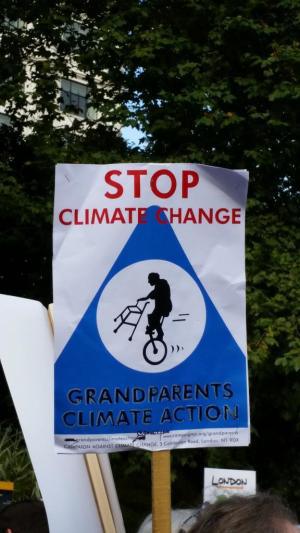
The People’s Climate March, which is happening not only in New York City but worldwide, with 2,808 marches and events in 166 countries, bears welcome witness to the fact that the sparks of creative, independent thinking have not totally gone out.

There are many, many people worldwide who are aware, and aghast, at the failure of our political and business leaders to act in the best interests of the people and all the beautiful, innocent creatures who are slipping away into the night of extinction day by day due to the relentless human assault on our shared planet.

We are here, we are aware, and we are engaged. We are not going to stand by silently and let corporate greed and shortsightedness overwhelm us.

It is true that business and government have a stranglehold on official channels of communication, education and social change.

They control the curricula taught in our schools, what appears on our major media channels, and what projects and areas of creative exploration are funded. They keep us in line with the debt bondage of school loans, mortgages, car payments and the fear of not having enough money in the bank for a comfortable old age. We’re so busy running on the treadmills they’ve set up we have no time or energy to think about changing the system.

Or do we?

We saw it happen in the Arab Spring, where people used cell phones and texts to organize themselves to resist oppression.

We saw those people get beaten back, the promise of their revolution squashed by the entrenched power of men with guns and tear gas.

The rise of the Islamic State, like the rise of Al Quaeda and the Taliban, is all about conservative forces resisting change.

I am just as afraid of men with guns and tear gas as the next woman. I am happier making revolution on my laptop than in the streets. But at some point we have to come out from behind our screens, get off the treadmills of debt bondage, look around us at the beauty of the world, and say: this is what I want to live for, and this is what I’m willing to die for.

So far, the one social area that has not been overtaken by corporate/governmental control is the World Wide Web. It’s still a Wild West space, a place where you can find everything and everyone, from dangerous sadists to beneficent spiritual leaders. There’s room for every kind of idea out there to percolate through our collective consciousness. And make no mistake: the energy we’re seeing in the People’s Climate March is fueled in large part by the distribution power of the Web, the ability to get the word out and get people fired up to come together to take a stand.

Photo: Cheryl Himmelstein

Environmental activist and writer Terry Tempest Williams, in her book The Open Space of Democracy, says that the time has come to “move beyond what is comfortable” (81) in pursuit of what she calls a “spiritual democracy.”

“We have made the mistake of confusing democracy with capitalism and have mistaken political engagement with a political machinery we all understand to be corrupt,” she says.

“It is time to resist the simplistic, utilitarian view that what is good for business is good for humanity in all its complex web of relationships. A spiritual democracy is inspired by our own sense of what we can accomplish together, honoring an integrated society where the social, intellectual, physical and economic well-being of all is considered, not just the wealth and health of the corporate few” (87).

Williams calls for a radical recognition of the interdependence of all life on Earth. “The time has come to demand an end to the wholesale dismissal of the sacredness of life in all its variety and forms,” she says. “At what point do we finally lay our bodies down to say this blatant disregard for biology and wild lives is no longer acceptable?” (86)

If we humans could step into our destiny as the stewards of our planet, the loving gardeners and caretakers of all other living beings, we would harness our incredible intelligence and creativity to re-stabilize our climate and do what needs to be done to ensure the well-being of all.

Williams calls this “the next evolutionary leap” for humanity: “to recognize the restoration of democracy as the restoration of liberty and justice for all species, not just our own” (89).

If we are able to take this leap, we will not only avert climate-related disaster on a Biblical scale, we will also overcome many of the social problems that we currently struggle with. “To be in the service of something beyond ourselves—to be in the presence of something other than ourselves, together—this is where we can begin to craft a meaningful life where personal isolation and despair disappear through the shared engagement of a vibrant citizenry,” says Williams (89).

TT2

Williams’ small gem of a book grew out of a speech she gave at her alma mater, the University of Utah, in the spring of 2003, as America was rushing into its ill-conceived War on Terror in Iraq. She describes her heart pounding as she got up to make a speech advocating a different form of democracy than that embraced and espoused by all the conservative friends and family sitting in the audience before her.

Challenging one’s own friends and family, betraying one’s own tribe, is the hardest aspect of being a social revolutionary. You have to question the very people you love most, who have given you so much and made your whole life possible.

But if we become aware that the social systems that gave birth to us are the very social systems that are undermining the possibility of a livable future on this planet, can we continue to just go with the flow, to avoid asking the difficult questions?

Or will we become change agents who work slowly and steadily, drip by drip, to awaken those around us, those we love most, to the necessity of undertaking “the next evolutionary leap” in the human saga on the planet?

TT3

ooOOoo

From that BBC News website:

On Tuesday, the UN will host a climate summit at its headquarters in New York with 125 heads of state and government – the first such gathering since the unsuccessful climate conference in Copenhagen in 2009.

So world leaders, are you going to reflect the wishes of millions of your peoples across the world and step up to the mark?  We will see.

Think you know our Solar System – Think again!

An incredible discovery about the motion of the sun, and the planets.

Serendipity

I have turned on my computer. It’s 15:30 on Sunday. My creative juices re Monday’s blog post are not flowing. Why? Because, together with a young helper who comes over most Sunday mornings, this morning we have shifted 100 bales of hay from outside the garage, taken them down to the hay-loft and stacked them floor to ceiling: all two and a half tons of them!  To use an old English colloquial expression: I am fair knackered!

Then I am rescued!

Top of my email inbox is an email from Dan Gomez that is an item sent to him from his brother Chris.  It’s a truly incredible discovery. One that requires us all to tear up what we understand about the Solar System and start again.

Here is the essay in question.  It has been recently published on the Spirit, Science and Metaphysics website.

ooOOoo

Our Model Of The Solar System Has Been Wrong This Entire Time!

Written by Amateo Ra

solar-system1

If you walk into any classroom today, and likely ever since you were a kid yourself , there is one model being taught regarding the structure of our Solar System. It’s the model that looks like this:

SolarSysScope-1024x571

It’s the traditional orbiting model of the Solar System, or the Heliocentric Model, where our planets rotate around the sun.

While this isn’t entirely wrong, it’s omitting one very important fact. The sun isn’t stationary. The sun is actually travelling at extremely fast speeds, upward of 828,000 km/hr, or 514,000 miles an hour.
Our whole Solar System is orbiting the Milky Way Galaxy. In fact it takes 220-Million Years for the Sun to orbit our Galaxy.

milkyway

Knowing this to be true, our visual model of the Solar System needs to change, and has been inaccurate this whole time. In fact, our planets are barreling through space with the sun, and literally creating a giant Cosmic DNA Helix, and a vortex similar to our Milky Way Galaxy.

Like this but in space, creating a never ending Sine Wave.

SineWAves

This entails that our Sun & the Planets of our Solar System are never in the same place. When we make one rotation around the sun, we have already traveled millions of miles through space, meaning these Cosmic Cycles are far grander than we might have previously imagined.

Here are two video examples of the Helical Model of our Solar System:

This is one by Physicist Nassim Haramein, which clarifies the difference:

Here is a beautiful digital representation of how our solar system is actually a vortex.

Thanks & Spread the Word! Let’s get this changed in Classrooms all around the World.

About the author: Amateo Ra is the co-founder of Creator Course, an Online School for Conscious Living which is currently being built. For the last 4-years, he has been training with Global leaders in Spirituality, Channeling & Conscious Business.

ooOOoo

Don’t know about you but reading this for the first time and watching the two videos really invigorated me. What an amazing universe it is out there!

Thank you, Ben!

A thank you to all those that work so hard to stop fires from getting out of control.

I am drafting this post at a little after noon on the 4th., i.e. early afternoon yesterday.

It is yet another dry, hot day in a long run of hot, dry days. Our local online weather service, GrantsPassWeather.com, informs me that the temperature this afternoon (i.e. yesterday) is forecast to be a high of 93 deg F. or 34 deg C.  We last had monthly rain totals of more than an inch back in March.  At the top of the home page of Grants Pass Weather is a bold red banner proclaiming a Red Flag Warning for three counties: Jackson, Josephine and Eastern Curry.  We live in Josephine County and clicking that banner reveals:

Details:

…RED FLAG WARNING REMAINS IN EFFECT UNTIL 10 PM PDT THIS EVENING FOR COMBINATION OF STRONG WINDS AND LOW RELATIVE HUMIDITIES FOR FIRE WEATHER ZONES 280…281…617…619…620…621…622 AND 623…

* AFFECTED AREA: FIRE WEATHER ZONES 80…281…617…619…620…621…622 AND 623.

* HUMIDITY…MINIMUM RELATIVE HUMIDITY AT 10 TO 20 PERCENT FOLLOWED BY RECOVERIES TONIGHT AT 20 TO 40 PERCENT.

* WIND…NORTHEAST TO EAST WINDS 10 TO 20 MPH THROUGH THIS EVENING THEN 5 TO 15 MPH OVERNIGHT.

* IMPACTS…POSSIBLE PLUME DOMINATED BEHAVIOR ON ACTIVE FIRES AS STRONG WINDS AND LOW RELATIVE HUMIDITIES THROUGH THIS EVENING WILL CAUSE FIRES TO SPREAD VERY RAPIDLY.

* VIEW THE HAZARD AREA IN DETAIL AT HTTP://GO.USA.GOV/ZYV5

Information:

STRONG WINDS AND LOW RELATIVE HUMIDITIES WILL CAUSE FIRES TO SPREAD VERY RAPIDLY.

Little after 7am a few weeks ago - looking out to North-East.
Little after 7am a few weeks ago – looking out to North-East. Picture taken from the rear deck of our house near Merlin, Oregon.

Does this focus the mind?  You bet! The trees in the foreground of the above photograph are within our property. Our house is surrounded by tall oaks, pines and fir trees.

Now stay with me through what, at first, may seem like a disconnected change of topic.

Long, long time ago Jean met Ira Weisenfeld, a young vet making his way in the world.  Jean’s passion for rescuing feral street dogs meant that she was a more active user of a vet’s services than the average pet owner.  Jean and Ira became very good friends.

Earlier on this year, we had the pleasure of the company of Ira’s daughter, Amber, who came to see us with the man in her life, Ben Elkind.

Fast forward to the 1st September and Amber sent us the following email:

Hello Paul and Jean!

Hope you guys are doing well. Here is a BBC story about smokejumpers in Redding, CA where Ben works, he is interviewed too. Thought you might like it! Hope you had a wonderful summer. I just finished the boundary water canoe trip with Dad, it was very good.
Take care,
Amber

That BBC story explains:

Forest fires kept at bay in US by elite ‘smokejumpers’

26 August 2014 Last updated at 00:48 BST

The drought that has gripped much of the American West shows no sign of abating – yet despite the tinder-box conditions, so far less land in the region has been lost to wildfires in 2014 than in recent years.

That is partly due to an aggressive strategy to stop smaller forest fires before they become too big to handle.

At the frontline of this effort are the smokejumpers, airborne firefighters who parachute into the wilderness to get the blazes under control.

It’s a dangerous job for an elite group of highly-trained men and women. The BBC spoke to three smokejumpers – Ben Elkind, Gretchen Stumhofer and Luis Gomez – at their base in Redding, California.

Produced by the BBC’s Jack Garland.

Additional footage courtesy of Ben Elkind and Tye Erwin

Here is that film report.

More yawning!

This time from dogs

Two days ago, I wrote a post Empathy and bonding that revolved around some recent science about yawning in wolves.  The crux of the post was an essay in the Smithsonian by Helen Thompson. The article was called Yawning Spreads like a Plague in Wolves.

In my research for that post, I came across another Smithsonian article regarding the contagious nature of yawning in dogs.  I wanted to republish that here as a follow-up to the yawning in wolves piece.

ooOOoo

Dogs Yawn Contagiously Too

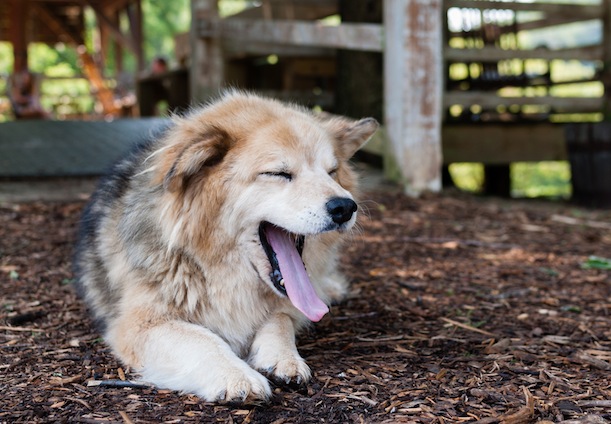
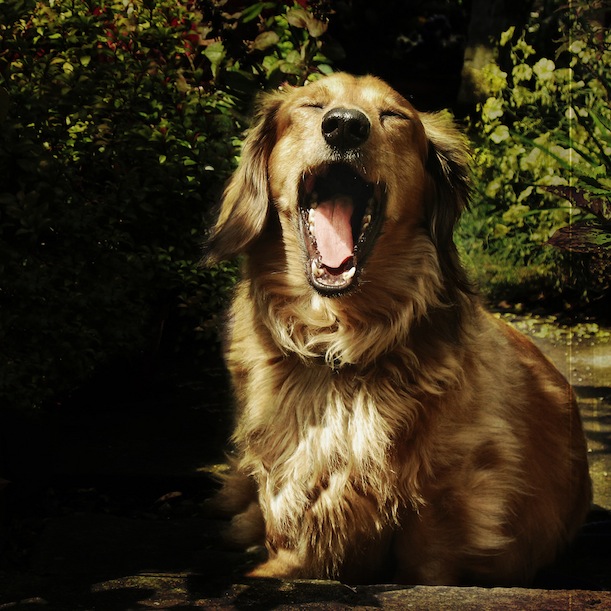
Like humans, dogs are prone to yawning when they see someone else do it—and a new study shows that they yawn most frequently in response to their owner.

By Joseph Stromberg
smithsonian.com
August 7, 2013

dog-1
New research shows that, like humans, dogs are prone to yawning when they see someone else do it—and they yawn most frequently in response to their owner. Image via Flickr user The Eggplant

Animals: they’re just like us. They have unique, individual personalities. They remember their friends after years apart.

And now, in one of the most groundbreaking scientific discoveries of the decade—and perhaps even the century—researchers from the University of Tokyo have discovered that, like humans, dogs yawn contagiously.

Okay, we kid. But in all seriousness, the finding does shed a bit of light on that most mysterious of behaviors, the yawn. Despite years of research, scientists still don’t understand why we do it in the first place. Most believe we yawn to help cool down when our brains are overheated. The fact that yawning is contagious in 60 to 70 percent of people, many argue, is a function of empathy, as people who score higher on empathy tests are more likely to experience contagious yawning.

In the new study, published today [Ed. August 7th, 2013] in PLOS ONE, the researchers found that more than half the dogs they tested yawned contagiously—and, most interesting, they were more likely to yawn after watching their owner yawn than seeing it done by an unfamiliar human. If empathy truly is at the heart of contagious yawning, these findings could suggest that canines, too, are capable of true empathy.

dsds
Image via Flickr user The hills are alive

This isn’t the first study to show that dogs yawn contagiously, but it is the first to get the dogs’ owners involved. The researchers visited the homes of 25 dogs from different breeds (ranging from golden retrievers to labs to chihuahuas) and had their owners sit in front of them, call their name, and then yawn. For a control, they also had their owners simply open and close their mouths, without a yawn’s characteristic jaw-stretching, deep inhalation or long sigh. As a comparison, they also had people that the dogs had never met before perform both actions. (Incidentally, the paper is vague on how they got the owners and strangers to yawn—although, as you might have discovered since starting this post, simply reading about yawning might have done the trick.)

In total, the 25 dogs yawned 22 times after seeing people yawn, and just 5 times after seeing people open and close their mouths. They were nearly three times more likely to yawn contagiously after seeing their owner yawn as compared to seeing a random person do it. This last finding, they say, provides further evidence for the role of empathy in yawning, as dogs are presumably more likely to empathize with their owners than another person.

Why would empathy be the explanation for why yawns are contagious? As social animals, humans often inadvertently copy the emotions and behaviors of those around them, whether it’s a smile or a frown.

Yawns, presumably, are no exception. And if the underlying function of yawning is to dissipate heat and cool the brain down, mimicking the yawns of others would make a lot of sense. “If I see a yawn, that might automatically cue an instinctual behavior that if so-and-so’s brain is heating up, that means I’m in close enough vicinity, I may need to regulate my neural processes too,” Steven Platek, a psychology professor at Georgia Gwinnett College, told my colleague Marina Koren in her recent post on the science of yawning.

Other work has found that chimpanzees yawn contagiously. That research, along with the new finding, suggests that to some extent, chimps and dogs operate based on the same sorts of social cues as we do.

ooOOoo

What more can I add!

Especially with a yawn coming up! (A younger version of me, you do understand!)

man-yawning

Empathy and bonding.

Who would have thought that yawning revealed so much more than one’s tonsils!

Alex Jones, he of the blog The Liberated Way, recently posted You need room to grow. On reading the post a section stood out for me:

The human eye needs the stimulation of sunlight and the outdoors to develop properly. The BBC [Ed: Massive rise in Asian eye damage] reports that a recent study of students in South Asian cities found 90% of the samples were short-sighted, a condition called myopia that needs glasses. Modern South Asian students spend a large part of their lives indoors studying or involved with electronic technology such as the internet. Young children in the UK are rapidly getting myopia as young as three because of being indoors and on computers for long periods of time according to the Daily Mail.

That got me thinking about both the ‘old’ and ‘new’ styles of social bonding.  In defence of our digital world, there is no question that social media programs (apps?) such as Facebook, Linked-In and Twitter are incredible means of communicating with people that one doesn’t know directly.  Even the funny old world of blogging delivers that. I would have stopped writing for Learning from Dogs years ago if it weren’t for the many ‘friends’ that have been made across the ‘blogosphere’!

But (and you knew there was a ‘but’ coming, didn’t you!), social intimacy, as in being able to rub shoulders with people, is the vital core to how we ‘wear’ the world around us.

That was brought home to me by a recent article on the Smithsonian website, an article that I am taking the liberty of republishing in this place. The article is about the contagious nature of yawning; not just for us humans but for wolves.

Note: there were many links to other content in the article making it almost impossible to replicate. So please go to the original to follow up those links.

ooOOoo

Yawning Spreads Like a Plague in Wolves

Evidence of contagious yawning in chimps, dogs and now wolves suggests that the behavior is linked to a mammalian sense of empathy

By Helen Thompson smithsonian.com
August 27, 2014

Chimps do it, birds do it, even you and I do it. Once you see someone yawn, you are compelled to do the same. Now it seems that wolves can be added to the list of animals known to spread yawns like a contagion.

Among humans, even thinking about yawning can trigger the reflex, leading some to suspect that catching a yawn is linked to our ability to empathize with other humans. For instance, contagious yawning activates the same parts of the brain that govern empathy and social know-how. And some studies have shown that humans with more fine-tuned social skills are more likely to catch a yawn.

Similarly, chimpanzees, baboons and bonobos often yawn when they see other members of their species yawning. Chimps (Pan troglodytes) can catch yawns from humans, even virtual ones, as seen in the video below. At least in primates, contagious yawning seems to require an emotional connection and may function as a demonstration of empathy. Beyond primates, though, the trends are less clear-cut. One study found evidence of contagious yawning in birds but didn’t connect it to empathy. A 2008 study showed that dogs (Canis lupus familiaris) could catch yawns from humans, and another showed that dogs were more likely to catch the yawn of a familiar human rather than a stranger. But efforts to see if dogs catch yawns from each other and to replicate the results with humans have so far had no luck.

Now a study published today in PLOS ONE reports the first evidence of contagious yawning in wolves (Canis lupus lupus). “We showed that the wolves were able to yawn contagiously, and this is affected by the emotional bond between individuals, which suggests that familiarity and social bonds matter in these animals the same way as it does in humans,” says study co-author Teresa Romero, who studies animal behavior at the University of Tokyo.

The prevalence of contagious yawning in primates and other mammals could give us some clues to the evolution of empathy—that’s in part what makes the phenomenon so interesting and so controversial. If dogs can catch yawns from humans, did they pick up the behavior because of domestication, or does the trait run deeper into evolutionary history?

The Tokyo team took a stab at those questions by looking at contagious yawning in dog’s closest relatives, wolves. For 254 hours over five months, they observed twelve wolves (six males and six females) at the Tama Zoological Park in Tokyo. They kept tabs on the who, what, when, where, how many and how long of every yawn, then separated out data for yawns in relaxed settings, to minimize the influence of external stimuli.

Next, they statistically analyzed the data and looked for trends. They found that wolves were much more likely to yawn in response to another’s yawn rather than not, which suggests that contagious yawning is at play.

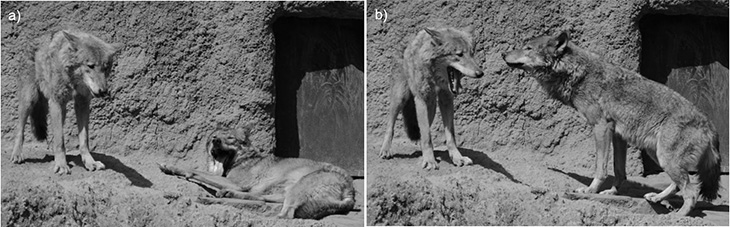
Smithyawning
In image A, an individual (right) yawned during a resting period, and a few seconds later, image B shows the subject (on the left) yawned contagiously. (Teresa Romero)

Wolves were more likely to catch the yawn if they were friends with the yawner. Females were also quicker on the yawn uptake when watching the yawns of those around them—possibly because they’re more attuned to social cues, but with such a small group it’s hard to say for sure.

The results seem to add to the case for empathy as the primary function of contagious yawning. “We have the strongest responses to our family, then our friends, then acquaintances, and so on and so forth,” says Matt Campbell, a psychologist at California State University, Channel Islands. “That contagious yawning works along the same social dimension supports the idea that the mechanism that allows us to copy the smiles, frowns and fear of others also allows us to copy their yawns.”

Empathy likely originated as an ancestral trait in mammals, and that’s why it emerges in such disparate species as wolves and humans. “More and more research is supporting this idea that basic forms of empathy are very ancient, and they are present in a wide number of species, at least in mammals,” says Romero. Elephants, for example, comfort their upset friends. Even rats exhibit a basic helping behavior toward other friendly rodents.

Why does contagious yawning between members of the same species show up in wolves and not dogs? The difference probably comes down to study design, not biology. “Most likely, dogs also catch yawns from [other dogs], as now shown for wolves,” says Elaine Madsen, a cognitive zoologist at Lund University in Sweden. Further studies might reveal the extent to which human interaction has affected present-day dogs’ susceptibility to catching another species’ yawns, she says.

It’s impossible to say what true function contagious yawning serves in wolves, but the researchers argue that such behavior could cultivate social bonds. “If an individual is not in sync with its group, it risks being left behind. That is not good,” says Campbell. Just watching wolves yawn can’t definitively prove that empathy drove the behavior, but it’s certainly compelling evidence that wolves might feel for their fellow lupines.

ooOOoo

Fascinating. As too is an article also on the Smithsonian website about dogs yawning.  Going to republish that in a few days.

However, this post was prompted by the reminder that there is no substitute for social bonding with others who we meet physically. That is why the Smithsonian essay seemed such an important reminder.  As was written (my emphasis):

Among humans, even thinking about yawning can trigger the reflex, leading some to suspect that catching a yawn is linked to our ability to empathize with other humans. For instance, contagious yawning activates the same parts of the brain that govern empathy and social know-how. And some studies have shown that humans with more fine-tuned social skills are more likely to catch a yawn.

Time for an afternoon nap!

The things our animals say!

New studies indicate the complex language used by animals.

There is so much of interest ‘out there’ that one could spend every hour of the day just reading and learning.  Here’s a wonderful example.

Via a route that now escapes me, recently I came across a report entitled, The ABC’s of animal speech: Not so random after all. It was published on the PHYS.ORG website and knowing the leanings of readers of Learning from Dogs, I am confident that republishing it will be of interest to many.

ooOOoo

The ABC’s of animal speech: Not so random after all

Aug 20th, 2014

theabcsofani
The calls of many animals, from whales to wolves, might contain more language-like structure than previously thought, according to study that raises new questions about the evolutionary origins of human language.

The study, published today [August 20th] in the journal Proceedings of the Royal Society B, analyzed the vocal sequences of seven different species of birds and mammals and found that the vocal sequences produced by the animals appear to be generated by complex statistical processes, more akin to human language.

Many species of animals produce complex vocalizations – consider the mockingbird, for example, which can mimic over 100 distinct song types of different species, or the rock hyrax, whose long string of wails, chucks and snorts signify male territory. But while the vocalizations suggest language-like characteristics, scientists have found it difficult to define and identify the complexity.

Typically, scientists have assumed that the sequence of animal calls is generated by a simple random process, called a “Markov process.” Using the Markov process to examine animal vocalization means that the sequence of variables—in this case, the vocal elements—is dependent only on a finite number of preceding vocal elements, making the process fairly random and far different from the complexity inherent in human language.

Yet, assuming a Markov process exists raises questions about the evolutionary path of animal language to human language—if animal vocal sequences are Markovian, how did human language evolve so quickly from its animal origins?

In this Science Minute from NIMBioS, Dr. Arik Kershenbaum explains new research that suggests the calls of many animals might contain more language-like structure than previously thought. Credit: NIMBioS

Indeed, the study found no evidence for a Markovian process. The researchers used mathematical models to analyze the vocal sequences of chickadees, finches, bats, orangutans, killer whales, pilot whales and hyraxes, and found most of the vocal sequences were more consistent with statistical models that are more complex than Markov processes and more language-like.

Human language uses what’s called “context-free grammars,” whereby certain grammatical rules apply regardless of the context, whereas animal language uses simple or “regular” grammar, which is much more restrictive. The Markov process is the most common model used to examine animal vocal sequences, which assumes that a future occurrence of a vocal element is entirely determined by a finite number of past vocal occurrences.

The findings suggests there may be an intermediate step on the evolutionary path between the regular grammar of animal communication and the context-free grammar of human language that has not yet been identified and explored.

“Language is the biggest difference that separates humans from animals evolutionarily, but multiple studies are finding more and more stepping stones that seem to bridge this gap. Uncovering the process underlying vocal sequence generation in animals may be critical to our understanding of the origin of language,” said lead author Arik Kershenbaum, a postdoctoral fellow at the National Institute for Mathematical and Biological Synthesis.

0000

Explore further: Bird study finds key info about human speech-language development

More information: Kershenbaum A, Bowles A, Freeburg T, Dezhe J, Lameira A, Bohn K. 2014. Animal vocal sequences: Not the Markov chains we thought they were. Proceedings of the Royal Society B. rspb.royalsocietypublishing.or… .1098/rspb.2014.1370

Journal reference: Proceedings of the Royal Society B

Provided by National Institute for Mathematical and Biological Synthesis

ooOOoo

If you wanted a reminder to be careful about what you say in front of the animals, then that study underlines that in spades, as does the closing picture!

Dog talking

(Thanks neighbour Dordie for sending it to me!)

A wolf’s journey.

Yet another positive sign.

Hot on the heels of yesterday’s post The power of hope comes this wonderful story about the increasing population of wolves in Europe.  I can’t recall what led me to the item in the UK’s Guardian newspaper but this is what I read:

Incredible journey: one wolf’s migration across Europe

Slavc is a wolf. In 2011, he began an epic 2,000 kilometre migration across Europe from Slovenia to Italy via the Austrian Alps. Several months earlier, he had been fitted with a collar that allowed his movements to be tracked in incredible detail. I talked to Hubert Potočnik, the biologist whose work made this possible.

Henry Nichollstheguardian.com, Friday 8 August 2014 02.05 EDT

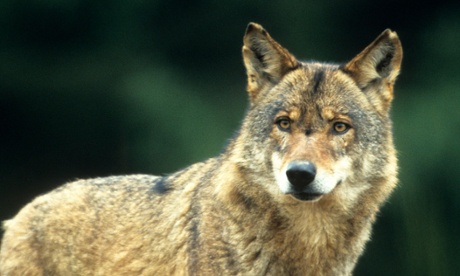
It has been estimated that there are now around 10,000 wolves in Europe. Photograph: tbkmedia.de/Alamy

Every year, Hubert Potočnik and his colleagues at the University of Ljubljana in Slovenia capture and collar a number of wolves in order to get a handle on the movements of these much-misunderstood creatures. In July 2011, he collared a young male that became known as Slavc. In June, I spoke to Potočnik for a feature that appears in New Scientist this week and he told me about Slavc’s extraordinary journey across Europe. What follows is an edited transcript of the interview …

HN: After you captured and collared Slavc in July 2011, he stayed with his pack for several months. Then, on 19 December 2011, he began to move. How did you know?

HP: We knew something was different because the GPS points showed that he had crossed two large motorways far outside of his natural territory.

Tell me about these collars. How do they work?

The collar is equipped with three types of different technology. It has a GPS receiver, a GSM modem to send SMS and also with a VHF radio transmitter as a back-up. We programme all our wolves to send a GPS signal every three hours, so we get about seven locations a day to give us continuous location sampling data.

Hubert Potočnik fits Slavc with the collar in July 2011, a device that will reveal the wolf’s incredible 2000-km migration from Slovenia to Italy. Photograph: Nina Ražen

To read the rest of this fascinating article then you will need to go here.  Please do so as the article is breathtakingly interesting. It closes, thus:

HN: How would you sum up this experience?

There are lots of data about long-distance dispersal of wolves but there are very few cases where we have had the opportunity to follow an animal in such detail. Following Slavc across Europe offered a rare insight into the secret life of the wolf. It was one of the most amazing events in my life.

A quick web search came across this short but wonderful video; albeit without sound.

Published on Aug 26, 2013
Two wolf cubs were documented in Lessinia Regional Nature Park on August 7, 2013. At the end of the video it is possible to partially see an adult wolf, the mother of the cubs, that was recognized as Giulietta. Giulietta and Slavc became famous because they brought together two wolf populations that were separated for over 150 years. Wolf Slavc originates from the Dinaric-Balkan wolf population and was collared in Slovenia. He travelled over 1500km over Austria to Italy, where he met Giulietta, originating from the wolf population from the western Alps (Piemonte region).

source: Parco Naturale Regionalle Della Lessinia

The power of hope.

Funny how things happen.

Yesterday evening we had close friend Don Reeve staying with us.  To put this into context, it was Don and his wife, Suzann, who in 2007 invited me to spend Christmas with them at their Winter home down in San Carlos, Mexico. That, in turn, led me to meeting Jean, Suzann’s best friend, and look where that got me! 🙂

(Can’t resist adding that Jean and I were born in London, some 23 miles from each other!)

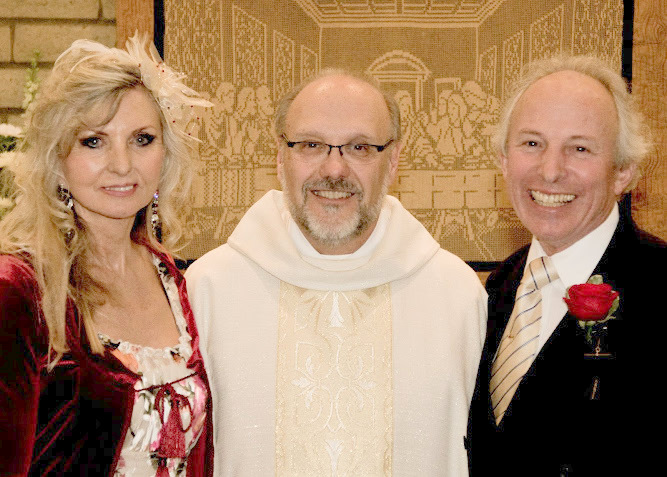
Fr. Dan Tantimonaco with the newly weds!
Fr. Dan Tantimonaco with the newly weds! Payson, AZ. November 20th., 2010.

Thus you can understand the pleasure it was for Jean and me again to see Don; albeit for a brief overnight stay.

What was an extra, unanticipated pleasure was meeting a young, rescue dog that Don had adopted in recent weeks.  Her name is Margarita and she was found and rescued by Suzann from the streets in San Carlos.  What was so glorious was to see the love and hope for a better future that flowed between Don and the sweet, young Margarita.  It resonated so perfectly well with Suzan’s post published here on Monday: Rescued dogs are life-savers.

By the time I sat down at my desk yesterday, I was conscious of a) not having a clue as to what to write, and b) inspired by the sense of hope that dogs offer us humans.  Serendipitously, the theme of hope led me to a post written by Jennifer Broudy de Hernandez over on her Transition Times blog.  It was called Warriors for the Planet and was the most beautiful essay.

I’m delighted to reblog that here with Jennifer’s approval.

ooOOoo

Warriors for the Planet

Another summer, another war. I wonder how many summers there have been in the last 5,000 years when human beings were not occupied with killing each other?

Correction: not “human beings,” “men.”

Let’s be frank: even though there may be women in the armed forces of many countries now, war still remains a masculine activity and preoccupation. The women who serve as soldiers must adhere to the masculine warrior code and become honorary “bros,” for whom the worst insult is still be called a “girl” or a “pussy.”

annebaring_a_lgI have been reading Anne Baring’s magisterial book The Dream of the Cosmos, in which she gives a detailed account of the shift, around the time of Gilgamesh, from the ancient, goddess- and nature-worshipping “lunar cultures” to the contemporary era of solar, monotheistic, warrior-worshipping cultures.

In her elaboration of this shift, I read the tragedy of our time, enacted over and over again all over the planet, and not just by humans against humans, but also by humans against the other living beings with whom we share our world. I quote at length from Baring’s remarkable book:

gilgamesh-187x300“The archetype of the solar hero as warrior still exerts immense unconscious influence on the modern male psyche, in the battlefield of politics as well as that of corporate business and even the world of science and academia: the primary aim of the male is to achieve, to win and, if necessary, to defeat other males. The ideal of the warrior has become an unconscious part of every man’s identity from the time he is a small child.

“With the mythic theme of the cosmic battle between good and evil and the indoctrination of the warrior went the focus on war and territorial conquest. War has been endemic throughout the 4000 years of the solar era. The glorification of war and conquest and the exaltation of the warrior is a major theme of the solar era—still with us today in George W. Bush’s words in 2005: ‘We will accept no outcome except victory.’ This call to victory echoes down the centuries, ensuring that hecatombs of young warriors were sacrificed to the god of war, countless millions led into captivity and slavery, countless women raped and widows left destitute. It has sanctioned an ethos that strives for victory at no matter what cost in human lives and even today glorifies war and admires the warrior leader. This archaic model of tribal dominance and conquest has inflicted untold suffering on humanity and now threatens our very survival as a species.

2014-06-15-mission
“The cosmic battle between light and darkness was increasingly projected into the world and a fascination with territorial conquest gripped the imagination and led to the creation of vast empires. It is as if the heroic human ego, identified with the solar hero, had to seek out new territories to conquer, had to embody the myth in a literal sense and as it did so, channel the primitive territorial drives of the psyche into a Dionysian orgy of unbridled conquest, slaughter and destruction. We hear very little about the suffering generated by these conquests: the weeping widows, the mothers who lost sons, the orphaned children and the crops and patterns of sowing and harvesting devastated and disrupted by the foraging armies passing over them, the exquisite works of art pillaged and looted….The long chronicle of conquest and human sacrifice, of exultation in power and the subjugation of enemies might truly be named the dark shadow of the solar age” (118;124).

Like Baring, I see our time as a critical era in the long history of homo sapiens on the planet. There is still hope that enough of us will be able to detach ourselves from the pressures and busyness of our lives—will become conscious of what is happening to the planet and human civilization writ large—will understand that there are other ways to relate to each other and to the Earth, ways that will seem increasingly possible and obvious once we focus on them and begin to put our energies into manifesting our visions of a creative, collaborative, respectful mode of being.

Baring ends her disturbing chapter on the ascendancy of the solar warrior culture with a hopeful quote from The Passion of the Western Mind by Richard Tarnas, from which she springs into her own positive vision of the potential of our time.

“’We stand at the threshold of a revelation of the nature of reality that could shatter our most established beliefs about ourselves and the world. The very constriction we are experiencing is part of the dynamic of our imminent release. For the deepest passion of the Western mind has been to reunite with the ground of its being. The driving impulse of the West’s masculine consciousness has been its quest not only to realize itself, to forge its own autonomy, but also, finally, to recover its connection with the whole, to come to terms with the great feminine principle in life; to differentiate itself from but then rediscover and reunite with the feminine, with the mystery of life, of nature, of soul. And that reunion can now occur on a new and profoundly different level from that of the primordial unconscious unity, for the long evolution of human consciousness has prepared it to be capable at last of embracing the ground and matrix of its own being freely and consciously.’

“As this deep soul-impulse gathers momentum, the ‘marriage’ of the re-emerging lunar consciousness with the dominant solar one is beginning to change our perception of reality. This gives us hope for the future. If we can recover the values intrinsic to the ancient participatory way of knowing without losing the priceless evolutionary attainment of a strong and focused ego, together with all the discoveries we have made and the skills we have developed, we could heal both the fissure in our soul and our raped and vandalized planet” (130-131).

My heart aches for the suffering of the innocent civilians trapped in the crossfire in Gaza this summer, and for the grieving families of the passenger plane heinously shot down by warriors who were either poorly trained or just plain evil.

I am heartsick when I think about the holocaust that is overtaking living beings on every quadrant of our planet as humans continue to ravage the forests and seas, to melt the poles with our greenhouse gases, and to poison the aquifers and soil with our chemicals.

The last Polar Bear

This is where the solar cultures, with their “great” warrior kings, have led us. And yet, as Baring says, they have also presided over the most amazing advances in science and technology that humans have ever known in our long history on the planet.

We don’t need or want to go back to the simple innocence of ancient lunar societies. We don’t have to bomb ourselves back into the Stone Age.

What we need is to go forward, wisely and joyously, into a new phase of consciousness, in which the masculine warrior spirit is used for protection and stewardship rather than destruction, and the Earth is honored as the Mother of all that she is.

Never let anyone tell you it can’t be done. It is already happening.

ooOOoo

May I tempt you to go back and re-read that penultimate paragraph.  A sentence that I cannot resist emphasising:

What we need is to go forward, wisely and joyously, into a new phase of consciousness, in which the masculine warrior spirit is used for protection and stewardship rather than destruction, and the Earth is honored as the Mother of all that she is.

 The power of hope!

The message is starting to be heard!

Fear for the future is driving change.

Apologies again for today’s post being largely the republication of other essays but looking after our guests is, as it should be, taking first priority.

Just as yesterday’s post, the essay by Alex Jones, offered hope, so do today’s items.

The first one was something I read on the Cliff Mass weather blogsite.  It was a forecast as to which of the lower US 48 States would remain habitable.  It opens:

Will the Pacific Northwest be a Climate Refuge Under Global Warming?

As global warming takes hold later in the century, where will be the best place in the lower 48 states to escape its worst effects?

A compelling case can be made that the Pacific Northwest will be one of the best places to live as the earth warms. A potential climate refuge.

and offers this conclusion:

So what conclusion does one inevitably reach by studying the IPCC reports, the U.S. Climate Assessment, and the climate literature?

  • The Northwest is the place to be during global warming.
  • Temperatures will rise more slowly than most of the nation due to the Pacific Ocean (see below)
  • We will have plenty of precipitation, although the amount falling as snow will decline (will fall as rain instead). But we can deal with that by building more reservoir and dam capacity (and some folks on the eastern slopes of the Cascades have proposed to do exactly that).
  • The Pacific Ocean will keep heat waves in check and we don’t get hurricanes.
  • Sea level rise is less of a problem for us due to our substantial terrain and the general elevation rise of our shorelines. Furthermore, some of our land is actually RISING relatively to the sea level because we are still recovering from the last ice age (the heavy ice sheets pushed the land down and now it is still rebounding).
  • There is no indication that our major storms…cyclone-based winds (like the Columbus Day Storm)… will increase under global warming.
  • Increased precipitation may produce more flooding, but that will be limited to river valleys and can be planned for with better river management and zoning.

The second item was this:

Antarctica’s Point of No Return

POTSDAM – Recent satellite observations have confirmed the accuracy of two independent computer simulations that show that the West Antarctic ice sheet has now entered a state of unstoppable collapse. The planet has entered a new era of irreversible consequences from climate change. The only question now is whether we will do enough to prevent similar developments elsewhere.

What the latest findings demonstrate is that crucial parts of the world’s climate system, though massive in size, are so fragile that they can be irremediably disrupted by human activity. It is inevitable that the warmer the world gets, the greater the risk that other parts of the Antarctic will reach a similar tipping point; in fact, we now know that the Wilkes Basin in East Antarctica, as big or even bigger than the ice sheet in the West, could be similarly vulnerable.

There are not many human activities whose impact can reasonably be predicted decades, centuries, or even millennia in advance. The fallout from nuclear waste is one; humans’ contribution to global warming through greenhouse-gas emissions from burning fossil fuels, and its impact on rising sea levels, is another.

Indeed, the latest Intergovernmental Panel on Climate Change (IPCC) report stated, in uncharacteristically strong terms, that the sea level is “virtually certain” to continue to rise in the coming centuries or millennia. Moreover, the greater our emissions, the higher the seas will rise.

The West Antarctic ice sheet; for the time being!

The full article may be read here.

So why do I say that these articles offer hope?

Simply, because the quicker that the awareness of the critical challenges ahead becomes widespread knowledge, right around the world, the quicker that there will be political movements to change our relationship with our planet.

It’s never about not needing governments, it’s always about needing the right sort of governments.

The tracks we leave.

We will be forever known by the tracks we leave.

P1140936
The power of the truth.

When I saw that proverb I was deeply affected. Hence me taking the photograph.

It was seen etched onto a glass panel that was part of the otter enclosure at our nearby Wildlife Images Rehabilitation and Education Center, just a few miles from where we live in Merlin, OR.

Here’s why I was so affected.

My draft book of the same name as this blog is slowly coming together and I’m at the 30,000-word mark. A while ago, John Hurlburt, a good friend of this blog, was chatting to me and he spoke about the “interconnectedness of all conscious life”. It immediately appealed to me as a chapter in the book.

But while it was obvious to me that all conscious life is connected, for some time I struggled to achieve any clarity about what I wanted to write. Seeing that proverb kicked off the journey towards clarity.

Thus, today, I wanted to share the steps of that journey so far.

Over on the Skeptical Science blogsite there is a post, dated 15th April, 2010, with the title of Earth’s five mass extinction events. The author, John Cook, opens:

As climate changes, a major question is whether nature can adapt to the changing conditions? The answer lies in the past. Throughout Earth’s history, there have been periods where climate changed dramatically. The response was mass extinction events, when many species went extinct followed by a very slow recovery. The history of coral reefs gives us an insight into the nature of these events as reefs are so enduring and the fossil record of corals is relatively well known (Veron 2008). What we find is reefs were particularly impacted in mass extinctions, taking many millions of years to recover. These intervals are known as “reef gaps”.

Figure 1: Timeline of mass extinction events. The five named vertical bars indicate mass extinction events. Black rectangles (drawn to scale) represent global reef gaps and brick-pattern shapes show times of prolific reef growth (Veron 2008).

So what, one might ask?

Well, forget about millions of years ago. Just 12 days ago, there was a news item released by Stanford University. It read in full:

July 24, 2014

Stanford biologist warns of early stages of Earth’s 6th mass extinction event

Stanford Biology Professor Rodolfo Dirzo and his colleagues warn that this “defaunation” could have harmful downstream effects on human health.

The planet’s current biodiversity, the product of 3.5 billion years of evolutionary trial and error, is the highest in the history of life. But it may be reaching a tipping point.

In a new review of scientific literature and analysis of data published in Science, an international team of scientists cautions that the loss and decline of animals is contributing to what

Elephants and other large animals face an increased risk of extinction in what Stanford Biology Professor Rodolfo Dirzo terms "defaunation." (Claudia Paulussen/Shutterstock)
Elephants and other large animals face an increased risk of extinction in what Stanford Biology Professor Rodolfo Dirzo terms “defaunation.” (Claudia Paulussen/Shutterstock)

appears to be the early days of the planet’s sixth mass biological extinction event.

Since 1500, more than 320 terrestrial vertebrates have become extinct. Populations of the remaining species show a 25 percent average decline in abundance. The situation is similarly dire for invertebrate animal life.

And while previous extinctions have been driven by natural planetary transformations or catastrophic asteroid strikes, the current die-off can be associated to human activity, a situation that the lead author Rodolfo Dirzo, a professor of biology at Stanford, designates an era of “Anthropocene defaunation.”

Across vertebrates, 16 to 33 percent of all species are estimated to be globally threatened or endangered. Large animals – described as megafauna and including elephants, rhinoceroses, polar bears and countless other species worldwide – face the highest rate of decline, a trend that matches previous extinction events.

Larger animals tend to have lower population growth rates and produce fewer offspring. They need larger habitat areas to maintain viable populations. Their size and meat mass make them easier and more attractive hunting targets for humans.

Although these species represent a relatively low percentage of the animals at risk, their loss would have trickle-down effects that could shake the stability of other species and, in some cases, even human health.

For instance, previous experiments conducted in Kenya have isolated patches of land from megafauna such as zebras, giraffes and elephants, and observed how an ecosystem reacts to the removal of its largest species. Rather quickly, these areas become overwhelmed with rodents. Grass and shrubs increase and the rate of soil compaction decreases. Seeds and shelter become more easily available, and the risk of predation drops.

Consequently, the number of rodents doubles – and so does the abundance of the disease-carrying ectoparasites that they harbor.

“Where human density is high, you get high rates of defaunation, high incidence of rodents, and thus high levels of pathogens, which increases the risks of disease transmission,” said Dirzo, who is also a senior fellow at the Stanford Woods Institute for the Environment. “Who would have thought that just defaunation would have all these dramatic consequences? But it can be a vicious circle.”

The scientists also detailed a troubling trend in invertebrate defaunation. Human population has doubled in the past 35 years; in the same period, the number of invertebrate animals – such as beetles, butterflies, spiders and worms – has decreased by 45 percent.

As with larger animals, the loss is driven primarily by loss of habitat and global climate disruption, and could have trickle-up effects in our everyday lives.

For instance, insects pollinate roughly 75 percent of the world’s food crops, an estimated 10 percent of the economic value of the world’s food supply. Insects also play a critical role in nutrient cycling and decomposing organic materials, which helps ensure ecosystem productivity. In the United States alone, the value of pest control by native predators is estimated at $4.5 billion annually.

Dirzo said that the solutions are complicated. Immediately reducing rates of habitat change and overexploitation would help, but these approaches need to be tailored to individual regions and situations. He said he hopes that raising awareness of the ongoing mass extinction – and not just of large, charismatic species – and its associated consequences will help spur change.

“We tend to think about extinction as loss of a species from the face of Earth, and that’s very important, but there’s a loss of critical ecosystem functioning in which animals play a central role that we need to pay attention to as well,” Dirzo said. “Ironically, we have long considered that defaunation is a cryptic phenomenon, but I think we will end up with a situation that is non-cryptic because of the increasingly obvious consequences to the planet and to human wellbeing.”

The coauthors on the report include Hillary S. Young, University of California, Santa Barbara; Mauro Galetti, Universidade Estadual Paulista in Brazil; Gerardo Ceballos, Universidad Nacional Autonoma de Mexico; Nick J.B. Isaac, of the Natural Environment Research Council Centre for Ecology and Hydrology in England; and Ben Collen, of University College London.

For more Stanford experts on ecology and other topics, visit Stanford Experts.

It hardly requires any imagination to realise that what we humans need in order to live, air, food, and clean water, is utterly dependant on us humans caring for the planet that sustains us.  It’s all too easy just to take for granted that we will always have air, food and clean water. Now go back and read that last sentence from Professor Dirzo. [my emphasis]

We tend to think about extinction as loss of a species from the face of Earth, and that’s very important, but there’s a loss of critical ecosystem functioning in which animals play a central role that we need to pay attention to as well. Ironically, we have long considered that defaunation is a cryptic phenomenon, but I think we will end up with a situation that is non-cryptic because of the increasingly obvious consequences to the planet and to human wellbeing.

The tracks we leave! H’mmm.

Let me move on in my journey.

Over on the EarthSky blogsite there was an item about the mysterious giant crater that appeared suddenly in Siberia.

Mystery crater in Yamal peninsula probably caused by methane release

Thawing permafrost likely allowed methane gas to be released, creating the large hole in permafrost found in northern Russia, says the Russian team that investigated it.

UPDATE July 31, 2014.

Stories are popping up fast in various media this afternoon about a likely source of a reported, mysterious hole in permafrost in the Yamal region of northern Russia. This hole was

The first mysterious crater spotted by helicopter in the Yamal region of northern Russia. Image via Nature.

spotted by a helicopter pilot in mid-July; reindeer herders reported a second hole some days later. Eric Holthaus of Slate said that there is now:

… new (and definitive) evidence … that the Siberian holes were created via methane released from warming permafrost.

The evidence has come via the journal Nature, which published a story on its website today (July 31) featuring the findings of Andrei Plekhanov, a senior researcher at the Scientific Centre of Arctic Studies in Salekhard, Russia, and his team. This is the team that was sent in to investigate the first hole shortly after it was found. Holthaus said:

That team measured methane concentrations up to 50,000 times standard levels inside the crater.

The story in Nature said:

Air near the bottom of the crater contained unusually high concentrations of methane — up to 9.6% — in tests conducted at the site on 16 July … Plekhanov, who led an expedition to the crater, says that air normally contains just 0.000179% methane …

Plekhanov and his team believe that it is linked to the abnormally hot Yamal summers of 2012 and 2013, which were warmer than usual by an average of about 5°C. As temperatures rose, the researchers suggest, permafrost thawed and collapsed, releasing methane that had been trapped in the icy ground.

Holthaus pointed out:

Last week, the New York Times’ Andrew Revkin interviewed a Russian scientist who had also visited the hole and came to similar conclusions.

This newly reported evidence, just coming to light today, seems particularly scary given the story earlier this week about what the University of Stockholm called “vast methane plumes” found by scientists aboard the icebreaker Oden, which is now exploring and measuring methane release from the floor of the Arctic Ocean.

Build-up and release of gas from thawing permafrost most probable explanation, says Russian team.

My last step in the journey about our interconnectedness involves water.

The Permaculture Research Institute published on the 31st July a Water Resources Fact Sheet. Here’s a taste (sorry!) of what was written:

Water scarcity may be the most underrated resource issue the world is facing today.

Seventy percent of world water use is for irrigation.

Each day we drink nearly 4 liters of water, but it takes some 2,000 liters of water — 500 times as much — to produce the food we consume.

1,000 tons of water is used to produce 1 ton of grain.

Between 1950 and 2000, the world’s irrigated area tripled to roughly 700 million acres. After several decades of rapid increase, however, the growth has slowed dramatically, expanding only 9 percent from 2000 to 2009. Given that governments are much more likely to report increases than decreases, the recent net growth may be even smaller.

The dramatic loss of momentum in irrigation expansion coupled with the depletion of underground water resources suggests that peak water may now be on our doorstep.

Today some 18 countries, containing half the world’s people, are overpumping their aquifers. Among these are the big three grain producers — China, India, and the United States.

Saudi Arabia is the first country to publicly predict how aquifer depletion will reduce its grain harvest. It will soon be totally dependent on imports from the world market or overseas farming projects for its grain.

While falling water tables are largely hidden, rivers that run dry or are reduced to a trickle before reaching the sea are highly visible. Among this group that has limited outflow during at least part of the year are the Colorado, the major river in the southwestern United States; the Yellow, the largest river in northern China; the Nile, the lifeline of Egypt; the Indus, which supplies most of Pakistan’s irrigation water; and the Ganges in India’s densely populated Gangetic basin.

(The rest of this important article including the many useful links may be read here.)

Now, despite the despondent theme of the contents of this post, I am not beating a ‘doom and gloom’ drum. What I am trying to point out is that we are all interconnected.  Not just all of mankind but all conscious life.  Ergo, the destruction of natural habitats, the loss of every species, even the unwarranted killing of a wild animal is, in a very real and tangible way, the destruction of our habitat, the loss of our species and the unwarranted killing of future generations of homo sapiens.

It seems that whichever way we look the interconnectedness of all conscious life is staring us full in the face.  The utter madness of mankind’s group blindness is beyond comprehension.

It takes an ancient proverb from a people that lived in harmony with the planet to speak the truth. We ignore it at our peril.

P1140936