Category: Science

2001: A Space Odyssey

Even today, still an amazing film

Jean and I watched this film the other evening.  I have seen it a number of times but Jean just once before when it first was released in 1968!  Yes, over 40 years ago!

What struck me watching it today was how beautifully slow the film was.  I mean in the sense of camera and scene changes.  I had forgotten just how beautiful the film was from a technical perspective.  It held the eye and brain in a way that seemed so foreign to the way that films have been made in the last so many years.

WikiPedia has a very good summary of the film.

And there are more summaries on the INDB website, here’s an example:

“2001” is a story of evolution. Sometime in the distant past, someone or something nudged evolution by placing a monolith on Earth (presumably elsewhere throughout the universe as well). Evolution then enabled humankind to reach the moon’s surface, where yet another monolith is found, one that signals the monolith placers that humankind has evolved that far. Now a race begins between computers (HAL) and human (Bowman) to reach the monolith placers. The winner will achieve the next step in evolution, whatever that may be.

The sign!

What is just as interesting is remembering the feelings that I had when I first saw the film, probably in 1968 or 1969, when I was living out in Australia, aged mid-twenties!

I was incredibly fascinated by the US expeditions out to the moon with the actual landing in July 1969.  Indeed, I rented a TV and took a complete week’s holiday from work just to watch every minute of this historical event.

So the film, 2001: A Space Odyssey, seemed to capture, for me anyway, the feelings and mood of a brave new world reaching out beyond Planet Earth.  The year 2001 felt like aeons away.  It was obvious that when we eventually got to the 21st century, mankind would be unbelievably advanced in many exciting and positive ways.

Ah, the dreams of the naive young!

Now here we are heading towards the year 2011 and the world, I mean mankind, seems to be going where?  Here’s Jon Lavin’s rather sombre view:

Have been musing about the part failure of the Russian grain harvest and the resultant speculation, that has forced the grain price up astronomically, the impact on bread/food/beer etc., evidence of the same mentality that kicked the banks/investments recession off.

Also, the fact that Lloyds TSB are 43% owned by the British people and are charging interest on non-approved loans of 165% and have a bonus fund of half billion pounds that certainly they have not asked my permission about.

This continuing lack of integrity, in the face of food shortages, untold hardship for millions of people, just goes to show that until an absolute calamity strikes to stop the whole of mankind in our tracks, it’s business as usual for the financially-led people and get-rich-on-the-back-of-anything-and-anybody crowd.

Are we still at consciousness level 204 or have we crossed back below the threshold, back below integrity 200, where falsehood rules?

The answer is to retain faith in the future, faith in the power of love and compassion, and faith in the fact that being the best that we can be today, now, in the present, just as dogs are so wonderful at doing, will bring us the better tomorrows we all dreamed about in 1968.  Here’s a reminder:

By Paul Handover

P.S. Serendipity at work.  Saw this from the BBC less than 5 minutes after completing this Post!
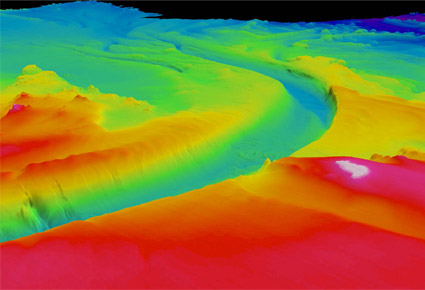
Silent river runs deep!

And how so …

Wikipedia has been quick to register an account of something that I saw on the The Daily Telegraph website on the 1st August, 2010.

That is:

Researchers working in the Black Sea have found currents of water 350 times greater than the River Thames flowing along the sea bed, carving out channels much like a river on the land.

The undersea river, which is up to 115ft deep in places, even has rapids and waterfalls much like its terrestrial equivalents.

If found on land, scientists estimate it would be the world’s sixth largest river in terms of the amount of water flowing through it.

The researchers at the University of Leeds in England used a robotic submarine to carry out the investigations, as their news item explains.

These channels are the main transport pathway for sediments to the deep sea where they form sedimentary deposits. These deposits ultimately hold not only untapped reserves of gas and oil, they also house important secrets – from clues on past climate change to the ways in which mountains were formed.

Now the team, led by Dr Dan Parsons and Dr Jeff Peakall from the University of Leeds, has been able to study the detailed flow within these channels. Dr Parsons, said: “The channel complex and the density flow provide the ideal natural laboratory for investigating and detailing the structure of the flow field through the channel.

Fascinating!

Black Sea underground 'river'.

By Paul Handover

More on those noctilucent clouds

Otherwise known as Night Shining Clouds

There was an article on Learning from Dogs on July 22nd about these mysterious and beautiful clouds.

This is just an update to show you an example of photographs taken by Finn Jari Luomanen over the night of the 29th-30th July. All the pictures may be seen here – they are of this quality:

2010_07_29-30 Mesoscale convective system

Here’s what Jari said about this night:

This mesoscale convective system sweeped over Finland with ferocious energy. The day before was historical as a record breaking temperature of 37,2 degs Celsius was recorded. The MCS proved to be a good match.

Thunderstrikes happened every two seconds at the peak and it was difficult to expose correctly due to the multiple strikes in each exposure.

Noctilucent clouds shone above the swiftly moving cell creating an eerie electric blue backdrop for the spectacle.

Never before have I seen anything close to this. I was jumping behind the tripod firing away in the hot, humid night. Since when has Finland turned into tropics?

This is a very beautiful planet!

By Paul Handover

Dogs ‘copy’ their owners

More evidence that shows there’s more to dogs than we realise.

Earlier on this year, a series of Posts was published on Learning from Dogs based on a science programme on the BBC (BBC Horizon) that revealed the degree of sophistication that is inherent in these clever animals.

This is the link to that article.  Unfortunately the YouTube videos have now been removed but there are some clips available on the BBC website here.  As the programme was introduced:

We have an extraordinary relationship with dogs – closer than with any other animal on the planet. But what makes the bond between us so special?

Research into dogs is gaining momentum, and scientists are investigating them like never before. From the latest fossil evidence, to the sequencing of the canine genome, to cognitive experiments, dogs are fast turning into the new chimps as a window into understanding ourselves.

Anyway, all this is a lead in to an item on the news today regarding a study into dogs by the University of Vienna.

Dogs “automatically imitate” the body movements of their owners, according to a study.

This automatic imitation is a crucial part of social learning in humans.

But Austrian researchers report that the phenomenon – where the sight of another’s body movement causes the observer to move in the same way – is evident in many other animals.

They say that it reveals clues about how this type of learning evolved.

The study, which was led by Dr Friederike Range from the University of Vienna in Austria, also suggests that the way in which people interact with and play with their dogs as they are growing up shapes their ability to imitate.

The phenomenon under investigation is known as "selective imitation" and implies that dogs -- like human infants -- do not simply copy an action they observe, but adjust the extent to which they imitate to the circumstances of the action. (Credit: iStockphoto/David Brimm)

There’s more to the news release on Science Daily from which is quoted:

New research by Friederike Range and Ludwig Huber, of the University of Vienna, and Zsofia Viranyi, of the Eötvös University in Budapest, reveals striking similarities between humans and dogs in the way they imitate the actions of others. The phenomenon under investigation is known as “selective imitation” and implies that dogs–like human infants–do not simply copy an action they observe, but adjust the extent to which they imitate to the circumstances of the action.

By Paul Handover

Night shining clouds

Better known as Noctilucent Clouds

(Hoping this link is still available on the BBC web site)

Just watch this and be inspired!

From that BBC link:

Each summer, high in the night skies of the far northern and southern hemispheres a unique phenonmenon occurs – noctilucent clouds. Little is known about them, but now an amateur astronomer from north Wales is trying to predict when they are likely to appear.

Here, John Rowlands, one of four finalists in the BBC’s search for the Amateur Scientist of the Year So You Want To Be A Scientist? – and his mentor, Professor Nick Mitchell from the University of Bath – take a closer look at these mysterious silver and blue waves at the edge of space.

John has his own Facebook page here with plenty more information.

And a quick Google images search found this:

Noctilucent clouds

And there’s still more. This delightful video on YouTube, courtesy of NASA.

Described thus:

The Aeronomy of Ice in the Mesosphere (AIM) mission will provide the first detailed exploration of Earth’s unique and elusive noctilucent or night shining clouds that are found literally on the “edge of space.” Located near the top of the Earth’s mesosphere (the region just above the stratosphere), very little is known about how these polar mesospheric clouds form or why they vary. They are being seen at lower latitudes than ever before and have been growing brighter and more frequent, leading some scientists to suggest that this recent increase may be the direct result of human-induced climate change. The mission is led by Dr. James Russell of the Center for Atmospheric Sciences at Hampton University.

By Paul Handover

(with thanks to the UK Flyer List for bringing this to my attention.)

Anniversary message from Paul

Learning from Dogs has been running for one year.

On July 15th, 2009 a post called Parenting lessons from Dogs started what has now become a bit of a ‘habit’.  But more reflections tomorrow.

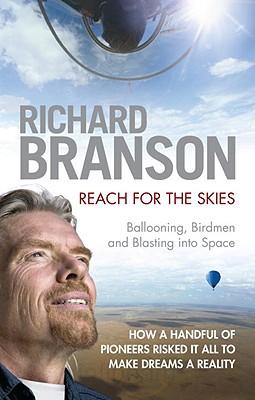
Reach for the Skies

Today I want to voice something that has been running around my mind for some time.  It is whether we give in to the mounting doom and gloom at so many levels in our societies (and it can be a very compelling draw) or whether we see this as a painful but necessary period where slowly but surely the desires of ordinary people; for a fairer, more truthful, more integrous world are gaining power.

And I’m going to use Richard Branson to voice it for me!

(Now this is an unusually long Post so I’ve inserted the Read More divider to prevent the Post visually swamping your browser.)

Read the rest of this article

Integrity – aviation fashion!

The brilliance of fine engineering

The BBC have been started a series on how things are made!  The first episode was on the making of a nuclear submarine – perhaps not something that touches most of us!

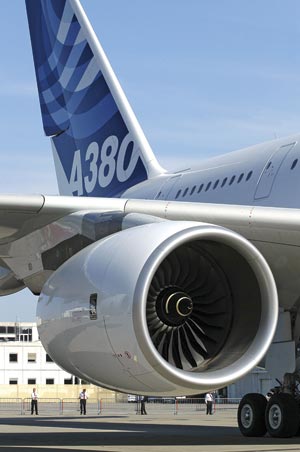
Trent 900 on the A380

But the second episode was much more the ‘touch of the common man’ as it was about the building of a commercial jet engine, the Trent engine built by Rolls Royce of Derby, England.

Anyway, I’m not going to natter on other than to say that not all regulatory bodies are bad in this world.  Indeed, the aviation industry has shown how splendid both engineering and the certification processes can be in giving us a incredibly safe form of transport.

There are plenty of YouTube videos on the Trent engine but here are two that I found of great interest. (Thanks to Simon H for the pointers.)

Rolls Royce Trent Engine Certification video

A380 Loss of Blade test

By Paul Handover

That oil spill

Visualisation of data

I can’t recall how but I came across a web site that focuses on ‘translating’ data into pictures.  As they say, a picture is worth a thousand words.  The web site is called Information is Beautiful.

Anyhow, they have attempted to graphically portray the scale of the BP oil spill. (A thumbnail is below but please click on the link, or here, to see this as it was meant to be shown.)

Ouch!

But this image is an update of an earlier one here that is really powerful.  Because it attempts to put the scale of the oil spill into context with global oil consumption.

If the Purdue University estimate of the oil spill is correct at 48,500 barrels a day (a barrel is approximately the equivalent of two car tankfuls of gas/petrol) and the spill is contained in 90 days then the total oil spilled will be:

90 x 48,500 = 4,365,000 barrels

That is an enormous quantity.

But have a guess as to how much that would represent in terms of hourly global oil consumption?

Any idea?

Well global oil consumption is 3,500,000 barrels an hour.

So 90 days at 48,500 barrels a day represents just 1 hour 15 minutes worth of global consumption!

If there was ever an argument for the world to wean itself off oil then this would appear to be it.

What has happened so far is tragic – tragic beyond measure.  But if it turns out to be a ‘tipping point’ for nations to reconsider how we find and use energy then, perhaps, it will have been a horrible lesson that we all had to take.

And if the USA puts all it’s collective back into leading the world out of our addiction to oil then the damage and hardship will not have been in vain.

By Paul Handover

Happiness

That pre-frontal cortex is at it again.

Prof Gilbert

There’s a fascinating video on the http://www.TED.com website given by Prof Dan Gilbert.  Prof Dan is Professor of Psychology at Havard and there’s a good resume on WikiPedia.

Here’s how John Brockman describes Dan Gilbert.

Dan Gilbert doesn’t have an instruction manual that tells you how to be happy in four easy steps and one hard one. Nor is he the kind of thinker who needs Freud, Marx, and Modernism to explain the human condition.

Gilbert, the Director of Harvard’s Hedonic Psychology Laboratory, is a scientist who explores what philosophy, psychology, neuroscience, and behavioral economics have to teach us about how, and how well the human brain can imagine its own future, and about how, and how well it can predict which of those futures it will most enjoy.

There can’t be a human that hasn’t pondered on what makes them happy. Gilbert sets out some fascinating and possibly counter-intuitive ideas. Here’s the video

By Paul Handover

Watch, and learn! Concluding parts

Growth is good?  Good for what?

[Apologies to our readers but a consistent error in all the links to previous posts within this and earlier posts has now been corrected.  You can view all the previous sections of his lecture by clicking the links in this Post. Ed.]

We live on a finite Earth.  But really understanding what that means is difficult.  I guess because most of us think that in our own little way we can’t really be doing any harm to the planet – I mean what’s another few grams of CO2?

Al Bartlet, University of Colorado

Well here’s Dr Albert Bartlett of the Department of Physics at the University of Colorado chatting about arithmetic!  And if you go to his website, you will come across this quote on the home page:

“Can you think of any problem in any area of human endeavor on any scale, from microscopic to global, whose long-term solution is in any demonstrable way aided, assisted, or advanced by further increases in population, locally, nationally, or globally?”

Want to sit in on his famous lecture, “Arithmetic, Population and Energy: Sustainability 101”?  Well you can.

The lecture is broken down into 8 10-minute videos, each of them on YouTube.  The first two instalments are here , Part Three and Four here

Parts Five and Six were in this post. These are the concluding two parts.

Part Seven

Part Eight

By Paul Handover