I can’t remember how long ago it was that I came across Alexandra Horowitz but the name stuck. For Alexandra is an author of many titles although many of them are about dogs.
But here’s a quote from someone who reviewed her book, On Looking: A Walker’s Guide to the Art of Observation.
“Horowitz writes like a poet, thinks like a scientist, and ventures like an explorer. Her book will have you looking in a new way at the world around you, and make you glad you did.” – Susan Orlean, author of Rin Tin Tin
If you haven’t already read some of her books then don’t delay!
Now I want to introduce a different side of Alexandra. That of her being a broadcaster, for want of a better description.
This is not a short video, it is 49 minutes long. But that’s a reason to sit down and thoroughly immerse oneself in her talk.
It is introduced thus:
To a dog, there is no such thing as “fresh air.” Every breath is full of information—in fact, what every dog knows about the world comes mostly through their nose. Dogs, when trained, can identify drugs of every type, underwater cadavers, cancer, illicit cell phones in prison, bed bugs, smuggled shark fins, dry rot, land-mines, termites, invasive knapweed, underground truffles, and dairy cows in estrous. But they also know about the upcoming weather, earthquakes before they happen, how “afternoon” smells, what you had for breakfast, and whether a cat touched your leg yesterday. And of course, they sniff their way home and know the distinctive odor of each spot of sidewalk as you travel there.
Alexandra Horowitz is a research scientist in the field of dog cognition and the New York Times bestselling author of “Inside of a Dog”. Her new book “BEING A DOG: Following the Dog into a World of Smell” explores in even greater depth what dogs know, delving into all of these remarkable abilities and revealing a whole world of experiences we miss every day. Alexandra visited Google Seattle to share her research and open eyes (and noses!) of pet parents everywhere.
The point at which the sun reaches its farthest point north of the equator is the Summer Solstice, well it is for the Northern Hemisphere. This occurs annually on June 20 or June 21, depending on your time zone.
Here in Southern Oregon, the moment of the Summer Solstice will be at 2:43 PM or 14:43 PDT on Saturday, i.e. today! For the United Kingdom it will be at 22:43 BST on the same day or 21:43 GMT/UTC.
A quick web ‘look-up’ finds that the word solstice is from the Latin solstitium, from sol (sun) and stitium (to stop), reflecting the fact that the Sun appears to stop at this time, albeit momentarily.
At the ancient stone circle of Stonehenge in Southern England, the prehistoric monument that took Neolithic builders an estimated 1,500 years to erect, for many years the Druids have celebrated the Solstice and, undoubtedly, will be doing so again.
AMESBURY, UNITED KINGDOM – JUNE 21: A man stands on top of Stonehenge as the sun rises over Salisbury Plain on June 21, 2006 in Amesbury, England. Police estimated around 17,000 people travelled to watch the sun rise over the 5,000 year old stone circle to start the longest day of the year. (Photo by Daniel Berehulak/Getty Images)
There’s a good article over at EarthSky on this year’s Solstice. I would like to quote a little from it:
At the June solstice, Earth is positioned in its orbit so that our world’s North Pole is leaning most toward the sun. As seen from Earth, the sun is directly overhead at noon 23 1/2 degrees north of the equator, at an imaginary line encircling the globe known as the Tropic of Cancer – named after the constellation Cancer the Crab. This is as far north as the sun ever gets.
All locations north of the equator have days longer than 12 hours at the June solstice. Meanwhile, all locations south of the equator have days shorter than 12 hours.
and
Where should I look to see signs of the solstice in nature? Everywhere. For all of Earth’s creatures, nothing is so fundamental as the length of the day. After all, the sun is the ultimate source of almost all light and warmth on Earth’s surface.
If you live in the Northern Hemisphere, you might notice the early dawns and late sunsets, and the high arc of the sun across the sky each day. You might see how high the sun appears in the sky at local noon. And be sure to look at your noontime shadow. Around the time of the solstice, it’s your shortest noontime shadow of the year.
If you’re a person who’s tuned in to the out-of-doors, you know the peaceful, comforting feeling that accompanies these signs and signals of the year’s longest day.
Is the solstice the first day of summer? No world body has designated an official day to start each new season, and different schools of thought or traditions define the seasons in different ways.
In meteorology, for example, summer begins on June 1. And every schoolchild knows that summer starts when the last school bell of the year rings.
Yet June 21 is perhaps the most widely recognized day upon which summer begins in the Northern Hemisphere and upon which winter begins on the southern half of Earth’s globe. There’s nothing official about it, but it’s such a long-held tradition that we all recognize it to be so.
It has been universal among humans to treasure this time of warmth and light.
For us in the modern world, the solstice is a time to recall the reverence and understanding that early people had for the sky. Some 5,000 years ago, people placed huge stones in a circle on a broad plain in what’s now England and aligned them with the June solstice sunrise.
We may never comprehend the full significance of Stonehenge. But we do know that knowledge of this sort wasn’t limited to just one part of the world. Around the same time Stonehenge was being constructed in England, two great pyramids and then the Sphinx were built on Egyptian sands. If you stood at the Sphinx on the summer solstice and gazed toward the two pyramids, you’d see the sun set exactly between them.
How does it end up hotter later in the summer, if June has the longest day? People often ask:
If the June solstice brings the longest day, why do we experience the hottest weather in late July and August?
This effect is called the lag of the seasons. It’s the same reason it’s hotter in mid-afternoon than at noontime. Earth just takes a while to warm up after a long winter. Even in June, ice and snow still blanket the ground in some places. The sun has to melt the ice – and warm the oceans – and then we feel the most sweltering summer heat.
Ice and snow have been melting since spring began. Meltwater and rainwater have been percolating down through snow on tops of glaciers.
But the runoff from glaciers isn’t as great now as it’ll be in another month, even though sunlight is striking the northern hemisphere most directly around now.
So wait another month for the hottest weather. It’ll come when the days are already beginning to shorten again, as Earth continues to move in orbit around the sun, bringing us closer to another winter.
And so the cycle continues.
Indeed, so the cycle continues as it has for time immemorial!
So soon after we welcomed Sheena, Ruby had a severe downturn.
Ruby had had one operation for the removal of a mast cell tumor back in February but we were advised by the vet that almost certainly it would grow back. Late on Saturday Ruby became very tired and went off her food and Jean and I were discussing having to take her to be put down on Monday (today).
Then overnight Saturday it was clear that her breathing was very laboured and on Sunday she was weak and struggling. It was time.
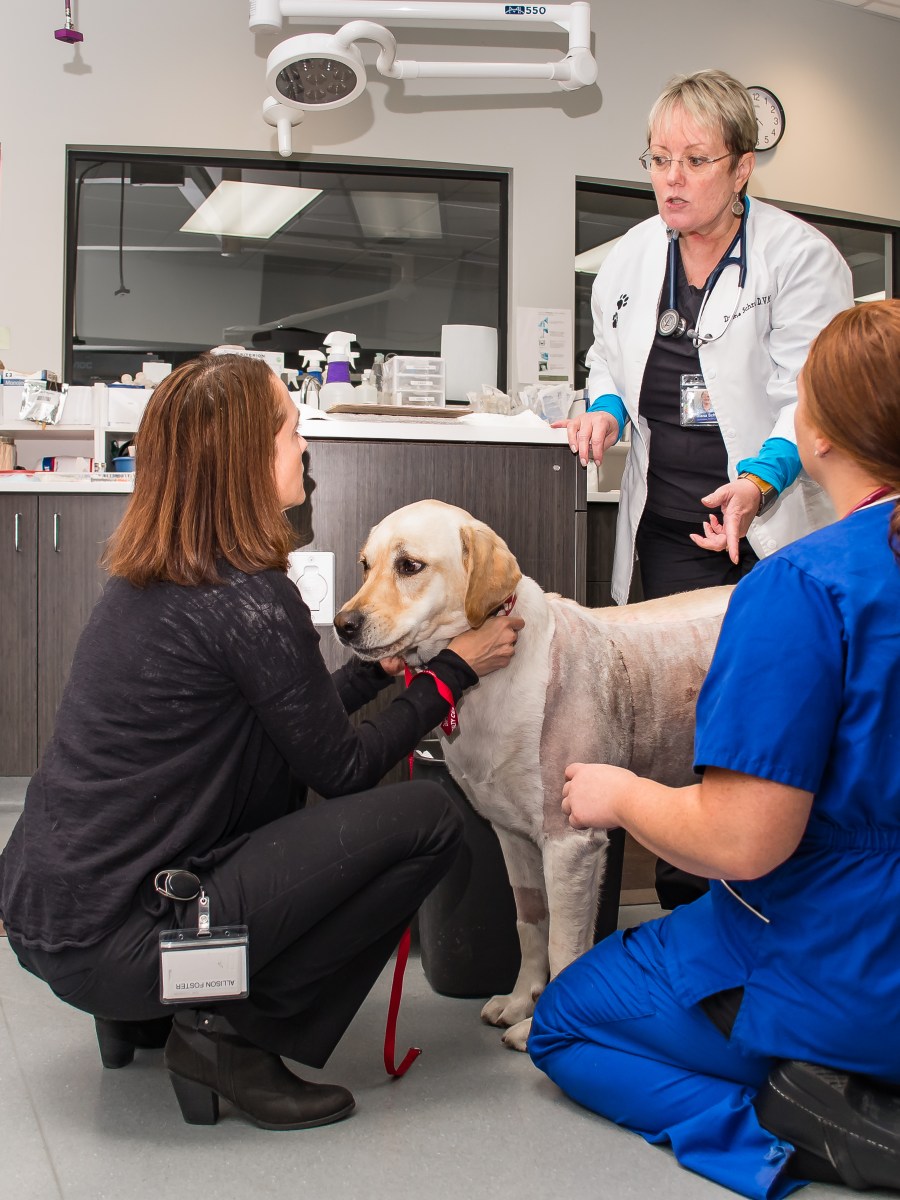
Being a Sunday we had no option other than to go to the Southern Oregon Veterinary Specialty Center, or SOVSC. We called them and they asked a few questions about Ruby and then told us to come straight over. They are at Biddle Road, Central Point and it took us 45 minutes to get there.
A little bit from their website:
Outstanding Team
Our team includes board certified specialists and highly trained doctors and staff, who have been chosen for their skill and expertise, as well as their compassion and dedication to veterinary medicine.
Then a couple of photographs from us.
oooo
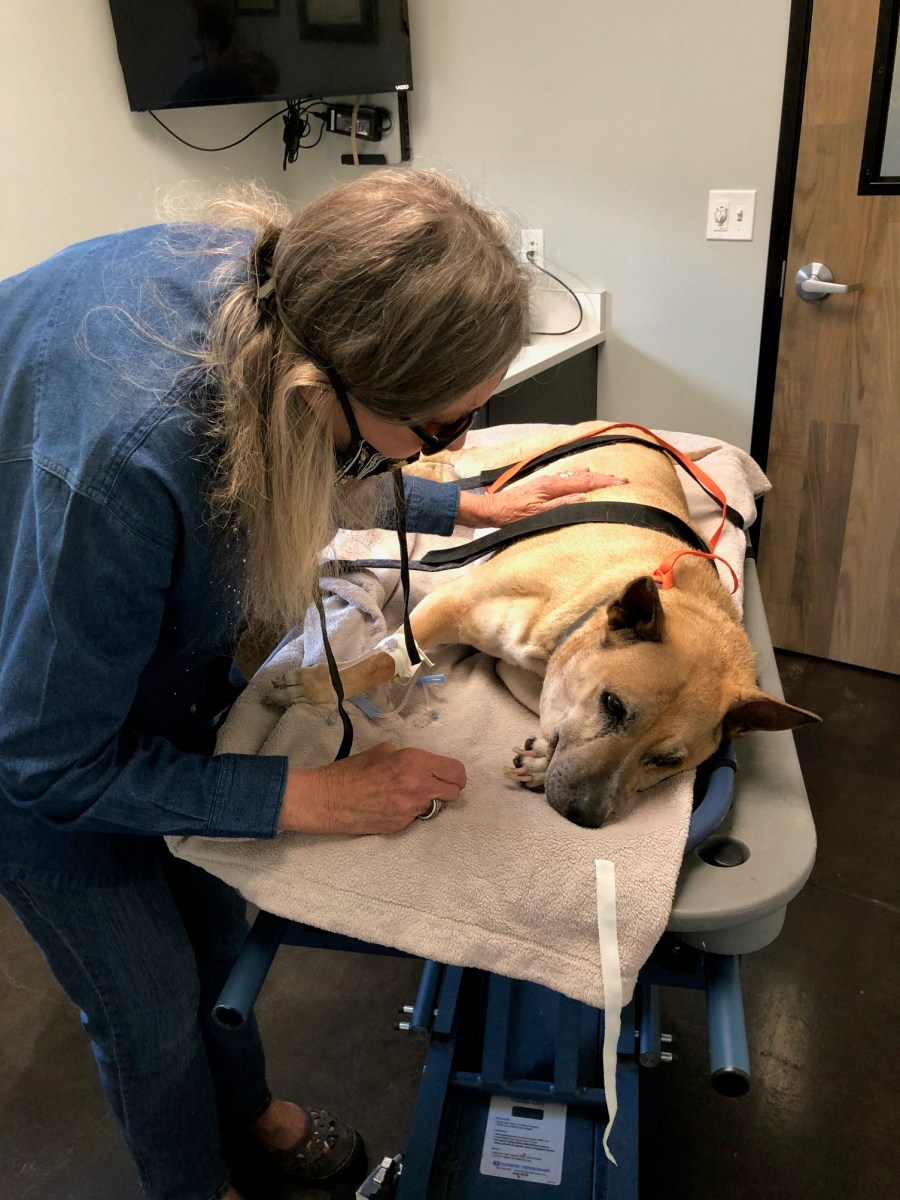
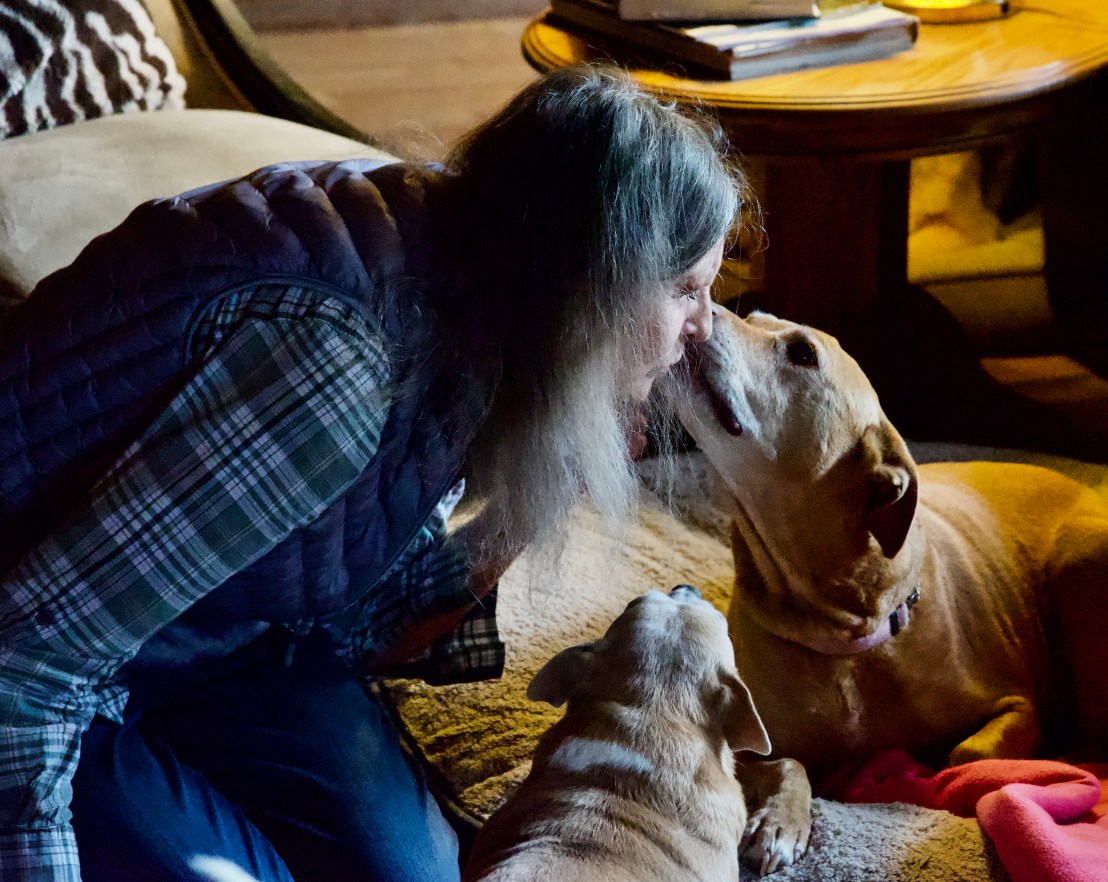
Jeannie saying goodbye.
Ruby was the last of Jean’s Mexican rescues. She will be sorely missed!
Those were Jeannie’s words not mine. When you consider the number of dogs that Jean has introduced into her pack, especially down in Mexico, that is quite a statement!
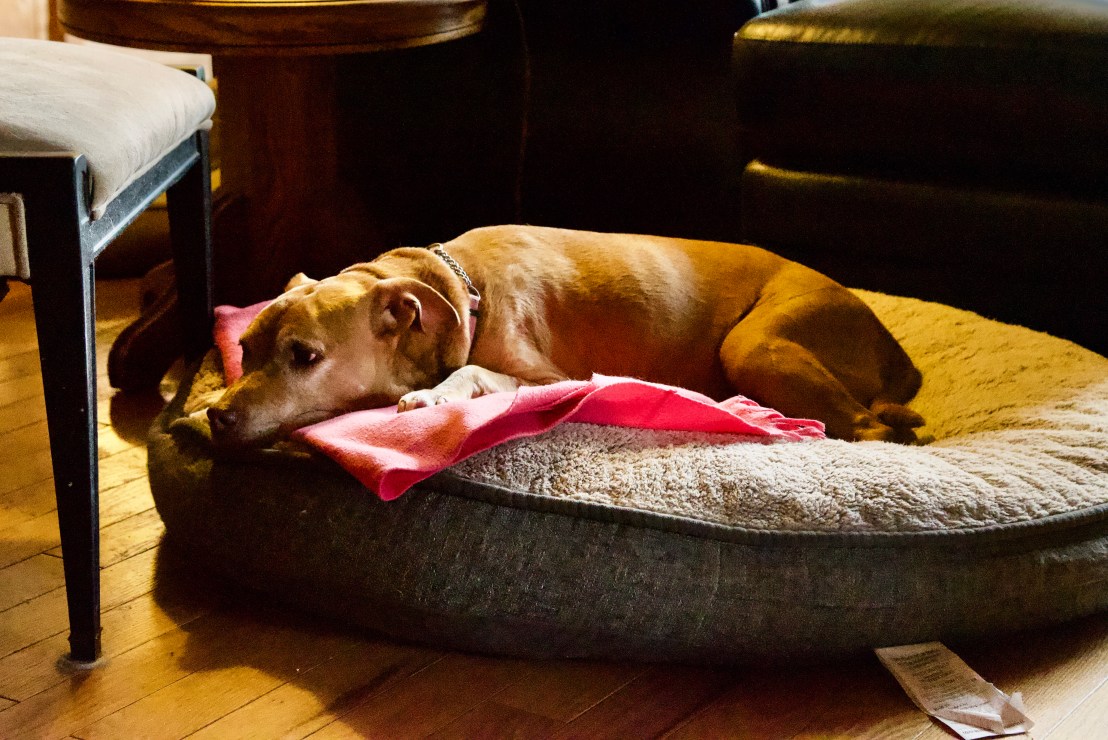
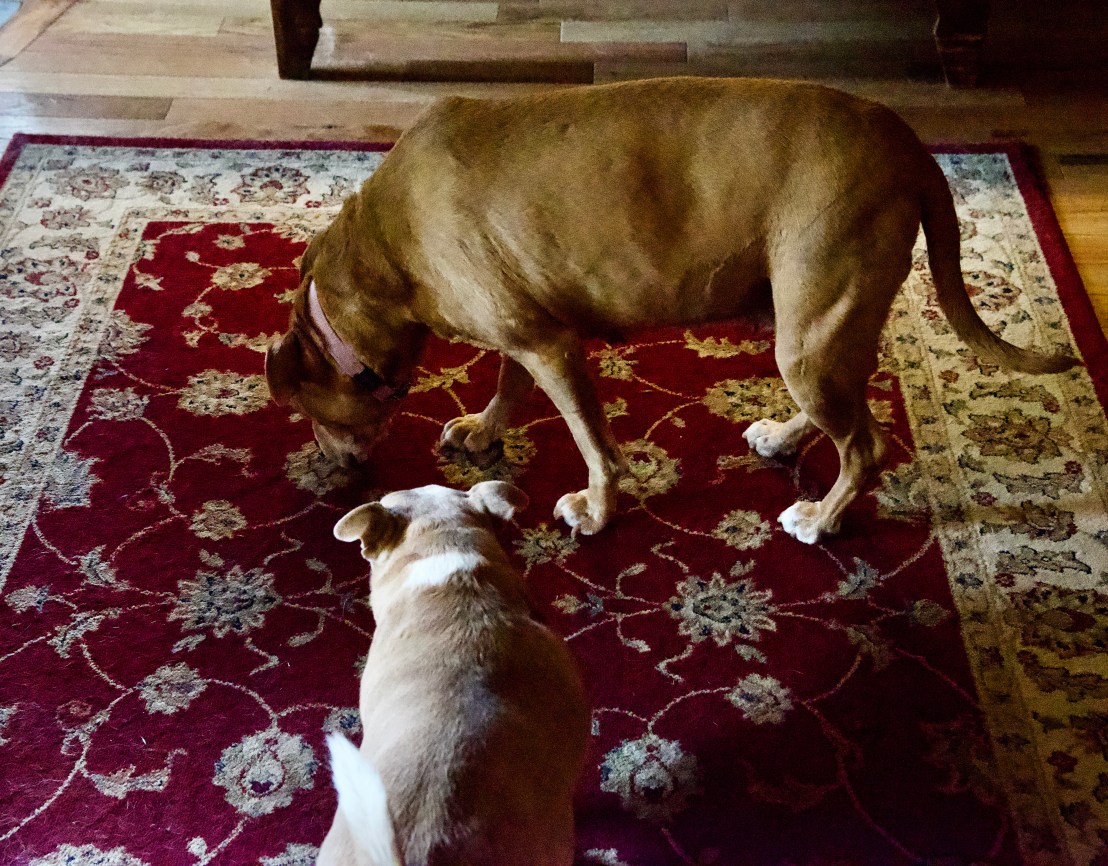
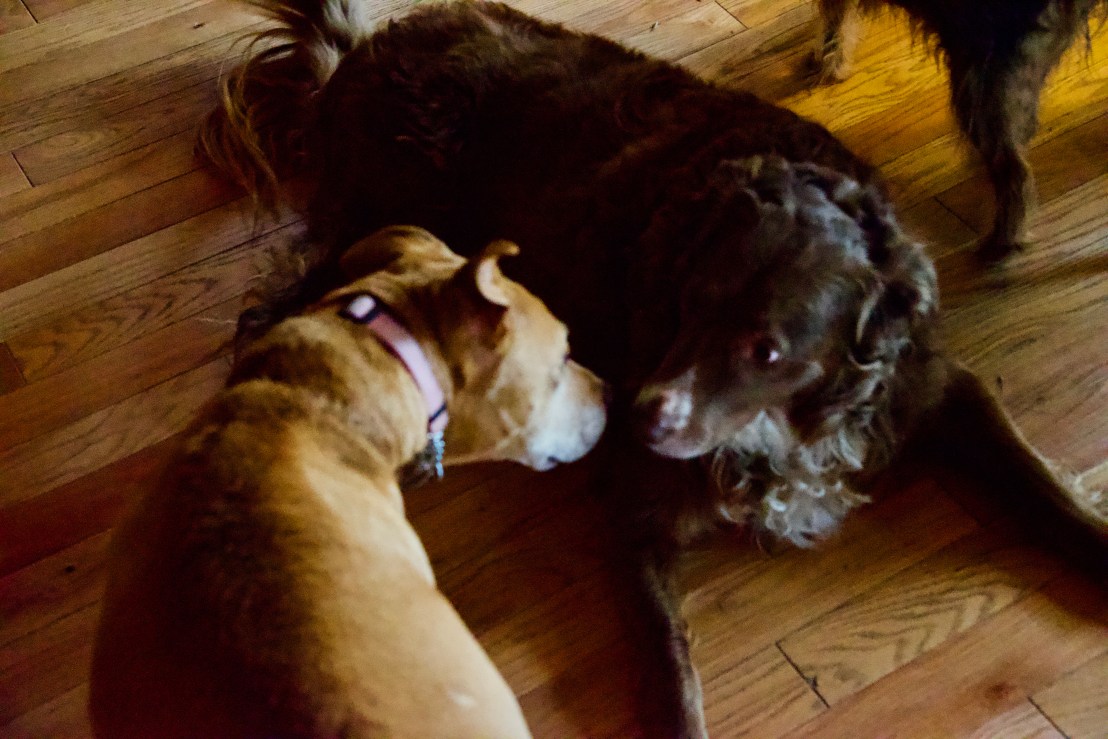
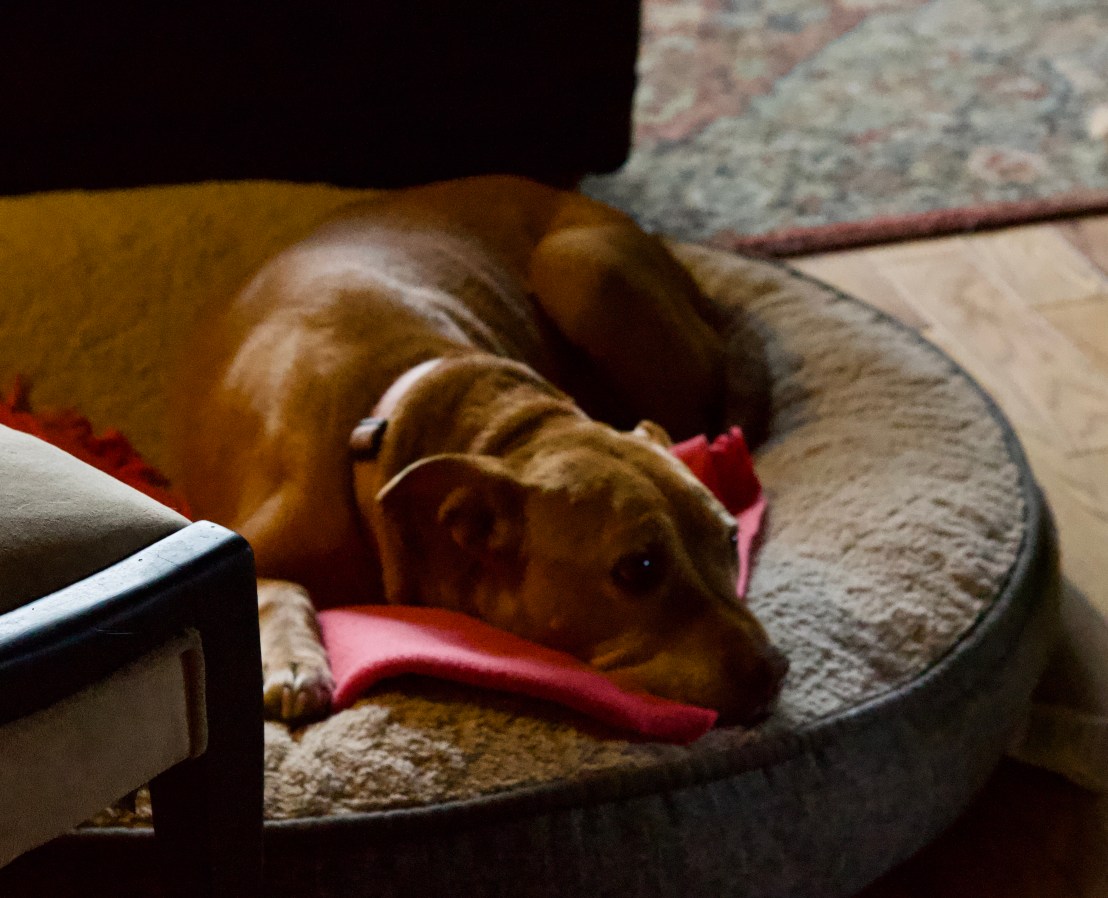
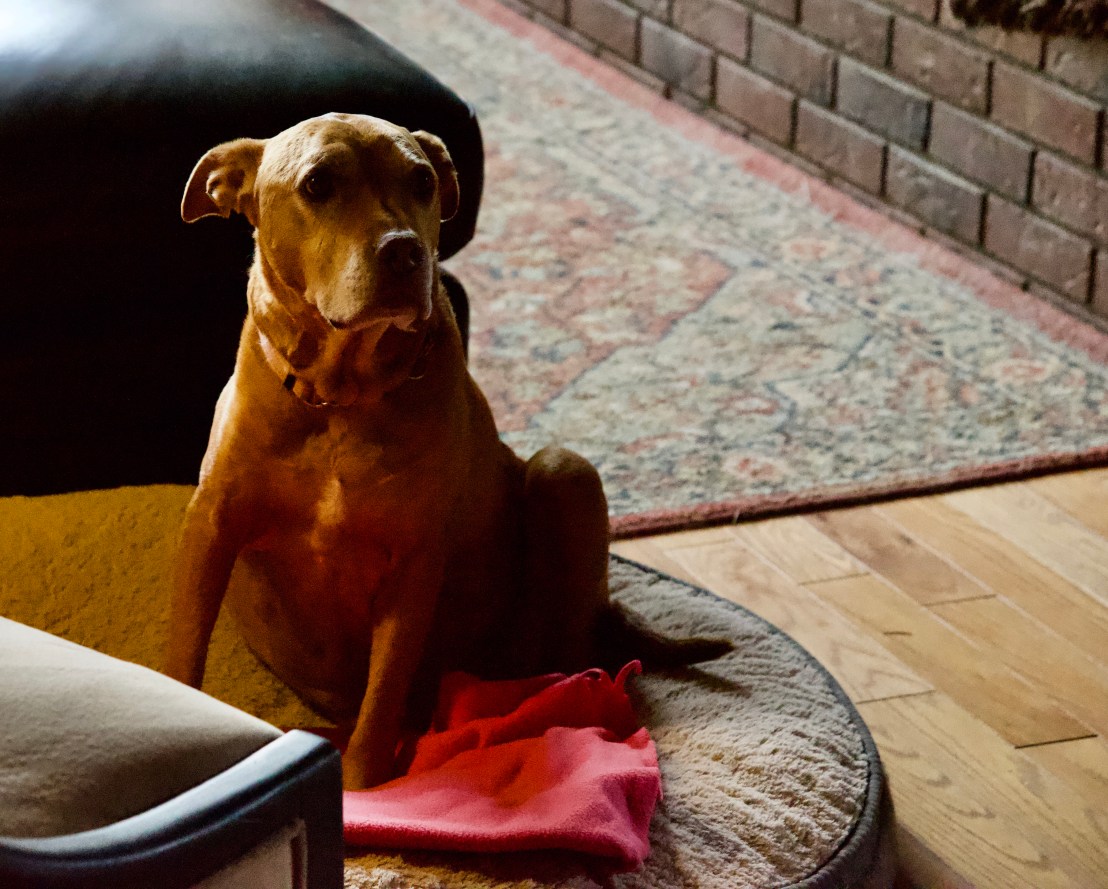
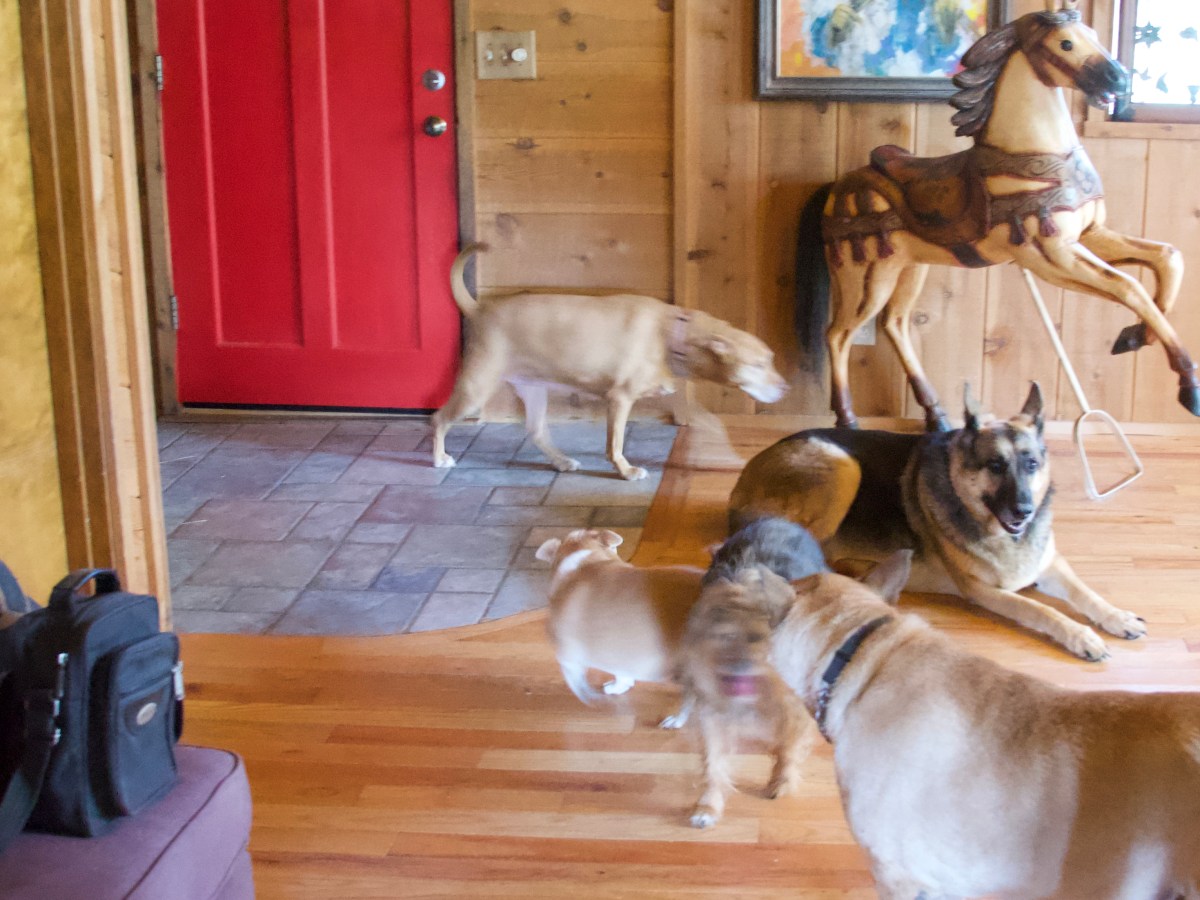
Very soon after Renate coming round to our place at 10 am yesterday morning Sheena came into the house. I tried to take a few photographs in those early moments. They are not the best I have taken!
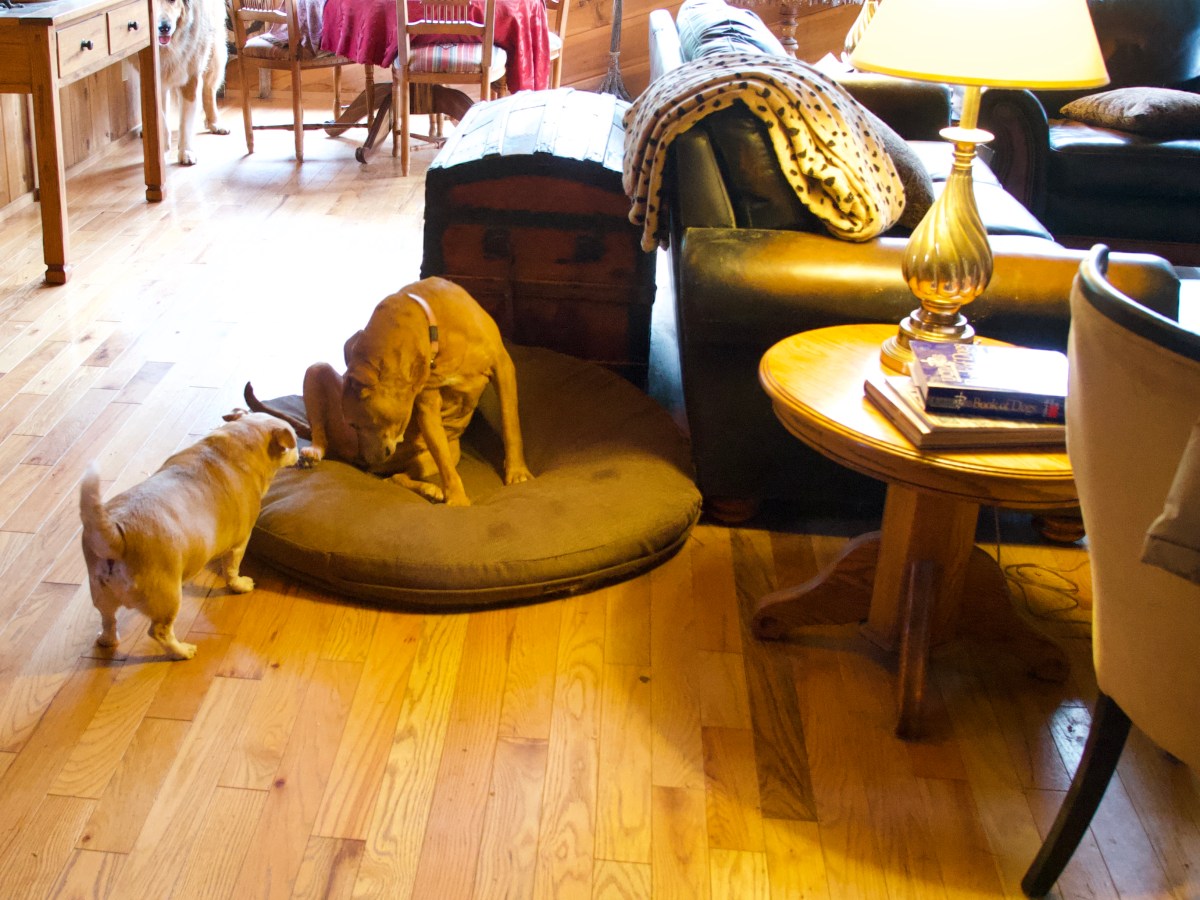
Sheena within minutes goes to her bed.
oooo
Little Pedi watching Sheena!
oooo
oooo
oooo
Sheena getting to know Oliver.
oooo
oooo
oooo
Now we have yet to go a full day (as this is being written on Friday for publication at midnight PDT tonight). But Jean and I have a good feeling about Sheena.






















 Learning from Dogs