To all you readers of Learning from Dogs – have a peaceful and wonderful Christmas Day.
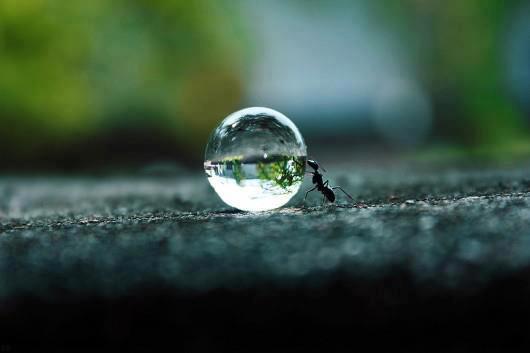
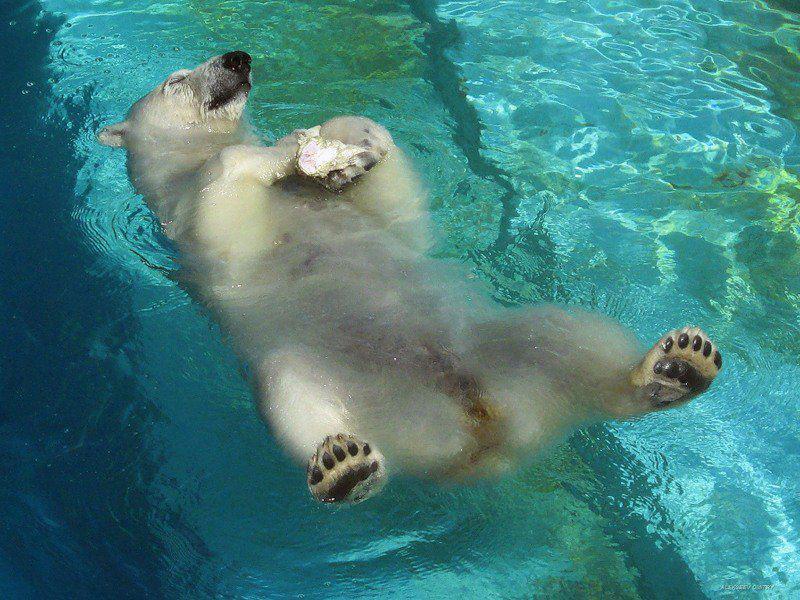
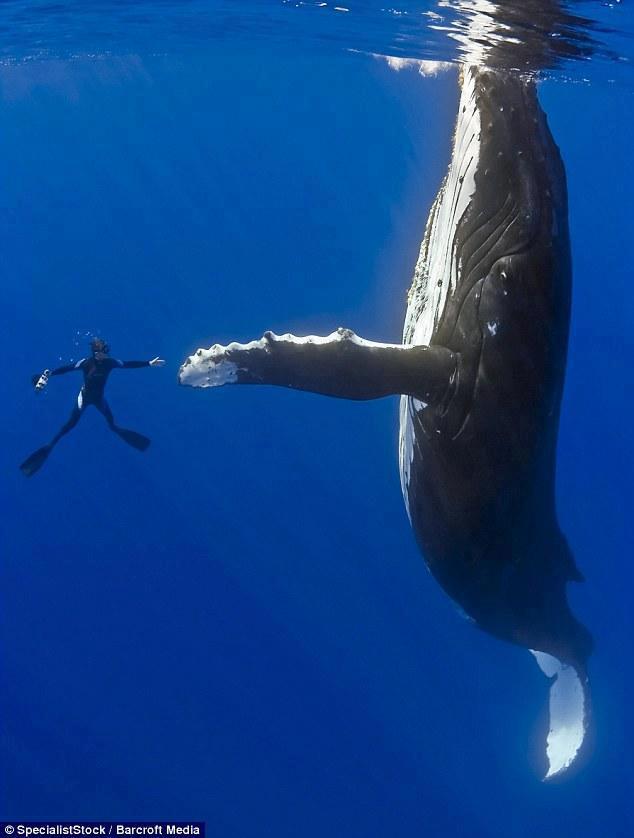
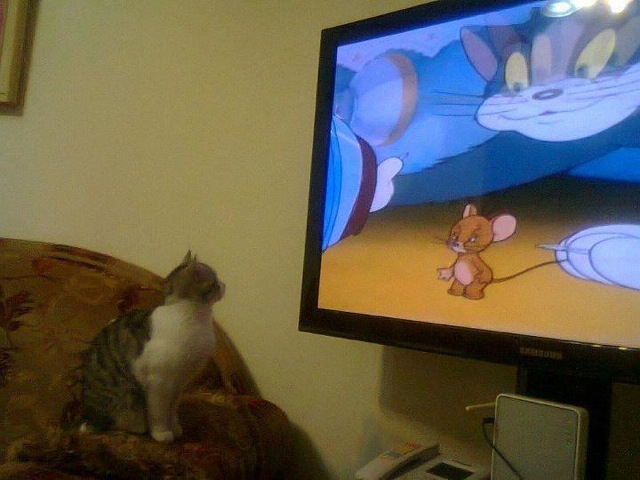
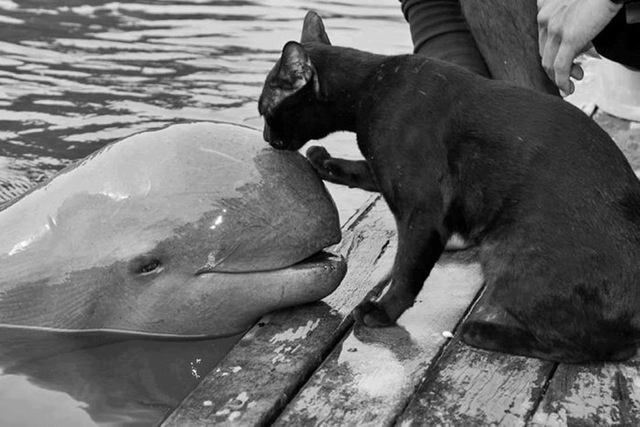
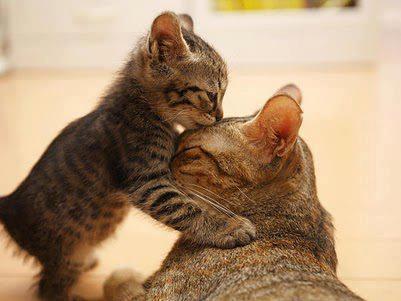
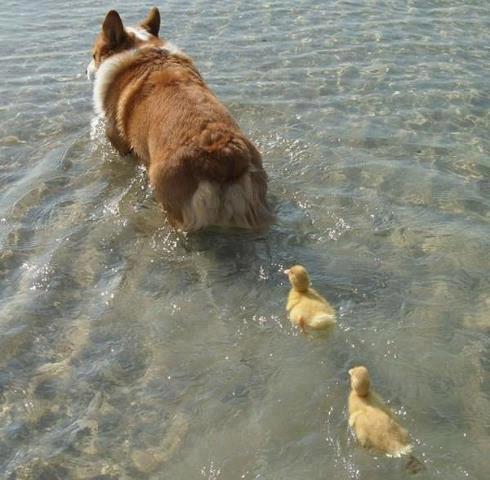
Just going to offer you two wonderful images.
The first is a cartoon from the hands of Neil Kelly, a friend from my previous days in South Hams, Devon.
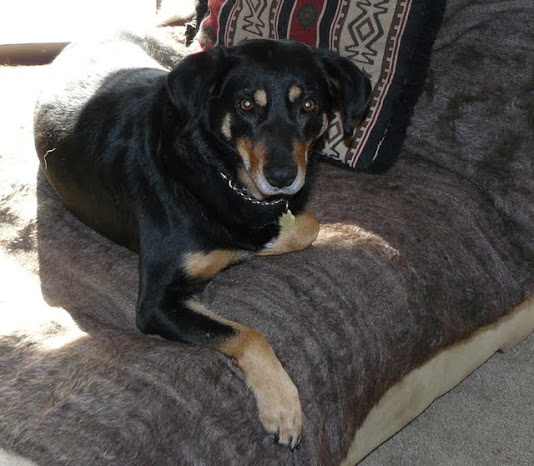
The second came as an attachment to a Christmas greeting email from my son, Alex, and his partner Lisa. Don’t know the background to the picture but what a reminder of the beauty of all the animals in the world.
As I write these words, Hazel is laying down on the carpet just next to me. She was dumped on the street outside Jean’s Mexican house back in early 2010. Hazel was still in milk and probably had had her puppies taken from her and sold for a few pesos. Who knows!
But her gratitude for being rescued by Jean is boundless. Most nights she sleeps on our bed, curled up tightly behind my back. Her love for her world here in Oregon is beautiful and pure. As they say, dogs do not lie about love.
So what’s this leading up to?
Simply setting the scene for a wonderful TED video by Louie Schwartzberg, first seen by me on Christine’s blog 350 or bust.
Watch and be grateful for all the beautiful things in the world.
Louie Schwartzberg is an award-winning cinematographer, director, and producer whose notable career spans more than three decades providing breathtaking imagery for feature films, television shows, documentaries and commercials.
This piece includes his short film on Gratitude and Happiness. Brother David Steindl-Rast’s spoken words, Gary Malkin’s musical compositions and Louie’s cinematography make this a stunningly beautiful piece, reminding us of the precious gift of life, and the beauty all around us.
As a visual artist, Louie has created some of the most iconic and memorable film moments of our time. He is an innovator in the world of time-lapse, nature, aerial and “slice-of-life” photography – the only cinematographer in the world who has literally been shooting 24 hours a day, 7 days a week continuously for more than 30 years.
Louie was recognized as one of the top 70 Cinematographers for the On Film Kodak Salute Series. He is a member of the Directors Guild of America and the Academy of Motion Pictures Arts and Sciences.
Louie is credited by many with pioneering the contemporary stock footage industry by founding Energy Film Library, a global company with a network of 12 foreign offices, which was acquired by Getty Images in 1997. Motion picture clients of his cinematic artistry include Sex in the City, The Bourne Ultimatum, Die Hard 4, Syriana, Crash, Men in Black and classics such as American Beauty, Koyaanisqatsi and E.T. among others.
Louie went on to found BlackLight Films, a creative production company specializing in producing original theatrical feature, large format films, HD and TV programming.
In 2004, BlackLight Films completed production of the theatrical feature film, America’s Heart &Soul, distributed theatrically by Walt Disney Pictures. In 2006, BlackLight Films completed a series of HD shorts, Louie Films, for the launch of Buena Vista Home Entertainment’s Blu-Ray DVD releases. In 2007, the company produced a 1-hour special, Chasing the Light, which aired nationally on PBS.
Past projects include the 35mm film Seasons of the Vine for Disney’s California Adventure Theme Park and a 26-half hour series, America!, for The Hallmark Channel.
Louie has won two Clio Awards for Best Environmental Broadcast Spot, an Emmy nomination for Best Cinematography for the Discovery Channel Special, Oceans of Air, and the Heartland Film Festival’s Truly Moving Picture Award for Walt Disney Pictures’ feature film release America’s Heart & Soul.
Louie completed production on a feature length nature documentary, Wings of Life, to be theatrically released worldwide, under Walt Disney Pictures’ new production banner, Disneynature. The film was released in France (March 2011) under the title Pollen and won the Roscar Award for Best Cinematography at the 2011 Wild Talk Africa Film Festival.
Louie spoke at the TED 2011 conference in Long Beach, CA and has been a regular presenter at the annual Bioneers Conference in San Francisco. Currently, Louie is in production with National Geographic to produce Hidden Worlds, a 3D Imax film.
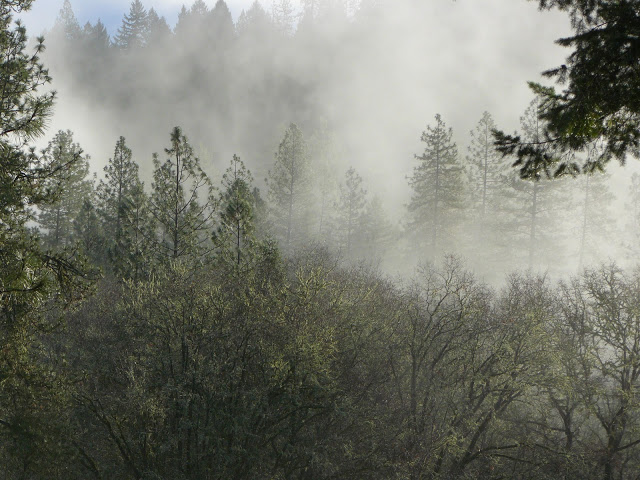
To underline the gratitude that I have to be here surrounded by such beautiful countryside, let me close with this picture recently taken from our bedroom window.
I have mentioned the website of the Permaculture Research Institute of Australia before. It’s a fabulous resource for many aspects of moving towards a more sustainable lifestyle, and not just for Australians.
A few days ago, their regular posting included a link to this:
Dirt: The Movie
DIRT! The Movie — directed and produced by Bill Benenson and Gene Rosow — takes you inside the wonders of the soil. It tells the story of Earth’s most valuable and underappreciated source of fertility — from its miraculous beginning to its crippling degradation. The opening scenes of the film dive into the wonderment of the soil. Made from the same elements as the stars, plants and animals, and us, “dirt is very much alive.” Though, in modern industrial pursuits and clamor for both profit and natural resources, our human connection to and respect for soil has been disrupted. “Drought, climate change, even war are all directly related to the way we are treating dirt.”
DIRT! the Movie — narrated by Jaime Lee Curtis — brings to life the environmental, economic, social and political impact that the soil has. It shares the stories of experts from all over the world who study and are able to harness the beauty and power of a respectful and mutually beneficial relationship with soil.
DIRT! the Movie is simply a movie about dirt. The real change lies in our notion of what dirt is. The movie teaches us: “When humans arrived 2 million years ago, everything changed for dirt. And from that moment on, the fate of dirt and humans has been intimately linked.” But more than the film and the lessons that it teaches, DIRT the Movie is a call to action.
A couple of weeks ago, I published a selection of photographs from a number of pictures that had been sent to me by Cynthia. I named the post Small pause today and it received 25 ‘Likes’ and favourable comments including one from Pedantry that simply said, “More of the same, please!”
So to Pedantry and all you other dear readers, here comes more of the same!
oooOOOooo
Forgive me now for this little indulgence; a couple of pictures from closer to home – literally!
An early morning picture of the woods overlooking our Oregon property.
My lovely Jeannie helping tidy up the bank of the creek.
The next couple of weeks are going to be ‘interesting’.
You will have been aware from my post last Saturday, The naming of creeks!, that heavy rains washed away the supports to the bridge that crosses Bummer Creek inside our property.
So apologies for taking a break from writing something more substantial for today but yesterday (I’m writing this at 5pm on the 6th, i.e. yesterday) the crew that will be repairing the damage arrived and got to work. It has not been a normal day!
Three pictures to explain why!
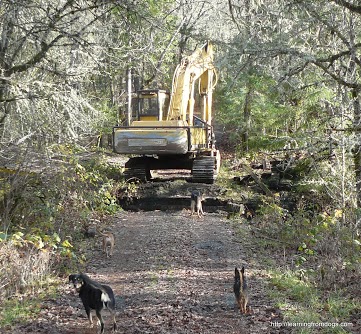
This seriously large digger was delivered around 9am!
Then in what seemed a matter of moments, the bridge was no more!
Pharaoh, of course, was getting involved. Let’s face it, even bridge construction people can always learn from dogs!
Many of you ‘Liked’ the pictures from last Sunday’s Small pause today post. Those pictures were sent to me by Cynthia, wife of long-time friend Dan Gomez.
So I decided to present another set, this time sent to me by Suzann, who is Dan’s sister. Again, they are beautiful albeit very different images.
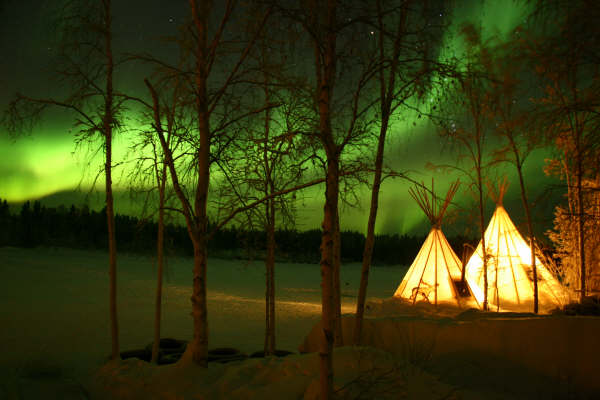
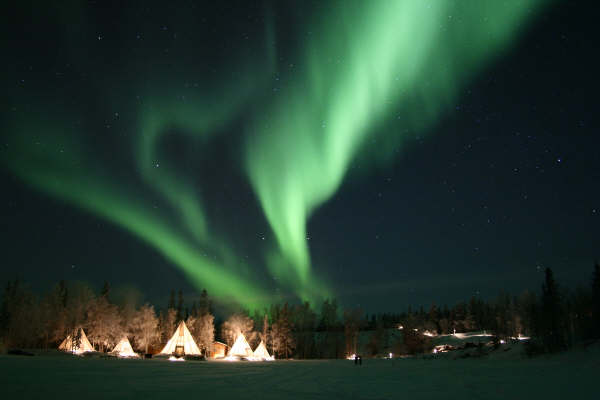
Northern Lights Over Teepees
(NORTHERN LIGHTS, YELLOW KNIFE, CANADA )
Now check out that thermometer!
Now more beautiful images.
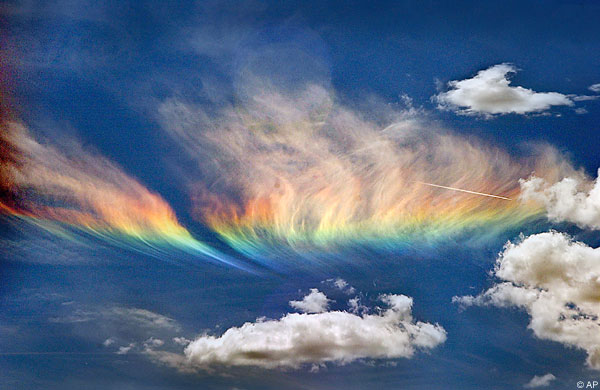
The next picture is a fire rainbow; the rarest natural phenomenon in the atmosphere. The picture was taken on the Idaho Washington border and the event lasted for about an hour.
Apparently, the clouds have to be cirrus of an altitude of 20,000 feet with just the right proportion of ice crystals. Then the sunlight has to illuminate the clouds at precisely 58 degrees to the horizontal.
Sunset at the North Pole
Another rare picture taken when the moon was closest to the earth. Taken Thursday, the 13th. of March 2011.
Note how unusual it is to see the sun below the moon!
Many of you will have watched the video of the dolphins being rescued off a Brazilian beach that I published a week ago under the title of Wet eyes warning. That was sent to me by Capt. Bob. Bob, like my son, is a commercial airline captain.
Now Bob has sent me this. Some day, I’ll natter on about my own amateur love affair with flying, both gliding (sailplane in USA speak) and power. But for now just marvel at the skills on display as in the name of fire control these crews quite deliberately do all the things that most would consider suicidal in aviation affairs.
Just a wonderful set of very heart-warming pictures.
Note: These were sent to me by John H. back on the 13th October, our penultimate Saturday in Arizona. I thought they would make a perfect start to our first November week-end in Merlin, Oregon.
There are twenty-two in total; eleven today and the rest tomorrow.
oooOOOooo
oooOOOooo
The concluding glorious eleven photographs tomorrow.




 ”
”