Back to dogs!

Photo by Harshit Suryawanshi on Unsplash

Photo by Peter Muniz on Unsplash
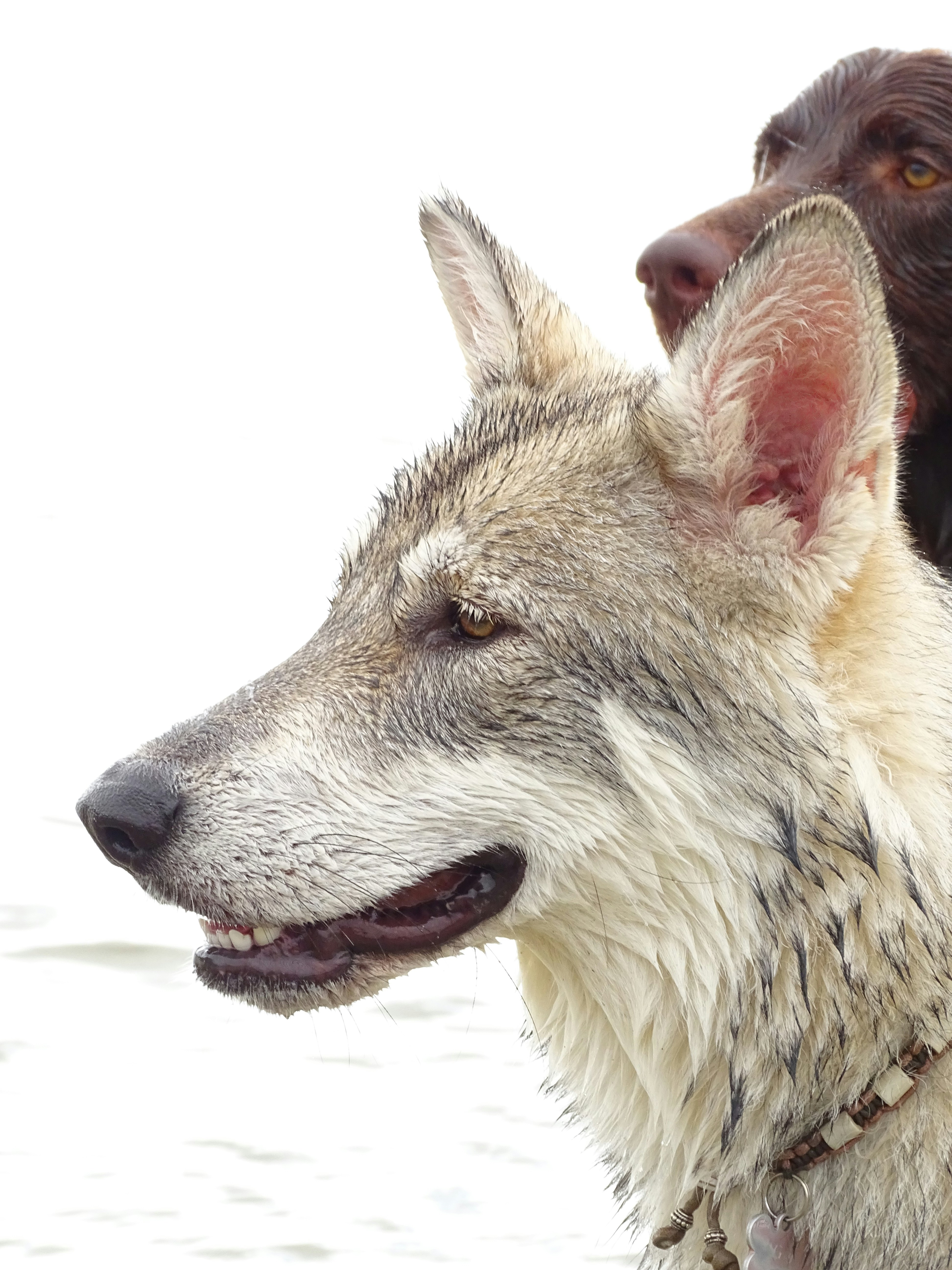
Photo by Aldo Houtkamp on Unsplash

Again, a photo by Aldo Houtkamp on Unsplash

Again, a very beautiful selection by yours truly!
Dogs are animals of integrity. We have much to learn from them.
Category: Photography
Back to dogs!
Photo by Harshit Suryawanshi on Unsplash
Photo by Peter Muniz on Unsplash
Photo by Aldo Houtkamp on Unsplash
Again, a photo by Aldo Houtkamp on Unsplash
Again, a very beautiful selection by yours truly!
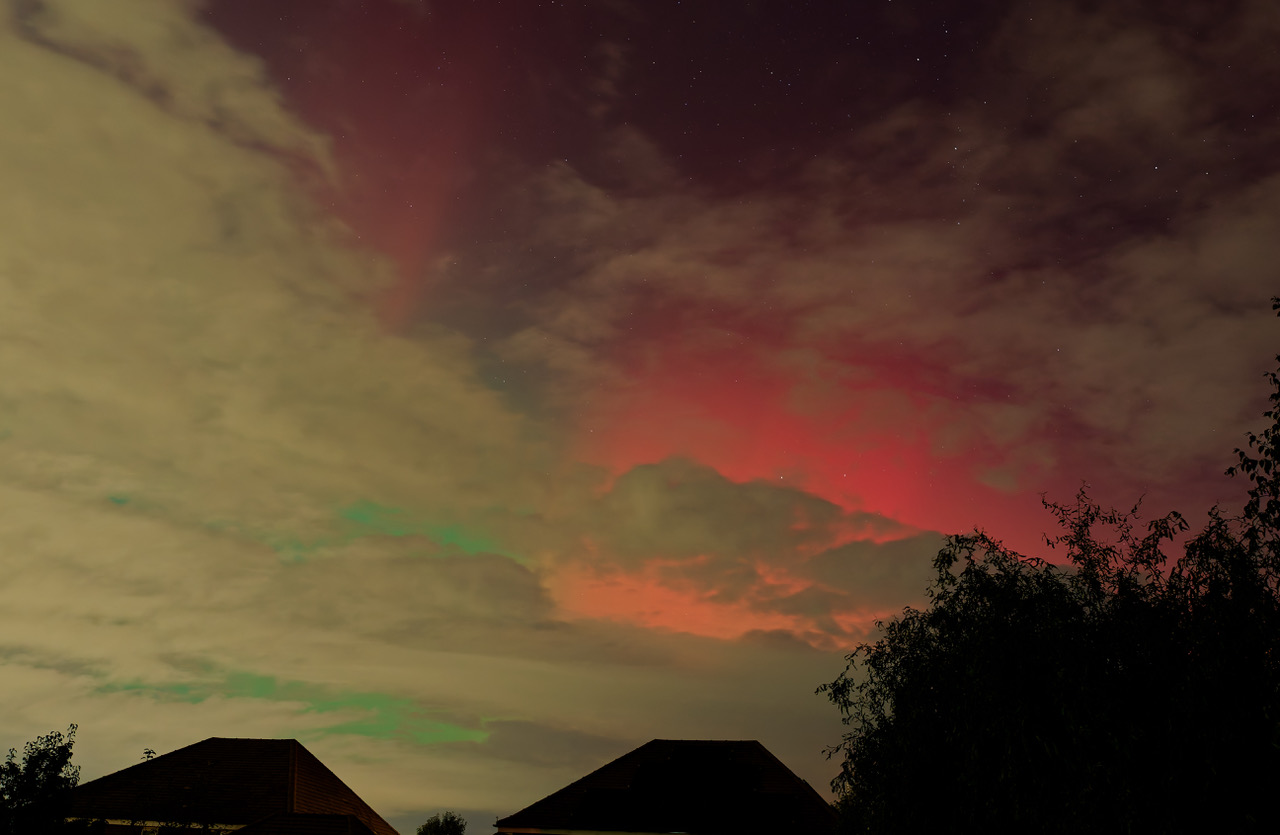
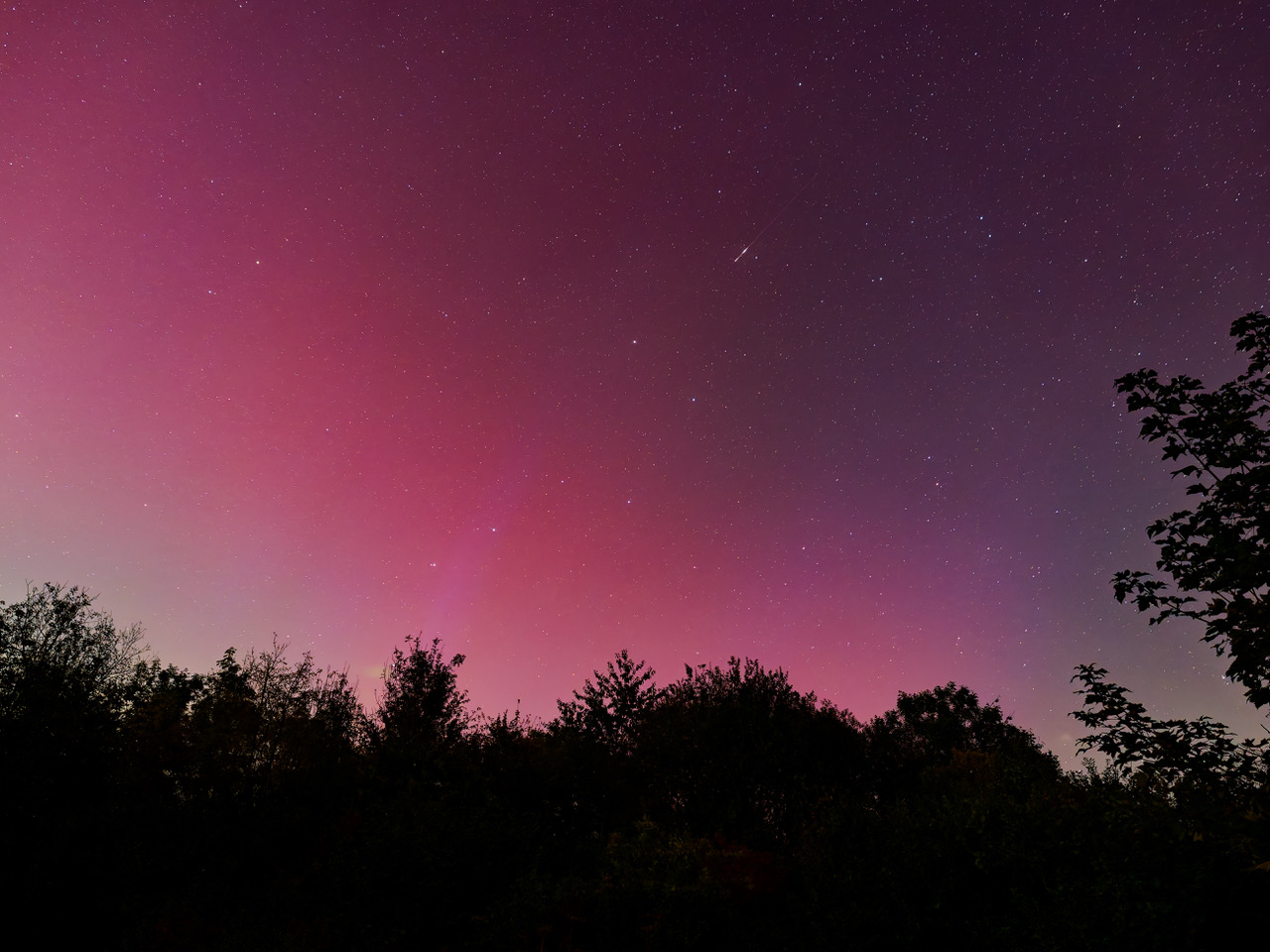
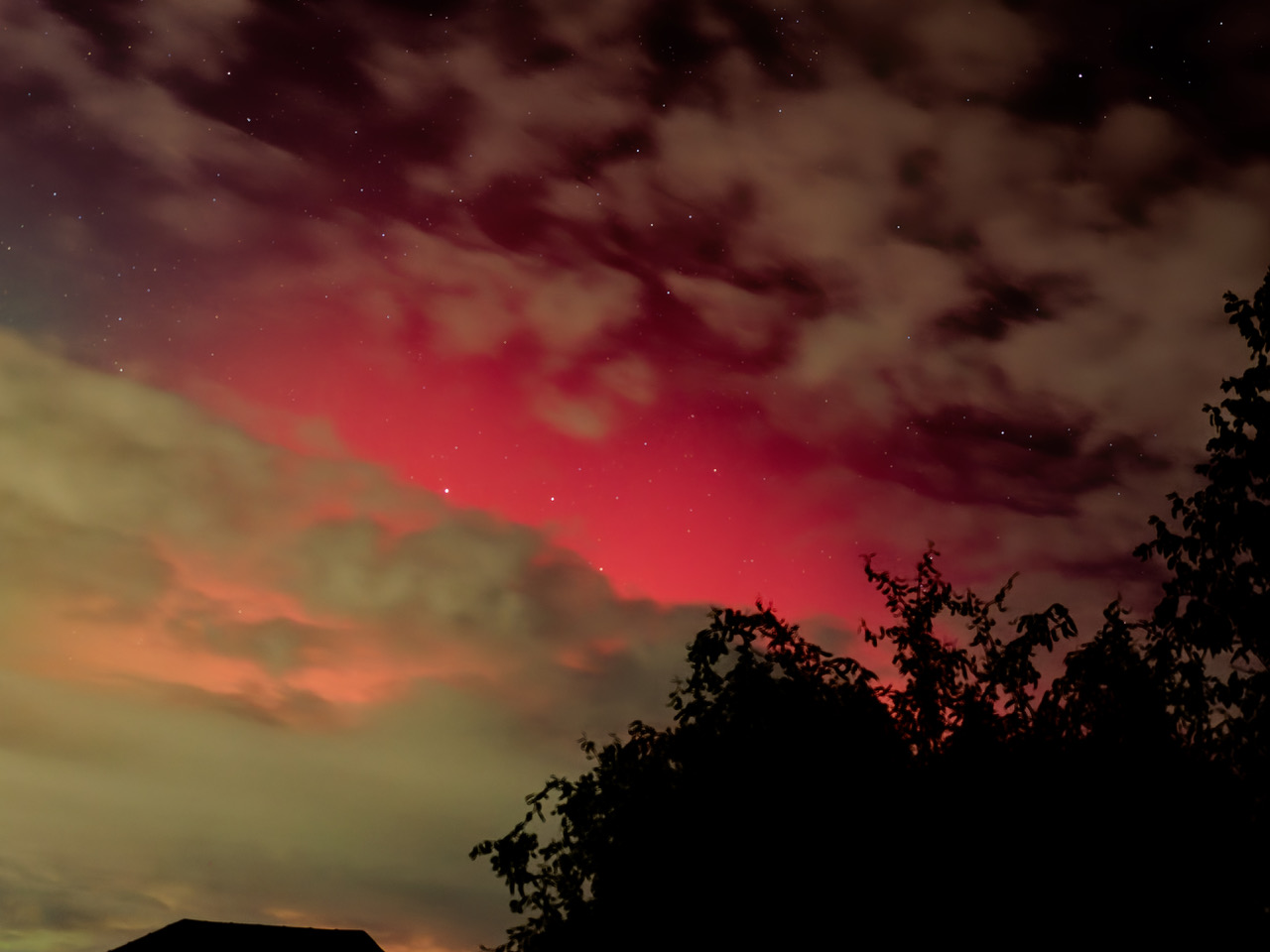
My son, Alex, took the following photographs of the Aurora..
oooo
oooo
oooo
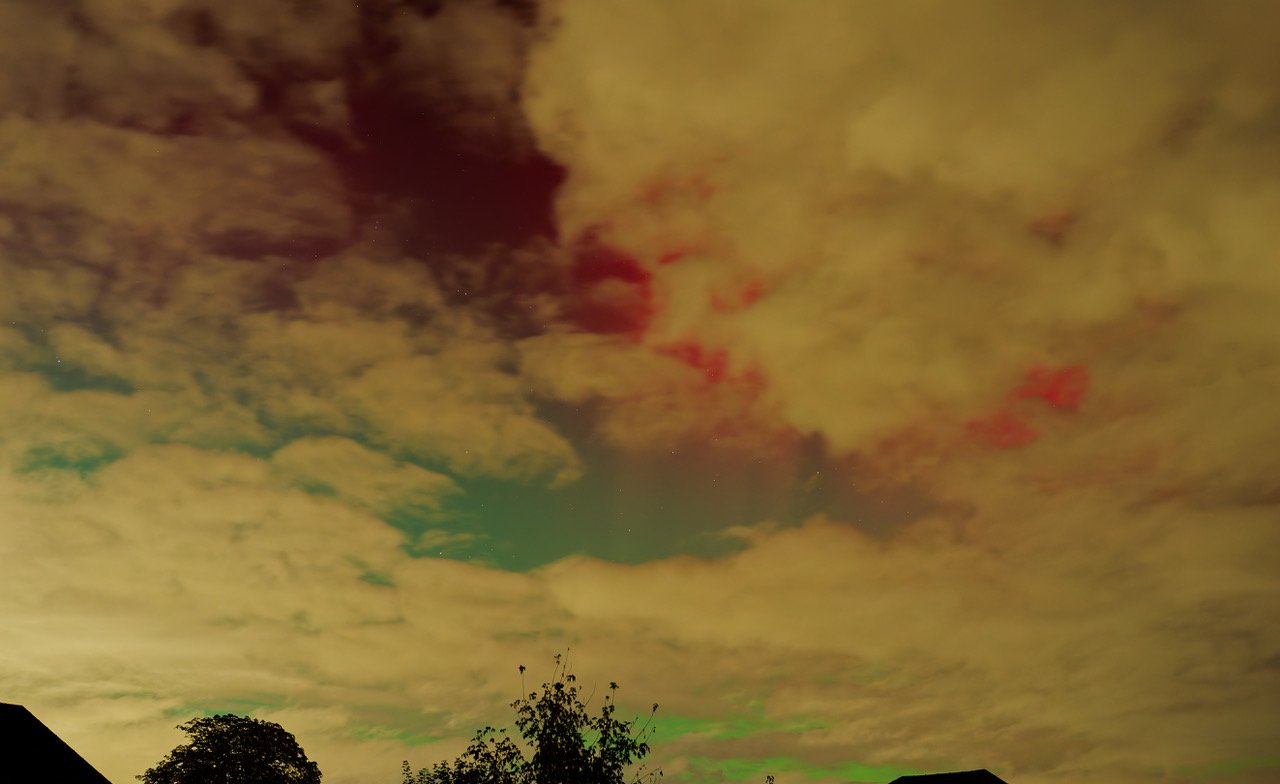
They are fabulous. Especially so because as it happened we had mainly cloud cover here in Southern Oregon.
To close, here is an extract from yesterday’s BBC website:
On Thursday night, the stunning colours of the Northern Lights were visible once again even to the naked eye across much of the US.
Experts say the Northern Lights, or Aurora Borealis, are more visible right now due to the sun being at what astronomers call the “maximum” of its 11-year solar cycle.
What this means is that roughly every 11 years, at the peak of this cycle, the sun’s magnetic poles flip, and the sun transitions from sluggish to active and stormy. On Earth, that’d be like if the North and South Poles swapped places every decade.
“At its quietest, the sun is at solar minimum; during solar maximum, the sun blazes with bright flares and solar eruptions,” according to Nasa, the US space agency.
The current 11-year cycle, the 25th since records began in 1755, started in 2019 and is expected to peak next year.
August has produced a find video and it is presented today.
August Hunicke has completed the editing of the video he shot while taking down the very tall trees alongside our house on the 24th and 25th of last September.
It is shared with all of you today.
When a Smooth Job Meets Bad Company
The team involved in the project were shown in this previous post.
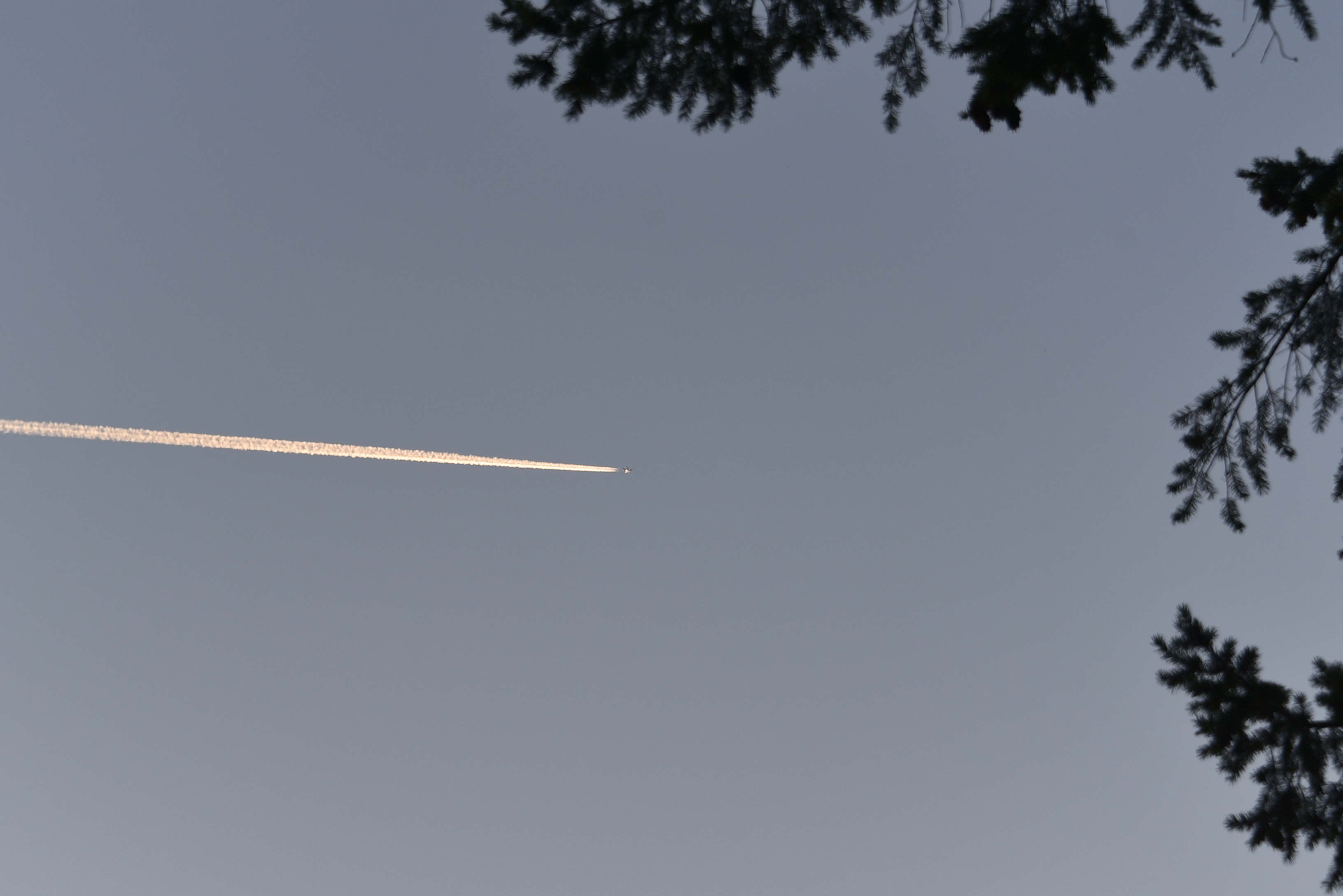
A few photographs from home.

oooo
oooo

oooo
oooo

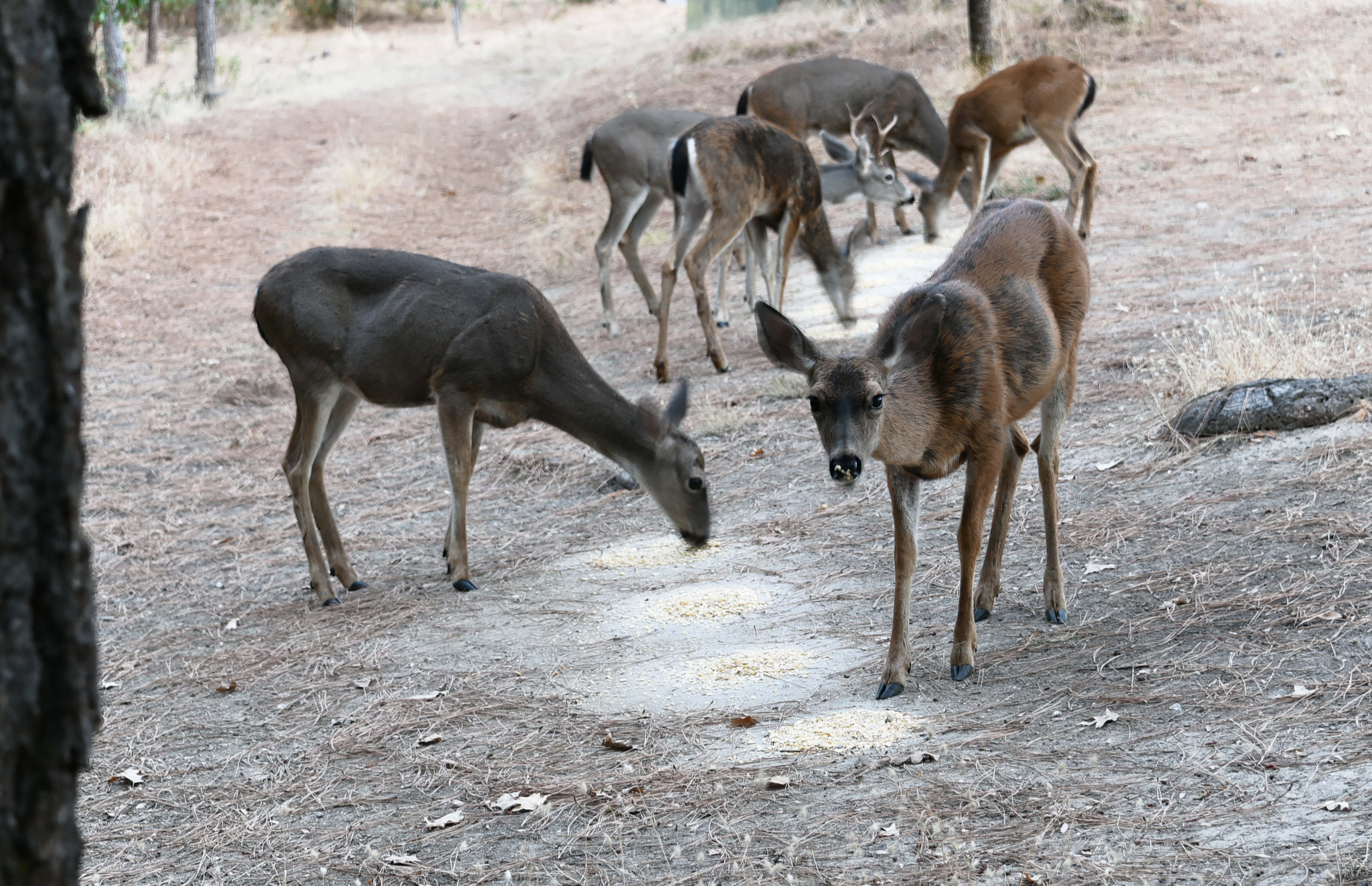
The three deer photos show them feeding from me putting out COB (corn, oats, barley) each morning soon after it is light.
Of course, typically the morning I took my camera out there were just four deer. Usually there between seven and fifteen and a couple of months ago a friendly stag in getting to the COB as I was pouring it out rubbed his right antler on my right leg.
Feeding my friends!
A beautiful shot from Southern California.
This photograph was forwarded to me from Dan Gomez, who took it on the morning of last Tuesday.
It was taken in the Coachella Valley and was a morning shot of the sun through the haze caused by the Lion Fire.

Fabulous!
How The Dodo spoke of a dog and a wild shark bonding.
I do not know much about this story apart from the fact that it appeared in The Dodo recently and I took to it.
So please enjoy! (And that assumes you have not already seen the article!)
ooOOoo
Published on Aug 16, 2024
For most dogs, their friend groups usually consist of a mix of humans and other dogs. But Lili, a 3-year-old dog who lives on a French Polynesian atoll called Fakarava, isn’t like most other dogs. She prefers friends who have gills and fins. In fact, her very best friend is a shark.
Ever since Lili’s mom, Emmanuelle Larchet, adopted Lili, she’s known that her dog has an affinity for all things aquatic. She started swimming in the lagoon near Larchet’s house when she was only a month old.
“She’s really a water dog,” Larchet told The Dodo.
There are around 100 sharks who live in this lagoon near Larchet’s house. So when Lili swims in the water there, she’s surrounded by them. While many dog parents would be terrified to see their dog swimming amongst sharks, Larchet knows that the sharks Lili swims with are nurse sharks, who are actually very docile creatures.
“We call them sea puppies because [they’re] like dogs, actually … They are very nice,” Larchet said.
Larchet likes to joke that when Lili swims around with her shark friends, it’s sea puppies meeting earth puppies.
Over the years Lili has been swimming in the lagoon, there’s one shark in particular she’s grown especially close with. His name is Sharky, and he and Lili visit each other almost every day. Larchet and Lili are able to recognize Sharky because he has a special marking on one of his fins.
Lili and Sharky like to explore their lagoon together. They enjoy splashing around in the warm, clear water.
“He comes to say hello every time she sees him,” Larchet said.
Even though Lili and Larchet are best friends themselves, Larchet is more than happy to share her Lili with Sharky. And even though Larchet watches Lili hang out with her shark friends all the time, it never gets old seeing them spend time together.
“[When] I see her swimming with Sharky, [I’m] so happy,” Larchet said.
ooOOoo
It is a lovely story!
Now for something different, but marvellous!
My son, Alex, is a keen photographer.
Here is his photograph of a tawny owl and her owlet, taken in an Urban city park in Bristol, England. It is shared with you with Alex’s permission.

It is an amazing picture!
I’m speaking of a radio programme on BBC Radio 4.
Yesterday, we listened to a fabulous broadcast on the subject of Awe.
The programme was called ‘MORE WOW’ and the picture of the page from BBC Sounds follows:

It is available on BBC Sounds and the link is https://www.bbc.co.uk/programmes/m0022kt2
As I said to Jeannie the broadcast really spoke to me as each morning I am in awe of the black-tailed deer that I go down to feed near the old stables just outside the house.
Then I pause on my way back and look at Mount Sexton and the rising sun; again I am in awe.
Then at night, being a crystal-clear sky on many occasions, I am in awe at the heavens above.
The programme spoke of one being in awe of both the small and the large and I want to close with two of my photographs of me sensing awe in both scales.

oooo

That’s my story for today!
Perfect dog pictures courtesy of Jess.
(And I’m sorry for the duplicates.)

oooo

oooo

oooo

I have repeated these pictures as, for whatever reason, I did not receive a new batch from Jess.
We are in an era of unknown weather, across the world!

ooOOoo
Simon H. Lee, University of St Andrews; Hayley J. Fowler, Newcastle University, and Paul Davies, Newcastle University
Published: July 30, 2024
Extreme weather is by definition rare on our planet. Ferocious storms, searing heatwaves and biting cold snaps illustrate what the climate is capable of at its worst. However, since Earth’s climate is rapidly warming, predominantly due to fossil fuel burning, the range of possible weather conditions, including extremes, is changing.
Scientists define “climate” as the distribution of possible weather events observed over a length of time, such as the range of temperatures, rainfall totals or hours of sunshine. From this they construct statistical measures, such as the average (or normal) temperature. Weather varies on several timescales – from seconds to decades – so the longer the period over which the climate is analysed, the more accurately these analyses capture the infinite range of possible configurations of the atmosphere.
Typically, meteorologists and climate scientists use a 30-year period to represent the climate, which is updated every ten years. The most recent climate period is 1991-2020. The difference between each successive 30-year climate period serves as a very literal record of climate change.
This way of thinking about the climate falls short when the climate itself is rapidly changing. Global average temperatures have increased at around 0.2°C per decade over the past 30 years, meaning that the global climate of 1991 was around 0.6°C cooler than that in 2020 (when accounting for other year-to-year fluctuations), and even more so than the present day.
If the climate is a range of possible weather events, then this rapid change has two implications. First, it means that part of the distribution of weather events comprising a 30-year climate period occurred in a very different background global climate: for example, northerly winds in the 1990s were much colder than those in the 2020s in north-west Europe, thanks to the Arctic warming nearly four times faster than the global average. Statistics from three decades ago no longer represent what is possible in the present day.
Second, the rapidly changing climate means we have not necessarily experienced the extremes that modern-day atmospheric and oceanic warmth can produce. In a stable climate, scientists would have multiple decades for the atmosphere to get into its various configurations and drive extreme events, such as heatwaves, floods or droughts. We could then use these observations to build up an understanding of what the climate is capable of. But in our rapidly changing climate, we effectively have only a few years – not enough to experience everything the climate has to offer.
Extreme weather events require what meteorologists might call a “perfect storm”. For example, extreme heat in the UK typically requires the northward movement of an air mass from Africa combined with clear skies, dry soils and a stable atmosphere to prevent thunderstorms forming which tend to dissipate heat.
Such “perfect” conditions are intrinsically unlikely, and many years can pass without them occurring – all while the climate continues to change in the background. Based on an understanding of observations alone, this can leave us woefully underprepared for what the climate can now do, should the right weather conditions all come together at once.
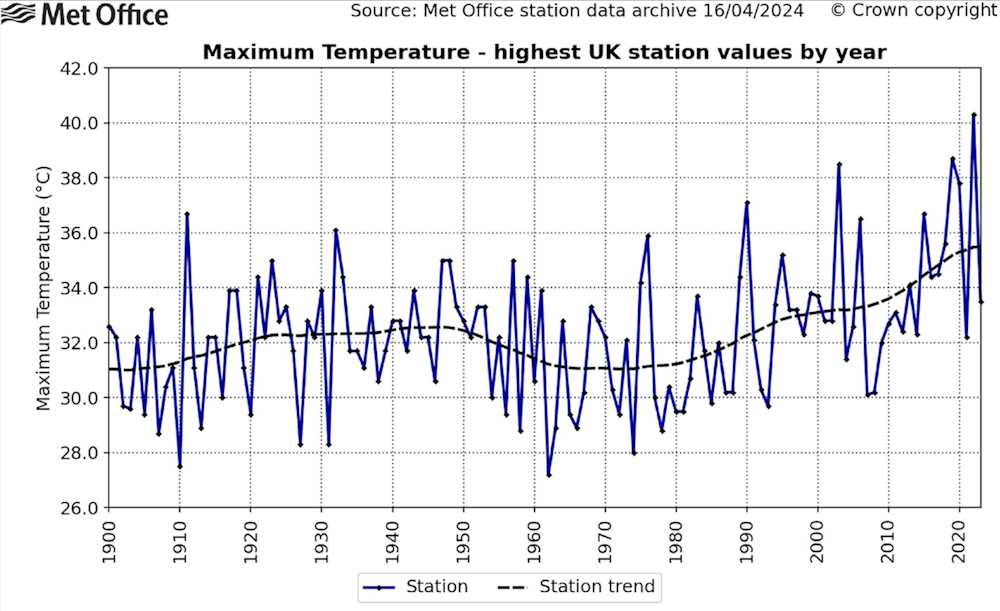
Startling recent examples include the extreme heatwave in the Pacific north-west of North America in 2021, in which temperatures exceeded the previous Canadian record maximum by 4.6°C. Another is the occurrence of 40°C in the UK in summer 2022, which exceeded the previous UK record maximum set only three years earlier by 1.6°C. This is part of the reason why the true impact of a fixed amount of global warming is only evident after several decades, but of course – since the climate is changing rapidly – we cannot use this method anymore.
To better understand these extremes, scientists can use ensembles: many runs of the same weather or climate model that each slightly differ to show a range of plausible outcomes. Ensembles are routinely used in weather prediction, but can also be used to assess extreme events which could happen even if they do not actually happen at the time.
When 40°C first appeared in ensemble forecasts for the UK before the July 2022 heatwave, it revealed the kind of extreme weather that is possible in the current climate. Even if it had not come to fruition, its mere appearance in the models showed that the previously unthinkable was now possible. In the event, several naturally occurring atmospheric factors combined with background climate warming to generate the record-shattering heat on July 19 that year.
The highest observed temperature each year in the UK, from 1900 to 2023
Later in summer 2022, after the first occurrence of 40°C, some ensemble weather forecasts for the UK showed a situation in which 40°C could be reached on multiple consecutive days. This would have posed an unprecedented threat to public health and infrastructure in the UK. Unlike the previous month, this event did not come to pass, and was quickly forgotten – but it shouldn’t have been.
It is not certain whether these model simulations correctly represent the processes involved in producing extreme heat. Even so, we must heed the warning signs.
Despite a record-warm planet, summer 2024 in the UK has been relatively cool so far. The past two years have seen global temperatures far above anything previously observed, and so potential extremes have probably shifted even further from what we have so far experienced.
Just as was the case in August 2022, we’ve got away with it for now – but we might not be so lucky next time.
Simon H. Lee, Lecturer in Atmospheric Science, University of St Andrews; Hayley J. Fowler, Professor of Climate Change Impacts, Newcastle University, and Paul Davies, Chief Meteorologist, Met Office and Visiting Professor, Newcastle University
This article is republished from The Conversation under a Creative Commons license. Read the original article.
ooOOoo
That last sentence says it all: “Just as was the case in August 2022, we’ve got away with it for now – but we might not be so lucky next time.”
I am giving a talk, The Next Ten Years, next Saturday to our local Freethinkers group in Grants Pass. Close to the start of the presentation I say: “The Global Temperature anomaly, as of last year, 2023, is 1.17 C, 2.11 F, above the long-term average from 1951 to 1980. The 10 most recent years are the warmest years on record.“
Finally, I am getting on in age and part of me wants to die, hopefully naturally, before more climate extremes are reached, but then another part of me would like to experience it!
 Learning from Dogs