Today’s twist: write an adverb-free post. If you’d rather not write a new post, revisit and edit a previous one: excise your adverbs and replace them with strong, precise verbs.
The sin of telling often begins with adverbs*. Author Stephen King says that, for writers, the road to hell is paved with adverbs:
The adverb is not your friend.
Adverbs…are words that modify verbs, adjectives, or other adverbs. They’re the ones that usually end in -ly. Adverbs, like the passive voice, seem to have been created with the timid writer in mind….With adverbs, the writer usually tells us he or she is afraid he/she isn’t expressing himself/herself clearly, that he or she is not getting the point or the picture across.
Instead of using adverbs as a crutch, rely on strong verbs to convey emotional qualities that imbue your writing with nuance, allowing the reader to fire up their imagination. Consider, for example:
“She walked proudly out the door.”
Remove the adverb “proudly” and replace it with a strong verb to denote how she walked:
She strutted out the door.
She sashayed out the door.
She flounced out the door.
Each example connotes the emotion with which “she” moved, creating a more vivid picture than “proudly” ever could.
Note we’re not advocating the eradication of all adverbs all the time. The goal of this exercise is to place a constraint on adverb use to help you to focus on using strong, precise verbs in your writing.
I read the theme for Day Eight at 3pm yesterday afternoon. Jean and I had been out before lunch. To the recycling yard some six miles away to deposit a load of old steel fencing that had been retrieved from the property over the last couple of weeks.
Hardly the stuff of inspiration!
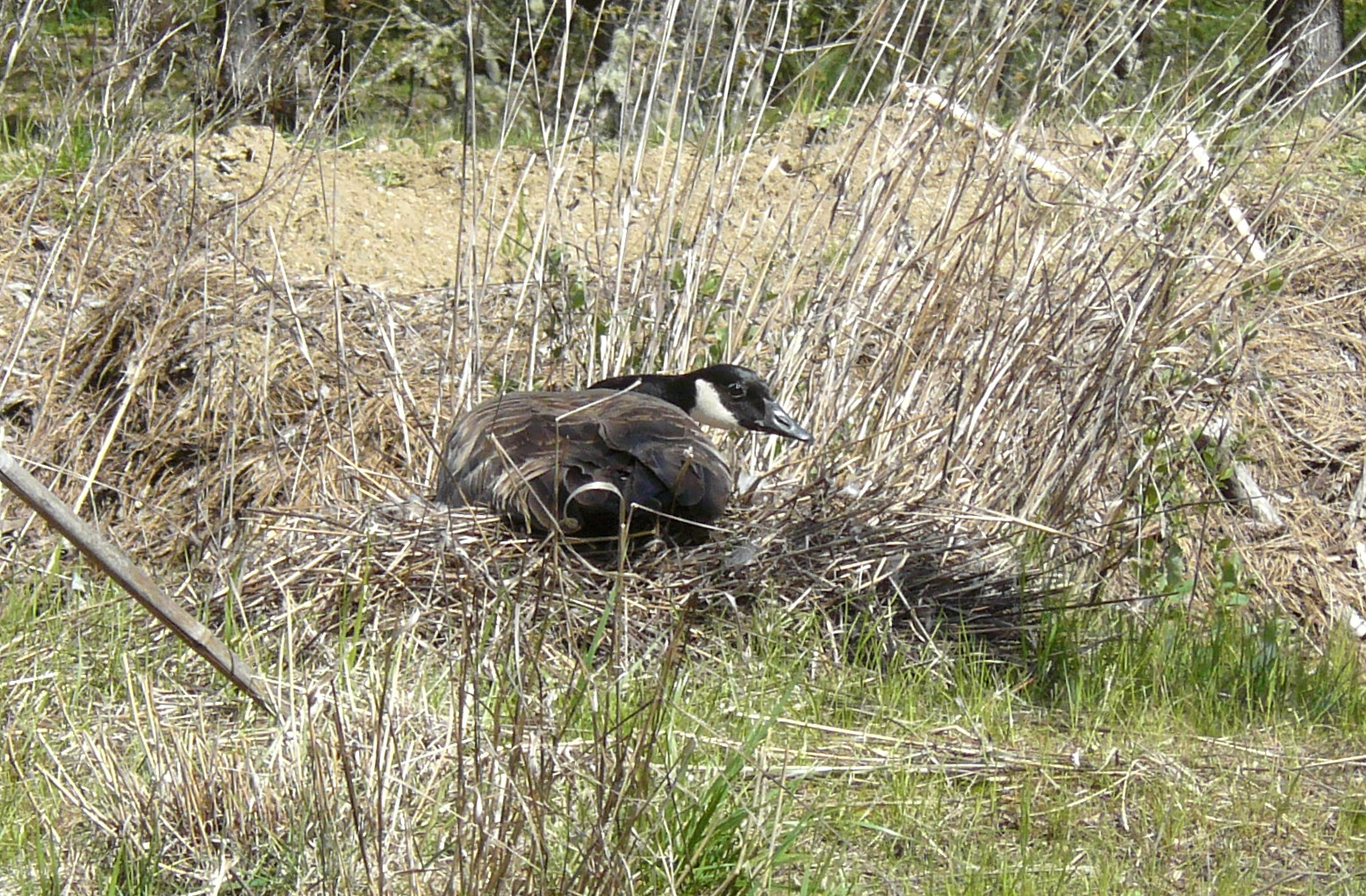
So I decided at this point to put down ‘my pen’ (aka keyboard) and go and sit next to the pond where the mother goose is still sitting on her eggs and use that as my source for a short, adverb-free post.
oooo
The power of motherhood
Twenty-eight days of loving her unborn brood. Still she sat, her head turned towards where I was sitting, just keeping an eye on me as I hadn’t been this close to her before.
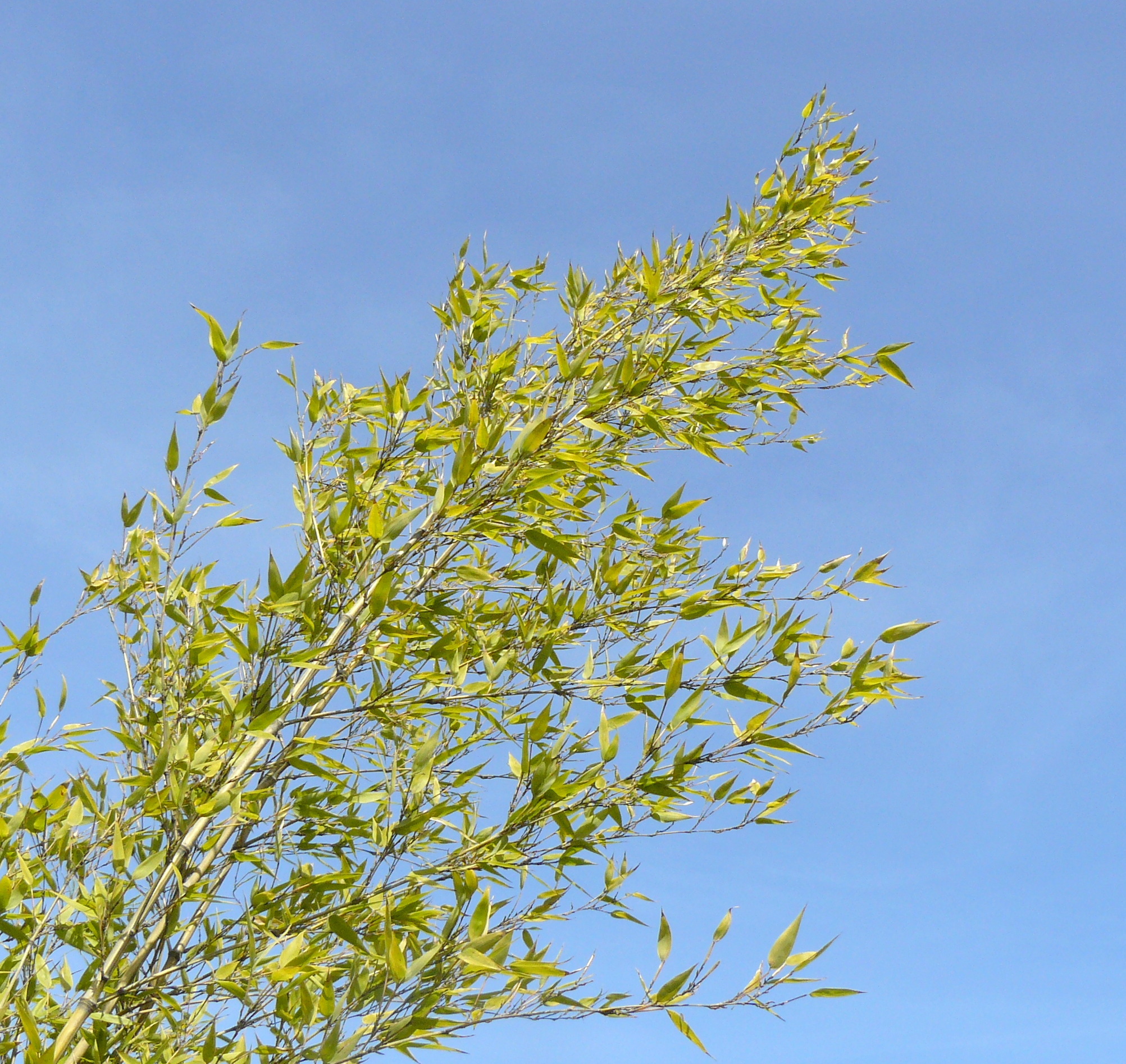
Besides where I was sitting, to my left, the leaves of the bamboo tree rustled in the steady afternoon breeze. The green of the leaves contrasting the blue of the clear sky above me.
I just marvelled at the patience, at the commitment, of this mother goose. The magic of nature.
Our mother goose had loved her egg-bound goslings as Spring had arrived in this beautiful part of Oregon. Loved her goslings through rain, frost, fog and cold nights. Rewarded with an afternoon of glorious Spring sunshine.
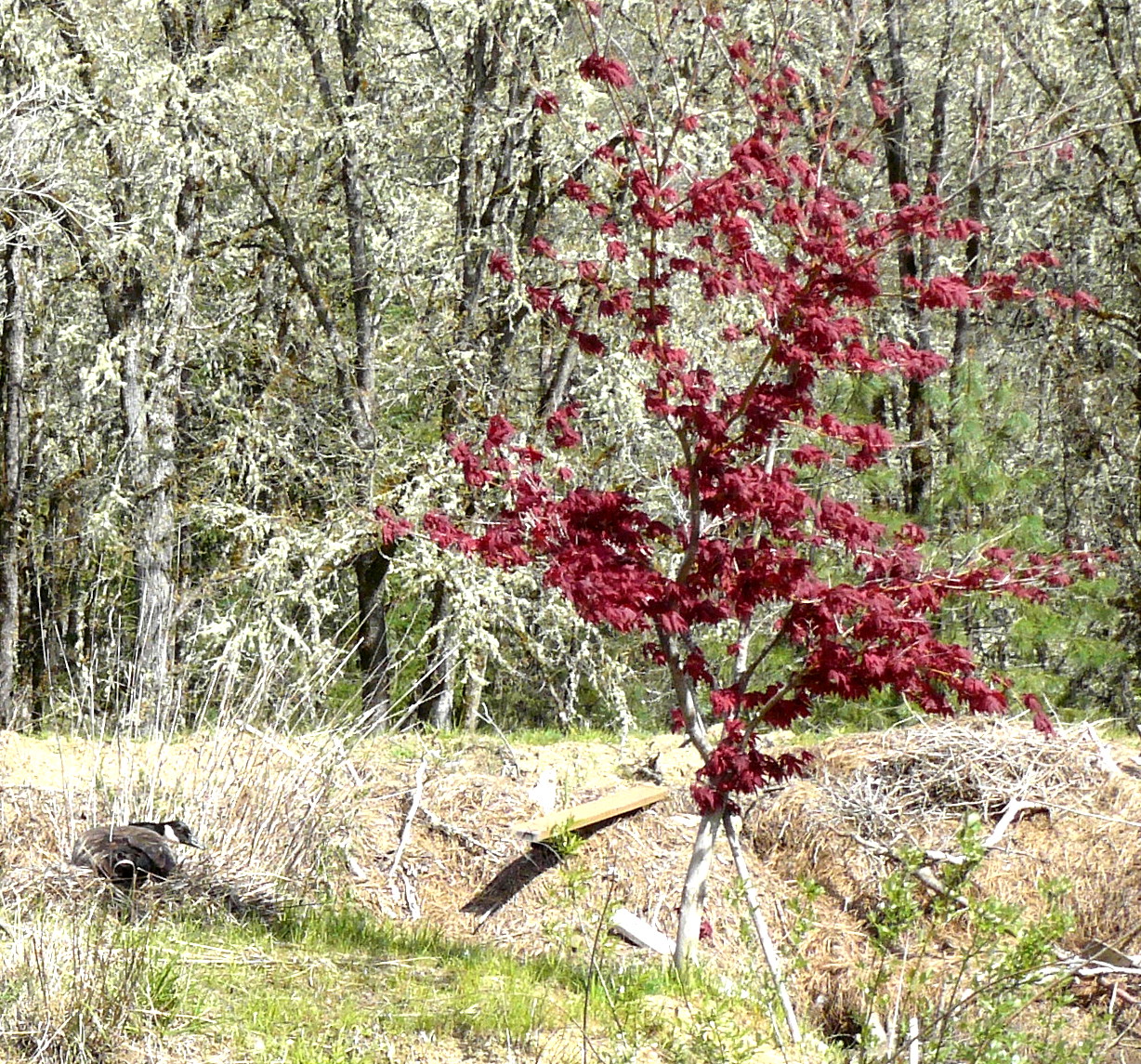
Sitting on her eggs as the delicate leaves of the Japanese maple had burst clear and unfolded themselves over the last four weeks. Now the leaves offered some shade from the afternoon sun.
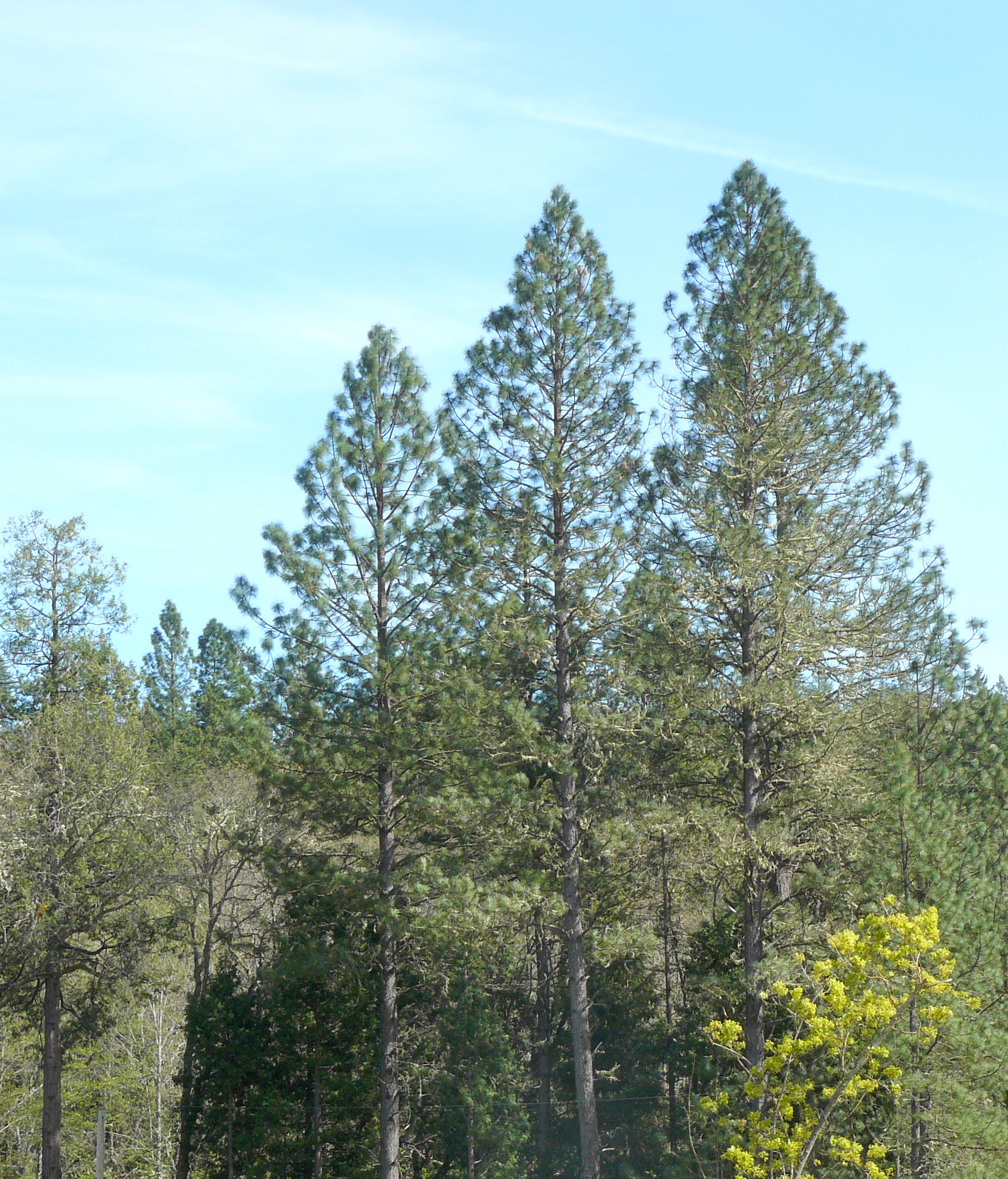
Then I noticed the harmony between the rustling of the bamboo leaves, so delicate a sound, and the roar from the tall pine trees to my right, on the boundary between us and neighbours Larry and Janell. As if the bamboo was whispering in concert with the pines.
Surrounded by some intangible magic, beyond definition, but not beyond meaning.
Today’s Prompt: Write about the three most important songs in your life — what do they mean to you?
Nailing Brahms’ Hungarian Dance Number 5 on your alto sax. Making perfect pulled pork tacos. Drawing what you see. Or, writing a novel. Each requires that you make practice a habit.
Today, try free writing. To begin, empty your mind onto the page. Don’t censor yourself; don’t think. Just let go. Let the emotions or memories connected to your three songs carry you.
Today’s twist: You’ll commit to a writing practice. The frequency and the amount of time you choose to spend today — and moving forward — are up to you, but we recommend a minimum of fifteen uninterrupted minutes per day.
The basic unit of writing practice is the timed exercise. – Natalie Goldberg
Author Natalie Goldberg says to “burn through to first thoughts, to that place where energy is unobstructed by social politeness or the internal censor.” Here are some of her rules of free writing practice from Writing Down the Bones, which we recommend you keep in mind:
Keep your hand moving. (Don’t pause to reread the line you’ve just written. That’s stalling and trying to get control of what you’re saying.)
Don’t cross out. (That is editing as you write. Even if you write something you didn’t mean to write, leave it.)
Don’t worry about spelling, punctuation, grammar. (Don’t even care about staying within the margins and lines on the page.)
Lose control.
Don’t think. Don’t get logical.
Go for the jugular. (If something comes up in your writing that is scary or naked, dive right into it. It probably has lots of energy.)
Jorge Luis Borges said: “Writing is nothing more than a guided dream.” So, what are you waiting for? Get writing. Fifteen minutes. Go. And then, do it again tomorrow, and the day after, and the day after.
Now having written a daily post for well over five years, I’m comfortable with the concept of committing to a writing practice.
Thus I’m going to republish something that gets to the heart of more worldly matters – keeping a smile on your face in these ‘interesting’ times. It comes from a blog that I recently started following: One Regular Guy Writing about Food, Exercise and Living Longer.
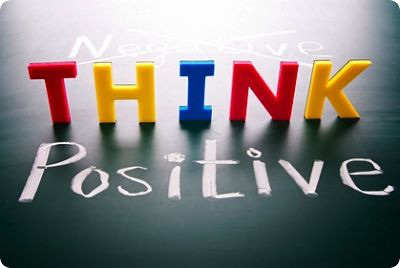
Regular readers know that I have embraced the theory of positive psychology. I have written a number of posts on the benefits of a positive point of view. You can find an index of them at the end of this post.
In a study of a large number of adults in their mid to late 50’s researchers found that “when people displayed higher levels of agency, communion and redemption and lower levels of contamination, their mental health improved. They consider good mental health to be low levels of depression and high levels of life satisfaction and psychological and social well-being.”
They explained the four keys to good mental health as follows:
• Agency—Did the subjects feel able to influence and respond to events in life, or did they feel battered around by the whims of external forces?
• Communion—Are the people connected to others or disconnected?
• Redemption—Did the subjects take a negative experience and find some positive outcome?
• Contamination—Did they tell narratives of good things turning bad?
In it I quoted Maggie Crowley, Psy.D., a Health Psychologist at the center for Integrative Medicine and Wellness at Northwestern Memorial Physicians Group.
Dr. Crowley listed the following as maladaptive coping strategies:
*Demand our circumstances be different *Devalue ourselves and others *Demean/blame ourselves and others *When the above fail to work, do we choose another strategy? *Or, do we double our ill-conceived efforts and feed our downward spiral.
She said that we needed something to shift our mental gears out of the stressful/fearful response that triggers that damaging cascade of negative emotion. She suggested the following activities that set off the parasympathetic approach:
*Practicing appreciation *Making choices that are positive *Using constructive language *Employing our strengths and personal power.
I think that there is a great similarity between the four keys to good mental health mentioned in the Journal and the points made by Dr. Crowley in dealing with stressors.
Regarding positive psychology, I have found it answered a lot of questions for me. If you are interested you can explore it in the following posts:
This is such incredibly powerful and useful advice with lots of further reading to boot!
For we are bombarded with negative news from all quarters and having a healthy relationship with oneself and, thence, with the world around us is, in the end, what life is all about.
It seems to me that it is so incredibly easy to be influenced, even engulfed, by bad news.
Back on the 20th I posted an item that had been sent to me by John Hurlburt, who is the old lamplighter, called Interstellar News.
Here’s another essay from John that is a great reminder of that old adage: We are what we think.
ooOOoo
Misery Is Optional
There’s always been a delicate balance in the struggle between growth and stagnation. The emerging universe invariably prevails. The good news is that absolutely insisting upon the denial of reality naturally backfires in the long run. Common sense has repeatedly saved our collective bacon from the fire as our species has faced former crises. The stakes have never been higher.
There’s a natural balance that runs through our relatively brief species history. Extreme cultural alternatives include plutocracy and anarchy. There’s no question that if we’re not an active supporter of an inclusive solution we contribute to our collective dissolution.
Nero fiddled while Rome burned. There’s a current global analogy. Global media communications reflect hate, divisiveness and violence. The obvious truth is essentially ignored. A result is our present state of angst, paranoia and associated stress disorders. We compensate with bread and circuses.
Indifference doesn’t have to be a local reality. We’re all naturally connected in whatever we conceive of as God. We share a common soul. If we are wise we’ll act accordingly. We’ll accept our inherent responsibilities as stewards of Creation. The fulfilment of positive actions in according with the nature of our being is a blessing that keeps on giving.
an old lamplighter
ooOOoo
These are beautiful words and whatever one’s religious or spiritual convictions if we don’t recognise that we are all “naturally connected” then it won’t be long before we run out of bread and circuses – and deservedly so.
Going to close this post by using the following picture and quotation taken from the latest Terry Hershey newsletter.
“Beyond living and dreaming there is something more important: waking up.“
The moment of the equinox is Friday, March 20, 2015 at 22:45 UTC.
I want to share something with you that was sent in the mail to Jean and me two days ago.
Interstellar News
The essence of a shadow is the energy of the leading edge of Creation.
The dominant species on a remote, possibly unique, planet called Earth has as yet to learn that life is the essence of a shadow.
As a result, the self-centred dominant species on this possibly unique planet appear to self-destruct. The shame and the pity are that a majority of life on the beautiful and evolving planet will accompany the selfish human species into the void of biological extinction.
The good news is that although extinctions have not been previously caused by dominant life forms on planet Earth, multiple mass extinctions have taken place. Life has regenerated every time. The planet will create new life and consciousness as it heals.
The Nature of Creation always wins. Stay tuned to learn if humans wake up in time.
AOL Universal Communications
Picking up on that last sentence, humans will wake up in time if we learn to care for each other and the environment as Nature’s animals have done for ever.
Just watch this short video of a mother wolf and her four one-week-old pups as evidence of the power of caring.
It is becoming an oft-repeated theme by me; the power of the connections that exist between the thousands of bloggers. Again, regular readers (thank you!) will not be surprised to hear me say that this power of connectivity may be the ultimate force that stops humanity from going past a point of no return in terms of the viability of our planet to sustain us and all of life. (And to reinforce that in spades, tomorrow I am republishing a recent item from Martin Lack; he of Lack of Environment.)
Let me just play a little more with this idea of the connectivity between us bloggers. Theoretically, if one had five bloggers all following each other then the number of permutations between those five bloggers would be factorial 5, or 120 connections. If there were ten bloggers all following each other, then the number of connections would be 3,628,800! (Background maths here.) I’m certain that there are more than ten bloggers whom I follow and who in turn follow me.
All of which is a preamble to a recent post from fellow blogger Mark M. Rostenko over on his wonderful blog Call Of The Wilderness. He recently published an item with the title of Dog Wisdom and I have the very great pleasure in reposting it here, with Mark’s kind permission.
ooOOoo
Dog Wisdom
We don’t have to live deep in the wilds at the end of a long dirt road to learn from Nature. She’s everywhere; in our hearts, our minds, our bodies… our pets. Frankly, I’ve learned more about living authentically from my dogs than from any authority, parent, classroom, job, book or so-called expert.
Sami’s old. Around ninety in people-years. She mounts the stairs one careful step at a time these days, however she must to curl up by her dad as she has almost every night since I rescued her from the shelter just yesterday… or was it thirteen years ago? It’s said that dogs sleep facing outward from the pack, positioned to notice and respond immediately to threats. Sami doesn’t anymore. Recently she’s taken to lying towards me, as if to say “I can’t protect you anymore… I’m old and weak and vulnerable… and I need you to watch out for me from now on.” But a glimmer of pride sparkles in her eyes as she leaps onto the bed unassisted; it’s been there a few months, ever since the night after her legs gave out and she crashed to the floor in her attempt. I think she felt my heart break, and bless her velvety, floppy Lab ears, she vowed to stay strong for her worried dad.
We don’t hike anymore; this terrain’s hard on her withering hinds. We just saunter casually down the dirt road a couple times a day, as far as makes her happy… not so far. But I still see remnants of her bouncy puppy-gait, that “stretch-and-stand-tall-so-I-can-see-as-much-of-this-deliciously-exciting-world-as-I-possibly-can” spring in her step unleashed only after time had carried away the neglect of her former life. And once in a while after a hardy dose of love she’ll still crouch down in the “let’s play!” chin-to-the-ground puppy posture before tearing off into a spastic circle of rambunctious frenzy like the young’uns do.
I like to watch her when we walk, the soft ripples of footfalls reverberating through her age-slackened flesh, how the slight bottom-curl of her ears unfurls with every bob of her moist snout. I take in as much of her as I can because any day now omens of finality will alight to the shadows and perch among the pines waiting to guide her back to the oneness from whence she came. And I see in her gait that no matter how old, no matter how tired, no matter how many tumors and aches, Sami’s as thrilled to walk as ever, her enthusiasm fading not one smidge.
Will I thrill so at ninety? Probably not. Likely I’ll dwell on aches and pains and look back at all I’ve lost, at what I no longer can, as we humans tend. But not Sami. Sami doesn’t think about what she’s lost; Sami just enjoys what’s still hers… fully and without reservation. Sami worries not of what she can’t, delighting only in what she still can.
Her joie de vivre is the effervescence of perpetual gratitude. Not submissive lip-service borne upon fears of eternal damnation but a physical affirmation of genuine grace and gratitude: living life fully, sans complaint, thoroughly consumed with blessings of the moment. Sami, I suspect, is the pride and joy of her creator who smiles fondly upon her antics, reveling in the satisfaction that at least this one critter got the point of it all: that life is to be lived.
Sami has little choice in the matter; she’s built to live here and now, to take what comes and make the best of it. We, however, have been gifted choice… a very clear choice, if you ask me…
ooOOoo
Thanks Mark. That’s a beautiful account of the wisdom and compassion of our dogs. They offer so many examples of grace and unconditional love to us humans!
Because some of the things we humans do are insanely stupid!
Here’s a picture of Oliver taken yesterday afternoon.
Becoming a dear, smart dog. (And those eyes!)
A few days ago, I was sitting in our living room on one of our settees (more or less where Oliver was sitting when the photograph above was taken) with my knees up against a low coffee table; the table separates our two settees.
On the settee to my left lay Cleo and on the floor across my feet slept Hazel.
It was clear that Oliver wanted to join me on the settee but couldn’t work out if there was room. I shifted about two feet to my left leaving an Oliver-sized gap to my right. However, Oliver couldn’t come past my knees, from left to right as it were, because of Hazel. He very quickly worked out to run around behind the settee and jump up into the space I had newly created to my right.
Don’t worry if I lost you!
The point I am making is that Oliver, who has grown into the most delightful young adult dog, with a gorgeous temperament, demonstrates daily a keen intelligence and a nose for working things out quickly.
All of which is a preamble for me wondering if among the list of qualities that we humans should learn from dogs we should add intelligence.
For there’s been a few items around the ‘blogosphere’ that have highlighted how silly we can be.
Take this item that recently was featured on Grist.
A giant, 150-foot roll of bubble wrap may not be your idea of an environmentally friendly product, but over at Walmart.com this one-pound ball of plastic now boasts a special “Sustainability Leaders” badge. It’s one of more than 3,000 products tagged with this new green label, which Walmart executives unveiled last week, together with a web portal where shoppers can find these items.
Dozens of news accounts hailed the giant retailer’s move as a significant step toward clearing up the confusion and misleading information that often greet consumers trying to make ecologically responsible choices. “The world’s largest retailer took a major and important step toward helping all of us shop more smartly,” declared corporate sustainability consultant Andrew Winston in Harvard Business Review. Triple Pundit concurred: “It’s about to get a lot easier for Walmart.com shoppers to make the responsible choice.”
Actually, a green-minded online shopper is likely to find Walmart’s new badge confusing, murky, and downright misleading. I searched the bubble wrap’s product page high and low for its secret sauce, the invisible feature that makes it a smarter choice amid the many seemingly less harmful packing options available, but found no explanation.
It turns out that the key to this mystery lies in a remarkable disclaimer tucked into the middle of the home page of Walmart’s sustainability shopping portal: “The Sustainability Leaders badge does not make representations about the environmental or social impact of an individual product.” (my emphasis)
You can read the full item here, and you should! It’s unbelievably stupid, apart from being highly misleading, to my mind because when the word gets around it will damage the trust that all retailers need from their customers. And don’t even bring up the notion of integrity!
Then over on George Monbiot’s blogsite, there is a recent essay about the UN and progress on climate change. Here’s how it starts (and I’m republishing it in full tomorrow):
Applauding Themselves to Death
If you visit the website of the UN body that oversees the world’s climate negotiations, you will find dozens of pictures, taken across 20 years, of people clapping. These photos should be of interest to anthropologists and psychologists. For they show hundreds of intelligent, educated, well-paid and elegantly-dressed people wasting their lives.
The celebratory nature of the images testifies to the world of make-believe these people inhabit. They are surrounded by objectives, principles, commitments, instruments and protocols, which create a reassuring phantasm of progress while the ship on which they travel slowly founders. Leafing through these photos, I imagine I can almost hear what the delegates are saying through their expensive dentistry. “Darling you’ve re-arranged the deckchairs beautifully. It’s a breakthrough! We’ll have to invent a mechanism for holding them in place, as the deck has developed a bit of a tilt, but we’ll do that at the next conference.”
Humans have the potential to be incredibly smart thinkers, and down the ages there have been many such thinkers.
But!
Over on the Patrice Ayme blogsite there have been a couple of recent essays that highlight examples of both stupid thinking and the rewards that flow from smart thinking. In one essay, Added Value in the XXI Century, Patrice writes:
SUPERIORITY OF THE WEST?
Why did the West become so superior? Or China, for that matter?
Technology. Superior technology. Coming from superior thinking. Both the Greeks and the Chinese had colossal contempt for barbarians. (In both cases it went so far that the Greeks lost everything, and the Chinese came very close to annihilation).
Around the year 1000 CE, the Vietnamese (it seems) invented new cultivars of rice, which could produce an entire crop, twice a year. The population of East Asia exploded accordingly.
A bit earlier, the Franks had invented new cultivars of beans. The Frankish Tenth Century was full of beans. Beans are nutritious, with high protein.
Homo is scientific and technological. Thus, two million years ago, pelt covered (tech!) Homo Ergaster lived in Georgia’s Little Caucasus, a pretty cold place in winter. And the population was highly varied genetically (showing tech and travel already dominated).
A GREATER OBSESSION WITH FREEDOM MADE THE WEST SUPERIOR:
Here is the very latest. Flour was found in England, in archeological layers as old as 10,000 years before present. It was pure flour: there were no husks associated. The milling had been done, far away. How far? Well the cultivation of wheat spread to Western Europe millennia later. The flour had been traded, and brought over thousands of miles. Most certainly by boat. Celtic civilization, which would rise 5,000 years later, was expert at oceanic travel.
What’s the broad picture? Not just that prehistoric Englishmen loved their flat bread, no doubt a delicacy. Advanced technology has permeated Europe for much longer than is still understood now by most historians. Remember that the iceman who died in a glacier, 5,000 years ago, was not just tattooed, and had fetched in the lowlands a bow made of special wood. More telling: he carried antibiotics.
Some say that correct thinking has to do with avoiding “logical fallacies”. That is, of course, silly. Imagine a pilot in a plane. Suppose she avoids all logical fallacies. Where does the plane go? Nowhere. Thinking correctly is more than avoiding logical “fallacies”.
One needs more than logic, to proceed: one needs e-motion, or motivation (both express the fact that they are whatever gets people to get into action; the semantics recognizes that logic without emotion goes nowhere).
There is another, related, fallacy in thinking that correct thinking is all about avoiding “logical fallacies”.
I don’t have the answers to the conundrum of stupid thinking a la Walmart and the United Nations (not an exclusive list; by far) but I do believe that the only way for humanity to overcome what looks like a very dangerous era ahead is through smarter thinking!
Oh, nearly forgot.
Oliver will be happy to run classes on smart thinking!
(NB: I am presently away with my son enjoying the Wintry delights of Bend, Or and Mount Bachelor.)
In yesterday’s post, Be good to yourself, I featured a poem from Danna Faulds. I had not come across her before and this time around it was thanks to a recent post over on Val Boyco’s blog Find Your Middle Ground.
It didn’t take much effort to find more beautiful ideas from Ms. Faulds. Try these, for example:
Awakening Now by Danna Faulds
Why wait for your awakening?
Do you value your reasons for staying small
more than the light shining through the open door?
Forgive yourself,
Forgive yourself.
Now is the only time you have to be whole.
Now.
Now is the sole moment that exists to live in the light of your true nature.
Perfection is not a prerequisite for anything but pain.
Perfection is not a prerequisite for anything but pain.
Please, oh please, don’t continue to believe
in your stories of deficiency and failure.
This is the day of your awakening.
Elsewhere, on a yoga website, we learn that Danna is:
Danna Faulds, poet and dedicated practitioner of Kripalu Yoga, is the author of four popular books of yoga poetry: Go In and In; One Soul; Prayers to the Infinite; and From Root to Bloom. She credits Kripalu Yoga and expressive writing with transforming her life.
Another web search very quickly finds this item over on the All Things Healing blogsite.
ooOOoo
Allow
by Danna Faulds
Editor’s Note from Diane Renz: I have just returned from the Center for Mindfulness Scientific conference, a powerful gathering for all teachers, researchers, clinicians, and practitioners engaged in Mindfulness in the world. The Center for Mindfulness if the base point for Jon Kabat Zinn’s MBSR (Mindfulness Based Stress Reduction) program developed over 30 years ago which, through science, has proven to benefit psychological, physiological, emotional, cognitive, and the many neural correlates relative to well-being. The last day we had the chance to practice mindfulness with Jon Kabat Zinn, Saki Santorelli, Florence Meleo-Meyer, Bob Stahl, which is where I first heard the Poem here called “Allow”. It is through our allowing where we each find our healing and return to our wholeness. In light of spring and all rebirth and beginning again, learning how to turn toward our pain so we can open to bright new growth rising up from the dark compost of our suffering.
There is no controlling life.
Try corralling a lightning bolt,
containing a tornado. Dam a
stream and it will create a new
channel. Resist, and the tide
will sweep you off your feet.
Allow, and grace will carry
you to higher ground. The only
safety lies in letting it all in –
the wild and the weak; fear,
fantasies, failures and success.
When loss rips off the doors of
the heart, or sadness veils your
vision with despair, practice
becomes simply bearing the truth.
In the choice to let go of your
known way of being, the whole
world is revealed to your new eyes.
ooOOoo
Again from that All Things Healing website:
About the Author
Danna Faulds is a long-term practitioner and teacher of Kripalu Yoga. A former librarian, she incorporated writing into her spiritual practices years ago, and this book is the result. Drawing inspiration from yoga and meditation, from the natural world, and from life, her poems capture both the struggle and the delight of the attempt to live consciously, in a voice that always encourages and uplifts. Common themes include awakening to true nature, touching the divinity within, overcoming fear and self-judgement, and the ineffable joy of spiritual union.
(NB: By the time you read this, I will be away for three days with my son enjoying the Wintry delights of Bend, Or and Mount Bachelor.)
I spoke yesterday about the many writers who follow this place and, in turn, are followed by me. Val Boyco is one such example. Val writes the blog Find Your Middle Ground and it is with her permission that I republish a recent post of hers.
ooOOoo
Inspiration – Self Observation
Posted on February 24, 2015 by Val Boyko
A reminder for all of us who are working on self observation and dealing with our inner critic.
Be gentle with yourself on this part of the journey.
Self-Observation Without Judgment
Release the harsh and pointed inner voice.
It’s just a throwback to the past, and holds no truth about this moment.
Let go of self-judgment, the old, learned ways of beating yourself up for each imagined inadequacy.
Allow the dialogue within the mind to grow friendlier, and quiet.
Shift out of inner criticism and life suddenly looks very different.
I can say this only because I make the choice a hundred times a day to release the voice that refuses to acknowledge the real me.
What’s needed here isn’t more prodding toward perfection, but intimacy – seeing clearly, and embracing what I see.
Love, not judgment, sows the seeds of tranquility and change.
It is a very common, understandable trait of us humans to put our own lives first. I mean that much more in the psychological sense than in the sense of our daily activities although what we think and feel, inevitably, influences how we behave. One of the fabulous qualities of our dogs is that they are so much more sensitive to the world around them than to their own internal thoughts and feelings. Right from the early years of having Pharaoh in my life I was aware that he ‘read’ my emotions easily and soon became an instinctive ‘friend’, especially when I was troubled.
Years later, all of the dogs love it when Jean and I are in happy, positive places and you can see how our human states of mind link so directly to the mood of our dogs.
All of which is my introduction to an essay recently read over on the Big Think blogsite. Specifically, one about living empathically. The essay is called: Let’s Make 2015 “The Year of Living Empathetically” and here are the opening paragraphs:
Let’s Make 2015 “The Year of Living Empathetically”
I began the new year on a very positive – and inspiring – note after reading Eric Liu’s latest commentary on “Radical Empathy”.
The founder and CEO of Citizen University, Liu shows us that laying aside our egos – our need to be in the right – in favor of standing in the shoes of others, is key to addressing so many of the problems that we (once again) confronted in 2014.
This insight – without question – is a wake-up call to our country as 2015 unfolds.
That’s why I think we should resolve to make 2015 “The Year of Living Empathetically.”
We need to make the practice of empathy our New Year’s exercise regimen, our social-emotional diet for the next 365 days.
Let’s practice empathy at home, with our spouses and kids.
Let’s practice empathy in the workplace, as we give and receive feedback, and credit others’ contributions generously.
Let’s practice empathy in the classroom, especially when kids are struggling and need our support.
Let’s practice empathy in public service, as we encounter people who look different from us, and whose lives matter every bit as much as our own.
Let’s practice empathy as we encounter people on the street, who may be less fortunate, and are just as human.
Let’s practice empathy when resolving conflict, whether interpersonally or on a global-political level.
And let’s practice empathy in local and state governments, and in the halls of Congress, so that we might truly listen in order to solve real problems
If all this sounds like a tall order – you’re right; it is.
As Brene Brown, a research professor at the University of Houston Graduate College of Social Work, points out, empathy is a challenging personal choice that requires us to become vulnerable in an effort to connect with another person.
It is not a long essay, so do drop across to here and finish reading it.
As is the way of ideas, serendipity is always actively working ‘under the hood’.
Why do I say that?
Because as soon as I was clear about what I wanted to offer you for today, in to my ‘in-box’ came the latest TED Talk. A talk from Ben Ambridge entitled: 10 myths about psychology: Debunked. It so resonated with today’s theme and is offered below.
Published on Feb 4, 2015
How much of what you think about your brain is actually wrong? In this whistlestop tour of dis-proved science, Ben Ambridge walks through 10 popular ideas about psychology that have been proven wrong — and uncovers a few surprising truths about how our brains really work.
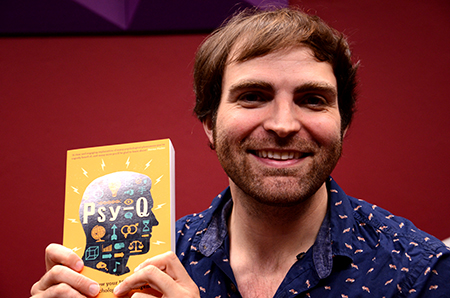
Ben Ambridge is the author of “Psy-Q,” a sparkling book debunking what we think we know about psychology.
Why you should listen?
Ben Ambridge is a senior lecturer in psychology at the University of Liverpool, where he researches children’s language development. He is the author of Psy-Q, which introduces readers to some of the major findings in psychology via interactive puzzles, games, quizzes and tests.
He also writes great newsy stories connecting psychology to current events. His article “Why Can’t We Talk to the Animals?” was shortlisted for the 2012 Guardian-Wellcome Science Writing Prize. Psy-Q is his first book for a general audience.
Dr. Ben Ambridge with his book: Psy-Q.
If you want to learn more about the good Professor, here is his webpage on the University of Liverpool‘s website. And here is Ben Ambridge’s personal webpage that lists many, if not all, of his publications.
I honestly can’t find a better picture to close today’s post about sensitivity and empathy than this one below:
I’ve written before about how our breath is connected with our wellbeing and emotional state. Noticing how we are breathing is a tool that we can use to monitor how we are doing.
There is another pause that comes with our breath which is also revealing. The pause at the end of the exhale before we take in more air. When we are distracted, stressed or in an anxious state, there is no pause. We don’t trust we have enough air and we don’t allow ourself to relax and let go.
Just take a moment to tune into how you are breathing right now. Just notice without judgment.
Pausing at the end of an exhale can only happen when we are relaxed and in tune with our mind and body. When our body and mind are aligned in the present moment.
I then left a reply in the comments section:
Excellent advice. For the last few weeks I have been using a biofeedback unit that through guiding one to breathe in harmony with a musical phrase allows one to slow the whole body down. Down to about 4.8 breaths per minute. It really underlines how slow one’s breathing rate can be and, supporting your post, the glorious pauses after each inhale and exhale.
And offered to write a post about the unit and my experiences. (Coming out tomorrow.)
However, what I wanted to do as a ‘lead-in’ to that post was to discover if there was any research into the benefits, as in scientific benefits, of slowing one’s body down in this fashion. What is surely nothing more than a form of meditation. Where to start looking? Needn’t have worried; there were many items on YouTube that covered the benefits of meditation.
There was a video from the AsapSCIENCE guys Mitchell Moffit and Gregory Brown, but I found it too jazzy and irritating, rather ironically! Then there was one from physicist John Hagelin that seemed much more appropriate to my tastes (and that is featured tomorrow as well).
By now it was coming up to 4:30pm and I had a dozen other things to do, plus try and fit in a biofeedback session – I could feel the stress rising within me.
Then I dipped into Terry Hershey’s latest Sabbath Moment and, guess what! Here’s what I read:
Learning to let go
January 26, 2015
Some of us think holding on makes us strong, but sometimes it is letting go. Herman Hesse
Uncertainty is the only certainty there is, and knowing how to live with insecurity is the only security. John Allen Paulos
When you let go of trying to get more of what you don’t really need, it frees up oceans of energy to make a difference with what you have. Lynne Twist
——-
Today I am sitting in a café (and bar) in Vaison-la-Romaine, in the Provence region of France, nursing my espresso.
No, wait… that was last week.
It just sounds sexier than saying, “Today I’m looking out my window at a gloomy winter sky, here in the Pacific Northwest, with a Thesaurus in hand hoping for a gushing synonym for gray.”
Welcome home. Home for me is always awaited and valued, but still elicits a bout of scotoma (selective vision), where we end up comparing the life we have, for the “life we deserve” (the actual wording for a recent advertised e-course).
My favorite part of my recent France trip was visiting family run wineries, spending time with the owner / wine-maker, with the permission to linger, sensing a comfort grounded in story and connection. Said one (when we asked him about being a small winery–in a world where big is everything), “I am glad. I am not alone. I work with family.” (Referring to his son and three daughters.)
And it makes me wonder about this mental sleight of hand we use, thinking about the life we are destined for, as somehow different (or better) from the life we now we live.
There is a Tibetan story about an earnest young man seeking enlightenment. (Earnest people must think this quite unfair–since they play a central role in most parables and stories about enlightenment.)
A famous sage passes through the man’s village. The man asks the sage to teach him the art of meditation. The sage agrees. He tells the man, “Withdraw from the world. Mediate every day in the specific way I will teach you. Do not waver and you will attain enlightenment.”
The earnest man follows the sage’s instructions to the letter. Time passes — and no enlightenment. Two years, five, ten, twenty pass.
It happens that the sage once again passes through the man’s village. The man seeks him out, grumbling that despite his best intentions and devotion and diligent efforts, he does not achieve enlightenment. “Why?”
The sage asks, “What type of meditation did I teach you?”
The man tells him.
The sage says, “Oh, what a terrible mistake I made! That is not the right meditation for you. You should have done another kind altogether. Too bad, for now it is too late.”
Disconsolate, the man returns to his cave. Staking his life on the sage’s instructions, and now believing he is without hope, the man abandons all his wishes and efforts and need to control his road to enlightenment. He does not know what to do. So, he does what he knows best: he begins meditating. And in a short while, much to his astonishment, his confusion begins to dissolve, and his inner world comes to life. A weight falls away and he feels lighter, and regenerated. When he walks out of the cave, the sky is bluer, the snow capped mountains whiter, and the world around him more vivid.
There is no doubt that all too often, our efforts–to succeed or achieve or attain–get in the way of our living. It brings to mind my favorite Robert Capon quote, “We live life like ill-taught piano students. So inculcated with the flub that will get us in dutch, we don’t hear the music, we only play the right notes.”
I understand. I was weaned on a spirituality that predicated itself on artifice. In other words, the importance is placed upon appearance, rather that just being. (It was vital to “look spiritual.” Which begs the question, “What do spiritual people look like?” As a boy, I always thought the “spiritual people” looked as if some part of their clothing was a size too small.)
What is it we are holding on to–so rigid, so firm, white-knuckled in our determination?
At some point, we’ve got to breathe.
Just breathe.
Without realizing it (and after the sage’s disheartening news), the man in the story “let go.”
He let go of the need to see life as a problem to be solved. He let go of the need to have the correct answers (or experiences) for his “enlightenment.” He let go of the need to see his spiritual life in terms of a formula. He let go of the restraints that come from public opinion.
Abandon your masterpiece, sink into the real masterpiece. Leonard Cohen
Without realizing it, he took Leonard Cohen’s advice. He abandoned his “masterpiece”–the perception of what he needed to accomplish, or how he needed to appear, or what he needed to feel–in order to allow himself to sink down into this life, this moment, even with all of its uncertainty and insecurity.
For the first many years, meditation or prayer was a requirement or compulsion. In his emptiness, meditation and prayer was an offering of thanks, freely given, and without constraint. True spiritual enlightenment, it seems, happens when you are not trying to impress anyone, or score any points with heavenly bookkeepers.
It sounds easy doesn’t it? But here’s the deal: My best intentions to play the right notes can fabricate an armor that keeps me from the vividness of life–whether it be to pray or meditate or notice or give or mourn or dance or play or grieve or laugh or celebrate or love… or just to walk.
I never did find a good enough synonym for the gray (although I’ll keep looking). Gladly, the sun has broken through. And there is enough warmth to persuade us that spring may arrive tomorrow. Daffodil shoots everywhere–up through the leaves and debris–help the ruse. So it’s garden time this afternoon, turning manure into the vegetable garden beds, beginning to cut back and clean some of the perennial beds. Enough work for the back to call a time out and request reprieve. I’m headed to the swing under the maple, when I look up to see the sun illuminating the red-twig dogwood shrubs, 10 foot canes glowing, a bright cranberry red. It catches my breath. And I am glad to be alive.
People say that what we’re all seeking is a meaning for life. I don’t think that’s what we’re really seeking. I think what we’re seeking is an experience of being alive… of the rapture of being alive. Joseph Campbell
Such power in those words. Then how moments later what I had read from Terry made so much sense to me. So perfectly connected with yesterday’s post Animals make us human. So relevant that quotation yesterday about animal happiness. This one:
Neuroscience key to animal happiness
“…research in neuroscience has been showing that emotions drive behavior, and my thirty-five years of experience working with animals have shown me that this is true. Emotions come first. You have to go back to the brain to understand animal welfare.”
Animals Make Us Human : Creating the best life for Animals
by Temple Grandin & Catherine Johnson
Such a close parallel with that well-known saying about us humans: ‘we are what we think‘. How our own happiness, just as it is with our animals, has its roots in our emotions.
How letting go, how staying in the present, is so good for us. How dogs do that so perfectly.
How we humans have so much to learn from our dogs.
Pure, deep peace radiating out from Hazel’s loving eyes.









 Learning from Dogs