I came into the house yesterday around 4:30pm after having dug eight three-foot diameter holes out in the meadow and then planted into those holes eight tree saplings.
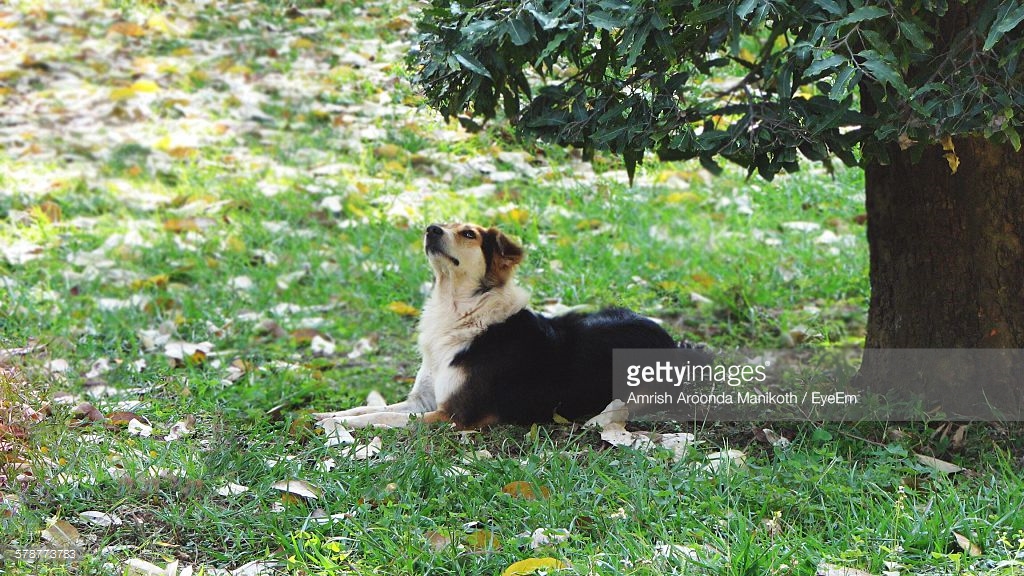
Frankly I was far too tired to consider a post for today. Then I opened my email inbox and saw that our immediate neighbours, Larry and Janell, had sent me a string of pictures under the heading of Dog Tired.
It made a perfect post!
More tomorrow that I know you are simply going to love.
Our delivery of trees arrived yesterday from the Arbor Day Foundation and that means that much of today will be spent in getting those trees planted.
Plus the recent wet spell has stopped me taking that first cut of the grass from around the house. So there’s another task for this relatively decent weekend coming up. And the vegetable garden needs some attention. And so on!
All of which is my way of saying that I won’t be paying my normal level of attention to Learning from Dogs for the next few days.
Rather aptly comes this item that was recently published over on The Conversation and is republished here within their kind terms.
ooOOoo
Hug a tree – the evidence shows it really will make you feel better
March 18, 2014.
Author
Shelby Gull Lair, Lecturer, School of Environmental Sciences, Charles Sturt University.
We know that trees have many benefits. In forests they provide habitat, wood, biodiversity and ecosystem services. In cities, they can mitigate the urban heat island effect by cooling the air and reducing greenhouse gases.
But, perhaps surprisingly, there is increasing evidence that trees are also good for our mental health.
Are we all tree-huggers?
The idea that humans are intimately connected to the earth has persisted throughout human history and across cultures. In the western world, this connection was most recently described by eminent biogeographer E.O. Wilson in his 1984 book Biophilia. Wilson notes that humans naturally like to be around other living things.
This hypothesis was the basis of “connection to nature”. Psychologists have now developed multiple scales used by researchers to determine how connected a person is, and how we might be able to increase our connection to our benefit.
Connection to nature research is still developing, but early results seem to indicate that how connected to nature you are is related to your environmental behaviours, such as participation in recycling programs and an increase in overall well-being and happiness.
Because it is still a new line of research, the relative connection to nature of folks who live in urban areas and cities versus those of us living in rural places has yet to be established. But many researchers and environmental educators have come to suspect that we are becoming disconnected from nature.
Nature-deficit disorder
This disconnect from nature was set out in 2005 by American writer Richard Louv in his book The Last Child in the Woods. Louv coined the term “nature-deficit disorder” which means that modern humans have become disconnected from nature through our daily activities and this disconnect has had negative consequences in terms of mental and physical health. Proof of this hypothesis so far lies in studies that show how people with “modern” ailments, such as ADHD, anxiety or depression feel better with exposure to nature.
Based in North America, the Children & Nature Network has pages and pages of summarised research from academics around the world that seems to indicate a strong likelihood this disconnect is a real phenomenon. The sheer number of studies and their results showing the miracle cure of nature can be overwhelming at times.
There are studies represented such as:
Living in urban areas with more tree canopy cover had increased the likeliness of a better birth outcome.
Inner city girls with a greater view of green from their high-rise public housing buildings had more self-discipline than their peers who look at other buildings.
Children with ADHD receive the greatest relief of symptoms through participation in green outdoor activities versus other activities without nature.
Do yourself a favour, skim the pages of research summarised in short abstract form on the Children & Nature Network website. You may start to wonder why we’re not hearing more about getting our children and ourselves back outside.
This research also clearly highlights the important role that urban trees play in cities: their enormous social and psychological benefits may be even greater than ecological benefits.
Stressed at work? Your office might benefit from some folliage. srv007/Flickr, CC BY-NC
Reconnecting with the natural world
So what are our next steps? As I see it, there are two things that must be done.
First, as researchers we really need to directly test the idea of a disconnect particularly between urban/built up areas and more rural areas with plentiful trees. We need to know if people living in areas with fewer trees and natural environments are more disconnected from nature than those living in places where there are abundant trees and wildlife. Deeper still, we could also ask what interventions seem to connect folks to nature in a meaningful way?
Second and most importantly, if we are disconnected from nature, what can we do about it? Fortunately the above studies and resources show us many different activities and ideas we can use to increase our nature exposure.
Just a few ideas to try:
Bring a plant into your office.
Ask council to plant a street tree outside your office window or better yet all around town.
When walking, choose the path through the park instead of around it.
Take your children to the park, to the natural sections as well as the play equipment.
Practise the art of gardening or even veggie gardening.
Plant a tree.
Spend some time sitting under a tree. And if you’re so inclined, maybe even give it a cuddle.
ooOOoo
Setting a fine example!
You all have a lovely weekend hugging as many trees as you can!
Oh, and let me give you that full silly verse that started out in the sub-title.
I have so much admiration for the rescuers, like Jean was in Mexico. They have the biggest hearts, and see the absolute worst of things.
Then a few moments later, a further reply from John:
And to rescue the abused ones. To find them, then live in that lag time before they are freed. I wouldn’t be able to sleep. I don’t have the disposition for it. I’d be physically ill.
Thus the minimum that I can do is to promote the incredible work done by the Rogue Valley Humane Society; just one among many.
For example, by republishing what they present on their About page.
ooOOoo
About The Rogue Valley Humane Society
Our Vision
The Rogue Valley Humane Society envisions a community where every healthy adoptable companion animal has a lifetime, loving home and all homeless animals receive the care and compassion they deserve until they are adopted by their forever family.
Our Story
Fifty years ago homeless animals in the Rogue Valley faced a death sentence if no one adopted them within a few days. In 1965 a small group of animal lovers decided to try to change that, and they started a rescue to give homeless, abused, and abandoned pets in Josephine County a safe haven without a time limit. The Rogue Valley Humane Society grew out of this grassroots effort. RVHS was incorporated in 1965 as a non-profit public benefit corporation dedicated to providing love, food, shelter, and medical attention to these animals until they can find new lifetime homes.
Thirty-five years later the current facility opened with the capacity to house 14 dogs and 80 cats plus litters of puppies and kittens. Our main building houses all of the cats plus the office, laundry and medical room. The separate kennel building has indoor/outdoor runs. The Robert E. and Jennifer Murphy Canine Care Building was built in 2013 to house newborn puppies and any dog needing a quiet place to heal.
Throughout the years we’ve had one singular goal: to improve the lives of animals. We are proud to show RVHS to visitors so they can see first-hand the standard of care we give to every homeless companion animal, from an elderly, blind dog to a day old kitten.
The Rogue Valley Humane Society is a 501(c)(3) non-profit corporation. We provide shelter, food, medical care and personal attention for hundreds of homeless dogs and cats every year. We are here for the young and cuddly, the old, sick and neglected, and everything in between.
We receive no county, state or federal funds and rely solely on individual and foundation grants to carry out our mission.
Our Mission
The Rogue Valley Humane Society provides compassionate care for stray, unwanted, displaced, and abandoned animals and works toward ending pet overpopulation so that there will be no more homeless pets. We are committed to placing every healthy, adoptable animal in a loving lifetime home, teaching responsible pet guardianship, and maintaining community spay-neuter programs.
Our Core Values
We believe that every animal’s life has value and is worthy of respect and protection.
We believe that euthanizing healthy, adoptable animals is not acceptable.
We believe that animals contribute to the health, happiness and quality of human life.
We believe that we must manage our resources to assure the long-term future of our organization.
We believe in providing quality medical and shelter care by following evidence-based animal welfare practices.
We believe that through humane education we can help foster compassion, protection and guardianship for companion animals.
We believe that we should treat everyone with dignity and respect. Community members, staff, and volunteers are partners in improving the welfare of animals and helping us fulfill our Mission.
We believe that we can end pet overpopulation by adhering to our commitment to spay/neuter all of our animals before adoption and by providing community-assistance spay-neuter programs.
We believe that we best serve our community by placing healthy companion animals in responsible, loving homes.
ooOOoo
By promoting their Facebook page (look them up).
By enjoying some of the pictures on their website of dogs looking for homes:
My name is Rudy. I WAS extremely shy and nervous in the beginning. After a little love and patience, as you can see in the video I have come out of my shell. I love to hang out with both my human and furry friends and to be kept busy. I cherish my daily walks and because I’m a thinking I have a great fondness for brain toys.
Border Collie
Spayed/Neutered
Up-to-date with routine shots
Spayed/Neutered
And …
Labrador Retriever, American Staffordshire Terrier
My name is Margo. I am sweet girl looking for a new lease on life. I promise to give you lots of love and attention, if you promise me the same thing. I’m sure we can come to an agreement and live happily ever after! Sounds good to me!
Yesterday morning Jean and I travelled the short distance into Grants Pass to visit Margaret and the rest of the team at Rogue Valley Humane Society, RVHS. As their website proclaims: Helping Our Community, Four Paws at a Time.
Here’s why we went to meet the team.
If you drop across to my page where I offer my book for sale you will read that:
Please do find your way to supporting our pets in need. For 50% of the net proceeds from the sale of my book are being donated to our local Rogue Valley Humane Society. Every cent makes a positive difference!
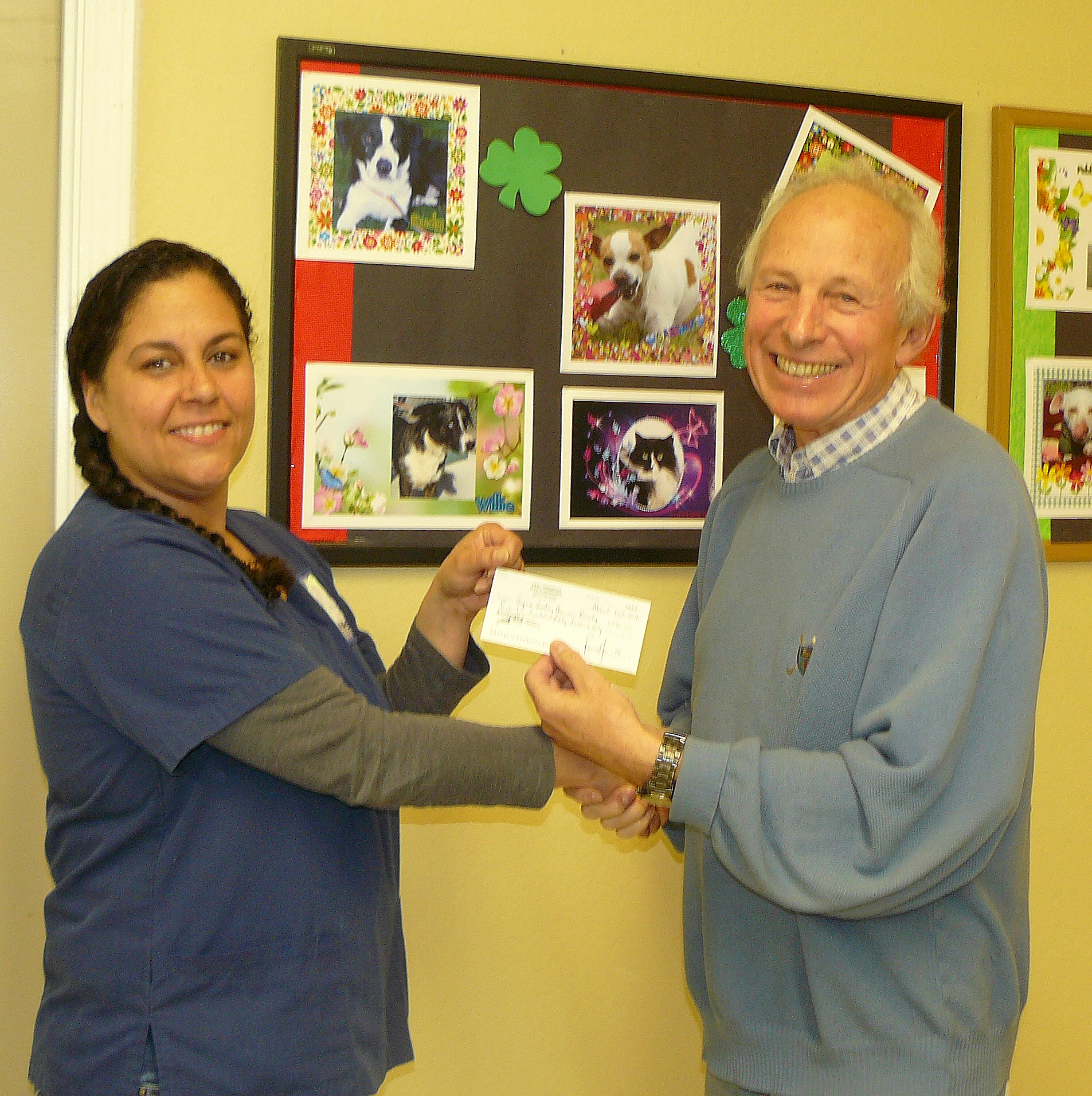
Well many of you, dear people, have made a positive difference, as the following pictures illustrate.
Yours truly passing a cheque to the value of $750 to Margaret Varner, Director of Facility Operations at RVHS.
oooo
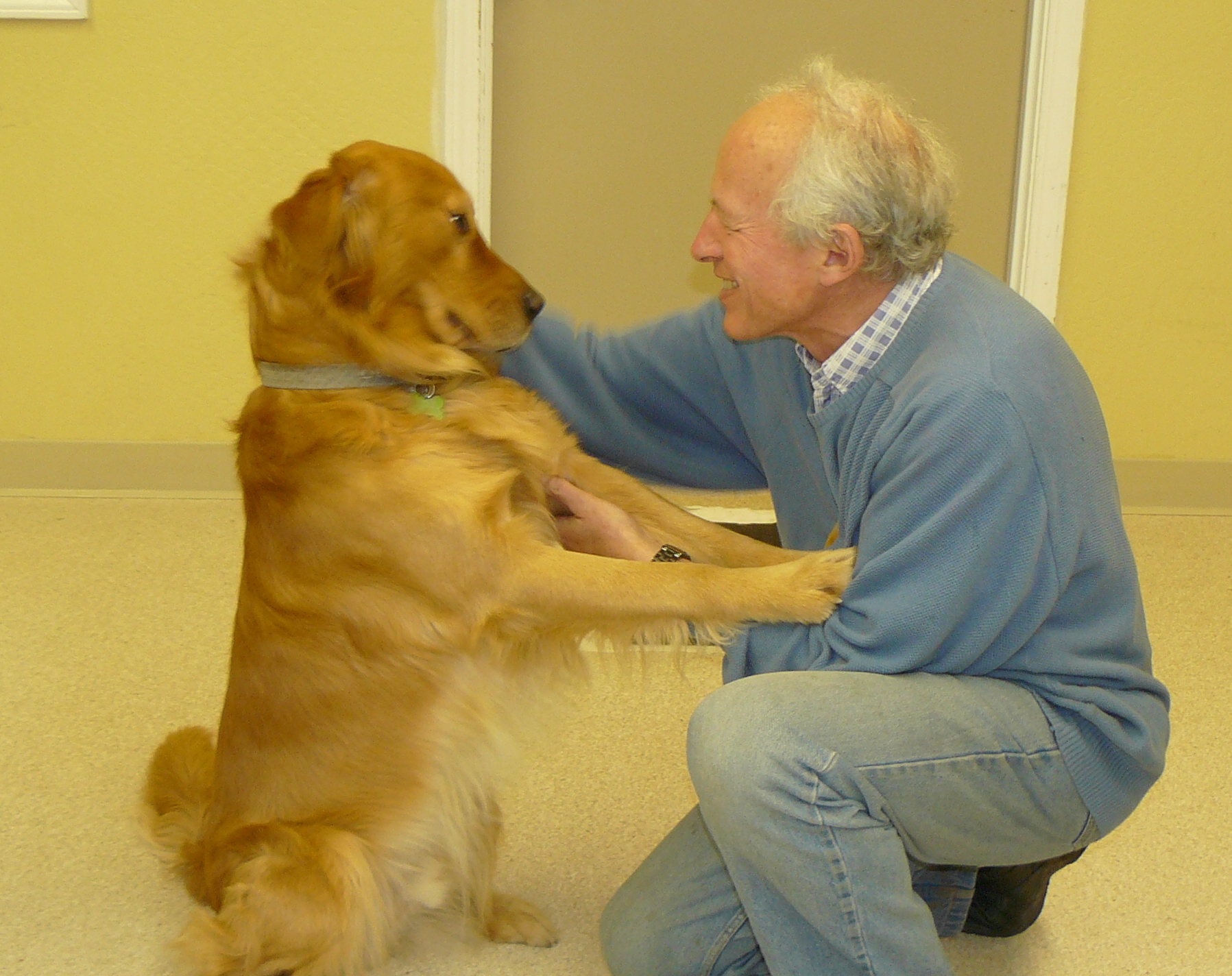
Explaining to Authentic the dog in the office of RVHS what has just been donated.Being thanked in the only way that dogs can properly thank someone!
oooo
Gorgeous shot of Jeannie and Authentic.
So a tremendous vote of thanks to everyone that has purchased my book for this is what your generosity delivers!
Going to write a little more about the Humane Society tomorrow.
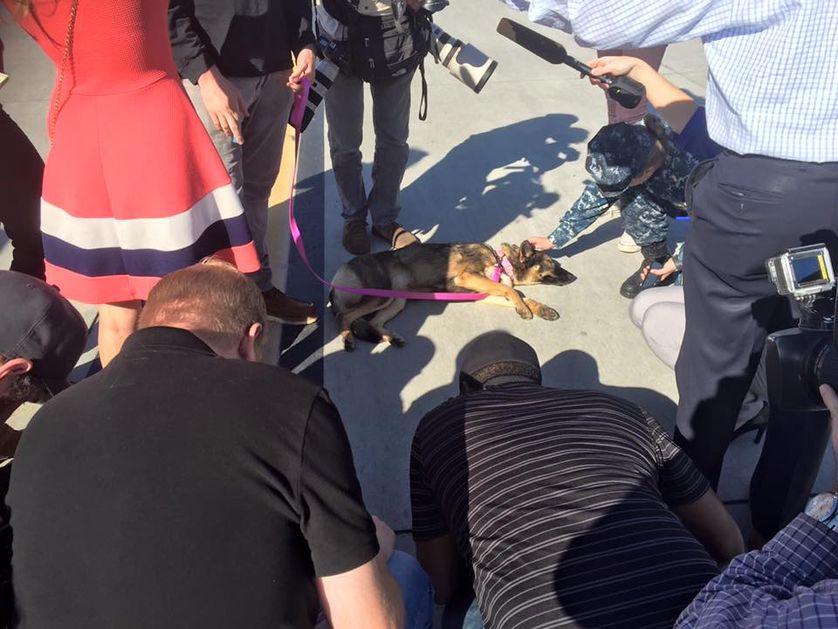
Luna likely survived on dead fish and mice, as well as fresh water that was shipped in for Navy employees. (Photo: U.S. Navy – Naval Base Coronado)
When Nick Haworth’s dog, Luna, fell off his fishing boat a couple miles off the shore of San Clemente Island in the Pacific Ocean, he thought there was a good chance she’d swim for land.
“Nick was pretty certain she would make for shore because she was a very strong swimmer,” says Sandy DeMunnik, public affairs officer for the U.S. Navy’s Naval Base Coronado, which includes the island. “He asked if he could have permission to come ashore to get her.”
San Clemente Island is a weapons training facility where they work with bombs and offshore bombardment, so they had to shut off one of the artillery ranges to look for the 1 1/2-year-old German shepherd/Husky mix. The staff helped Haworth search for her to no avail. He stayed in the area for two more days and couldn’t find her.
“After about a week, it was presumed she had never even made it to shore because they hadn’t seen a sign of her,” says DeMunnik. “They presumed she was lost at sea.”
Fast forward five weeks to March 15 when Navy staff arrived on the island for work.
“She was sitting on the side of the road just wagging her tail,” says DeMunnik. The staff members knew immediately that this was the dog they had been searching for. They opened their door, whistled and Luna jumped right in the truck.
After more than a month of being gone, Luna takes a well-deserved nap. (Photo: U.S. Navy – Naval Base Coronado)
They immediately called Haworth and let him know the happy news. Luna was examined by the island’s wildlife biologist, who said she likely wasn’t seen for five weeks because her tan-and-black coloring let her blend in with the island’s landscape. Miraculously, except for having lost a little weight, she was OK.
“Amazingly for being lost for five weeks in a very dangerous and treacherous environment, she was fine,” says DeMunnik. “During that time, there was bombardment training, weapons training … there was a lot of very loud, very dangerous training going on, and we had some very severe El Nino storms.”
Those storms probably helped keep the dog alive because fresh water was brought to the island by barge for the staff during the storm. They determined that Luna had survived by eating dead fish and rodents.
Because her owner, a commercial fisherman and student at San Diego State University, was away on a fishing trip, he sent his best friend, Conner Lamb, to meet Luna’s plane. When the plane doors opened, she leapt into Lamb’s arms and he fought back tears. On her first night home, he made her a steak for dinner.
The commanding officer of the base sent Luna home with a keepsake of her time spent on the island: her own set of military dog tags. They are engraved with her name, the dates she was missing, and “Keep the faith.”
Luna is greeting by paparazzi — but it’s clear that’s she’s had enough media coverage for the day. (Photo: U.S. Navy – Naval Base Coronado)
ooOOoo
Two more pictures to reinforce this wonderful story.
“All that evil needs to succeed is for good people to do nothing.”
You will recall that on the 8th March I published a post called Anger Alert. It was about raising awareness for “Stella has spent the last two years locked in a 3-by-9 foot cage in a kennel in Devon, England. She has never been let out to exercise or play.”
I included a link to a Care2 Petition that as of now has been signed by nearly 38,000 persons including many who read this blog. Thank you. Keep Stella in your thoughts.
Regretably, Stella’s imprisonment has not yet come to an end but here is a good news story that underlines why we must always keep fighting for the things we believe need to be changed.
ooOOoo
Over 61,000 Care2 Activists Want To Save These Dogs From Euthanasia
When Kirstyn Smith heard that 31 pit bulls had been rescued from a dog-fighting ring in her native Ontario, Canada, she was thrilled, but then she learned there was a catch: Officials had plans to euthanize the dogs, rather than free them. That’s when she jumped into action and decided to create a Care2 petition.
That petition now has over 61,000 signatures, as people around the world react to the horrifying and deeply unfair death sentence.
Here’s what Smith wrote in her petition:
“My name is Kirstyn Smith and I have been following a very heart-breaking story since October 2015. The town of Chatham-Kent, ON fell victim to a horrible and cruel act where 31 pitbull-type dogs were seized from an alleged dog fighting-ring.
These animals need our help.
Please sign and share this petition to demand that these dogs are treated humanely, medically taken care of and rehabilitated in order to live out their lives away from torture and neglect.”
Close To Victory
On March 10, she issued this update to her petition:
“We are so close! The accused have agreed to hand over ownership to Dog Tales Sanctuary in King City, ON. This is incredible news, but we still need the Ministry of Community Safety & Correctional Services to give proper designation which will allow the dogs to legally reside in Ontario. Thank you to each and every one of you for your support on this long journey!!”
Smith is referring to the fact that pit bulls are banned in the province of Ontario, and only a pound can take in pit bull-type dogs. However, Dog Tales is not a pound, so the sanctuary must make a special application in an effort to get the designation that will allow them to take in the pit bulls.
This of course is not unique to Ontario. Pit bulls are banned or restricted in most Canadian provinces; in the U.S., over 700 cities have enacted breed-specific legislationwhich is any ordinance, or dog law, that relates to specific dog breeds but does not affect any others.
The next court date will be March 18, and there will likely be another one after that, but things are moving forward in a positive way, thanks largely to Smith’s persistence and the awesome support of those 61,000 Care2 activists.
An Awesome Sanctuary
If justice prevails, these dogs will move to their new home, which CTV News London describes as an “opulent sanctuary in King City, Ontario, which is owned by one of Canada’s richest families.”
“The issues present are nothing that we haven’t seen before, and nothing that we feel cannot be changed with time, patience, and the proper technique,” says Clare Forndran, a spokesperson at Dog Tales Rescue and Sanctuary.
“At Dog Tales we are fortunate enough to have the facilities and the resources to provide for our dogs in ways that many other shelters cannot,” owner Danielle Eden said in an email.
While this story has come a long way and is very close to a happy ending, it’s not quite there yet.
You can help rescue these dogs from a death sentence by signing Smith’s petition, asking the authorities to treat these animals humanely, and take care of them so that they can live out their lives away from torture and neglect.
And if you have a cause that you care deeply about, and want to make a difference in the world, you can create your own petition, just as Kirstyn Smith did. You’ll soon find the Care2 community of activists ready to join you in your cause. And if you’d like to read more about petitions, you can check out this handy guide.
ooOOoo
So, please, if you are not one of those 61,000 who have already signed this petition then, without delay, go here and add your support to this wonderful cause.
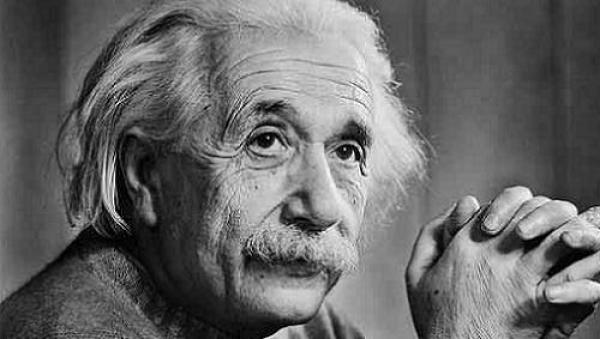
Celebrating the life and times of Albert Einstein.
Yesterday was the centenary of the birth of Albert Einstein (14 March 1879 – 18 April 1955). It has been widely reported. For example, a piece on the EarthSky blog:
March 14, 1879. This is the anniversary of the birth of Albert Einstein, undoubtedly the most famous scientist of the modern era.
Einstein was born in Ulm, Germany, where an uncle – Jakob Einstein, an engineer – introduced him to science and math. At age 17, he enrolled in the Swiss Polytechnic Institute after failing the entrance exam the previous year. He graduated in 1900, and in 1902 he became a junior patent examiner in the Swiss Patent Office in Bern, Switzerland, where he specialized in electrical devices.
The year 1905 came to be known as Einstein’s Miracle Year. He was 26 years old, and in that year he published four papers that reshaped physics.
Now before you read on let me proclaim that today’s post has absolutely nothing to do with dogs! (Unless dogs exist in parallel universes!)
But a recent documentary that was published on Top Documentary Films was really fascinating and incredibly well presented. Thus, in terms of the likes of you and I better understanding what Einstein revealed about our universe, I couldn’t resist sharing it with you all today. It is just 29 minutes long.
STORYLINE
One hundred years have passed since Albert Einstein first unleashed his highly influential Theory of General Relativity unto the world. These revelations charted a future course of scientific pursuit, and never cease to inform our understanding of the universe today. In celebration of that impressive legacy, the documentary short Einstein’s Extraordinary Universe travels to three research facilities in different regions across the globe, and shows us how Einstein’s work continues to challenge, shape and inspire the scientific discoveries of tomorrow.
The film opens in Tuscany. Under the shadows of Galileo’s groundbreaking work on gravity research, a group of astrophysicists are exploring Einstein’s theories related to the occurrence of gravitational waves through space and time. Can modern technologies and advanced scientific intellect result in actual proof of such waves?
Viewers are then taken to the world’s largest underground laboratory. Hidden far beneath Italy’s Gran Sasso mountains, the lab serves as a home to researchers who work tirelessly to prove another of Einstein’s grandiose theories: the existence of dark matter. The vast majority of our universe is made up of materials that we have not yet been able to detect through forces of light and energy. The dedicated team who toil away in this impressive underground lair hope they can lay the groundwork in changing that.
The filmmakers’ next stop is Switzerland, where they are given a tour of one of the most impressive displays of scientific testing technology on the planet. Housed by the European Organization for Nuclear Research, or CERN, the Large Hadron Collider is the most powerful particle accelerator on the planet, and is being used to question and examine the substance of all matter in our universe.
Through each destination on this incredible journey, what amazes most is how prescient Einstein’s theories have proven even after a century has passed. His work continues to test the limits of our scientific understanding, and sets a groundwork from which researchers still strive for answers. Featuring a plethora of illuminating interviews with many top figures in the fields of scientific study, Einstein’s Extraordinary Universe is certain to delight seasoned science geeks and novices alike.
Huge thank you to Producer John Letz and the whole crew.
A week ago last Saturday Jean and I travelled down to Ashland and to the studios of Rogue Valley Community Television (RVTV). This is how RVTV describe themselves:
Based at the Southern Oregon Digital Media Center, RVTV provides access television and streaming media services for the citizens and local governments of Jackson and Josephine Counties. Please visit rvtv.sou.edu for more information.
John Letz, the Producer for Adventures in Education and Ramping Up your English, had read my book and thought it might make a good programme.
I’m both delighted and flattered to say that the programme is now available and published under a Commons Creative Licence. Here it is!
What is deeply fascinating, at a number of levels, is how time only goes one way. At every single level of our experience, from the scale of the universe down to the tiniest particle known to science, it all flows forward. The arrow of time!
I was reminded of this interesting question of time in a book that has been published by a local Oregon author, John Taylor Our Curious UNIVERSE (the book is not available online otherwise I would have linked to it.)
It got me thinking of age. How we are all aging. How there is nothing that we can do to stop it. How the only thing we can do is to change our relationship with age. That then reminded me of an item that was published on The Conversation site a week ago that I wanted to share with you – share within the terms provided by The Conversation. The article was called It’s time to measure 21st century aging with 21st century tools.
ooOOoo
It’s time to measure 21st century aging with 21st century tools
These stories are dire, in part because the most widely used measure of aging – the old-age dependency ratio, which measures the number of older dependents relative to working-age people – was developed a century ago and implies the consequences of aging will be much worse than they are likely to be. On top of that, this ratio is used in political and economic discussions of topics such as health care costs and the pension burden – things it was not designed to address.
Turning 65 in 2016 doesn’t mean the same thing as hitting 65 in 1916. So instead of relying on the old-age dependency ratio to figure out the impact of aging, we propose using a series of new measures that take changes in life expectancy, labor participation and health spending into account. When you take these new realities into account, the picture looks a lot brighter.
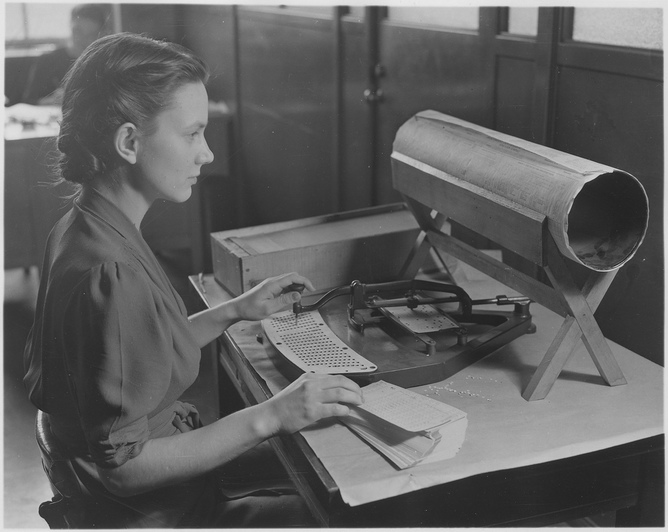
How facts from the census questionnaire were tabulated into statistics in 1950. The U.S. National Archives/Flickr
Our tools to measure aging have aged
The most commonly used measure of population aging is the “old-age dependency ratio,” which is the ratio of the number of people 65 years or older to those 20 to 64.
But, since the old-age dependency ratio was introduced in the early 1900s, most countries have experienced a century of rising life expectancy, and further increases are anticipated.
For instance, in 1914, life expectancy at birth in Sweden was 58.2 years (average for both sexes). By 2014, it had risen to 82.2 years. In 1935, when the U.S Social Security Act was signed into law, 65-year-olds were expected to live 12.7 more years, on average. In 2013, 65 year-olds may expect to live 19.5 years more.
But these changes aren’t reflected in the conventional statistics on aging. Nor is the fact that many people don’t just stop working when they turn 65, and that people are staying healthier for longer.
To get a better sense of what population aging really means today, we decided to develop a new set of measures that take these new realities into account to replace the old-age dependency ratio. And instead of one ratio, we created several ratios to evaluate health care costs, labor force participation and pensions.
Who retires at 65 anymore?
One of these new realities is that the number of people working into their late 60’s and beyond is going up. In 1994, 26.8 percent of American men aged 65-69 participated in the labor force. That figure climbed to 36.1 percent in 2014 and is forecast to reach 40 percent by 2024. And the trend is similar for even older men, with 17 percent of those aged 75-79 expected to still be working in a decade, up from just 10 percent in 1994.
Clearly, these older people did not get the message that they were supposed to become old-age dependents when they turned 65.
Depot Supervisor Eric Headley, 74, takes a call on his mobile phone while at work for Pimlico Plumbers in London July 29, 2010. Britain announced plans to scrap the fixed retirement age next year, saying it wanted to give people the chance to work beyond 65, but business leaders warned the move would create serious problems. REUTERS/Suzanne Plunkett.
This isn’t unique to the U.S. Rates like these in many countries have been rising. In the U.K., for instance, the labor force participation rate of 65- to 69-year-old men was 24.2 percent in 2014, and in Israel it was 50.2 percent, up from 14.8 percent and 27.4 percent, respectively, in 2000. In part this is because older people now often have better cognitive functioning than their counterparts who were born a decade earlier.
So, instead of assuming that people work only from ages 20 to 64 and become old-age dependents when they hit 65, we have computed “economic dependency ratios” that take into account observations and forecasts of labor force participation rates. This tells us how many adults not in the labor force there are for every adult in the labor force, giving us a more accurate picture than using 65 as a cutoff point. We used forecasts produced by the International Labour Organization to figure this out.
The old-age dependency ratio in the U.S. is forecast to increase by 61 percent from 2013 to 2030. But using our economic dependency ratio, the ratio of adults in the labor force to adults not in the labor force increases by just 3 percent over that period.
Clearly, doom and gloom stories about U.S. workers having to support so many more nonworkers in the future may need to be reconsidered.
Is the health care burden going to be so high?
Another reality is that while health care costs will go up with an older population, they won’t rise as much as traditional forecasts estimate.
Instead of assuming that health care costs rise dramatically on people’s 65th birthdays, as the old-age dependency ratio implicitly does, we have produced an indicator that takes into account the fact that most of the health care costs of the elderly are incurred in their last few years of life. Increasing life expectancy means those final few years happen at ever later ages.
In Japan, for example, when the burden of the health care costs of people aged 65 and up on those 20-64 years old is assessed using only the conventional old-age dependency ratio, that burden is forecast to increase 32 percent from 2013 to 2030. When we compute health care costs based on whether people are in the last few years of their lives, the burden increases only 14 percent.
Pension ages are going up
The last reality we considered concerns pensions.
In most OECD countries, the age at which someone can begin collecting a full public pension is rising. In a number of countries, such as Sweden, Norway and Italy, pension payouts are now explicitly linked to life expectancy.
In Germany, the full pension age will rise from 65 to 67 in 2029. In the U.S., it used to be 65, is now 66 and will soon rise to 67.
Instead of assuming that everyone receives a full public pension at age 65, which is what the old-age dependency ratio implicitly does, we have computed a more realistic ratio, called the pension cost dependency ratio, that incorporates a general relationship between increases in life expectancy and the pension age. The pension cost dependency ratio shows how fast the burden of paying public pensions is likely to grow.
For instance, in Germany, the old-age dependency ratio is forecast to rise by 49 percent from 2013 to 2030, but 65-year-old Germans will not be eligible for a full pension in 2030. Our pension cost dependency ratio increases by 26 percent over the same period. Instead of indicating that younger Germans will have to pay 49 percent more to support pensioners in 2030 compared to what they paid in 2013, taking planned increases in the full pension age into account, we see that the increase is 26 percent.
Pranom Chartyothin, a 72-year-old bus conductor, sells and collects bus tickets in downtown Bangkok, Thailand, February 3, 2016. Such scenes will only become more common in Thailand as its population rapidly ages, unlike its neighbours with more youthful populations. The World Bank estimates the working-age population will shrink by 11 percent by 2040, the fastest contraction among Southeast Asia’s developing countries. Thailand’s stage of economic development, the rising cost of living and education, and a population waiting longer to get married are among the reasons it is ageing more quickly than its neighbours. An effective contraception programme in the 1970s also played a part, said Sutayut Osornprasop, a human development specialist at the World Bank in Thailand. Picture taken February 3, 2016. REUTERS/Jorge Silva.
Sixty-five just isn’t that old anymore
In addition to this suite of measures focused on particular aspects of population aging, it is also useful to have a general measure of population aging. We call our general measure of population aging the prospective old-age dependency ratio.
People do not suddenly become old-age dependents on their 65th birthdays. From a population perspective, it makes more sense to classify people as being old when they are getting near the end of their lives. Failing to adjust who is categorized as old based on the changing characteristics of people and their longevity can make aging seem faster than it will be.
In our prospective old-age dependency ratio, we define people as old when they are in age groups where the remaining life expectancy is 15 years or less. As life expectancy increases, this threshold of old age increases.
In the U.K., for instance, the conventional old-age dependency ratio is forecast to increase by 33 percent by 2030. But when we allow the old-age threshold to change with increasing life expectancy, the resulting ratio increases by just 13 percent.
Populations are aging in many countries, but the conventional old-age dependency ratio makes the impact seem worse than it will be. Fortunately, better measures that do not exaggerate the effects of aging are now just a click away.
 I came into the house yesterday around 4:30pm after having dug eight three-foot diameter holes out in the meadow and then planted into those holes eight tree saplings.