Venturing into strange lands.
A collection of items has been crossing my ‘in-box’ in recent weeks and while many of the topics are, on the face it, not connected, for reasons I am not entirely sure about they seem to fall under the same umbrella; as in being of the same coherent theme.
Let me list some of these topics: the age of the universe; climate change; CO2 levels; the certainty of death; the history of the last half-million years; what our dogs teach us; and more!
Naturally, Jeannie and I have been kicking around these topics, aided and abetted by Dan Gomez, my Californian friend of some 40 years (and my ‘Best Man’ when Jean and I were married in 2010 and, more or less directly, the catalyst of me and Jean meeting in 2007!)
But I get the sense that many of you wonderful people that follow this place also scratch your head not infrequently and ponder on these ‘interesting’ times.
I don’t have any answers. But I do want to share how, over the last few weeks, I have been seeking some meaning, some peace, to the big issues that have the potential to make these times pretty uncomfortable if not a tad scary.
I shall not be extending this introspection each day but probably ( and I’m guessing) a couple of times a week I shall be dipping into the barrel!
Starting off with climate change, maybe tomorrow or Wednesday.
But what of today!
Today I am publishing another Dog Food Recall alert that came out late last week!
ooOOoo
Performance Dog Pet Food Recall
September 12, 2018 — Bravo Packing, Inc. of Carneys Point, New Jersey, is recalling all Performance Dog products, a frozen raw pet food, because they have the potential to be contaminated with Salmonella.
What’s Recalled?
The following products are affected by the recall:
Performance Dog
Package Size: 2-pound plastic sleeve
Mfg Date Code: 071418
Performance Dog
Package Size: 5-pound plastic sleeve
Mfg Date Code: 071418
Performance Dog comes frozen in 2-pound and 5-pound plastic sleeves.
The recalled product has manufacture date code 071418.
The manufacture date codes are printed on the boxes that contain the plastic sleeves, but not on the individual plastic sleeves.
Therefore, if the cardboard box has been discarded, there are no unique identification numbers on the individual sleeves that allow customers to determine that they possess the recalled products.
If you purchased this product since July 14, 2018 and cannot determine whether it is affected by the recall, the FDA recommends that you exercise caution and throw the product away.
About Salmonella
Salmonella can cause illness in animals eating the products, as well as people who handle contaminated pet products, especially if they have not thoroughly washed their hands after having contact with the products, infected animals or any surfaces exposed to these products.
Healthy people infected with Salmonella should monitor themselves for some or all of the following symptoms: nausea, vomiting, diarrhea or bloody diarrhea, abdominal cramping and fever.
Rarely, Salmonella can result in more serious ailments, including arterial infections, endocarditis (an infection of the heart muscle), arthritis, muscle pain, eye irritation and urinary tract symptoms.
People who have these symptoms after having contact with this product or an animal that has eaten this product should contact their healthcare providers.
Pets with Salmonella infections may be lethargic and have diarrhea or bloody diarrhea, fever, and vomiting.
Some pets will have decreased appetite, fever and abdominal pain.
Pets exposed to contaminated food can be infected without showing symptoms.
If your pet has consumed the recalled product and has these symptoms, please contact your veterinarian.
Infected animals can also shed Salmonella through their feces and saliva, spreading pathogens into the home environment and to humans and other animals in the household.
No human or animal illnesses have been reported to date.
What Caused the Recall?
Bravo Packing, Inc. is voluntarily recalling this product after a sample of Performance Dog, collected during an FDA inspection, tested positive for Salmonella.
Performance Dog generally works with the distributor Tefco, located in Brooklyn , New York, that fills orders to brick-and-mortar retail stores or to consumers directly.
What to Do?
Consumers with questions should contact Bravo Packing, Inc. at 856-299-1044 (Monday thru Friday, 6 AM to 2 PM, Saturday 4 AM to 9 AM ET) or through the company’s website at http://www.bravopacking.com.
U.S. citizens can report complaints about FDA-regulated pet food products by calling the consumer complaint coordinator in your area.
Or go to http://www.fda.gov/petfoodcomplaints.
Canadians can report any health or safety incidents related to the use of this product by filling out the Consumer Product Incident Report Form.
In the past, studies have disagreed on whether forests with lower or higher canopies will be more likely to make it through prolonged spells of hot, dry weather. The discrepancy has made it difficult for forest managers, who need to know which tree heights to encourage to ensure the highest growth and survival rates during extreme drought.
Study leader Peipei Xu at Beijing Normal University in China and her colleagues believe the issue is increasingly pressing. “Climate data indicate that warm areas of land are increasing, and the warmed areas are also drying,” says Chuixiang Yi at the City University of New York, US. “Hot-dry-induced forest mortality poses a significant global concern for the future as carbon dioxide continues to rise and the climate continues to warm.”
Xu, Yi and the rest of the team aimed to quantify the relationships between canopy height, growth and survival rates during drought accurately for the first time. They analysed data gathered during a severe drought in the southwestern US in 2002 that showed the effect on the ring widths of tree trunks, a useful indicator of their yearly growth. In addition, satellite data revealed how the density of vegetation changed over the course of the drought; the team used this to calculate both leaf growth and tree mortality rates.
The results revealed that trunk and leaf growth under drought conditions increased with canopy height for trees shorter than 18 metres but decreased with height for trees taller than 18 metres. “Our results indicate that both high and small trees have relatively low drought resistance,” says Yi.
After establishing these relationships, the researchers could determine the biological mechanisms governing tree growth and survival during drought.
“All organic matter in a tree is formed on the leaves at the top of the tree by photosynthesis,” Yi explains. “Tall trees have a longer water transport path from roots to leaves and [it’s] more difficult to overcome tissue resistance and … gravity, particularly under dry conditions. The roots of small trees are short, and their abilities to access water and nutrient supplies unavailable to the surface soil layer are extremely limited.”
The researchers believe that using their results to inform the active management of canopy structure could safeguard vulnerable forests. As climate models predict hotter, drier droughts becoming more commonplace, this could be essential to combat forest dieback – a phenomenon that will also drive climate change.
“Our findings provide insights into how to manage forests or plant what trees to increase forest drought resistance in facing hot-dry climate conditions to mitigate climate change,” says Yi.
Jeannie and me reacting to the last report on the Oregon Department of Forestry (ODF) Southwest website:
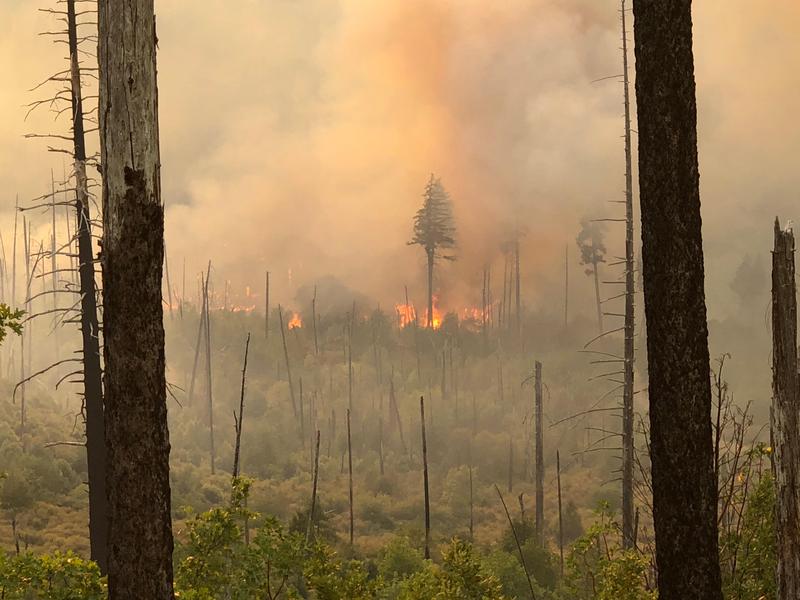
Hugo Road Fire FINAL Update 09/06/18
Quick Facts:
Incident Start Date: 09/02/2018
Incident Start Time: Approx. 7:15 p.m.
Incident Type: Wildfire
Cause: Under Investigation
Incident Location: Hugo, which is roughly ten miles north-northwest of Grants Pass in Josephine County, Oregon
Land Threat: Private
Command Agency: ODF
Fire Size: 199 acres
Containment: 86%
Current Situation:This will be the final update for the Hugo Road Fire unless conditions significantly change.
Firefighters continue to boost containment on the Hugo Road Fire, now reaching 86 percent. The fire remains at 199 acres.
Overnight, crews were able to mop up 300 feet from the fire’s edge, adjacent to roadways, and surrounding the perimeter of homes. Within the mop up area, very few hot spots were found. All residences are at a Level 1 “Be Ready” evacuation notice, and will remain at such until Fire Season 2018 comes to a close, per the Josephine County Sheriff’s Office.
Local fire personnel will continue gridding the landscape for interior hot spots and conducting suppression repair throughout the next few days. It is normal to see light smoke during this process, but it is now well within the interior of the fire’s footprint which does not pose a threat to our community. There will still be fire apparatus present until the final mop up stages are complete. We encourage everyone to continue to use caution while traveling through the area.
Thank you again to every single partner agency and community member for the assistance and support throughout this firefight. It is an honor to serve and live in this community.
Evacuations:
Due to progress made by firefighters on the Hugo Road Fire all current evacuation levels are being downgraded to a Level 1 “BE READY” notice. Level 1’s will remain in effect until the end of the fire season.
For information regarding information, please contact the Josephine County Sheriff’s Office, or follow the Josephine County Emergency Management Facebook page as evacuation levels are anticipated to change shortly.
Assigned Resources:
Engines: 10
Water Tenders: 4
Helicopters: As needed
Hand Crews: 8
Dozers: 4
Total Personnel: 211
Air Tankers: As needed
The fire was listed late Monday as 30 percent contained, but not before it destroyed two houses, 13 outbuildings two recreational vehicles and 11 vehicles, according to the Oregon Department of Forestry. Fire also damaged three other residences, two out-buildings and a vehicle, according to ODF.
It is easy to read those words and not be greatly affected by them.
But the reality of having to evacuate one’s home in a hurry and then subsequently returning to find it burnt to the ground is terrible beyond imagination. Everything lost. A wiping clean of one’s life. Having to start all over again. Dreadful, truly dreadful.
Jeannie and I decided to take a few hours away from the house and go and do some local exploring.
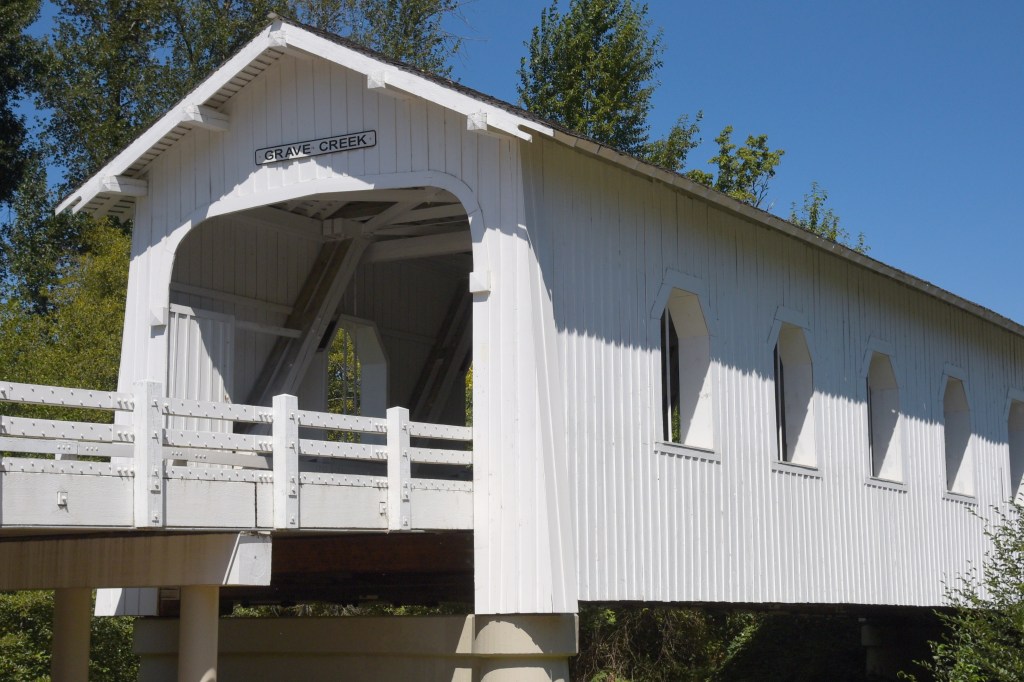
Just 10 miles North of us, indeed the next exit (71) from Highway I-5, is the famous Grave Creek Covered Bridge.
We parked up and soaked it all in.
While there was an information board next to the bridge it was very easy to find the details online on the Southern Oregon travel site.
The Grave Creek Covered Bridge is one of the few covered bridges that remain in southern Oregon. From Vancouver B.C. to the Mexican border, it is the only one visible from the I-5 freeway. Be sure to visit the Applegate Trail Interpretive Center while in Sunny Valley. It provides a first hand look into the local area, history, fabulous displays, theatre & more.
In the fall of 1846, the first emigrant train from Fort Hall, Idaho, to travel the southern route to the Willamette Valley camped on the north side of this creek, then Woodpile Creek. Martha Leland Crowley, 16 years old died of typhoid fever during this encampment and was buried 150 feet north of the creek on the east side or a white oak tree that was later removed for the present roadway, Thus the name “Grave Creek”.
When James H. Twogood laid out his land claim in the fall of 1851 and filed it on May 1st 1852, he named it the Grave Creek Ranch in memory of that unfortunate incident.
McDonough Harkness, his partner, was the first postmaster of Josephine County in the newly named town of Leland on March 28,1855. Harkness was killed by the Indians in April 1856 while riding dispatch for the Army during the second Indian War of southern Oregon which started in October of 1855.
The bridge was built in 1920 and is 105 feet long.
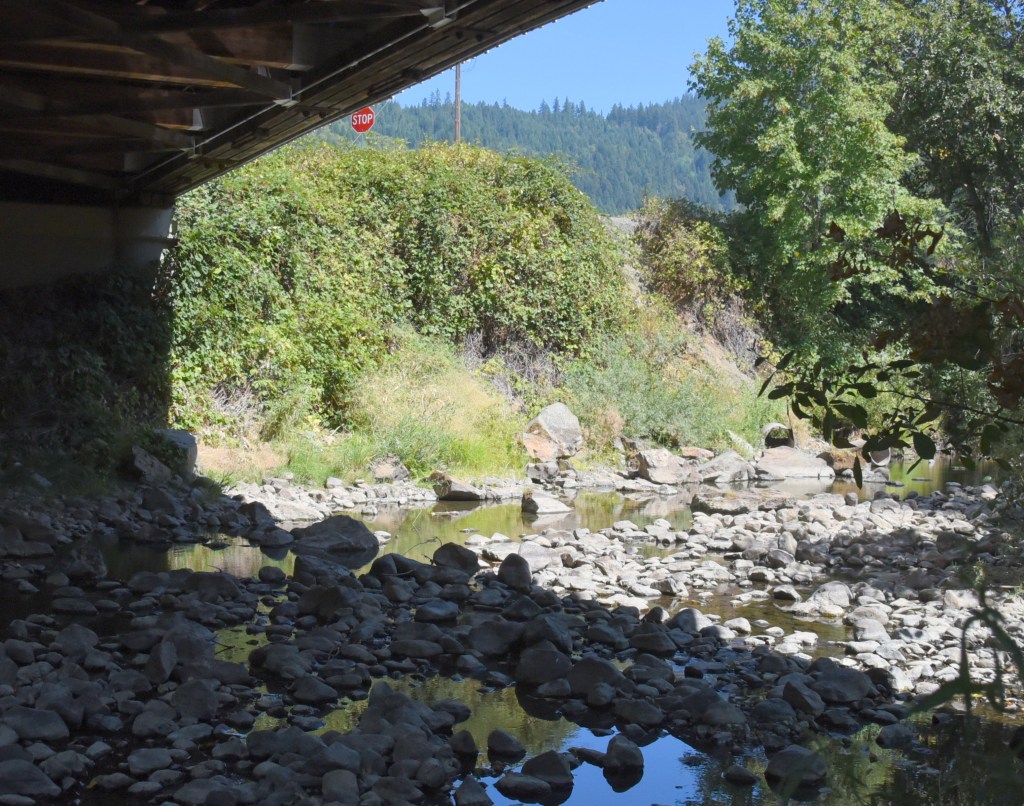
Unsurprisingly, the creek had very little water in it.
But that didn’t diminish in the slightest the magic of this place out in the vast Oregon countryside.
A covered bridge is a timber-truss bridge with a roof and siding which, in most covered bridges, create an almost complete enclosure. The purpose of the covering is to protect the wooden structural members from the weather. Uncovered wooden bridges typically have a lifespan of only 10 to 15 years because of the effects of rain and sun. The brief moment of relative privacy while crossing the bridges earned them the name “Kissing Bridges”.
The latest news is that our Klondike Fire is now burning an area larger than 100,000 acres. Or to use the words from the incident webpage(my emphasis):
The Taylor Creek and Klondike Fires were split into zones on Saturday, Aug. 18. The fires are now referred to as “Taylor Creek Fire” and “Klondike Fire East,” managed by the Northwest Incident Management Team 12 out of Lake Selmac, and “Klondike Fire West” managed by California Interagency Incident Management Team 4 out of Gold Beach. A transfer of command of the Klondike West Zone will occur at 6:00 AM Friday when the Southern Area Red Team who arrived on Wednesday will take over.
As of the morning of Aug. 30, the Taylor Creek Fire is estimated 52,839 acres and is 95 percent contained. The Klondike Fire is estimated at 100,996 acres and is 40 percent contained. There are 1,214 personnel working on the Klondike Fire and 126 personnel assigned to the Taylor Creek Fire.
Courtesy Jeffersen Public Radio
Then just over a week ago, The Conversation blogsite published a reminder that I wanted to share with you today, under the permissions offered by The Conversation site.
ooOOoo
Many native animals and birds thrive in burned forests, research shows
But the idea that wildfires should be suppressed by logging the forest is far too simplistic. Most scientists agree that large hot wildfires produce many benefits for North American forests. Notably, they create essential habitat for many native species.
Fifteen years of research on Spotted Owls – a species that has played an oversized role in shaping U.S. forest management policies and practices for the past several decades – directly contradicts the argument that logging is needed to protect wildlife from fires. Wildlife biologists, including me, have shown in a string of peer-reviewed studies, that wildfires have little to no effect on Spotted Owls’ occupancy, reproduction or foraging, and even provide benefits to the owls.
The Northern Spotted Owl in the Pacific Northwest was listed as threatened under the Endangered Species Act in 1990. At that point, about 90 percent of U.S. old-growth forest had already been lost to logging. Every year in the 1980s the U.S. Forest Service sold about 7 to 12 billion board feet of public lands timber.
Figure 1. National forest timber sales (1905–2017). FY 1905-2017 National Summary Cut and Sold Data USDA Forest Service
Listing the owl drew attention to the dramatic decline of old-growth forest ecosystems due to 50 years of unsustainable logging practices. In response the U.S. Forest Service adopted new regulations that included fewer clearcuts, less cutting of trees over 30 inches in diameter and fewer cuts that opened up too much of the forest canopy. These policies, along with vast depletion of old-growth forests, reduced logging on Forest Service lands to about 2 billion board feet per year.
During the 1990s, national forest management policy for the Northern Spotted Owl included creating old-growth reserves and designating critical habitat where logging was restricted – mostly within half a mile of a Spotted Owl nest. In spite of these protections, populations of Northern Spotted Owls, as well as California and Mexican Spotted Owls, continued to decline on forest lands outside national parks. This was most likely due to ongoing logging outside of their protected nesting areas in the owls’ much larger year-round home ranges.
Fire and owls
Over the years the Forest Service shifted away from treating Spotted Owls as symbols of old-
Historical range (burgundy) of the Northern Spotted Owl, which also extended north into British Columbia. One hundred fifty years of logging, agriculture and urbanization have reduced the amount of old growth forest (potential Spotted Owl habitat) in this zone by 85-90 percent. NASA Earth Observatory
growth forest biodiversity, and instead started to cite them as an excuse for more logging. The idea that forest fires were a threat to Spotted Owls was first proposed in 1992 by agency biologists and contract researchers. In a status assessment of the California Spotted Owl, these scientists speculated that fires might be as damaging as clearcuts to the owls.
This perspective gained popularity within the Forest Service over the next 10 years and led to increased logging on public lands that degraded old-growth habitat for Spotted Owls.
Academic scientists, including some with Forest Service funding, published peer-reviewed studies of Spotted Owls and fire in 2002, 2009, 2011 and 2012. All four studies showed either no effects from fire or positive benefits from fire for Spotted Owls. Subsequent research on Spotted Owls in fire-affected forests has showed repeatedly that the owls can persist and thrive in burned landscapes.
(The U.S. Forest Service says wildfires harm wildlife habitat, but wildfires actually create rare and important habitat.)
Many wild species thrive in burned landscapes
I recently conducted a systematic review and meta-analysis that summarized all available scientific research on the effects of wildfires on Spotted Owl ecology. It found that Spotted Owls are usually not significantly affected by mixed-severity forest fire. Mixed-severity forest fire, which includes large patches with 100 percent tree mortality, is how wildfires in western forests naturally burn. The preponderance of evidence indicated that mixed-severity wildfire has more benefits than costs for Spotted Owls.
In 2017 I submitted an early version of this analysis with the same conclusions to the U.S. Fish and Wildlife Service during the agency’s peer-review process for its Conservation Objectives Report for the California Spotted Owl. My conclusions were not included in the final report.
Decades of science have shown that forest fires – including large hot fires – are an essential part of western U.S. forest ecosystems and create highly biodiverse wildlife habitat. Many native animals thrive in the years and decades after large intense fires, including deer, bats, woodpeckers and songbirds as well as Spotted Owls. Additionally, many native species are only found in the snag forest habitat of dead and dying trees created by high-severity wildfire.
Pileated woodpeckers excavate nests within snags, bringing life to charred forests in Oregon. NASA/S. Russell, CC BY-ND
Wildfires threaten homes, but wildlife and water supplies benefit
It is also time to reform Forest Service management goals to emphasize carbon capture, biodiversity, outdoor recreation and water supply as the most important ecosystem services provided by national forest lands. These services are enhanced by wildfires, not by logging.
ooOOoo
These last two paragraphs are key lessons: 1. Logging does not stop the biggest, hottest fires, and, 2. It is time to change the goals under which our forests are managed emphasising carbon capture, biodiversity, recreation and water supplies!
… not to be in such a hurry to shut the garage door!
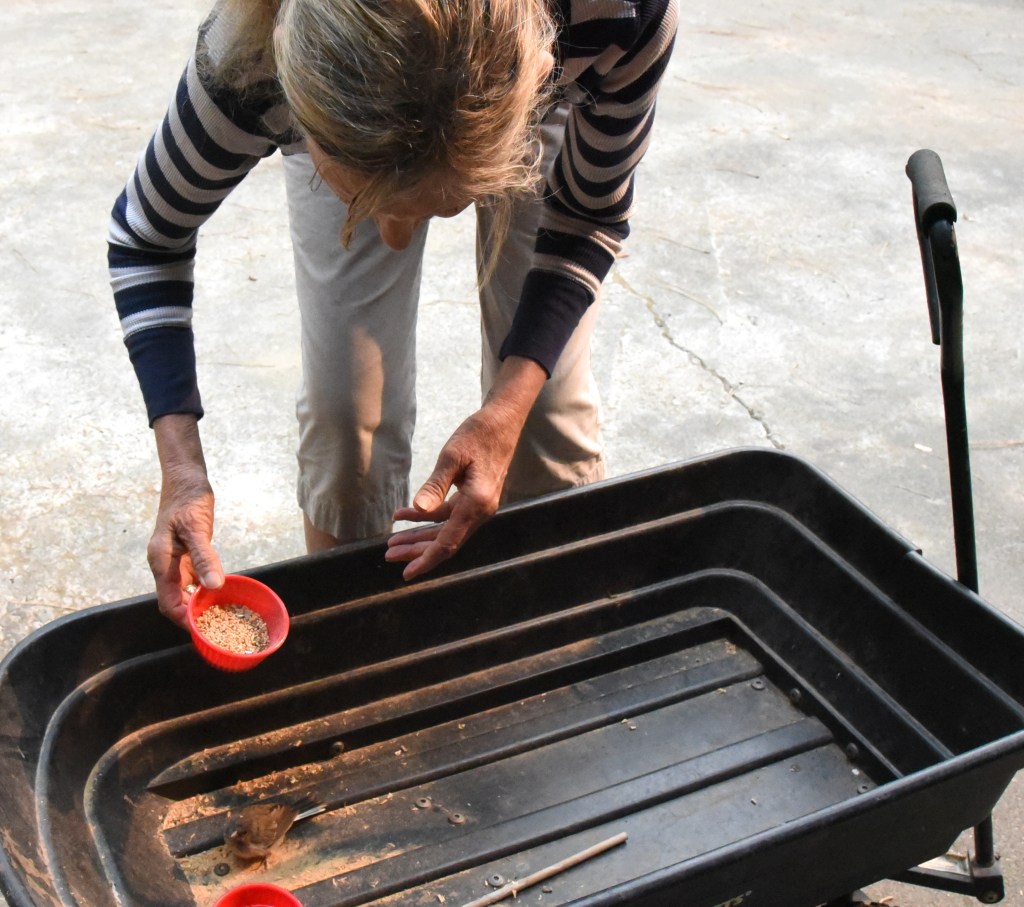
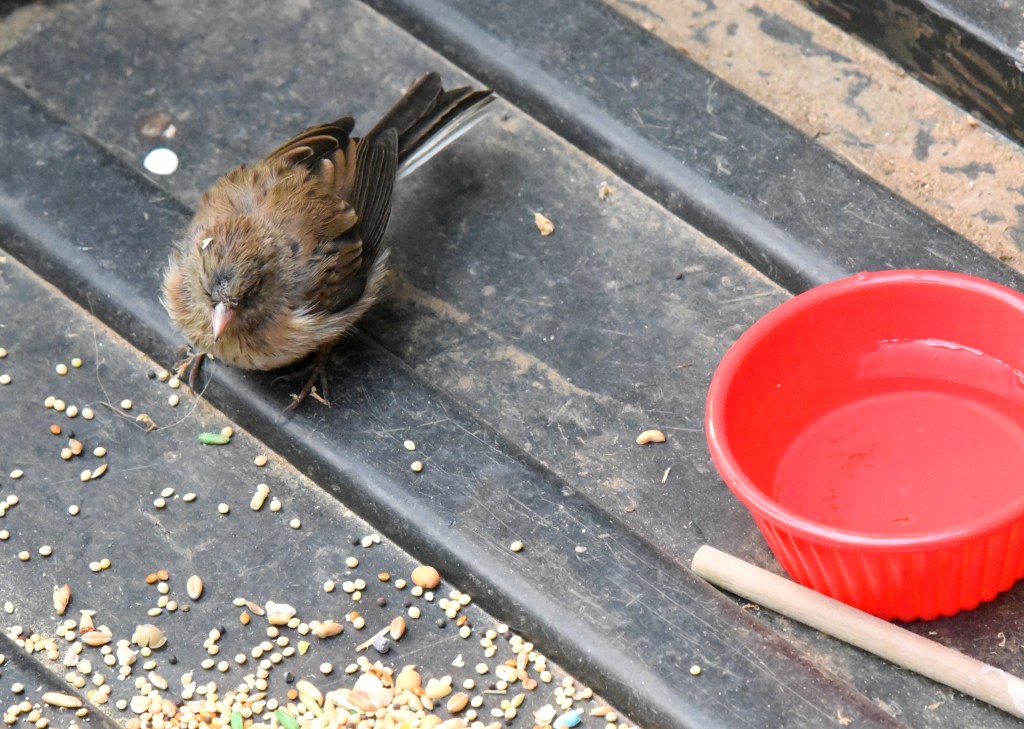
I went out to the garage yesterday morning to sort out a few things and found a small bird almost fast asleep in a trolley cart I use about the place.
It clearly had got caught inside the garage when I closed the electric door the previous evening. (Some of the local birds do come in to the garage to feast on insects and spiders that they come across.)
(That’s sawdust in the bottom of the cart.)
I called Jeannie to come out and look at the little chap and she had the brilliant idea of feeding the bird some of the bird food we give our two parakeets. Plus, she brought out a bowl of water.
It worked!
In next to no time the aforesaid bird had had sufficient to eat and it was time to relax in the warm air.
Twenty minutes later he had flown away!
OK!!
The real point of today’s post is to advise you that my son, Alex, and his longterm partner, Lisa, are staying with us for a few days and quite naturally blogging is going to be on the back-burner.
Rather than go ‘silent’ I am going to share with you over the next six days a beautiful series of posts on the clouds.
I wasn’t planning to publish a post for today. But then a recent post from Patrice Ayme spurred me to so do.
Let me explain.
Our nearest town, Grants Pass, has the wonderful Rogue River flowing through it and alongside it there is Riverside Park. To quote:
Riverside Park in Grants Pass was set aside by our founders for the enjoyment of our citizens and guests.
People come from all over to Riverside Park to watch the majestic Rogue River as it courses its’ way through our city.
As you can see it is a popular place for ducks and geese.
Last Tuesday, we had a contractor completing some new guttering for the house. Terry, the owner of TC Gutters, ran out of the coated aluminium he was folding into the correct shape using a rather cute machine!
Terry apologised and said that he would need to run back into Grants Pass to pick up some more of the sheeting.
He returned a little later and I went over to chit-chat with him.
He was unexpectedly downcast.
“Terry, is there a problem?”
“Paul, when I was in town, down at the bottom of 6th Street near the bridge, there was a flock of ducks crossing the road.”
Terry paused for quite a while; I stood there next to him with not a clue as to what was coming.
He sighed, and continued: “Instinctively, I slowed down along with a number of other drivers. But what really upset me was the fact that a few drivers were clearly gleefully driving into the ducks and killing them!”
It hurt me to hear that; very much so!
Is it too strong for me to regard those drivers who thought it great fun to drive into those ducks as being evil?
It was the fickle finger of fate that led me to the arms, metaphorically speaking, of a core process psychotherapist back in Devon in the first half of 2007. That counselling relationship that revealed a deeply hidden aspect of my consciousness: a fear of rejection that I had had since December, 1956. That finger of fate that took me to Mexico for Christmas 2007 and me meeting Jean and all her dogs. That finger of fate that pointed me to the happiest years of my life and a love between Jeannie and me that I could previously never ever have imagined.
Here’s the full account. (But this is quite a long post and has the potential to cause some pain. Of course, I don’t intend that. But it’s best to mention that now.)
First we need to go back to that evening of December 19th, 1956. I had turned 12 on November, 8th and had just completed my first term at a nearby Grammar School. Then the family, as in Mum, Dad, me and my younger sister Elizabeth, were living comfortably in a detached house in Toley Avenue, a road off the main street that comprises Preston Road.
Preston Road is one of the outer suburbs of London to the North-West, sandwiched between Wembley, closer in to London, and Harrow, a little further out.
Anyway, on that evening of the 19th my mother came into my bedroom, located at the front of the house and next to Mum and Dad’s bedroom, at the usual time to say ‘Good night’ to me.
But while it was the usual time for Mum to be saying goodnight to me, clearly something was different this particular evening.
Mum sat down on the edge of my bed, just where my knees were, looked at me, and said, with pain in her voice: “Paul, you do know your father isn’t very well. He may not live for much longer.”
To be honest, all these many years later, I have no recollection as to whether or not I was aware that my father wasn’t very well.
Mum then leaned over to me, gave me my goodnight kiss, got up, and went out of my bedroom switching off the room light as she closed the door. As she always did and no different to any other evening.
Likewise, as with any other evening, I went off to sleep within a few minutes.
However, when I awoke the following morning, the morning of December 20th, it was clear that something terrible had happened during the night. Let me explain that my father had had two daughters with his first wife, prior to meeting Mum, and I loved them both and saw them as elder sisters. The eldest was Rhona and she was a registered nurse (SRN). (My other ‘sister’ was Corinne.) Of course, Rhona was helping Mum care for Dad.
I got up and went downstairs. There was Rhona in the kitchen. Rhona came up to me and held me very tightly and then quietly told me that our father had died during the night. Rhona went on to add that Mum had thought it best not to wake me and Elizabeth and somehow arranged not only for the doctor to come in to certify Dad’s death but also for our father’s body to be removed from the home. Elizabeth and I had slept through it all!
I don’t recall having any emotional reaction to Rhona’s news; not even crying. It was if it was all just too unreal to take in.
A few days later, Mum, very clearly in her own mind doing her best to protect me and Elizabeth from pain, subsequently thought it wise that we didn’t go to our father’s funeral and cremation.
Now I have not the slightest doubt that many, if not all, of you will have cringed on reading the above.
Once back at school for the first term of 1957, I soon became aware of being the target of a degree of bullying, presumably because I was showing my grief through my behaviour and attitude, that my academic performance rapidly fell apart leading on to me leaving school before I went on to the Sixth Form.
The other thing that I was aware of in 1957, and for every December 20th thereafter, that this day was always a tough one. A day when I remembered with a degree of sadness and emotional pain that fateful night and morning in 1956.
Nevertheless, my adult life really was (is!) a wonderful journey for me. It included a period working as a freelance journalist out in Australia in the late 1960s, becoming an Office Products salesman for IBM UK after returning from Australia to England and then in 1978 starting my own company, Dataview Ltd., in the early days of the personal computer revolution. Then after eight whirlwind years with Dataview growing in leaps and bounds each year, being approached in 1986 by a group of investors who wished to buy me out: I said “Yes”. That resulted in me going to live on a yacht, Songbird of Kent, a Tradewind 33, out in Cyprus (Larnaca Marina).
Tradewind 33 – Songbird of Kent. My home for five years.
While in Cyprus I got to know really well the wonderful, inspiring Les Powells, a three-times solo circumnavigator on his yacht Solitaire, and that thanks directly to Les offering me some very good advice, me experiencing the beauty, and the fear, of solo sailing out in The Atlantic and returning to Plymouth, in Devon, England, via Horta in The Azores, on the 16th June, 1994.
But! But! But!
But there was another part of my adult life that wasn’t such a wonderful journey. My relationships with the opposite sex! Culminating in my third wife, Julie, announcing on the day of the 50th anniversary of my father’s death, as in December 20th, 2006, that she was leaving me. (The reality of what she did to me was not pretty but I will spare you the details.)
Let me explain a little more.
After I had returned to England, sailing into Plymouth, in 1994, I subsequently sold Songbird of Kent and purchased a small house in the little village of Harberton, just a few miles out of Totnes, in South Devon. An easy decision to stay in South Devon because both Rhona and Corinne had their family homes close to Totnes.
Upper Barn, My home in Harberton.
I quickly became involved in the local business community undertaking a variety of coaching roles under the umbrella of Sales and Marketing; I was then a Chartered Member of the Institute of Marketing. In turn, Julie and I met each other and we became married.
In the Autumn of 2006, a Core Process Psychotherapist came to me seeking some business advice. ‘J’ had had many years of coaching individuals one-to-one but had the idea, the good idea to my mind, of coaching the directors of companies in the whole process of listening to their employees and offering advice and guidance whenever there was the potential of conflict. If the employees worked more effectively together then ‘J’ believed the company as a whole would be more effective in reaching their goals.
‘J’ had no idea how companies worked, for want of a better term, and my role was teach ‘J’ the fundamentals of operating the sort of company that was common to South Devon.
That’s what I was doing up to that fateful day of December 20th, 2006.
Because upon hearing the news that my then wife was leaving me, I simply blew apart emotionally. In the most terrible manner that I had never experienced before.
Very early on in January, 2007 I felt that I was descending into some bottomless pit of despair. In desperation I rang ‘J’ and explained what had happened on the 20th. ‘J’ listened and then said, quite properly, that he couldn’t see me as his client because we already had a working relationship. I pleaded and pleaded with ‘J’ to allow me to be his psychotherapy client. Finally, ‘J’ agreed but on the very strict condition that if he thought the counselling relationship wasn’t working then we would terminate it. He asked, and received, my understanding and agreement to that condition.
It wasn’t long thereafter before ‘J’ was asking me a little of my early experiences and I recounted that night of December 19th-20th and how I had not been able to say ‘Goodbye’ to my father.
‘J’ was quiet for a few minutes and then said:
“Paul, you have a son don’t you?”
I silently nodded.
“How do you think Alex would react if your death was handled for him in the same manner as your mother handled it for you?”
I gasped, conscious of how much I loved Alex, and Maija my daughter, and could hardly get the words out of my mouth: “He, he, … he would think he had been emotionally rejected ….”, continuing, “Oh my goodness! Oh! Oh! Oh! Oh, my sainted aunt! That’s it! I interpreted what happened back then when father died as rejection. That I wasn’t important to my father. So that’s what I have been experiencing all my adult life – a fear of rejection! But until now that fear has been completely submerged in my subconscious! Wow!”
That is the reason why, not to sound too immodest, I have been successful in all matters to do with my working life: I did everything to be accepted by my customers, my managers, my associates, and so on.
But it was also the reason why I had been so unsuccessful in my many, many relationships with women. Why I was unfaithful to my first wife. Why I could never say “No” to an emotional relationship with a woman, whether or not that woman had the potential to be a good long-term companion. Because I behaved in ways that minimised the chances of that woman rejecting me. That was why my last wife, Julie, before I met Jean, so gravely affected me when she chose, quite deliberately, to tell me she was leaving me on the 50th anniversary of my father’s death.
So that’s how ‘J’ held my hand, metaphorically speaking, and walked me into the light of how the past had affected me.
Dear, dear reader of Learning from Dogs, I do hope this makes sense and possibly in some small way this post holds out a hand to you.
I will close with this. Heard on a film that Jean and I recently watched.
Unless you understand yourself, can you be truthful to yourself?
The journey inwards is the most important and rewarding journey we can take!
TIME magazine published a double-issue in February of this year How To Live Longer Better!
The article, on Page 47, opens:
Old age demands to be taken very seriously – and it usually gets its way!
Then later on in that same article one reads:
Exactly how much – or how little – exercise it takes to begin paying dividends has been one of the happy surprises of longevity research. A 2016 study found that elderly people who exercised for just 15 minutes a day, at an intensity level of a brisk walk, had a 22% lower risk of early death compared to people who did not exercise.
Then two sentences later:
Researchers from McMaster University in Canada even found that breaking a sweat for just 60 seconds may be long enough to improve health and fitness (as long as it’s a tough workout).
As part of Jean’s commitment to slowing down the progression of her Parkinson’s Disease (PD) she attends every Monday and Wednesday a special class at our local Club Northwest in Grants Pass. The class runs for 90 minutes and is a boxing class! The instructor, Mark Whiting, is a boxing coach and the class, called the Rock Steady class, is specifically for PD sufferers. One of the exercises involves rapid punching of a punch bag.
Dr. Laurie Mischley of SIM had a telephone consultation with Jean a few days ago. It was Dr. M following up Jean’s consultation with Dr. Nutt in Portland on the 10th that I wrote about in my post Jeannie’s PD Journey. Dr. M commented as to how well Jean was doing.
Possibly, vigorous exercise seems to be offering something that many in their elder years may not have cottoned on to.
Readers may recall Patrice Ayme leaving a comment in my recent Facing up to PD post:
The one and only countermeasure we have is violent neurological activity. As in powerlifting. This has been indicated by research published in 2018… But it was long obvious. So the way to “comfort” is the discomfort of maximum motor-neurological… hmmm… violence. Too much local gentleness doesn’t optimize overall comfort and gentleness… I guess that’s one of my overall philosophical messages… Not one popular with the PC crowd…
Now I’m still trying to get to bottom of this link between vigorous exercise and long-term health and have reached out to McMaster University in Canada seeking academic backing for the link.
More from me as I learn more.
Turning to diet.
In that same TIME magazine, on page 53, there is a single page listing five places around the world known as Blue Zones.
Global life expectancy averages out to 71.4 years. That means. of course, that some parts of the world see much shorter spans, while others enjoy far greater longevity.
Five places, in particular, fall into the latter category. They’re know as Blue Zones – named for the blue circles researchers drew to identify the first one on a map – and they’re home to some of the oldest and healthiest people in the world. Dan Buettner, author of The Blue Zones and The Blue Zones Solution, told TIME why residents of these places live so long – and how you can steal their habits
Those five places are listed below with me republishing just a small extract regarding diet from four of those five place descriptions.
Sardinia, Italy – “A largely plant-based diet ….”
Okinawa, Japan – No mention of diet.
Nicoya, Costa Rica – “The Costa Rican people traditionally get the majority of their caloric intake from beans, squash and corn, plus tropical fruits. This plant-forward, nutrient-dense diet ……”
Loma Linda, Calif., USA – “Adventists live 10 years longer than their fellow Americans. Many avoid meat and eat plenty of plants, whole grains and nuts.”
Ikaria, Greece – ” …. and a strict adherence to the Mediterranean diet – eating lots of fruits, vegetables, beans, whole grains, potatoes and olive oil – propels 1 in 3 ikarians to live into their 90s, often free of dementia and chronic disease.”`



 on the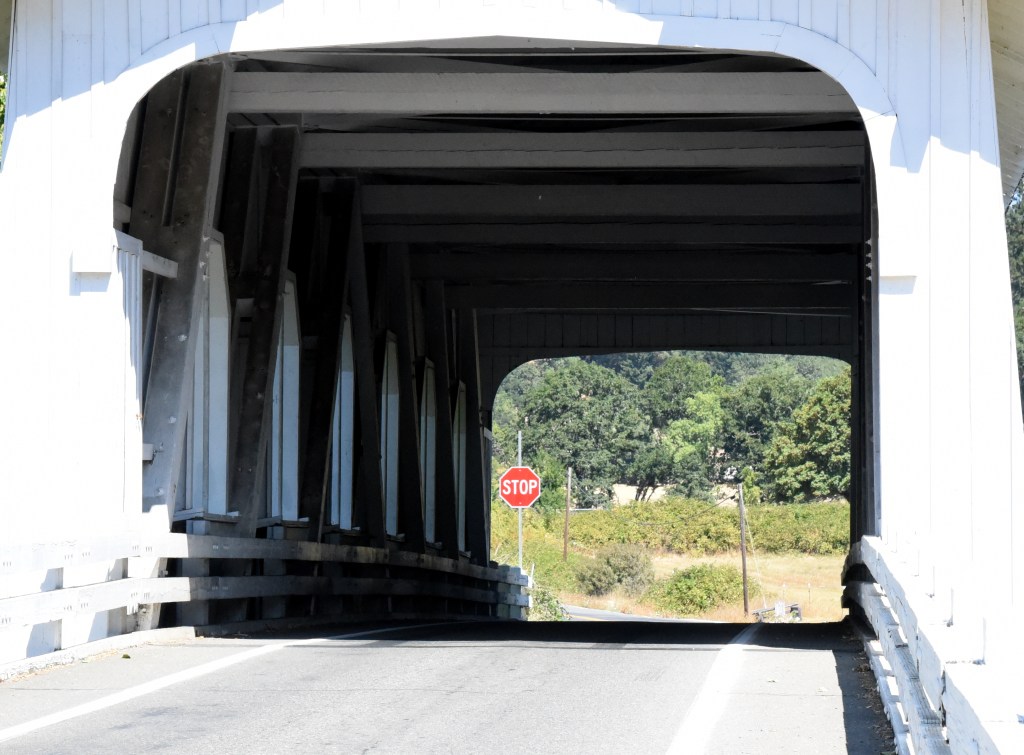














 Toley Avenue, a road off the main street that comprises Preston Road.

 Learning from Dogs