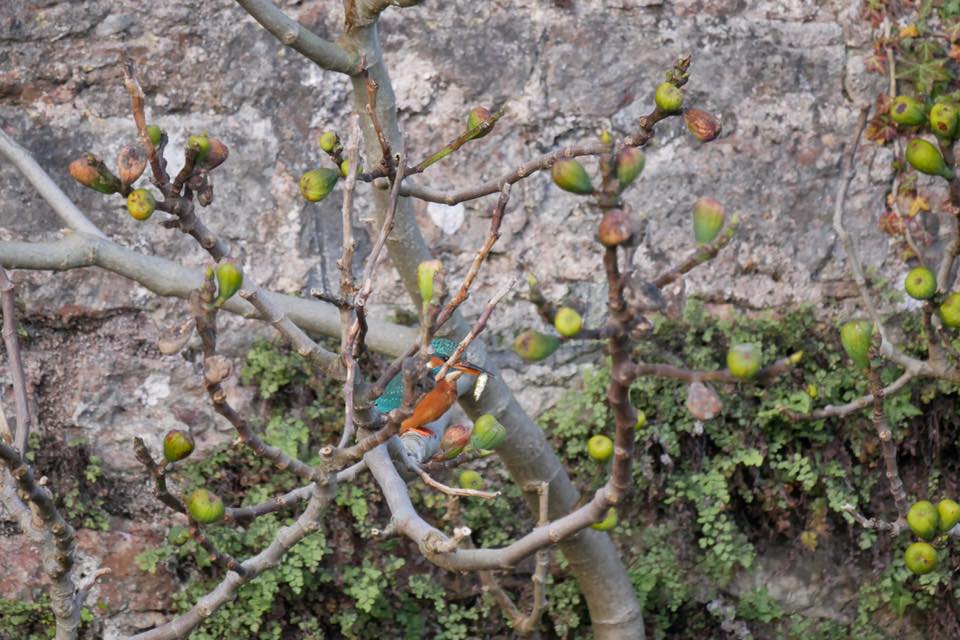
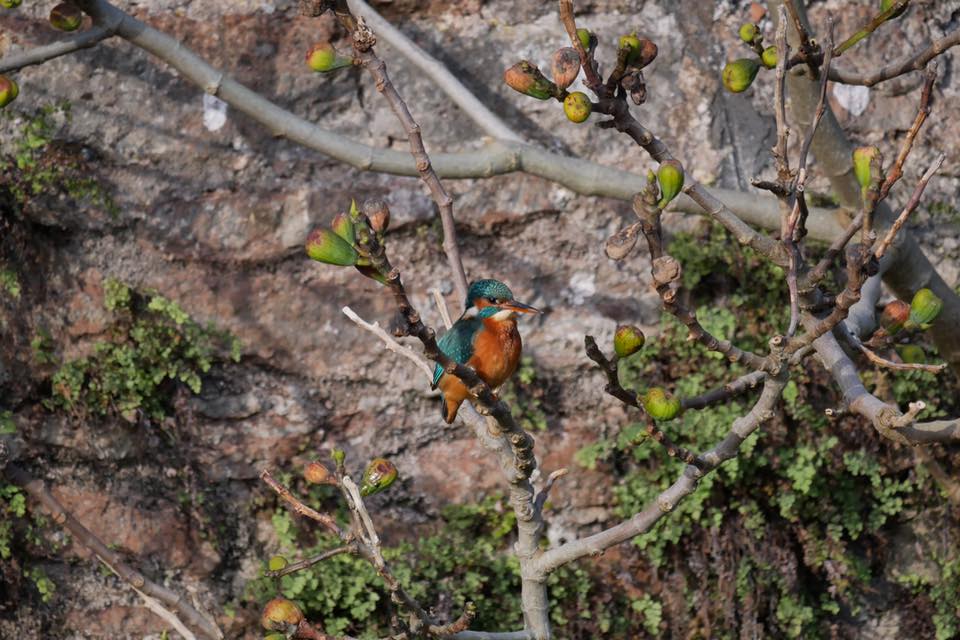
Kingfishers have stout bodies, very short tails, short, rounded wings, large heads and long, dagger-like bills.
Their feet are very small, with the two outer toes partly fused together. They nest in holes tunnelled into earth banks. There is only one UK species, but many more worldwide, most of which are dry-land birds rather than waterside ones like the UK kingfisher.
Alex and Lisa have put together a remarkable video
Yesterday, in came an email from my son, Alex, about an amazing starling murmuration at the Royal Society for the Protection of Birds (RSPB).
Lisa took the video and together they uploaded it to YouTube.
Enjoy!
Having watched the amazing video I then did a little bit of research. I came quickly across the science of murmuration and have included it below.
Murmuration refers to the phenomenon that results when hundreds, sometimes thousands, of starlings fly in swooping, intricately coordinated patterns through the sky.
Maybe you’ve seen a murmuration video before. But this one is especially beautiful. It was shot earlier this month in Wales, at Cosmeston Lakes in the Vale of Glamorgan, and posted on Facebook by the BBC Cymru Wales. (It’s not included, Ed.)
It’s all about science. Just how do the starlings manage to fly in such an amazingly coordinated way?
A few years ago, George F. Young and his colleagues investigated starlings’ “remarkable ability to maintain cohesion as a group in highly uncertain environments and with limited, noisy information” — a nice description of what goes on in a murmuration.
Going in, Young et al. already knew that starlings pay attention to a fixed number of their neighbors in the flock, regardless of flock density — seven, to be exact. Their new contribution was to figure out that “when uncertainty in sensing is present, interacting with six or seven neighbors optimizes the balance between group cohesiveness and individual effort.”
Young et al. analyzed still shots from videos of starlings in flight (flock size ranging from 440 to 2,600), then used a highly mathematical approach and systems theory to reach their conclusion. Focusing on the birds’ ability to manage uncertainty while also maintaining consensus, they discovered that birds accomplish this (with the least effort) when each bird attends to seven neighbors.
There’s a science background to being healthy and happy.
Especially as one gets older.
It’s Jean’s birthday today and we are grateful for our lot. I’m 75 now and Jean is a few years younger. But more importantly we are so grateful to have met and, subsequently, fallen in love.
As well as Jean’s love in return we have our gorgeous dogs as well (not to count in addition the two horses, the two parakeets and the cat) and they reinforce the feelings of happiness that surround us.
All of which is an introduction to an article on The Conversation that caught my eye yesterday.
I’m afraid it doesn’t mention dogs but then again we dog owners know for sure how they benefit us humans.
ooOOoo
Are you as grateful as you deserve to be?
November 26, 2019
By Richard Gunderman
Chancellor’s Professor of Medicine, Liberal Arts, and Philanthropy, Indiana University
Gratitude is not only a great feeling but a healthy one. Aaron Amat/Shutterstock.com
As a physician, I have helped to care for many patients and families whose lives have been turned upside down by serious illnesses and injuries. In the throes of such catastrophes, it can be difficult to find cause for anything but lament. Yet Thanksgiving presents us with an opportunity to develop one of the healthiest, most life-affirming and convivial of all habits – that of counting and rejoicing in our blessings.
Gratitude’s benefits
Research shows that grateful people tend to be healthy and happy. They exhibit lower levels of stress and depression, cope better with adversity and sleep better. They tend to be happier and more satisfied with life. Even their partners tend to be more content with their relationships.
Perhaps when we are more focused on the good things we enjoy in life, we have more to live for and tend to take better care of ourselves and each other.
When researchers asked people to reflect on the past week and write about things that either irritated them or about which they felt grateful, those tasked with recalling good things were more optimistic, felt better about their lives and actually visited their physicians less.
It is no surprise that receiving thanks makes people happier, but so does expressing gratitude. An experiment that asked participants to write and deliver thank-you notes found large increases in reported levels of happiness, a benefit that lasted for an entire month.
Philosophical roots
Giving thanks is important for our psyches and our souls. Love You Stock/Shutterstock.com
One of the greatest minds in Western history, the Greek philosopher Aristotle, argued that we become what we habitually do. By changing our habits, we can become more thankful human beings.
If we spend our days ruminating on all that has gone poorly and how dark the prospects for the future appear, we can think ourselves into misery and resentment.
But we can also mold ourselves into the kind of people who seek out, recognize and celebrate all that we have to be grateful for.
This is not to say that anyone should become a Pollyanna, ceaselessly reciting the mantra from Voltaire’s “Candide,” “All is for the best in this, the best of all possible worlds.” There are injustices to be righted and wounds to be healed, and ignoring them would represent a lapse of moral responsibility.
But reasons to make the world a better place should never blind us to the many good things it already affords. How can we be compassionate and generous if we are fixated on deficiency? This explains why the great Roman statesman Cicero called gratitude not only the greatest of virtues but the “parent” of them all.
Religious roots
Gratitude is deeply embedded in many religious traditions. In Judaism, the first words of the morning prayer could be translated, “I thank you.” Another saying addresses the question, “Who is rich?” with this answer: “Those who rejoice in what they have.”
From a Christian perspective, too, gratitude and thanksgiving are vital. Before Jesus shares his last meal with his disciples, he gives thanks. So vital a part of Christian life is gratitude that author and critic G.K. Chesterton calls it “the highest form of thought.”
Gratitude also plays an essential role in Islam. The 55th chapter of the Quran enumerates all the things human beings have to be grateful for – the Sun, Moon, clouds, rain, air, grass, animals, plants, rivers and oceans – and then asks, “How can a sensible person be anything but thankful to God?”
In his 1994 book, “A Whole New Life,” the Duke University English professor Reynolds Price describes how his battle with a spinal cord tumor that left him partially paralyzed also taught him a great deal about what it means to really live.
After surgery, Price describes “a kind of stunned beatitude.” With time, though diminished in many ways by his tumor and its treatment, he learns to pay closer attention to the world around him and those who populate it.
Reflecting on the change in his writing, Price notes that his books differ in many ways from those he penned as a younger man. Even his handwriting, he says, “looks very little like that of the man he was at the time of his diagnosis.”
“Cranky as it is, it’s taller, more legible, and with more air and stride. And it comes down the arm of a grateful man.”
A brush with death can open our eyes. Some of us emerge with a deepened appreciation for the preciousness of each day, a clearer sense of our real priorities and a renewed commitment to celebrating life. In short, we can become more grateful, and more alive, than ever.
Practicing gratitude
Good conversation, good friends and connections – not material possessions – bring great joy. Jacob Lund/Shutterstock.com
When it comes to practicing gratitude, one trap to avoid is locating happiness in things that make us feel better off – or simply better – than others. In my view, such thinking can foster envy and jealousy.
There are marvelous respects in which we are equally blessed – the same Sun shines down upon each of us, we all begin each day with the same 24 hours, and each of us enjoys the free use of one of the most complex and powerful resources in the universe, the human brain.
Much in our culture seems aimed to cultivate an attitude of deficiency – for example, most ads aim to make us think that to find happiness we must buy something. Yet most of the best things in life – the beauty of nature, conversation and love – are free.
There are many ways to cultivate a disposition of thankfulness. One is to make a habit of giving thanks regularly – at the beginning of the day, at meals and the like, and at day’s end.
Likewise, holidays, weeks, seasons and years can be punctuated with thanks – grateful prayer or meditation, writing thank-you notes, keeping a gratitude journal and consciously seeking out the blessings in situations as they arise.
Gratitude can become a way of life, and by developing the simple habit of counting our blessings, we can enhance the degree to which we are truly blessed.
That reference to Reynolds Price and his challenges make one think. I have been fortunate that nothing really dreadful has happened to me; apart from my father’s death when I had just turned 12. I’m getting a little hazy in terms of certain memories but that’s an old age thing rather than an illness. But to go through what he did; I just don’t know the person that I am, in terms of how I wold react to that.
But to the general tone of the article, I would hope that I can get better and better.
For it’s splendid to cultivate that disposition.
One is to make a habit of giving thanks regularly – at the beginning of the day, at meals and the like, and at day’s end.
As I write this post, yesterday afternoon, it has been snowing for some hours at Hugo Road (ZIP 97532). In the anticipation that we might be snowed in at 8am we drove the short distance to our local Dollar General store to stock up on dog food and other bits and pieces.
So this story from the Daily Dodo seems really apt. I hope you enjoy it.
ooOOoo
Stray Dog Found Curled Up In Snow Keeping Orphaned Kittens Warm
Photo Credit: Pet and Wildlife Rescue
Last weekend, while driving on a freezing cold night in Ontario, Canada, a Good Samaritan spotted something that made her stop.
There, curled up on a snowy roadside, was a shivering stray dog.
But she wasn’t alone.
Though the dog could have found a safer place to pass the night, she wasn’t just thinking of herself.
Photo Credit: Pet and Wildlife Rescue
A closer look revealed the kind pup had wrapped herself around five orphaned kittens, whom she was cuddling to keep warm in the biting temperatures.
The Good Samaritan, in turn, saved them all from the freezing night by taking them to the Pet and Wildlife Rescue shelter. But by then, an incredible bond between the dog and kittens had already been formed.
For rescue staff, learning the circumstances of this case made one thing clear: the pup had saved the kittens’ lives.
“It’s truly heartwarming!” a shelter spokesperson told The Dodo. “It had been a very cold night so these kittens would have had a very hard time surviving.”
Photo Credit: Pet and Wildlife Rescue
The kittens are now safe, but require treatment for flea and worm infestations. Meanwhile, the sweet stray dog who saved them insists on overseeing their progress with regular visits — much like a proud mother.
It’s still unclear where the dog or kittens came from originally, or if they knew each other prior to that night. Pet and Wildlife Rescue is hoping an owner will come forward to claim them, but if not they’ll be put up for adoption.
Thanks to that brave pup, however, a sad ending for the kittens was transformed into a happy one.
“Our staff sees many difficult situations on a daily basis and stories like this one make every heartache worth it,” the shelter said.
ooOOoo
There may be someone who wants to follow this up by supporting the Pet and Wildlife Rescue in Ontario. So here is the website.
This is a republication of a recent article that appeared on The Conversation site. In a sense, it has nothing to do with dogs. Yet in another sense, it does!
You be the judge.
Meanwhile, I have finished the draft of my book, have printed it out and now have the gargantuan task of reading and editing it before it goes to an independent proof reader. All 56,657 words.
Oh well, if you can’t take a joke, you shouldn’t have joined!
ooOOoo
Could consciousness all come down to the way things vibrate?
Affiliate Guest in Psychology, University of California, Santa Barbara
Why is my awareness here, while yours is over there? Why is the universe split in two for each of us, into a subject and an infinity of objects? How is each of us our own center of experience, receiving information about the rest of the world out there? Why are some things conscious and others apparently not? Is a rat conscious? A gnat? A bacterium?
These questions are all aspects of the ancient “mind-body problem,” which asks, essentially: What is the relationship between mind and matter? It’s resisted a generally satisfying conclusion for thousands of years.
Chalmers thought the mind-body problem should be called “hard” in comparison to what, with tongue in cheek, he called the “easy” problems of neuroscience: How do neurons and the brain work at the physical level? Of course they’re not actually easy at all. But his point was that they’re relatively easy compared to the truly difficult problem of explaining how consciousness relates to matter.
Over the last decade, my colleague, University of California, Santa Barbara psychology professor Jonathan Schooler and I have developed what we call a “resonance theory of consciousness.” We suggest that resonance – another word for synchronized vibrations – is at the heart of not only human consciousness but also animal consciousness and of physical reality more generally. It sounds like something the hippies might have dreamed up – it’s all vibrations, man! – but stick with me.
How do things in nature – like flashing fireflies – spontaneously synchronize? Suzanne Tucker/Shutterstock.com
All about the vibrations
All things in our universe are constantly in motion, vibrating. Even objects that appear to be stationary are in fact vibrating, oscillating, resonating, at various frequencies. Resonance is a type of motion, characterized by oscillation between two states. And ultimately all matter is just vibrations of various underlying fields. As such, at every scale, all of nature vibrates.
Something interesting things happen when different vibrating things come together: They will often start, after a little while, to vibrate together at the same frequency. They “sync up,” sometimes in ways that can seem mysterious. This is described as the phenomenon of spontaneous self-organization.
When fireflies of certain species come together in large gatherings, they start flashing in sync, in ways that can still seem a little mystifying.
Lasers are produced when photons of the same power and frequency sync up.
The moon’s rotation is exactly synced with its orbit around the Earth such that we always see the same face.
Examining resonance leads to potentially deep insights about the nature of consciousness and about the universe more generally.
External electrodes can record a brain’s activity. vasara/Shutterstock.com
Sync inside your skull
Neuroscientists have identified sync in their research, too. Large-scale neuron firing occurs in human brains at measurable frequencies, with mammalian consciousness thought to be commonly associated with various kinds of neuronal sync.
Fries focuses on gamma, beta and theta waves. These labels refer to the speed of electrical oscillations in the brain, measured by electrodes placed on the outside of the skull. Groups of neurons produce these oscillations as they use electrochemical impulses to communicate with each other. It’s the speed and voltage of these signals that, when averaged, produce EEG waves that can be measured at signature cycles per second.
Each type of synchronized activity is associated with certain types of brain function. artellia/Shutterstock.com
Gamma waves are associated with large-scale coordinated activities like perception, meditation or focused consciousness; beta with maximum brain activity or arousal; and theta with relaxation or daydreaming. These three wave types work together to produce, or at least facilitate, various types of human consciousness, according to Fries. But the exact relationship between electrical brain waves and consciousness is still very much up for debate.
Fries calls his concept “communication through coherence.” For him, it’s all about neuronal synchronization. Synchronization, in terms of shared electrical oscillation rates, allows for smooth communication between neurons and groups of neurons. Without this kind of synchronized coherence, inputs arrive at random phases of the neuron excitability cycle and are ineffective, or at least much less effective, in communication.
A resonance theory of consciousness
Our resonance theory builds upon the work of Fries and many others, with a broader approach that can help to explain not only human and mammalian consciousness, but also consciousness more broadly.
Based on the observed behavior of the entities that surround us, from electrons to atoms to molecules, to bacteria to mice, bats, rats, and on, we suggest that all things may be viewed as at least a little conscious. This sounds strange at first blush, but “panpsychism” – the view that all matter has some associated consciousness – is an increasingly accepted position with respect to the nature of consciousness.
The panpsychist argues that consciousness did not emerge at some point during evolution. Rather, it’s always associated with matter and vice versa – they’re two sides of the same coin. But the large majority of the mind associated with the various types of matter in our universe is extremely rudimentary. An electron or an atom, for example, enjoys just a tiny amount of consciousness. But as matter becomes more interconnected and rich, so does the mind, and vice versa, according to this way of thinking.
Biological organisms can quickly exchange information through various biophysical pathways, both electrical and electrochemical. Non-biological structures can only exchange information internally using heat/thermal pathways – much slower and far less rich in information in comparison. Living things leverage their speedier information flows into larger-scale consciousness than what would occur in similar-size things like boulders or piles of sand, for example. There’s much greater internal connection and thus far more “going on” in biological structures than in a boulder or a pile of sand.
Under our approach, boulders and piles of sand are “mere aggregates,” just collections of highly rudimentary conscious entities at the atomic or molecular level only. That’s in contrast to what happens in biological life forms where the combinations of these micro-conscious entities together create a higher level macro-conscious entity. For us, this combination process is the hallmark of biological life.
The central thesis of our approach is this: the particular linkages that allow for large-scale consciousness – like those humans and other mammals enjoy – result from a shared resonance among many smaller constituents. The speed of the resonant waves that are present is the limiting factor that determines the size of each conscious entity in each moment.
As a particular shared resonance expands to more and more constituents, the new conscious entity that results from this resonance and combination grows larger and more complex. So the shared resonance in a human brain that achieves gamma synchrony, for example, includes a far larger number of neurons and neuronal connections than is the case for beta or theta rhythms alone.
What about larger inter-organism resonance like the cloud of fireflies with their little lights flashing in sync? Researchers think their bioluminescent resonance arises due to internal biological oscillators that automatically result in each firefly syncing up with its neighbors.
Is this group of fireflies enjoying a higher level of group consciousness? Probably not, since we can explain the phenomenon without recourse to any intelligence or consciousness. But in biological structures with the right kind of information pathways and processing power, these tendencies toward self-organization can and often do produce larger-scale conscious entities.
Our resonance theory of consciousness attempts to provide a unified framework that includes neuroscience, as well as more fundamental questions of neurobiology and biophysics, and also the philosophy of mind. It gets to the heart of the differences that matter when it comes to consciousness and the evolution of physical systems.
It is all about vibrations, but it’s also about the type of vibrations and, most importantly, about shared vibrations.
ooOOoo
This may require more than one read. Because, if you are interested in the subject I’m sure you will wish to read it again.
But the underlying premise is that, as was said earlier,: “all matter is just vibrations of various underlying fields.”
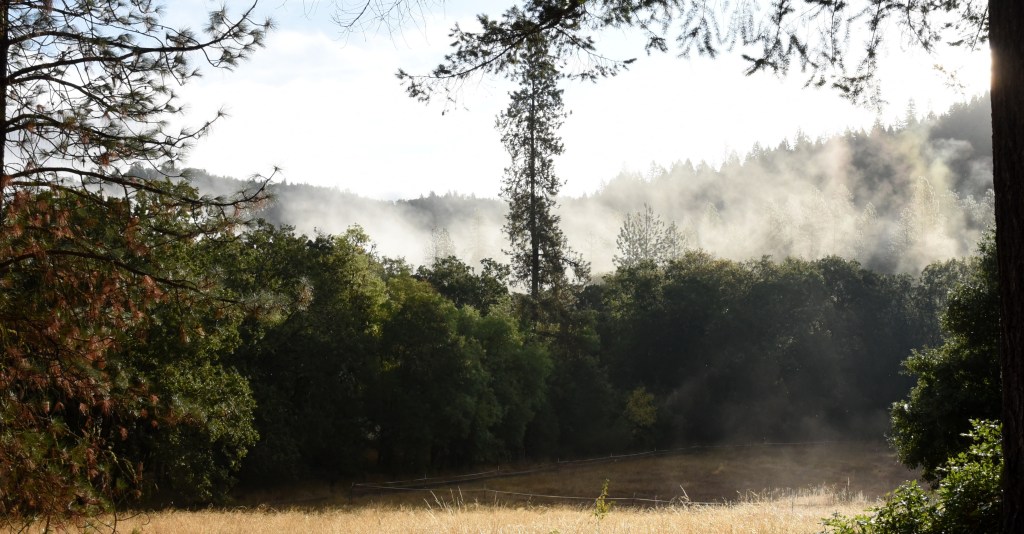
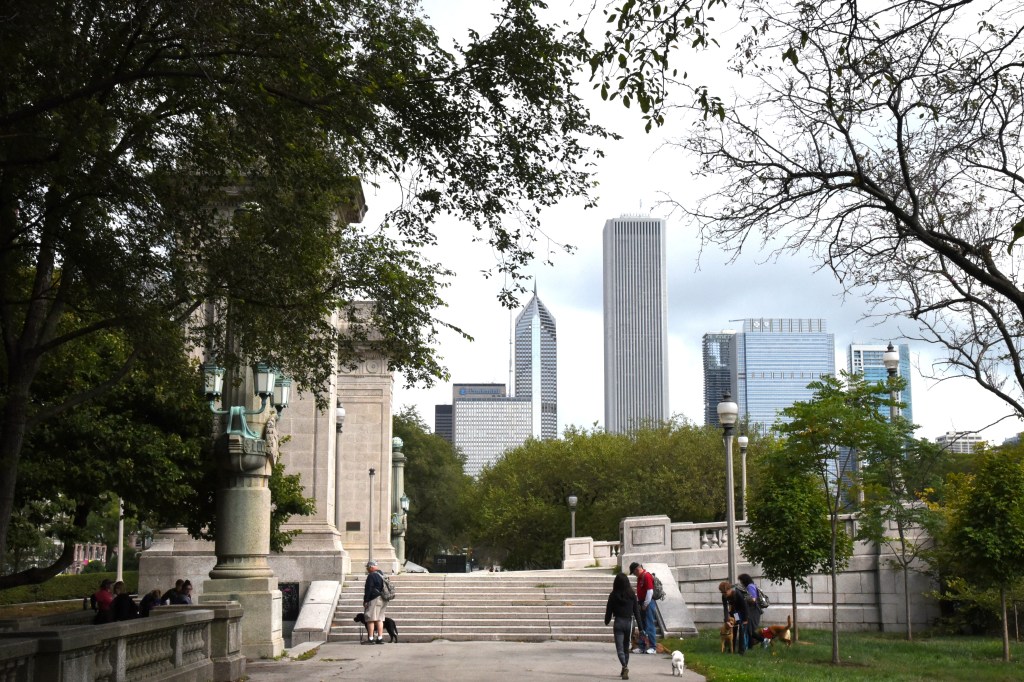
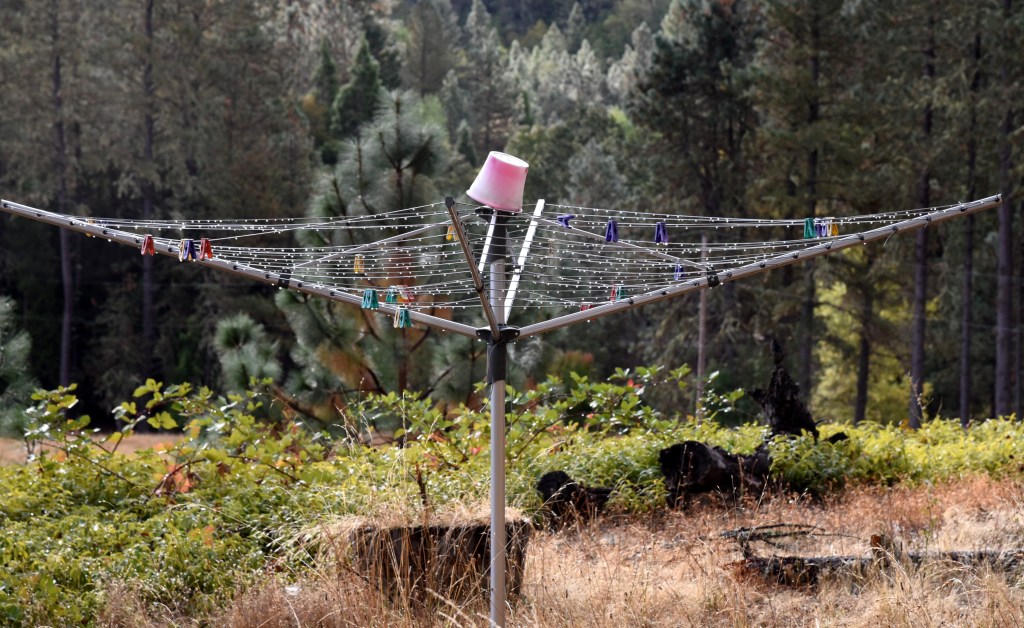
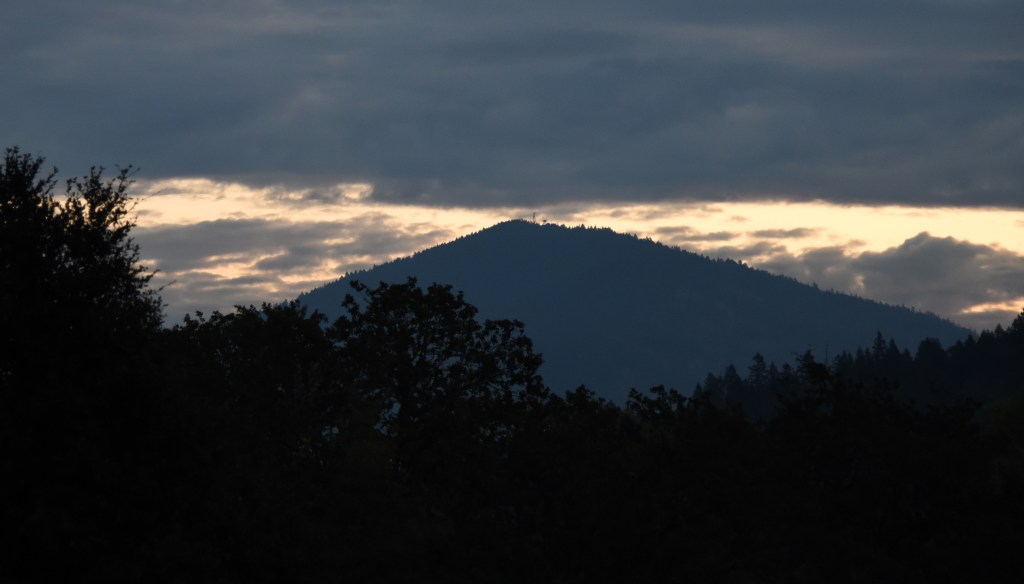
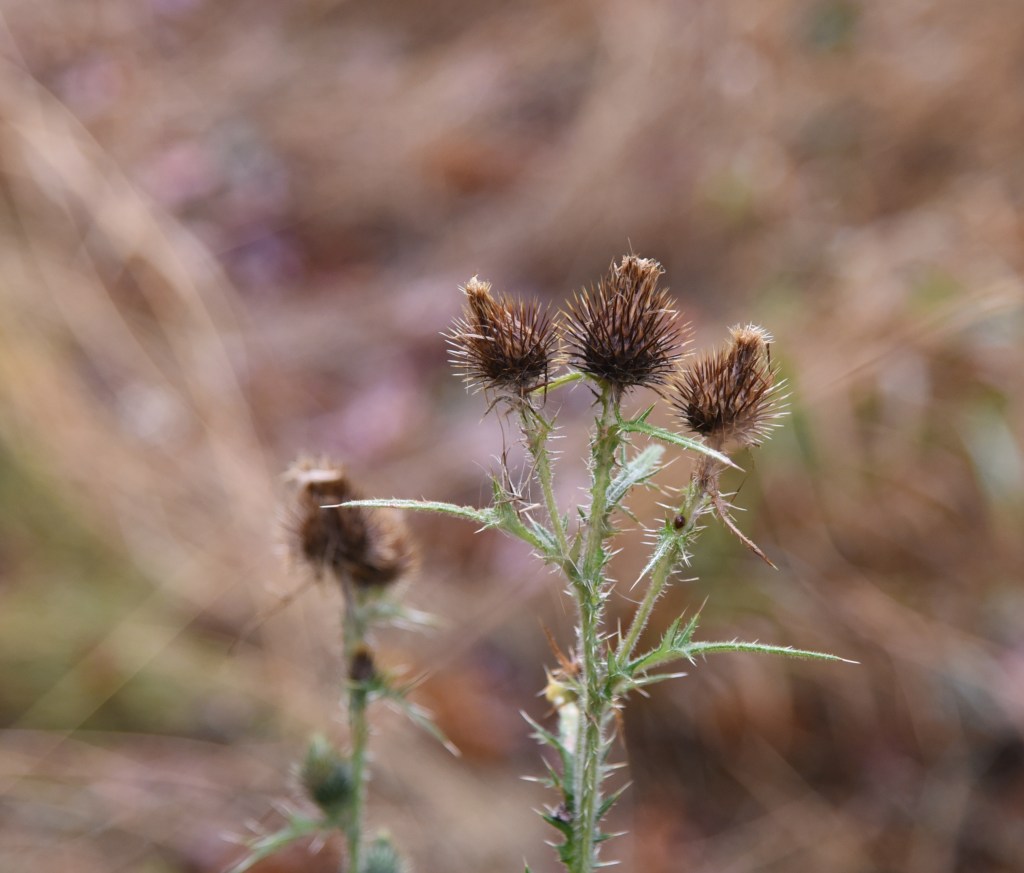
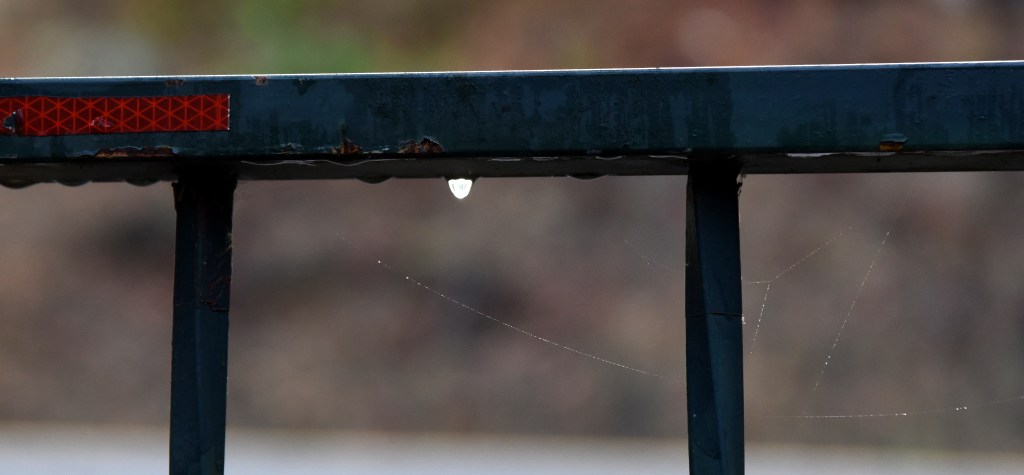
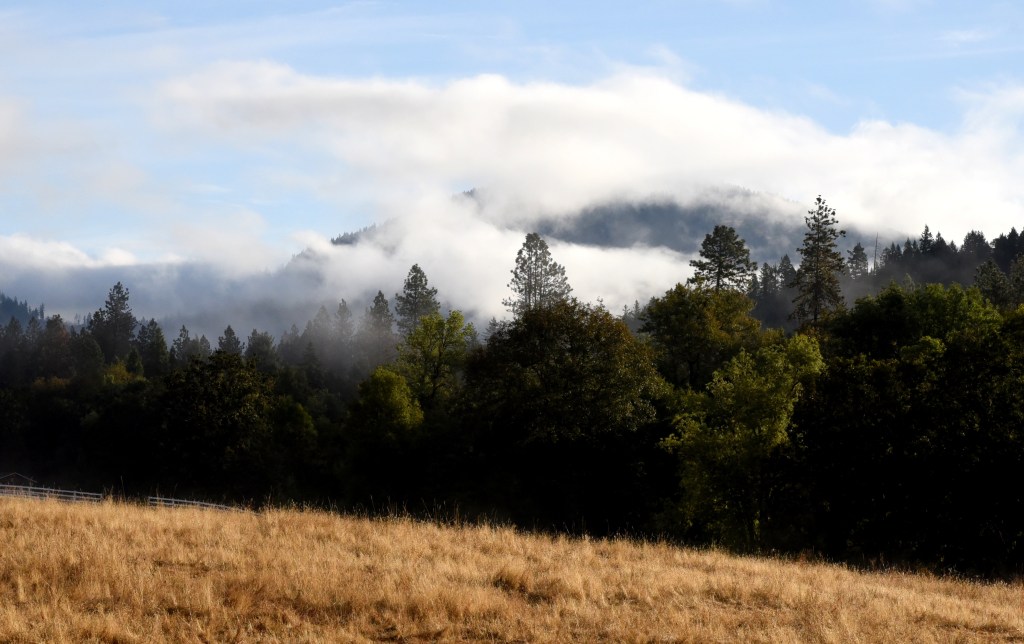
The first weekend of this month saw Jeannie and me in Chicago. Then back home in Merlin, earlier this week, half-an-inch of rain fell to break a long spell of dry weather. I went out last Thursday morning to capture some sights of the first misty morning of Autumn. The contrast between our rural home and Chicago was dramatic; to say the least! Enjoy!
(P.S. I sensed there was no need to describe each photograph in terms of which one was taken in Merlin or in Chicago!)
On Monday when Jeannie and I went to our regular session at Club Northwest, Jean to her Rock Steady class, and me to spend 45 minutes with Austin Raymond, one of the fitness coaches, he and I were speaking of health in general and veganism in particular. Austin, Jean and I are vegans.
Austin mentioned had we watched the film The Game Changers on Netflix? I replied that we had not but we were subscribers to Netflix and would watch it in the evening.
Well what an incredible film! I mean really incredible!
P.S. If you are a Netflix subscriber then you may watch it without any fuss.
(So I taken time out from book writing to publish this post; I’m over 9,000 words already written in November!)
Here’s a YouTube trailer to the film:
Have you ever seen an ox eating meat!
But apart from the solid science that we never were meat-eaters were the facts about illness being so much prevalent in those eating meat compared to vegans. That was just one aspect of the film that grabbed our attention! There were many more.
Back to fundamentals!
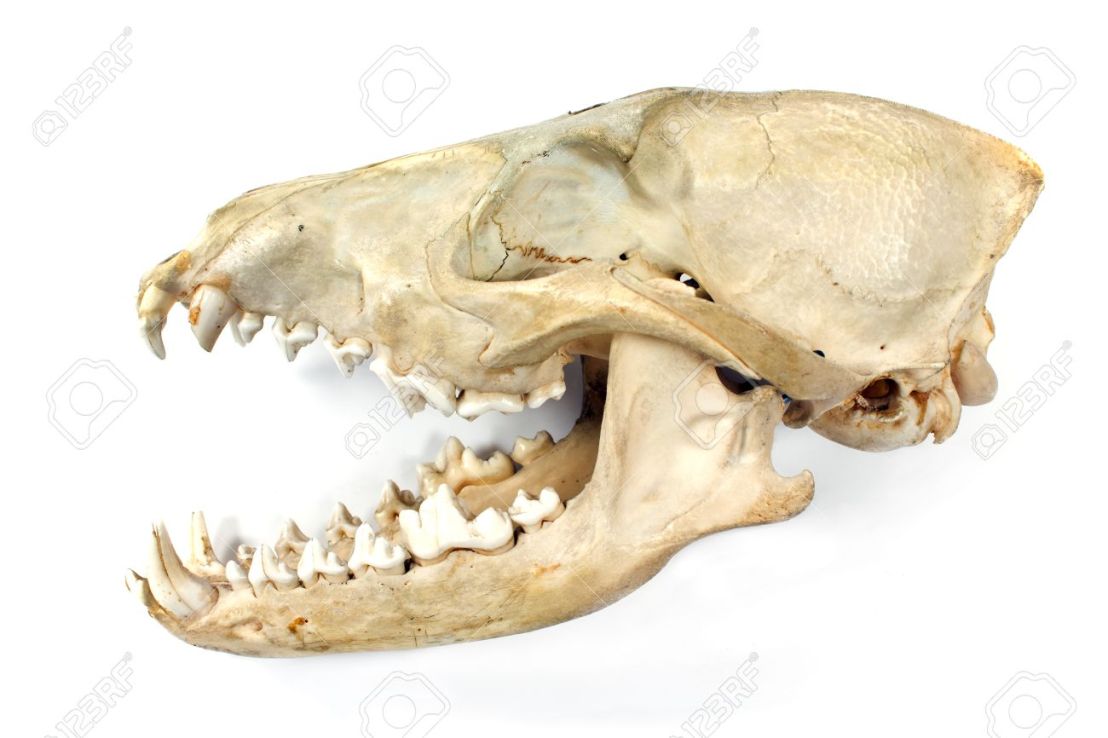
Let’s examine one fact, the jaw shape.
Here’s the jaw of a dog.
Dog skull and jaw isolated on white
and here’s another:
That is a mouth that has evolved to tear meat from an animal.
And here’s the jaw of a human:
and the picture of the whole skull.
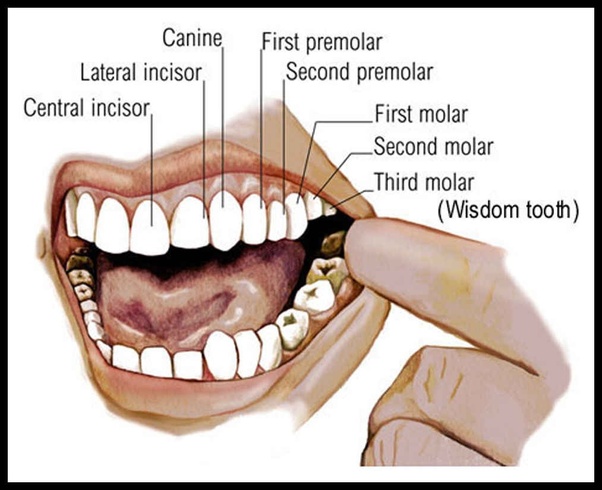
Notice that the teeth have always been adapted to eat fruit and vegetables.
And that’s before we think how much land has been converted from natural land and forest to grazing land for cattle and sheep!
Now I don’t know how long the full documentary will remain for free on YouTube but here it is:
I am somewhat embarrassed to say that I am still working on Book Two. As I announced in November, 2017!
However, I decided to type up the comprehensive notes that I took during 1970 when after touring the outback of Australia I then spent a few weeks travelling through Asia and Japan before boarding the Trans-Siberian Express as a way of coming to Helsinki in order the file my stories.
I also have changed the name. From The Dog and I to A Letter to a Grandson. Simply because my grandson wasn’t yet born when I left the UK to arrive, via Mexico, in the USA. Morten, that being my grandson’s name, when he is of the age where he is curious about his grandfather, will hopefully want the full story.
The problem with coming up to the age of 75, and aware that I am close to the average life expectancy in the US, is that one increasingly worries about stuff. Such as it seems like the world is becoming more unsettled. But then it is put down to age!
But this article does imply that it is a more unsettled world and we should take notice. Republished with permission.
ooOOoo
5 tips for surviving in an increasingly uncertain world
What does the future hold – and how will you handle what comes next? Svetlana Lukienko/Shutterstock.com
The U.S. presidential impeachment inquiry has added another layer of uncertainty to an already unstable situation that includes political polarization and the effects of climate change.
As a clinical psychologist in the Washington, D.C. area, I hear people report being stressed, anxious, worried, depressed and angry. Indeed, an American Psychological Association 2017 survey found that 63% of Americans were stressed by “the future of our nation,” and 57% by the “current political climate.”
Humans dislike uncertainty in most situations, but some deal with it better than others. Numerous studies link high intolerance of uncertainty to anxiety and anxiety disorders, obsessive-compulsive disorder, depression, PTSD and eating disorders.
While no one person can reduce the uncertainty of the current political situation, you can learn to decrease intolerance of uncertainty by implementing these scientifically sound strategies.
When unsure how to best proceed with a work assignment, you might either immediately seek help, over-research or procrastinate. As you prepare for the day, uncertainty about the weather or traffic is quickly short-circuited by checking a phone. Similarly, inquiries about family or friends’ whereabouts or emotions can be instantly gratified by texting or checking social media.
Tolerance for uncertainty is like a muscle that weakens if not used. So, work that muscle next time you face uncertainty.
Start gradually: Resist the urge to reflexively check your GPS the next time you are lost and aren’t pressured for time. Or go to a concert without Googling the band beforehand. Next, try to sit with the feelings of uncertainty for a while before you pepper your teenager with texts when he is running late. Over time, the discomfort will diminish.
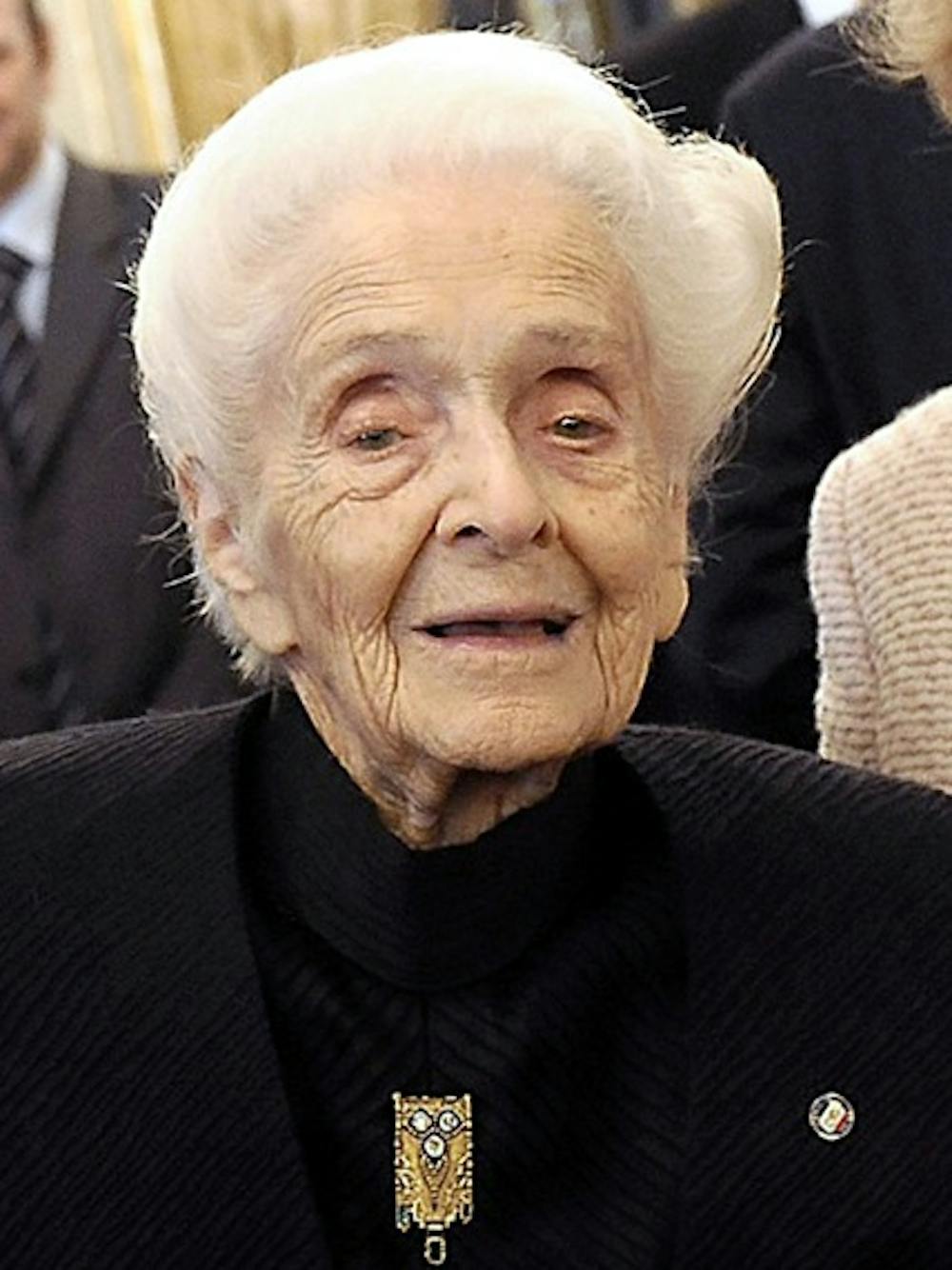
Rita Levi-Montalcini was a promising young Jewish scientist when fascists came to power in Italy and she had to go into hiding. As World War II was raging, she set up a secret lab in her parents’ bedroom, studying cell growth. She would later say that the meaning that she derived from her work helped her to deal with the evil outside and with the ultimate uncertainty of whether she would be discovered.
Focusing on what can transcend finite human existence – whether it is religion, spirituality or dedication to a cause – can decrease uncertainty-driven worry and depression.
3. Don’t underestimate your coping ability
You might hate uncertainty because you fear how you would fare if things went badly. And you might distrust your ability to cope with the negative events that life throws your way.
It turns out that humans are generally resilient, even in the face of very stressful or traumatic events. If a feared outcome materializes, chances are you will deal with it better than you could now imagine. Remember that the next time uncertainty rears its head.
4. Bolster resilience by increasing self-care
You have probably heard it many times by now: Sleep well, exercise and prioritize social connections if you want to have a long and happy life.
Possibly the best tool for coping with uncertainty is making sure that you have an active and meaningful social life. Loneliness fundamentally undermines a person’s sense of safety
and makes it very hard to deal with the unpredictable nature of life.
In spite of civilization’s great progress, the fantasy of humankind’s absolute control over its environment and fate is still just that – a fantasy. So, I say to embrace the reality of uncertainty and enjoy the ride.



























 Learning from Dogs
