In this month’s Science magazine, on page 1213, there is a short piece under the heading of In Other Journals.
I share it with you.
ooOOoo
Canine Behavior Friends from the start
By Sacha Vignieri.
Dogs, unlike wolves, are highly responsive to human voice, gestures, and eye contact. CREDIT: ISTOCK.COM/HNIJJAR007
The closest relative to dogs, “man’s best friend,” is the wolf, a wily predator that generally avoids human interaction. For decades, researchers and dog owners have wondered how the leap to domestication occurred.
The main hypothesis invoked very early selection for wolves that “liked”—or least tolerated—humans, and the connection strengthened from there.
However, there is still some debate about whether the degree to which dogs interact and communicate with humans is a learned trait.
Two recent studies appear to close the book on this learning hypothesis. Bray et al. looked at about 400 puppies and found that at this young age and without much human interaction, they were adept at following human gestures and positively responded to high-pitched “puppy talk.” Further, there was variation in these responses with an association between relatedness and social communication skills, which supports a genetic driver.
Salomons et al. compared dog and wolf puppies and found no difference in general cognitive responses, but much greater responsiveness to human gestures and eye contact, in dog puppies. Importantly, this happened even though the dog pups had received less actual human interaction than did the wolf pups.
These studies confirm that dogs’ interest in communication with humans is an evolved trait unique to their lineage.
Curr. Biol.31, 3132, 3137 (2021).
ooOOoo
That is fascinating. Dogs have evolved this trait on their own, so to speak. It further underlines the precious nature of the relationship between dogs and humans.
I wasn’t going to publish a post for today but then yesterday I read this article on The Conversation and wanted to share it with you. In fact it shares much of what I posted on the 1st, The Big Question. Because time and infinity are beautifully connected.
Imagine time running backwards. People would grow younger instead of older and, after a long life of gradual rejuvenation – unlearning everything they know – they would end as a twinkle in their parents’ eyes. That’s time as represented in a novel by science fiction writer Philip K Dick but, surprisingly, time’s direction is also an issue that cosmologists are grappling with.
While we take for granted that time has a given direction, physicists don’t: most natural laws are “time reversible” which means they would work just as well if time was defined as running backwards. So why does time always move forward? And will it always do so?
Does time have a beginning?
Any universal concept of time must ultimately be based on the evolution of the cosmos itself. When you look up at the universe you’re seeing events that happened in the past – it takes light time to reach us. In fact, even the simplest observation can help us understand cosmological time: for example the fact that the night sky is dark. If the universe had an infinite past and was infinite in extent, the night sky would be completely bright – filled with the light from an infinite number of stars in a cosmos that had always existed.
For a long time scientists, including Albert Einstein, thought that the universe was static and infinite. Observations have since shown that it is in fact expanding, and at an accelerating rate. This means that it must have originated from a more compact state that we call the Big Bang, implying that time does have a beginning. In fact, if we look for light that is old enough we can even see the relic radiation from Big Bang – the cosmic microwave background. Realising this was a first step in determining the age of the universe (see below).
But there is a snag, Einstein’s special theory of relativity, shows that time is … relative: the faster you move relative to me, the slower time will pass for you relative to my perception of time. So in our universe of expanding galaxies, spinning stars and swirling planets, experiences of time vary: everything’s past, present and future is relative.
So is there a universal time that we could all agree on?
The universe’s timeline. Design Alex Mittelmann, Coldcreation/wikimedia, CC BY-SA
It turns out that because the universe is on average the same everywhere, and on average looks the same in every direction, there does exist a “cosmic time”. To measure it, all we have to do is measure the properties of the cosmic microwave background. Cosmologists have used this to determine the age of the universe; its cosmic age. It turns out that the universe is 13.799 billion years old.
Time’s arrow
So we know time most likely started during the Big Bang. But there is one nagging question that remains: what exactly is time?
To unpack this question, we have to look at the basic properties of space and time. In the dimension of space, you can move forwards and backwards; commuters experience this everyday. But time is different, it has a direction, you always move forward, never in reverse. So why is the dimension of time irreversible? This is one of the major unsolved problems in physics.
To explain why time itself is irreversible, we need to find processes in nature that are also irreversible. One of the few such concepts in physics (and life!) is that things tend to become less “tidy” as time passes. We describe this using a physical property called entropy that encodes how ordered something is.
Imagine a box of gas in which all the particles were initially placed in one corner (an ordered state). Over time they would naturally seek to fill the entire box (a disordered state) – and to put the particles back into an ordered state would require energy. This is irreversible. It’s like cracking an egg to make an omelette – once it spreads out and fills the frying pan, it will never go back to being egg-shaped. It’s the same with the universe: as it evolves, the overall entropy increases.
It turns out entropy is a pretty good way to explain time’s arrow. And while it may seem like the universe is becoming more ordered rather than less – going from a wild sea of relatively uniformly spread out hot gas in its early stages to stars, planets, humans and articles about time – it’s nevertheless possible that it is increasing in disorder. That’s because the gravity associated with large masses may be pulling matter into seemingly ordered states – with the increase in disorder that we think must have taken place being somehow hidden away in the gravitational fields. So disorder could be increasing even though we don’t see it.
But given nature’s tendency to prefer disorder, why did the universe start off in such an ordered state in the first place? This is still considered a mystery. Some researchers argue that the Big Bang may not even have been the beginning, there may in fact be “parallel universes” where time runs in different directions.
Will time end?
Time had a beginning but whether it will have an end depends on the nature of the dark energy that is causing it to expand at an accelerating rate. The rate of this expansion may eventually tear the universe apart, forcing it to end in a Big Rip; alternatively dark energy may decay, reversing the Big Bang and ending the Universe in a Big Crunch; or the Universe may simply expand forever.
But would any of these future scenarios end time? Well, according to the strange rules of quantum mechanics, tiny random particles can momentarily pop out of a vacuum – something seen constantly in particle physics experiments. Some have argued that dark energy could cause such “quantum fluctuations” giving rise to a new Big Bang, ending our time line and starting a new one. While this is extremely speculative and highly unlikely, what we do know is that only when we understand dark energy will we know the fate of the universe.
So what is the most likely outcome? Only time will tell.
ooOOoo
Let me explain, in part, entropy. Because while I and many others sort of understand it, the principle behind entropy is much more detailed.
It is explained pretty well on WikiPedia, from which I reproduce the first paragraph.
This documentary reveals the unknown true stories of the working rescue dogs who saved lives at Ground Zero during the September 11, 2001 crisis and aftermath. Blind office worker Michael Hingson had to trust his seeing-eye dog Roselle on a treacherous descent of 78 flights of stairs to escape only moments before the towers collapsed. Lt. David Lim was called to duty with his dog Sirius. Genelle Guzman-McMillan was found by recovery dogs after being pinned under the rubble for 27 hours.
Once again, dogs come to the rescue of us humans, both physically and psychologically!
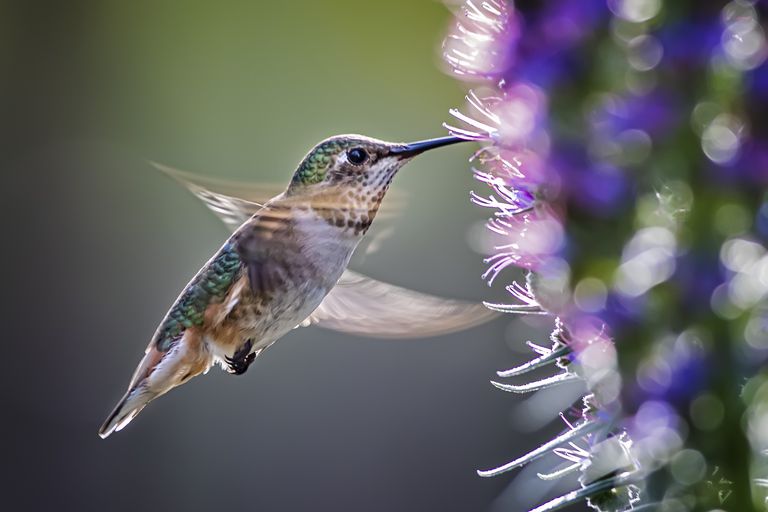
Glittery and graceful, hummingbirds hover and flit in midair as they gather nectar. But it’s not just their athleticism that helps them source food.
New research finds that these tiny birds have a great sense of smell that helps them detect potential danger when they are hunting for nectar.
“In the last 10-15 years, researchers have just now begun to realize the importance of smell in birds in general. For a very long time, it has been known that some birds, such as vultures, have a keen sense of smell and use it to find food,” study co-author Erin Wilson Rankin, an associate entomology professor at the University of California Riverside, tells Treehugger.
“However, the role of olfaction in most birds has only been recently recognized. That may be in part because many birds do not appear to use odor to help them locate food.”
In earlier studies, researchers were unable to show that hummingbirds preferred the smell of flowers that contained nectar. Also, flowers that have been pollinated by birds don’t have strong aromas, like those that have been pollinated by insects. That’s why scientists didn’t believe that birds had the ability to smell odors.
But with this new study, researchers believe otherwise.
For their experiment, Rankin and her colleagues observed more than 100 hummingbirds in the wild and in aviaries. The birds were given the choice between feeders that contained just sugar water, or sugar water with the addition of one of several chemicals with a scent that meant there was an insect present. The feeders otherwise looked exactly the same.
The scents included one deposited on flowers by European honeybees, a chemical produced by Argentine ants, and formic acid, which is released defensively by some formica ants and can injure birds and mammals.
“If a bird has any exposed skin on their legs, formic acid can hurt, and if they get it in their eyes, it isn’t pleasant,” Rankin said in a statement. “It’s also extremely volatile.”
In the experiments, the hummingbirds avoided the feeders with the sugar water that contained the ant-derived chemicals. They didn’t react to the sugar water with the honeybee scent, even though it’s been known to keep other bees from visiting flowers.
To make sure the bees weren’t avoiding the feeders due to a fear of a new smell, the researchers performed an extra test with sugar water and ethyl butyrate, which is a common additive in human food.
“It smells like Juicy Fruit gum, which is not a smell known in nature,” Rankin said. “I did not enjoy it. The birds did not care about it though and didn’t go out of their way to avoid it.”
For hummingbirds, recognizing smells isn’t just about finding a meal. They use their sense of smell much differently than vultures. These birds use the massive olfactory bulb in their brain like an “airborne bloodhound” to detect decaying carcasses.
Instead, hummingbirds use their excellent vision to locate flowers from which they collect nectar.
“Flowers, while specific species may be patchy in distribution, are much more common and numerous than the animal carcasses that vultures rely on. Thus, it is not surprising that vultures use their sense of smell to find carcasses which they then scavenge,” Rankin explains.
Hummingbirds use their ability to smell in a different way.
“Rather than using odors to find flowers, they will avoid flowers or feeders that have specific insect odors on them, such as formic acid or an Argentine ant aggregation pheromone. A hummingbird can use the chemical cues associated with ants to help them determine if the hummingbird should feed from there, or avoid it because it’s already occupied by ants, which can drink the nectar first or potentially harm them,” Rankin says.
“Ants are also very hard for hummingbirds to see until they are up close, so being able to smell them even when they are hidden deep in a flower could be advantageous. By avoiding defensive chemicals, hummingbirds can avoid interactions with ants and focus on feeding at safer food resources.”
ooOOoo
As long as I shall live I will never stop being amazed at what science discovers and then reports. And the photograph is gorgeous!
I heard yesterday from Erik Hoffner who is responsible for the Mongabay website that Bill McKibben is stepping up to the mark in wanting to take action regarding climate change.
I very quickly signed up and received the following email:
Dear Friend,
Many thanks for signing up to be a part—and we hope a big part—of Third Act.
My name is Bill McKibben, and I’m one of the volunteers helping to launch this effort for Americans 60 and older who want to build a fairer and more sustainable nation and planet.
We’re very much in the early days of this, and we need your help—especially if you’re good at the behind-the-scenes tasks like administration, development, and project management. If you’ve got some time to donate right now, write to us at info@thirdact.org.
And we will be back in touch as autumn rolls on, with some early campaigns focused on climate action and on ending voter suppression. As you can tell, we’re making this up as we go along. So it should be interesting, and also a little bumpy!
If you can assemble a sizable group of people, I’ll do my best to join you for a virtual talk to explain more about this idea. (And when the pandemic ends, we’ll try to do it in person!).
And if you can donate some small sum of money to help with the launch, here’s the place.
Thank you. This is our time to make some powerful change—we’ve got the skills, the resources, and the desire. So let’s try.
We’re over 60—the Baby Boomers and the Silent Generation. We have skills, we have resources, we have time—and many of us have kids and grandkids. We also have a history. In our early years we saw remarkable shifts in politics and society; now, in our latter years, we want to see those changes made real and lasting.
We were there for the first Earth Day, and we’ve been glad to see cleaner air and water—but now we know that the climate crisis presents an unparalleled threat. The heat is on and we must act quickly to turn it down.
We watched or participated in the civil rights movement—and now we know that its gains were not enough, and that gaps in wealth have only widened in our lifetimes. We’ve got to repair divisions instead of making them worse. We saw democracy expand—and now we’re seeing it contract, as voter suppression and gerrymandering threaten the core of the American experiment. We know that real change can only come if we all get to participate.
You are the key to this work. Maybe you’ve asked yourself: how can I give back on a scale that matters? The answer is, by working with others to build movements strong enough to matter. That’s why we hope you’ll join us.
Clearly I have signed up and I hope an enormous number of other people will do as well.
Because the time left is not very long and even me at the age of 76 fear for the near future if nothing is done urgently.
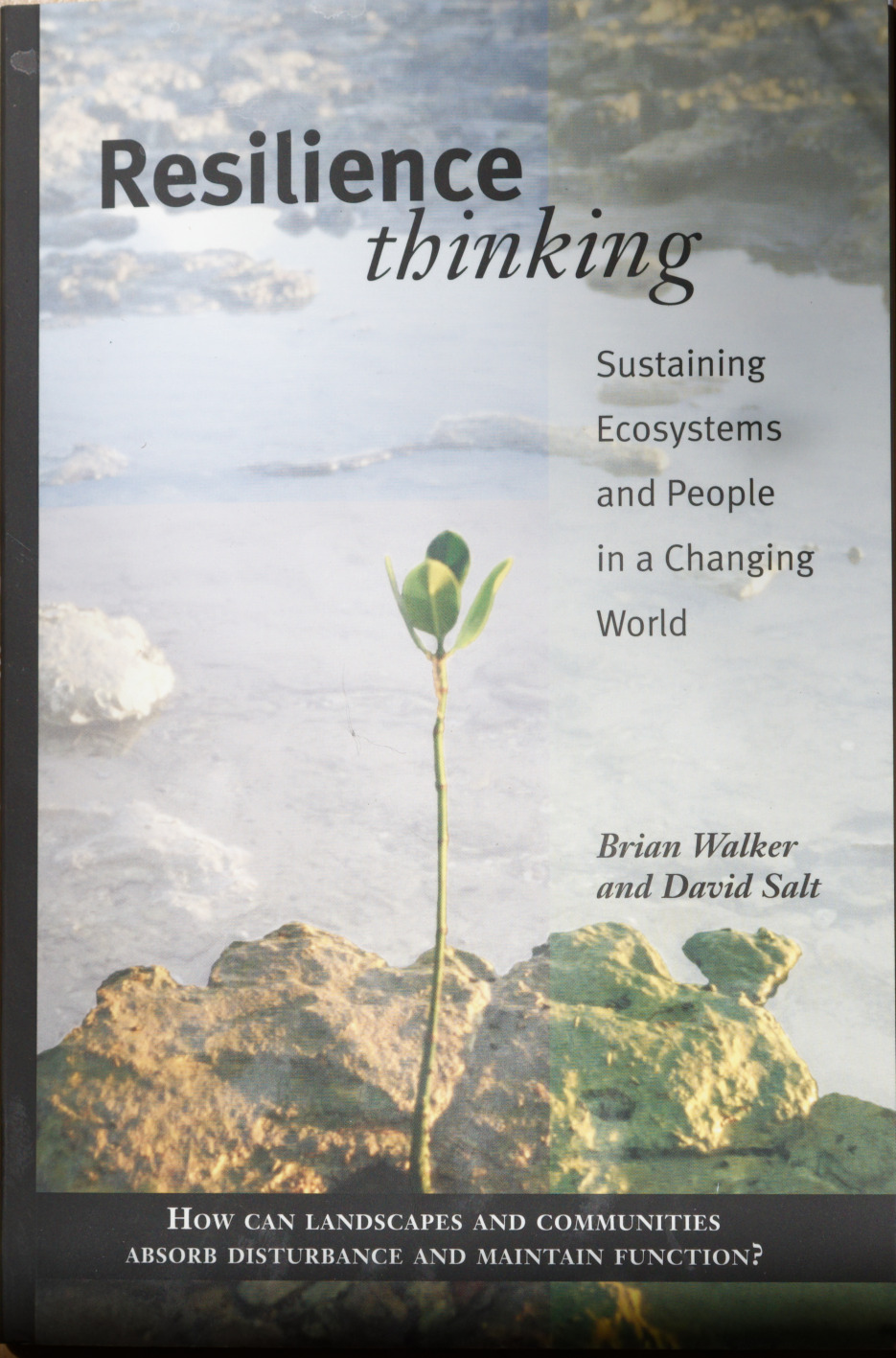
Let me make myself absolutely clear about this book, indeed I can do no better than to publish part of an email that I sent to the authors last Saturday:
To say that I was inspired by what you wrote is an understatement. More accurately it has changed my whole understanding of this planet, of the natural order of things, of the politics of the Western world, of vast numbers of us humans, and how precarious is our world just now. It has opened my eyes radically, and I thought before that I was fairly in touch with things.
Resilience is a simple idea but in its application has proved to be anything such. On page 2 the authors set out as they saw it The Drivers of Unsustainable Development. Here’s how that section develops:
Our world is facing a broad range of serious and growing resource issues. Human-induced soil degradation has been getting worse since the 1950s. About 85 percent of agriculture land contains areas degraded by erosion, rising salt, soil compaction, and various other factors. It has been estimated (Wood et al. 2000) that soil degradation has already reduced global agricultural productivity by around 15 percent in the last fifty years. In the last three hundred years, topsoil has been lost at a rate of 200 million tons per year; in the last fifty years it has more than doubled to 760 million tons per year.
As we move deeper into the twenty-first century we cannot afford to lose more of our resource base. The global population is now expanding by about 75 million people each year. Population growth rates are declining, but the world’s population will still be expanding by almost 60 million per year in 2030. The United Nations projections put the global population at nearly 8 billion in 2025. In addition, if current water consumption patterns continue unabated, half the world’s population will live in water-stressed river basins by 2025.
The Food and Agriculture Organization of the United Nations (FAO) 2004 Annual Hunger Report estimates that over 850 million people suffer from chronic hunger. Hunger kills 5 million children every year.
It goes on ….!
Now I want to quote from the end of the book, from their section on Resilience Thinking.
In our opening chapter we observed that there were many pathways into resilience thinking and suggested readers not worry too much if the finer details of a resilience framework are a bit obscure. We emphasized that what is of much more importance is an appreciation of the broader themes that underpin such a framework. Those broader themes revolve around humans existing within linked social and ecological systems. These are complex adaptive systems, and attempts to control or optimize parts of such systems without consideration of the responses that this creates in the broader system are fraught with risk. Much of this book has been spent on attempting to explore the consequences of such an approach.
In the broadest sense, optimizing and controlling components of a system in isolation of the broader system results in a decline in resilience, a reduction in options, and the shrinkage of the space in which we can safely operate. Resilience thinking moves us the other way.
It is our hope that readers who are persuaded of this basic premise will be encouraged to explore the inevitable consequences of such thinking. Even if you are not completely clear on the basins of attractions, thresholds, and adaptive cycles, if the concepts of ecological resilience and dynamic social-ecological systems have any resonance then you are in a better position to appreciate what is happening to the world around you.
The phrase complex adaptive system was new to me but intuitively I got what the authors meant. As they state on page 35: The three requirements for a complex adaptive system are:
That it has components that are independent and interacting,
There is some selection process at work on those components (and on the results of local interactions),
Variation and novelty are constantly being added to the system (through components changing over time or new ones coming in),
This was my eye-opener. It was now obvious that many processes, especially in nature, that I had hitherto regarded as constant were changing albeit usually on a timescale of many decades sometimes centuries.
And the other conclusion that was inescapable was that we humans were largely responsible for those changes because we couldn’t see the longterm consequences of what we were doing.
David writes that firstly carbon dioxide is not like other pollutants, for example like air particulants. Then later goes on to say:
The second difference is that climate change is irreversible.
As Joe Romm notes in a recent post, New York Times columnist Joe Nocera slipped up in his latest column and referred to technology that would “help reverse climate change.” I don’t know whether that reflects Nocera’s ignorance or just a slip of the pen, but I do think it captures the way many people subconsciously think about climate change. If we heat the planet up too much, we’ll just fix it! We’ll turn the temperature back down. We’ll get around to it once the market has delivered economically ideal solutions.
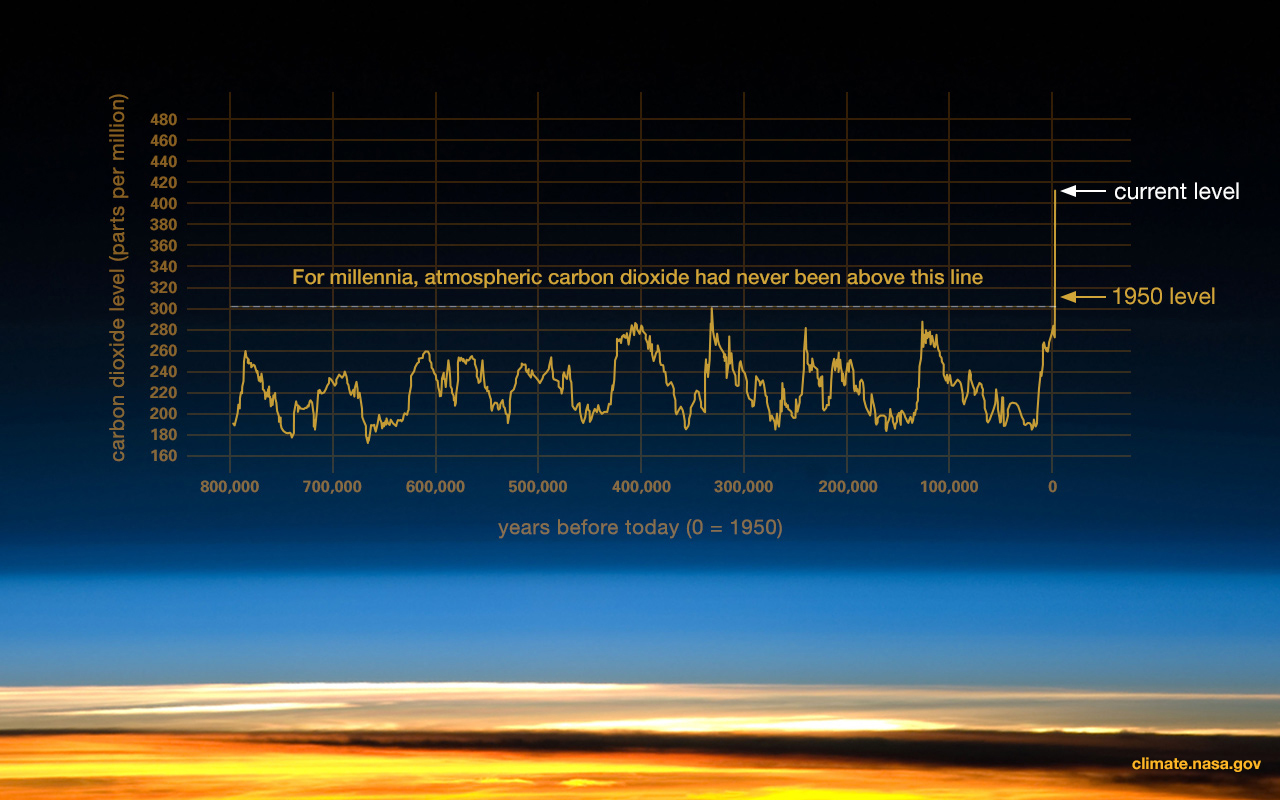
This paper shows that the climate change that takes place due to increases in carbon dioxide concentration is largely irreversible for 1,000 years after emissions stop. Following cessation of emissions, removal of atmospheric carbon dioxide decreases radiative forcing, but is largely compensated by slower loss of heat to the ocean, so that atmospheric temperatures do not drop significantly for at least 1,000 years. [my emphasis]
My last piece in this review is to republish a graph that is shown on the NASA Global Climate Changewebsite:
For all our sakes, dogs and humans and many other species, let us all please change our behaviours! Soon!
Back to the book: It is a remarkable book!
I will close with quoting one of the praises shown on the back cover. This one by Thomas Homer-Dixon, professor of political science, University of Toronto, and director of the Trudeau Centre for Peace and Conflict Studies.
Resilience Thinking is an essential guidebook to a powerful new way of understanding our world – and of living resiliently with it – developed in recent decades by an international team of ecologists. With five clear and compelling case studies drawn from regions as diverse as Florida, Sweden, and Australia, this book shows how all highly adaptive systems – from ecologies to economics – go through regular cycles of growth, reorganization, and renewal and how our failures to understand the basic principles of resilience have often led to disaster. Resilience Thinking gives us the conceptual tools to help us cope with the bewildering surprises and challenges of our new century.
This came in yesterday and I thought for some time that I wouldn’t be able to publish it quickly owing to me getting my knickers in a twist.
But all was resolved and therefore I am delighted to republish it.
ooOOoo
Donate to fund the dogs saving elephants
Ever heard of dogs saving elephants?
In the Serengeti, a small, specially trained team of rescue dogs sniff out poachers and sound the alarm. Just 4 dogs have helped arrest hundreds of poachers, saving countless elephants being murdered for their ivory.
Almost a quarter of the elephants in the park now live in the tiny area they protect — but poaching is on the rise everywhere else and there are thousands more elephants that still need protection.
That’s why the team behind this amazing project are asking for your help to train up more of these sniffer dogs — and save double the number of elephants.
With 96 of these gentle giants killed each day, every moment counts.
Can you chip in to help?
ooOOoo
Whatever you can spare please contribute to the donation request.
Just a short post for today but one that is long on feelings!
The following short video was broadcast by WPLG Local 10 on July 7th this year. It follows the collapse of the twelve-storey building at Surfside in Florida on June 24th.
“Comfort dogs arrive in South Florida to help first responders in Surfside.”
Alok Sharma on why COP26 is our best chance for a greener future.
I wanted to share the eight-minute video that appeared on TED Talks. But it hasn’t appeared on YouTube as yet.
But the link is embedded above so if you don’t want to watch the slightly longer version (just 22 minutes) then that is fine.
I will share the words that came with the TED Talks video.
Something powerful is happening around the world. The issue of climate change has moved from the margins to the mainstream, says Alok Sharma, the President-Designate of COP26, the United Nations climate conference set to take place in November 2021 in Glasgow, Scotland. He unpacks what this shift means for the world economy and the accelerating “green industrial revolution” — and lays out the urgent actions that need to happen in order to limit global temperature rise.
Plus on the speaker, Alok Sharma.
Alok Sharma is a British politician, Cabinet Minister and President-Designate of COP26, the United Nations Climate Change Conference being held in Glasgow from 31 October until 12 November.
Sharma was previously UK Secretary of State for Business, Energy and Industrial Strategy. Before that, he was UK Secretary of State for International Development. He has also served in ministerial roles in the Department of Work and Pensions, Department for Communities and Local Government, and at the Foreign and Commonwealth Office. Prior to politics, he worked in finance.
Please watch the video for all our sakes.
For the sake of our dogs, and for the sake of everyone on this planet.
Now of course the majority of people reading the title to today’s post would think of us humans. And what I am about to republish is for us. But dogs require exercise just as much as we humans. The question is whether dog’s brains are better protected with exercise?
The exercise pill: How exercise keeps your brain healthy and protects it against depression and anxiety.
By Arash Javanbakht, Associate Professor of Psychiatry, Wayne State University, February 25th, 2021
As with many other physicians, recommending physical activity to patients was just a doctor chore for me – until a few years ago. That was because I myself was not very active. Over the years, as I picked up boxing and became more active, I got firsthand experience of positive impacts on my mind. I also started researching the effects of dance and movement therapies on trauma and anxiety in refugee children, and I learned a lot more about the neurobiology of exercise.
I am a psychiatrist and neuroscientist researching the neurobiology of anxiety and how our interventions change the brain. I have begun to think of prescribing exercise as telling patients to take their “exercise pills.” Now knowing the importance of exercising, almost all my patients commit to some level of exercise, and I have seen how it benefits several areas of their life and livelihood.
We all have heard details on how exercise improves musculoskeletal, cardiovascular, metabolic and other aspects of health. What you may not know is how this happens within the brain.
Brain biology and growth
Working out regularly really does change the brain biology, and it is not just “go walk and you will just feel better.” Regular exercise, especially cardio, does change the brain. Contrary to what some may think, the brain is a very plastic organ. Not only are new neuronal connections formed every day, but also new cells are generated in important areas of the brain. One key area is the hippocampus, which is involved in learning and memory and regulating negative emotions.
A molecule called brain-derived neurotrophic factor helps the brain produce neurons, or brain cells. A variety of aerobic and high-intensity interval training exercises significantly increase BDNF levels. There is evidence from animal research that these changes are at epigenetic level, which means these behaviors affect how genes are expressed, leading to changes in the neuronal connections and function.
Finally, there is evidence for the positive effects of exercise on the neurotransmitters – brain chemicals that send signals between neurons – dopamine and endorphins. Both of these are involved in positive mood and motivation.
Exercise improves clinical symptoms of anxiety and depression
Exercise could even potentially desensitize people to physical symptoms of anxiety. That is because of the similarity between bodily effects of exercise, specifically high-intensity exercise, and those of anxiety, including shortness of breath, heart palpitation and chest tightness. Also, by reducing baseline heart rate, exercise might lead to signaling of a calmer internal physical environment to the brain.
It is important to note that the majority of studies examined the effects of exercise in isolation and not in combination with other effective treatments of clinical anxiety and depression, such as psychotherapy and medication. For the same reason, I am not suggesting exercise as a replacement for necessary mental health care of depression or anxiety, but as part of it, and for prevention.
There are other perks besides the neurobiological impacts of exercise. When going out for a walk, one gets more exposure to sunlight, fresh air and nature. One of my patients befriended a neighbor during her regular walks, leading to regular taco Tuesdays with that new friend. I have made some great friends at my boxing gym, who are not only my motivators, but also a great supporting social network. One might pick a dog as their running mate, and another might meet a new date, or enjoy the high energy at the gym. Exercise can also function as a mindfulness practice and a respite from common daily stressors, and from our electronic devices and TV.
So how can you find time to exercise, especially with all the additional time demands of the pandemic, and the limitations imposed by the pandemic such as limited access to the gyms?
Pick something you can love. Not all of us have to run on a treadmill (I actually hate it). What works for one person might not work for another. Try a diverse group of activities and see which one you will like more: running, walking, dancing, biking, kayaking, boxing, weights, swimming. You can even rotate between some or make seasonal changes to avoid boredom. It does not even have to be called an exercise. Whatever ups your heartbeat, even dancing with the TV ads or playing with the kids.
Use positive peer pressure to your advantage. I have created a group messaging for the boxing gym because at 5:30 p.m., after a busy day at the clinic, I might have trouble finding the motivation to go to the gym or do an online workout. It is easier when friends send a message they are going and motivate you. And even if you do not feel comfortable going to a gym during the pandemic, you can join an online workout together.
Do not see it as all or none. It does not have to be a one-hour drive to and from the gym or biking trail for a one-hour workout vs. staying on the couch. I always say to my patients: “One more step is better than none, and three squats are better than no squats.” When less motivated, or in the beginning, just be nice to yourself. Do as much as possible. Three minutes of dancing with your favorite music still counts.
Merge it with other activities: 15 minutes of walking while on the phone with a friend, even around the house, is still being active.
When hesitant or low on motivation, ask yourself: “When was the last time I regretted doing it?”
Although it can help, exercise is not the ultimate weight loss strategy; diet is. One large brownie might be more calories than one hour of running. Don’t give up on exercise if you are not losing weight. It is still providing all the benefits we discussed.
Even if you do not feel anxious or depressed, still take the exercise pills. Use them for protecting your brain.
ooOOoo
This is a very good post. Arash Javanbakht is a scientist of the first order and we all should do as she advises. I’m going to close today’s post by republish the first two paragraphs of his bio that is also published by The Conversation:
Associate Professor of Psychiatry, Wayne State University Arash Javanbakht, M.D., is the director of the Stress, Trauma, and Anxiety Research Clinic (STARC; https://www.starclab.org) at Wayne State University. Dr Javanbakht and her work have been featured on the National Geographic, The Atlantic, CNN, Aljazeera, NPR, Washington Post, Smithsonian, PBS, American Psychiatric Association, Anxiety and Depression Association of America, American Academy of Child and Adolescent Psychiatry, and tens of other media.
Her clinical and research work is mainly focused on anxiety and trauma related disorders, and PTSD. She often helps civilians and first responders with PTSD. Her clinic utilizes pharmacotherapy (medication), psychotherapy, exercise, and lifestyle modification to help patients achieve their full capacity for a fulfilling life.



:max_bytes(150000):strip_icc()/MaryJoDiLonardo-bw-treehugger-6d5044d7d4ae44298fb31df11a3d5a66.jpg)


 Learning from Dogs
