The heads of US mortgage giants Fannie Mae and Freddie Mac may each receive pay packages of up to $6m (£3.7m) for 2009, depending on company performance.
Now I’m not an American nor do I really understand the issues BUT when taxpayers put in $111,000,000,000 of THEIR money into these organisations (that’s $365 for every man, woman and child on the US Census!) and so many of those same US taxpayers are up the proverbial financial creek without a paddle, there has to be a better way of rewarding top bosses (of US publicly owned corporations) than the option of $6,000,000 each!
But the regulator which decided the pay levels said the awards were 40% lower than before the government bailout.
The sums involved reflected the need to attract and retain talent, it argued.
Frankly, I just don’t believe that there aren’t many other incredibly capable business leaders who would do these jobs for a fraction of six million dollars. (The present incumbents are Michael Williams at Fannie Mae and Charles E. Haldeman Jr. at Freddie Mac who will receive a base of $900,000 in 2010 with the opportunity to earn $5.1 more if “certain targets are met“.)
Read the article here – I’m going to lay down in a dark, quiet room for a while!
Tim Clodfelter of the local Winston-Salem Journal wrote a very interesting piece on the future of brick-and-mortar
Tim Clodfelter
video stores and video rental places such as NetFlix and Red Hat.
I happened to be quoted in the article as an economist (the comment about “reducing the average cost every time we watch a purchased video” was supposed to be a joke!), but actually met up with Tim in my role as mom and pseudo-agent! Let me explain.
My 15-year-old daughter was standing in a very long line of young ladies waiting to audition for the Coen Brother’s remake of True Grit. Tim was there to get the story on the open casting. I asked him over hoping he would talk to my daughter. He and I got to talking instead; he found out that I was an economics teacher, and pulled out his notes on the Video Store story. He ended up talking to me and several other parents in line, all of whom had a different approach to viewing movies. The resulting article follows with permission to publish on Learning from Dogs.
“The time to begin writing an article is when you have finished it to your satisfaction. By that time you begin to clearly and logically perceive what it is you really want to say.” ~Mark Twain
It is a bit intimidating to try to write a piece on the importance of good writing. I feel self-conscious about my writing as I write about good writing. After all, a post on good writing should be written especially well. Then again, maybe a poorly written post will do even more to illustrate the importance of good writing. I will have to leave that up to you, the reader.
I have been teaching graduate and undergraduate students for over twenty years now. I have read and graded thousands of papers and essays during that time. I can count on two hands the number that were exceptionally well written. In each case, I sought out the students to compliment their writing, and to encourage them to keep honing their writing skills.
I doubt my words of encouragement had much effect. This, I know from personal experience.
Years ago, in my third year of graduate school, I got a paper back from a professor with the words “You write well” written in the margin. I was crushed. I had worked so hard on that paper: reviewing the existing literature, developing the research design, and trying to make a substantive contribution to my field. I yearned to hear something tangible about the quality of the research, the cleverness of the method, or the importance of the findings. Instead, I got “you write well.” I honestly thought that the professor had said that because he couldn’t think of anything positive to say about the content of the paper.
Years later, something happened that made me realize how wrong I was. I had taken a teaching job at Southern Methodist University in Dallas, Texas, even though I had yet to defend my doctoral thesis; it’s called “ABD,” or “all but
Merton Miller
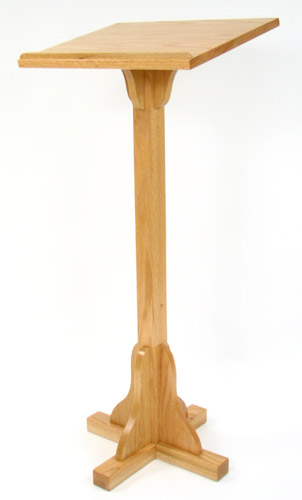
dissertation.” I had traveled to Chicago to meet with Merton Miller, my thesis chairman, about polishing up my dissertation and scheduling the defense. As I waited outside his office door, I couldn’t help but notice how distracted Professor Miller seemed. He had always stood at a tall wooden lectern to write, but this day he paced to and from that lectern, rubbing his head, adjusting his shirt sleeves, writing, erasing, then erasing some more.
He was at the lectern when I entered his office for our meeting. I congratulated him again for winning the first Nobel Prize in financial economics and asked him about the upcoming trip to Stockholm. He was taking his wife and daughters on the trip, who were very excited. He, on the other hand, was not ready for the trip. He was worried, he said, because he was not going to have sufficient time to revise his acceptance speech. He had only edited it seven times thus far, and his magic number was eight. Not six, not seven, but eight rewrites were what he needed to be satisfied with his writing.
Professor Miller was known as one of the most gifted writers in all of economics. His writing was disarmingly simple and clear. It flowed like a piece of music. It seemed effortless. Everyone, myself included, assumed that he was just a naturally talented writer, lucky to have been blessed with that skill. Everyone was wrong. I learned that day that Professor Miller worked hard at writing well. He was well into his 60’s, had written hundreds of articles and had won the Nobel Prize, but he was still working at writing well.
Then I remembered the comment that a teacher had written in the margin of my paper years earlier. The teacher was Merton Miller. And now I knew how much it really meant, coming from him. So now when I see the rare student who writes really well, I make it a point to tell them. Not that it means as much coming from me as it did coming from Professor Miller. But it still means something, because good writing is very important, and it’s worth working for.
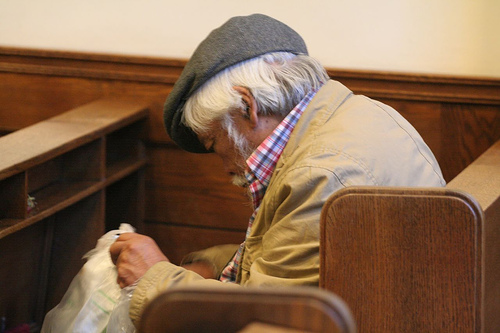
Recently while busy in the garden our two dogs started barking. This in itself is not unusual because they sit at the front gate waiting for passers by to stop and talk to them. It can be a horse, or cyclist that sometimes causes them to bark, and our children have grown to show the same awareness as the dogs in who is passing. I didn’t see the cause this time but our young daughter did.
“Don’t worry, Daddy, it’s only an old man!”
Stephanie is only 8 years old, but without meaning any harm had given sufficient information to explain the risk to us and paint a quick picture in a few words as to why the dogs were barking.
Of late for some reason I have been more aware of people who are ageing. This generation do not normally stand around telling stories, this is left to the young who always seem to have something to shout about.
However all older people will have many interesting tales, often almost unbelievable, yet true. They have lived through war, happy, sad, interesting, and hard times. Each has learnt about life through experience that we can not buy.
Recently my ex Mother-in-law passed away. I thought I knew her very well, but it wasn’t until family stories started coming out that we all found out there had been much more in the life of this modest lady.
How it should be.
Christmas is coming and probably there will be family gatherings. This year I am going to try and turn the attention to the older generation, and see if they will open up and give us an insight into their childhood days and memories so that we can give them the respect they deserve, ask them to read stories to the children, ask them to tell their own tales.
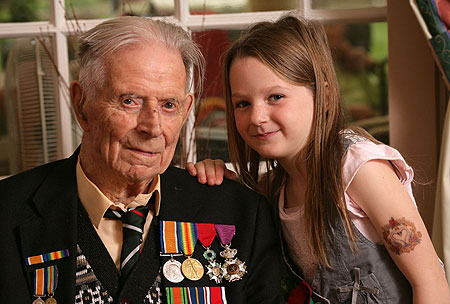
Oh and the old man? Yes I did see him again, in church at a Remembrance service, and he had some medals under his coat, so did have a story to tell!
The humungously uninteresting saga of Tiger Woods’ infidelities
The press has been full in recent days of the Tiger Woods saga. I have followed this with a combination of astonishment and disgust and touched on it yesterday’s Post.
Astonishment? Not at Woods’ extramarital adventures. Frankly, I am astonished that anyone could possibly be astonished to learn of his frailties.
I must have been about 13 when I took an interest in John F Kennedy, mostly because of his assassination. As a young teenager I read and listened to the news over the coming months and gradually realised that this great American hero and hope for the future was a serial philanderer. And as I grew up I realised that this is the kind of behaviour that rich and powerful men in particular get up to.
I soon realised that some men simply give in to their sexual drives; integrity, promises and faithfulness just go out of the window. Once again – just like the British MPs who filched public funds by the £1,000s – BECAUSE they can do it (for a while) they DID do it.
This is regrettable for stable marriages and the happy upbringing of children, but it is a fact. And so Woods’ antics were
Paul Newman
not the slightest bit surprising. In fact, what IS surprising is to hear of famous people who have NOT given in to basic urges, the most famous recent example being the much-loved and missed Paul Newman.
No, what astonished and disgusted me was the press interest in Woods’ philanderings. Of course, the media only publicize what they think people want to hear or read about, and this in order to sell more copies and rack up more advertising revenue. And as the media are not stupid, it clearly IS true that many people ARE interested in the sexual antics of famous people.
But what does this tell us about the seriousness of the human race? All this fuss over one more weak, unfaithful and ultimately boring husband when on the same day hundreds of thousands died of treatable disease, when goodness knows how many more tons of ice melted, how many more tons of CO2 were released into the air, how many more victims of the hellish North Korean regime there were?
He’s a famous golfer? Oh dear …. someone good at putting a ball into a hole? This is supposed to be IMPORTANT?
Sadly, the whole episode is just another example of the fatuous obsession with celebrities, as if they are somehow more interesting or important than anyone else. No, my local postman is far more interesting than Tiger Woods, and I don’t think he cheats on his wife either.
And as for comment about the business wisdom of Woods not talking to the press? Oh dear again – one weeps. Why should anyone CARE whether he talks to the press or loses sponsors? Who GIVES a damn? Well, apparently, millions. And this is fairly depressing when there is so much else to worry about. And if big name sponsors of the once “Mr Clean” of world sport are now looking rather foolish, well I for one won’t shed any tears. They peddle fantasy, shallowness and envy; it’s time we had a reassessment of priorities and bit more common-sense and realism.
Please Mr Murdoch et al; give us a break from Tiger Woods; he is just nanoscopically irrelevant in the grand scheme of things and what on earth has his private life got to do with his golf anyway? But I expect we will have to suffer months of reading about the vast settlement his wife will get as his divorce is dragged through the courts and the media. Oh dear, I need a drink ……
A round up of this strange world that we all live in.
[In fact Chris wrote this on Sunday, 13th but due to the backlog of LfD posts to be published, it has been held until today, the 20th. The points are still as valid. Ed.]
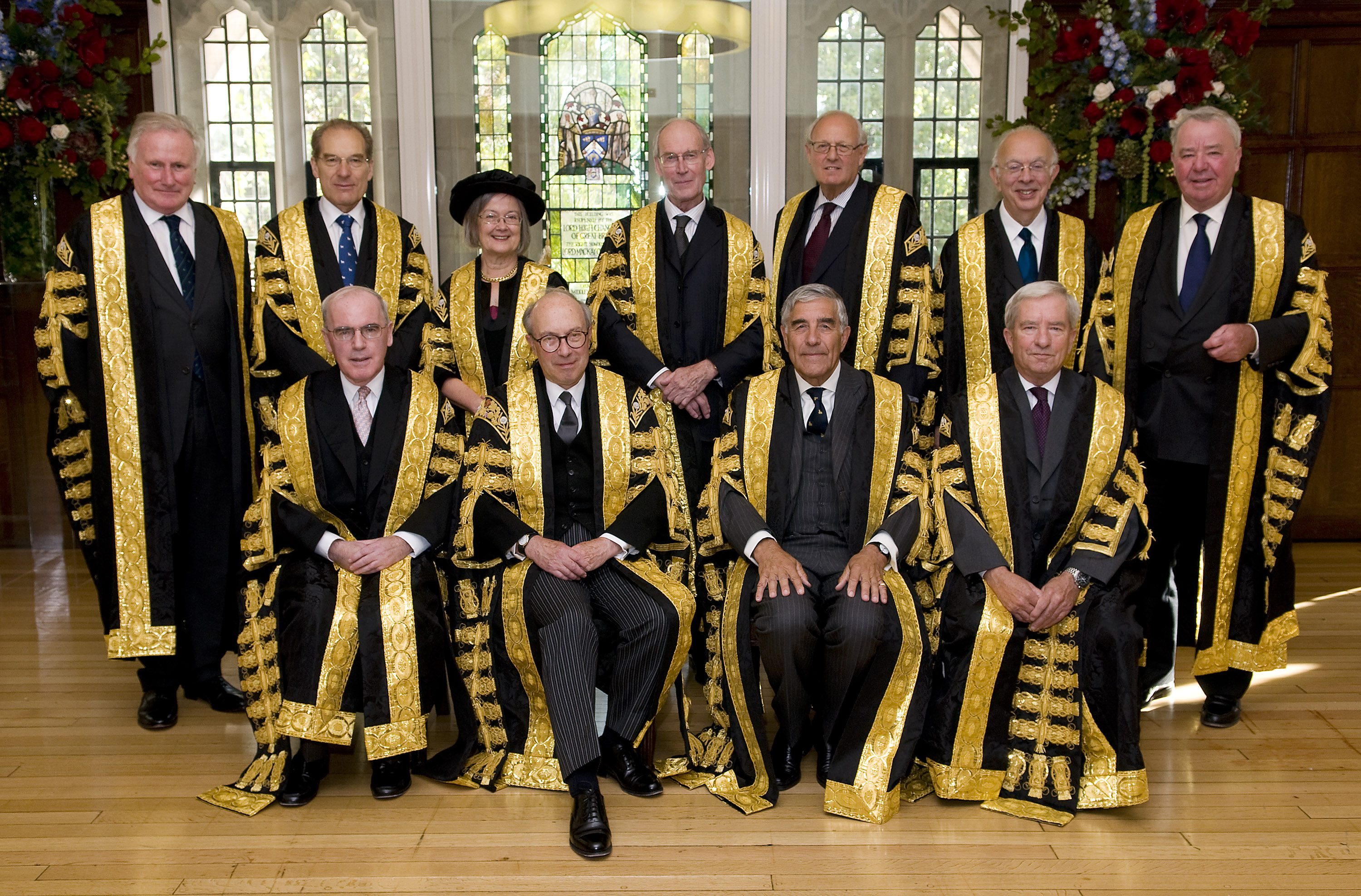
Judges in charge of Britain’s controversial new Supreme Court have been provided with robes they will hardly ever wear at a cost of £137,956 to the taxpayer.
The hand-crafted black brocade robes – embroidered with real gold thread – will not be worn by the 12 Supreme Court Justices in normal session.
They will be donned only perhaps twice a year for ceremonies such as the State Opening of Parliament or the beginning of the legal year. The rest of the time, the judges will wear everyday suits.
A snip at £140,000 ($224,000) Photographer – Ron Coello
It’s only money …. plenty more where that came from…
BRITISH POLITICS: Few things are more pathetic than the Liberals‘ current poll rating of 17%, with Labour on 26% That the worst government in the history of the world is still way ahead of the Liberals is of course a tribute to the lunacy of Labour voters, who seem not to understand the terrible damage this govt has done. Still, some of them have done very well under Labour: doctors, judges, high-ranking civil servants, consultants …. all more or less bribed with the people’s money.
Lib-Dems must be very depressed; if you can’t get a decent poll-rating when up against this motley bunch of venal, pompous, pretentious and incompetent misfits then you wonder really what the point of their party is.
Democracy?
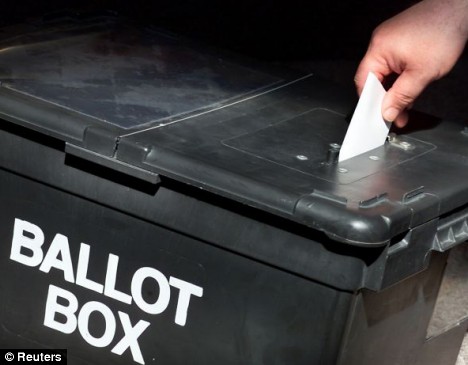
Still, you get the government you deserve, so they say. Except that the British voting system is hopelessly undemocratic. In the next election a vote for the Lib-Dems is probably going to be wasted, risking the danger of letting Brown sneak in despite everything.
As for UKIP, it is a perfectly tenable position to want to get out of the EU. I’d guess that 30% of the electorate would want this, and that’s a very conservative estimate. Yet they have NO CHANCE WHATSOEVER of getting ANY representation in parliament.
This is not democracy, but of course it suits the two dinosaur parties very well indeed.
TIGER WOODS: what a pathetic, sordid saga this is. Not his bedroom antics, but the media obsession with it. People are dying all over the world of treatable diseases, of inhuman treatment at the hands of the North Koreans or others. Democracy is destroyed by religious nutters in Iran, millions more tons of ice melt, while politicians bleat uselessly (and expensively) in Copenhagen (I note they didn’t choose Scunthorpe! Might not have got such a good turnout!)
OIL: Oh, and on the climate front and the importance of reducing emissions I note that the Iraqi government is predicting oil output to rise to 12 million barrels a day within a few years – the same as Saudi Arabia.
That IS good news!!!!! … the British Labour government will hit us with every stealth and non-stealth tax you can imagine “to save carbon” and pay for yet more consultants and managers while the rest of the world greedily sups up billions more tons of oil.
Apparently, this has been a bumper year for oil discoveries …. you couldn’t make it up! An extra-terrestrial observer must be scratching his head wondering how the universe could have spawned up such a bizarre species.
Yet the press is full of Woods ….. and because he is good at golf … hitting a ball into a hole, a skill of such nanoscopically-sized irrelevance to the world’s problems. What sort of mentality is it that is even interested in yet another, crass, boring superstar who has failed to resist the temptations that money brings?
JFK was the great hero who would save the world but turned out to be just another, faithless, lying philanderer. Who can have any illusions since the days of Marilyn Monroe and the extinguished candle?
OBAMA PEACE PRIZE: The surreality of this obsession with over-sexed but hyper-boring celebrities is matched only by that involved in the award of the Nobel Peace Prize to Obama. What exactly has Obama actually DONE?
Nobel prize winner
Crucially, there is practically NO change in the Middle East (except the major change for the good brought by the reviled George Bush and Tony Blair! the world is nothing if not full of irony); the USA still cravenly supports Israel, which CONTINUES to build and/or enlarge settlements, which denies any possibility of ever putting right some of the wrongs of the past (Palestinian exiles, appropriation of their land, stealing of their capital and so on – even the West Bank roadblocks are mostly still in place.)
Yet even in the pathetic there can be humour, as when he said that to bring peace the USA had to make war, or words to that effect.
Yes, he is of course right, but it was still funny. I wonder what Mother Theresa would have said? And Nelson Mandela? He had to sweat out decades in prison preaching non-violence to earn his NPP, while Obama only had to get elected to get his. Truly the triumph of hope over reality.
Perhaps hope is all there is left. I nearly said “we have left”, but then I realized that I haven’t actually got much myself.
I subscribe to Naked Capitalism, as much for the Antidote du Jour, as for the fine economic commentaries. In my inbox of the 16th December was this wonderful antidote. A quick Google search shows that these pictures are spreading like wildfire around the world’s email servers. Not without reason.
Maybe these pictures resonate in all of us when we long for some simpler way of life …..
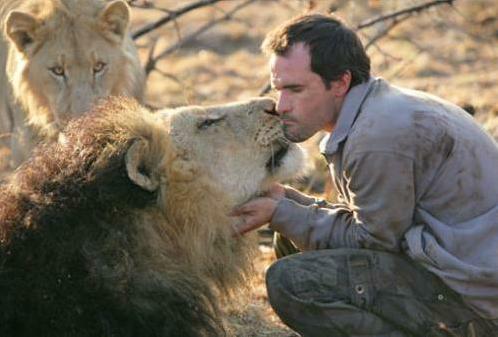
This Ranger is assigned to prevent poaching around the wildlife refuge area of Lanseria, South Africa. The way these animals interact with him is absolutely stunning! The lions seem to know he’s there to protect them. His charm works with hyenas and cougars too. Hyenas are usually vicious. Check out the pictures taken in the river – amazing because lions hate water.
I earnestly hope that we are not about to witness the crashing disappearance of what only a few years ago was one of Britain’s relatively few major world class businesses. It is said that those whom the Gods seek to destroy they first make mad, and the intention of BA cabin staff to launch a strike over the busy Christmas period would seem to be a clear sign of insanity.
The wonderful, irrepressible DSB – Dame Shirley Bassey
This wonderful lady was born in 1937 and, thus, next January 8th she turns 73. So for this author, born in 1944, DSB has been in the background of my life for ever, and for millions of others. There is so much written about her that the only purpose of this Post is try and bring her to the attention to those that may not know of her so well.
I only have to think of the soundtrack to the film Goldfinger to instantly hear Shirley Bassey’s voice loud and clear in my mind. Unforgettable, stunning, thrilling and still capable of raising the hairs on my skin now over 40 years since the track was recorded. Just listen to this voice:
I must say that I am very confused about bringing an admitted terrorist into our country and its court system, where everyone is presumed innocent until proven guilty, has an attorney assigned to them if they cannot afford one, and they enjoy the full rights and benefits of any other individual accused of a crime in the United States.
Evidence will be brought to bear on the case and, based on the preponderance of the evidence as presented skilfully by attorneys on both sides, and as adjudicated freely and with respect for the law, the judge and/or jury will find KSH innocent or guilty.
If, as Eric Holder, Obama’s choice for the U.S. Attorney General, has indicated ‘KSH’ should be found guilty of horrible crimes and should be brought to justice, I am wondering what is Holder’s real purpose of trying this mastermind here. He must know that there is a chance that the well-meaning set of 12 honest, everyday jurors in this case, through legalese or side-deals or bias, might find to acquit. Right? Then what?
Holder says he’s guilty, yet brings him here (while trying others in a military tribunal) to “try” him in a courtroom which Holder expects to find him guilty. I see the twisted mess we are left with if this happens. But where’s the upside?