Category: People

Resignation, anger or possibilities

A recap on some important messages.

One of the great benefits of being a team of authors is that we, too, are learning from each other.  So on that theme I wanted to review some of the Posts that have been written by my fellow authors as a reminder of some powerful motivational ideas.

Sir Ranulph Fiennes

When asked about his approach to climbing Everest at the third attempt in May 2009 and, at age 65, the oldest Briton to do so, he captured the full spirit of separating actions from goals when he said:

Plod forever! Don’t expect to get there. Don’t think there is going to be a top to this mountain. Just plod forever!

Watch the video.

Read more about these examples

Working hard for others

A reminder of what parental commitment can mean.

As part of my job I often spend time in the UAE.  Many different nationals coming here on the promise of work so that they can send some of the hard-earned money back to their families, often the only means of family survival.

Thus I was touched this morning by a lovely welcome from a Filipino woman who works in a Lebanese café which I often frequent. I asked after her young daughter …

Yes, she said, she is now 7 years old, and she will see her daughter again in 8 months time, because she is leaving the job when her visa expires, which will enable her to get her passport back, and then her return airfare will be paid so that she can return home.

My daughter was 2 and a half when I last saw her.”

There are thousands of people like her in the same situation, and they still carry on with a smile knowing that others depend on them for life!

By Bob Derham

The Power of Words

Never give up is so much more than just a cliché.

Regular readers will know that fellow LfD author, John Lewis, has been posting regularly on the subject of remarkable people.  I have found them inspiring, to the extent that I’m going to depart from my usual safe area of economics and tell a personal story.  It’s a story of family dynamics, the power of sibling bonds and why hope and trust in the future, especially for young people, is so, so important.  I have called my story the Power of Words.

—–oooOOOooo—–

I can hear it like it was yesterday, resonating in my head, crowding out the doubts and negative thoughts, filling my mind with possibilities:  yes, I CAN do it!

Then ....

I was in my junior year of college and had no idea what I was going to do with my life.  It was becoming quite a burden.

Because I had always been good in school, i.e., the “smart one,” everyone had expected so much of me when I went to school.  I really envied my older sister; she had always been the pretty one, the popular one, the one who got invited to the prom by not one, but three young men.

And, it seemed to me at the time, she was so lucky because no one expected her to go out and conquer the world after high school.   She didn’t go to college; she went to secretarial school and studied to become an airline attendant instead.

I envied her in every way possible!  But at least I had something: I was “the smart one,” or so I thought!  Years later, my sister went back to school to study psychology.  She earned a 4.0 [four straight ‘A’s. Ed] and was invited to continue on to earn her Ph.D.  I’ll be darned if she wasn’t the smart one, too! And she is a wonderful and thoughtful person to boot! But I digress.

Read more of my story

Remarkable people: Warren Buffett

What does Bill Gates admire about Warren Buffet?


On this blog about integrity, and in these difficult economic times, it is particularly poignant to note that Bill Gates cites Warren Buffett’s integrity. This was during a recent event at Columbia Business School in New York City, see below.

While many of the questions from MBA students and the answers from Gates and Buffett are not new, Buffett’s brief witty and topical comments provide considerable insight into his thinking.

It is particularly interesting to get a sense of how the world is viewed by people with their perspective. When asked about the outlook for America, both Gates and Buffett answered that it is very good. Warren Buffett even offered any of the MBA students $100,000 in return for 10% of their future earnings. Later, he increased the offer to $150,000, if they received training in personal communication skills!

Watch them together on CNBC at Columbia Business School, New York City on November 12, 2009.

Maybe you are interested in further information about Warren Buffett, if so you are not alone. The BBC, among others, have taken a strong interest in him recently.

You might like to read and view some recent stories on the “Oracle of Omaha” including:

Despite a setback in 2008, Warren Buffett’s long term investment success is without question.

By John Lewis

Consequences and probabilities

How Peter L Bernstein’s work helps us make the safest decision with regard to global warming.

Probably like me you hadn’t heard of Peter Bernstein. He was instrumental in understanding risk and that alone makes him worth knowing about.  Here’s the entry from Wikipedia:

Peter Lewyn Bernstein (January 22, 1919 – June 5, 2009) was a financial historian, economist and educator whose development and refinement of the efficient market theory made him one of the country’s [USA] best known authorities in popularizing and presenting investment economics to the general public.

Watch the YouTube video before reading on:

You could not have missed a fundamental message in the interview – if the consequence of something is critically harmful then don’t take ANY risks. Bernstein’s book on risk is Against the Gods.

Continue reading “Consequences and probabilities”

Economics and Semantics

Governments borrow – why?

This post is a plea for help from someone clever …. what I would like to understand concerns “the borrowing requirement”. All my adult life I have listened year after year to the British Chancellor’s presentation of his budget and each time there is reference to “the borrowing requirement”.

What I would like to know is WHY there is a borrowing “requirement” in the first place. Exactly WHY do governments spend more than they “earn”? And more to the point, why do – and can – they keep doing this year after year, decade after decade? Layman that I am, it seems to me that continually borrowing, living beyond one’s means, spending more than one receives is BOUND to lead to problems in the long run. Is it simply that in most western democracies the “long run” is not foremost in the minds of our leaders? Or does this continual borrowing not matter?

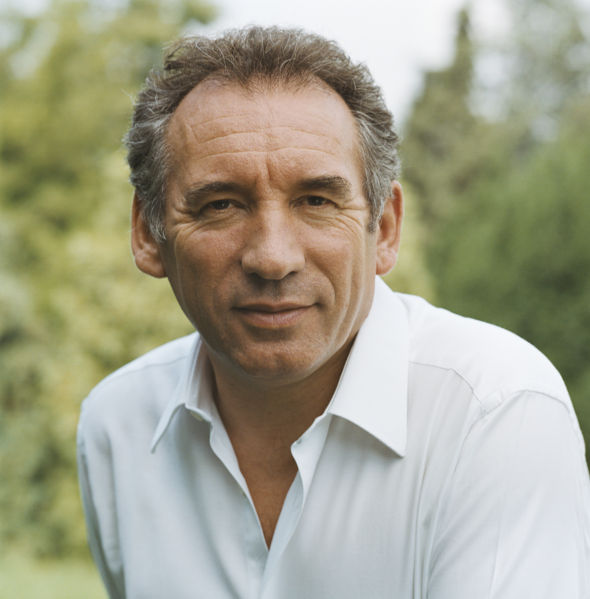
I was interested in the last French presidential election to see that  centrist candidate François Bayrou proposed making it illegal for the government to spend more than it received. I found this courageous and innovative. Naturally,

Bayrou

he came nowhere in the election! Silly chap! He should have promised to spend, spend, spend like the rest of them! Then he may have had a chance.

No, we are paying vast amounts of interest every year merely to service our debt. The basic questions are: Why can and do states do this? Is it necessary and is it wise? And if the answer to the last two questions is “No”, then why do we let them get away with it?

It seems to me that the “borrowing requirement” is simply a fairly crude means that governments use to bribe us with our own money. Please correct me if I am wrong!

By Chris Snuggs

The rights of the child

A reminder of the United Nations (UNICEF) Convention and a second view from yours truly.

On November 12th I was the author of a Post called Our next generation featuring the young Jessica Watson from Australia who is on course to try and win the record for the youngest person to sail, solo, unassisted, non-stop around the World.  Here’s a part of what was said:

Jessica Watson2
Jessica Watson

Jessica Watson is a teenager.  She is hoping to break the record for the youngest person to sail solo, non-stop and unassisted around the World.  Whatever modern materials and technology can do to make sailing easier, sailing solo for weeks on end is grindingly tough at any age.  She’s a wonderful example of the next generation!

Jessica left Sydney Harbour on October 18, 2009 sailing her sloop Ella’s Pink Lady. Her course is an estimated 23,000 nautical miles requiring her to be roughly 230 days at sea.

You can see that the tone of the Post was supportive.

However the comments that the Post attracted were critical of the pressures and influences that may have been brought to bear on this child.  For at 16 ‘child’ is what Jessica is.  One of our regular contributors pointed out that under the terms of the UNICEF Convention:

The Convention on the Rights of the Child is the first legally binding international instrument to incorporate the full range of human rights—civil, cultural, economic, political and social rights. In 1989, world leaders decided that children needed a special convention just for them because people under 18 years old often need special care and protection that adults do not.

(My underlining)

Read the rest of this Post

Black holes, colliders and paradoxes

This is a very strange world that we live in.

It would be fair to say that my knowledge about what I am writing in this Post is minimal to the point of total ignorance.  So why open my mouth and prove it!  Because the conquest of fundamental questions about our world is not only an example of mankind at its greatest but also something of broad appeal.

That is proved by the continuing popularity of the BBC Television Series – Horizon.  In that series there have recently been two fascinating programmes: Who’s afraid of a big Black Hole? and How long is a piece of string? (Readers outside the UK will not be able to view these programmes.)

Here are the programme summaries:

Black holes are one of the most destructive forces in the universe, capable of tearing a planet apart and swallowing an entire star. Yet scientists now believe they could hold the key to answering the ultimate question – what was there before the Big Bang?

The trouble is that researching them is next to impossible. Black holes are by definition invisible and there’s no scientific theory able to explain them. Despite these obvious obstacles, Horizon meets the astronomers attempting to image a black hole for the very first time and the theoretical physicists getting ever closer to unlocking their mysteries. It’s a story that takes us into the heart of a black hole and to the very edge of what we think we know about the universe.

and

Alan Davies attempts to answer the proverbial question: how long is a piece of string? But what appears to be a simple task soon turns into a mind-bending voyage of discovery where nothing is as it seems.

An encounter with leading mathematician Marcus du Sautoy reveals that Alan’s short length of string may in fact be infinitely long. When Alan attempts to measure his string at the atomic scale, events take an even stranger turn. Not only do objects appear in many places at once, but reality itself seems to be an illusion.

Ultimately, Alan finds that measuring his piece of string could – in theory at least – create a black hole, bringing about the end of the world.

Read more of this strange world

Straight Talking and Realpolitik

“To say nothing, especially when speaking, is half the art of diplomacy.” Quote by Will Durant.

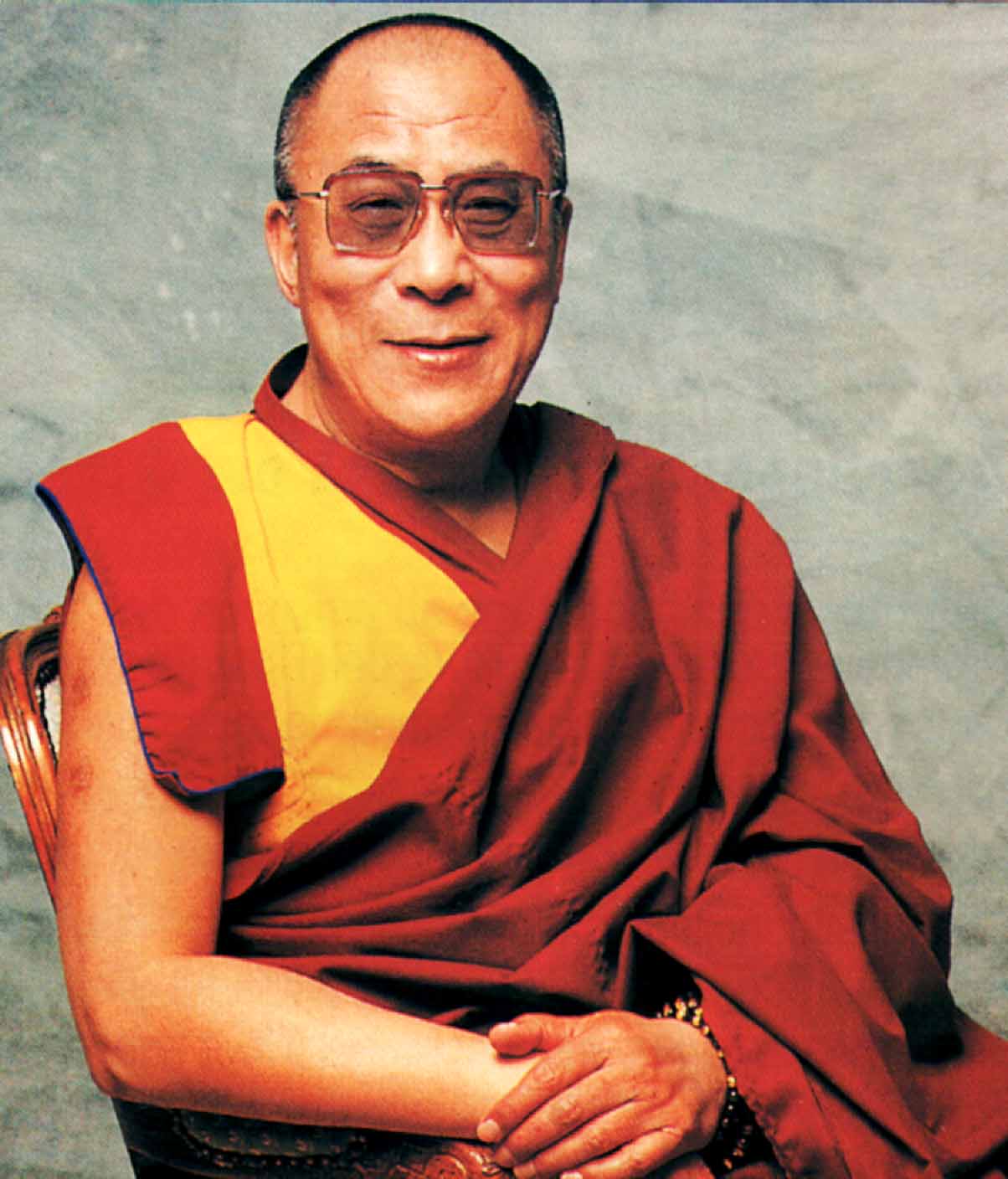
During his China visit Obama said that “the US accepted that Tibet was part of China, but went on to push for the early resumption of talks between China and the Dalai Lama.”
This is the usual fatuous “appeal” issued by Western worthies to the Chinese Communist Dictatorship to act honourably towards people it dislikes. As ever, it is a waste of breath, but a diplomatic ritual that has to be endured.

Obama knows it is pointless, the Chinese pretend to listen but also know it is pointless as nothing will change. We all know – or should – that it is pointless. Why then do they do it? You can’t call it self-delusion since nobody is deluded. Frankly, I am not sure what to call it.

Of course, the Chinese claim to Tibet varies from ludicrous through spurious to extremely questionable at best …..

… and Taiwan is a free and independent state, and more to the point democratic. It is a disgrace that free, democratic countries have never recognized it.

The truth (that’s what we want, isn’t it?) is that the CCP is a murderous and illegitimate dictatorship, never having submitted itself to a vote. This may of course be very wise on their part, but it isn’t honest, is it?

In the way of dictatorships, it is quite prepared to massacre its own citizens to protect its power, as happened in the seemingly long-forgotten Tiananmen Square. It is a pity that the free world seems compelled to overlook all this in grovelling to China. We have to deal with them, but issuing fatuous appeals, come on ….

I wonder what the parents of those killed by the CCP thought as doves of freedom were released over Beijing during the last Olympic Games?

By Chris Snuggs

[Footnote from the Editor. This is a hard-hitting Post about the reality of relations between the USA and China. It is a reminder of the truth about such relationships. Readers may want to view this to understand also the reality of trade with China. Some of the images are deeply disturbing.]
Update on the “British Solution”

The Credit Crisis in Britain

Following yesterday’s Post on this Blog about Goldman Sachs, here’s Britain in action.

Ministers yesterday (17th November) launched a £50 billion ($84 billion) bailout of Britain’s crippled banks – and warned there could be worse to come. State-controlled lenders Royal Bank of Scotland and Lloyds Banking Group will receive fresh injections of taxpayers’ money totalling £39 billion ($65.5 billion).

RBS – which has now received the biggest state rescue anywhere in the world – was also handed £11 billion ($18.5 billion) in tax breaks to help keep it afloat.

Source: The Daily Mail

Thanks for the Greed. Are the directors responsible still in place? Are the Great and Good who removed controls and oversaw the decade of binge-spending and easy credit still in place?

Britain's Global Giant!

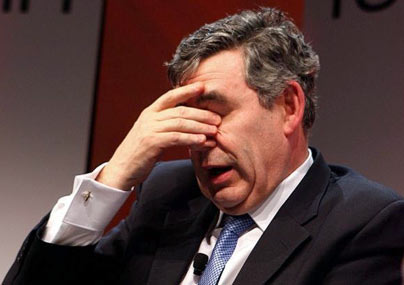
Oh, I remember now. The very same person in Britain who was Chancellor throughout the 90s and is now Prime Minister is – according to John Prescott (former Labour Deputy-Leader and the person whose office sign was changed at a cost of £700 ($1,200)  when his job name was rebadged weeks before he left it anyway)  – a “Global Giant” who saved the world.

Oh, and let’s not forget, this is the same person who said that: “Britain is better placed than other countries in Europe to weather the crisis …..etc blah, blah, blah …”

The reality (which is in fairly short supply among Global Giants) is different:

Within hours of the Chancellor’s announcement, the European Commission issued a stark warning about the frayed state of Britain’s national finances, warning of an ‘extraordinary deterioration’ because of the cost of City rescues.

It estimates public debt will double as a share of the economy between 2007 and 2011, reaching 88 per cent of gross domestic product – the biggest rise of any leading EU economy.

The latest £50billion bank bailout is roughly equivalent to the annual schools budget and far exceeds the annual defence budget of £35billion. The new moves bring the total of public money lavished on Britain’s financial rescue to £1.2trillion – almost £20,000 for every man, woman and child living in the country.

… and the £ has sunk drastically against the euro ….

Still, let’s have a bit of positive spin …. the National Debt isn’t quite (yet) what is was just after WWII. A great achievement. Well done  Gordon Brown …. but you can do it …. just one more little push.

We could do with fewer spin-ridden “Global Giants” and more people with vision, courage and competence.

And rather than “saving the world” it might be nicer if Gordon Brown started with saving Britain.

By Chris Snuggs