Category: People

Free speech!

Hats off to some intrepid commentators

We are going through unprecedented troubled times and the way ahead looks very uncertain.  The whole world could be participating in the ‘lost decade’ that Japan experienced previously.

But this article is not about doom and gloom!  It is about recognising the commitment to open and honest reporting being undertaken by (at least) these three  individuals.  Three commentators that this author follows in admiration and awe.

Learning from Dogs has nothing like the following of James Kwak, Yves Smith and Karl Denninger but the LfD authors do have an inkling of the work involved in writing not one but often several articles each day.  It is a huge commitment.

James Kwak

First James Kwak of Baseline Scenario.  Simon Johnson is, perhaps, the more well-known of this duo that comprise Baseline Scenario but it is James that puts in the leg-work.  Here’s a taste of a recent article from James:

Radio Stories

I spend a lot of time in the car driving to and from school, so I end up listening to a lot of podcasts (mainly This American Life, Radio Lab, Fresh Air, and Planet Money). I was catching up recently and wanted to point out a few highlights.
Last week on Fresh Air, Terry Gross interviewed Scott Patterson, author of The Quants, and Ed Thorp, mathematician,  inventor of blackjack card counting (or, at least, the first person to publish his methods), and, according to the book, also the inventor of the market-neutral hedge fund.

Large chunk snipped ……

I finally got around to listening to Planet Money’s interview with Russ Roberts from December. Russ Roberts and I are pretty sure to disagree on almost any actual policy question. But what I liked about his interview was that he basically admitted that policy questions cannot be settled by looking at the empirical studies. On whether the minimum wage increases or decreases employment for example, he says that he can poke holes in the studies whose conclusions he doesn’t agree with, but other people can poke holes in the studies he agrees with. In Roberts’s view, people’s policy positions are determined by their prior normative commitments.

I don’t completely agree. I don’t think that these questions, like the one about the minimum wage, are inherently unanswerable in the sense that the answer does not exist. But I agree that empirical studies are unlikely to get to the truth, particularly on a politically charged question, because there are so many ways to fudge an empirical study. As one of my professors said, there are a million ways you can screw up a study, and only one way to do it right. But I agree with the general sentiment. We are living in an age of numbers, where people think that statistics can answer any question. Statistics can answer any question, but they can answer it in multiple ways depending on who is sitting at the keyboard.

By James Kwak

Read about Yves Smith & Karl Denninger

How Earth Made Us …

... and the way we treat it!

Once again the British Broadcasting Company, BBC, has put together a spectacular television production; the epic story of how geology, geography and climate have influenced mankind.  It is remarkable and fabulous viewing as you can sample in these opening minutes from the first episode on Deep Earth.

The four programmes, Deep Earth; Water; Wind; Fire, are testament to both the incredible symbiosis between mankind and the elements and how that relationship is critically balanced in a way that allows us to survive.  Some of the images are truly outstanding, for example, the section on Prof. Iain Stewart exploring the Naica Cave system in Mexico.

Naica Cave system, Mexico

This theme of the balance of geological circumstances that allows, just, mankind to survive comes across time and time again in these films.  For example, our relationship with fresh water which we all take completely for granted.

Have any of us really pondered how long we would survive if there was insufficient clean, safe drinking water to go around?

The programmes also reveal something of the technological prowess that mankind has achieved to allow the way these films have been produced.

So why, oh why, are we also such a stupid, stupid species – so stupid that we foul our own nest to an incredible degree.

Continue reading “How Earth Made Us …” →

Crazy flying

This is not your usual air-show display

Author & author's dog in Piper Super Cub, R151

Three of the authors on Learning from Dogs are or have been pilots although only one, Bob Derham, is a real pilot!  I.e. he does it for a living!

Most pilots and many wannabes love the atmosphere of a good air show but after a few visits they can become rather predictable and that applies as much to the flying displays.  After all there is only so much that one can do to an aeroplane.

Not so the good people who comprise the Franklin’s Flying Circus.

Here’s a YouTube video showing Kyle Franklin ‘stealing’ a Piper Cub.  As a past owner of a Piper Super Cub, I have to tell you that the skills being used in this display are supremely clever.

Enjoy!

By Paul Handover

Are you really sure about your cell phone?

Society may be cooking up one hell of an issue.

Like most people if most western nations, for many years I had a cell phone, or a mobile phone as they are known in the UK.

I can recall a few years ago there being a scare in the UK about the microwave radiation hazard involved in using a cell phone but it certainly passed me by in terms of not really worrying about it.

Now a recent report in GQ Magazine seems to be gathering some momentum: once again, it’s about how your cell phone may be hazardous to your health.  It would be too easy just to dismiss this as just another poke at a very successful technology but something about this article caused me to write this Post – make of it what you will.

Here’s an extract:

Earlier this winter, I met an investment banker who was diagnosed with a brain tumor five years ago. He’s a managing director at a top Wall Street firm, and I was put in touch with him through a colleague who knew I was writing a story about the potential dangers of cell-phone radiation. He agreed to talk with me only if his name wasn’t used, so I’ll call him Jim. He explained that the tumor was located just behind his right ear and was not immediately fatal—the five-year survival rate is about 70 percent. He was 35 years old at the time of his diagnosis and immediately suspected it was the result of his intense cell-phone usage. “Not for nothing,” he said, “but in investment banking we’ve been using cell phones since 1992, back when they were the Gordon-Gekko-on-the-beach kind of phone.” When Jim asked his neurosurgeon, who was on the staff of a major medical center in Manhattan, about the possibility of a cell-phone-induced tumor, the doctor responded that in fact he was seeing more and more of such cases—young, relatively healthy businessmen who had long used their phones obsessively. He said he believed the industry had discredited studies showing there is a risk from cell phones. “I got a sense that he was pissed off,” Jim told me. A handful of Jim’s colleagues had already died from brain cancer; the more reports he encountered of young finance guys developing tumors, the more certain he felt that it wasn’t a coincidence. “I knew four or five people just at my firm who got tumors,” Jim says. “Each time, people ask the question. I hear it in the hallways.”

Continue reading “Are you really sure about your cell phone?” →

Brief encounter

A gift from one stranger to another

I was waiting for a flight to London one day in January, a spare seat opposite me at the table in the lounge.

A middle-aged German woman asked to sit down. She was she stopping briefly in Dubai on her way back from Australia and it seemed from the conversation that her month long trip had been some sort of possible life changing experience. By her simple back pack and even her shoes I could tell she was an individual with character.

In the minutes that passed by she talked about Tasmania and how different life was there from the one she knew at home.  I don’t recall exactly what I said to share the pleasure of her trip but did agree that it was possible to make major changes in one’s life; it obviously struck a chord.

Not so long after this brief meeting, I received an email.  She had made those big changes and she sent me a picture that she took in Tasmania as a thank you.

A Tasmanian bird greeting the morning sun

You never know how sometimes people just need someone who can see that their dreams are possible!

By Bob Derham

What a con!

How do young drivers afford the insurance?

My daughter turned 17 years of age on 4th February, and has been excited about the possibility of being able to drive for some time, apart from a period of concern when the British Government hinted at raising the driving age to 18. Fortunately that passed.

I likewise always wanted to drive and at age 17 moved from two wheels to four and in 10 days had passed my test. The car insurance giving nearly minimum cover was £26 a year, my first car having a 2.6 litre engine. The next was a Jaguar 2.4, and the third, another Jag, this time a 3.8 XK 150S, for which I probably had to pay an extra £10 a year, all while I was 17. (1969 ) Continue reading “What a con!” →

Selling airplanes!

Jet airliners any way up!

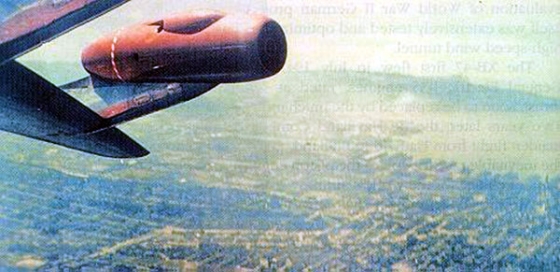
Back in 1955, air travel was an adventure and the age of the jet airliner had already dawned in the UK, albeit with some major setbacks along the way.

As the US prepared to enter the market that summer, there is the well known incident of Boeing test pilot “Tex” Johnston rolling a prototype Boeing 707.

From today’s perspective, under those circumstances , the integrity of the people involved was impressive. As the pilot describes, he was called into the office of the president of Boeing to explain his actions. For me, the most telling comment is his final line:

It was fine!

By John Lewis

A Guilty Verdict for Bomber is not “Success”!

Wartime issues – assuming we are at war!

The debate about the Christmas Day Bomber continues.   The pundits continue to define “success” in this case as finding him guilty in a court of law.  They go on and on, repeating over and over again, how the evidence is so strong, how the civilian court system is so reliable, how the shoe bomber was tried in civilian court, and how a guilty verdict is virtually certain.  

This is so wrong.  The definition of success is not whether we find the Christmas Day Bomber guilty in a civilian court.  This man intended to blow himself up on Christmas Day, and take hundreds of innocent Americans with him.  The fact that he is alive today, facing a jury or a judge and possible jail time or, at the worst, the death penalty, is a mere footnote to him.

Has it occurred to anyone that if the military had interrogated the shoe bomber as the failed terrorist that he was, that the odds of the Christmas Day Bomber getting on that plane with those explosives would have been diminished?  And interrogating the Christmas Day terrorist instead of shipping him off to the local prosecutor — for reasons Eric Holder, the U.S. Attorney General, has yet to articulate– diminishes the odds of some future terrorist act?

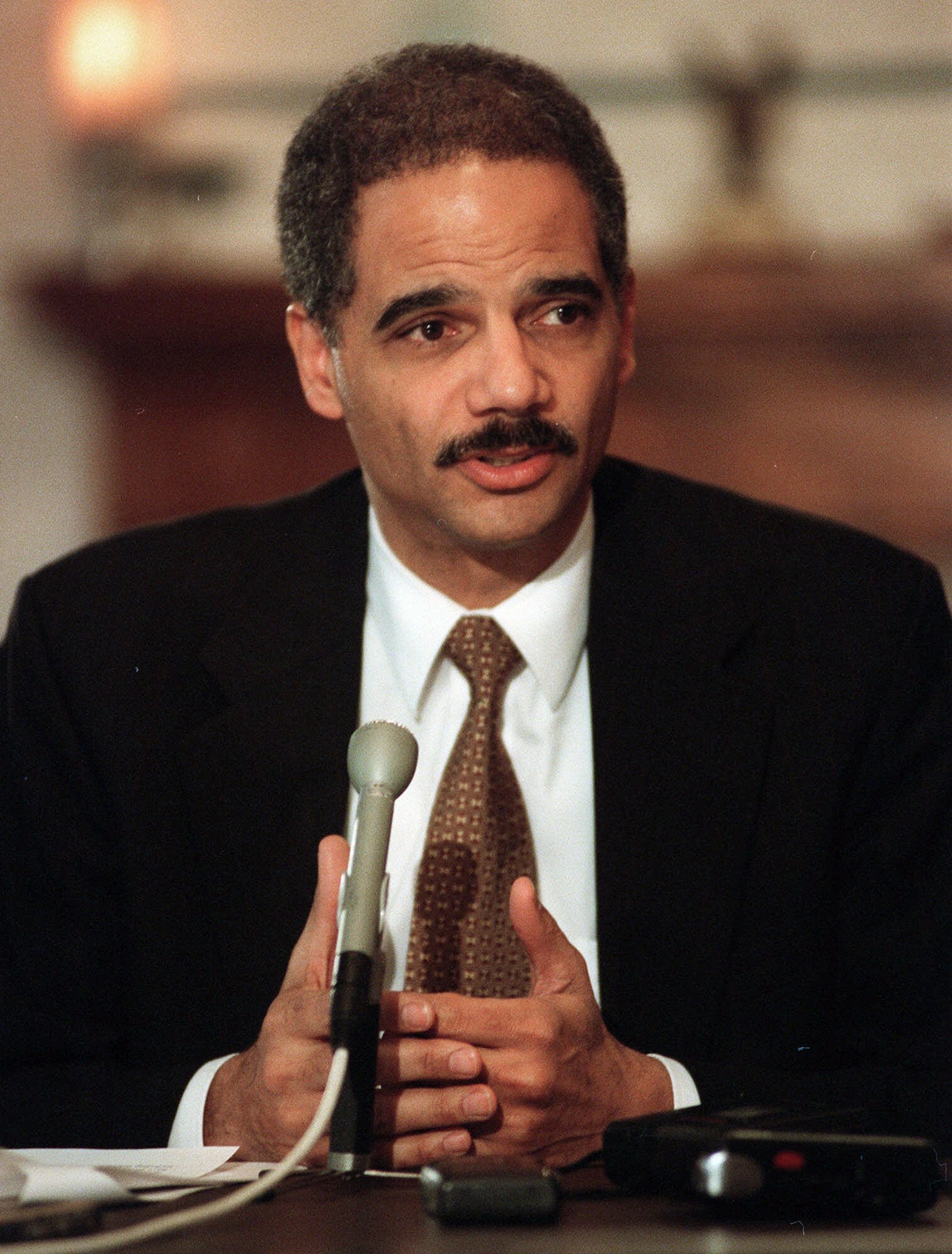
Eric Holder

We are at war!

These people attacked us as part of the ongoing war with terrorists.   No one should “rest easy” because some lawyer is going to sleepwalk through a trial that may or may not successfully reach the painfully obvious conclusion that the Christmas Day Bomber is guilty! On the contrary, it makes me very uneasy that he is in the civilian court system at this point in time at all, because every moment spent reading this man his rights is a moment that could have been spent gathering intelligence from a terrorist.  His punishment will come in due time.  In the meanwhile, we have to extract as much information from his as we can in order to defend ourselves.

We are at war.

By Sherry Jarrell

Moscow’s dogs

Another example of the very tight bonds between man and dogs.

A couple of weeks ago Learning from Dogs published a series of videos originally broadcast by the BBC Horizon programme called The Secret Life of the Dog.  It revealed a hitherto unknown depth of understanding of dogs by man and man by dogs.  Part One of those six parts is linked to here.

Now it turns out that Russian Muscovites are fascinated by stray dogs and it is estimated that there are 35,000 stray dogs in the Russian capital city.

Interestingly, because we tend to associate the newspaper with financial matters, the British Financial Times had a fascinating article a couple of weeks ago, from which is quoted:

Where did these animals come from? It’s a question Andrei Poyarkov, 56, a biologist specialising in wolves, has dedicated himself to answering. His research focuses on how different environments affect dogs’ behaviour and social organisation. About 30 years ago, he began studying Moscow’s stray dogs. Poyarkov contends that their appearance and behaviour have changed over the decades as they have continuously adapted to the changing face of Russia’s capital. Virtually all the city’s strays were born that way: dumping a pet dog on the streets of Moscow amounts to a near-certain death sentence. Poyarkov reckons fewer than 3 per cent survive.

Do read the article as it is a revealing piece about our interest in dogs in all corners of the world.  Indeed it mentions a web site devoted to stray dogs on Moscow’s Metro railway.

Russian stray

By Paul Handover

Irish humour

The Irish always see the world a little different to the rest of us!

During a recent PASSWORD AUDIT at the Bank of Ireland it was found that Paddy O’Toole was using the following password:

MickeyMinniePlutoHueyLouieDeweyDonaldGoofyDublin

The Bank’s Customer Relationship Manager contacted Paddy and queried why he was using such a long password.

Paddy replied:

Bejazus! are yez feckin’ stupid? Shore oi was told me password had to be at least eight characters long and include one capital.

Sort of makes sense when you think about it!

By Bob Derham