Category: People

Geo. Monbiot’s Grim Message

Action regarding the climate crisis.

The following essay from George Monbiot is a difficult read but it is also a necessary read.

With the news that the polar ice caps are retreating, just read yesterday: “Polar ice caps and sheets are shrinking at alarming rates due to global warming, with Arctic sea ice decreasing by over 12% per decade and polar ice sheets losing 7,560 billion tonnes of ice between 1992 and 2020. Greenland and Antarctica are losing hundreds of billions of tons of ice annually, significantly contributing to rising sea levels. [1234]”

ooOOoo

Alternating Current

Posted on 29th April, 2026

If this crucial circulation system shuts down, the civilisational impacts will be irreversible. So why isn’t it a top priority?

By George Monbiot, published in the Guardian 23rd April 2026

The poor and middle pay taxes, the rich pay accountants, the very rich pay lawyers – and the ultra-rich pay politicians. It’s not an original remark, but it bears repeating until everyone has heard it. The more money billionaires accumulate, the greater their control of the political system – which means they pay less tax, which means they accumulate more, which means their control intensifies.

They reshape the world to suit their demands. One of the symptoms of the pathology known as “billionaire brain” is an inability to see beyond their own short-term gain. They would sack the planet for a few more stones on the pointless mountain of wealth. And we can see it happening. Last week delivered the biggest news of the year so far, perhaps the biggest news of the century. But partly because billionaires own most of the media, most people never heard it. We might find ourselves committed to a civilisation-ending event before we even learn that such a thing is possible.

The news is that the state of a crucial oceanic circulation system has been reassessed by scientists. Some now believe that, as a result of climate breakdown changing the temperature and salinity of seawater, it is more likely than not to collapse. This system – known as the Atlantic meridional overturning circulation (Amoc) – delivers heat from the tropics to the North Atlantic. Recent research suggests that if it shuts down, it could cause both a massive drop in average winter temperatures in northern Europe and drastic changes in the Amazon’s water cycles. This could help tip the rainforest into cascading collapse and trigger further disaster.

Amoc’s shutdown is likely also to cause an acceleration of sea level rise on the east coast of the US, threatening cities. It could also raise Antarctic temperatures by roughly 6C and release a vast pulse of carbon currently stored in the Southern Ocean, accelerating climate catastrophe.

Even when the countervailing effects of generalised global heating are taken into account, a further paper proposes, the net impact in northern Europe would be periods of extreme cold – including events in which temperatures in London fall to -19C, in Edinburgh to -30C and in Oslo to -48C. Sea ice in February would extend as far as Lincolnshire. Our climate would change drastically, with the likelihood of far greater extremes, such as massive winter storms. Rain-fed arable agriculture would become impossible almost everywhere in the UK.

This shift, on any realistic human scale, would be irreversible. Its speed is likely to outrun our ability to adapt. Amoc shutdowns, driven by natural climate variability, have happenedbefore. But not in the era of large-scale human civilisation.

The first paper proposing that Amoc might have an on-state and an off-state was published in 1961. Since then, many studies have confirmed the finding and explored potential triggers and likely implications. Until recently, Amoc collapse caused by human activity fell into the category of a “high impact, low probability” event, devastating if it happens, but unlikely to occur.

Research over the past few years prompted a reassessment: it began to look more like a “high impact, high probability” event. Now, in response to last week’s paper, Prof Stefan Rahmstorf – perhaps the world’s leading authority on the subject – says the chances of a shutdown look like “more than 50%”. We could pass the tipping point, he says, “in the middle of this century”.

So why is this not all over the news? Why is it not the top priority for the governments that claim to protect us from harm? Well, in large part because oligarchic power has championed a model of climate impact that bears little relation to reality: that is, they have a hypothesis about how the world works that is completely detached from scientific findings. This model underpins official responses to the climate crisis.

It began with the work of the economist William Nordhaus, who sought to assess the economic effects of global heating. His modelling suggests that a “socially optimal” level of heating is between 3.5C and 4C. Most climate scientists see a temperature rise of this kind as catastrophic. Even 6C of heating, Nordhaus suggests, would cause a loss of just 8.5% of GDP. Climate science suggests it would look more like curtains for civilisation.

As the eminent economists Nicholas Stern, Joseph Stiglitz and Charlotte Taylor have argued, the mild effects Nordhaus forecasts are merely artefacts of the model he has used. For example, his modelling assumes that catastrophic risks do not exist and that climate impacts rise linearly with temperature. There is no climate model that proposes such a trend. Instead, climate science forecasts nonlinear impacts and greatly escalating risk.

The likely impacts of high levels of heating include the inundation of major cities, the closure of the human climate niche (the conditions that sustain human life) across large parts of the globe, the collapse of the global food system and cascading regime shifts – that is, abrupt transitions in ecosystems – releasing natural carbon stores, potentially leading to a “hothouse Earth” in which very few survive. Never mind a few points off GDP: there would be no means of measurement and scarcely an economy to measure.

Bizarrely, the modelling also applies discount rates to future people: their lives, it assumes, are worth less than ours. In other words, it has taken a method used to calculate returns to capital and applied it to human beings. As the three economists point out, “it is very difficult to find a justification for this in moral philosophy.” Moreover, climate impacts disproportionately affect the poor – but under the models, their lives are also priced down.

Unsurprisingly, models of this kind, Stern, Stiglitz and Taylor note, have been seized on by “special interests” such as the fossil fuel industry to argue for minimal responses to the climate crisis. And it’s not just the oil companies. Bill Gates, who claims to want to protect the living planet, has given $3.5m (£2.6m) to a junktank run by Bjorn Lomborg, who has built his career on promoting Nordhaus’s model, thus helping to downplay the need for climate action. Nordhaus was awarded the Nobel Memorial prize for economics for his pernicious nonsense – and it is deeply embedded in government decision-making.

A billionaire death cult has its fingers around humanity’s throat. It both causes and downplays our existential crisis. The oligarchs are not just a class enemy but, as they have always been, a societal enemy: a few thousand people can destroy civilisations. It’s the billions v the billionaires, and the stakes could not possibly be higher.

http://www.monbiot.com

ooOOoo

Until I came to live in the the USA permanently, in 2010, I used to live in South Devon, near Totnes. Thus the AMOC was very familiar to me and the local population. AMOC stands for Atlantic Meridional Overturning Circulation. Much more information on AMOC may be read on the WikiPedia site.

Although the future of the AMOC is uncertain, many scientists are concerned that the AMOC will weaken.

The above article by George Monbiot is potentially frightening. As Monbiot says at the end; “… a few thousand people can destroy civilisations.

What we need is a few thousand people to make this the number one priority! Not tomorrow but today!

An eclipse seen from space

This is beautiful.

I have always been interested in the space flights of the astronaughts. I am sure that I join millions of others who feel the same.

So this article by Deana L. Weibel, Professor of Anthropology at Grand Valley State University is terrific.

ooOOoo

Seeing an eclipse from Earth is awe‑inspiring – for astronauts seeing one from space, the scene was even more grand

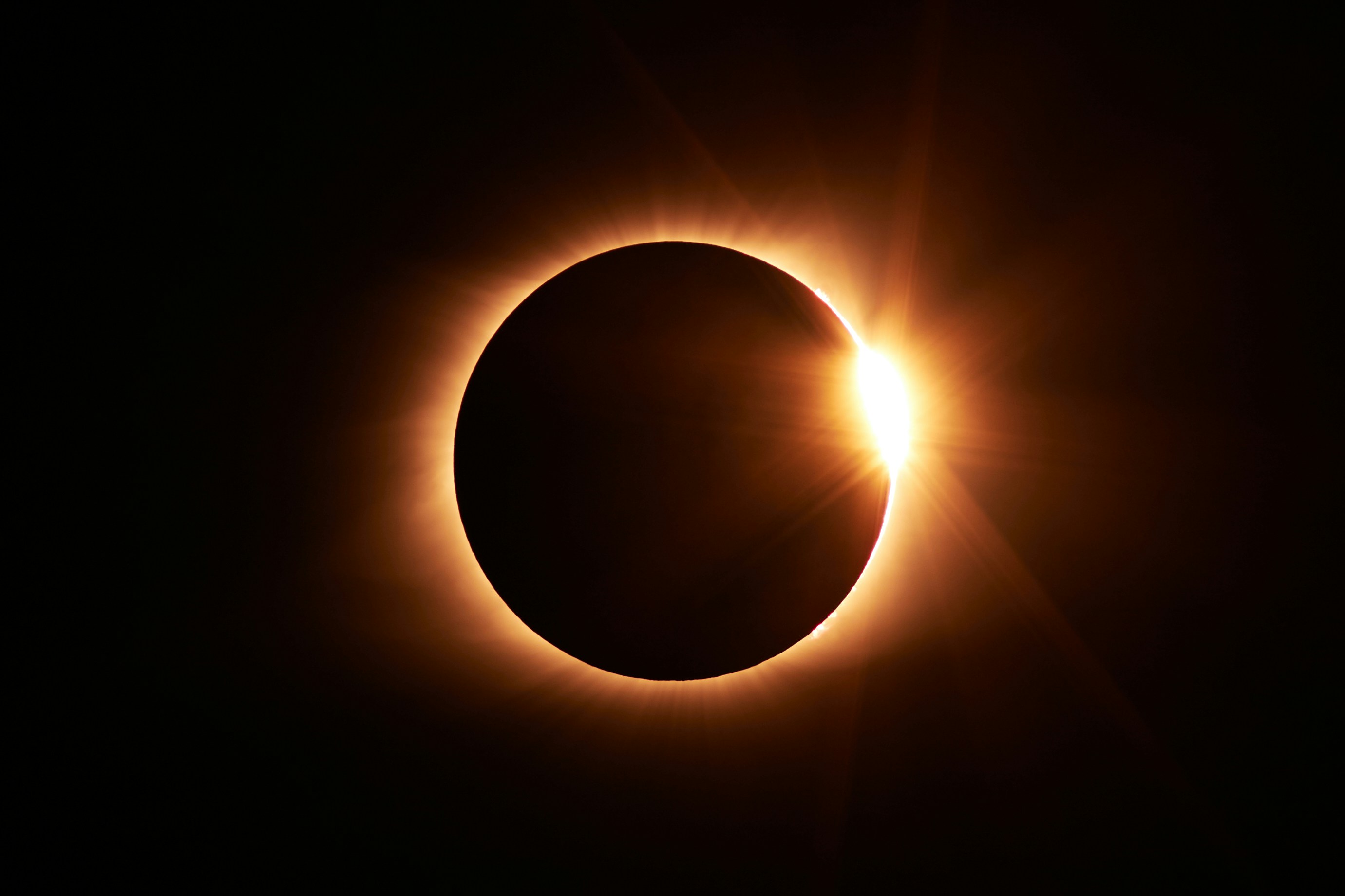
During a total solar eclipse, the Sun is barely visible behind the Moon. Roger Sorensen

Deana L. Weibel, Grand Valley State University

The astronauts on Artemis II’s trip to the Moon in April 2026 didn’t just have an amazing journey through space. They also saw something extraordinary. They were the first humans to see a total solar eclipse from space.

A solar eclipse happens when the Moon moves in front of the Sun. In a total eclipse, the Sun’s central disc is covered completely.

From Earth, the circle of the Sun is about the same size as the circle of the Moon. With the bright circle blocked, you can see the undulating rays of the Sun’s corona, or outer atmosphere, that are normally too dim to be observed.

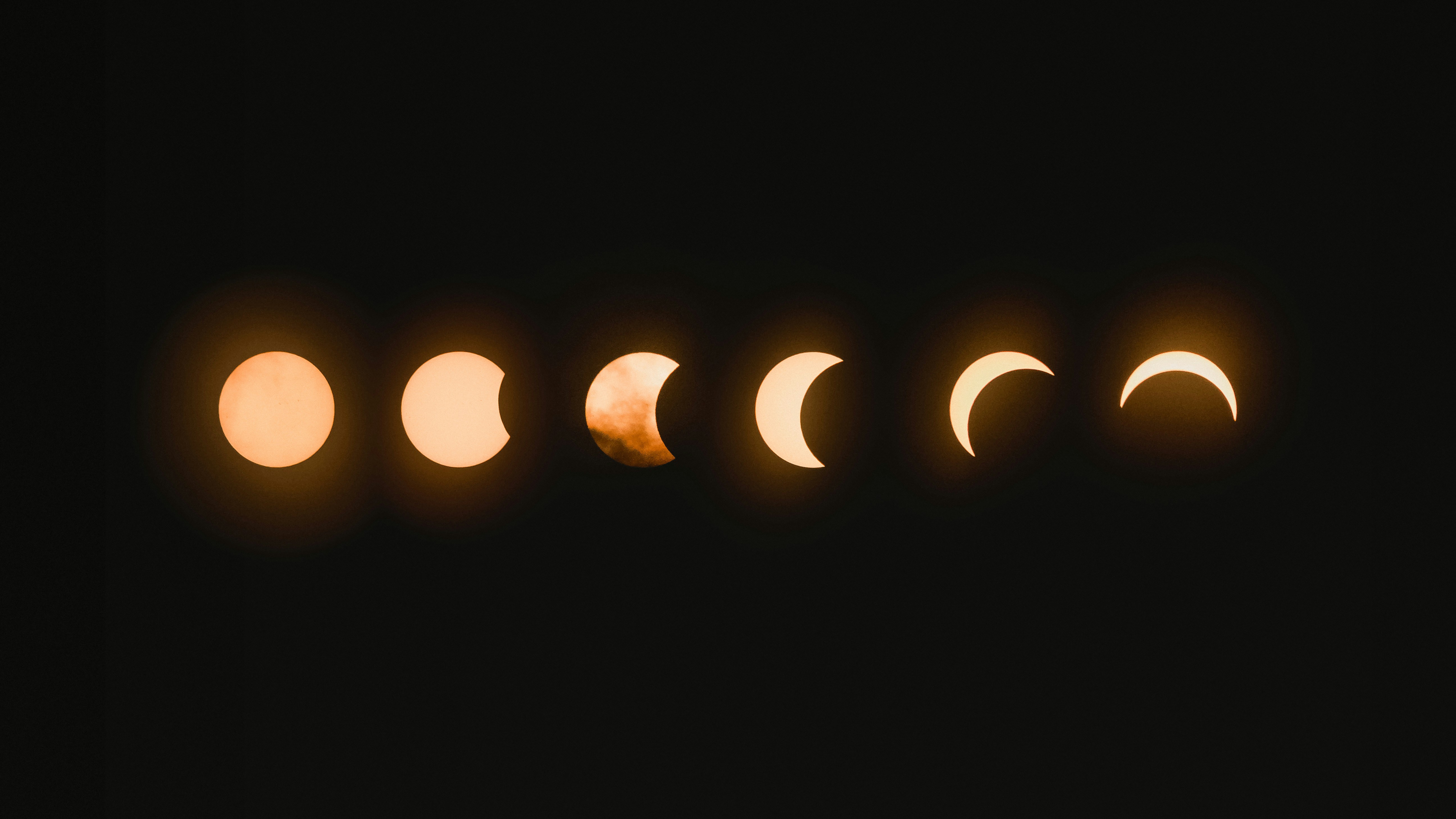
Moon covering most, then all, then most of the Sun
Composite image of moments before, during and after totality. NASA/Aubrey Gemignani

I’m a cultural anthropologist who studies awe-inspiring aspects of space exploration. I have been lucky enough to have seen two total solar eclipses. The first one was in Nebraska in 2017, the second in Indiana in 2024.

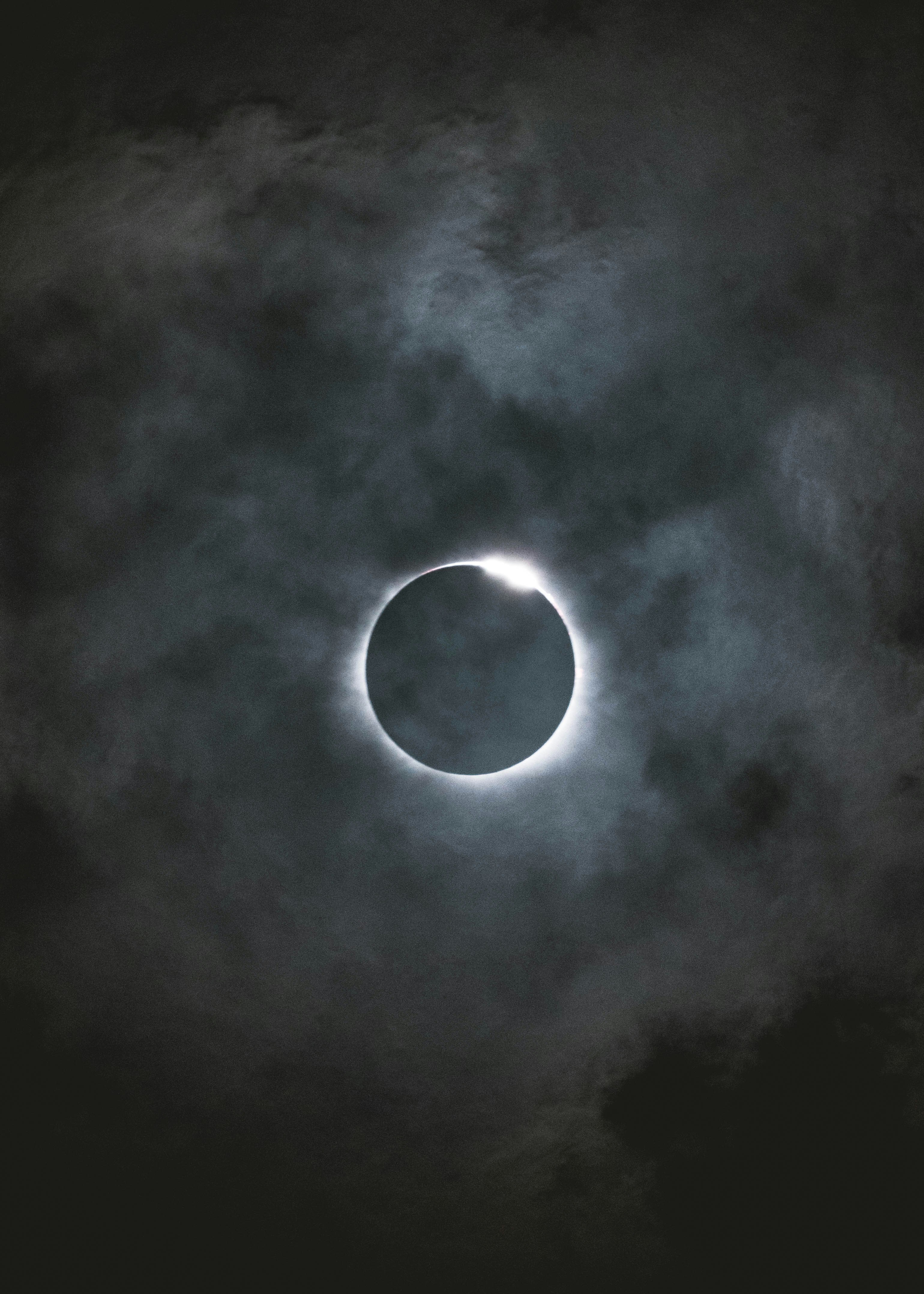
During my second total eclipse, the period of totality – that short span when you can remove your protective glasses and look directly at the eclipse – lasted close to 4 minutes. I saw waves of diffuse light snaking around an ink-black hole in the sky. It looked very wrong – almost alien.

On Aug. 12, 2026, there will be another total solar eclipse, visible only from Greenland, Iceland, Spain and the Balearic Islands of the Mediterranean. Some fortunate viewers in Spain and nearby islands may see the eclipse just before sunset, low on the horizon. The Moon illusion, a phenomenon where the Moon looks bigger when it’s near the horizon, might make this eclipse look unusually large.

Unusual eclipse perspectives

Astronauts will occasionally also have less common eclipse experiences. I interviewed one I call by the pseudonym “Jackie” in my research about astronauts’ experiences of awe. She was part of an astronaut training group that did a flight exercise during a total solar eclipse.

Jackie and her squad flew their jets in the shadow of the Moon. This lengthened their time in totality because they could follow and stay within the shadow. Jackie was most impressed with how the Sun’s corona seemed to shift and ripple.

“It’s not static … it’s alive,” she told me.

On April 6, 2026, the astronauts of NASA’s Artemis II mission saw another kind of unusual eclipse as they flew around the Moon. At one point during their flight, the Moon and the spacecraft aligned so that the Moon was directly between them and the Sun, blocking the Sun’s disk in a way that looks very different from what we see on Earth.

Astronaut Victor Glover said it felt like they “just went sci-fi.” https://www.youtube.com/embed/YLjPci5bo1k?wmode=transparent&start=0 ‘An impressive sight’: The Artemis II crew were the first humans to observe a solar eclipse from near the Moon.

The astronauts were so close to the Moon that the Moon looked bigger than the Sun and hid more of its bright circle. Earth was also in view, and sunlight reflected from the Earth onto the Moon in a phenomenon NASA calls “earthshine.” This dim light is very similar to the moonlight that shines on the Earth at night.

Imagine the Sun hidden behind the Moon, creating a hazy halo around the Moon’s edges. At the same time, faint light reflected from Earth softly illuminates the Moon, revealing mountains and craters in a dim twilight. Now imagine this striking scene lasting 54 minutes.

This sight was, without a doubt, one of the most unusual eclipses ever seen by human eyes.

Although Artemis’ astronauts are trained to think scientifically, this experience propelled them into a state of awe. They talked openly about how their brains were “not processing” what they observed. While NASA kept them busy with a variety of tasks, the sound of emotion and excitement in their voices as they broadcast live from their lunar flyby was unmistakable.

An eclipse visible from space - the Moon is shown shadowed with some sunlight visible behind it, and part of the Orion capsule shown off to the left.
The Moon during a solar eclipse on April 6, 2026, photographed by one of the Orion spacecraft’s cameras during Artemis II. Earth is reflecting sunlight at the left edge of the Moon, called ‘earthshine.’ NASA

The psychology of awe

Researchers have studied the effects of awe on the human brain, including awe felt during solar eclipses. Moments of wonder like these can transform how you feel and even how you think, making you more thoughtful and open-minded.

In my own work I’ve found these experiences can change how astronauts understand their own place in the universe.

One astronaut said she gained an awareness of the fragility of our planet that now shapes everything she does, while another described becoming more curious after returning to Earth. A third said the awe he experienced in lunar orbit changed his understanding of time and infinity.

Space travel creates many opportunities for awe, but a solar eclipse from behind the Moon, as Mission Commander Reid Wiseman put it, required “20 new superlatives.”

It’s an experience most of the earthbound eclipse-chasers heading to Greenland or Iceland or Spain this summer will only dream about. Whether eclipses happen in space or on Earth, though, close encounters with the grandeur of our universe can make you feel profoundly human.

Deana L. Weibel, Professor of Anthropology, Grand Valley State University

This article is republished from The Conversation under a Creative Commons license. Read the original article.

ooOOoo

In this difficuly world at present, this is a perfect article. As was written, “…. the awe he experienced in lunar orbit changed his understanding of time and infinity.

Picture Parade Five Hundred and Twenty-One

More NASA images.

And what images.

NASA celebrates Hubble’s 36th anniversary with a new image of the Trifid Nebula, a star-forming region it first captured in 1997. The telescope leveraged almost its full operational lifetime to show us changes in the nebula on human time scales with an improved camera.
NASA, ESA, STScI; Image Processing: Joseph DePasquale (STScI)

There is more information on the NASA website.

Now a YouTube video.

What terrific images from Hubble.

The End of Our Lives

As in Death!

During the week of the 20th to 24th April, 2026, BBC Radio 4, immediately after the World At One, at 13:45-14-00 BST, presented a fifteen-minute series on death. The episode of the April 22nd, 2026 was called Lay This Body Down. It is summarised as follows:

As our society becomes more secular, more people feel like they want to do death their own way. That’s leading to a range of new options for disposing of dead bodies.

Now watch this:

Jean and I have opted for human composting after we have died. It is a natural process and details may be found here.

About the English language

There’s more to this topic than meets the eye.

George Bernard Shaw once remarked that America and Britain are “two countries separated by the same language.”

A long time ago that became a quotable quote. Shaw was born in Dublin in 1856 and died in England in 1950. He was 94.

Although I have visited the USA many times before, I came to live here in Merlin, Oregon, with Jeannie, my gorgeous wife, in 2012. And we love living here.

However, I still think like an Englishman and spell my words in English English.

Read the following. I am sure you will enjoy it.

ooOOoo

Despite all the likes, literallys and dropped g’s, English isn’t decaying before our eyes

Fear not: There isn’t anything that needs saving. LisaStrachan/iStock via Getty Images

Valerie M. Fridland, University of Nevada, Reno

As a linguistics professor, I’m often asked why English is decaying before our eyes, whether it’s “like” being used promiscuously, t’s being dropped deleteriously or “literally” being deployed nonliterally.

While these common gripes point to eccentric speech patterns, they don’t point to grammatical annihilation. English has weathered far worse.

Let’s start with something we can all agree on: Old English, spoken from approximately A.D. 450 to 1100, is pretty unintelligible to us today. Anyone who’s had the pleasure of reading “Beowulf” in high school knows how different English back then used to sound. Word endings did a lot more grammatical work, and verbs followed more complicated patterns. Remnants of those rules fuel lingering debates today, such as when to use “whom” over “who,” and whether the past tense of “sneak” is “snuck” or “sneaked.”

The language went on to experience centuries of tumult: Viking invasions, which introduced Old Norse influence; Anglo-Norman French rule, which shifted the language of the elite to French; and 18th-Century grammarians, who dictated norms with their elocution and grammar guides.

In that time, English has lost almost all of the more complex linguistic trappings it was born with to become the language we know and – at least, sometimes – love today. And as I explain in my new book, “Why We Talk Funny: The Real Story Behind Our Accents,” it was all thanks to the way that language naturally evolves to meet the social needs of its speakers.

From dropping the ‘l’ to dropping the ‘g’

The things we tend to label as “bad” or sloppy English – for instance, the “g” that gets lost from our -ing endings or the deletion of a “t” when we say a word like “innernet” – actually reflect speech habits that are centuries old.

Take, for example, “often.” Originally spoken with the “t,” that pronunciation gradually became less favored around the 15th century, alongside that “l” in “talk” and the “k” in know. Meanwhile, the “s” now stuck on the back of verbs like “does” and “makes” began as a dialectal variant that only became popular in 16th-century London. It gradually replaced “th” whenever third persons were involved, as in “The lady doth protest too much.”

While dropping the “l” in talk may have been initially frowned upon, today it would be strange if you pronounced the letter. And the shift makes sense: It smoothed out some linguistic awkwardness for the sake of efficiency.

If people learned to look at language more like linguists, they might come around to seeing that there is more than one perspective on what good speech consists of.

And yes, that absolutely is a sentence ending with a preposition – something many modern grammar guides discourage, even though the idea only took hold after 18th-century grammarian Robert Lowth intimated it was a less elegant choice based on the model of Latin.

Though Lowth voiced no hard and fast rule against it, many a grammar maven later misconstrued his advice as an admonition. Just like that, a mere suggestion became grammatical law.

The rise of the grammar sticklers

Many of today’s ideas about what constitutes correct English are based on a singular – often mistaken – 19th-century view of the forces that govern our language.

In the late 18th century, the English-speaking world began experiencing class restructuring and higher literacy rates. As greater class mobility became possible, accent differences became class markers that separated new money from old money.

Emulation of upper-crust speech norms became popular among the nouveau riche. With literacy also on the rise, grammarians and elocutionists raced to dictate the terms of “proper” English on and off the page, which led to the rise of usage guides and dictionaries that were eager to sell a certain brand of speech.

Another example of grammarian angst reconfiguring the view of an otherwise perfectly fine form is the droppin’ of the “g.” It became so tied to slovenly speech that it was branded with an apostrophe in the 19th century to make sure no one missed its lackadaisical and nonstandard nature.

Up until the 19th century, however, no one seemed to care whether one pronounced it as “-in” or “-ing.”

In fact, evidence suggests that -ing wasn’t even heard as the correct form. Many elocution guides from the 18th century provide rhyming word pairs like “herring/heron,” “coughing/coffin” and “jerking/jerkin,” which suggest that “-in” may have been the preferred pronunciation of words ending with “-ing.” Even writer and satirist Jonathan Swift – a frequent lobbyist for “proper” English – rhymes “brewing” with “ruin” in his 1731 poem “Verses on the Death of Dr. Swift, D.S.P.D..”

Embrace the change

Language has always shifted and evolved. People often bristle at changes from what they’ve known to what is new. And maybe that’s because this process often begins with speakers that society usually looks less favorably on: the young, the female, the poor, the nonwhite.

But it’s important to remember that being disliked and bad are not the same thing – that today’s speech pariahs are driven by the same linguistic and social needs as the Londoners who started going with “does” instead of “doth” or dropped the “t” in often.

So if you think the speech that comes from your lips is the “correct” version, think again. Thou, like every other English speaker, art literally the product of centuries of linguistic reinvention.

Valerie M. Fridland, Professor of Linguistics, University of Nevada, Reno

This article is republished from The Conversation under a Creative Commons license. Read the original article.

ooOOoo

Thank you, Valerie Fridland, for your interest article.

To quote another famous idiom, “You can’t judge a book by its cover.”

Artemis images

A unique record taken by the crew.

Human-created photos of this historic mission cannot be replace by articificial intelligence (AI).

This is the reason I am republishing an article from The Conversation.

ooOOoo

Artemis II crew brought a human eye and storytelling vision to the photos they took on their mission

Astronaut Jeremy Hansen takes a picture through the camera shroud covering a window on the Orion spacecraft. NASA

Christye Sisson, Rochester Institute of Technology

In early April 2026, the Artemis II mission captivated me and millions of people watching from across the world. The crew’s courage, skill and infectious wonder served as tangible proof of human persistence and technological achievement, all against the mysterious backdrop of space.

People back on Earth got to witness the mission through remarkable photos of space captured by astronauts. Images created and shared by astronauts underscore how photography builds a powerful, authentic connection that goes beyond what technology alone can capture.

As a photographer and the director of the Rochester Institute of Technology’s School of Photographic Arts and Sciences, I am especially drawn to how these photographs have been at the center of the public’s collective experience of this mission.

In an era when image authenticity is often questioned and with the capabilities of autonomous, AI-driven imaging, NASA’s choice to train astronauts in photography has placed meaning over convenience and prioritized their human perspectives and creativity.

Capturing space from the crew’s perspective

Photography was not originally placed as a high priority in NASA’s Apollo era. The astronauts only took photographs if they had the chance and all their other tasks were complete.

An image of the entire Earth from space.
‘The Blue Marble’ view of the Earth as seen by the Apollo 17 crew in 1972. NASA

Thanks largely in part to public response to those images from Apollo, including “Earthrise” and the “Blue Marble” being widely credited for helping catalyze the modern environmental movement, NASA shifted its approach to utilize photography to help capture the public’s imagination by training their astronauts in photographic practices.

The Artemis II mission’s photographs have helped cut through the increasing volume of artificially generated images circulating on social media. NASA’s social media releases of the crew’s photographs have garnered thousands of shares and comments.

This excitement could be explained by the novelty of photos from space, but these images also distinguish themselves as products of astronauts experiencing these sights and interpreting them through their photographs. These differences require an important distinction around where technology ends and humanity begins.

An astronaut looking out the window of the Orion spacecraft, where the full moon is visible in space.
NASA astronaut Reid Wiseman watches the Moon from one of the Orion spacecraft’s windows. NASA

Human perspective versus AI tools

Photography has long integrated AI-powered software and data-driven tools in a variety of ways: to process raw images, fill in missing color information, drive precise focus and guide image editing, among others. These modern technological assists help human photographers realize their vision.

Artificial intelligence is also increasingly capable of operating machinery competently and autonomously, from cars to drones and cameras.

And AI can generate convincing, realistic images and videos from nothing more than a text prompt, using readily available tools.

Researchers train AI to mimic patterns informed by millions of sample images, and the algorithm can then either take or create a photograph based on what it predicts would be the most likely version of a successful, believable image.

Human-created photos are rooted in direct observation, intent and lived experience, while AI images – or choices made by AI-driven tools – are not. While both can produce compelling and believable visuals, the human photographs carry emotional power because the photographer is drawing from their experiences and perspective in that moment to tell an authentic story.

Artemis II photographs resonate, not only because they are historic, but because they reflect the deliberate choices and intent of a human being in that specific moment and context. The exposure, camera setting, lens choice and composition are all dictated by the astronaut’s vision, skill, perspective and experience. Each image is unique in comparison with the others. These choices give the images narrative power, anchoring them in human perspective.

The Earth shown partially shadowed beyond the Moon in space
NASA’s ‘Earthset’ photo captured by the Artemis II crew. NASA

Images to tell a story

Photographers choose what to include in the final version of their image to tell a story. In the Artemis II images, this human perspective comes out. In the “Earthset” photo, you see a striking juxtaposition of the Moon’s monochromatic, textured surface in the foreground against a slivered, bright Earth.

The choice to include both in the frame contrasts these objects literally and figuratively, inviting comparison. It creates a narrative where Earth is contrasted against the Moon – life is contrasted against the absence of it.

Another photo shows the nightside of the whole Earth, featuring the Sun’s halo, auroras and city lights. The choice to include the subtle framing of the window of the capsule in the lower left corner reminds the viewer where and how this image was captured: by a human, inside a capsule, hurtling through space. That detail grounds the photograph in the human perspective.

Both photos are reminiscent of Earthrise and the Blue Marble. These past images hold a place in the global collective consciousness, shaped by a shared historical moment.

The Artemis II photographs are anchored in this collective moment of lived human experience, yet also shaped by each astronaut’s viewpoint. The crew’s unique perspectives exemplify photography’s transformative power by inviting viewers to engage emotionally and intellectually with their journey. These photographs share the astronauts’ awe and wonder and affirm the value of human creativity and its ability to connect us in a captured moment.

Christye Sisson, Professor of Photographic Sciences, Rochester Institute of Technology

This article is republished from The Conversation under a Creative Commons license. Read the original article.

ooOOoo

I am going to repeat a sentence towards the end of the article: “These past images hold a place in the global collective consciousness, shaped by a shared historical moment.”

That global collective consciousness!

Consciousness, and the Human Brain

An astounding video by David Eagleman.

Amazingly, Jean and I were being run recently in to somewhere local and Trevor, our driver, was listening to a talk by David Eagleman. I was captivated.

In that talk David Eagleman spoke about Roger Penrose and his research into consciousness. Here’s an AI summary:

Roger Penrose proposes that human consciousness is non-computational and originates from quantum processes within brain neurons, rather than just neural connections. Together with anesthesiologist Stuart Hameroff, he developed the “Orchestrated Objective Reduction” (Orch OR) theory, which suggests consciousness arises from quantum computations in microtubules. 

Roger Penrose is the author of The Emperers New Mind.

Thus, beyond the eighty-six billion neurons that make up the brain, there are also the microtubals. These are very small and the diameter of several thousand of them are less than the diameter of the human hair. See WikiPedia.

The brain has deep purpose” was one of the sayings Eagleman spoke of. “Why do we have experience” was another.

There was much more that I did not really understand. But it was still fascinating.

Then we discovered that what Trevor was listening to was also a video. The video is Inner Cosmos. It runs for 75 wonderful minutes.

Here is that video.

To say that this has absolutely updated my mind to a newer level is an understatement; big time!

Please watch the video.

The Ten Commitments

This is important (and brilliant).

Jean and I were taken to our regular humanist meeting last Saturday morning. The topic was Christian Nationalism.

Today, I want to explain what these commitments are. Then on Sunday I will post some images.

ooOOoo

Ten Commitments

Guiding Principles for Teaching Values in America’s Public Schools

Altruism

Altruism is the unselfish concern for the welfare of others without expectation of reward, recognition, or return. Opportunities for acts of altruism are everywhere in the family, the classroom, the school, and the wider community. Think of examples of altruistic acts in your experience. What person-to-person and group projects, classroom and school-wide activities, and community service projects might you and your students undertake?

Caring for the World Around Us

Everyone can and ought to play a role in caring for the Earth and its inhabitants. We can directly experience the living things in our homes and neighborhoods like trees, flowers, birds, insects, and pets. Gradually we expand our neighborhood. We learn about deserts and oceans, rivers and forests, the wildlife around us and the wildlife elsewhere. We learn that we are dependent on each other, on the natural world, and all that lives in it for food and shelter, space and beauty.

Critical Thinking

We gain reliable knowledge because we are able to observe, report, experiment, and analyze what goes on around us. We also learn to raise questions that are clear and precise, to gather information, and to reason about the information we receive in a way that tests it for truthfulness, accuracy, and utility. From our earliest years we learn how to think and to share and challenge our ideas and the ideas of others, and consider their consequences. Practice asking “what next?” and “why?” and “how do I/you/we know that?”

Empathy

We human beings are capable of empathy, the ability to understand and enter imaginatively into another living being’s feelings, the sad ones and the happy ones as well. Many of the personal relationships we have (in the family, among friends, between diverse individuals, and amid other living things) are made positive through empathy. With discussion and role-playing, we can learn how other people feel when they are sad or hurt or ignored, as well as when they experience great joys. We can use stories, anecdotes, and classroom events to help us nurture sensitivity to how our actions impact others.

Ethical Development

Questions of fairness, cooperation, and sharing are among the first moral issues we encounter in our ethical development as human beings. Ethical education is ongoing implicitly and explicitly in what is called the “hidden curriculum” that we experience through the media, the family, and the community. Ethics can be taught through discussion, role-playing, storytelling, and other activities that improve analysis and decision-making regarding what’s good and bad, right and wrong.

Global Awareness

We live in a world that is rich in cultural, social, and individual diversity, a world where interdependence is increasing rapidly so that events anywhere are more likely to have consequences everywhere. Much can be done to prepare the next generation for accepting the responsibility of global citizenship. Understanding can be gained regarding the many communities in which we live through history, anthropology, and biology. A linguistic, ethnic, and cultural diversity are present in the classroom and provide lessons of diversity and commonality. We help others reach understanding about the interconnectedness of the welfare of all humanity.

Humility

We must always remember that there’s a lot we don’t know about the universe. There’s still so very much to learn. Science will help us. But sometimes scientists discover surprising things that tell us how some of our old beliefs are false. So we need to be willing to change when our knowledge changes. A good humanist doesn’t try to be sure of things that science can’t show are true.

Peace and Social Justice

A curriculum that values and fosters peace education would promote the human rights of all people and understanding among all nations, cultural and religious groups. Students should have opportunities to learn about the United Nations’ role in preventing conflict as well as efforts to achieve social justice in the United States. They should learn about problems of injustice including what can be done to prevent and respond to these problems with meaningful actions that promote peace and social justice and that protect the inherent human rights of everyone both at home and abroad.

Responsibility

Our behavior is morally responsible when we tell the truth, help someone in trouble, and live up to promises we’ve made. Our behavior is legally responsible when we obey a just law and meet the requirements of membership or citizenship. But we also have a larger responsibility to be a caring member of our family, our community, and our world. Stories and role-playing can help students understand responsibility and its absence or failure. We learn from answering such questions as: What happens when we live in accordance with fair and just rules? What happens when we don’t? What happens when the rules are unjust?

Service and Participation

Life’s fulfillment can emerge from an individual’s participation in the service of humane
ideals. School-based service-learning combines community service objectives and learning objectives with the intent that the activities change both the recipient and the provider. It provides students with the ability to identify important issues in real-life situations. Through these efforts we learn that each of us can help meet the needs of others and of ourselves. Through our lifetime, we learn over and over again of our mutual dependence.

ooOOoo

My mother was an atheist and, consequently, I have been an atheist all my life. With the above values, as they are taught in schools, there is no need for a God.

This Winter

The low snowpack this last Winter is concerning.

Although here in Southern Oregon at present we have a few wet days, in general the amount of rain coming down is well below normal levels.

That is why this recent article presented by The Conversation is being published.

ooOOoo

Winter’s alarmingly low snowpack offers a glimpse of the changing rhythm of water in the western US

In a good year, the West’s mountain snowpack feeds streams and rivers well into summer. George Rose/Contributor/Getty Images News

Imtiaz Rangwala, University of Colorado Boulder

Winter is more than just a season in the western U.S. – it is a savings account to get farms and homes through the long, dry summer ahead. As the snowpack that accumulates in the mountains through winter slowly melts in late spring and summer, it feeds into rivers and reservoirs that keep communities and ecosystems functioning.

The April 1 snowpack measurement has long been the single most important number in western water management, considered a strong proxy for how much water the mountains are holding in reserve.

But in 2026, that savings account has been woefully deficient.

Across the western United States, temperatures from November through February were among the warmest on record, with many areas 5 to 10 degrees Fahrenheit (2.8 to 5.5 degrees Celsius) above the 20th-century average. March continued to break heat records. At lower elevations, the higher temperatures meant a significant part of the winter’s precipitation fell as rain rather than snow. In some places, snowfall accumulated but melted quickly during warm periods.

A chart shows an unusually low amount of area in the West with snow cover during winter 2026.
The total area of the western U.S. with snow cover was exceptionally low compared with the rest of the 21st century. National Snow and Ice Data Center

As a result, even regions that received near- or above-normal precipitation for the season failed to build substantial snowpack. In the northern Rockies and the mountains of the Pacific Northwest, any above-average snow accumulation was largely confined to the highest elevations, while middle and lower elevations had relatively little snowpack.

This situation is a hallmark of warming winters. As global temperatures rise, the freezing line where precipitation changes from rain to snow moves up the mountains, shrinking the area capable of sustaining a seasonal snowpack.

A map shows most of the stations across the western mountains were below 50% of average. The best conditions were in the northern Rockies and Pacific Northwest, and most of those were still below average.
At the vast majority of the U.S. Natural Resources Conservation Service’s snow measurement stations across the West, the snowpack’s snow-water equivalent on March 30, 2026, was less than 50% of the 1991-2020 median. Natural Resources Conservation Service
A map shows wide temperature anomalies in the western U.S. compared with the 20th-century average.
Temperatures were well above the 20th-century average across the western U.S. in winter 2025-26. National Centers for Environmental Information

The exceptionally warm winter of 2025–26 across much of the western U.S. delivered a powerful preview of what the regional water cycle in a warmer climate may increasingly look like: less snow and a fundamental reshaping of the hydrograph – the chart of how much water flows through streams across the year.

A flattening hydrologic pulse

The consequences of this shift for water supplies are already visible in streamflows.

In multiple river basins in the West, streamflows were above average in winter and early spring, and some locations were approaching record-high levels. Historically, that water would have remained frozen in the snowpack until late spring. Instead, precipitation arriving as rain – along with intermittent midwinter melting events – increased the runoff.

Scientists who study natural water flows, as I do, pay attention to the hydrographs of streamflows in river basins to see when the water flow in mountain streams is strongest and how long that flow is likely to continue into summer.

A chart shows a typical arc of increasing water flows as snow melt in 2025, compared with several peaks of snowmelt and rainfall during 2026.
This hydrograph showing two years of water flows in the St. Mary River near Babb, Mont., reflects the difference between a typical late-spring peak, as 2025 saw, and several midwinter peaks from warm temperatures and rain, as 2026 is seeing. U.S. Geological Survey

In recent years, rising temperatures have led to a redistribution of streamflows throughout the winter and early spring in ways that are fundamentally reshaping the hydrographs of snowmelt-dominated rivers. Rather than a single dominant peak during late spring or early summer, smaller peaks emerge in winter and early spring. At the same time, the traditional snowmelt pulse, relied on to fill reservoirs in late spring, weakens.

In effect, the hydrograph is flattening. The winter of 2025–26 illustrates this phenomenon: Higher early-season streamflows suggest the West will see less runoff later in the year when communities, farms and wildlife need it.

The Colorado River: A system on the edge

Nowhere does the convergence of record warmth, depleted snowpack and altered hydrology carry higher stakes than in the Colorado River Basin. More than 40 million people in seven states plus Mexico and 5.5 million acres of farmland depend on the river’s water, but the river’s flow is no longer meeting demand.

The April-through-July 2026 runoff into Lake Powell – the reservoir behind Glen Canyon Dam and the primary index of the Upper Colorado River Basin’s annual water budget – is currently forecast to rank among the lowest in recent decades. It has been tracking close to the grim years of 2002 and 2021, considered benchmarks of western drought.

Unless spring brings substantial late-season snowfall to the high mountains, 2026 could join those years as a marker of how thin the margin between water supply and demand has become in a river system already under sustained stress from two decades of drought and water overuse.

The low reservoir levels in the basin in 2026 and the low snowpack are adding fears of water shortages just as the seven states that rely on the Colorado River are struggling to reach a new water use agreement.

The changing rhythm of water in the West

The winter of 2025–26 highlights two emerging realities.

First, temperature is increasingly dominating precipitation in determining western water supplies. Even above-normal precipitation cannot compensate for persistent warmth when it falls as rain rather than snow and accelerates snowmelt in the mountains.

Second, the nature of the West’s streamflows is shifting in ways that complicate water management.

Rain-on-snow events can produce flooding in winter, as the Seattle area saw in late December 2025. A low snowpack also means less runoff in summer, which can exacerbate water shortages and raise the wildfire risk as landscapes dry out. Even if a year has normal precipitation, if it falls as rain or there is earlier snowmelt, then evaporation through summer, in a warmer climate, will leave less water in the system.

Snowpack declines, earlier runoff, elevated winter flows and flattened hydrographs are all consistent with long-standing projections for the western United States as global temperatures rise.

What makes the winter of 2025-26 notable is how clearly these signals appeared, even in a year without widespread precipitation deficits.

This shift highlights the need for adaptive reservoir operations – the ability to adjust water storage and release decisions in real time to capture earlier runoff and preserve water for longer dry seasons, while still maintaining space in reservoirs for flood control during wetter winters. For communities across the West, it also reinforces the growing reality that the familiar seasonal rhythm of mountain water is changing.

Imtiaz Rangwala, Senior Research Scientist in Climate, Cooperative Institute for Research in Environmental Sciences, University of Colorado Boulder

This article is republished from The Conversation under a Creative Commons license. Read the original article.

ooOOoo

There is nothing we citizens in the West can do about this, apart from being careful about the water we use.

As Imtiaz Randwala wrote in the last paragraph in the above article: “This shift highlights the need to adaptive reservoir operations.