The concluding videos from his lecture The Biology of Perception.
No point in going any further if you haven’t seen Parts 1 to 4 which are here.
Here are Parts 5 to 7.
Dogs are animals of integrity. We have much to learn from them.
Category: People
The concluding videos from his lecture The Biology of Perception.
No point in going any further if you haven’t seen Parts 1 to 4 which are here.
Here are Parts 5 to 7.
The astounding work showing that what we believe affects our genes and our DNA.
Regular followers of Learning from Dogs have probably read the two Posts published earlier this week about the work by British biochemist, Dr Rupert Sheldrake. If you missed those then allocate just a couple of hours of your private time to a) watch the video contained here, and then b) learn more about this scientist here. The implications of energy fields, Morphic Fields as Dr Sheldrake has named them, are almost so profound as to be beyond rational description. Animal and human telepathy is shown to be real, as in scientifically reproducible.
There is much that flows out of Sheldrake’s work but before I try and pull together all my thoughts and feelings, there is more astounding evidence to share with you on the power of thoughts, the power of your beliefs and how they make you how you are both in terms of your biology but also your behaviours. That comes from an American developmental biologist, Dr Bruce Lipton.
I’m not going to write any more at this stage but hope that you will watch a lecture given by Dr Lipton with the title of The Biology of Perception. That lecture is available as 7 shortish (9 mins plus or minus) You Tube videos. They are easy to watch, Dr Lipton has a lovely fast-moving style, and the conclusions are, as I said, astounding.
So the first four sections are below, the balance will be published tomorrow.
Concluding parts tomorrow – do watch them.
The technology of the Internet will prove to be of huge democratic value.
Those who know me know a disquieted man. Someone, who despite being more at peace with himself than ever before, nonetheless senses that we, as in the mankind of Planet Earth, are already deep in the ‘no mans land’ of change between the last, say, forty years and a very different future just around the corner.
In the past opinion and commentary has been in the hands, more or less, of the giant media moguls. But technology has changed that. Now more than ever a huge people have access to the Internet. Indeed, a quick Google search reveals that of a world population of 6.85 billion people, just under 2 billion (29%) have internet access. In North America that percentage is 77.4% (226 million) and in Europe the percentage is 58.4% (475 million). I.e. nearly a billion people in just North America and Europe!
My point is that, in a manner never before experienced in human history, the vast majority of us have the ability to read, learn and muse about the critically important issues facing us today, coming to conclusions that carry political weight. We have almost infinite choice as to where and how we form opinions.
Thus having access, via the internet, to the scribblings of so many wise people may end up giving democracy the boost it really needs in the face of overwhelming powerful plutocratic forces.
Here are just a couple of those wise voices.
Simon Johnson
I first came across him in an article in The Atlantic Magazine back in May 2009. That article was called The Quiet Coup. If you haven’t read it, go here. It is introduced thus:
The crash has laid bare many unpleasant truths about the United States. One of the most alarming, says a former chief economist of the International Monetary Fund, is that the finance industry has effectively captured our government—a state of affairs that more typically describes emerging markets, and is at the center of many emerging-market crises. If the IMF’s staff could speak freely about the U.S., it would tell us what it tells all countries in this situation: recovery will fail unless we break the financial oligarchy that is blocking essential reform. And if we are to prevent a true depression, we’re running out of time.
Simon is also one of the lead writers for the Blog Baseline Scenario. Have a read of a recent article about the appointment of Bill Daley as President Obama’s new chief of staff. That article concludes thus:
Top executives at big U.S. banks want to be left alone during relatively good times – allowed to take whatever excessive risks they want, to juice their return on equity through massive leverage, to thus boost their pay and enhance their status around the world. But at a moment of severe financial crisis, they also want someone in the White House who will whisper at just the right moment: “Mr. President, if you let this bank fail, it will trigger a worldwide financial panic and another Great Depression. This will be worse than what happened after Lehman Brothers failed.”
Let’s be honest. With the appointment of Bill Daley, the big banks have won completely this round of boom-bust-bailout. The risk inherent to our financial system is now higher than it was in the early/mid-2000s. We are set up for another illusory financial expansion and another debilitating crisis.
Bill Daley will get it done.
Now let’s turn to that other writer, Patrice Ayme.
That name is a nom-de-plume but so what! Having read Patrice for some time now and corresponded via email from time to time, I have to tell you this is one giant of an intellectual thinker. Take this Post from example: Pluto Lie #1: Glass Beads Matter More It’s a beautifully written article but not something that you should try a skim read through; it deserves a really focussed mind on the words and the meanings expressed. Here’s a flavour:
Abstract: An American historian paid by the hyper rich, exhumed again the old fallacy that material riches matter more than anything else. He points at recent electronic gadgetry, and attributes it to Reagan. This article of faith in Reagan and American plutocracy amusingly gives, obviously without knowing, prominence to recent French and German governmental research, which allowed to make such gadgets.
I skewer this lamentable, not to say corrupt, piece of dismal propaganda which was published all over the American media, for Christmas. I use the occasion to give a new metric to evaluate riches over the last 100,000 years, explain why the USA does not use the metric system, and what European kings were really about.
Too great a disparity of riches is another name for plutocracy. Indeed, money is power, and thus, too much money is too much power.
Here is how Patrice’s article closes (but it would be so much better if you read the article in its entirety):
Morality? Europeans Kings of old could live long, and lived strong.The best of them were working relentlessly, brandishing whatever it took to stabilize the situation ethically, politically, and civilizationally. They were incredibly brutal. They would die, and kill, just over the length of hair (kings and prospective kings wore it long, religious wore it nought). Even small children, if viewed as potential kings, would be presented with the scissors and the sword (if they did not go for the former, they would get the later).
So of course, kings of old would have made it to today’s highest class. Kings were often the richest people around, and they got there, or stayed there, by killing, in the name of new, and higher principles. This only happened because their subordinates agreed to strive towards the same new and higher principles. Hanson misses completely the spiritual dimension of the kings of old. Kings of old led an ethical revolution, which was their reason for being in power, and why people elected them (or elected to follow them).
Kings of old lived very comfortably by their metrics, with residences all around Europe, and wives, concubines, nobles under oaths to serve them (to death). Some, such as Charlemagne, were very healthy into old age. What’s more fun than to make war for decades, mostly winning, as Charlemagne did?
Dr. Victor Davis Hanson, a classicist and military historian, is a senior fellow at the Hoover Institution and a recipient of the 2007 National Humanities Medal.
That appurtenance, too, tells volumes. Hanson has tales to tell, and they sing of American plutocracy. It remains to be seen if history will sing along. Two things, though: history does not tell lies, and human beings are not reducible to gadget loving midgets.
So to repeat my point. Whether or not one choses to agree with the likes of Simon Johnson and Patrice Ayme there is no doubt that in my mind it will be writers like these that, through the better education of millions of citizens, will not only preserve democracy in so many countries but will ensure that the age before us will be fairer and more just.
Change can be achieved by the threat of tomorrow being the same
even quicker than by the hope of tomorrow being different! C. Graham-Leigh.
Did you watch the video of Sheldrake discussing The Morphogenetic Universe? If not then you may want to start here, at yesterday’s Post.
Rather than crowd that article, here is more to provide you with a broader perspective of Sheldrake’s work.
Firstly, Rupert Sheldrake’s very interesting website is here.
Secondly, there is a video here of a talk given by Rupert Sheldrake about animal telepathy. The talk was given to an audience at Schumacher College in South Devon, England. Well worth settling down to watch – and be amazed.
Finally, there are many videos on YouTube for those that wish to explore this in more detail. Here’s a taste.
Enjoy!
A fascinating talk by Rupert Sheldrake on Morphic Fields, Morphic Resonance and ESP
In 1981 Rupert Sheldrake outraged the scientific establishment with his hypothesis of morphic resonance. A morphogenetic field is a hypothetical biological field that contains the information necessary to shape the exact form of a living thing. A presentation at the Biology of Transformation Conference in 2007.
If the sub-heading means as little to you as it did to me when I was introduced to this speaker and his ideas, then hang on for a small while. But thanks to Peter N, I have had my eyes opened big time about a number of concepts. Such as have you ever wondered how at times you ‘sense’ who is ringing you before you answer the phone? Or how your pet cat or dog, especially your dog, knows when you are returning home even outside a normal pattern of your behaviour?
Rupert Sheldrake is a serious scientist, indeed a Fellow of Clare College, Cambridge University. He is a Research Fellow of the Royal Institute.
So if you trust what is presented on Learning from Dogs, then trust this one and settle down and watch the video. It will truly open your eyes in a way that you won’t anticipate. The video is 1 hour 20 minutes long but within 10 minutes you’ll be hooked!
The link is here http://video.google.com/googleplayer.swf?docid=-4105824266525326404&hl=en&fs=true
More about Rupert Sheldrake tomorrow.
“All truths are easy to understand once they are discovered; the point is to discover them.”
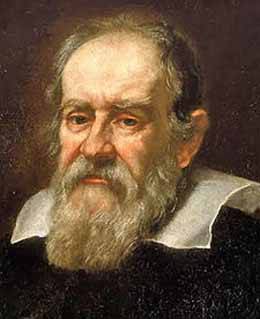
Thus said Galileo Galilei.
Why do I start this Post in this fashion?
Simple! Discovering the truth is always the challenge.
But before I go any further, I want to say thanks to my son who drew my attention to the video that is linked to in the next paragraph. (As a professional pilot he clearly takes a more than casual interest in the weather).
Here’s a link to that video by Joe Bastadi about the big changes to the planet’s weather. The video is summarised thus, “Temperature is a measure of kinetic energy, and the dirty little secret of the whole AGW debate is that total kinteic energy of the Earth over the longer term is not changing, but is cyclical.”
Joe is a professionally trained forecaster (Penn State University) but also a controversial figure. He is a member of the AccuWeather team.
Anyway, do watch that video – the link is here. Bottom line is that global weather patterns and longer-term trends are hugely driven by the earth’s natural rhythms and the influence of mankind is minimal in comparison.
Please click the video link above because that is much more current than an earlier interview of Joe Bastardi on YouTube that follows.
OK?
Now go here – ClimateProgress.org. It’s an important long article that concludes thus:
CONCLUSION: Unrestricted emissions of greenhouse gases threaten multiple catastrophes, any one of which justifies action. Together, they represent the gravest threat to humanity imaginable. The fact that the overwhelming majority of the mainstream media ignored the overwhelming majority of these studies and devoted a large fraction of its climate ‘ink’ in the last 12 months to what was essentially a non-story is arguably the single greatest failing of the science media this year.
So, if you are like me and so many others in wanting to understand the truth about our planet’s climatic future – this Post is going to disappoint you!
“When the student is ready, the teacher will appear.” Buddhist quote.
A number of thoughts and experiences came together to prompt the writing of this Post. It’s a much longer and more reflective post than usual but is offered in the loving hope that there can be no caring without sharing.
Firstly, good American friends, Gordon and Linda, whom Jean and I got to know in Mexico, recently sent us a Happy New Year

email, that included a slide presentation entitled Philosophy of Old Age. It was based on the writings and wisdom of George Carlin, one of the all-time great comedians of the world. But George Carlin (1937-2008) was much more than a great comedian. Much of his humour was a playful but very sharp form of social commentary on the ‘big world’. (P.S. George Carlin’s website is here, a rather strange experience in the sense of a virtual life after death.)
Anyway, back to the slide presentation from Gordon and Linda.
The slide presentation felt worthy of a post on Learning from Dogs but, thankfully, it was available in a better format for a WordPress Blog, a YouTube video. Here it is.
You can see that there are some very deep but simple messages about what, in the end, are the really important things in life. Top of the list is ‘love’. Especially unconditional love.
That takes me to second element of what motivated me to write this piece.
Just 14 days ago, I participated in a memorial service described as ‘A Memorial Service For the Lives of Loved Ones Lost‘ at our local St Paul’s Episcopal Church here in Payson. The idea came out of a comment from friend, mentor and fellow Blog author, Jon Lavin, who had noted that the language that I used when speaking of my father, now dead for well over 50 years, was the language of a child who hadn’t been ‘released’ from that event (I was just 12 at the time) rather than that of an adult who accepts that death is part of the natural order of the world.
Losing a loved one is tough, incredibly tough, and full of pain and anguish in a very deep-seated and personal manner. That’s the perspective from the loved ones left behind with more life ahead of them. But if one thinks of it in reverse, what is the one thing that we would want to leave behind when we die?
It is, without doubt, that our death does not leave in the hearts and souls of those left behind, whom we loved and who loved us, pain and anguish that isn’t embraced and dealt with healthily.
It was that collective unresolved pain and anguish that brought all of us together at that Service on the 20th. It was a wonderful release for all present. During the Service the Advent Wreath candles were lit. Here are selection of the thoughts that were voiced and released as the four candles were lit.
This first candle we light is to remember those whom we have loved and lost. We pause to remember their name, their face, their voice, the memory that binds them to us in this season.
This second candle we light is to redeem the pain of loss; the loss of relationships, the loss of jobs, the loss of health. We pause to gather up the pain of the past and offer it to God, asking that from God’s hands we receive the gift of peace.
This third candle we light is to remember ourselves this Christmas time. We pause and remember these past weeks and months and years; the disbelief, the anger, the down times, the poignancy of reminiscing, the hugs and handshakes of family and friends, all those who stood with us.
This fourth candle is lit to remember our faith and the gift of hope which the Christmas story offers us.

Go back and see those words that accompanied the lighting of the third candle. It included “to remember ourselves“. Once again, it’s loving ourselves, accepting that we spend our lives doing our best; in other words the answers to the unresolved issues that can haunt us is simple acceptance of who you are and being at peace with you!
Now I’m conscious that this is running on a bit but I pray that this is reaching out to others – we all need better clarity at times in our lives. So before I go on to the third and last element which has me in front of this keyboard, let me share what I wrote, privately, a few days before the Service on the 20th in trying to make sense of my own feelings about the loss of my father.
Loving ourselves, letting go, opening our arms to peace and joy is the true gift that we have really been given by the ‘loss’ of the loved one.
What I am embracing is that the emotional consequences of my father’s death, all those many, many years ago, created degrees of emotional dysfunction that went on for far too long. Being free to walk clear of those emotional ‘hooks’ is not only so much better for me and those who love me, it is exactly what my father would have wanted!
Being clear of deep emotional burdens allows us to love ourselves and from that comes the greatest personal gift of all – unconditional love for others. There’s that love word again!
OK, now to the third and final element! Wake up at the back there!
The year 2010 was for me and Jean the epitome of a joyous journey that started, coincidentally, on a December 20th, this one in 2007. On that evening in a bar/nightclub in San Carlos, Mexico, six days after I had arrived to stay with friends who had known Jean for many years, that I asked Jean for a dance, put my arm around her waist, and experienced something mystical – I knew she was the woman I would love to my last breath.
Thirty-five months later, on November 20th 2010, Jean and I were married in St. Paul’s Episcopal Church, Payson, Arizona. We had been living together in Mexico since September 2008 and in Payson since February, 2010. In Payson we have found a wonderfully interesting, generous and supportive community and our 13 dogs just love our rural home tucked into the forest; it is a very beautiful existence.
Frankly, I find it almost impossible to get my head around in any rational way as to how life can be so randomly alluring – we really have so little control over it all! Save for how we accept and love ourselves. Thus my own haltering and challenging steps to better self-awareness have given me more than I could ever have dreamed of. This realisation has left me feeling pretty emotional over the Christmas period.
From those emotions has come, for the first time in my life, the awareness of mortality. Not in some sort of intellectual homage to the notion that it doesn’t go on forever. No, this is a real, hard-edged, realisation that I am going to die! It’s a clear vision, as clear as those beautiful stars shining out from the brittle cold, night sky over Payson very early on New Year’s Day. My mortal life is going to end.
And that, my dear readers is that. Go back and watch that video from George Carlin, think about those past loved ones in your life and what they gifted you and, above all, feel your own love for you, savour it, and share it around.
“When the student is ready, the teacher will appear.” Buddhist quote.
Just wanted to add my best wishes to all Learning from Dog readers to those of Paul from yesterday.
Plus I did want to expand, just a touch, on what Paul wrote yesterday, more or less reflecting on an article by Leo Babauta. In that post, Paul quoted Leo writing:
The thing I’ve learned, and it’s not some new truth but an old one that took me much too long to learn, is that if you learn to be content with who you are and where you are in life, it changes everything.
In a very real sense what Leo is saying is that if you don’t love yourself you can’t possibly ‘love’ the world around you. Now this is incredibly easy to consider, too easy in fact, because the truth of loving oneself first is, for the vast majority of people, a complex, confusing and unclear journey, as in ‘self-journey’. Read that quote from Leo again and see how he writes, ‘an old one [as in truth] that took me much too long to learn‘.
I’m sure when Leo writes ‘too long to learn‘ he is, in effect, acknowledging the very individual circumstances that lead to a person developing the awareness that is expressed in that quote ‘if you learn to be content with who you are and where you are in life, it changes everything‘.
So if 2011 is going to be a challenging year then hang on to the only rock in your life – yourself! Embrace the reality that you, like all of us, do your best. Be good and kind to you.
Happy New Year
By Jon Lavin
And this scribe wishes you all a very Happy New Year.
As was famously quoted by Yogi Berra, “It’s tough to make predictions, especially about the future.”
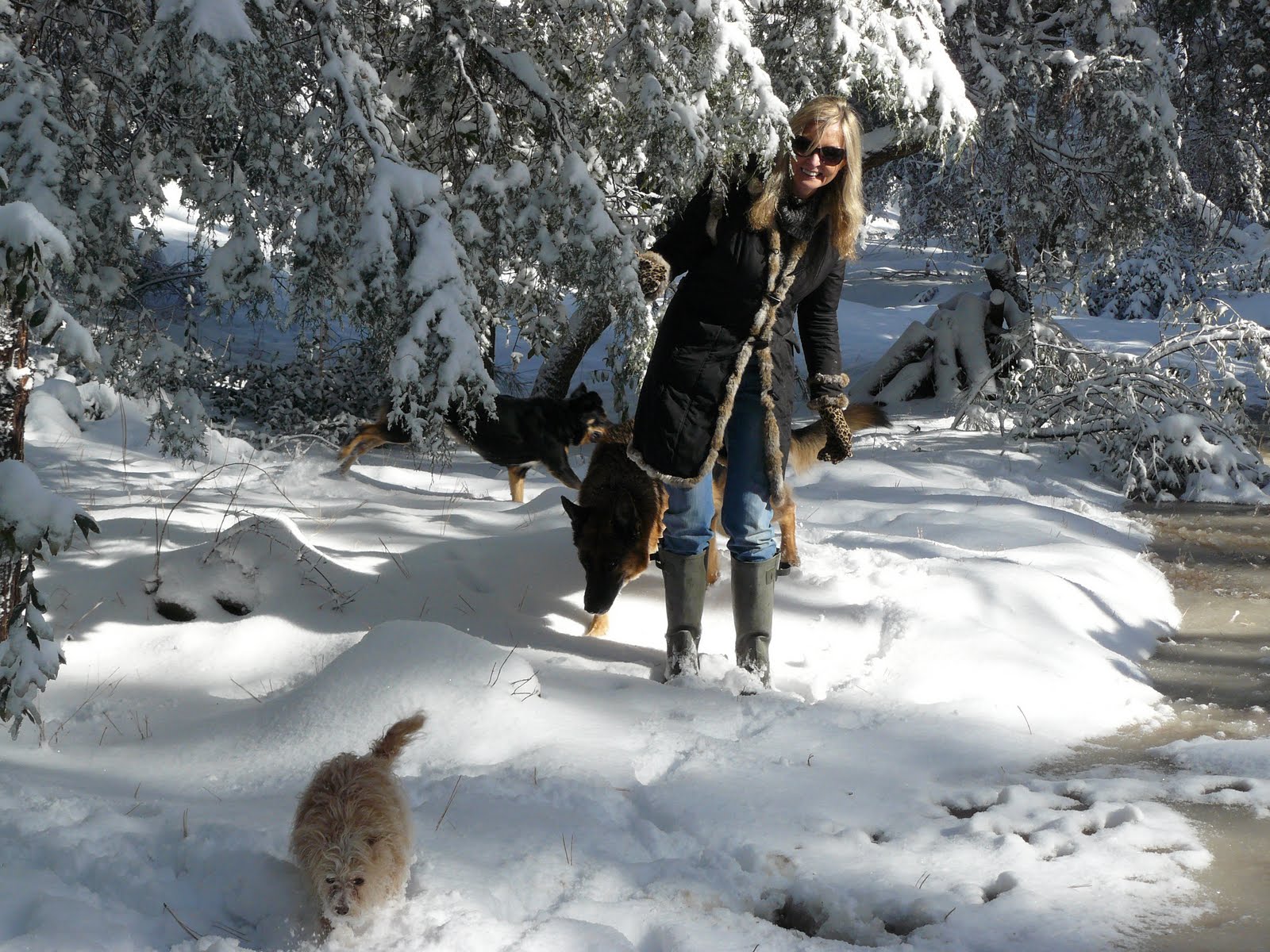
So I will just leave it at that but crave your indulgence by including a recent photograph of Mrs H and some of the dogs enjoying the recent heavy snowfall that fell on Payson and Northern Arizona on the 30th.
A fascinating piece by John Maudlin.
I came across John Maudlin’s web site some time ago and ended up subscribing to one of his Blogs, Outside the Box. To be frank, much of what John writes is a little bit too technical for me but this item did catch my eye to the extent that I read the item in full and was intrigued by it.
The article was called, “Apple, Google, NewsCorp and the Future of Content” You can read it directly here. But just to whet your appetite, here’s a small extract of what is primarily an interview with Michael Whalen:
In this issue of The Institutional Risk Analyst, we speak to Michael Whalen, [Emmy] award winning composer and new media observer about the outlook for the business of creating and delivering content. Since graduating from Berklee College of Music, Michael has taught a business for music class that has saved thousands of young artists from making terrible mistakes with content and other contractual rights. Think Frank Zappa and Warner Brothers. And yes, Michael is IRA co-founder Chris Whalen’s younger brother.
and later …
Whalen: Frankly, I think we’re going back to the 19th century in terms of the “status” of artists. They’ll be figureheads. Imagine: like Paris or Vienna of the 1900s, we’ll have wealthy patrons and small clutches of people who support the art of “real” artists. In this environment, the work we will try to sell is simply a loss leader and an inducement for us to perform or create a “custom” song, TV show or film… Yup, it’s all here now… What will be really interesting is what happens next… I am not pretending to be the “Grim Reaper” but I think the record business, the film studio system and the television networks are over as we think we know them. I think there is a new business emerging in gathering creative investment, content and creative marketing…. It will be in a structure that’s more akin to a stock market than the traditional structure we’ve seen for artistic and creative content and the platform for it will be the digital ocean we have already discussed. Based on the “buzz”, there will be a “futures” market and the idea is commoditized and funded in days – not months or years. For decades, most record companies and networks have been little more than funding sources for artists – now the truly visionary artist won’t even need these ancient businesses – the market itself will generate everything it needs to create content efficiently. It’s a little overwhelming the change that is here now vs. five years ago and that will be coming in torrents in the next few years. Amazing.
Read the full interview here – I promise you won’t regret it.
By Paul Handover
 Learning from Dogs