Category: People

The Book – “The Climate Casino”

Three hundred plus pages of vital information.

I bought this book from Thriftbooks and was so fired up that I sat down and started reading it almost immediately. For as the back cover explains:

Climate change is profoundly altering our world in ways that pose major risks to human societies and natural systems. We have entered the Climate Casino and are rolling the global-warming dice, warns William Nordhaus. But there is still time to turn around and walk back out of the casino, and in this book the author explains how.

William Nordhaus

William Nordhaus is a brilliant economist as Fred Andrews describes above. Indeed he is the Sterling Professor of Economics at Yale University and he has his website here.

Now I am going straight to two videos.

The first is William Nordhaus receiving the Nobel Prize in 2018.

And the second is that lecture given at the same venue in 2018.

Hopefully you got to watch them both!

Return to Parkinson’s

Three promising developments in Parkinson’s research.

As I am sure most of you know Jean was diagnosed in having Parkinson’s Disease (PD) in late 2015 and from that moment on I have taken more than a superficial interest in PD. Especially as my best friend in England, Richard M. was similarly diagnosed in late 2015 – “the fickle finger of fate“.

So a recent Neuro Talk from the Parkinson’s Foundation is my contribution for today.

ooOOoo

Three Promising Developments in Parkinson’s Research

Jun 27, 2023

For more information on this topic, visit: https://www.parkinson.org/advancing-r…

Every year, the Parkinson’s Foundation funds the most exciting and promising research ideas in the Parkinson’s disease (PD) field.

In our latest Neuro Talk, Chief Scientific Officer James Beck, PhD, is joined by three researchers whose studies were funded by the Parkinson’s Foundation. Their projects, which range from investigating environmental factors to understanding cognition, explain how research is helping us further our understanding of Parkinson’s.

Helpful resources: – Parkinson’s Foundation Helpline: 1-800-4PD-INFO (1-800-473-4636) | Helpline@Parkinson.org | https://www.parkinson.org/resources-s…

– Resources for those who are new to Parkinson’s disease: http://www.parkinson.org/living-with-parkinsons/new-to-parkinsons

– Aware in Care hospital safety kit: https://www.parkinson.org/resources-s…

– PD Health @ Home programs: https://www.parkinson.org/resources-s…

What is the Parkinson’s Foundation? The Parkinson’s Foundation makes life better for people with Parkinson’s disease (PD) by improving care and advancing research toward a cure. In everything we do, we build on the energy, experience and passion of our global Parkinson’s community. Learn more on our website: https://www.parkinson.org/

ooOOoo

For those that wish to understand PD in a scientific manner, here is a quote from the PD:

What is Parkinson’s disease? Parkinson’s disease (PD) is a neurodegenerative, progressive disorder that affects predominately dopamineproducing neurons in a specific area of the brain called substantia nigra

The James Webb telescope

Just astounding!

I was looking for something else on YouTube and came across this 8:56 video of what the James Webb has seen.

ooOOoo

Every Stunning Image Captured By James Webb Space Telescope So Far

21 Jul 2023

The James Webb Space Telescope has completed its first year of science operations. In its first year, the $10-billion infrared space observatory challenged our understanding of the cosmos and showed the universe in a way no other telescope in the past could. In this video, you will find every James Webb Space Telescope image released so far: From the mesmerizing images of the planets of the solar system to the gigantic galaxies seen at the edge of time.

Sunday Discovery Series: https://bit.ly/369kG4p

COSMOS in a Minute Series: https://bit.ly/470VLL8

Music 1: Ambient Piano by LukePN

Music 2: Interstellar by Stereonuts

Created by: Rishabh Nakra

Images: NASA/ESA/JWST

ooOOoo

Not everyone’s cup of tea but for those that cast their eyes to the stars this was astounding!

There is so much more to our dogs than we realise!

A fascinating post on Treehugger.

It is Wednesday morning in Southern Oregon and already I am having to think about the post for tomorrow. Not that this is a problem it is just one more thing that I want to do. Plus we are in the middle of a local heat wave with temperatures expected to be well above 100 degrees F and possibly 109 deg F (42.8 deg C.).

So I am turning to Treehugger for a dog post and hoping that I shall be able to share it with you all.

ooOOoo

Dogs Could Revolutionize the Sustainability of Future Pandemic Testing

Scent dogs are quicker, more effective, and create less healthcare waste than conventional COVID tests.

By Melissa Breyer

Senior Editorial Director

  • Hunter College
  • F.I.T., State University of New York
  • Cornell University

Published July 17, 2023 

Joe McDonald / Getty Images

One of the more frustrating roadblocks in navigating the COVID-19 pandemic was the difficulty in getting quick, accurate test results. Sometimes, results for PCR tests took up to two weeks, rendering their diagnosis useless for planning isolation scenarios. Meanwhile, rapid tests still oftentimes provide a false negative if taken too soon after infection. When I had COVID, I was four days into symptoms before I got a positive at-home test—I’ve heard many people recount similar stories.

The testing we have is certainly better than nothing, but it leaves a lot to be desired. If only there were a better way, say, using something with remarkable innate sensitivity. Like, dogs. Far-fetched? Not at all.

review of recent research concluded that scent dogs may represent a cheaper, faster, and more effective way to detect COVID-19 and could be a key tool in future pandemics. This could be a game-changer for sustainability as well, eliminating the enormous amount of waste that comes with billions of testing kits.

The review, published in De Gruyter’s Journal of Osteopathic Medicine, found that scent dogs are as effective, or even more effective, than conventional COVID-19 tests such as PCR tests.

Most of us know that dogs have a remarkable sense of smell; they sniff out drugs and explosives and have even successfully identified patients with certain cancers, Parkinson’s, and diabetes. They have up to 300 million olfactory cells, compared to 5 or 6 million in humans. And they use one-third of their brains to process scent information—humans just use 5%.

Professor Tommy Dickey of the University of California, Santa Barbara, and Heather Junqueira of BioScent Detection Dogs analyzed 29 different studies in which dogs detected COVID-19. “The studies were performed using over 31,000 samples by over 400 scientists from more than 30 countries using 19 different dog breeds. In some studies, the scent dogs sniffed people directly, sometimes in public places as a health screening. In others, the dogs sniffed patient samples such as sweat, saliva, or urine samples,” explains a press statement from De Gruyter.

Dogs’ Incredible Accuracy 

The dogs ranged from Labrador retrievers and Belgian malinois to beagles and English springer spaniels. In most of the studies, the dogs demonstrated similar or better sensitivity and specificity than the current gold-standard PCR tests or antigen tests.

“In one study, four of the dogs could detect the equivalent of less than 2.6 x 10⁻¹² copies of viral RNA per milliliter. This is equivalent to detecting one drop of any odorous substance dissolved in ten and a half Olympic-sized swimming pools and is three orders of magnitude better than modern scientific instruments,” notes De Gruyter.

Remarkably, they not only detected COVID-19 in symptomatic, pre-symptomatic, and asymptomatic patients, but they could also sniff out COVID variants and even long COVID.

Considering the Safety of the Dogs 

One thing we certainly don’t want is for dogs to become collateral damage in the pursuit of better testing. The study authors acknowledge this, writing that the “safety of scent dogs, their handlers, and those who are inspected by the dogs is critical for the acceptance and implementation of the scent dog screening and testing approach.”

“This is consistent with the One Health paradigm,” they add, “which defines health as more than the absence of disease and recognizes the interrelationships among humans, animals, and environmental welfare.”

The authors evaluated whether medical detection dogs could contract and become ill with the COVID-19 virus and if dogs pass on the COVID-19 virus to humans. From a number of studies, they concluded that dogs are in the low-risk category. “To our knowledge, there have been no deaths of dogs that can be unequivocally attributed to COVID-19,” the authors explain. “Importantly, the studies described above suggest that it is safe for healthy individual handlers to utilize scent dogs to directly screen and test individuals who may be infected with the COVID-19 virus.”

Speedy Test Results 

A major benefit of using the dogs is their speed. In one study, researchers were able to do a lineup with 40 samples, including sample collection, lineup loading, and unloading, within just 3  minutes.

“The time between RT-PCR sampling and the return of results can be up to days, whereas the RAG test results are obtained within about 15 min.,” write the study authors. “Again, if scent dogs directly sniff individuals, results are learned in seconds, or a few minutes if samples are taken and sniffed soon after by the dogs.”

“The criticality of the speed of the return of test results cannot be overemphasized,” the authors add.

Elimination of Plastic Waste 

That dogs could provide a result in seconds to minutes is crucial. But additionally, and importantly, scent tests by dogs don’t require expensive lab equipment or create mountains of plastic waste, unlike conventional diagnostic approaches.

As of December 22, 2022, the United States alone had performed around 1.15 billion tests for COVID-19. Thinking of all the material for the testing kits and all the resources used for testing labs and sending samples around, etc., the reduction in ecological footprint is potentially tremendous.

Not to mention the cost. Some of the research in the review was, in fact, motivated by the need for inexpensive testing in developing nations, the authors note.

“Although many people have heard about the exceptional abilities of dogs to help humans, their value to the medical field has been considered fascinating, but not ready for real-world medical use,” says Dickey. “Having conducted this review, we believe that scent dogs deserve their place as a serious diagnostic methodology that could be particularly useful during pandemics, potentially as part of rapid health screenings in public spaces. We are confident that scent dogs will be useful in detecting a wide variety of diseases in the future.”

ooOOoo

In the interests of expanding the argument, here is a copy of a comment left to that original post:

Here we go again, using animals for testing. I believe that dogs can’t smell covid and detected it 100%, but we humans NEVER treat animals with the respect and equality they deserve, so I am very concern for the safety and health of testing “smell Covid” dogs… I know a person that have esophageal cancer and for almost 5 years before it was diagnosed, his dog (an adorable mutt) insisted on crawling over her owner chest every single time that he laid down, in an attempt to “cure” the inflammation in that spot. After the cancer was eliminated with chemo and surgery the dog stopped doing it… 
I which we humans were more connected and attentive with animal wisdom, to learn from them, respecting and became better people.

I think that second sentence should read can smell covid but have left it how it was printed.

Anyway, I will leave readers to cover the main article which speaks very highly of man’s best friend.

These Heat Waves?

What is the truth?

Today, August 14th, here in Southern Oregon we are expecting 111 degrees Fahrenheit or 43.8 degrees C. That is really hot! (And at home it reached 108 deg. F. at 3pm.)

So it seems pertinent to republish a post from The Conversation that was published on July 21st, 2023.

ooOOoo

Is it really hotter now than any time in 100,000 years?

By Darrell Kaufman

Professor of Earth and Environmental Sciences, Northern Arizona University

As scorching heat grips large swaths of the Earth, a lot of people are trying to put the extreme temperatures into context and asking: When was it ever this hot before?

Globally, 2023 has seen some of the hottest days in modern measurements, but what about farther back, before weather stations and satellites?

Some news outlets have reported that daily temperatures hit a 100,000-year high. 

As a paleoclimate scientist who studies temperatures of the past, I see where this claim comes from, but I cringe at the inexact headlines. While this claim may well be correct, there are no detailed temperature records extending back 100,000 years, so we don’t know for sure.

Here’s what we can confidently say about when Earth was last this hot.

This is a new climate state

Scientists concluded a few years ago that Earth had entered a new climate state not seen in more than 100,000 years. As fellow climate scientist Nick McKay and I recently discussed in a scientific journal article, that conclusion was part of a climate assessment report published by the Intergovernmental Panel on Climate Change (IPCC) in 2021.

Earth was already more than 1 degree Celsius (1.8 Fahrenheit) warmer than preindustrial times, and the levels of greenhouse gases in the atmosphere were high enough to assure temperatures would stay elevated for a long time.

Earth’s average temperature has exceeded 1 degree Celsius (1.8 F) above the preindustrial baseline. This new climate state will very likely persist for centuries as the warmest period in more than 100,000 years. The chart shows different reconstructions of temperature over time, with measured temperatures since 1850 and a projection to 2300 based on an intermediate emissions scenario. D.S. Kaufman and N.P. McKay, 2022, and published datasets, Author provided

Even under the most optimistic scenarios of the future – in which humans stop burning fossil fuels and reduce other greenhouse gas emissions – average global temperature will very likely remain at least 1 C above preindustrial temperatures, and possibly much higher, for multiple centuries.

This new climate state, characterized by a multi-century global warming level of 1 C and higher, can be reliably compared with temperature reconstructions from the very distant past.

How we estimate past temperature

To reconstruct temperatures from times before thermometers, paleoclimate scientists rely on information stored in a variety of natural archives.

The most widespread archive going back many thousands of years is at the bottom of lakes and oceans, where an assortment of biological, chemical and physical evidence offers clues to the past. These materials build up continuously over time and can be analyzed by extracting a sediment core from the lake bed or ocean floor.

University of Arizona scientist Ellie Broadman holds a sediment core from the bottom of a lake on Alaska’s Kenai Peninsula. Emily Stone

These sediment-based records are rich sources of information that have enabled paleoclimate scientists to reconstruct past global temperatures, but they have important limitations.

For one, bottom currents and burrowing organisms can mix the sediment, blurring any short-term temperature spikes. For another, the timeline for each record is not known precisely, so when multiple records are averaged together to estimate past global temperature, fine-scale fluctuations can be canceled out.

Because of this, paleoclimate scientists are reluctant to compare the long-term record of past temperature with short-term extremes.

Looking back tens of thousands of years

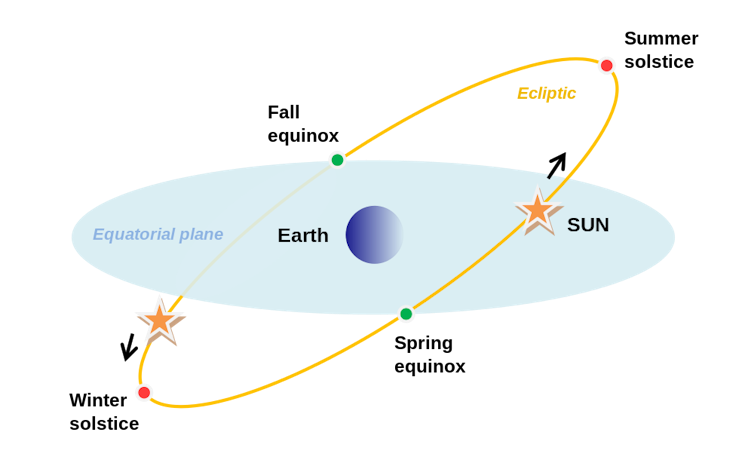
Earth’s average global temperature has fluctuated between glacial and interglacial conditions in cycles lasting around 100,000 years, driven largely by slow and predictable changes in Earth’s orbit with attendant changes in greenhouse gas concentrations in the atmosphere. We are currently in an interglacial period that began around 12,000 years ago as ice sheets retreated and greenhouse gases rose.

Looking at that 12,000-year interglacial period, global temperature averaged over multiple centuries might have peaked roughly around 6,000 years ago, but probably did not exceed the 1 C global warming level at that point, according to the IPCC reportAnother study found that global average temperatures continued to increase across the interglacial period. This is a topic of active research.

That means we have to look farther back to find a time that might have been as warm as today.

The last glacial episode lasted nearly 100,000 years. There is no evidence that long-term global temperatures reached the preindustrial baseline anytime during that period.

If we look even farther back, to the previous interglacial period, which peaked around 125,000 years ago, we do find evidence of warmer temperatures. The evidence suggests the long-term average temperature was probably no more than 1.5 C (2.7 F) above preindustrial levels – not much more than the current global warming level.

Now what?

Without rapid and sustained reductions in greenhouse gas emissions, the Earth is currently on course to reach temperatures of roughly 3 C (5.4 F) above preindustrial levels by the end of the century, and possibly quite a bit higher.

At that point, we would need to look back millions of years to find a climate state with temperatures as hot. That would take us back to the previous geologic epoch, the Pliocene, when the Earth’s climate was a distant relative of the one that sustained the rise of agriculture and civilization.

ooOOoo

It is difficult to know what to say other than one hopes that Governments and country leaders recognise the situation and DO SOMETHING!

As Dr. Michael Mann put it in the last issue of The Humanist: “The only obstacles aren’t the laws of physics, but the flaws in our politics.

I have a son and a daughter in their early 50’s and a grandson who is 12. They, along with millions of other younger people, need action now.

Please!

That dreadful ‘C’ word.

It is a rare family that is not touched by cancer.

My father died at the age of 55 from lung cancer. That was December 20th, 1956 and while he did not smoke he did have his regular cigar every Sunday afternoon. I suspect he may have smoked from time to time in his office. It was a tragic time for me and Elizabeth, my younger sister. Speaking personally I did not fully understand the personal implications until shortly after the 50th anniversary of his death: December 20th, 2006.

Tony is a keen blogger and he writes under the blog name of Wellness Secrets of a SuperAger. His latest post is 5 Things You Can Do to Prevent Cancer. I have pleasure in republishing Tony’s post below. Please read it!

ooOOoo

5 Things You Can Do to Prevent Cancer.

We all know that steering clear of tobacco is a crucial way to reduce your cancer risk. But there’s a lot more than you can do.

RUSH family physician Joyce Chen, MD, and clinical dietitian Kristin Gustashaw explain how we can make better choices to protect our health.

Photo by Brett Sayles on Pexels.com

You may not realize it, but aging is a risk factor for cancer. The longer your cells are turning over, the more likely miscopying can happen. Though we can’t control aging, we can control the speed at which we age. “We know, in theory, we can kind of age ourselves faster or slower, depending on how much insult we give our bodies,” Gustashaw says.

Chen explains: “Lifestyle is key. So when you are concerned about cancer from external forces, it’s important to realize that you can actually do something about a lot of them.”

Here are some key lifestyle changes you can make to reduce your cancer risk.

Cancer prevention action plan

1. Stop smoking — or better yet, don’t start.

Choosing not to use tobacco is one of the most effective forms of cancer prevention.

And it’s not just lung cancer that’s preventable either. By not smoking you can also prevent the following types of cancer:

  • Bladder cancer
  • Mouth cancer
  • Oral cancer
  • Pancreatic cancer
  • Tongue cancer
  • Throat cancer

Traditional cigarettes pose the biggest threat. But e-cigarettes, or vaping, also pose a risk of cancer. With cigarette smoking, the nicotine and tar can cause cancer. With e-cigarettes, you’re still getting the nicotine in your lungs but without the smoke and tar of regular cigarettes.

Since e-cigarettes are still relatively new to the market, the long-term health effects remain unknown, but they’re still potentially problematic.

“The vapor you’re breathing in has chemicals and particles, especially the flavored ones, that can damage or scar your lungs,” Chen says.

“It’s one of those lifestyle factors that I tell my patients, ‘We’ll do all we can as a provider to help you quit or at least cut down, but if you haven’t started, don’t start.’ Because once you start, it’s hard to stop; it’s an addiction.”

2. Watch your alcohol consumption

With alcohol, the main cancer mechanism is how it breaks down in our bodies. The ethanol in alcohol is metabolized through acetaldehyde, which is a poisonous byproduct and a known carcinogen.

After you drink, the alcohol is metabolized as acetaldehyde. It doesn’t stay around in our bodies for long because it gets further broken down into less toxic compounds, and then it’s eliminated in our bodies. That means the more you drink, the more you increase your risk for developing cancer.

“Acetaldehyde is a carcinogen that causes the cancer,” says Chen. “So when you’re drinking large quantities of alcohol then you’re going to build up acetaldehyde. And that buildup can accumulate in your saliva, your stomach acid and your GI tract.” 

Alcohol also has a solvent property, which means it allows other carcinogens to get into our cells and wreak havoc. So, for example, if you smoke and drink alcohol together, alcohol’s solvent property helps harmful chemicals in tobacco get into the cells that line your mouth, throat and esophagus — putting you at a higher risk of developing oral cancers.

Nutrient absorption, specifically the vitamin folate, can also be affected by alcohol. Folate tells our body to stay healthy so alcohol inhibits its ability to pass that message on to the body.

“Alcohol also acts as an irritant to our bodies, specifically to the cells lining our mouths, throats and stomach cells,” says Chen. “When exposed to that irritant, your cells try to repair themselves, which could lead to your cells making mistakes and mutations that lead to cancer.”

3. Maintain a healthy weight.

Maintaining a healthy weight is another opportunity to reduce your risk for cancer. That means your diet plays a large role in cancer prevention.

A recent study in The Lancet Public Health revealed that younger adults (ages 25 to 49) in the U.S. are at an increased risk of developing obesity-related cancers. The study also reports that because of the obesity epidemic over the past 40 years, due in part to poor diet, younger generations have weight issues for a longer period of time than previous generations. This indicates that in the future, cancer may be more prevalent in this generation as they age into older adults.

According to Chen, carrying excessive weight is associated with increased risk for the following cancers:

  • Colorectal cancer
  • Gallbladder cancer
  • Gastrointestinal cancers
  • Kidney cancer
  • Liver cancer
  • Ovarian cancer
  • Pancreatic cancer
  • Post-menopausal breast cancer
  • Stomach cancer

In addition to a healthy diet, exercise can also help you maintain a healthy weight and keep cancer at bay.

In fact, a recent study published in Cell Metabolism found that exercise can reduce your chances of getting cancer by improving your immune system, lowering the risk of recurrence and slows cancer progression by reducing tumor growth and lessening the harsh effects of cancer treatment on the body.

Reducing your stress is key if you’re looking at trying to avoid or outlive cancer.

4. Avoid UV exposure from the sun, tanning beds and other culprits.

Yet another lifestyle factor you can control that prevents cancer is limiting ultraviolet (UV) ray exposure. Whether it’s natural UV exposure from the sun or artificial UV exposure from tanning beds, both put you at risk for skin cancer. UV exposure causes gene mutations that can cause cancer.

A tan is a result of your skin cells being damaged. There are also spray tans and lotions that don’t give you exposure to UV radiation but have other concerns. There’s a color additive in the spray tans and lotions called dihydroxyacetone or DHA. While DHA is FDA-approved for external application to the skin, with spray tans you could be inhaling some of that ingredient.

The FDA states that it shouldn’t be inhaled or applied to areas that are covered by mucous membranes. Mucous membranes are your lips, mouth, your nose, around your eyes and your face.

“Protect yourself in a spray booth by using eye protection like goggles, nose plugs or put lip balm on beforehand and try to keep your mouth closed to not inhale that ingredient. That would be a safer way to get that sun-kissed glow that everyone wants,” Chen says.

Also, don’t be fooled into thinking that a spray tan offers protection against the sun. Just because you think you’re getting a so-called base tan, you still have to use sunscreen.

With UV exposure, certain tanning salons might propose that it’s the UV rays that help your body get vitamin D. But UVB are the UV rays needed for the body to produce vitamin D.

“The majority of tanning bulbs are actually UVA rays so you’re not getting vitamin D from a tanning bed,” Chen explains.

Like alcohol, UV exposure also builds up over time. So, for example, if you start young and go frequently to tanning beds, that will put you more at risk for skin cancer.

Gel manicures can also pose UV exposure risk that increases your likelihood for cancer. UVA rays are used to dry or set the polish. But once again, it’s dose cumulative. If you regularly get gel manicures and you started in your teenage years, you may have a greater risk for developing cancer because you’re exposing your hands to UVA rays more often.

Chen recommends giving your nails a break by not getting this type of manicure week after week.

5. Visit your doctor regularly for preventive care and well visits.

One of the best things you can do to help prevent cancer and other diseases is to see your primary care physician regularly.

“Try to prevent cancer by getting your routine care, your routine immunizations and your proper screenings,” says Chen. “It’s great that you are healthy, but preventive care/well visits are important because a lot of conditions, especially cancer, can be treated properly if we catch it early.” 

Other effective prevention strategies

All in all, your best strategy for cancer prevention, particularly for the external agents you can control, is to limit your exposures — or avoid them, if at all possible.

Gustashaw also cites the importance of stress management. “How you manage stress is associated with longevity. Stress itself is not directly associated with an increased risk of cancer, however, stress can often lead to unhealthy habits such as making unhealthy food choices, overeating, smoking, drinking and not exercising,” she says. 

Gustashaw adds: “Reducing your stress is key if you’re looking at trying to avoid or outlive cancer and to live longer and healthier overall.”

Plenty of other opportunities for cancer prevention behavior also exist. A study from JAMA Internal Medicine found that participants with the following four lifestyle factors had approximately one-third less risk of developing cancer compared to those who had none of those lifestyle factors:

  1. Never having smoked
  2. Having a body mass index (BMI) of less than 30
  3. Getting physical activity more than 3.5 hours each week (or basically 30 minutes daily)
  4. Eating a healthy diet

ooOOoo

So there we are. It is a long post but so important to us all.

Picture Parade Four Hundred and Ninety-Three

Hoping to be back to normal!

July 20th was my last post. Here are some of my own photographs taken while Maija, my daughter, Marius, her husband, and Morten, their son were with us. That was after Alex, my son, had come to see us in June.

Here is Morten, who spent hours caressing and fondling Brandy, our largest dog.

oooo

His other passion was exploring for gold. We have Bummer Creek flowing through the property. It is called ‘Bummer’ because as the locals would have it there is no gold to be found. But that didn’t stop Morten spending time looking for gold!

And this is Maija (photo slightly out of focus).

The next photo shows Maija and Morten strolling along the creek.

oooo

Above a shot showing Marius and Morten looking for the illusive metal!

I close with the Morten and Marius hoping to see a trace of gold in the gold-pan, and Maija looking on.

My next post will be on Tuesday.

The Earth became very quiet!

An essay from The Conversation aimed at our youngsters but highly relevant to us all!

I sense we are living in very strange times. As an extract from recent essay from George Monbiot said:

Above all, our ability to adapt to massive change depends on what practitioners call “metacognition” and “meta-skills”. Metacognition means thinking about thinking. In a brilliant essay for the Journal of Academic Perspectives, Natasha Robson argues that while metacognition is implicit in current teaching – “show your working”, “justify your arguments” – it should be explicit and sustained. Schoolchildren should be taught to understand how thinking works, from neuroscience to cultural conditioning; how to observe and interrogate their thought processes; and how and why they might become vulnerable to disinformation and exploitation. Self-awareness could turn out to be the most important topic of all.

Thinking about Thinking

That is why I want to share a recent post from The Conversation with you.

ooOOoo

If humans went extinct, what would the Earth look like one year later?

A glimpse of a post-apocalyptic world. Bulgar/E+ via Getty Images

Carlton Basmajian, Iowa State University


If humans went extinct, what would the Earth look like one year later? – Essie, age 11, Michigan


Have you ever wondered what the world would be like if everyone suddenly disappeared?

What would happen to all our stuff? What would happen to our houses, our schools, our neighborhoods, our cities? Who would feed the dog? Who would cut the grass? Although it’s a common theme in movies, TV shows and books, the end of humanity is still a strange thing to think about.

But as an associate professor of urban design – that is, someone who helps towns and cities plan what their communities will look like – it’s sometimes my job to think about prospects like this.

So much silence

If humans just disappeared from the world, and you could come back to Earth to see what had happened one year later, the first thing you’d notice wouldn’t be with your eyes.

It would be with your ears.

The world would be quiet. And you would realize how much noise people make. Our buildings are noisy. Our cars are noisy. Our sky is noisy. All of that noise would stop.

You’d notice the weather. After a year without people, the sky would be bluer, the air clearer. The wind and the rain would scrub clean the surface of the Earth; all the smog and dust that humans make would be gone.

An illustration of a large city park with a deer standing in the middle of a tree-lined path.
It wouldn’t be long before wild animals visited our once well-trodden cities. Boris SV/Moment via Getty Images

Home sweet home

Imagine that first year, when your house would sit unbothered by anyone.

Go inside your house – and hope you’re not thirsty, because no water would be in your faucets. Water systems require constant pumping. If no one’s at the public water supply to manage the machines that pump water, then there’s no water.

But the water that was in the pipes when everyone disappeared would still be there when the first winter came – so on the first cold snap, the frigid air would freeze the water in the pipes and burst them.

There would be no electricity. Power plants would stop working because no one would monitor them and maintain a supply of fuel. So your house would be dark, with no lights, TV, phones or computers.

Your house would be dusty. Actually, there’s dust in the air all the time, but we don’t notice it because our air conditioning systems and heaters blow air around. And as you move through the rooms in your house, you keep dust on the move too. But once all that stops, the air inside your house would be still and the dust would settle all over.

The grass in your yard would grow – and grow and grow until it got so long and floppy it would stop growing. New weeds would appear, and they would be everywhere.

Lots of plants that you’ve never seen before would take root in your yard. Every time a tree drops a seed, a little sapling might grow. No one would be there to pull it out or cut it down.

You’d notice a lot more bugs buzzing around. Remember, people tend to do everything they can to get rid of bugs. They spray the air and the ground with bug spray. They remove bug habitat. They put screens on the windows. And if that doesn’t work, they swat them.

Without people doing all these things, the bugs would come back. They would have free rein of the world again.

Surrounded by hills and mountains is an isolated two-lane road, cracked and crumbling.
Given enough time, roads would start to crumble. Armastas/iStock via Getty Images Plus

On the street where you live

In your neighborhood, critters would wander around, looking and wondering.

First the little ones: mice, groundhogs, raccoons, skunks, foxes and beavers. That last one might surprise you, but North America was once rich with beavers.

Bigger animals would come later – deer, coyotes and the occasional bear. Not in the first year, maybe, but eventually.

With no electric lights, the rhythm of the natural world would return. The only light would be from the Sun, the Moon and the stars. The night critters would feel good they got their dark sky back.

Fires would happen frequently. Lightning might strike a tree or a field and set brush on fire, or hit the houses and buildings. Without people to put them out, those fires would keeping going until they burned themselves out.

Around your city

After just one year, the concrete stuff – roads, highways, bridges and buildings – would look about the same.

Come back, say, a decade later, and cracks in them would have appeared, with little plants wiggling up through them. This happens because the Earth is constantly moving. With this motion comes pressure, and with this pressure come cracks. Eventually, the roads would crack so much they would look like broken glass, and even trees would grow through them.

Bridges with metal legs would slowly rust. The beams and bolts that hold the bridges up would rust too. But the big concrete bridges, and the interstate highways, also concrete, would last for centuries.

The dams and levees that people have built on the rivers and streams of the world would erode. Farms would fall back to nature. The plants we eat would begin to disappear. Not much corn or potatoes or tomatoes anymore.

Farm animals would be easy prey for bears, coyotes, wolves and panthers. And pets? The cats would go feral – that is, they would become wild, though many would be preyed upon by larger animals. Most dogs wouldn’t survive, either.

An asteroid hit and a solar flare are two of the ways the world could end.

Like ancient Rome

In a thousand years, the world you remember would still be vaguely recognizable. Some things would remain; it would depend on the materials they were made of, the climate they’re in, and just plain luck. An apartment building here, a movie theater there, or a crumbling shopping mall would stand as monuments to a lost civilization. The Roman Empire collapsed more than 1,500 years ago, yet you can see some remnants even today.

If nothing else, humans’ suddenly vanishing from the world would reveal something about the way we treated the Earth. It would also show us that the world we have today can’t survive without us and that we can’t survive if we don’t care for it. To keep it working, civilization – like anything else – requires constant upkeep.


Hello, curious kids! Do you have a question you’d like an expert to answer? Ask an adult to send your question to CuriousKidsUS@theconversation.com. Please tell us your name, age and the city where you live.

And since curiosity has no age limit – adults, let us know what you’re wondering, too. We won’t be able to answer every question, but we will do our best.

Carlton Basmajian, Associate Professor of Community and Regional Planning, Urban Design, Iowa State University

This article is republished from The Conversation under a Creative Commons license. Read the original article.

ooOOoo

Returning to that George Monbiot essay and his closing paragraphs:

Meta-skills are the overarching aptitudes – such as self-development, social intelligence, openness, resilience and creativity – that help us acquire the new competencies that sudden change demands. Like metacognition, meta-skills can be taught. Unfortunately, some public bodies are trapped in the bleak and narrow instrumentalism we need to transcend. For example, after identifying empathy as a crucial meta-skill, a manual by Skills Development Scotland reports that: “Empathy has been identified as a key differentiator for business success, with companies such as Facebook, Google and Unilever being recognised as excelling in this area.” I’ve seldom read a more depressing sentence.

Schooling alone will not be enough to lead us out of the many crises and disasters we now face. Those who are adult today must take responsibility for confronting them. But it should at least lend us a torch.

Thinking about Thinking

We live in a very strange world now. One truly wonders how those who are younger will respond to the demands.

When the music stops!

One of the few things that is common to us all!

Death!

Hate to say it but it is the great leveller. Some believe in some form of afterlife but not me (nor Jeannie). But how we all get to that final state is far from being simple or straightforward.

That’s why I am republishing, with permission, a recent article in The Conversation.

ooOOoo

Aging is complicated – a biologist explains why no two people or cells age the same way, and what this means for anti-aging interventions

While some people may be older in chronological age, their biological age might be much younger. FangXiaNuo/E+ via Getty Images

Ellen Quarles, University of Michigan

Assistant Professor in Molecular, Cellular, and Developmental Biology.

You likely know someone who seems to age slowly, appearing years younger than their birth date suggests. And you likely have seen the opposite – someone whose body and mind seem much more ravaged by time than others. Why do some people seem to glide though their golden years and others physiologically struggle in midlife?

I have worked in the field of aging for all of my scientific career, and I teach the cellular and molecular biology of aging at the University of Michigan. Aging research doesn’t tend to be about finding the one cure that fixes all that may ail you in old age. Instead, the last decade or two of work points to aging as a multi-factoral process – and no single intervention can stop it all.

What is aging?

There are many different definitions of aging, but scientists generally agree upon some common features: Aging is a time-dependent process that results in increased vulnerability to disease, injury and death. This process is both intrinsic, when your own body causes new problems, and extrinsic, when environmental insults damage your tissues.

Your body is comprised of trillions of cells, and each one is not only responsible for one or more functions specific to the tissue it resides in, but must also do all the work of keeping itself alive. This includes metabolizing nutrients, getting rid of waste, exchanging signals with other cells and adapting to stress.

The trouble is that every single process and component in each of your cells can be interrupted or damaged. So your cells spend a lot of energy each day preventing, recognizing and fixing those problems.

Aging can be thought of as a gradual loss of the ability to maintain homeostasis – a state of balance among body systems – either by not being able to prevent or recognize damage and poor function, or by not adequately or rapidly fixing problems as they occur. Aging results from a combination of these issues. Decades of research has shown that nearly every cellular process becomes more impaired with age.

Repairing DNA and recycling proteins

Most research on cellular aging focuses on studying how DNA and proteins change with age. Scientists are also beginning to address the potential roles many other important biomolecules in the cell play in aging as well.

One of the cell’s chief jobs is to maintain its DNA – the instruction manual a cell’s machinery reads to produce specific proteins. DNA maintenance involves protecting against, and accurately repairing, damage to genetic material and the molecules binding to it.

Proteins are the workers of the cell. They perform chemical reactions, provide structural support, send and receive messages, hold and release energy, and much more. If the protein is damaged, the cell uses mechanisms involving special proteins that either attempt to fix the broken protein or send it off for recycling. Similar mechanisms tuck proteins out of the way or destroy them when they are no longer needed. That way, its components can be used later to build a new protein.

Aging disrupts a delicate biological network

The cross-talk between the components inside cells, cells as a whole, organs and the environment is a complex and ever-changing network of information.

When all processes involved in creating and maintaining DNA and protein function are working normally, the different compartments within a cell serving specialized roles – called organelles – can maintain the cell’s health and function. For an organ to work well, the majority of the cells that make it up need to function well. And for a whole organism to survive and thrive, all of the organs in its body need to work well.

Aging can lead to dysfunction at any of these levels, from the sub-cellular to the organismal. Maybe a gene encoding an important protein for DNA repair has become damaged, and now all of the other genes in the cell are more likely to be repaired incorrectly. Or perhaps the cell’s recycling systems are unable to degrade dysfunctional components anymore. Even the communication systems between cells, tissues and organs can become compromised, leaving the organism less able to respond to changes within the body.

Random chance can lead to a growing burden of molecular and cellular damage that is progressively less well-repaired over time. As this damage accumulates, the systems that are meant to fix it are accruing damage as well. This leads to a cycle of increasing wear and tear as cells age.

Anti-aging interventions

The interdependence of life’s cellular processes is a double-edged sword: Sufficiently damage one process, and all the other processes that interact with or depend on it become impaired. However, this interconnection also means that bolstering one highly interconnected process could improve related functions as well. In fact, this is how the most successful anti-aging interventions work.

There is no silver bullet to stop aging, but certain interventions do seem to slow aging in the laboratory. While there are ongoing clinical trials investigating different approaches in people, most existing data comes from animals like nematodes, flies, mice and nonhuman primates.

One of the best studied interventions is caloric restriction, which involves reducing the amount of calories an animal would normally eat without depriving them of necessary nutrients. An FDA-approved drug used in organ transplantation and some cancer treatments called rapamycin seems to work by using at least a subset of the same pathways that calorie restriction activates in the cell. Both affect signaling hubs that direct the cell to preserve the biomolecules it has rather than growing and building new biomolecules. Over time, this cellular version of “reduce, reuse, recycle” removes damaged components and leaves behind a higher proportion of functional components.

Other interventions include changing the levels of certain metabolites, selectively destroying senescent cells that have stopped dividing, changing the gut microbiome and behavioral modifications.

What all of these interventions have in common is that they affect core processes that are critical for cellular homeostasis, often become dysregulated or dysfunctional with age and are connected to other cellular maintenance systems. Often, these processes are the central drivers for mechanisms that protect DNA and proteins in the body.

There is no single cause of aging. No two people age the same way, and indeed, neither do any two cells. There are countless ways for your basic biology to go wrong over time, and these add up to create a unique network of aging-related factors for each person that make finding a one-size-fits-all anti-aging treatment extremely challenging.

However, researching interventions that target multiple important cellular processes simultaneously could help improve and maintain health for a greater portion of life. These advances could help people live longer lives in the process.

Ellen Quarles, Assistant Professor in Molecular, Cellular, and Developmental Biology, University of Michigan

This article is republished from The Conversation under a Creative Commons license. Read the original article.

ooOOoo

I was born in London towards the tail end of 1944. I was the product of an affair between my father and mother. I came before my younger sister, Elizabeth, born in 1948. Then my father died on December 20th, 1956 and eventually my mother remarried my stepfather but he died in 1979 and then my mother died in 2016.

Elizabeth is still alive and so is my step-sister, Eleanor. I also had two half-sisters, Rhona, Corinne, born of my father and his first wife, but they are long dead.

But my family still continue and with a bit of luck I have a few years left; I shall be 80 in November, 2024.

When the music stops it will have been a fabulous life!

And speaking of music:

Thank you, Alan!

Picture Parade Four Hundred and Ninety

Photos taken by Alex Handover on his recent trip to Merlin.

oooo

oooo

oooo

oooo

oooo

oooo

oooo

oooo

There you go, folks, just nine photographs but what a keepsake of Alex’s visit.