Category: People

The West in flames

Yet another stunningly powerful essay on TomDispatch.

Introduction

I do hope that as a result of Tom Engelhardt giving me written blanket permission to republish essays that appear on TomDispatch, for which I am ever grateful, many readers have gone across to the TomDispatch website and, consequently, quite a few of you have subscribed.  The regular flow of essays from major names across the many fields of life is impressive.

Plus I want to harp back to a theme that I touched on during my introduction to Dianne Gray’s guest post on the 25th last, Dogs and life.  That is that the vision of Learning from Dogs is to remind all of us that we have no option in terms of the long-term viability of our species than to acknowledge the power of integrity, so beautifully illustrated by our closest animal companion for tens of thousands of years, the domestic dog.

So with that in mind, settle back and read,

Tomgram: William deBuys, The West in Flames

Posted by William deBuys at 9:20AM, July 24, 2012

[Note for TomDispatch Readers: Check out my hour on Media Matters with Bob McChesney on Sunday, where he and I talked about the militarization of the U.S. and of American foreign policy, and I discussed my latest book, The United States of Fear, as well as the one I co-authored with Nick Turse, Terminator Planet: The First History of Drone Warfare, 2001-2050.  Tom]

The water supply was available only an hour a day and falling.  People — those who hadn’t moved north to cooler climes — were dying from the heat.  Food was growing ever scarcer and the temperature soaring so that, as one reporter put it, you could “cook eggs on your sidewalk and cook soup in the oceans.”  The year was 1961 and I was “there,” watching “The Midnight Sun,” a Twilight Zone episode in which the Earth was coming ever closer to the sun.  (As it was The Twilight Zone, you knew there would be a twist at the end: in this case, you were inside the fevered dreams of a sick woman on a planet heading away from the sun and growing ever colder.)

In 1961, an ever-hotter planet was a sci-fi fantasy and the stuff of entertainment.  No longer.  Now, it’s the plot line for our planet and it isn’t entertaining at all.  Just over a half-century later, we are experiencing, writes Bill McKibben in Rolling Stone, “the 327th consecutive month in which the temperature of the entire globe exceeded the 20th-century average, the odds of which occurring by simple chance were 3.7 x 10-99, a number considerably larger than the number of stars in the universe.”

Speaking personally, this summer, living through a staggering heat wave on the East coast (as in much of the rest of the country), I’ve felt a little like I’m in that fevered dream from The Twilight Zone, and a map of a deep-seated drought across 56% of the country and still spreading gives you a feeling for just why.   Never in my life have I thought of the sun as implacable, but that’s changing, too.  After all, the first six months of 2012 in the U.S. were 4.5 degrees Fahrenheit above the long-term norm and Colorado, swept by wildfires, was a staggering 6.4 degrees higher than the usual.  TomDispatch regular William deBuys, author of A Great Aridness: Climate Change and the Future of the American Southwest, catches the feel of living in a West that’s aflame and drying out fast.  (To catch Timothy MacBain’s latest Tomcast audio interview in which deBuys discusses where heat, fire, and climate change are taking us, click here or download it to your iPod here.) Tom

oooOOOooo

The Oxygen Planet Struts Its Stuff 
Not a “Perfect Storm” But the New Norm in the American West 
By William deBuys

Dire fire conditions, like the inferno of heat, turbulence, and fuel that recently turned 346 homes in Colorado Springs to ash, are now common in the West. A lethal combination of drought, insect plagues, windstorms, and legions of dead, dying, or stressed-out trees constitute what some pundits are calling wildfire’s “perfect storm.”

They are only half right.

This summer’s conditions may indeed be perfect for fire in the Southwest and West, but if you think of it as a “storm,” perfect or otherwise — that is, sudden, violent, and temporary — then you don’t understand what’s happening in this country or on this planet. Look at those 346 burnt homes again, or at the High Park fire that ate 87,284 acres and 259 homes west of Fort Collins, or at the Whitewater Baldy Complex fire in New Mexico that began in mid-May, consumed almost 300,000 acres, and is still smoldering, and what you have is evidence of the new normal in the American West.

For some time, climatologists have been warning us that much of the West is on the verge of downshifting to a new, perilous level of aridity. Droughts like those that shaped the Dust Bowl in the 1930s and the even drier 1950s will soon be “the new climatology” of the region — not passing phenomena but terrifying business-as-usual weather. Western forests already show the effects of this transformation.

If you surf the blogosphere looking for fire information, pretty quickly you’ll notice a dust devil of “facts” blowing back and forth: big fires are four times more common than they used to be; the biggest fires are six-and-a-half times larger than the monster fires of yesteryear; and owing to a warmer climate, fires are erupting earlier in the spring and subsiding later in the fall. Nowadays, the fire season is two and a half months longer than it was 30 years ago.

All of this is hair-raisingly true. Or at least it was, until things got worse. After all, those figures don’t come from this summer’s fire disasters but from a study published in 2006 that compared then-recent fires, including the record-setting blazes of the early 2000s, with what now seem the good old days of 1970 to 1986. The data-gathering in the report, however, only ran through 2003. Since then, the western drought has intensified, and virtually every one of those recent records — for fire size, damage, and cost of suppression — has since been surpassed.

New Mexico’s Jemez Mountains are a case in point. Over the course of two weeks in 2000, the Cerro Grande fire burned 43,000 acres, destroying 400 homes in the nuclear research city of Los Alamos. At the time, to most of us living in New Mexico, Cerro Grande seemed a vision of the Apocalypse. Then, the Las Conchas fire erupted in 2011 on land adjacent to Cerro Grande’s scar and gave a master class in what the oxygen planet can do when it really struts its stuff.

The Las Conchas fire burned 43,000 acres, equaling Cerro Grande’s achievement,in its first fourteen hours. Its smoke plume rose to the stratosphere, and if the light was right, you could see within it rose-red columns of fire — combusting gases — flashing like lightning a mile or more above the land. Eventually the Las Conchas fire spread to 156,593 acres, setting a record as New Mexico’s largest fire in historic times.

It was a stunning event. Its heat was so intense that, in some of the canyons it torched, every living plant died, even to the last sprigs of grass on isolated cliff ledges. In one instance, the needles of the ponderosa pines were not consumed, but bent horizontally as though by a ferocious wind. No one really knows how those trees died, but one explanation holds that they were flash-blazed by a superheated wind, perhaps a collapsing column of fire, and that the wind, having already burned up its supply of oxygen, welded the trees by heat alone into their final posture of death.

It seemed likely that the Las Conchas record would last years, if not decades. It didn’t. This year the Whitewater Baldy fire in the southwest of the state burned an area almost twice as large.

Half Now, Half Later?

In 2007, Tom Swetnam, a fire expert and director of the laboratory of Tree-Ring Research at the University of Arizona, gave an interview to CBS’s 60 Minutes.Asked to peer into his crystal ball, he said he thought the Southwest might lose half its existing forests to fire and insects over the several decades to come. He immediately regretted the statement.  It wasn’t scientific; he couldn’t back it up; it was a shot from the hip, a WAG, a wild-ass guess.

Swetnam’s subsequent work, however, buttressed that WAG. In 2010, he and several colleagues quantified the loss of southwestern forestland from 1984 to 2008. It was a hefty 18%. They concluded that “only two more recurrences of droughts and die-offs similar or worse than the recent events” might cause total forest loss to exceed 50%. With the colossal fires of 2011 and 2012, including Arizona’s Wallow fire, which consumed more than half-a-million acres, the region is on track to reach that mark by mid-century, or sooner.

But that doesn’t mean we get to keep the other half.

In 2007, the Intergovernmental Panel on Climate Change forecast a temperature increase of 4ºC for the Southwest over the present century. Given a faster than expected build-up of greenhouse gases (and no effective mitigation), that number looks optimistic today. Estimates vary, but let’s say our progress into the sweltering future is an increase of slightly less than 1ºC so far. That means we still have an awful long way to go. If the fires we’re seeing now are a taste of what the century will bring, imagine what the heat stress of a 4ºC increase will produce. And these numbers reflect mean temperatures. The ones to worry about are the extremes, the record highs of future heat waves.  In the amped-up climate of the future, it is fair to think that the extremes will increase faster than the means.

At some point, every pine, fir, and spruce will be imperiled. If, in 2007, Swetnam was out on a limb, these days it’s likely that the limb has burned off and it’s getting ever easier to imagine the destruction of forests on a region-wide scale, however disturbing that may be.

More than scenery is at stake, more even than the stability of soils, ecosystems, and watersheds: the forests of the western United States account for 20% to 40% of total U.S. carbon sequestration. At some point, as western forests succumb to the ills of climate change, they will become a net releaser of atmospheric carbon, rather than one of the planet’s principle means of storing it.

Contrary to the claims of climate deniers, the prevailing models scientists use to predict change are conservative. They fail to capture many of the feedback loops that are likely to intensify the dynamics of change. The release of methane from thawing Arctic permafrost, an especially gloomy prospect, is one of those feedbacks. The release of carbon from burning or decaying forests is another. You used to hear scientists say, “If those things happen, the consequences will be severe.” Now they more often skip that “if” and say “when” instead, but we don’t yet have good estimates of what those consequences will be.

Ways of Going

There have always been droughts, but the droughts of recent years are different from their predecessors in one significant way: they are hotter. And the droughts of the future will be hotter still.

June temperatures produced 2,284 new daily highs nationwide and tied 998 existing records. In most places, the shoe-melting heat translated into drought, and the Department of Agriculture set a record of its own recently by declaring 1,297 dried-out counties in 29 states to be “natural disaster areas.” June also closed out the warmest first half of a year and the warmest 12-month period since U.S. record keeping began in 1895. At present, 56% of the continental U.S. is experiencing drought, a figure briefly exceeded only in the 1950s.

Higher temperatures have a big impact on plants, be they a forest of trees or fields of corn and wheat. More heat means intensified evaporation and so greater water stress. In New Mexico, researchers compared the drought of the early 2000s with that of the 1950s. They found that the 1950s drought was longer and drier, but that the more recent drought caused the death of many more trees, millions of acres of them. The reason for this virulence: it was 1ºC to 1.5ºC hotter.

The researchers avoided the issue of causality by not claiming that climate changecaused the higher temperatures, but in effect stating: “If climate change is occurring, these are the impacts we would expect to see.” With this in mind, they christened the dry spell of the early 2000s a “global-change-type drought” — not a phrase that sings but one that lingers forebodingly in the mind.

No such equivocation attends a Goddard Institute for Space Studies appraisal of the heat wave that assaulted Texas, Oklahoma, and northeastern Mexico last summer. Their report represents a sea change in high-level climate studies in that they boldly assert a causal link between specific weather events and global warming. The Texas heat wave, like a similar one in Russia the previous year, was so hot that its probability of occurring under “normal” conditions (defined as those prevailing from 1951 to 1980) was approximately 0.13%. It wasn’t a 100-year heat wave or even a 500-year one; it was so colossally improbable that only changes in the underlying climate could explain it.

The decline of heat-afflicted forests is not unique to the United States. Global research suggests that in ecosystems around the world, big old trees — the giants of tropical jungles, of temperate rainforests, of systems arid and wet, hot and cold — are dying off.

More generally, when forest ecologists compare notes across continents and biomes, they find accelerating tree mortality from Zimbabwe to Alaska, Australia to Spain. The most common cause appears to be heat stress arising from climate change, along with its sidekick, drought, which often results when evaporation gets a boost.

Fire is only one cause of forest death. Heat alone can also do in a stand of trees. According to the Texas Forest Service, between 2% and 10% of all the trees in Texas, perhaps half-a-billion or so, died in last year’s heat wave, primarily from heat and desiccation. Whether you know it or not, those are staggering figures.

Insects, too, stand ready to play an ever-greater role in this onrushing disaster. Warm temperatures lengthen the growing season, and with extra weeks to reproduce, a population of bark beetles may spawn additional generations over the course of a hot summer, boosting the number of their kin that that make it to winter. Then, if the winter is warm, more larvae survive to spring, releasing ever-larger swarms to reproduce again. For as long as winters remain mild, summers long, and trees vulnerable, the beetles’ numbers will continue to grow, ultimately overwhelming the defenses of even healthy trees.

We now see this throughout the Rockies. A mountain pine beetle epidemic has decimated lodgepole pine stands from Colorado to Canada. About five million acres of Colorado’s best scenery has turned red with dead needles, a blow to tourism as well as the environment. The losses are far greater in British Columbia, where beetles have laid waste to more than 33 million forest acres, killing a volume of trees three times greater than Canada’s annual timber harvest.

Foresters there call the beetle irruption “the largest known insect infestation in North American history,” and they point to even more chilling possibilities. Until recently, the frigid climate of the Canadian Rockies prevented beetles from crossing the Continental Divide to the interior where they were, until recently, unknown. Unfortunately, warming temperatures have enabled the beetles to top the passes of the Peace River country and penetrate northern Alberta. Now a continent of jack pines lies before them, a boreal smorgasbord 3,000 miles long. If the beetles adapt effectively to their new hosts, the path is clear for them to chew their way eastward virtually to the Atlantic and to generate transformative ecological effects on a gigantic scale.

The mainstream media, prodded by recent drought declarations and other news, seem finally to be awakening to the severity of these prospects. Certainly, we should be grateful. Nevertheless, it seems a tad anticlimactic when Sam Champion, ABC News weather editor, says with this-just-in urgency to anchor Diane Sawyer, “If you want my opinion, Diane, now’s the time we start limiting manmade greenhouse gases.”

One might ask, “Why now, Sam?” Why not last year, or a decade ago, or several decades back? The news now overwhelming the West is, in truth, old news. We saw the changes coming. There should be no surprise that they have arrived.

It’s never too late to take action, but now, even if all greenhouse gas emissions were halted immediately, Earth’s climate would continue warming for at least another generation. Even if we surprise ourselves and do all the right things, the forest fires, the insect outbreaks, the heat-driven die-offs, and other sweeping transformations of the American West and the planet will continue.

One upshot will be the emergence of whole new ecologies. The landscape changes brought on by climate change are affecting areas so vast that many previous tenants of the land — ponderosa pines, for instance — cannot be expected to recolonize their former territory. Their seeds don’t normally spread far from the parent tree, and their seedlings require conditions that big, hot, open spaces don’t provide.

What will develop in their absence? What will the mountains and mesa tops of the New West look like? Already it is plain to see that scrub oak, locust, and other plants that reproduce by root suckers are prospering in places where the big pines used to stand. These plants can be burned to the ground and yet resprout vigorously a season later. One ecologist friend offers this advice, “If you have to be reincarnated as a plant in the West, try not to come back as a tree. Choose a clonal shrub, instead. The future looks good for them.”

In the meantime, forget about any sylvan dreams you might have had: this is no time to build your house in the trees.

(Buy from Amazon)

William deBuys, a TomDispatch regular, is the author of seven books, most recently A Great Aridness: Climate Change and the Future of the American Southwest (Oxford, 2011). He has long been involved in environmental affairs in the Southwest, including service as founding chairman of the Valles Caldera Trust, which administers the 87,000-acre Valles Caldera National Preserve in New Mexico. To listen to Timothy MacBain’s latest Tomcast audio interview in which deBuys discusses where heat, fire, and climate change are taking us, click here or download it to your iPod here.

Copyright 2012 William deBuys
More reflection on being human!

The voice of reason from James Howard Kunstler.

Yesterday, I published a Post that I called What it is to be human.  It was inspired and based on the compelling film I AM‘ by Tom Shadyac.  As so often seems to happen, shortly after completing yesterday’s Post, an item from Chris Martensen’s Blog caught my eye.

Chris publishes the blog Peak Prosperity and on July 14th Chris had an item featuring James Howard Kunstler.

Let me give you an idea of that item from Chris.

Author and social critic James Howard Kunstler has been one of the earliest, most direct, and most articulate voices to warn of the consequences — economic and otherwise — of modern society’s profligate wasting of the resources that underlie its growth.

In his new book, Too Much Magic, Jim attacks the wishful thinking dominant today that with a little more growth, a little more energy, a little more technology — a little more magic — we’ll somehow sail past our current tribulations without having to change our behavior.

Such self-delusion is particularly dangerous because it is preventing us from taking intelligent, constructive action at the national level when the clock is fast ticking out of our favor. In fact, Jim claims that we are past the state where solutions are possible. Instead, we need a response plan to help us best brace for the impact of the coming consequences. And we need it fast.


James Howard Kunstler

Mr. Kunstler is the author of the very successful book The Long Emergency and his latest book, as mentioned above, Too Much Magic expands on his alarming argument that our oil-addicted, technology-dependent society is on the brink of collapse, ergo that the long emergency has already begun.  His website is here.

Anyway, back to the Chris Martenson’s piece.  Chris goes on to quote Mr. Kunstler, as follows:

[We now live in] this weird, peculiar period in American history when the delusional thinking has risen to astronomical levels — predictably, really — in response to the stress levels that our society feels. And it is expressing itself as sort of “waiting for Santa Claus and the Tooth Fairy” to deliver a set of rescue remedies to us so that we can continue running Wal-Mart, Walt Disney World, Suburbia, the U.S. Army, and the Interstate Highway System by other means. That is the great wish out there. It is kind of understandable, because that is the stuff that we have, and people tend to defend the stuff that they have in any given society and the systems and platforms that they run on. But it is probably a form of collective behavior that is not really going to benefit us very much and really amounts to simply wasting our time, and wasting our dwindling resources, and even our spiritual resources when we could be doing things that are a lot more intelligent.

Here is something I have detected as I travel around the country: There is a clamor for “solutions.” Everywhere I go, people say “Don’t be a doomer; give us solutions.” And I discovered that the subtext to all that is they really want solutions for allowing them to keep on living exactly the way they are living now. To keep on running Wal-Mart, and keep on running Suburbia, and keep on running the highway system, and the whole kit of parts. And what that really means is that they are looking for ways to add on additional complexity to a society that is already suffering from too much complexity.

(Read the full article here.)

There is a podcast of the interview with James Kunstler here and also on YouTube, as below.

My own reflection on this item, as with so many other articles, essays and items available to read online, is that the power of the Web is informing and educating millions of people around the world in a way that Governments and the media have failed to so do.

That promises change and, maybe, sooner than we might expect.

What it is to be human.

A powerful and compelling film by Tom Shadyac.

Background.

I have recently started subscribing to the website of The Permaculture Research Institute of Australia.  Information about them is here, from which I offer,

Permaculture (the word, coined by Bill Mollison, is a portmanteau of permanent agriculture and permanent culture) is the conscious design and maintenance of agriculturally productive ecosystems which have the diversity, stability, and resilience of natural ecosystems. It is the harmonious integration of landscape and people — providing their food, energy, shelter, and other material and non-material needs in a sustainable way. Without permanent agriculture there is no possibility of a stable social order.

Read the full article here.

Tom Shadyac. Photograph by Kevin Parry/WireImage

Anyway, in a recent post there was a link to a video by Tom Shadyac.  Tom’s biographical details are here.

Here’s what was written about Tom in that post,

I think you’ll find this documentary highly watchable. At least, I did. So, be warned — if you click play ten minutes before heading off to work, you may well be late…

I am, written and directed by Tom Shadyac, stands in stark contrast to his previous productions. Tom is well known for hit comedy films, like Ace Ventura: Pet Detective (Jim Carrey), and many others. He was hugely ’successful’ — as judged by the contemporary money-oriented measure of success — with an antique-filled mansion, private jet, etc., but, after a bicycle accident, and the severe physical suffering he experienced for months afterwards, Tom started to think a little more deeply about life and where we’re all headed. His thoughts about consumer society, where it’s taking us and its inability to satisfy us, despite all the damage done, lead him to ask himself two simple, but profound, questions: what’s wrong with the world, and what can we do to make it better?

After Tom’s physical problems finally started to fade, he decided to take a crew of four people and put those questions to some noteworthy individuals around the world — academics, environmentalists, philosophers, spiritual leaders, writers and scientists. It’s an interesting peek at humanity.

I personally like that Tom is trying to get beyond the symptoms of the world’s problems, to look more at the root issues from which they spring. The aspect that becomes central to the movie is whether man (and nature in general, for that matter) is inherently competitive, or inherently cooperative — whether man instinctively wants to live only for his own individualistic advancement, even if he must do so aggressively, or if he is more hard-wired to live for the good of others, collaboratively. My own subjective opinion is that both aspects are part of our makeup, but that one can override the other, depending on the choices we make. I also think these choices can become easier for us, depending on what we make the focus of our attention, and depending on the choices made by others around us — our family, friends, colleagues, etc. (i.e. we all influence each other). But, whatever your own opinion, I think most will find some valuable food for thought with this production.

The video at that URL wasn’t available for copyright reasons but here it is on YouTube.  Settle down for an hour and a quarter and be deeply embraced by Tom’s message.

No let me say a little more. The theme of the film is one of immense hope in the face of what, to millions and millions of people, must seem like a scary and bleak future.  As I have written before on Learning from Dogs, the truth about change is that it starts with the self: to change the world first change oneself.  We can grumble, complain and be outspoken about so many aspects of the societies in which we live but it doesn’t alter the incontrovertible fact that change starts within.

So watch this film!

I AM is an utterly engaging and entertaining non-fiction film that poses two practical and provocative questions: what’s wrong with our world, and what can we do to make it better? The filmmaker behind the inquiry is Tom Shadyac, one of Hollywood’s leading comedy practitioners and the creative force behind such blockbusters as “Ace Ventura,” “Liar Liar,” “The Nutty Professor,” and “Bruce Almighty.” However, in I AM, Shadyac steps in front of the camera to recount what happened to him after a cycling accident left him incapacitated, possibly for good. Though he ultimately recovered, he emerged with a new sense of purpose, determined to share his own awakening to his prior life of excess and greed, and to investigate how he as an individual, and we as a race, could improve the way we live and walk in the world.

Towards a better understanding of this strange species – man!

Food and health

The good, bad and the ugly.

Four days ago, there was a post on Learning from Dogs under the heading of We are what we eat!  As is often the way, subsequently after writing that article (back on the 8th), there was a flurry of other associated items that I wanted to bring to your attention today.

The first was on the website of The Permaculture Research Institute of Australia.  It was a very inspiring two-part article written by Anthea Hudson under the title of Preparing Our Children For a Resilient Future.

Part One was all about recycling and our role as facilitators.  Here’s a little challenge for you, lifted from that first part,

Landfill — Our Dirty Legacy

Let’s begin by understanding a bit about how long the things we send to landfill last, before they break down.

Have a look at the list below and see if you can guess the order these items should be placed in, from the things that break down quickest, to those that take the longest. Then have a guess as to how long you think each one will take to break down.

  • paper bag
  • plastic jug
  • cigarette butt
  • glass bottle or jar
  • banana
  • aluminium can (soft drink can)
  • leather boot or shoe
  • plastic 6-pack rings
  • Styrofoam cup
  • cotton pillowcase
  • rubber sole of the leather boot (above)
  • wool sock or scarf
  • tin can (e.g. baked beans or soup can)

Don’t cheat by looking at the answers below, until you have made your own list.

Think you have worked it out?  Now go here and check your answers!  You may be suprised.

Part One is very comprehensive and Part Two even more so.  Indeed, it serves as a wonderful check-list of all the reasons why and how we can be more responsible for what goes into our stomachs.  It really is a most comprehensive review, nay tutorial, on how to grow your own.  It includes such gems as this,

This video was created by the 2009 spring plant physiology class at Plymouth State University.

Next to the bad and ugly stuff.

Anyone who was shocked by the revelation of the harm being done to bees highlighted in my recent Post (the full article is on Food Freedom News) and to us humans,

A recent study showed that every human tested had the world’s best-selling pesticide, Roundup, detectable in their urine at concentrations between five and twenty times the level considered safe for drinking water.

will be further shocked, alarmed and (fill in your words) by this two-hour film introduced by Gary Null. We all need to watch it and yet I’m bound to say it will ruin your day!  Jean and I have watched it in full and to all my readers, especially American ones, I say this – do watch this video, Please!

Progressive Radio Network presents
A Gary Null Production
WAR ON HEALTH: The FDA’s Cult of Tyranny
Introduced by the director (from his speech at the world premiere in New York City, June 15, 2012)

In the near future, American medical practice may change dramatically for the worse. No longer will maximal dose natural supplements—vitamins, natural compounds, and scientifically proven medicinal herbs—be available over the counter in local health and grocery stores. Holistic practice, which relies upon non-prescription natural treatments instead of Big Pharma drugs prescribed life-long, will diminish. American healthcare will be imprisoned, patients will be forced to abide by a single medical paradigm defined by corporate drug and food executives and dictated by a government enforcement agency, the Food and Drug Administration (FDA). This is the bleak scenario if the FDA succeeds in limiting Americans’ options to prevent and treat diseases.

‘War on Health’ is the first documentary detailing and challenging the FDA agenda and its allegiance with the international Codex Alimentarius, which hopes to establish a monolithic food and health regime. Betraying its founding mandate to assure drug, food and chemical safety in the interests of public health, the FDA today is a repressive bureaucracy serving pharmaceutical and agricultural greed and profits. Vaccines, medical devices, prescription drugs are fast tracked at alarming rates through the FDA at the expense of scientific oversight to assure their efficacy and safety. The
result is hundreds of thousands premature deaths annually from pharmaceutical drugs, vaccines and medical devices and an epidemic of medical incompetence and fraud sanctioned by federal health officials.

Featuring many pioneering American and European attorneys, physicians, medical researchers and advocates of health freedom, War on Health lifts the veil on FDA’s militaristic operations against organic food providers and alternative physicians. The film’s conclusion is perfectly clear: the FDA is a tyrannical cult founded upon the denial of sound medical science with little intention to improve the nation’s health and prevent disease.

Written and Directed by Gary Null
Produced by Valerie Van Cleve
Associate Producer: Richard Gale
Editor: Richie Williamson
Offline Editing: Valerie Van Cleve, L.A. Jones
Camera Operators: Marcello Coppuchino, Peter Bonilla, David Grier, L.A. Jones
Gregory Jason Russ, Jake Hammer Mesmire, Edson Tanakae, Valerie Van Cleve, Richie Williamson

As my dear friend of many, many years, Richard M., has a habit of saying, “Must go now, need to get back to Planet Earth!

A coating of thought!

Evidence that supports the notion that deliberation is really rather a good idea!

In the issue of The Economist, the July 7th edition, there was a rather intriguing article from the pen of Schumpeter entitled,

In praise of procrastination

that proposes that the world of speed and instant decisions is much less efficient than giving things a decent ‘coating of thought’.

Here’s an extract from the article that makes this point,

These thoughts have been inspired by two (slowly savoured) works of management theory: an obscure article in the Academy of Management Journal by Brian Gunia of Johns Hopkins University; and a popular new book, “Wait: The Art and Science of Delay”, by Frank Partnoy of University of San Diego. Mr Gunia and his three co-authors demonstrated, in a series of experiments, that slowing down makes us more ethical. When confronted with a clear choice between right and wrong, people are five times more likely to do the right thing if they have time to think about it than if they are forced to make a snap decision. Organisations with a “fast pulse” (such as banks) are more likely to suffer from ethical problems than those that move more slowly. (The current LIBOR scandal engulfing Barclays in Britain supports this idea.) The authors suggest that companies should make greater use of “cooling-off periods” or introduce several levels of approval for important decisions.

Readers who want to read Brian Gunia’s research article may find it in full here.  Details of Frank Partnoy’s book are here.

Then the day after reading that copy of The Economist, this came into my ‘inbox’ from the Big Think website,

The Lost Art of Thinking Before You Act

Megan Erickson on July 8, 2012, 12:00 AM

What’s the Big Idea?

Philosopher Slavoj Žižek is fundamentally anti-capitalist, and yet, the man who describes himself as a “complicated Marxist” also expresses palpable irritation at the idea that capitalists are nothing more than egomaniacal psychopaths. In a recent interview with Big Think, he told us that although he’s highly critical of capitalism in his work, when asked about it in public, he’s tempted to detail all the things that are great about it.

Political critiques that don’t account for the passion of the individual capitalist are flawed, he says, because capitalism is as much an ethical as it is an economic system. “It’s not true when people attack capitalists as egotists. ‘They don’t care.’ No! An ideal capitalist is someone who is ready, again, to stake his life, to risk everything just so that production grows, profit grows, capital circulates. His personal or her personal happiness is totally subordinate to this. This is what I think Walter Benjamin, the great Frankfurt School thinker, had in mind when he said capitalism is a form of religion.”

There’s a video interview with Slavoj Zizek in that Big Think article that isn’t available on YouTube, so to watch that video and read the full article, do go here and enjoy!

But there are other videos of Slavoj Zizek (anyone know how to pronounce his name??) on YouTube and I selected this one as possibly being of wider interest.

Philosopher Slavoj Zizek argues environmentally conscious consumers are desperate for simple tasks they can perform to alleviate their guilt, so they do things like purchase overpriced organic produce. Zizek also highlights Starbucks, which he suggests attracts customers by appealing to their sense of altruism.

Complete video is here – Slavoj Zizek: Catastrophic But Not Serious.  It’s over two hours long but strikes me as two hours of very educational viewing from The Graduate Center, City University of New York.

Footnote:

Having completed this Post, I looked for a relevant photograph to head up the article.  The one I chose came just by chance from the website of Ideas Champions, innovation consultants.  Indeed the photo came from this article Creating Time to Innovate which included this paragraph,

Aspiring innovators don’t need pep talks. They need TIME. Time to think. And time to dream. Time to collaborate. And time to plan. Time to pilot. And time to test. Time to tinker. And time to tinker again.

Fancy that!  Think I’ll go and lie down and have a good think!

Trip down memory lane

The amazing development of electronics over 50 years.

(A republication of a post first shown on the 13th August, 2009)

The calendar reliably informs me that this is my 65th year.  My brain, of course, lags somewhat in accepting this!

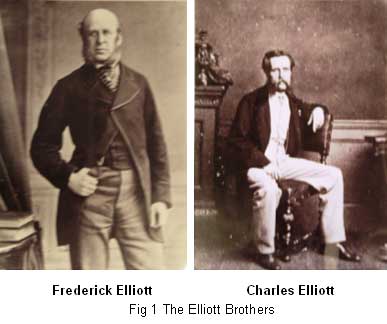
My step-father during my early teenage years worked for Elliott Brothers (the link goes to an interesting history of the firm that started in 1804) in Borehamwood, just north of London.  He encouraged me to fiddle with ‘steam’ radios and

try and understand how these basic circuits worked.  It was then a small step to deciding to become a radio amateur, popularly known as a radio ham!  In those days it was a case of some pretty intensive studying to pass a Theory exam as well as being able to pass an exam in sending and receiving Morse code.

So joining the local radio society seemed like a sensible idea.  That was (and still is!) called the Radio Society of Harrow.  That it is still in existence after all these years is truly delightful.  Those Friday night sessions at the Society and extra-curricular classes on Sunday morning at Ron Ray’s  (G2TA) house, an hour’s bicycle ride away from home, ensured that shortly after my 16th birthday I was granted a Licence, G3PUK.  It was a very proud moment.

Anyway, once granted a licence it was time to build my own radio transmitter.  Most of the details have been lost in the mists of time but what is recalled was that the final amplifier was a pair of 803s driving an 813 (These are radio valve numbers).  It sounds like something from the ark!  But again ploughing the inexhaustible files of the Web, it’s possible to see what these radio valves looked like.  Thanks to the National Valve Museum.

Here are pictures, courtesy of the National Valve Museum of those two radio valves:

803 – The substantial wide glass tube envelope is 58 mm in diameter (2 1/4 in) and, excluding the special five pin base pins, is 216 mm tall (8 1/2 in).

813 The classic envelope is substantial at 60 mm diameter (2 1/3 in) and 170 mm (6 2/3 in) long excluding the special base pins. The anode is 53 mm long and 48 mm wide. The metal is 1 mm thick.

803 radio valve
803 radio valve
813 radio valve
813 radio valve

It’s difficult, today, to imagine devices which are essentially diodes (well, technically the 803 was a pentode and the 813 a tetrode) being between 6 and 8 inches tall!

My own self-build transmitter had not really been successful emitting more heat than light, so to speak.  Literally, in the sense that these large radio valves kept me warm in my converted garden shed at the bottom of the garden.  They also completely wiped out TV reception for those households with a 1/4 mile range that had invested in early television sets!  It was time to move on to the R1155.

Around this era, less than 20 years after the end of the War in Europe in 1945, war-surplus equipment was widely available including ‘compact’ transmitter-receiver units.

One popular one was the RAF R1155 which had been fitted to RAF Lancaster bombers and RAF marine craft.  It was also fitted to the Sunderland flying boat.  This information plus the photos below is from this fascinating web site for those wishing to be ‘geeky’ about this.

RAF R1155B transreceiver
Internal view of the R1155B

Just compare the view on the right to the inside of your domestic radio or your cell phone.

A lot happens in 50 years!

My personal journey now leaps to 1978 and I have just left IBM UK having had 8 fabulous years with them as an Office Products salesman.  My fledging company, Dataview Ltd, has just become the 8th Commodore Computer (CBM) dealer in the UK, based in a small office in Colchester, Essex, about 50 miles north-east of London.

The CBM PET (Personal Electronic Transactor) released in 1977 initially with a calculator type keyboard was useless for any business application but soon came out with a typewriter sized keyboard, making it a more viable business

CBM computer, circa 1978

machine.  Today, as this is typed on an ‘old’ laptop with 2GB RAM, it seems unbelievable that these CBMs were sold with between 4k and 96k of RAM (memory) and no hard disk, although one could purchase an add-on that comprised dual 5 1/2 inch floppy disk drives.

YouTube obligingly finds  a short video on the Commodore PET for those really wishing to enjoy the nostalgia!

So to turn to the 21st century and to run out of understanding.  We appear to live in a world of multi-later printed circuit boards of unimaginable (to me) component density, assuming that the word ‘component’ is even relevant today.

Haven't a clue what this is but it's very modern.
Haven’t a clue what this is but it’s very modern.

What an amazing period it has been!

A long way from yesterday!

Now let me see was it Pin 920 to Pin 140, or Pin14 to Pin 860 connected to Pin 56 ………?

We are what we eat!

So why do we insist of manipulating the genetics of food!

I read somewhere recently, and of course now can’t find the reference, that the genetic modification of our food represents as big a danger to the long-term survival  of man as does the damage to our biosphere.

So a recent item on the blog Food Freedom News jumped out at me.  This was an item that was introduced as, “The author of Seeds of Destruction (about Monsanto) has a new piece out on pesticides and mass animal deaths… very sobering.

Clicking on the ‘new piece’ link takes one to here, from which I quote the opening paragraphs,

Death of the Birds and the Bees Across America

By F. William Engdahl
Global Research

“A recent study showed that every human tested had the world’s best-selling pesticide, Roundup, detectable in their urine at concentrations between five and twenty times the level considered safe for drinking water.”

Birds and bees are something most of us take for granted as part of nature. The expression “teaching about the birds and the bees” to explain the process of human reproduction to young people is not an accidental expression. Bees and birds contribute to the essence of life on our planet. A study by the US Department of Agriculture estimated that “…perhaps one-third of our total diet is dependent, directly or indirectly, upon insect-pollinated plants.”

The honey bee, Apis mellifera, is the most important pollinator of agricultural crops. Honey bees pollinate over 70 out of 100 crops that in turn provide 90% of the world’s food. They pollinate most fruits and vegetables–including apples, oranges, strawberries, onions and carrots.  But while managed honey bee populations have increased over the last 50 years, bee colony populations have decreased significantly in many European and North American nations. Simultaneously, crops that are dependent on insects for pollination have increased. The phenomenon has received the curious designation of Colony Collapse Disorder (CCD), implying it could be caused by any number of factors. Serious recent scientific studies however point to a major cause: use of new highly toxic systemic pesticides in agriculture since about 2004.

That first paragraph alone made me sit up, “A recent study showed that every human tested had the world’s best-selling pesticide, Roundup, detectable in their urine at concentrations between five and twenty times the level considered safe for drinking water.”  What a strange race we are!

Wlliam F. Engdahl

Then it was easy to find out more information about the author of the book Seeds of Destruction, William F. Engdahl, including his website.  Mr. Engdahl is clearly no stranger to controversy as this YouTube video illustrates,

Back to that Food Freedom article.  Further on, there is evidence of the size of the problem in the UK,

Alarming UK results

A private UK research organization, Buglife and the Soil Association, undertook tests to try to determine cause of the bee death. They found that the decline was caused in part by a group of pesticides called neonicotinoids. Neonicotinoids are “systemic” chemicals that kill insects by getting into the cell of the plant. In Britain it’s widely used for crops like oilseed rape and for production of potted plants.

The neonicotinoids are found in the UK in products including Chinook, used on oilseed rape and Bayer UK 720, used in the production of potted plants which then ends up in gardens and homes around the country. The new study examined in detail the most comprehensive array of peer-reviewed research into possible long-term effects of neonicotinoid use. Their conclusion was that neonicotinoid pesticides damage the health and life cycle of bees over the long term by affecting the nervous system. The report noted, “Neonicotinoids may be a significant factor contributing to current bee declines and could also contribute to declines in other non-target invertebrate species.” The organization called for a total ban on pesticides containing any neonicotinoids.

The president of the UK Soil Association, Peter Melchett, told the press that pesticides were causing a continued decline in pollinating insects, risking a multimillion pound farming industry. “The UK is notorious for taking the most relaxed approach to pesticide safety in the EU; Buglife’s report shows that this puts at risk pollination services vital for UK agriculture,” he said.

Indeed in March 2012 Sir Robert Watson, Chief Scientist at the British Government’s Department of Environment announced that his government was reconsidering its allowance of neonicotinoid use in the UK. Watson told a British newspaper, “We will absolutely look at the University of Stirling work, the French work, and the American work that came out a couple of months ago. We must look at this in real detail to see whether or not the current British position is correct or is incorrect. I want this all reassessed, very, very carefully.”  To date no policy change has ensued however. Given the seriousness of the scientific studies and of the claims of danger, a prudent policy would have been to provisionally suspend further uise of neonicotinoids pending further research. No such luck.

And if the harm to bees wasn’t serious enough, try this extract,

Effect on Human Brain?

But most alarming of all is the evidence that exposure to neonicotinides has horrific possible effects on humans as well as on birds and bees.

Professor Henk Tennekes describes the effects:

“Today the major illnesses confronting children in the United States include a number of psychosocial and behavioral conditions. Neurodevelopmental disorders, including learning disabilities, dyslexia, mental retardation, attention deficit disorder, and autism – occurrence is more prevalent than previously thought, affecting 5 percent to 10 percent of the 4 million children born in the United States annually. Beyond childhood, incidence rates of chronic neurodegenerative diseases of adult life such as Parkinson’s disease and dementia have increased markedly. These trends raise the possibility that exposures in early life act as triggers of later illness, perhaps by reducing the numbers of cells in essential regions of the brain to below the level needed to maintain function in the face of advancing age. Prenatal and childhood exposures to pesticides have emerged as a significant risk factor explaining impacts on brain structure and health that can increase the risk of neurological disease later in life.”

There is also growing evidence suggesting persistent exposure to plants sprayed with neonicotinoids could be responsible for damage to the human brain, including the recent sharp rise in incidents of autism in children.

This really is an article that you should read in full, which also includes a full bibliography and notes section.  Plus you can leave your responses as a comment – go for it!

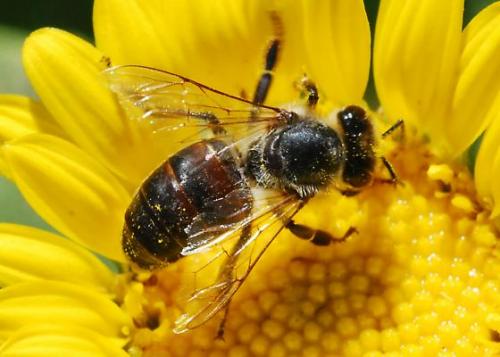
Apis mellifera – the honey bee (family Apidae)

Happy Birthday dear blog!

Learning from Dogs is three years old this day.

Ironically, we are away this day but here are the ‘stats’ from yesterday, the 14th:

594,721 individual viewings

449 subscribers

An average of 1,300 readers a day (and still growing!)

3,705 comments in this period

Nearly 1,372 posts since the start

It seems a rather trite thing to say but, trust me, this is said from the bottom of my heart.  All of you who come to Learning from Dogs, whether just a couple of times or most days, have made this a wonderfully creative three years for me.

THANK YOU ALL!

And now here’s a republication of that very first post back on July 15th, 2009.

Parenting lessons from Dogs

Much too late to make me realise the inadequacies of my own parenting skills, I learnt an important lesson when training my GSD (who is called Pharaoh, by the way).  That is that putting more emphasis into praise and reward for getting it right ‘trains’ the dog much quicker than telling it off.  The classic example is scolding a dog for running off when it should be lots of hugs and praise for returning home.  The scolding simply teaches the dog that returning home isn’t pleasant whereas praise reinforces that home is the place to be.  Like so many things in life, very obvious once understood!

Absolutely certain that it works with youngsters just the same way.

Despite being a very dominant dog, Pharaoh showed his teaching ability when working with other dogs.  In the UK there is an amazing woman, Angela Stockdale, who has proved that dogs (and horses) learn most effectively when being taught by other dogs (and horses).  Pharaoh was revealed to be a Beta Dog, (i.e. second in status below the Alpha Dog) and, therefore, was able to use his natural pack instinct to teach puppy dogs their social skills and to break up squabbles within a pack.

When you think about it, don’t kids learn much more (often to our chagrin!) from other kids than they do from their parents.  Still focusing on giving more praise than punishment seems like a much more effective strategy.

As was read somewhere, Catch them in the act of doing Right!

By Paul Handover.

The Higgs boson

Clarity of thought courtesy of The Economist

Like many people I had been aware of the hunt for this strange particle, the Higgs boson.  Like many people as well, I suspect, I really didn’t comprehend what it was all about.

Then in The Economist print edition of the July 7th the newspaper’s primary story and leader were about the discovery of the Higgs announced on the 4th July.  The leader, in particular, was both clear and compelling.  I held my breath and asked for permission to republish that leader in Learning from Dogs.

Well the good people from the relevant department at The Economist promptly gave written permission for their leader to be available here for a period of one year.  Thanks team!

oooOOOooo

The Higgs boson

Science’s great leap forward

After decades of searching, physicists have solved one of the mysteries of the universe

Jul 7th 2012 | from the print edition

HISTORICAL events recede in importance with every passing decade. Crises, political and financial, can be seen for the blips on the path of progress that they usually are. Even the horrors of war acquire a patina of unreality. The laws of physics, though, are eternal and universal. Elucidating them is one of the triumphs of mankind. And this week has seen just such a triumphant elucidation.

On July 4th physicists working in Geneva at CERN, the world’s biggest particle-physics laboratory, announced that they had found the Higgs boson. Broadly, particle physics is to the universe what DNA is to life: the hidden principle underlying so much else. Like the uncovering of DNA’s structure by Francis Crick and James Watson in 1953, the discovery of the Higgs makes sense of what would otherwise be incomprehensible. Its significance is massive. Literally. Without the Higgs there would be no mass. And without mass, there would be no stars, no planets and no atoms. And certainly no human beings. Indeed, there would be no history. Massless particles are doomed by Einstein’s theory of relativity to travel at the speed of light. That means, for them, that the past, the present and the future are the same thing.

Deus et CERN

Such power to affect the whole universe has led some to dub the Higgs “the God particle”. That, it is not. It does not explain creation itself. But it is nevertheless the most fundamental discovery in physics for decades.

Unlike the structure of DNA, which came as a surprise, the Higgs is a long-expected guest. It was predicted in 1964 by Peter Higgs, a British physicist who was trying to fix a niggle in quantum theory, and independently, in various guises, by five other researchers. And if the Higgs—or something similar—did not exist, then a lot of what physicists think they know about the universe would be wrong.

Physics has two working models of reality. One is Einstein’s general relativity, which deals with space, time and gravity. This is an elegant assembly of interlocking equations that poured out of a single mind a century ago. The other, known as the Standard Model, deals with everything else more messily.

The Standard Model, a product of many minds, incorporates the three fundamental forces that are not gravity (electromagnetism, and the strong and weak nuclear forces), and also a menagerie of apparently indivisible particles: quarks, of which protons and neutrons, and thus atomic nuclei, are made; electrons that orbit those nuclei; and more rarefied beasts such as muons and neutrinos. Without the Higgs, the maths which holds this edifice together would disintegrate.

Finding the Higgs, though, made looking for needles in haystacks seem simple. The discovery eventually came about using the Large Hadron Collider (LHC), a machine at CERN that sends bunches of protons round a ring 27km in circumference, in opposite directions, at close to the speed of light, so that they collide head on. The faster the protons are moving, the more energy they have. When they collide, this energy is converted into other particles (Einstein’s E=mc2), which then decay into yet more particles. What these decay particles are depends on what was created in the original collision, but unfortunately there is no unique pattern that shouts “Higgs!” The search, therefore, has been for small deviations from what would be seen if there were no Higgs. That is one reason it took so long.

Another was that no one knew how much the Higgs would weigh, and therefore how fast the protons needed to be travelling to make it. Finding the Higgs was thus a question of looking at lots of different energy levels, and ruling each out in turn until the seekers found what they were looking for.

Queerer than we can suppose?

For physicists, the Higgs is merely the LHC’s aperitif. They hope the machine will now produce other particles—ones that the Standard Model does not predict, and which might account for some strange stuff called “dark matter”.

Astronomers know dark matter abounds in the universe, but cannot yet explain it. Both theory and observation suggest that “normal” matter (the atom-making particles described by the Standard Model) is only about 4% of the total stuff of creation. Almost three-quarters of the universe is something completely obscure, dubbed “dark energy”. The rest, 22% or so, is matter of some sort, but a sort that can be detected only from its gravity. It forms a giant lattice that permeates space and controls the position of galaxies made of visible matter (see article). It also stops those galaxies spinning themselves apart. Physicists hope that it is the product of one of the post-Standard Model theories they have dreamed up while waiting for the Higgs. Now, they will be able to find out.

For non-physicists, the importance of finding the Higgs belongs to the realm of understanding rather than utility. It adds to the sum of human knowledge—but it may never change lives as DNA or relativity have. Within 40 years, Einstein’s theories paved the way for the Manhattan Project and the scourge of nuclear weapons. The deciphering of DNA has led directly to many of the benefits of modern medicine and agriculture. The last really useful subatomic particle to be discovered, though, was the neutron in 1932. Particles found subsequently are too hard to make, and too short-lived to be useful.

This helps explain why, even at this moment of triumph, particle physics is a fragile endeavour. Gone are the days when physicists, having given politicians the atom bomb, strode confidently around the corridors of power. Today they are supplicants in a world where money is tight. The LHC, sustained by a consortium that was originally European but is now global, cost about $10 billion to build.

That is still a relatively small amount, though, to pay for knowing how things really work, and no form of science reaches deeper into reality than particle physics. As J.B.S. Haldane, a polymathic British scientist, once put it, the universe may be not only queerer than we suppose, but queerer than we can suppose. Yet given the chance, particle physicists will give it a run for its money.

Copyright © The Economist Newspaper Limited 2012. All rights reserved.

oooOOOooo

Before signing off on this very important step forward for physics, here are a couple of footnotes.

First, here’s a video of the announcement that was widely shown on the 4th.

Secondly, the BBC News website had a really good piece on the 12th July written by their science correspondent, Quentin Cooper, called Higgs: What was left unsaid. Here’s a flavour taken from the early part of the article,

So that’s it, search over, Higgs boson found. Almost 50 years after physicist Peter Higgs first theorised it was out there, public elementary number one has finally been captured in the data from two detectors at the Large Hadron Collider at Cern. Case closed. Champagne popped. Boson nova danced.

If only. That handily simplified and heavily fictionalised telling of the tale has helped transform a spectacular scientific success story into one that is also global front page news. Without it the 4 July announcement might not have generated such a frenzy of coverage and so many claims about it being a historic milestone for our species. One particle physicist only half jokingly told me that in future the date may come to be celebrated as Higgs Day, rather than anything to do with American independence.

Don’t get me wrong. What has happened at Cern represents a magnificent accomplishment; big science at its biggest and boldest. And it’s fantastic that it has been perceived and received as being of such importance. It’s just that there is more to the story from the very beginning right through to the, probably false, ending.

For starters, as Peter Higgs himself acknowledges, he was just one of several scientists who came up with the mechanism which predicted the particle which bears his name, but the others rarely get a mention*. As to the finish – well, as small children are fond of saying, are we there yet? There is very strong evidence that the LHC teams have found a new elementary particle, but while this is exciting it is far less clear that what they’ve detected is the fabled Higgs. If it is, it seems curiously lighter than expected and more work is needed to explain away the discrepancy. If it’s not, then the experimentalists and theorists are going to be even busier trying to see if it can be shoehorned into the current Standard Model of particle physics. Either way, it’s not exactly conclusive.

Do take the simple step of clicking here and read the BBC piece in full.

Well done, Mr. Peter Higgs and all those very persistent scientists associated with the Large Hadron Collider; I suspect we haven’t heard the last of this!

And ‘thank you’ to The Economist.

One smart brain!

Are you negligent, incompetent or complicit?

A guest post from Martin Lack points to the crux of the issue of denying man-caused climate change.

Introduction

I saw this post on Martin’s Blog Lack of Environment the day after I wrote a piece called In praise of fairness.  In my piece I mentioned the sad case of Mr. Bob Diamond and Martin continued with the theme in such a manner that I wanted to republish his article in full.  Here it is.

oooOOOooo

Are you negligent, incompetent or complicit?

This was a question posed to former Barclays CEO Bob Diamond this week, when he appeared before a Parliamentary Select Committee of MPs on Wednesday. It is a question that I would like to ask Dr Richard Lindzen… In fact, I have asked the question and – just as Bob Diamond did – he has refused to answer it… Here is the evidence on which you should decide for yourself:

Many readers will recall that, following my visit to London to hear Lindzen speak to a room full of fake sceptics in the Palace of Westminster on 22 February this year, I attempted to get some answers to questions. Unfortunately, I failed. I have been particularly frustrated by one thing; possibly the most misleading aspect of Lindzen’s entire presentation – a combination of graphs of recent atmospheric CO2 and temperature data that was mysteriously omitted from the PDF of the presentation that was initially posted on the Internet.  Although Lindzen never answered any of my questions, he did insert this slide into the PDF of his presentation despite my pointing out to him – MIT and the AGU – that it was essentially meaningless (as the y-axes could be stretched to show either correlation or no correlation as preferred by the speaker).

Here is a screenshot of the misleading graph from the video of the presentation:

Misrepresentation of data?
Steeply inclined Keeling curve versus apparently non-correlating temperature – if you stretched the temperature axis enough it would appear to correlate quite well. Therefore slide neither proves not disproves anything.

This bears more than a passing resemblance to the World Climate Widget – a very similar-looking combination of graphs (i.e. manipulated to suggest that there is no correlation between recent atmospheric CO2 and temperature data) – that can be downloaded as a widget from Anthony Watts’ Watts Up With That? (WUWT) misinformation blog.

If you go to the WUWT widget page, you will find the two graphs in both of these images (above and right) are there presented separately. However, to prove my point – that anyone using these graphs to try and prove there is no correlation between long-term CO2 and temperature changes – just look at what happens when you take the graph of University of Alabama at Huntsville (UAH) global lower atmosphere data as used by WUWT (i.e. cooler than surface temperature data) and stretch it:

Clearing the fog of data misrepresentation created by Lindzen et al. - Note the clear upward trend in the temperature graph on the left (it was there all the time).
Clearing the fog of data misrepresentation created by Lindzen et al. – Note the clear upward trend in the temperature graph on the left (it was there all the time).

Therefore, for anyone – including Lindzen – to try and use the original combination of graphs to suggest there is no correlation between CO2 and temperature, this suggests that they are either negligent, incompetent, or deliberately trying to mislead people. For many people who are not scientists to be fooled by this is understandable but, for a prominent scientist like Lindzen to make this mistake – and not apologise for doing so – is unforgivable. Furthermore, it would seem that, no matter how many times he is criticised, he just keeps repeating the same old mistakes: Skeptical Science: Lindzen and Choi 2011 – Party Like It’s 2009

It would appear that, despite the best efforts of the majority of prominent climate scientists, Lindzen’s London Illusions are still fooling a lot of people. If you follow that last link, it will take you to the website of what I prefer to call The Global Wonky Policy Foundation, where it is reported that only 43% of the British adult population felt able to agree with the following statement: “Global warming is a fact and is mostly caused by emissions from vehicles and industrial facilities”.

It has been suggested to me that this question is carefully phrased to deter people from saying “yes” (i.e. they might agree that warming is occurring and/or that humans are the primary cause; but they might not agree that vehicles and factories are the primary source of emissions). However, this is ‘clutching at straws’ in my opinion; and leaves me wondering what percentage of the population would feel able to agree with this statement:

“The sunrise is a fact and is mostly caused by the Earth not being flat and spinning once a day whilst orbiting the Sun”…?

oooOOOooo

I’m very grateful to Martin for allowing me to republish this.